Category Archives: Kg-2nd

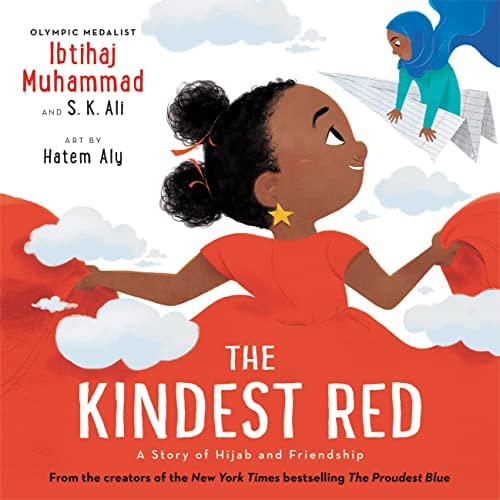
The Kindest Red: A Story of Hijab and Friendship by Ibtihaj Muhammad and S.K. Ali illustrated by Hatem Aly

Standard
The Kindest Red: A Story of Hijab and Friendship by Ibtihaj Muhammad and S.K. Ali illustrated by Hatem Aly

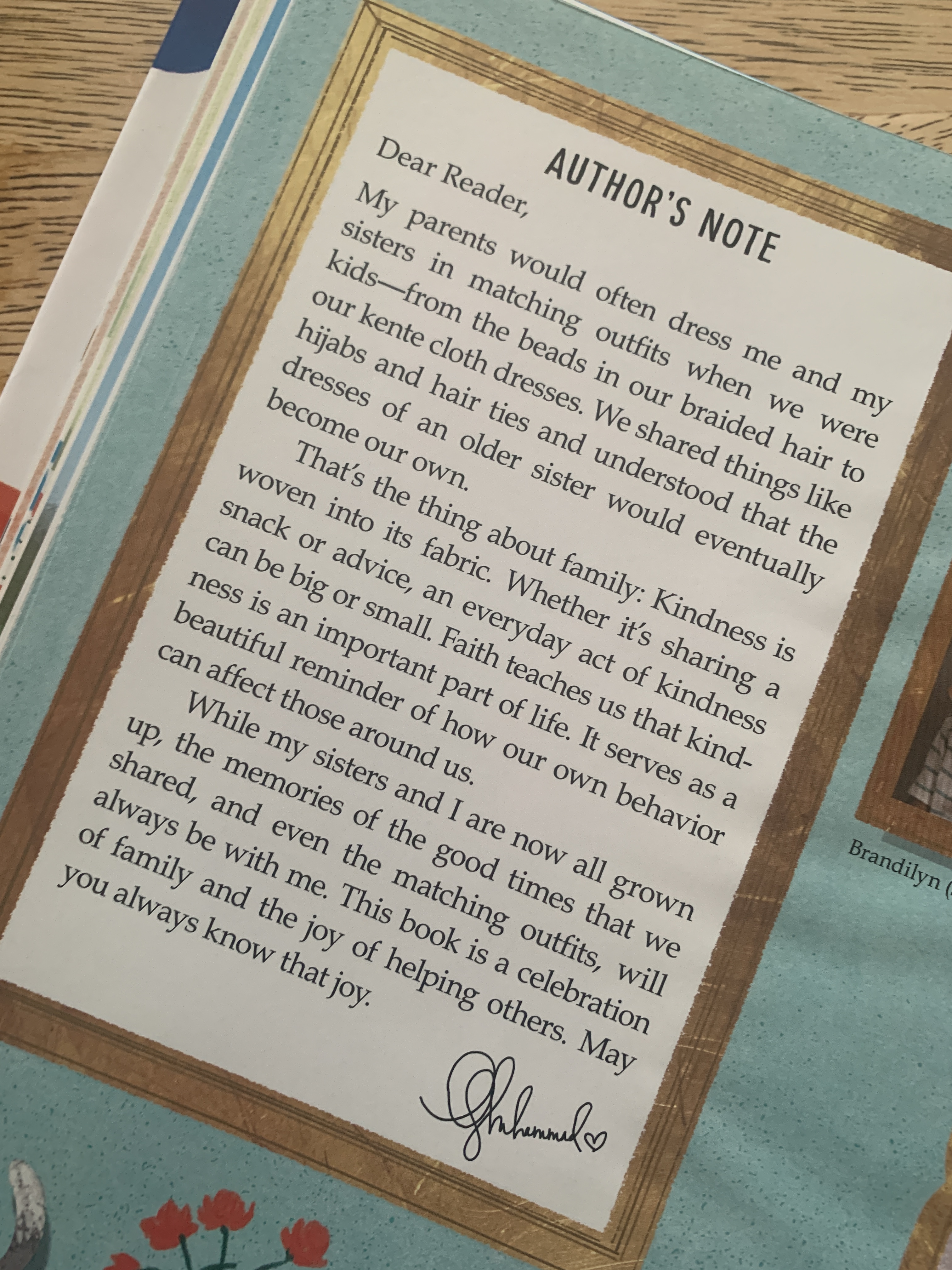
This heartwarming book centers kindness, family, and friendship in an inclusive way; and while the tagline says “A Story of Hijab and Friendship” I think the hijab angle is a bit of a stretch.  The authors are Muslims that wear hijab, the older sister and older females in the family wear hijab, but there is nothing in the story or text that connect hijab to Islam or to something Muslim women wear as part of religion.  I don’t want to compare the first book in the series, The Proudest Blue, to this book, but hijab really was centered in that book and the Author’s Note mentioned that hijab is an Islamic act.  This book does not make those same connections, which is fine, I just want consumers to be aware.  This book is beautiful and the messaging endearing, and the tone and heart over 40 pages ideal for preschool to early elementary children.  It works as a standalone, but with the same characters and sisterly love, I think most people will enjoy keeping them together.

The book starts with Mama passing on Asiya’s dress to Faizah, that had been Mama’s even before that.  It is picture day, and the girls are helping each other get ready. At school Faizah and her friend Sophie twirl in their pretty dresses before heading in to class to discuss what kind of world they want.
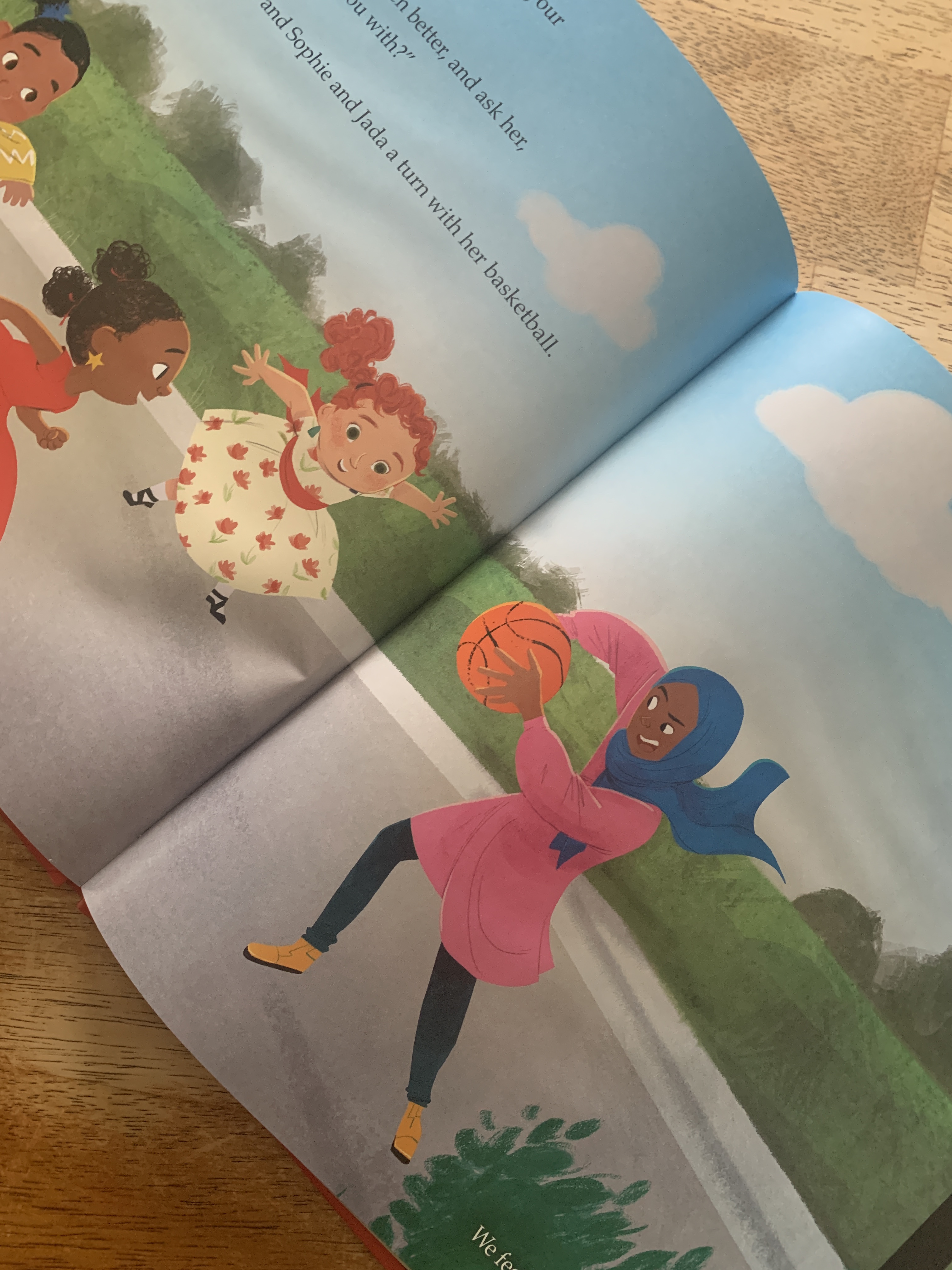
Faizah wants a kind world, where there’s always a friend nearby, where everyone helps. At recess, Sophie and Faizah combine their visions, superheroes and kindness, to help other kids on the playground.  When picture time arrives the class is full of smiles, but when it is time for sibling pictures, Faiza and Asiya realize they don’t match.

Faizah is sad, and Sophie notices, can the kindness be passed along like the dress to help the sisters? To make Faizah happy too? I’m not going to give away the conclusion, but it is sweet and idyllic and shows how lovely the world can be if we all just share some kindness.

I love the illustrations and the hijab wearing super hero that presumably Sophie drew is powerful.  I think the book does wonders to normalize hijab, even if I do wish it articulated why one would wear hijab.  It seems that the industry trend is to keep hijab superficial and I recognize I am in the minority that wants religious centering for religious tenants.  So yes, I’m fully prepared for the backlash when people want to point out that it is joyful and that I’m a naysayer, but I deal with people on a daily basis that do not know that my own hijab is a reflection of me being Muslim.  With as connected as the world is through technology, I  think those in diverse environments take for granted the understanding of basic Islamic principals in the general population.  However, not everyone has those real life connections and rely on books and media to fill the gaps, so when books about hijab, don’t actually connect hijab to faith, I feel obligated to point it out.

I purchased (preordered) my copy here, but I hope you will support small business and order yours here  use code ISL for 10% off.
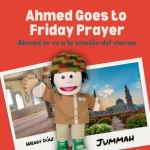
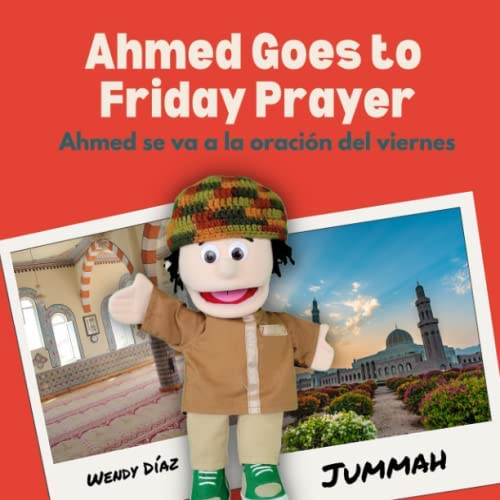
Ahmed Goes to Friday Prayer: Ahmed se va a la oración del viernes by Wendy Díaz illustrated by Muhammad & Mariam Suhaila Guadalupe

Standard
Ahmed Goes to Friday Prayer: Ahmed se va a la oración del viernes by Wendy Díaz illustrated by Muhammad & Mariam Suhaila Guadalupe


ahmed


This dual lingo: English and Spanish is a linear story of Ahmed going for Jummah prayers.  The rhyming text in both languages is fairly consistent and the information framed in an upbeat, fun, positive way.  From waking up early and taking ghusl to reading Surah al-Kahf, the book shows some spiritual aspects, some sunnah reminders, and social Jummah interactions with friends as well.  The 48 pages are good for preschool to early elementary aged readers and with the minimal text on the pages, even younger listeners will enjoy the book.  I wish the religious statements were sourced, and while I didn’t initially love the aesthetics of the puppets when I first saw the cover, I definitely warmed up to Ahmed and absolutely cooed at the adorable (puppet) Imam.  The book starts with a sourced hadith and ayat from the Quran and ends with questions to test your knowledge.

The story begins in a bit of an awkward fashion with Ahmed breaking down the fourth wall, and addressing the reader, and then on the next page, the “narrator” reaching out to the readers to have them pay attention to Ahmed.  Then the story starts with asking if the reader knows what the special day of the week is called.  It then tells us that it is called Friday in English, Jummah in Arabic and that I, Ahmed, is going to tell us about it.  With all the introductions and signposting it makes the book actually start 11 pages in.  I read the first few spreads numerous times trying to see what was going on, and finally just realized it has a lot of framing and set up before diving in.  Alhumdulillah, after the repetitive first few pages, the book reads smooth and clearly.  

Ahmed wakes up, does ghusl, puts on nice clothes, and then waits until midday to go to salatul Jummah.  Muslims read Surah al-Kahf, and then get to the mosque early.  It is noted that we get rewards for every step we take, we are encouraged to praise our Lord, we greet friends with Salam, and after athan we sit calmly and quietly listening to the Imam.  The khutbah talks about our faith and then we pray foot to foot closing the gaps. The last few spreads are about the importance of Jummah.

The illustrations show Ahmed the puppet in different places with other Wendy Diaz books displayed in poster form, books on side tables, and graffitied on a wall. The only other character beside Ahmed and the Imam is Ahmed’s un named friend.  The simple illustrated backgrounds with puppets in the foreground, the minimal rhyming text and the content presentation make this book a great addition to home and school libraries as well as ideal at story time or bedtime where early elementary aged children are able to understand both the excitement and protocols of the blessed day.

img_5601

Over the years I’ve done a few Jummah themed readings and this book would be a great addition at story time.  You can purchase the book here.

The Great Labne Trade by Eman Saleh illustrated by Eilnaz Barmayeh

Standard
The Great Labne Trade by Eman Saleh illustrated by Eilnaz Barmayeh

labne

My friend Noura, owner of Crescent Moon Store, said this book was good, so when I saw the amazing illustrations on the cover, I didn’t even look into what the book was about, I bought it and waited impatiently for it to arrive.  When it came I started reading it and thought ok, ok another book about lunch food that is perceived as “other” and the bullying that ensues with having a “smelly” lunch.  But the bullying never really came, and the book was suddenly not about being different, it was about entrepreneurship, and a mother’s love and support, and appreciating good food, and sharing culture, and raging against an oppressive system. Ok, so there was no raging, the book ended with determination and a following of the “rules,” in a very kid appropriate manner, but it was fun and a nice change from the typical storyline in rhyming children’s books.  There is no “Islam” aside from a boy named Ahmed and his sweet hijab wearing mother, but this book will result in smiles for kids preschool to early elementary and encourage business creativity and thinking outside the box.

img_5127

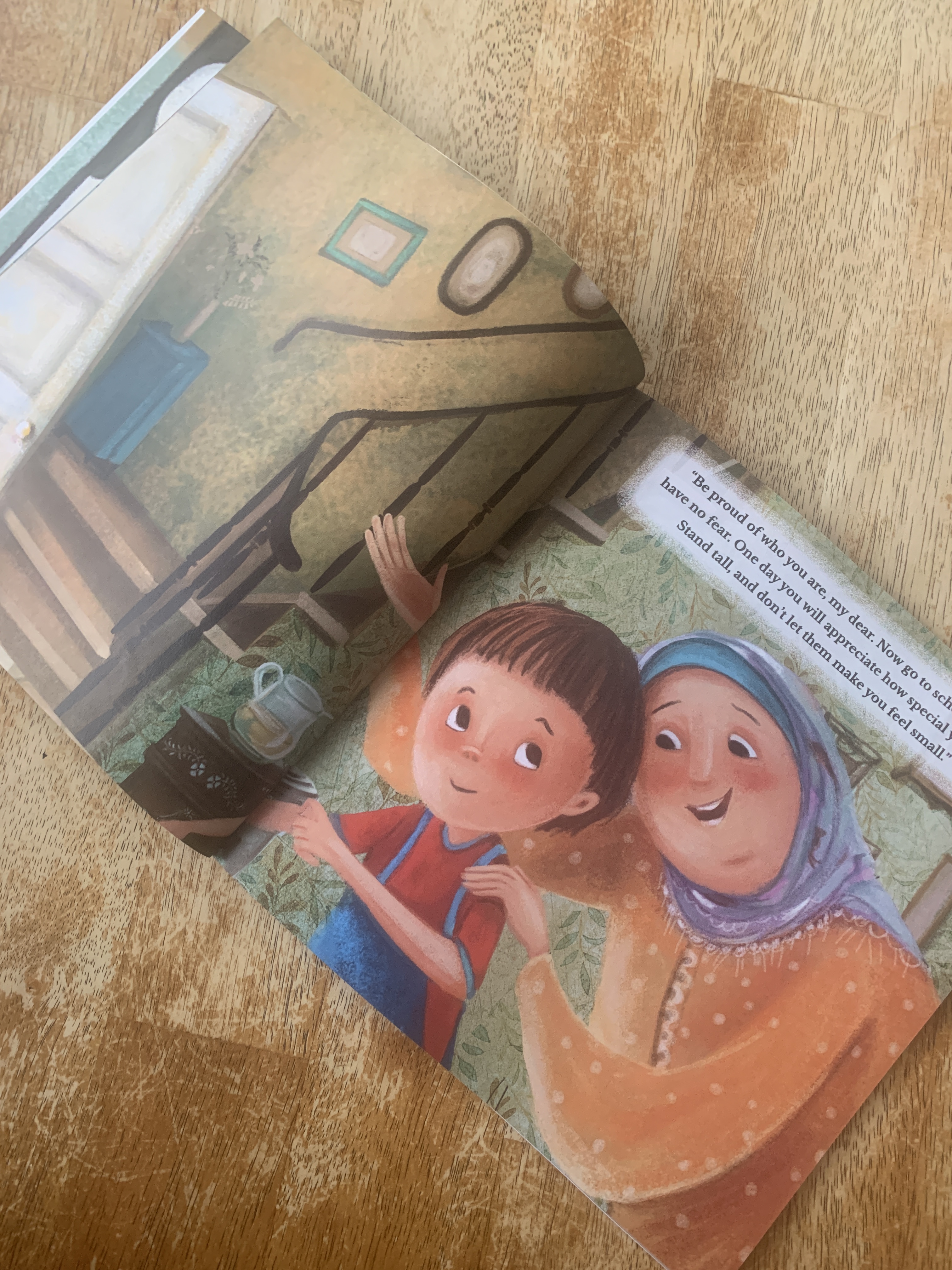
Ahmed is not thrilled to be taking a labne sandwich to school and would rather have a pb&j like everyone else. His mom encourages him to “be proud of who you are, appreciate how special you are, stand tall, don’t let other’s make you feel small,” and sends him out the door.  At lunch when the kids start to turn up their noses, Ahmed gets them to try the sandwich, and they love it.

img_5128

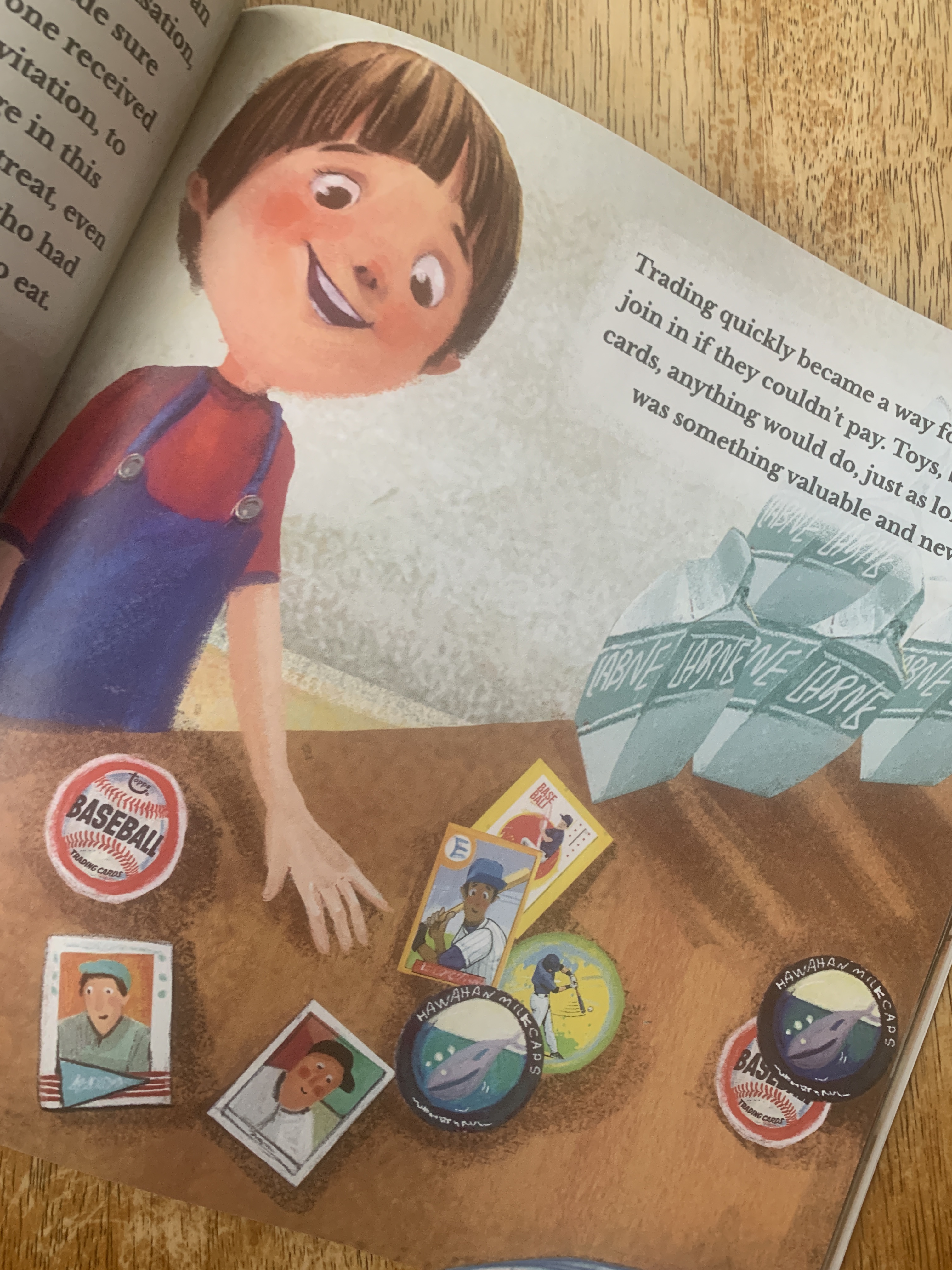
Ahmed gets an idea, maybe he can sell labne sandwiches to his classmates. Mama stays up late making them and Ahmed sets up shop in the cafeteria. He sets his price, and they sell out, so he increases the charge, and they are still selling. He also is open to trades for those that can’t pay.  Before you know it he is adding dishes to the menu.  Things are going well for entrepreneur Ahmed, until the lunch ladies have had enough and take matters to the principal.

img_5130

The 58 page book is not text heavy and the rhyme is fairly good, it is hit and miss at times, but the story is not hindered by it. I did feel like the book took a few pages to set the stage and get into the story. The initial timeline and the “smelly” lunch could be cleaned up a little, but once the business storyline presents it is smooth and enjoyable. And the illustrations, they are perfect for the story and for keeping Ahmed and his dream in your heart.

The book is available here at Crescent Moon or on Amazon.

img_5129

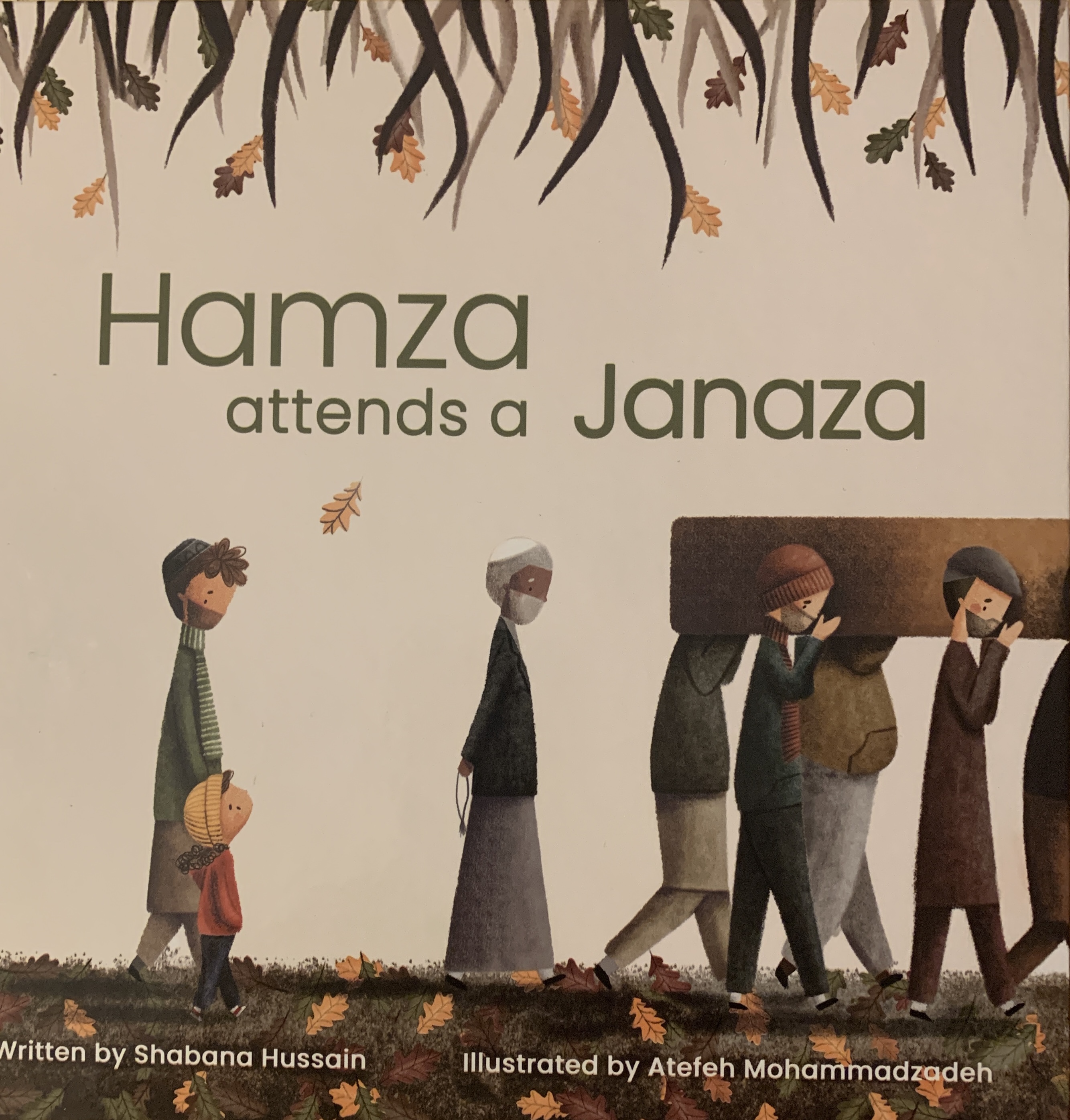
Hamza Attends a Janaza by Shabana Hussain illustrated by Atefeh Mohammadzadeh

Standard
Hamza Attends a Janaza by Shabana Hussain illustrated by Atefeh Mohammadzadeh

img_5141

For years it has been noted how few children’s Islamic books about grief and loss are available, and while numerous titles have come out in the last few years, it wasn’t until I saw this new book, did I realize how desperately we were in need of a book on janaza.  I love that the author establishes on the first page that this book is not focused on grief, but rather about death, the burial, and preparing to meet Allah (saw) in the hereafter with our deeds.  The beauty is that while the topic is critical and needed, the story is also well done.  It may not focus on emotion, but it has a lot of heart and tenderness, thus making it a wonderful addition to all book shelves for children preschool and up as a brief introduction to how Islam views death, the rituals of burial, and the worship that surrounds it. Packaged with clear text, robust backmatter and absolutely adorable illustrations, I am very happily impressed with this book.

img_5142

The book starts with Hamza telling about his favorite day of the week, Saturday, the day he spends with his Nano-ji and cousins, but one day all that changes when his mom gets a phone call about the loss of a community Uncle.  Mom says, inna lillahi wa inna illahi rajioon quietly in to the phone and Hamza knows something is wrong, but doesn’t quite understand why the passing of Uncle Sameer, the owner of the local sweet shop, means he has to attend a janaza instead of going to his grandfather’s house.

Hamza’s parents explain the reward of going, and remind him that we all have to leave this world one day. They recall Uncle Sameer helping bandage his knee when he got hurt and gave him a lollipop.  Once in the car, Hamza wants to know what is going to happen.  His parents explain the ghusl and the body being wrapped in the kafan and the body being put in the ground.

img_5144

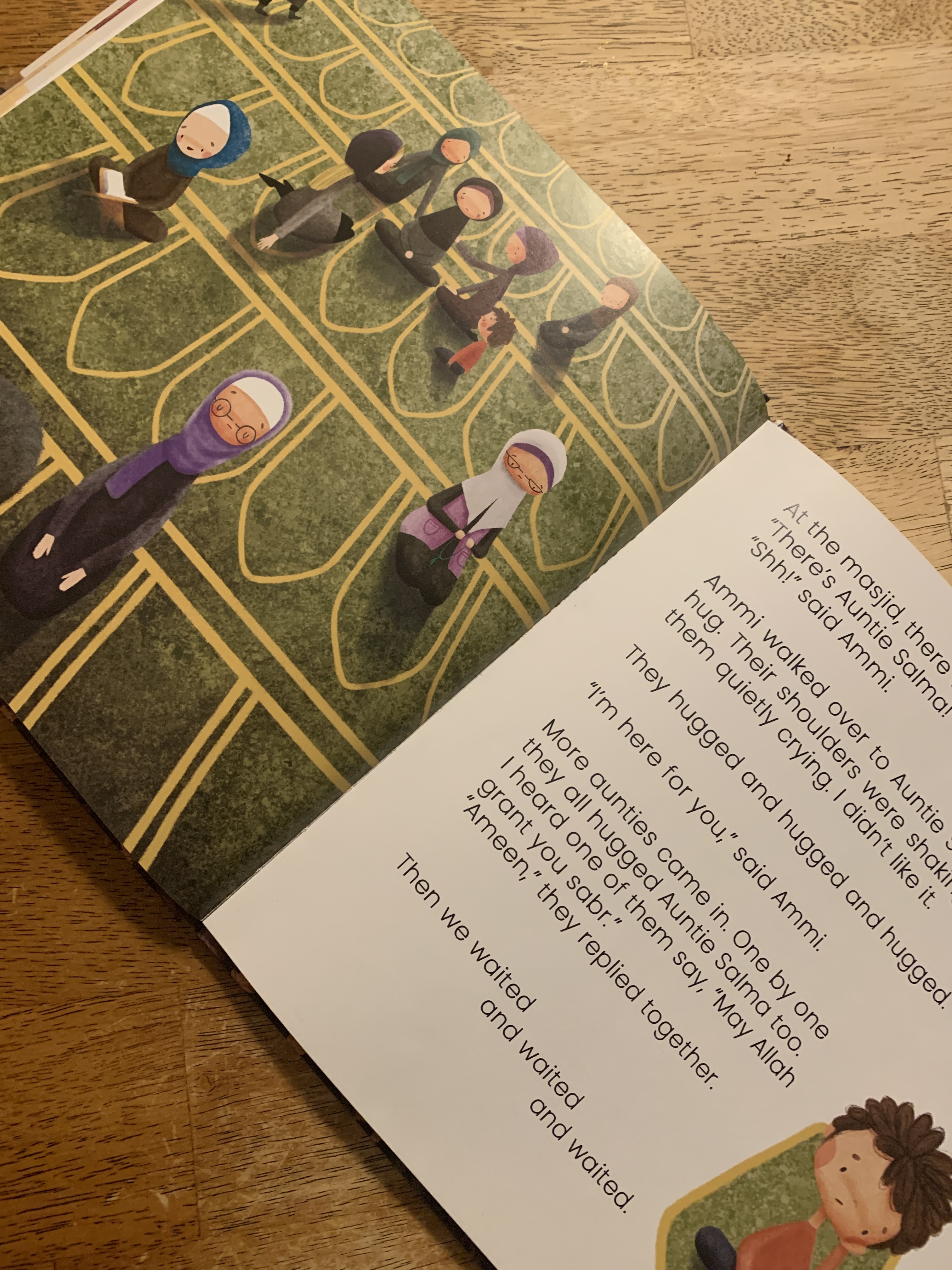
When they get to the masjid there are a lot of aunties on the women’s side, including Auntie Salma who everyone is hugging and reassuring.  After dhuhr the janaza begins, but it is a standing up namaz, and is very short, and Hamza is confused. Later outside the long box is loaded into the car, duas are made, and the body taken to the cemetery.

At the graveside, more duas are made, and Hamza worries that Uncle will be lonely.  When his father explains that his good deeds will keep him company, Hamza remembers the kindness Uncle Sameer has shown him and makes duas.

img_5146

The backmatter contains hadith about what still benefits those that have died, reward for attending a janaza, a glossary, discussion points, suggested activities, and duas.  The book is a great starting point to introducing death, rituals, and answering questions any child might have in a gentle manner.  

I bought the book from Crescent Moon Store 


Mama Shamsi at the Bazaar by Mohdeh Hassani and Samira Iravani illustrated by Maya Fidawi

Standard
Mama Shamsi at the Bazaar by Mohdeh Hassani and Samira Iravani illustrated by Maya Fidawi

shamsi

At first glance it might seem that this Iranian set book with a chador at it’s core is a political statement.  I do not believe that it is.  The backmatter does state that, “Our wish in writing this book is to add to the growing list of stories for children that demystify this veil (that is too often used as a symbol of hate) and instead present a different view of it as the safe and comforting space we always knew it to be.”  This is an OWN voice authored book, from what I can find online the authors do not cover. It is a warm memory of finding love and humor and safety in the modest coverings worn by a grandmother.   I do wear hijab and I choose to do it based on my understanding of what Allah swt commands, I have never been forced to cover by a person or government, and do not know how that would effect my love of fulfilling a tenant of my faith.  But all that is an aside to make the point that this book to me is not weighing in on Iran’s politics, books are written and slated to be published years before they finally release, and this book is a silly heartfelt picture book about a girl and her chador wearing grandmother heading to the bazaar.

In the bustling city of Tehran, Samira is heading out to buy groceries in the big bazaar for the first time with her grandmother. Samira is nervous that it will be loud, and she might get lost, she asks her grandmother if she can rider under chador on her back. Her grandmother tells her no, she will look like a turtle.

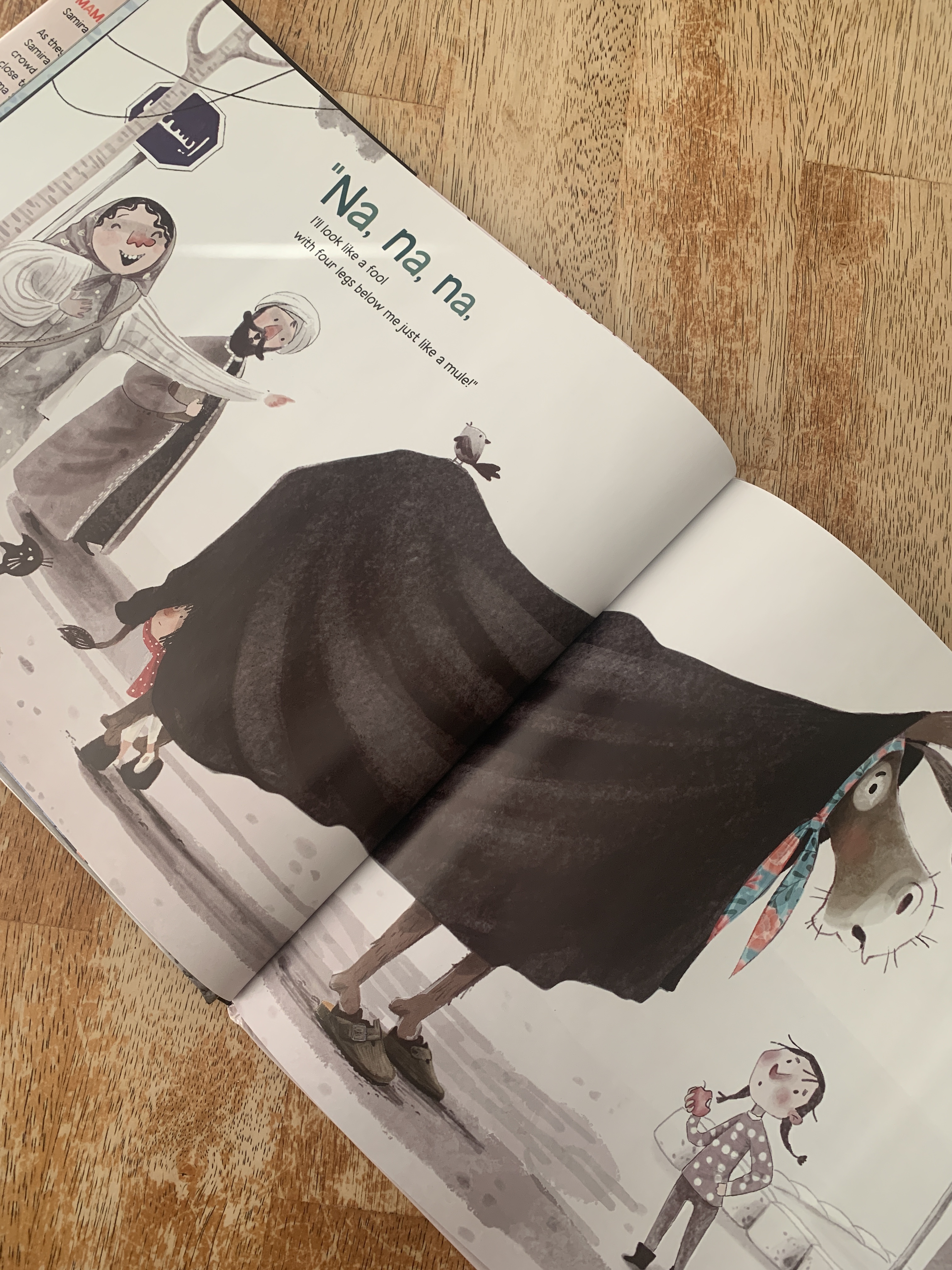
Samira then suggest they walk in a line with grandma in front and her behind.  Grandmother Shamsi says, na, na, na, she doesn’t want to look like a donkey. Various other suggestions involving hiding under the big black chador and staying close to Mama Shamsi are suggested, but all make grandma look like a funny animal, and she declines.

When at last they arrive at the bazaar, Mama Shamsi encourages Samira to not hide but to use her eyes, and ears, and nose to learn about the world around her. Hand in hand, they stick close together, and enter the market.

The love between the two characters is heart warming in the text and truly elevated by the remarkable illustrations.  You love their relationship, you can feel Samira’s nerves, you appreciate Mama Shamsi’s humor to lovingly empower her granddaughter, and at the end you truly long to have your grandma next to you guiding you.

I enjoyed this book and don’t mind one bit reading it over and over again as kids giggle at the pictures and find details they hadn’t noticed before.  The book releases in February, and I hope that presales can reinforce the power of OWN voice authentic tales to be shared.  You can preorder/purchase it here.


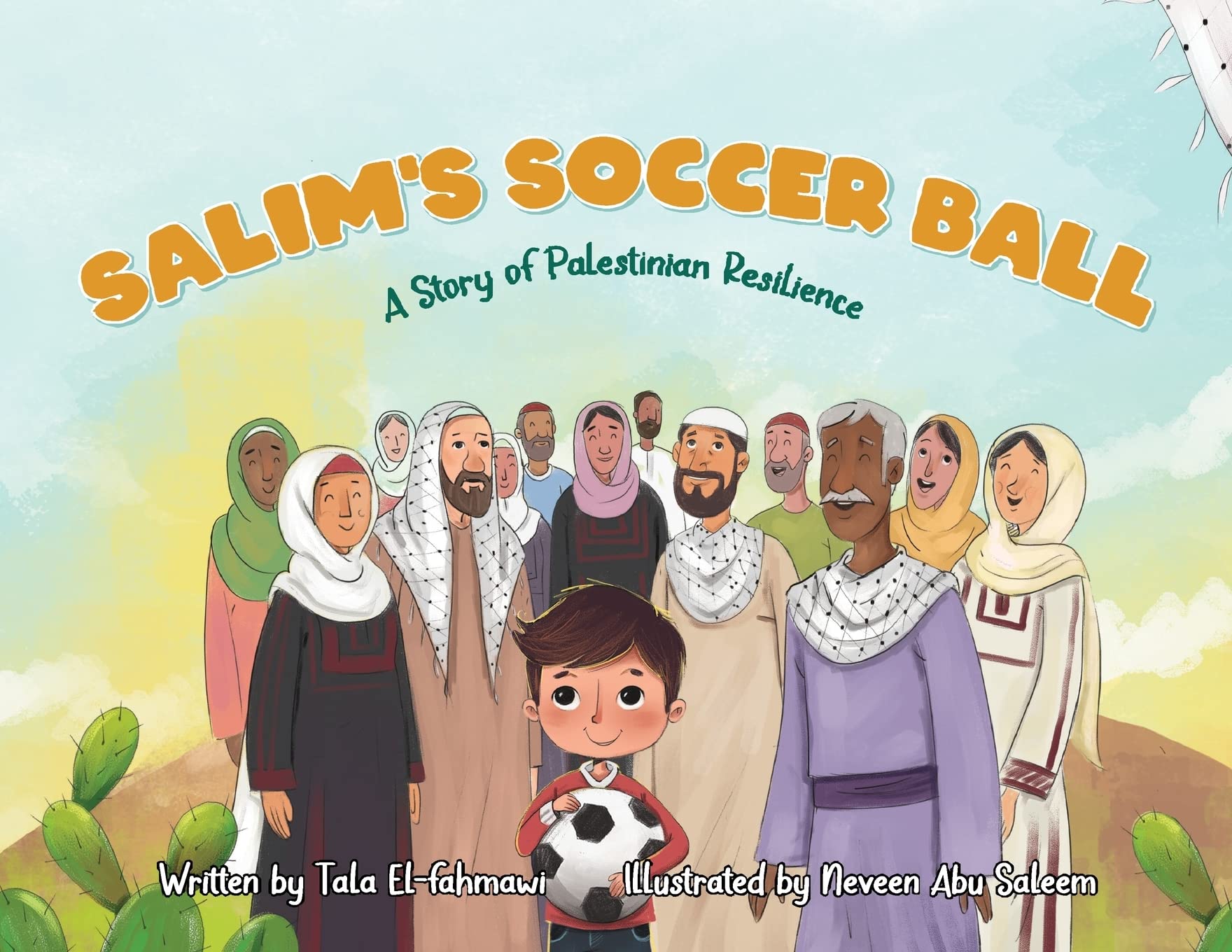
Salim’s Soccer Ball: A Story of Palestinian Resilience by Tala El-fahmawi illustrated by Naveen Abu Saleem

Standard
Salim’s Soccer Ball: A Story of Palestinian Resilience by Tala El-fahmawi illustrated by Naveen Abu Saleem

salim

This 58 page rhyming picture book weaves together a tale of a little boy and his lost soccer ball, with larger issues of community, oppression, and perspective for the youngest of readers to older children too.  I am noted to be skeptical of rhyming books, but the large font, the sweeping pictures, and the dropping of occupation, struggle, and resilience really make this book a treat. Add in discussion questions and an author’s note and you have a solid book that deserves space on home, library, and classroom shelves.  My only wish, was that the book was hardback.  The horizontal layout with a soft cover make the book difficult to read during story times as the pages flop back.  The book is long, but the text on most spreads is minimal and while I could not identify the author’s religious identity, their are numerous hijab wearing #muslimsintheillustrations as Salim journey’s around his neighborhood and into his grand father’s memories.

Salim wakes up, brushes his teeth, and is out the door to play soccer with his best friend Qusai, but the ball goes flying and Salim can’t find it. He starts walking down the hill and it seems to have disappeared.

img_5055

He asks the fisherman, Abu Zaid, if he has seen it, and he hasn’t, but he offers to help.  They then go and ask the seamstress, she hasn’t either, but she puts down her tatreez, offers reassurance, and offers to help.  As they head out they bump in to Dr. Bassam.  “‘I will help you look,’ the kindly man said. “I can fix broken bones with very few supplies.  A lack of resources has made me clever and wise. Resilience and courage are plentiful here. We will find your ball. Salim, no need to fear.'”

img_5054

The searching continues, with a small break for khanfeh, and then Qusai is found, and so is the ball.  Like so many joyful items, the barbed wire of the apartheid wall has destroyed the soccer ball. Upset, Abu Omar, calls out to Salim, and his grandpa embraces and consoles the young boy recalling a donkey with wonky ears and life on the farm.  With resilience and joy Salim heads home to a community surprise and a hopeful future inshaAllah.

img_5053

The book concludes with five discussion questions that connect Salim’s experience to universal experiences of people everywhere.  It is followed by factual and personal author’s note about Palestine and the book.  

img_5056

There is nothing religious aside from the hijabs worn, Dome of the Rock, Masjid al Aqsa, and Church of The Holy Sepulcher in the backgrounds of a few images.  I purchased my copy from Amazon HERE and can also be purchased through Shop Palestine HERE.

img_5057


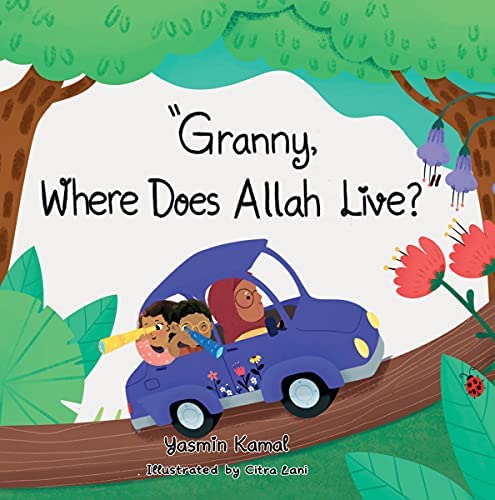
“Granny, Where Does Allah Live?” by Yasmin Kamal illustrated by Citra Lani

Standard
“Granny, Where Does Allah Live?” by Yasmin Kamal illustrated by Citra Lani


This 32 page picture book for 3-6 year olds takes readers and listeners on a car ride with Granny as questions are asked, sights are seen, and love is spread.  The rhyme is actually pretty decent, the explanation of Allah swt being on a throne above us wherever we are adhered to, and the illustrations are bright, bold, and have a lot to hold little one’s interest.  Overall, the banter between the kids and their Granny, the drive to the mosque being filled with joy and love, make me overlook a lot of little annoyances.  The book packs a lot in, but the voice and tone is easy and I think most kids will see the connection of asking where Allah is, to asking why we have to go to the mosque, to why it is important to talk to Allah swt in our prayers, etc., as a way to have their own questions touched upon.  I do wish the book was a little bigger and perhaps hardbound, to make story time sharing a possibility, the book is 7.5 x 7.5, so good for little hands and sufficient for in lap reading.  The book concludes with three activities that incorporate a few of Allah’s beautiful names.

The book starts out with a young boy and girl excited to be spending the day with their Granny and going on a ride in her special car.  No idea why it is special, but it is purple and has flowers painted on it, so lets go! The kids love to ask Granny questions when they drive.  So after saying bismillah, they wonder why people don’t have tails or shells on their backs, or where they are going, or if they can have ice creams. 

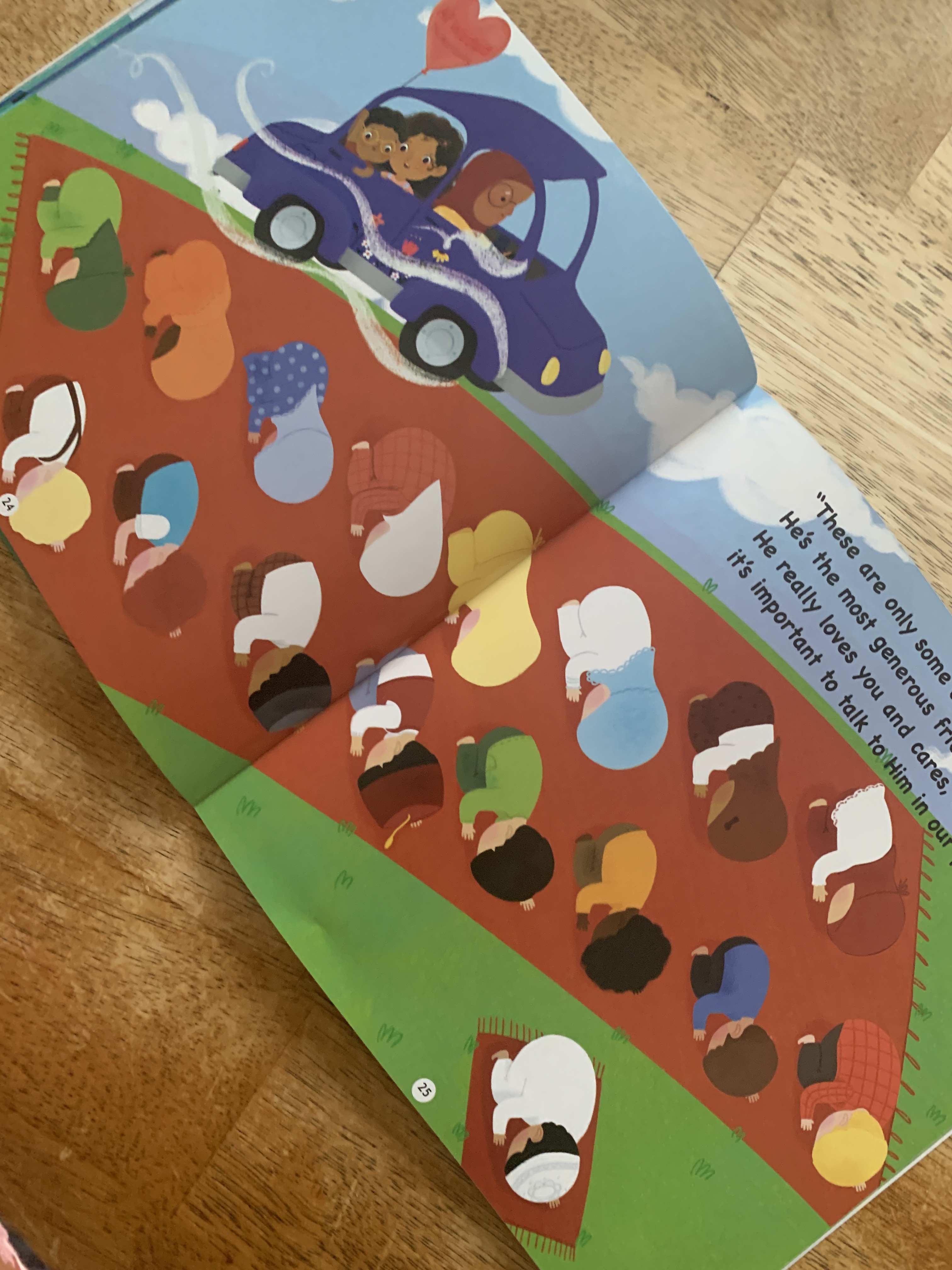
As they head to the mosque to meet Grandad  they wonder if that is where Allah (swt) lives.  Granny tells them no, so they ask if He lives in the sky, when she says no, they wonder about in the trees or in the sea.  Finally she says that they “don’t have to go anywhere to find Allah, His throne is above us where ever we are.”

She then details how we can be reminded of Allah in things around us, nature, animals, land formations and then tells the children Allah is the most generous friend and it is important to talk to Him in our prayers. The children ask what we can tell Him, and Granny shares that we can tell Him everything and anything because He always hears.

Granny then explains that when we do good, we make Allah swt happy and when we aren’t nice we make him sad.  So then the kids want to know why we have to go to the mosque, Granny replies, to be part of a community.

The book is a string of questions, so it doesn’t come across as overly preachy, even though it is Islamic fiction, and the voice is natural.  It sounds like a conversation a grandma and some kids would have, I’m guessing the book was spawned by some real life experiences.  My kids and my mom definitely have this relationship.

 All this though, isn’t too say the book is perfect.  If  you read my reviews, you know there is always going to be a little nudge to try and elevate it from my perspective for the next go round. So with that in mind, the book does read a little long, the tangents get a little away from the simple articulate answer of stressing where Allah swt is, the text runs over the pictures a few too many times, and the people praying are not foot-to-foot shoulder-to-shoulder.  There are no salutations, saw, or asterisks after Allah. The word Jummah is not used although they are going to the mosque on Friday and a lot of people are gathering in the day, and the word mosque is used, not masjid.

The pictures are fun and will appeal to kids, especially when the car goes all magic school bus and starts flying, and going underwater.  I hope this is the first book in the series as it really does have potential to present answers to kids questions in a joyful colorful way.

Book available on Amazon 


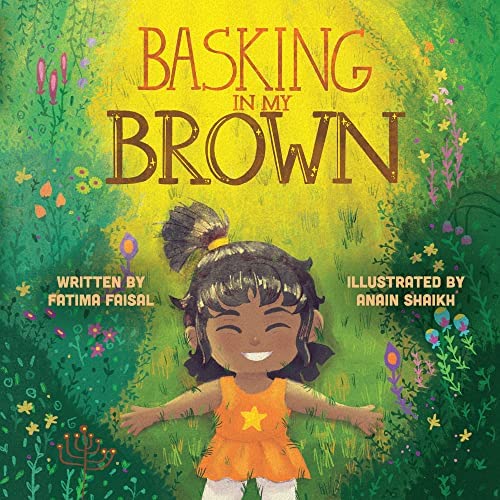
Basking in My Brown by Fatima Faisal illustrated by Anain Shaikh

Standard
Basking in My Brown by Fatima Faisal illustrated by Anain Shaikh

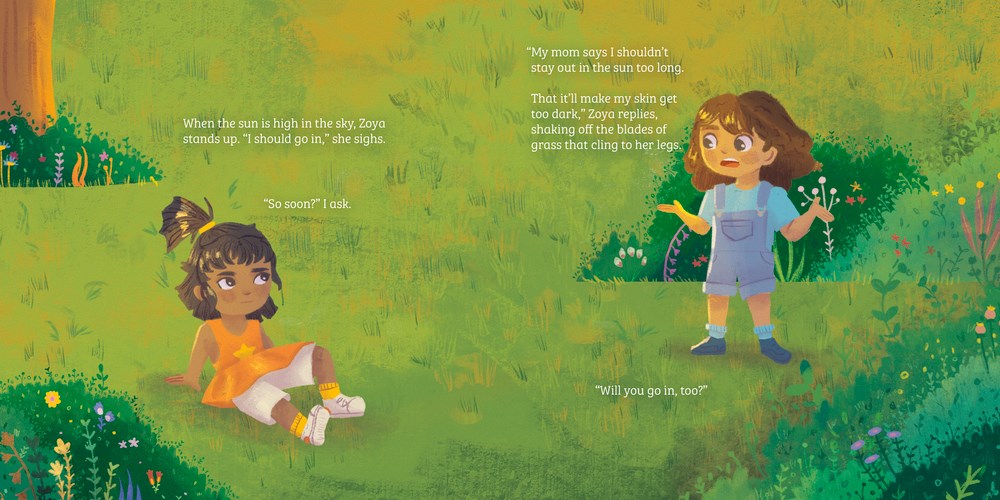
This picture book celebrating brown skin, particularly in girls, and specifically from a Desi culture point of view, takes on the notion of dark brown skin not being as ideal as compared to lighter skin.  If this is not a concept you are familiar with, I don’t think that the book will hit home, but as someone who has heard this refrain of staying out of the sun to not get darker since childhood, aimed at my friends and cousins (I turn red and burn in the sun), I do appreciate this owning and pushing back on a ridiculous colorist mindset. I don’t love the “magic” diction choice, and there is nothing Islamic in the book, save some covered heads that could be religiously inspired, or culturally, or even weather related, and I’m not sure if the author or illustrator identify as Muslim, but I’m sharing anyway because I know young Pakistani girls particularly, hear this colonial mindset messaging still, and I support undermining it.  This book is not about systemic oppression and racism and taking up space, this book is internal cultural acknowledgement of a pointless beauty notion.

A young girl begins the book telling of things she loves: trips to Pakistan to fly kites with her Dada, her mother’s dinner parties, swimming, climbing trees, but most of all she loves basking in the sun.  One day while playing with her friend Zoya in the warm sun, Zoya abruptly says she should go in before she gets too dark.  The protagonist counters that she loves all the shades her beautiful brown turns and equates it to magic.

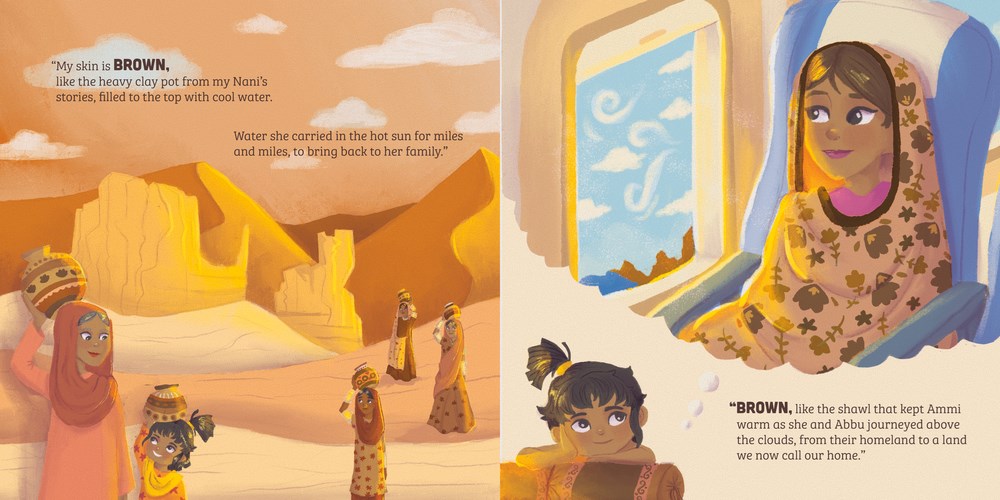
She holds out her hand to show her magical brown skin shimmering, and connects the beautiful brown to the brown clay pot her Nani used to carry water in, the brown shawl her mother wore when coming to a new home, the brown of the henna her sister puts on, etc..  She says her brown skin has its own story of being proud, brave, courageous, soft, sweet, and fearless.

Zoya decides she likes the magic and decides to stay and bask in the sun. The author on the final spread raches out to brown girls to own, embrace, and celebrate their brown skin.

Elephant’s Makeover by Rukhsana Khan illustrated by Ikram Syed

Standard
Elephant’s Makeover by Rukhsana Khan illustrated by Ikram Syed

img_4325

I absolutely respect and appreciate Rukhsana Khan and even my least favorite Ruqaya’s Bookshelf published book is still a good quality book, so I preordered this with such giddy delight.  And yet, when I read it the first time, I didn’t get it.  I put it away, pulled it out again weeks later and still wasn’t feeling it, I repeated this process over and over, and finally, I’ve resolved what I’ve always known: that it is ok not to love a book.  It doesn’t mean I don’t still love and respect everyone involved, but alas, it just didn’t appeal to me.  So, as always, I’m accountable for my thoughts and my thoughts only and you are free to disagree and argue with me, it isn’t personal, and I will try and point out good and problematic elements so that you can make your own decisions based on your preferences and see if the book would be a good addition to your shelves or not.

img_4326

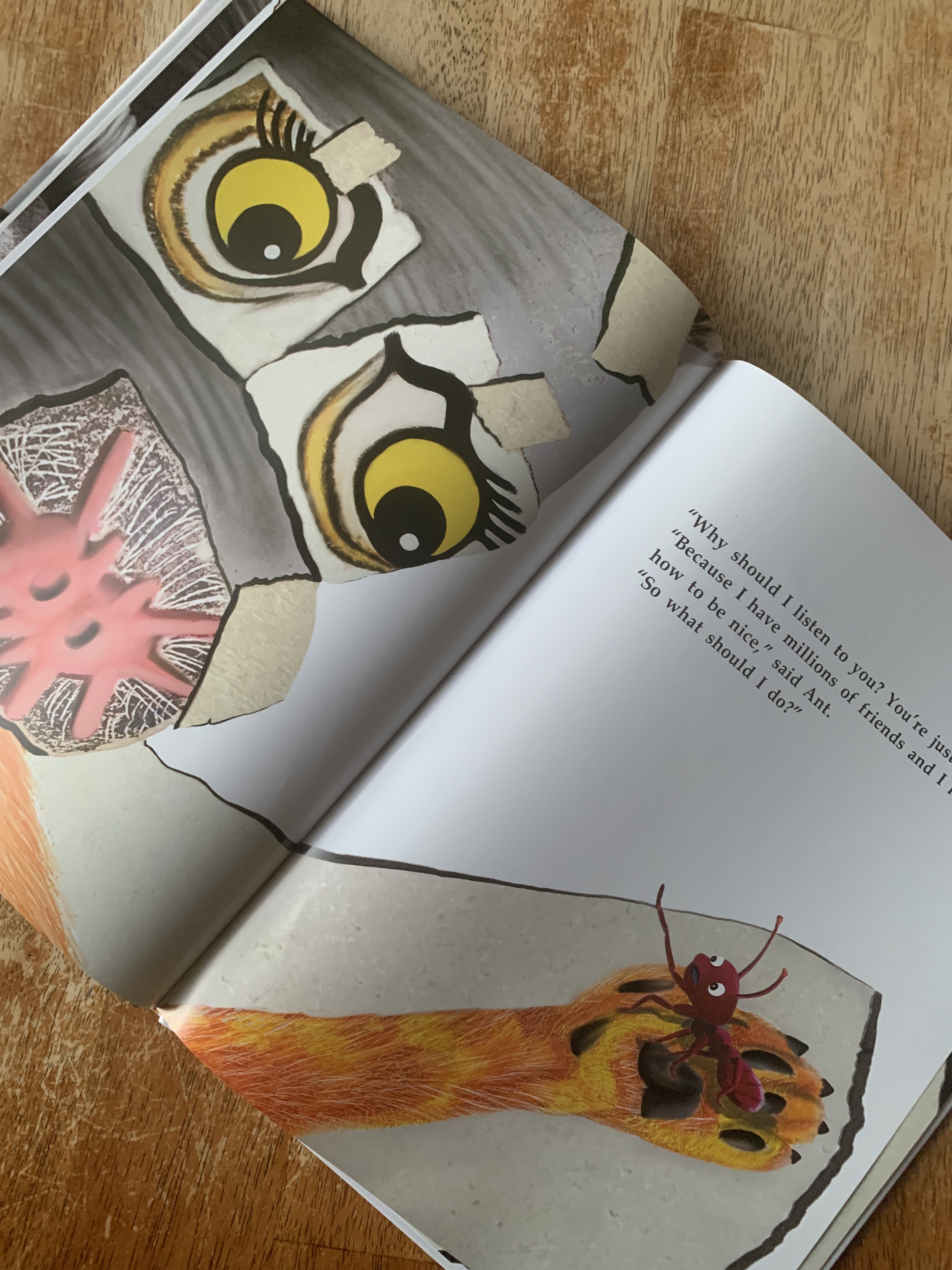
This hardback Muslim authored, Muslim illustrated anthropomorphized book takes the shape of a moral fable in which Elephant has no friends, attributes it to her appearance, forces the insects and animals around her to give her their eyes, waist, nose, arms etc., and then when they still don’t like her is persuaded by ant to return the body parts, apologize and be content to be ant’s friend.

img_4327

My problem I think with the book is that it conflates appearance with friendship without a clear moral, and then Elephant being forced to change by Ant to have a friend seems to reinforce a questionable mindset, even if Ant is more or less in the right.  There is no self reflection on the role of appearance, or what kindness looks and feels like, or even insight into what self confidence, friendship, and body appreciation entails.  It lumps it all together, uses outside influences to get elephant a friend, but doesn’t really articulate any lessons learned or moral to be conveyed.  If I am mistaken and the book is not set to be a moral inspired fable, the climatic joy of the book is simply, what- Do as you are told to have a friend? 

img_4328

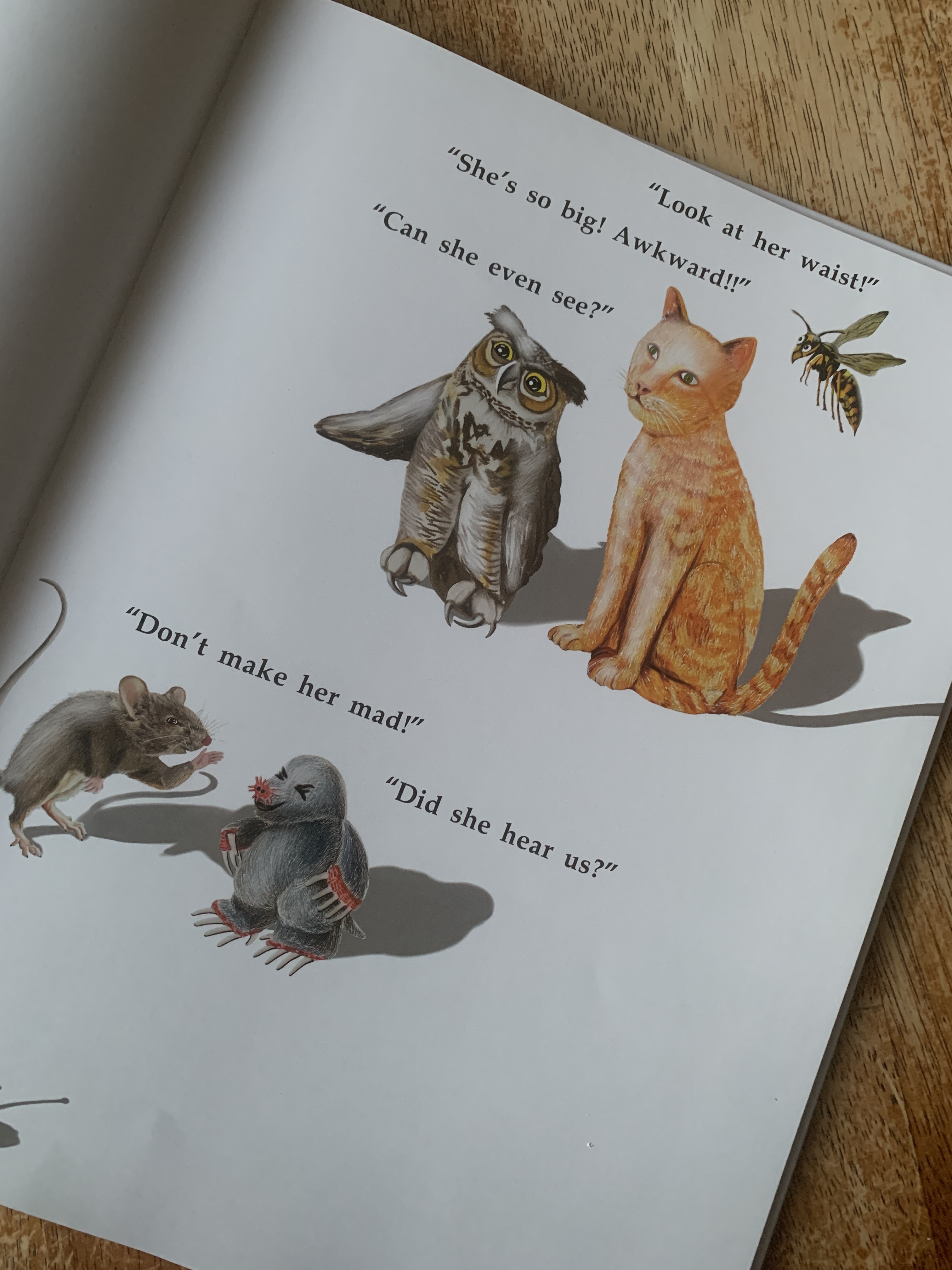
The book starts out with the other animals questioning, but essentially bullying Elephant about her size, calling her big and awkward and wondering if she can even see or hear them.  Elephant then looks in the mirror and picks herself apart, body part by body part. She tells Owl, who has beautiful eyes to switch with her. Owl doesn’t want to, Owl needs eyes to see, but the transaction occurs.  Next up is Wasp, who has a tiny waist, then Mole with a star shaped nose, etc.  The result is a bizarre looking “Elephant” and numerous unhappy, unable to move critters.  Yes, they are all friends, size, nocturnal, predator, prey not brought in to consideration.  The animals leave and Elephant is still friendless and feeling bad.  Ant pipes up that he knows what should be done.  Interestingly Elephant doesn’t want to listen because it is “just an ant.”  Ant responds, “I have a million friends and I know how to be nice.”  So now we are using appearance, having friends, and being nice as synonyms. Elephant agrees to listen, Ant forcefully convinces Elephant to give everything back and apologize. Ant agrees to go with Elephant, once the animals and insects get their body part back they race off in fear.  Elephant is left back to normal but still with no friends when Ant says that he likes her.  So, was Elephant really sorry? Did she learn to be nice? To be a friend? Did she want to give the parts back or did she do it so Ant would be her friend? Did she appreciate the function and beauty of her own body? So many loose ends that don’t show any growth, teach a moral, convey entertainment or joy, or make me get what the purpose was.  It left me, and my children confused.  And again, had we laughed along the way and been entertained, I wouldn’t need a character arc or lesson, but sadly we closed the book having not felt those feels at all.

img_4329

When the cover was revealed I’ll admit I was intrigued by the texture and tone of the elephant, but for some reason the inside pages went from creepy with poignant intent, to a little disturbing, The body parts of the animals are removed and swapped and reaffixed with masking tape.  I’m not opposed to slightly dark humor in children’s books, but I think this could really bother some younger kids that will dwell on the idea of body parts being taken unwillingly.  The text is sparse and presumably the book is for younger readers, so consider this if your children are sensitive.

There is nothing religious or Islamic in the book, nor is their scientific elements to why the animals bodies are the way they are or for what purpose.  It does not discuss environment or relationships in a non fiction manner.  The clear large simple text would suggest the book is for 4-8 year olds.


Call Me By My Name: 99 Names of Allah by Ayesha N. Rahmaan illustrated by Azra Momin

Standard
Call Me By My Name: 99 Names of Allah by Ayesha N. Rahmaan illustrated by Azra Momin

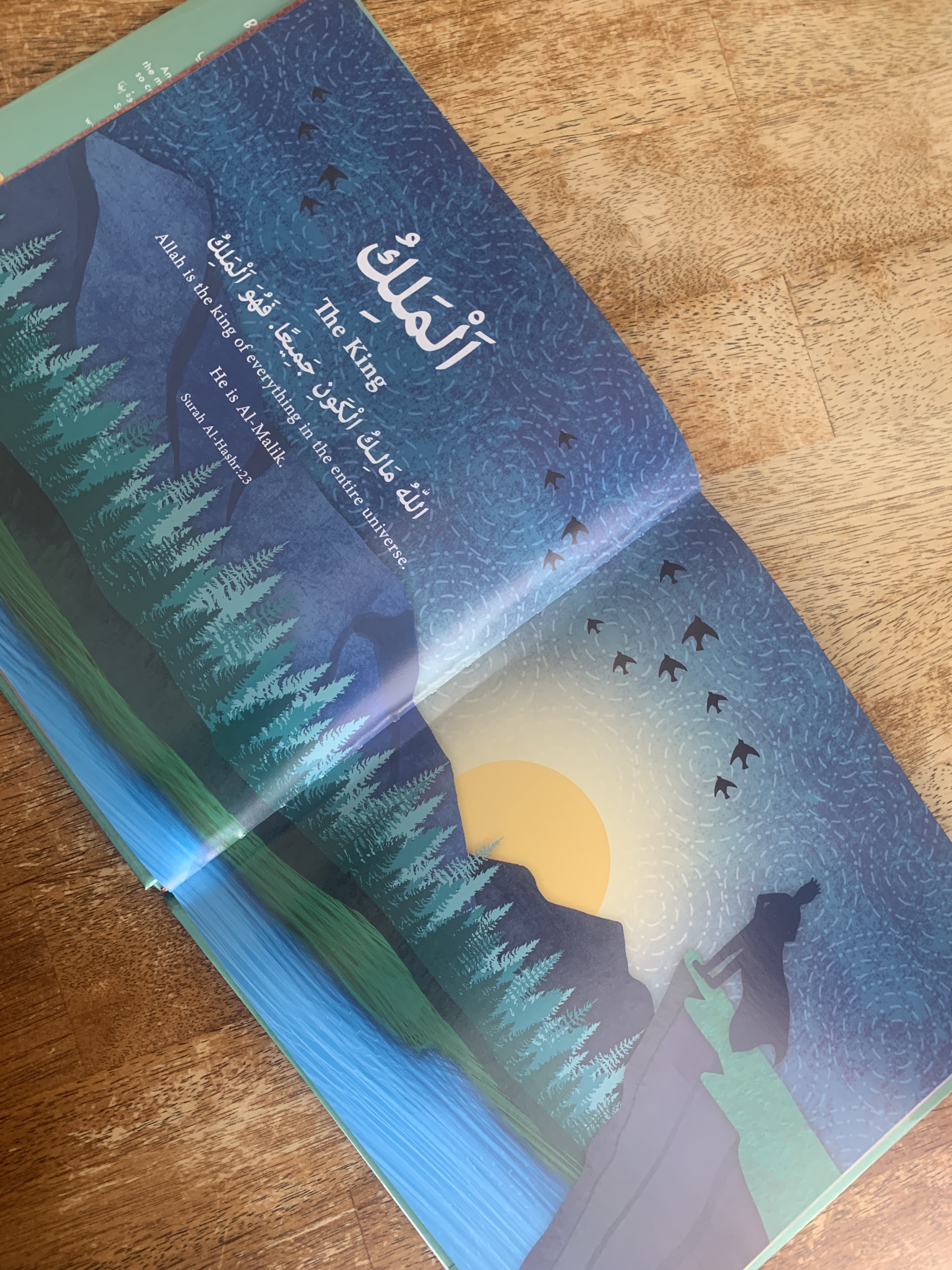
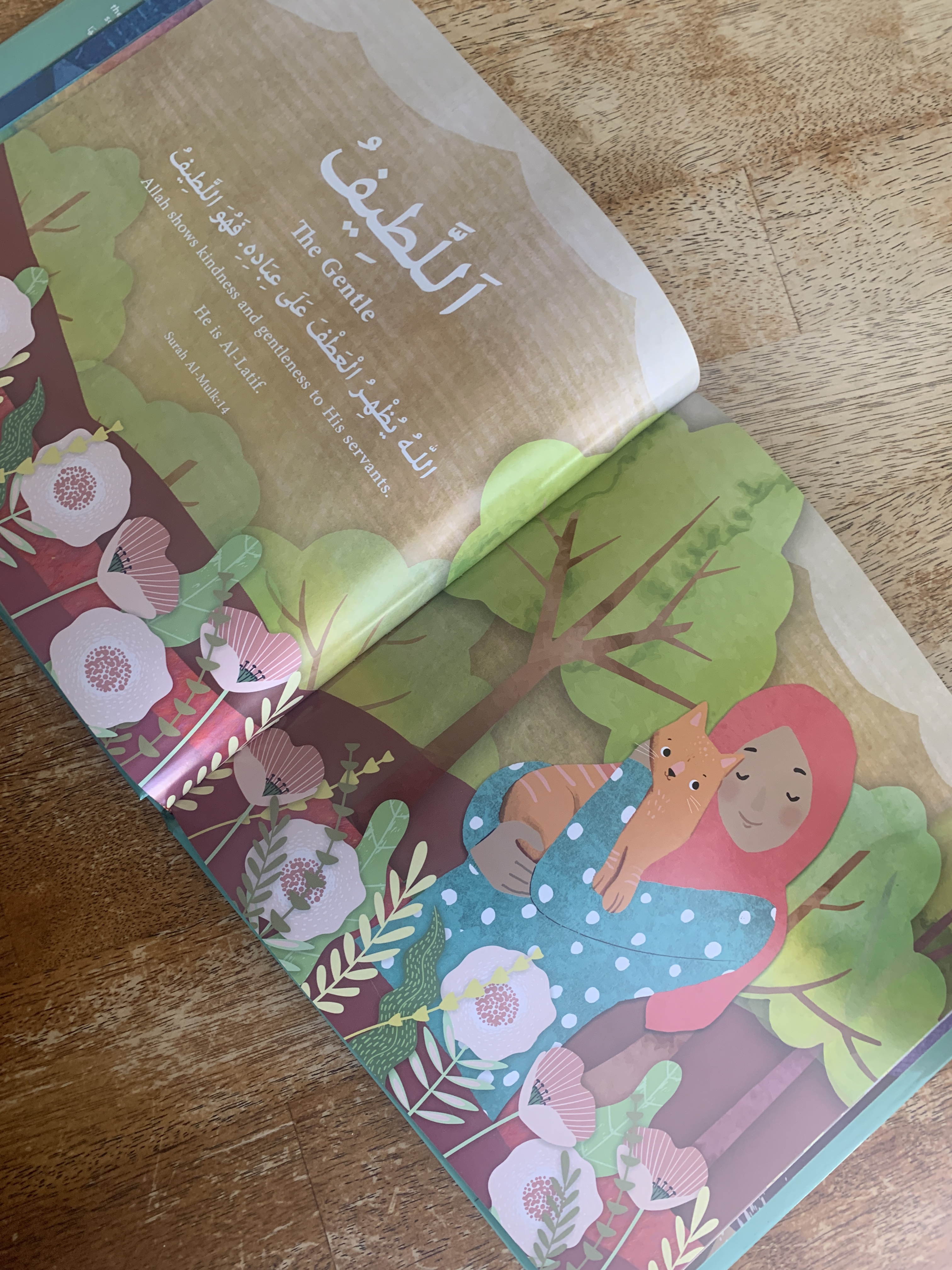
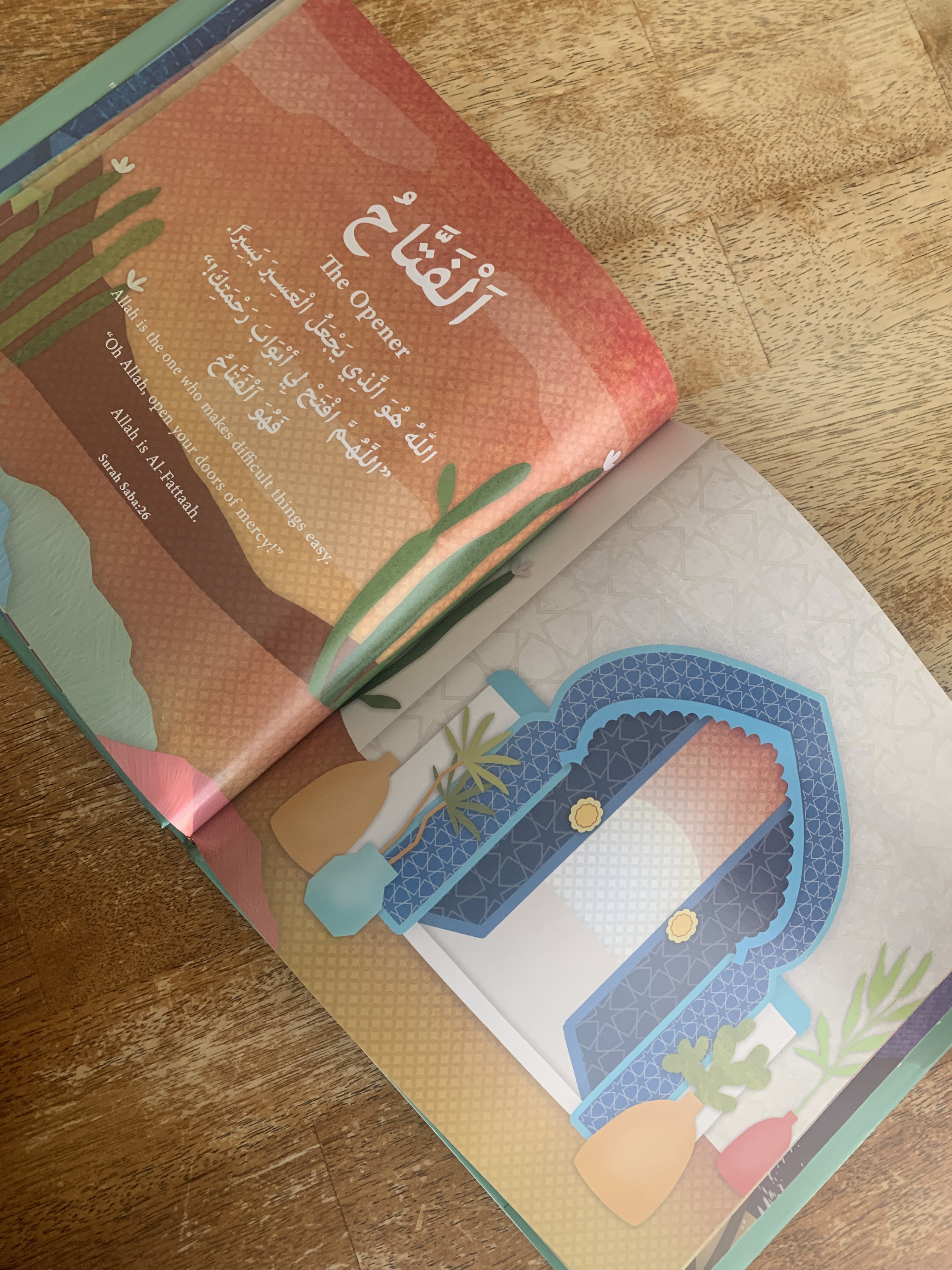
If you are going to put out a book that has been done hundreds of times before; think numbers, alphabets, Islamic phrases- then be sure and make your book stands out.  And while yes there are numerous English and Arabic books of all sizes about the beautiful names of Allah, this book does in fact stand out.  The shiny cover, with or without the dusk jacket, the sturdiness in your hands, the illustrations, the large font and easy to read English and Arabic (with harakat), is an absolute joy to read, look through, and talk about with children four and up.  The book works in a lot of settings for a lot of ages because of its simplicity, presentation, and appeal.  Kids will pull this off the shelf and look at it without prompting, just as adults can discuss the names, and build lessons off of the ayats included.  The versatility of the book is why I’m stretching out of my comfort zone of fictional reads to review this Islamic non fictional book.

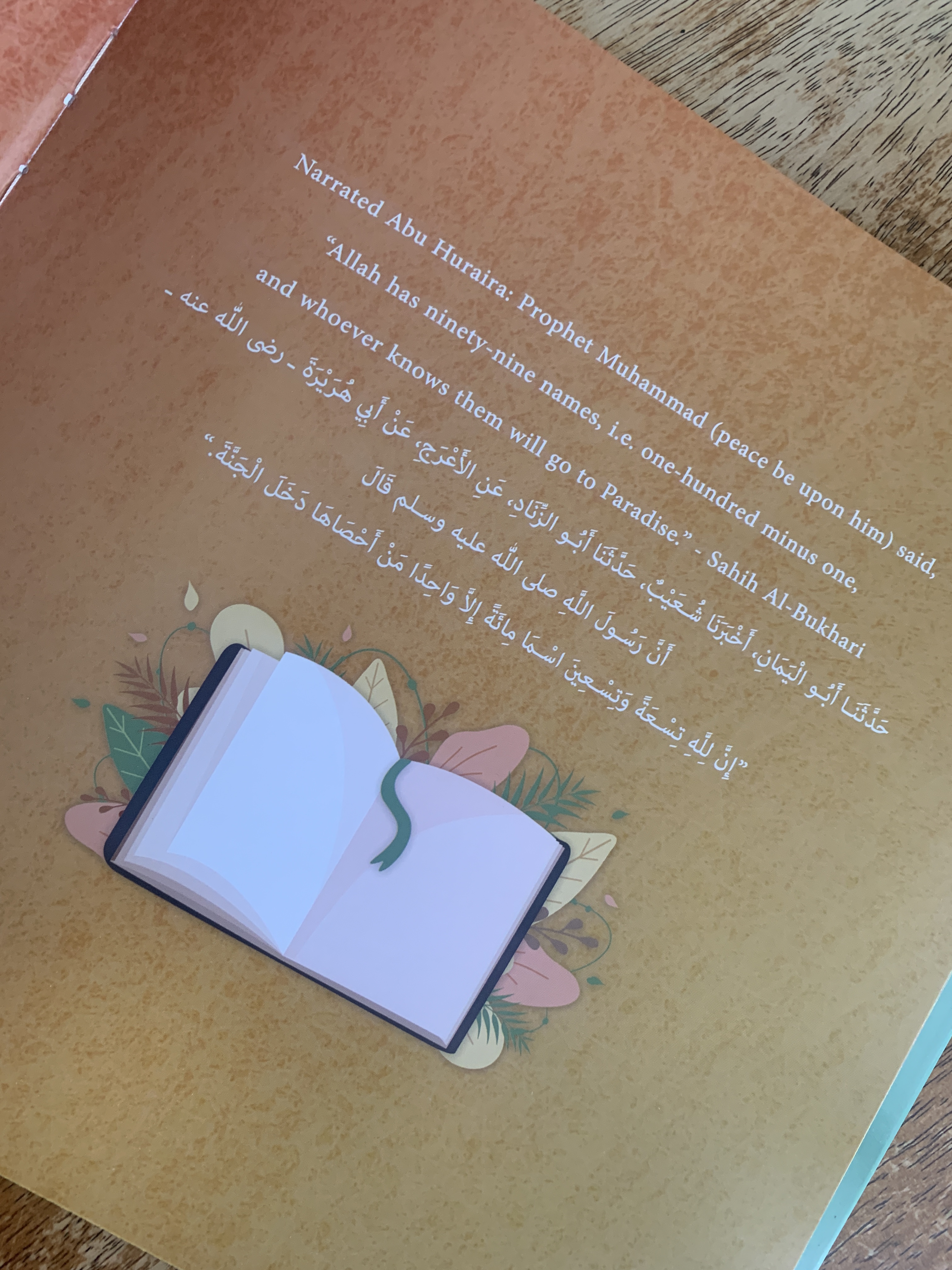
The book starts with establishing that the 25 of 99 names included are those “specifically mentioned in the Holy Quran, with a reference to the surah and aya where each name can be found.”  It shares an aya about the Asmaa Al Husna and a hadith narrated by Abu Huraira and then starts right in.

Most of the names are given a two page spread, a few are only given one, and the English, Arabic, aya, and source are provided.  The illustrations are joyful children and nature scenes.  The book concludes with a spread of all 99 names in English and Arabic with the translations.

You can purchase a copy here.