Category Archives: Eid Al Fitr

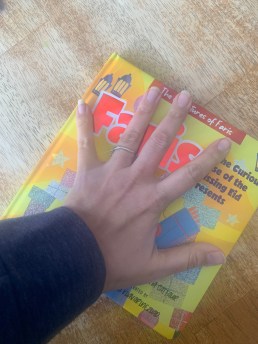
The Adventure of Faris: Faris & the Curious Case of the Missing Eid Presents by Muhammad and Husna Sattaur illustrated by Farimah Khavarine Zhad

Standard
The Adventure of Faris: Faris & the Curious Case of the Missing Eid Presents by Muhammad and Husna Sattaur illustrated by Farimah Khavarine Zhad

img_6999

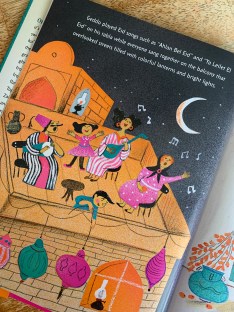
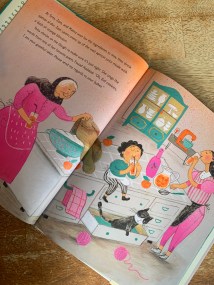
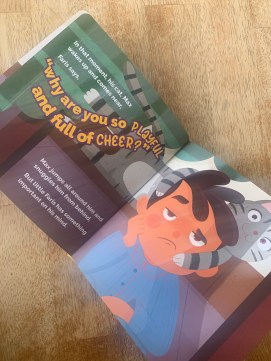
This 22 page padded cover toddler book, is not quite a board book, but the thick cardstock glossy pages are definitely meant for toddler hands.  The book works for both Eid al Fitr and Eid al Adha and my 3 year old finds it silly. My older kids that have walked in and paused to listen to me reading it, as well as myself, feel like a page is missing.  The rhyming story sets the stage of Eid morning and missing presents, but the resolution is abrupt, really abrupt, with no hinting at and the forced rhyme has you wondering who Uncle Sam is in the story.  The 22 pages are bright with Islamic decorations in the house and references to Eid and praying in the text. The excitement and joy are sweet, and the focus is presents, there is nothing about Eid or anything deeper than the story at hand as it stays on level for toddler aged children.

img_7002

The book starts with Faris waking up on a beautiful spring morning, it is Eid and he starts to sing, before tip toing down the stairs in his Eid pjs.  He sees the time and knows they won’t be up til fajr.  So, while kids won’t care, as someone who has read the book now a dozen times, I’m curious how old Faris is that he knows how to tell time, what it means and what time fajr is.  I’m also wondering how it is ok to sing and dance, but then you need to sneak down quietly, and how it is a beautiful morning, if it isn’t fajr yet, it is dark outside.

img_7003

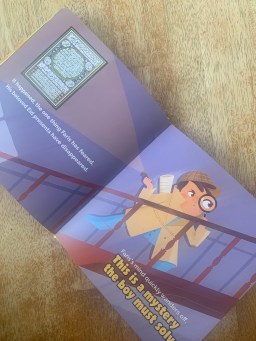
He daydreams in the kitchen before heading off to open presents.  Except the presents are missing. He looks everywhere and imagines a dragon eating them.  I don’t want to spoil where the presents are, but they are found, and he opens them and then his parents wake up.

img_7004

It is a little sad that he opens one at least before his parents come, and I really wish there was a little hinting at what had happened to the presents, it really feels like a page is missing.  The book was published in 2021 so hopefully they will edit the text for a next printing.

img_7001

I got mine from Crescent Moon and you can purchase a copy by clicking this link here, if you use my initials ISL (Islamic School Librarian) at checkout you will save 10%.  


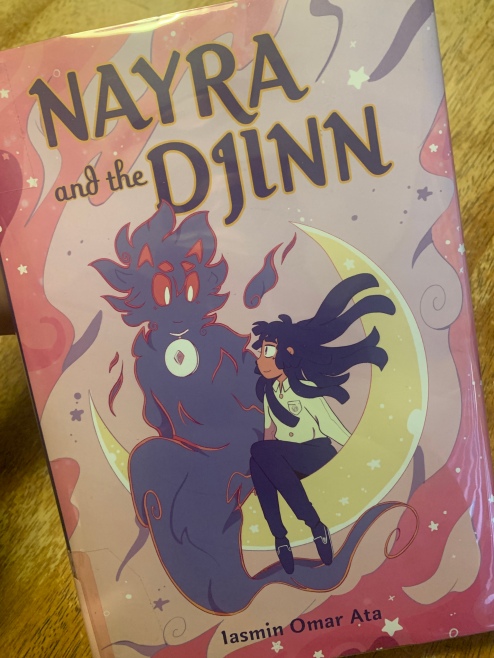
Nayra and the Djinn by Iasmin Omar Ata

Standard
Nayra and the Djinn by Iasmin Omar Ata

img_6973

Set in Ramadan this graphic novel for middle grades has a coming of age theme brought to life with fantasy, religious practices, and storylines of bullying, acceptance, and folklore.  Nayra is fasting, she prays, she says bismillah and Assalamualaikum, her  practice of her deen is never in question and by and large I don’t know that anything is “haram” in the Islamic representation.  Yes, she says bismillah in julus, the sitting position of salat, there is sihr, magic. done by the djinn, and a lot of liberties about the ghayb (you can’t really disprove them), but honestly my biggest problem with this book is that somehow even though it is a graphic novel, more visual than text, there is way too much telling and not enough showing.  The reader is told that there is bullying, but only shown that one girl calls her “baba ghanoush,” we are told over and over that she is friends with Rami and that she needs to fix the relationship, but we never see what the friendship was before, only the forced awkwardness that it is now. The inside flap of the book stereotypes the “strict family,” but we never really see them being overly demanding or difficult, and the conclusion is very naïve with both the two girls and the two djinn resolving everything on Eid. I wanted to care about the characters, but never felt a connection to their stresses, traumas, and relationships, and many mirror my own life.  In full transparency though, I must acknowledge to you all, that I do not read a lot of fantasy graphic novels or even comic books, if the choppiness, and lack of depth is what makes the genre work for others, then this book will be fun with its pink and purple pallet and tracking of the Ramadan moon.  I really might just be the wrong person to review this OWN voice djinn fantasy authored by a Palestinian Muslim who like her fictitious djinn goes by they/them pronouns.

SYNOPSIS:

Nayra is being picked on by Tanya for messing up in volleyball in PE, and gets to calling Nayra “baba ganoush.”  When the book opens Nayra fasting for Ramadan is what Tanya chooses to attribute Nayra’s lacking skill too, and Nayra is ready to find a new school.  Her family offers no support, her older siblings set the bar high and got through by ignoring the bullies, and expect her to do the same.  The one other Muslim at school is Rami, and Nayra needs a break from her, they meet to break fast every evening, but Rami is exhausting.  When an online forum somehow gets a visit from a djinn, Nayra offers to be the anchor that Marjan needs to escape the ghayb and exist in the human world.  Marjan’s past comes back to haunt them, and when Zirkouniya arrives, there is only so much protection the month of Ramadan can offer as Eid arrives and the djinn are returned to full strength.  Djinn and human alike will have to own up to their mistakes, forgive others, and rebuild the relationships that matter.

WHY I LIKE IT:

I like the Ramadan centering, and appreciate that the coming of age story line was not an identity crisis about Nayra’s faith.  I  finished the book feeling like I didn’t understand much.  There was a lot of build up for a strict family, and djinn wisdom, that just didn’t exist.  The conflict with the friends was superficial and the resolution the same.  Maybe I missed the visual resonance as I tend to enjoy lyrical writing and relatable text, but the story seemed really simplistic, and the characters flat.

I honestly don’t know if the liberties of the djinn world and djinn themselves goes too far or if folklore, mythology, and fantasy give it fictional protection.  There are details that perhaps come from culture, or are completely made up, I don’t know.  Djinn in Islam are real, they are made of smokeless fire, some are good, some are bad, they have genders, and families, and feelings, and communities.  Outside of that, I don’t know much, and do not presume to, when I sent @bintyounus some of the pictures from the book, she remarked, “Djinn are part of the Ghayb/unseen, So it’s not like we say oh none of it is true, but we also don’t take it as 100% true.”

The magic is minor just a fixing of a flower and flower pot, so in reality the only fantasy are the details about the djinn and the journey to the djinn world.

FLAGS:

Lying, bullying, magic, sneaking out.

TOOLS FOR LEADING THE DISCUSSION:

There is not enough in the book to discuss in a book club, and because of the lacking resonance, I don’t know that most kids would read the book or be interested in it. I can see it being thumbed through, but I don’t think it would be finished by Muslim kids at the Islamic school, or by my own children.  Those that know the Islamic view of djinns won’t find that enough of a hook when the story inside is about a friendship, and not a particularly deep or fleshed out one.  They might see the bullying as relatable, but being called baba ganoush doesn’t really seem that bad compared to what many endure and pining for friends, when you have a very loyal friend, also will probably be met with some confusion.

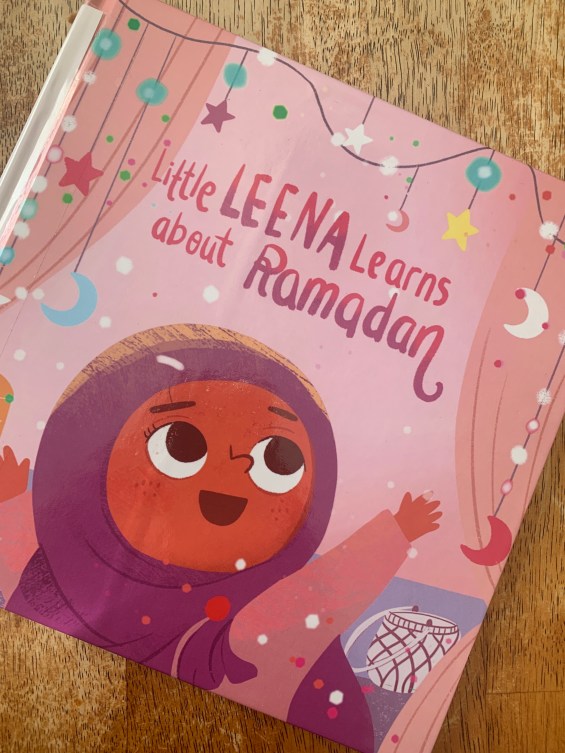
Little Leena Learns about Ramadan by Zainab Fadlallah

Standard
Little Leena Learns about Ramadan by Zainab Fadlallah

img_6913

I was excited to see this 20 page book in my public library, and then once I started reading it I was equal parts frustrated, disappointed, and honestly a little upset.  The book is an example of what I posted a reel about a few days ago, about an over used, unrealistic, textbook fact share of Ramadan from a kid’s perspective in a plotless book.  In this book it is Little Leena waking up from a nap smelling something delicious and finds her family eating and wondering why.  She is told by her sister it is the ninth month of the lunar calendar, the new moon has been sighted.  Oh sure there are some mentions of cakes and cupcakes, but seriously, come on, what three year olds have a working knowledge of moon phases but don’t know what Ramadan is, know what “blessed Ramadan” means but have never heard “Ramadan Mubarak.” Ramadan is explained to be special because we try and be extra kind, and not because it is the month we are told to fast, and we get more blessings for being kind, and the month the Quran was revealed.  Yes I appreciate that hijabs are not worn in the house, but are worn outside, and the excitement and joy are visible, but how can you have a book this centered on Ramadan that contains no Islam in it.  You can’t say on the back that it is learning about “what the occasion is all about” if there are no religious inclusions: it does not say that it is an act of worship, that fasting is prescribed by Allah swt in the Quran, that we pray extra, there is nothing, it doesn’t even attribute Ramadan and Eid to a religion, sigh.  My frustration isn’t just in this book, it is in this growing trend that this book is a part of sadly.  Why have an OWN voice adorably illustrated book claiming to be teaching about Ramadan, when the religion is completely absent? If it was a cultural, or family traditional book of joy with or without Ramadan facts blended in, I might see what it was trying to accomplish, but a book for early elementary, from a toddlers perspective that is so formulaic misses the mark in my opinion, both in educating the target audience or in helping young Muslims feel seen.

img_6914

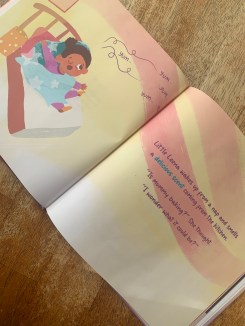
The book starts with Little Leena waking up from a nap and smelling something delicious.  She wonders if mummy has been baking cookies, or cupcakes with sprinkles, or maybe a chocolate cake.  She decides to go have a look and finds colorful lights and decorations and a magnificent chocolate cake.  She also finds her family sharing a meal, she asks what is going on and learns that it is Ramadan.

img_6915

Leena’s sister Safiyya explains that “Ramadan is the ninth month of the Lunar calendar” and “it starts as soon as the new moon is sighted.”  She further explains that “Grown ups fast from when the sun rises till the sun sets”  she says brave kids are welcome to try too.  I’m not sure what being brave has to do with fasting, to me determined or even strong would be better words to use as fasting isn’t scary, and kids are encouraged to try, not forced.

img_6916

Leena then wants her sister to explain what fasting is, and Leena can’t believe it means no food or drink during the day light hours.  Leena asks what makes Ramadan special, and is told, “Ramadan is special because during the month we try to be extra kind and do as many good deeds as we can.”  It does not say why we try and be extra kind though, before reminding that we also “try to remember to be grateful for all the things we have.” It is worth noting that in the illustration on this spread it has a Ramadan sign, that is spelled Ramadhan, not that one transliteration is write or wrong, but to have both in a children’s book is a little confusing.

img_6917

Leena then finds some presents and Saffiya explains that they are for Eid when Ramadan is over and we wear new clothes and get presents.  The two then discusses their love of presents and saying Ramadan Mubarak.

img_6918

The 8.5 inch square book is short, but the image quality and hardback binding in this library edition is nice, it just adds nothing in my opinion to the genre, to conveying to Muslim and non Muslims what Ramadan is and why it is important.  I worry that libraries might think this is good as our Ramadan reads are and not budget to get much better, engaging, reflective stories as a result.

Ramadan Mubarak by Saniyasnain Khan

Standard
Ramadan Mubarak by Saniyasnain Khan

img_6800

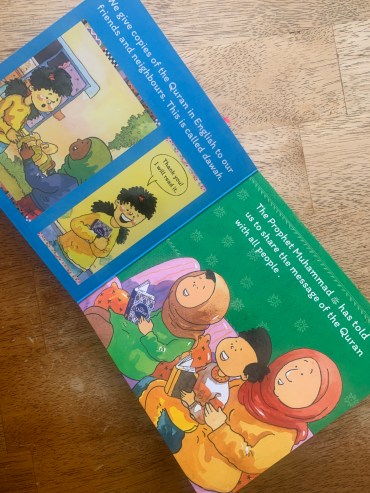
I don’t know how I missed this board book from 2020, possibly because I have the old school original Goodword one I didn’t think to acquire this one, but now that I have it, I’ll share my thoughts.  The illustrations are the same as the original, with a few placement rearranging and color changes, but the text (unfortunately) is completely different and the binding is now a small 5×5 22 page board book.  The book is all over the place with what is included about Ramadan, there is no story, and at times the vocabulary is definitely too advanced for little listeners.  Honestly, the book is great for little hands to carry around and for parents to point out important parts about Ramadan in the illustrations to talk to toddlers and preschoolers about, but the text is really hit and miss.  As my mom, a veteran preschool and ESL teacher would say, “don’t read the story, tell the story.”  I don’t regret buying it, but I doubt I’ll ever read it cover to cover as written to my three year old, he doesn’t grasp the need to hand out Qurans in English to our friends and neighbors, but he benefits from the page before saying that “Ramadan is the month of the Quran” and seeing the smiling Muslim faces praying, caring for others, and praising Allah swt.

img_6802

The book starts with Ramadan starting and bringing joy and happiness as it fills our hearts with peace and love for Allah.  It states we fast from dawn to dusk which makes us hungry and thirsty, but that these feelings “remind us that food and water are great blessings from Allah.”  I love this point about remembering our blessings from Allah, and that it then mentions shukr, and being thankful.  It then says that Ramadan is the month of the Quran and that we read it and need to apply it in our lives.

img_6803

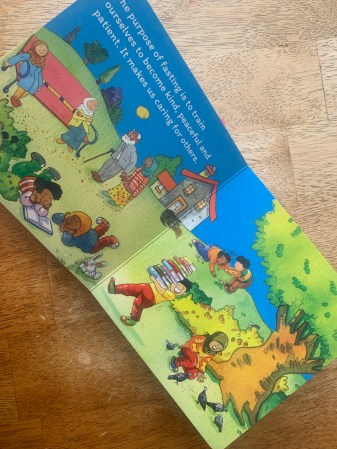
I don’t understand the dawah page, and I wish the following page with a hadith was sourced.  It then returns to the purpose of fasting, this time saying we do it to “train ourselves to be kind, peaceful, and patient.  It makes us caring for others.”  These are great lessons to come from fasting, but we fast because Allah swt prescribed it for us.

img_6804

The book stays on this theme of fasting reminding us about the poor and needy and encouraging us to feed and help them, but doesn’t mention zakat or charity by name.  It then defines taqwa and says fasting helps develop it before spending four pages on Lailatul Qadr, using phrases such as “Night of Destiny,” “innumerable angels” which might need some explanation, and taraweeh was never mentioned.

img_6801

The book concludes with Ramadan ending and Eid al Fitr being celebrated. Goodword seems to recycle and update parts of books every so often, and I hope they will tweak this book to be a better fit for toddlers and preschool aged readers.  Board books are important, the illustrations fun, but the text needs some attention to truly make the book a staple in Muslim homes.

I purchased mine here from Crescent Moon Store if you use my initials ISL (Islamic School Librarian) you can save 10%. Happy Ramadan.

Moon’s Ramadan by Natasha Khan Kazi

Standard
Moon’s Ramadan by Natasha Khan Kazi

moon

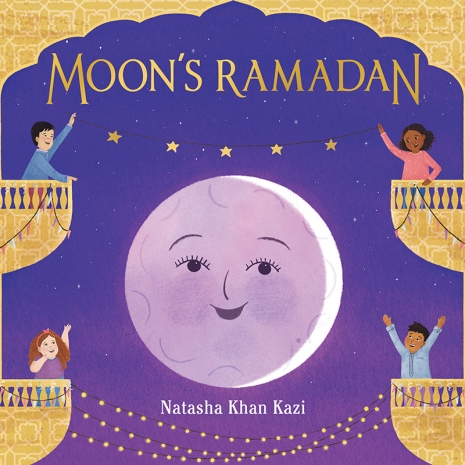
This beautiful lyrical book has a simple premise of the moon looking down on people celebrating Ramadan as it circles the Earth, but stands out as being unique thanks to the poetic language and engaging illustrations.  Each spread shows moon in a different phase over a different country, and the joy, activities and worship that Muslims are partaking in during the blessed month.  I’m embarrassed to say, I didn’t realize that the author is also the illustrator until I sat down to write this review, and honestly it makes sense, as the story text and illustrations work seamlessly together.  The tone of the book, the details in the pictures, and the rich language make this a good read for a large audience.  Little ones probably won’t fully understand the poetry, but they will be mesmerized none-the-less and feel the excitement.  My three year old calls the moon all year round, the “Ramadan Moon” and he understood that the Moon in the story is excited seeing us celebrate and worship.  He consistently would still be peeking in windows or searching the scenes, not quite ready for me to turn the page long after the text was done being read.  Older kids will appreciate the shared global bonds of Muslims and the cultural specifics too.  They will grasp the information shared and beliefs touched upon in the flowing words that do not preach.  My only criticism is that the book starts with Moon saying, “Hello.”  In an Islamic centered book I would have expected to see Assalamualaikum, especially since it appears on the page where moon is above Egypt, so I’m not sure why the English greetings is used.  The book has a glossary and notes at the end making it a great addition to Muslim and non Muslim spaces alike.  I plan to read the book for a Masjid story time as the large hardback book will work just as well for a group of kids as it does at bed time.

Told from a personified Moon’s perspective, the book begins with Moon smiling at Earth as people all over the world excitedly point and look up at her, but once they see her, they rush off to prepare for the month. Over Turkey, the Ramadan Drummer awakens sleepy people for suhoor and over Indonesia he sees families gathering for iftar. As each day passes Moon grows fuller watching the children do good deeds and people sharing their wealth.

Nights of Taraweeh and listening to the Quran over Somalia, sharing treats in the United Kingdom, and  interfaith among neighbors in the United States bring joy to Moon.  And as the waning crescent sees henna being put on hands in Dubai the month is coming to an end.  People once again look to the sky, but they cannot see Moon in Argentina, Moon is new.  It is Chaand Raat and then it is Eid.  Moon is back in Egypt watching people celebrate and then the world returns to looking up at Moon and she beams with love and gratitude.

There are diverse characters of a variety of skin tones, mobilities, ages, body size and abilities featured all throughout the book in a positive and inclusive normalizing manner.  The backmatter makes the concepts more accessible and the book work on different layers.  I really enjoyed the book and am excited to share it.  I purchased mine at Crescent Moon Store where using my initials ISL (Islamic School Librarian)  will save you 10% it is also available here at Amazon Even my local public library has it on the shelves already! Happy Ramadan!

Ramadan Nights by Jenny Molendyk Divleli illustrated by Halime Nur Sevim

Standard
Ramadan Nights by Jenny Molendyk Divleli illustrated by Halime Nur Sevim

img_6768

This rhyming softcover picture book sets the tone of the month with its large heartfelt images on cardstock thick pages.  The book mentions tarawih, reading Quran, suhoor, iftar, compassion, Laylatul Qadr, eid, but does so in a way that reflects what Muslim kids know and love about the month.  It is not overly descriptive, nor does it define the terms. It shows Muslim kids in Ramadan living their lives and draws out the emotional joy felt in acts of ibadah, not in the gifts and parties alone.  The rhyme works and isn’t terribly forced and the 8.5 by 11 size and the introductory framing of major Ramadan activities makes the book a good addition for toddlers and up. I plan to use this for a masjid story time for Muslim kids ages 4-9, but it can be used in non Muslim settings easily as well.

img_6770

The book starts out with decorating the home for Ramadan, as the city decorates outside too.  Ramadan has arrived, the moon has been seen with binoculars, and Tarawih at the mosque is where everyone is praying, and kids are playing.  Mornings start with the Ramadan drummer waking people up for suhoor, but mom is already up cooking.  The first few days of fasting are hard waiting for iftar, implying it gets easier.

img_6771

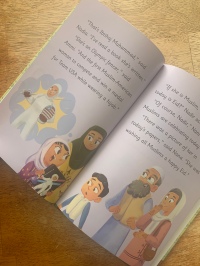
The kids and their parents make duas and thank Allah for their blessings as well as share their blessings with neighbors as they learn compassion.  The kids practice reading Qur’an every day with Grandma and before you know it, it is the last ten nights and Laylatul Qadr and then eid, alhumdulillah.  The 32 page book ends with prayers of gratitude and hope that Ramadan will be seen again.
img_6773

The book really is well done, there is no plot or story, but it introduces the month to little ones, reminds older ones what to expect and does so with accuracy and mirroring.  The book will lend itself to spark discussions about what a readers’ family can look forward to in the month, how one should behave in a masjid, perhaps some Quran goals and some appreciation for parents.  The poor mom helps decorate, stays up early to cook suhoor, cooks yummy iftar, and lays out Eid clothes all while wearing hijab.  InshaAllah a point to mention when reading how amazing moms (and dads) are in making Ramadan memories while fasting themselves.

img_6772

I purchased mine from https://crescentmoonstore.com/ if you use my initials at checkout ISL (Islamic School Librarian) you can save 10% or click this link directly to go to the book.

Ramadan Mubarak!

Mr. Men Little Miss Happy Eid by Roger Hargreaves

Standard
Mr. Men Little Miss Happy Eid by Roger Hargreaves

mr men

The nostalgic cast has reassembled recently, and now have an Eid title available.  Whether you grew up with Mr. Men and Little Miss or have never heard of them before, this book covers the basics of an Eid day celebration with (familiar) characters such as: Mr Greedy, Mr Bump, Miss Splendid, Mr Funny, Little Miss Scatterbrain and more.  The characters’ friend Aleena is fasting for Ramadan, the colorful crew help her to plan, and finally they all join in for the celebration.  The 32 pages are silly and random at best, but with a little discussion to help bridge the British to American English (if needed) ages three and up will enjoy the funny characters, seeing Aleena in hijab, and relating to the activities mentioned.  I love that generosity and forgiveness are included in the messaging, but was really irritated that a musical band is how they celebrate Eid night, and that Eid is compared to Christmas with gift giving.  The book is not written by a Muslim, so perhaps I should be forgiving about the Christian holiday comparison, but why write a book about Muslim joy, if you won’t let the Islamic holiday be enough on its own?  Thank you to Shifa @Muslimmommyblog for gifting me this after making fun of me for being old!
img_9333

Mr Greedy’s friend Aleena is fasting, and Mr Greedy breaks his fast nearly every hour so he is helping her.  Little Miss Inventor is out with her telescope and sees the moon, it is time for Eid.

img_9334

The days before Eid had been spent cleaning and decorating with the help of Mr Rush and Mr Bump.  They weren’t very helpful.

img_9337

Ramadan is also a time of generosity.  The football club receives donation, but what will they do with Mr Silly’s grandfather clock donation.

img_9336

Aleena puts mehndi on and is smart enough to not let Little Miss Naughty help, Little Miss Scatterbrain was not so wise.

img_9339

They all get dressed up, they give each other gifts, and share a meal. They then all settle arguments and forgive each other.

img_9338

Finally, they head to an Eid fair in town and eat treats while they watch a music show.  The book concludes with some factual information about Ramadan, Eid, and Zakat.

Title is available on Amazon.

The Most Exciting Eid by Zeba Talkhani illustrated by Abeeha Tariq

Standard
The Most Exciting Eid by Zeba Talkhani illustrated by Abeeha Tariq

the most exciting eid

I was really excited for this book, I even contacted Scholastic USA and the author to see how we could get it here in America, but once I received my copy from the UK, I was disappointed.  It offers nothing new to the available Eid titles aside from the pretty illustrations. It is a rather forgettable story, with nothing more than surface level growth, predictable emotion, and a formulaic retelling of a basic Eid day.  Meant for preschoolers (3-4 year olds) the story will suffice as an introduction to Eid and reinforce the importance of sharing with others, but anyone older will find the story lacking unfortunately, and question why they didn’t go for Eid salat, if the cousin was even upset about not getting to ride Safa’s new bike, if the neighbors are poor and needy, and if they have gifts for neighbors or are just giving out random leftovers. Five years ago when reasonably priced brother sister duo books celebrating Eid were popping up everywhere, this book would have warranted excitement of representation and Eid joy, but the quality has elevated and while there might not be anything “wrong” with the book, it still feels like it sadly falls short.

img_8977

Safa and her parents see the new moon and that means it is Eid.  She is so excited as her mom puts henna on her like every year, and her dad brings out the box of decorations.  At night she is anticipating presents, gifts, new clothes and food that she can hardly sleep.

The next morning she comes down in new clothes, prays, asks Allah for a new doll, a colouring pencil set and a bicycle.  Guests come over, even Alissa her cousin. She opens her presents revealing she got everything she asked for.  Alissa calls after Safa, but Safa doesn’t want to share, she’s been waiting for this bike forever. Since sharing is the point of the story, it is worth noting that Alissa in the text shouts after her and in the illustration is shown to be calling out, there is no reinforcement that Alissa even wants to ride the bike.  I suppose I’m glad that Safa feels it, and regrets it later, but it is subtle and I don’t know that a 4 year old will even register that, that is implied.

img_8978

Mom then calls to Safa while carrying two huge purple bags to come with her to share joy and food with those in need.  Safa adds some of the treats she has received in to the big purple bags and they hand the items out to their neighbors. I love that they are visiting their neighbors and it brings the giver and receiver joy, but the set-up is that neighbors and those in need are one in the same, and I think that is conflating two different things.

Some neighbors get small gifts, one a potted plant, another homemade looking food, and then there is one bag left, somehow the purple huge garbage bag sized bags have shrunk to being a shopping bag size and the next recipient is a surprise: grandparents.

img_8979

The mom and daughter join the grandparents for desi cultural foods of samosas, kebabs, biryani.  Dad does not join them, and I’m not sure why the grandparents didn’t come to the party at Safa’s house? I also wondered if the party at the house was still happening, because once Safa realizes she enjoyed sharing, her parents and Alissa are seen outdoors, with the little girls on bikes and Alissa asking her cousin where she went.

There is a two page spread glossary at the end which defines words that are not in the text, but is informative.  It mixes “cultural” words such as Allah Hafiz being defined as being a common way among Muslims to say goodbye, which technically isn’t wrong, but it is an Urdu word and only used by Desis.  It isn’t in the story, so it seems off to me as well.

img_8980

The illustrations are the highlight in the book.  They are vibrant, expressive and engaging.  The mom seems to have a dupatta on her head, it might pass for hijab, but she has wavy tendrils showing on the side, even the grandma shows much of the top of her hair.  Neither the father in the story or grandfather have beards.

After Iftar Tales arranged by Bismillah Buddies

Standard
After Iftar Tales arranged by Bismillah Buddies

after iftar tales

This book’s beautiful dark blue cover with sparkly stars feels good in your hands and looks lovely on the shelf.  It is a collection of 10 short stories presumably to be read by an adult to a child or children during Ramadan and has its highs and lows.  As often is the case in anthologies, some are written better than others and while I particularly liked two of the stories contained, I couldn’t help wishing that the entire collection would have been better edited.  I don’t know any of the authors, or their ages, and there is not an intro or conclusion detailing how the stories were selected or compiled, but as a whole, the grammar errors (spaces before and after commas and periods), failure to spell out numbers less than ten, and the overall plot holes in so many of the stories, makes it hard to love this book.  Something about judging a book by it’s cover would seemingly apply here, the illustrations are decent, the topics and themes covered are important, but the finishing is lacking, and the book really had a lot of potential.

SYNOPSIS:
The ten stories cover Ramadan in different ways, and do not get repetitive.  With different authors and illustrators and pictures on every other page at a minimum, the books presents well.  Many of the stories are adequate, but largely forgettable as the plot holes just made me and my kids dismiss them.  A few are too lengthy and wandering, but there are two that even despite writing obstacles, thematically were memorable:  “A Ramadan Surprise” by Malika Kahn and “Iftar in Space” by Tayyaba Anwar.

“A Ramadan Surprise” is written in rhyming verse and discusses the need for wheelchair accessibility at masjids.  Focusing on a young girl it also hints on the importance of accessibility for the elderly.  This is such a needed and important reminder and I love that it is present in a book that is positioned to be read and thus hopefully discussed.

“Iftar in Space” similarly opens itself up to be discussed and marveled at between a child(ren) and an adult: how would you fast and pray if you were on the International Space Station. This connection could then be made for people that live near the poles, and how science is valued in Islam and so much more.  I love that Islamic information is seemingly sourced, but I would have loved a line or two at the end clearly articulating that in fact this is what this scholar or these scholars have declared.

WHY I LIKE IT:

At first it didn’t bother me that the text was so small, but mid way through, it started to because the pictures are so inviting and regular.  If a child is snuggled up with a reader looking at the pictures it is impossible for them to follow along. I get that that is kind of the point, but with huge margins, the text size can easily be increased.

I don’t know why the book doesn’t seem to have been edited.  The cover and illustrations and binding are all decent to high quality, the cost of the book for consumers is high, so I don’t know why an editor was not (seemingly) involved in the process.  Sure I am picky, but it isn’t one or two grammar errors, it is a lot, and when it is a regular concern, it ruins the flow and feeling of the book.

Overall, honestly there is also very little Islam present in most stories except for the timing of Ramadan, and many of the stories seem to have gaps.  In the first story, a boy is found by a stranger and gifted a lamp, and the family never even tries to find the person who saved their son to thank him? They live in a small village?  In one of the stories where a little girls is fasting for the first time she is also making a salad independently and pulling a cooked tray of lasagna out of a hot oven. A child in one story eats moldy candy, and in a contemporary story kids donate their money to an orphanage.  Are there still orphanages? In one story it opens with a banner being made that is crooked, but the accompanying illustration does not match.  One error or two is easy to overlook, but again, when it is every single story, it is incredibly disappointing.

FLAGS:

Clean

TOOLS FOR LEADING THE DISCUSSION:

I think while reading it you would find plenty to discuss with your children.  On stories where your children seem bored you could skip them, if sentences don’t make sense you can alter them.  I doubt children will read the book independently, so there is some wiggle room to add or subtract from the text to make the points you want to make and keep the stories engaging.  There are a few stories that discuss Covid and the frustration that it has caused to daily activities, which might help add another layer of connection to the text.

My First Book About Ramadan: Teachings for Toddlers and Young Children by Sara Khan illustrated by Ali Lodge

Standard
My First Book About Ramadan: Teachings for Toddlers and Young Children by Sara Khan illustrated by Ali Lodge

ramadan

Once again, Sara Khan pushes the standard of what can be conveyed and presented in a toddler board book.  This book on Ramadan not only introduces concepts of the blessed month to our littles Muslims, but also provides details that will allow the book to stay relevant even as a child grows.  The soft, yet colorful pages allow the book to be engaging and attention holding for ages 2 and up, and provides a great way to get young children looking forward to Ramadan, as well as be read repeatedly during the month.  The 26 thick pages have a facts and questions about Ramadan at the end which make the book shareable with non Muslims and the many shapes, colors, cultures, and ages that make up our Muslim communities fill the pages that radiate with joy and love.

img_7070

The book starts out expressing the excitement of Ramadan, the new moon, and the anticipation.  It then talks about how Allah swt wants us to fast from dawn until sunset.  It mentions the five pillars, and fasting in Ramadan being one of them, and what it means to fast.

img_7071

It focuses on doing good deeds to make Allah swt happy.  It also dedicates a two page spread to showing who doesn’t have to fast, which answers that inevitably next question that people ask.  The book then says that even if you aren’t fasting, there are still blessings everyone enjoys in the month and spends a few pages detailing those activities and acts of worship.

img_7072

It mentions that Ramadan is the month of the Qur’an and that Laylat al-Qadr is the night of power, but doesn’t give much detail about either. Eid is celebrated at the end and a dua is made referencing a hadith in Bukhari about entering through the gate of Ar-Rayyan.

I love that the book’s tone is that this is what Allah swt wants us to do, and this is what makes Him happy.  Even with numerous Ramadan books out there, this one still manages to find a way to be unique, and truly the entire series is enjoyable and beneficial, alhumdulillah.