Tag Archives: Picture book

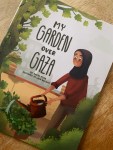
My Garden Over Gaza by Sarah Musa illustrated by Saffia Bazlamit

Standard
My Garden Over Gaza by Sarah Musa illustrated by Saffia Bazlamit

This book is hard to read, it hurts the heart, it doesn’t let you claim ignorance regarding the plight of Palestinians, and it shows cruelty,  a specific inexcusable cruelty, in a children’s book that will haunt you and infuriate you for weeks and months, if not indefinitely.  I’ve read a number of Palestine set books, but this one, in its simplicity, leaves me raw.  A child with a rooftop garden that helps feed her family is deliberately targeted by Israeli drones and destroyed.  This isn’t science fiction or dystopian, this is based on real acts.  The book itself threads in themes of hope, of not giving up, of remembering strength of a lost parent, of vowing to move forwards, but the catalyst for it all is not happenstance, and while the details of the occupation and oppression are not stressed and articulated, they are referenced and skillfully present to be discussed with children on their level with the included backmatter at the end.  This book is powerful and should be required reading. It is a difficult read and it has flags, but it is also a glimpse of the reality of our world, and the manner in which this book is told allows for the discussion to taken place with middle grade readers and up. The book is not text heavy, but the nature of the content makes me suggest it for mature children.

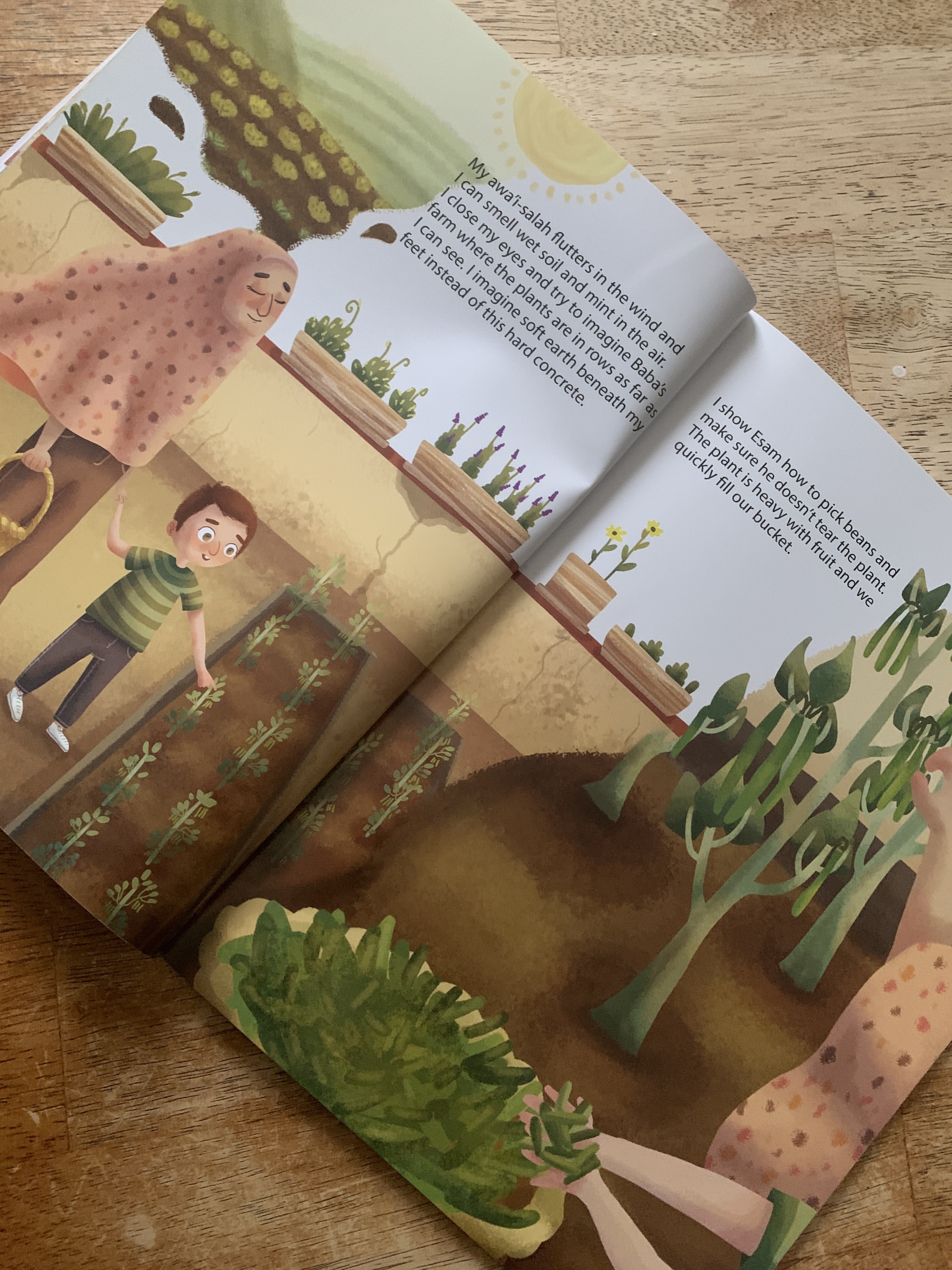
Noura, a young girl, is in her home in Gaza when drones are seen just out the window and she quickly pulls her little brother Esam away to safety.  To distract him she tells him about their father and his farm that he used to have in Umm An-Naser.  She explains how the wall cut them off from their land and when the drone noises fade, she takes him up to her rooftop garden to pick green beans.  Their mama works downstairs as a seamstress, and while they wish they had meat, the garden helps them have fresh vegetables.

The next day after Noura gets her little brother ready for the day they head to the roof, but drones arrive and start spraying chemicals on the growing plants, killing them, and sending Noura gasping to breathe.  She tries to cover the plants and swing a shovel at the drone, but it does little to save any of the food and Noura is devastated.

Noura’s mama reassures her daughter that the food can be regrown, but she is irreplaceable, as Noura goes to scrub the chemicals from her skin.  The frustration is real, but determination prevails as the family cleans the garden and begins again, just as their father did.

The last two page spread of the book is a basic map, general touchstones of the situation in Palestine, and the very real drones that fly in to Gaza to surveil, attack, and spray herbicides on crops. You can purchase a copy on the publisher’s website or HERE at Crescent Moon Store.

Call Me By My Name: 99 Names of Allah by Ayesha N. Rahmaan illustrated by Azra Momin

Standard
Call Me By My Name: 99 Names of Allah by Ayesha N. Rahmaan illustrated by Azra Momin

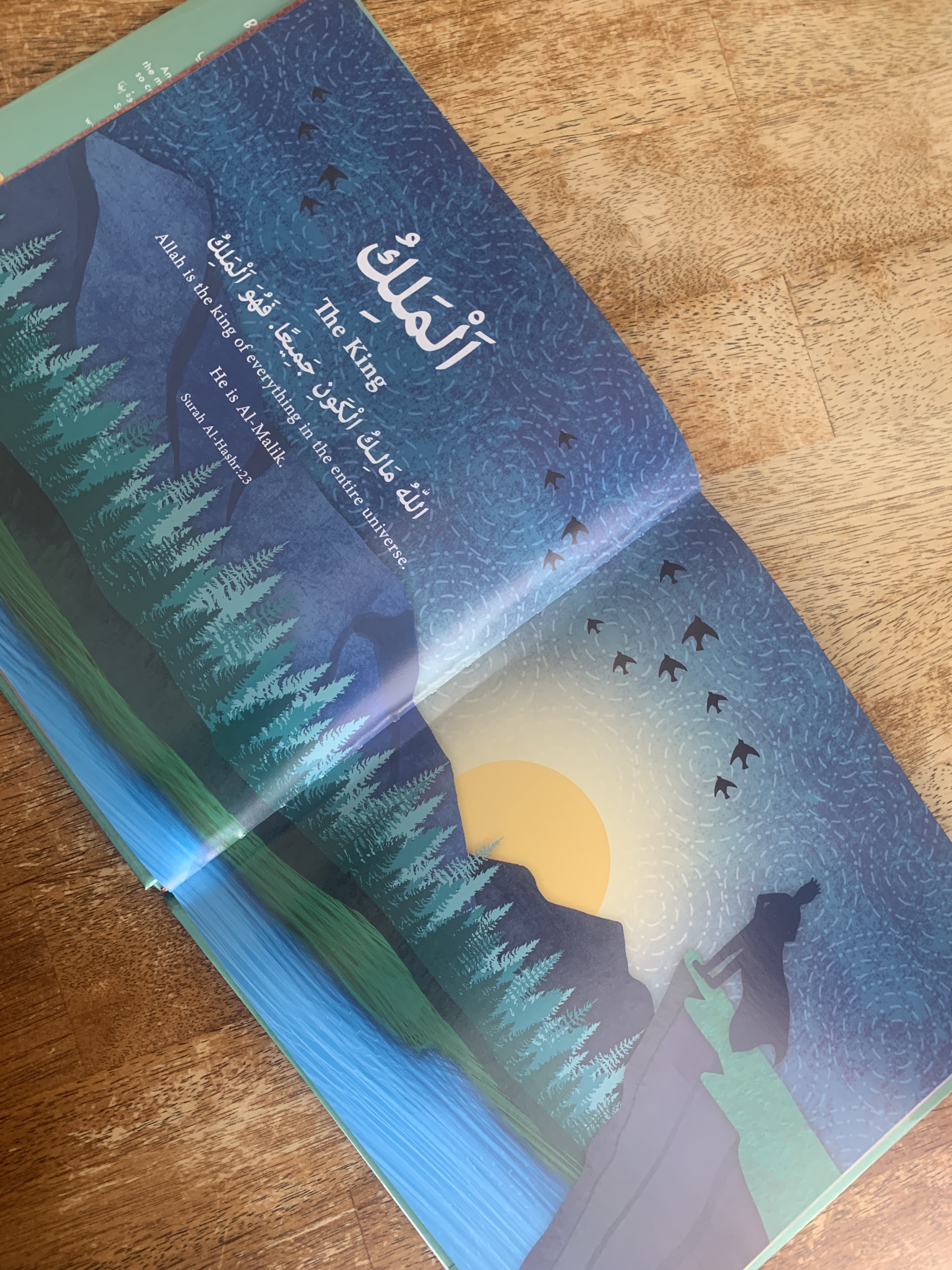
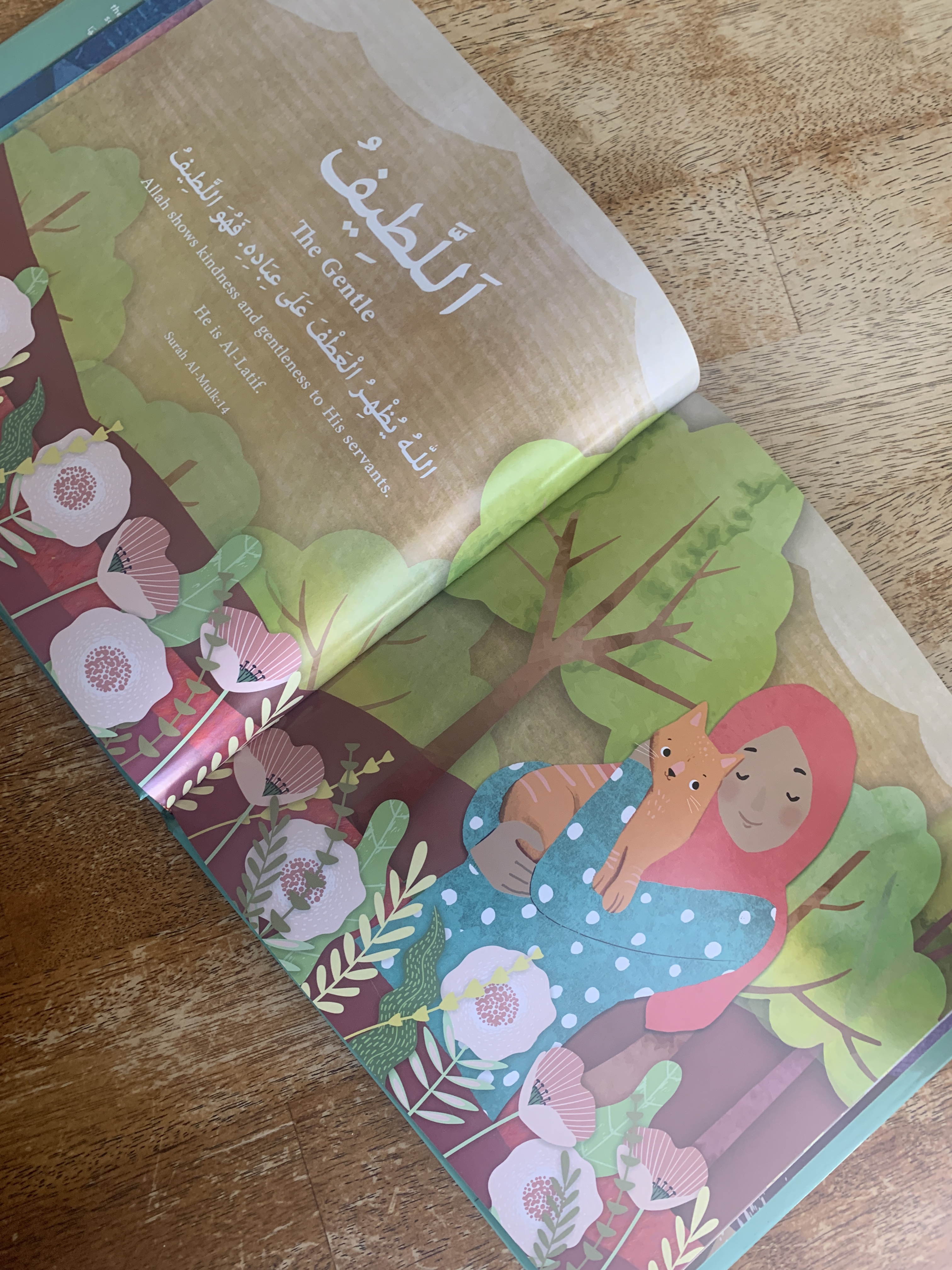
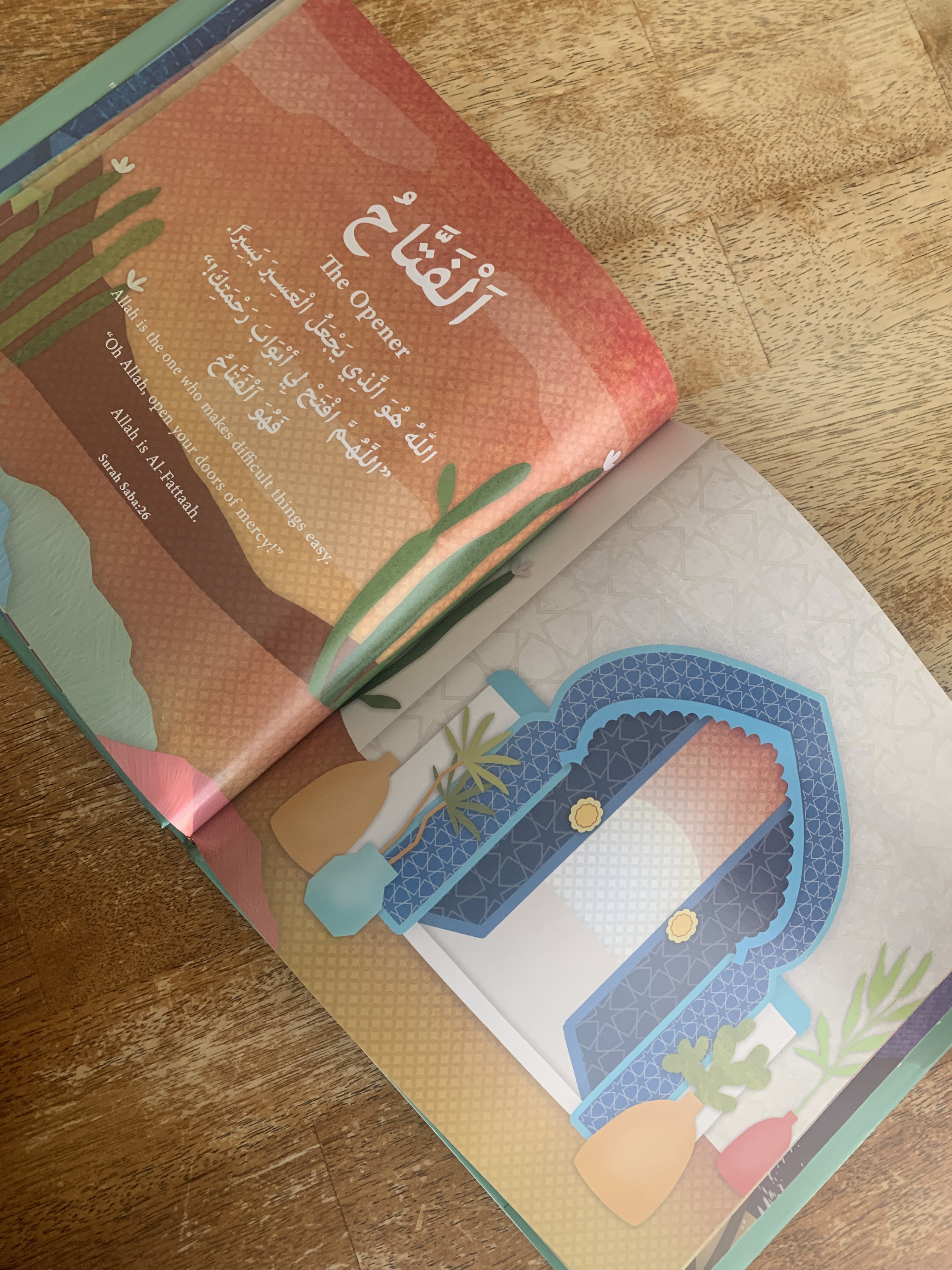
If you are going to put out a book that has been done hundreds of times before; think numbers, alphabets, Islamic phrases- then be sure and make your book stands out.  And while yes there are numerous English and Arabic books of all sizes about the beautiful names of Allah, this book does in fact stand out.  The shiny cover, with or without the dusk jacket, the sturdiness in your hands, the illustrations, the large font and easy to read English and Arabic (with harakat), is an absolute joy to read, look through, and talk about with children four and up.  The book works in a lot of settings for a lot of ages because of its simplicity, presentation, and appeal.  Kids will pull this off the shelf and look at it without prompting, just as adults can discuss the names, and build lessons off of the ayats included.  The versatility of the book is why I’m stretching out of my comfort zone of fictional reads to review this Islamic non fictional book.

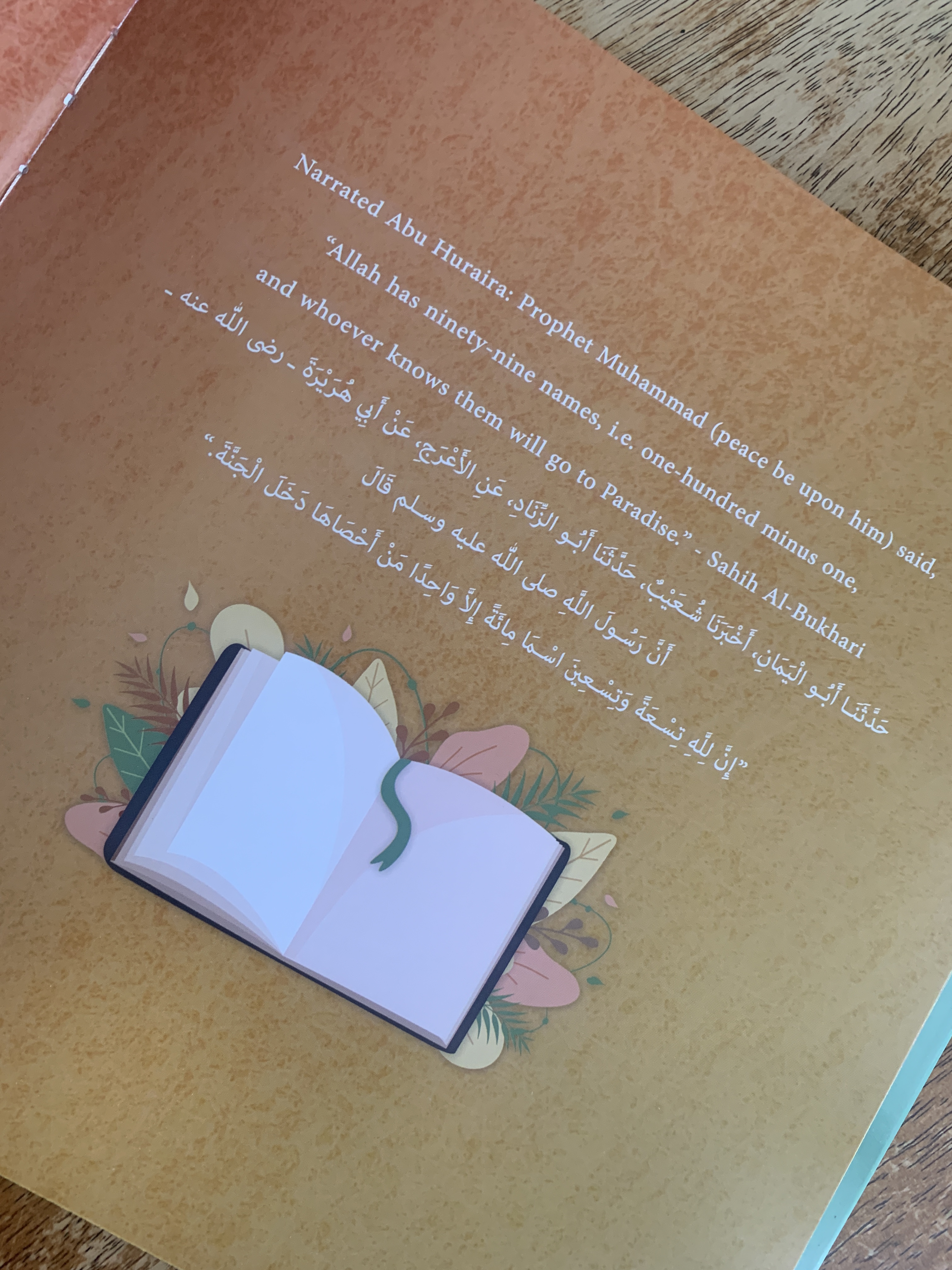
The book starts with establishing that the 25 of 99 names included are those “specifically mentioned in the Holy Quran, with a reference to the surah and aya where each name can be found.”  It shares an aya about the Asmaa Al Husna and a hadith narrated by Abu Huraira and then starts right in.

Most of the names are given a two page spread, a few are only given one, and the English, Arabic, aya, and source are provided.  The illustrations are joyful children and nature scenes.  The book concludes with a spread of all 99 names in English and Arabic with the translations.

You can purchase a copy here.

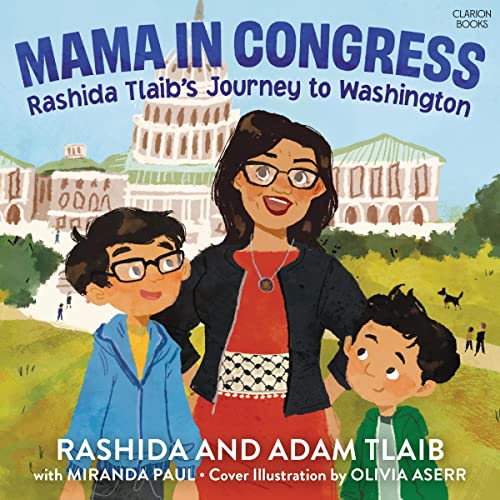
Mama in Congress: Rashida Tlaib’s Journey to Washington by Rashida and Adam Tlaib with Miranda Paul illustrated by Olivia Aserr

Standard
Mama in Congress: Rashida Tlaib’s Journey to Washington by Rashida and Adam Tlaib with Miranda Paul illustrated by Olivia Aserr

mama in congress

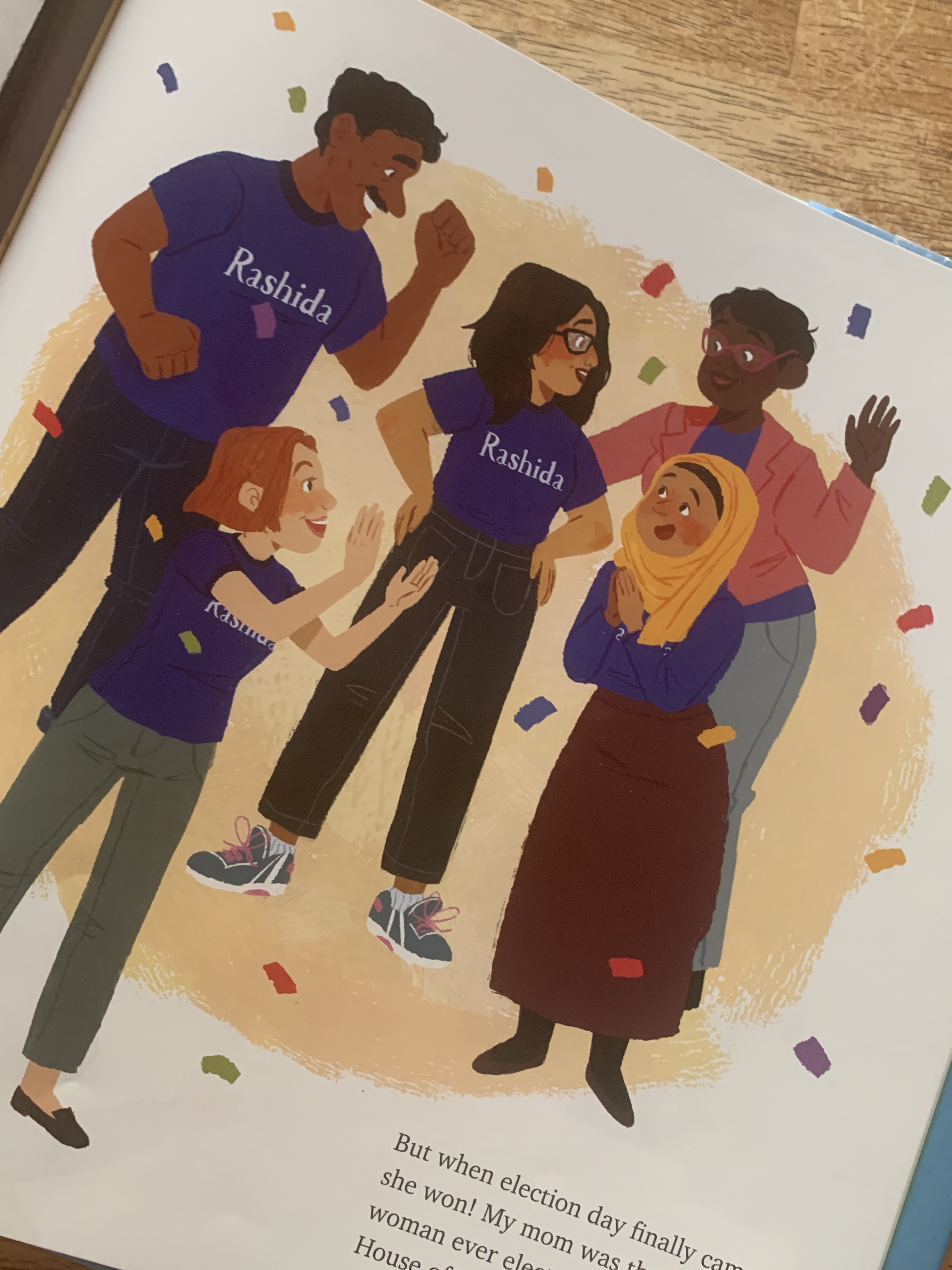
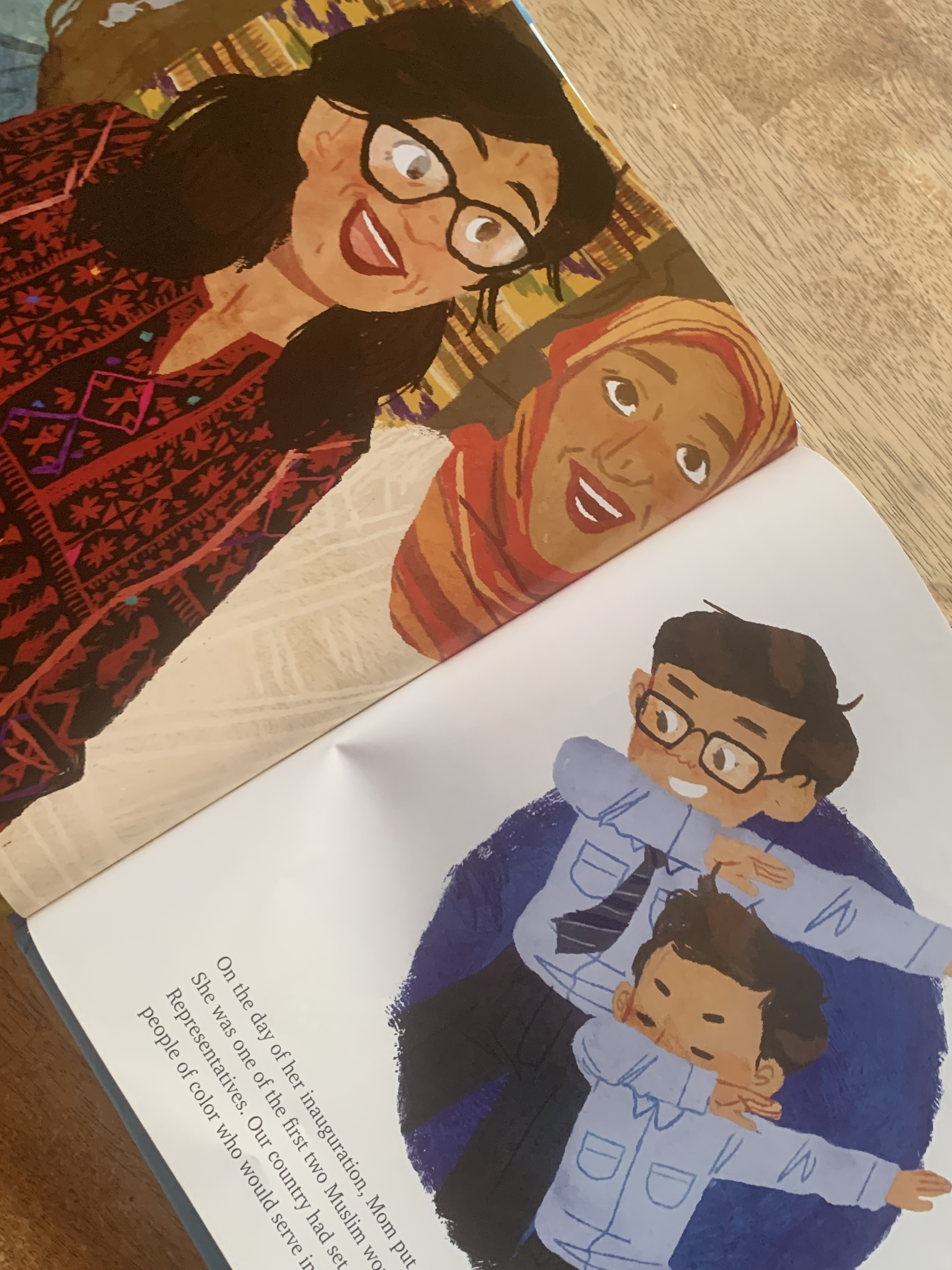
I wasn’t particularly looking forward to this book.  Books by politicians are always suspect, by a politician currently in office- more so, and a book written about one’s self can be a little self promoting to say the least, but when I saw my library had it, I put it on hold and thought to give it a shot.  Surprisingly, the book is really cute.  It is framed as her son (one of the contributors) telling his mom’s story, it owns that while yes she was one of the First Muslim Congresswomen, there were a lot of people before her that ran and paved the way.  What really shocked me was the amount of Islam in the book: Salat-al-Istikharha, actively learning about Islam not just as culture, there is an Ayat from the Quran, etc.. The book says for ages 4-8 and for the amount of text on the pages, there is no way a preschooler will sit through this. I can see this book, however, being used in an elementary classroom to teach about the American political system, and inspiring kids that they can make a difference, that they can rise to positions of leadership without compromising who they are, and that no matter their background, and that they can be successful in following their dreams.  I don’t think Congresswoman Tlaib should be put on a pedal stool for some of the policies she has supported or bills endorsed, but I think even if you don’t support her politically, her story and her accomplishments do show possibilities for minorities to reach the highest levels of government.  The fact that she is a Palestinian Muslim Women and has found success in the context of American government as told from a child’s perspective, really surprised and impressed me, and I can see it being a worthwhile story to share with young students.

The book starts with two boys on the steps of the capitol, Adam and Yousif wondering if the president is their mom’s boss, and mom, saying that no, the 700,000 people in the district she represents are.  The book then pulls back and Adam starts to tell the story of him and his brother going to work with their mom, Congresswomen Rashida Tlaib the representative from Michigan.

img_4036

Before she was elected their yama and yaba immigrated from the West Bank to America, where Rashida was born.  Eventually there would be 14 kids born and Rashida would choreograph dances, basketball games, and seek privacy to dance like a pop star, or chase after the bookmobile.

img_4037

Comments toward her well-spoken mother to learn English, embarrassment at the smell of the factory polluted environment, and an offer by a high school teacher to join the debate team, helped pave the way for Rashida to find her voice and make changes.

img_4038

Rashida was the first in her family to graduate high school and from there she went to college and then law school.  She also started to learn more about Islam and the reasons behind her family’s traditions.  Her favorite passage from the Quran became, “with hardship comes ease.”

img_4039

She started working with an elected official from the Michigan House of Representatives and started a family.  When a seat became vacant she was encouraged to run.  No Muslim had ever been elected to the Michigan House and even her own yaba didn’t think people would vote for an Arab, so she prayed Salat al-Istikhara and did a lot of thinking.

img_4040

The book shows what she wanted to accomplish and how she went door-to-door and found both success and hardship meeting with the people.  Ultimately though, she won the seat and held it for many years.  When Adam was 12 she decided to run for the U.S. House of Representatives, and he and his brother joined in to help knock on doors.

img_4041

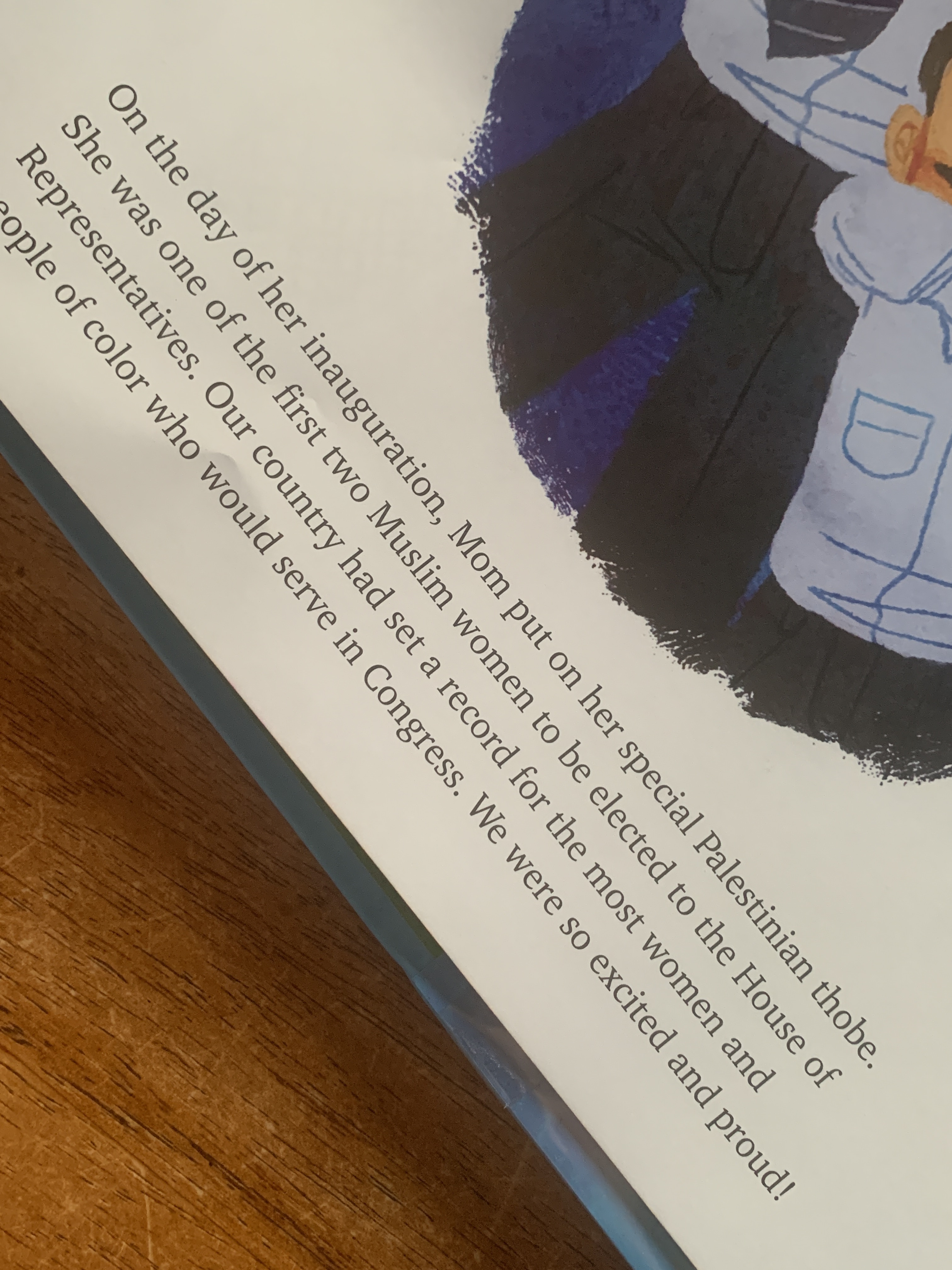
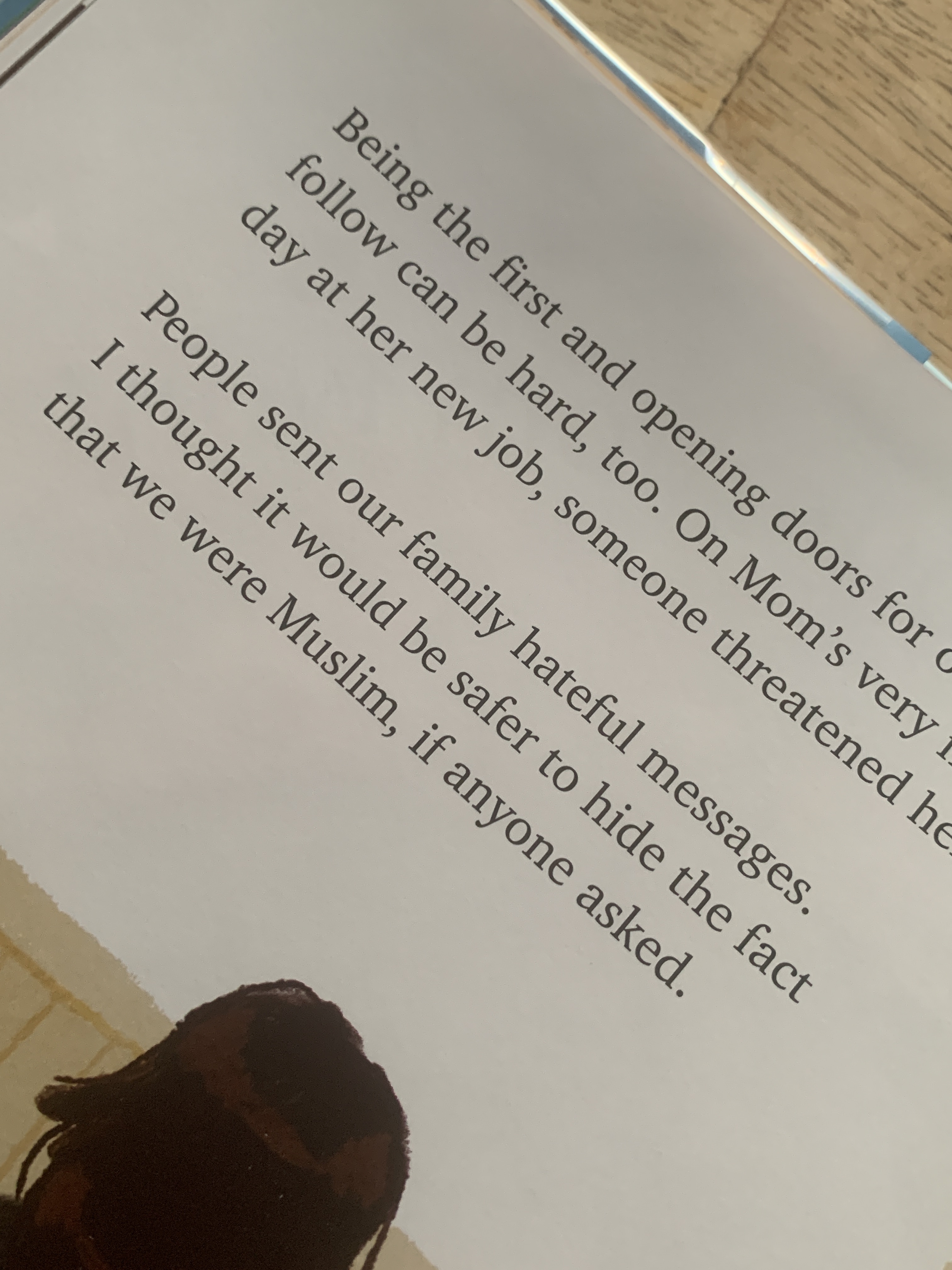
She won, and was one of two Muslim women to be elected that year.  Adam and Yousif dabbed in celebration at the inauguration as their mom was sworn in in her Palestinian thobe. On her first day, however, there were threats, and Adam though they should hide the fact that they were Muslims.  Their mom told them it is important to be their authentic selves, “that sometimes it takes many to run for there to be a first.”

img_4042

The book concludes with a glossary, an infographic of the branches of government. Can be purchased here.

Hold Them Close: A Love Letter to Black Children by Jamilah Thompkins-Bigelow illustrated by Patrick Dougher with photography by Jamel Shabazz

Standard
Hold Them Close: A Love Letter to Black Children by Jamilah Thompkins-Bigelow illustrated by Patrick Dougher with photography by Jamel Shabazz

Hold+Them+Close

The power, the lyricism, the images, the layers- this book is not just for children, it is for everyone.  I have spent time with this book and it cannot be rushed, it needs to be felt and explored and reflected upon to feel the emotion that seeps from each and every page.  The book is remarkable in the amount of hope and warmth combined with history and social activism present.  It weaves together the personal with the community with the struggle past and present so flawlessly, but for me it is the pictures that complement the text so well that make this book spectacular on so many levels.  It is not a book for me to review, it is a book for me to support and elevate in any way I can.  The author is Muslim, there is nothing Islam specific in the text, aside from mentioning Malcolm X, and it should be required reading and sharing for everyone.  May Allah swt make us better to one another and actively work against oppression, ameen.

The book is framed as a letter, encouraging happy things to be held close.  For the young and old with stars in their eyes to be be held and elevated.  For stories of greatness to be passed down.  Stories of Kings, of Sojourners and Malcolms.  

The book encourages pushing away the disappointments, but to let the tears come. To not forget the lynchings, slavery, police brutality, oppression.  To stand and make it heard that you matter.

The illustrations are a mix of photographs and collage style layers.  The joy in a child that is very real, carrying those that came before.  Images of the past pulled to be seen in the present, very much a part of today.  The colors, the expressions, the hope, it radiates off the page with the coaxing of the text and becomes a feeling of both being held, and feeling support to take the next step.  Absolutely beautiful from beginning to end.

img_3903

The backmatter contains an Author’s Note, Illustrator’s Note, Background information, and Selected Sources.

img_3904

Available in libraries and book sellers, including here.

img_3905


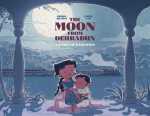
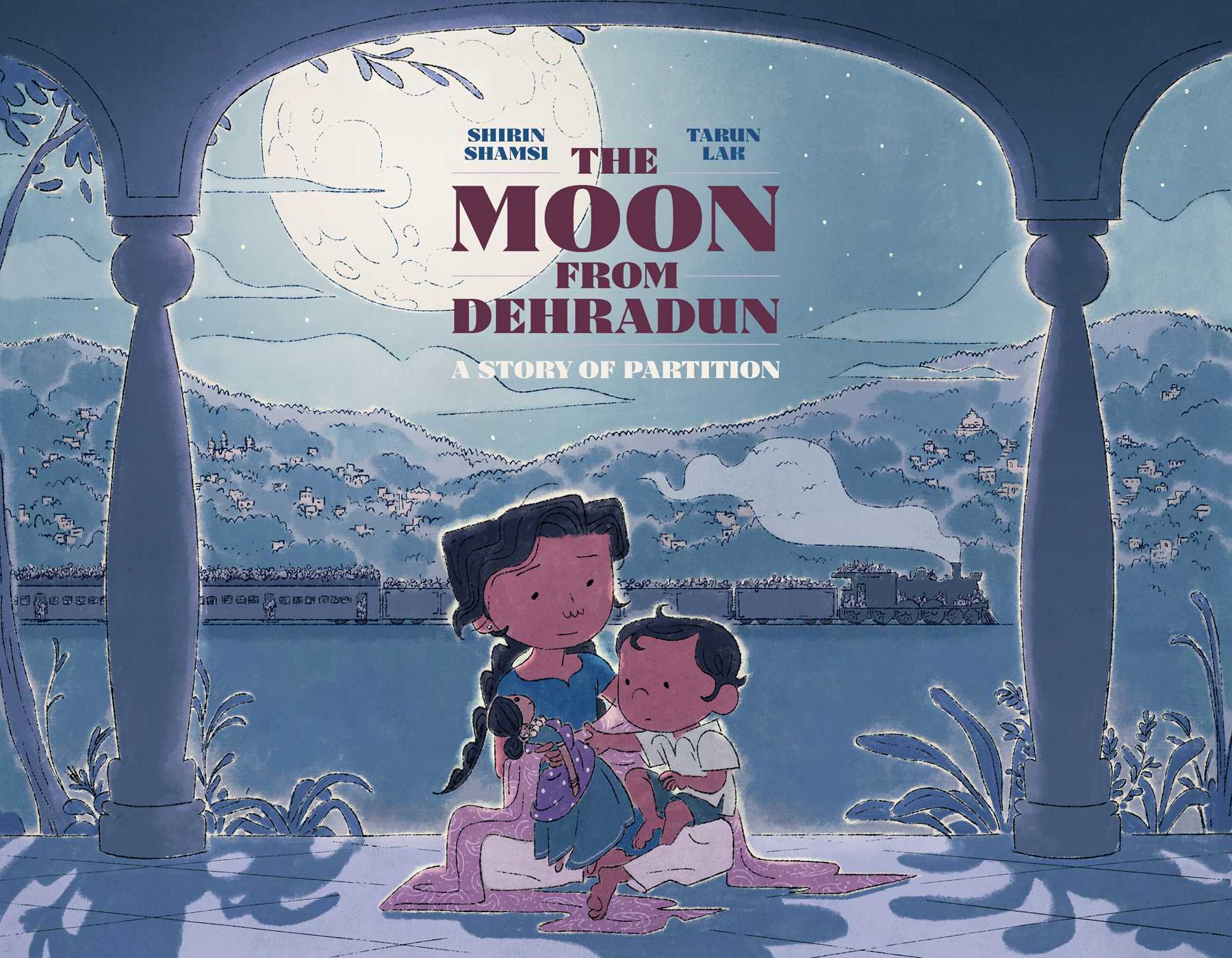
The Moon from Dehradun: A Story of Partition by Shirin Shamsi illustrated by Tarun Lak

Standard
The Moon from Dehradun: A Story of Partition by Shirin Shamsi illustrated by Tarun Lak

partition

I’ve read this book numerous times: sometimes for the text, sometimes for the tone, sometimes to slowly immerse myself in the pictures. I know the basics of my own family’s journey to Pakistan, and this book added to that understanding. I like that it forced me to slow down and to really appreciate what partition was for both sides, from a child’s perspective. Pakistan and India gained freedom from British rule 75 years ago. Nearly every Pakistani or Indian you know today, has a parent or grandparent that lived through it. It is not history from long ago, it is still very much with us, and no I’m not talking about the lingering effects of colonization, I’m talking family stories, and loss of property and wealth, memories of the journey, the terror, the fear, the relief, the determination. This book is one story, perhaps the first mainstream published in the west, of one family’s experience. There could be a thousand more books and they would all be different, all powerful, all reflective. I love that this book is Pakistani authored, Indian illustrated, I love that it offers pages with no words at all. I love that a child’s perspective for such a monumental event is told for other children. There is a lot there for desi readers to unpack, and consider, there is also a lot there for non desi’s to be made aware of, and I hope that you will seek out this book no matter who you are, and share it.

img_3563

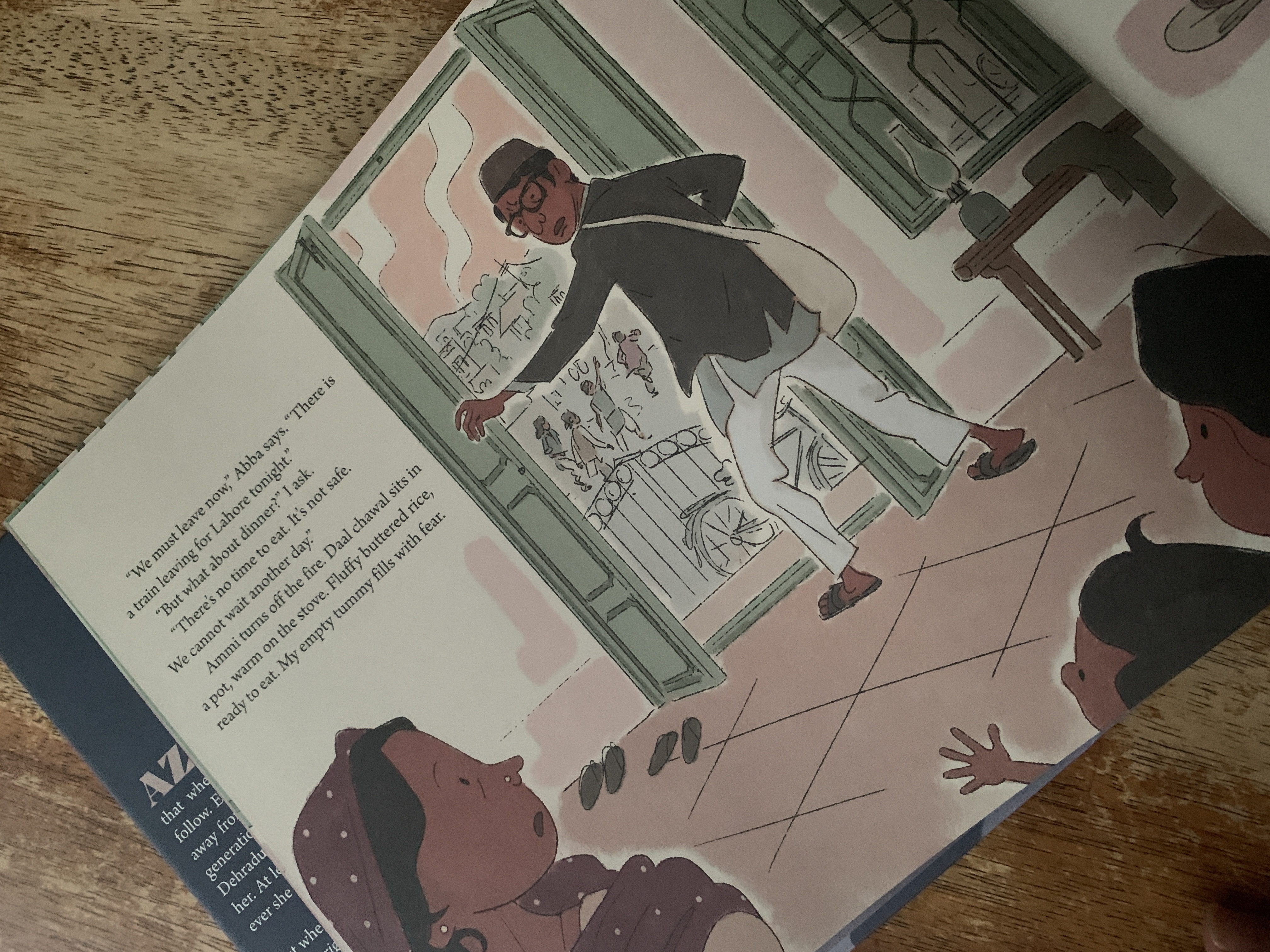
The book starts with excitement from Azra about an upcoming train ride, even though her family has lived in Dehradun, at the base of the Himalayas, for generations. Suddenly though there is yelling outside because people are afraid, and her Abba runs in saying they have to leave now. Ammi, Abba, Azra, and the baby “Chotu,” rush out the door, leaving the cooking dinner still on the stove. When they get to the train, Azra realizes she has left her beloved doll, Gurya behind. They cannot go back for her.

img_3564

Azra blames Chotu, for making her forget her doll, for taking her parent’s attention, yet as the days and nights on the train reveal tired people, sad faces, and fear, Azra finds comfort in her little brother’s embrace.

img_3568

When they arrive in Lahore, they are met with food, and shelter. They are given a house that looks like the owners left in the same manner that they had to flee. There are balls of dough with a rolling pin, laundry strewn about, and even a doll left abandoned under a bed.

img_3565

The book concludes with a map, a glossary, and an informative author’s note addressing pre-partition, partition, and the author’s own family story. There is hardship and frantic upheaval, but peace and welcome too. The illustrations illuminate the text and show the powerful emotion when words sometime simply don’t exist.

img_3566

The book is not political or even religious. There is an Indian flag when they leave and a Pakistani flag when they enter, there are sounds of athan, and packing of a rehl, and a comparison to Eid, and the doll at the end has a bindi on her forehead. The book does not make one side out to be in the right or in the wrong, if you do not know that partition of the subcontinent was a mass migration based on religion and the chaos further exacerbated by the British, this book will not spell it out for you.

img_3567

I preordered mine here and it can now be purchased from all major book sellers.

Dear Black Child by Rahma Rodaah illustrated by Lydia Mba

Standard
Dear Black Child by Rahma Rodaah illustrated by Lydia Mba

dear black child

This beautiful 32-page picture book by Muslim author Rahma Rodaah radiates joy through the text and illustrations.  The powerful and lyrical words on the page inspire confidence to take up space and encourage celebration through their messaging and tone.  My three-year-old enjoyed me reading it aloud, it kept his focus and his interest, and my seven-year-old read it over my shoulder and then numerous time on his own.  The sway and images painted by the text are so well refined that you could truly read this book a dozen times and still be moved by the passages.  The illustrations compliment the author’s message in their reflection of Black children of all shapes, sizes, shades, and mobility.  There is even a visibly Muslim woman in hijab (#muslimintheillustration) that looks like the author herself.

img_3431

I look forward to sharing this book with various story times in the community, in my children’s classes, and in regular rotation at my own home.  Framed as a letter to a beautiful Black child, the book speaks to “you.”  It starts with encouraging you to stand in your own light, take up space, say your name proudly, and proclaim your native tongue.

img_3430

It inspires the Black child to speak confidently, roam freely, to be rooted, yet move swiftly. To write the books and tell the stories that only they can tell, and to trust their inner compass.  It also reassures them that they are not alone, that there are those that will always help, always cheer them on, and remind them of their glory.

img_3432

The book is as powerful as it is beautiful and I hope it finds a home on every classroom, library, and home bookshelf.  I purchased mine here.

img_3434

Egypt by Aya Khalil illustrated by Magda Azab

Standard
Egypt by Aya Khalil illustrated by Magda Azab

egypt

This sweet board book is part of a series, the other two books are Japan and France, releasing in October.  All are brightly illustrated, 20 page books for ages zero to four and take the littlest of readers into a country, through sights, experiences, foods and language.  This particular book does not feature any visible #muslimsintheillustrations but the author is Muslim, and so I am reviewing and sharing it here.

egypt5

The framing of the book is a day in the life of a little girl, who wakes up with bosas from her mama and baba and greetings of Ahlan.  Some of the words are written in Arabic script with the English transliteration and pronunciation provided, other times it is just the English transliteration of the Arabic with the pronunciation asterisked and written smaller immediately below the text.

egypt3

Once she is awake, she gets dressed, brushes her teeth and is off with her baba to buy pita and ful.  The busy street offers sights to see and fruits to pick from.  She ponders and asks herself and the readers which one to choose.

img_2209

At her Teita and Geddos there is dancing and tabla playing before walking back home along the Corniche.  Dinner is served and bedtime has arrived. The book concludes with a summary of her day linking the Arabic words to the illustrations and English meaning, as well as some pronunciation tips for the Arabic sounds.

egypt1

As a Muslim reviewer I had to hope there might be one hijab clad woman in the illustrations, I know many Muslims don’t cover and Egypt is diverse, but considering the lens I review from, I feel obligated to state that opinion.

egypt2

A little more critically, I was a bit surprised on the page with the colorful boats that the color names yellow, blue, and purple, were not included in Arabic and only in English.  Seemed that would have been an naturally and easy inclusion.

Overall, the book did a good job of celebrating Egypt without over explaining, keeping it bright and engaging for toddlers.  I really like the language being shared in a story context, not just a book with a picture on it and words in different languages.  I also liked that while the details were Egypt specific, there were also pages that were universal.

Available for preorder and purchase here

Mona’s Scrapbook Adventure by Nouha Deliou illustrated by Kadhima Tung

Standard
Mona’s Scrapbook Adventure by Nouha Deliou illustrated by Kadhima Tung

mona

Algerian culture, as far as I’ve seen, is incredibly underrepresented in western literature and not represented at all in children’s books.  I love that this author, who felt the same- did something about it.  This 40 page colorful story incorporates Algerian traditions and culture with universal themes of sibling love, wedding excitement, and being sad about change.  The OWN voice warmth shows Muslim characters in America holding to traditions and making new ones.  The book is long, but is not text heavy.  For toddlers and preschoolers up to second grade, I can see readers enjoying the detailed descriptions of the dresses and foods, and feeling the feelings of little Mona as her beloved older sister prepares for her wedding and ultimately leaving with her husband.

img_2564

The book starts on the morning of the big day, Layla’s engagement.  Mama explains to Mona that the Imam will do the kitab and that her older sister is excited because she has known Ahmed since school and likes him a lot.  Once dressed Mona watches Layla get ready in traditional Algerian clothes.

img_2565

When Ahmed and his family arrive, he and Layla announce that after the wedding they will be moving from New York to Arizona.  Mona is devastated, as the women start to zaghreet in celebration. She wonders if she can go with them, but decides she can’t leave her parents.  Later that night, Layla and Mona chat and decide that Mona will help plan for the wedding and they will make a scrapbook.

img_2566

Over the next few months, clothes are bought, cakes are tasted, flowers are decided upon, and Arayech is made.  The night of the henna is fun, but then it is the wedding, and then time for Layla and Ahmed to go. Happy tears and promises to always be connected conclude the story before a scrapbook page for the readers is revealed to make their own designs.  That is followed by a glossary, and information about the author and illustrator.

img_2567

I love the detail about the different cultural and regional Algerian dresses in the illustrations, the Algerian traditions shared through the text, and the connection between the two sisters. The book is available in hard back or paper back and I got mine from Crescent Moon Store  

https://crescentmoonstore.com/products/monas-scrapbook-adventure?sca_ref=1601585.fIPhoqtScY

That’s Not My Name by Anoosha Syed

Standard
That’s Not My Name by Anoosha Syed

not my name

I have been looking forward to this book, as I’ve enjoyed so many of the illustrations the author has created for other authors, and was anxious to see what kind of story she would write for her own authorial debut.  Unfortunately, the book didn’t wow me.  It is rather forgettable, the book conflates notions of not being able to pronounce someone’s name with not being memorable and with not having a “normal” name, and then recognizing how so many classmates have unique names too.  A bit scattered in messaging, and overall reading like an adult talking, not a young girl of four or five, on her first day of school.  No doubt the illustrations are beautiful, and the book isn’t “bad” or a “waste of time,” but it isn’t a strong clear story.  I’ve seen reviews where people find the little girl rude, and I don’t know that I’d agree with that, she is frustrated and wants to scream, “that’s not my name” when people say it wrong, but I do agree that she could model what to say better and how to handle it.  Not that I expect those with uncommon names to have to carry the weight of making things easy, but the little girl at the end remarks that she has so many new friends at school with “unique, beautiful names, and she always makes sure she says them right,” implying that some dialogue, both about her name and about theirs, takes place to ensure pronunciation is correct, and some “showing” of how that is achieved would be nice.  Before the story starts, on the title page, there is a pronunciation breakdown of Mirha, but not in the text itself. There is nothing Islamic in the book, the Grandmother wears a scarf loosely draped over her head, there is a crescent and moon wall hanging in an illustration, and the girl’s name is claimed to be Arabic in origin.

img_2433

The book starts with it being Mirha’s first day of school.  She is excited to learn, to play, and to make friends, but when no one seems to be able to say her name, she starts to feel shy. Frustrated and sad she decides to change her name, and tells her mom when she gets home.  Her mother tells her, her name is beautiful and why she was named what she is named.  She builds her up and the next day armed with her mother’s words she is ready to make friends and teach them how to say her name. By the end of the book Mirha has friends, and wants to be your (the reader’s) friend too.

img_2434

The voice of the book is inconsistent at times it feels very older kid, almost adult, even though the 40 page book is meant for three to five year olds.  The examples read like an adult reflecting on their childhood struggles with their name, not as a young girl finding her voice and appreciation for the name she has.

img_2435

When Hayden asks if he can call her Maya instead of Mirha it is because Maya is easier.  Kids are hearing all sorts of names for the first time when they enter school, that conversation seems so forced.  Whether the kids are in preschool or daycare or kindergarten, most of the names they are hearing of their classmates are being heard for the first time.  If they watch a lot of tv and YouTube and movies, they have heard a whole variety of names, they are not going to have a dialogue that sounds like that, at that age, just not realistic.  Similarly after the first day of school she wants to change her name to something “normal?” What is a “normal” name even, then the mom even reinforces that notion when saying she knows she named her something “unique and different.”  A concept that returns at the end when asserting that Mirha has friends with lots of unique names.  Seems to go in circles.

img_2436

I appreciate that examples are given about not seeing your name on keychains or having the barista get it right, but again, she is under the age of five, are these really her points of reference for having a less common name than those around her?  When her mother is making the case that she shouldn’t change her name she references that names such as Beethoven and Tchaikovsky and Michelangelo are memorable.  First of all, what (under) five year old knows those names or who those people are, and second of all, now her name is not memorable? I thought it was hard to pronounce? Has she done something worthy of history books and admiration? I get what the author is trying to do, I often tell my students that they need to demand people say their names right.  If they can rattle off names from Pokemon, Star Wars, Lord of the Rings, and Beyblades, they can say the beautiful names they have been given.  But the kids I am saying it to are not in preschool, nor am I conflating the pronunciation of their names with being names of famous people that are memorable. Additionally, I do not speak Arabic, but a quick Google search does not show that Mirha means happiness in Arabic, and I have heard from native Arab speakers that they also found the meaning off.

img_2437

The illustrations are engaging, the broader message of getting people’s name right and demanding people get your name right is important, it just needed a more age aligning voice and connecting with the reader.

img_2438

Sitti’s Bird: A Gaza Story by Malak Mattar

Standard
Sitti’s Bird: A Gaza Story by Malak Mattar

img_2562

I hate that this book is so timely.  It was written by the author/illustrator recalling the 2014 airstrikes, but alas, has anything changed for the Palestinians’ suffering at the hands of the Israeli occupiers amid the  apathetic silence of the world?  This 32 page picture book shows family love and daily life while Gaza is under siege.  The heartbreak of a young girl’s reality and perception shows the reader, in a simple empathetic, heart-wrenching, real-life example how her dream was limited and caged because she is not free.  The book is not sensationalized, nor graphic, it is written by someone who endured this as a child, and has written the book for children. The theme is not even political, but more hopeful as art is found as a respite and way to keep dreams from completely dying.  May Allah swt ease the suffering of those under occupation and free Palestine, ameen.  

img_2557

The book starts with a little girl and her parents going to Sitti’s house for the best maqlouba.  Sitti has a beloved bird, Malak wonders if she too is in a cage.  Her grandmother encourages her to fly in her dreams.  At school she is happy with her friends, playing games, listening to stories, but when an explosion sends them all home, she won’t get to return for 51 days.

img_2559

Constant airstrikes keep the family home and in fear.  Malak finds some paints and starts to create.  Sitti’s bird is lost when Sitti’s home is destroyed, but somehow shows up at Malak’s home.  Eventually Malak returns to school and she shows her teacher all her paintings. Her teacher decides to host an exhibit. 

img_2560 

People show up and marvel at her art work.  Months later an international exhibit invites her to attend with her parents, but sadly she must decline.  Gaza is closed.  She cannot leave.  

The book is hopeful, but does not have a happy ending, and I think the weight of that makes this book all the more powerful: because it is timely, because occupation persists, because dreams cannot be made into reality, generation after generation, this story inshaAllah will inspire some change and lots of compassion.

img_2558

There is nothing Islamic in the book, save some #muslimsintheillustrations, the author is Muslim.

Available here at Crescent Moon Book Store https://crescentmoonstore.com/products/sittis-bird?sca_ref=1601585.fIPhoqtScY