Tag Archives: Muslim Family

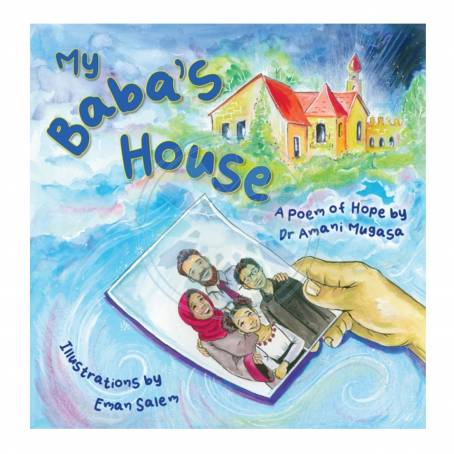
My Baba’s House: A Poem of Hope by Dr. Amani Mugasa illustrated by Eman Salem

Standard
My Baba’s House: A Poem of Hope by Dr. Amani Mugasa illustrated by Eman Salem

my babas house

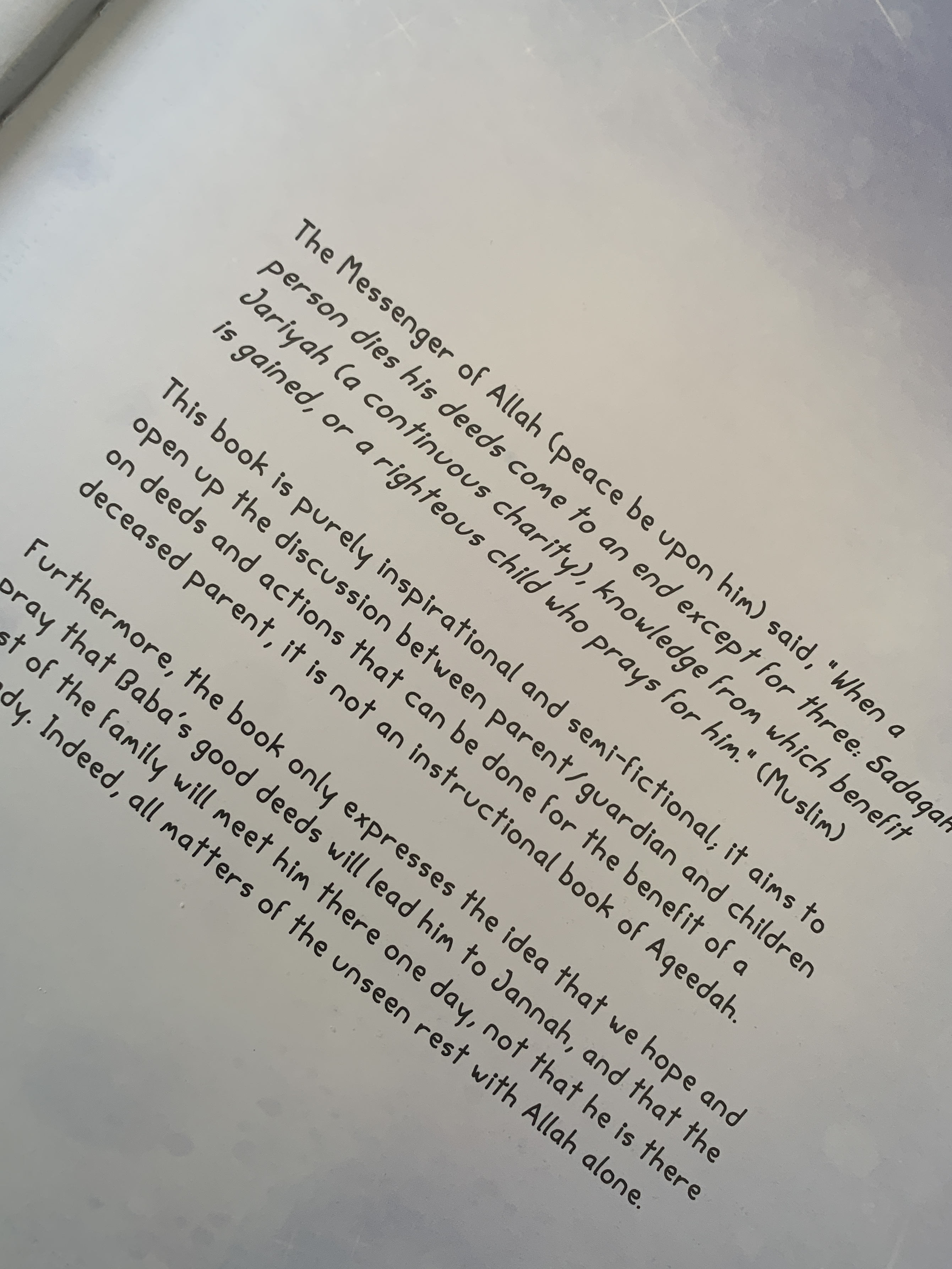
I wanted to love this Islamic centered children’s book about grief, but I found it a bit problematic and misleading.  I am by no means an expert in Islamic matters of death or in psychological bereavement, but the note at the beginning of the book- if I wasn’t already going to look at it critically- really raised some warning flags.  It says that the book is not an instructional book on Aqeedah, that even though the title and whole story is about a house being built that “the book only expresses the idea that we hope and pray that Baba’s good deeds will lead him to Jannah, that that the rest of the family will meet him there one day, not that he is there already.” So, before you even start the story, it seems that the disclaimer is making it clear that this book is not religiously accurate, and that it is just meant to soothe and provided hope.  After taking all that in to consideration, and reading the 26 pages of text over a dozen times, I think I finally pinpointed why the book further reads problematic for me.  It is the repeating phrase, “Your Baba has been building a beautiful house for you,”  because he hasn’t right? He has built a house for himself through his good deeds in this duniya, he benefited HIS parents by being a righteous Muslim.  The words “for you” completely take the book in my head from being a slight suspension of timing where the deceased are, in to be misleading.  So if the book is not accurately framed and only to be taken as something “to open the discussion,” what is the point? Why fill it with Islamic references and concepts, if they will then have to be clarified, corrected, and re taught?  Sigh, I’m happy to listen to those that want to change my mind, truly I am.

img_9013

The rhyming book starts out with a mom and two kids being consoled by the text that their Baba has been building a house for them with Allah’s help.  That it is amongst the flowers, made with Allah’s powers. That with every good deed he did, their Baba becomes a builder, that there are pure rivers and trees, and that the house is hidden through Allah’s gate.

img_9014

To find their Baba’s house they will walk with Prophets, and see ripe fruits, and smell sweet musk.  There will be rivers of milk and he will carry them above his head.  The illustrations on this page are a little off in my opinion the shadows of a person elevating and even the girl looks a little concerned.

img_9015

I like that the next spread addresses that only Allah knows when the day will come that we reunite. And then the next pages tell how the children can help decorate their Baba’s house by calling adhaan, reading Qur’an, being kind, giving charity, and making duas.

img_9016

The book concludes with encouraging patience and finding reassurance in knowing we belong to Allah and to Him we return.

With the exception of the one page, the illustrations are adequate and show a mixed racial family.  The rhyming lines are rather weak, and ultimately there are just better books out there about grief that don’t have to be so qualified for accuracy.

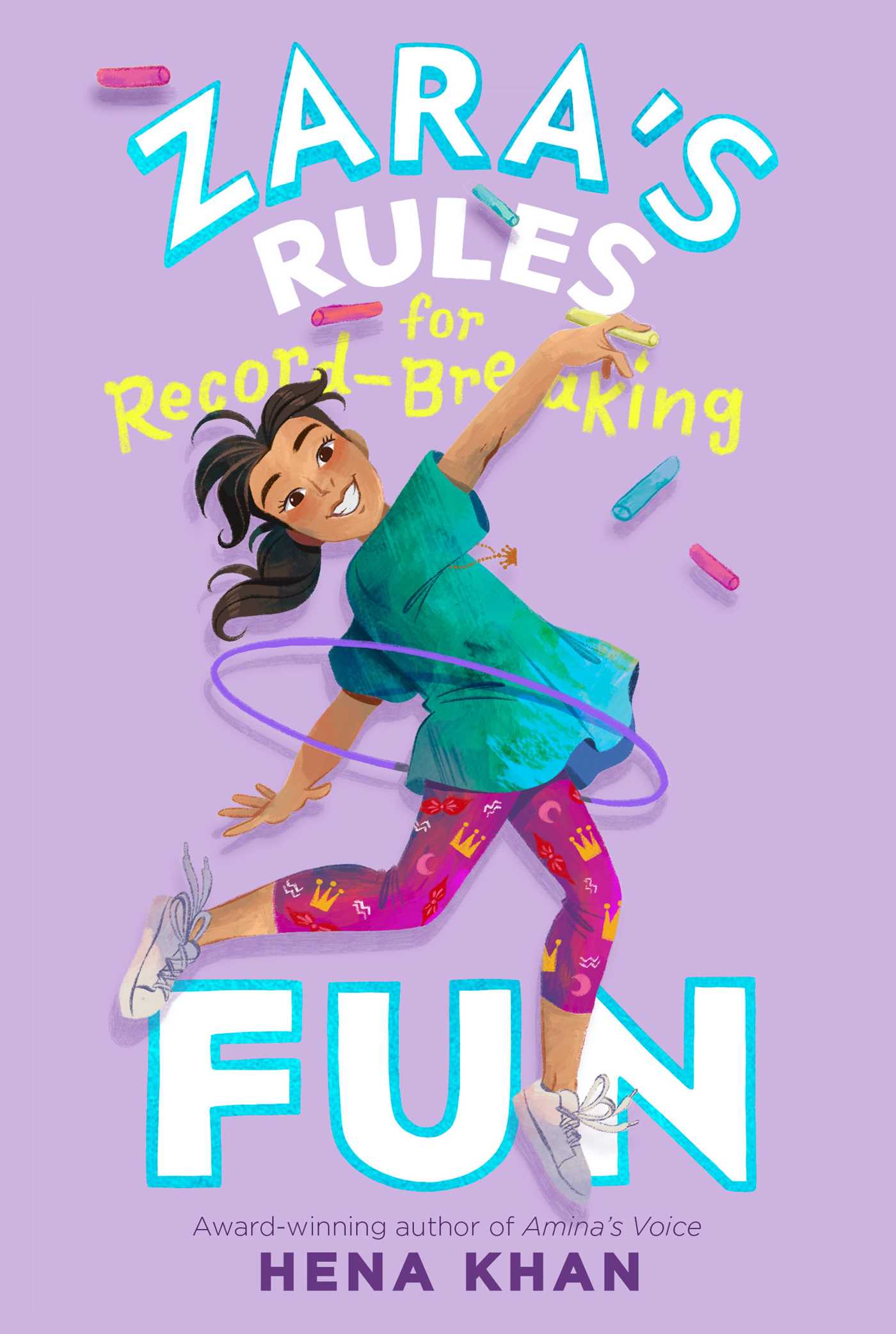
Zara’s Rules for Record-Breaking Fun by Hena Khan illustrated by Wastana Haikal

Standard
Zara’s Rules for Record-Breaking Fun by Hena Khan illustrated by Wastana Haikal

zara

This early chapter book packs a lot of personality, growth, and fun into 127 pages.  The writing quality is engaging and the characters relatable.  If you have read the Zayd Saleem books you will recognize the family in this new stand alone series.  Either way though, from the surprising Naano to the fun Mamoo, the neighborhood children and the desire to maintain her reign as Queen of the neighborhood, the book may be meant for 7-10 year olds, but based on the kids in my house, anyone that picked it up, read the entire book before putting it back down.  The grandma covers her head, it mentions she reads Quran, there is a Salaam or two, an InshaAllah, and desi cultural foods mentioned.  The focus is not on religion or culture, but the layer adds depth to the characters, and normalizes names and practices in a universal plot.

img_9060

SYNOPSIS:

Zara’s neighborhood has a lot of kids in it, and Zara has the reputation of being the leader who rules with grace and fairness.  It is a position she takes very seriously.  When Mr. Chapman moves out and a new family moves in, Zara fears losing her place.  The new girl Naomi has a lot of ideas and everyone seems to like them.  Zara has a grand idea to set a Guinness World Record, but with her little brother Zayd messing her up, nothing is going as planned for the summer.

As she finds her self alone a lot and not having much fun, she decides to change things up.  She works to be less bossy, less controlling, more willing to to share her crown.  With a lot of heart, internal growth, recognizing her strengths and weaknesses, the neighborhood kids just might have a record-breaking summer.

img_9059

WHY I LIKE IT:

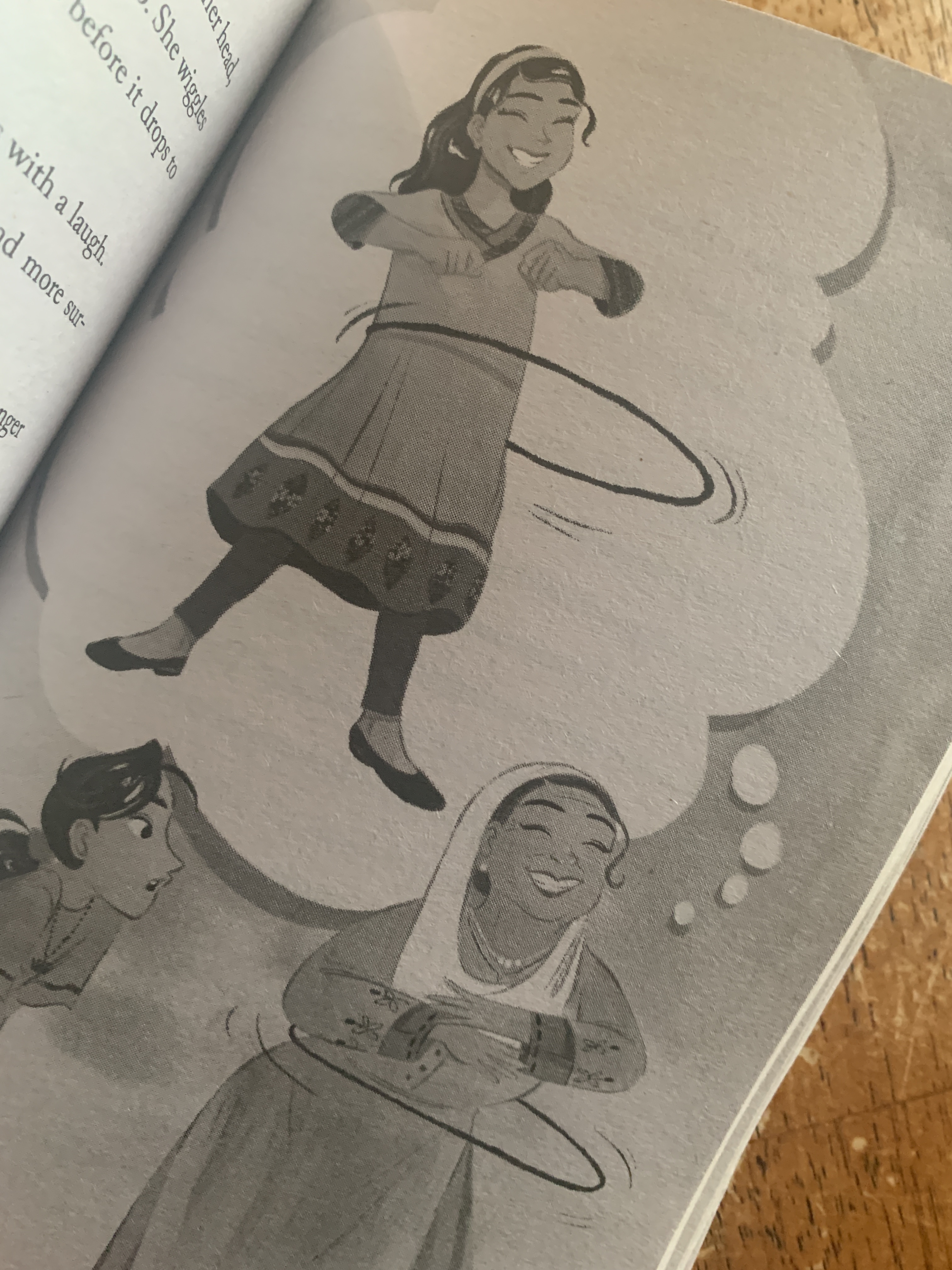
I love that the story wasn’t just surface level, it acknowledged some emotions and stresses and introspection, that I was pleasantly surprised to see played out in an early chapter book.  I really just enjoy the family, they read relatable and fun. The Nanoo’s surprise ability to hula hoop and her pettiness over a cooking competition genuinely made me smile.  The neighborhood kids and the politics of the different aged children having to find ways to compromise reminds me a lot of my summers as a kid, and the nostalgia was sweet.  I like the Islamic touchstones, I would have loved if they had to go in at sunset to pray or something of the like, but I was glad that at least that Nanoo reads Quran and an inshaAllah in the text made me feel seen.

FLAGS:

Music, dancing, frustration, jealousy

TOOLS FOR LEADING THE DISCUSSION:

I think this book should definitely be on every library and class shelf.  It releases tomorrow on Amazon, but Crescent Moon Store already has it.

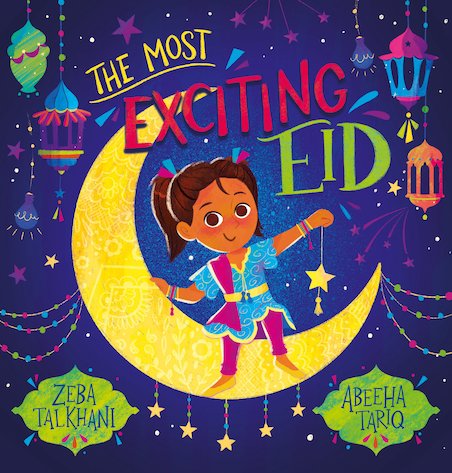
The Most Exciting Eid by Zeba Talkhani illustrated by Abeeha Tariq

Standard
The Most Exciting Eid by Zeba Talkhani illustrated by Abeeha Tariq

the most exciting eid

I was really excited for this book, I even contacted Scholastic USA and the author to see how we could get it here in America, but once I received my copy from the UK, I was disappointed.  It offers nothing new to the available Eid titles aside from the pretty illustrations. It is a rather forgettable story, with nothing more than surface level growth, predictable emotion, and a formulaic retelling of a basic Eid day.  Meant for preschoolers (3-4 year olds) the story will suffice as an introduction to Eid and reinforce the importance of sharing with others, but anyone older will find the story lacking unfortunately, and question why they didn’t go for Eid salat, if the cousin was even upset about not getting to ride Safa’s new bike, if the neighbors are poor and needy, and if they have gifts for neighbors or are just giving out random leftovers. Five years ago when reasonably priced brother sister duo books celebrating Eid were popping up everywhere, this book would have warranted excitement of representation and Eid joy, but the quality has elevated and while there might not be anything “wrong” with the book, it still feels like it sadly falls short.

img_8977

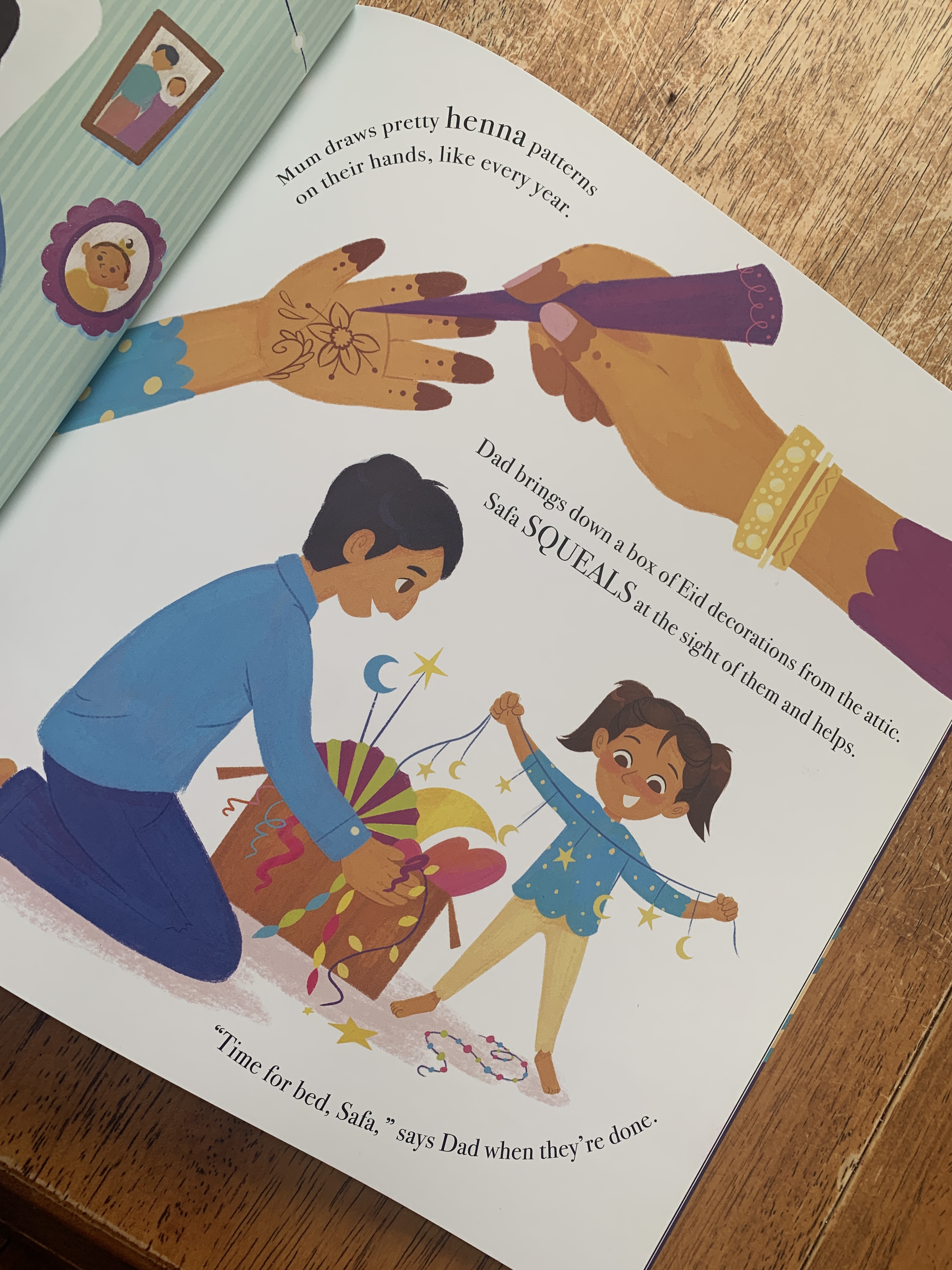
Safa and her parents see the new moon and that means it is Eid.  She is so excited as her mom puts henna on her like every year, and her dad brings out the box of decorations.  At night she is anticipating presents, gifts, new clothes and food that she can hardly sleep.

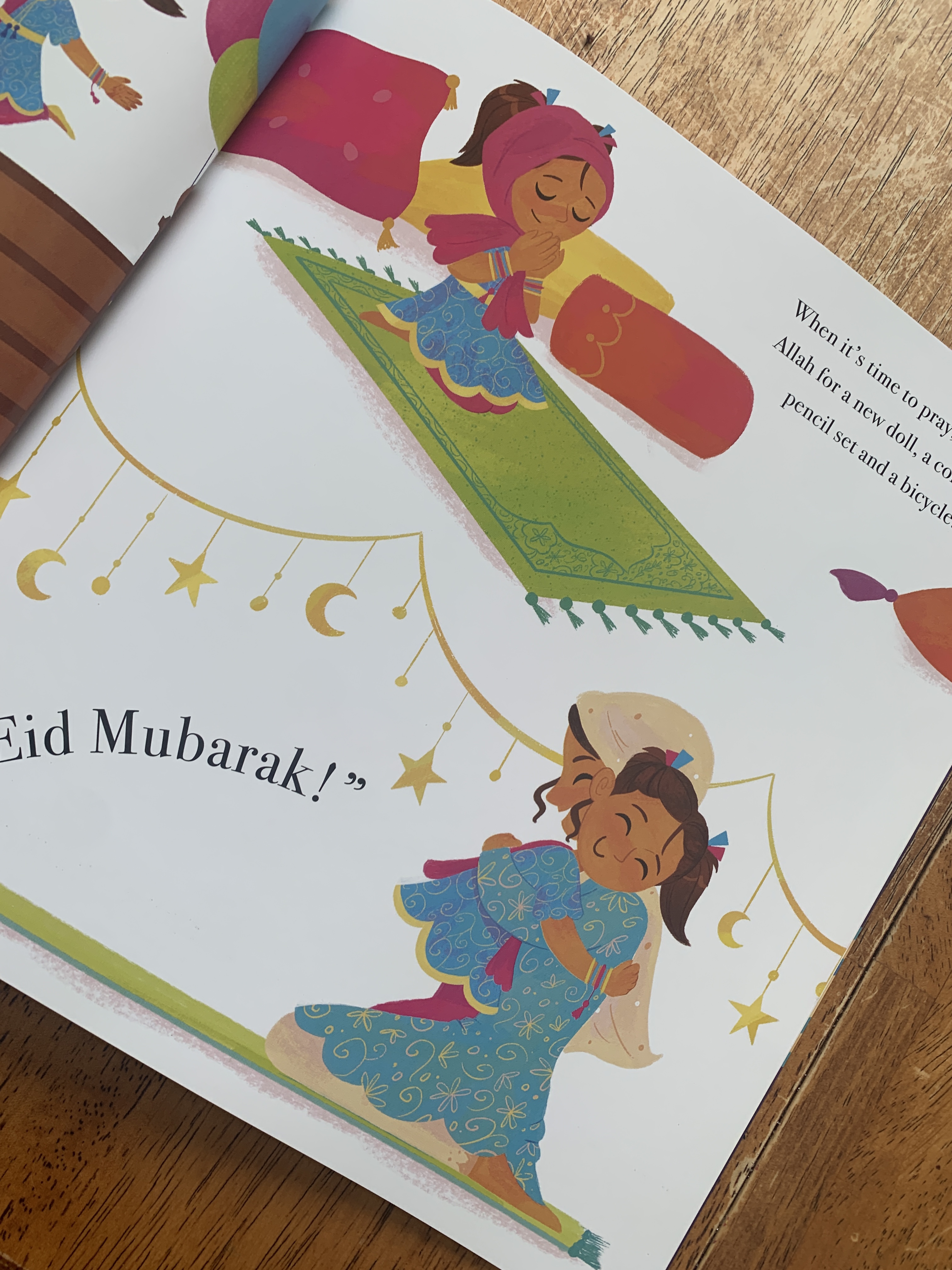
The next morning she comes down in new clothes, prays, asks Allah for a new doll, a colouring pencil set and a bicycle.  Guests come over, even Alissa her cousin. She opens her presents revealing she got everything she asked for.  Alissa calls after Safa, but Safa doesn’t want to share, she’s been waiting for this bike forever. Since sharing is the point of the story, it is worth noting that Alissa in the text shouts after her and in the illustration is shown to be calling out, there is no reinforcement that Alissa even wants to ride the bike.  I suppose I’m glad that Safa feels it, and regrets it later, but it is subtle and I don’t know that a 4 year old will even register that, that is implied.

img_8978

Mom then calls to Safa while carrying two huge purple bags to come with her to share joy and food with those in need.  Safa adds some of the treats she has received in to the big purple bags and they hand the items out to their neighbors. I love that they are visiting their neighbors and it brings the giver and receiver joy, but the set-up is that neighbors and those in need are one in the same, and I think that is conflating two different things.

Some neighbors get small gifts, one a potted plant, another homemade looking food, and then there is one bag left, somehow the purple huge garbage bag sized bags have shrunk to being a shopping bag size and the next recipient is a surprise: grandparents.

img_8979

The mom and daughter join the grandparents for desi cultural foods of samosas, kebabs, biryani.  Dad does not join them, and I’m not sure why the grandparents didn’t come to the party at Safa’s house? I also wondered if the party at the house was still happening, because once Safa realizes she enjoyed sharing, her parents and Alissa are seen outdoors, with the little girls on bikes and Alissa asking her cousin where she went.

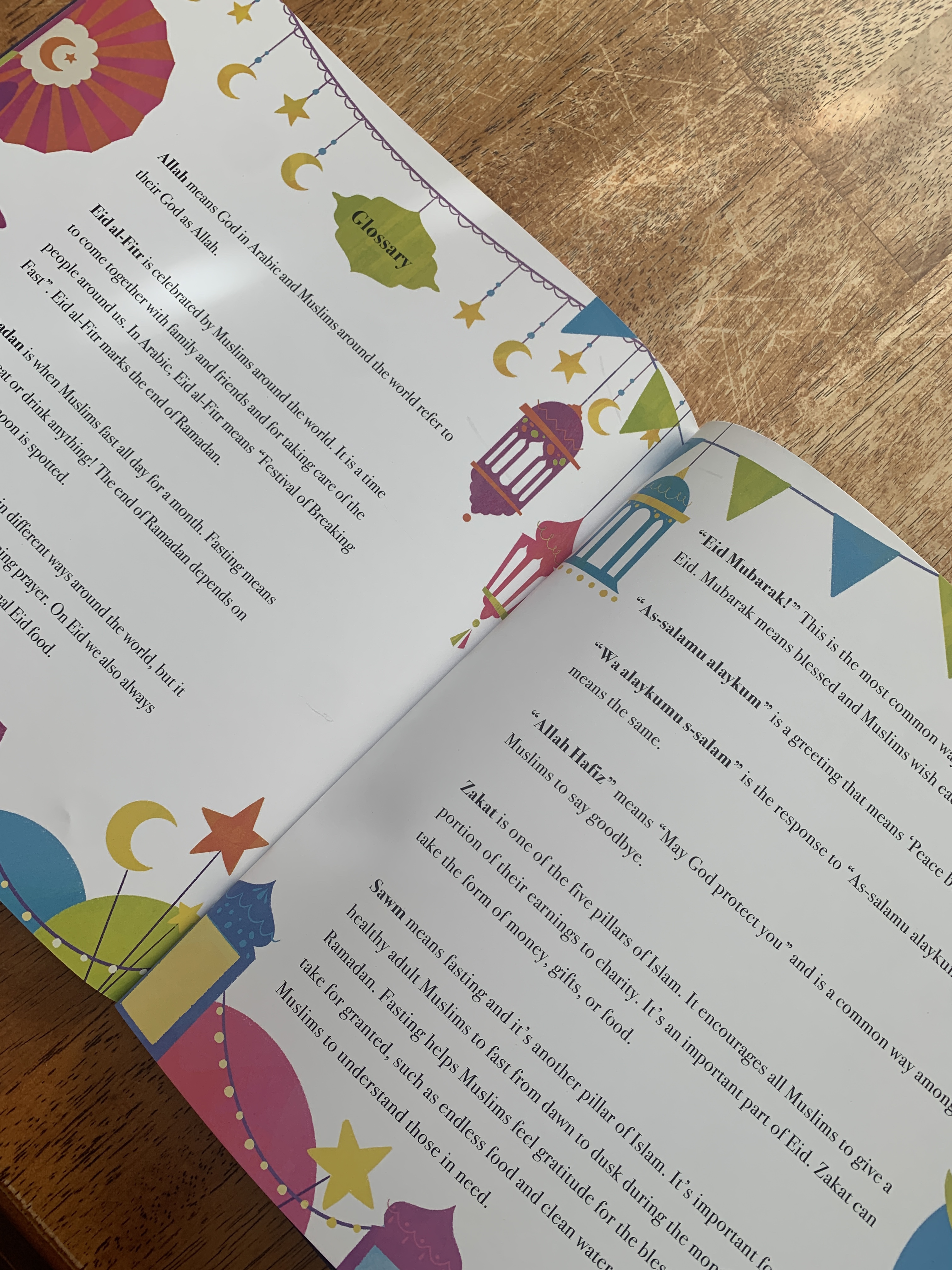
There is a two page spread glossary at the end which defines words that are not in the text, but is informative.  It mixes “cultural” words such as Allah Hafiz being defined as being a common way among Muslims to say goodbye, which technically isn’t wrong, but it is an Urdu word and only used by Desis.  It isn’t in the story, so it seems off to me as well.

img_8980

The illustrations are the highlight in the book.  They are vibrant, expressive and engaging.  The mom seems to have a dupatta on her head, it might pass for hijab, but she has wavy tendrils showing on the side, even the grandma shows much of the top of her hair.  Neither the father in the story or grandfather have beards.

My Dad is Always Working by Hafsah Dabiri illustrated by Arwa Salameh

Standard
My Dad is Always Working by Hafsah Dabiri illustrated by Arwa Salameh

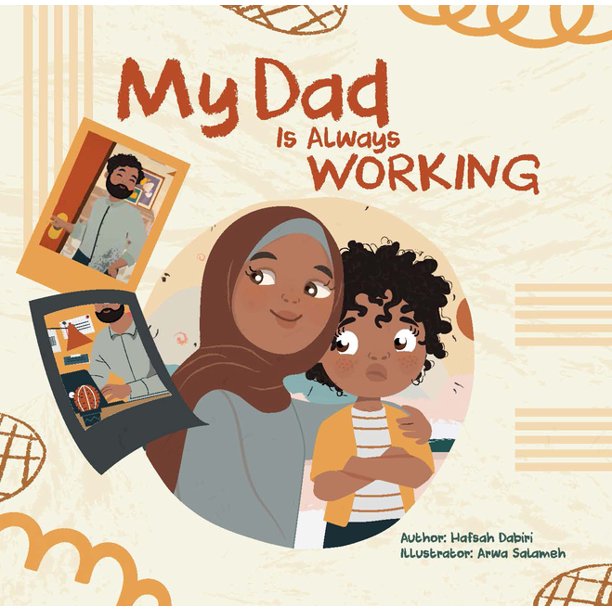
This sweet 26 page story addresses a universal feeling with Islamic flavor.  The Black Muslim family in the illustrations is adorable, the sprinkling in of Islamic terms is lovely, and the concept of dad working unseen for the benefit of his child is touching, (I hope a Mom book is forthcoming).  The text size changing for no reason bothered me though, as did some of the wordiness and possible contradictions.  Ultimately the story will resonate with many children and mirror a common feeling that is not often addressed for young children, and I’m glad I have it on my bookshelf.

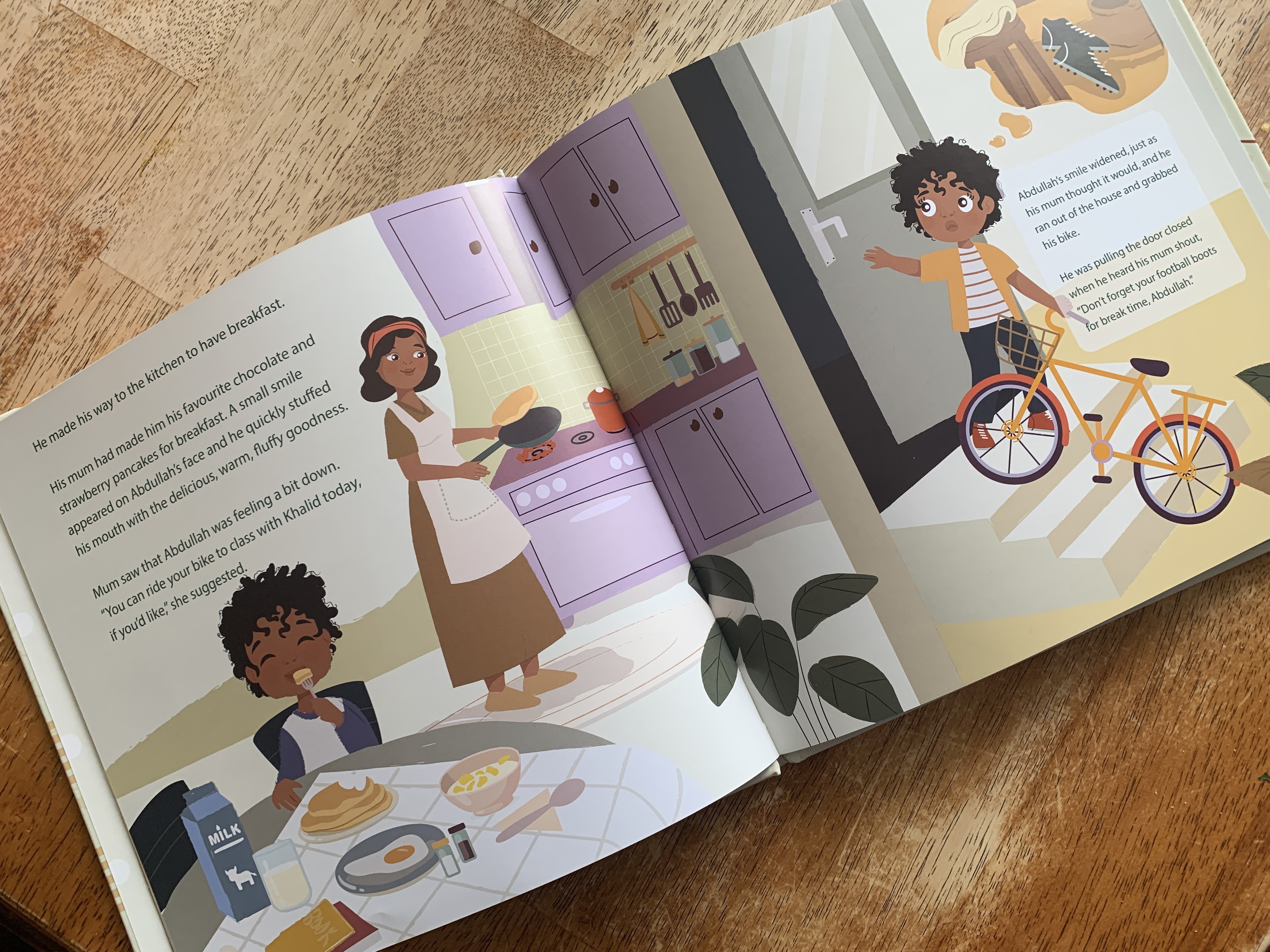
The book starts with Abdullah waking up for class and noticing his clothes laid out on his bed, and his dad with a dirty shirt rushing off to work.  He misses his dad and muses that his dad is “always working,” As he eats his favorite strawberry and chocolate pancakes.  He then jumps on his bike with his clean cleats and heads off to Sunday class with his friend Khalid.

In class they learn about “JazakhAllah Khair,” and homework is to make a card for a person who deserves our thanks.  When Abdullah’s mom, not dad, picks him up he decides to make a card for his mom who has woken him up, set out his clothes, made him breakfast and picked him up for class.

At dinner however, when he discusses class with his mom and the homework the mualimah has assigned, Abdullah’s mom shares with him all that his dad has done and Abdullah reconsiders why his dad is “always working.”

I don’t quite get why the next night when dad is cooking the food is burned, nor am I sure why it said Arabic school, when it seems it is Islamic school, or why he rode his bike to class but then his mom picks him up.  I do like that in the praising of the dad, the mom is not diminished, but rather both are elevated.  An important book, but as I often say, I just wish it was edited better, or more.   It has a lot of potential, the story idea is great, but the writing isn’t polished and it makes it hard to share repeatedly or with a wider audience because of it.

Purchased at Crescent Moon Store also available on Amazon

A Show for Two by Tashie Bhuiyan

Standard
A Show for Two by Tashie Bhuiyan

a show for two

I didn’t love the author’s debut novel, but wanted to see what a second novel would offer, and sadly it really is a lot of the same: light funny romcom surface story featuring a Bangladeshi Muslim character lead mixed in with layers of mental health, a toxic family, high school stress, and cultural expectations driving the plot.  There is crude language, hetero, lesbian, bi, and pansexual relationships discussed, but nothing more than kissing is detailed in any of the scenes.  There is a lot of cultural trauma from the parents and to the book’s credit, it does establish pretty early on that the main character is not religious, but that she does believe in Allah swt.  Similarly, there is a Bangladeshi loving family in the story, so it is not making a critique on the entire culture, it is just the character’s family that is cruel.  Ultimately, at 416 pages I was surprised that there were gaps in character arcs and plot.  I never really liked the protagonist, Mina, but because of how underdeveloped and pivotal the best friend and younger sister were, when it all came to a climax, I found myself rooting for her, which is a very shallow reasoning in an OWN voice book. Additionally, the parents are terrible, and had I dnf-ed it (I was tempted until about 30% through it) I doubt I would have ever known that there was a time that they weren’t terrors.  The peeling back of the layers of the family came too late, too slow, and the progression was muddled.  I probably will not actively seek out further books from this author if the same themes and tropes are present, if she changes it up, I probably could be persuaded.  The book is marketed 7th grade and up, but with the triggers, hate, language, content, genre, language, length I would say 17 and up, if at all.

SYNOPSIS:
Samina “Mina” Rahman is waiting to leave New York and her hateful parents, and start her life at USC as a film student.  All she needs to do is win the Golden Ivy Film Competition, and get excepted to USC.  Her parents dismissing her dreams, passions, and abilities agree to only let her leave if she wins the competition, doubting that it would ever happen, they even put it in writing.  Co-president of the high school film club and best friend, Rosie is equally determined to win, there is just one big problem, every year the winning film has a cameo by a famous actor.  Cue accidental meeting of Mina and Emmitt Ramos, up and coming indie movie heart throb that is cast in the new Firebrand blockbuster.  Sent to Mina’s high school to research for his upcoming role, Mina is tasked with convincing him to make an appearance in their film.  It is a romance story, so you can see where it is headed in this enemies to lovers book.

As family, friends, and college admission stresses mount, the simplicity of what Mina wants and how to go about getting it will be called in to question as her walls crumble and she will have to evaluate people in her life and how they will be affected by her actions.

WHY I LIKE IT:

I like that the story is based on real events in the author’s life, not just the religion, culture, mental health threads, but that an actor came to her high school in preparation for a part: Tom Holland.  I also like that while her parents don’t value her, she has found a support group of sorts that do.  At times Mina reads a lot older than she is, particularly when she is admonishing the freshman, but at other times she storms off pouting and seems to be very childish.  I vacillate between this being intentional and it being an inconsistency in the writing. The younger sister Anam is painfully written.  She is bold and confrontational, yet at the same time so clingy and needy and all over the place.  At one point I thought she perhaps was suicidal and was braced for a really dark twist in the story, but no it was just Anam being Anam, I suppose, and the stress was never revisited let alone resolved.

I truly dreaded the passages about Mina’s home life and her family, they all were just awful to each other and rather than taking Mina’s side because I was shown, I found myself questioning what I was missing in the before and after dynamic.  It is clear they are wretched, the victim doesn’t need to justify the abuse. The transformation of the family dynamic just felt lacking and in fiction when parts are explored it could have really showed some of the micro aggressions and changes that existed and made the relationship salvageable so that the reader would understand why saving and fixing the family were no longer options.  Generational trauma is real and serious and a little more attention I think could have provided an amazing mirror to readers dealing with similar elements.

If the book was half the length I would assume that details would be glossed over, but this book had room, and I don’t understand why so few photography and director references seem to find their way into the text to show that these characters truly are passionate about what they are claiming to desire.  I know the story isn’t a film story or a culture story, but they don’t spend hours editing the film or working on props? Emmitt is regularly pulled away from shoots, but always seems to have enough photos to choose from?  Mina talks of her dad cooking, but foods aren’t detailed, the connection of food to love to family and that being severed seemed like a gaping hole in the crumbling home scenes.  If halal food and no pork can make it into a love relationship, that much cultural/religious depth should have made it inside a families home.

As mentioned in the intro, it didn’t bother me from a religious perspective that Mina was off kissing a boy, that Anam had boyfriends, etc. because Islam was accounted for and the characters are not practicing, so I do appreciate that it didn’t become a stereotypical rebelling against religion book.  Truly, thank you.

FLAGS:

Language, relationships (straight, bi, lesbian, pan), kissing, making out, hand holding, lying, mental health, hate, deception, cruelty, emotional abuse, angry ex boyfriend, triggers.

TOOLS FOR LEADING THE DISCUSSION:
Would not shelve or encourage young readers at our Islamic school to read this.

Rapunzel: An Islamic Tale by Fawzia Gilani illustrated by Sarah Nesti Willard

Standard
Rapunzel: An Islamic Tale by Fawzia Gilani illustrated by Sarah Nesti Willard

rapunzel

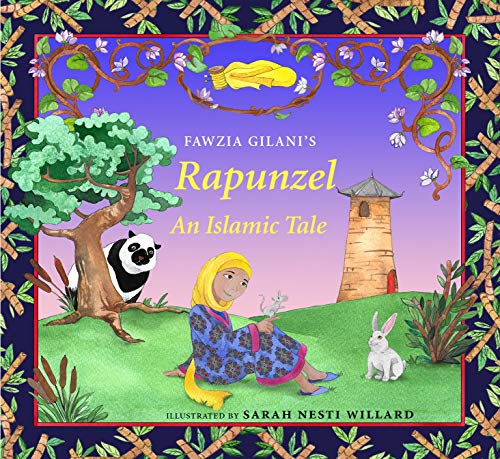
Having read the other “princess” retellings by Fawzia Gilani I didn’t rush out to acquire this book, but when a friend said it was available at the public library, I was surprised and admittedly curious.  This book just like the others in the series are very much in my eyes “Islamic fiction” for how centered Islam is for the characters and how it is used to frame the story toward a religious message.  The fact that a small city library in a Southern state purchased and shelves it, is pretty impressive.  As for the story, well it is really long, and wordy, and every page is filled with tiny text filled lines that I doubt most kids will be able to sit through.  The Islamic content is very present, the Uyghur setting appreciated, but wow do the 41 pages pack a lot of text in to a fairytale re-telling. There is a lot of Islam and Quran and at times it fits well, at other times incredibly forced.  The book claims it is for ages 5-8, but truthfully I don’t know that any age would be able to sit through it and be engaged.

img_7479

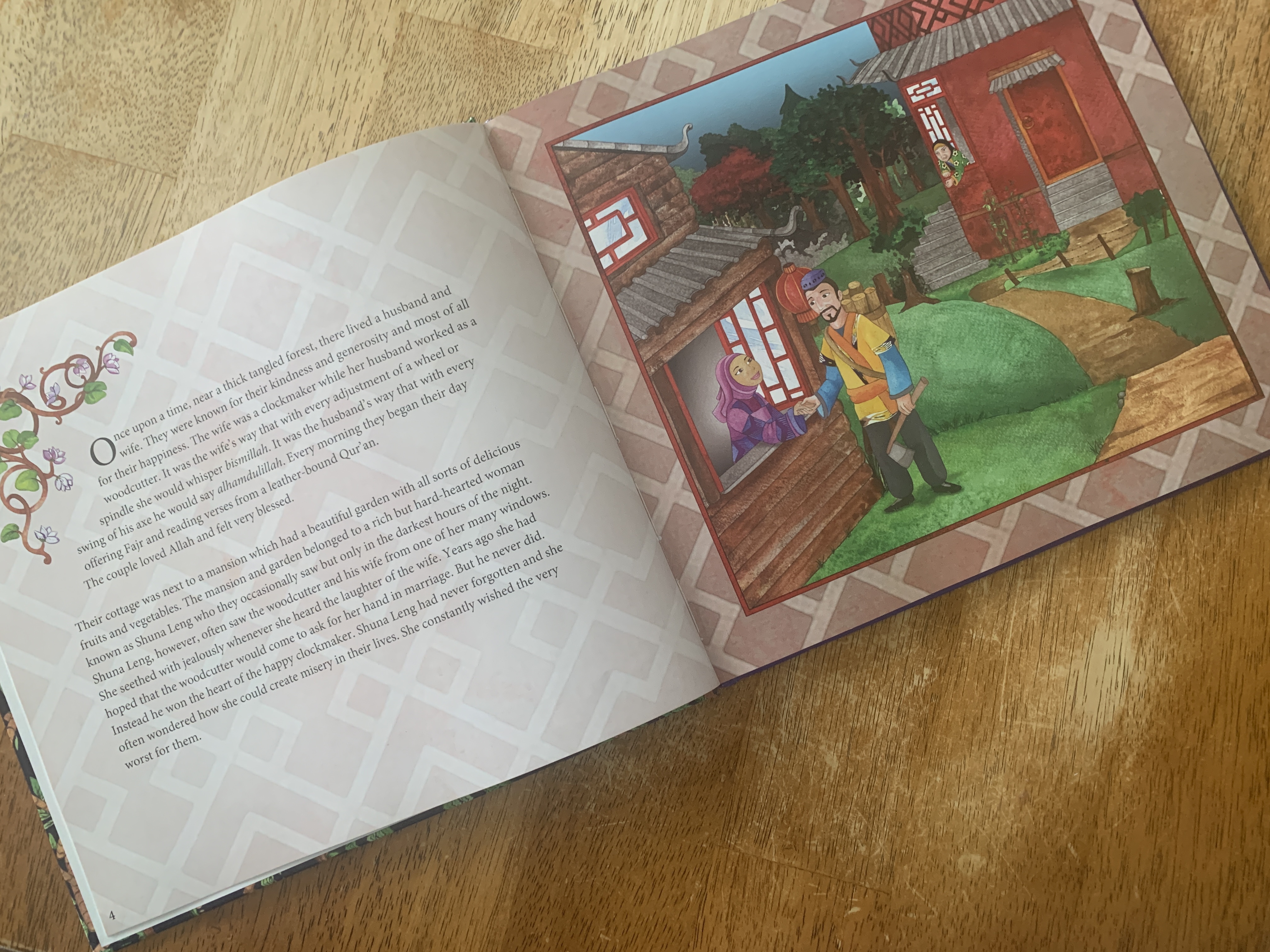
In a tangled forest lives a wife and her husband, a clockmaker and a woodcutter.  Before they married, the wealthy and cold Shuna Leng had hoped to marry the woodcutter, but he never asked, and she never forgot.  As a result seeing her neighbors happy keeps her jealous heart plotting and conniving to bring the couple misery and pain.

img_7481

One day, while pregnant, the wife has a strong craving for rapunzel greens.  Some just happen to grow on Shuna Leng’s property.  The husband is nervous to ask, but when his wife falls weak he makes an effort.  She doesn’t answer, so he picks some growing along the path and leaves coin for payment.  This wife regains her strength and then begins craving them again.  He decides to do what he did last time, but is caught.  The evil woman agrees that he can have all the rapunzel greens he wants but if the baby is a girl she shall be given in payment.

img_7480

Once born the baby is taken and kept hidden from her parents.  Various governesses are employed over the years to tend to Rapunzel and who teach her Islam and kindness.  Ever so often they have to up and move and abandon their routine when people start asking questions, but the lessons learned from the Quran stay with Rapunzel and she endures what she must.

img_7483

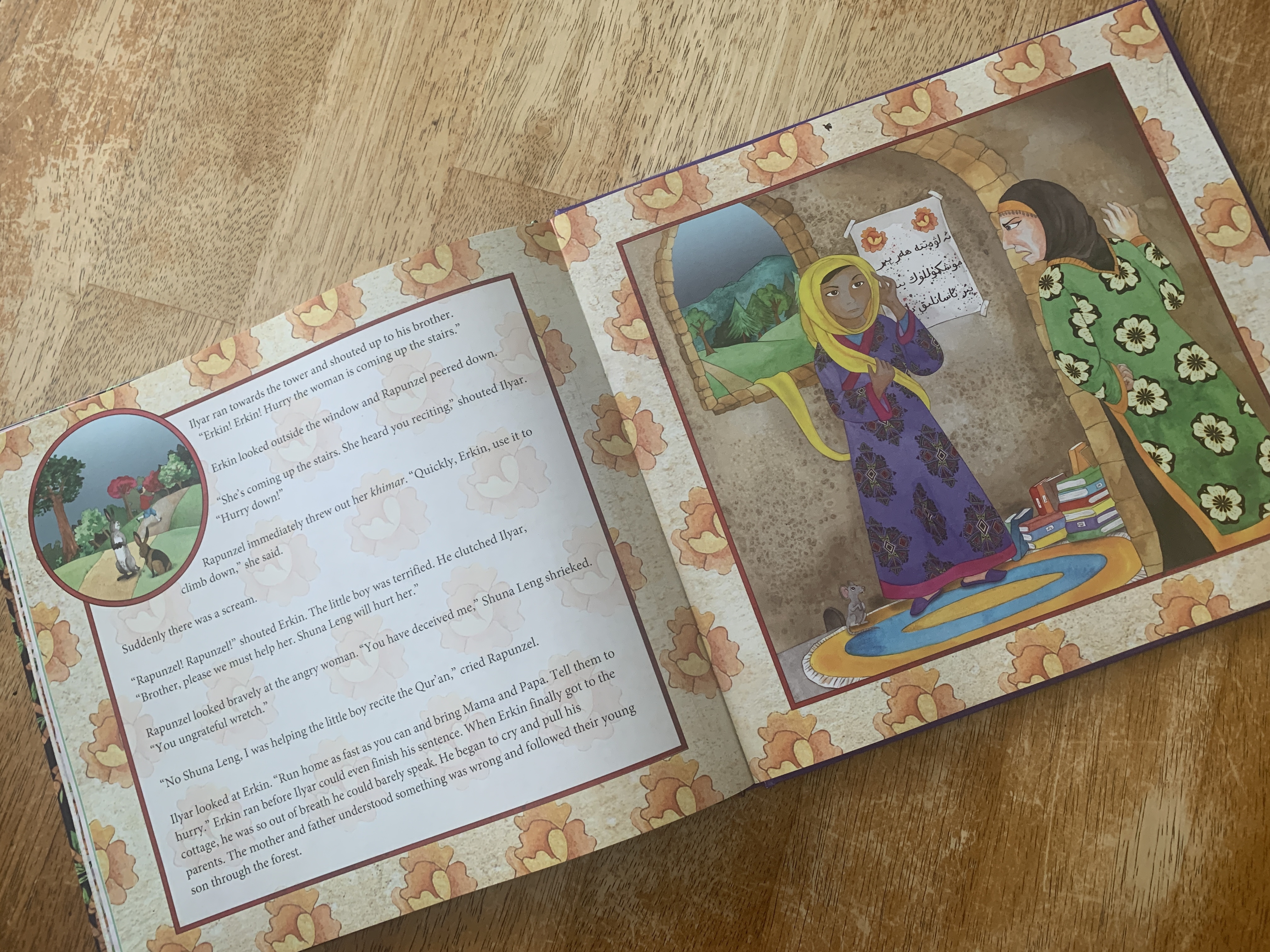
Eventually she ends up in a tower, she offers to help a stray boy recite Quran, and the evil plot of keeping her locked up unravels.  Yes SPOILER she is returned to her parents.

It is a decent retelling in theory, it just is really long, and there isn’t quality character building to invest the reader to the side stories being presented.

img_7482

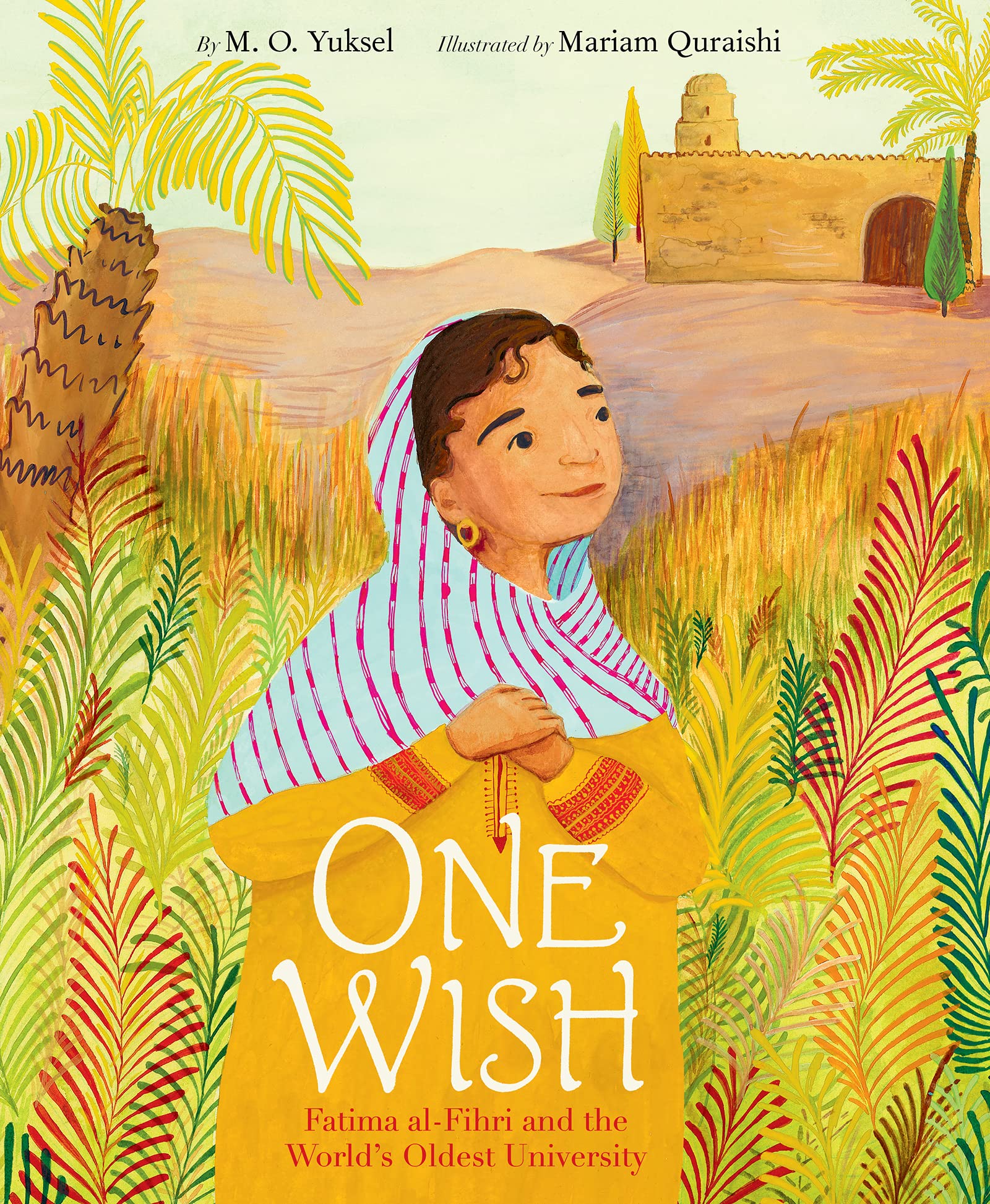
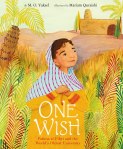
One Wish: Fatima al-Fihri and the World’s Oldest University by M.O. Yuksel illustrated by Mariam Quraishi

Standard
One Wish: Fatima al-Fihri and the World’s Oldest University by M.O. Yuksel illustrated by Mariam Quraishi

one wish

This book is so long overdue, yet at the same time it was worth the wait.  The writing is simply superb: Fatima al Fihri is celebrated, Islam is centered, there are references, and the story compelling.  We, Muslims, as a whole know so little about the beautiful impact fellow Muslims have had on the current world and our way of life, that to see this book being celebrated in public libraries, in Islamic schools, at masjids, and retail bookstores, truly makes you sit up a little straighter, and reach confidently to get this book in your hands to share with those around you.  Thank you Mindy (@moyuksel.author) for these 40 pages of absolute delight, ages 5 and up will read it to learn, read it again to enjoy, and inshaAllah read it repeatedly to be inspired.

img_7723

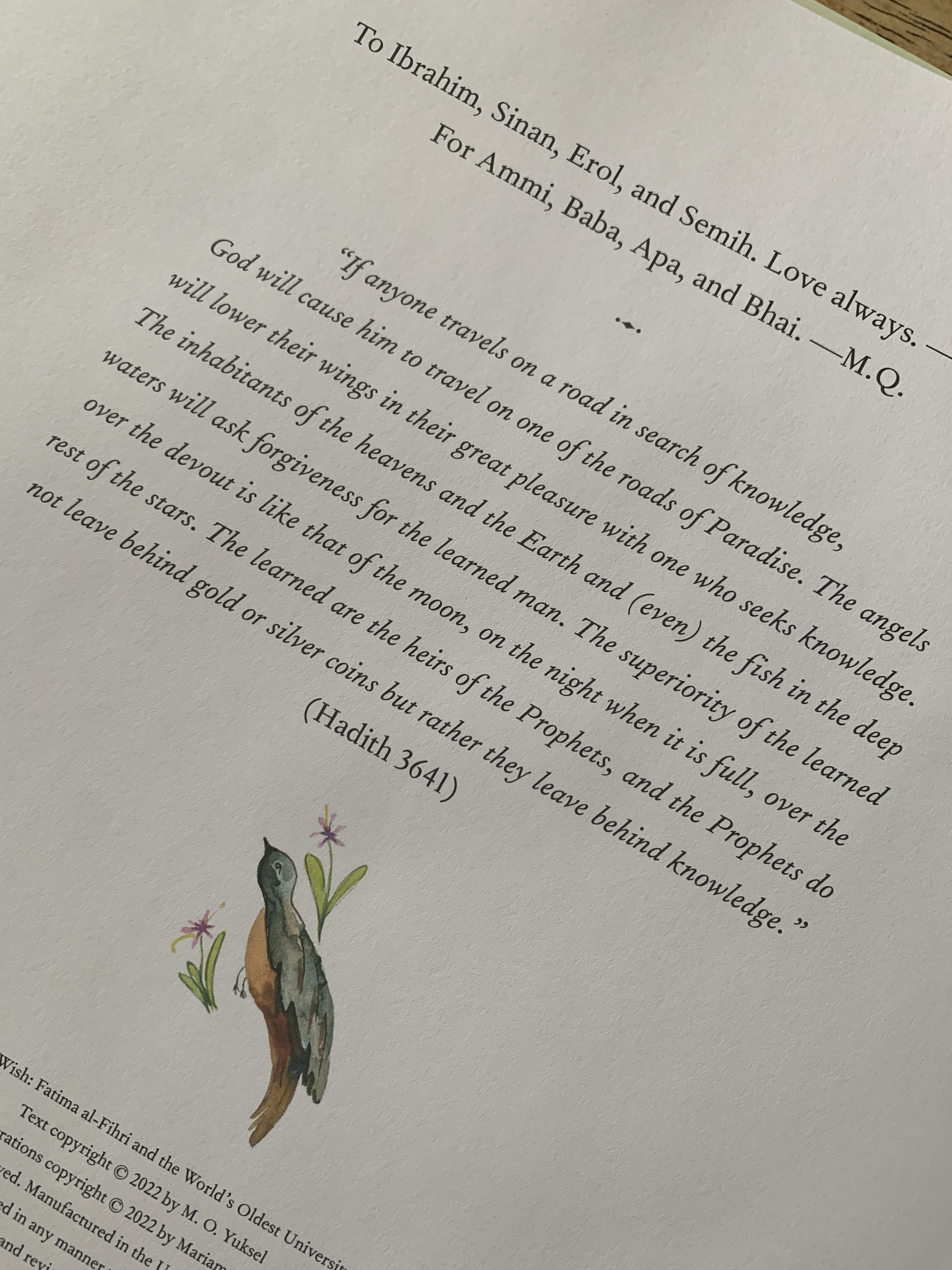
The book begins with a Hadith regarding seeking knowledge and leaving knowledge behind.  It then begins the biography of Fatima as a small girl curious about the world around her starting with the word Iqra, read, from the Qur’an.  It sets the stage of her living in the desert in the early ninth century, a time where some boys went to school and some girls learned at home. Her connection to Islam and it teaching her the value of knowledge caused her wish, to build a school, to grow stronger.

img_7726

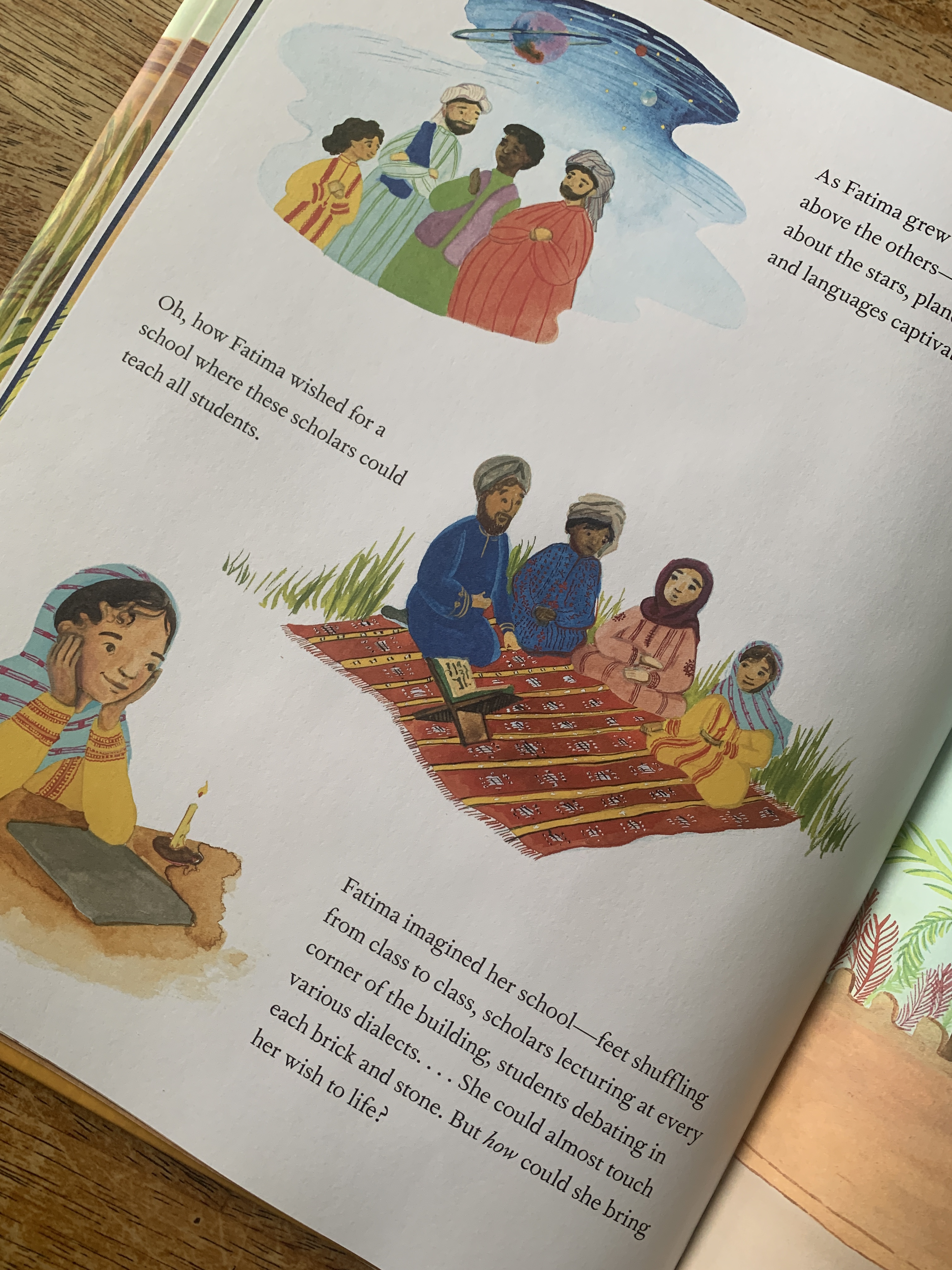
When war destroys her town her family flees to the busy city of Fez, Morocco.  She begins to accompany her father to the souk and enjoys listening to talk of planets, distant lands and different languages and wishes these scholars could educate everyone. She grows and gets married and her and her family become wealthy merchants.

img_7725

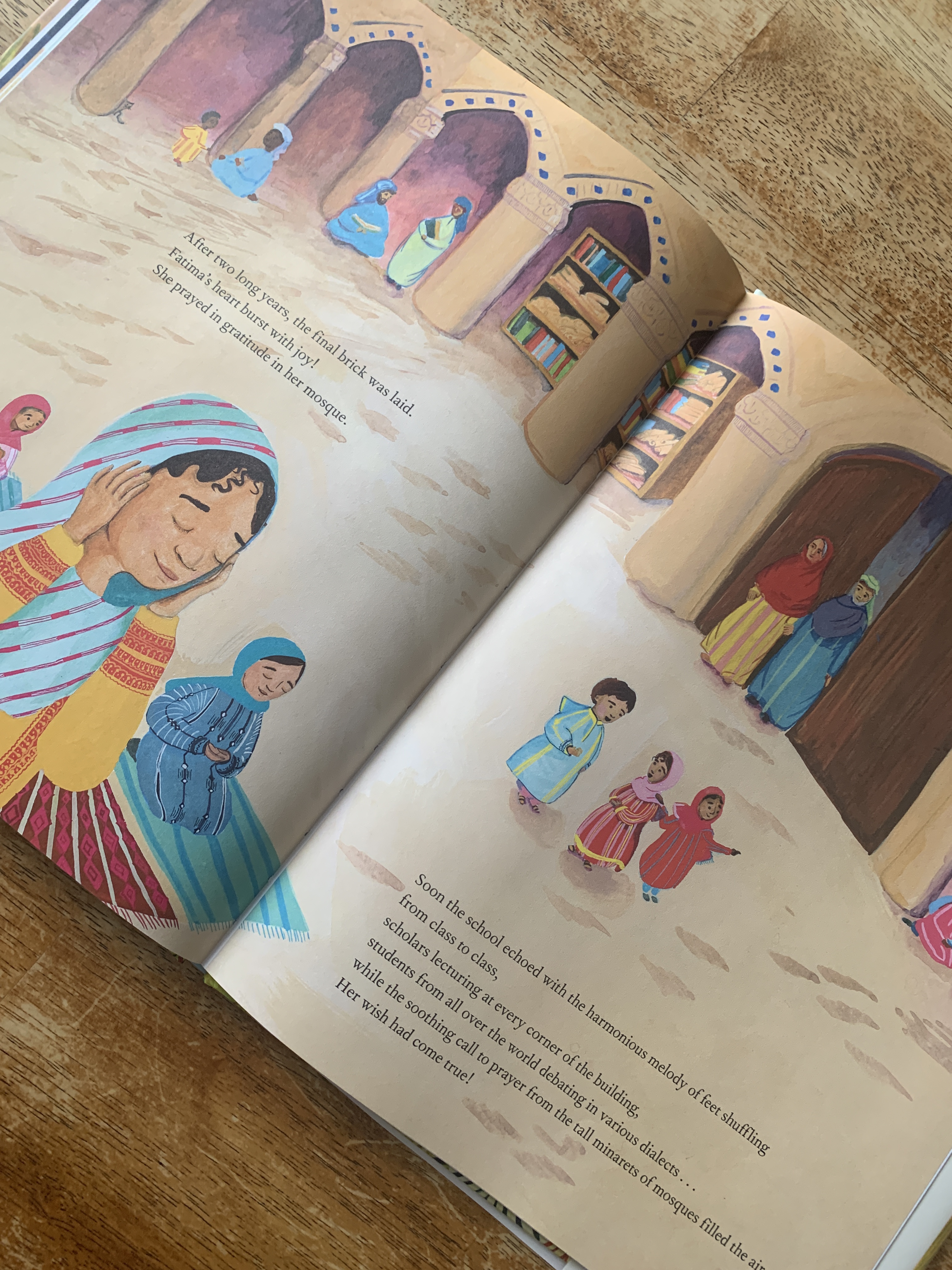
Tragically, her father and husband die, and Fatima must decide what to do next for her family.  She decides to help her community as a form of sadaqah jariyah and make her wish a reality.  She sets out to build a school where everyone can live and study for free.  She purchases land, and the building begins.  Fatima oversees each detail and names it the al-Qarawiyyin after her hometown in Tunisia.  It takes two years to build and it still functions today.

The back matter is just as compelling as the story with an Author’s Note, information on The University of Al-Qaryawiyyin, a Glossary, Bibliography, and a Timeline.  The only complaint I have about the book, are the illustrations.  I really don’t understand why half of her hair is showing when based on the time and her connection to her faith, she most likely was a niqabi.  I don’t understand the continuity of the hijab from a young child to adulthood.  I get that it shows her influence moving forward at the end, but it could have been a small print on an outfit for token representation of symbolism, I don’t get it as being a complete outfit her whole life.

img_7724

I absolutely love the role of Islam in both Fatima’s life and in this book.  It is so much a part of her and her wish, that every reader will recognize how connected her faith and the creation of the University were and I’m confident both Muslim and non Muslim readers will be in awe of her devotion and accomplishments, inshaAllah.

After Iftar Tales arranged by Bismillah Buddies

Standard
After Iftar Tales arranged by Bismillah Buddies

after iftar tales

This book’s beautiful dark blue cover with sparkly stars feels good in your hands and looks lovely on the shelf.  It is a collection of 10 short stories presumably to be read by an adult to a child or children during Ramadan and has its highs and lows.  As often is the case in anthologies, some are written better than others and while I particularly liked two of the stories contained, I couldn’t help wishing that the entire collection would have been better edited.  I don’t know any of the authors, or their ages, and there is not an intro or conclusion detailing how the stories were selected or compiled, but as a whole, the grammar errors (spaces before and after commas and periods), failure to spell out numbers less than ten, and the overall plot holes in so many of the stories, makes it hard to love this book.  Something about judging a book by it’s cover would seemingly apply here, the illustrations are decent, the topics and themes covered are important, but the finishing is lacking, and the book really had a lot of potential.

SYNOPSIS:
The ten stories cover Ramadan in different ways, and do not get repetitive.  With different authors and illustrators and pictures on every other page at a minimum, the books presents well.  Many of the stories are adequate, but largely forgettable as the plot holes just made me and my kids dismiss them.  A few are too lengthy and wandering, but there are two that even despite writing obstacles, thematically were memorable:  “A Ramadan Surprise” by Malika Kahn and “Iftar in Space” by Tayyaba Anwar.

“A Ramadan Surprise” is written in rhyming verse and discusses the need for wheelchair accessibility at masjids.  Focusing on a young girl it also hints on the importance of accessibility for the elderly.  This is such a needed and important reminder and I love that it is present in a book that is positioned to be read and thus hopefully discussed.

“Iftar in Space” similarly opens itself up to be discussed and marveled at between a child(ren) and an adult: how would you fast and pray if you were on the International Space Station. This connection could then be made for people that live near the poles, and how science is valued in Islam and so much more.  I love that Islamic information is seemingly sourced, but I would have loved a line or two at the end clearly articulating that in fact this is what this scholar or these scholars have declared.

WHY I LIKE IT:

At first it didn’t bother me that the text was so small, but mid way through, it started to because the pictures are so inviting and regular.  If a child is snuggled up with a reader looking at the pictures it is impossible for them to follow along. I get that that is kind of the point, but with huge margins, the text size can easily be increased.

I don’t know why the book doesn’t seem to have been edited.  The cover and illustrations and binding are all decent to high quality, the cost of the book for consumers is high, so I don’t know why an editor was not (seemingly) involved in the process.  Sure I am picky, but it isn’t one or two grammar errors, it is a lot, and when it is a regular concern, it ruins the flow and feeling of the book.

Overall, honestly there is also very little Islam present in most stories except for the timing of Ramadan, and many of the stories seem to have gaps.  In the first story, a boy is found by a stranger and gifted a lamp, and the family never even tries to find the person who saved their son to thank him? They live in a small village?  In one of the stories where a little girls is fasting for the first time she is also making a salad independently and pulling a cooked tray of lasagna out of a hot oven. A child in one story eats moldy candy, and in a contemporary story kids donate their money to an orphanage.  Are there still orphanages? In one story it opens with a banner being made that is crooked, but the accompanying illustration does not match.  One error or two is easy to overlook, but again, when it is every single story, it is incredibly disappointing.

FLAGS:

Clean

TOOLS FOR LEADING THE DISCUSSION:

I think while reading it you would find plenty to discuss with your children.  On stories where your children seem bored you could skip them, if sentences don’t make sense you can alter them.  I doubt children will read the book independently, so there is some wiggle room to add or subtract from the text to make the points you want to make and keep the stories engaging.  There are a few stories that discuss Covid and the frustration that it has caused to daily activities, which might help add another layer of connection to the text.

Ramadan Rocket by Emma Halim illustrated by Stephen Tucker

Standard
Ramadan Rocket by Emma Halim illustrated by Stephen Tucker

ramadan rocket

The banter in this 36 page Ramadan moon book is fun and engaging, and as the mom of five kids who was once a kid herself, the struggle is real to try and spot the Ramadan moon.   Most years, frustration abounds and nothing is seen. Haarith has the same problem, but last year he did something about it.  In this 36 page book for preschoolers and up, the faceless pictures will have kids giggling and their imagination’s soaring as they try and determine if Ramadan is about to begin.

img_7572

Haarith loves listening to stories about Ramadan, but always has trouble seeing the Ramadan moon. Last year, he decided to get a closer look.  He set out to build a rocket, but his best friend Hakeem had one he could borrow, so Haarith recruits two other friends, Jawaad and Khaleel, and plans are underway.  Jawaad will pilot since he flew out of a swing last week, and Khaleel will be in charge of food because his mom makes awesome cakes.  The boys head to space, passing, satellites, drones, and NASA rockets, before they see the moon and head back home.  After maghrib the community heads to search the sky and when they see nothing, it is Haarith that can locate exactly what they are looking for.

img_7571

I wish the moon was shown as super thin and hard to see in the illustrations, instead of as a thick crescent so that kids that might not have personal experience could at least understand why Haarith is struggling.  Also, I’m not sure why the line spacing on one page is double what it is on the others.  Many of the pages are text heavy and could have used some editing to tighten it up, but overall the story is fun.

img_7573

The premise though sent my head spinning, and yes I’m going to show my ignorance here, you can judge me. If you go to space, the moon is spherical, the earth and shadows are no longer at play right? So wouldn’t a new moon, a full moon, or a waxing gibbous all look the same? Clearly my confidence in this matter is non existant, and while I have no problem with the characters borrowing a friend’s rocket, it has been sitting unused for a year after all, I’ve been struggling to get this point clarified in my head.  And I believe it would all depend on where the rocket is and thus the boys’ point of view.  According to the University of Maryland, “The reason that we do not always see a Moon which is half lit is because of our position relative to the Moon and the Sun. As the Moon moves in its orbit, different portions of it appear (to us!) to be lit up as we look at it from Earth. This is why we see lunar phases.” So I suppose that depending on the rocket’s position in space would determine if the moon looked like a “Ramadan moon” or say a third quarter moon.  I’ve linked a NASA video that explains that the International Space Station sees the same phases as earth, so umm yeah, maybe I should take a break from fiction and go read some nonfiction basic science books. 

Eid Empanadas by Wendy Diaz illustrated by Uthman Guadalupe

Standard
Eid Empanadas by Wendy Diaz illustrated by Uthman Guadalupe

empanadas

I love books that show, not tell how diverse Muslims are and celebrate the unique ways that Islam and culture come together.  This early elementary chapter book beautifully blends, Islam with Spanish words and phrases that all come together to celebrate Ramadan and Eid in America.  At 79 pages, with illustrations sprinkled in, this is a great book to share all year long.

img_5450

SYNOPSIS:

Omar is in 5th grade and when his teacher assigns the entire class to write an essay about their Ramadan and Eid traditions he is nervous that his family’s way of celebrating is very different than everyone else’s.  Omar’s mom is from Puerto Rico and his dad’s parents immigrated from Ecuador, even after a year and a half at the Islamic school, though, he still feels like the new kid, and doesn’t want to draw attention to himself.

Sensing that Omar is nervous, his teacher Ms. Khan offers ways to brainstorm and organize his thoughts.  Once home, in his casa, his little sister and parents join in to give him enough ideas, if only he can be brave enough to share them.

img_5449

WHY I LIKE IT:

I love that there is so much joy and love in this little book.  The twist of having a kid not feel like he is fitting in at an Islamic school, is also so fabulous to read.  The OWN voice narrative and recipe at the back will help kids like Omar everywhere feel confident to share their culture, and those that know kids like Omar (even if only fictiously) anxious to learn more about Latino Muslims.
The only thought that did cross my mind, when Jummah was being explained as the congregational prayer on Friday, was why not use the word Jummah, just like all the Spanish words were used, and then defined.  I would love to ask the author who the intended audience is, and how that shaped her word choice, what was defined and what wasn’t.

img_5448

FLAGS:
None

img_5447

TOOLS FOR LEADING THE DISCUSSION:

I’m hoping to get copies to the first grade and second grade teacher to read in Ramadan to their classes. This book has the potential to really excite kids, expand their understanding, and show them how beautiful and diverse Islam really is.