Tag Archives: Muslim Characters

Grandpa Ali and Friends Volume 1 By Yasin Osman

Standard
Grandpa Ali and Friends Volume 1 By Yasin Osman

grandpa Ali

This 46 page comic strip compilation follows the intergenerational Somali-Canadian members of a family. With crossword puzzles, word searches, advice, and graphs sprinkled in-the book at times was laugh-out-loud funny, heartwarming, ironic, and honestly, there were things that I didn’t quite understand-and those perhaps were my favorite parts.  The book features Muslims and immigrants and life in the west, and those I could relate to, but I am not Somali, and there aren’t a lot of Somali books available, so I loved the opportunity to see the culture and humor and themes that a book written authentically chose to highlight.  The book is not a graphic novel, the characters and their situations are not a cohesive narrative, so if I didn’t understand a particular joke, it didn’t linger or carry over.  By the time the book was done a sense of love, community, and joy left me waiting for the next installment and a desire to read more voices that are not easily found in Muslamic YA literature.

The humor is at times culture and experience specific, and I feel honored almost to witness a book for a particular group by a member of that group and thus don’t feel a need to “review” the book in my typical fashion.  I simply wish to highlight that it exists, share some inside pictures, and hopefully send some support its way. You can purchase it on Amazon.

Happy Reading y’all.

Hassan and Aneesa Go To a Nikaah by Yasmeen Rahim illustrated by Rakaiya Azzouz

Standard
Hassan and Aneesa Go To a Nikaah by Yasmeen Rahim illustrated by Rakaiya Azzouz

hassan and aneesa

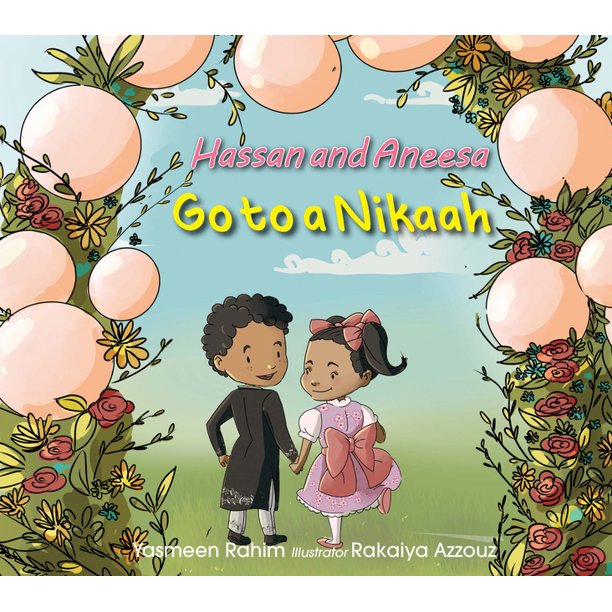
The latest installment in the Hassan and Aneesa series caught my attention because there just aren’t a lot of books about an Islamic marriage process (it is Desi tinged).  Cultural weddings you often see, but despite the misleading title of them just attending a Nikaah, they actually walk the reader through the steps from wanting to get married, to getting to know someone, praying Salatul-Istikhara,  agreeing on a mahr, signing contracts, and a walima.  The idea and premise is brilliant and greatly needed, the finished product, not so much.  Somehow I had forgotten how tiny in size the books in the series are (6.5×7.5), making it all visually cluttered and the text often hard to see over the illustrations.  And while I love how the concepts and terms are defined, the point of view of having it witnessed and detailed by the brother sister duo is often awkward and wordy.  I wish the author would have ditched the familiar characters, and just written a book about the marriage process for kids.  The vacillating between a fictionalized story, factual requirements, kids witnessing their parents helping their cousin get married, makes for a tangled book that fails to connect to readers seven and up, let alone two and up like the book claims. If you’re kids are asking about how Muslims marry or seem curious about a halal way it can be done, I suppose this book would provide a way to understand some of the key facets in broad strokes, but it needs editing, and more space to show joy and excitement in a book about families and a couple coming together.

img_9813

The very first page set the tone for me, the overly dressed girl at a barbecue and the way her name seems to be so formally introduced.  Perhaps it is a difference of culture, but the book never bounced back from the heavy handed tone.  Aisha wants to get married and asks her parents to help her find someone.  They ask her what she is looking for and she tells them.  I like what she includes kindness, love of Allah, funny, etc.  I wish it would have suggested that she had given it a lot of thought before answering though.

img_9814

Aneesa and Hassan’s mom and their aunt are discussing Aisha’s want to marry at their painting class and a friend over hears and suggests her son Uthman.  The families agree to have the two meet in a cafe with Aneesa and Hassan’s dad and uncle so that her mahram is nearby.  Uthman and Aisha both enjoy sports and Uthman interacts with a baby at another table impressing Aisha.  They both pray istikhara and decide that the families should all meet.

img_9815

It is then time to pick out a dress and hand out invitations, which at least involves Hassan and Aneesa, but the pages are so cringe and awkward from the phrasing, to the structure of the concepts.  The spread is disjointed and you’ll catch yourself shaking your head and making a face every time you read it.

Mehndi is next and I’m not sure why it focuses on Aneesa not sitting still and looking sad when her design is ruined.  It seems like an odd inclusion in what should be a joyous book.  Hassan is entrusted with gift to hold on to by Uthman for Aisha, and the Imam gives a khutbah about marriage.

Contracts are then signed with Aisha her wali, uthman and the imam and each party is asked if they agree.  They have already decided on the mahr and then Hassan hands over the gift.  The walima feast is delicious and the reader is encouraged to go back and find the cat in the illustrations.

As for illustrations I do like that the main females are shown out of hijab at home, and in hijab while out.  At the wedding there are different shades of brown, different loves of covering and not covering, there is a guest in a wheel chair and the couple and their families seem happy.  I found it odd that it says they are in love, since there isn’t a lot of emotion mentioned before the last page and I wish the text on numerous pages wasn’t mixed in with the pictures.

The book concludes with a glossary of terms.

The Maliks Ramadan Mayhem by Zanib Mian

Standard
The Maliks Ramadan Mayhem by Zanib Mian

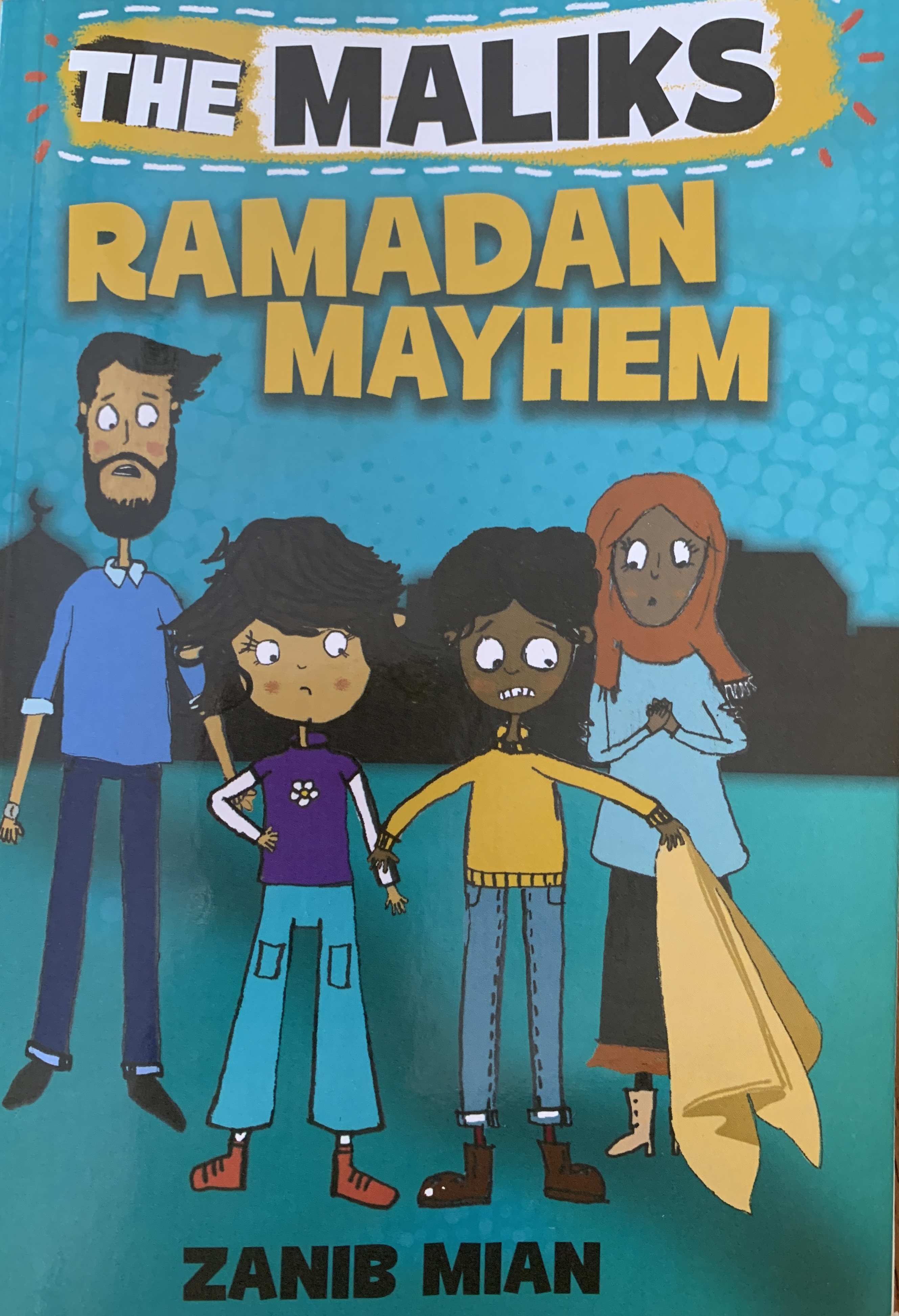
This 93 page Islam centered, action packed, humor filled book was written as a gift by the fabulous Zanib Mian for her readers. The book was to be free, all you had to do was pay shipping. Well, if you lived outside of the UK, that would make the book pretty expensive, so like any entitled book lover, I started annoying the author, my friend Noura the owner of Crescent Moon Store, and any and all connections I could muster to get the book during Ramadan. I wasn’t trying to get it for free, I just really wanted it in my hands. So, when the author did a second printing for purchasing, and my US stockist was on the list, I was giddy. Then I went out of town to be able to spend Eid with family and the lovely book sat on my neighbors dining table until the blessed month and the festivities of Eid, had come and gone. But guess what, it is ok. This book is fun, no matter what time of year you read it. It is as silly and informative and relatable as all the Omar books, and the characters just as delightful, the mystery just as teasing, and the quirkiness just as charming for readers 7 to 100. Thank you for this gift, thank you dear friend for stocking it at an incredibly affordable price and getting it to me with such speed and love. And dear readers, don’t wait until next Ramadan to get your copy, you and your children will enjoy the book now, repeatedly, and as they get excited for Ramadan next year (and the year after, and the one after that too), inshaAllah.

SYNOPSIS:

Maysa Malik is often misunderstood, and crossing lines at school, with friends, and at madrassah that get her in trouble, even while making others laugh. Her twin brother Musa doesn’t have Maysa’s penchant for getting in trouble, and so their parents are letting him go on the school trip, but not her. Maysa is determined to prove to her parents that she isn’t a class clown and can stay out of trouble. With help from Musa and their neighbor Norman, a cookie tower competition might be just the thing to raise money for charity and get in her parents’ good graces. But, a little lie to avoid teasing has big consequences and destroyed cookie towers mean her plan to go on her residential trip is failing. And no, I’m not going to spoil the plan b the kids come up with, or reveal the snowballing implications of the lie, I wouldn’t want to ruin it for you.

WHY I LIKE IT:

I love that the Islamic tidbits are woven in and made a part of the story. It doesn’t pull out to give facts about Ramadan, salat, and charity, it is all part of the story and works well for both Muslims and non Muslims without compromising or watering down important aspects of our faith. I absolutely love that Norman makes wudu before doing anything and everything related to Islam, and is very aware that farting is a wudu popping act.

There is a “moral” about honesty and self confidence, but it doesn’t come off preachy, and as I’ve grown to expect from the author, her voice reads very genuine and true. The lessons from one character to another and from within internal reflection of a character, feels organic and age appropriate.

The only thing that bothered me initially, but perhaps not so much at the end (I’m going to try not to spoil anything here). Is that the one character that speaks “broken” English is painted as being strict, mean, and short tempered. There is redemption for him, but I wish the characters were more aware of their own impressions of Mr Saleh, and that the stereotype wasn’t perpetuated.

FLAGS:

Lying, accusations, some retaliation against a bully, gossip, gambling is mentioned, butt jokes, fart and bathroom mentions. Nothing offensive, but it is funny.

TOOLS FOR LEADING THE DISCUSSION:

I won’t do this as a book club selection, but I am hoping to read it aloud to 2-4th grade next year before or during Ramadan. It would probably just take a few library sessions and I think the kids will love it.

Hungry Hearts: 13 Tales of Food and Love edited by Elsie Chapman and Caroline Tung Richmond

Standard
Hungry Hearts: 13 Tales of Food and Love edited by Elsie Chapman and Caroline Tung Richmond

hungry hearts

Occasionally I get asked about short story and/or essay from a collection that a college or high school student is hoping to share with a class that doesn’t take long to read, but shows Islamic representation.  And I never have a suggestion.  The middle grade collection Once Upon an Eid is amazing, but for younger readers.  When I learned about this collection that features two known Muslim authors, Karuna Riazi (The Gauntlet series) and S.K. Ali (Saints and Misfits, Love from A to Z), and involves food, I thought to take a look and see if I might finally have a suggestion.  Sadly, no.  None of the 13 stories wowed me, or really impressed.  A few I started then skipped, and none were really memorable.  The premise is unique: all the stories take place in the same neighborhood, feature food, and crossover characters, but some are love stories, others redemption, some have super heroes, others murder and gang violence, some really keep the food central, and others just mention it as being present.  There is familial love, romantic straight, lesbian, and trans love, there is friendship and food from many cultures served up to varying effects.  I admittedly read few short story collections, but even with that taken in to consideration, I think skipping this 353 page YA/Teen book is probably the best option.

SYNOPSIS:

I’ll only summarize the two Muslim authored stories.  A few of the others are culturally Indian, but they eat pork, so I’m assuming they are not Muslim, and the Persian one by Sara Farizan features alcohol and a lesbian romance, so since in a past book of hers I noted that I didn’t know if she or her characters identify as Muslim, I will skip reviewing hers as well.

Hearts a’ la Carte by Karuna Riazi:   Munira works at her families food cart, King of Kuisine and serves up Egyptian food to the people on Hungry Heart Row.  When a guy falls from the sky, she finds her self also falling hard for Hasan, as he regularly starts coming to eat and visit, but when it is revealed that he is a super hero (the Comet) and the reason her families cart is destroyed, Munira is not willing to pursue things further.

A Bountiful Film by S.K. Ali: Hania and her family have recently moved to Hungry Heart Row, where her father grew up and grandma Valimma lives.  Irritated that she had to leave her school, her job at Daily Harvest and friends behind, Hania is hoping to lose herself in putting together her film for the upcoming competition and beating her long time rival Gabrielle Rose.  With no clear idea of what her film should be about she starts with interviewing Valimma and her friends, which turns up a bit of an unsolved mystery involving a missing boy that keeps showing up on the security footage from local businesses.  Hania decides to pursue it, but finds herself being watched, and filmed in the process.

WHY I LIKE IT:

I like that the stories are interconnected, I don’t know that it works, but I like the idea of it.  As for the two Muslim authored stories, I like that Islam and culture are included slightly, but that the story is much more than that, and the characters have more pressing issues to figure out.  I wish in both of these two stories, food was more fleshed out.  They seemed to be lacking the magical food premise that many other stories in the collection had.

img_7244

FLAGS:

See above paragraph for some collection flags.  Riazi’s story has crushes and a budding romance, but nothing overtly “haram.” Ali’s story is clean.

TOOLS FOR LEADING THE DISCUSSION:
I wouldn’t probably even shelve the book in our Islamic school library, it doesn’t offer much in my opinion.

A Bear for Bimi by Jane Breskin Zalben illustrated by Yevgenia Nayberg

Standard
A Bear for Bimi by Jane Breskin Zalben illustrated by Yevgenia Nayberg

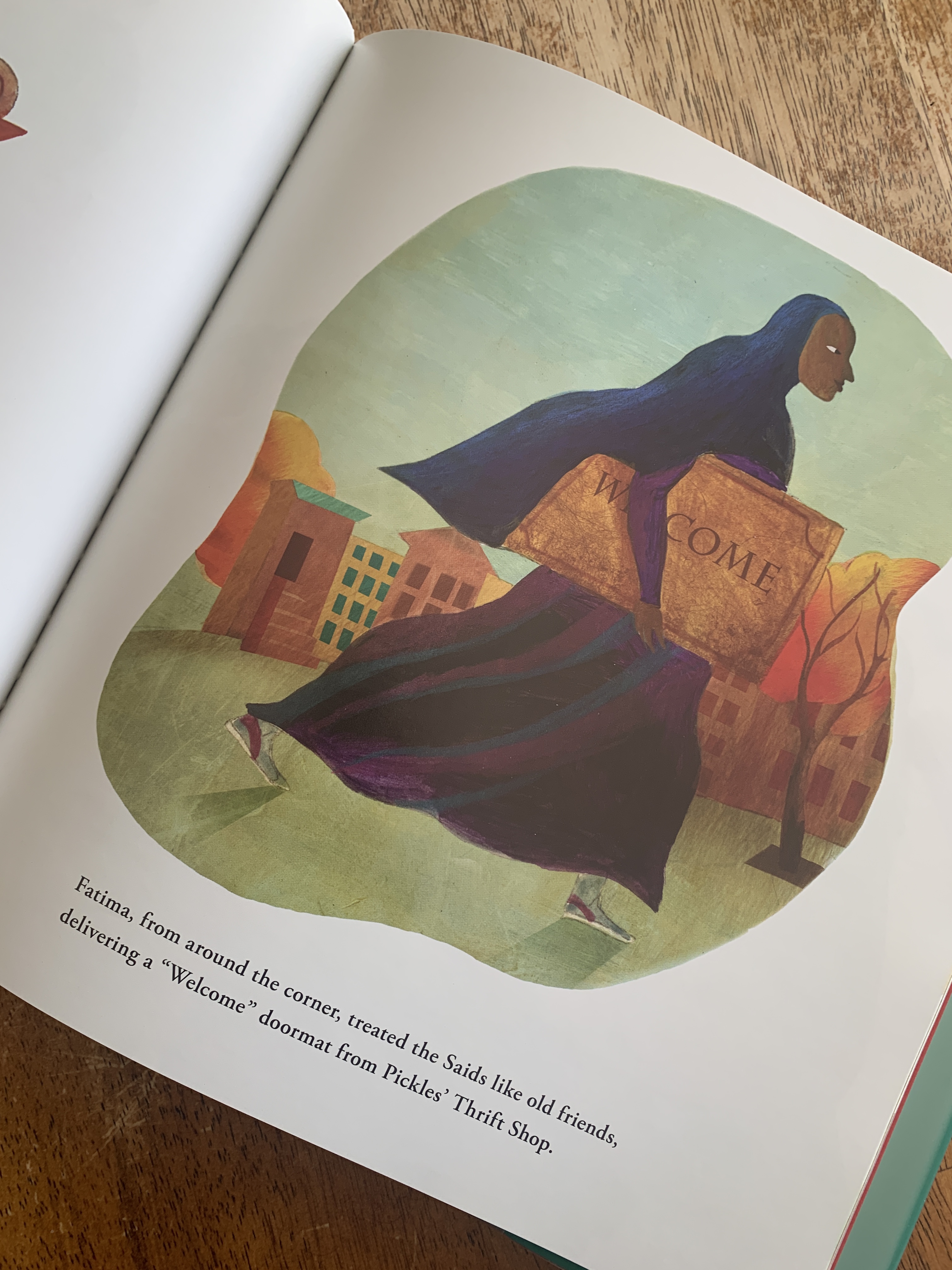
This 40 page picture book for preschool and up does a decent job of highlighting how many of us have immigrants in our family history who have relocated much like the immigrants today. The story focuses on Evie and her family welcoming a Muslim family to the neighborhood.  Some are excited to help, including a Muslim neighbor, others are not so welcoming.  The book shows some of the obstacles an immigrant might face, ways someone already established can help, and just how to be a good neighbor- all on a simple pre-schoolr to first grade level.  For little kids it is a good story to start a discussion, and for slightly older kids it is nice to see Islamic names in the text, smiling hijabis in the illustrations, and different characters to identify with.

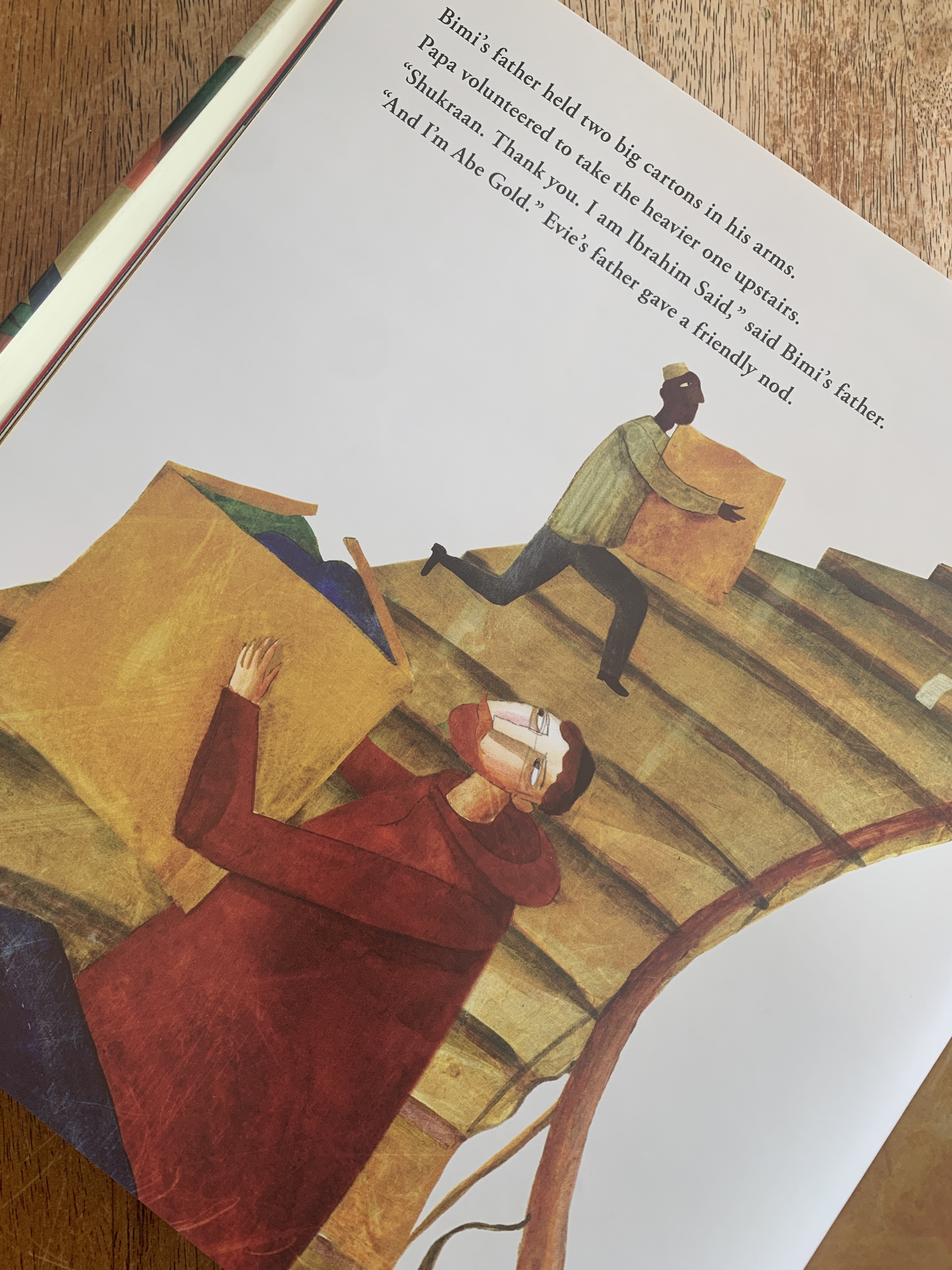
Evie’s parents tell her that a family from far away is moving in next door, she asks if they are coming like her grandparents did, and indeed they are.  When they arrive Evie runs out to introduce herself to Bimi. Evie’s parents help the Said family move in.  But one neighbor, Mrs. Monroe just glares out the window.

Bimi asks his parents about Mrs. Monroe and Evie asks hers.  Bimi’s parents tell him that some people are scared of people that seem different, and Evie’s parents wish Mrs. Monroe would remember what it was like when she first came to America.

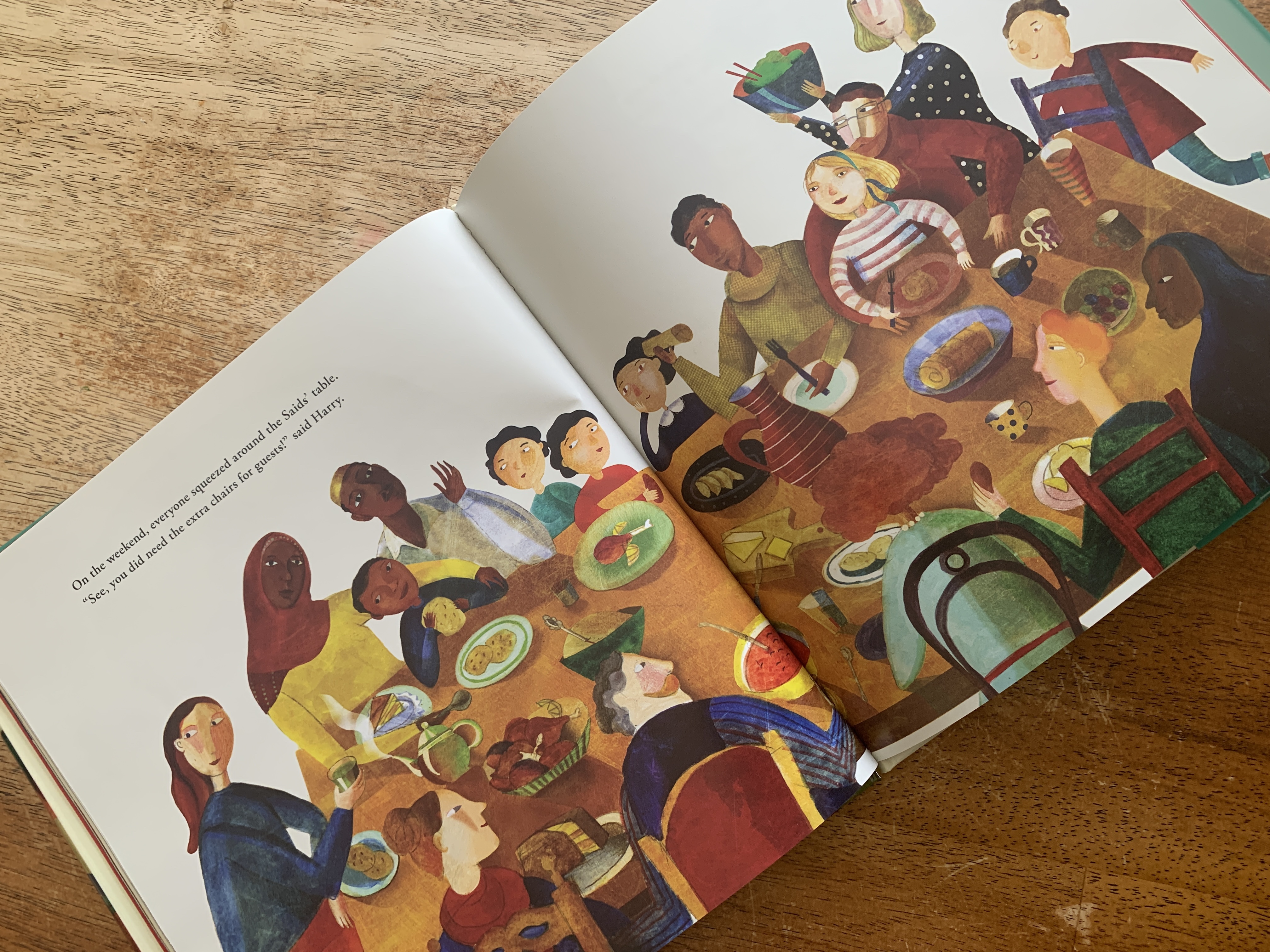
That night Evie has an idea to help furnish Bimi’s house.  The whole neighborhood helps out, including Fatima who lives around the corner.   After getting the apartment set up, they all share a meal, everyone that is, except Mrs. Monroe.

When the kids go out to play, Mrs. Monroe’s shopping bag spills, and Bimi helps her and Mrs. Said invites her in.  Later Evie gifts Bimi her teddy bear and Bimi gives Evie a stone from his grandma’s garden.  Evie asks him what he will name the bear, and when he says Evie, the reader knows the two are friends, and Bimi is “home.”

The book isn’t exciting, emotional, or particularly memorable, but there is value in it and I appreciate the Islamic representation.

The Secret Diary of Mona Hasan by Salma Hussain

Standard
The Secret Diary of Mona Hasan by Salma Hussain

mona

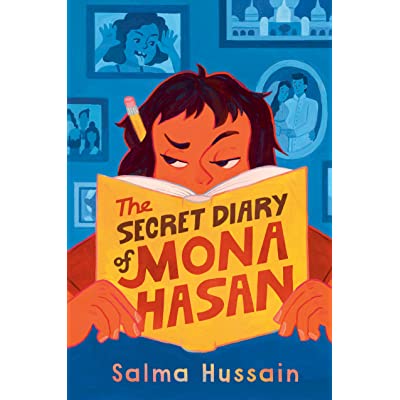
I really don’t know how to review this book. Is it funny and engaging, yes at times, but I am a 41 year old, and I can attribute it (hopefully/possibly) to satire, hubris, character voice, and commentary, except it isn’t written for me, it is written for 10-14 year olds.   There is no way would I put this in the hands of a fourth grader, let alone a high schooler.  The book starts on New Year’s eve with a “Muslim” family drinking alcohol, later the 11 year old drinks to get brave enough to meet up with her boyfriend (he wanted to wait until after Ramadan), after a bad haircut she starts wearing hijab and later takes it off, her period starts and she is baffled at which hole it comes out of, she is no longer allowed to be alone in a room with a boy because that is how babies are made, but it is ok to go to a school dance and kiss them, women are rather useless, old people (31 year olds and up)  should know their place and act their age, dark skin is bad, chests need to be big, slut is both something you are and something you can do,  Aisha (RA)’s age of marriage is criticized as is Khadeeja (RA)’s, no one is as good at her, Ramadan is annoying because she has to hide when she eats in public for a whole month, Friday prayers even though they rush through them limit their fun time, the Tablighi Jamaat have to be lied to and hidden from, her mom is pregnant months after coming out of her bedroom smiling, her father claims he will only ever enter a mosque horizontally, you can see the list goes on and on.  Yet at the same time, there are true moments of strength, such as when she fights back against the creepy sexual assault vibes from “uncle annoying” and then protects her sister when her parents dismiss it, when she sticks up to a bully to protect her gay friend in Canada, the dad getting caught one day praying salat, the love of family felt despite her perceived privilege while visiting Pakistan, her constant reference to Allah swt as she asks Him and tries to understand the world around her, and her terrible, terrible poetry.  The diary style is both brilliant in trying to show the world through Mona’s eyes, and irritating as NONE of the aforementioned concerns are given any context, explanation, reflection, anything.  The thoughts pour out of her head, onto the paper, and the reader is left to figure out if this is how things are, is this her naïve view, is she commenting on society, is the author, is this fact, is it satire, is it someone with an axe to grind on culture and religion, is it showing the ridiculousness of so many stereotypes? And to be honest, I have no idea.  Which is why I can’t say that the book is good or bad, I think it is well written, my problem with it is, I don’t know who it is written for.  I think it would be very damaging to young children, the vulgarity, misogyny, racism, arrogance, will hurt both those that see parts of themselves in Mona and those that read it and assume too much about what Mona represents.

SYNOPSIS:

Mona is an 11 year old girl, and this is her diary.  She is arrogant and opinionated, but she grows and mellows as her view of the world moves from privilege in Dubai to immigrant in Canada with a bit of an awakening in Pakistan in between.  It is her view of her life, her place in the world, and the greater society around her.  It is an easy read on the surface of her living through the war without getting any days off of school, friends, maturation, first loves, hoping for a bigger chest, pulling a fire alarm to get time with a boyfriend, feminism, and the annoyance of being better than everyone else in everything she does.  There are side characters that flit in and out and family members that shape her, but the point of view is uniquely hers in all matters regarding leaving the Middle East as a Pakistani living there, spending time with her mother and father’s families in Pakistan and the rift her parents’ love marriage caused on their acceptance of her, their move to Canada to start a more peaceful life that ends up being grueling and difficult and through it all threads of Islam, fitting in, and growing up.  It is a snapshot of so much that the reader is left to connect the pieces, assign them value, and understand the larger message, if one exists.

WHY I LIKE IT:

I still don’t know if I like it or dislike it.  I dislike it for kids.  I like it for adults as a light over the top snarky read, but I think my opening paragraph is sufficient and the 296 page book doesn’t need my concerns and praises rehashed here.

FLAGS:

Misogyny, anti Islam, sexism, racism, ageism, lying, vulgarity, cursing, crude talk, lying, disrespect, lack of religious respect, kissing, sexual assault (attempt), deceit, pulling a fire alarm, physical fighting/assault, family trauma, arrogance, pettiness, stereotypes, bullying, sexual innuendos,

TOOLS FOR LEADING THE DISCUSSION:

I have suggested a few ADULT friends read the book so we can chat, but no kiddos, no teens, no early twenties, old ladies (31 plus according to the main character)!

My Baba’s House: A Poem of Hope by Dr. Amani Mugasa illustrated by Eman Salem

Standard
My Baba’s House: A Poem of Hope by Dr. Amani Mugasa illustrated by Eman Salem

my babas house

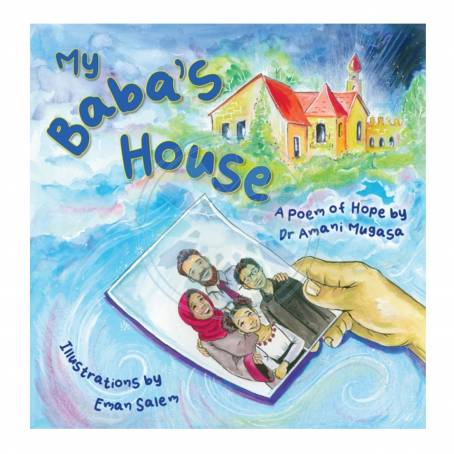
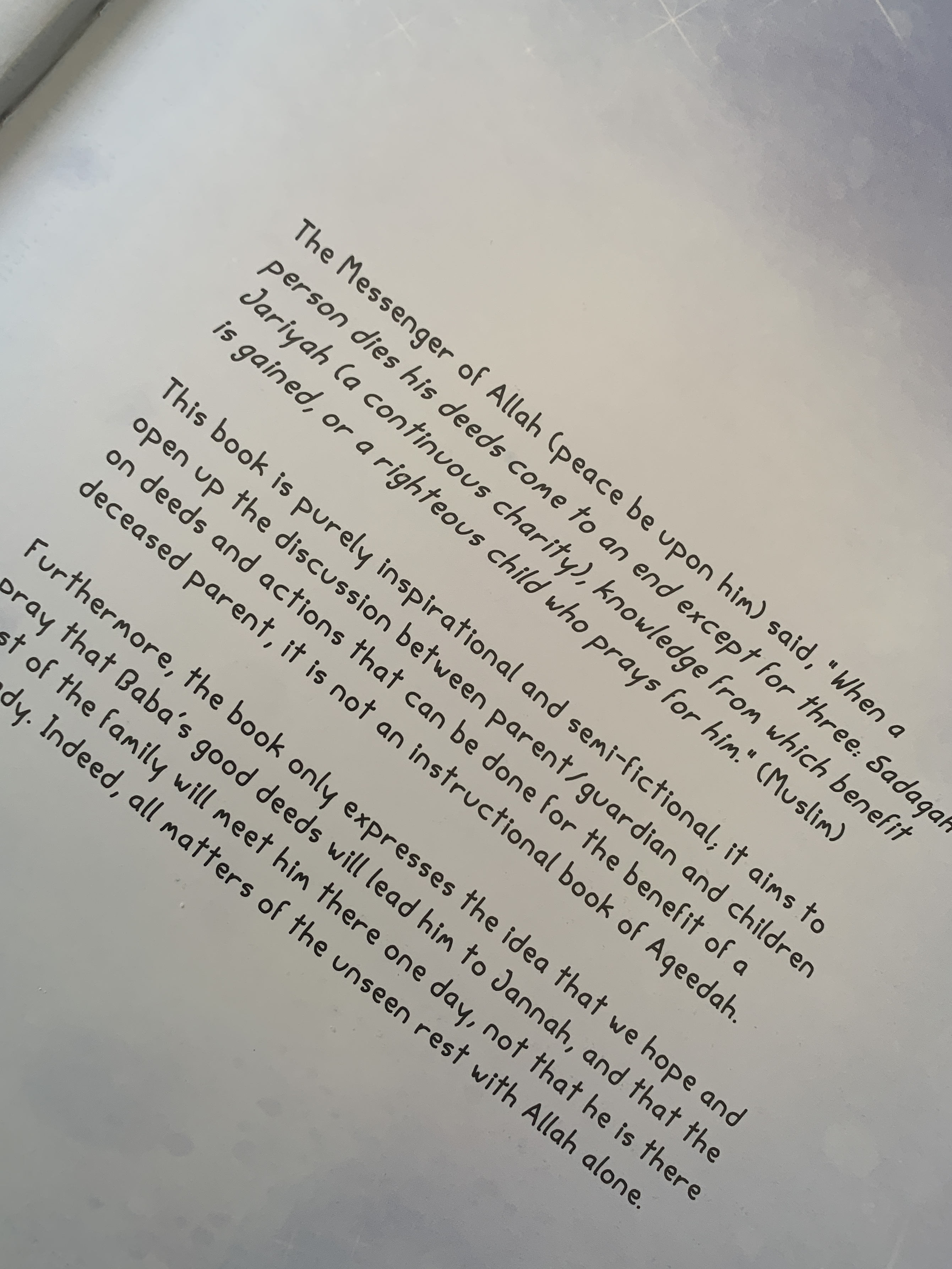
I wanted to love this Islamic centered children’s book about grief, but I found it a bit problematic and misleading.  I am by no means an expert in Islamic matters of death or in psychological bereavement, but the note at the beginning of the book- if I wasn’t already going to look at it critically- really raised some warning flags.  It says that the book is not an instructional book on Aqeedah, that even though the title and whole story is about a house being built that “the book only expresses the idea that we hope and pray that Baba’s good deeds will lead him to Jannah, that that the rest of the family will meet him there one day, not that he is there already.” So, before you even start the story, it seems that the disclaimer is making it clear that this book is not religiously accurate, and that it is just meant to soothe and provided hope.  After taking all that in to consideration, and reading the 26 pages of text over a dozen times, I think I finally pinpointed why the book further reads problematic for me.  It is the repeating phrase, “Your Baba has been building a beautiful house for you,”  because he hasn’t right? He has built a house for himself through his good deeds in this duniya, he benefited HIS parents by being a righteous Muslim.  The words “for you” completely take the book in my head from being a slight suspension of timing where the deceased are, in to be misleading.  So if the book is not accurately framed and only to be taken as something “to open the discussion,” what is the point? Why fill it with Islamic references and concepts, if they will then have to be clarified, corrected, and re taught?  Sigh, I’m happy to listen to those that want to change my mind, truly I am.

img_9013

The rhyming book starts out with a mom and two kids being consoled by the text that their Baba has been building a house for them with Allah’s help.  That it is amongst the flowers, made with Allah’s powers. That with every good deed he did, their Baba becomes a builder, that there are pure rivers and trees, and that the house is hidden through Allah’s gate.

img_9014

To find their Baba’s house they will walk with Prophets, and see ripe fruits, and smell sweet musk.  There will be rivers of milk and he will carry them above his head.  The illustrations on this page are a little off in my opinion the shadows of a person elevating and even the girl looks a little concerned.

img_9015

I like that the next spread addresses that only Allah knows when the day will come that we reunite. And then the next pages tell how the children can help decorate their Baba’s house by calling adhaan, reading Qur’an, being kind, giving charity, and making duas.

img_9016

The book concludes with encouraging patience and finding reassurance in knowing we belong to Allah and to Him we return.

With the exception of the one page, the illustrations are adequate and show a mixed racial family.  The rhyming lines are rather weak, and ultimately there are just better books out there about grief that don’t have to be so qualified for accuracy.

Zara’s Rules for Record-Breaking Fun by Hena Khan illustrated by Wastana Haikal

Standard
Zara’s Rules for Record-Breaking Fun by Hena Khan illustrated by Wastana Haikal

zara

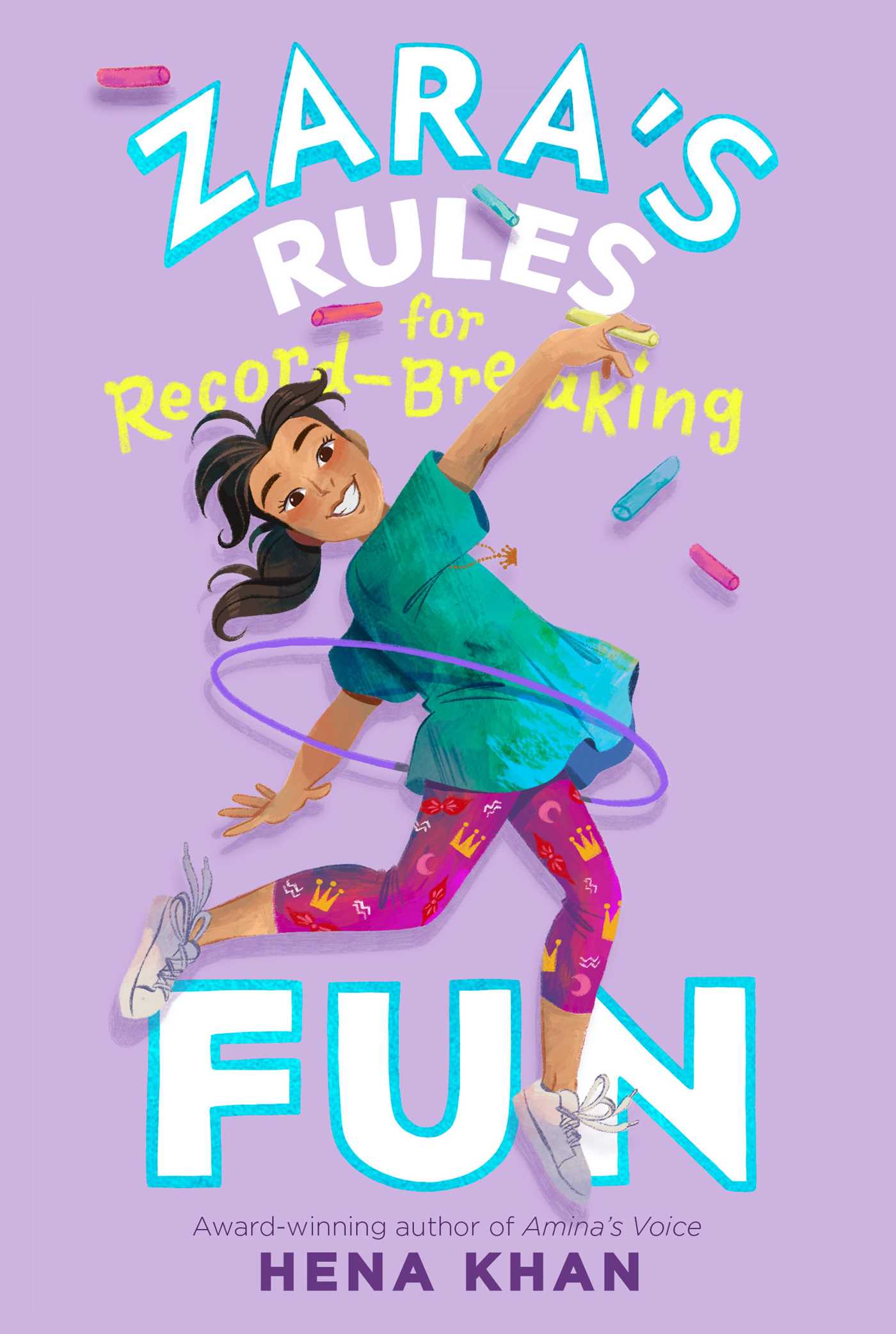
This early chapter book packs a lot of personality, growth, and fun into 127 pages.  The writing quality is engaging and the characters relatable.  If you have read the Zayd Saleem books you will recognize the family in this new stand alone series.  Either way though, from the surprising Naano to the fun Mamoo, the neighborhood children and the desire to maintain her reign as Queen of the neighborhood, the book may be meant for 7-10 year olds, but based on the kids in my house, anyone that picked it up, read the entire book before putting it back down.  The grandma covers her head, it mentions she reads Quran, there is a Salaam or two, an InshaAllah, and desi cultural foods mentioned.  The focus is not on religion or culture, but the layer adds depth to the characters, and normalizes names and practices in a universal plot.

img_9060

SYNOPSIS:

Zara’s neighborhood has a lot of kids in it, and Zara has the reputation of being the leader who rules with grace and fairness.  It is a position she takes very seriously.  When Mr. Chapman moves out and a new family moves in, Zara fears losing her place.  The new girl Naomi has a lot of ideas and everyone seems to like them.  Zara has a grand idea to set a Guinness World Record, but with her little brother Zayd messing her up, nothing is going as planned for the summer.

As she finds her self alone a lot and not having much fun, she decides to change things up.  She works to be less bossy, less controlling, more willing to to share her crown.  With a lot of heart, internal growth, recognizing her strengths and weaknesses, the neighborhood kids just might have a record-breaking summer.

img_9059

WHY I LIKE IT:

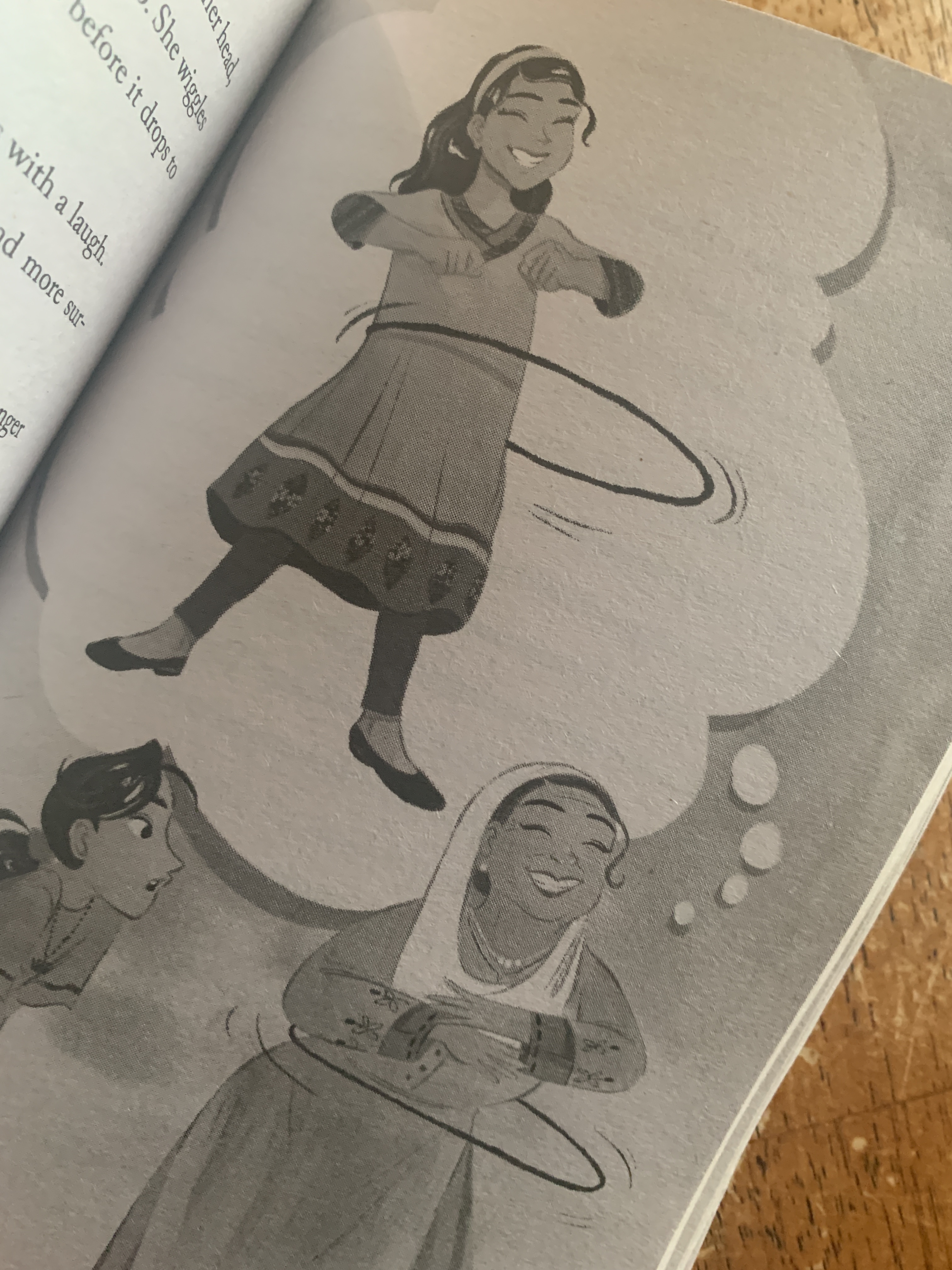
I love that the story wasn’t just surface level, it acknowledged some emotions and stresses and introspection, that I was pleasantly surprised to see played out in an early chapter book.  I really just enjoy the family, they read relatable and fun. The Nanoo’s surprise ability to hula hoop and her pettiness over a cooking competition genuinely made me smile.  The neighborhood kids and the politics of the different aged children having to find ways to compromise reminds me a lot of my summers as a kid, and the nostalgia was sweet.  I like the Islamic touchstones, I would have loved if they had to go in at sunset to pray or something of the like, but I was glad that at least that Nanoo reads Quran and an inshaAllah in the text made me feel seen.

FLAGS:

Music, dancing, frustration, jealousy

TOOLS FOR LEADING THE DISCUSSION:

I think this book should definitely be on every library and class shelf.  It releases tomorrow on Amazon, but Crescent Moon Store already has it.

The Most Exciting Eid by Zeba Talkhani illustrated by Abeeha Tariq

Standard
The Most Exciting Eid by Zeba Talkhani illustrated by Abeeha Tariq

the most exciting eid

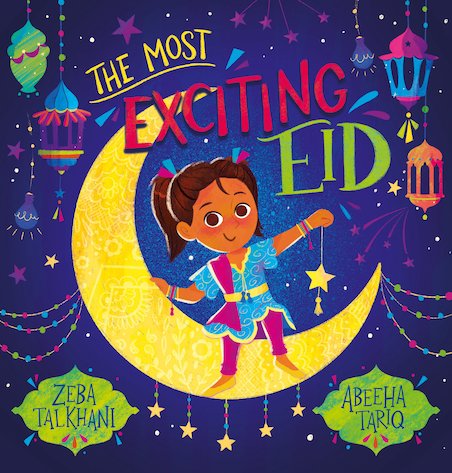
I was really excited for this book, I even contacted Scholastic USA and the author to see how we could get it here in America, but once I received my copy from the UK, I was disappointed.  It offers nothing new to the available Eid titles aside from the pretty illustrations. It is a rather forgettable story, with nothing more than surface level growth, predictable emotion, and a formulaic retelling of a basic Eid day.  Meant for preschoolers (3-4 year olds) the story will suffice as an introduction to Eid and reinforce the importance of sharing with others, but anyone older will find the story lacking unfortunately, and question why they didn’t go for Eid salat, if the cousin was even upset about not getting to ride Safa’s new bike, if the neighbors are poor and needy, and if they have gifts for neighbors or are just giving out random leftovers. Five years ago when reasonably priced brother sister duo books celebrating Eid were popping up everywhere, this book would have warranted excitement of representation and Eid joy, but the quality has elevated and while there might not be anything “wrong” with the book, it still feels like it sadly falls short.

img_8977

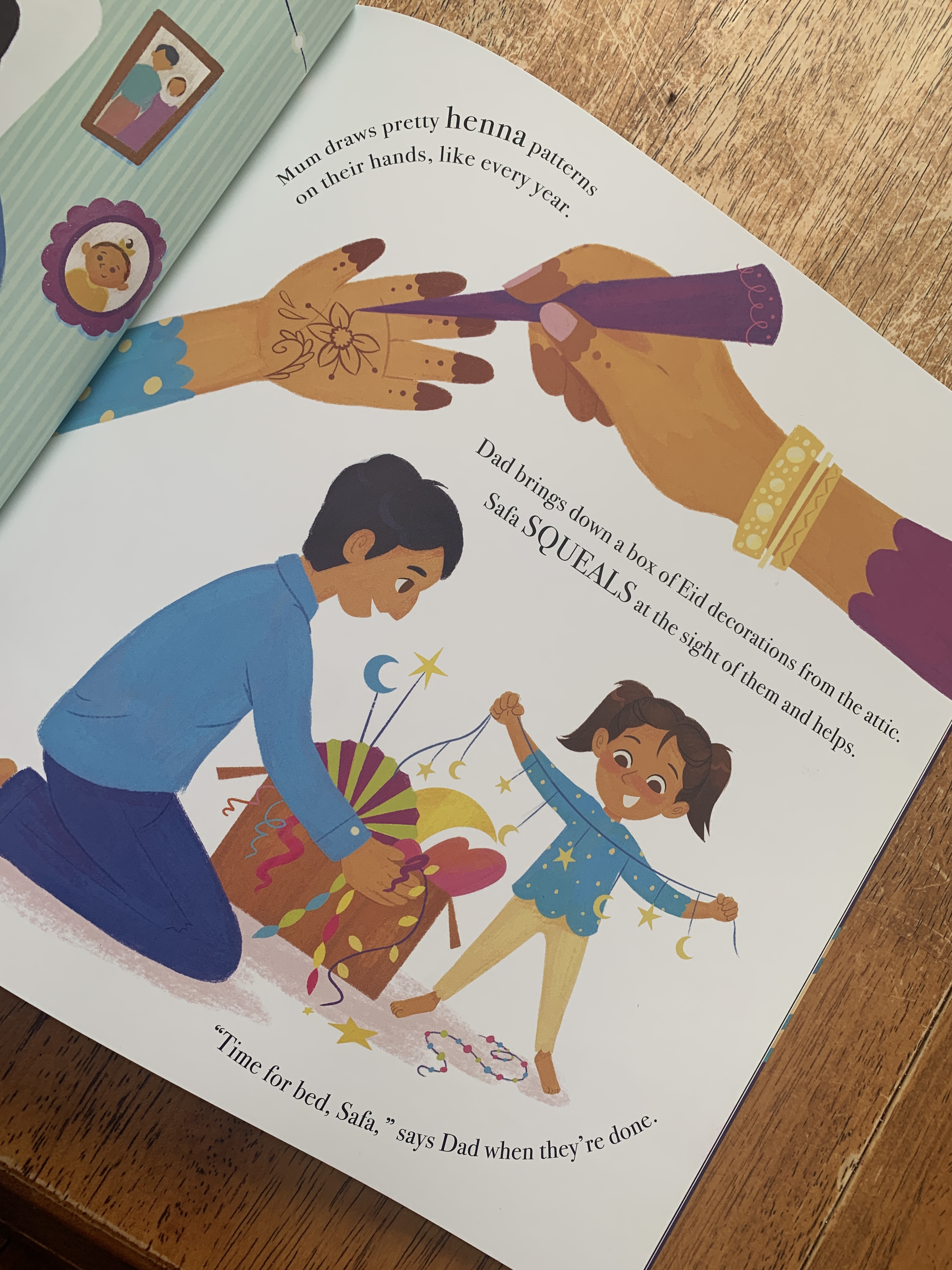
Safa and her parents see the new moon and that means it is Eid.  She is so excited as her mom puts henna on her like every year, and her dad brings out the box of decorations.  At night she is anticipating presents, gifts, new clothes and food that she can hardly sleep.

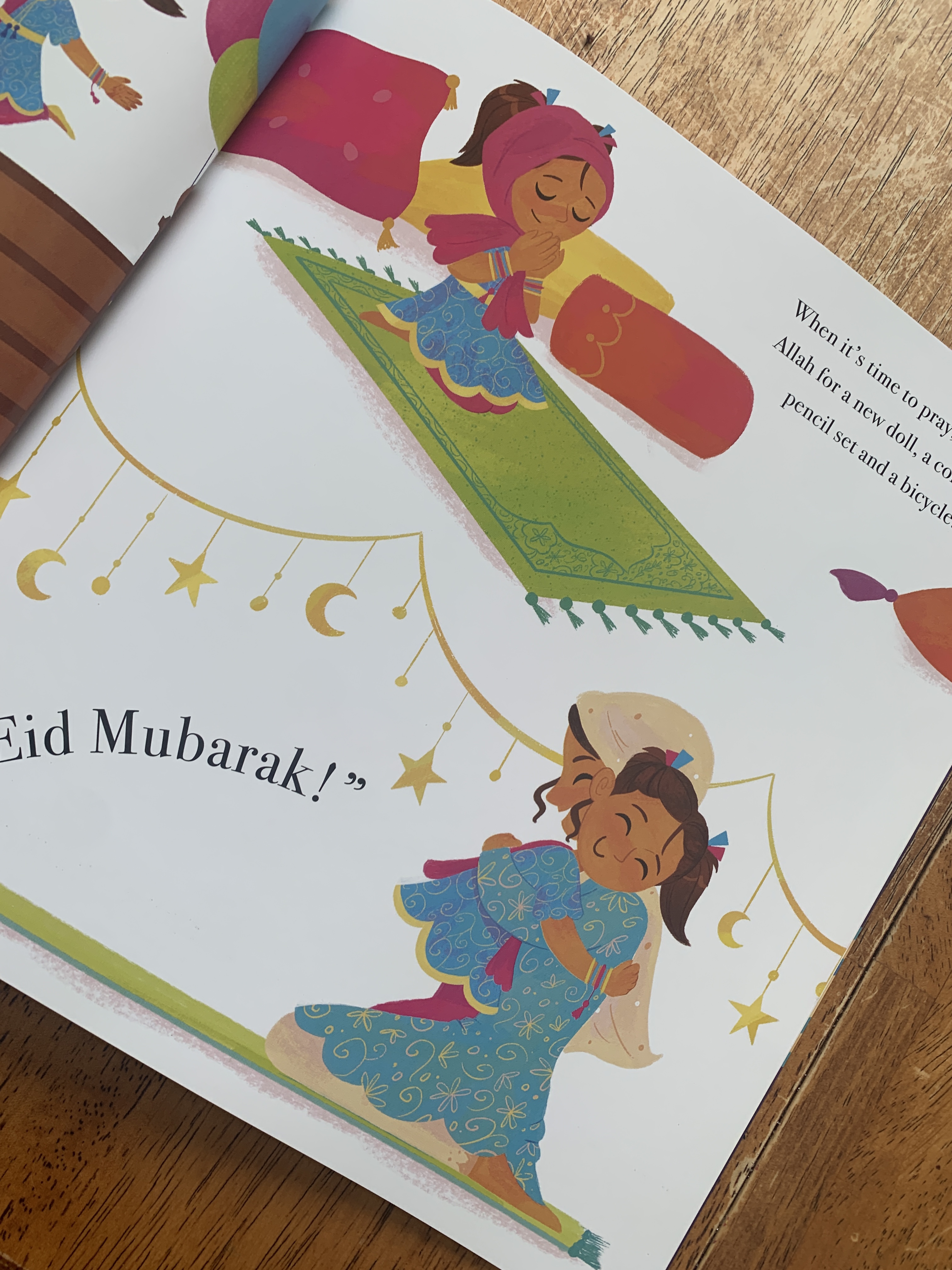
The next morning she comes down in new clothes, prays, asks Allah for a new doll, a colouring pencil set and a bicycle.  Guests come over, even Alissa her cousin. She opens her presents revealing she got everything she asked for.  Alissa calls after Safa, but Safa doesn’t want to share, she’s been waiting for this bike forever. Since sharing is the point of the story, it is worth noting that Alissa in the text shouts after her and in the illustration is shown to be calling out, there is no reinforcement that Alissa even wants to ride the bike.  I suppose I’m glad that Safa feels it, and regrets it later, but it is subtle and I don’t know that a 4 year old will even register that, that is implied.

img_8978

Mom then calls to Safa while carrying two huge purple bags to come with her to share joy and food with those in need.  Safa adds some of the treats she has received in to the big purple bags and they hand the items out to their neighbors. I love that they are visiting their neighbors and it brings the giver and receiver joy, but the set-up is that neighbors and those in need are one in the same, and I think that is conflating two different things.

Some neighbors get small gifts, one a potted plant, another homemade looking food, and then there is one bag left, somehow the purple huge garbage bag sized bags have shrunk to being a shopping bag size and the next recipient is a surprise: grandparents.

img_8979

The mom and daughter join the grandparents for desi cultural foods of samosas, kebabs, biryani.  Dad does not join them, and I’m not sure why the grandparents didn’t come to the party at Safa’s house? I also wondered if the party at the house was still happening, because once Safa realizes she enjoyed sharing, her parents and Alissa are seen outdoors, with the little girls on bikes and Alissa asking her cousin where she went.

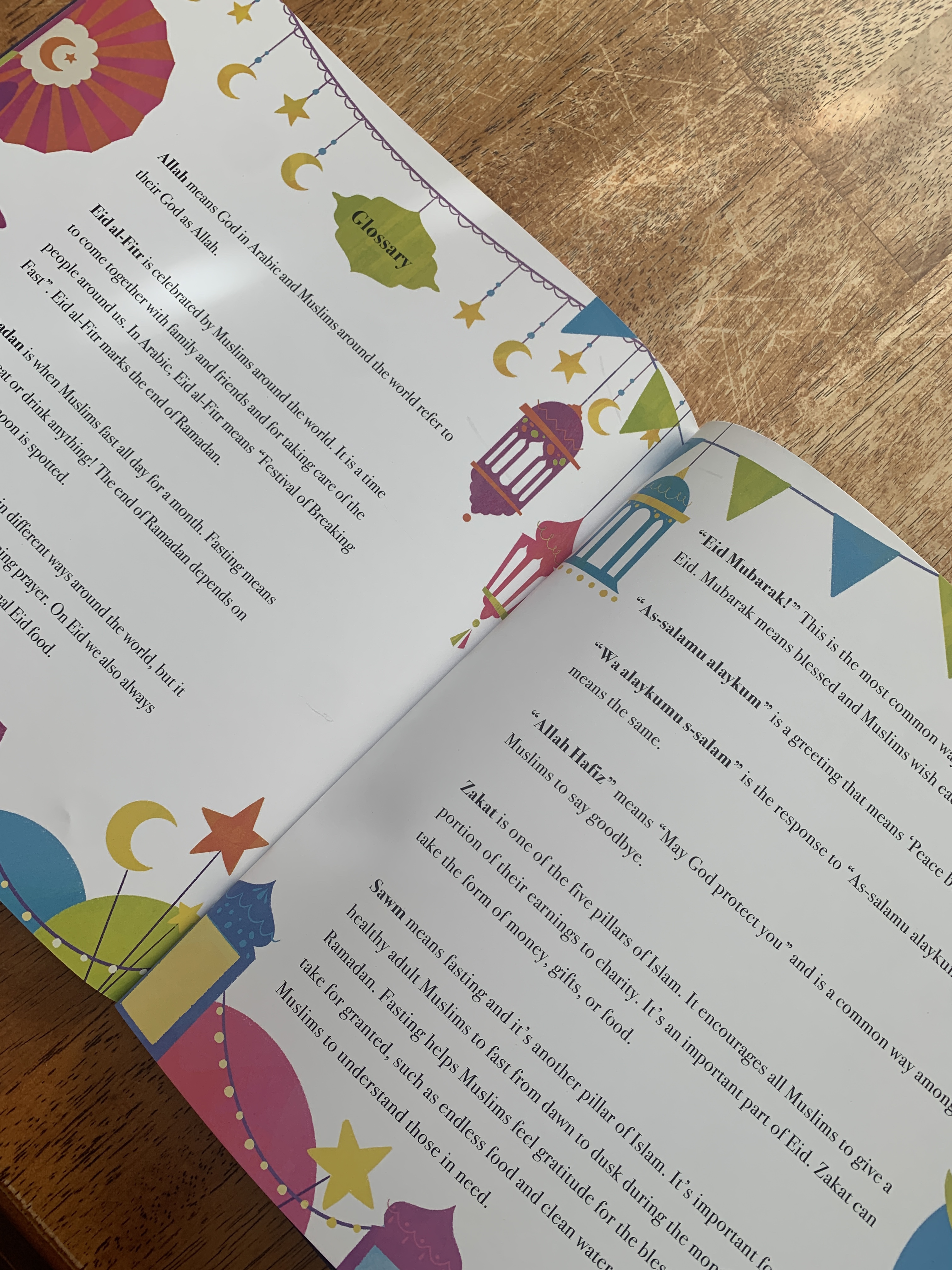
There is a two page spread glossary at the end which defines words that are not in the text, but is informative.  It mixes “cultural” words such as Allah Hafiz being defined as being a common way among Muslims to say goodbye, which technically isn’t wrong, but it is an Urdu word and only used by Desis.  It isn’t in the story, so it seems off to me as well.

img_8980

The illustrations are the highlight in the book.  They are vibrant, expressive and engaging.  The mom seems to have a dupatta on her head, it might pass for hijab, but she has wavy tendrils showing on the side, even the grandma shows much of the top of her hair.  Neither the father in the story or grandfather have beards.

A Show for Two by Tashie Bhuiyan

Standard
A Show for Two by Tashie Bhuiyan

a show for two

I didn’t love the author’s debut novel, but wanted to see what a second novel would offer, and sadly it really is a lot of the same: light funny romcom surface story featuring a Bangladeshi Muslim character lead mixed in with layers of mental health, a toxic family, high school stress, and cultural expectations driving the plot.  There is crude language, hetero, lesbian, bi, and pansexual relationships discussed, but nothing more than kissing is detailed in any of the scenes.  There is a lot of cultural trauma from the parents and to the book’s credit, it does establish pretty early on that the main character is not religious, but that she does believe in Allah swt.  Similarly, there is a Bangladeshi loving family in the story, so it is not making a critique on the entire culture, it is just the character’s family that is cruel.  Ultimately, at 416 pages I was surprised that there were gaps in character arcs and plot.  I never really liked the protagonist, Mina, but because of how underdeveloped and pivotal the best friend and younger sister were, when it all came to a climax, I found myself rooting for her, which is a very shallow reasoning in an OWN voice book. Additionally, the parents are terrible, and had I dnf-ed it (I was tempted until about 30% through it) I doubt I would have ever known that there was a time that they weren’t terrors.  The peeling back of the layers of the family came too late, too slow, and the progression was muddled.  I probably will not actively seek out further books from this author if the same themes and tropes are present, if she changes it up, I probably could be persuaded.  The book is marketed 7th grade and up, but with the triggers, hate, language, content, genre, language, length I would say 17 and up, if at all.

SYNOPSIS:
Samina “Mina” Rahman is waiting to leave New York and her hateful parents, and start her life at USC as a film student.  All she needs to do is win the Golden Ivy Film Competition, and get excepted to USC.  Her parents dismissing her dreams, passions, and abilities agree to only let her leave if she wins the competition, doubting that it would ever happen, they even put it in writing.  Co-president of the high school film club and best friend, Rosie is equally determined to win, there is just one big problem, every year the winning film has a cameo by a famous actor.  Cue accidental meeting of Mina and Emmitt Ramos, up and coming indie movie heart throb that is cast in the new Firebrand blockbuster.  Sent to Mina’s high school to research for his upcoming role, Mina is tasked with convincing him to make an appearance in their film.  It is a romance story, so you can see where it is headed in this enemies to lovers book.

As family, friends, and college admission stresses mount, the simplicity of what Mina wants and how to go about getting it will be called in to question as her walls crumble and she will have to evaluate people in her life and how they will be affected by her actions.

WHY I LIKE IT:

I like that the story is based on real events in the author’s life, not just the religion, culture, mental health threads, but that an actor came to her high school in preparation for a part: Tom Holland.  I also like that while her parents don’t value her, she has found a support group of sorts that do.  At times Mina reads a lot older than she is, particularly when she is admonishing the freshman, but at other times she storms off pouting and seems to be very childish.  I vacillate between this being intentional and it being an inconsistency in the writing. The younger sister Anam is painfully written.  She is bold and confrontational, yet at the same time so clingy and needy and all over the place.  At one point I thought she perhaps was suicidal and was braced for a really dark twist in the story, but no it was just Anam being Anam, I suppose, and the stress was never revisited let alone resolved.

I truly dreaded the passages about Mina’s home life and her family, they all were just awful to each other and rather than taking Mina’s side because I was shown, I found myself questioning what I was missing in the before and after dynamic.  It is clear they are wretched, the victim doesn’t need to justify the abuse. The transformation of the family dynamic just felt lacking and in fiction when parts are explored it could have really showed some of the micro aggressions and changes that existed and made the relationship salvageable so that the reader would understand why saving and fixing the family were no longer options.  Generational trauma is real and serious and a little more attention I think could have provided an amazing mirror to readers dealing with similar elements.

If the book was half the length I would assume that details would be glossed over, but this book had room, and I don’t understand why so few photography and director references seem to find their way into the text to show that these characters truly are passionate about what they are claiming to desire.  I know the story isn’t a film story or a culture story, but they don’t spend hours editing the film or working on props? Emmitt is regularly pulled away from shoots, but always seems to have enough photos to choose from?  Mina talks of her dad cooking, but foods aren’t detailed, the connection of food to love to family and that being severed seemed like a gaping hole in the crumbling home scenes.  If halal food and no pork can make it into a love relationship, that much cultural/religious depth should have made it inside a families home.

As mentioned in the intro, it didn’t bother me from a religious perspective that Mina was off kissing a boy, that Anam had boyfriends, etc. because Islam was accounted for and the characters are not practicing, so I do appreciate that it didn’t become a stereotypical rebelling against religion book.  Truly, thank you.

FLAGS:

Language, relationships (straight, bi, lesbian, pan), kissing, making out, hand holding, lying, mental health, hate, deception, cruelty, emotional abuse, angry ex boyfriend, triggers.

TOOLS FOR LEADING THE DISCUSSION:
Would not shelve or encourage young readers at our Islamic school to read this.