Tag Archives: joy

Our Neighborhood: Radiant Ramadan by Marzieh Abbas illustrated by Anoosha Syed

Standard
Our Neighborhood: Radiant Ramadan by Marzieh Abbas illustrated by Anoosha Syed

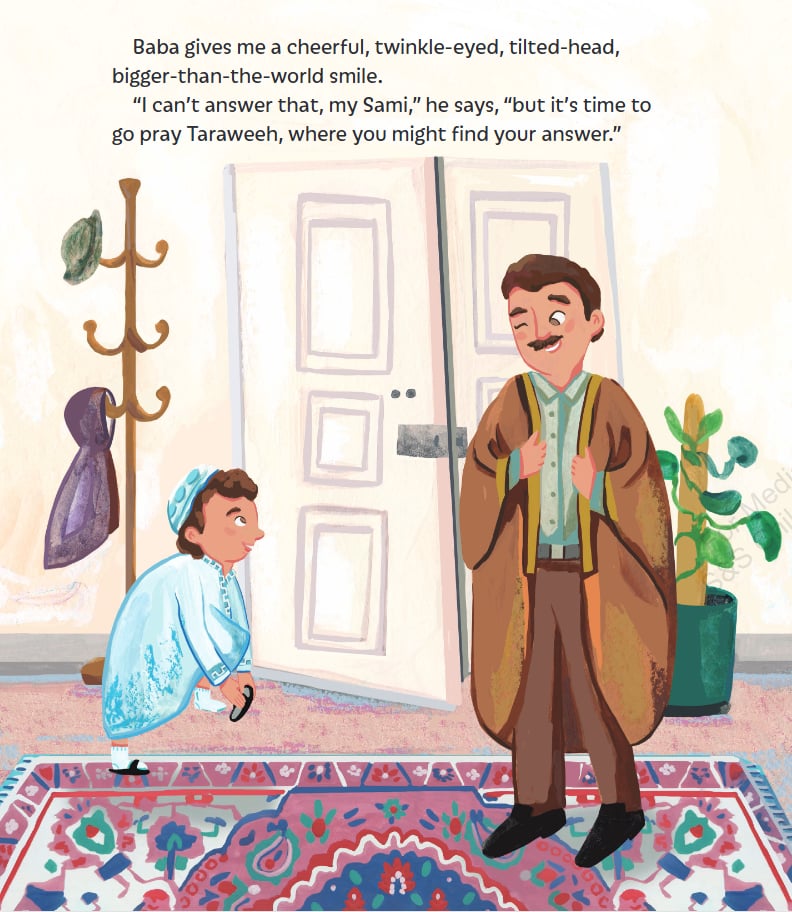
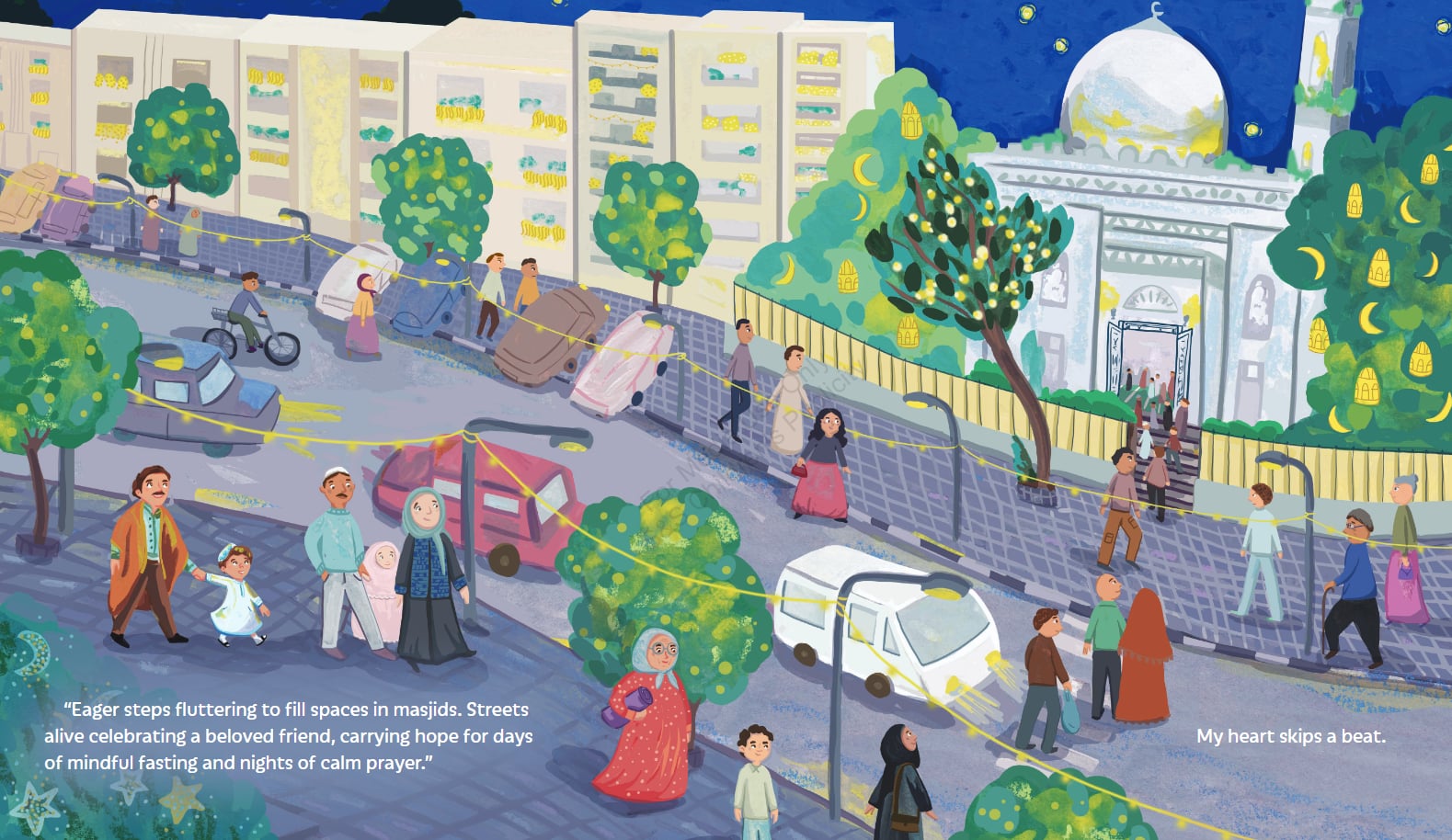
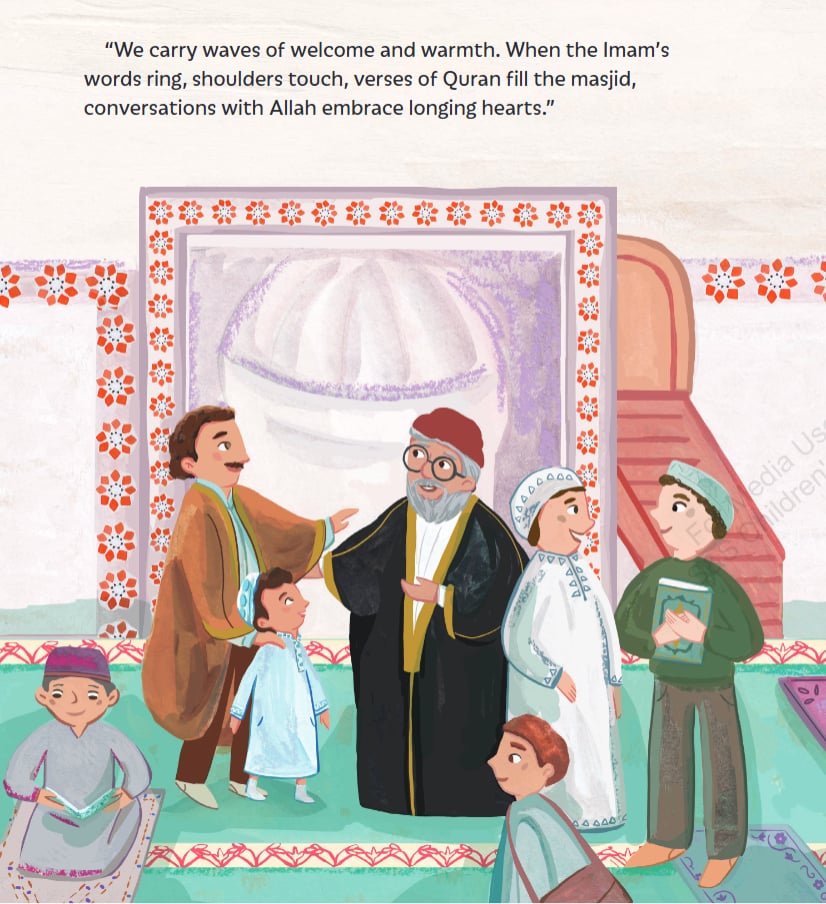
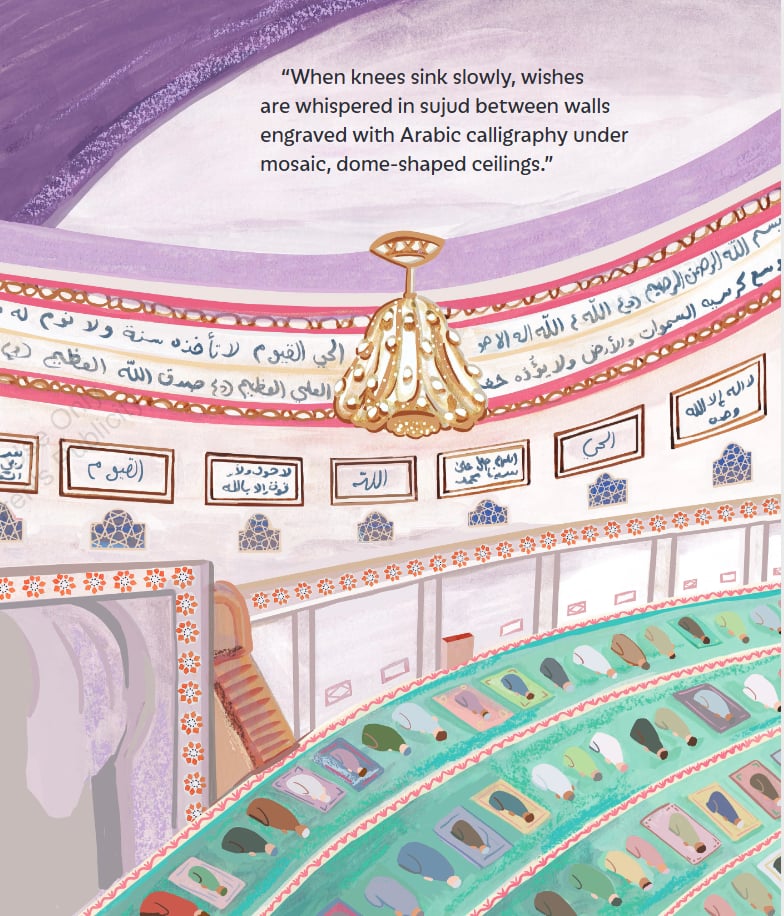
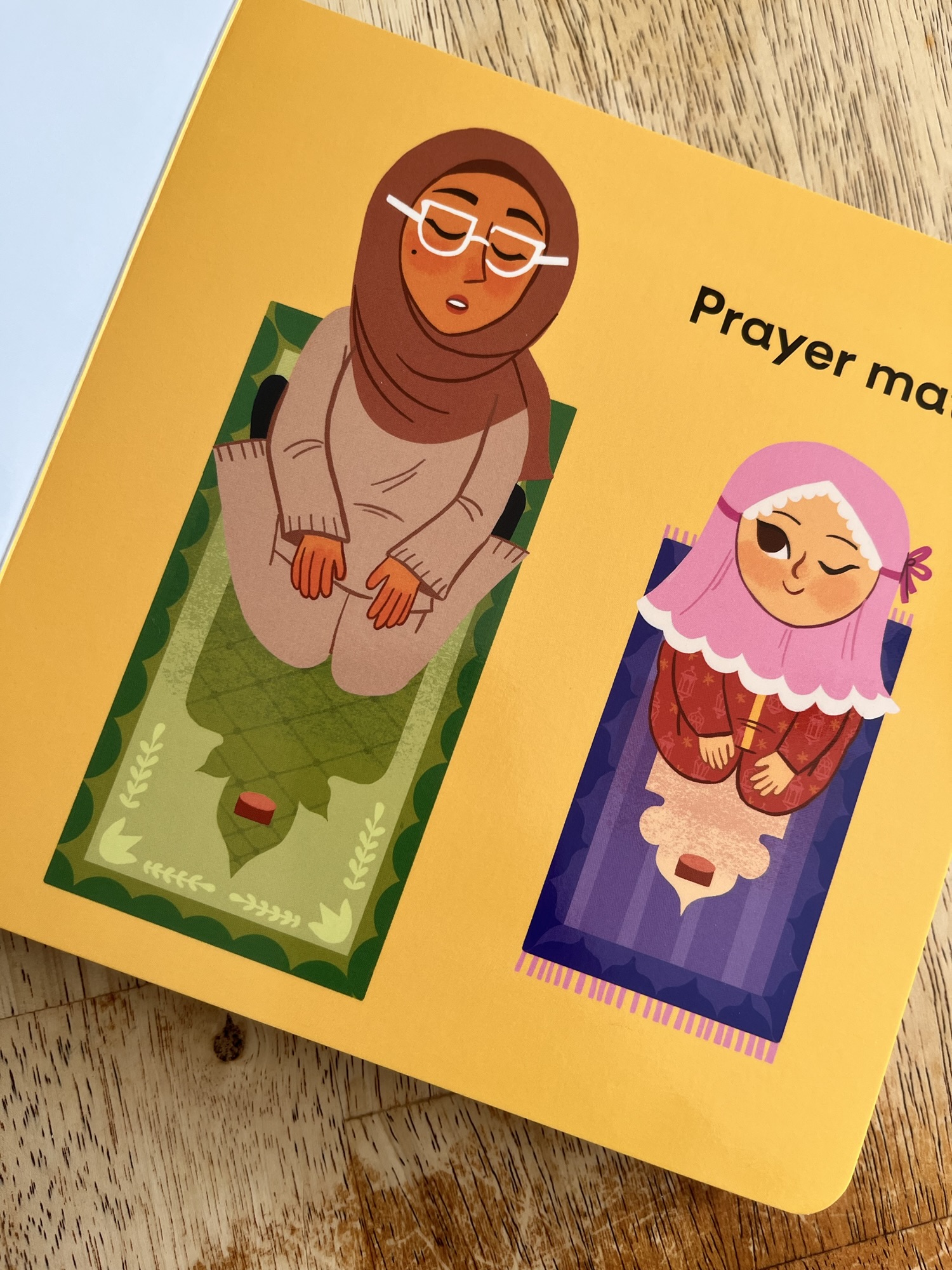
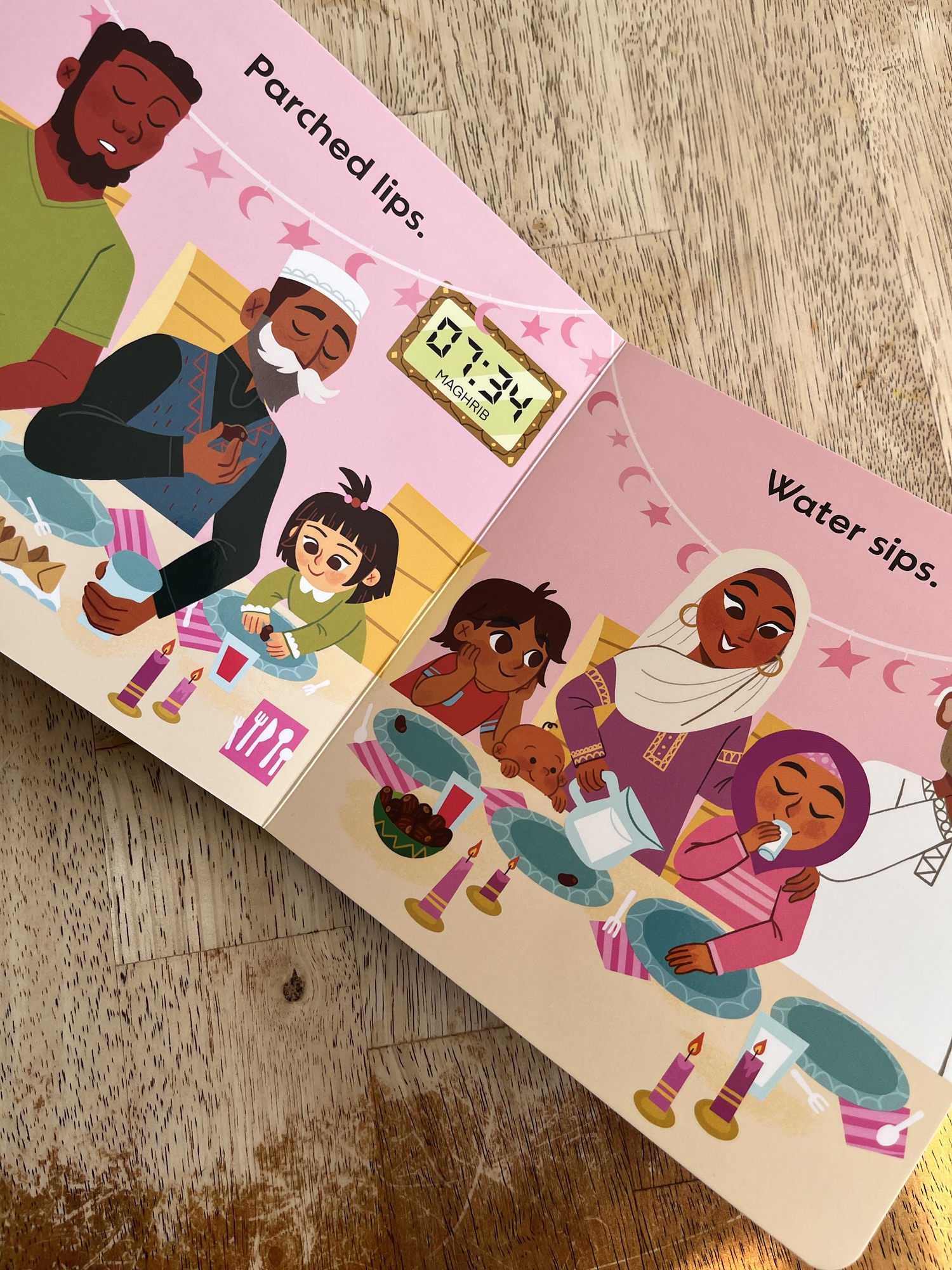
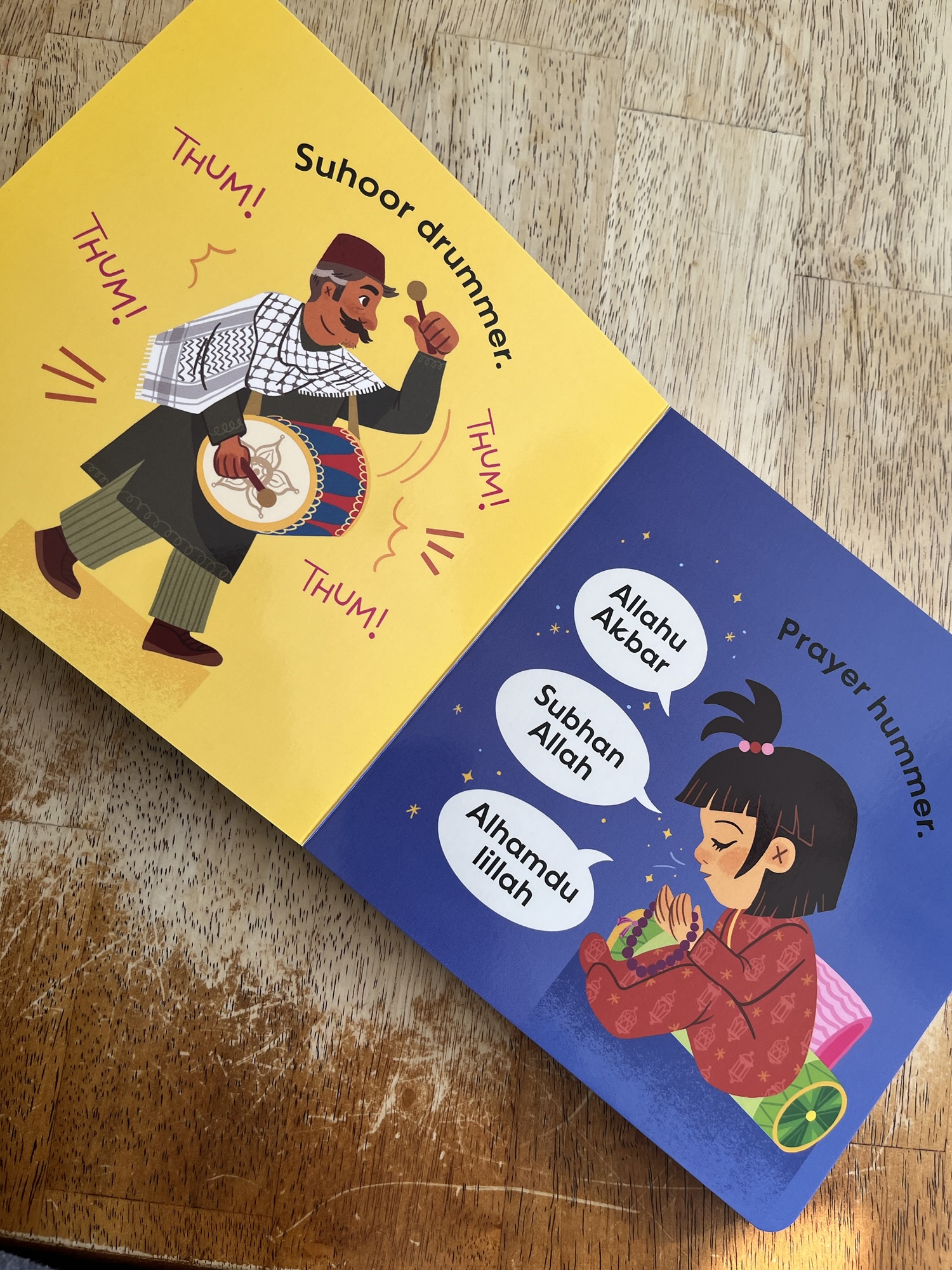
This adorable 26 page board book rounds out the Celebrating Islam representation in the Our Neighborhood Series and the simply rhyming words do an excellent job of conveying the joy, worship, togetherness, and daily aspects of the glorious month. Some of the lines feel a bit forced, but I really enjoyed the size and tone of the book. The illustrations are equally well done with a keffiyeh shown on a drummer, different skin tones on the characters, and smiles throughout. It is perhaps worth noting that the prayer page does seem to have the Shia rock that is used, I missed it initially thinking it was just a design on the prayer mat, but it is hard to unsee once it is pointed out. The other Islamic books in the series by the same author and illustrator are Friday Fun and Excited for Eid.

My First Book about Charity: teachings for Toddlers and Young Children by Sara Khan illustrated by Ali Lodge

Standard
My First Book about Charity: teachings for Toddlers and Young Children by Sara Khan illustrated by Ali Lodge

The newest board book in the My First Book series is a gentle and wonderful introduction to charity, both sadaqah and zakat. Sourced with ayats from the Quran, there is also backmatter that has Facts about Charity and Questions and Answers. I’m always amazed at how much information the series consistently contains in the 26 pages for our littlest Muslims.  With soft illustrations and smiling joyful faces, each page radiates warmth, information and simplicity in a way that grows with toddlers, to preschoolers, to early elementary aged readers, alhumdulillah.

The book starts with affirming that Allah has given us more blessings than we can count, and some of us have more than others.  To help those that have less, Allah wants us to give charity.  The book briefly explains that Zakat is one of the pillars that is required, and sadaqah is an extra reward that is not just money.

It talks about the sunnah of giving charity, and numerous ways that kindness can be carried out.  It shows respect and helping and concludes with Allah’s names of All-Knowing and All-Hearing before the final supplemental spread.

I don’t know how many books are planned for the series, but I love looking at them all lined up.  I share them with my own children and now that there are accompanying puzzles and a boxed set, I’m positive I’ll continue gifting them, not just to new parents as I’ve done in the past, but to toddler and preschoolers as well.

Ibraheem’s Perfect Eid by Farhana Islam illustrated by Nabila Adani

Standard
Ibraheem’s Perfect Eid by Farhana Islam illustrated by Nabila Adani

Gorgeous illustrations, joyful Islam, and a sweet story about a little boy realizing there is more to Eid than presents. The protagonists voice is really on point and a great way to counter so many of the books, and real life antics of kids equating Eid to being about gifts. This 23 page picture book for 3-6 year olds, works for both Eid al Fitr or Eid al Adha, and follows little Ibraheem as he searches for his gifts throughout his sunnah and love filled Eid day at home and at the mosque.  I love that it shows him getting drawn into the khutba, doing takbir, ruku and sajood, eating dates before going, and taking a different path on the way home.  It doesn’t have any backmatter, but if reading it to a child, I would hope the little details in the text and illustrations would be discussed. It took me a few readings to be ok with how Ibraheem discusses his gift order with Allah swt, but I think for little kids and with the consistent tone of the book, it makes it relatable.  I also don’t know why his mom and rest of the family do not go for Eid prayers. Other females are shown at the mosque in the background, and people of various ages and mobility, but alas it is just Ibraheem and his Baba at salah, and a house full of love and family the rest of the day.

The book starts with an illustration of Ibraheem hanging up his “Eid Sunnahs” chart next to his “Dear Allah” swt list of gifts that he wants. The text then starts with it being Eid day and Ibraheem looking in all the usual places for his presents, but comes up empty. He wonders if his parents forgot, if Allah forgot, but he knows that would never happen. Luckily Baba and he are off to the mosque for prayers, maybe, he thinks, the presents are there.

As the father and son walk to the mosque they greet others, and then settle in for the “Eid day stories.” I don’t love that the khutbah is referred to as such, but that is probably just me. When the iqamah is called, it is time to pray and Ibraheem copies his Baba before they make their way into “the sea of smiling faces.”

Back at home it is time to enjoy food, games, fun, and cuddles with a bustling house.  Presents still haven’t been found, but the day has been perfect, and presents can always be opened tomorrow.

I love that this is a traditionally published book, that centers Islam on Eid and radiates with joy.  The large size makes it easy to share in all settings, and the illustrations beg to be explored and appreciated.

Our Neighborhood: Excited for Eid by Marzieh Abbas illustrated by Anoosha Syed

Standard
Our Neighborhood: Excited for Eid by Marzieh Abbas illustrated by Anoosha Syed

img_8357-1

Like the first book in the Celebrating Islam from the Our Neighborhood series, Friday Fun, this 26 page 7 x 7 board book is delightfully done in capturing the joy, sentiments, and traditions of the day. The mix of specifics and generalized parts of an Eid day experience offer both a window and mirror for toddler to early preschool kids. My concerns is that while maybe families will sense that henna/mendhi is cultural fun, and balloons and ice cream are not a religious requirement of the holiday, the two page spread dedicated to gathering at graves is a lot of space given to a cultural practice, not an Islamic one. I’m not a scholar and the book with its minimal words does not indicate if these families are visiting all graves, if they visit on days other than Eid, if they are grieving recent deaths and acknowledging that holidays can be hard. It shows multiple families at multiple graves some with flowers, some bare, some placing flowers, under the words, “gather together” and “love forever.” It is uncomfortable to me because of the space it takes up and the implication that it is a major part, or perhaps that it is a requirement of the religious holiday, when it is not.

img_8360-1

Similarly, the absence of going to the masjid or even praying is also glaringly missing. The family goes past the “lit up mosque” to get to the “fun kiosk” later at night for fun and games, but again no Eid prayers, five daily prayers, or really any worship is shown to take place on Eid other than in the illustrations reading Quran and making dua at graves. Hijab is shown on numerous women and mentioned in the text. For a book about a religious holiday, positioned to celebrate Islam, I would have hoped for some clear religious acts to be shown and articulated as being joyous parts shared by a global faith.

I enjoyed the little baby’s desire for ice cream that stretches through the story. It will add a layer of joy to even the youngest audience members. The gathering to eat and share and have fun is beautifully illustrated under the simple rhyming text, but Eid is a religious holiday, and that point seemed unfortunately absent.

The Gift of Eid by Shifa Saltagi Safadi illustrayed by Aaliya Jaleel

Standard
The Gift of Eid by Shifa Saltagi Safadi illustrayed by Aaliya Jaleel

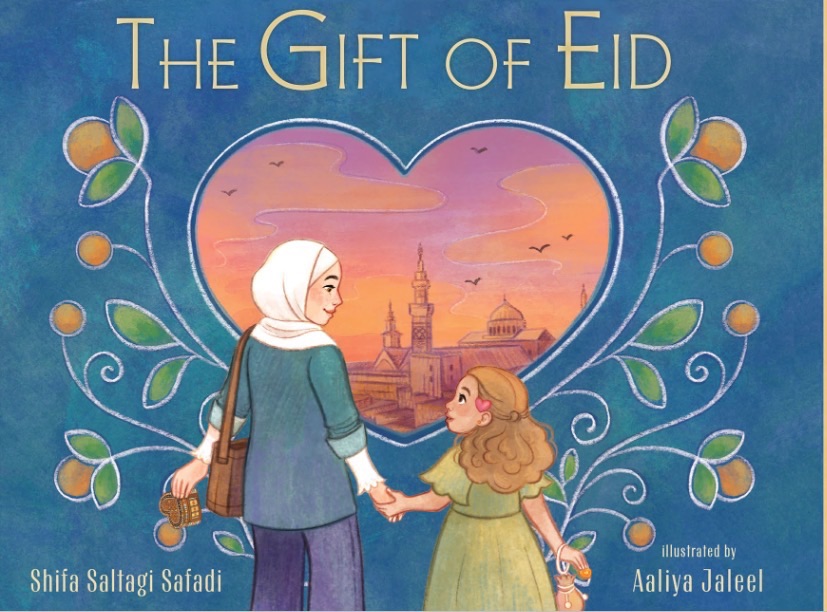
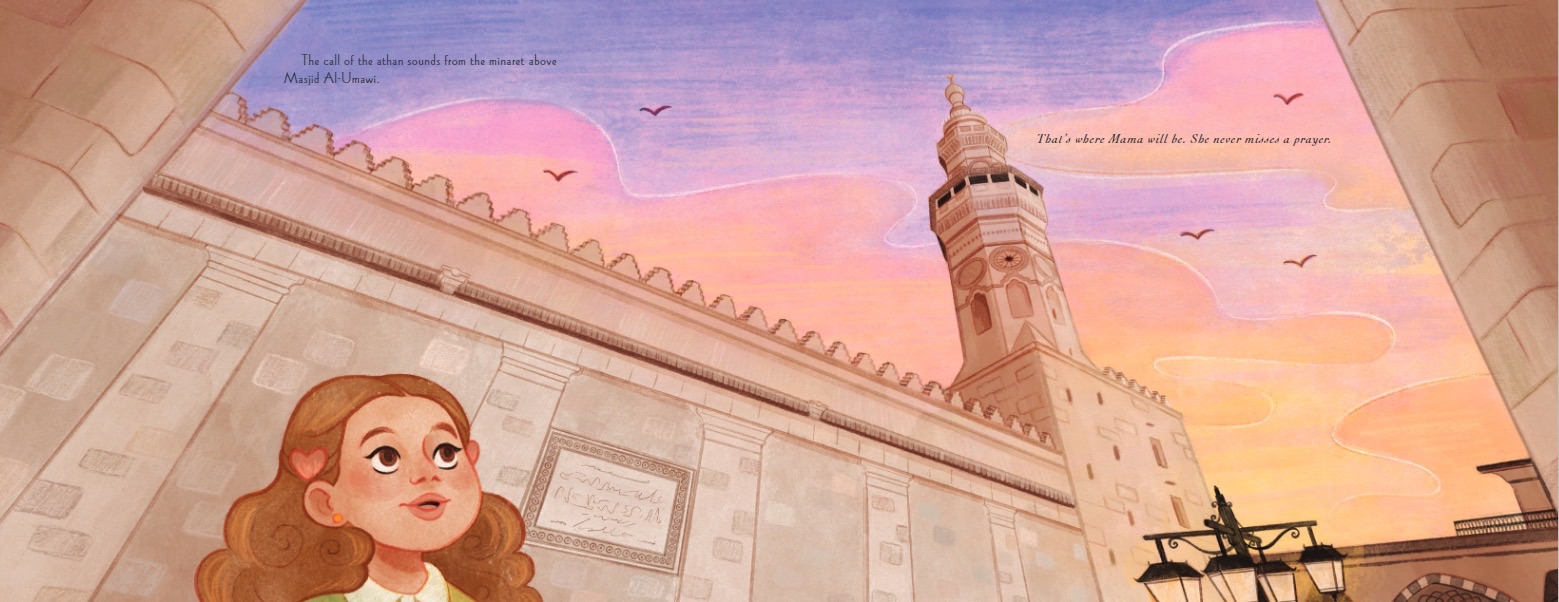
With heartfelt words and large two-page spread illustrations, this beautiful book shares a mother and daughter finding the perfect Eid gift for one another while bringing the reader into the Souq Al-Hamidiyeh, before sending them off to Masjid Al-Umawi for a warm hug.  A retelling of the classic, A Gift of the Magi, the story poignantly presents threads of love, gifts, loss, and Eid to fill the reader with joy, peace, and gratitude.  I’m admittedly very bias, as a close friend of the author, but this beautiful book doesn’t need lip service or marketing, it will appeal to all readers in all settings, and be cherished and asked for, over and over again, all throughout the year. Alhumdulillah.

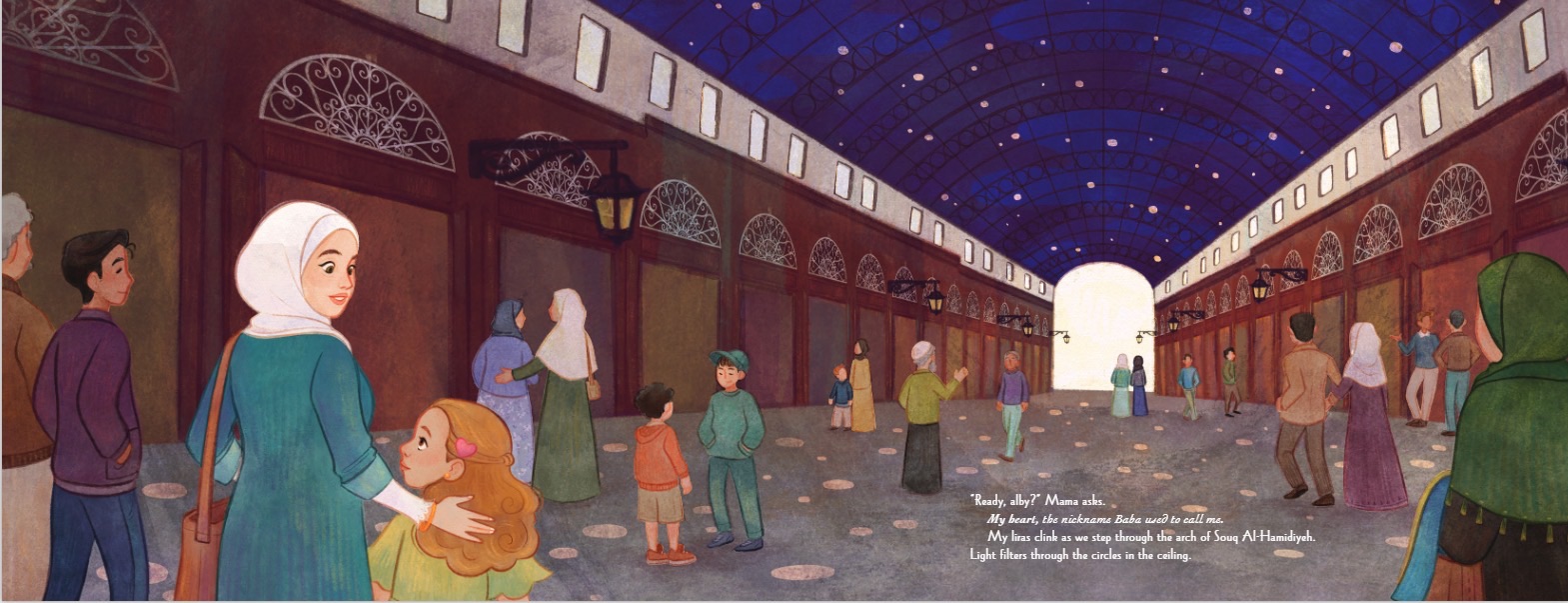
The book starts with Yasmine and her mama entering the souq through the archway, and Yasmine remembering her father and her imagining the circles in the ceiling to be twinkling stars.  He is no longer with them, the magic is gone and money is tight now, but with liras jingling in her pocket, Yasmine is determined to find an Eid gift for her mother that will make her smile.

Yasmine looks around the shops as her mother counts out liras to buy za’atar, and tries to find something cheaper than sfeeha at the bakery.  She finally knows what to get her mother, but it is more lira than she has.  With determination and selflessness she makes a decision to get her mama the perfect gift.

The process separates the two, and when they reunite at the masjid for maghrib salat, it isn’t the gifts themselves, but rather what they mean, that make the laughter, tears, and love overflow.

I love the emotional depth the book conveys so deftly, never explaining or pulling the reader out of the story, thus allowing the connection to linger long after the book is closed, a rare treat in a picture book.

Momo & Bronty’s first book about Prophet Muhammad (saw) by Zanib Mian illustrated by Laila Ramadhani

Standard
Momo & Bronty’s first book about Prophet Muhammad (saw) by Zanib Mian illustrated by Laila Ramadhani

I’ve mentioned it numerous times over the years how few children’s books there are about Prophet Muhammad (saw), and I love that this new book by Zanib Mian is a wonderfully illustrated 14 page board book for toddlers introducing them to some of the basics about our beloved Rasulallah. Momo and his toy dinosaur Bronty are featured in the illustrations, but do not dominate the text, which keeps the focus on Prophet Muhammad (saw) being the last of Allah’s messengers sent to tell us Allah is One, that the salutation is said after his name, and that he is always smiling, truthful, and making duas for us all, his ummah. I read the book a few times to myself and stumbled over some of the short sentences, but oddly enough when I read it aloud to my kindergartner it flowed fine. I always read picture books aloud before writing my reviews, as I was taught to read my essays aloud in school before submitting them, to effectively find errors. So, I’m not sure why for this book, I stumbled when reading to myself, but not aloud, a first for everything I suppose. The last spread though I did benefit from reading beforehand, as the order of what text comes next is not clear on first look. The pictures contain a lot of accessible details and discussion points and even early elementary aged children will find themselves drawn to the book, the reminders, the messaging and the simple text.

The board book is not just a list of facts, but doesn’t have a plot either, it is somewhere in between as it stays on level and flows between ideas, keeping the readers engaged. It starts by explaining that Allah swt sent Prophet Muhammad to us, the Qur’an through him, the message he carried, and why we love him. It shows that he exemplifies what a Muslim is and gives some examples, it then highlights that “His face was more beautiful than the full shining moon” and that “he played with little ones and made them laugh.” It concludes with connecting us, his ummah, as being important to him as he knew “the message he brought from Allah,” would spread.

The Door Is Open: Stories of Celebration and Community by 11 Desi Voices: Hena Khan (Editor), Sayantani DasGupta, Reem Faruqi, Veera Hiranandani, Simran Jeet Singh, Supriya Kelkar, Rajani LaRocca, Maulik Pancholy, Mitali Perkins, Aisha Saeed, N.H. Senzai

Standard
The Door Is Open: Stories of Celebration and Community by 11 Desi Voices: Hena Khan (Editor), Sayantani DasGupta, Reem Faruqi, Veera Hiranandani, Simran Jeet Singh, Supriya Kelkar, Rajani LaRocca, Maulik Pancholy, Mitali Perkins, Aisha Saeed, N.H. Senzai

img_5078-1

I cannot in good conscience at the current time support this book as a whole, as many of the contributing authors have not used their platform to speak up, spread awareness, and draw attention to the genocide occurring in Palestine. As recent South Asian history involves colonization, I find this silence deplorable, disappointing and shameful, we need to do better. That being said, I am reviewing the book none-the-less because a few of the authors have spoken out, some quite a lot, and I hope those that have remained silent, will speak out. Our voices have power, and while it feels like it might be too late to take a stand, it is not. Lives might yet be saved.

img_5079-1

The 328 page middle grade book is a collection of 11 Desi voices, four of which are Muslim (Hena Khan, Reem Faruqi, Aisha Saeed, and N.H. Senzai). All 11 are threaded together by a fictional community center that houses badminton games, ameens, cooking classes, dancing for Navratri, chess tournaments, spelling bees, celebrating an aqiqah, and everything in between. The majority of the stories are joyful with threads of overcoming stereotypes being a frequent mention in a book filled with different cultures, religions, and perspectives. Potential flags and triggers: there is mention in one story of domestic violence, there are a few hetero crushes and one same sex identifying boy who isn’t ready to discuss his attractions, there is ostracizing of a single woman choosing to adopt, and a few mentions of divorce. As with all anthologies some are better written than others, but as a whole the book is pretty consistent in spotlighting something specific to religion or Desi culture, and having a hobby or family conflict push the character to problem solve, find their voice, and then be supported in a happy ending.

My favorite story is N.H. Senzai’s piece, I might be bias seeing as I check her Instagram numerous times a day for Palestine updates, but her story, with the domestic violence mom and daughter surviving and flourishing, is powerful, on level, and memorable. Framed around a mom’s prayers, duaas, she named her daughter Duaa. Duaa is a gamer that tries to make her mom happy by helping with her catering business. When she helps set up for a domestic abuse banquet at the community center she faces what her and her mom overcame by leaving in the middle of the night, and starting over.

I’m not going to review each story, but I will highlight the remaining Muslim authored ones. Aisha Saeed’s story doesn’t have any Islam specific mentions, her story is set during a mehndi at the community center. Her khala is getting married to Brian and moving to Kenya, and she is not happy, throw in cousins who are still mad at her for ruining their furniture with chocolate last year, and Maha just wants to hide in the back and pout.

Reem Faruqi brings her characters together through old fashioned letter writing. Orchestrated by Rahma’s nani, second cousins who will be meeting for the first time at an aqiqah at the community center, start corresponding to get to know one another, and gripe about siblings. When they finally do meet, in matching outfits no less, the girls decide their siblings, like their favorite candy, can be both sweet and sour.

Hena Khan’s story brings everyone together for an ameen six years in the making. Halima has finally finished the Quran and the family is throwing a party. Halima wanted a carnival type party, mom wants a formal affair, but when the community center is on the brink of being closed down, the family decides to invite everyone to show what the center offers the community.

Sister Friend by Jamilah Thompkins-Bigelow illustrated by Shahrzad Maydani

Standard
Sister Friend by Jamilah Thompkins-Bigelow illustrated by Shahrzad Maydani

img_3521-1

After years of teaching, librarian-ing, and mothering, my reviewers are for adults, but with kids in mind. I read in different environments and try and balance what children will think with my more critical literary impressions. But honestly, my first reaction when I see Jamilah Thompkins-Bigelow has a new book out, is not about the children, or their parents, it is incredibly selfish, and I want to read the picture book for me.  It has been about a year since I first read my all time favorite, Salat in Secret, and I still feel all the feels, every time I read the book. I even enjoy handing the book to people and watching them read it for the first time.  So, I was both excited, and nervous to read this new book, not knowing if it would measure up to my expectations or rather hopes, so to speak.  I needn’t have worried, subhanAllah, this book in it’s own right is moving, heartfelt, layered, powerful, hopeful, relatable, tender, and while staying on a kindergarten to second grade level is also unapologetic with its centering of Islam, race, and feeling invisible, being new, and making a friend.  The illustrations and words blend beautifully, and by the second page of the 40 page book, I was already emotionally attached to the little protagonist Ameena.  Good writing is good writing, and as a result this beautiful book works for all ages and will be appreciated on multiple layers even after dozens of readings, alhumdulillah.

img_3522-1

The book begins with Ameena playing a game by herself.  She always plays by herself at school, where she tends to be invisible.  Maybe it is her hair in twists or her brownness, she doesn’t know.  One day a new girl comes, her name is Sundus, she wears hijab like Ameena wears to the masjid.

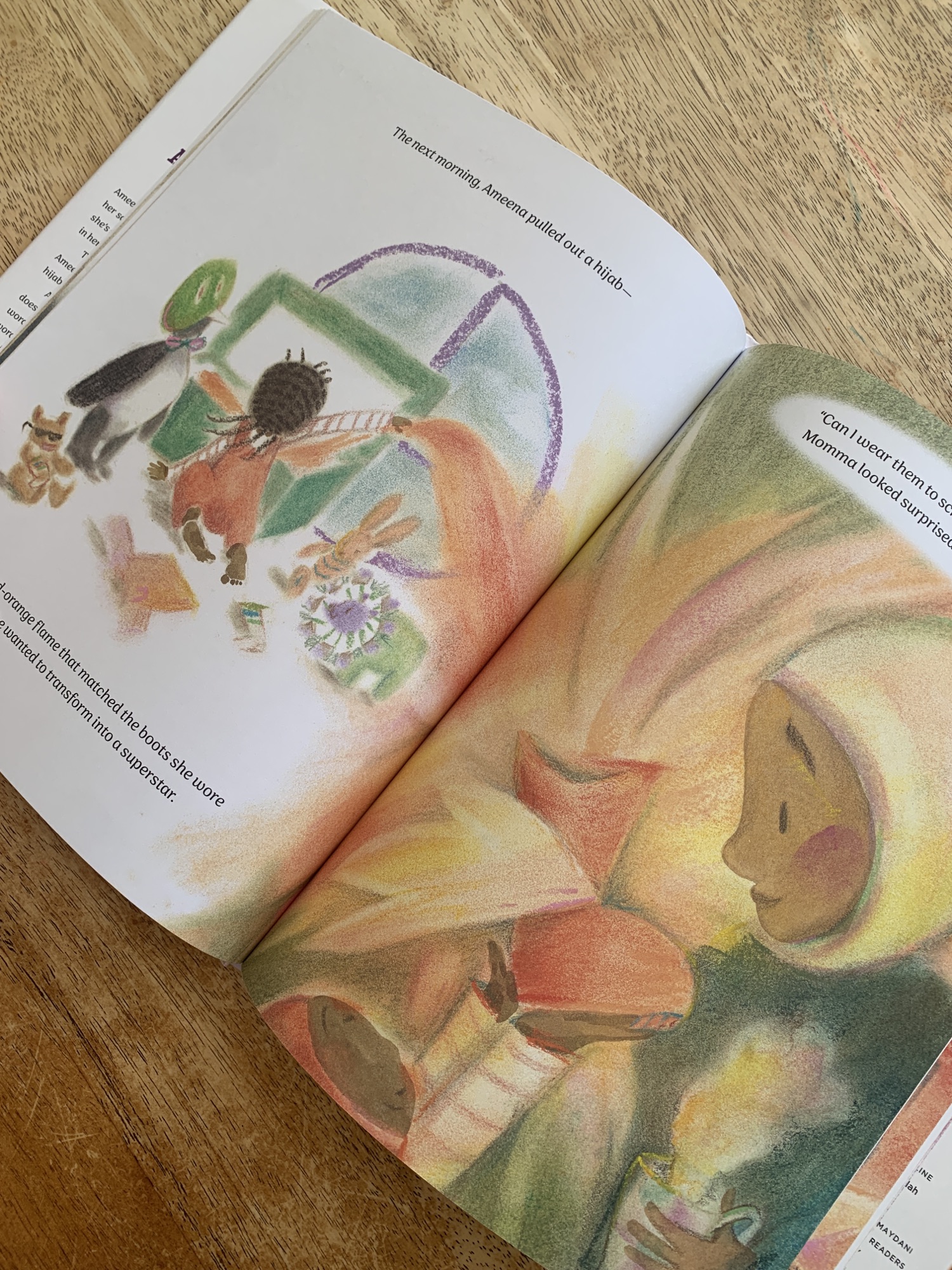
All day Ameena tries to talk to Sundus, but something always seems to keep them apart.  When they finally meet,  Ameena’s excited words get all tangled, and a misunderstanding occurs.  Ameena decides the next day to transform into a rockstar: red-orange hijab and matching boots. The other kids say she is copying the new girl.  Sundus doesn’t say anything.
img_3523-1

Ameena disappears again at school, but family night at the masjid is her happy place.  Where she doesn’t play alone, and there are lots of browns, and she is seen.  When Mama meets a new sister, and greets her with Assalamu Alaikum, Ameena sees how a greeting and a hug can be the start of sisterhood and friendship. And the next time Sundus and Ameena meet, they know just what to say.

img_3525-1

The joy at the end forces you to smile, just as Ameena playing alone at the beginning tugs at your heart.  It is a great book to see yourself and see others in a beautiful, authentic way.  The universal themes of not being seen, making a friend, and being the new kid, are woven in just as hijab, masjid and Assalamu Alaikum are, making the book powerful for Muslim and non Muslims alike.

img_3524-1

I particularly love that their is no glossary, and that the text uses the word masjid not mosque, hijab not scarf and Assalamu Alaikum not salam.  That the masjid is her safe place to laugh and play, and that this book is mainstream published and will find its way to public spaces and be widely accessible.

You can preorder your copy here on Amazon.
Khadija and the Elephant Toothpaste Experiment by Farah Qaiser and Hajer Nakua illustrated by Natalya Tariq

Standard
Khadija and the Elephant Toothpaste Experiment by Farah Qaiser and Hajer Nakua illustrated by Natalya Tariq

img_3251-1

This 26 page book is set on Eid, it does not specify Eid al-Fitr or Eid al-Adha, but it isn’t overly impactful on the story outside of the framing, so really it is a non issue.  The book shows a Muslim family and is a benefit for appealing to women and girls in science, unfortunately it has some plot holes though.  A big point of the book is the girl, Khadija, wondering if she can be a scientist who wears hijab because she doesn’t see any scientists at the fair wearing one. When she voices this concern to her parents, her father reassures her saying, “Anyone can be a scientist.  Scientists can wear a hijab like Amma, or glasses like me.”  First of all, I don’t like it equating hijab to glasses, hijab is a religious practice, not a tool to help you see or an accessory.  I’m well aware not every book has to have Islam centered, but I do worry that if hijab is relegated to an article of clothing, and Khadija doesn’t wear hijab, that readers might just be confused and not be able to connect the dots.  With weak writing, a confusing premise, and a climax of doing an experiment, that is not included for the readers to do at home, included in the book; I am struggling to recommend this for every bookshelf.  It isn’t a bad read, it just should be better.  I love the joyful engaging illustrations, I like the female Muslim science representation even. I just ultimately think the weak writing drags the book down and will have some kids confused why she is worried about a scarf she doesn’t wear impeding on a career she doesn’t have, and be unable to see that as a Muslima she will want to wear hijab as an act of worship when she grows up.

img_3252-1

The book starts with Khadija and her family heading to her school for the science fair after Eid salah.  She sees lots of scientists, but notices none wearing hijab.  She gets a science kit to do at home and then the family starts to prepare for guests coming over for dinner.

img_3253-1

Khadija can’t wait to do her experiment so she quietly gathers up supplies, and heads to the bathroom to make elephant toothpaste. It works, a little too well, but then it is everywhere and mom and dad show up to help her clean.  Khadija wonders if she is not cut out to be a scientist.  Mom and dad console her, the people arrive for an Eid party, and her parents and her do the experiment for all to see.

The story is pretty straightforward, but I sure have a lot of questions: why is the “big day” the science fair and not Eid.  It is at her school but the science fair is not students sharing projects, but professional scientists? And does she purchase a science kit, why does her mom give it to her at the fair, but then she asks the scientist is she can do it at home? What else did she see or learn at the science fair, she just went saw scientists in lab coats, got the kit and left?  How was it still morning when she got home after the fair, after Eid salah?  There is a whole page of her getting an Eid gift and squealing with delight, but never shares what the gift is.  I also really, really wish it had the experiment in the book. I want to know what it is and why it is called, “elephant toothpaste.” I truly do not know why this book has no backmatter.  Information about women in science, how to do the experiment, maybe something about hijab or Eid. A link or scannable QR code to see the experiment would have even added something to increase knowledge and excitement for science, representation, and dreaming big.

img_3256-1

Zain’s Super Friday by Hena Khan illustrated by Nez Riaz

Standard
Zain’s Super Friday by Hena Khan illustrated by Nez Riaz

img_9576

I love the joy and normalizing of mainstream titles celebrating salat, Jummah, and the masjid becoming increasingly available for us to read and share.  This particular book is great for preschool to early elementary aged children that enjoy going to the masjid, but sometimes want to put on a cape and be the hero battling aliens, that know how to behave during salat, but sometimes have a hard time sitting still, and parents that want to play with their kids, but sometimes have to get some work done first.  With  threads of patience, kindness, and determination woven in to masjid activities, the book is both a mirror for Muslim kids and a window for those that wonder what a Friday prayer service looks like.  The 32 page book is unapologetic, joyful, and a great addition to book shelves.

img_9578

Zain wakes up early Friday morning and is ready to save the world. Dad greets Zain with a “Jum’uah Mubarak,” but has to pass on battling the aliens taking over the kitchen.  At lunchtime, when dad takes a break from work, Zain tries again to engage him in heroic play, but it is time for Jum’uah.  Zain slips on his cape and vows to protect everyone.

When they get to the mosque, aka command central, Zain tries again, but dad redirects him to make wudu before salat. Heat action dries his feet, but the adhan starts and giant shoes and aliens will have to wait, yet again.  During the khutbah, wiggly Zain sits by his dad, but when the Imam encourages them to stand for salat and fill any gaps, Zain takes it as a call to duty and races to the front announcing, “Here I come, Commander Imam, reporting for duty.”

The kind Imam knows just what to do, and as Zain controls his focus, even dad finds time to be a hero and battle the aliens on this super Friday at the mosque.

img_9580

I love that wudu, athan, khutbah, Imam, are all used without a glossary and that the Author’s Note is informative and unapologetic in tying it all together and making the terms clear.  I wish masjid was used instead of mosque, but I know that is just my personal preference.  I love that the Imam is kind and the dad is gentle and playful.  Even when Zain is not getting to do what he wants, he is not unhappy with being at Jumuah, or making salat, or being redirected, he just wants to indulge his imagination.  The warmth and joy of the illustrations reinforces the tone of the book, and with the inclusion of charity, and the happy ending, I can’t wait to have a physical copy of this book in my hands.

The book releases on October 10, 2023 and can be preordered/ordered here on Amazon and I’m sure will be available once released at Crescent Moon Store, where my initials ISL at checkout will always save you 10%.

img_9582