Tag Archives: elementary

Academy Story by Naim Hammami

Standard
Academy Story by Naim Hammami

I dnfed this elementary aged book a few months ago, and pulled it back out feeling obligated that the publisher sent it to me and, I ought to read it.  So, I did, and it is not well-written, but since I read it, I’m writing a review, and hopefully sparing y’all the same frustration.  The cover is pretty cool, so is the idea, and the Islam is centralized and prioritized, but the story reads like an introduction, yes a 152 page introduction.  It repeats itself so often, it contradicts itself within the repeated ideas, and then moves forward at a snails place before ending.  I think it wanted to end on a cliff hanger, but because so little is accomplished up until that point, it feels like it doesn’t end at a climax, but rather the start of the action, which is irritating.  It feels like the author started telling a story orally about a family in a kingdom that when they finish primary school either continue to secondary school or find themselves in a secret academy, and no one knows how they are chosen, or what the academy is like; someone heard that much and told the author to write a book, and they did.  There is no character development, drawing the reader in, suspense, imaginative language, or refinement, it reads rough and I don’t know if it is because it is translated, or because there was never much to work with, but if you have seen this book, and were excited to see an Islam centered adventure story, sadly I’d say pass, it misses the mark.

SYNOPSIS:

The book starts with centralizing three siblings, Fatima, Suhayl, and Harun.  Fatima is the oldest and is a second mother serving her family, cooking, and apparently enjoys reading, she was not chosen for the Academy and is still bothered by it.  Suhayl is the protagonist who hates school, and Harun is the little brother who is still in primary school.  The first few chapters are the repetitive circling of anticipation and excitement for finding out who gets in to the Academy at home and talking about what little is known about the Academy, and why it is important as today is the day Suhayl will find out.  Why they had no idea about the Academy before breakfast on the day he is going to find out, is beyond me, the world building was an info dump, repeated in the following chapter when Suhayl is now at school.  His friends all discuss that they are going to find out about the Academy, only then to contradict that whole build up and wonder IF they will find out about the Academy today.  We meet the friends, find out some of them have parents that went to the Academy, but do not talk about, as they are not allowed.  The reader is not told what the benefits of having gone to the academy are either, outside of knowing all educators have been trained there.  The book then says how Suhayl doesn’t have friends and proceeds to discuss how close he and his friends are.  When the assembly starts the class learns there is no Academy announcement and no end of the year field trip, instead they will have to come up with a challenge, that is optional, to do over the school holidays.  After rounds of voting and a weird power flex, a business challenge with rules is established and the winner gets to leave school if they want. Suhayl is determined to win, he and his buddy, Yusuf, decide to make fans using the Venturi Effect to sell at their stall and try and make the most profit and win.

WHY I LIKE IT:

I like the premise, the artwork, the Muslim characters, I even like the business, life-lessons and science explanation of the fan.  I don’t understand how it makes Suhayl’s fan more effective than a regular fan, but the book has bigger problems. I know for many author’s writing is figuring it out or making it up as you go, so I realize the ridiculousness of saying that this book feels like the book is being made up on the spot. It is writing quality that allows readers to get lost in a story, enjoy the words, and connect to the characters knowing that the author has control of a story and taken care of the required elements of a completed book.  The rules of the challenge and how they were to finalize the idea, seemed so scattered, that combined with the weak writing, and repetitive premise building, made the intrigue of a whispered about Academy seem like a completely separate story.

Additionally, I don’t understand the stressing of the three siblings, The book is only about one, Suhayl, and his friends, yet each have a “character profile sheet,” but they are not all together at the start, or even the end.  One profile sheet is at the end of chapter 2, one at the end of chapter 4, and then the third at the end of chapter 6.  If the point is that as the series progresses you will see the sibling more, and it is meant to garner interest, the choice assumed that readers will stick around for a series, and I don’t think the book at hand, will pull readers in to see how the series pans out.

FLAGS:
Secrets, business deception

TOOLS FOR LEADING THE DISCUSSION:

If the book were donated I would shelve it, but I would not seek it out to shelve.

The Home We Make by by Maham Khwaja illustrated by Daby Zainab Faidhi

Standard
The Home We Make by by Maham Khwaja illustrated by Daby Zainab Faidhi

img_5134-1

This 48 page picture book follows a family as they leave their home under siege and journey to America.  Through the eyes of the young girl the thread of what is home, where is home, and is it a place or a feeling weave through the emotional unknown that the family faces throughout.  Even once settled the feeling of security at home is threatened, and the family must persevere.  The little girl’s joy and hope that whatever comes will be faced together with her parents, keeps the book hopeful and at times even joyful.  The lyrical writing is occasionally makes the book feel text heavy, but because the reflection of memories and inclusion of emotions is used in conjunction with the story moving forward, I think elementary aged children with guidance will benefit from reading and discussing the book. As a former journalist, I truly believe one can research a topic and write an accurate story or an article presenting what they learned for others to benefit from.  At the same time as a lover of fiction, I enjoy OWN voice and the authenticity that it brings to the experience.  So, when I read the Author’s Note at the end, and found the author is not a refugee, and that there is no named sources of the author’s friends who are refugees, in fact there are no references whatsoever, I felt deflated.  It in some ways makes me uncomfortable that what looks much like a Syrian refugee story on the pages, is perhaps so mainstream, that a fictionalized account can be shared and accepted without authenticating it.  No country is named in the book, the author is an immigrant so there undoubtedly is a level of OWN voice, and she disclosed she is not a refugee- truly nothing “wrong” has been done, but nonetheless I feel like I should share that here for you to decide how you feel about it before reading the book.

The book starts with rockets falling outside a family’s home while they pack essentials in the red glow.  They then leave their home, and the house key behind as they start their journey. They begin walking past destroyed buildings, the girl’s school, branches that seem to not want to let them leave.  They arrive at the docks, spread the same blanket they once took to the beach during happier times, and wait for the boats.

There are not enough lifejackets, but her parents make sure she gets one.  As the boat bobs along, the young girl imagines astronauts in space and wonders if they too miss home.  The angels in blue vests get them from the boats to the camp, where they stay and wait, while they complete paperwork and dream of finding a new home. When that day comes, the goodbye is hard, but they board a plane to America with hopes and dreams.
img_5139-1

In America there is an apartment, help to learn the language, and reminders that they are lucky they have made it this far.  But, there are also people who do not want them here, that make them feel unsafe in their new home, and the family will have to work hard to find their place and make the puzzle pieces fit.

img_5140-1

The full illustrations bring the book to life, and compliment the text, establishing a tone that is seamless in conveying both fear and happiness on a kid appropriate level. 


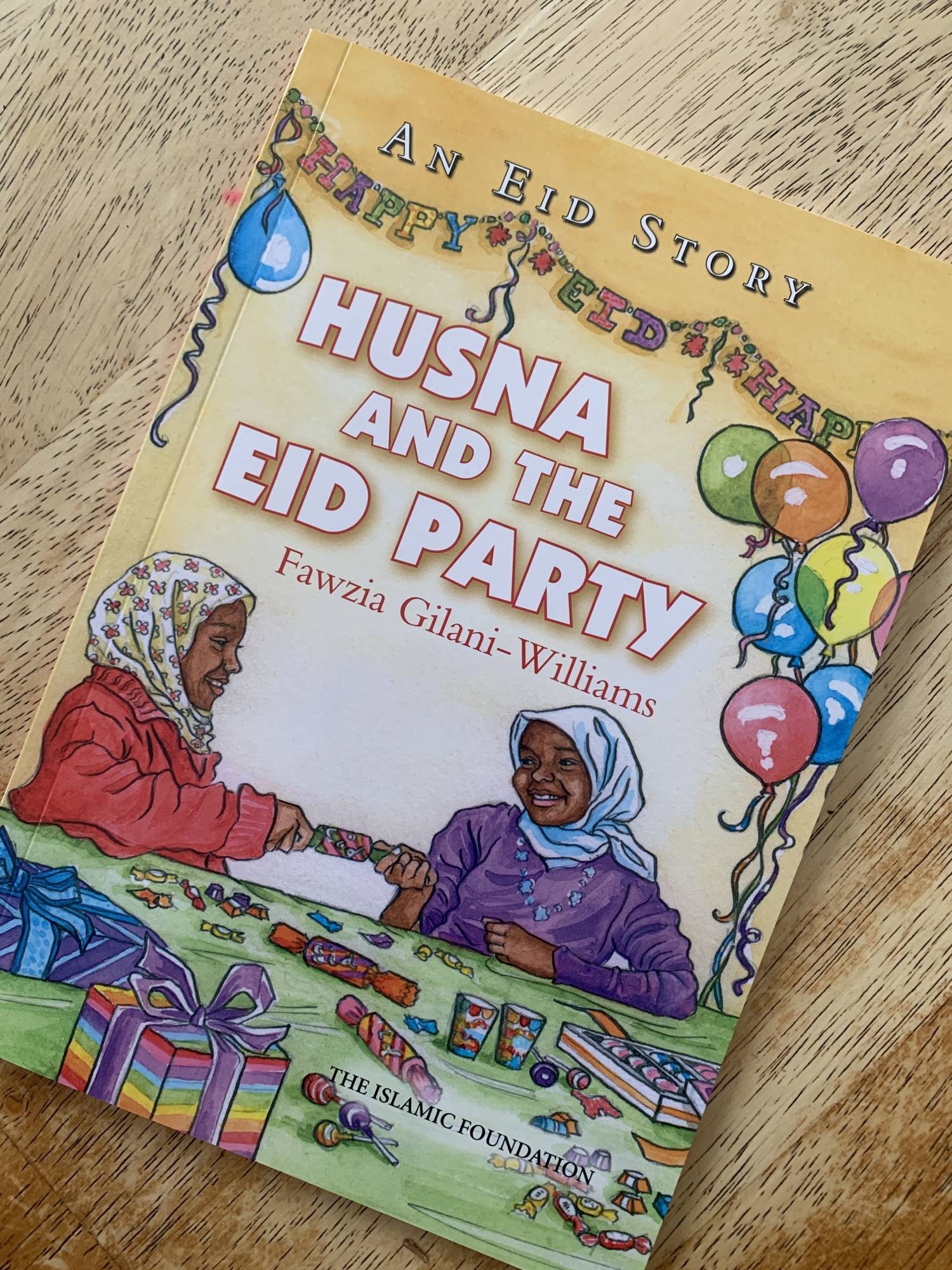
An Eid Story: Husna and the Eid Party by Fawzia Gilani-Williams illustrated by Kulthum Burgess

Standard
An Eid Story: Husna and the Eid Party by Fawzia Gilani-Williams illustrated by Kulthum Burgess

img_3309-1

This 27 page book is old, published in 2007, and one that I kept an eye out for on occasion since reviewing a similar early chapter book by the same author, The Lost Ring, that I found in a public library in 2016.  Somehow it found its way to me in 2024, and I’m reviewing it because it has been a while since I’ve indulged in older books that shaped the foundation of Muslim literary representation so many years ago.  It is the epitome of Islamic fiction and what Islamic fiction looked like when I started teaching.  It has a Muslim protagonist, with a universal stress, framed in Islamic acts, perspectives, information, and morals.  It is unapologetic, it is at time preachy, and while the writing isn’t remarkable, an engaging story is laid out with numerous lessons along the way.  You may not want to rush out and purchase this book, but if you have it on your shelf, it would be worth pulling out, dusting off, and sharing with a child. At times the details feel a little dated, but there is a timelessness to stresses with friends, being left out, assuming the worst, and wanting to be included.  This book will offer a chance to be seen in the text and illustrations as Husna waits to be invited to her friend’s Eid party.  The book does not specify if it is Eid al-Fitr of Eid al-Adha, but it really isn’t impactful on the story, as it simply sets the time, mood, and draws all the threads together.

SYNOPSIS:
It is the week after Eid and students are back at their Islamic school, Husna has lots of friends, but Maryam is her favorite.  While on the playground, someone asks Maryam where the party is going to be, and she responds, “probably at the house.”  Excited Husna waits for her invitation, that unfortunately never comes.

WHY I LIKE IT:
Even though the book has a happy ending and is based on a misunderstanding, the feelings are very real.  I remember feeling left out, I’ve seen my own kids and students feel it, and that the book is a snapshot of that feeling from a Muslim perspective, really makes it hit home.  Husna makes dua in sujud at Maghrib and Fajr that she will be invited, conversations begin with As-Salamu ‘Alaikum and end with Barak Allahfi-ki, homework is learning Hadith and memorizing ayats, jumah is prayed, and every page is filled with Islam.

FLAGS:

None

TOOLS FOR LEADING THE DISCUSSION:
The book is an early reader, a text heavy one at that, but none-the-less meant for ages seven and up. I can see it being read today in small groups in an Islamic school or if you have a young one who is perhaps feeling something similar.  You might have to explain invitations in the mail, or calling on a house phone, but it still has relevance.

Amir’s Blue Jacket by Sarah Musa illustrated by Rania Hasan

Standard
Amir’s Blue Jacket by Sarah Musa illustrated by Rania Hasan

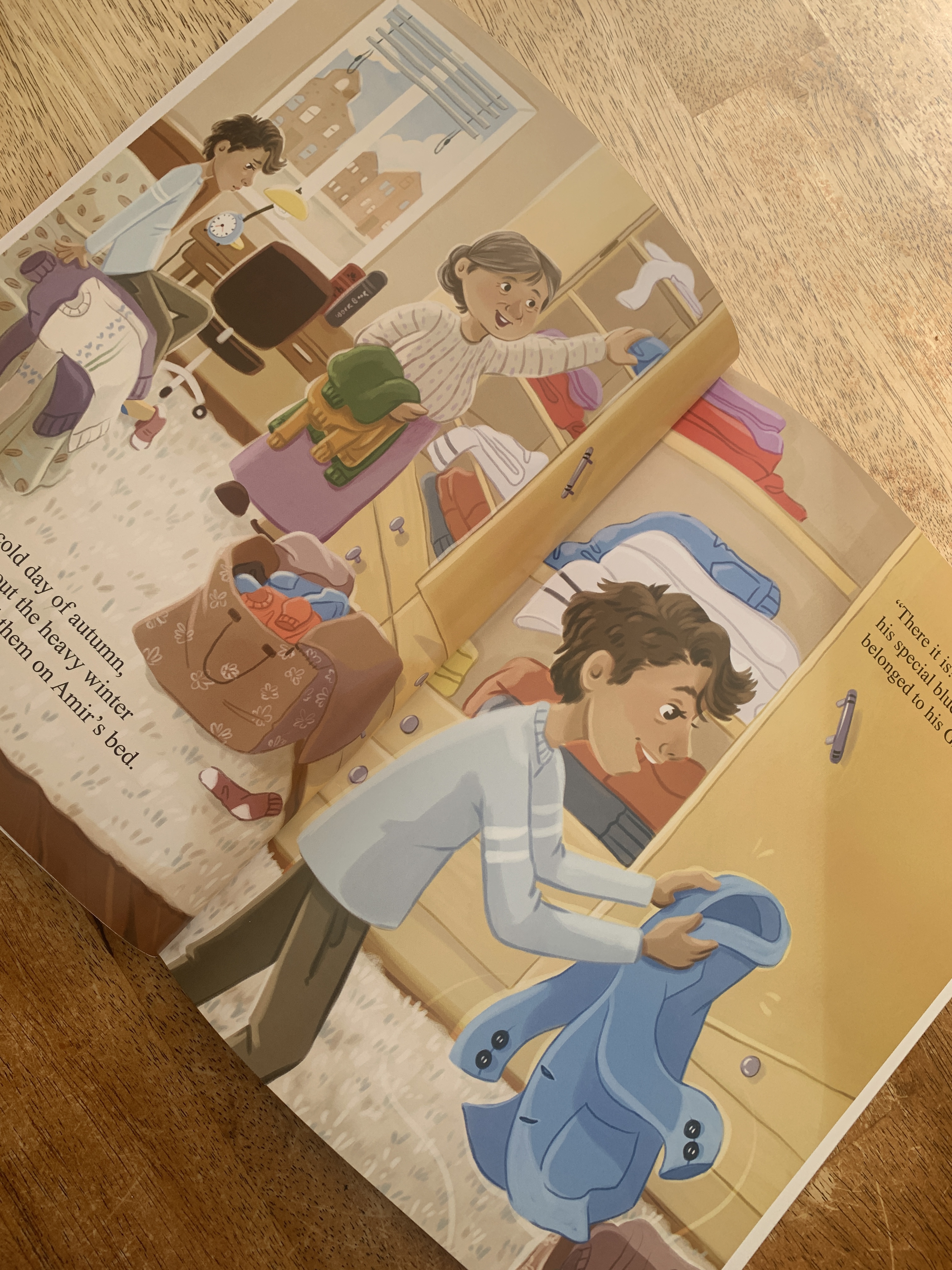
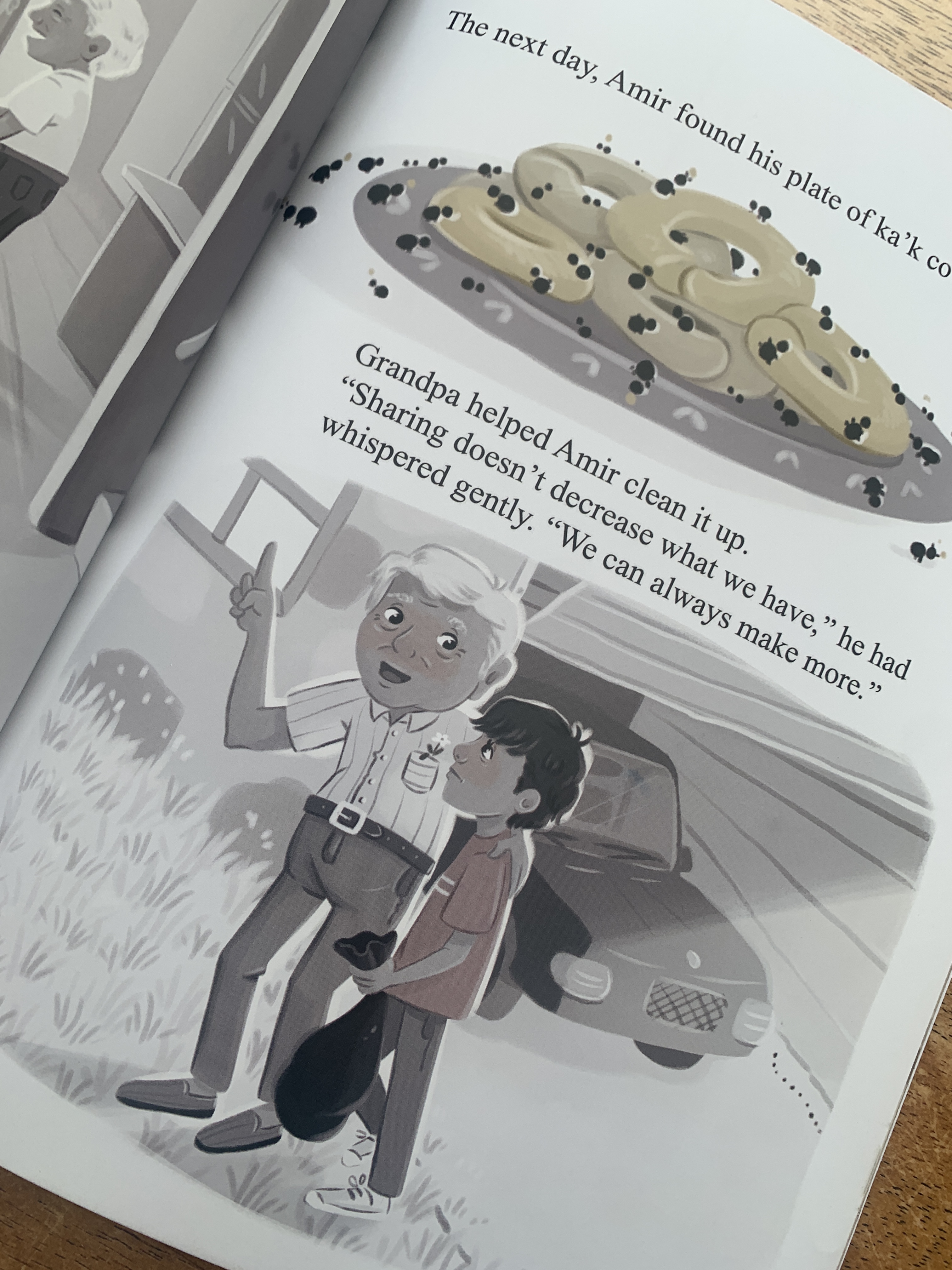
This heartfelt elementary picture book does a remarkable job of drawing the reader in to the emotions of the main character, his relationship with his grandfather, and imparting a moral message without being preachy. The illustrations are lovely on their own, but the way the muted tones convey the memories and illustrate the text really ties the book together. Whether it is for a larger story time or a one-on-one bedtime read, the book will offer discussion, comfort, guidance, and a little surprise at the end for Muslim and non Muslims alike. The slightly allegorical book does conclude with a widely known hadith (it is attributed to Prophet Muhammad saw, but is not further cited/sourced) and the family is clearly Muslim with their names mentions of Eid and God, and a hijab clad woman, but the book is universal and a lovely addition to any book shelf.

The book starts with Amir finding his Grandpa’s old blue jacket and recalling wrapping himself in it the day after his beloved Grandpa died. With it smelling like mothballs, he tosses it in the washing machine, but unfortunately when it comes out it has clearly shrunk. Amir is in denial, he says it fits fine and he has no desire for a new one. It is Grandpa’s jacket, and Amir is going to wear it, no matter how tight it is. Amir storms off to sit under the apple tree and recalls picking apples and making applesauce the year before for the whole neighborhood. Grandma shares that she used to keep grandpa’s cane but when someone needed it, she let it go.

Grandma stirs another memory in Amir when she pulls the tray of ka’k out of the oven, of him trying to sneak a whole plate for himself only to have his hiding spot taken over by ants. When he is asked this time to share a plate, every step to the neighbors house reminds him even more of making the trip with his grandfather. Slowly he starts to realize that his memories are with him, not in his grandfather’s things, and Amir makes a decision that would make his grandfather proud, and (inshaAllah) give him more good deeds, even though he is gone.

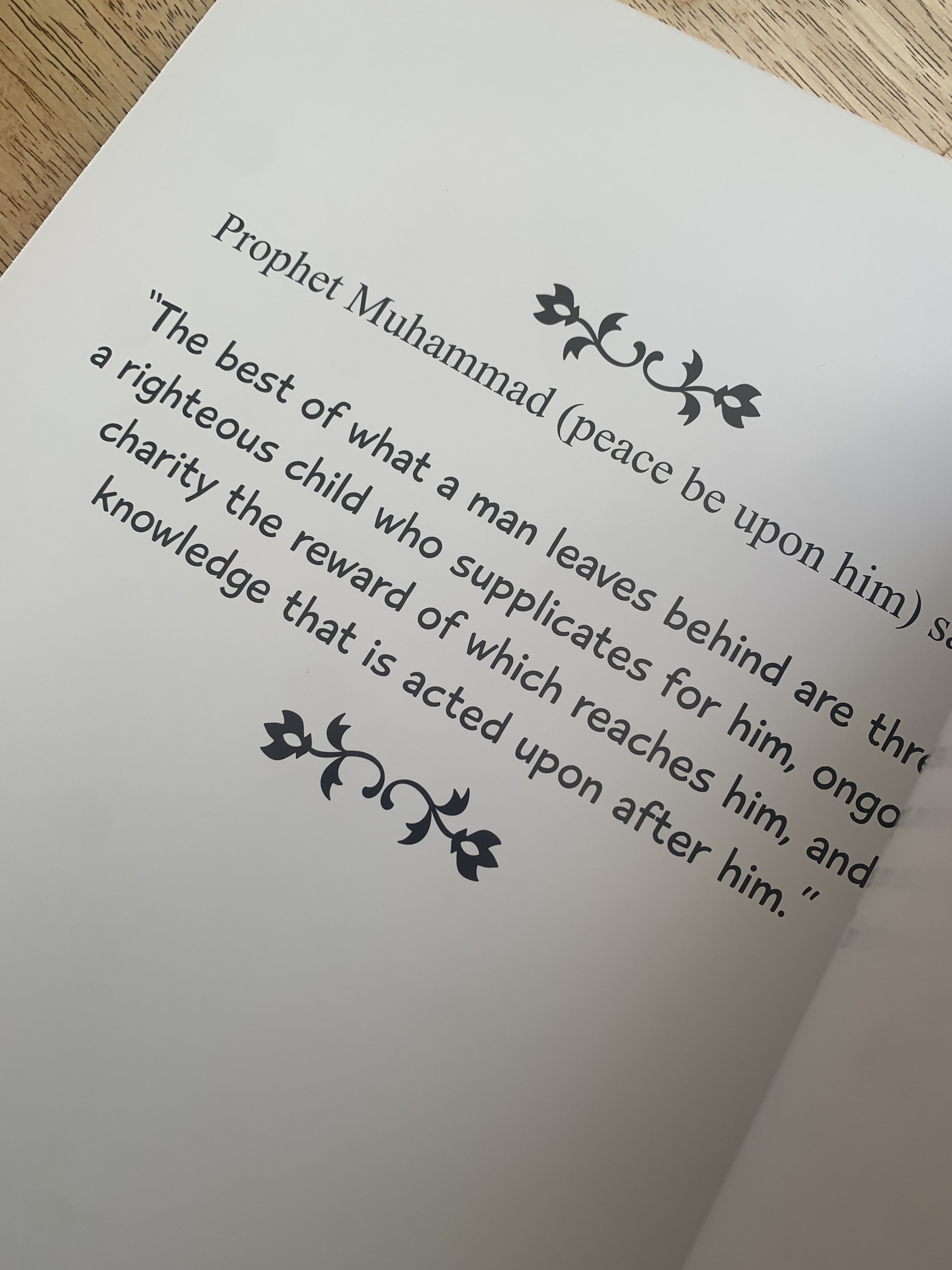
The idea of sadaqah jariyah is understood through the story, and present in the hadith at the back, but it is never mentioned outright. Just as God is used, not the term Allah (swt). As Amir feels denial, frustration, and eventually peace, nothing is really told, it is shown, which really opens the book up to be a tremendous tool in sharing it with children and asking them to discuss what they understand, what they feel, and what they took away from Amir and his Grandpa’s blue jacket story.

The book is available through the publisher Ruqaya’s Bookshelf as well as HERE at Crescent Moon Bookstore where code ISL will save you 10%.

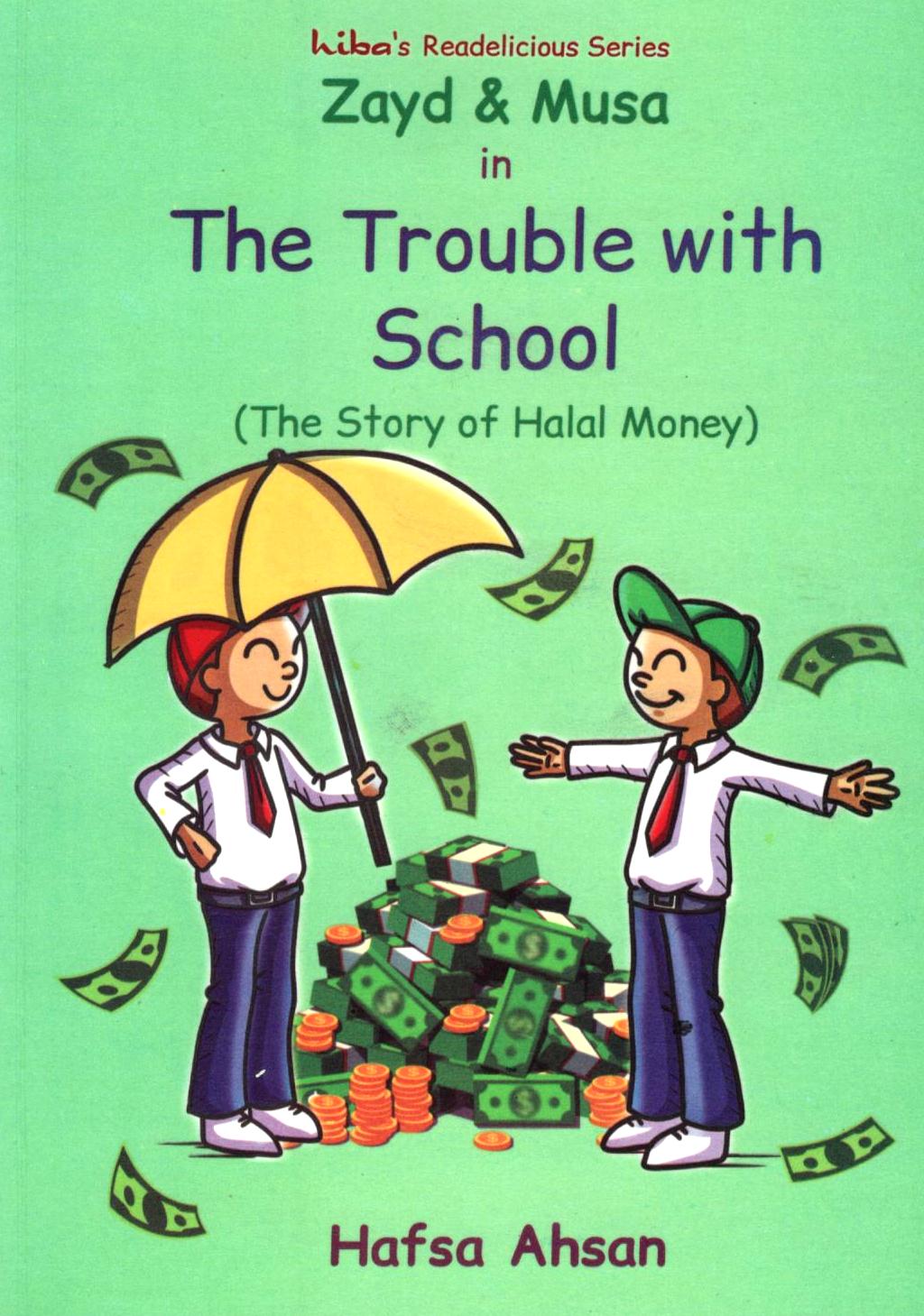
Zayd & Musa in The Trouble with School (The Story of Halal Money) by Hafsa Ahsan illustrated by Yusra bint Absar Kazmi and Urooj Khan

Standard
Zayd & Musa in The Trouble with School (The Story of Halal Money) by Hafsa Ahsan illustrated by Yusra bint Absar Kazmi and Urooj Khan

money

This delightful 70 page early chapter book is filled with humor, Islam, and a sweet story that ties it all together.  The book definitely has a teaching agenda, but it carries it with hilarious banter and relatable examples, all while covering a topic not often discussed in children’s books: money.  The book has a few grammar, vocabulary, and consistency concerns, but they are easy to overlook for readers 2nd grade and up.

SYNOPSIS:

Twins Zayd and Musa are very, very different.  Both boys enjoy cricket, but Zayd is more focused and enjoys homework, whereas Musa tends to daydream and often says something funny, but unintentionally.  When Musa makes the case in Science class that food, water, shelter, and money are all needed to survive, the class finds him hysterical.

Musa knows not to argue, his teacher is his elder and he knows he should have taqwa and be respectful, but he doesn’t give up on his idea either.  When the boys’ mom talks about halal money and gives them Islamic references for how money should be handled, Musa has a great idea: kids should be paid to go to school.

Once again, the whole school finds him funny, but Saeed Uncle, a neighbor who helps feed the poor at a roadside stand, doesn’t dismiss Musa’s idea and tells him, in some places kids are paid. And offers to take him and show him.

With references to sahabas who had great wealth and examples of how wealth can be used for good, Musa and Zayd learn numerous lessons, and share them with those around them, in a fun, engaging manner.

WHY I LIKE IT:

I get that the book is preachy, but in my mind, it is a story built around a teaching concept, so it doesn’t bother me.  I love the jokes and the tone.  At times the book is written quite formally, but being the author lives in Karachi, Pakistan, I assume that part of it, is just different standards.  I appreciate the Quran Circle table that lists where the Quran mentions wealth and the glossary.  I didn’t quite get all of the random facts included throughout, as some were about money, others about school, but I think kids will enjoy them none-the-less.  The illustrations are enjoyable, the text bubbles often hilarious (once again, a few I didn’t get).

I liked that it mentioned not drawing faces, and not going somewhere alone with someone you aren’t close with.  It is said in passing, but I love that those little nuggets exist in a book that is about something more, but normalizes and takes advantage of the opportunity to remind children of basic safety and Islamic concepts.

There are some awkward tense changes, and a few gaps in the story, but overall, I really enjoyed it and need to find the first one in the series.

FLAGS:

None

TOOLS TO LEAD THE DISCUSSION:
This would be a great book to use in a middle grades Islam class as a starting point to having students research the Quran and Sunnah to find information on a topic.  The humor will keep kids engaged, and the concept is an important one.  I plan to make all my kids read it, so that we can discuss as a family, and benefit from the lessons presented.

Be Patient, Abdul by Dolores Sandoval

Standard
Be Patient, Abdul by Dolores Sandoval

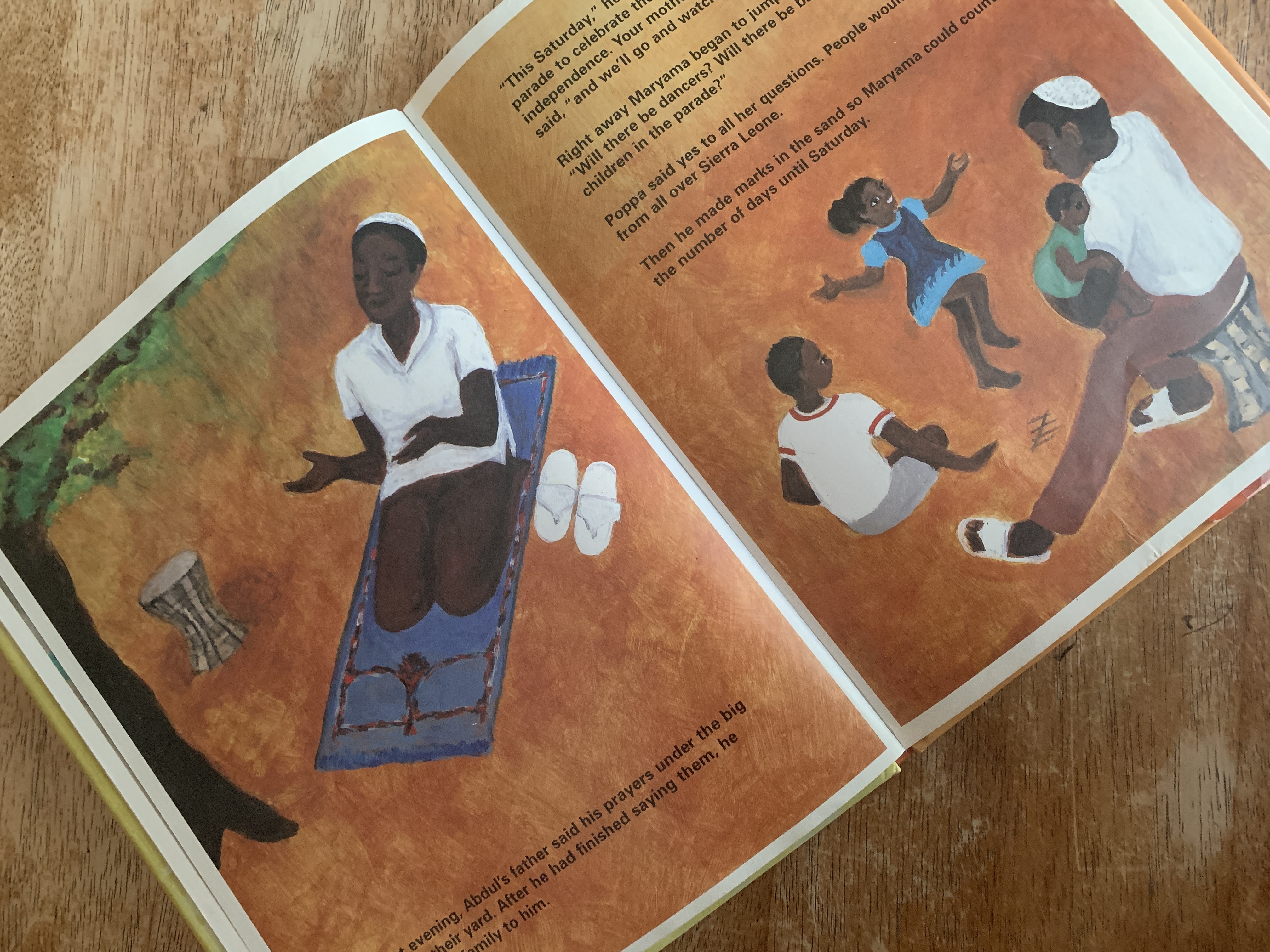
I share this book from 1996 to show how far we have come in telling our own stories with accuracy and emotion, as well as to celebrate those that featured Muslims in a positive, unapologetic light when there wasn’t a standard yet established. It is easy to harp on the negative, but truly the only way forward is demanding better of ourselves and of our representation. The book is disjointed-pulling in random details to focus on, and is very text heavy, slow, and dry. It does feature a Muslim family, though, and shows both Abdul (albeit in his underclothes) and his father praying salat. The text even mentions thanking Allah (swt). I honestly have been searching for past Islamic representation or mention in mainstream juvenile fiction, it fascinates me to see where the seeds first were planted: Sport by Louise Fitzhugh (1980) has a one line mention of a character being Muslim, Kiss the Dust by Elizabeth Laird (1991), Habibi by Naomi Shihab Nye (1997), Ruhksana Khan’s The Roses in My Carpets by a Muslim about Muslims(1998), The Hundredth Name (1995) by Shulamith Oppenheim.

Abdul is a seven-year-old little boy in Freetown, Sierre Leone. He sells oranges so that he can pay for school. School is not free, and selling oranges requires a lot of patience to save up enough to return to the classroom. One day he returns having not sold any, and his grandmother reminds him to be patient and to try a new market. His mother tells him to take his little sister Maryama with him. She is five and slows him down.

img_4810

In the evening Abdul’s father prays in their yard and then tells them about an upcoming parade to celebrate the anniversary of their country’s independence. Abdul’s mom will be in the parade. After more days of low and no sales, Abdul worries that school is a faraway dream. Maryama however, sells some oranges for him and he dares to hope he can sell a lot at the stadium and during the parade.

img_4811

Momma is marching in the parade, the family watches her. Abdul gets tired of waiting for her afterward and walks him. His dad has a good day of driving his taxi for people trying to get to the stadium and home from it. At the end of the day, they count up their money and there is enough for Abdul to return to school.

img_4813

The final page shows Abdul praying and thanking Allah for the oranges to sell, the taxi passengers and for patience. I have no idea why he is wearing an undershirt and underwear while he prayers, clearly his awrah is not covered, nor does it radiate reverence.

img_4814

The point of the book is to humanize another culture and perhaps make western children appreciative of their life, the ability to attend school, and not having to work from such a young age. The book I checked out from the library, doesn’t show that anyone in 1997 until today, or at least whenever the library switched from the stamped dates to electronic ones, ever checked out the book. And while yes it offers very little to the catalogue of memorable books of our time, it does show the early indications of our presence in literature.

img_4812

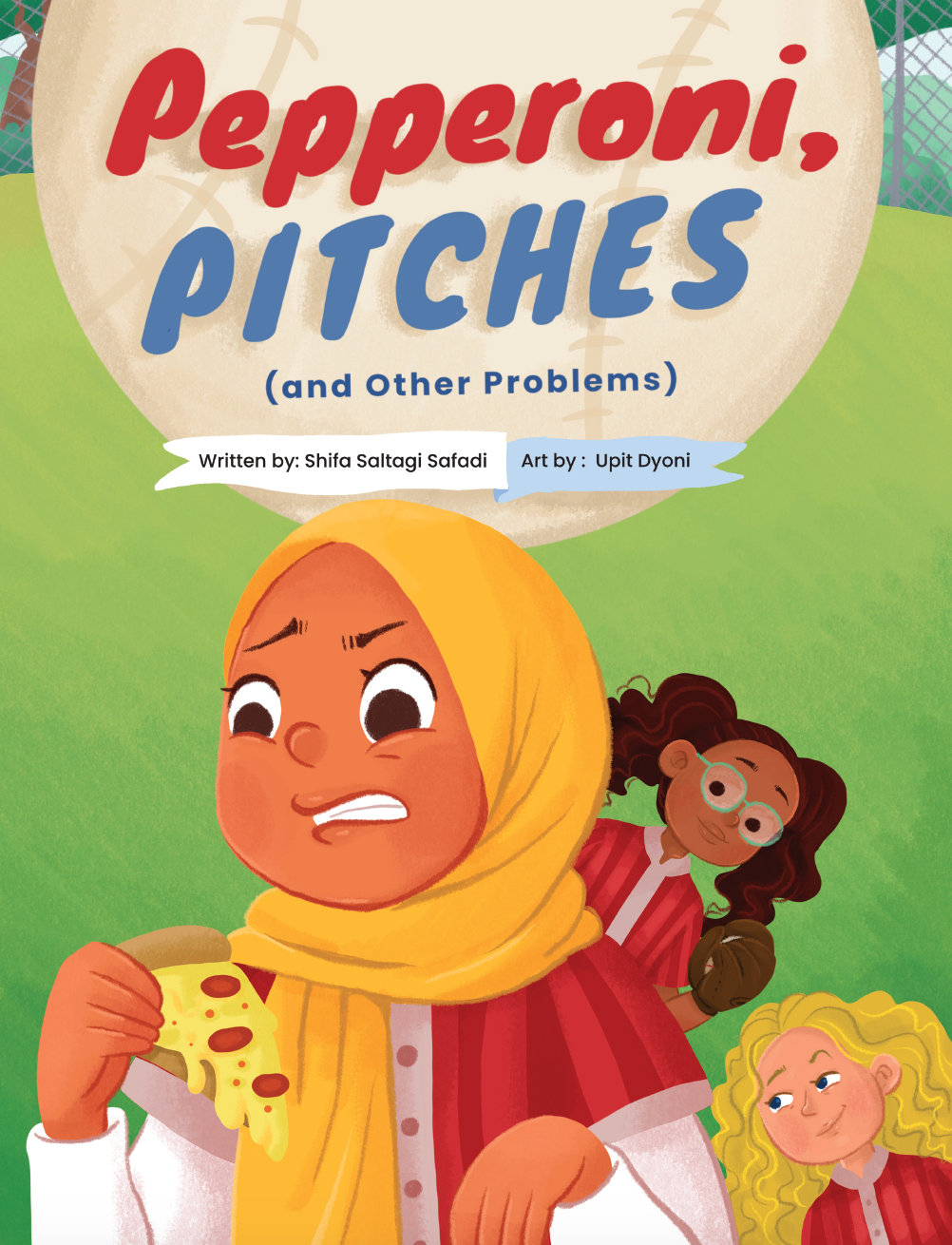
Pepperoni, Pitches (and Other Problems) by Shifa Saltagi Safadi illustrated by Upit Dyoni

Standard
Pepperoni, Pitches (and Other Problems) by Shifa Saltagi Safadi illustrated by Upit Dyoni

pitches

I absolutely love how smart this book is, and how it allows for elementary aged readers to feel that “aha moment” when they read it, get it, and realize that they need to remember the lessons because it could happen to them.  The illustrations are an added bonus and are perfectly aligned with the tone and text of the story.  My only issue, is the title.  Pitches reads as a euphemism for another word and since the book involves girl drama, teasing, and misunderstandings, it really is hard to not have that thought zap your brain when you see the title.  Perhaps if the “and Other Problems” would have used a bigger font on the word “Problems” the alliteration would have been more obvious, and hidden the word “Pitches” a bit.  If I’m alone in this, I apologize to the author and publisher, (I’ve mentioned my concern to them), but for others that saw the word and questioned the content, rest assured it is about baseball and the book doesn’t have even a speck of questionable content.

img_4682

Amira is at a new school, and luckily it is Tuesday, Pizza Tuesday to be exact, and she can’t wait to dive into a cheesy slice.  Unfortunately, Olivia takes the last cheese piece and when Amira asks if she will let her have it, Olivia says she had it first.  Stuck with an egg salad sandwich that smells, Amira sits alone and broods.

In gym they are playing baseball, but no one knows how good Amira is, and she is picked last.  When Amira is up to bat, Olivia is the pitcher and her pitches are terrible.  Amira still mad about lunch and afraid that the others will blame her for not hitting the unhitable balls, shouts, “you’re supposed to aim at my bat.”  Everyone laughs, but Olivia runs off clearly upset.  The new pitcher sends a decent throw and Amira hits a home run.  The captain of the team praises her, and Amira is hopeful she’ll have someone to sit with her at lunch.  After class, Amira sees Olivia crying in the bathroom and no one asking her if she is ok, Amira doesn’t feel so well, and doesn’t ask either. On the bus ride home Amira is greeted with cheers for her home run, but Elena the captain, isn’t among them.

img_4683

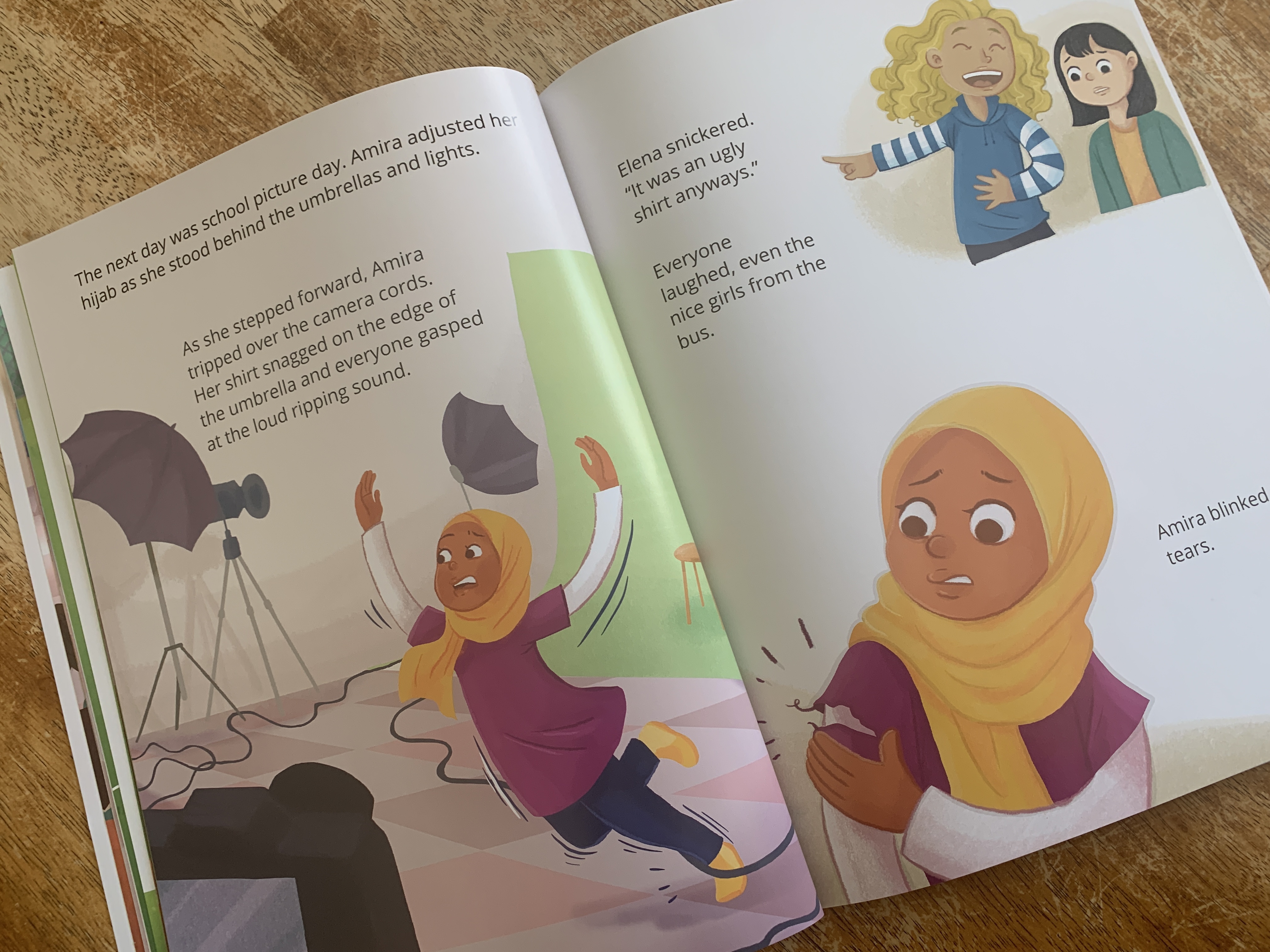
The next day is picture day, and Amira trips and rips her shirt.  Everyone laughs, Elena says, “it was an ugly shirt anyways.”  Only one person offers her help.  Could Amira have misread the whole class dynamics?  How should she move forward?

Sorry, I’m not going to spoil the ending, but the message about owning up to your choices is stressed, along with making kind decisions, and sometimes needing to take a step back and understand things from someone else’s perspective.

img_4684

Like nearly all Ruqaya’s Bookshelf books, the story is universal, but the characters, illustrations, and point of view is a relatable Muslim one that allows our young Muslim readers to feel seen and celebrated.  The reliable large glossy pages make the book a great deal for your money and is available on the publisher’s website: http://www.ruqayasbookshelf or from my favorite bookstore http://www.crescentmoonstore.com

img_4685

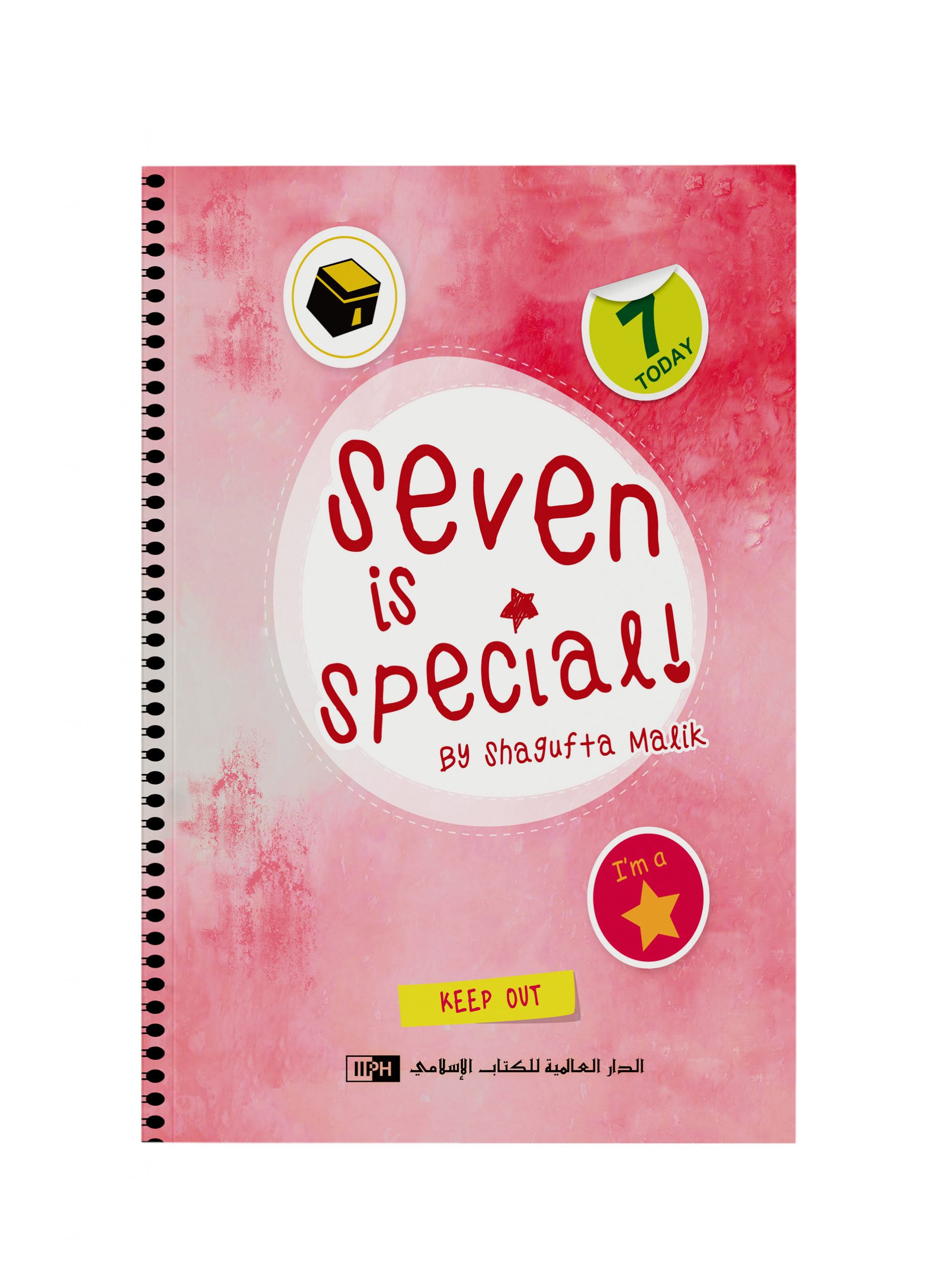
Seven is Special! By Shagufta Malik

Standard
Seven is Special! By Shagufta Malik

sesven

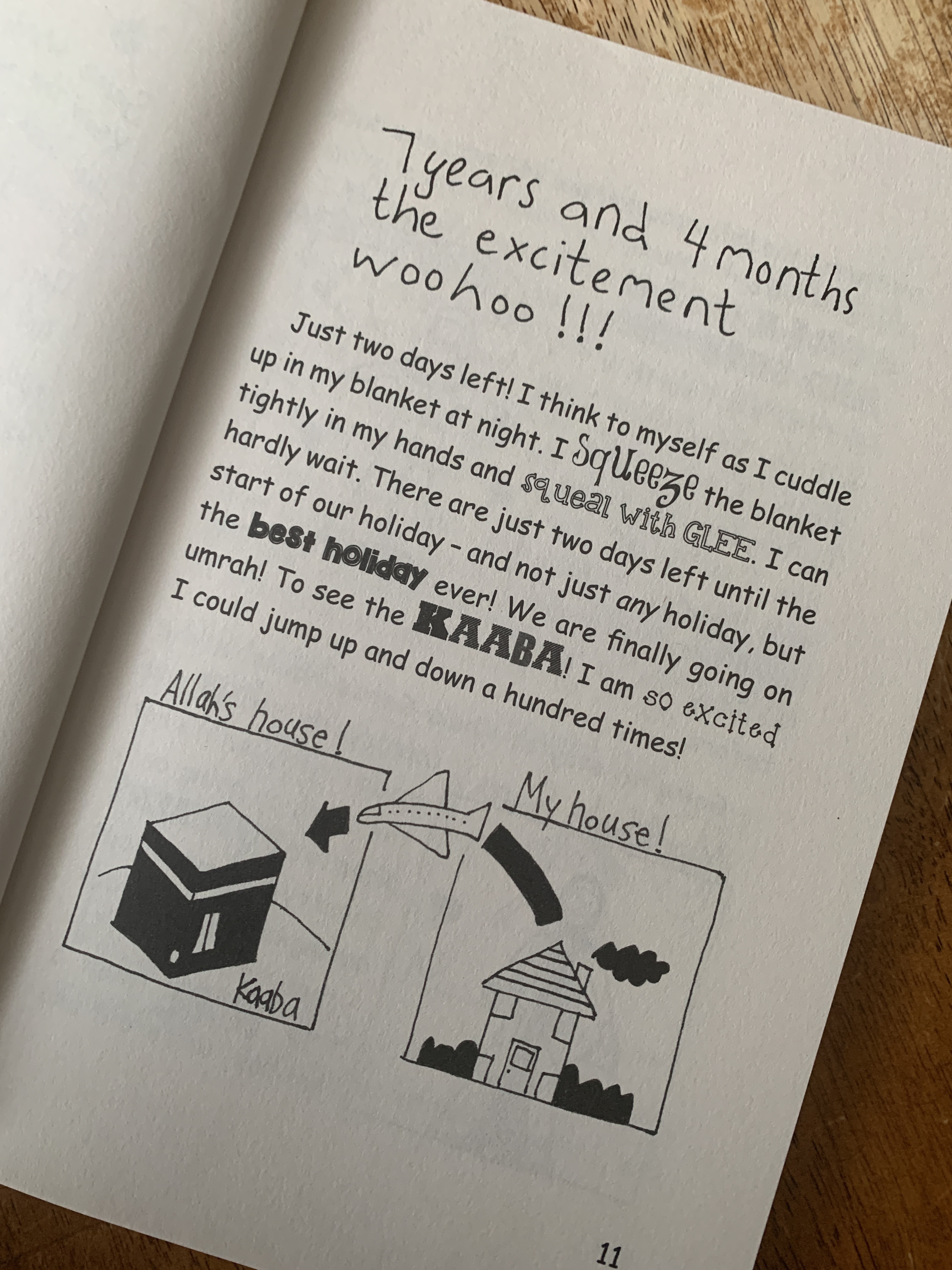
I’ve seen this book on and off over the years, but it wasn’t until I saw @muslimkidsbooknook’s post about it, did it register that it is a chapter book, with a plot and story.  I thought it was a journal for seven year olds with prompts perhaps.  Needless to say I judged a book by its cover and hope at some point the author will consider changing the title, redesigning the cover, and tightening up the story, because there is a lot to enjoy in this book, but to get to it, you have to get it in your hands, and open the cover.  The doodles, the author’s voice, and the playful font over 128 pages will appeal to elementary aged girls, but boys will find plenty to relate to as well if you can convince them to give it a try.

img_4501

SYNOPSIS:

Seven-year-old Maryam has started taking her salat more seriously, and finally the family, her parents and her, are going on a REAL holiday.  They are going for Umrah.  Maryam is so excited, but then the trip gets canceled and her mom is sick, and Maryam is tired of always feeling different than her classmates.  Will everything work out? Will prayers and duas be answered? Will eight be great?

img_4502

WHY I LIKE IT:

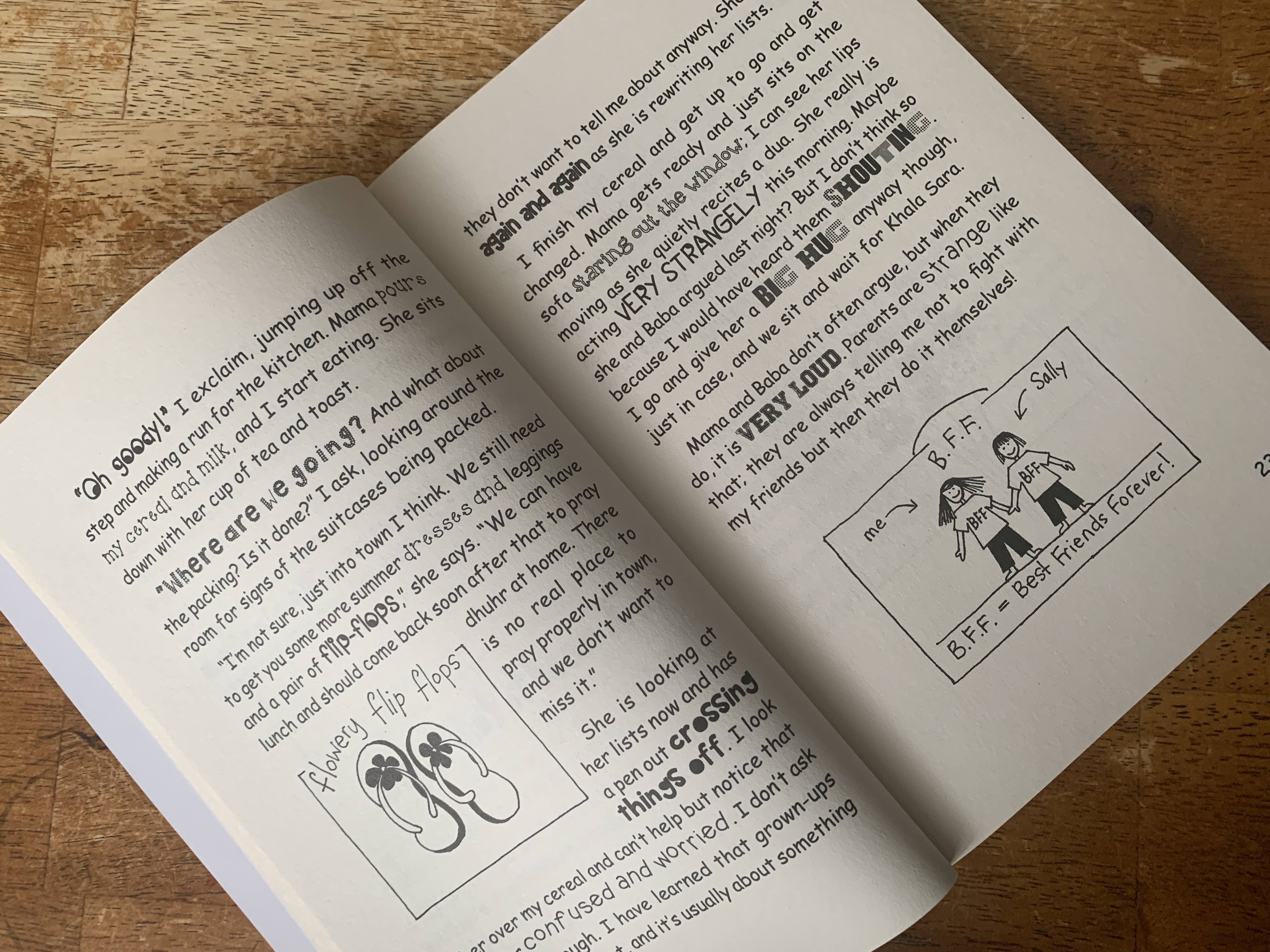
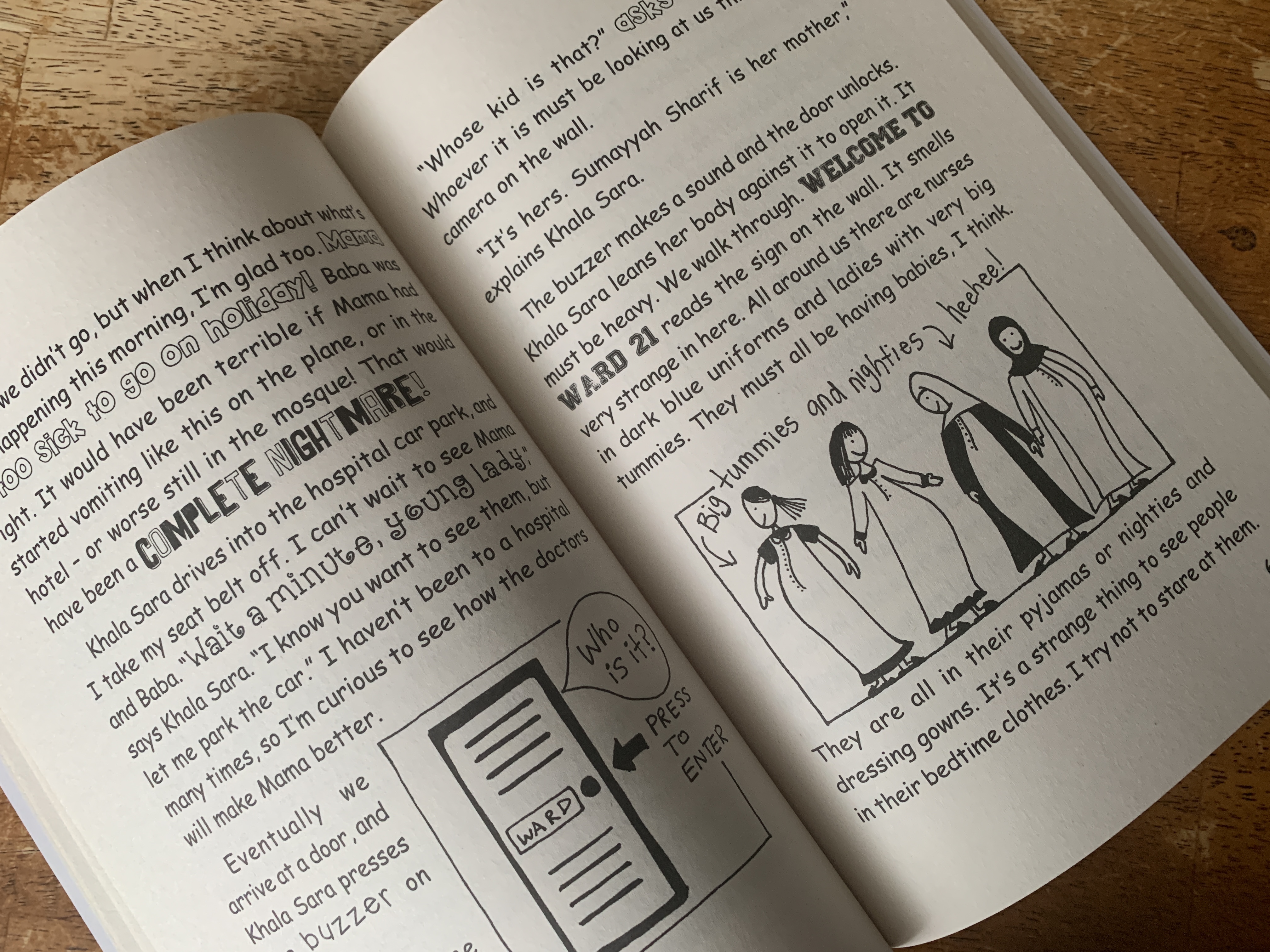
I love that the book stays on a seven/eight year old level, but I do question how much stress is on how sick the pregnant mom is, and how kids will understand that.  I was sick, very sick, with all my pregnancies, and my older children saw me and it still affects them, in sometimes surprising ways.  My oldest daughter says she is never having kids.  Granted she is 14, but I would worry that reading a children’s book that mirrors something that was pretty traumatic for her to see will cement her impression about childbearing.  Obviously, I could be the exception, and perhaps like many literary mirrors it would make her relate more to the story.  I know she is above the target audience, but the illness of the mom is a large part of the book, and it is very detailed and specific.  I think if you are a young child reading it, you might ask your mom if that was her experience, and it could be a lovely conversation about heaven being at your mother’s feet, and the tests and blessings of it all, but the book really doubles down on some of the details of the throwing up and vomiting, and I wish her being sick could be shown in more situational ways.  Maybe she tried to do an activity with her daughter, but couldn’t, or she had to ask another mom to help with something she normally did at Maryam’s school, etc..  There are such wonderful tangible little nuggets in the book about salat at the park, and kids duas, and making wudu in public, that I think a little reframing of the illness and symptoms is definitely in the author’s skill set.

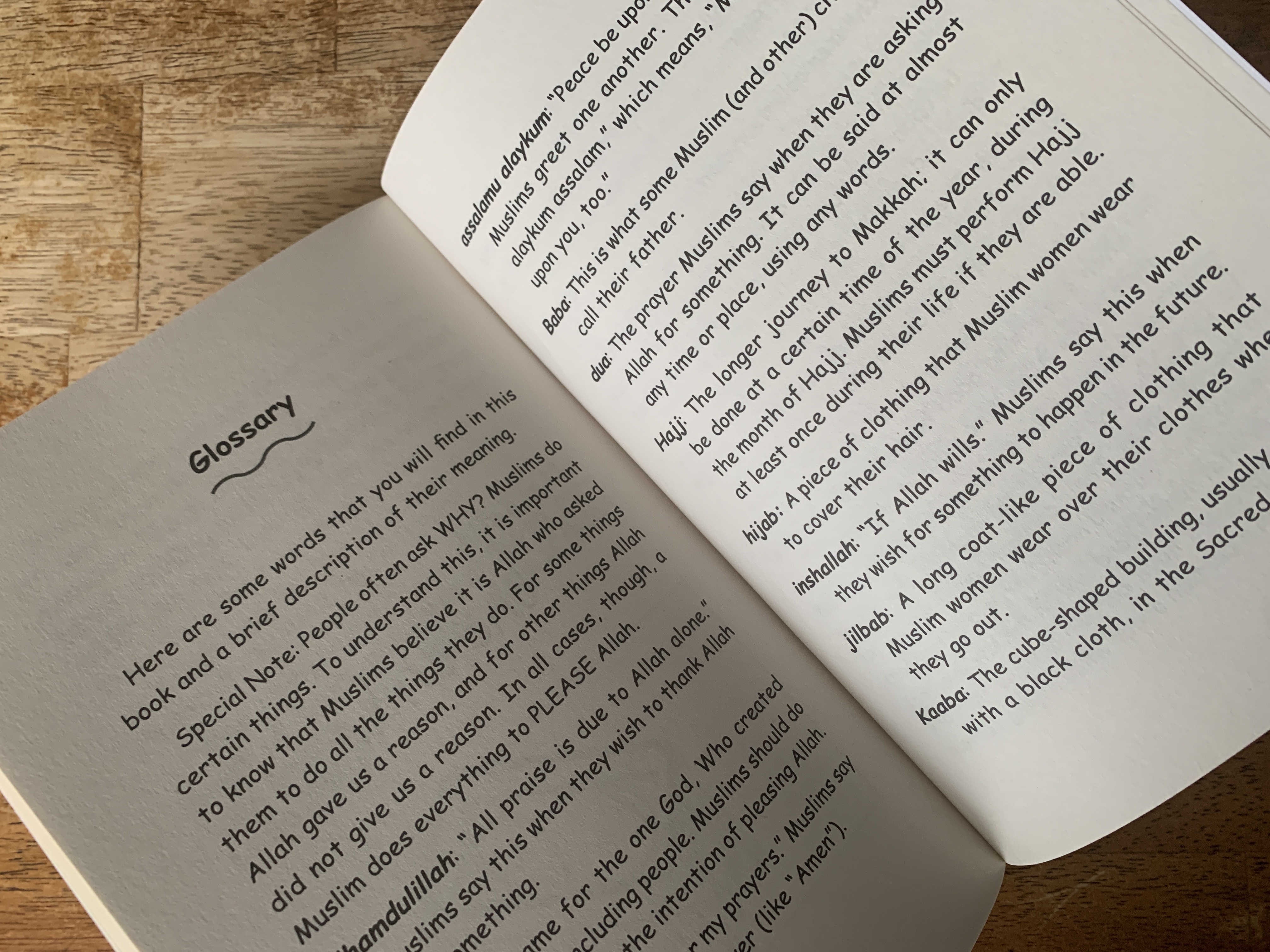
I love the unapologetic voice of being Muslim and some of the insecurities that Maryam faces and grows from.  Kids will enjoy seeing their concerns articulated, and inshaAllah benefit from her perspective as they make decisions about their own identity and attitude.  I know some families make a big deal about starting salat at seven, but when the book starts she has been seven for a while, so I’m not entirely sure why that was the focus of the book’s title.  Additionally, the pink cover really screams that it is a girl book, and I think boys will be nervous to be reading a “girl book,” that really isn’t gender specific in the storyline.  Yes, there are all sorts of stereotypes in that assessment, but I think you all get what I’m saying.

img_4503

FLAGS:

Illness, a bit of a temper bubbling over, stress.

img_4504

TOOLS FOR LEADING THE DISCUSSION:

I think young readers that are handed the book and start it, will finish reading it.  It is a super quick read, and with the drawings and conversational language, they will enjoy the pages as they fly by.  It is an elementary read, and anyone older will probably see the foreshadowing that the mom is expecting, while the second and third grade readers, will probably be genuinely surprised.

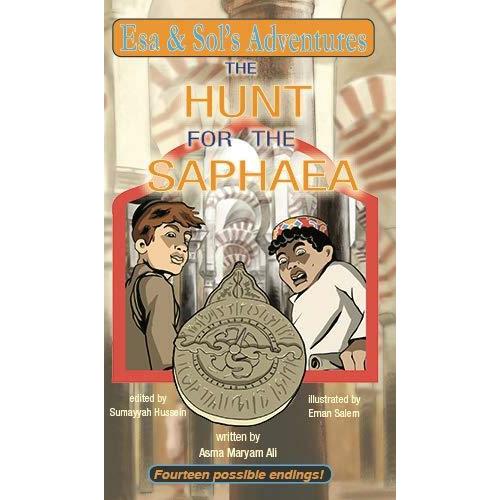
Esa & Sol’s Adventures: The Hunt for the Saphaea by Asma Maryam Ali, illustrated by Eman Salem

Standard
Esa & Sol’s Adventures: The Hunt for the Saphaea by Asma Maryam Ali, illustrated by Eman Salem

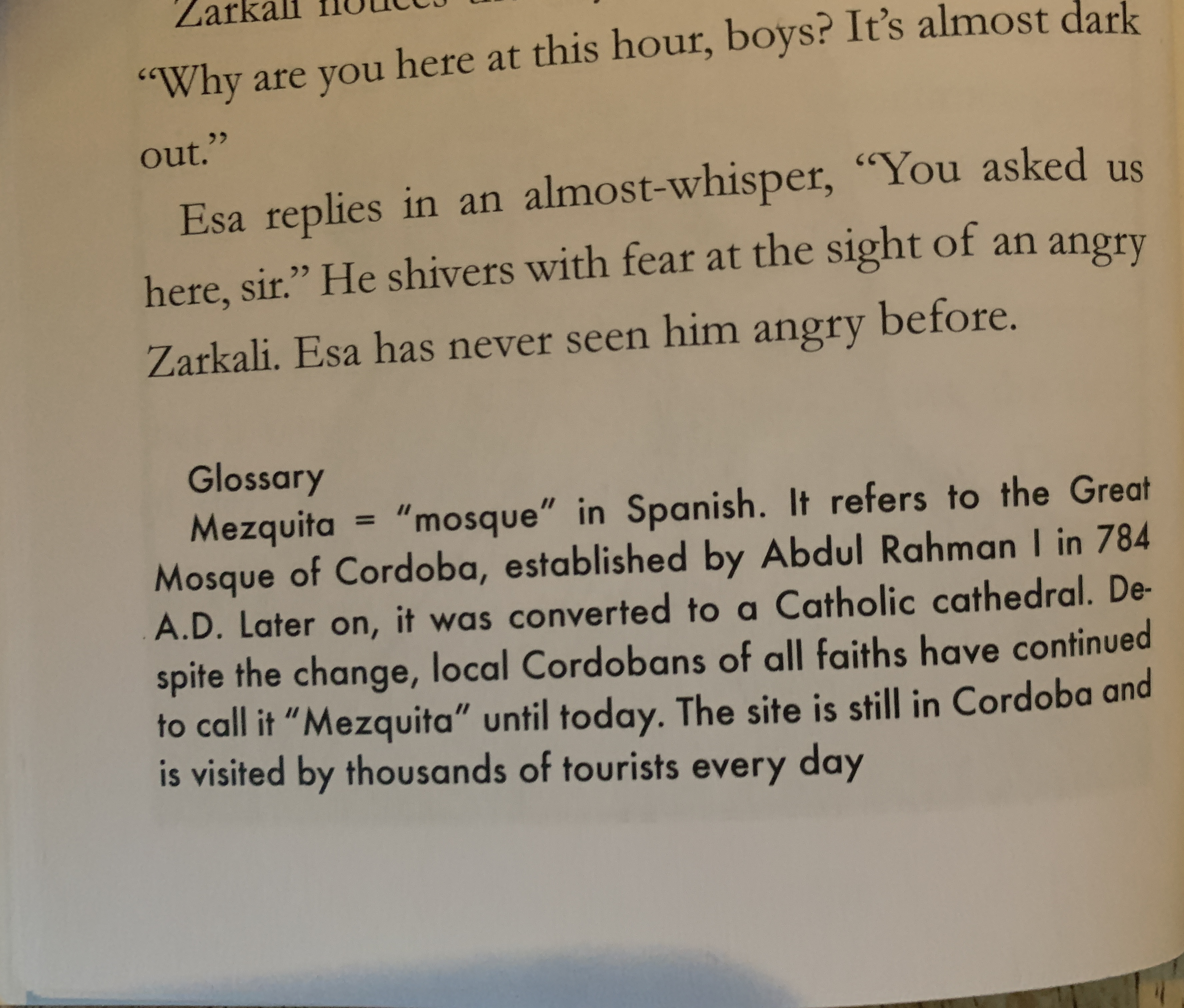
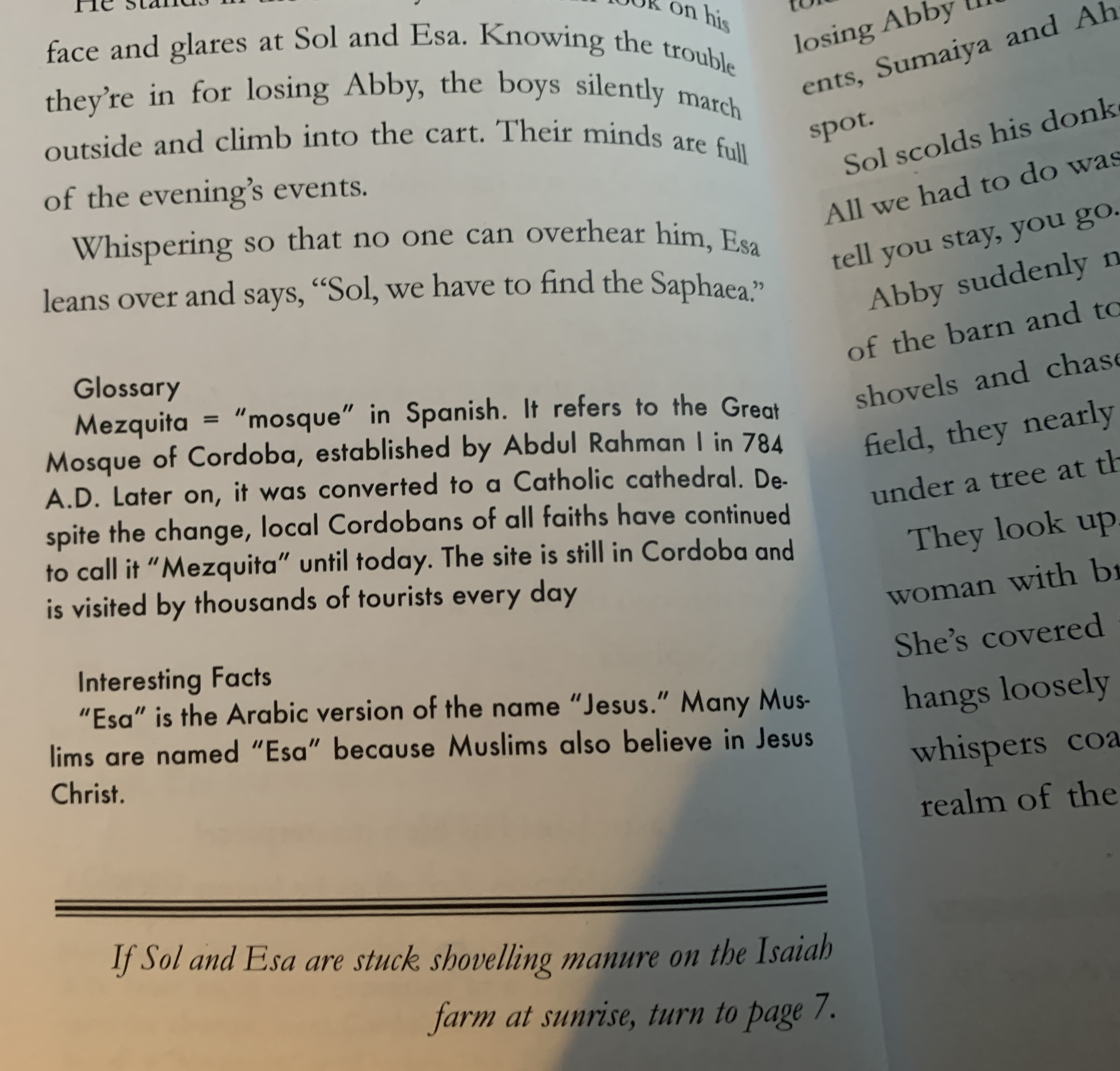
It is a bit tricky to review a choose-your-own-adventure style book, as each story twists and turns and leaves the reader with a different ending and thus, a different impression. I tried to explore every story line in a book that I had little expectation of, it is an intentionally splintered story after all, but even at that, this fell really short. The core of the story: a Muslim and Jewish boy in Cordoba, Spain in 1080 exploring real facts in a fictionalized story about hunting down a missing astrolabe, really had a lot of potential, unfortunately the tiny size (maybe 3.5 x 5.5 inches) and only being 76 pages, the frightening cover, and the misprinted footnote glossy right at the start, set the tone for a weak forgettable book, and by the time you get to the actual story and plot, you really have very little substance to change your mind.

SYNOPSIS:
Two nine-year-old boys start off the story chasing after their donkey who has run off and sent their oranges spilling over all around the square. They should clean up the chaos, but they remember that they are supposed to meet Zarkali, the greatest astronomer in all of Spain, as he finally has a job for them after months of waiting. His latest work is a brilliant astrolabe, but when they get to his workshop he isn’t there. When he finally arrives with his assistant Aleho they are frantic as the astrolabe, the Saphea, is missing. The boys were to be asked to help transport it, as they would blend in unnoticed, but now that it is missing what should they do? Should they search for it? Investigate if it was stolen? Accept their punishment for the mess with the oranges and their donkey? Let the first choice of many begin the adventure.

WHY I LIKE IT:

I love the author’s knowledge about Muslim Spain and how she tries to introduce it to children perhaps unaware of the rich history. The inside illustrations are wonderful, the cover truly misleads readers, and naturally I wish the book was larger in size and longer in length. The foundation of the story, the getting to know the characters and their world, needs to be longer. The story should be established before you have to make decisions. It is historical fiction, but needs the world building attention that a fantasy book would require, and this book just doesn’t have it. As a result the choices and endings, are all over the place, not just twists in the stories, but huge changes. Some of the paths no longer focus on the astrolabe that is missing, and seem to offer both threads of something far more sinister at play and choices that keep the boys lives mundane. The book counts on the reader re-reading the tale and making different choices, otherwise your interaction with the book could truly be over in nine pages, nine tiny pages at that. And like I said above regarding the cover and size, they don’t entice one to pick it up and read, then if your adventure is only a few pages long, and you already notice the repeated definition on pages 4 and 6 (before any choices are offered), chances are you won’t revisit the book, learn about real people, marvel at scientific discoveries, travel the region, appreciate interfaith harmony, and get swept up in a historically fictionalized tale that puts you in the drivers seat.

FLAGS:

Fine for middle grades and up.

TOOLS FOR LEADING THE DISCUSSION:

I highly doubt the book would even be looked at on a classroom library shelf, I have been trying for days to get my own children to read the book: they love to read, they love history, they love books with options, but they have yet to open the front cover.

There was an Old Auntie who Swallowed a Samosa by Asmaa Hussein illustrated by Milton Bazerque

Standard
There was an Old Auntie who Swallowed a Samosa by Asmaa Hussein illustrated by Milton Bazerque

samosa

I feel like such a broken record of late (and in the future), of my reviews of books published by Ruqaya’s Bookshelf; the stories are WONDERFUL, but I really struggle with the titles.  I truly thought this was a cultural/religious version of the classic, I Know an Old Lady who Swallowed a Fly.  But it isn’t.  It is an original clever, laugh-out-loud hysterical story for preschool to early elementary.  And one that parents and caregivers will not dread reading over and over again with the well done rhyme, expressive illustrations, a silly conclusion, religious framework, and universal appeal.  The book is on point, the title and cover illustration, sadly for me are not, and don’t, in my opinion, do the story justice.

img_4190

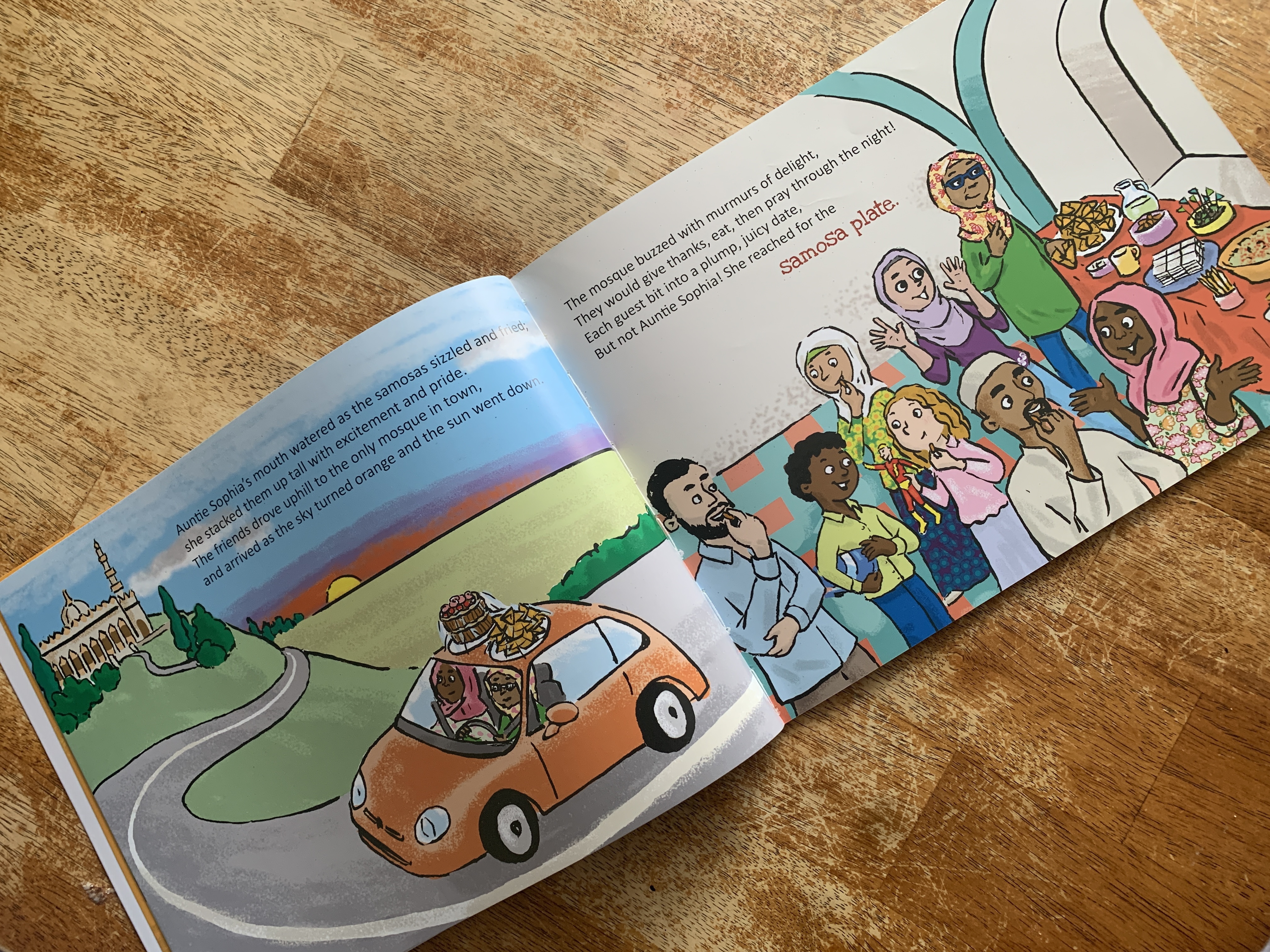
Auntie Sophie is making samosas with some peppers she grew herself.  Under the close company of her kitty, we learn how the Scotch bonnets were grown and cared for.  The doorbell rings and Auntie Eynara has arrived with her beautiful cake to take to the masjid for iftaar.  

img_4191

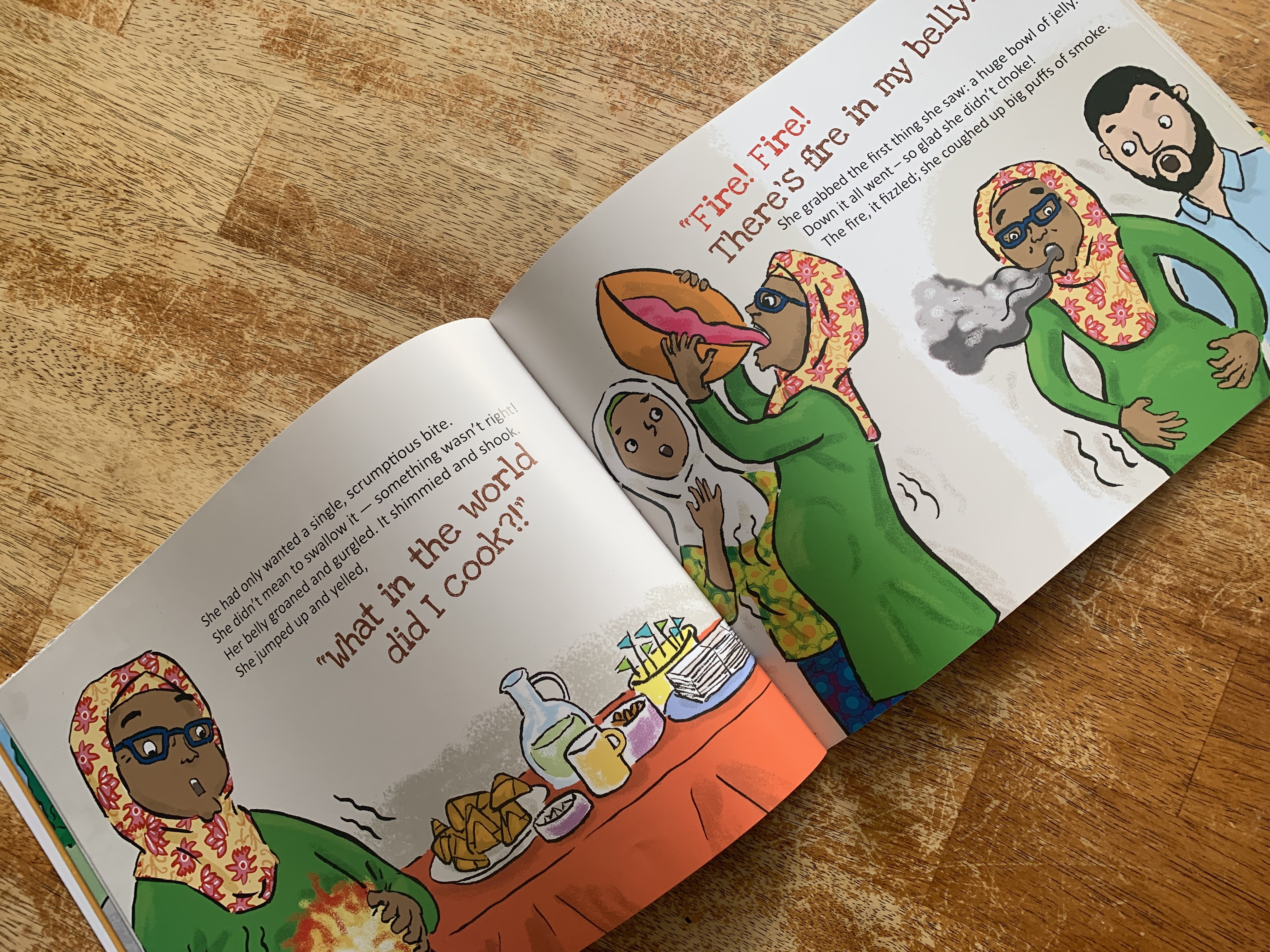
Auntie Sophie  hurries and fries her samosas and the ladies head up the hill to the only mosque in town.  Everyone breaks their fasts with a date, but Auntie Sophia dives in to her samosas.  When the imam’s mic crackles, she swallows the samosa whole and something is terribly wrong.  Her belly is on fire and jelly nor garlic knots nor mint lemonade not rice can cool it down.

img_4193

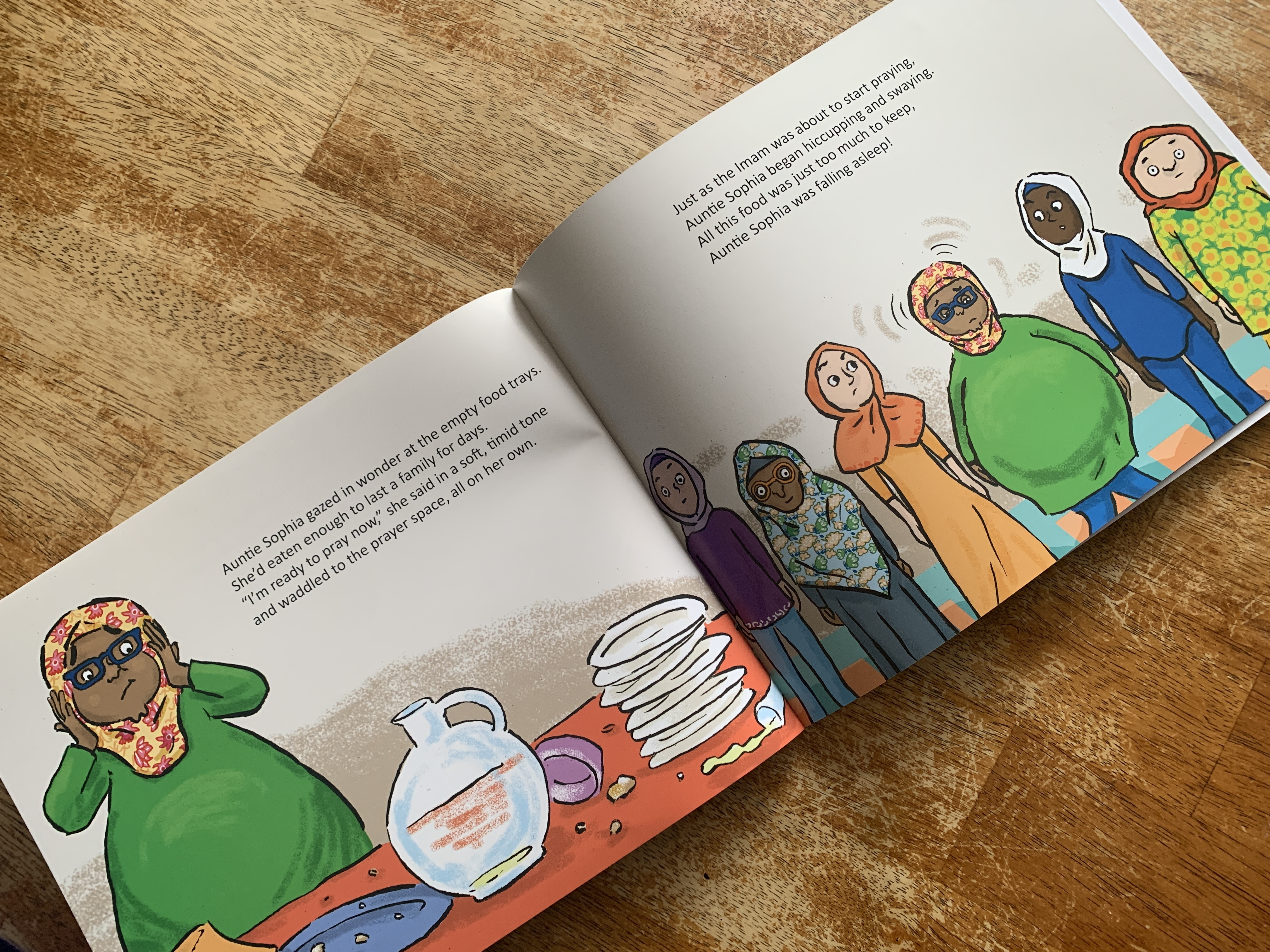
Just when she thinks she is ready to pray, it starts up again, and having eaten everyone’s dinner, Auntie Sophia is getting very tired. As she rolls out the door and down the hill to her house, she figures out what happened to her delicious samosa filling, and calls to have pizza and halal hot wings delivered to the mosque.  She also pledges to grow flowers next year instead!

img_4192

Kids will love the book as it is outrageous, while at the same time being so relatable.  The mosque, iftar, eating something spicy, the book is a favorite at our house for both the two and six year old and the horizontal 8.5 x11 orientation, keep eyes glued to the pages, while the rhyming lines move the story along.  I enjoy being able to talk about the peppers and different foods and smell of garlic with my kids after the 17th reading or so, and I love the diversity of the characters at the mosque.