Tag Archives: Bullies

Odd Girl Out by Tasneem Abdur-Rashid

Standard
Odd Girl Out by Tasneem Abdur-Rashid

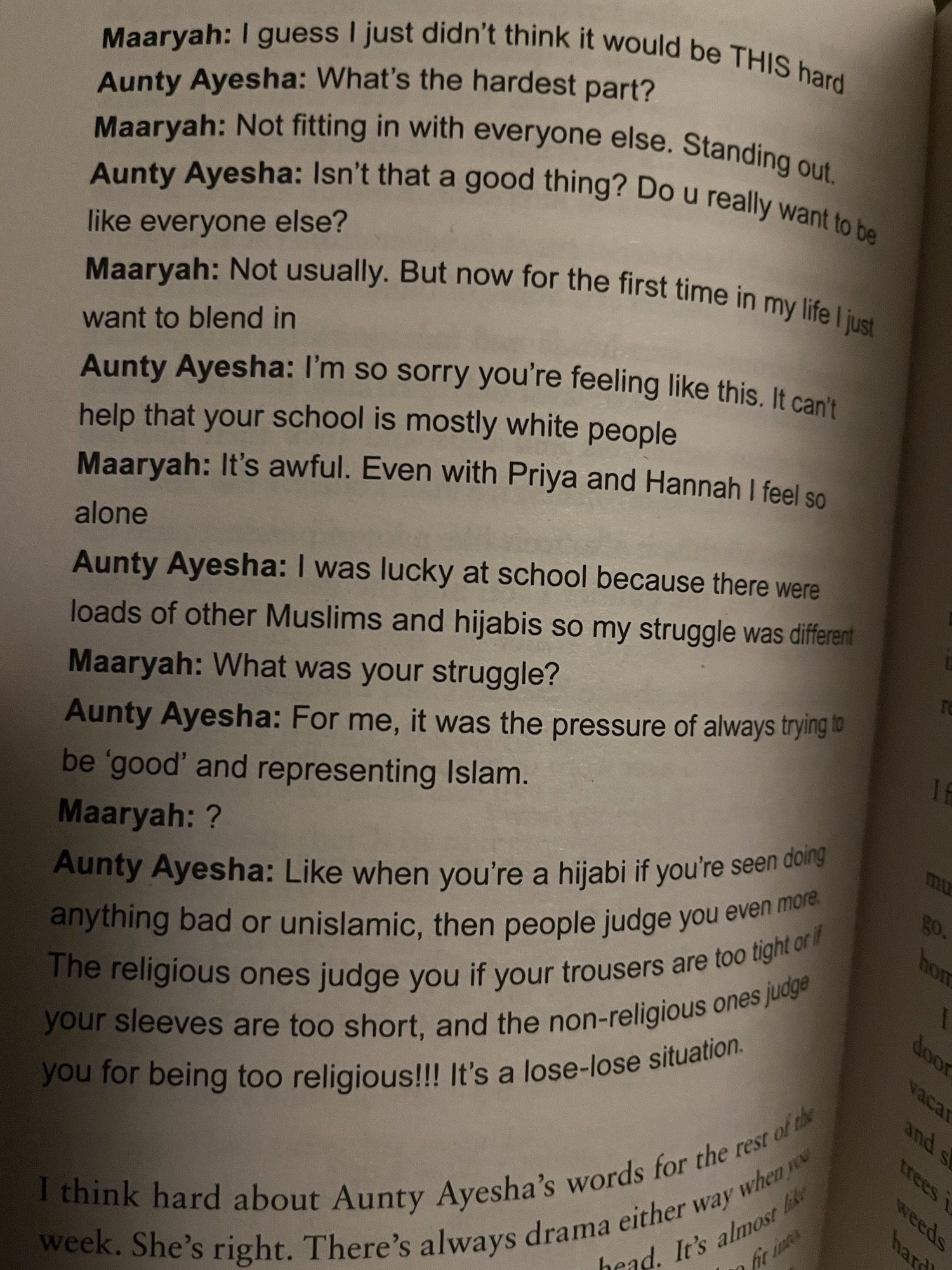
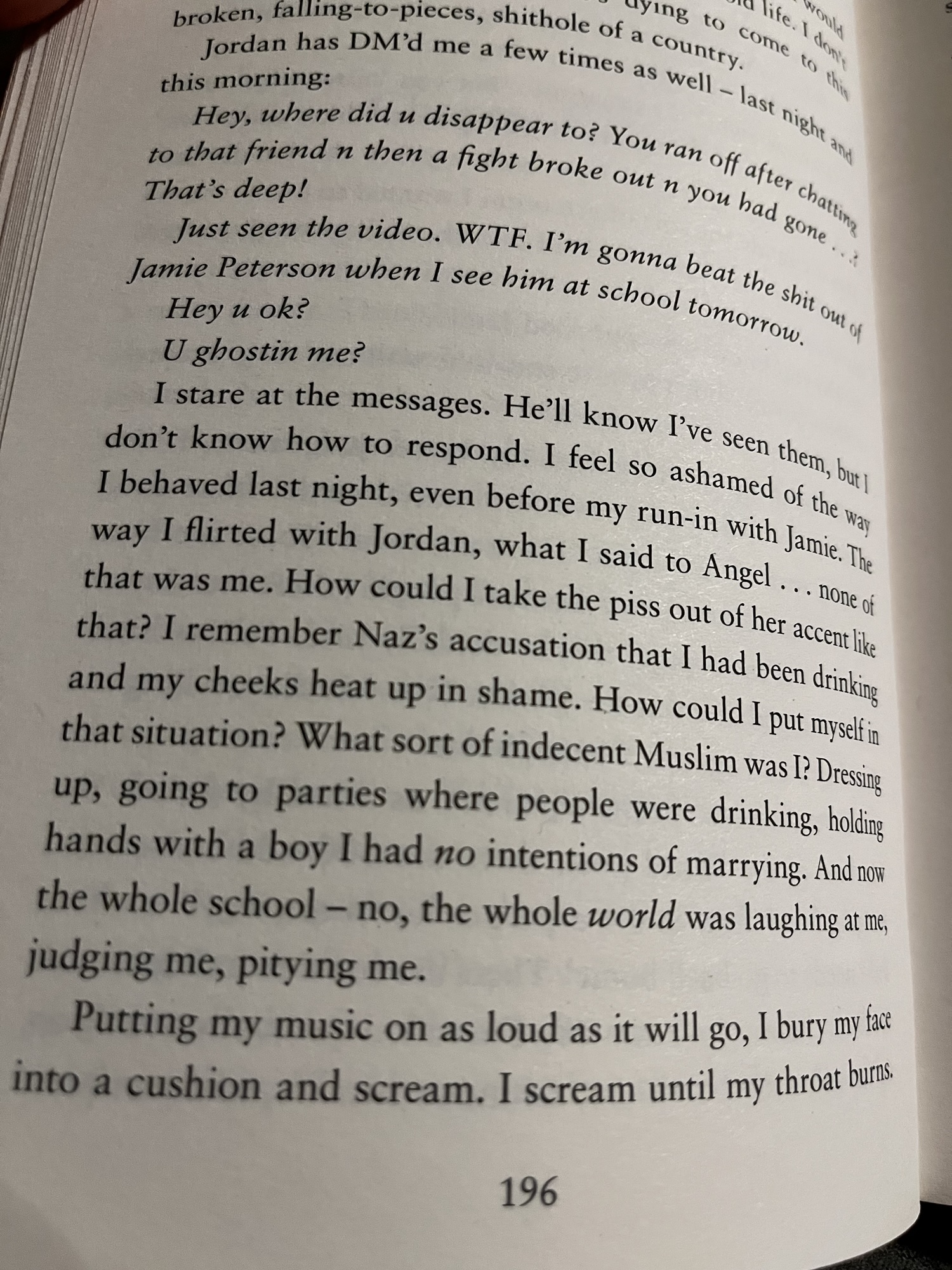
At 368 pages this identity centered mature YA book really hooked me and had me invested, which is impressive because Islamophobia stereotypes and being the new kid in a new place tropes are pretty frequently done, and often after a while, feel repetitive.  For me the charm of this book is actually not Maaryah and her peers/friends/bullies storylines, but the protagonist’s relationship with her parents and what caused her mom and dad to divorce.  Obviously as a mom of teens, I’m not in the target audience, but I feel like I benefited from the Muslim authored, Islam centered book, and think older teens, perhaps 17 and up, will also find the book enjoyable and reflective of views they have, challenges they face, and boundaries they have to establish.  I don’t want to spoil it, but SPOILER, had my dear friends that have read the book clued me in that the book will toe and slightly cross the haram lines, but ultimately show Maaryah deciding to re-establish her boundaries after being tempted not to, i.e. making a poor choice to attend a party with boys and alcohol present, and dressed in a way not typical to her hijabi style, I wouldn’t have read the last hundred and twenty pages or so with my jaw clenched in fear. The book shows a lot of Islam in practice, salat, duas, discussions about hijab, but not everyone will agree with decisions Maaryah makes or the rationale behind them as they vacillate between culture, religion, and family expectations.  I love that Maaryah is fallible and never abandons her faith, and that who we are is more than a singular mistake or instance of poor judgement. The book is not preachy, most will just take it as a girl finding her place in her new family dynamic in a new country, who happens to Muslim.  I think, an assumption really, based on what the author has said about her previous adult books, something along the lines that they are not meant to be Islamic fiction, but are stories with Muslim characters, and I think this book should probably be viewed the same.  There is swearing, hand holding, a side hug, normalized boy girl friendships, lying, running away, deceit, cheating, alcohol, mention of hookups, dating, vaping, music, flirting, hijab questioning, bullying, physical assault.  My biggest concern about the book is that it brings up Palestine, but doesn’t discuss Palestine. A side character is a non practicing Jew that visits Tel Aviv and Maaryah wants to discuss the occupation with her, but hesitates and the moment passes.  It is never revisited which I really wish it would have.  It could have modeled a bit how to have those conversations, I know it isn’t that type of book, but Maaryah mentions repurposing kaffiyehs in her designs and so it hints that it matters to her, but never pulls on that thread.  At one point it also mentions another character posted something pro Isr@*l during the genocide, which I can only assume the author thought that by the time of publication would have ended.  SubhanAllah ya Raab.

SYNOPSIS:
The tag line on the cover “From Dubai Girl to London Nobody…” very succinctly summarizes the plot.  Maaryah had an idyllic life in Dubai with her parents and close friends, spending her holidays with her mom’s family in London, and securing an internship with a famous designer.  All is going well until her parents get divorced, her mom moves her to the UK, not near her extended family, and the lack of Muslims, let alone hijabis, at her high school has her bullied with no friends to have her back.  With her mom in survival mode, their once close relationship is non-existent, and the 15 year old is left to sort through it all on her own.

WHY I LIKE IT:

There is a little pulling of punches so to speak of asserting that the boundaries are Islamic, but for the most part I think Muslim readers will see that Maaryah does view a lot of what she experiences through an Islamic lens which I appreciate. I also like that the protagonist’s connection to salat and faith is hers, it isn’t forced on her and I think for this demographic that is good micro messaging and framing.

I was very grateful that the book answered the questions about Maaryah’s family dynamic, so often parental problems are pushed to the void and let to be resolved or understood off the page. And while in the first half it was teased a little as we aren’t having that conversation right now, I did ultimately by the end feel like it was sufficiently resolved.  I also felt the mom was blaringly absent at weird times and I get that it was a plot device to get her out of the way, but if you are dragging at the 100 page mark, I do encourage you to keep reading, it does pick up.

This book isn’t meant to be didactic, and I recognize I’m putting that on it a bit, but I do think the Gaza framing missed an opportunity to show readers how to navigate that very real scenario through the power of fictional characters.
FLAGS:

Copied from above: There is swearing, hand holding, a side hug, normalized boy girl friendships, lying, running away, deceit, cheating, alcohol, mention of hookups, dating, vaping, music, flirting, hijab questioning, bullying, physical assault.

TOOLS FOR LEADING THE DISCUSSION:

I would shelve this in an upper high school classroom, I think that decision to be at the party is clearly shown to be a mistake, to put herself in that situation is something she regrets, and I think showing that she comes out from it offers a lot to be discussed.

The Misadventures of Mina Mahmood: School Trip by Farhana Islam illustrated by Simran Diamond Singh

Standard
The Misadventures of Mina Mahmood: School Trip by Farhana Islam illustrated by Simran Diamond Singh

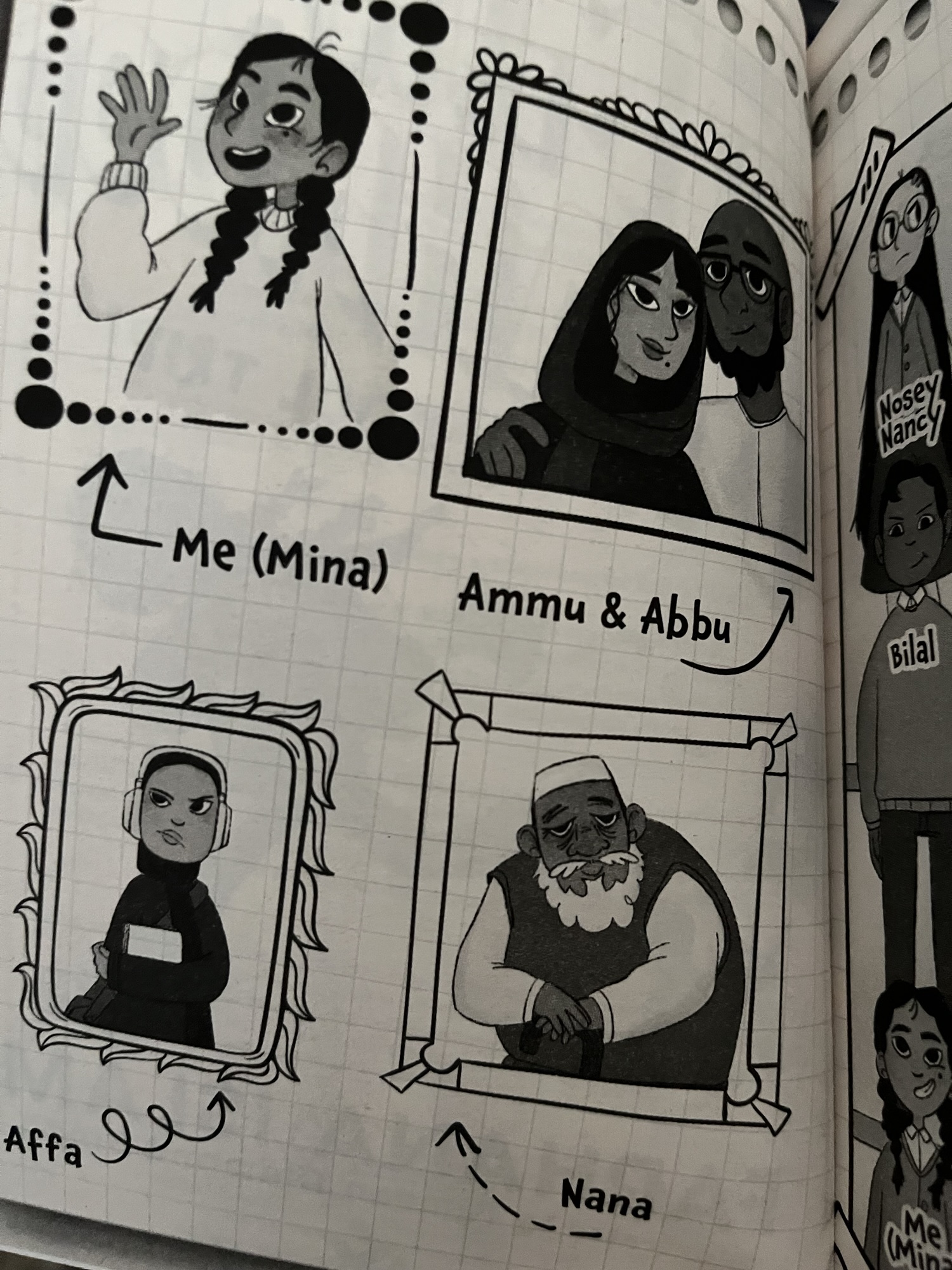
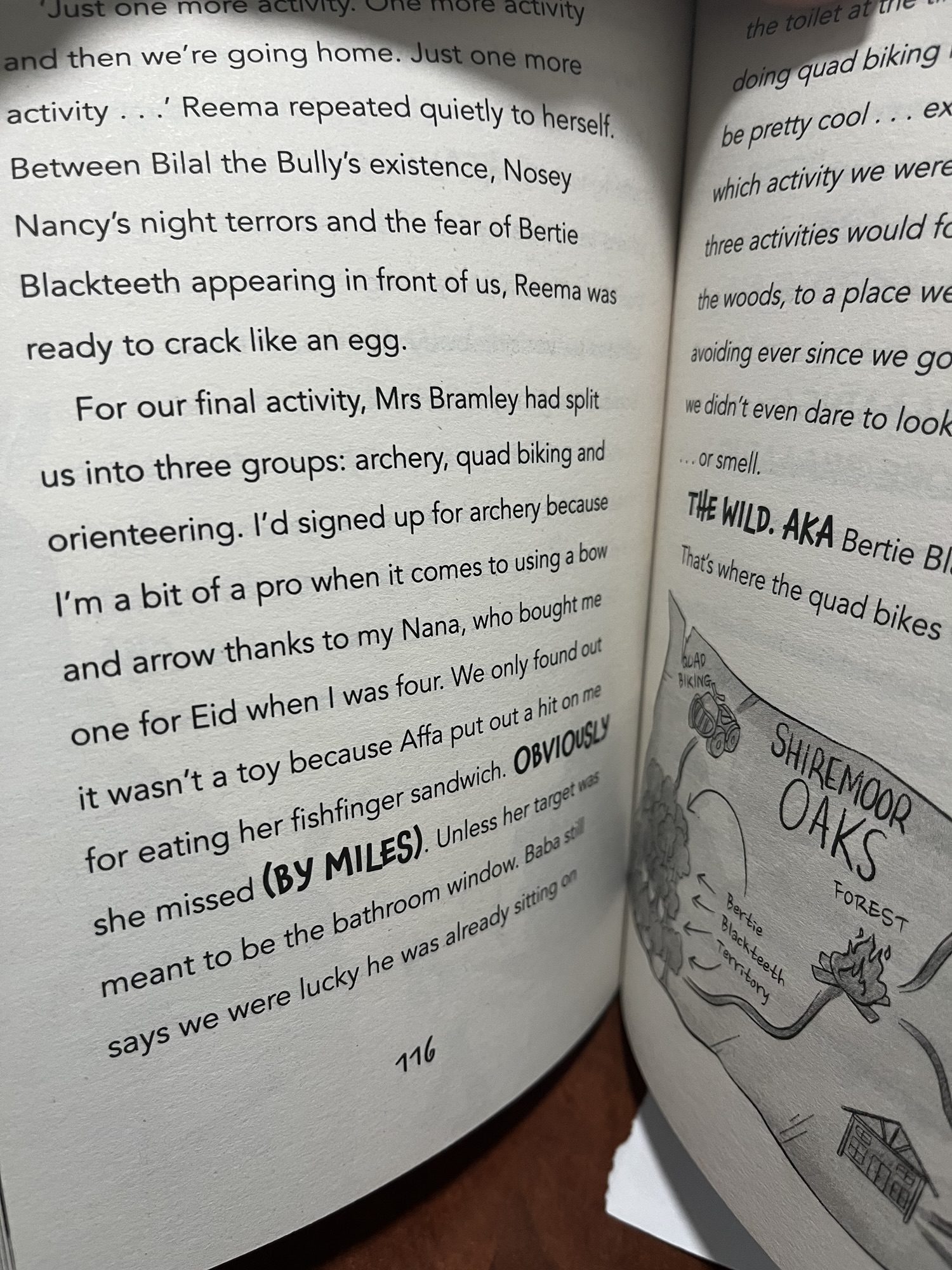
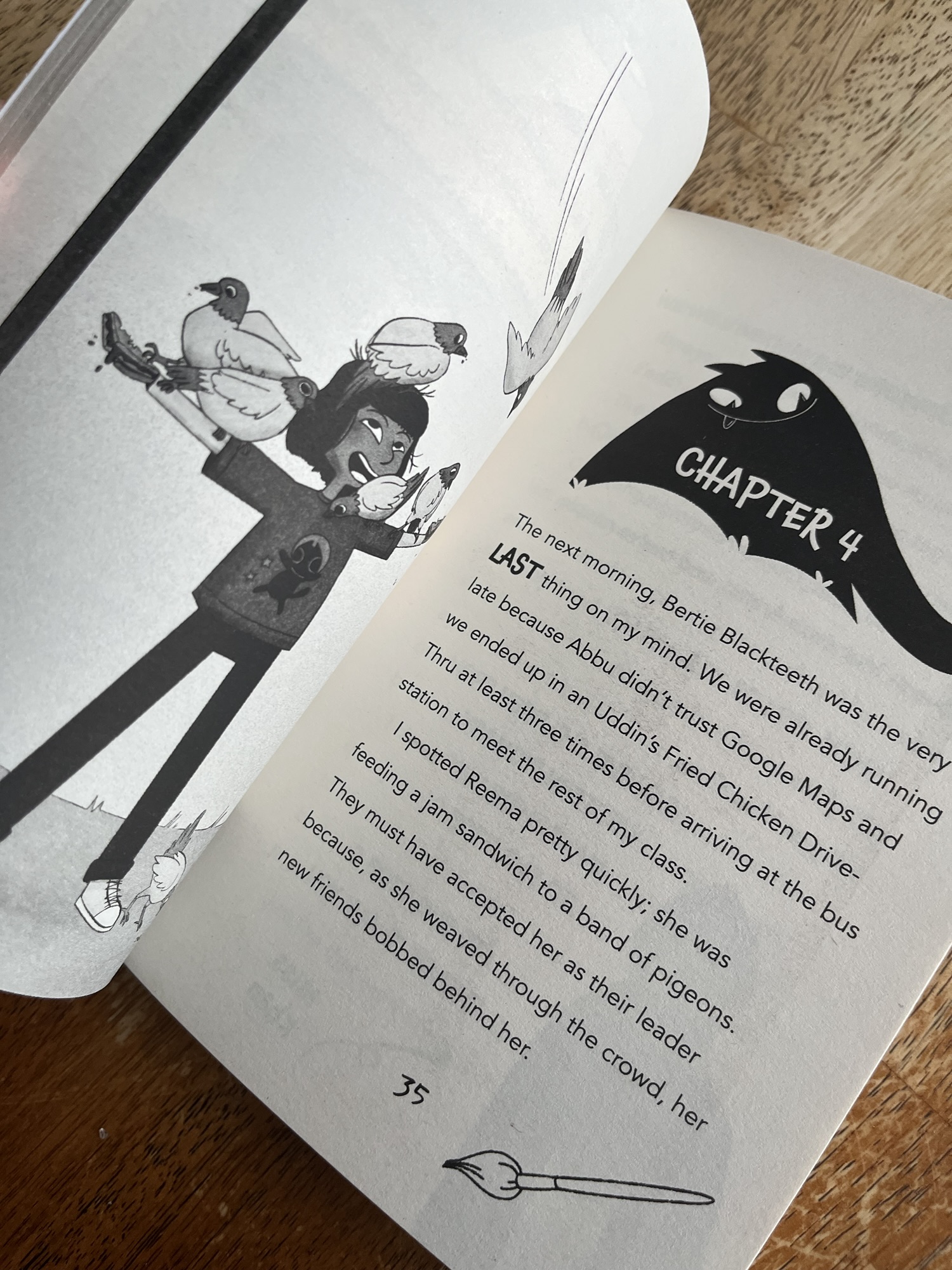
The illustrations in this book, by a Muslim author featuring Muslim characters, are impressively fun and complimentary to the story.  Yes, the 184 page book is highly illustrated.  The publisher says it is MG, and I can see that based on the length, but I think it is a solid second grade to fourth grade read.  The storyline is singular and surface level, and the scary silly bits are just meant to be funny and not taken too seriously.  I enjoyed the book, the normalizing of the Muslim kids in a non Muslim setting just living their life, and the main character’s voice had me smiling throughout.  A school camping trip is overshadowed by bullies and then consumed by the ever growing out of control scary story of Bertie Blackteeth.  An epic laser tag battle, quad adventures, and the comical banter of Mina and her friends, Mobeen and Reema, make for a light engaging read.  Sensitive kids might find the fright to be too much, but I think most will finish and be glad to learn there are more books to come in the series.

SYNOPSIS:

Mina Mahmood and her friends are ecstatic, it is finally their turn to head off on the annual camping trip to Shiremoor Oaks.  A weekend of laser tag, orienteering, archery, and quad biking without adults, well teachers, but no parents.  All Mina has to do before the fun begins is get through a family dinner with Auntie Selma and her cousins.  Mina doesn’t believe anything her cousin Abbas says, so when he mentions he went camping in school to Shiremoor Oaks and heard about a girl, Bertie Blackteeth who vanished there, Mina pays him no mind.  When her older sister Affa, also mentions that she heard the story, Mina starts to wonder if there could be some truth.  The next morning on the bus, when Bilal the Bully and his minions Owen and Brodie are also talking about Bertie Blackteeth and her need for a new body, Mina and the rest of the class are properly spooked. The fear hangs over all the activities, ruins the midnight snack extravaganza, and makes this a camping trip they will never forget.

WHY I LIKE IT:
I enjoy when Muslim kids drop mention of Eid and Ayatul Kursi in their adventures. When a character wears hijab, but she is the teacher, so the book isn’t about her identity, it is just a part of who she is.  I also really like when books are funny, characters are snarky, there is a plot, a climax and a resolution.  The book doesn’t have layers and heavy themes, sure you could discuss bullying, and fear and friendship.  At times Mina is tasked with saving Mobeen and other times advised to sacrifice him.  But considering he feels to young to be a father if the spider that just landed on him lays eggs in his eyebrows, it is probably best to just enjoy the story for what it is and not look to make it more.

FLAGS:
Could be a little scary, it is a little imaginative in the lies and embellishments of Bertie Blackteeth.  Bully and dealing with bullies.

TOOLS FOR LEADING THE DISCUSSION:
I handed it to my 10 year old and said enjoy, not much more than that is needed. A fun addition to elementary shelves, and one that will be picked up often.

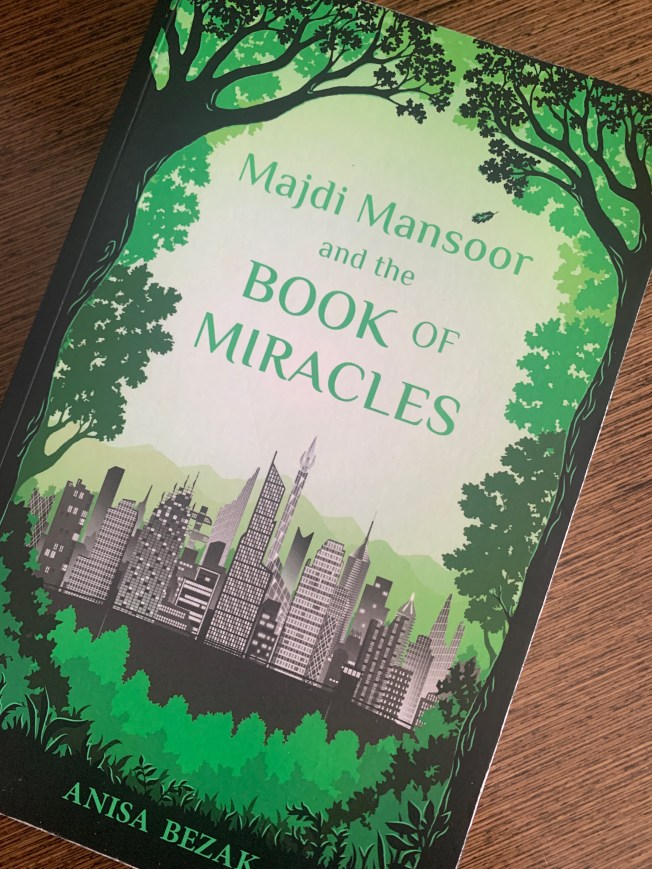
Majdi Mansoor and the Book of Miracles by Anisa Bezak

Standard
Majdi Mansoor and the Book of Miracles by Anisa Bezak

img_0030

I don’t think I have ever seen or even heard of any dystopian Islamic fiction reads, we have a handful of Islamic historical fiction, and dystopian with Muslim characters, but the genre made me curious, and with that motivation I began the 458 page book.  The beginning didn’t immediately grip me, but I told myself to read a hundred pages before deciding to DNF it or keep reading, and long before that arbitrary mark, I was intrigued by the story, invested in the characters, and impressed by the consistent writing, pacing, and role of Islam.  The book is preachy and idyllic, but that is to be expected, the way Islamic ideas and concepts and concerns were included as plot points though, is surprisingly well done.  For much of the story, I kept wondering who the target audience would be.  The vocabulary is a bit advanced, and the pages full of small text.  The book starts story wise-solid middle grade, but I think by the end I would recommend this book for advanced middle grade or early middle school Muslim readers.  I’ve heard from some adults that they read a chapter to their kids each night, and I think that aloud younger kids might also enjoy the story and be swept away to a future land run by a corporation where religion is banned, books are a thing of the past, a boy speaks only in Quranic ayats and hadith, and bullies of all sizes will have to be faced.

SYNOPSIS:

Twelve year old Jacob is an orphan in Tanas World and is unwillingly part of a gang.  One day in a boarded up old building he finds a book, a physical book, the Quran.  Religion is not allowed, Islam most of all, but he reads the book, and even though he doesn’t believe, he keeps rereading the pages.  When an attempt to steal some tech takes him outside the boundaries of the walled off city, he meets a small boy, Majdi Mansoor, who talks in a peculiar way. When threatened by the gang, Jacob decides to take Majdi’s side and that one act sets the two boys on a course that will change them forever.

I don’t want to give away too much, but Jacob is taken in by the Mansoor family who live in isolation and in hiding outside Tanas Corps patrols.  The parents are kidnapped, the children seek to save them and along the way meet smugglers, a Muslim community corrupted by bidah and djinn, Muslim Defense Unit rebels seeking revenge, and the executives who want the MEECA device to imprison the planet.

WHY I LIKE IT:

I was honestly impressed with the quality of writing, but I honestly don’t know if it was because my expectations were so low, or in fact was sufficiently edited and refined.  The characters have heart, the world building is believable, and the Islam is handled with an even hand.  At times members of the Mansoor family are too “good,” but Jacob has a sense of humor, is fallible, and curious which allows the story to stay moving and on task. There are some major plot points that are not resolved, and I’m assuming the political details will play out in the second book.  I’m hoping at least. The book doesn’t talk down to the reader, but older readers might find it too preachy.

I’m hoping my early teens who love Islamic fiction chapter books such as The Broken Kingdom series, The Adventure of Nur Al-Din books, and The Moon of Masarrah quartet will similarly enjoy this.

FLAGS:

Death, bullying, manipulation, assault, revenge, danger, whispers of shatan, bidah

TOOLS FOR LEADING THE DISCUSSION:

I would love to do this as a Middle School book club, I think it would be a bit too cheesy, but I think there would be some great discussions to be had about seeking, temptation, bidah, forgiveness, and the way that Majdi talks and Islam is woven in to the text.

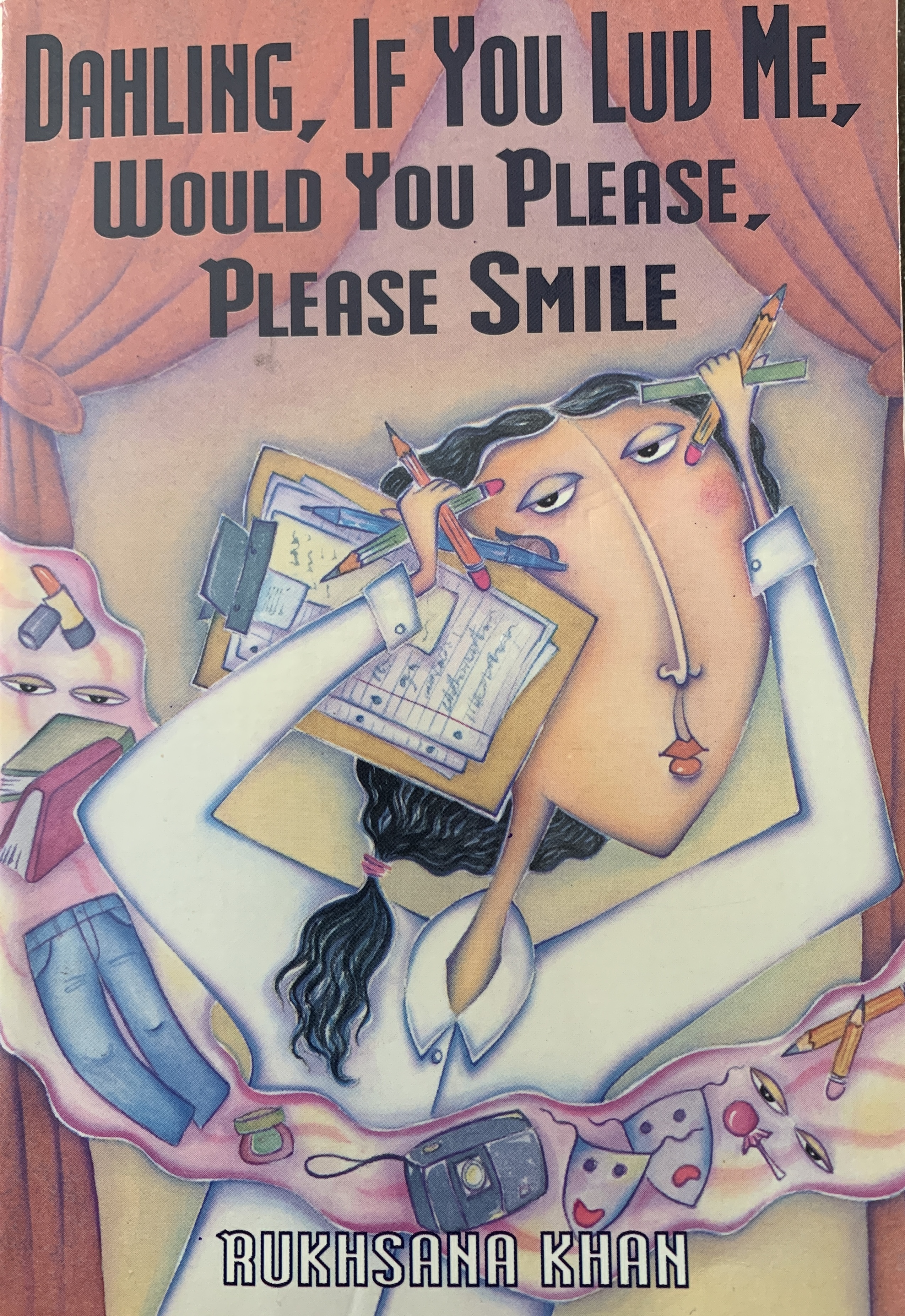
Dahling, If You Luv Me, Would You Please, Please Smile by Rukhsana Khan

Standard
Dahling, If You Luv Me, Would You Please, Please Smile by Rukhsana Khan

img_1788

I’m not sure how I missed this 1999 published YA book by the OG-groundbreaking-industry-changing- Rukhsana Khan, but until @bintyounus mentioned it to me recently I didn’t even know it existed.  The book has so much Islam, ayats, hadith, salat- Islamic fiction self-published often doesn’t have as much as this mainstream book has, but I would be lying if I didn’t say that some of the content was a bit shocking.  Part of my surprise I think comes from the fact that the book is only 206 pages, it takes its title from a game I remember playing in elementary school at recess, the main character is in 8th grade and the cover is soft pinks.  This book is solid YA both now, and nearly 25 years ago, it carries some incredibly heavy themes: attempted suicide, topless photographs, sexual coercion, cigarette smoking, assault, racism, misogyny, toxic relationships, neglect and more (see flags below).  The book is memorable and hard to put down, the Islam is confident and explored, even when weaponized by an older sister, but there is no denying the story telling abilities of the author, and  while I won’t be letting my 11 or 13 year old read it any time soon, I know I benefitted from reading it- reminiscing about wanting Lucky Jeans and standing in awe of how EVERY. MUSLIM. DESI. author making it in mainstream today is benefitting from the path paved by Rukhsana Khan.  On behalf of readers everywhere- thank you.  Thank you for fighting to tell your stories your way, raising the bar, and offering real Muslim characters from a Muslim voice. 

SYNOPSIS:

Zainab has no friends and doesn’t own a pair of Lucky Jeans, she is the only one in 8th grade that doesn’t.  She feels like if she could trade in her polyester pants for the “cool” pants everyone has, she’d be accepted.  When that plan fails and lands her in trouble, she gets tasked with directing her house’s school play.  The teacher convinces her that it will be a way for her to make friends, and earn her classmates respect, but middle school is never that easy.  Everyone is in love with Kevin, including Zainab, but he is a jerk and if he isn’t the lead, no one else will audition.  Jenny is poor, but has a big chest, so even though she is nice to Zainab, she is more in love with Kevin who only wants her for one thing, and takes advantage whenever his girlfriend isn’t around.  Add to the drama Zainab’s very strict older sister who lists off Zainab’s faults every night with Islamic references to try and make Zainab a better person, and this coming of age story will require Zainab to sort through it all and find her own way to be.  There are a lot of subplots that circle around the play, social circles, toxic relationships, and self growth, that while the characters are worried if they will win the competition and break the curse, the readers (at least this 41 year old mama) are hoping that the characters will survive the year unscathed. 

WHY I LIKE IT:

I love that the family is the same family that will become its own story in Big Red Lollipop just grown up, with names changes, and that the story is summarized.  I’m still a little torn if I love the raw grittiness of the way the two sisters interact or if it goes too far and leaves a bitter taste about Islam.  I really am on the fence about how young readers, both Muslim and non Muslim, in 1999 and in 2022, would view the role of Islam in the dynamic.  I think it reads powerfully, but I had a hard time going back to look at it through my 13 year old eyes and it as an adult it is intense.  I still can’t believe that this book was published with how much Islam it contains, even the play put on in a public school was religiously centered.  White privilege is called out and stereotypes about whites are stated, a Hindu character and the Muslim main character work through their baggage, economic privilege is opined on, women’s rights and expectations discussed, comments about “othering” are present-  it really covers a lot. Quite impressive in a lot of ways. 

The relationship and love themes are not shied away from which caught me off guard.  I expected some making-out and heavy petting, but was surprised it went to topless photos, a character’s mom being a nudist, and that there is a lot of forced touching.  I think for most Islamic school 8th graders, this book would be too mature, in fact I genuinely hope it is. Not to say it is not accurate, but it is very critical to the story and I think would need some discussion.  

I love that the characters draw you in, as much as you despise everyone picking on Zainab, you know she isn’t a pushover and you really pull for her.  I didn’t want to put the book down and kept reading because I wanted to make sure she was ok, see what choices she made, and in a fairly short book, that is remarkable story telling.

FLAGS:

The book is for mature readers in my opinion.  There are relationships, assault, cigarettes’, nudists, kissing, spying, sexual assault, coercion, topless nude photographs, attempted suicide, bullying, teasing, cheating, physical assault, language, verbal abuse, stereotypes, talk of female anatomy, and use of Islam to hurt.

TOOLS FOR LEADING THE DISCUSSION:

I don’t know that I would shelve this in the library, I would see if perhaps there is a version with a different cover, one that might signal a more mature reader.  I would worry if an early middle schooler read this, I think it would be a lot for them to take in, process, and reflect on.  It isn’t a light read, and would need some discussion, but ultimately I don’t know that a middle school book club at an Islamic school would be the right place for it. It could be for sure, but not the one I’m currently at.

Zahra’s Trip to Misr by Sufiya Ahmed

Standard
Zahra’s Trip to Misr by Sufiya Ahmed

misr

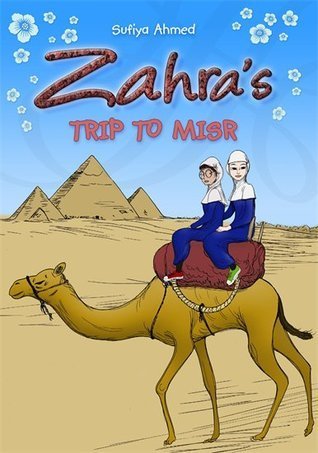
This middle grade series has been highly recommend to me numerous times over the years, and I finally found a copy to read and review.  It is book three in the series, and I have not read the first two, so I may be missing something, but the book didn’t wow me honestly.  The 147 page story published in 2011 has a lot of potential, but I felt like it didn’t know who the audience would be, and thus often felt cumbersome and disjointed to read.  At times it uses Islamic terms (muezzin), other times the Urdu words (namaz), and way too often the english meanings (ablution, peace be upon you, mosque), often all three in a single paragraph.  It is Islamic fiction and stays adventurous, without getting overly preachy and didactic, but there are some cruel life threatening antics by the girls, and some heavy themes of child trafficking, revenge, kidnapping, lying, bullying, gender treatment in Islamic spaces, finance and micro loans, but to its credit, it stays on level and, while as a mom some of the adventure needs adult intervention, I think young readers would support the young girls handling so much on their own.

SYNOPSIS:

Twelve year old Zahra and her classmates from her Islamic boarding school are headed on a class trip from England to Egypt.  For ten days they will be learning about the history, the culture, and connecting to Islam.  A group of first year girls and their chaperones in a foreign country meet with former students, another girls school from the UK, and some of their chaperone’s husbands giving this short book a lot of characters to get to know briefly, and only in passing.

The adventure starts right away as bully Saira locks a claustrophobic girl in the airplane lavatory in revenge of being locked in a freezer and forced to eat spiders earlier in the school year, and the foreshadowing that these battles are not over is set.  Once in Egypt, the girls muddle through worksheets sharing what they have learned, stopping to pray, and enjoying the experience.  Every so often at the hotel however, they see a girl they have dubbed, “sad girl” and the mystery to figure out what is making her so sad will ultimately make this a trip that brings the girls close to danger, and if successful will make them heroes. Toss in a nasheed concert, a runaway camel, and it is going to be a busy week and a half for them all.

WHY I LIKE IT:

The book presents a lot of Islam, and I think most readers will learn something and see Islam practiced authentically.  There is praying, and wearing hijabs, and halal meat, and Islamic history, and the 99 names of Allah all present in the characters naturally.

The book starts with Zahra and her mom and aunt rushing to the airport, they are running late.  Zahra’s aunt is not Muslim and presumably her mom is a convert, there is some really awkward dialogue before the family leaves, and it is called out as being awkward, but it just didn’t seem to fit either.  Why would a girl’s brother tell a non Muslim to wear a scarf? A character that is just in the first scene? I’m hoping there is more to her as a character in the first two books, and maybe this is a reference to something, but it just reads really weird and unrealistic (I hope).

Similarly, I am sure the first two books cover the forcing a bully to eat spiders and why she was locked in a freezer, but to just see that this is the level of the pranks, is a little disturbing.  The book acknowledges that locking a girl in a bathroom who has claustrophobia is dangerous, and that triggering the camel to run-off was similarly potentially deadly, but what about the other cruelties? It doesn’t even hint that there is more there, and I would have liked to see some context to recognize that these aren’t benign pranks, they are pretty big acts.

The child trafficking and kidnapping plot really had me wishing that the girls at least talked to Anu Apa. Having preteens take on such a dangerous situation so haphazardly was a little stressful for me, and I need to find some middle grade readers to help me see the actions through their eyes.

The randomness of the nasheed concert didn’t seem to fit for me, the song she wrote wasn’t that good, the whole thing came together too easily, and then some of the girls taking off their hijabs in wildness seemed such an odd tangent to me.

The biggest obstacle for me was the terminology and diction.  I don’t think it matters if the readers are Muslim or not, use the Islamic terms.  The teachers and students go to an Islamic school, it isn’t a stretch to have them use the proper term of salat instead of namaz, they can remark on the athan, not azan, they can say Assalamualaikum, they don’t need to say in english peace be upon you, and upon you when they greet, it seems so halting to the authenticity of the characters and flow of the story.

I think part of the difficulty in getting these books in the US is they just had one edition printed, and I genuinely hope that at some point the author will revisit the books especially now that she has been published mainstream for her other works, and hopefully grown as an author.  There is a lot of good in the book, it just could use some polishing and updating.

FLAGS:

Child trafficking, revenge, kidnapping, lying, bullying, cruel pranks, physical assault.

TOOLS FOR LEADING THE DISCUSSION:
I wouldn’t go out of my way to get these books on a classroom shelf based on this one book.  If a classroom or library already has them, I wouldn’t remove them.  Utlimately, I don’t know that many readers will stick with the sorting out of all the characters in the beginning of the book, and those that do I think would probably be slightly disappointed, not with the presentation of Islam, but in the side story building details.

Today I’m Strong by Nadiya Hussain & Ella Bailey

Standard
Today I’m Strong by Nadiya Hussain & Ella Bailey

strong

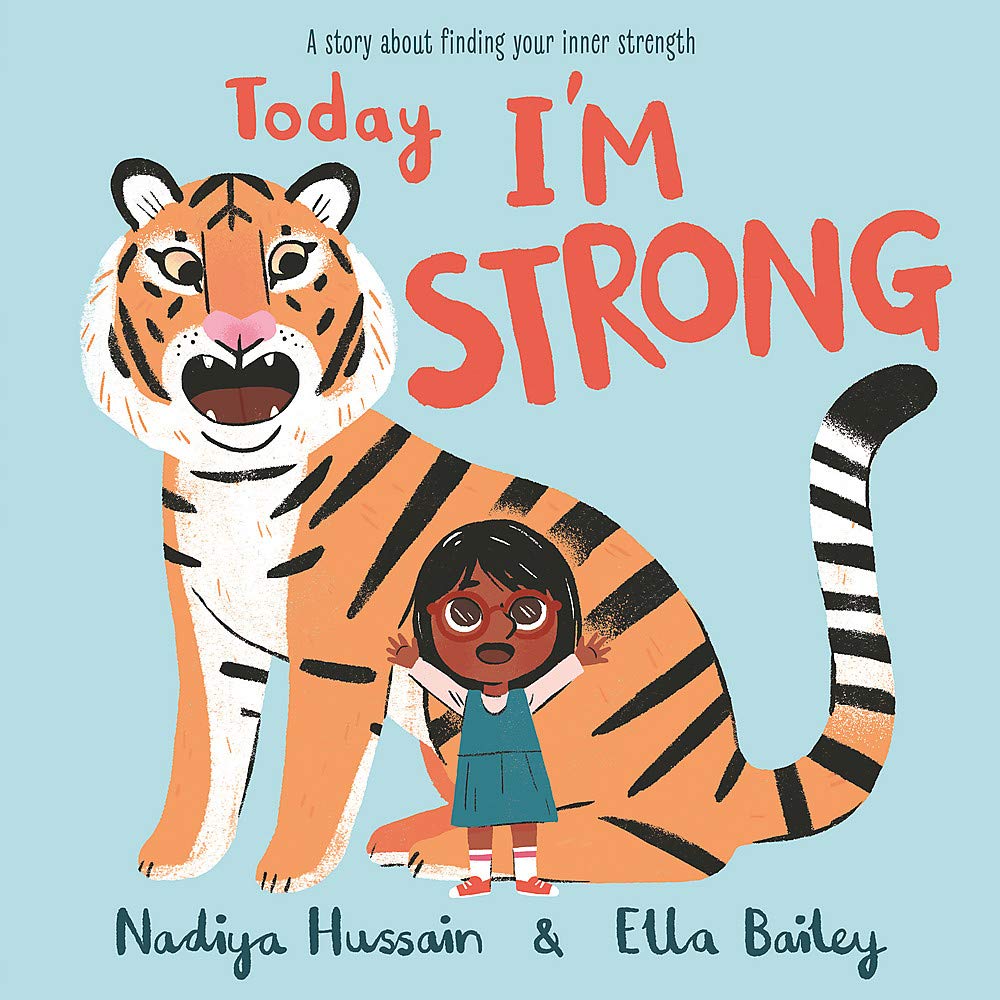
I really liked the way Nadiya Hussain’s book My Monster and Me discussed anxiety and was so eager for this book.   Unfortunately, I didn’t feel as connected to the characters, the little girls dread of dealing with a bully, or the resolution of channelling her imaginary tiger to find her voice strong enough.  With discussion I think the book would be a wonderful way to get young children, to open up about what is upsetting them, but on its own I feel like a bit more is needed to transition from thinking to action, from nerves to confidence, and from understanding what is bothering the little girl to understanding what needs to be done.

img_6852

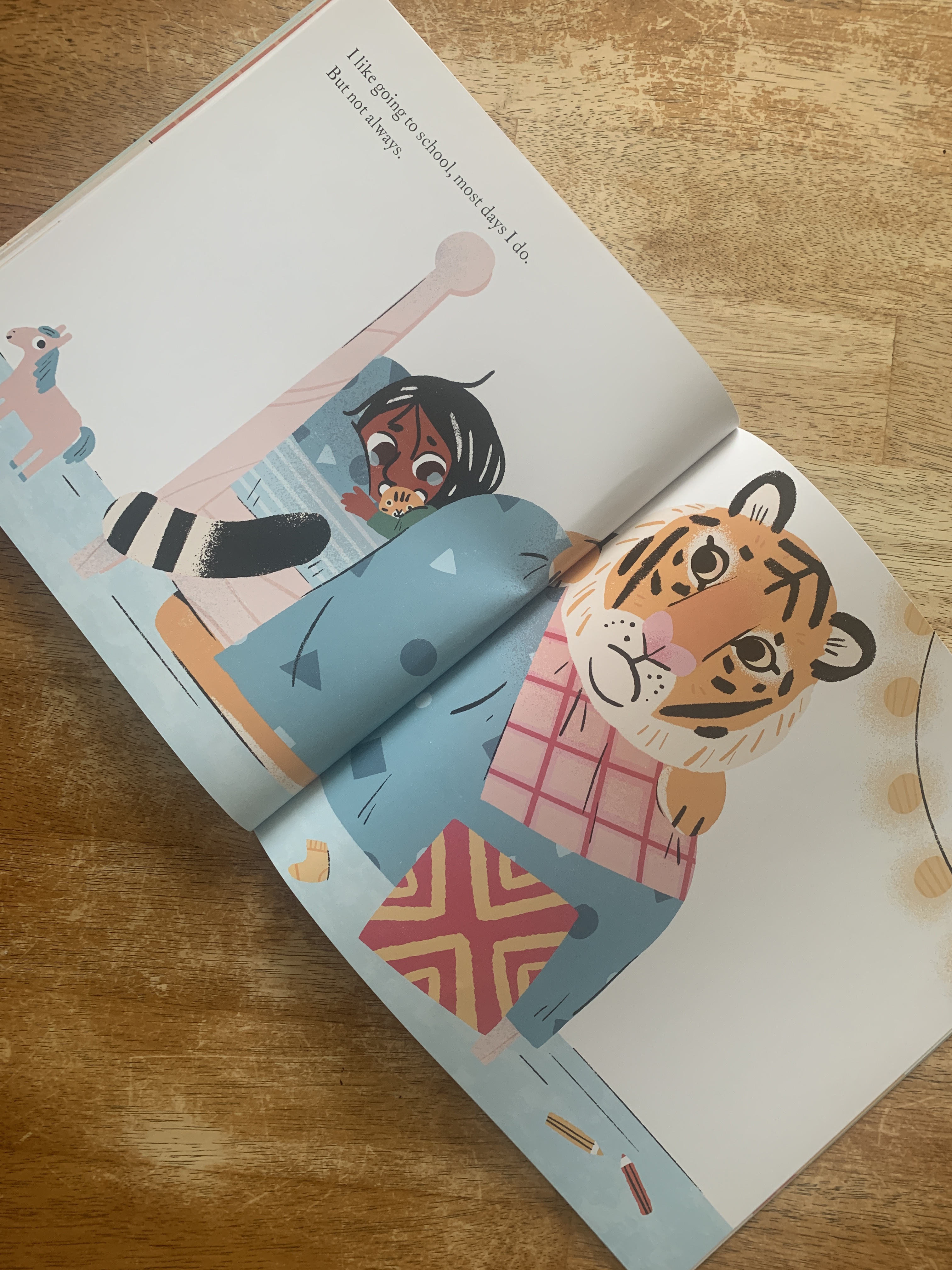
The story starts with a small girl going back and forth on whether she loves school or doesn’t and revealing that the tiger listens to her and doesn’t say a word.  It then starts the next few pages with the same line: “I love to go to school.  I do,” and detailing what parts of school make her happy.

img_6853

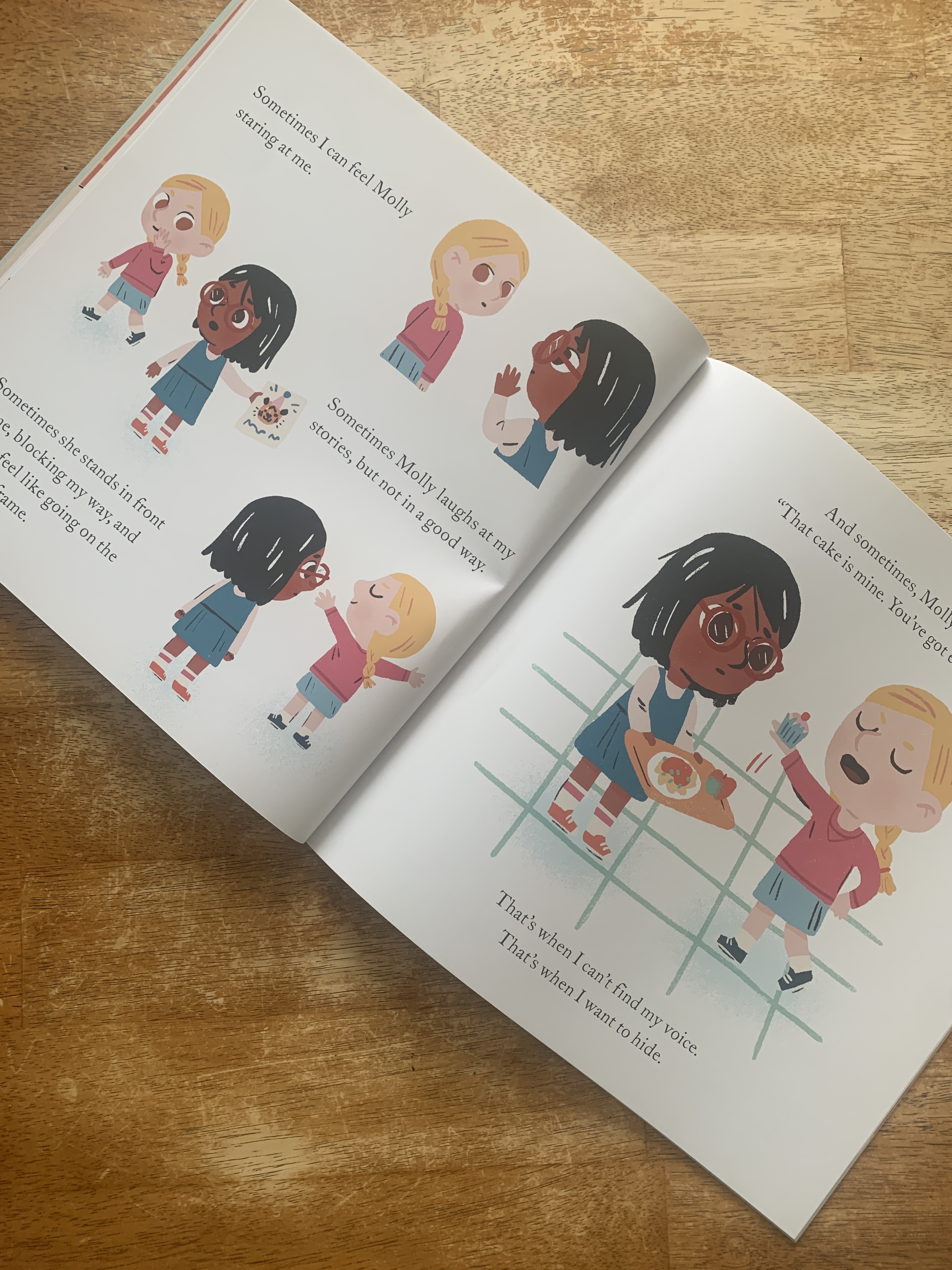
It then transitions to sharing why some days, the little girl doesn’t like school so much.  Days when her voice disappears, Molly laughs at her, or blocks her way to the climbing frame, or takes her cake.

img_6854

She then reinstates that she likes going to school most day, but not always, and then one day when Molly is mean, the little girl, thinks of the tiger, and knows what to do.  How to find her voice, and stand up to Molly. She then carries through on it, and realizes that soon she can be on top of the world.

img_6855

The messaging is universal and great, and while there is no religion shown, it is great to see a brown protagonist dealing with mental health.  The author is Muslim and I’m sure most everyone knows at least of her from the Great British Bake Off.

img_6856

Baddawi by Leila Abdelrazaq

Standard
Baddawi by Leila Abdelrazaq

Baddawi-cover

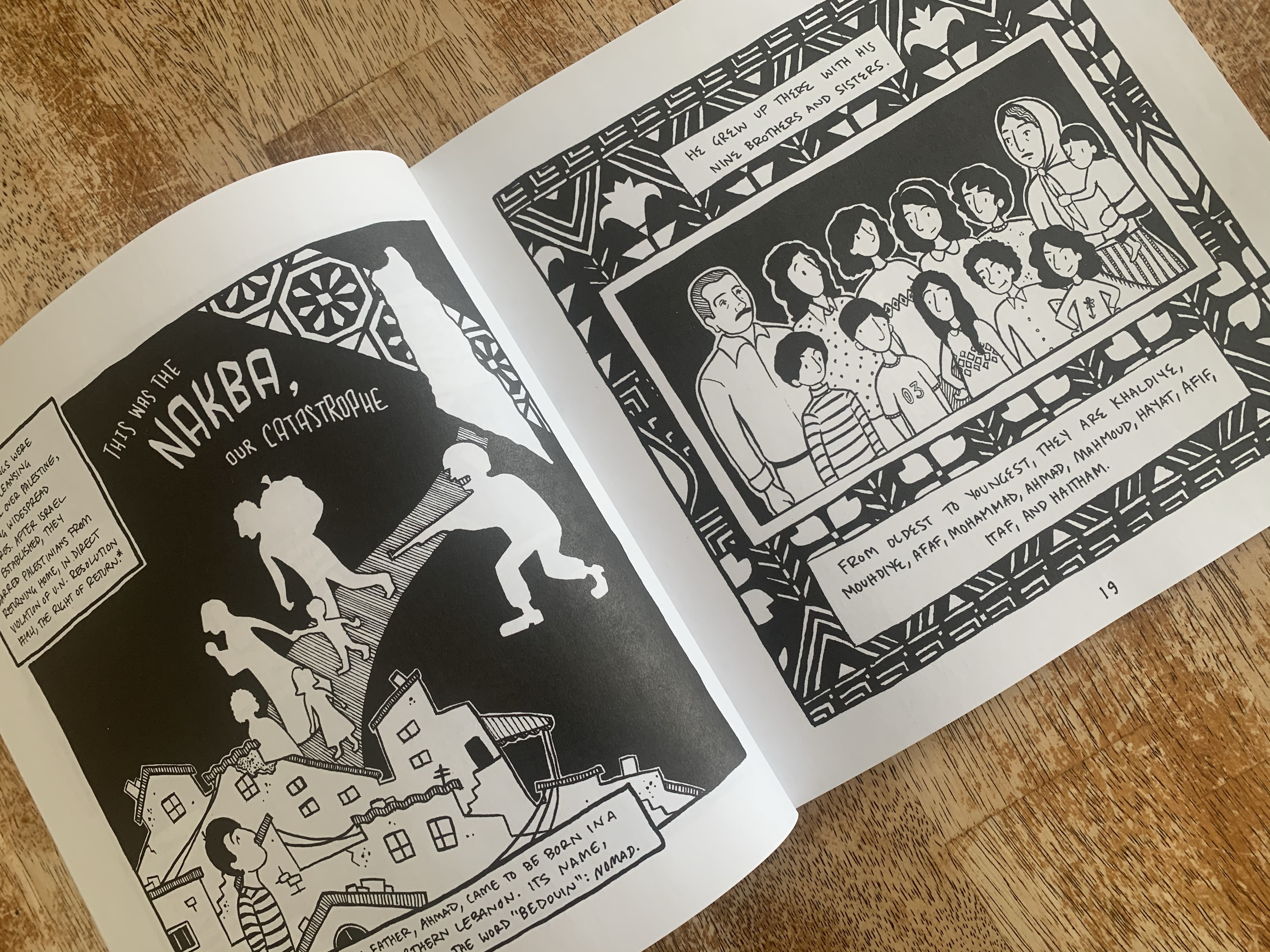
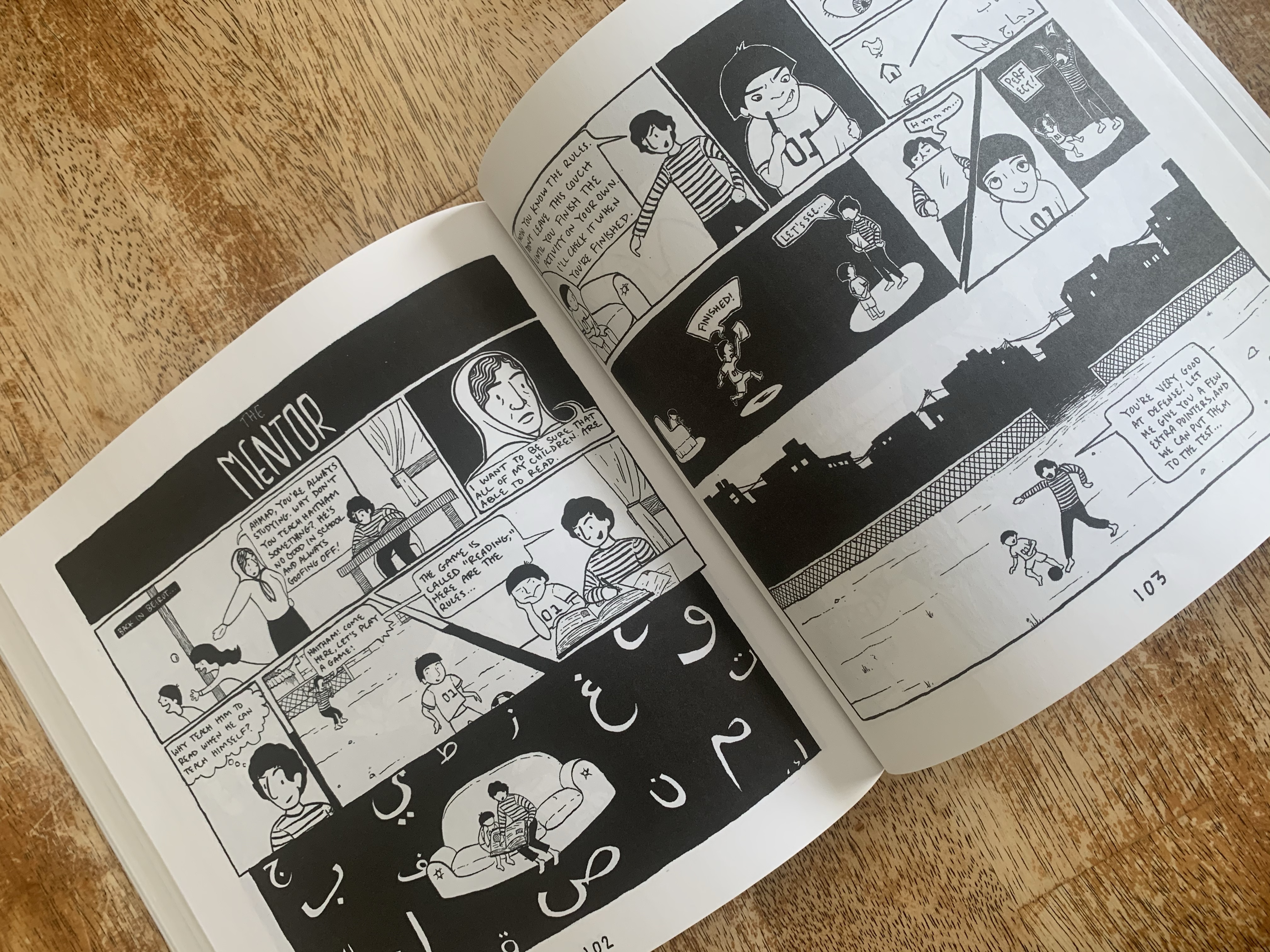
This 8.5 x 8.5 middle school graphic novel biography tells a powerful story of a young boy coming of age and striving to find his place in the chaos of the Nakba and its aftermath.  Over 128 pages the reader will learn and be outraged about the displacement and genocide of so many Palestinians as they see the events through Ahmad’s eyes and relate to his dreams and experiences despite the terror around him. The book has violence, destruction, death and mentions rape, yet the humanity shines through as it is also heartfelt and memorable.  I had my 14, 12, and 10 year olds read it and we have discussed it at length in context to what they already know about Palestine and the ethnic cleansing occurring.  It is a seamless mix of history and character driven narratives brought to life by the black and white illustrations of the author/illustrator’s family history.

img_1656

SYNOPSIS:

There are 10 children in the author’s father’s family, and her father, Ahmad, was born in a refugee camp in northern Lebanon, called Baddawi.  The story starts on October 29, 1948 when Safsaf was ethnically cleansed.  Ahmad’s father, the author’s grandfather had been in Akka at the time of the massacre, and her grandmother hid from the Israeli soldiers, the family, once reunited, would escape for a refugee camp, hoping that they would one day return.

We first get to know Ahmad as he starts first grade in Baddawi.  Things do not start well for the little guy as right away he gets teased by other students, his class is too large so he is selected to be joined with a girls class, and he doesn’t have soccer cleats so he isn’t allowed to play soccer, luckily he gets two good crayons, unlike his friend who gets a white one.  Ahmad is identifiable by his striped shirt that he wears throughout as a nod to Handala, the boy depicted with a striped shirt with his hands clasped behind his back and his face not shown.  The artist said his face would be revealed when Palestine was free, sadly the artist, Naji al-Ali passed away, and Palestine is still occupied.

Ahmad desperate to purchase soccer cleats devises a business plan that his mother takes as gambling and quickly puts an end to, in exchange she offers to pay him if he helps her collect and prepare za’atar.  It isn’t as fun, or as lucrative, but they family is busy packing up to return to Palestine.  Unfortunately the Naksa, the setback, the six day war occurs, and more Palestinians are ethnically cleansed and the families cannot return. Ahmad and all those in Baddawi carry on, playing, celebrating Eid, trying to claim normalcy.  The camp however, is not safe and soldiers raid the camp killing PLO leaders and innocent people in their way.  With no option but to keep on keeping on, these acts of violence are often taken in stride. It is so hard to believe, but what else can they do, the children still play, deal with bullies, and cope with universal struggles in addition to being shot by rubber bullets, and fearing cluster bombs and shellings.  At one point Ahmad and his siblings are left in Baddawi to finish school while his parents are in Beirut.

When the family is reunited in Beirut, Ahmad is in a better school, but violence follows as Mossad agents start raiding PLO homes in Lebanon.  Ahmad goes back and forth between Beirut and Baddawi, wherever he can go to school.  His favorite library is the one at the American University in Beirut and he hopes to attend school there, but without connections, he is at a loss to come up with funding.  His intellect finally lands him an opportunity to leave the Middle East to pursue higher education, he ends up in the United States, and when the story ends, readers are left hoping that everything works out even knowing it will be 10 years before he can return home to see his family.

img_1657

WHY I LIKE IT:

I love that the harsh horrific life is not shied away from in a war, but the little things are just as important in shaping and showing Palestinians to be resilient and culture rich.  I love how the concept of Handala is included and amplified.  The book is at times funny, and at other times devastating.  The connection to the characters is pretty remarkable, in such a relatively short book, and I am fairly confident it will be pulled off the shelf and thumbed through often.  I really wanted to know if the girl in the book that Ahmad left behind ended up being the author’s mother, or if he married someone else, but I couldn’t find it by Googling.  This book is truly powerful, and I highly recommend it.  There isn’t a lot of religion, the family is shown praying on Eid and celebrating.  It mentions the diversity in Beirut, but nothing too detailed.  Similarly, there isn’t a lot of political detail.  There is a glossary at the end, some actual photographs of Ahmad and his family.  At the beginning of the book there is a preface about Handala and how Ahmad represents more than just her father’s experience as well as information about the tatreez patterns on the pages and a map.

img_1658

FLAGS:

There is violence, torture, killing, death, bullying, and possibly gambling.  The book mentions that women were raped, but it isn’t detailed.  The war is ever present and depicted, but it isn’t sensationalized.  Ahmad and a girl study together and the family wants them to get married, but Ahmad opts instead to leave for school, nothing inappropriate.

img_1661

TOOLS FOR LEADING THE DISCUSSION:

This book might not work as a book club selection, but I hope middle school children and their teachers or parents will encourage them to read this book and think about it.  Imagine if it was their homes that were taken, imagine what they would do, and how they would manage, and to be aware that it is still going on and that we cannot be silent.

img_1660

Sasquatch in the Paint by Kareem Abdul-Jabbar and Raymond Obstfeld

Standard

sasquatch

My tween boys read the first two books in the Streetball Crew Series and recommended I read book one because there is a Muslim character and I’m a fan of the basketball all-star author who draws on his own life and experiences growing up in the story.  It is 265 pages, an AR 4.5, and while the story is decent, and I enjoyed the majority of it, I didn’t love it.  I was not thrilled at the choppiness of the story telling and ultimately the way Islam was presented.  Obviously there are plenty of Muslims that will occasionally eat pork and who get violent as they get more religious, but I don’t think it is the norm and definitely isn’t a message most middle grade Muslim readers would identify with, nor want non Muslims assuming about Muslims as a whole.  The book randomly has a sudden Muslim chapter toward the end and attributes some threats on the main character as being from Muslims becoming more devout.  The main character is not Muslim, this is a side character and her family, and you don’t find out til the book is nearly over that she is Muslim. I worry how younger readers will be affected by the negativity toward Islam, as it really isn’t explored or even part of the story.  There is enough going on in 8th grade Theo’s life with out the insertion of religion.  I was glad I read it so that I could discuss it with my boys, but I would encourage the book for more middle school aged kids, if at all.  The book involves basketball as a subplot, but has larger life lessons and developments away from the game.  Do be aware one of the young characters smokes cigarettes, there is female objectification talk among the male characters, racism is discussed, there is some physical assault, and beer, R-rated movies, tattoos, branding, and dating are mentioned in this coming of age book.

SYNOPSIS:

Theo is 13, in 8th grade, and over the summer has grown six inches.  He identifies as a science nerd and a geek and is on the Academic Olympic team at his school.  He now, however, finds himself on the school basketball team, and has no idea what he is doing.  Towering over everyone, he is assumed to be good, but his lanky body and new found size brings him ridicule and teasing. His life long best friend, a fellow geek, can’t figure out why he won’t just quit the basketball team, but Theo is oddly enough,  enjoying the concept of team, and suddenly being recognized in the halls.  When he joins a pickup game to improve his skills however, he gets in a fight with another kid, get’s threatened by some guys on motorcycles, and teased by a weird girl named Rain.

Outside of school it is just Theo and his police officer dad. Theo’s mom has recently passed away and the two are creating a new normal, that is until Theo finds out his father is giving online dating a try.   After the first abysmal basketball game, Theo is forced to go visit his cousin in LA who is a tiny bit older than him, but much rougher.  He constantly teases Theo and puts him down.  He claims to be a great musician, but no one has ever heard his music, and suddenly on this visit, he seems a bit more insightful, which has Theo confused. 

With Theo being pulled in multiple directions, he risks being kicked off the basketball team, moved down to alternate on the Brain Game Team, killed on Friday by the motorcycle gang and to top it all off, a CD of his cousins music has been stolen from Theo’s backpack and band has gone viral with one of the songs.

WHY I LIKE IT:

I like that it is a coming of age book for boys.  I feel like there are a lot of girl books out there, but this one really does get into a young males head.  It isn’t always pretty, and while women/girls are at times objectified in his thoughts and while chatting with his friends, I think he realizes it and doesn’t treat or talk to women in a negative way.  I like that race is discussed as he is one of 14 black kids in his school of 600.  There are times when he or his family are treated different for their skin color, but his mom never allowed him to accept it to be a reason for not being the best ‘you’ and she would make them put money in a jar any time they blamed race for something bad happening, a tradition they continue even though she has passed.  I like the pop cultural references, a lot of books overdo it, this book makes it pretty smooth and relatable.

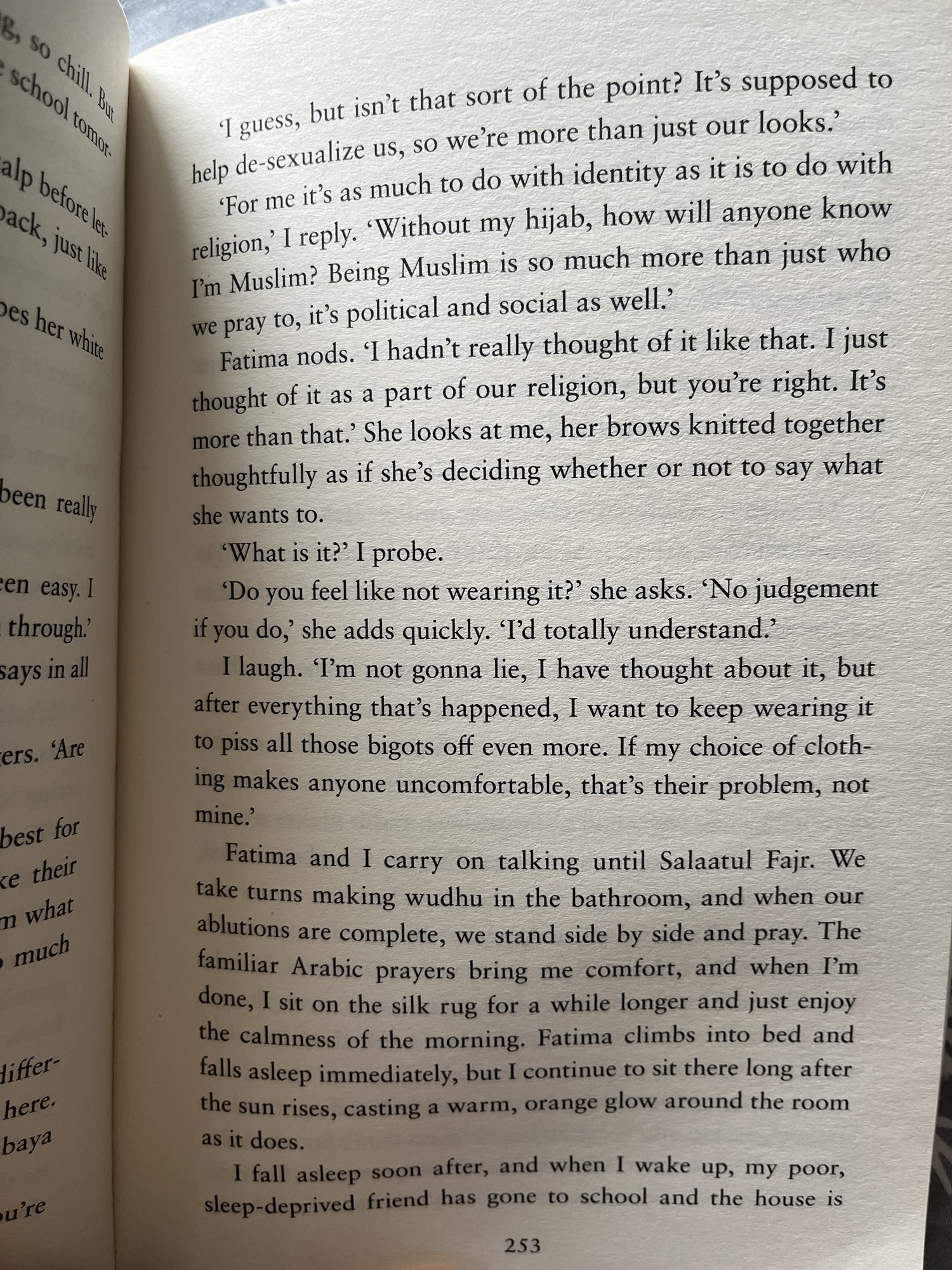
*Spoiler Warning* So Rain, turns out to be Matar, Arabic for Rain, she has convinced her aunt and uncle to let her change schools while her parents are in Iraq (her mom is Iraqi, her father a Quaker from Pennsylvania) and call her by her American name and let her wear American clothes (no hijab).  The motorcycle villains, are her cousins, who were trying to find her and were threatening  Theo to try and find out where she was.  Their frustration with her behavior and dress is what prompted them to hit Rain which made her run.  Rain and Theo discuss why after September 11, she was tired of being accused of being a terrorist and so she wanted a fresh start.  Her uncle and aunt are noted as being nice, but clearly the devout Muslim cousins are what will be remembered.  She also discusses sometimes eating pork, that hijab is modesty in the Quran, not a requirement to cover your hair, and that she is Muslim, but doesn’t know if she will be when she is older.
The book didn’t find its flow for me until nearly half way through, maybe about page 100 or so.  It seemed to struggle to get all the characters introduced, flesh them out, and then decide what the book should be about.  Once it got through all that it flowed better, but still left me confused as to why there was a spontaneous breakfast party, why a lawyer would so quickly get involved in the music case, why Theo was withdrawing from his friends, why Rain wouldn’t just talk to Theo, how Rain had friends she could stay with after just starting at the school, how Rain could switch schools without her parents there. Really the Rain character in general seemed really forced.
FLAGS:

I listed most of the potential concerns in the opening paragraph so that anyone, like me that would think, ‘oh fabulous a middle grade sports book by a Muslim author’ would be aware that there are a few potentially concerning elements.
TOOLS FOR LEADING THE DISCUSSION:

I wouldn’t do this as a book club selection, it is a little all over the place, my 11 year old disagrees and thinks it would be a great book club read, so I’ll leave it to you to decide.

Video interviews with Kareem Abdul-Jabbar about the book:

https://video.disney.com/watch/sasquatch-in-the-paint-with-kareem-abdul-jabbar-4e8f920a40dec5fcc9be6a5d


Ahmed Aziz’s Epic Year by Nina Hamza

Standard
Ahmed Aziz’s Epic Year by Nina Hamza

img_7992

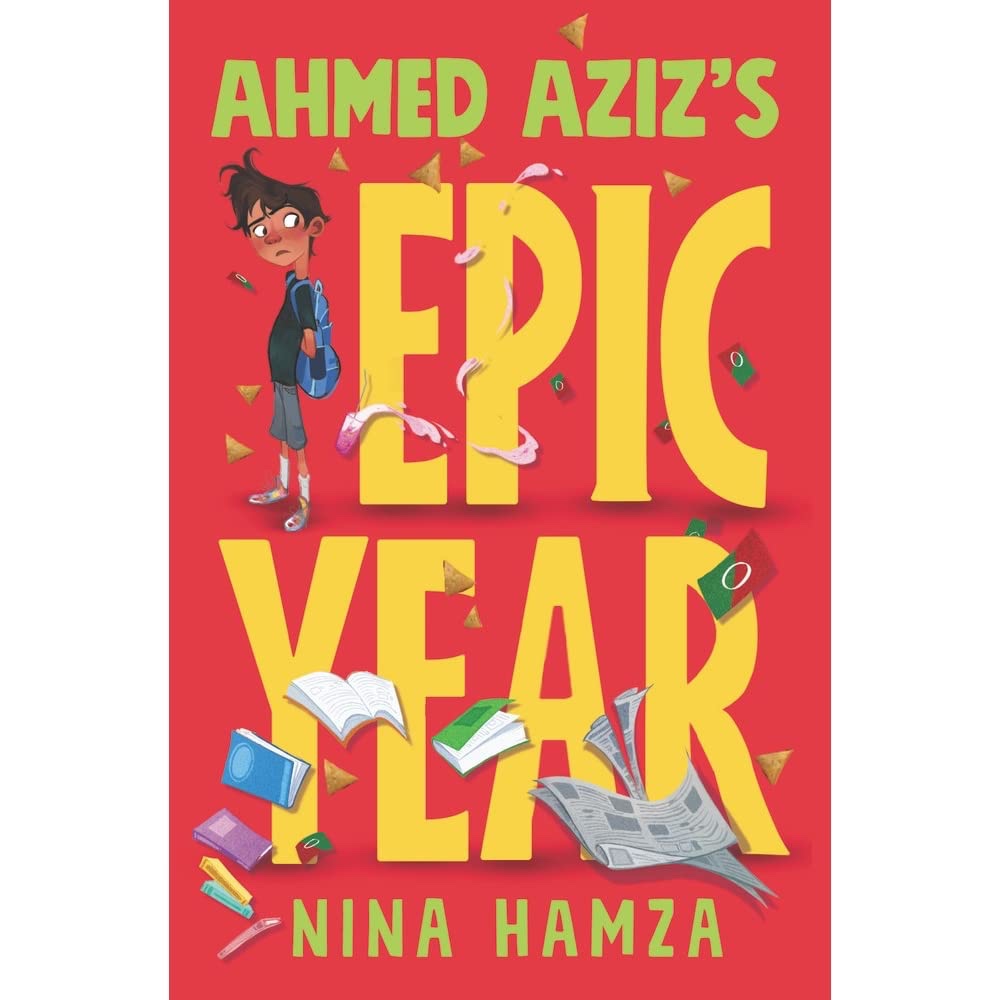
There is such a shortage of male Muslim protagonist middle grades books that I have been waiting quite impatiently to get my hands on this one, and alhumdulillah, it didn’t disappoint.  I’m not sure if it qualifies as OWN voice, being it has a female author, but the authenticity in the little religious and cultural details would suggest that it should.  The 320 page book is meant for ages 8-12, but the weight of Aziz’s father’s illness, the plot pivoting around three classic books (Holes, Bridge to Terabithia, and From the Mixed-Up Files of Mrs. Basil E. Frankweiler), and the clever reflections of Ahmed along with his quick wit and thoughtful choices, might make the book’s sweet spot be 5th to 7th grade readers (as well as us moms who are suckers for elementary literary references, teachers who are heroes, and kids realizing their potential).  The book has a bully, but is clean and wonderful, and I thoroughly enjoyed it.

SYNOPSIS:

Twelve-year-old Ahmed is leaving the only home he has known in Hawaii to move to Minnesota.  His dad has Cirrhosis, a result from a rare genotype of hepatitis C, and Minnesota is one of the top options for treatment.  The family is nervous to move in general, but more so to move to Minnesota.  It is where Ahmed’s dad Bilal grew up, and where his dad’s younger brother passed away at age 12. Ahmed’s younger sister, Sara, is perhaps the only one excited for the new adventure.

The family arrives and is greeted by Bilal’s old friends, and when school starts he realizes one of his dad’s best friends, is his English teacher, and somewhat of a legend at the school in getting kids to try and beat her at an end of the year quiz show like competition.  The school is also where Bilal and his brother Muhammed went to school and a picture of Muhammed hangs right above Ahmed’s locker.  The biggest stress at school is Jack. Jack who lives a few houses over, Jack who rides the same bus, Jack who is in Ahmed’s English group, and Jack who has a lot of followers at school.  Jack is a bully.  One who makes Ahmed’s life miserable at every turn, not just socially, but even the police.

Ahmed is a laid back kid that doesn’t like to read, but loves words, who wants to blend in yet is the only brown kid in a sea of white, who enjoys attending  Jummah salat, but ultimately hates going because of the shoe chaos afterwards.  Ahmed has no intention to read the books assigned in class, but some how the three classic books assigned do get read, and  Holes, Bridge to Terabithia, and From the Mixed-Up Files of Mrs. Basil E. Frankweiler tie together and weave in and out of Ahmed’s epic year.

I don’t want to spoil much, but Ahmed’s dad is in the hospital a lot, there is a lot of plotting to survive being bullied, as well as getting revenge on the bully in Ahmed’s own way without involving parents.  Ahmed slowly grows to love Minnesota, his small circle of friends, and his school while learning about his uncle and the kind of person he wants to be as he grows up.

WHY I LIKE IT:

Ahmed is Muslim and while his mom prays five times a day and his dad is an occasional prayer it doesn’t specify how often Ahmed prays or how he feels about religion, other than going for Jummah.  At first Ahmed thinks he is being bullied by Jack because he is brown, his mom is an immigrant from India, his father the son of immigrants from India, but learns that Jack picks on anyone new.  I like that for as much as Ahmed hates stereotypes and assumptions, he acknowledges that he makes them too.  I like that Ahmed doesn’t like to read, but is smart, and eventually comes around to reading.  He is tech smart and very mature in how he views the world and himself in it, cares for his sister and parents, handles things on his own, and builds others up.  Ahmed is a good kid, not in that he doesn’t make errors or is a teacher’s pet, but in that he has a really good heart and a good head, and I think would make anyone better for knowing him.  I love that the book is smart too.  If you have read the three books mentioned you will love the discussions and questions about the books, if you haven’t read them, you will be tempted to after you finish this book.  I wish there was a tad more religion, there is a sprinkling of culture, primarily the mom’s tragic cooking, but a bit more religion in a book that has illness and death would seem natural to me.  The storytelling is superb, I was so curious where the father’s parents were, but alas it did answer that, I would have liked it sooner, but I was glad it made it in none-the-less.  I would have liked a bit more from the parents about why they wanted Ahmed at his dad’s old school, or how they were comfortable constantly leaving the two kids home alone at night, but Ahmed like I said is pretty mature.  I particularly love the brother sister relationship.  Ahmed is a good older brother and it reminded me in some ways of my older brother, which made my heart warm, good siblings are a blessing.

There are multiple climaxes, but while I expected the dad’s health to be a big one and Jack getting what was due to be a close second along with the outcome of the literary contest, I was not prepared for the level of Jack’s torture to climb to, and was pleasantly surprised by the unresolved thread of Jack and Ahmed’s future relationship.  Things in life don’t magically resolve and I love when middle grade novels keep that in mind.

FLAGS:

None

TOOLS FOR LEADING THE DISCUSSION:

I would absolutely do this in a heartbeat for a middle school book club selection.  Even if the book is more middle grades, I think the students will enjoy it and be surprised by the emotional investment the dad character extracts.  I think they will also benefit from the literary references, relatable characters, and the overall great storytelling.

Unsettled by Reem Faruqi

Standard
Unsettled by Reem Faruqi

img_7503

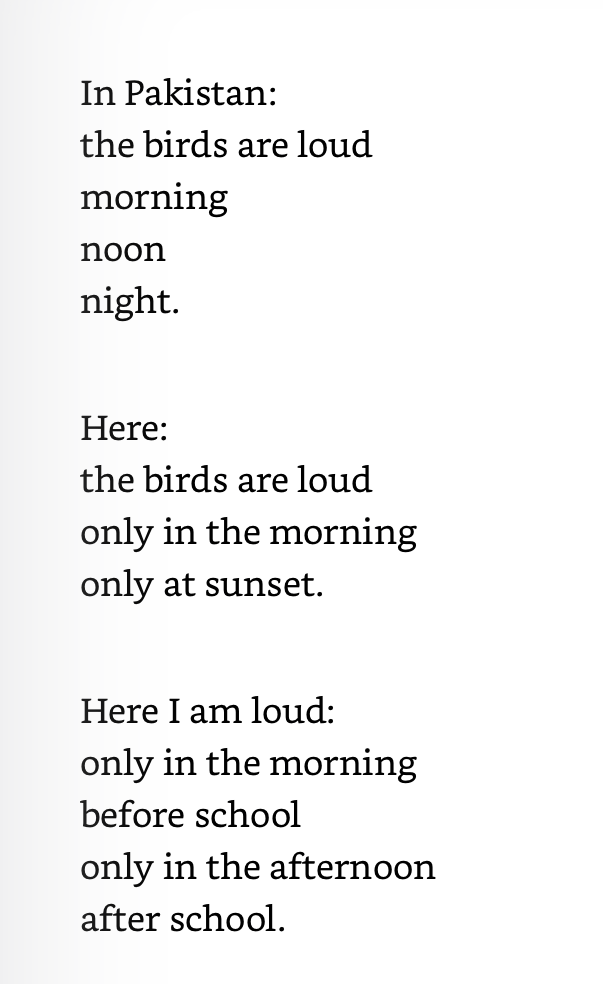
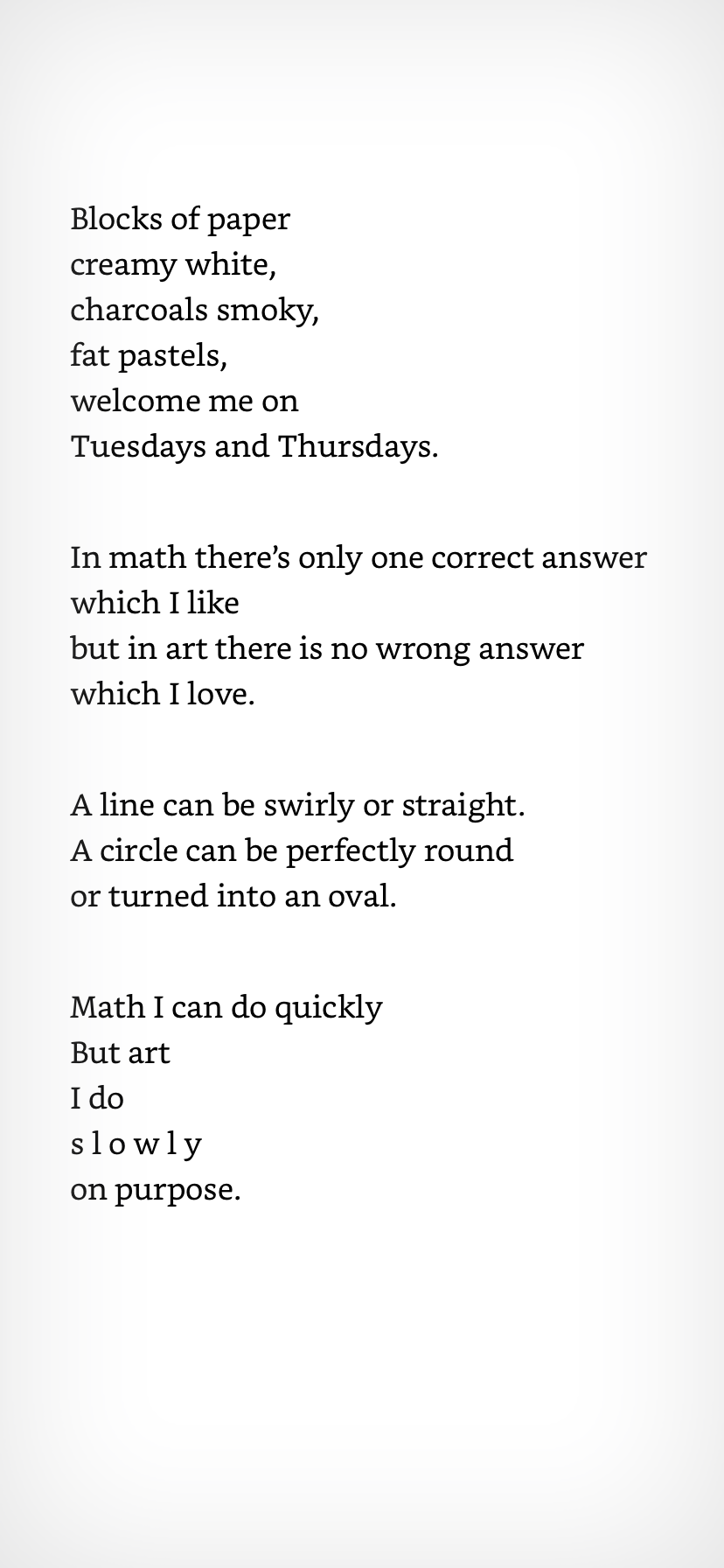
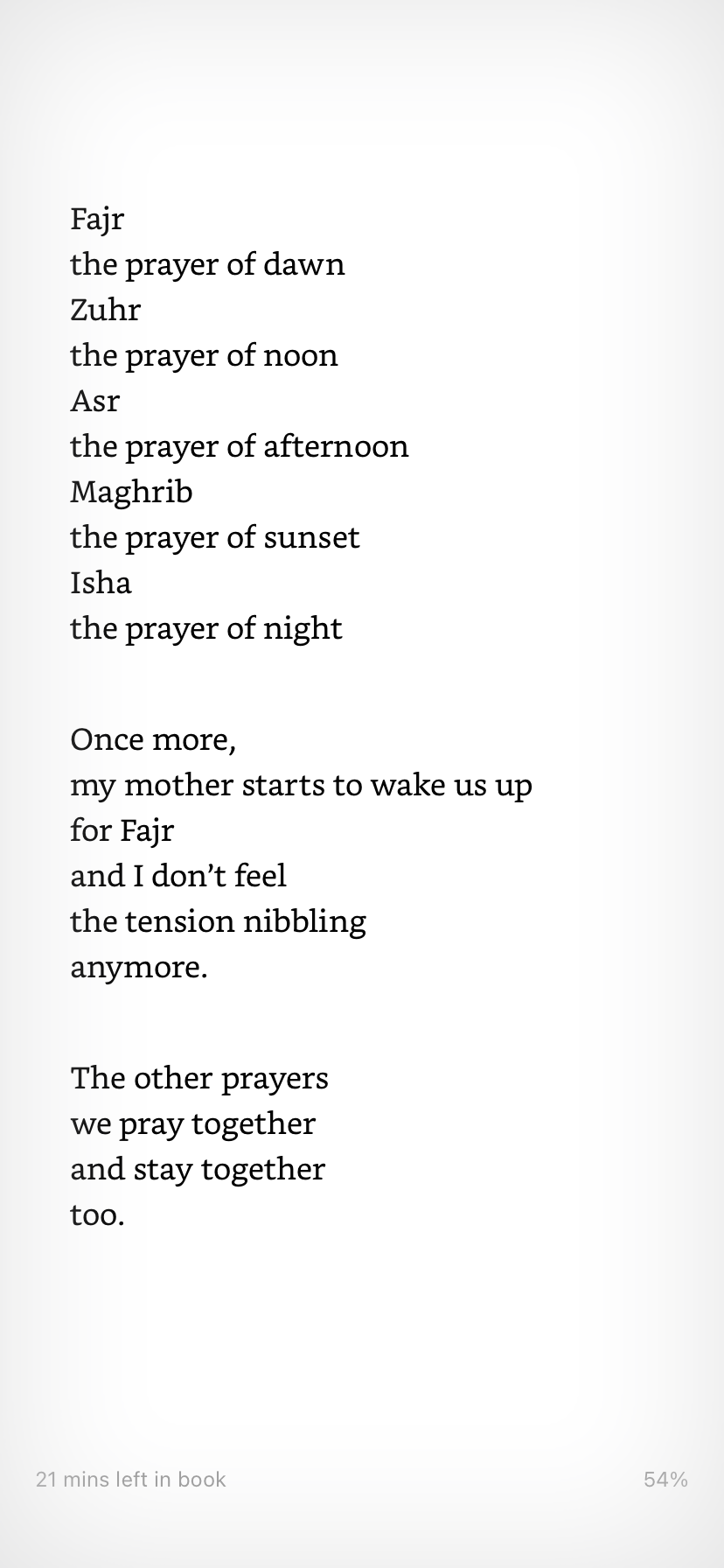
This book is a great OWN voice, middle grade coming of age book that rings with truth and hope in its poetic lines that sweep you up and keep you cheering.  Over 352 pages the author’s semi-autobiographic story of coming to Peachtree City, Georgia from Karachi, Pakistan beautifully unfolds.  I absolutely loved this book and the way it is told, in verse.  The details, often small, ring with such sincerity that even those that have never moved to a new country, or been to a new school will feel for young Nurah Haqq and be inspired by her success, touched by her hardships, and disappointed in her mistakes.

img_7544

SYNOPSIS:

Nurah’s best day is spent on the beach with her best friend Asna, playing in the warm waves and riding camels.  However it ends up also being her worst day, when she returns home to her father’s news that they are moving to America.  Strong, confident Nurah who spends time with her grandparents, swimming with her older brother Owais, and excelling at math in school is reluctantly leaving it all behind to start anew.

When they arrive in Georgia the family of four settles in a hotel until they find a house.  Everything is different and new, and the transition with no friends and family difficult for the entire family.  The way words are pronounced, the way the air feels and the birds chirp all make Nurah long for home.  When they find a swimming pool at the rec center, things start to slowly change.  Owais was a medal winner in Karachi, and will be one here too, people start admiring him, and Nurah tries to bask in his light.

School starts and math is a relief, but people are white, so white, and a boy reaches out to shake her hand.  She feels betrayed that she has been told the schools in America are better, and lunchtime, with no one to sit by is a huge stress.  She questions her clothing, her appearance, and the weather.

Her and Owais try out for the swim team and make it, and Nurah makes her first friend, Stahr. Stahr lives a few houses down from their new house and when Nurah’s mom has a miscarriage, it is Stahr’s mom who comes to show support and give comfort.  The support is reciprocated when Stahr and her mom need help escaping from her abusive father.

As Nurah works to win swimming races and be more like her brother, she works to find her voice and use it to defend others and herself.  A terrorist attack committed by someone claiming to be Muslim sets the family up to be targets.  In a moment of jealousy, Nurah doesn’t intervene to help her brother and the consequences are huge.

img_7502

WHY I LIKE IT:

I love the details and how they are articulated.  I related to so much of Nurah’s feeling and impressions, that I reached out to the author and found her to be just as endearing as her character.  The feeling of being different when swimming because of your decision to be modest, the role of food to comfort you and make you feel at home, the older brother that you so desperately want to resemble and be like: All of it hit close to home for me.  I love how religion and culture are so much a part of the story and about the character’s identity, not to be made preachy, just to understand her and her experiences.  She goes to the masjid, she prays, she starts to wear hijab. I love how she finds her voice and defends those that can’t, but that her path is not easy.  She makes mistakes and she has to challenge herself to do what is right.  The backdrop is always trying to “settle” in a new place, but the story has it’s own plot points that are interesting and simply made more impactful by Nurah’s unique perspective.

There are lots of little climaxes and victories for Nurah that show her to be well-rounded and relatable.  You cheer for her early on and enjoy the journey.  The only slight hiccup I felt was the name confusion of her Nana and Nani (Nana), it is explained, but it was a little rocky for me, it might be based on a real thing in her family, but once that is resolved, the book flows beautifully and smoothly.

img_7545

FLAGS:

Nothing a 3rd/4th grader would find alarming, but none-the-less:

Crushes: Nurah has a crush on a boy at school when he shakes her hand and picks her for a lab partner, but she moves on from him while still maintaining a crush on her brother’s friend Junaid.  Nothing happens, she just thinks they are cute.

Miscarriage: Her mother has a miscarriage and it details a blighted ovum and the mental strain on the mom and family in the aftermath.

Abuse: Stahr’s father is abusive

Hate: There are bullies, discrimination, physical violence.

TOOLS FOR LEADING THE DISCUSSION:

The book is a little below level for my middle school book club, but I think it it was on a bookshelf and a middle schooler picked it up, they wouldn’t set it down until they were done reading it.