Category Archives: Muslim Author

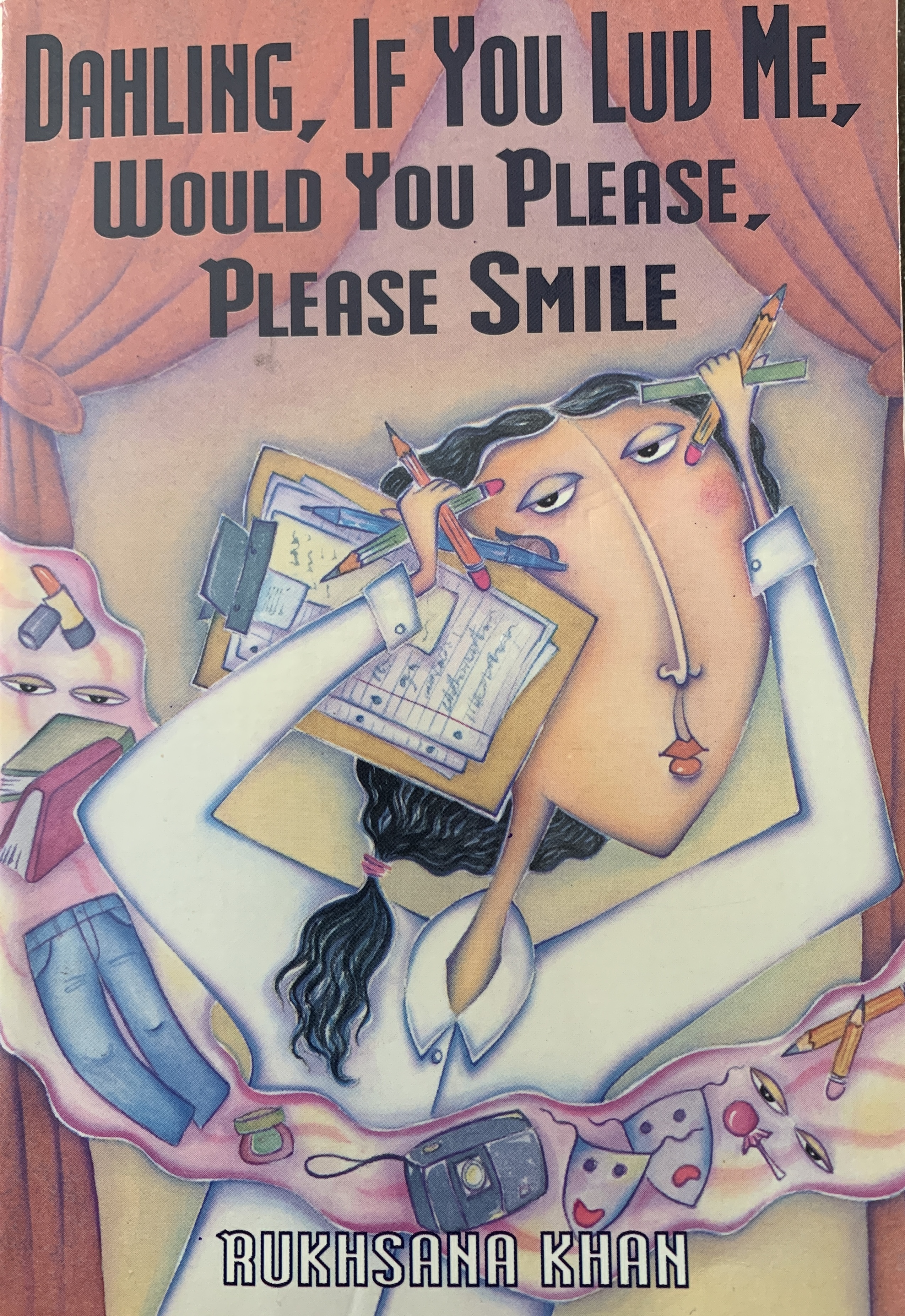
Dahling, If You Luv Me, Would You Please, Please Smile by Rukhsana Khan

Standard
Dahling, If You Luv Me, Would You Please, Please Smile by Rukhsana Khan

img_1788

I’m not sure how I missed this 1999 published YA book by the OG-groundbreaking-industry-changing- Rukhsana Khan, but until @bintyounus mentioned it to me recently I didn’t even know it existed.  The book has so much Islam, ayats, hadith, salat- Islamic fiction self-published often doesn’t have as much as this mainstream book has, but I would be lying if I didn’t say that some of the content was a bit shocking.  Part of my surprise I think comes from the fact that the book is only 206 pages, it takes its title from a game I remember playing in elementary school at recess, the main character is in 8th grade and the cover is soft pinks.  This book is solid YA both now, and nearly 25 years ago, it carries some incredibly heavy themes: attempted suicide, topless photographs, sexual coercion, cigarette smoking, assault, racism, misogyny, toxic relationships, neglect and more (see flags below).  The book is memorable and hard to put down, the Islam is confident and explored, even when weaponized by an older sister, but there is no denying the story telling abilities of the author, and  while I won’t be letting my 11 or 13 year old read it any time soon, I know I benefitted from reading it- reminiscing about wanting Lucky Jeans and standing in awe of how EVERY. MUSLIM. DESI. author making it in mainstream today is benefitting from the path paved by Rukhsana Khan.  On behalf of readers everywhere- thank you.  Thank you for fighting to tell your stories your way, raising the bar, and offering real Muslim characters from a Muslim voice. 

SYNOPSIS:

Zainab has no friends and doesn’t own a pair of Lucky Jeans, she is the only one in 8th grade that doesn’t.  She feels like if she could trade in her polyester pants for the “cool” pants everyone has, she’d be accepted.  When that plan fails and lands her in trouble, she gets tasked with directing her house’s school play.  The teacher convinces her that it will be a way for her to make friends, and earn her classmates respect, but middle school is never that easy.  Everyone is in love with Kevin, including Zainab, but he is a jerk and if he isn’t the lead, no one else will audition.  Jenny is poor, but has a big chest, so even though she is nice to Zainab, she is more in love with Kevin who only wants her for one thing, and takes advantage whenever his girlfriend isn’t around.  Add to the drama Zainab’s very strict older sister who lists off Zainab’s faults every night with Islamic references to try and make Zainab a better person, and this coming of age story will require Zainab to sort through it all and find her own way to be.  There are a lot of subplots that circle around the play, social circles, toxic relationships, and self growth, that while the characters are worried if they will win the competition and break the curse, the readers (at least this 41 year old mama) are hoping that the characters will survive the year unscathed. 

WHY I LIKE IT:

I love that the family is the same family that will become its own story in Big Red Lollipop just grown up, with names changes, and that the story is summarized.  I’m still a little torn if I love the raw grittiness of the way the two sisters interact or if it goes too far and leaves a bitter taste about Islam.  I really am on the fence about how young readers, both Muslim and non Muslim, in 1999 and in 2022, would view the role of Islam in the dynamic.  I think it reads powerfully, but I had a hard time going back to look at it through my 13 year old eyes and it as an adult it is intense.  I still can’t believe that this book was published with how much Islam it contains, even the play put on in a public school was religiously centered.  White privilege is called out and stereotypes about whites are stated, a Hindu character and the Muslim main character work through their baggage, economic privilege is opined on, women’s rights and expectations discussed, comments about “othering” are present-  it really covers a lot. Quite impressive in a lot of ways. 

The relationship and love themes are not shied away from which caught me off guard.  I expected some making-out and heavy petting, but was surprised it went to topless photos, a character’s mom being a nudist, and that there is a lot of forced touching.  I think for most Islamic school 8th graders, this book would be too mature, in fact I genuinely hope it is. Not to say it is not accurate, but it is very critical to the story and I think would need some discussion.  

I love that the characters draw you in, as much as you despise everyone picking on Zainab, you know she isn’t a pushover and you really pull for her.  I didn’t want to put the book down and kept reading because I wanted to make sure she was ok, see what choices she made, and in a fairly short book, that is remarkable story telling.

FLAGS:

The book is for mature readers in my opinion.  There are relationships, assault, cigarettes’, nudists, kissing, spying, sexual assault, coercion, topless nude photographs, attempted suicide, bullying, teasing, cheating, physical assault, language, verbal abuse, stereotypes, talk of female anatomy, and use of Islam to hurt.

TOOLS FOR LEADING THE DISCUSSION:

I don’t know that I would shelve this in the library, I would see if perhaps there is a version with a different cover, one that might signal a more mature reader.  I would worry if an early middle schooler read this, I think it would be a lot for them to take in, process, and reflect on.  It isn’t a light read, and would need some discussion, but ultimately I don’t know that a middle school book club at an Islamic school would be the right place for it. It could be for sure, but not the one I’m currently at.

52 Poems for 52 Weeks: A Lunar Year by Abdullah Mansoor

Standard
52 Poems for 52 Weeks: A Lunar Year by Abdullah Mansoor

poems

This isn’t the typical book I would review, but after spending some time in a middle school language arts classroom teaching this school year, I thought I should at least acknowledge the value a book like this can have in a classroom or homeschool curriculum, and that it shouldn’t be completely overlooked and dismissed.  I didn’t get swept away by any of the poems, and honestly am confused by the title seeing as the title page quickly clarifies that a lunar year is 51 weeks? That being said, poetry is such a religious and cultural staple that haikus, sonnets, acrostic poems, free verse absolutely should be taught through an Islamic lens, and why not.  So, while it might not be a book that an upper elementary through middle schooler would pick up and read on their own, it is structured to be taught, and I think educators should consider implementing it in whole, or in part, when teaching structure, and rhyme scheme, and iambic beats.

The poems vary in style and topic and length, and are divided by the Islamic lunar calendar months written in Arabic calligraphy. The true value of the book is the backmatter, though in my opinion.  The details about the poem, about form and structure and prompts to try your own.

I could really see slipping in an Islamic poem when teaching Shakespearean sonnets, and encouraging children to write a ballad or limerick in praise of an Islamic tenant.  I’m a big fan of blurring what is Islamic and what is secular as I don’t find them mutually exclusive, and this little book did a great job reminding me that Islamic centered poetry is important, and Islamic poetry isn’t just translated from other languages.

Happy reading, and inshaAllah happy writing!  The book can be found HERE for purchase.

A Darkness at the Door by Intisar Khanani

Standard
A Darkness at the Door by Intisar Khanani

darkness

Y’all I was devastated when Theft of Sunlight ended on a cliffhanger, but Alhumdulillah, this conclusion was well worth the wait.  My heart is at ease, even if I am trying to figure out how to get the “Blessing” so that I can forget I read the book, and enjoy it all over again for the “first” time.  I don’t normally review second books in the series, and this won’t be a typical review, but truly if you have not read Thorn or Theft, what are you waiting for, go get those books and start reading.  I don’t know a lot about the publication drama of this fantastic book, but I do know that it was not published in the USA by the same publisher as the first book in the duology, and the thought that we, the readers, could have stepped up the pre-sales and shown our love for the series, the author, and the characters weighs heavy on me.  Thankfully, the UK publisher kept the book and the author found a way to get Darkness to us in the US (it publishes later this summer), but truly we have the power to support good, quality stories, and we must actively show it so that they get published, rather than simply complain about what options are made available to us. This is the author’s website: http://booksbyintisar.com/ if you sign up for her newsletters you can get all the bookishly delicious info.  She is not asking me to promote her or her books, but I happily share and direct support to her, because her stories really are great, and from what I can fangirl find out about the author, so is she.

The book picks up where Theft leaves off, and manages to remind readers what might have been forgotten in the interim.  It had been over a year since I read book one and while I fumbled a little at the beginning, the author caught me up to speed and didn’t let me lose a beat in Rae’s latest and ongoing adventures.  It starts with Rae aboard a slavers ship with children bound for a horrible fate.  More than just her life is at stake, as the information she has recently discovered implicates palace officials, the Circle of Mages, an heir to the throne and so much corruption.  With the help of street thief Bren, Rae gets herself in and out of trouble quicker than most expect.  Her clubfoot, sharp brain, and genuine values, force anyone who underestimates Rae to find themselves scrambling to keep up.  She has grown to love her body and the strengths that it affords her, and in her actions and dedication to changing the world she becomes a formidable river Pirate Queen that you genuinely care for, cheer on, and hope gets a happy ending.

Yes, if you have read Theft and are wondering why I didn’t mention Princess Alyrra, Red Hawk, the Cormorant, Niya, Stonemare, Artemian, and everyone else, fear not, they are all present, and get their story arcs, I just don’t want to risk a single spoiler.  If you’ve waited for this conclusion, you will find yourself desperately dreading the final pages, and wishing the story would never end.  The fantasy, action, characters, world building is all incredible and so hard to put down.  The author is Muslim, but there is no Islam present in the stories, although hints of desi culture do seem to present in the Sweetening atleast. 

The book is YA, but I think 15 and up or so would be a good fit. Like the others in the series, it has magic, murder, killing, lying, thieving, alcohol, corruption, implications of sexual abuse, assault and threat of rape, but this book also has some language, talk of infertility, and some implied banter about marital relations. The romance is very halal and clean, but the violence is graphic as dealing with the implications of murder and slavery are grappled with and thus a thematic element of the story.

Thank you Netgalley UK for the arc, if the book looks interesting and fun for you, please preorder the book wherever you are.

Hope on the Horizon: A Children’s Handbook on Empathy, Kindness, & Making a Better World by Onjali Q. Rauf illustrated by Isobel Lundie

Standard
Hope on the Horizon: A Children’s Handbook on Empathy, Kindness, & Making a  Better World by Onjali Q. Rauf illustrated by Isobel Lundie

This delightful 288 page handbook pulled me in, inspired me, enlightened me, and allowed me to reminisce about incredible fictional characters from iconic books, tv shows, and movies.  Concepts such as kindness, empathy, friendship, deflecting negativity, seeing beyond labels, and asking for help, are framed around the fictional character’s strengths to introduce famous real life people from the past and present, as well as not so famous people the author personally knows and works with.  Written with the author speaking directly to the reader, there are also calls to actions, questions, prompts, and resources to help mature middle grade readers and up.

SYNOPSIS:

The book starts with an introduction about who the author is and her getting to know the reader, before introducing the concepts the book will cover and how it will go about doing so.  It establishes the super power of kindness and five golden rules.  The 10 chapters of the book then follow a loose format of introducing a fictional character and why the author admires them: Charlie Bucket from Charlie and the Chocolate Factory, Tintin, She-Ra, Superman, Samwise Gamgee, etc., her connection to them and to a theme: hope, being a ripple starter, never giving up. to name a few.  The book then highlights how the character and theme tie in to a cause that the author is passionate about, refugees, education, feeding the hungry, foster care, etc., then spotlights exceptional people the author has gotten to know personally in her activism that have made an incredible difference in the world, before offering a checklist of how you too can take action.  And finally a famous person is celebrated as being the culmination of all the strengths, characteristics, and super powers mentioned.  People such as Greta Thunberg, Albert Einstein, aerospace engineer Mary Jackson, footballer activist Marcus Rashford and more.  Often there are reflections, and the easy banter and conversation between the author and the young reader never leaves the text.  The reader and the connection to the reader is always prioritized and included in the sharing of information, motivation to action, and celebration of individuals real and pretend that have made a positive difference.

WHY I LIKE IT:

There is nothing overtly Islamic in the book, but there are Muslims featured as both famous real life examples and the author’s personal acquaintances.  Most importantly the author is unapologetically Muslim and offers glimpses of her own childhood growing up Muslim in the UK.  And as a hijab wearing Muslim, the illustrations also proudly show her smiling, eating chocolate and being an activist making the world a better place for all.

I love that the tone of the book is optimistic even when discussing difficult themes and heartbreaking realities of society.  The playfulness of the banter keeps the reader engaged and the text light.  Even if you don’t know the characters referenced, the urge to read their stories is a secondary benefit, and one that I think will further young world changers’ critical thinking skills.  Finding the good in people, even if they aren’t real, is such a lens that needs to be used more often, and the book does a tremendous job of stressing this.

FLAGS:

Talk of refugees, homelessness, food insecurities, abuse, poverty. Nothing is overly detailed, but the concepts are touched upon and explained as needed which could possibly be triggering or difficult to fully grasp to younger readers.

TOOLS FOR LEADING THE DISCUSSION:

The book can be read straight through or referenced, you can even thumb through and read sections that appeal to you.  I don’t know exactly who the book will resonate strongest with, but I’ve got my own children reading it, so I will happily report back. I think it deserves a place on every book shelf and even if only portions are shared with a class, the discussion and foundation that it could provide would be incredibly powerful.  I could see an English teacher encouraging essays about fictional character traits in the “real” world being assigned after reading, or History teachers spending time on some of the characters highlighted, it really is a great tool, a handbook, for young and old alike.

Lina, the Tree and the Woodcutter by Eman Salem

Standard
Lina, the Tree and the Woodcutter by Eman Salem

lina

I’ve enjoyed another book in this bilingual series, Little Tree Goes for Hajj,  and was excited to see little tree all grown up and the focus of a book on the environment.  The 22 pages in Arabic and English start out promising, setting the stage, establishing the familiar characters, discussing caring for trees and not harming them for no purpose, but then the book just kind of ends.  It is wordy, the English anyway, I cannot comment on the Arabic, but it is sweet and warm in its own Islamic fiction way.  I didn’t feel like a glossary was needed, it mentions Allah in the text and seems meant for Muslims, so why the definitions of Allah, Hajj, and Mecca are included is a bit odd especially when it uses Christianity and Judaism in the explanation of the oneness of Allah.

img_9825

Little tree is now an old tree and was a friend of Lina’s grandfather, they had traveled to hajj together.  As they sit chatting, they hear a horrible noise and discover it is a woodcutter chopping down a tree.  When the young man stumbles upon the talking tree and Lina they question his motives.

img_9826

He wasn’t chopping wood for fuel, or to build a home, he was just chopping it because he could.  Lina and the old tree explain what was lost with the destruction of the tree and teach him that Allah swt has made people the earth’s caretakers.  The woodcutter learns from his mistakes and apologizes.

I wish the book maybe would have made a stronger point that trees take a while to grow and that sorry is well and good, but not enough to restore what was lost.  I like that the woodcutter wants to learn more, but a few lines detailing what he learns or that he came every day to sit with them or some sort of ending would have been nice.

Swimming on the Lawn by Yasmin Hamid

Standard
Swimming on the Lawn by Yasmin Hamid

swimming on the lawn

This 176 page book about life in Khartoum, Sudan reads almost like a memoir with short, loosely connected chapters detailing a young protagonists day-to-day life growing up.  There is no real conflict  until the very, very end, and the majority of the chapters just seem like snapshots with little to no continuity.  That isn’t to say that I didn’t enjoy all the stage setting and the easy voice detailing a time and place that I know too little about, but I don’t know that most kids will feel compelled to keep reading.  The book is slow and wandering, best suited for lower YA/middle school, if they can be persuaded to read it.  I think the book would do well taught, as some good discussions about Sudan, growing up with an English mother in Africa, the role of religion,  the 1960s, the impact of financial comfort, and the threat of violence would make the book very relatable while also being eye opening.  The power and beauty of OWN voice makes this prose filled book thought provoking and memorable in a subtle and light way.

img_0276

SYNOPSIS:

The standalone chapters follow Farida and her siblings in Sudan in the 1960s.  Their summer vacations, visiting friends, trips to villages, making tea, lots and lots of tea, reading books sent by their Grandma in England, and the abrupt arrival of soldiers.  Told from a child’s perspective the short chapters focus on the events front and center and don’t carry over or carry morals or lessons.

WHY I LIKE IT:

I like that the chapters titles are written in English and Arabic and that Islamic holidays and customs are mentioned.  Interestingly though, the family doesn’t seem to practice.  There is cultural presentation of Eid and Mawlid and talk of hajj, but not of praying or saying Bismillah or inshaAllah in daily conversations.

I wish there was more information about the mom being English and how the parents met, and what cultural obstacles maybe had to be ironed out.  I also wish there was a bit more at the end, an afterward even something that gave some closure or insight into what the ending means for Farida and for Sudan.  The choppiness grows on you, but some stories even at that were too unresolved.  The whole chapter detailing her traveling with her uncle to his village only to find her back at home the next chapter without any reflection on the journey, how she returned, the cousins she met, etc., just seemed unresolved.

FLAGS:

A birth and burying the placenta is described, alcohol is mentioned, fear of a friends dad is hinted at, soldiers being present, father being taken away by force, shootings.

TOOLS FOR LEADING THE DISCUSSION:

I think in a middle school classroom setting the book would have a lot of potential.  Read a chapter and have kids journal their impressions or thoughts perhaps, or have them imitate the style and write about themselves.  It probably wouldn’t work as a book club, but it definitely should be shelved in a school or classroom library.

You are the Color by Rifk Ebeid illustrated by Noor Alshalabi

Standard
You are the Color by Rifk Ebeid illustrated by Noor Alshalabi

you are the color

Books like this are hard for me to review, and I have gone back and forth on whether I should post anything or not.  On the one hand, we need books that are unapologetically Palestinian written by Palestinians.  They need to be celebrated and elevated and I want to offer my support to the stories, to the voices, to the authors, illustrators, everyone involved.  On the other hand, if I didn’t love it, why should I shy away from saying so, when I have purchased the book (pre-ordered and changed the shipping address even, to have it delivered to me on vacation because I didn’t want to wait to read it).  The book is emotional, but the last six pages unraveled the whole book for me, and in a picture book particularly of this nature, when you finish- if you don’t have a cathartic pull, you start to find holes in the story as you feel deflated.  The book, I would go out on a limb to say, needs to be discussed and given context even if you are Palestinian.  As someone who is not, I recognize my arrogance in such a statement and am happy to be corrected, but from a literary reviewer standpoint the book needs discussion and additional context.  The Nakba is only articulated in one paragraph in the author’s note.  In the story itself there is no indication that what happened to Thaer happened to so many Palestinians in 1948.  The use of color and how it is depicted in the illustrations is tangible and powerful, but as odd as it is to say, the words got in the way of the story.

img_0713

The book starts with Thaer trudging to school in dull sepia filled pages to begrudgingly sit at a desk and begin an art lesson.  He is glad the spitballs are just spitballs and not real explosions, but the tone is still melancholy.  When he sees boys playing soccer he recalls the last time he played soccer, and the memory comes alive in color.  He was in Yafa, it was the day before the Zionists came and took his family’s home.

img_0714

The teacher, back in muted tones, asks him to draw what has made him smile, and Thaer gives it a try.  Blue for the color of the sea, green for zeit and za’tar, brown for taboon to get fresh bread, etc..  When he takes the drawings home to his mother, she is not impressed.  Drawings are silly and colors aren’t going to bring Baba and Susu back.

img_0716

Defeated, the next day in class, Thaer recalls the men pounding down the door and Baba being shoved in a truck and Susu falling.  The next day at school they hang up some of their pictures and Thaer talks about his sister.  (SPOILER) On the way home Thaer paints the alleyway and brings color to his and his mom’s world.  His mama says that he is the color, and when the following day’s prompt is to draw what you want to be when you grow up it shows Thaer (presumably) on the beach as an adult painting.

img_0715

The disconnect for me occurred with the painting of the alleyway.  I was incredibly invested in the story, my heartstrings were being tugged, I was breaking for this character and his experiences, and it all came to a screeching halt because I couldn’t understand where the paint and the alleyway and the mama’s change of heart all manifested from.  As for the ending, I think I know what the author was going for, but it didn’t connect with any of my kids aged 2-15 nor my mother, a 40+ year early elementary veteran teacher.  I wish I could have taken a picture of their faces as she read the book to them.  The frozen expressions of huh and confusion at the end, until my 11 year old to broke the awkward silence to ask if the boy wants to be a painter or a father or an adult?  Those facets coupled with the often advanced vocabulary, makes the book an important one, but one that needs a lot of outside commentary to connect with the readers and to further the conversation about Zionism, al-Nakba, the occupation, and the continued oppression of Palestine.

There are flags of loss, kidnapping, sorrow, violence, etc., that parents will have to gauge if their children can handle. I’m not sure what age group is the best fit, the murder of a young girl, the forced displacement from one’s home, the removal of the father are all heavy themes.  I appreciate that it isn’t “watered down” for a western gaze so to speak, but I wish there was more about what happened to the dad, is there hope he is alive? I wish there was something about this not being an isolated reality for the protagonist and his family.  I wish there was some conversation or connection between the mother and son, because the loss of continuity really derailed the story.

As for the idea of the story, and the use of the illustrations to physically show two worlds I think is a great idea, it just sadly fell apart for me at the end: the faltering conclusion and the loss of emotional buildup that the first two thirds of the story worked so hard to create.

Nura and the Immortal Palace by M.T. Khan

Standard
Nura and the Immortal Palace by M.T. Khan

nura and the immortal palace

This 272 page unapologetically Muslim MG tale takes on some heavy concepts: child labor, jinn, education, and gulab jamun- I mean greed.  Through the eyes of feisty, determined, clever, and strong Nura, though, the trials of life and society are never without hope, a sense of adventure, and good intentions.  The characters are likeable, the Islam wonderfully present and often centered, the social commentary remarkable, but the framing for me, made it a bit of a struggle to read at times.  It is set up like Alice in Wonderland or even Silverworld, where the characters living in a real world stumble in to an alternate reality, and thus the world building occurs in real-time so to speak.  The reader has no idea what is going on until it is happening, no clue what the rules and constraints of the fantasy world are until some detail is needed to help or hinder the protagonist, and personally I struggle with this wandering style of narrative.  I have mentioned before that as a child I really never read fantasy, and I think this is why, I  need the context to ground the story so that I might lose myself in the adventure at hand.  If you are fine with this framing and at ease with Islamic jinn fantasy, then this book will be a lot of fun.  If you find fantasy “shirk-y” do know that Ayat ul Kursi is used to save the day, but that there is a lot of imagination regarding the beings made of smokeless fire, a casino is present along with dancing, indentured labor, and the fear of death.

The book releases in July 2022, and as always pre-orders help show support for books, authors, and the OWN voice content that they entail, so if this book seems like a good fit for your 3rd/4th grade reader and up you can pre-order it here: https://amzn.to/3MVvxQo

SYNOPSIS:

Nura lives in the small industrial Pakistani city of Meerabagh.  Her father has passed away and her family is too poor to send her to school, instead she must work so that her siblings might eat.  Her mother works in a sweat factory and Nura in the mica mines.  The illegal child labor and cruel owners provide less than ideal working conditions for the children forced to mine the sparkly mineral.  Nura’s mom wants her to quit, Nura herself doesn’t enjoy the torment, but somehow she takes it on as a challenge to be the best miner in Meerabagh, pushing her self deeper into the fragile tunnels.  With bestfriend Faisal always warning her about going too far, she decides to finally listen to her mother and quit the mines, but not after she makes one final effort to find the rumored “Demon’s Tongue” treasure.  She digs too deep though, and the mines collapse, children are lost, Faisal among them. Determined to find her best friend, she plunges in to the fallen mines and finds herself on the pink waters outside the luxurious jinn hotel, the Sijj Palace.

Nura has always been warned about jinn, qareens and the tricks they play on humans, but when a life of luxury is dangled in front of her, Nura pushes her better judgement aside to enjoy a life she has always dreamed of.  It isn’t just the food and clothes, but it is the respect and honor she is given as she wins a food eating contest, gambles in a casino, and gets decorated for a dance party.  It all comes crashing down however, when in an attempt to impress the painted boy, she cuts off his horn.  Status revoked, Nura is sent to the labor force, where she will remain for eternity, imprisoned and at the disposal of the hotel.  What is more, after the three day festival of Eid al Adha, her memories of her life before coming to the jinn world will disappear. Nura is determined to escape, but nothing in the jinn world is easy, and for a 12 year old girl with fading memories, this might be more than she can endure.

WHY I LIKE IT:

I love that Nura is unapologetically Muslim.  Even though she is poor, there is time spent on the pages detailing the feeling of Eid al Adha, the familial togetherness and community festiveness even if it all is meager, it still has value.  I also really like the relationship between Nura and Faisal.  They drive each other crazy and have nothing in common, but they never give up on each other.  They act like siblings, tolerating each other’s annoying quirks, while never wavering on their concern and worry for one another.  It is sweet and well fleshed out.
The threading of education was also done well.  Nura finds the idea of school repulsive, but it grows and changes as the obstacle of being illiterate slows her down, and ultimately she changes her mind.  The growth arc is subtle, but powerful, and Nura’s intellect, cleverness, and ingenuity is never dimmed as a result of her lack of formal schooling.
The characters, even the “bad” ones are given some depth and sympathetic qualities, and Nura has to recognize some of her own flaws and choices as she journeys through the book.  Desi culture is present primarily in food and clothing, but it adds depth to the story and flavor to the experience.

The food eating competition, however, didn’t really impress me.  I get that it was to flesh out the jinn world and show Nura’s smartness, but I thought the jinn in the water were eaten, only to have them reappearing, and the founding premise is that jinn are tricksters, so to have Nura tricking them seems to blur the lines of integrity.  Also the bird was critical, and then never seen again, the scene just didn’t read as tightly edited or as clear as it should have in my opinion.

I didn’t love that a casino either, or that it was so central to the story. If it would have said something about gambling being haram and jinn being free to do what they want, like it did when discussing how Eid is celebrated by non practicing jinn, I might have not been as bothered,  but it seems an odd setting nonetheless, for a middle grade book.

FLAGS:

Gambling, child labor, indentured servitude, magic, fantasy, jinn, destruction, bombing, fire, death, fear.

TOOLS FOR LEADING THE DISCUSSION:

I think this could work as a middle school book club read.  It is a little below level and age, but there is a lot to discuss and connect with, that I think it would be a lot of fun.  Our school is ok with fantasy reads, so for us it definitely deserves a place on the bookshelf in a classroom, school library, and possibly (depending on your views of fantasy) a home library.

The Wonders We Seek: Thirty Incredible Muslims Who Helped Shape the World by Saadia Faruqi and Aneesa Mumtaz illustrated by Saffa Khan

Standard
The Wonders We Seek: Thirty Incredible Muslims Who Helped Shape the World by Saadia Faruqi and Aneesa Mumtaz illustrated by Saffa Khan

wonders we seek

I’ve noted over the years how much I want to love these type of collections, but ultimately I just don’t.  The reason I gave this one a try was quite simply the reassuring introduction.  The book immediately detailed the checklist required to make it into the book, the criteria required, and acknowledged the limitations that the book overall, and personalities included, would have in the presentation. There are sources at the end for each of the 30 people included as well.  Unlike most books in the genre, this book got out in front of my most common complaints: the lack of transparency for how the people were selected, where the primary source information was obtained from, how the order is organized, and the Eurocentric and pop culture framing that is both pandering and renders the book cumbersome a few years after it is published.  For the most part, this book is the best I’ve seen yet, but that isn’t to say I loved it.  While the requirements to be included were made apparent, there is still a lot of opinionated statements about how “religious” or “conservative” or “devout” or “mainstream” or “strict” a person is or was, that rubbed me the wrong way.  Also knowing that the person had to identify as Muslim to be eligible seems like a black and white issue, but a few of the personalities are very controversial (some noted and some not), and I am not an expert at all.  One of the problems with books like this is they present as non fiction, and no matter the transparency, just the mere fact of who is included and who is not is a judgement call and wrought with bias.  It is nice to thumb through, but I don’t know that it would get repeated use, or that it could really be used as a reference.  It is informative and I recognize that I went in to it very skeptical, but only a few text passages connected faith to the person’s accomplishments, and so while they identify as Muslim, it doesn’t necessarily radiate pride or admiration for Muslims as a whole.  For better or worse, if anything, it made me want to conduct my own research on many that were featured. 

img_9998

The 30 included in the book:


A few I was concerned by, which made me question the ones that I learned something new about. Clearly there are reasons that I shy away from non-fiction.  I wish the book would have had Muslim beta readers, I am willing to assume that it did not.  Take for example the section on Saladin, I absolutely get why his name is shown as both Saladin and Salah al-Din, the book is in English presumably for western readers and that is how he is known.  But why when it says that his real name is Yusuf, is Joseph in the parenthesis? No one else’s names in the book are given the English equivalents of their Arabic or Persian or other native language. Similarly so few tied back to Islam or an Islamic perspective being credited for having a role in their noteworthy accomplishments.  Even Muhammad Yunus when it discusses how interest was not a part of the micro loan process- it didn’t add even one more sentence explaining that interest is not allowed in Islam, why leave that out?  

I liked that the parameters required that the person was influential more globally than just to their own country, but Rebiya Kadeer seemed to be more localized in her work with Muslims in China even when she moved out of China, blurring the rigid standards of who was to be included and who was to be left out.  

img_9968

I do like that it mentions Rumi’s religion is often conveniently ignored as the west has made him a hero and chosen to forget his faith.  Similarly, I like that it tries to correct when Ibn Battuta is called the Marco Polo of Islam, for in reality Marco Polo was the Ibn Battuta of Europe.  And I appreciated that Benazir Bhutto was noted as being controversial and not well liked. 

If this type of book appeals to you, you can purchase it here.


Mark My Words: The Truth is There in Black and White by Muhammad Khan

Standard
Mark My Words: The Truth is There in Black and White by Muhammad Khan

This 304 page YA/Teen book was surprisingly well written, gripping, relevant, and engaging.  I say “surprisingly” because the cover and title don’t scream pick-me-up-and-read-me, at all.  If I’m being completely honest, it looks like a self published book from the 90s, not one about to be released on June 1, 2022.  Appearances aside, it reads real and raw and even though it is very British and I didn’t understand a lot of the slang or the framing, I still was very invested.  The main character is Muslim and while part of the plot is focused on her identity, it isn’t her doubting herself, it is her in all her facets taking on stresses in her life, sticking up for what’s right, and going to bat against some very heavy hitters in the community.  The book has drugs, parties, racism, islamophobia, lying, crushes, cross dressers, gay and straight characters and relationships, privilege, assault, theft, robbery, language, hate crimes, talk of condoms, rape, sexual assault- it is raw, but the Muslim characters know who they are and engage in the environment around them as informed practicing Muslims.  The main character wears hijab and when she goes undercover she wears a wig and that conversation with herself if it is ok or not takes place, as she starts to have feelings for a boy and she tries to justify if it is ok for her, that conversation in her mind also is written out, many of her friends are of different sexual orientation and there is no judging or preaching, she accepts and celebrates them and they do the same for her. The drug use is never glorified and racism and misogyny are called out. The author is a teacher and it states in the backmatter the role his classroom and the students have in his writing and I think it shows.  The book says ages 12 and up, but I think for the content, critique on systemic racism, details about drug and drug use, gentrification, and media bias, the book is better suited for 16 year old readers and up.

SYNOPSIS:

Fifteen year old Dua’s school is under renovations which means her whole grade is being integrated with students at Minerva College, an elite private school on the other side of town.  It is an exam year, and what should be a dream for hard working Dua to get a foot in the door at her ideal school, quickly becomes anything but.  The kids from Bodley are made the scapegoats for a growing drug problem and the journalist in Dua is not standing for it.  When she doesn’t make the Minerva paper, she decides to start her own, and the dirt her and her news crew start uncovering isn’t mere gossip, it is outright illegal.  While journalism starts taking over her school life, Dua’s home life is quickly crumbling.  Her mother is falling apart mentally, failing to get to work, and struggling to keep her own demons at bay.  When Dua’s slightly estranged father tries to step in to help, Dua has to reconcile her past relationship with him and find a way to move forward.  In between all the drama at school and home is Dua’s time on the basketball court, and star Minerva Rugby player, Hugo, has taken an interest in her Kobe sneakers, and her.  The two spend some flirty time on the court leaving Dua with some decisions to make, and her questioning who to trust as everything starts to blow up.

WHY I LIKE IT:

I love how fierce and strong Dua is.  Yes, she over does it at times, but just as fiercely as she pushes for what is right in her mind, she acknowledges her errors and works to correct them.  She is Muslim because she is Muslim it is never a label she wears for attention or for someone else, it is who she is.  I love that there are also Muslim side characters including the principal.  Dua and Huda, another girl at school are always getting mistaken for one another, which is a great OWN voice (even though the author is male) inclusion.  Additionally Huda has a boyfriend, and when in the midst of a conversation she refers to him as her fiancé, Dua freezes, and Huda explains that they are getting married as soon as they turn 16 since dating is Haram and their parents all know.  I love that there is no explaining or judging at 16 year olds getting married, it just is what it is. Most of the book is written in that tone, that there are girls wearing hijab, and yes it gets pulled off at some point, there are guys writing make-up columns, there are gay guys explaining sub groups within the minority, but it all comes across as judgement free.  When racist, or homophobic, or Islamophobic, or misogynistic, or classist comments are made, other characters call them out, not to debate or preach, but to just emphasize the live and let live tone the book seems to advocate.

I was thrilled to see Dua’s best friend Liam wears hearing aids and that is very much a part of him, it isn’t a label stuck on and forgotten.  It is joked about, it is a daily presence and the author notes it in the backmatter as well.

There were some side storylines that felt a little under devolved, I would have liked a stronger emotional arc in Dua’s mom’s mental health deterioration, as well as what drove her parents to divorce.  The book is fast paced, so I wouldn’t want a lot more back story, but a little more to connect with would have been nice.

Honestly it took a few attempts to get in to the story, just because I’m American and the book is British.  I finally just read through the first twenty pages and kept going and then I was fine.  I know that is my own bias, but it is worth noting since the title, and cover aren’t attractive and then once you start it isn’t immediately clear what is going on, that some determination might be required before the book becomes difficult to put down.

FLAGS:

Drugs, drug use, sexual assault, physical assault, corrupt police, racial profiling, gentrification, systemic racism, media bias, partying, deception, bribery, expulsion, mental health, bullying, cross dressing, relationships, attraction, misogyny, hate crimes, threats, corruption, property damage, theft, stealing, cursing, language, alcohol consumption, dealing, to name a few, it is a contemporary high school setting with students taking on racist elitists.

TOOLS FOR LEADING THE DISCUSSION:

I know the flag list seems long, but I think there is a lot of sleuthing, action, character and story building and investment that give the book a lot of heart.  I think it could be shared in an Islamic high school and would result with some amazing discussions.  If you want to grab a copy, you can go through this link that will benefit me, I think Amazon gives me 2.2% back, lol, but when you pay for your own books, truly every little bit helps! Happy Reading!