Category Archives: islamic fiction

Love from Mecca to Medina by S.K. Ali

Standard
Love from Mecca to Medina by S.K. Ali

mecca to medina

This book is a game changer, or better yet: an industry changer.  It is about Muslims, for Muslims, by a Muslim- but it is MAINSTREAM and a huge panoramic window for anyone and everyone to see a “halal” fictional Muslim love story in action.  With every page proudly mirroring various Muslim experiences this sequel-ish standalone-ish book is unapologetically real, without compromising good storytelling, interesting characters, and engaging plot points.  In much the same way Reem Faruqi’s Golden Girl raised the bar for upper MG/lower YA, this book shows that upper YA Muslamic stories can be told.  That the publishing world isn’t always limiting OWN voices, and that it is up to us, the consumers, to purchase these particular books, pre-order them when announced and spread the word so that the message is loud and clear that we want more books like this.  I have no doubt S.K. Ali had to fight for her vision and advocate for her book at every turn, but now that it is here, we need to step up and show support with our purchasing power.  I’ve pre-ordered mine, and I hope you will do the same before the book releases on October 18, 2022, if you cannot, please purchase it when you can, and if that is not an option please request your libraries to shelve the book (and all of her books) and put them on hold so that the gate further opens for mainstream Islamic fiction.

Preorder link on Amazon

SYNOPSIS:

Adam and Zayneb are back after falling in love in Love from A to Z and getting their nikkah done.  They aren’t living together yet, though, and they are worlds apart with Adam jobless in Doha, and Zayneb homeless in Chicago.  When communication breaks down, exes show up, and a trip to Umrah is underway with the couple divided into gender segregated groups, the couple might fall apart in the same fashion that brought them together in the first place.  The steps of Umrah are beautifully highlighted and experienced, and characters from Misfits and A-Z come back to tie it all together and help the couple, keeping hope alive.  Throw in some marvels and oddities, artifacts and interpretive labels, a unifying cat, and a whole lot of love, and you have a sweet conclusion to a Muslamic love story.

WHY I LIKE IT:

So, I obviously love the standard of unapologetic Islam that this book offers on every page while still being accessible to the larger audience.  It took a little bit for me to be sucked in to the 352 page story, but by page 100 or so, I couldn’t put it down.  The steps of Umrah brought tears to my eyes and the awesome Sausun is fierce feminist friendship goals.  I honestly didn’t love the cat narrative that frames the story, but luckily it is sparse so I could see past it. I love that this book exists, I think I love the Misfit based duology a tiny bit more, but loved that this book had crossover characters and gave many of them a final bow of sorts as well. I read the book in two days and will probably re-read it when I receive my physical copy.  It really is remarkable how much Islam is present in a fictionalized story: not a oppressed Muslim story, or biographical memoir, or refugee story, but in a solid fiction story.   There is no “othering,” this is us, and this a love story about a Muslim couple trying to make it work with outside support and stresses, and beautiful writing.  Alhumdulillah, very well done.

FLAGS:

I’d encourage mature, older YA because the characters are married and sexually active and while it isn’t graphic or depicted it is often just the words mentioning them kissing, and sleeping together and sexting.  Nothing titillating or anywhere near inappropriate, but I think a bit of maturity would help it better reflect the values of Islamic marriages and relationships.  There is some minor language and hate speech.

TOOLS FOR LEADING THE DISCUSSION:

I would absolutely use the book for high school book club if it is mostly juniors and seniors.  I think it gives a good look at what a relationship can look like; the characters’ religious lens and lives will resonate with Islamic school students.

52 Poems for 52 Weeks: A Lunar Year by Abdullah Mansoor

Standard
52 Poems for 52 Weeks: A Lunar Year by Abdullah Mansoor

poems

This isn’t the typical book I would review, but after spending some time in a middle school language arts classroom teaching this school year, I thought I should at least acknowledge the value a book like this can have in a classroom or homeschool curriculum, and that it shouldn’t be completely overlooked and dismissed.  I didn’t get swept away by any of the poems, and honestly am confused by the title seeing as the title page quickly clarifies that a lunar year is 51 weeks? That being said, poetry is such a religious and cultural staple that haikus, sonnets, acrostic poems, free verse absolutely should be taught through an Islamic lens, and why not.  So, while it might not be a book that an upper elementary through middle schooler would pick up and read on their own, it is structured to be taught, and I think educators should consider implementing it in whole, or in part, when teaching structure, and rhyme scheme, and iambic beats.

The poems vary in style and topic and length, and are divided by the Islamic lunar calendar months written in Arabic calligraphy. The true value of the book is the backmatter, though in my opinion.  The details about the poem, about form and structure and prompts to try your own.

I could really see slipping in an Islamic poem when teaching Shakespearean sonnets, and encouraging children to write a ballad or limerick in praise of an Islamic tenant.  I’m a big fan of blurring what is Islamic and what is secular as I don’t find them mutually exclusive, and this little book did a great job reminding me that Islamic centered poetry is important, and Islamic poetry isn’t just translated from other languages.

Happy reading, and inshaAllah happy writing!  The book can be found HERE for purchase.

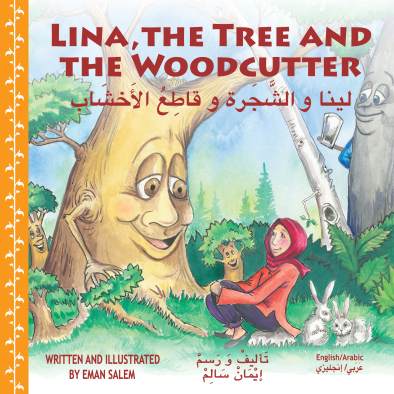
Lina, the Tree and the Woodcutter by Eman Salem

Standard
Lina, the Tree and the Woodcutter by Eman Salem

lina

I’ve enjoyed another book in this bilingual series, Little Tree Goes for Hajj,  and was excited to see little tree all grown up and the focus of a book on the environment.  The 22 pages in Arabic and English start out promising, setting the stage, establishing the familiar characters, discussing caring for trees and not harming them for no purpose, but then the book just kind of ends.  It is wordy, the English anyway, I cannot comment on the Arabic, but it is sweet and warm in its own Islamic fiction way.  I didn’t feel like a glossary was needed, it mentions Allah in the text and seems meant for Muslims, so why the definitions of Allah, Hajj, and Mecca are included is a bit odd especially when it uses Christianity and Judaism in the explanation of the oneness of Allah.

img_9825

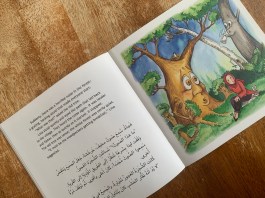
Little tree is now an old tree and was a friend of Lina’s grandfather, they had traveled to hajj together.  As they sit chatting, they hear a horrible noise and discover it is a woodcutter chopping down a tree.  When the young man stumbles upon the talking tree and Lina they question his motives.

img_9826

He wasn’t chopping wood for fuel, or to build a home, he was just chopping it because he could.  Lina and the old tree explain what was lost with the destruction of the tree and teach him that Allah swt has made people the earth’s caretakers.  The woodcutter learns from his mistakes and apologizes.

I wish the book maybe would have made a stronger point that trees take a while to grow and that sorry is well and good, but not enough to restore what was lost.  I like that the woodcutter wants to learn more, but a few lines detailing what he learns or that he came every day to sit with them or some sort of ending would have been nice.

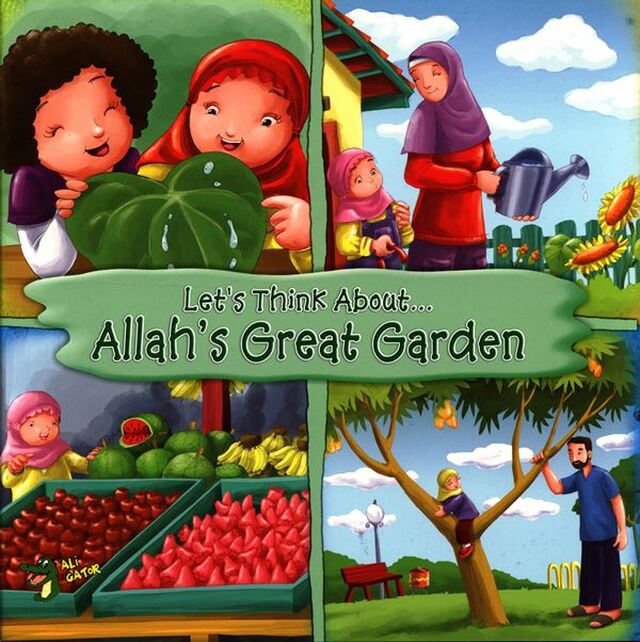
Let’s Think about Allah’s Great Garden by Ali Gator

Standard
Let’s Think about Allah’s Great Garden by Ali Gator

allah's garden

At 22 pages this book’s title aptly describes the contents within: at times factual, sometimes breaking down the fourth wall and asking readers to do something engaging, at times fictionalized, and often meandering and reflective.  The book is all over the place and only cohesive in theme.  It has sat on my shelf untouched by my children for quite a while, but when I needed options for the library during Earth Day, this book did a great job in facilitating discussion with pre k to 1st grade.  It isn’t a story time book so to speak, but it gets kids thinking and can be tailored to their level of discussion.  I don’t think that is how the book was intended, and as it is written it is rather unimpressive, but when pulled apart it did serve a very specific purpose.

img_9837

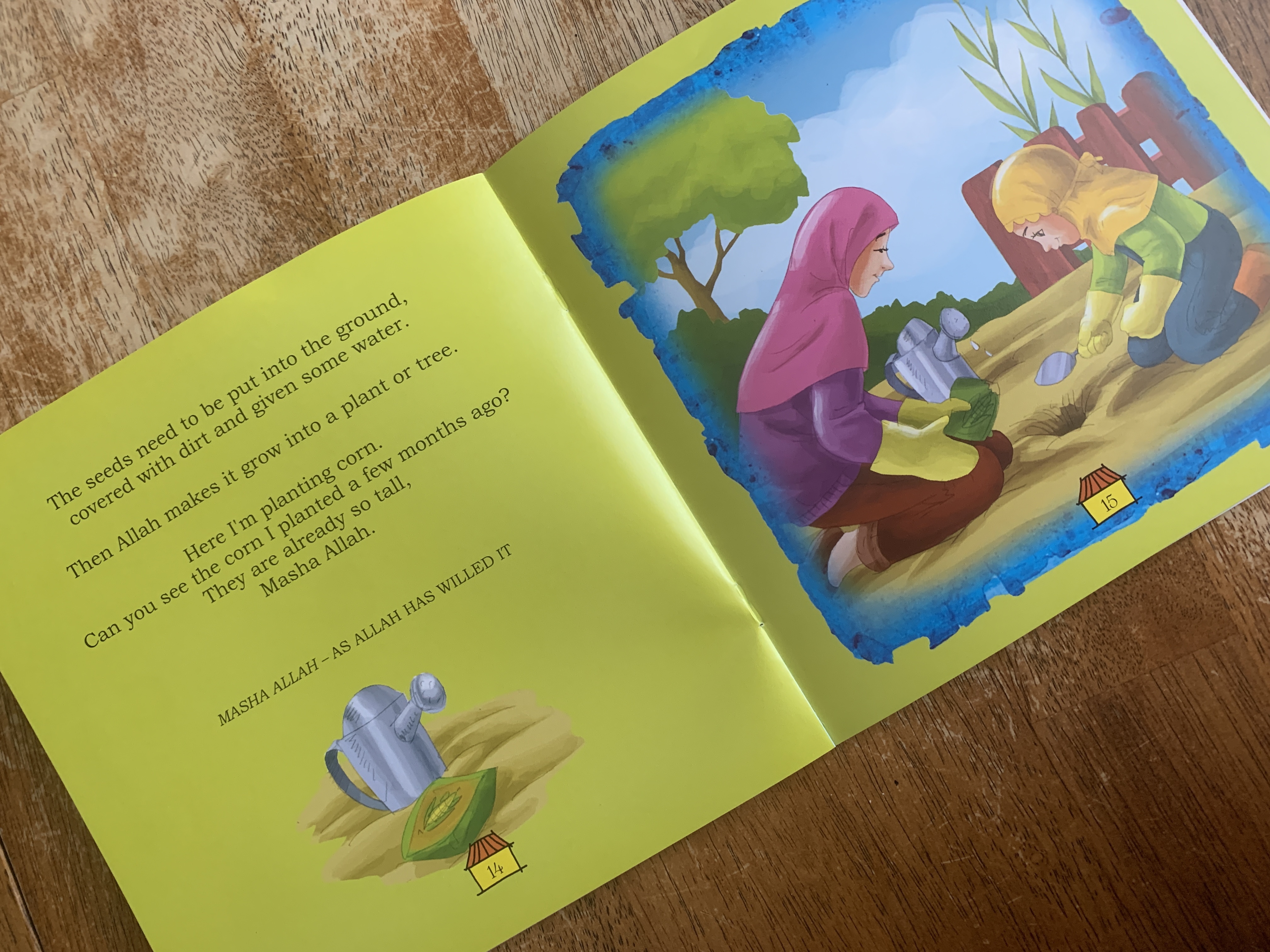
The book starts out with a few lines about Allah’s blessings of all things particularly trees and plants and gardens.  I wasn’t sure if it was trying to rhyme or not, but I think the first lines are just incidental rhyme as the flow and words quickly unravel. It talks of climbing trees and the narrator’s father telling him to be careful. It then discusses watermelons and how they grow in the ground, not on a tree and asks readers if they can see the watermelon seeds in the illustrations.

img_9836

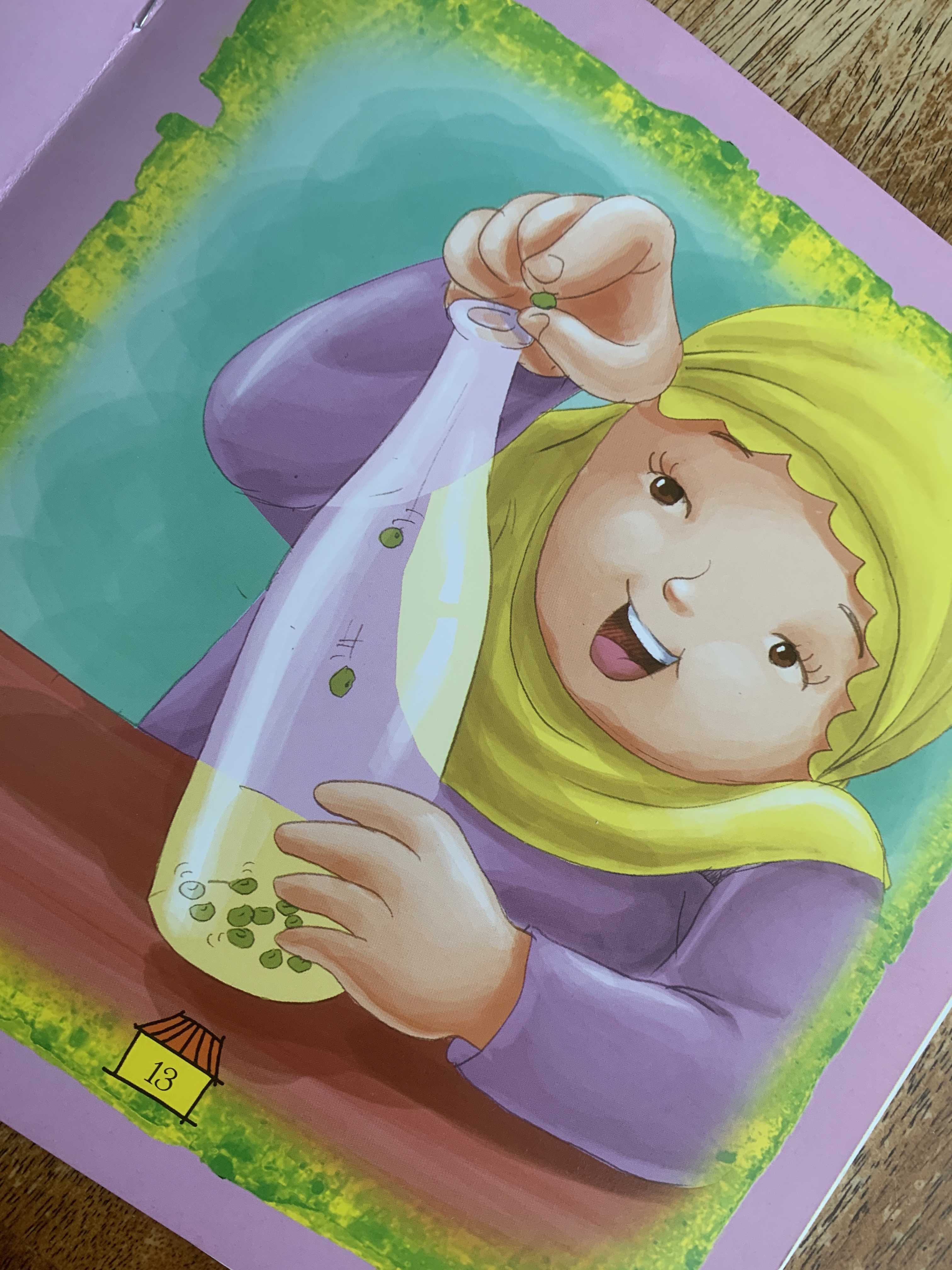
The book focuses on the life cycle of plants: seeds, flowers, trees. Drawing on that information it then shows the little girl collecting seeds to plant.  It then talks about the planting process and the needs all growing things have to prosper if Allah so wills it.

img_9838

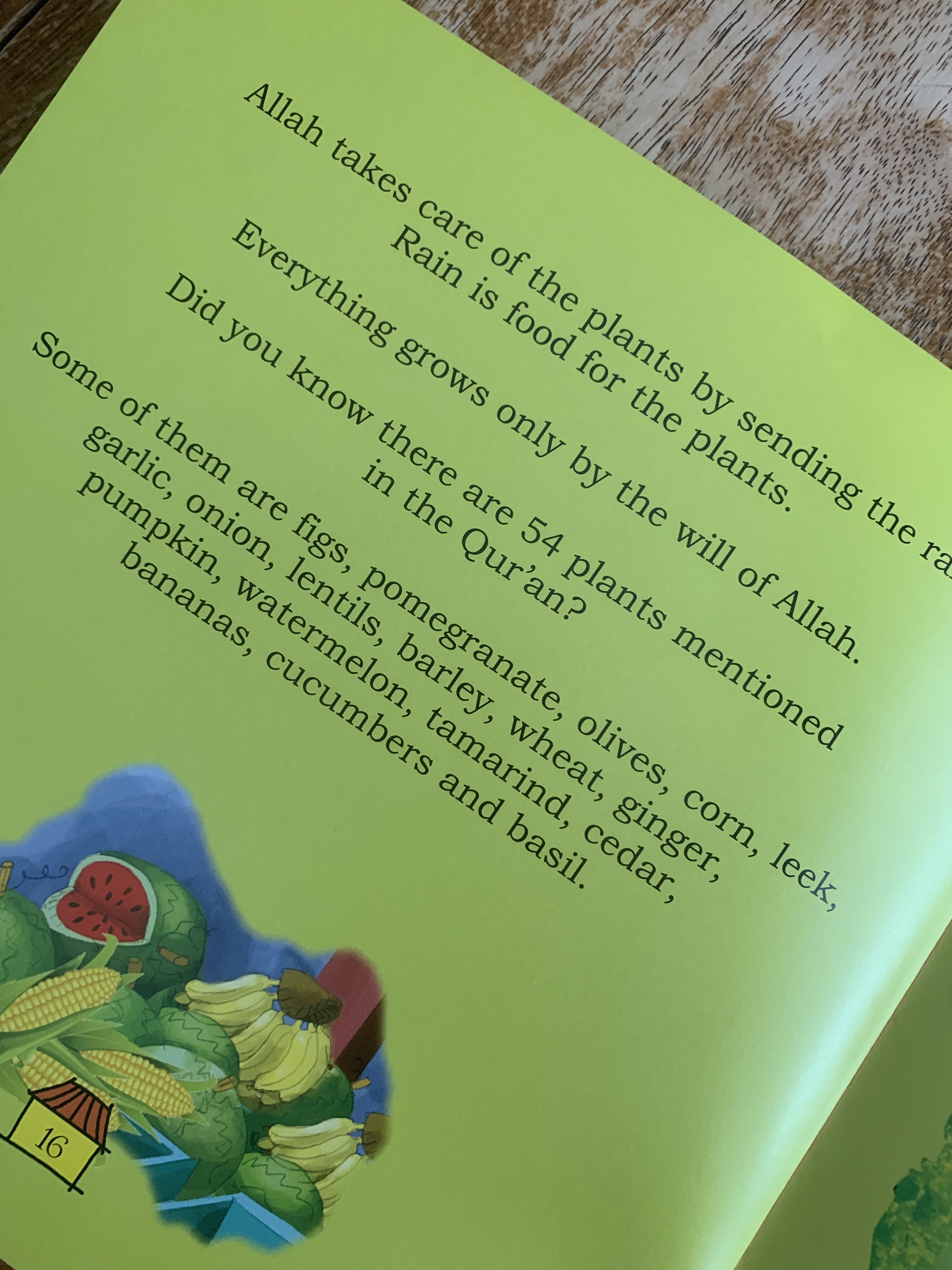
Then the book gets interesting and starts to discuss the plants mentioned in the Qur’an before returning back to the half hearted narrative remarking on how the flowers complement the color of their house.

img_9839

The story seems to then end, but it isn’t denoted that the remaining pages are factual or set aside as back matter, it just pivots and begins discussing rain in Surah an-Nahl, Trees in Paradise as mentioned in Qur’an and Hadith, and then again, but this time in table form, the fruits and vegetables mentioned in the Qur’an, and highlighting dates specifically.

img_9841

The book is all over the place, and I doubt it will be read again until next year.  There are a few other books that have come out about his topic, and I plan to look in to them to see if they work better for story time readings and child engagement.

Hassan and Aneesa Go To a Nikaah by Yasmeen Rahim illustrated by Rakaiya Azzouz

Standard
Hassan and Aneesa Go To a Nikaah by Yasmeen Rahim illustrated by Rakaiya Azzouz

hassan and aneesa

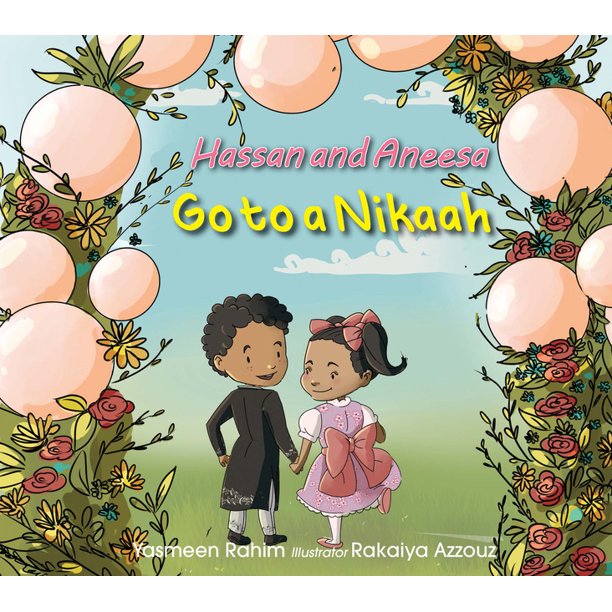
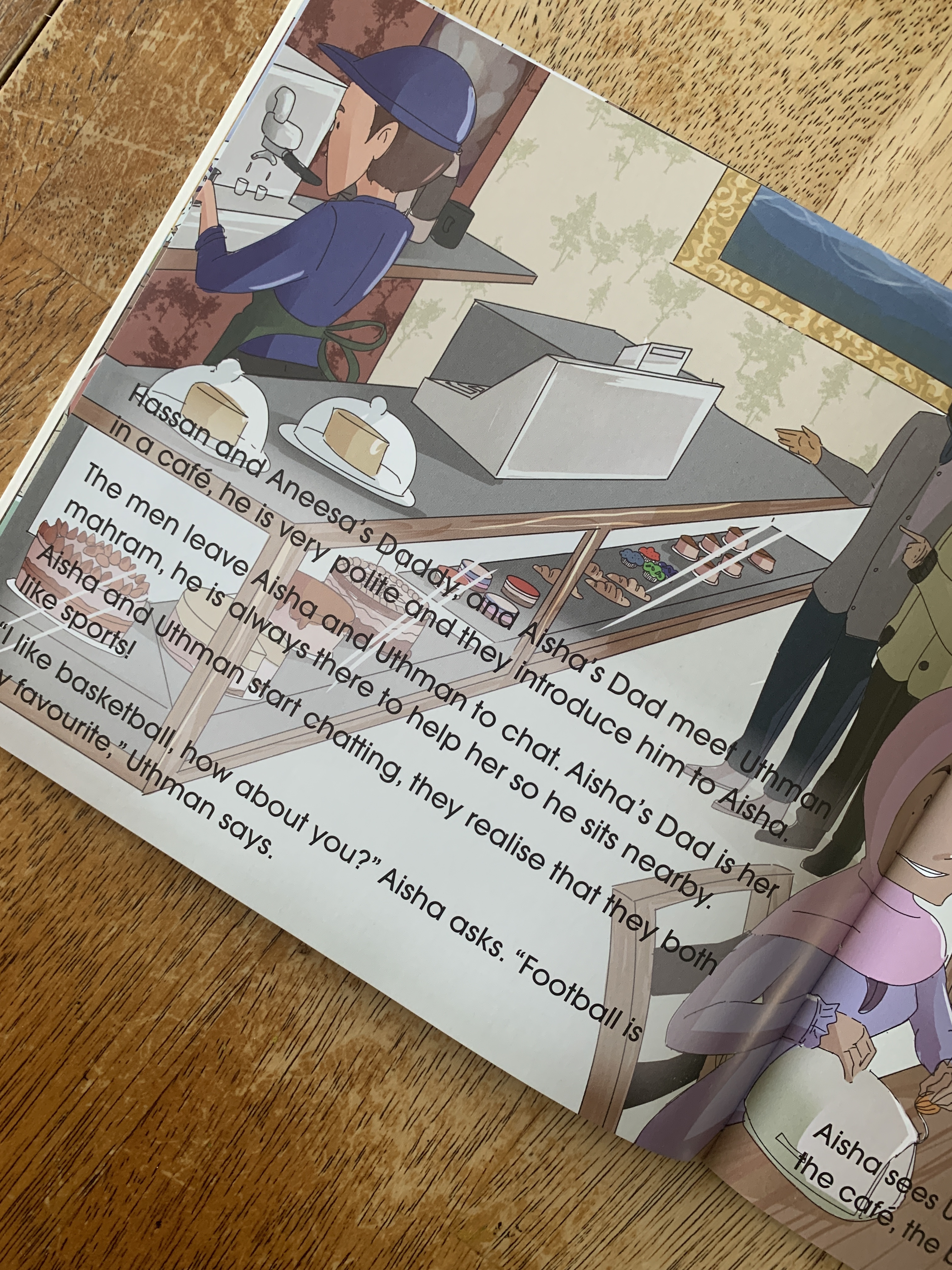
The latest installment in the Hassan and Aneesa series caught my attention because there just aren’t a lot of books about an Islamic marriage process (it is Desi tinged).  Cultural weddings you often see, but despite the misleading title of them just attending a Nikaah, they actually walk the reader through the steps from wanting to get married, to getting to know someone, praying Salatul-Istikhara,  agreeing on a mahr, signing contracts, and a walima.  The idea and premise is brilliant and greatly needed, the finished product, not so much.  Somehow I had forgotten how tiny in size the books in the series are (6.5×7.5), making it all visually cluttered and the text often hard to see over the illustrations.  And while I love how the concepts and terms are defined, the point of view of having it witnessed and detailed by the brother sister duo is often awkward and wordy.  I wish the author would have ditched the familiar characters, and just written a book about the marriage process for kids.  The vacillating between a fictionalized story, factual requirements, kids witnessing their parents helping their cousin get married, makes for a tangled book that fails to connect to readers seven and up, let alone two and up like the book claims. If you’re kids are asking about how Muslims marry or seem curious about a halal way it can be done, I suppose this book would provide a way to understand some of the key facets in broad strokes, but it needs editing, and more space to show joy and excitement in a book about families and a couple coming together.

img_9813

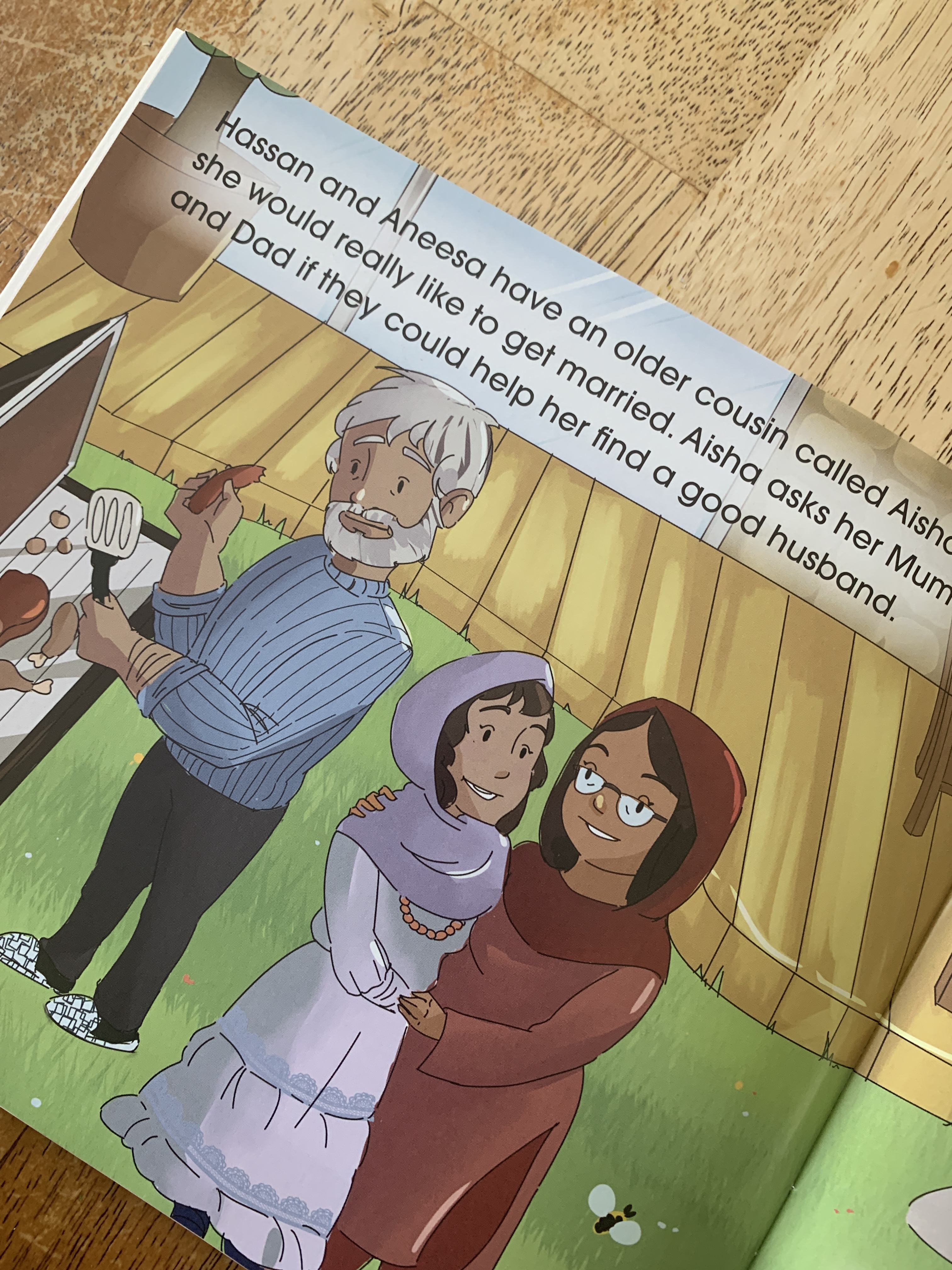
The very first page set the tone for me, the overly dressed girl at a barbecue and the way her name seems to be so formally introduced.  Perhaps it is a difference of culture, but the book never bounced back from the heavy handed tone.  Aisha wants to get married and asks her parents to help her find someone.  They ask her what she is looking for and she tells them.  I like what she includes kindness, love of Allah, funny, etc.  I wish it would have suggested that she had given it a lot of thought before answering though.

img_9814

Aneesa and Hassan’s mom and their aunt are discussing Aisha’s want to marry at their painting class and a friend over hears and suggests her son Uthman.  The families agree to have the two meet in a cafe with Aneesa and Hassan’s dad and uncle so that her mahram is nearby.  Uthman and Aisha both enjoy sports and Uthman interacts with a baby at another table impressing Aisha.  They both pray istikhara and decide that the families should all meet.

img_9815

It is then time to pick out a dress and hand out invitations, which at least involves Hassan and Aneesa, but the pages are so cringe and awkward from the phrasing, to the structure of the concepts.  The spread is disjointed and you’ll catch yourself shaking your head and making a face every time you read it.

Mehndi is next and I’m not sure why it focuses on Aneesa not sitting still and looking sad when her design is ruined.  It seems like an odd inclusion in what should be a joyous book.  Hassan is entrusted with gift to hold on to by Uthman for Aisha, and the Imam gives a khutbah about marriage.

Contracts are then signed with Aisha her wali, uthman and the imam and each party is asked if they agree.  They have already decided on the mahr and then Hassan hands over the gift.  The walima feast is delicious and the reader is encouraged to go back and find the cat in the illustrations.

As for illustrations I do like that the main females are shown out of hijab at home, and in hijab while out.  At the wedding there are different shades of brown, different loves of covering and not covering, there is a guest in a wheel chair and the couple and their families seem happy.  I found it odd that it says they are in love, since there isn’t a lot of emotion mentioned before the last page and I wish the text on numerous pages wasn’t mixed in with the pictures.

The book concludes with a glossary of terms.

The Maliks Ramadan Mayhem by Zanib Mian

Standard
The Maliks Ramadan Mayhem by Zanib Mian

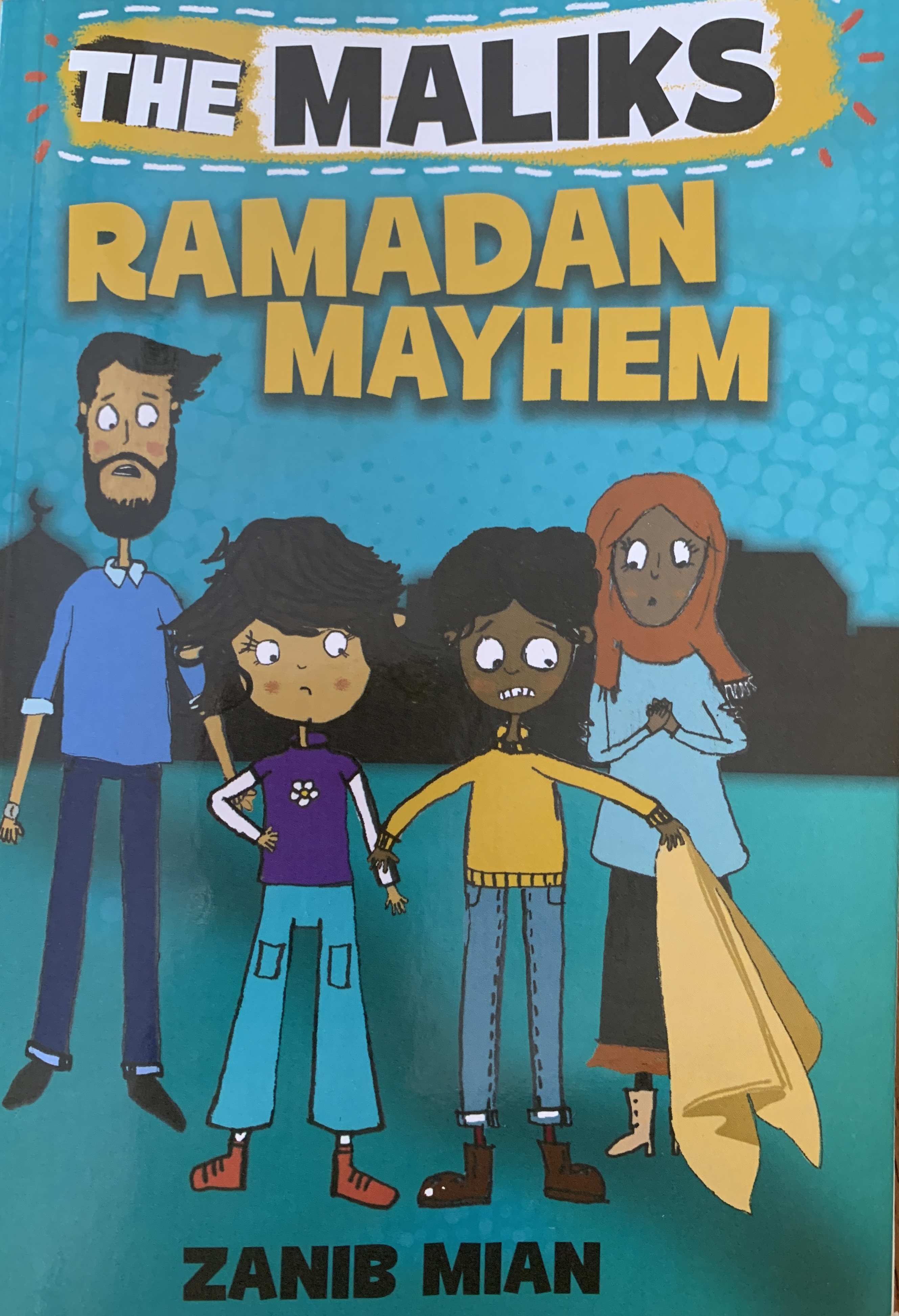
This 93 page Islam centered, action packed, humor filled book was written as a gift by the fabulous Zanib Mian for her readers. The book was to be free, all you had to do was pay shipping. Well, if you lived outside of the UK, that would make the book pretty expensive, so like any entitled book lover, I started annoying the author, my friend Noura the owner of Crescent Moon Store, and any and all connections I could muster to get the book during Ramadan. I wasn’t trying to get it for free, I just really wanted it in my hands. So, when the author did a second printing for purchasing, and my US stockist was on the list, I was giddy. Then I went out of town to be able to spend Eid with family and the lovely book sat on my neighbors dining table until the blessed month and the festivities of Eid, had come and gone. But guess what, it is ok. This book is fun, no matter what time of year you read it. It is as silly and informative and relatable as all the Omar books, and the characters just as delightful, the mystery just as teasing, and the quirkiness just as charming for readers 7 to 100. Thank you for this gift, thank you dear friend for stocking it at an incredibly affordable price and getting it to me with such speed and love. And dear readers, don’t wait until next Ramadan to get your copy, you and your children will enjoy the book now, repeatedly, and as they get excited for Ramadan next year (and the year after, and the one after that too), inshaAllah.

SYNOPSIS:

Maysa Malik is often misunderstood, and crossing lines at school, with friends, and at madrassah that get her in trouble, even while making others laugh. Her twin brother Musa doesn’t have Maysa’s penchant for getting in trouble, and so their parents are letting him go on the school trip, but not her. Maysa is determined to prove to her parents that she isn’t a class clown and can stay out of trouble. With help from Musa and their neighbor Norman, a cookie tower competition might be just the thing to raise money for charity and get in her parents’ good graces. But, a little lie to avoid teasing has big consequences and destroyed cookie towers mean her plan to go on her residential trip is failing. And no, I’m not going to spoil the plan b the kids come up with, or reveal the snowballing implications of the lie, I wouldn’t want to ruin it for you.

WHY I LIKE IT:

I love that the Islamic tidbits are woven in and made a part of the story. It doesn’t pull out to give facts about Ramadan, salat, and charity, it is all part of the story and works well for both Muslims and non Muslims without compromising or watering down important aspects of our faith. I absolutely love that Norman makes wudu before doing anything and everything related to Islam, and is very aware that farting is a wudu popping act.

There is a “moral” about honesty and self confidence, but it doesn’t come off preachy, and as I’ve grown to expect from the author, her voice reads very genuine and true. The lessons from one character to another and from within internal reflection of a character, feels organic and age appropriate.

The only thing that bothered me initially, but perhaps not so much at the end (I’m going to try not to spoil anything here). Is that the one character that speaks “broken” English is painted as being strict, mean, and short tempered. There is redemption for him, but I wish the characters were more aware of their own impressions of Mr Saleh, and that the stereotype wasn’t perpetuated.

FLAGS:

Lying, accusations, some retaliation against a bully, gossip, gambling is mentioned, butt jokes, fart and bathroom mentions. Nothing offensive, but it is funny.

TOOLS FOR LEADING THE DISCUSSION:

I won’t do this as a book club selection, but I am hoping to read it aloud to 2-4th grade next year before or during Ramadan. It would probably just take a few library sessions and I think the kids will love it.

My Baba’s House: A Poem of Hope by Dr. Amani Mugasa illustrated by Eman Salem

Standard
My Baba’s House: A Poem of Hope by Dr. Amani Mugasa illustrated by Eman Salem

my babas house

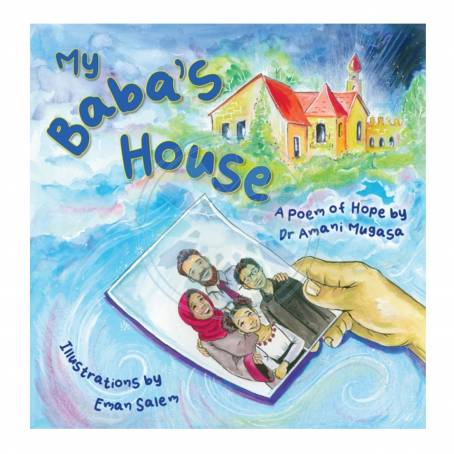
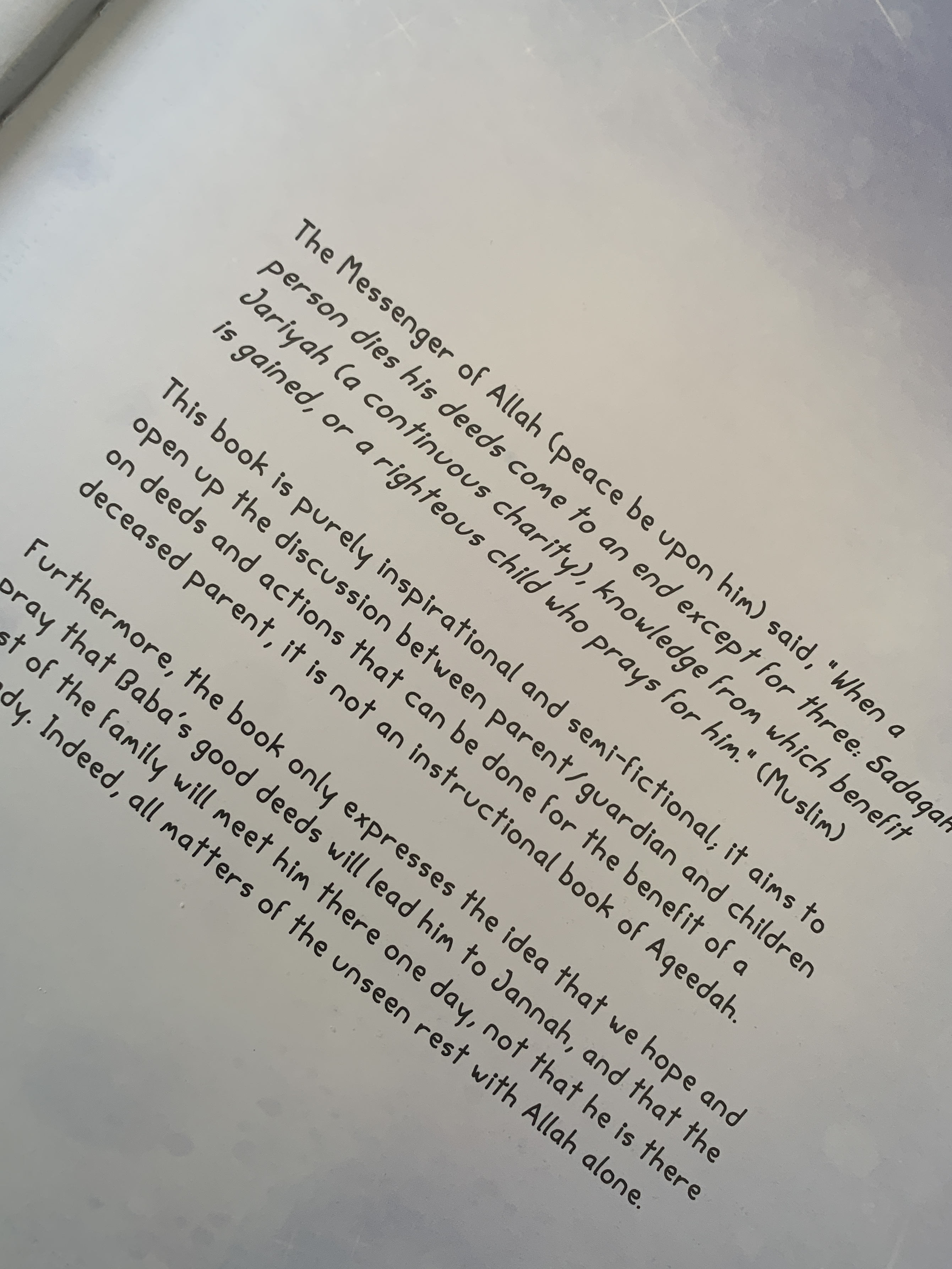
I wanted to love this Islamic centered children’s book about grief, but I found it a bit problematic and misleading.  I am by no means an expert in Islamic matters of death or in psychological bereavement, but the note at the beginning of the book- if I wasn’t already going to look at it critically- really raised some warning flags.  It says that the book is not an instructional book on Aqeedah, that even though the title and whole story is about a house being built that “the book only expresses the idea that we hope and pray that Baba’s good deeds will lead him to Jannah, that that the rest of the family will meet him there one day, not that he is there already.” So, before you even start the story, it seems that the disclaimer is making it clear that this book is not religiously accurate, and that it is just meant to soothe and provided hope.  After taking all that in to consideration, and reading the 26 pages of text over a dozen times, I think I finally pinpointed why the book further reads problematic for me.  It is the repeating phrase, “Your Baba has been building a beautiful house for you,”  because he hasn’t right? He has built a house for himself through his good deeds in this duniya, he benefited HIS parents by being a righteous Muslim.  The words “for you” completely take the book in my head from being a slight suspension of timing where the deceased are, in to be misleading.  So if the book is not accurately framed and only to be taken as something “to open the discussion,” what is the point? Why fill it with Islamic references and concepts, if they will then have to be clarified, corrected, and re taught?  Sigh, I’m happy to listen to those that want to change my mind, truly I am.

img_9013

The rhyming book starts out with a mom and two kids being consoled by the text that their Baba has been building a house for them with Allah’s help.  That it is amongst the flowers, made with Allah’s powers. That with every good deed he did, their Baba becomes a builder, that there are pure rivers and trees, and that the house is hidden through Allah’s gate.

img_9014

To find their Baba’s house they will walk with Prophets, and see ripe fruits, and smell sweet musk.  There will be rivers of milk and he will carry them above his head.  The illustrations on this page are a little off in my opinion the shadows of a person elevating and even the girl looks a little concerned.

img_9015

I like that the next spread addresses that only Allah knows when the day will come that we reunite. And then the next pages tell how the children can help decorate their Baba’s house by calling adhaan, reading Qur’an, being kind, giving charity, and making duas.

img_9016

The book concludes with encouraging patience and finding reassurance in knowing we belong to Allah and to Him we return.

With the exception of the one page, the illustrations are adequate and show a mixed racial family.  The rhyming lines are rather weak, and ultimately there are just better books out there about grief that don’t have to be so qualified for accuracy.

It’s Springtime! by Rabia Bashir illustrated by Azra Momin

Standard
It’s Springtime! by Rabia Bashir illustrated by Azra Momin

spring time

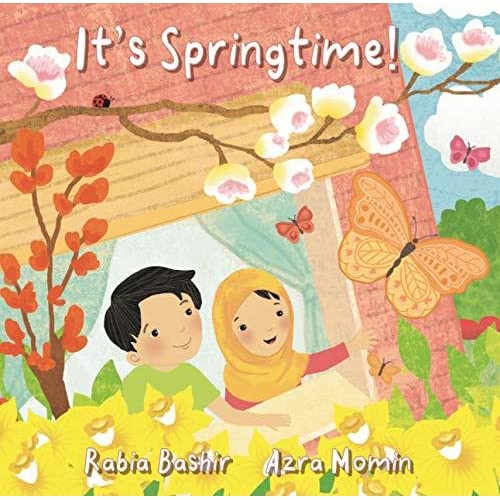
This sweet 18 page board book introduces seasons to our littlest Muslims through rhyming lines, Islamic gratitude and activities enjoyed during certain times of the year.  It even has a “spot and talk” activity at the back and a way to explain “Alhumdulillah” to children.  The text is simple and the illustrations engaging for ages infant to pre-k.

img_8386

The book starts with spring and dedicates four pages to praising Allah swt by appreciating the flowers and baby animals before looking forward to summer, that is on its way.

img_8387

Summer is also four pages of saying Alhumdulillah for the sunshine, ice cream, the beach, and sandcastles, before heading off to autumn.

img_8388

The book covers all four seasons and mentions that after winter is spring again.  The book’s size and the thickness of the pages makes it great for toting around for little ones, and the flowing lines make it a quick read that you don’t mind reading over and over again, Alhumdulillah.

img_8389

Songs and activities available at www.preciousbees.com

Rapunzel: An Islamic Tale by Fawzia Gilani illustrated by Sarah Nesti Willard

Standard
Rapunzel: An Islamic Tale by Fawzia Gilani illustrated by Sarah Nesti Willard

rapunzel

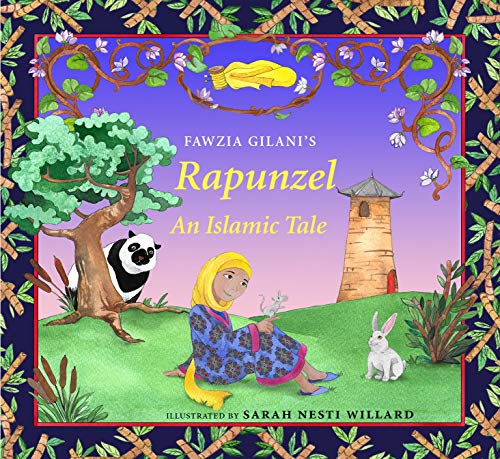
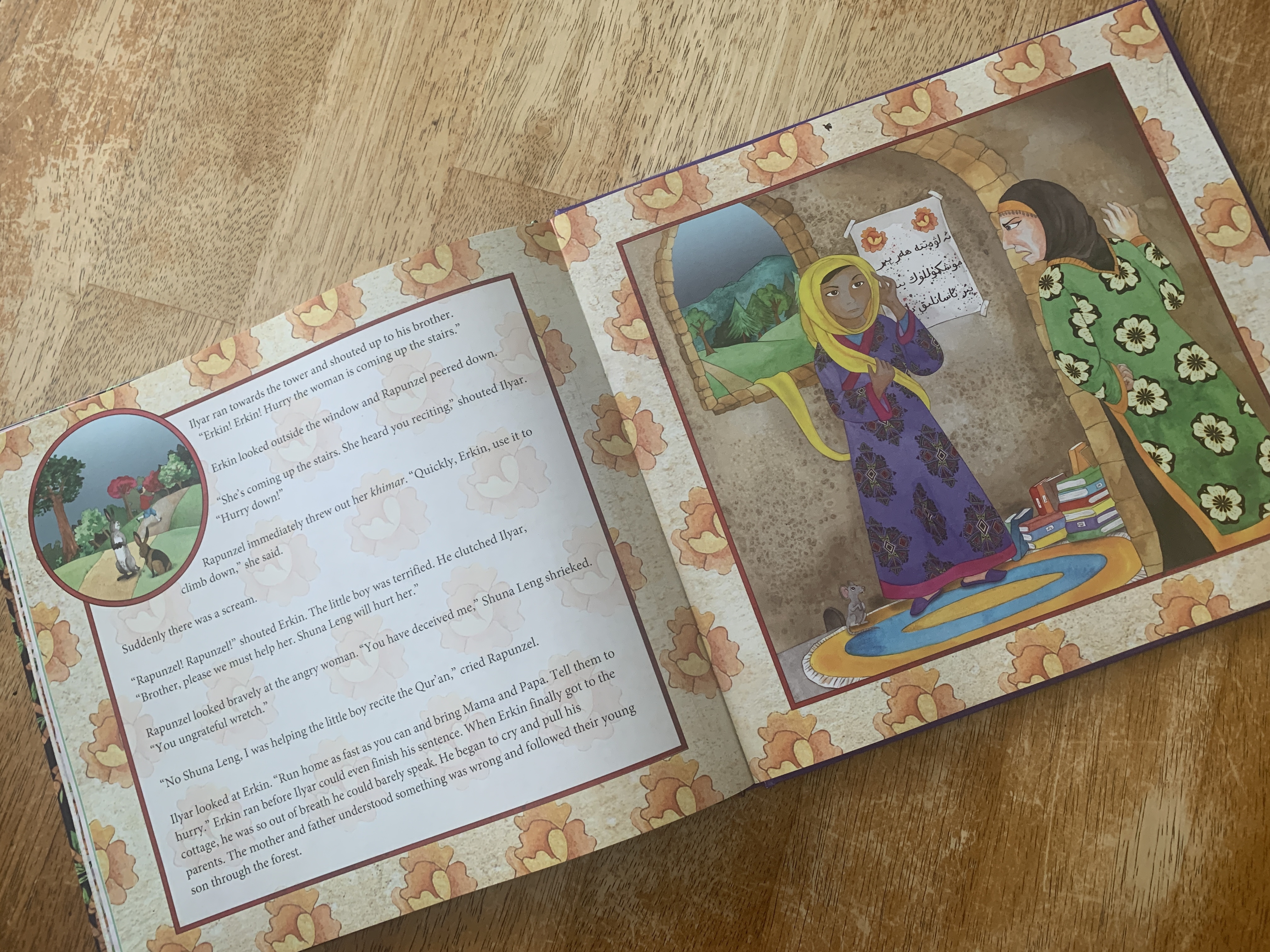
Having read the other “princess” retellings by Fawzia Gilani I didn’t rush out to acquire this book, but when a friend said it was available at the public library, I was surprised and admittedly curious.  This book just like the others in the series are very much in my eyes “Islamic fiction” for how centered Islam is for the characters and how it is used to frame the story toward a religious message.  The fact that a small city library in a Southern state purchased and shelves it, is pretty impressive.  As for the story, well it is really long, and wordy, and every page is filled with tiny text filled lines that I doubt most kids will be able to sit through.  The Islamic content is very present, the Uyghur setting appreciated, but wow do the 41 pages pack a lot of text in to a fairytale re-telling. There is a lot of Islam and Quran and at times it fits well, at other times incredibly forced.  The book claims it is for ages 5-8, but truthfully I don’t know that any age would be able to sit through it and be engaged.

img_7479

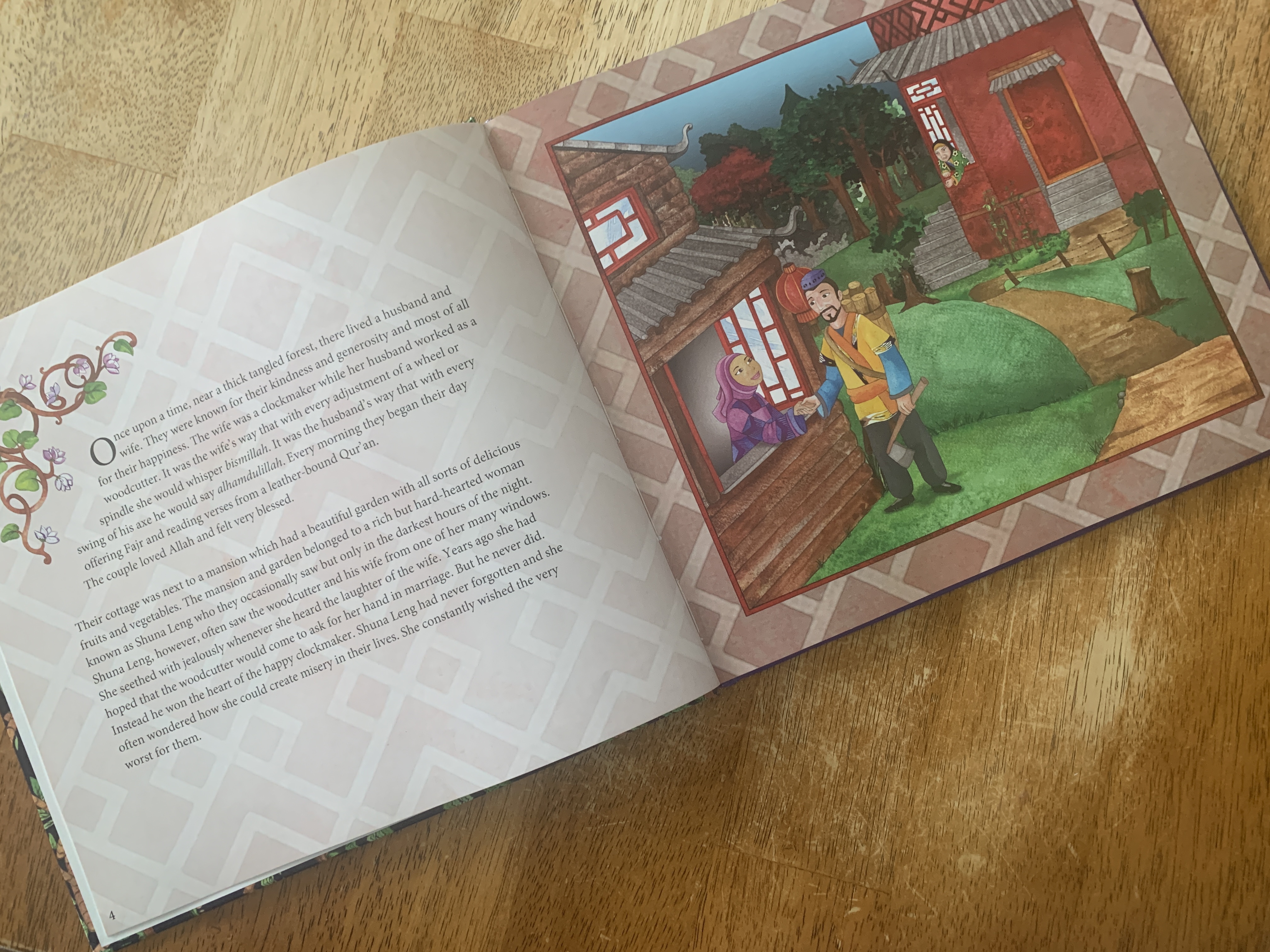
In a tangled forest lives a wife and her husband, a clockmaker and a woodcutter.  Before they married, the wealthy and cold Shuna Leng had hoped to marry the woodcutter, but he never asked, and she never forgot.  As a result seeing her neighbors happy keeps her jealous heart plotting and conniving to bring the couple misery and pain.

img_7481

One day, while pregnant, the wife has a strong craving for rapunzel greens.  Some just happen to grow on Shuna Leng’s property.  The husband is nervous to ask, but when his wife falls weak he makes an effort.  She doesn’t answer, so he picks some growing along the path and leaves coin for payment.  This wife regains her strength and then begins craving them again.  He decides to do what he did last time, but is caught.  The evil woman agrees that he can have all the rapunzel greens he wants but if the baby is a girl she shall be given in payment.

img_7480

Once born the baby is taken and kept hidden from her parents.  Various governesses are employed over the years to tend to Rapunzel and who teach her Islam and kindness.  Ever so often they have to up and move and abandon their routine when people start asking questions, but the lessons learned from the Quran stay with Rapunzel and she endures what she must.
img_7483

Eventually she ends up in a tower, she offers to help a stray boy recite Quran, and the evil plot of keeping her locked up unravels.  Yes SPOILER she is returned to her parents.

It is a decent retelling in theory, it just is really long, and there isn’t quality character building to invest the reader to the side stories being presented.

img_7482

After Iftar Tales arranged by Bismillah Buddies

Standard
After Iftar Tales arranged by Bismillah Buddies

after iftar tales

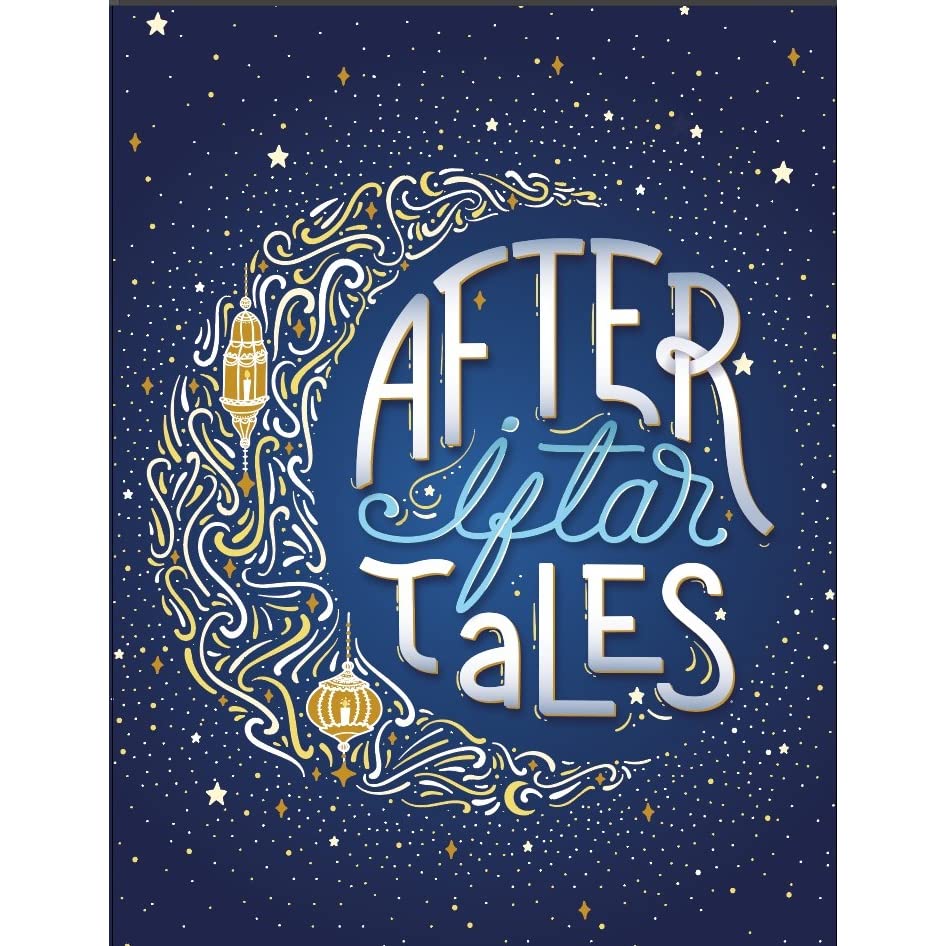
This book’s beautiful dark blue cover with sparkly stars feels good in your hands and looks lovely on the shelf.  It is a collection of 10 short stories presumably to be read by an adult to a child or children during Ramadan and has its highs and lows.  As often is the case in anthologies, some are written better than others and while I particularly liked two of the stories contained, I couldn’t help wishing that the entire collection would have been better edited.  I don’t know any of the authors, or their ages, and there is not an intro or conclusion detailing how the stories were selected or compiled, but as a whole, the grammar errors (spaces before and after commas and periods), failure to spell out numbers less than ten, and the overall plot holes in so many of the stories, makes it hard to love this book.  Something about judging a book by it’s cover would seemingly apply here, the illustrations are decent, the topics and themes covered are important, but the finishing is lacking, and the book really had a lot of potential.

SYNOPSIS:
The ten stories cover Ramadan in different ways, and do not get repetitive.  With different authors and illustrators and pictures on every other page at a minimum, the books presents well.  Many of the stories are adequate, but largely forgettable as the plot holes just made me and my kids dismiss them.  A few are too lengthy and wandering, but there are two that even despite writing obstacles, thematically were memorable:  “A Ramadan Surprise” by Malika Kahn and “Iftar in Space” by Tayyaba Anwar.

“A Ramadan Surprise” is written in rhyming verse and discusses the need for wheelchair accessibility at masjids.  Focusing on a young girl it also hints on the importance of accessibility for the elderly.  This is such a needed and important reminder and I love that it is present in a book that is positioned to be read and thus hopefully discussed.

“Iftar in Space” similarly opens itself up to be discussed and marveled at between a child(ren) and an adult: how would you fast and pray if you were on the International Space Station. This connection could then be made for people that live near the poles, and how science is valued in Islam and so much more.  I love that Islamic information is seemingly sourced, but I would have loved a line or two at the end clearly articulating that in fact this is what this scholar or these scholars have declared.

WHY I LIKE IT:

At first it didn’t bother me that the text was so small, but mid way through, it started to because the pictures are so inviting and regular.  If a child is snuggled up with a reader looking at the pictures it is impossible for them to follow along. I get that that is kind of the point, but with huge margins, the text size can easily be increased.

I don’t know why the book doesn’t seem to have been edited.  The cover and illustrations and binding are all decent to high quality, the cost of the book for consumers is high, so I don’t know why an editor was not (seemingly) involved in the process.  Sure I am picky, but it isn’t one or two grammar errors, it is a lot, and when it is a regular concern, it ruins the flow and feeling of the book.

Overall, honestly there is also very little Islam present in most stories except for the timing of Ramadan, and many of the stories seem to have gaps.  In the first story, a boy is found by a stranger and gifted a lamp, and the family never even tries to find the person who saved their son to thank him? They live in a small village?  In one of the stories where a little girls is fasting for the first time she is also making a salad independently and pulling a cooked tray of lasagna out of a hot oven. A child in one story eats moldy candy, and in a contemporary story kids donate their money to an orphanage.  Are there still orphanages? In one story it opens with a banner being made that is crooked, but the accompanying illustration does not match.  One error or two is easy to overlook, but again, when it is every single story, it is incredibly disappointing.

FLAGS:

Clean

TOOLS FOR LEADING THE DISCUSSION:

I think while reading it you would find plenty to discuss with your children.  On stories where your children seem bored you could skip them, if sentences don’t make sense you can alter them.  I doubt children will read the book independently, so there is some wiggle room to add or subtract from the text to make the points you want to make and keep the stories engaging.  There are a few stories that discuss Covid and the frustration that it has caused to daily activities, which might help add another layer of connection to the text.