Tag Archives: Muslim Character

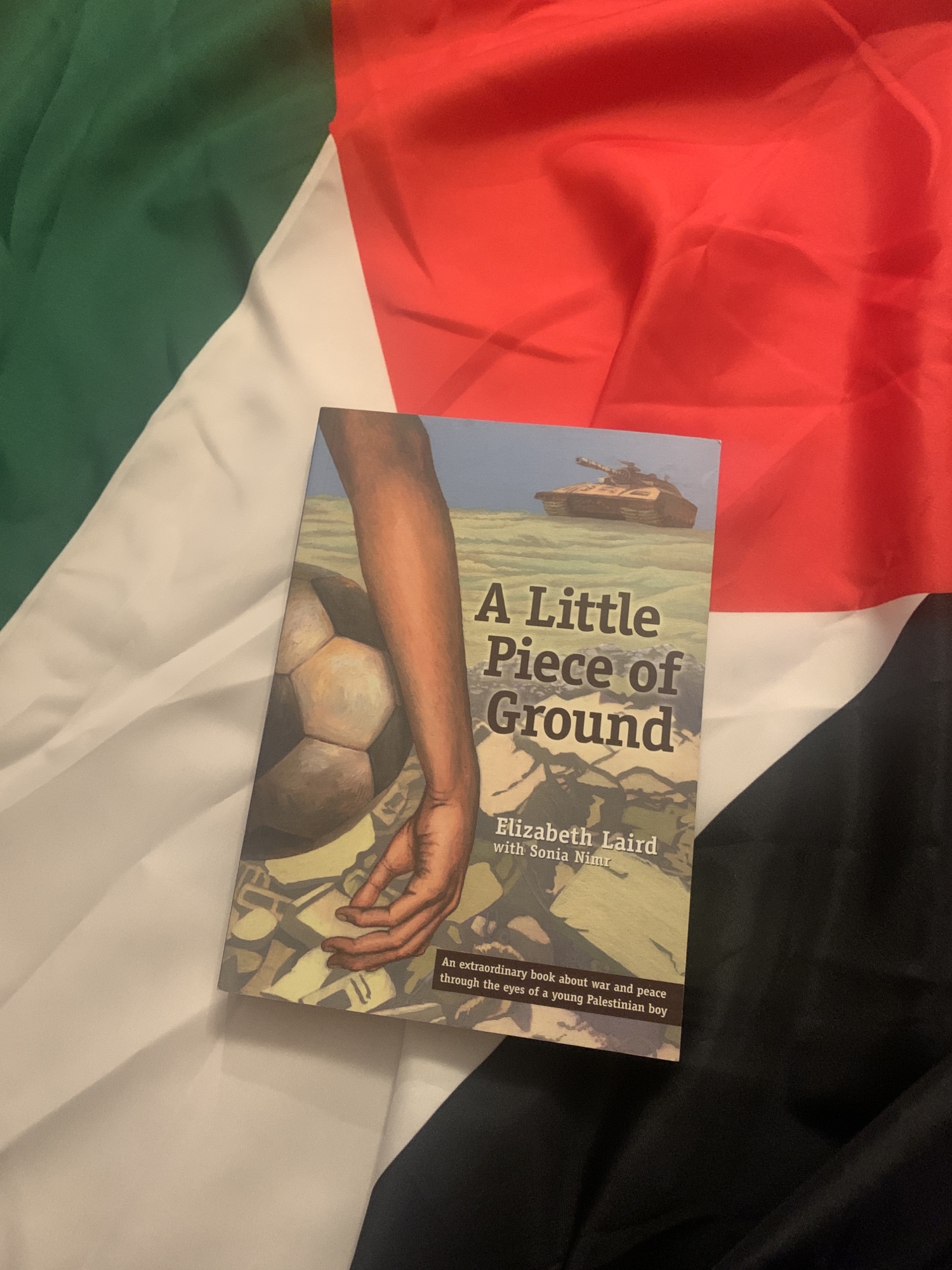
A Little Piece of Ground By Elizabeth Laird with Sonia Nimr

Standard
A Little Piece of Ground By Elizabeth Laird with Sonia Nimr

img_2165-1There are so few Palestinian middle grade books, so on that premise alone this 216 page book has a lot of value.  Because I am not Palestinian, I do not live, nor have I ever lived under occupation, I can argue some of the concerns from a point of privilege, and I acknowledge that is not my right.  I have been asked numerous times about this book and how it frames the suicide bombing mentioned in the text and blurbed about on the back of the book. It honestly is not a large part of the story, that being said, in my outside privileged view, I do not know that a 10 year old in the west will have context to understand the act of this level of desperation from the oppression and humiliation mentioned in the book. This is why I have held off my review.  The truth does not need to be defended or explained, and I fear my reservations will be taken as such, which is not my intention.  Would I let me 8 year old read this, yes, but we will read it together and discuss.  My children are aware of what is going on in Palestine, but Karim, the 12-year-old protagonist supports the bomber, and that notion is not clearly pushed back on. With discussion, absolutely, I think readers, will truly get Karim’s perspective that something has to be done to change the status quo.  The fear when Karim is alone and the target of soldiers, the settlers forcibly seizing the family land, the humiliation of strip searching men at checkpoints, the curfews, and constant fear of attack and imprisonment are all presented through the main character’s eyes, and would also do better with some discussion, so that empathy and duas and action can result.  But, the commentary as to the suicide bombing are minimal, there is even a prank package bombing that is presented as rebellion by a side character, and I would worry how a young child, without guidance, would internalize it.   Additionally, this is yet another difficult book for me to review, primarily because it was first published in 2003, and because I don’t know how much comes from a western gaze and how much the Palestinian voice played into it. Islam is clear on the prohibition of suicide.  In the early 2000 the news out of Israel was often about such attacks, but as an outsider, I honestly do not know if it was simply Israeli propaganda and stereotypes amplifying the idea as part of their public relations strategy or reality, seeing as now that Palestinians have direct outlets to share their daily life under an oppressive occupation, there is rarely talk of suicide bombing attacks. The author states on her website:

“I first visited Israel in 1968, and enjoyed a warm welcome from many Israeli friends. Later, I lived in Beirut with my husband and son during the civil war there, and became aware for the first time of the tragedy of the Palestinian refugees. I visited both Gaza and Ramallah, in the occupied territories, in 2002, while leading workshops for Palestinian writers. I was appalled by the circumstances in which people were living, and became aware that we in the West know very little of what life is like for Palestinians living under military occupation.

I have written A Little Piece of Ground in collaboration with Sonia Nimr, a Palestinian archaeologist, storyteller, writer and translator, who lives in Ramallah. We have tried to make our story as true to life as we can.”

The book is a hard read at times, but the joy is there.  Just as we as adults scroll through the devastation, the humanity persists.  The world may try and forget that they are attempting to erase a rich culture, but even in this book, their is laughter, and crushes, and sibling squabbles, and soccer games and friendship, and food, and joy.  There is a little Islam, not much, the main character is Muslim, a best friend is Christian.  It isn’t present in their everyday thoughts and actions, more just in identifying their faith.

SYNOPSIS:

Karim and his friends are not so much different than 12-year-olds everywhere, he loves video games, playing sports, isn’t so sure what he wants to be in the future, wonders what he will look like as he grows up, and is often annoyed with his family who he loves dearly.  Karim’s life in Ramallah is also unique, he lives under curfew, he doesn’t have freedom of movement, opportunity, or equal rights, and a simple family outing can be life altering.

The book follows Karim and his group of friend as they discover a patch of land they decide to turn into a soccer field, to claim as their own.  They work on it on days they can sneak away after school, in windows of time between curfews, and before long start to take pride in what the land can be. Adopting cats, learning about new friends from the refugee camp next store, teasing siblings about their crushes is all in contrast to Karim watching his father be stripped searched at a check point, being chased off their family land when they are harvesting olives by settlers shooting at them, and pranking soldiers in desperation of fighting back against oppression.

When soldiers roll in and occupy the land the boys have claimed, symbolic of their whole country, Karim gets stuck barricaded in an old abandoned car for days, with soldiers aiming their sights on him, and wondering if he will survive.

FLAGS:

Suicide, systemic abuse, oppression, humiliation, dehumanization, killing, beating, apartheid, genocide, violence, stripping, lying, crushes, occupation, shootings, injuries.

TOOLS FOR LEADING THE DISCUSSION:

This book does not need tools to be discussed.  It itself is a tool, to help middle grade kids be aware that this cruelty has been occurring for 75 years, this book took place 20 years ago, and today we just have social media sharing these stories more widely.  InshaAllah soon, Palestine will be free.

You can purchase this book here at Crescent Moon Store where code ISL at checkout saves you 10%

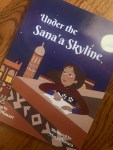
Under the Sana’a Skyline by Salwa Mawari illustrated by Mary Charara

Standard
Under the Sana’a Skyline by Salwa Mawari illustrated by Mary Charara

img_2034-1

For the last 100 days it seems the only time I truly smile is when I see images of Yemen standing with Palestine.  It is impressive, so very inspiring, and equally humbling as well.  Sadly, there are not many children’s books celebrating Yemeni culture, heritage and joy available to us in the west.  This book published in 2022 is set in the war, with memories of easier times peeking through.  When Belquis is assigned to write an inspirational story about Yemen for a global contest, she is at a loss of what to write about as she is surrounded by “bombings, fighting, blockades, loss, and poverty.” This 38 page picture book is text heavy, admittedly it isn’t particularly literary or memorable, but it shows a culture and traditions that need to be shared with our children.  The media and talking points dismiss the rich history of the countries we are attacking in attempts to dehumanize those affected.  This book does not get political or even name the sides in the conflict, it simple shows a girl and her sister rediscovering their city, their history, and their peoples’ kindness and generosity.  I hope more books about Yemen will enter the marketplace, and I pray for the bombings to stop.
img_2035-1

Set in Old Sana’a Belquis dreams of being a writer, but when assigned to write about something “inspirational” she is at a loss. Her geddah encourages her saying that “Some of the most inspirational stories arise from hardship.” Her father encourages her, and her younger sister Saba, to go to the roof and look out from a “bird’s-eye-view.” At maghrib time as they listen to the athan from the Great Mosque they look out at the 2,500 year old city and the qamariyat sparkling in the changing sunlight, but don’t feel inspired.

img_2036-1

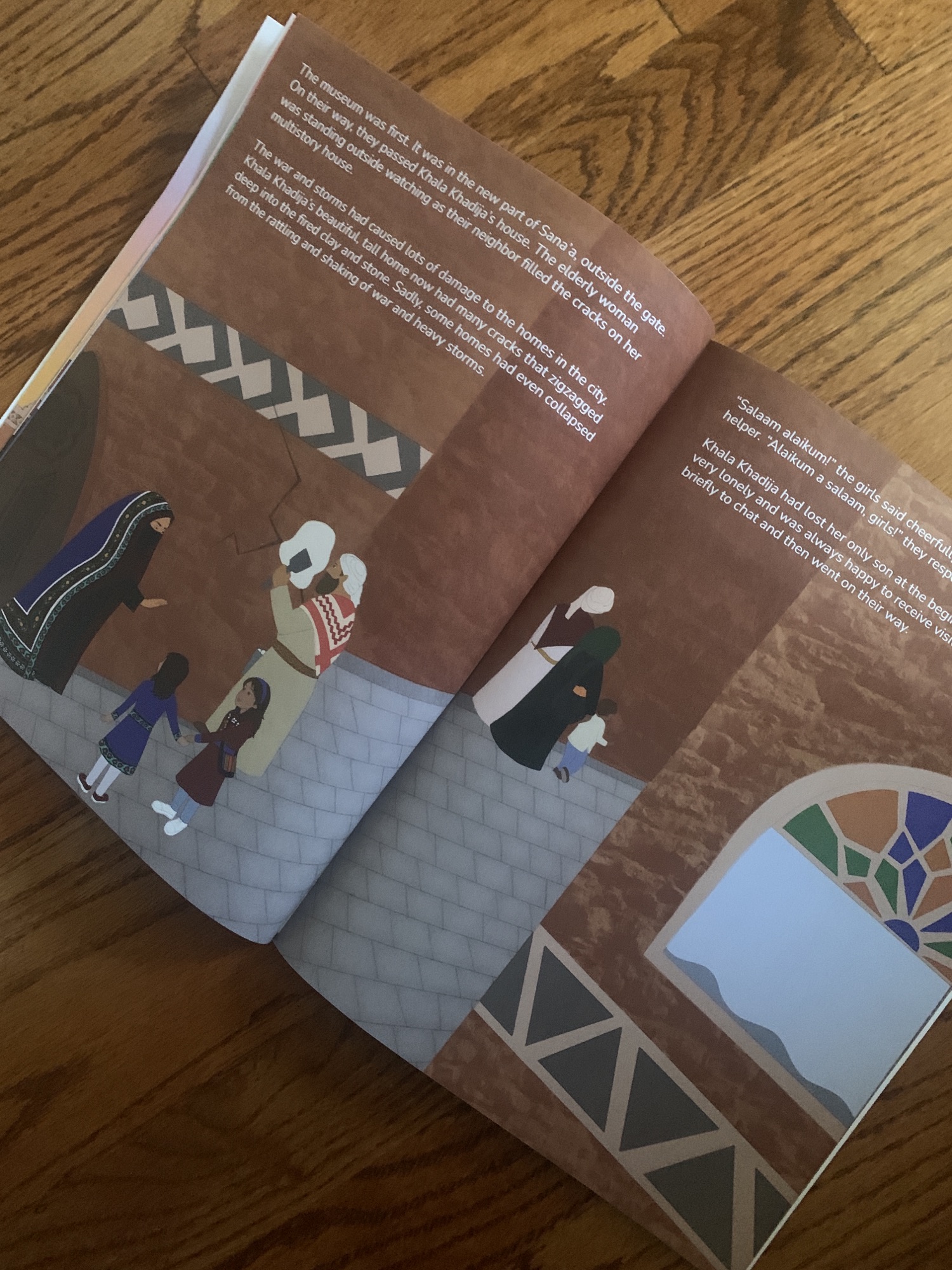
Beliquis briefly laments the looming deadline and the lack of sabaya to eat, but decides to go story hunting by taking Saba and rediscovering their ancient city.  They pass Khala Khadija’s crumbling house as they head to the museum where they are reminded about the Queen of Sheba, Yemen’s original name Arabia Felix, and Queen Arwa.

img_2037-1

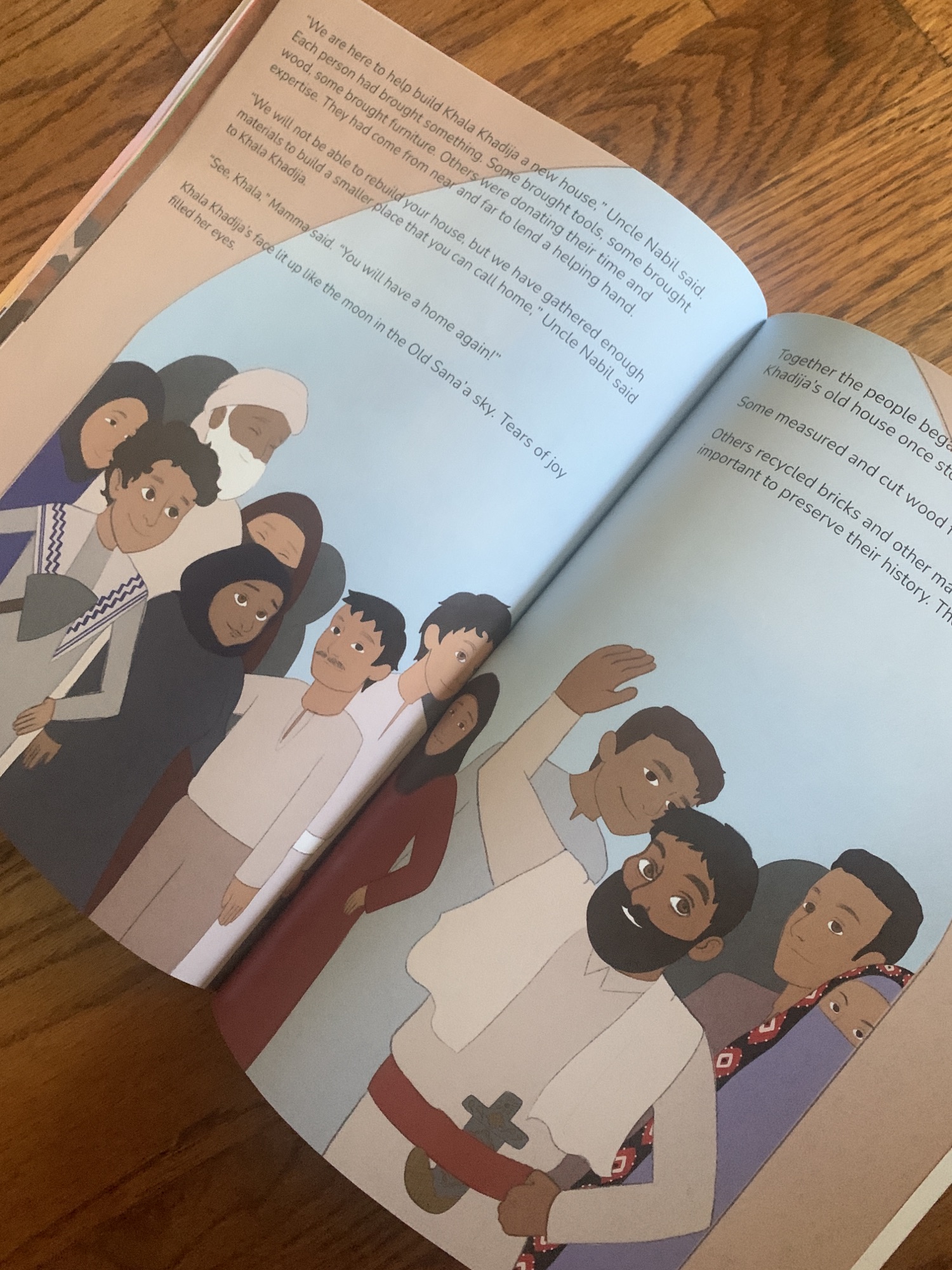
As they leave the museum and head to Souk al-Milh they pass lines of people looking for handouts of food and waiting in line for fuel. When the war started, the tourists stopped coming, so the girls are free to browse, and end up using their pocket money to buy bakhoor for their mother before heading back home.  Heavy hearts make them wish they had instead given that money to a hungry family, and when the cracks from the weather and bombs destroy Khala Khadija’s house completely, the girls, their family, and their entire neighborhood will show the inspiring generosity and spirit of the Yemeni people.

img_2038-1

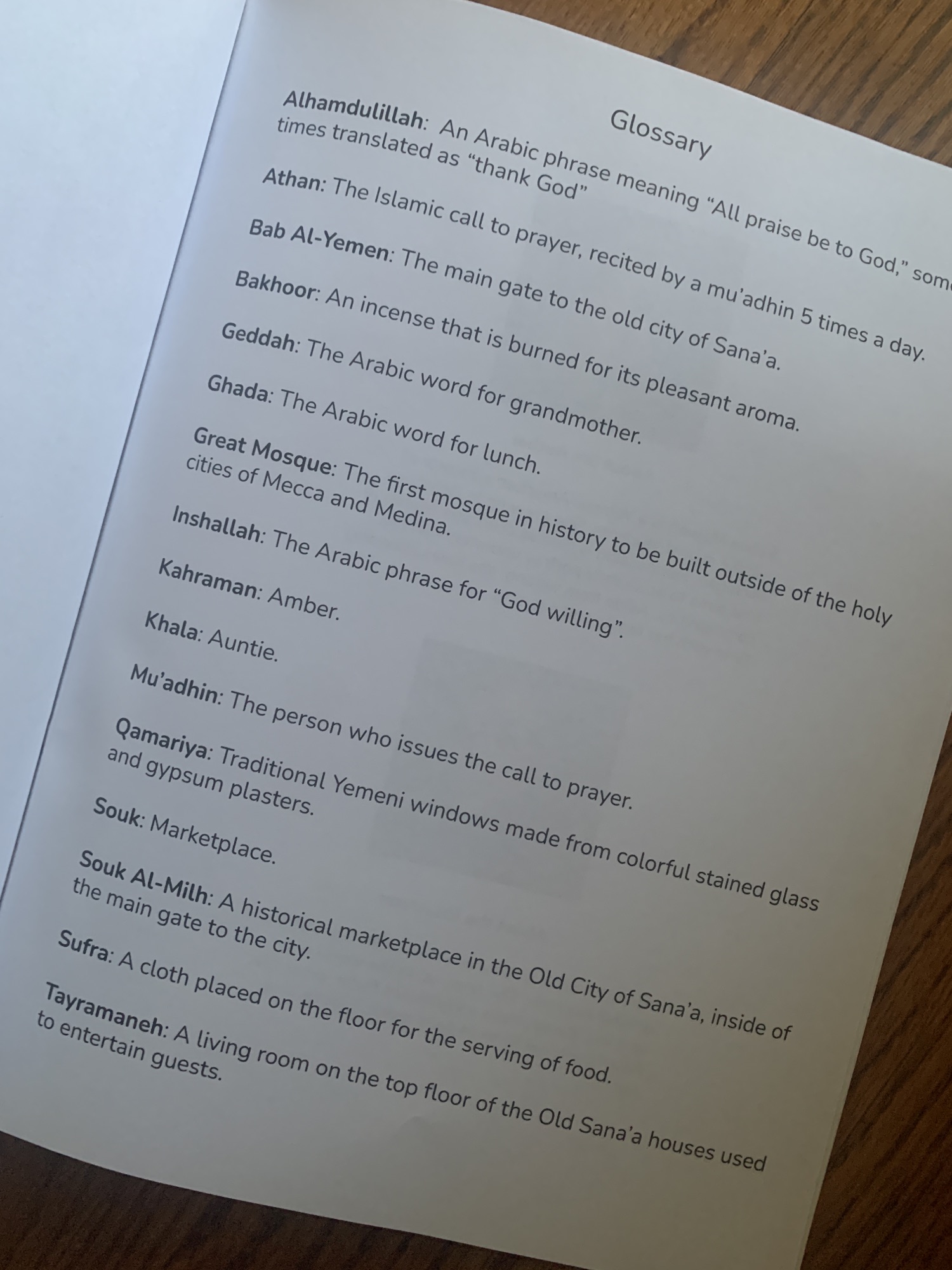
As always, with most every book I read,  I wish there was a map, and while there is a glossary, I wish there was a more robust backmatter section with actual photographs of the many places, foods, items mentioned in the story. This book is important, seek it out, urge your libraries to shelve it. Learn about Yemen, make duas for the people suffering, hurting, and standing up for the oppressed, ameen.

Zain and Mima Stand for Palestine by Eman Kourtam illustrated by Sophia Soliman

Standard

img_1853-1

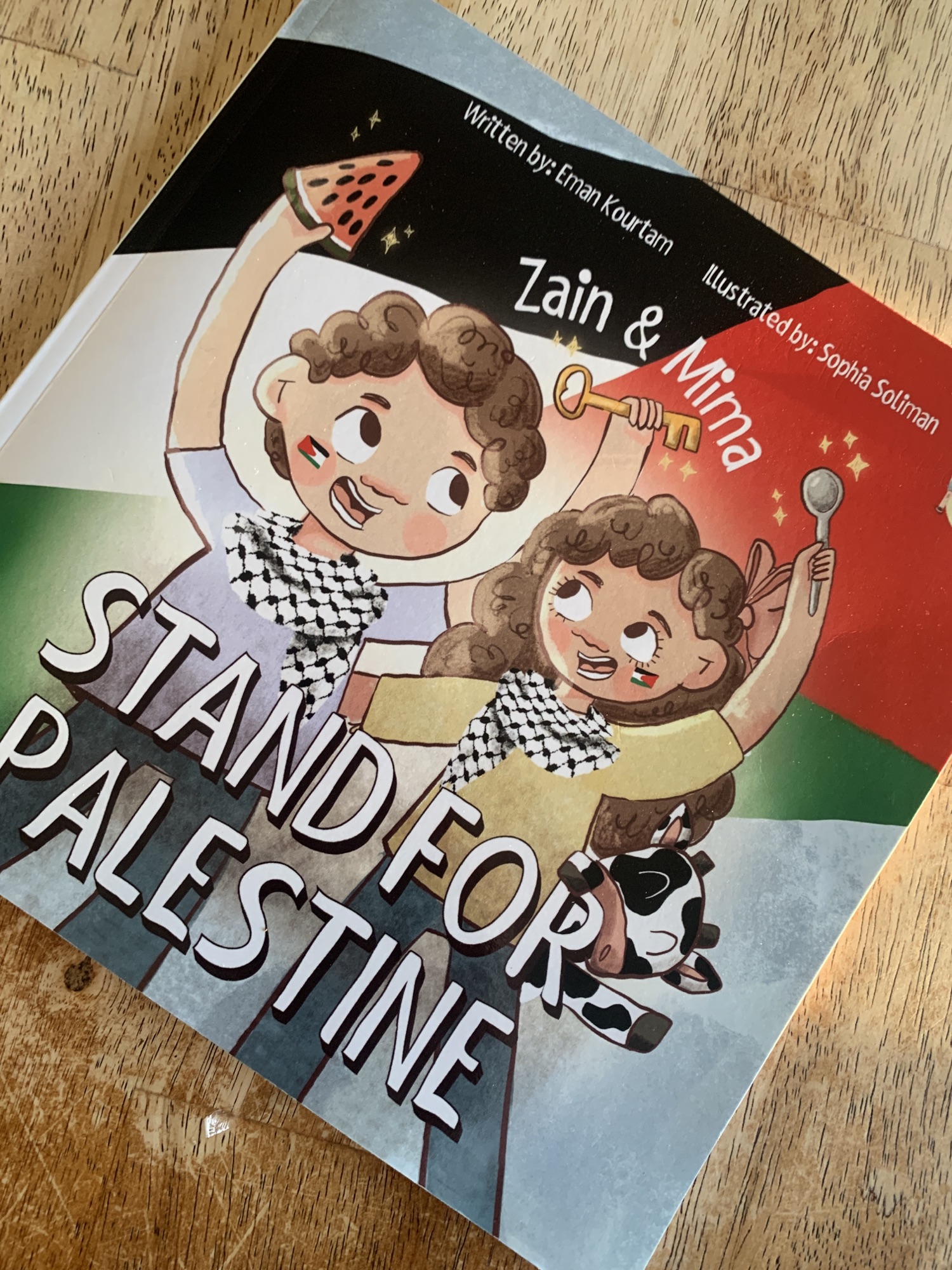
I love this 57 page rhyming book from the perspective of a non Palestinian family pulling out their Palestine gear and taking to the streets to protest the occupation of Palestine.  Along the way the sibling duo, and thus the reader, learns about the history of Zionism, birth righters kicking people out of their homes, allyship with those on the side of Palestine, the crimes of Hitler, it shows maps of the occupation, details how movement is restricted, and even how to use BDS as a form of resistance from afar. All on an early elementary level.  There is a game at the end with an activity about resistance symbols, as well.

The book starts with Zain and Mima coming home from school tired and hungry.  They notice Mama is upset and glued to her phone, they then here noise outside and are encouraged by their mother to join the march as she hands them keffiyehs and explains that people are losing their homes in Palestine.

img_1855-1

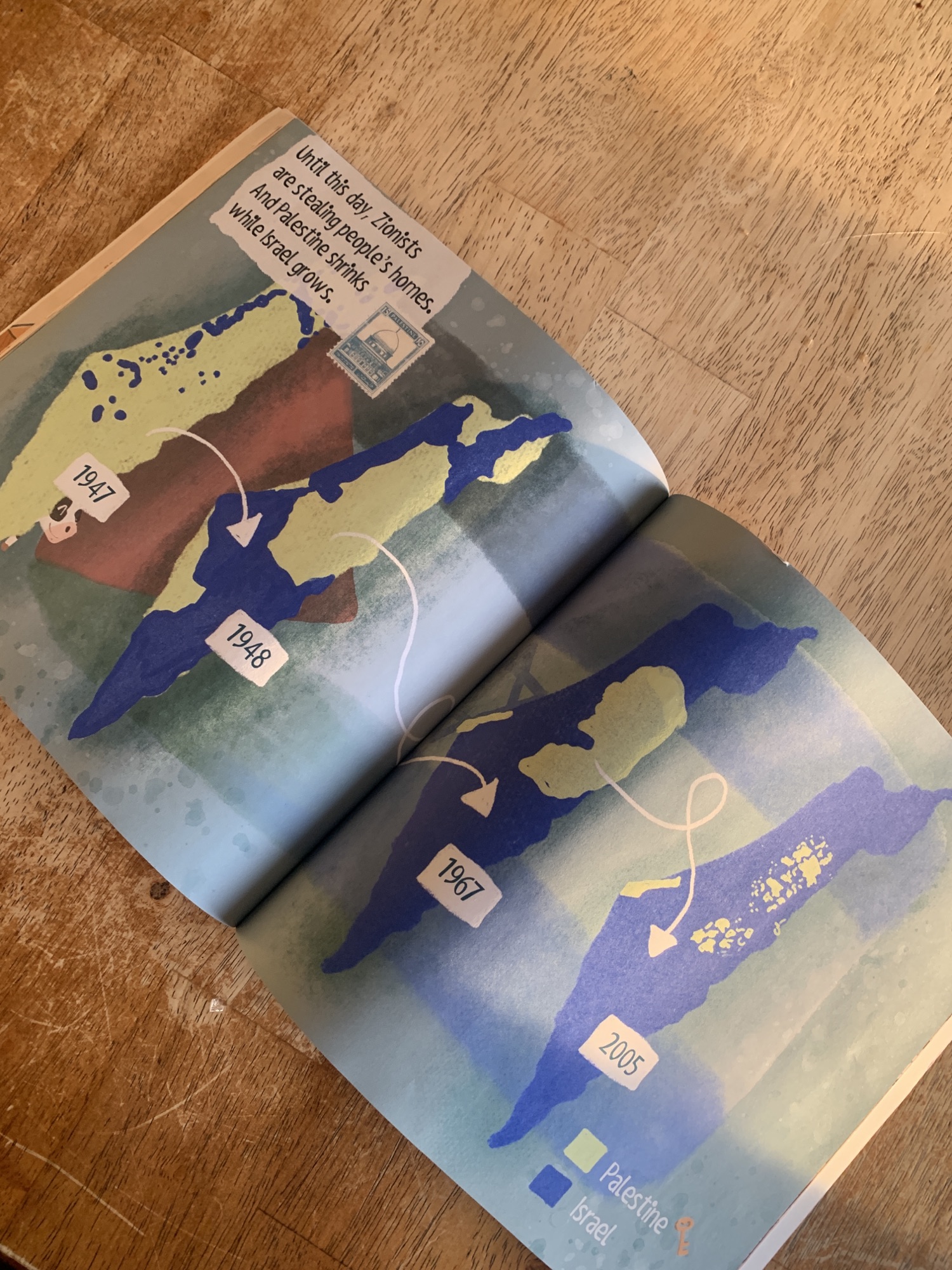
The kids are not sure of what is going on, but notice the chanting and signs and diversity of people coming together to demand freedom for Palestine.  After the protest they head home and Mama explains the history of Palestine and answers their questions.  She explains who Theodore Herzl was and his idea of Zionism.  Why it is dangerous and evil.  She then explains how Hitler’s actions in WWII gave rise to Zionism in the aftermath. A two page spread of maps show 1947 Palestine/Israel, 1948, 1967 and 2005 in easy to understand visuals. Mama then explains, without identifying any specific country, that Israel has the best weapons and Palestinians use rocks and slingshots to defend their homes and families.  It shows walls and checkpoints controlling people’s movements, and the oppression that has resulted.  When Mima asks what we can do in addition to marching and chanting, Mama explains using our money wisely with the BDS movement.  The next day, the children empowered by knowledge, make signs and are ready to stand bravely for Palestine.

img_1858-1

This book was originally written in 2022, and sadly is still so on-point.  It is available again on Amazon after being temporarily blocked, but I hope you will purchase it from a small business such as Crescent Moon Store where my initials ISL will save you 10%.

img_1857-1

We Know What to Say: Phrases Commonly Used by Muslims by Sabria Chao

Standard
We Know What to Say: Phrases Commonly Used by Muslims by Sabria Chao

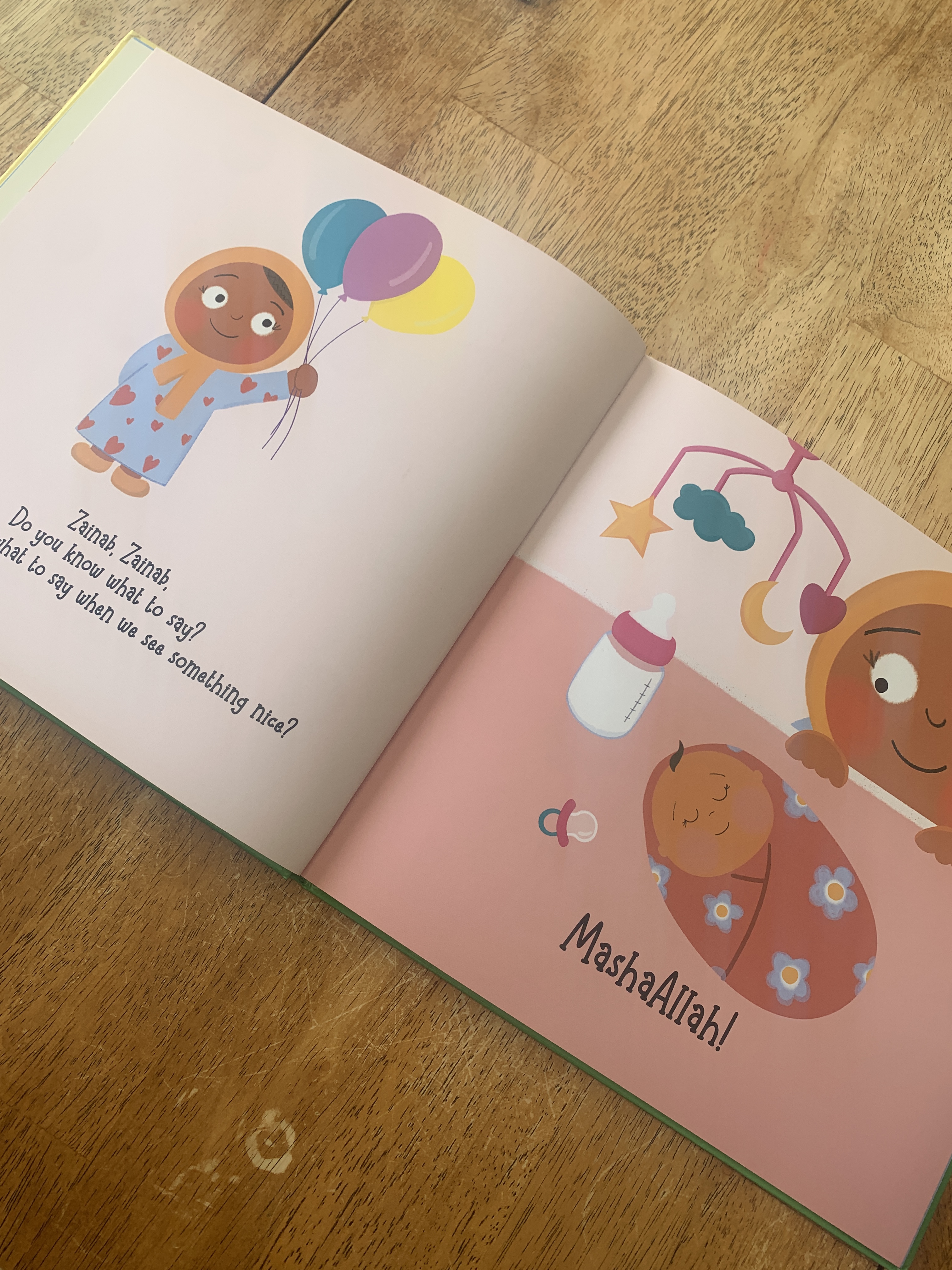
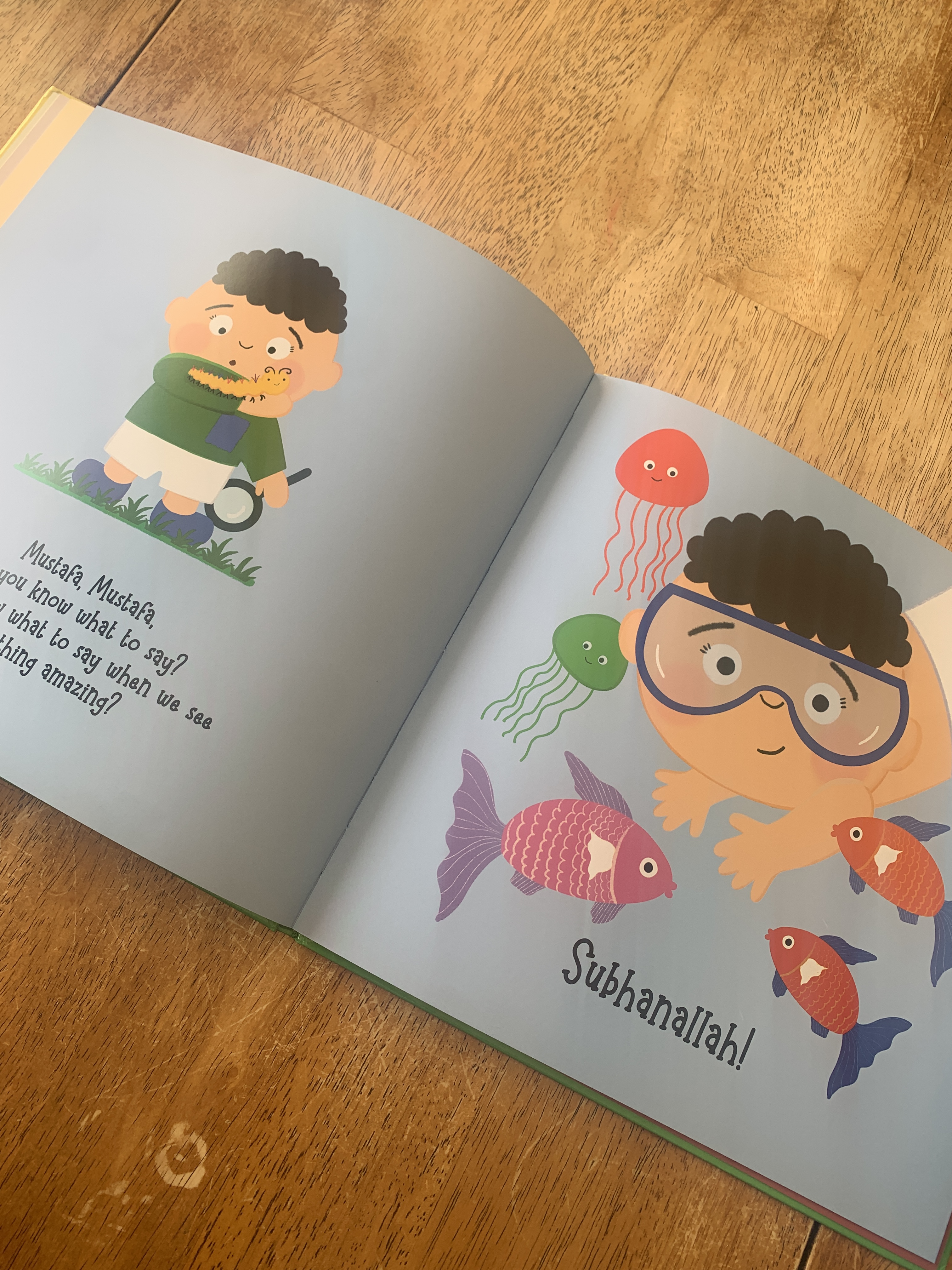
The concept behind this 42 book is really nothing new, but the presentation is wonderful.  The large hardback size, the clear inviting illustrations, and the repetition allow the book to be a delight at story time and bedtime alike.  Each Islamic term is introduced by a diverse character with a common Muslim name being asked if they know what to say in a situation.  The child gives the word, the following two-page spread restates the term and when to use it. All the terms are shown at the end in a two page spread along with a glossary and a Note to Parents.

I love the relatable scenarios: zoom calls, rain, getting sick, etc..  I also like the rhythm of the book, it reminds me a little bit of Brown Bear, Brown Bear.  The bright colors, the simple engaging illustrations and the big size make me ecstatic to share this at story time.  So many of the books that focus on Islamic terms for toddler to preschool level are small board books.  They serve a purpose, but we have long needed a large clear book for groups of children to learn, practice, and review together.

This book was nominated for the 2023 Muslim Bookstagram Awards, but you can purchase a copy here

A Boy Named Ibrahim by Sitti Aminah “Flexi” Sarte illustrated by Aaron Asis

Standard
A Boy Named Ibrahim by Sitti Aminah “Flexi” Sarte illustrated by Aaron Asis

img_9818

This 24 page Filipino book originally published in 2014 was republished with a new traditional publisher earlier this month and reads and feels like solid Islamic fiction.  The book focuses on the five daily prayers throughout the day of a young boy’s life, with the repetitive refrain being the steps of wudu. Ibrahim leaves his activities to pray, wakes up early to join his parents in salat, loves his mother, and listens to her reminder about prayer being an important way to remember Allah swt.  The book is preachy, religious, and unapologetic.  The timing of fajr is a bit questionable, but roosters do crow at all hours, and the light outside the window might be a street lamp and not the rising sun.  Islamic phrases are used, but it does say “Alaikum Salam” in response to “Assalamu Alaikum” which is a variation of the norm.  Overall, the book is a nice addition to share with young children highlighting the importance of prayer, it also works well to learn and review the steps of wudu, and the names and order of salat, alhumdulillah.

The sun is about to rise, Ibrahim says, “Bismillah,” makes wudu and joins his father for prayer.  It is the first day of school and Ibrahim is excited.  He spends half his day at school, then prays Dhuhr.  He makes wudu and prays.  While playing soccer in the afternoon, he leaves the game to pray his Asr, but first he makes wudu.

Once home he chats with his mother about prayer, and coming closer to Allah swt, while he enjoys a snack and then makes wudu and prays maghrib.  Baba then comes home, they eat and pray isha all together.

I enjoyed the illustrations and the simple story.  The book is straightforward, and the contentment and unapologetic portrayal of prayer in a person’s day is sweet and important to highlight. For preschool to early elementary this book would be a great addition to shelves, story time, and bedtime as well.

The book can be ordered on Amazon here

img_9830

Three Holidays and a Wedding by Uzma Jalaluddin and Marissa Stapley

Standard
Three Holidays and a Wedding by Uzma Jalaluddin and Marissa Stapley

3 holidays

I don’t think I have ever sat down and watched a complete Hallmark Channel holiday movie, but I know the stereotypes and I’ve caught enough scenes while hanging out with my grandma to know that reality has to be suspended, there will be a happy ending, and the snow and small town charm is going to be laid on pretty heavy as the wholesome romance plays out.  This book is the literary equivalent of such a movie. So with that in mind, there are somethings I will concede can be overlooked, but religiously there are some things that need to be noted (see below).  I also have to admit that I couldn’t put the book down and read the entire 384 page Adult book in two sittings. The book is told in alternating perspectives: Maryam and Anna.  Maryam and her family are Muslim, the book takes place in 2000 when Ramadan/Eid, Christmas and Hanukkah all took place within days of each other.  Anna celebrates Christmas, but grew up celebrating Hanukkah too.  Even if a romance that has Muslims ok with adopting “Christmas-y” celebrations during the last ten nights of Ramadan no less. is not a book that appeals to you, it is worth noting that this book does an incredible job of not becoming performative.  There is no internalized Islamophobia, self-othering, no over explaining, convincing, justifying or religious or cultural identity crisis. For a book co authored by a Muslim and a non Muslim and traditionally published, I am excited for the precedence this book sets.

SYNOPSIS:

Anna is in a perfect relationship, with the perfect guy, and accidently sees the perfect ring in her boyfriend’s luggage.  With Christmas plans in Toronto to meet Nicks wealthy parents, it is clear that the perfect proposal is also going to happen.  But Anna is not perfect, and who she seems to be to Nick is not who she is or wants to be.  It feels so fake.  With separate flights from Denver to Toronto, getting redirected and stranded in Snow Falls, Ontario gives her the pause she needs to decide what she wants.  She meets Josh, someone in town visiting, which complicates things, and she sorts through her grief of loosing her father and the speed in which her ex step mother moved on, all why becoming good friends with Maryam and her family in this idyllic town that she doesn’t want to leave.

Maryam is the oldest daughter who shoulders the expectation so that her younger sister can live her best life.  She became a pharmacist to carry on the family business, so Saima could be a physician with Doctors Without Borders.  Now Saima has decided that she wants a wedding in Ramadan and Maryam has to plan it. The flight being diverted and the wedding party being stuck in Snow Falls has long ago crush Saif and Maryam sorting through their past and a possible future together.  

The two protagonists, their past, future, love interests are all multiplied by a town full of love and holiday activities, a wedding that might be missed, a Holiday Hoopla show, a movie being filmed, fasting in Ramadan, and wise old Dadu, a former Bollywood director guiding the characters to a happy ending.

WHY I LIKE IT:

The book is an easy read, it really is a guilty pleasure escape from reality and that it comes from a place of- we are Muslim, we fast, we pray, we don’t/shouldn’t date without marriage in mind, and everyone in the book already knows all this makes you feel ok about indulging.  It even has a thread of analyzing parental expectation and peeling back some of the assumptions regarding the disconnect worked in throughout the story.  

It took a few chapters for me to stop fighting and accept that the snow is so bad that the airport is closed, but every store, restaurant, and the roads in the town are open.  That the phones are out, no one has a charger, but the payphone works and food can be ordered and delivered.  That Anna is strolling around in a cocktail dress and can find a sweater, but she can’t find pants, and holiday gifts for everyone were not a problem to obtain.  The book notes the idyllic diversity and amazing payphone, but you really just have to let it go if you are to enjoy the book.

Some things I couldn’t let go though are the Islamic religious portrayals.  The characters note that a wedding in Ramadan is a terrible idea, but for as authentic as the waking up for suhoor and fajr are every day and iftar is every evening, the Muslim wedding party spend the last 10 days and nights of Ramadan watching Bollywood movies, dancing at a music filled mehndi party, planning and performing in an interfaith holiday show, and listening to Christmas music.  I know Ramadan staples of reading Quran, doing thikr, and praying, don’t fit the genre, but there are enough people to make jammat, one night it mentions they go to the musallah for taraweeh salat, but I really wish it was every night, and that more traditional Ramadan foundations were shared.  I did love that why Dadu couldn’t fast was explored, and that when Saima was stressed she went to the musallah, but really Bollywood marathons and parties in Ramadan are uncomfortable even in fiction.

FLAGS:

For Adults and New Adults the book is remarkably clean.  The romance is tame even for YA, the characters are all adults and it is more the Ramadan non worship and Christmas normalization that is more flag worthy to me if a Muslim teen were to read it, than the relationships.  So take what you will from the flags: Anna and Nick seem to live together at the beginning, Anna and Josh hold hands, kiss.  Maryam and Saif hold hands and hug.  Saima and Miraj hug.  There are some other hetero couples that kiss. Mention of Maryam’s prior relationship features her husbands infidelity, and Saif admits to having a girlfriend.  There are a few LGBTQ+ couples in the town that own stores and the inn, but don’t seem to be Muslim, and their relationships are not significant plot points.   Muslims joining in Christmas activities. Alcohol and a pub are mentioned, but Anna partakes, no Muslim characters.

TOOLS FOR LEADING THE DISCUSSION:

I don’t think I could do this as an Islamic school book club choice for middle or high school.  But I do want to gush about it with my Lit Sisters.  You can preorder it here https://amzn.to/3L7K9wQ

From Here and There by Larissa Olinda illustrated by Herry Prihamdani

Standard
From Here and There by Larissa Olinda illustrated by Herry Prihamdani

This sweet rhyming picture books discusses, focuses, and celebrates being a multicultural child.  Not the often seen child of an immigrant living in a society that is different than their parents, this story doesn’t even discuss where the child in the story resides, it just joyfully explores having a Brazilian mom and a Saudi father, while centering Allah swt in bringing them together.  The book highlights each culture, notes some differences, and acknowledges compromise, making this a reflective book for kids with parents from different cultures, but also a window of coming together that all readers can enjoy. Toddlers to early elementary will enjoy the 31 pages with bright engaging pictures and introduction to cultures and a topic not often seen in Islamic fiction, or any books for that matter.

The book is told from the child’s perspective as he breaks down his appearance and him being half his mom and half his dad.  He discuss the different sounds of Arabic and Portuguese, how meals are eaten, time is spent, people dress, and handwriting looks, without belittling or othering either culture.

The little boy circles back numerous times that this is all Allah’s decree, that brought his parents from different parts of the world together.  It shows challenges and compromise at time, and ultimately love and smiles.  The book concludes with helping readers like him to feel seen and articulates Prophet Muhammad (saw) saying that no person is better than another based on where they are from.

The book concludes with an ayat from the Quran and a hadith, and is based on the author’s life. I can really see this book being used in a class as an introduction to a lesson asking kids to write their own family traditions coming together. It also works well at bedtime, or anytime.

You can order the book here

Saving Sunshine by Saadia Faruqi illustrated by Shazleen Khan

Standard
Saving Sunshine by Saadia Faruqi illustrated by Shazleen Khan

img_9623

The themes, messaging and Islamic and cultural representation in this upper MG/lower middle school graphic novel are wonderfully unapologetically present.  Yet somehow, I never connected with the characters, and the plotting seemed stiff.  I don’t regret reading the book, and I’m sure most readers will be delighted with the main story of sibling annoyance, a sick turtle, and independent kids with reflective flashbacks and OWN voice threads of Islamophobia, immigration, starting to wear hijab, identity and othering.  I just felt the tropes were predictable, stereotypical even, and when the dad takes a stethoscope to a medical conference and the TSA agent doesn’t know what it is, I cringed.  Seriously, who takes a stethoscope on vacation? Who doesn’t know what one is? I normally love the author’s characters and wish for more Islam, this book gave me the Islam, but I really disliked the siblings, they were mean, angry, and annoying.  I own that reading a book about bickering kids a few days before my own five children returned to school may have jaded me, and I do think I found the religious touchstones predictable because I do read a lot of kid lit and I’m older, so while I’m not gushing in my praise for this book, I will be preordering a copy for myself and the school library. How is that for having an opinion and then completely walking it back? Yeah, it happens.

SYNOPSIS:

Twins Zara and Zeeshan bicker, a lot.  Zara loves animals and nature, Zeeshan space exploration, and both love their phones.  When the family heads to a medical conference in Key West where their mom is getting an award, the kids get their phones taken away by their parents when the two won’t stop fighting. The parents stick to their policy and the two are forced to stick together and entertain themselves while their parents attend lectures.  At one point they find a turtle and Zara takes the lead to try and help Sunshine, but will need her brother along the way.

WHY I LIKE IT:
I love that the characters identifying as Muslim was central and unapologetic.  I liked the flashbacks that provided a little bit of depth to the parents coming to America and their life in Pakistan, along with the personal reflections about starting to wearing hijab and when the kids started to go their own way.  But the airport scene, the identity issues, and the Islamophobia seemed a little superficial and over done.  The heart to hearts with the dad and his son and mom and Zara were sweet and insightful about belonging and where you come from, and not being so angry, but they also seemed very natural and in-character for the parents which is a disconnect from the anger the kids seem to carry.  If the parents are talking to them and modeling all this, it is a bit of a stretch that they are reacting as they are in the book.

I have a brother, it is just the two of us, we aren’t twins, but growing up in the 80s as the only Muslims in the area with a convert mom and immigrant dad, we came together a lot because only each other could understand the stresses we faced in and outside our home.  I thought this book would draw on that universal theme, and I was surprised that the point of the book felt a little underdeveloped.  I know MG can handle more than we give them credit for, but I felt like this book built up to have more of a warm hug, than I felt.  I wanted more of them plotting together, I didn’t feel like Zara really needed her brother to stick up for her, she wanted it sure, but that was a foot in the door that I think was missed.  She is strong, yet was being vulnerable with her brother, and he was able to step up for her, but it needed a few more beats to be appreciated.  I also wanted more connection to the turtle, his name is in the title, I thought he’d have a bigger role.

FLAGS:

Disrespect, lying, anger, yelling, bullying, teasing, Islamophobia, stereotypes, prejudice

TOOLS FOR LEADING THE DISCUSSION:

The book would allow for discussion for middle grade readers who might see themselves in the family dynamic or be able to relate to some of the Islamophobia.  It could also cause some worry for some children that being visibly Muslim or having cultural names, and wearing cultural clothes will bring negative differential treatment to them.

Available for order here

All You Have To Do by Autumn Allen

Standard
All You Have To Do by Autumn Allen

all you have

This historical fiction YA book was hard to put down.  While being invested in the characters and learning about the historical climate from an intimate account, I could feel my mind growing and my understanding deepening. The phenomenal writing quality, and the connection between the two fictional characters from two different times rooted in reality, allowed this thought provoking book to burrow into my mind, and makes me suggest it to high school English teachers to read with their students for a novel study.  Add in that the author is Muslim and that there is inclusion of side Muslim characters, makes me really really love this 432 page book.

SYNOPSIS:

Told from two perspectives: Gibran is a high school senior in 1995 at a prestigious New England, majority white prep school.  Being aware of the efforts his mother has made for him to have the opportunities he does, the incredibly bright boy isn’t content to sit back and let injustices go unchecked.  As he understands his position in his school, and perhaps in the world, he pushes to change how the system views him and on the cusp of the Million Man March he starts to get restless when others don’t support his efforts.

Kevin is at Columbia University in New York City in the wake of the Martin Luther King, Jr.’s assassination.  While the country pays service to the civil rights leader Kevin is witnessing the injustices at Columbia, and begins to question what his enrollment at the institution means and the hypocrisy it supports.  He also reflects back on choices his own family has made and what he would like his future to look like when opportunities to protest arise.

Kevin is Gibran’s uncle and their parallels show how little has changed in America.  The fears of the family, the institutionalized racism, the helplessness of a broken system.  The desire for two young men coming of age to decide for themselves where they belong, who they are, and what they are capable of in a world that wants to take that freedom away from them.

WHY I LIKE IT:

The power of this book is incredible, truly.  I really don’t have words.  I do have words about the side Muslim characters though.  Gibran’s sister is a hijab wearing convert and is respected and accepted by the family.  Kevin’s cousin and activist is also a convert and a powerful influence on the main character.  There are mentions of Muslims praying, and salams are given.  The book was beneficial to read, the Muslim characters and knowing that the author is Muslim, and reading the phrase, “In the Name of God the Most Gracious, the Most Merciful” before the dedication was just extra amplification of voices that this story brought to light.

FLAGS:

Racism, violence, police violence, incarceration, hatred, drugs, alcohol, sneaking out, partying, lying, stealing, segregation, oppression, language.  The reality of the situations discussed is not PG, but the book does not sensationalize anything for the sake of shock, it is rooted in reality and a YA audience will grasp that.

TOOLS FOR LEADING THE DISCUSSION:

Teachers, librarians, parents, teens: read this book.  Think about what you are reading, discuss what happened, what you understand, and how it makes you feel.  Preorder/order here

Sitti’s Key by Sahar Khader Ali illustrated by Noor Alshalabi

Standard
Sitti’s Key by Sahar Khader Ali illustrated by Noor Alshalabi

sitti key

I try and buy, read, and review every children’s book about Palestine that is published, it is the least I can do.  I also try not to compare them to each other as they present different aspects of oppression, perspectives of strength, examples of joy, and messages of hope, even among many similar themes of food, keys, traditions, and culture.  I really appreciate that this book though is incredibly blunt.  It isn’t lyrical, it isn’t poetic, and as Israel is bombing Jenin as I write this I’m glad it doesn’t mince words about the Nakba. I do think caregivers though, should probably read it first as it might be a little triggering for sensitive children.  The story is OWN voice and probably best suited for middle elementary aged children.  It is perhaps also worth noting that the book could be seen as making Jews synonymous with Zionists.  The characters are Muslim, Islamic phrases and Arabic terms are sprinkled throughout, and even despite the pain the family has endured, the book stays hopeful and proud.

Sitti is coming and Amal is excited, it has been two years since she last saw her.  She loves how excited her mom and grandma are to unpack gifts of olive oil, dates, and zataar from friends.  Amal isn’t sure what to do with the “old lady thoub” she has been gifted, but she smiles in appreciation none-the-less.  When Sitti pulls out an old key, Amal starts to ask her about it, but her mother shuffles her off to bed.

The next day at school, Amal has to work on a presentation about “culture,” but there are no Palestinian books in her school library, so she just watches the other kids.  At home they eat and listen to Sitti’s stories of long ago in Haifa, and Amal asks her why she left Palestine.  Despite her mother trying to redirect, Sitti says it is time she knew about the Nakba.

Sitti tells about living on the land for generations and how the Jews believed the land belonged to them.  In 1948 the British decided Palestine would be the homeland for the Jews.  Armed men came and arrested anyone who tried to stay in their homes. Sitti’s brother was handcuffed and never seen again.  The family grabbed what they could including the key to their home as they made their way to a refugee camp in Lebanon.  They stayed for three years, before making their way to America.

When Sitti concludes her story she hands the key to Amal and her hope that she will return to their home inshaAllah.  Feeling the pride and warmth of home, Amal has a determination to reclaim her heritage and share her “culture” with her classmates.

The illustrations are sweet, the mom and Sitti wear hijab even in the home, and the inshaAllahs and salams come naturally. The book does not stop to define zataar or marimya, which helps the flow. I also like how it shows that there aren’t books about Palestine in the school library, it is strong and important detail.  I don’t understand where Sitti is coming from though, it would seem Palestine as she is bringing gifts from friends, but in the story it says after Lebanon they made their way to America, so I’m not sure where Sitti lives, and how the logistics of the family work to be honest.  I also kind of wish there was a  recipe for zataar in the book and lyrics with translation for the song the family sings.

Book is available on Kindle or can be ordered from www.littlehibba.com