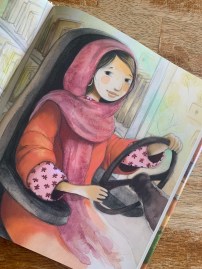
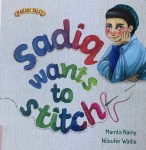
This 40 page AR 4.5 book touches on gender norms and breaking cultural expectations, as well as a mother’s love and a child’s determination. The beautifully illustrated pages show Kashmir’s landscapes and culture. The message is for third graders and up with its longer passages and understanding of gender roles, but younger children will enjoy the story just as well. My only concern is the timeline of the story, the mother has a week to make two embroidered rugs and worries when she awakens with a fever on the day the rugs are expected, exclaiming that she hasn’t even started the second rug. How was she going to meet the deadline even if she wasn’t ill? Even with the extension, she asks for a few days, not a few hours. That aside, the book is a lovely glimpse into a nomadic culture and people. There is no glossary at the end explaining namaz or Chacha or Bhai, but there is a bit of information about the Bakarwals of Kashmir at the end that provides context and enhances appreciation.
Sadiq wakes up to the sounds of the river Lidder, he prays and drinks his cha and heads to the meadow to milk the sheep and take them out to pasture. His father died two years ago, and now the responsibility of the flock is his. After his chores are done he sits and watches his mother embroider. He sometimes stitches his own patterns on the edges, but his mother does not like him sewing.
When an order from the city comes in for two rugs by the end of the week, Sadiq offers to help. His mother refuses his assistances claiming that the women stitch and the men tend to the sheep in their community. Sadiq dreams of the designs and colors he would like to sew and decides he will do so in secret.
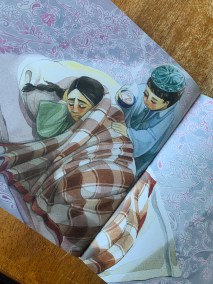
On the day when the rugs are to be picked up, Sadiq’s mother has a fever and cannot stitch. When the man comes, Sadiq’s mother starts to explain that they are not ready, but Sadiq surprises them both with his completed rug. The man likes it, but notes it is not what was ordered. Ammi wants to keep Sadiq’s rug and asks for a few more days to complete the second one, now that she has her son to help her.
Abdul agrees to a few more days, and the next morning Sadiq’s mom has hung Sadiq’s rug for everyone to see, and is proudly crediting her son’s work. She hugs him, just like she did in his dream, and chides him that she still expects him to do all his other chores before he sews.
As a partially brown person who enjoys camping and does it frequently, I have been anxiously waiting to get my hands on this beautiful 40 page, kindergarten to fourth grade picture book. So, trust me, I’ve read it multiple times to myself, to my children, and even to a Muslim storytime group to try and figure out why I like it, but, unfortunately, really don’t love it. Ultimately, I think it is because there is just too much going on.
Everything about this book is wonderful: the idea to encourage brown people to go camping, to highlight that time in the wilderness is for everyone and doesn’t have to look a certain way, that bullying and micro aggressions are oppressive, that immigrants have diverse and full lives in their home countries and work hard when they come to America, that culture and language and food and music is diverse, yet universal, that learning new skills and trying hard things makes you a super hero, that dad’s can cook and mom’s can be great fire starters and critter catchers, truly it is all so powerful and affirming, it is just a lot for one book.
It could easily be a three book series with just the information and layered themes presented, and I really wish it was spread out. If you are a 4th grade desi kid who has been camping or desperately wants to go camping this book is a great glimpse to mirror your place in the hobby without compromising your unique spin on it, but I think for anyone not in that demographic, many of the little celebrations, messages, themes, and cultural nuggets will simply be lost.
I wanted to hear the campfire stories and jokes, and laugh at the lyrics being belted out, not just told about them. I wanted to feel Fatima’s accomplishment at helping set up the tent and maybe see her struggle and rebound, not just be told she suggested reading the directions. The book has a ton of industry praise and personally came with a lot of expectation for me, so perhaps I’m overly critical, but kids in my storytime were struggling to stay focused when they couldn’t relate to the cultural touchstones being tossed out, they didn’t get the “not being good at math stereotype,” they needed the non text pictures to be explained to grasp their impact on the story, and they wanted to know why of all the Islamic things a Muslim family could do while camping, halal bacon was the only Islamic reference and came with precious little contextual defining.
The story starts with a Fatima and aapa waiting to be picked up after a terrible week of school to go camping for the first time. The Khazi family has immigrated from India and their father has told them that camping is an American pastime. During the week Fatima has been teased for her pronunciation and lunch, had her hair pulled and done poorly on a math test. But when her parent’s pull up with a packed car and the girls jump in to enjoy samosa and Bollywood songs, the weekend holds promise.
When they get to the campsite, Fatima and her dad tackle the setting up of the tent. Dad cannot seem to figure it out, and after the week she has had, Fatima is scared to help, but after a while she suggests looking at the directions and it seems that does the trick. The family enjoys shami kabab and rotis from home for dinner, before the girls climb in the tent.
A spider on the outside of the tent is magnified inside, and has the girls terrified it is a monster. Mom, the ever brave lizard and scorpion disposer in India reassures them that it is nothing and sends them off to brush their teeth before settling in for the night.
The next morning mom shows the girl the small spider keeping the mosquitos out and they all share a laugh while dad is cooking anda and roti on a gas grill. He calls the girls to come out in urdu to attempt a campfire to cook the halal beef bacon on like other American’s do. Dad and Fatima can’t get it to light, so mom, who is from a smaller town in India has to show them how it is done. Along the way Fatima looks at the other campers and is annoyed that they aren’t having trouble and that her family always is so different. The other families it is worth noting are white.
The Khazi family then starts to pack up and then they go for a hike, play in water and when the time to leave comes Fatima is sad. She doesn’t want to go back to the life they live where they are different and teased and her parents have to work two jobs each. But aapa suggests she share her fun at show and tell, and the family reassures her that they will be back.
The book ends with Fatima telling her class she is a superhero because she can build fires and tents and isn’t afraid of spider monsters. There is no glossary to define the urdu words used and spoken, but there is a reference at the end about the author’s @brownpeoplecamping initiative.
I think the book is rather remarkable and ground breaking because of its subject matter. The illustrations are wonderful, and the book a great reminder that camping and being outdoors is for all. I just wish it focused on a theme or two and highlighted them for this Indian American Muslim Family with relate-ability for other types of minority groups. The book set its own standard in what it wanted to achieve and convey, and sadly I think it missed the mark.
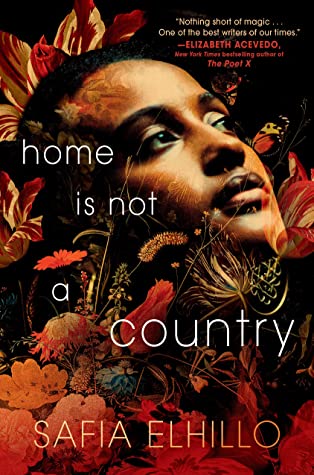
This upper middle school/high school 224 page novel told in verse touches on familiar themes of finding yourself and wondering about what could have been, but is anything but predictable. Through magical realism, religion, culture, and phenomenal imagery, this book is haunting and powerful as it sweeps you into the possible alternate reality of a young 14 year-old-girl yearning to be someone else, consumed by a life that could have been, desperate for the other half of her mirrored existence, and for a home that she does not know, but so desperately longs for. As a Muslim child of an immigrant, the daughter of a single mother, and nearly invisible at school, readers will feel her story, more than know it, and find themselves in her own awakening.
SYNOPSIS:
Nima feels like she exists in pieces. No one understands her and she doesn’t feel comfortable in her own skin. At school she is invisible, she is foreign and teased for it. She has one friend, Haitham who is always there for her at home, but just a familiar wave in public. At home Nima enjoys old Arabic songs and movies, hobbies she is teased for at weekend Arabic school, her hardworking mother is graceful and beautiful, Nima is neither. Her world is the aunties and family in her building, but her Arabic is weak and she doesn’t fit in anywhere. Her father passed away before she was born in a country she has never known. Her twin sister died before birth, one for each parent in each world. Nima imagines if she wasn’t Nima, but Yasmeen instead. If she was bright and loud and loved and confident. The name she was nearly given, an alternate life she has become obsessed with.
When Haitham and her get in a fight, when her mother removes her headscarf and the bullying intensifies, Haitham ends up in the hospital, assaulted, barely hanging on and Yasmeen appears to help a floundering Nima escape a meal she can’t afford, a man that intends to assault her, and a world where she might find answers. The two girls travel to the homeland in the photographs to understand their parents, to understand why their mother left and Nima to the realization that only one of the girls can truly exist.
WHY I LIKE IT:
I love that I had no idea where the story was going and how much would be spelled out and how much would be left for the reader to interpret. It affected me in a way that I wasn’t expecting and reminded me of the blurred lines of reality from books like Beloved (Toni Morrison) and Her Fearful Symmetry (Audrey Niffenegger). I love that the Arabic script is present and often not translated. The unapologetic connection to the character and author is powerful and beautiful to see in a deeply introspective book. I enjoyed that the “country” wasn’t named as it added to the concept of not knowing you home, it was frustrating, but for all the right reasons.
There isn’t a lot of practiced Islam mentioned, she doesn’t talk about praying, but does talk about the athan and longing for it. Her mother wears hijab, but takes it off and wears a hat instead. The daily life of living in two worlds is taken to mean something very literal and the journey to both worlds is remarkable and memorable.
FLAGS: There is physical assault, theft, lying. Nima has to escape a man that intends to rape her, his intention isn’t detailed, but Yasmeen helps her escape when he brings her to a hotel. Haitham’s dad has an affair with his mom and she is pregnant with him when the story flips back to the past and the couple are not married. There is singing and music and dancing throughout. I think 14 and 15 year olds will be able to grasp the intensity of such situations while also not being shocked by them.
TOOLS FOR LEADING THE DISCUSSION:
I am on the fence if I could do this as a middle school book club, I might suggest it to the high school advisor. There is so much to unwrap in the lyrical text that will draw the students in and force them to reflect on their own impressions to understand Nima’s reality. I think there would be so many conflicting thoughts that the discussion would be amazing.
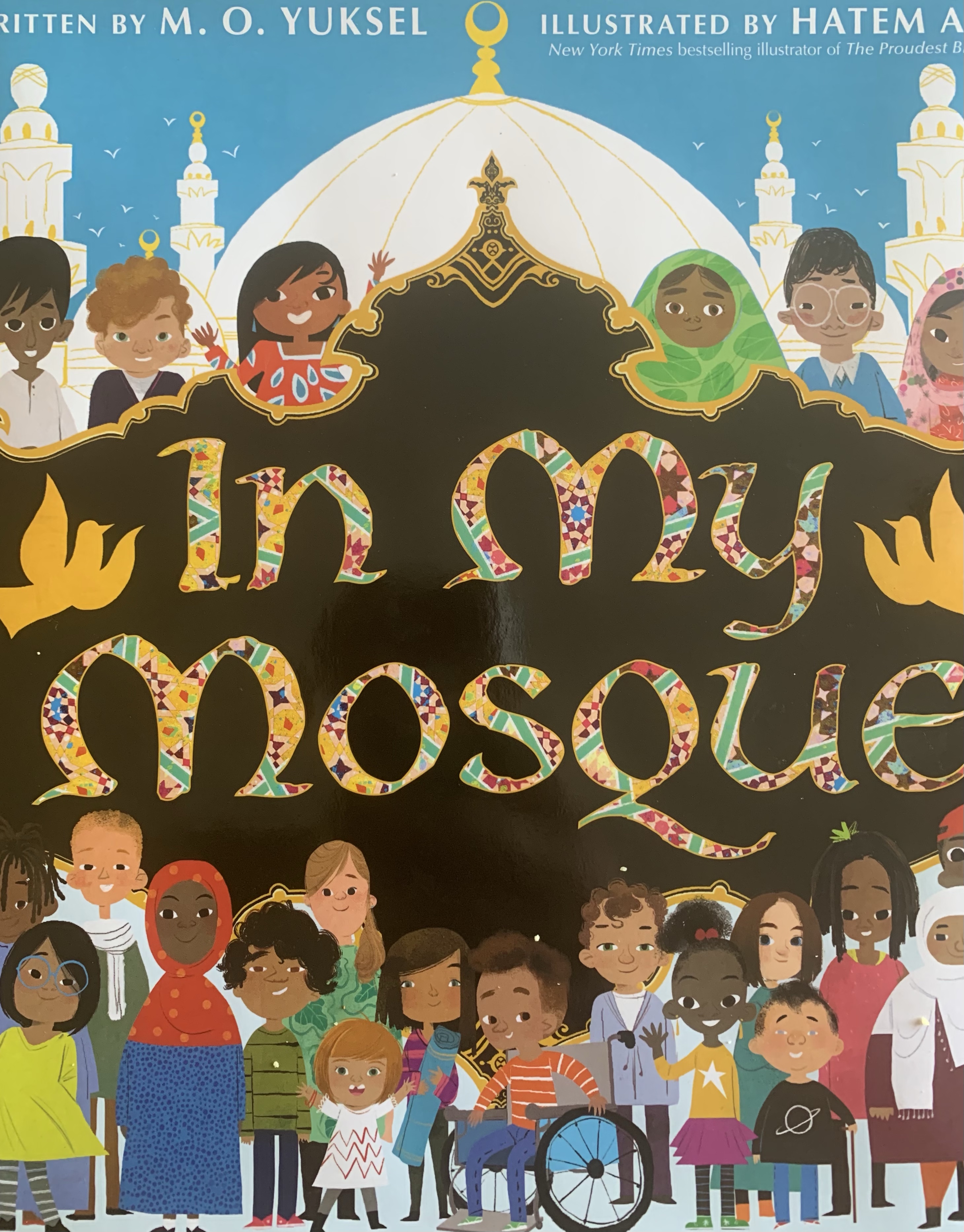
I know I am a little late to the review party of this highly anticipated beautiful book, but for good cause: I wanted to test it out in a virtual storytime for preschool to third graders before I chimed in with my opinion of this 40 page picture book ideally for four to eight year olds, but wonderful for all ages. The hardback binding, the glossy pages, the AMAZING illustrations and the factual information at the end, make this one of my favorite books ever for Muslim and non Muslim readers alike. If you can, gift this book to your child, your child’s teacher, their friends, your friends, and ask your library to shelf it. It is unapologetically Muslim, and has the power to mirror our own love of our masajids as well as encourage others to stop in and visit if they are curious about what a mosque is like. After reading it aloud, my only critiques are the very thing pages that make it hard to turn when reading to a group, and the small font which is appreciated so that the illustrations can be enjoyed, but hard to read when the gloss causes a glare and the thin pages bow. The only words in the text that gave me pause is when the “imam tells us stories…” to explain the khutba and speech, and when it says after salat “I whisper heartfelt wishes.” I understand the intent, but feel like the word “stories,” isn’t the correct word for ayats and hadith, nor is “wishes” the right framing of duaa or longings. I also wanted there to be a page number in the references section referring back to the pages in the book that link the inspired illustration of mosques to the real ones detailed at the end. Undoubtedly minor stuff for a book that came with a lot of expectation and yet still managed to blow me away, alhumdulillah.
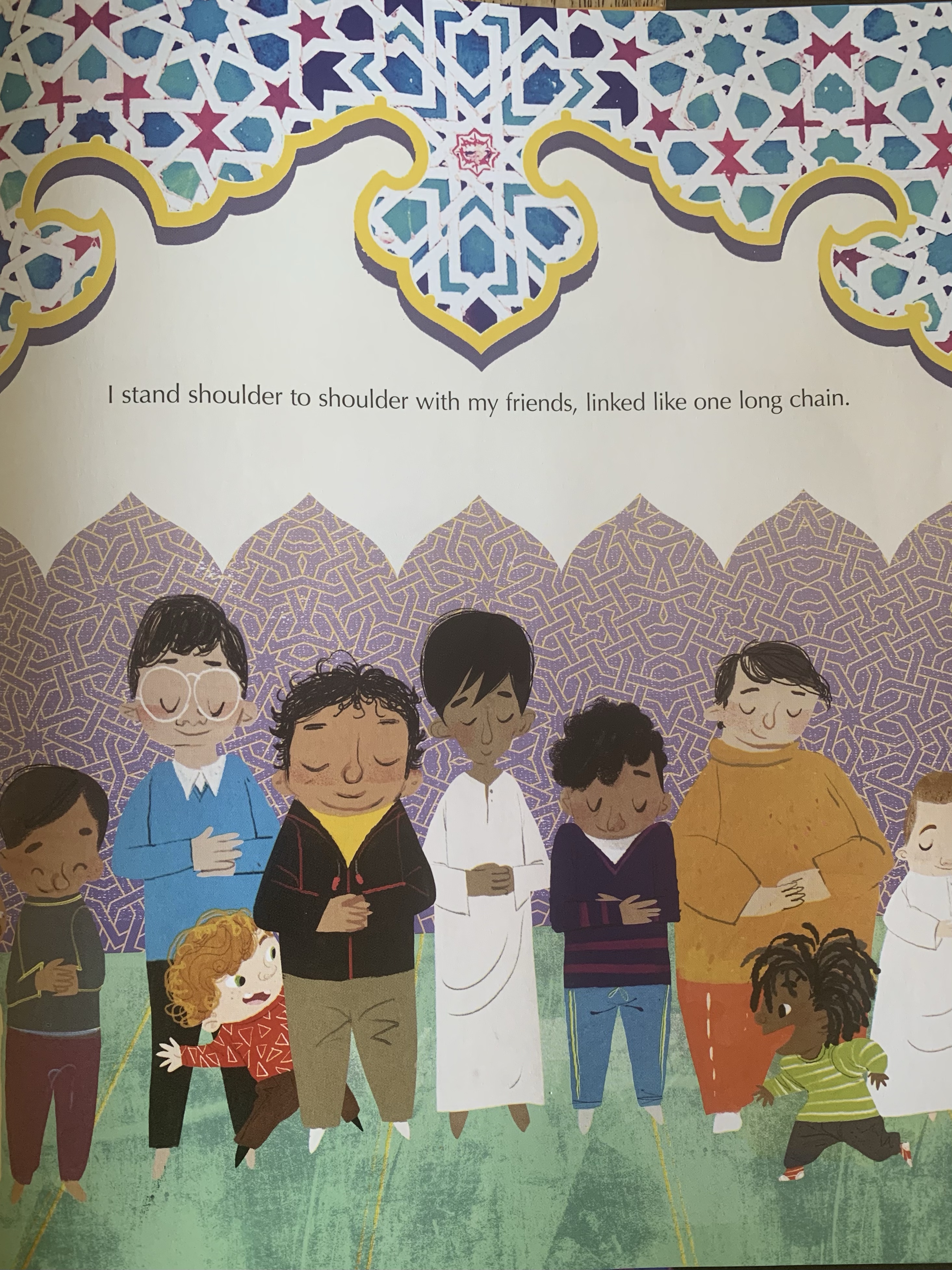
The book shows diversity of tones, body shapes, and mobility as it welcomes and invites you in to a mosque. The shoes are lined up like beads as you enter and you let your toes sink in to the carpet. We wear our best clothes and get hugs from aunties because we are loved. Grandfathers do thikr on tasbihs and its ok to snuggle up with your dad while he is praying. Grandmas are reading Quran and little kids help put out prayer rugs. The imam gives speeches about unity and that we are all from the same creator. The muezzin calls us all to prayer and we stand in lines linked together with friends like a long chain. Hijabs flow and sometimes we get distracted. We say greetings to the angels on our shoulders and whisper our wishes. We learn to help others, we play in the courtyard and gaze up at the domes. We feel safe and joyful like our friends of other faiths in their places of worship and all are welcome in the mosque.
The book does not shy away from Islamic words in Arabic, nor from faith references such as the “most High,” and “subhanAllah.” The glossary at the end covers their meaning and the text flows in a way that you can stop or review afterward with relative ease. The imagery in the text of the shoes like beads, and standing in salat like a chain, are warm and relatable, and the illustrations, they are magical. The expressions on the children’s faces as they try and pray and stay still, but alas are children and they are silly and sweet and not chided, but loved, is so refreshing in both the text and pictures. The different masajids that are referenced, and the detail make repeated visits to the book heartwarming and joyous.
I love the lists and details about mosques around the world at the end, and the successful portrayal of genuine love and connection Muslims feel to the mosque as a place of coming together, or worship, or friendship, of play, of charity, of community, and of openness.
In this third Ayesha Dean book, that can be read as a stand alone, the Australian teen sleuth finds herself on the other side of the law in the beautiful city of Lisbon in Portugal. Over 333 pages, she must understand what she is being accused of and figure out how to clear her name, all while marveling at the beautiful historic sites, diving into the delicious food, and looking fabulous while she does it all. Middle grade to early middle school readers will enjoy the fast pace mystery that has history, crime, adventure, and friendship. There, as always, is a twinge of romance, but it all stays halal as Ayesha is a proud and practicing strong Muslim young woman.
SYNOPSIS:
Ayesha Dean is now 18 and has just arrived in Lisbon for three months as part of an internship program to help little kids with their english. This is her first international trip without her beloved Uncle Day and her two closest friends Jess and Sara. Not to worry, there are a lot of young people participating in the internship program and she will be rooming with two girls, Mara and Aveline. Things start of routine enough as Ayesha gets to know the handsome and kind Raimy from America and tries to figure out why Aveline doesn’t seem to like her. But on her way to the school she will be working at, she finds a wallet filled with money and no identification, just a phone number. When she calls the number and a meeting is setup, the stage is set for a series of events that will include telling Raimy off for mansplaining things to her, a man murdered, a chase scene, a necklace stolen, no memory of it all, and Ayesha being arrested.
Knowing only a few people in the city, and having just met them at that, Ayesha makes bail by getting help from her friend’s Aunt in Spain who comes to provide Ayesha a place to stay as well. She has some time before her formal hearing, and Ayesha is determined to figure out what she is being accused of and how to clear her name. With the help of Mara, Raimy, a young girl in the elementary school Ayesha was working at, and some chance encounters, Ayesha finds herself risking her own safety in an underground environmental gang ring. I won’t spoil all the ups and downs and ultimate ending, but Ayesha Dean’s tae kwon do, faith, and wits will all be used and the last page will definitely leave you wanting more.
WHY I LIKE IT:
I feel like the writing has finally found the perfect balance between description and action, the first chapter was a bit choppy, but once it hit its stride it was smooth. I was intrigued by the historical detail that was all new to me, and am pondering how to convince the author to lead a tour group through all these places that Ayesha visits. As always the descriptions of food and architecture and fashion are all so spot on that you feel like you are there. I absolutely love that religion is so genuinely a part of Ayesha, but it is for her, she doesn’t do it for any one else. She prays, she wears hijab, she doesn’t drink, she clarifies to Raimy what she can do, she acknowledges possible stereotypes and discrimination, but chooses to move forward and not get bogged down by it. She is physically and mentally strong, but doesn’t come off as arrogant or judgmental or unrealistic.
I like the diverse characters in this book, and in all of them. The multi ethnic protagonist has friends from all sorts of backgrounds and it is really refreshing and natural.
FLAGS:
There is murder, assault, crime, drinking and alcohol. Nothing is glamorized or anything a third grader couldn’t probably handle. There is a hint of possible romance, but nothing that crosses any lines or standards.
TOOLS FOR LEADING THE DISCUSSION:
I would consider this for a middle school book club if the majority of the participants are 6th graders as it would not have the same appeal to older 8th graders. I think they would benefit the most and enjoy the strength and cleverness of such an inspiring lead. Of the three books in the series, I think this one would work the best for insightful discussion and empathy. It would great to hear them imagine themselves in her shoes: a foreign country, no family, no longtime friends, minimal language skills and accused of a serious crime. Oh I can’t wait to share this book with my reading friends!
If you are familiar with the Rainbow Magic fairy books, you know they are never ending, there are currently 228 titles in the collection that cover beginning readers, early chapter books, and longer solo chapter books. They cover seasons, colors, flowers, jewels, musical instruments, pets, friends, holidays, etc., and now festivals. They may not be the most intellectually stimulating, but they serve a purpose in getting young readers confident and engaged. My daughter loved them in first and second grade and when this book was delivered a few days ago, she was so excited to see a Muslim fairy. She is 14. Representation will always matter, even when the story is a bit hokey and random, to see yourself in a beloved series, has power. Yes, the story is predictable in the 80 drawing filled pages, but for first and second graders it is fun. Elisha wears western clothes with her hijab, has a magical Pelita lamp that brings Eid joy to the human world, and hosts feasts with international foods. Yes, the fairy is Muslim and Eid joy after Ramadan comes from an oil lamp apparently, it is a stretch, and if you are not comfortable with this imaginative representation of Eid joy coming from a magical creature’s enchanted item, then please don’t waste your time. If your kids already read books about fairies, this book might be of great delight to them, and be a great conversation starter for you to have about what really makes Eid a joyous time.
SYNOPSIS:
Jack Frost is still determined in this the third book in the four part festival series, to cancel Eid, Diwali, Hanukkah and Buddha Day to create his own Frost Day. With the sighting of the new moon, in this book Eid is under attack. Humans Rachel and Kirsty are summoned to help find Elisha the Eid Fairy’s magical Pelita lamp. But, Elisha goes missing and the girls arrive on Festival Island to find goblins destroying the Eid decorations. The fairyies divide up and Rachel and Kirsty in their fairy form are off to find Elisha, while the other fairies handle the goblins. They find her in a tower surrounded by a hail storm, the can’t get her out unless they find her wand. Once they find her wand they have to find her magical item. The goblins have it and are trying to teach it to make Frost Day treats instead of the kleichas and baklava and turkish delight that it keeps creating. With quick thinking, and an impromptu dance lesson, the lamp is recovered, Eid joy is saved, and the girls return to the human world, knowing that one more festival will need saving in the near future.
WHY I LIKE IT:
First of all, I didn’t know what a pelita lamp or kleichas were, so I did learn something once I Googled it, but I’m not entirely convinced that a pelita lamp (sometimes it is capitalized and sometimes it isn’t) is critical to the celebration of Eid. Aside from the religious uncomfortableness of attributing Eid joy to a magical creature and her enchanted item, the concept of the lamp seems a bit weak. I like that information about Ramadan is included and Eid Mubarak is mentioned a few times, but a little bit more about a lamp or lantern perhaps as a cultural relic, would have really made more sense even in this fragile framework.
I like that multiple cultures are represented in the concept of Eid and Elisha, she isn’t boxed in to one culture, she is universal. The themes of team work and friendship are always present in these books which is a great way to show respect for multiple religions and festivals. Jack Frost at times seems to be a good villain, but more in theory than in reality. His spell that the fairies are trying to break: “Ignore Eid and Buddha Day, Make Diwali go away. Scrap Hanukkah and make them see- They should be celebrating me! I’ll steal ideas and spoil their fun. My Frost Day plans have just begun. Bring gifts and sweets to celebrate The many reasons I’m so great!” spells out his plans and make him the right amount of scary for early readers.
FLAGS:
The premise of where Eid joy comes from. The goblins say “shut up” at one point.
TOOLS FOR LEADING THE DISCUSSION:
It is a little young for a book club selection, but if you have Rainbow Magic books on your shelf, you should definitely have this one too.
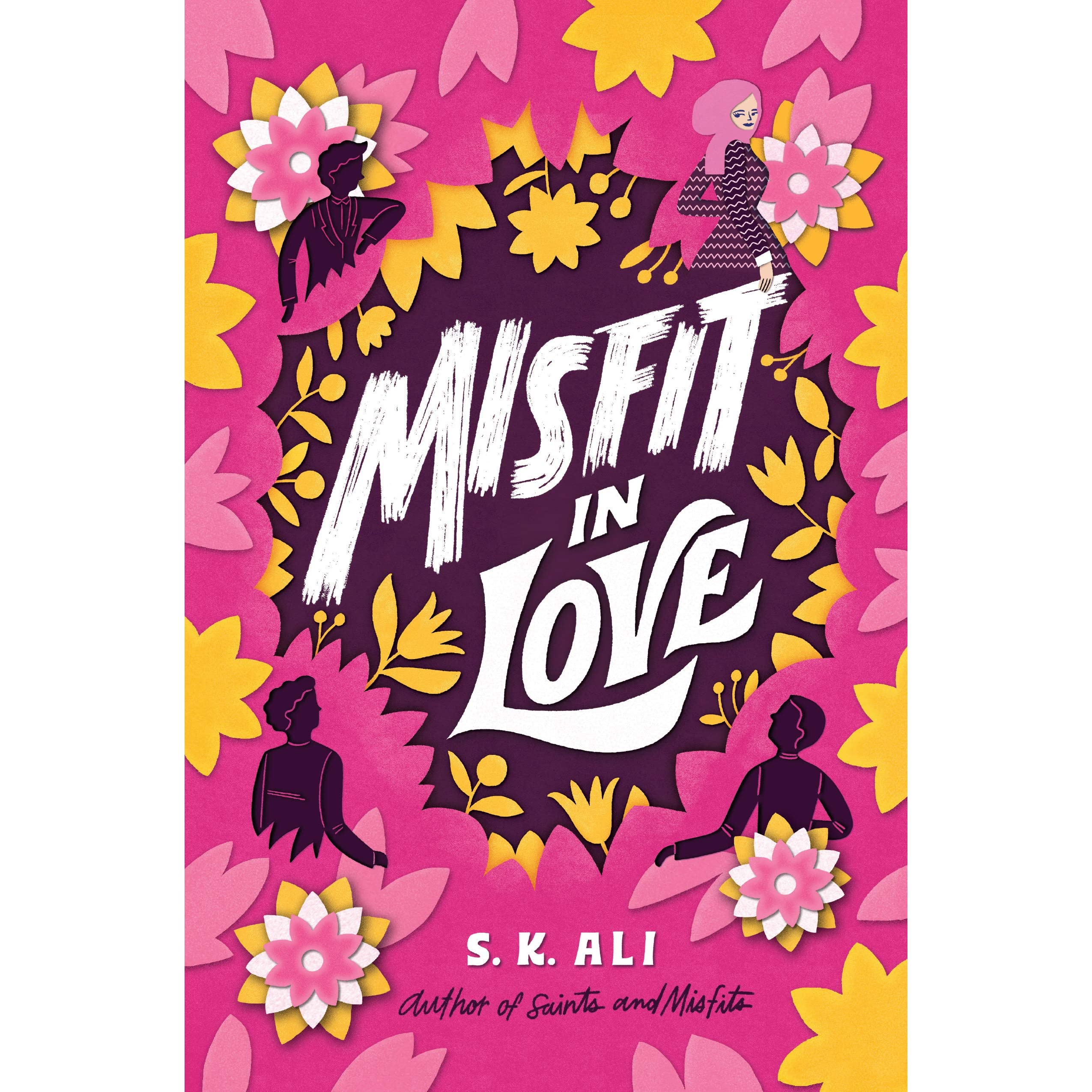
I reread my review of Saints and Misfits before diving in to this sequel that can also work as a stand alone, and imagine my absolute delight when all the things I wanted more of: Muhammed and Sarah, the mom, Jeremy, etc., were explored in this wonderful high school and up, 320 page, romantic comedy story. The romance stays halal and the comedy light, but seamlessly interwoven into a weekend wedding are very serious notions of racism and prejudice within the Muslim community. The writing is flawless as I tried to tell the summary to my daughter I realized just how many characters there are in the book, yet while reading, I never once was confused about who someone was or how they fit in to the family, it really is quite remarkable how real and personal the characters all become. In many ways the story is uniquely an American-Muslim (arguably) one with characters that are half this culture, a quarter that, wearing cultural clothes to coordinate with friends, mutli lingual, multi ethnic, and yet all coming together as friends and family. We, nor are the characters perfect, but that our weakness is explored in fiction so that we all might benefit in reality, is truly remarkable. I honestly couldn’t put it down, and my teen and tween children may or may not have had to figure out their own meals, as I hid in the corner to devour this book in a single day. I regret nothing.
SYNOPSIS:
Janna Yusuf has just graduated high school and has been spending the last few weeks at her father’s sprawling house on a lake to help with wedding preparations for her beloved older brother. What started out with plans to be a small nikkah between Muhammad and Sara, has quickly snowballed into a “wedding” with a few hundred guests and an ever evolving color scheme. With extended family and friends pouring in over the three days, Janna is anxious to see Nuah and finally tell him that she is ready to return his feelings, reunite with her mom after being apart for weeks, and see who her best friend Tats is bringing as her plus one. But, Nuah is acting weird, her mom seems to be considering remarrying, and her father is revealing himself to be racist. There is a lot going on, and in between wedding preparations, possible crushes, family drama, prejudice overtones, and a curious ice cream man, Janna is having an unforgettable weekend.
Janna and Muhammad are close, they are the children of an Indian American non practicing father and an Egyptian American religious mother. Their parents have been divorced for a while, and their dad and his Greek wife Linda have two little boys and are hosting everyone and the wedding. The heart of the story is Janna as she thinks she is ready to pursue something halal with Nuah, but is slightly intrigued by Sara’s cousin Haytham and very perplexed by her mother’s potential future new husband’s nephew Layth. Being it is a wedding, and many people are staying at her father’s house and many more at the hotel in town with their own families. Jana is trying to figure stuff out about Nuah while hanging out with Nuah’s older pregnant sister. She is constantly thrown together with Layth as she meets his Uncle Bilal, her mom’s college friend that has proposed to her, and who’s own daughters are friends of Sarahs. Yeah, there is a lot of overlap, a lot. It’s like real life. As attractions wax and wane in such a short time, it is the relationship Janna has with her own family and the contentment she must find within herself that ultimately matter most.
WHY I LIKE IT:
I love how authentic the story and its characters are. I come from a small family, but a very close friend has a huge family, and this just reminded me of going to her family events and finding how interconnected and small the world really is. I absolutely love Janna, she is Muslim by choice through-and-through and is genuine in her understanding and actions that, while the book is meant for Muslims and nonMuslims, she really sets the standard of how fictitious characters can positively affect their readers. The only slightly forced thread for me was Janna suddenly loving animals and being ready to head to Peru. I get that she was crushing, but it seemed a little too over the top for an otherwise very plausible plot.
The best part of the book, in my opinion is that it isn’t all fluff and fun, there are some very real issues that get spotlighted. Like in Saints and Misfits where Janna is sexually assaulted by a seemingly devout, religious, well liked male, this story addresses racism and prejudice within the Islamic community. Janna’s dad always felt treated as less than by Janna’s mom’s family for not being Arab. He flat out warns Janna about her feelings for Nuah because he is Black. Sarah’s Aunt is offended that the mendhi is more Desi than Arab. The issues aren’t just pointed out, they require active acknowledgement and action. The author’s note at the end, even discusses the significance and weight of such views at the end.
FLAGS:
There are mentions of the sexual assault that happened to Janna in the first book. There is mention of periods, a possible affair, racism, and a character who drove while drunk and killed his son as a result.
TOOLS FOR LEADING THE DISCUSSION:
I don’t know that this book would be a great fit for a school book club, but I think a group of high school or college aged girls would thoroughly enjoy reading this and discussing it, and I would totally invite myself to their gathering to do so.
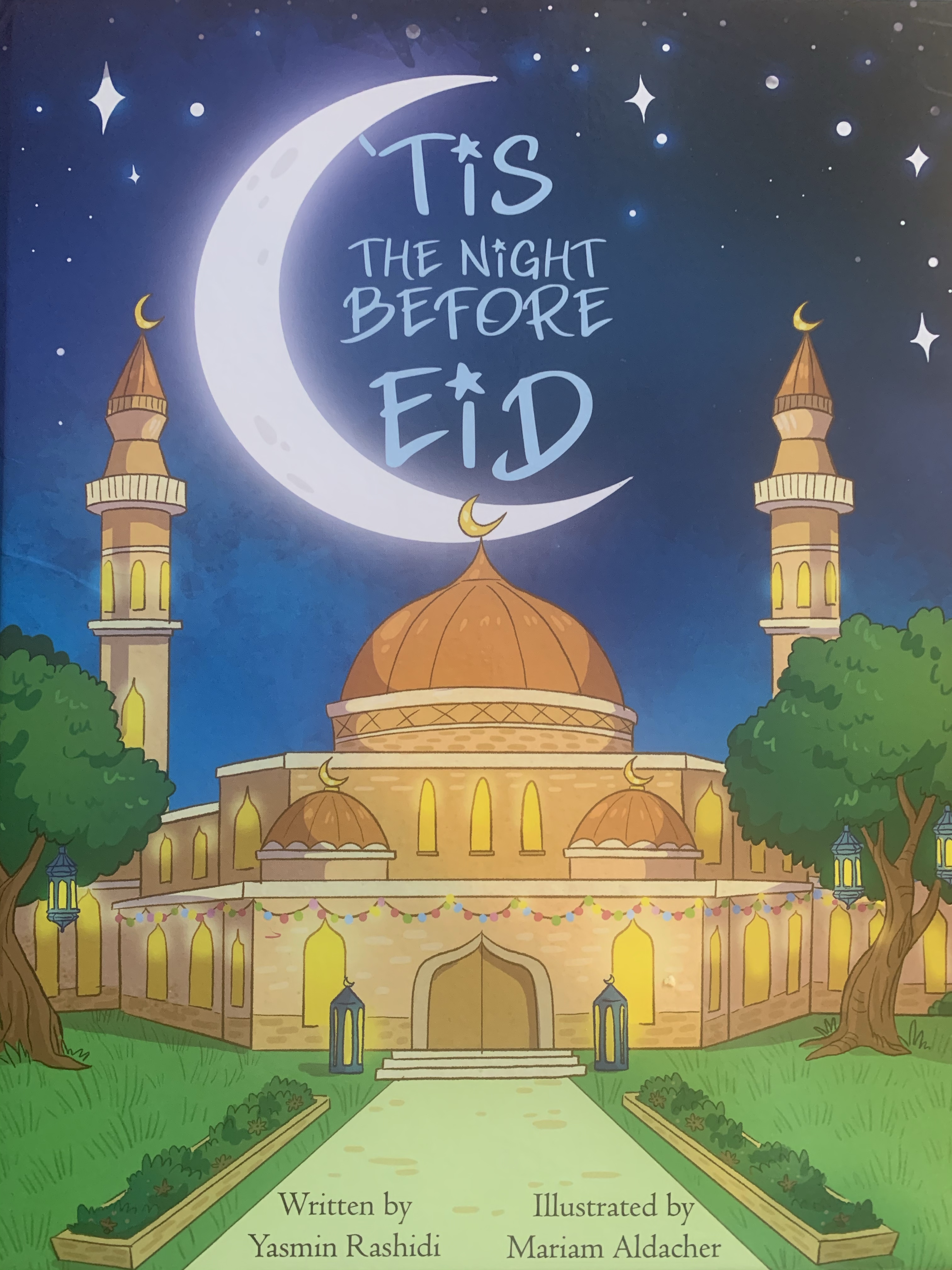
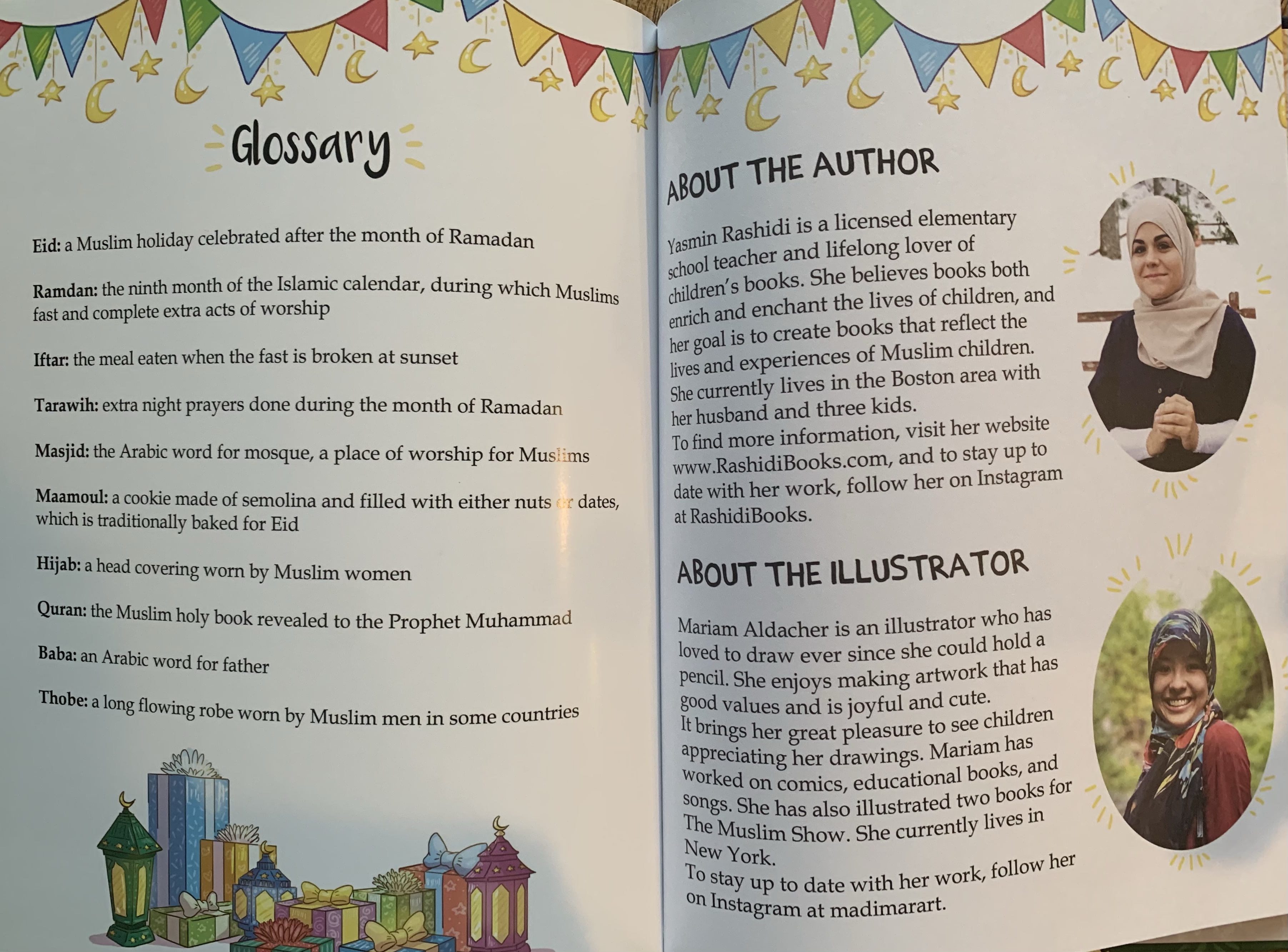
On the surface this 32 page inspired re-imagining of the classic Christmas poem might not seem that impressive, but it is really quite effective in highlighting general key points of Ramadan, the mix of sadness that Ramadan has gone too quickly with the excitement of Eid, and showing the diversity of Muslim families and communities. The large 8 x 10 hard bound pages showcase fun and relatable illustrations that would help inform those unfamiliar with the holiday, while also mirroring and encouraging Ramadan and Eid excitement. It is already a favorite at our house and with simple rhyming lines, the book can lend itself easily to more in-depth discussions (there is a glossary at the back) or be kept as a sweet flowing story that you don’t mind reading repeatedly at the prodding of toddlers and preschoolers alike.
The story starts with it being the night before Eid. Ramadan has flown by, iftar eaten, dishes are put away, trips to the masjid for Taraweh have concluded and now it is time to prepare for Eid. The house is cleaned, clothes ironed, sweets prepared and dreams of gifts filling the kids minds.
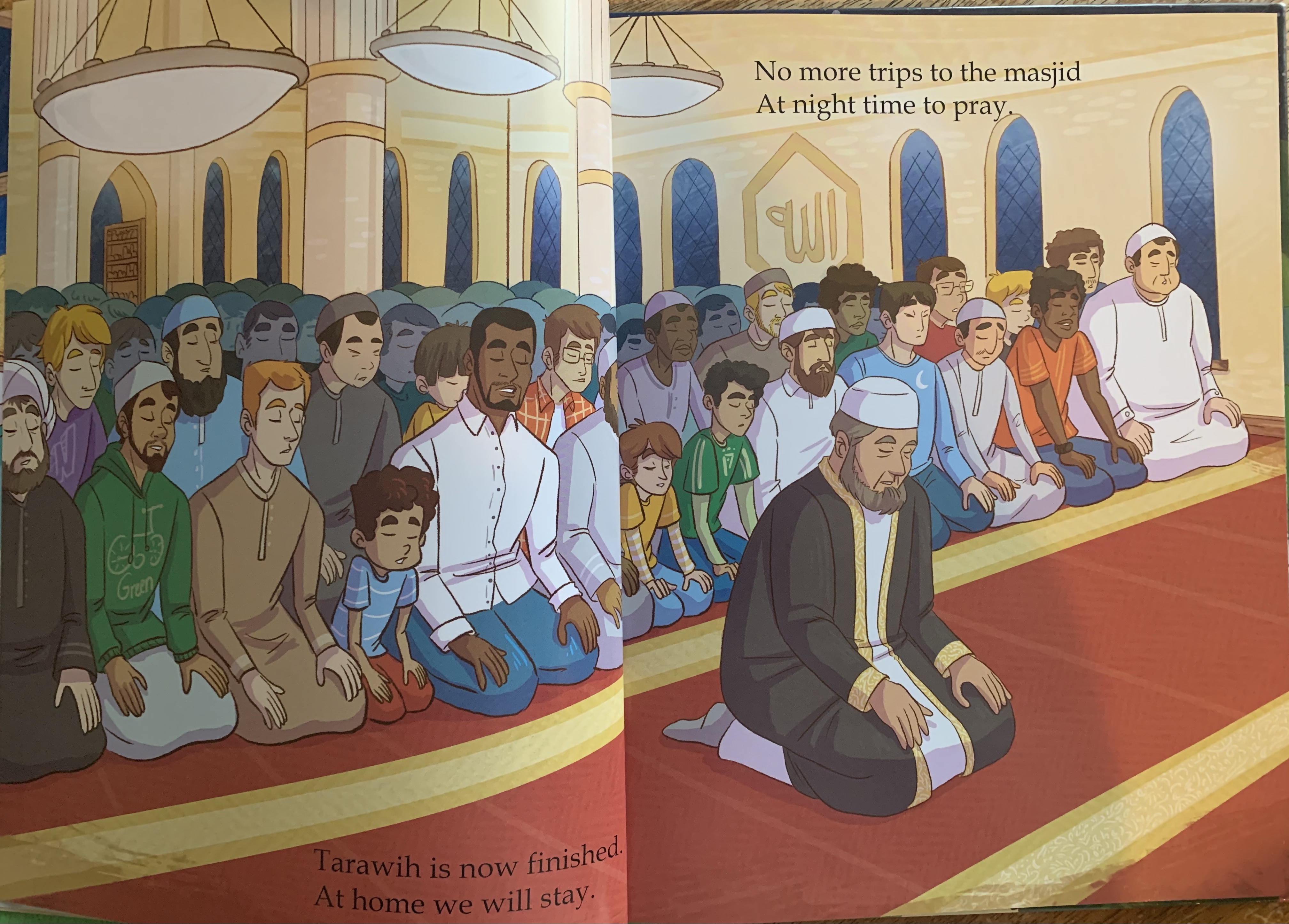
The narrative bounces back to Ramadan to explain that fasting is not eating til sundown for 30 days, that Quran was revealed during the blessed month and that we hold on to the lessons of Ramadan all year long.
The search is on for an eid dress that reflects Zara’s African American Muslim culture. This much needed representation highlights more of looking for a dress and the process of having one made, than providing information about Eid or the African American Muslim experience over its 30 pages. Iftar is mentioned on one page in parentheses, so if you omit that word it could reflect either Eid preparation. The book is cute if you are looking for a slice of life and coming together of a child, mother, and grandmother over the creation of a dress that has what Zara is wanting: pink, fluffy and containing flowers. It falls short if you are looking for a book to learn about Eid, Ramadan, what a cultural African American Muslim dress would look like, or a peek into an under represented culture. The illustrations are sufficient. I felt the girl looked younger in some of the depictions, and I was surprised that the girl’s rain boots and clothes were worn over multiple days in her search for a dress, picking out fabric and inside her house when the dress is completed. Similarly, on Eid day while her dress is stunning and fabulous, her friends are wearing the same eid clothes they wore at the start of the book from years past.
Zara has worn a salwar kameez from Pakistan with her friend Sana, an abaya like her friend Noura one year too, but this Eid, she wants a dress that shows “her own style, her heritage, a reflection of her culture as an African American Muslim. As her mom is preparing iftar she asks when they can start shopping for her Eid dress. She knows it won’t be easy to find and convinces her mother to start looking this weekend.
She pulls on her rainboots as they head out the door to find “something bright, pink, fluffy, and has flowers on it.” They go to several stores and kind find anything just right. Her mom suggests asking Nana to make it. Zara’s mom recalls the fabulous dresses her mom used to make her to wear on Eid.
Nana and Zara head out to the fabric store the next morning. First they find the pattern, then they find the fabric. After a few days of hard work for Nana, the dress is complete.
On Eid day, Zara meets up with her friends in her dress that is uniquely her own.
This book is the mirror so many kids are desperate to find in literature. A young Muslim girl is excited to celebrate Eid, while at the same time is sad knowing she is missing school picture day with her class. Not knowing what day Eid will be, not having it a scheduled day off in most school districts, and always feeling like you have your foot in two different doors starts early for children in non Muslim majority countries. This early picture book touches on those emotions, and even if you can’t always get a test rescheduled or a project due date moved, at least readers that face these dilemmas at any age and stage in life, will feel seen in this 32 page book perfect for ages 5 and up.
Amira and her brother Ziyad start the book looking out the window for the moon. They see it, which means Eid is tomorrow and Amira is going to have her mom put decorative Mehndi on her hands. She has her mom include a dolphin in the green swirls and hopes that by morning the color will be dark and beautiful. Ziyad is excited that they get to skip school.
Mom recruits the two kids to make goody bags and count out lollipops for the kids at the masjid, when the flyer for picture day catches Amira’s attention. Devastated that she will miss the class picture having already picked out a pink-striped dress for the occasion, mom reassures her that she will get to wear her new shalwar kameez, and they will take lots of pictures at the masjid.
Amira loves going for prayers and the party after, but she is kept awake at night worrying how her classmates will remember her if she isn’t in the picture. The next morning she is excited, it is Eid, but seeing her pink dress hanging next to her blue Eid outfit makes getting dressed a heavy process.
When they get to the masjid, Amira hardly recognizes it, it is all decorated and everyone looks beautiful. The smell of baked goods makes focusing on her prayers difficult, and after when everyone is taking pictures she remembers what she is missing and feels deflated.
On the way home Amira works to hold back the tears, when she suddenly has an idea to take the remaining goody bags to her classmates, and maybe catch her class pictures. Her parents agree and they stop at the school.
I won’t spoil if she made it in time, but the kids in her class love her clothes, and her mehndi designs. The book concludes with an Author’s Note, More about Eid and a Glossary.
I absolutely love the illustrations, little Amira is infectious and endearing. I wish the mom would have been a little more in tune with Amira’s feelings though, she definitely is upset and while I’m glad the family stopped after the Eid party, I feel like more could have been done beforehand to acknowledge Amira’s feelings, and see what could be done to accommodate both activities.
I love the diversity and brightness of the book to convey the absolute joy and happiness of Eid outside of presents. I think the book works for all children of all backgrounds and is a much needed addition to the repetitive Eid books available.