Tag Archives: Muslim Character

Compass, Vol. 1: The Cauldron of Eternal Life by Robert MacKenzie & Dave Walker illustrated by Justin Greenwood 

Standard
Compass, Vol. 1: The Cauldron of Eternal Life by Robert MacKenzie & Dave Walker illustrated by Justin Greenwood 

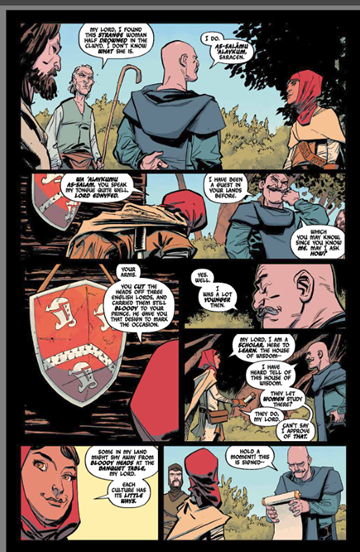
compasscoverDo you ever find yourself in the middle of an amazing historical fiction fantasy adventure graphic novel, reading as fast as you can to find out what happens next, while simultaneously having absolutely no clue what is going on? Yeah, I am was confused often in this upper YA/Teen (16+) 136 page book set in Europe during the Islamic Golden Age and starring a female from the renown House of Wisdom.  I’m fairly positive it is my own limitations that made the book confusing, but for those wiser and more versed in graphic novels, I would recommend this book.  It has action, adventure, science, history, philosophy, a strong Muslim character, friendship, wisdom, ingenuity, a bibliography, Mongols, Druids, and a dragon.

compass1

SYNOPSIS:
Shahidah El-Amin is a Compass from the House of Wisdom, she is not a thief, she seeks knowledge which means that she is incredibly educated, fierce, and scrappy: part Indiana Jones, part Tomb Raider perhaps.  She is a hijab wearing, dua invoking, Qur’an quoting, don’t give me alcohol even as you are about to kill me, strong confident Muslim. 

The book opens with her finding an artifact and being betrayed by a fellow scholar and friend, Ling Hua, a Chinese scholar.  The two race to Wales to get to the possibly rumored Calderon of Eternal Life for different reasons and using different methods.  Along the way Shahidah shows her skills in surviving, understanding what her priorities are, and learning about friendship.  She will battle Master Hua, the Khan, a dragon, a bear, the Druids, a leper just to name a few as the fantasy world is developed and built up with historical accuracies thrown in.

compas

WHY I LIKED IT:

I love that the lead is a fierce female Abbasid Muslim from Baghdad and that there are a variety of religions and cultures mentioned and depicted.  It refers to Shahidah as an Arab witch by the enemy and calls Muslims “Mohammedans” which takes a bit of getting used to and I never got comfortable with.  I love the inclusion of ayats in transliterated text of the Arabic, and the concept is wonderful.  I got lost though in some of the world building and plot.  I think the action and illustrations are clear, but the text needed a little clarity in my opinion.  Again, I acknowledge my lack of familiarity with the concepts and format of the book.

I loved the bibliography and the notes included at the beginning and end.  I actually would have liked more information on the House of Wisdom and as always, a map.

FLAGS:

The concept and references make it for more mature readers.  There is also violence, a mention to love making, and depicted death, gore, killing, etc..

compass2

TOOLS FOR LEADING THE DISCUSSION:

Even though it is for older readers, I think it would be great on a library shelf for middle grades and up.  It probably isn’t for everyone, and many wouldn’t be tempted by it even, but the few kids that like this kind of content, will absolutely love the book.

Samir and Yonatan by Daniella Carmi

Standard
Samir and Yonatan by Daniella Carmi

samirandyon

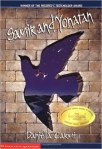
I saw this book at the library and was shocked: a Palestinian pov story written by an Israeli.  I checked it out, braced myself, and got ready to rage.  Except it isn’t blatant, and I can’t just chop it up to obvious hate, but that isn’t to say that the 183 page middle school book should be shared and deemed harmless: it subtly minimizes the occupation of an entire people, it in many ways glosses over the apartheid taking place.  It gives the inequity lip service, and I’m sure many western non Muslim, non Palestinian readers will find the book balanced, but I never could quite shake the looming shadow throughout, of trivializing the oppressive regime that is Israel.  I don’t know if the undermining is intentional, and I couldn’t find anything with a Google search to see how the book was received by Israelis in 1994 when it was published (it was translated in 2000), but either way it provides a great example as to why OWN voice books are so much more powerful.  This is not the oppressors’ story to tell.  I’m not saying the author isn’t sympathetic to the Palestinian struggles or that she actively supports encroachment of Palestinian homes, I honestly don’t know her stance.  I do know that the lived experiences of Palestinians though, is best left to be told by people that live it, have lived it, and those that feel loss because of it.  It is not a narrative to be told by the force that is causing the pain.  My biggest worry is that readers will take away from the story that the situation isn’t that bad, that Israelis are taking care of this poor injured Palestinian boy out of the goodness of their hearts so they must be nice, and at the end of the day the two sides are just two opposing forces, but the people once they get to know each other, bond over the fact that they pee the same and can be friends.  It waters down that it is, and was, major international powers backing the Israelis and that it is not, nor has it ever been, a simple disagreement between two equal sides. No I don’t expect every book about the region to detail the specifics, but don’t tell me that killing of children, a life of checkpoints, curfews, and fear can all disappear over a few months when the “enemy” provides medical care, regular meals, and arts and craft times. I’m not Palestinian and I can see the short-sided reality of that real quick.  It leaves young impressionable readers with a very skewed view, no matter how diplomatic the author attempts to be on the surface.  And I cannot support it.

SYNOPSIS:

Palestinian boy Samir injures his leg in a bicycle accident, quite seriously, and his mother who cleans for an Israeli lawyer is able to get him a special permit to be taken to the Jew’s hospital to be cared for by a visiting American surgeon.  He speaks broken Hebrew, but understands quite a bit as he has worked in a Jewish grocery store in the past.  When he gets to the hospital, he is placed in a room with other children to wait.  He stays there for weeks until the doctor can arrive and then even after the procedure he stays for physical therapy for weeks before he can return home.

While he is there, he gets to observe and know, in some ways, the other patients.  Yonatan is always buried in a book, but at night, when the other kids go to sleep he talks to Samir and plots with him a trip to Mars.  Yonatan’s mom lives in American, he lives with his dad who is an astronomy professor.  He also ethically is a vegetarian and saves his kabobs and chicken from his meals to give to Samir.  There is a girl that was hit by her father and refuses to see him, and one that is like a princess that doesn’t like to eat.  Tzahi wears a colostomy bag and is always jumping around and causing trouble.  His brother is a paratrooper in the Israeli army and he hates Palestinians.  It is hard for Samir when the brother comes to visit, the fear is real.

Samir’s younger brother Fadi was recently killed by Israeli soldiers and the memory, horror, and anguish is still very fresh for Samir and his entire family.

WHY I LIKE IT:

At first I really couldn’t articulate the saccharin taste the book was causing to form in my mouth as I read.  The curfews, and check points and loss of Fadi was being discussed and contrasted to the luxury of the Israeli hospital, and then it began to occur to me that, it was almost worse than just being blatantly hateful.  The placating and sugar coating slowly diminishes the horrors of reality.  At the beginning Samir doesn’t want to go to the hospital, he would rather have a limp, but the narrative slowly becomes about the kids in the hospital also have stressing and hard lives, and that seems sweet, except, their issues while specific, are universal.  Samir’s leg is as well, but the oppression of his people is systemic and helping him doesn’t erase that the same people running the hospital killed his brother, dictate his reality, and his future opportunities.  It is not enough for the “anti Palestinian child” to have a surgery that corrects his ability to urinate and at the very end, they pee in to the planters.  It might work on the surface, but it trivializes too much. If Samir would have gotten to tell them about his life and his pains, and his experiences, and they would have accepted them as valid, maybe I could see bridges being built, but bonding over basic human functions, and celebrating that an Israeli boy finally talks to a Palestinian, isn’t compassion, it is arrogance.

The only real positive takeaway I had of the book was that even in the tiniest human kindnesses Yonatan showed Samir it was something for Samir to contrast with his life long friendship with Adnan.  That growth of realizing what makes a good friend was more humanizing and affectionate than any other storyline in the book.

FLAGS:

Murder, fear, harassment, oppression, bullying, teasing, violence, gun violence, abuse, talk of urinating, showering in front of others.

TOOLS FOR LEADING THE DISCUSSION:

No way, I will never have Palestinian children read about their life experiences from an Israeli person speaking through a Palestinian character.

Jamal the Giant and the Largest Lesson by Mariam Hakim illustrated by Nesba Yoosef

Standard
Jamal the Giant and the Largest Lesson by Mariam Hakim illustrated by Nesba Yoosef

jamal

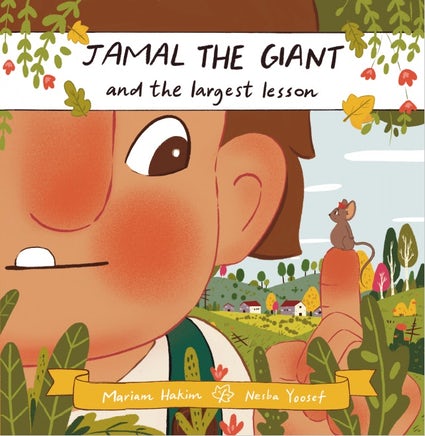
My initial thoughts of this 32 page Islamic fiction, fable-style book, is that it needed to be tested on children, lots and lots of children.  It should have been read aloud to catch all the grammar, syntax, and diction errors, and young readers and listeners should have been asked what they learned or understood from the story, BEFORE, being published.  The message is sweet, the illustrations cute, but it feels unrefined and reads underdeveloped: pictures and concepts are not enough to carry a book if the writing is poor.

I have looked forward to obtaining the book since its launch, so as soon as it was available from a US stockist (@crescentmoonstore), I didn’t even hesitate to purchase it.  I knew the book was available for free online as a read aloud on YouTube, but because I truly love supporting Muslim authors and publishers, I wanted to wait until I had a physical copy in my hand.  These opinions are my own, all my reviews are.  I mean no malicious will to anyone, I’ve spent my money on something, and once I’ve done so, I am completely justified to have an opinion.  You don’t have to like it, or agree with it, but it isn’t personal.  I’ve given reasonings for my opinions, and I stand by them.

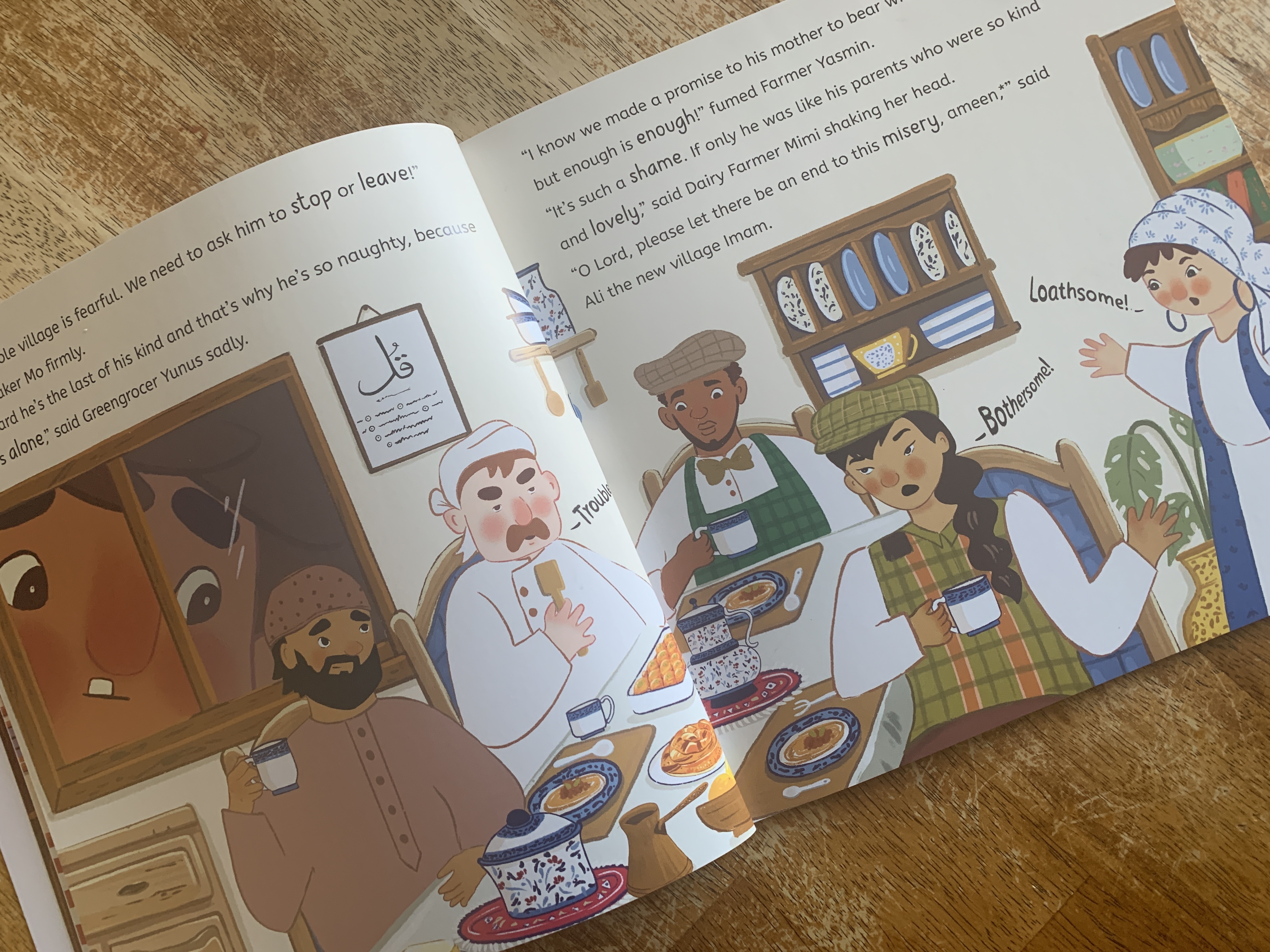
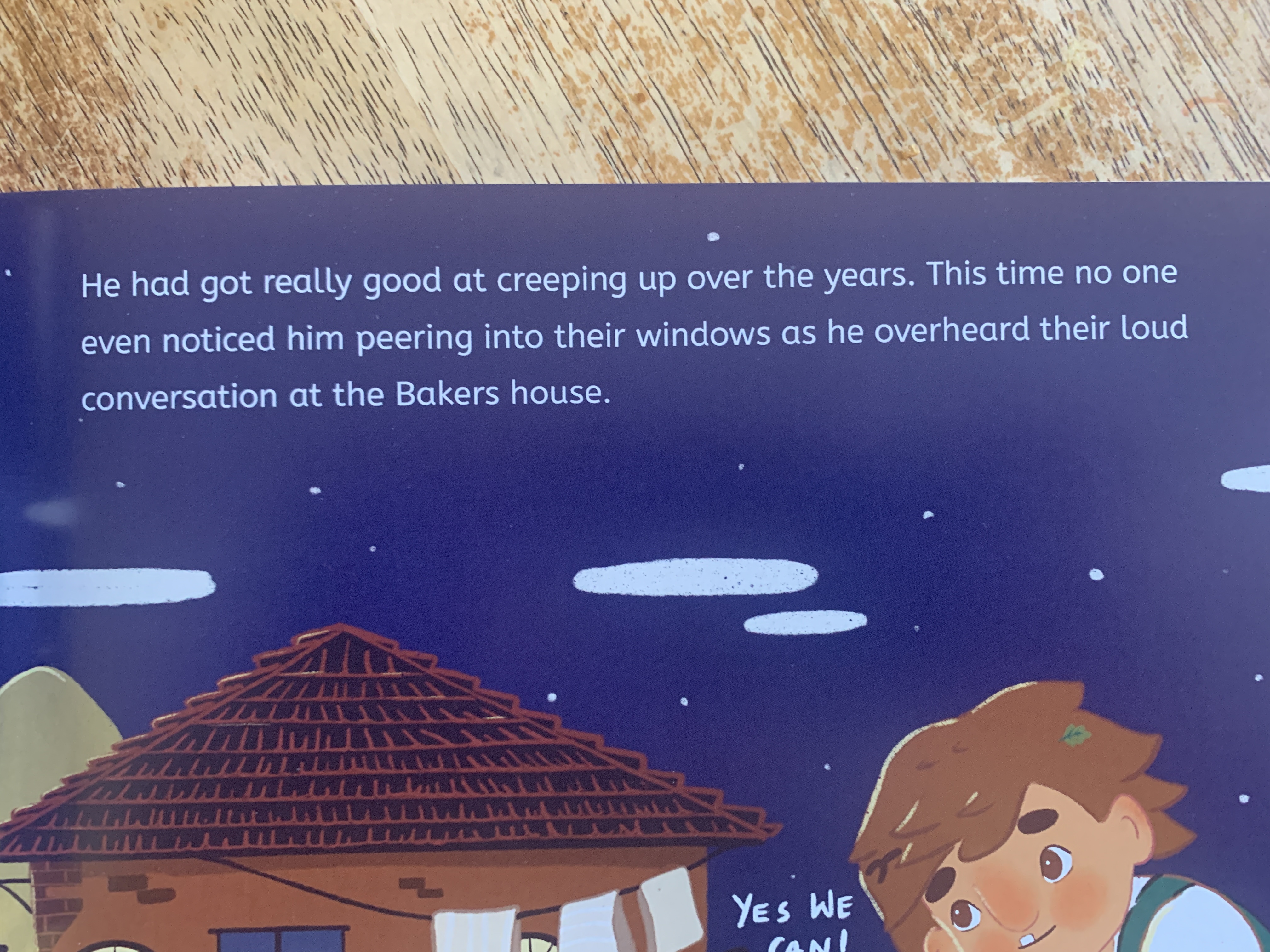
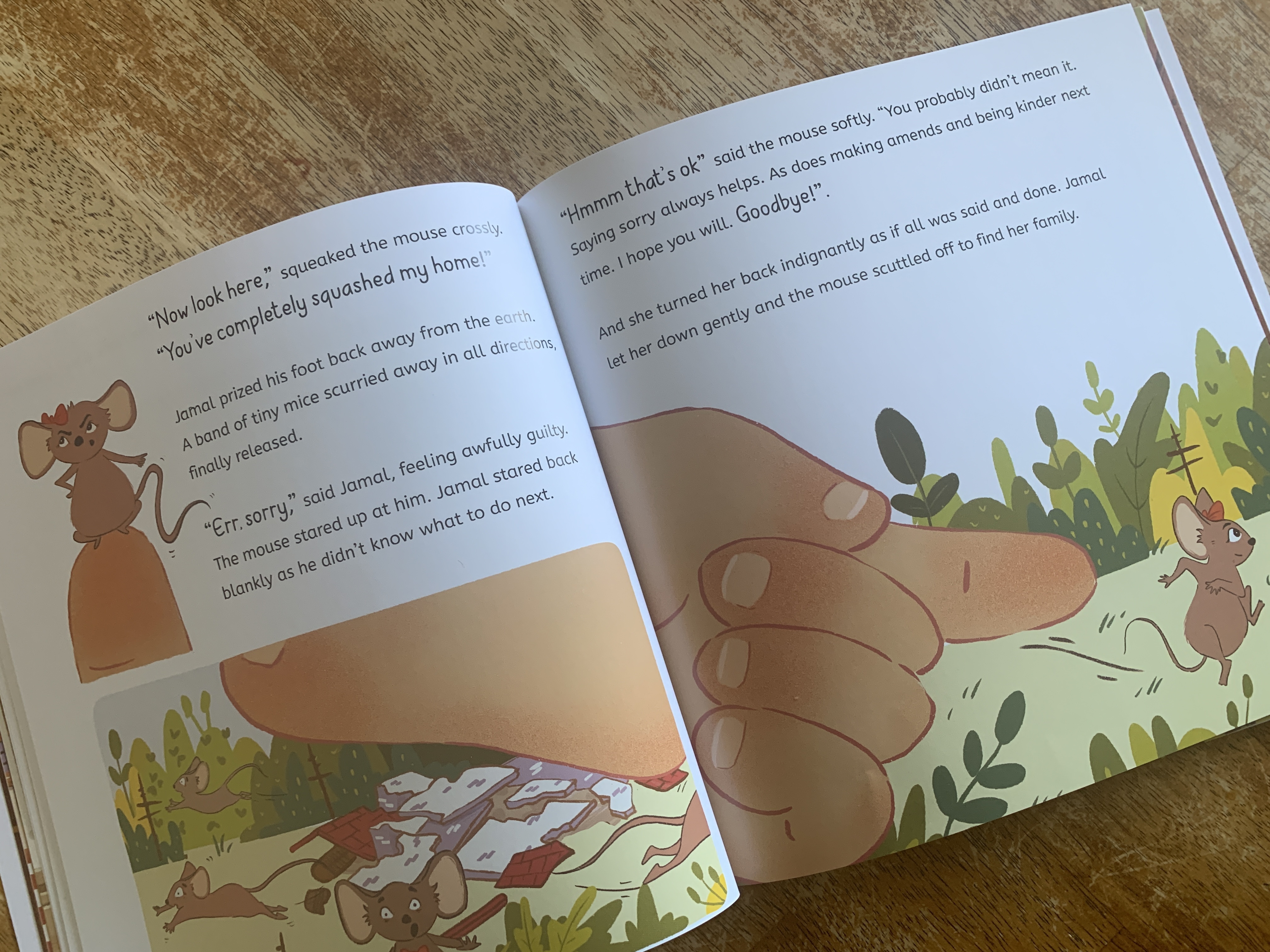
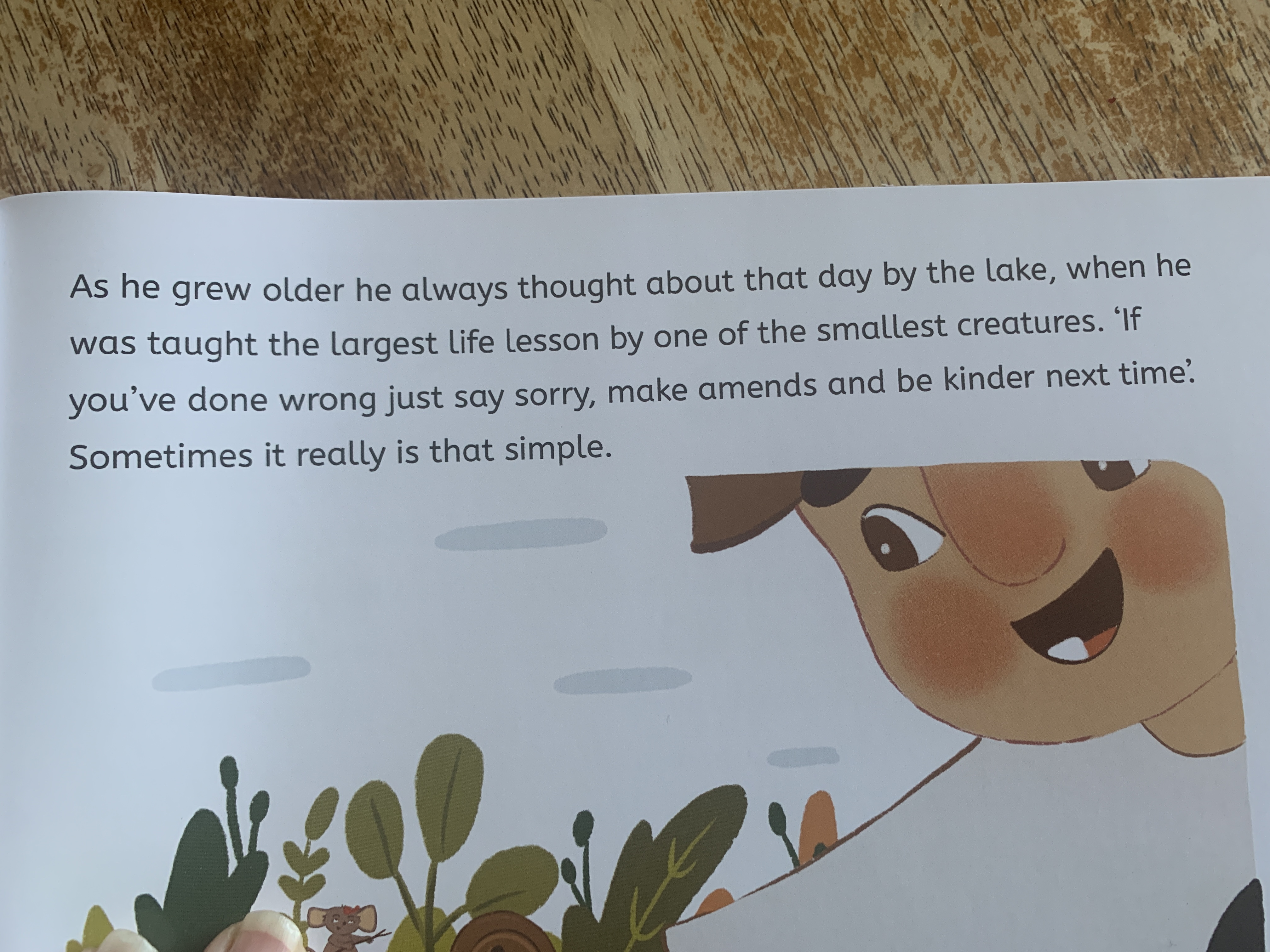
Jamal the Giant isn’t necessarily mean, but he is careless, young, and selfish.  He scares the animals in the woods, destroys their homes, ruins farmers’ crops, and steals from the village.  One night, he wants to steal some juice and in the process overhears the community members discussing how different he is from his kind parents, and that he must be forced to leave.  He tries to mend his ways before he is driven from his home, but to no avail.  Unsure how to fix things, it is the advice of a tiny mouse that sets his reform in motion and conveys the message from the Quran, surah 11 ayat 114, “Good deeds cancel out bad deeds.  This is a reminder for the mindful.” He learns he must apologize, make amends and be kind.

The message is accurate, but I have some concerns at how it is conveyed.  Why was the responsibility on the giant to learn how to behave.  Yes if he knew better, he should do better, but it is made clear that he is the last of his kind and his parents died when he was really young.  If the villagers aren’t going to try and teach him, who is?  It isn’t necessarily victim blaming, but if you don’t know better, and have no one to teach you, you definitely are a victim of neglect in some ways.  To have them going from enabling him out of a promise to his parents to threatening to kick him out from his home, is a little abrupt.

Story-wise there are some points that gave me pause.  Why is there an owl flying off in the daytime, sure there are some diurnal owls, but most kids are taught owls are nocturnal, why not change it to a woodland bird that is active in the day, don’t confuse kids.  It doesn’t specify a timeframe that the story takes place in, but it feels like a fable with talking animals a giant and a clear message.  There is a baker, a farmer, an imam, a greengrocery, it is all very quaint, but then the imam is holding a cell-phone, wait what? I do appreciate that the farmer is female though, and that some of the women cover and some do not, it seems representative.

I’m curious who taught the giant to read, and how come he writes his “s” backwards, there seems to be a bit of disjointedness to the upbringing of the giant, his age, even in giant terms.  A lot it seems the author assumes the reader knows about giants or their stereotypes perhaps, because the book doesn’t address them, and the result isn’t a fun moral story, but one that seems to miss things.

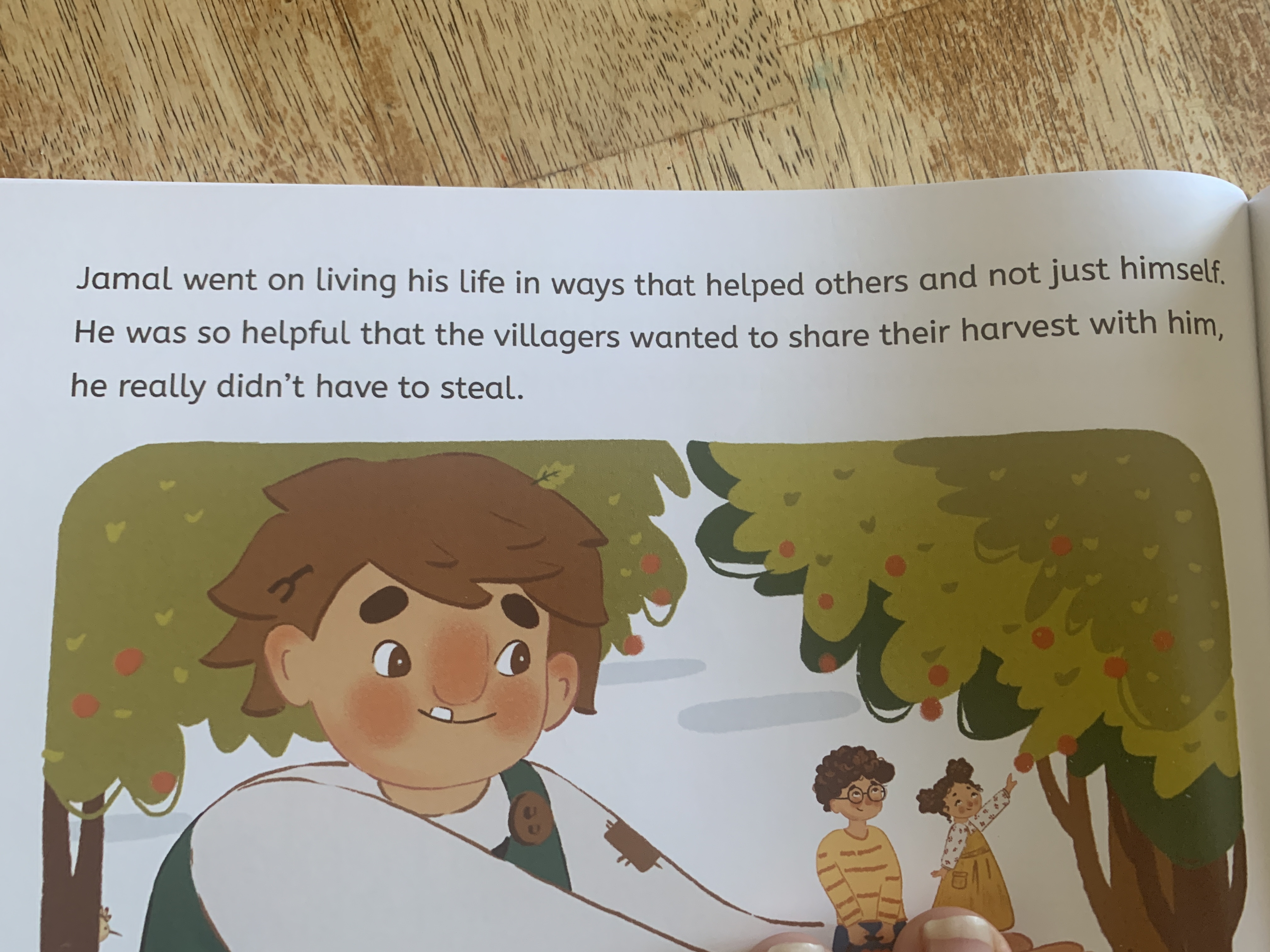
The little mouse teaching the big giant, carries some Lion and the Mouse-Aesop fable vibes, but really it is the proof-reading of the book that is disappointing.  When you read it aloud, commas are abundantly missing (even in the online reading pauses are placed where commas are not written).  Why is the B in Baker capitalized, and if it is the Baker’s house, as in last name is Baker, then an apostrophe is missing.  Many of the lines are just awkward and halting, even if not particularly erroneous.  The diction is questionable at times, Jamal “always” thinks about that day at the lake, woah, doesn’t reflect on it, but it haunts him “always.”  Jamal “‘really’ didn’t have to steal,” seems to imply he was justified in stealing a little, this should be a black and white issue in a children’s book, no?

There are questions at the end of the book, and a whole page of information about the author and illustrator as well.  In a case like this I don’t know if the publisher didn’t do justice to the author’s work, or if the author should have refined it more, before coming to the publisher, but it is unfortunate because clearly a lot of effort went in to the illustrations and promoting of the book.

Inventors of the Golden Age (Just like) by Umm Laith and Muhammad Khaider Syafei (Proud Little Muslims)

Standard
Inventors of the Golden Age (Just like) by Umm Laith and Muhammad Khaider Syafei (Proud Little Muslims)

img_6450

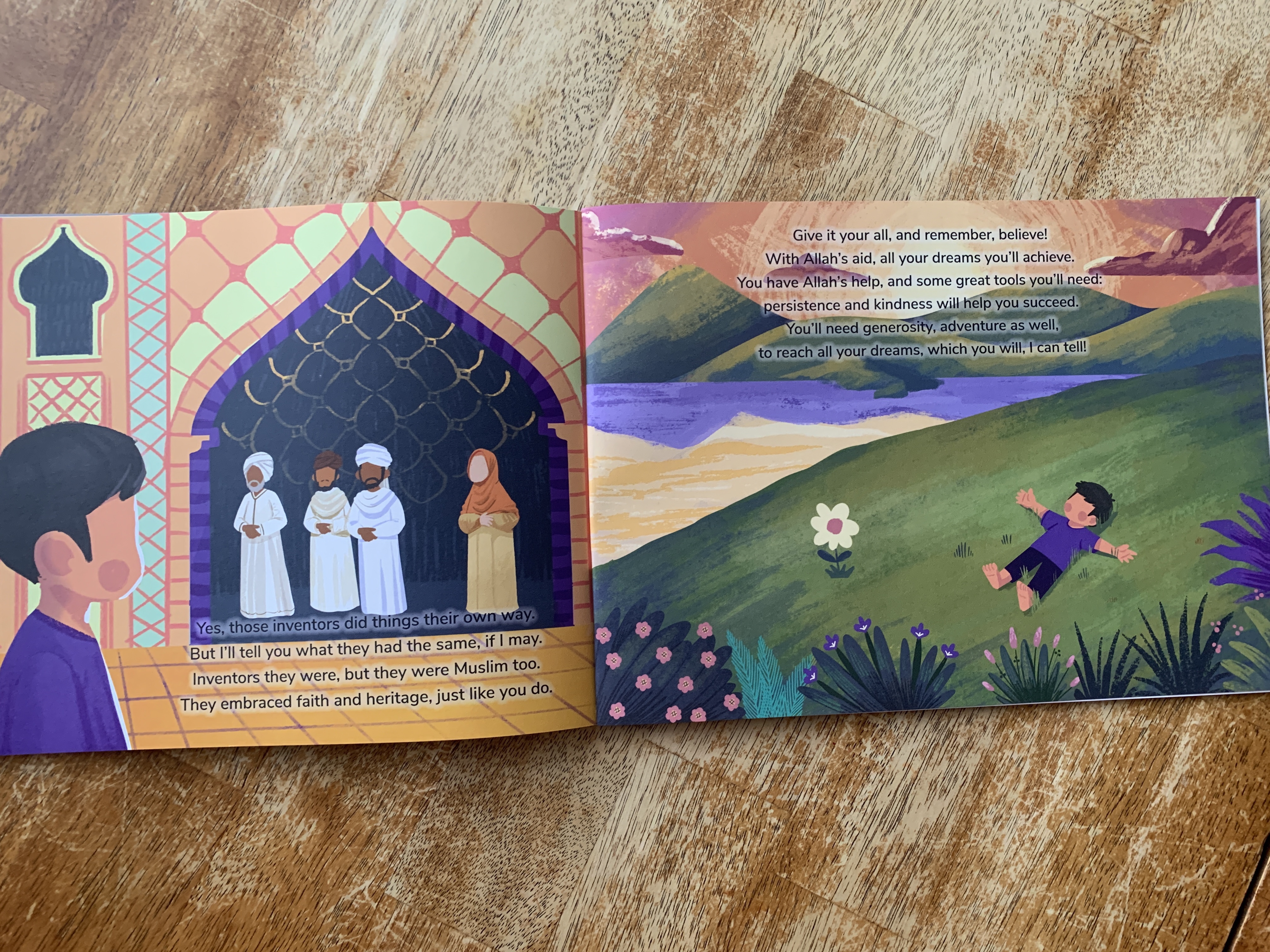
Usually when you purchase a personalized book, the charm is that you get to see a name of your choosing in the story, and that you can make the main character look a certain way.  So imagine my surprise when this book arrived, and yeah sure my son’s name and likeness was included, but the story and information contained was also really well done and engaging.  This book, even without the personalization, is a solid story highlighting Fatima al-Fihri, Abbas ibn Firnas, al-Zahrawi, al-Idrisi, and their skills of generosity, persistence, kindness, and adventure as they shaped the world as we know it.

img_6418

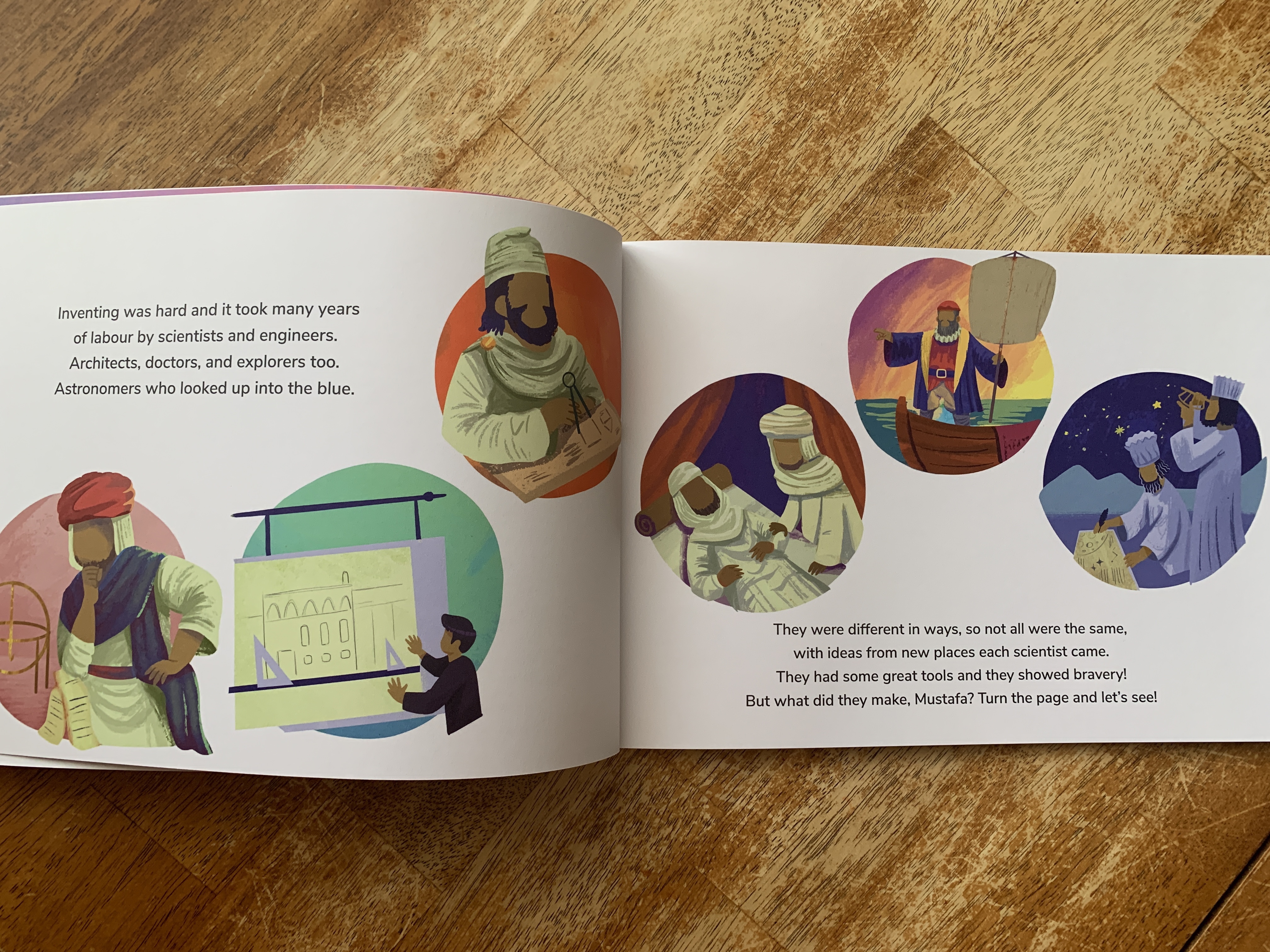
The fourth wall is broken as the book speaks to the reader encouraging them to come on an adventure in to the Golden Age.  A time when scientists, engineers, explorers, doctors, and astronomers were making remarkable advancements.

The first stop is Morocco to learn about Fatima al-Fihri and how she established the first university.  Her generosity in building and creating a place of Islam and learning is what set her apart and made her so remarkable.  It is then on to Abbas ibn-Firnas in Spain and his attempts at flying.  He failed often, but his mistakes helped him as he persisted and continued to learn and understand and make flight of humans possible.

img_6419

Al-Zahrawi, the surgeon, is who is detailed next, as his knowledge, skill, and inventions he made are still used today.  His regard for his patients fear and nerves and his kindness is what the book stresses before moving on to the mapmaker al-Idrisi.  Al-Idrisi was adventurous as he traveled the world making his maps and switching the poles.

img_6420

The book then focuses on the reader encouraging them to be generous and adventurous, kind and persistent, in making the future better like those mentioned from the past.

The book is horizontal, the pages thick, the faceless illustrations warm and detailed and the rhyming text flowing and appropriate for preschool aged children and up.

img_6421

An Ayesha Dean Novelette: The High School Heist by Melati Lum

Standard
An Ayesha Dean Novelette: The High School Heist by Melati Lum

ayesha deen mg

If you are a long time fan of Ayesha Dean and you have been waiting for some children in your life to grow up just a little, so you can share the strong Muslim detective books with them, you are in for treat.  This book is a short novelette for middle grade readers!  It isn’t a prequel detailing her personal backstory, but it does show how she got her first taste of sleuthing at age 13.  If you are new to the series: the book like all the others is Islam centered, fast paced, authentically voiced, and an overall fun read.  Unique to this book is that it is for ages 8 and up, and takes place in Ayesha’s home country of Australia.

SYNOPSIS:

Ayesha is at a new school, she has recently started wearing hijab and she just wants to settle in to it all with friends Jess and Sara.  Things have been going missing from year eight lockers, but it isn’t until Ayesha is a victim does the concern really hit home.  Add to that getting paired with the jerk Dylan Wyley for a project in Indonesian class, and Ayesha is not having a good day.  When she senses some suspicious activity, she is on the case: ready to get her stolen book back, take down a bully, put her Tae Kwon Do training to use, and make it to the library to pray her salat on time.

WHY I LIKE IT:

I really enjoyed the relatable voice of young Ayesha, having read all of the other books in the series, it was sweet to get a peek of her in her younger school days.  I love how much Islam is in the book, and not in a preachy way, but rather in a ‘I’m Muslim and this is how I see the world and this is what I do’ sort of way. I’m not going to lie though, I wanted more backstory on how she became friends with Jess and Sara, how she settled in to living with Uncle Day when her parents died, and all the backstory four books solving crimes around the world just couldn’t get to.  But I fully realize, that is just something I may never get (hint, hint) and will have to be content with the fast paced, culture and Islam rich stories that we thankfully get.  I’m not complaining, I just get overly invested.

To all my arrogant ignorant readers out there, that like me, might be a bit confused about Australian schooling and culture- I embarrassed and humbled myself and annoyed the ever gracious author to learn more about Ayesha’s world.  In Australia the lockers are located in the students’ homeroom classrooms (tute rooms), hence they don’t often padlock them.  High school refers to ages 12-17, and sometimes 11th and 12th grade are called senior school, and “How did you go” is a phrase in Australian English.  See, aren’t you glad I asked, now we know, and can widen our view together.

The only thing that I think I would have liked to see would have been a bit of pause before Ayesha got into a fight.  It is high energy, and she does it to help someone, but I feel like at 13 years old, in a book for 8 year olds, and as someone familiar with Tae Kwon Do, it should have been more articulated that she was nervous to engage in a physical altercation, and was only doing it because she could not diffuse the situation, get the victim away, and thus had to step in.  I recognize that pulling out of the scene might have made it lose momentum, but I felt a little off celebrating a school fight without that pause of introspection.

FLAGS:

Fighting, stealing, bullying, Islamohobia, racism, bigotry.

TOOLS FOR LEADING THE DISCUSSION:
The book is short and for a younger age than I meet with, but I look forward to purchasing the book on February 20, 2022 to have available in the school library for anyone to pick up and read, inshaAllah.

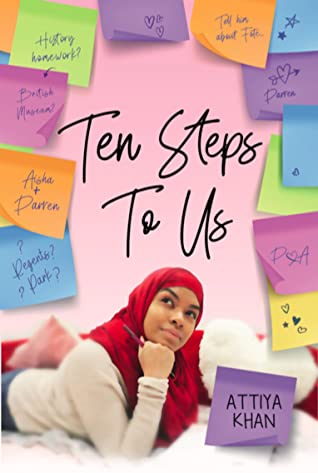
10 Steps to Us by Attiya Khan

Standard
10 Steps to Us by Attiya Khan

steps

I try really hard to keep an open mind when reading Islamic YA romance books knowing that certain standards are probably not going to exist to move the story along, and of course I’m fully cognizant that Islam is practiced in a myriad of ways and chances are, I will disagree with a fair amount of any book in this genre.  This particular book though, was hard to read.  Ultimately I just didn’t like the protagonist, she was shallow and flimsy and her grasp on reality seemed lacking at times.  The premise of the book is that you can have a boyfriend, if the boyfriend is Muslim.  So by not agreeing with the very foundation; made the rest of the book hard to wrap my head around.  The book is largely about hijab, and the author starts the book thanking the individuals that “educated her about the hijab,”  yes, the article “the” is often used, and thus so much of the nuanced lived OWN voice experience of wearing hijab, is lacking.  The book features language, lying, kissing, making out, talk of wanking, condoms, groping, and a scene that nearly concludes with sex, but stops short, barely.  Perhaps high school seniors and college age teens could read this 231 page book, but I don’t know that the book is worth their time.  Practicing Muslims will be irritated by the lack of mirroring, cultural readers will be annoyed that the protagonist didn’t push back on toxic assumptions, and non religious readers will be left confused at what the book hopes to accomplish by including religion and culture to no real definitive purpose in a romance novel.

SYNOPSIS:

High school student Aisha wears hijab much to her parents protests, and tries to avoid the Islamophobic aggressions that she endures in her white Kent neighborhood.  She learns more about Islam than cultural superficiality from a family friend, an aunty, and she goes through her daily life largely unnoticed.  She has a close friend, who is popular and likes to party, but Aisha doesn’t go out much, yet Isabelle still finds ways to include her.  Everything starts to change however, when Darren moves in to town, defends Aisha at the bus stop and seems to be interested in being more than just friends.  Aisha doesn’t date, but reasons if Darren were a Muslim, nothing would stop her.  She devises a 10 step plan to make it all work, she just has to convert him.

While she sets her plan in motion, she finds herself lying to Isabelle, who has a crush on Darren, lying to her parents so that she can sneak around with Darren, and lying to Shafqat Aunty about her relationship with Darren.  Along the way, she will lose her friendship with Isabelle, uncover dangers of equating culture and religion, remove and reconsider her hijab, nearly lose her virginity, and have to decide where her boundaries are.  By the end of the book, nothing is clearly articulated for Aisha’s future or what she has decided regarding her relationship with Islam, hijab, and future boyfriends.

WHY I LIKE IT:

I struggled with the book.  I like the flipped stereotype of the family not supporting hijab, but Aisha wearing it for her self anyway, unfortunately, I never felt that I understood why she felt strong enough to wear it, what brought her closer to Islam, and learning about Islam, and what the catalyst of it all was.  I think knowing more of Aisha’s backstory might have made her more like-able.  Throughout the book Shafqat Aunty is her whole Islamic touchstone.  She doesn’t seem to have any other way of learning, or studying Islam.  It seems that to come to Islam in high school would mean a level of maturity would exist that the character simply does not exhibit.  I started wearing hijab at 16, I was the first in my family, I did it for me, I was actively trying to be a better Muslim and understand Islam, and hijab was simply a physical, tangible manifestation of that.  So to see a character so passive in the learning, was a bit of a disconnect for me.  I’m not saying that everyone has an experience like mine, but her grasp of basic Islamic tenants seems so weak, and she doesn’t seem to have a way to acquire understanding, or even a desire to obtain it.  Often Darren seems to know more about Islam than she does.

I really struggled with the conceptual thread that her hijab prevents her from feeling comfortable making-out with Darren, so she hides it when clothing starts falling off.  Shouldn’t hijab be the reminder to not have gotten in that situation in the first place? Perhaps if she would have had some depth, or the relationship wasn’t “love at first sight” I would feel a bit more invested in her trying to sort out her beliefs while in the midst of such strong lust, but it wasn’t developed to that level.

I liked the initial idea of sorting through cultural and religious views on divorce especially considering the woman involved is being abused, but I didn’t think the book exerted a strong enough stance that divorce in Islam is absolutely ok, that abuse is not ok, and anything otherwise is backwards culture.  The book set itself up to make a strong statement, but then it abandoned it.  I’m not sure why the author didn’t get up on a soap box and preach, I mean it would have given the book something really powerful to highlight and given Aisha some growth in understanding where culture has undermined the power of women’s rights in Islam.

The book dismisses understanding one’s faith, and falls into predictable troupes despite setting itself up to be “different,” when  Aisha fears being shipped off to Pakistan when her parents find out about her and Darren.  The writing feels forced at times, and a few times He when referencing God is not capitalized.  I appreciate that some surahs, and duas, and Ramadan are included, but they don’t seem to shape Aisha, it seems like she is simply going through the motions.

The book ends on a “cliff hanger” of her either placing her scarf in the hamper or the garbage.

FLAGS:

Language, talk of sex, fairly vivid make-out scene that stops short of sex when they pause to acquire a condom and then Aisha changes her mind.  There is a lot of lying, normalizing relationships if both are Muslim, even if both are not, talk of domestic violence, slut-shaming, hickies, crude jokes.

TOOLS TO LEAD THE DISCUSSION:

There is no way I would encourage this book in an Islamic school setting.

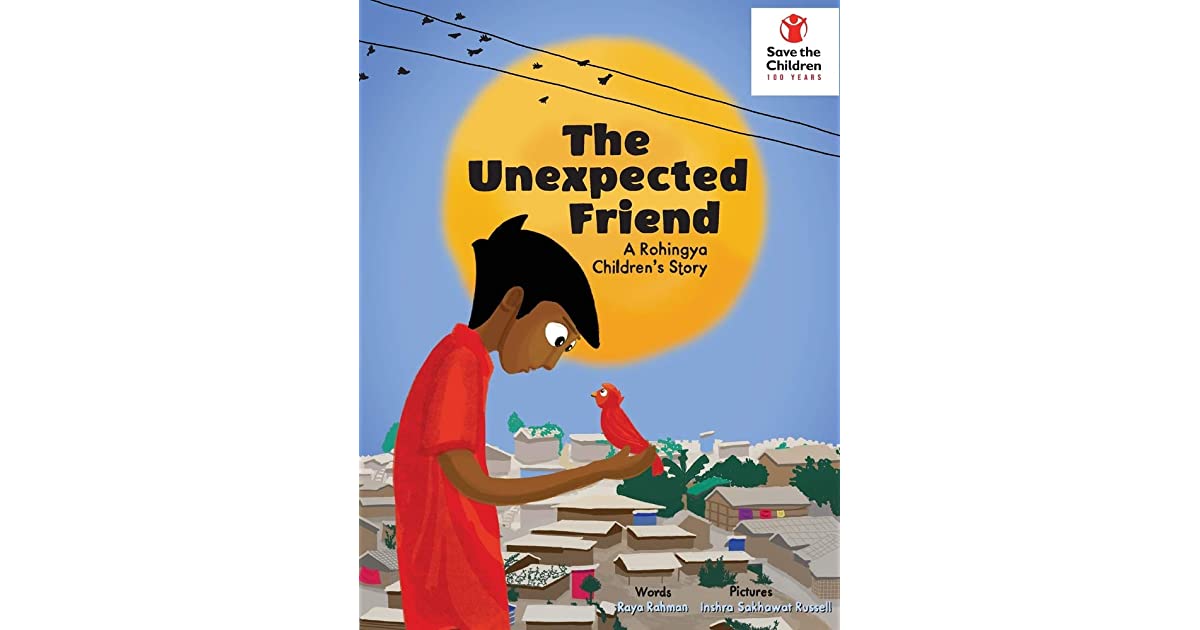
The Unexpected Friend: A Rohingya Children’s Story by Raya Rashna Rahman illustrated by Inshra Sakhawat Russell

Standard
The Unexpected Friend: A Rohingya Children’s Story by Raya Rashna Rahman illustrated by Inshra Sakhawat Russell

friend

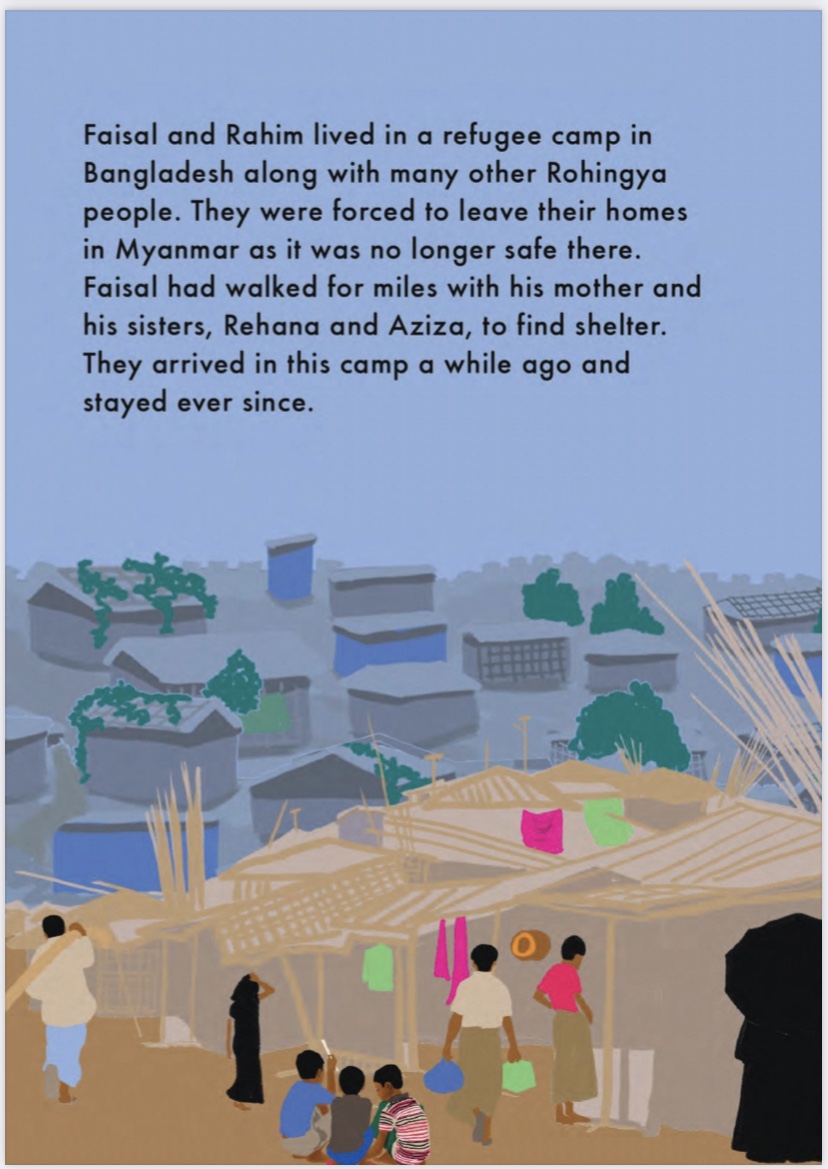
I have mixed feelings about this book. On the surface I am thrilled that there is a story highlighting the plight of the Rohingya for children and that it includes some character depth and relatability to global readers. On the flip side, the book is very vague and could be any refugee in any camp and is not Rohingya specific. Additionally, I feel that it is too idyllic. I am no expert by any means, I wouldn’t even say that I am well-versed, but the book paints an impression of a thriving organized camp with medical help, orderly food lines and a vibrant school. Yes, it talks about the lines being long, and naturally if you are out collecting firewood, it is a bit rugged, but I don’t know that the lasting impression is a humanitarian crises. I understand that in a 36 page, kindergarten to 2nd grade book, political complexities and horrors are not a natural platform, but I worry that the aim of bringing attention to the situation will miss its mark by not capturing its truth more clearly.

img_5377

Faisal has just finished his afternoon prayer and while outside the mosque he hears a faint chirping and discovers a small bird with a hurt wing.  He and his friend Rahim take the bird to the learning center to be cared for while the boys head to the forest to collect firewood.

img_5378

The forest can be dangerous, but in order to cook, they must have wood to burn.  While in the forest, the boys encounter an elephant and remark on how they are depleting the animals’ natural habitat.  When leaving Faisal trips and falls, scattering his collected firewood and breaking his arm.

img_5379

Rahim offers to share his firewood with Faisal and the two head back to camp to get Faisal to the doctor.    Like the bird, who’s wing has been bandaged, Faisal now too has a hurt appendage.  The two spend every minute together for weeks, and when both have healed, Faisal admits he doesn’t want to let the bird free. He knows it is the right thing to do and alas allows the bird to go.

img_5380

The book has an afterword regarding Cox’s Bazar and information about the author and Save the Children Foundation.

Huda F Are You? by Huda Fahmy

Standard
Huda F Are You? by Huda Fahmy

huda f

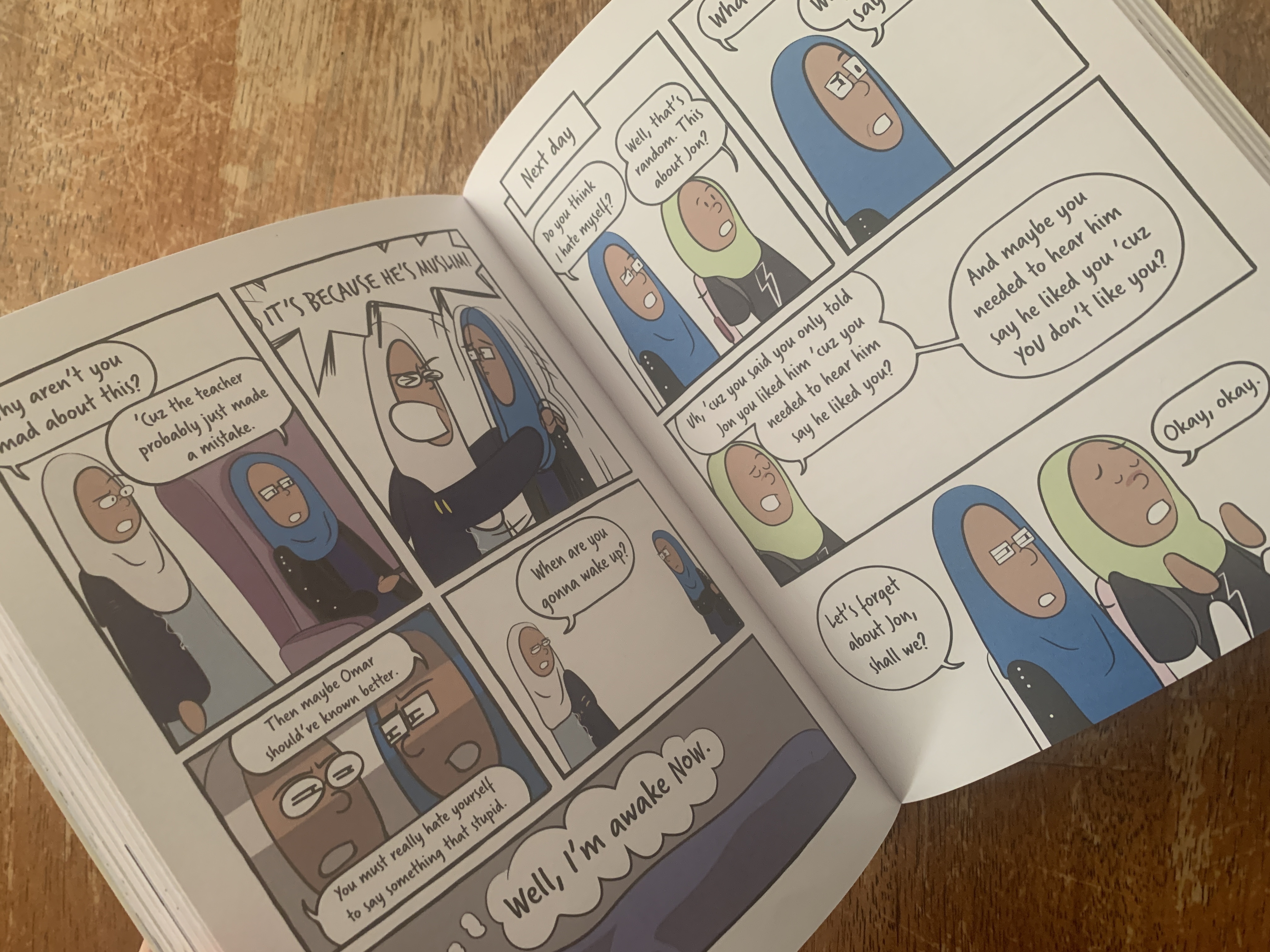
I think everyone has heard about this book by now and how fabulously fun, real, and relevant Huda’s life  is for so many.  I am happy to jump on the praising bandwagon, as this teen/YA 192 page graphic novel really is a great OWN voice unapologetically Islamic mainstream tale.  It does mention periods, relationships, hate crimes, and finding yourself, so probably 14 or 15 year olds and up.  My middle school boys read it, so it isn’t that it is inappropriate, just the target audience is more teen girl.  I know a lot of people, including Huda’s mom according to the inscription, have issues with the title, but I think it is brilliant.  She takes ownership of her name and it isn’t just for shock value, the book is about figuring out who you are, how you feel about Islam, establishing your friend circle, and growing and learning along the way.  My public library has it, as do major outlets, so what are you waiting for, go read, laugh, and feel seen.

img_5036

SYNOPSIS:

Huda has just moved to a new school and she is no longer the only hijabi.  She has moved to Dearborn, Michigan and there are A LOT of Muslims.  She is no longer defined by the cloth on her head, she has to figure out who she is.  Who she really is.  And sometimes the best way to do that, is to figure out who you are not.  

Huda tries different clubs, and different circles of friends, both at school and at the masjid.  Along the way she learns how much she craves approval and who is always in her corner.  When a kid at school is targeted for being Muslim, Huda will have to see how much internal hate she carries as well.  Her clothes change, her outlook changes, she tries new things, and she grows, all while the laughs help the story bounce from one serious topic to the next without coming across as arrogant or stereotypical.  This is Huda’s story and we are just along for the ride.

img_5035

WHY I LIKE IT:

I love that there is nothing to critique, it reads autobiographical even if parts are exaggerated or only based loosely in reality.  By being so real, and so well done, you are excited when you see yourself staring back, but you feel like you’re a friend learning about Huda even when you can’t relate exactly. Her comics online and her previous two books are all amazing, and I love that she is continually creating new material for us all to enjoy and benefit from.

img_5037

FLAGS:

She tells a boy she likes him that she doesn’t really like.  Periods are referenced and blood and a pad are shown, not graphic and gross, but the sentiment is there.  Discrimination is present, as is Islamophobia and stereotypes.

TOOLS FOR LEADING THE DISCUSSION:

Just keep the book out and around: it will be picked up, read, and mentioned, no tools needed.

Omar Rising by Aisha Saeed

Standard
Omar Rising by Aisha Saeed

omar rising

This middle grades 224 page read is quick and memorable.  The story is set in Pakistan and the characters are probably Muslim, but there is no religion mentioned until nearly the end, and even then only in passing.  The only culture specific references are the characters’ names, social etiquettes, and the foods mentioned.  By and large, the story is universal and could take place anywhere, and probably does take place everywhere.  While I wish it would have had more cultural and religious references, it is an OWN voice story after all, the book is enjoyable, the characters endearing, and I think young readers will benefit from spending the school year with Omar, seeing classism up close, and cheering for an unjust school system to be challenged.

SYNOPSIS:

Omar is the son of a servant and when he earns a scholarship to a prestiges boy’s school for seventh grade, the entire village is bursting with pride.  When he gets there though, it is hard, really hard.  The scholarship kids aren’t allowed to participate in any extra curriculars, they have to do service hours, and they have to maintain the ridiculously high A plus grade average or be expelled.  It seems that that headmaster is out to get the scholarship kids, and Omar in particular.  As the scholarship students struggle to stay afloat, Omar has to determine if it is all worth it. He spends all his time studying, even when he goes home to visit his mother, and while he doesn’t want to let the village down, he is struggling to find the optimism to keep fighting for his place.  When Omar learns that the system is designed to make the scholarship kids fail, and that those that are kicked out are called “ghost boys,” he has to decide to how hard to push himself and ultimately how hard to push to break down the system that treats him and those like him like second class citizens.  Luckily, Omar has some supportive teachers, some loyal friends, and a whole lot of determination.

WHY I LIKE IT:

I love that the story is universal, it is at times a much tamer version of the YA book Ace of Spades which also explores second class citizens in posh private schools as a theme, and at times I even felt some Dead Poet’s Society vibes.  The cultural setting and names however, to me is a mixed bag.  I’m glad that it didn’t become another story about problems in another country with judgmental overtones, but at the same time, to be so void of cultural references seemed too far of an extreme in the other direction to make the story feel real richness and authenticity.  I love that the story isn’t about bullying and that a number of characters have depth.  I was genuinely confused for a large portion of the book about what the orientation in the summer entailed.  It was clarified much too late that it was a weekend, but I was at a loss trying to figure out how he knew some of the campus, some of the other scholarship kids, had a roommate, yet knew so little of the school and what it would be like.  I am not sure why that information was delayed, but seeing as I read an arc, I hope it is clarified in the final copy.

FLAGS:

Omar and a girl are friends, they hug at the end, but it seems rather innocent, and more sibling like as they were raised together.  

TOOLS FOR LEADING THE DISCUSSION:

This would be a good book on a shelf, and would possibly work as a read aloud to grades four or five.


Girls Who Code by Stacia Deutsch and Michelle Schusterman

Standard
Girls Who Code by Stacia Deutsch and Michelle Schusterman

I sadly think that it is safe to say that whenever you see a book that features a cast of characters meant to include multiple minority groups, certain representation is going to read more generic and formulaic than others.  Translation: just because you see a hijabi on the cover, do not rush out to obtain, purchase, and read the entire series.  Chances are if a scarf wearing Muslim is being featured, the details will be simplistic, the rep mediocre, and the OWN voice emotion lacking.  Also know, that other minority groups will have similarly been included for their surface level representation and not necessarily for any real depth.  This includes the boxes to be checked for Black, Hispanic, Asian, and LGBTQ+ storylines, characters, and/or side references.  This is a sweeping generalization, and inshaAllah when I am proven wrong, I will happily point those books out too.  This series hopes to appeal to middle grade female readers (AR 4.0-4.6) with an emphasis on coding, but not so much on how it is done or how they learn it, but how it helps them in their other passions and dramas.  I read books two and four, since the Muslim character is not introduced until book two and I wanted to see how she is developed as the series advances.  Each book is told from a different girl’s perspective so it is assumed that book five, could be Leila’s, but honestly with the focus on crushes, dances, and relationships, I won’t be sticking around to find out.

SYNOPSIS:

BOOK 2: TEAM BFF: RACE TO THE FINISH! is told from Sophia’s perspective.  She is hispanic, has lots of little sisters, loves sports and has a lot of responsibility.  The original four girls reach out to Leila, a new girl from Pakistan to join their coding team and even end up naming their robot Zahira.  When Soph is forced to take care of her siblings instead of go to the hackathon, she will have to learn to ask for help and lean on others when she can’t do everything herself.  It also means she will have to take charge with the upcoming dance and ask Sammy out herself.

BOOK 4: SPOTLIGHT ON CODING CLUB:  The school is doing a new virtual format for the talent show and that means that the coding club has to design a website, an app, and collect all the data.  They don’t have much time, and with everyone’s time stretched thin with other obligations, Erin keeps volunteering to do more.  Her hope is that if she is so busy she can’t think, her anxiety won’t flare up  and she won’t stress too much about her dad who is deployed on a secret mission.  When their teacher announces that she is leaving, the group seems to be falling apart as well, and something will have to give.

WHY I LIKE IT:

The first two books are written by one author, and then three is written by someone else, as is book four.  The writing quality of book four is much better, and the insight in to mental illness, divorced parents, a parent actively deployed, and being stretched too thin, will resonate a lot stronger with readers, than the more whiney presentation of the second book.  Each book seems to also present with a new crush storyline: in the second book it is Sophia recognizing changing feelings for a friend, and in book four it is a lesbian crush that has the side characters angsty.  I wish more about the girls as individuals was stressed rather than having them all be defined by their hundreds of hobbies and extracurriculars.  I was exhausted just imagining all the places they have to be in a week and the frantic pace they must keep to ensure they get there. I get that the demographic is probably giggly over crushes, but honestly they seem so forced and unnecessary in books that already have a lot of moving parts.

FLAGS:

Lying, crushes (gay and straight), anxiety triggers, stress.

TOOLS FOR LEADING THE DISCUSSION:
I don’t know that I would even shelve these in an Islamic School, the idea is good, the execution not so much.