Tag Archives: Hajj

Here’s Our Religion by Jenny Molendyk Divleli illustrated by Dasril Iqbal Al Faruqi

Standard
Here’s Our Religion by Jenny Molendyk Divleli illustrated by Dasril Iqbal Al Faruqi

This HUGE 14 page board book is such an engaging, teachable, and shareable book for toddler to early elementary aged children.  Similar to the author’s First Words in the Qur’an I can see this book being shared at story times and in classrooms regularly.  Each two page spread is literally a board book in and of itself.  With headings of: Ummah, Shahadah/Qur’an, Salah, Ramadan, Zaqat/Sadaqa, Hajj, and Prophet Muhammad (saw)/ Sunnah, kids will be able to deduce from the pictures and simple captions how the details relate to the theme, learn new information, review what they already know, and delight in the illustrations.

I don’t know that I would sit down with a toddler or preschooler and just read the book straight through very often, but when I was doing multiple story times a week, I had planned books for every theme highlighted in this book. I would have loved to be able to pull it out after a few stories had been read and used it as a review, where I could point to a picture and the kids could holler out what the illustration was teaching.  The large size would have saved me from having to make story board pieces, and the critical thinking would encourage comprehension and retention.  Example: learning about salah, and then opening to the salah spread, kids could see the vacuuming child and decode that we pray in clean places, that the picture of four people praying together is to learn/remind/teach that it is better to pray together.  


Zamzam for Everyone: Sharing Water at Hajj by Razeena Omar Gutta illustrated by Bassent Dawoud

Standard
Zamzam for Everyone: Sharing Water at Hajj by Razeena Omar Gutta illustrated by Bassent Dawoud

This joyful 32 page picture book is both adorable and educational. Layers of Hajj and Zamzam threaded through with the global reach of Islam, generosity, food, language, and a little girl with a big smile brightening every encounter, is heartfelt and tender. Each reading has me smiling and marveling at the illustrations, amount of information simply conveyed, and the way it all comes together to offer both a window and a mirror for readers of all ages, particularly 3 and up.  The robust backmatter allows older readers to benefit, and with pronunciation guides, cultural and religious oversight noted, this book will be a favorite at bedtime and story times in Islamic and public schools, libraries, and gatherings.  SubhanAllah, the book is really well done and such a gift to us all to see Hajj and Zamzam unapologetically and proudly presented through little Mariam’s eyes.  It will leave children feeling like they just had a warm hug, and inshaAllah making dua’a that they too will be invited to Hajj soon.  

The book starts with Mariam feeling blessed to be one of the millions of people at Hajj. Her mother encourages her to be good, share, and be grateful all while staying hydrated, as it will be tiring.  She tries to come up with what she can do to get blessings, in addition to smiling, when she realizes sharing her Zamzam water will be the most beneficial. 

She helps an old lady find a seat and gives her some Zamzam, the Pakistani lady says, “shukria” and gives her dates in return. When she shares with some Indonesian sisters and is told “Terimah Kasih” she is handed some pandan cookies in gratitude.  This continues all throughout her Umrah with pilgrims and workers from different countries thanking her in different languages and sharing something back with her.  

It carries on through the steps of her Hajj, even when Makkah is far away. And even when she returns to her home, she shares the Zamzam to bring a part of Hajj to those that stayed at home.

The backmatter tells the story of Zamzam, information about the treats mentioned from around the world, information about Hajj with a glossary as well as the steps of Umrah and Hajj, information about the author and illustrator, and who helped insure accuracy of all the cultural and religious content included.

The book comes out in January 2026, and appears to be available in both hardback and paperback, please preorder to show support.


The Story of Hajj and Eid Al-Adha by Humera Malik illstrated by Basmah Syadza

Standard
The Story of Hajj and Eid Al-Adha by Humera Malik illstrated by Basmah Syadza

img_5367-1

This early chapter book discusses some of the key parts of Hajj and Eid al-Adha in a fictionalized manner.  A young girl, Sumayyah, spending the weekend with her grandparents finds an old photo album of their trip to Hajj, and bed time, walks to the park, and baking muffins, all provide great opportunities for grandma and grandpa to share their experience, the Islamic concepts, and the historical roots of this pillar of Islam.  The book is presented in a gentle way with concepts explained in broad terms, some related to experiences Sumayyah can relate to, and kept light and age appropriate.  The book is not particularly detailed, or even as informative as many picture books, but allows early independent readers to emerge themselves in the story, pick up on familiar and new facts, and hopefully gain a bit of an overview about Hajj and Eid al Adha.  Their isn’t a plot, it is characters and their dialogue providing a framing for the concepts to be shared.  The illustrations are sweet and make it accessible to the target audience, and while the author’s note acknowledges that further information can and should be sought from people of knowledge.  I really wish this book would have sources or a scholars approval, or where to go for more information.  Overall, a good book for our kids, and an easy read that they will benefit from, alhumdulillah.

The book starts with establishing the characters, the photo album, and the curiosity surrounding it all.  There are nine chapters in the book: The Photo Album, Prophet Ibrahim, Ihram, Tawaf, Sayy, Mina, Arafah, Muzdalifah, and The Ka’bah.  The titles really outline the book and what it covers.  The rituals are explained and the historical concept given and often linked to something Sumayyah and her grandparents are doing.  For example, Sumayyah is inspired by Hajarah’s bravery running between As-Safah and Al-Marwah and uses that to fuel her determination to tackle the zip line at the park.

I enjoyed the approach to the content, it doesn’t just list everything as steps or facts.  The history, the acts of hajj, blend together to make it read like a story, even with the predictable framing of teaching the character to teach the reader.  My 8 year old knows a lot of the facts and details, but could chat about them a bit more after reading this book, alhumdulillah.

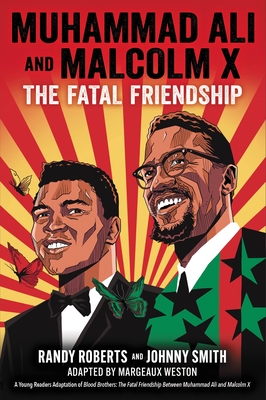
Muhammad Ali and Malcolm X: The Fatal Friendship by Randy Roberts and Johnny Smith adapted by Margeaux Weston (A Young Readers Adaptation of Blood Brothers)

Standard
Muhammad Ali and Malcolm X: The Fatal Friendship by Randy Roberts and Johnny Smith adapted by Margeaux Weston (A Young Readers Adaptation of Blood Brothers)

bloodbrothers

A lot of us Muslims name drop Muhammad Ali and Malcolm X in discussions about civil rights quite often, and at least, speaking for myself, I thought I had the general idea about the relationship between these two iconic figures. I have read a fair amount of books in my quest to identify books that show how Islam shaped the men as opposed to those that tend to gloss over their eventual conversion to Sunni Islam, but I read this book as if it were fiction and I didn’t know what was going to happen next.  I have not read the original Blood Brothers, but this young readers adaptation is well done in conveying the politics, environment, struggles, and humanity of these two men.  Their flaws and growth, their tests, their friendship, it really is a compelling read. The focus on their friendship puts Nation of Islam as the focus, but the book does a good job of identifying it as being different than Islam.  As their friendship falters, Malcolm X goes for Hajj and is seen to change, and choices made by Cassius Clay show the men quite distant at the time of el-Hajj Malik el-Shabazz’s assassination, even though eventually their paths proved quite similar. The 240 page book is MG, but I think middle school readers (in classrooms, book clubs, and on their own) will better appreciate the intersection of these two giants, the events of their time, and the legacy they have left for us all.

SYNOPSIS:

The book is a snapshot in time, sometimes focusing on Malcolm X, sometimes on Cassius Clay, sometimes of their time together.  It starts with background insight and then shares the rise of both of them in their respective worlds, Nation of Islam and boxing.  Threaded through it all is the influence that Elijah Muhammad had on them, and key events they experienced that shaped their thoughts and opinions on race relations, politics, religion, and life.  It shows Malcolm X as the teacher, and leader taking in Clay and believing in him against the Nation’s wishes and thus when Muhammad Ali pushes him away the reader sees the Champ in a different light.  It shows deception and manipulation, as deep and riveting as the best fiction out there, but is very vulnerable in showing regret and both individuals’ ability to keep learning and growing.  The conclusion highlighting Muhammad Ali reaching out to Malcolm X’s daughter Attallah, and the forgiveness that took place in restoring the love between the two men and their families, really was a cathartic release that reminds readers that for as idolized as these two figures are in pop culture and history, they were very real people.  The book has a Biography at the end that breaks down sources by Government Documents, Archival Collections, Newspapers, Magazine Articles, Books, and Websites.  It is a “Selected Biography” that is seven pages long.

FLAGS:

Racism, manipulation, assassination, hate crimes, stereotypes, propaganda, oppressions, abuse, police brutality, assault, bombing, arson, attempted murder, fear, threats, killing.

TOOLS FOR LEADING THE DISCUSSION:

I have preordered a book for my own children to read and one for the school, I really think this book needs to be easily accessible for middle school students in libraries, classrooms, and homes.  I would love to do this as a middle school book club, I think the authentic perspective will give our youth who have heard of Malcolm X and think they know Muhammad Ali some insight into really spending time with what they did, what they faced, and how remarkable their friendship was.

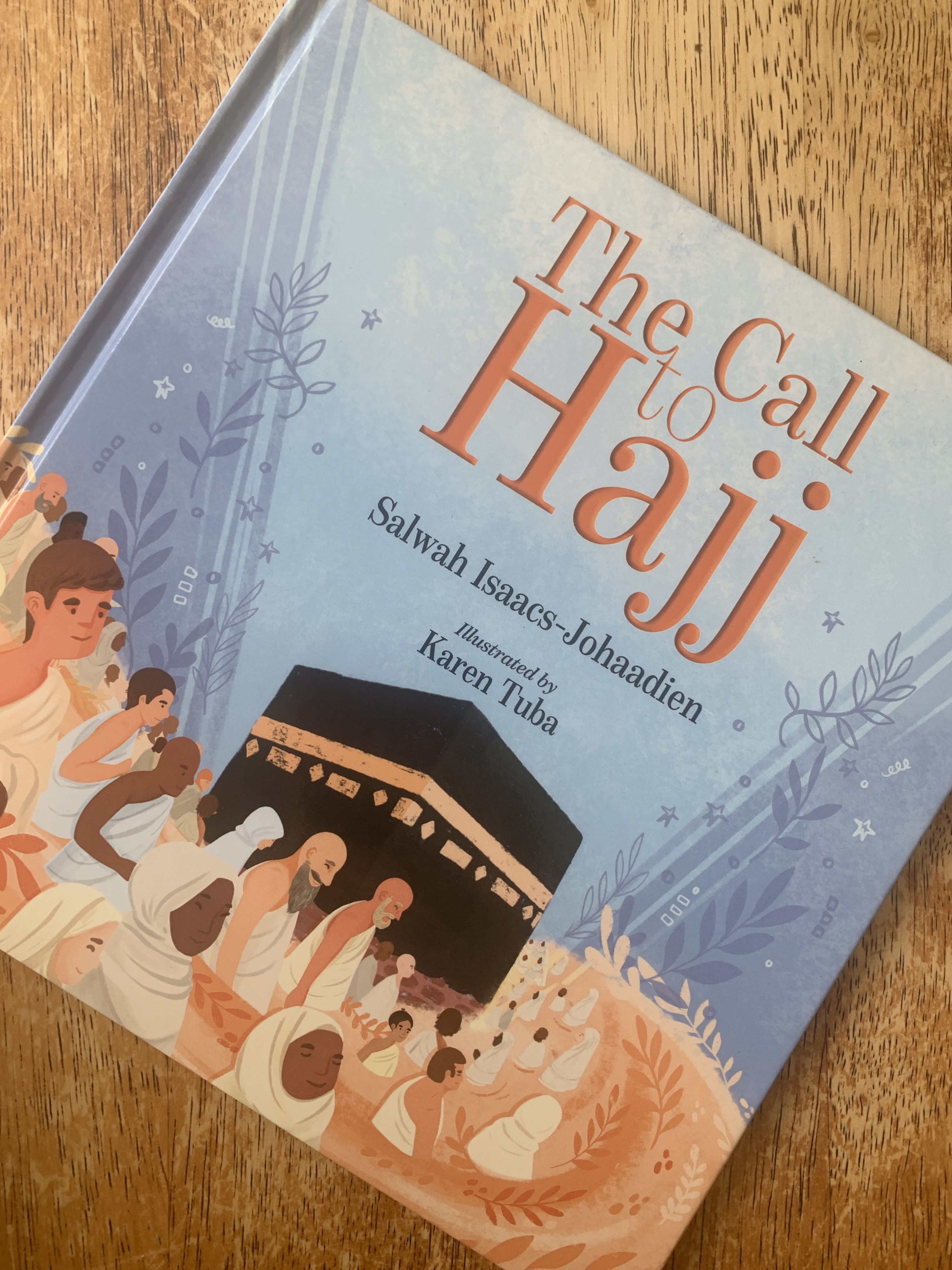
The Call to Hajj by Salwah Isaacs-Johaadien illustrated by Karen Tuba

Standard

img_8795

This small (7.7 x 7.5) hardback 24 page rhyming book blends labeling the steps of Hajj with modes of transportation to take to make the journey.  The idea is great, but every few pages the rhyme is just terrible and distracts from the sentiment. There are a lot of books that detail the steps of hajj on a kids’ level, so I like that this book changes it up a bit and as a result it makes it a solid addition to a Hajj themed story time reading (if you can muster through some of the forced rhyming lines and small size).  Even though the book starts with a bit of Prophet Ibraheem’s (AS) story, I would read this book second or third in a story time setting or even bedtime, once listeners understand what Hajj is and some of the steps, this book can then be used to guide them to thinking about how people from all over the world throughout time have journeyed to make the pilgrimage.  The publishers suggest the book for ages 7-9, but I think with some guidance and direction younger children will benefit as well.

img_8796

The book starts with Prophet Ibraheem and his son Ismaeel being ordered to build the Kaa’bah and being commanded to call people to come. At first they came on foot, then people came by horse, alone or in groups.  To circle the Kaa’bah, go between Safa and Marwa.  By camel to reach Mina, by sea to stand at Arafat.  No matter how they came and continue to come they answer is always “Labbayk ALlaah humma labbayk! Here I am, O Allah, here I am.”The final page asks the readers how they will answer the call to Hajj.

img_8797

The book is available here Crescent Moon Store code ISL at check out saves you 10% or here at Amazon.

img_8798

A Cat Like Me! A Fun Hajj Tale by Emma Halim illustrated by Aissa Mutiara

Standard
A Cat Like Me! A Fun Hajj Tale by Emma Halim illustrated by Aissa Mutiara

img_8799

A rhyming cat centered book about hajj that has been checked by a Shaykh!  Over 46 pages, preschool aged children and up will be able to see the steps of hajj in a fun, engaging and accurate way.  This book is great for bedtime and small group story time and the reasonable price makes it perfect for sharing too.  The illustrations do not have faces with eyes, but the joy comes through and Bissa the cat makes sure you know how special hajj is.

img_8800

I love that the book identifies what type of hajj is going to be shown and thus signals that there are different ways.  I also love that the book is sourced and the Shaykh is named and qualifications listed.  For so long erroneous information in children’s books has gone unchecked and it really is such an important   verification for something critical in our faith to be sourced and checked. Plus it is reassuring for the reader to feel confident in sharing the information with others.

img_8802

The book radiates with excitement and information and the rhymes and illustrations keep kids engaged.  The book is 8.5 x 8.5 so it might not work in big groups.  I purchased mine from if you use code https://crescentmoonstore.com if you use my initials ISL (Islamic School Librarian) at checkout you will save 10% it is also available here on Amazon.

img_8803

Moonlight Hope: A Muslim American Coming of Age Story by Nora Salam

Standard
Moonlight Hope: A Muslim American Coming of Age Story by Nora Salam

moonlight hope

This 354 page New Adult read is truly Islamic fiction, and as long as you know what you are getting in to, you probably will thoroughly enjoy it.  It is Islamic centered, it is preachy, it is idyllic, it counters many stereotypes about Muslims and various cultures, while simultaneously falling into other tropes that define the genre, it has mature framing that is not suitable for younger readers, but doesn’t detail anything that is super “haram.”  If you are looking for a potentially halal romance between YA and Adult ages with Islamic messaging this book is a solid choice.  If however, you will be annoyed by any of the aforementioned labels, this book will not hold your attention or beg to be finished.  It reminds me a lot of Umm Zakiyyah’s If I Should Speak and A Voice books where the story has its own twists and character arcs but it spends a lot of time preaching and setting itself up to tout an Islamic perspective, or concept as well.  I wanted to read two books in the “New Adult” category and see if I could spread my reviews to include them, and with this being the second,  I think I should resist the temptation, and stick to what my library background familiarized me with.

SYNOPSIS:

Told in alternating voices of Intisar and Majed, two individuals in New York City, at different places in their life, but finding that when they hit rock bottom, Islam is the answer.

Intisar is graduating nursing school when the story opens and has only one goal in mind, get married.  She has strict Sudanese parents and has put all of her dreams on finding freedom in the perfect spouse.  She meets a guy at a friend’s house and they secretly date, kiss, and hold hands.  When he ghosts her, she is devastated and reluctantly finds herself agreeing to marry a much older man of her parent’s choosing.  Loosing herself in the idea of marriage, she finds herself heartbroken, ostracized and falling apart.  She starts to put herself back together slowly by finding Islam, her confidence, and some much needed perspective.

Majed has a famous family: his mother a model, his father and siblings singers, and he manages their careers.  After passing out from drugs and alcohol more than once he really starts to examine his life and the road he is on.  He sneaks away to rehab and in the process stumbles on to Islam.  He is Egyptian, but the family is not religious at all, and infact stop talking to him when he converts.  The trials of being a Muslim in New York with no family are not easy, but he feels it is worth it and his journey to Hajj and through loss brings him closer to Allah (swt).

The two stories are parallel and collide slightly in the periphery, but the book ends with them finally coming together and the ever dreaded words of “to be continued,” leaving the reader hanging.

WHY I LIKE IT:

I do like that the story shows struggles when one comes (back) to Islam, it isn’t always a walk in the park, it has challenges and stresses.  The book starts each chapter with a verse from the Quran and is very open about what it is.  So, while at times, the preachiness did get to me, it was very clear what type of book it was from the beginning and I kept reading.

Some of the side characters I felt needed to be fleshed out a bit.  I didn’t understand many of the random friends, how they affected the main character often seemed off, or completely underdeveloped in what was revealed about them: particularly Izzedine, Parita, the girl that married Mansour, the uncle at the Masjid that thought Majed was a spy, etc..  I also really struggled with the presentation of Uncle Munir and his calling Majed, baby, and how he just happened to bump in to him outside the bar, and the kisses.  I’m guessing it was meant to show him as over the top affectionate, but it just read as odd.

I like that the book addresses hypocrisy, mental health, and expectations.  It doesn’t paint all Muslims as good or bad, nor society at large.  The book reads as a journey, and many characters are given a chance to correct their errors and be seen in a new light.

The majority of the book is written well, but right away the book gave me pause as Intisar and her friends chat all through the Jummah khutbah, I get that it is trying to show her disregard for intentional practice of her faith and her “boy crazy/marriage” obsession, but you cannot speak during the khutbah, it isn’t just dirty looks, you truly cannot talk for it to count, and it isn’t even remarked upon, and it made me skeptical of the book for a while.  There is a word missing from a sentence on page 161 and at one point a brother in the prayer hall aims a shoe to throw.  But you wouldn’t be wearing shoes in the room where you pray, and the mosque has hallways and a glassed off section for women, so this seemed like an obvious oversight that should be fixed.

FLAGS:

Drugs, alcohol, lying, overdose, sneaking out, kissing, hooking up, physical affection, violence, temptation, sexual predatory behavior, it is an adult book, so I’m not going to continue listing everything. Nothing haram is overtly detailed or glorified. Ages 17 and up, could handle it.

TOOLS FOR LEADING THE DISCUSSION:
Too mature for my book club crew, but I wouldn’t mind it on a shelf in the school library.
I went for Hajj by Na’ima B. Robert illustrated by Paula Pang

Standard
I went for Hajj by Na’ima B. Robert illustrated by Paula Pang

hajj

Before I review this delightful book, I would like to make a public service announcement of sorts.  It is not Hajj season, not even close.  I pre-ordered this book on June 23 from Amazon, I should have/was supposed to have it before Hajj in the middle of July.  I got it TODAY! When I realized that the US publication date was delayed for a book already published in the UK, I reached out to Kube Publishing and they suggested trying “an independent bookseller such as IslamicBookstore.com or CrescentMoonStore.com.”  I know this.  Noura is a dear friend, but I messed up.  Please don’t do the same.  SUPPORT LOCAL BOOKSELLERS! I’m sorry, lesson learned.

img_3841

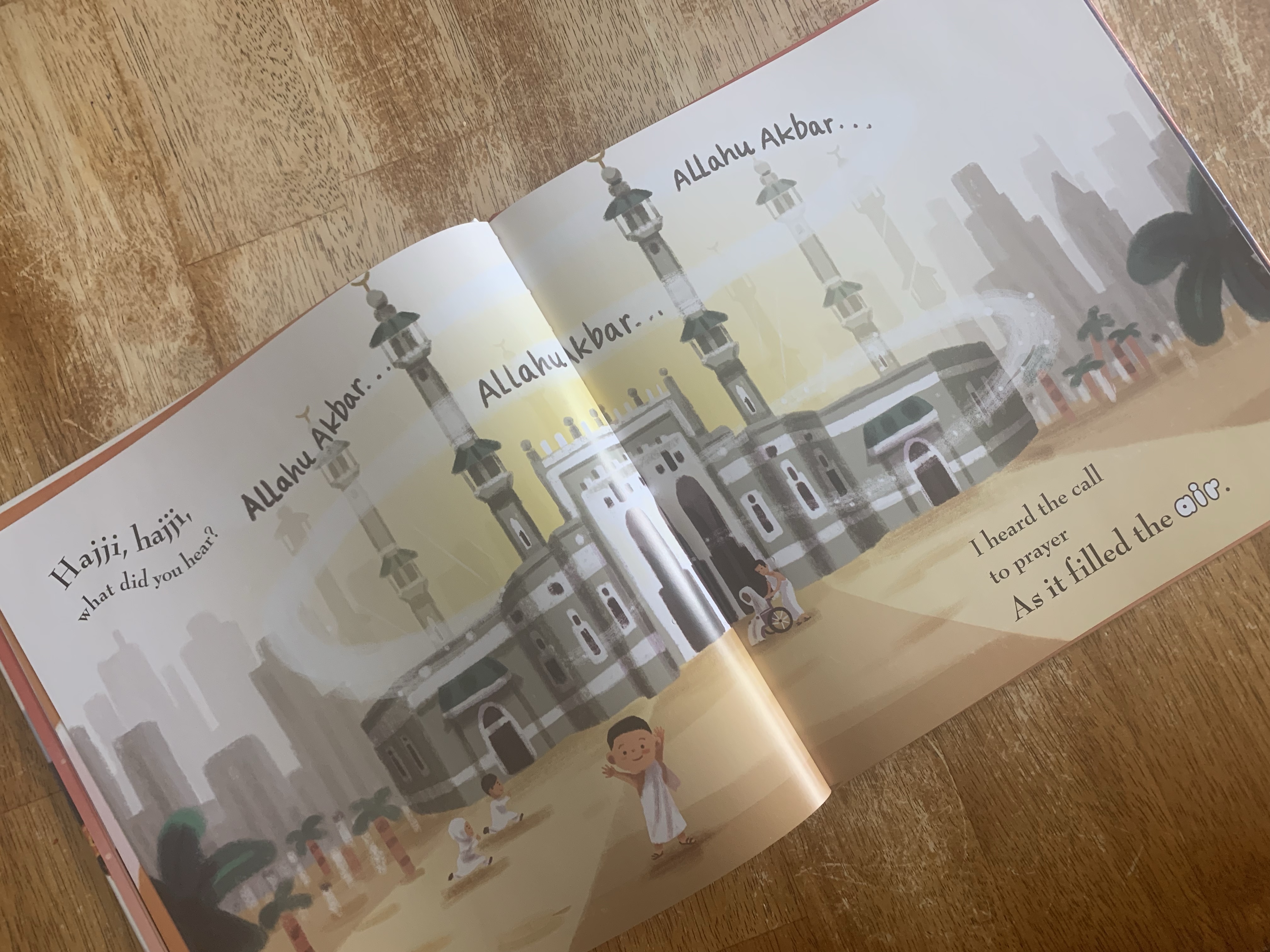
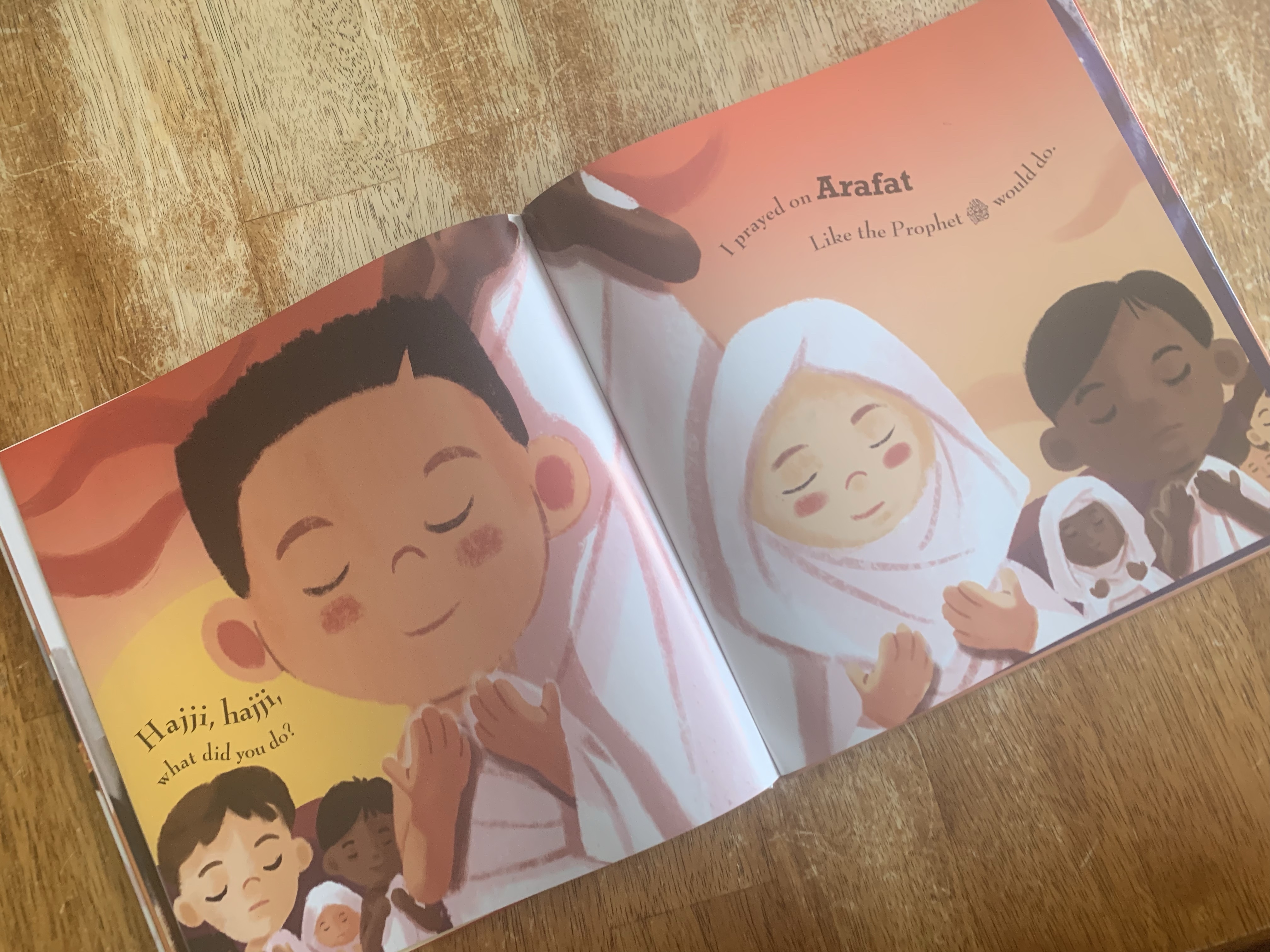
Now back to the book that already feels like a classic staple that needs to be on every Muslim families book shelf, and in every public learning space for non Muslims to enjoy and benefit from as well.   The 31 page “inspirational, semi-fictional narrative” is perfect for ages two to seven as it mimics the beloved Eric Carle and Bill Martin, Jr. classic, Brown Bear, Brown Bear, What Do You See? but framed around Hajj and what is seen, done, and heard.  Each two page spread begins with, “Hajji, hajji…”.

img_3842

The book starts with a detailed Note to Parents and Teachers that explains the points to highlight, and discuss with children.  The story is then organized by the steps of hajj in broad strokes and illustrated with both charm and detail that will hold readers and listeners attention.

Hajji, hajji what did you wear?

I wore two white sheets

And my shoulder was bare.

img_3843

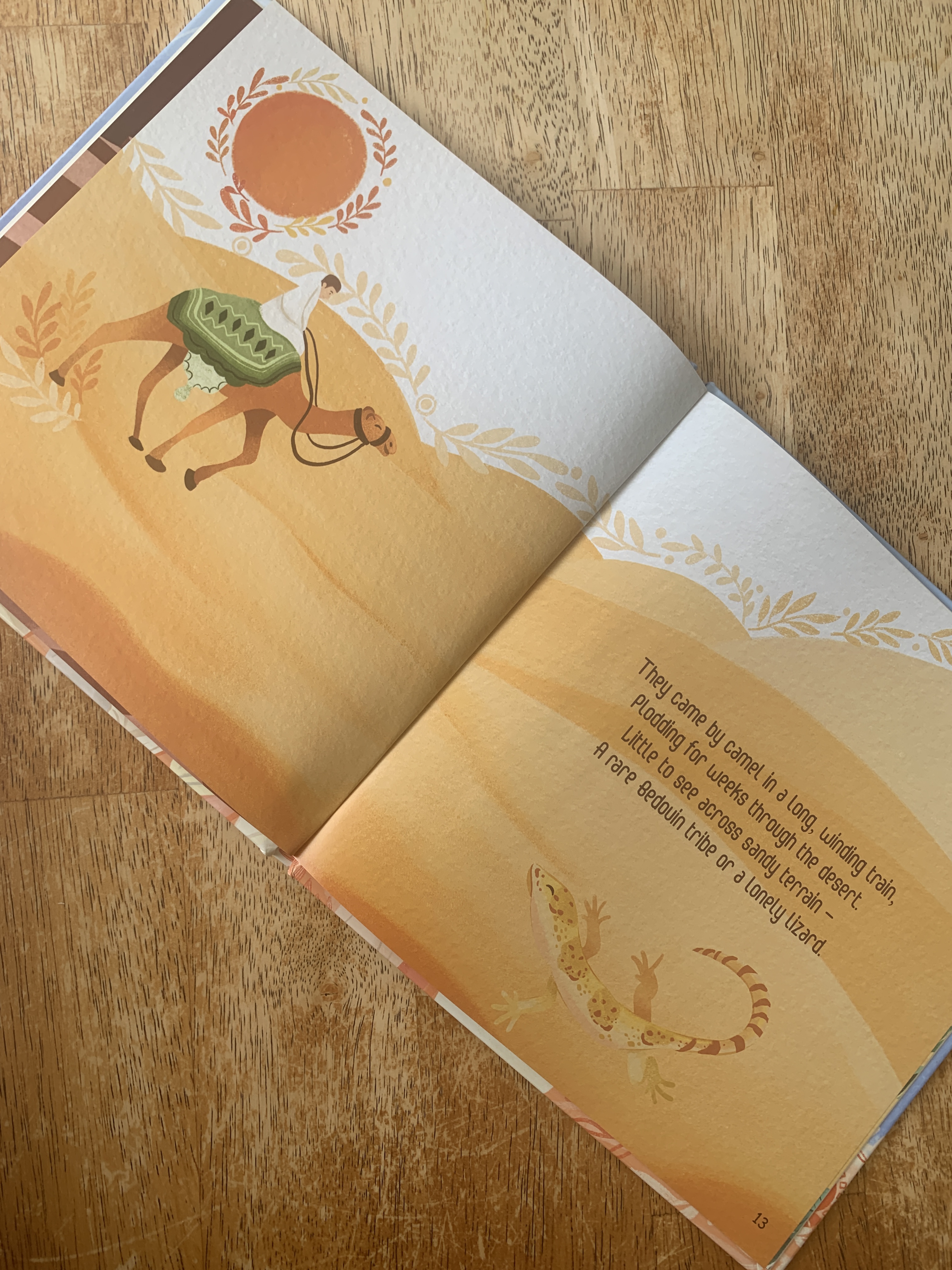
The book starts with the little boy narrator on the plane looking down on the clouds and sea. He then puts on his two sheets, hears the call to prayer,  sees the black stone and the station of Ibrahim before he makes his seven tawaafs, runs between safa and marwa and heads to Mina. He prays at Arafat like the Prophet (saw) did, and falls asleep in the cold night desert air.  He sees stones being thrown and eats meat on Eid before getting his head shaved.  The book concludes with a glossary.
img_3840

The book is well done and is a great mix of information and entertainment, alhumdulillah.

Eid al-Adha: Festivals Around the World by Grace Jones

Standard
Eid al-Adha: Festivals Around the World by Grace Jones

nonfic eid

I had hoped to go through all the recently published non fiction hajj and Eid al-Adha books at my local library, the same way I went through the Ramadan and Eid al-Fitr ones to check for errors and accuracy, but they really didn’t have many, and those that they did have were not published in the last few years.  I did find this book from 2017 and because it has some errors: saying Eid is in September every year, not mentioning all the parts of Hajj, which is ok, but overly stressing the stoning at the jamarat, pronouncing Hajj as Harj, etc.,  I thought to share it with you all, so that you too can contact the publisher and your local library and/or bookstore to see about pulling it if you are so inclined (booklifepublishing.com)

img_2345

The 24 page non fiction book is a large 9.5×12 horizontal layout with beautiful pictures of diverse Muslims worshipping and celebrating.  A little cartoon character, Noor, guides you to word pronunciation with a glossary at the end.img_2346The book starts out with a two page spread defining what a festival is.  The next two pages define Islam.   Page 8 then states that “Eid al-Adha is a festival celebrated by Muslims in September of every year.”  And page 9 of the book says we throw pebbles at a wall, not that we throw pebbles at three representative pillars.  It also says that Eid is celebrated for two to four days depending on the country.  Religiously, it should say it is a three day holiday.

img_2347It then tells the Story of Eid al-Adha aka Ibrahim (as) being to told to sacrifice his son.  I’m not sure why the book doesn’t says that Muslim’s consider Ibrahim a Prophet (peace and blessings be upon him), and instead call him a wise man.  Indeed he was, but it seems very awkward to not mention how Muslims regard him, and seems to go out of its way to not say he is a prophet in Islam.

img_2348

The next section is about Hajj which tells that it is performed in the last month of the Islamic year and that we walk around the kaaba seven times.  No other info is given, but in the next section it again mentions the throwing of pebbles,  really dismissing any other steps and making the sacrifice and stoning rituals seem to be the whole of Hajj which is incredibly misleading and erroneous.

The book shows that those not at Hajj, pray in congregation wearing new clothes, give and receive gifts and giving charity.  In the section about Festive Food it only Buriyani from India is featured, it seems random.  It should have been stronger that one third of the sacrifice goes to the poor, one third to friends and family, and one can be kept for oneself.  This would show that meat is the highlighted festival foods in any culture celebrating.  On the “Noor Says” page at the end, it has Hajj pronounced as “harj” which is wrong, it is Hajj, or possibly hadj.

My standards have dropped considerably, and would sadly not consider much of this major.  But, it does provide another example of how involved and aware we need to be in our representation in mainstream nonfiction publications.

The Colours of My Eid: Memories of Hajj and Eid al-Adha by Suzanne Muir illustrated by Azra Momin

Standard
The Colours of My Eid: Memories of Hajj and Eid al-Adha by Suzanne Muir illustrated by Azra Momin


colour


At 18 pages, this 8 x 8 book focused around colors contains a lot more information than what initially meets your eyes.  The warm beautiful, full page pictures fall opposite a highlighted color and a description of that color in the child’s world that reminds the characters of their time at Hajj or celebrating Eid al-Adha.  On each of the fun text pages is a light green text box at the bottom with factual information that older children or adults will benefit from and be able to share with younger listeners.  The main text is ideal for toddlers and up, and older kids up to 3rd grade will benefit from the nonfiction highlights that can educate or remind Muslims and non Muslims alike, about the importance of Hajj and Eid al-Adha.  

The book starts with an introduction about the Islamic language and perspective used, and clarifies that the colours emphasized are to help visualize the point being made, it also gives information about Eid al-Adha.

The colors highlighted are: white, black, brown, green, grey, yellow, and purple.  The large simple text takes something relatable such as the monkey bars, or balloons, or the sky and corresponds it to a memory of Arafat, or ihram, or the hills of Safa and Marwa.

The nonfiction text gives specific dimensions of the Ka’aba, the story of Hajar and baby Ismail, the requirement of Hajj and some of the steps.  There is a lot of information conveyed which at times is incredibly detailed, and sometimes, rather vague and generic, i.e. Tawaf is when Muslim pilgrims circle the Ka’aba as part of the Hajj rituals. Overall, this little book packs a punch, and I was equally impressed at how it held my five year old’s attention with the colors, and my interest with the facts detailed below.