Tag Archives: first grade

Sister Friend by Jamilah Thompkins-Bigelow illustrated by Shahrzad Maydani

Standard
Sister Friend by Jamilah Thompkins-Bigelow illustrated by Shahrzad Maydani

img_3521-1

After years of teaching, librarian-ing, and mothering, my reviewers are for adults, but with kids in mind. I read in different environments and try and balance what children will think with my more critical literary impressions. But honestly, my first reaction when I see Jamilah Thompkins-Bigelow has a new book out, is not about the children, or their parents, it is incredibly selfish, and I want to read the picture book for me.  It has been about a year since I first read my all time favorite, Salat in Secret, and I still feel all the feels, every time I read the book. I even enjoy handing the book to people and watching them read it for the first time.  So, I was both excited, and nervous to read this new book, not knowing if it would measure up to my expectations or rather hopes, so to speak.  I needn’t have worried, subhanAllah, this book in it’s own right is moving, heartfelt, layered, powerful, hopeful, relatable, tender, and while staying on a kindergarten to second grade level is also unapologetic with its centering of Islam, race, and feeling invisible, being new, and making a friend.  The illustrations and words blend beautifully, and by the second page of the 40 page book, I was already emotionally attached to the little protagonist Ameena.  Good writing is good writing, and as a result this beautiful book works for all ages and will be appreciated on multiple layers even after dozens of readings, alhumdulillah.
img_3522-1

The book begins with Ameena playing a game by herself.  She always plays by herself at school, where she tends to be invisible.  Maybe it is her hair in twists or her brownness, she doesn’t know.  One day a new girl comes, her name is Sundus, she wears hijab like Ameena wears to the masjid.

All day Ameena tries to talk to Sundus, but something always seems to keep them apart.  When they finally meet,  Ameena’s excited words get all tangled, and a misunderstanding occurs.  Ameena decides the next day to transform into a rockstar: red-orange hijab and matching boots. The other kids say she is copying the new girl.  Sundus doesn’t say anything.

img_3523-1

Ameena disappears again at school, but family night at the masjid is her happy place.  Where she doesn’t play alone, and there are lots of browns, and she is seen.  When Mama meets a new sister, and greets her with Assalamu Alaikum, Ameena sees how a greeting and a hug can be the start of sisterhood and friendship. And the next time Sundus and Ameena meet, they know just what to say.

img_3525-1

The joy at the end forces you to smile, just as Ameena playing alone at the beginning tugs at your heart.  It is a great book to see yourself and see others in a beautiful, authentic way.  The universal themes of not being seen, making a friend, and being the new kid, are woven in just as hijab, masjid and Assalamu Alaikum are, making the book powerful for Muslim and non Muslims alike.

img_3524-1

I particularly love that their is no glossary, and that the text uses the word masjid not mosque, hijab not scarf and Assalamu Alaikum not salam.  That the masjid is her safe place to laugh and play, and that this book is mainstream published and will find its way to public spaces and be widely accessible.

You can preorder your copy here on Amazon.

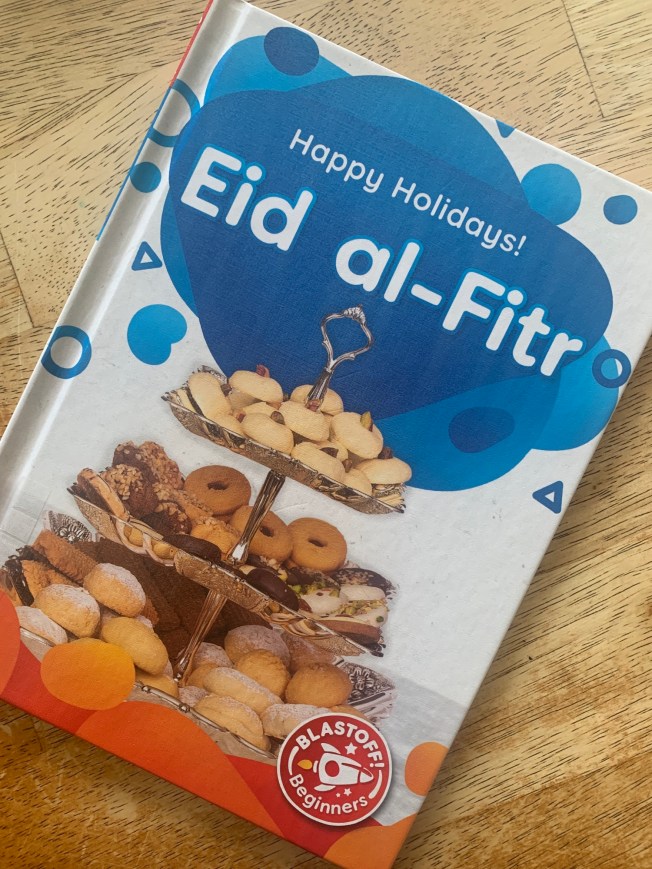
Happy Holidays! Eid al-Fitr by Rebecca Sabelko

Standard
Happy Holidays! Eid al-Fitr by Rebecca Sabelko

img_3127-1

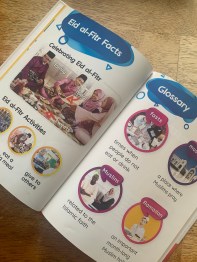
This 24 page 2023 published non fiction book about Eid, is meant for babies to seven year old according to the publisher.  A large spread of comprehension abilities that is thus required to be vague, simplistic, and at times not very successful at conveying much of anything. The large font and bright colors are engaging, and it starts out strong with sight words, and identifying Ramadan is a Muslim holiday followed by Eid al-Fitr, but then erroneously states Eid is three days.  There is then unnecessary statements such as “They honor their beliefs.” That have no clear meaning, and in fact feel a bit othering.  It seems the book is scared to say “Muslims,” saying it only once, it prefers “they,” and “people.”  Some pages are clear and accurate, but many are just awkward, such as “Happy Eid! People pray each morning.  They go to a mosque.”  It seems so stilted.  The picture glossary at the end is mostly accurate, but it defines Muslim as “related to the Islamic faith.” Overall, it seems like a little editing would clarify, correct, and even make this book a benefit, but as it is it just feels like token rep to add to a holiday library series.

The book starts with a table of contents and divides a very short book into chapters.  The first three pages tell that Ramadan is fasting, Eid is after Ramadan, and a Muslim holiday.  It erroneously says Eid is three days, and then says “the dates move each year.”  If you are aware of the lunar calendar this makes sense, I’m sure a five year old would not understand that it isn’t just a randomly selected day.

img_3129-1

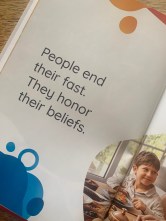
Pages 10 and 11 seem vague at best, “People end their fast.  They honor their beliefs.” The previous page was taking about Eid, the following spread is about Eid, it is almost like the pages were plucked from a similar Ramadan book and erroneously dropped in to this one.

We then are at the mosque, and told people pray each morning.  I’m not sure if this is on Eid day, or every day, we do pray five times a day, and while it is good to pray at the mosque it is not required, so ultimately another unclear page.

img_3131-1

The remaining Eid tradition pages are accurate, visit family and friends and say Eid Mubarak, eating big meals and sweets, giving to others in need, and giving gifts and money.  The photographs show joy, and are bright and engaging. The Facts and Glossary at the end are then followed by an index and ways to learn more.

Zain’s Super Friday by Hena Khan illustrated by Nez Riaz

Standard
Zain’s Super Friday by Hena Khan illustrated by Nez Riaz

img_9576

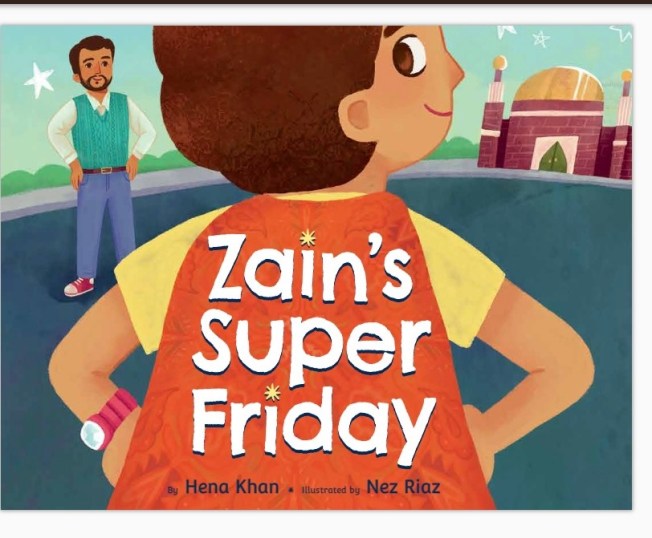
I love the joy and normalizing of mainstream titles celebrating salat, Jummah, and the masjid becoming increasingly available for us to read and share.  This particular book is great for preschool to early elementary aged children that enjoy going to the masjid, but sometimes want to put on a cape and be the hero battling aliens, that know how to behave during salat, but sometimes have a hard time sitting still, and parents that want to play with their kids, but sometimes have to get some work done first.  With  threads of patience, kindness, and determination woven in to masjid activities, the book is both a mirror for Muslim kids and a window for those that wonder what a Friday prayer service looks like.  The 32 page book is unapologetic, joyful, and a great addition to book shelves.

img_9578

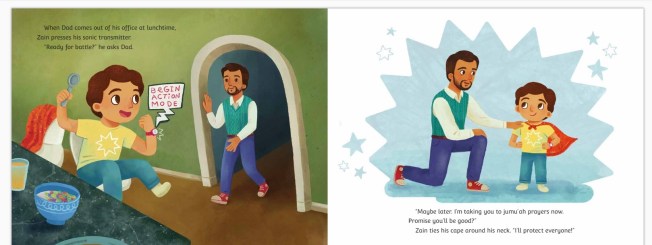
Zain wakes up early Friday morning and is ready to save the world. Dad greets Zain with a “Jum’uah Mubarak,” but has to pass on battling the aliens taking over the kitchen.  At lunchtime, when dad takes a break from work, Zain tries again to engage him in heroic play, but it is time for Jum’uah.  Zain slips on his cape and vows to protect everyone.

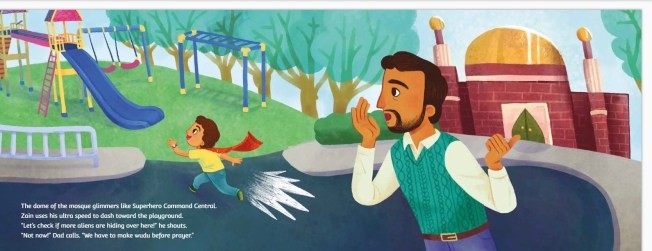
When they get to the mosque, aka command central, Zain tries again, but dad redirects him to make wudu before salat. Heat action dries his feet, but the adhan starts and giant shoes and aliens will have to wait, yet again.  During the khutbah, wiggly Zain sits by his dad, but when the Imam encourages them to stand for salat and fill any gaps, Zain takes it as a call to duty and races to the front announcing, “Here I come, Commander Imam, reporting for duty.”

The kind Imam knows just what to do, and as Zain controls his focus, even dad finds time to be a hero and battle the aliens on this super Friday at the mosque.

img_9580

I love that wudu, athan, khutbah, Imam, are all used without a glossary and that the Author’s Note is informative and unapologetic in tying it all together and making the terms clear.  I wish masjid was used instead of mosque, but I know that is just my personal preference.  I love that the Imam is kind and the dad is gentle and playful.  Even when Zain is not getting to do what he wants, he is not unhappy with being at Jumuah, or making salat, or being redirected, he just wants to indulge his imagination.  The warmth and joy of the illustrations reinforces the tone of the book, and with the inclusion of charity, and the happy ending, I can’t wait to have a physical copy of this book in my hands.

The book releases on October 10, 2023 and can be preordered/ordered here on Amazon and I’m sure will be available once released at Crescent Moon Store, where my initials ISL at checkout will always save you 10%.

img_9582

Yusuf and Yusra’s Merry Dilemma by A. Dawood

Standard
Yusuf and Yusra’s Merry Dilemma by A. Dawood

img_8876

We need more books like this. Books that don’t dismiss the pressures of celebrating holidays that don’t belong to us and that facilitate conversation. Is this 36 page early chapter book incredible literature, no it is not, but it is important. And I strongly suggest reading this book with your children and discussing the contents sooner rather than later. Not the first week of December, when holiday music and decorations are already in full force, but when in fact, they are not. Talk to your kids before it is an emotional defensive assertion of power. Talk to them when calm thoughtful conversation can occur without being in response to an invitation to a party, or a school/community event. Equip your children and guide them where they are in their understanding. Yes, that means that you the parent will have to read this book first, and then ask your child to read it, or read it with them. It is not long, it is not deep, or a complex story, it is a relatable scenario of a a practicing Muslim kid who weighs his options, makes a choice, gets caught, and is gently talked to by his father. There is openness, their is dialogue, and yeah, it gets a bit preachy at the end, but that is kind of the point. The book does not come out for a few more months, but I hope you will preorder it, and I hope the author may consider releasing it before October. I’m the daughter of a convert, born and raised in America. We need to talk to our kids about holidays, not just demand avoidance or give in to peer pressure and imitate. It isn’t simply saying they have Christmas we have Eid, it needs to be understood, we are Muslim and we do what we do to please Allah swt. In some ways I wish the book was stronger, but every family is different, and this book gives space for you to tailor the conversation for your family about Islam, in relation to both the religious aspects and commercialization of the Christmas holiday.

SYNOPSIS:
Yusuf and his friends love video games, the book opens with them playing at a friend’s house when the conversation turns to the new Nintendo MAAX that will be out for the holidays. It is on all the boys’ wish list, Yusuf doesn’t celebrate Christmas, and the friends know that, but he feels left out thinking he will have to wait six more months until Eid. When his mom picks him up early to take him to the mall to get boots with his sister Yusra, he see’s a raffle for the gaming station and enters. There is just one catch, you have to take a picture with Santa. Yusuf knows Prophet Isa is important in Islam, and is not the son of God (astugfirallah), he also knows that Santa is a fictious character. He hesitates, but then complies, when his sister sees the proof hanging out of his pocket after he makes wudu, their dad decides to talk to them as they walk to the masjid for maghrib.

WHY I LIKE IT:
I like that the kid and his friends know that he doesn’t celebrate Christmas, that the internal debate is coming from a kid who knows his faith, it is not an identity crisis. He knows what is right and wrong, but yet the debate as to whether a picture with Santa crosses the line or not is still had. I’m sure a lot of Muslims would be fine with it, but a lot wouldn’t, and the conversation about preserving our imaan and imitating others and doing something that stems from a belief we do not share, I think is important to have with kids. Is it ok to do a gift exchange for Christmas if we are Muslim? This family says no, and dad explains it to Yusra and acknowledges that it made her sad to miss out on it. I think these are questions that families wrestle with and often instead of discussing we just ignore. We know gift giving is important and kindness is important, but when it is tied to celebration of God having a child, is that ok? The book does not give fatwas or hadith or get heavy handed, it is a gentle discussion from the father with his young children that is presented in the book and can easily be continued in real life afterward. There isn’t judgement or othering of Muslims and non Muslims, the tone allows for you to think about the concepts both in the fictious scenario, and inshaAllah also in your real life. I think whether you are strong in keeping away from Christmas activities or a little more lenient, you will find this book a benefit and not be offended or annoyed. While I wish the book was a little longer and a bit more polished on the literary side, I appreciate that the book will resonate with families facing similar situations, and that it does so for early elementary kids that are starting to have to make their own decisions when they are at school, with friends, and in front of Allah swt.

I do with the pictures were better and maybe the font a little bigger.

FLAGS:
Christmas and posing with Santa, secrets

TOOLS FOR LEADING THE DISCUSSION:
The book is for younger kids, but I think a weekend school teacher could read it aloud and lead a discussion just as well as a parent doing it at bedtime. Again though, I would present it before December, start the dialogue early so it can be referenced with situations arise.

Preorder/Order here https://amzn.to/3Jrzlsi

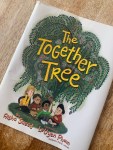
The Together Tree by Aisha Saeed illustrated by LeUyen Pham

Standard
The Together Tree by Aisha Saeed illustrated by LeUyen Pham

img_7924

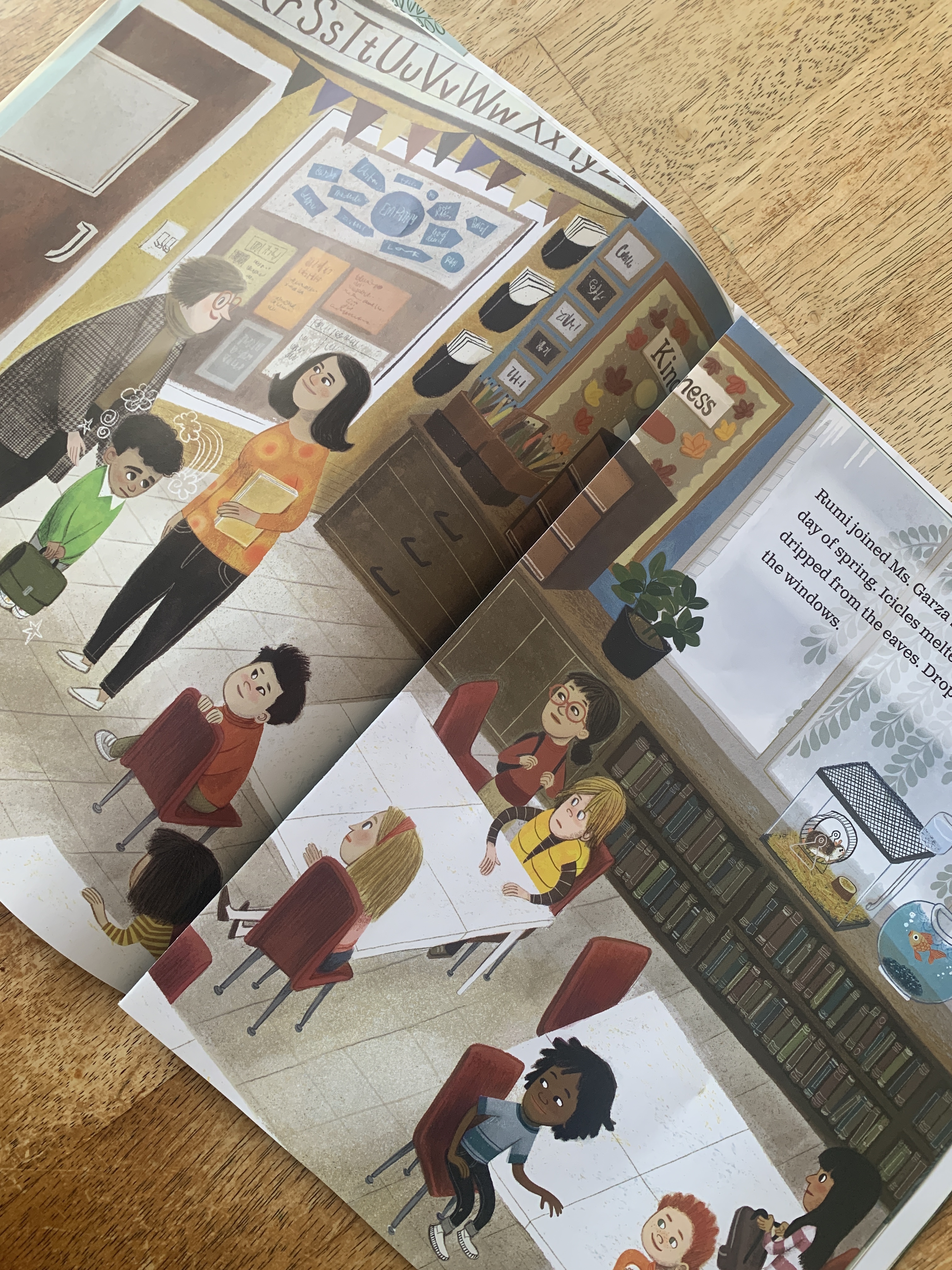
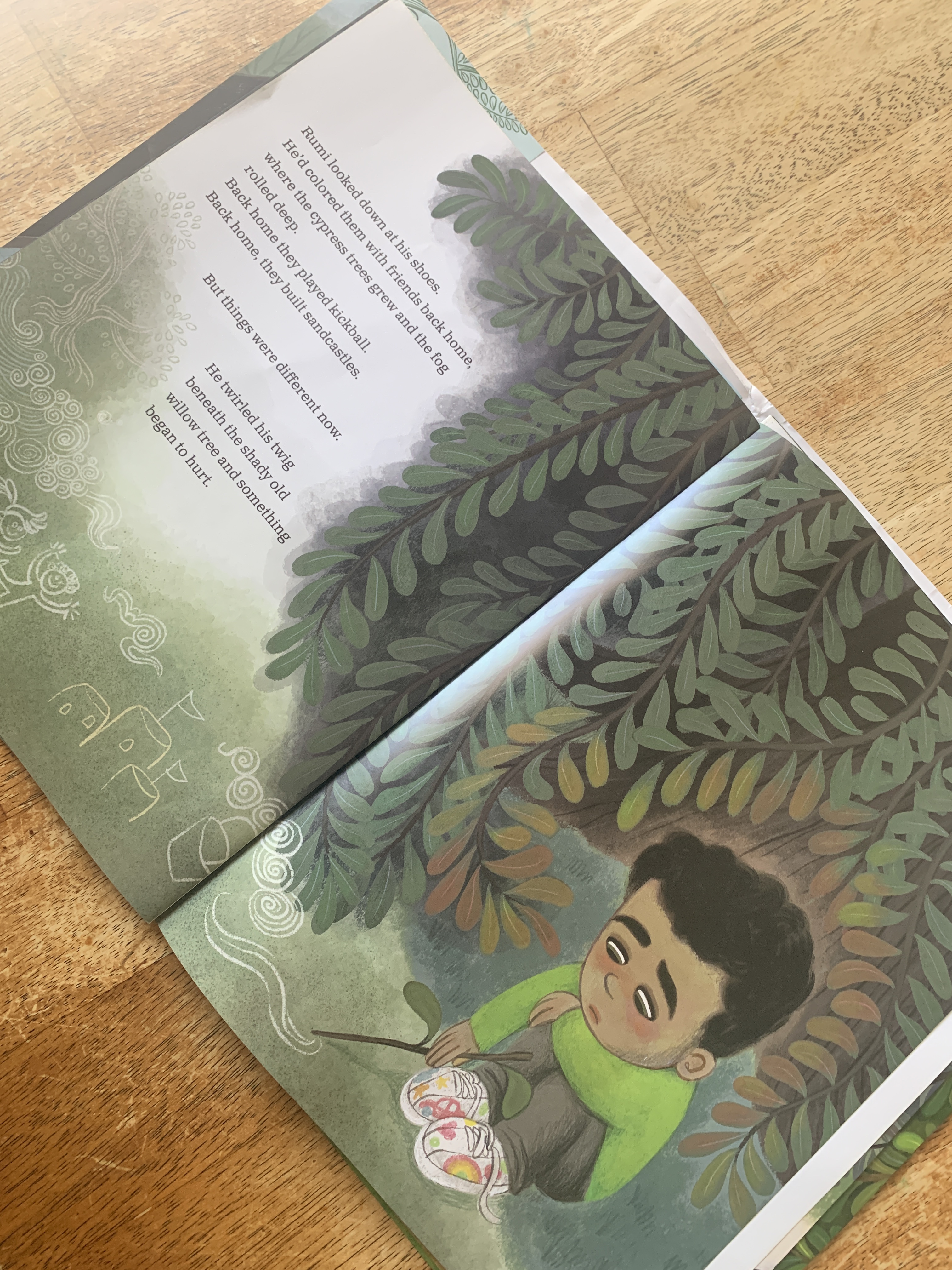
Being the new kid, not having friends, and being teased are not new themes in literature (or life), so if you are going to write a book about them, take a lesson from Muslim author Aisha Saeed and make sure the story is heartfelt, emotional, and well-told.  There is no Islam in the book, no foreign culture, or teasing because of skin color, it is a boy named Rumi who has moved from San Francisco to the other side of America and his shoes, with their drawings and colorings, that cause the kids to stare and start bullying.  Rumi seeks solace under a willow tree and fellow classmate Han has to be brave to put a stop to the mistreatment by finding his voice and not simply staying silent.  The text and illustrations provide a lot of opportunities for children to see themselves in the story, in the various characters, and ruminate over the actions and feelings from different points of view.  The book is lyrical, it is not heavy handed or preachy, and the Author’s Note at the end is equally touching and hopeful.

img_7925

Rumi is quiet, and on his first day in Ms. Garza’s class the kids stare at him as he stares out the window.  At recess he wanders off to sit beneath the willow tree when Asher, Ella and Han leave the swings to see what he is up to.  Asher and Ella start to make fun of Rumi, Han is uncomfortable, but stays quiet.

Rumi recalls coloring his shoes with his friends, and how different it was to where he is now, he picks up a twig to twirl as the hurt grows. In music class when the giggling starts, he tries not to cry.  At recess he retreats to his refuge under the tree.

When the bullying escalates, and tears fall, Han speaks up and breaks the cycle. Others follow and see the world Rumi has created with his twig and are drawn to it and to Rumi.  Forgiveness is asked for, and granted and the tree becomes a place of friendship and togetherness.

img_7928

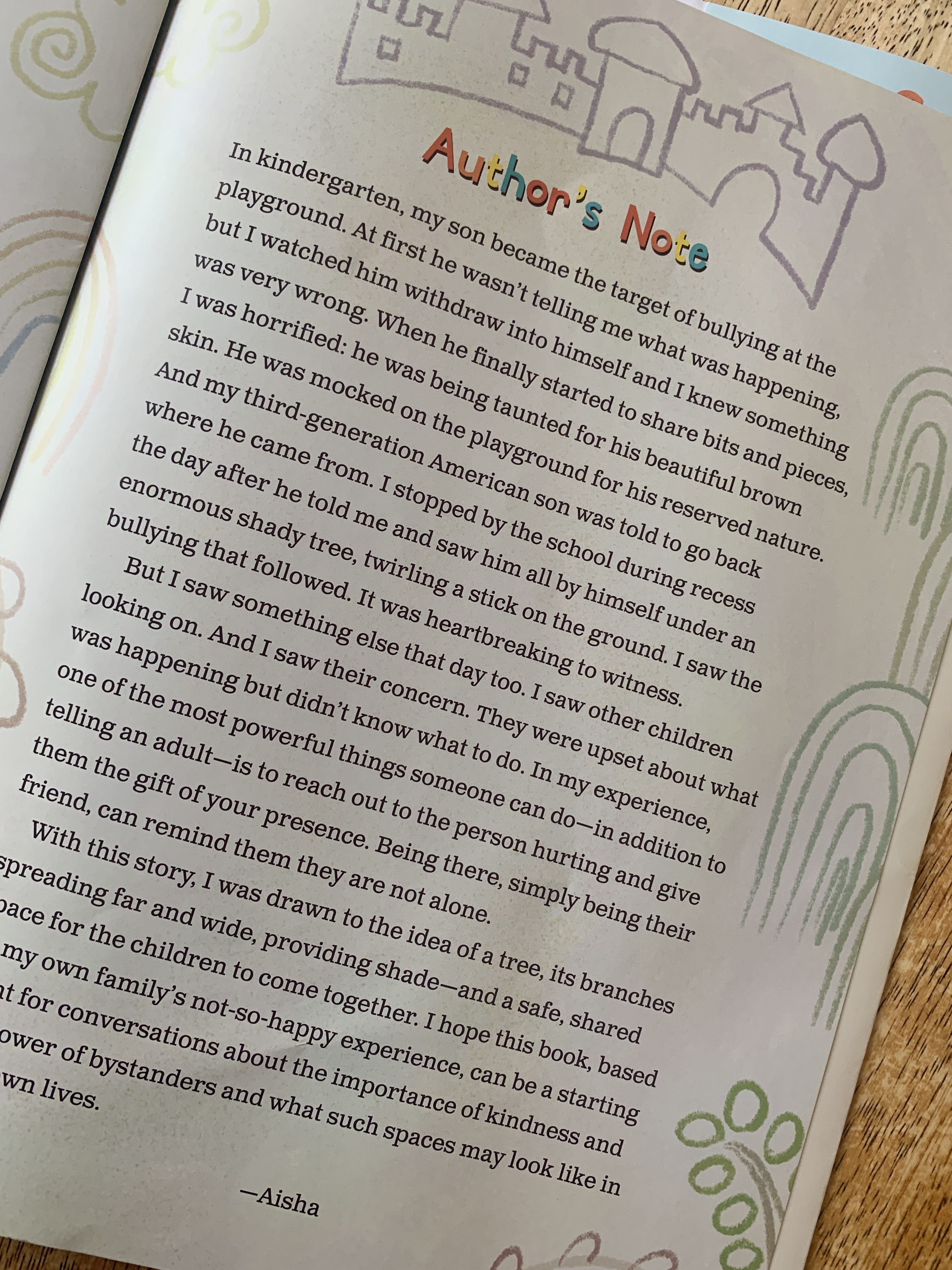
The Author’s Note shares the real life observations of the author about her son in kindergarten and how while heartbreaking, there was also hope in the concern shown by other kids that simply weren’t sure what to do.  I love that even though Rumi is being teased for his shoes and being different, he doesn’t stop wearing his shoes or try and clean the drawings off.

img_7926

I think this book is a must read in classrooms and homes were kids can slowly peel back the pieces and see where they can relate, how they can plan to act, and what parts they identify with.  The book is deliberate and slow, and while a child could read it on their own and enjoy the story and illustrations at hand, the real power it has, is being a catalyst for discussion and empathy and speaking up.

Pre order/order here on Amazon

img_7927


Allah and My Heart by Humera Malik illustrated by Basmah Syadza

Standard
Allah and My Heart by Humera Malik illustrated by Basmah Syadza

img_7583

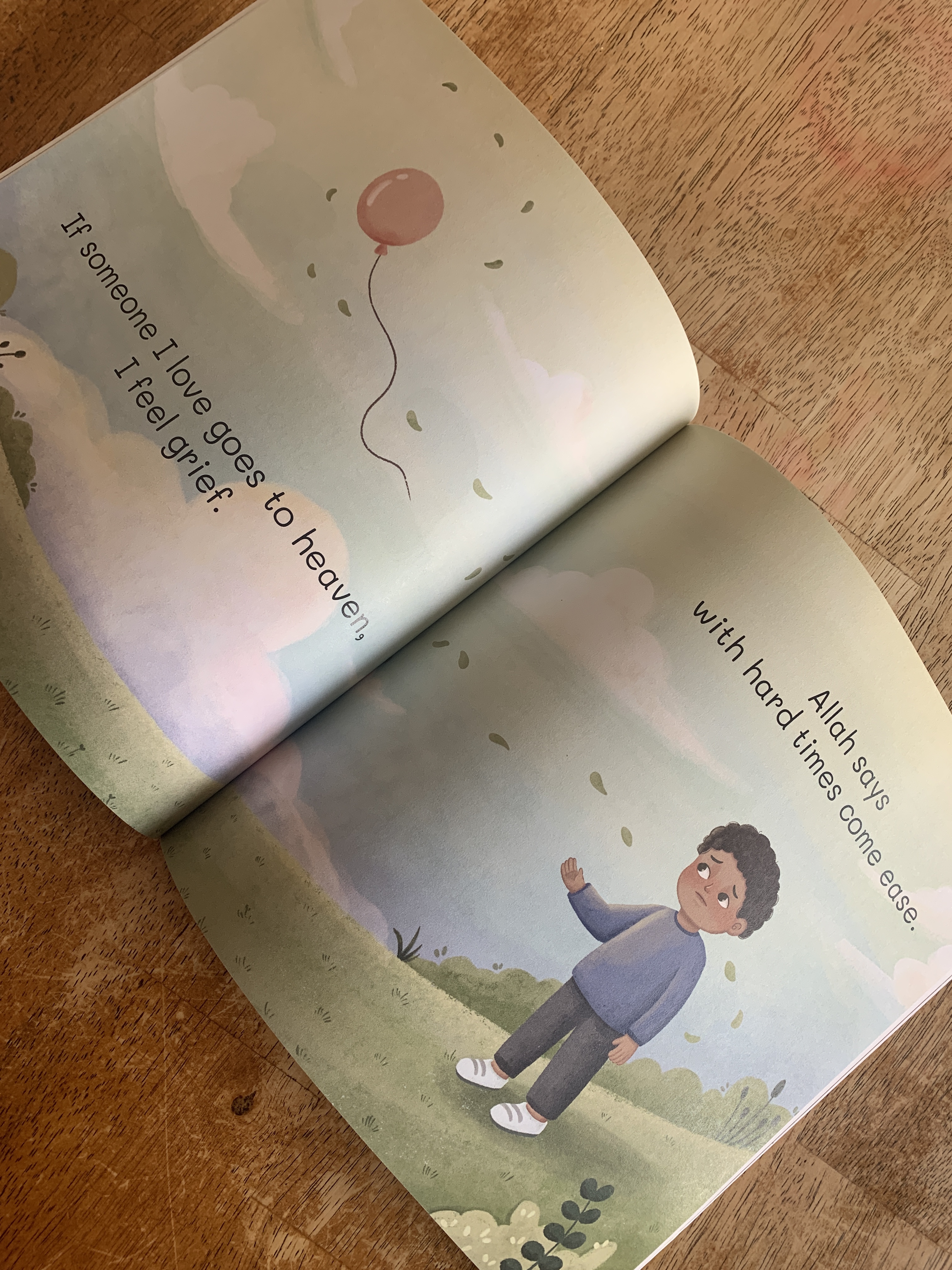
This 47 page book of feelings and reassurances shows Muslim kids that they are not alone and that Allah swt is always there for them providing love.  The book is not a story, and at times it might sit unopened on a shelf, but when it comes out as a needed tool, I think the resource it provides will be much appreciated, powerful, and useful.  The book offers scenarios with emotions: fear, excitement, anger, sadness, and then reassures the reader with Allah’s promises, and then with what we can do or say.  There are only a few words on each page, with a simple illustration that changes with each scenario and is reflective and inclusive to skin colors and abilities.  The book if rushed, will just seem like a list, it really needs to be discussed and shared with children in a way that leads to internalization, application to their own life, and appreciation that Allah swt is aware of everything.  The book is not sourced, but the sentiments are familiar.

img_7584

Here are a few samples of how the book is tied together: “When it is dark outside, I feel scared, Allah says don’t be scared I am with you.  I can say ‘Allah is my protector,’ and read the last three surahs of the Quran.” This plays out over four pages. “When I have too much to do, I feel overwhelmed.  Allah says He does not give me more than I can handle.  I can say ‘Allah I am overcome, help me’ and I can do dhikr to calm my body.

img_7586

I like that the book is well done for what it is.  The repetitive format and Islamic centering make it is a useful tool and the guidance gentle on a child’s level.  If nothing else knowing that what you are feeling is normal and common and accounted for in our deen is a tremendous reassurance in feeling big emotions.  The reasonable price and the Islamic centering makes me hope this book is shared and shelved in places that little Muslims will have access to with adults to help facilitate the messaging.

img_7588

The book can be purchased here from Amazon or from Crescent Moon Store here if you use my initial ISL (Islamic School Librarian) at checkout you will save 10%.

img_7587

Nadia and Nadir Eid Surprise by Marzieh A. Ali illustrated by Lala Stellune

Standard
Nadia and Nadir Eid Surprise by Marzieh A. Ali illustrated by Lala Stellune

img_7058

This is another holiday book in the Nadia and Nadir series for early readers, this one focusing on Eid al Fitr, but also celebrating Muslim American athletes Ibtijaj Muhammad and Muhammad Ali, sadqa, and the love of grandparents.  The 32 page book with four chapters shows Desi American siblings enjoying both their Pakistani and American cultures while consistently embodying their Islamic faith.  They pray salat, wear hijab, discuss sadqa, and say Salam and Eid Mubarak.  I am not sure why they pray Eid prayers at home, and not in a community congregation, no it is not a Covid set book, they then go to the mall, but the pride in their faith, culture, and family is enjoyable.  Early readers will enjoy the colorful pages, large illustrations, and relatable story situations.

img_7062

The book starts with the siblings hearing laughing downstairs, then seeing suitcases, and being surprised by their Nani and Nana coming from Pakistan to surprise them on Eid.  The family eats paratha and chai together before praying and making duas.

img_7061

After presents are passed out, the kids receive eidee and are off to the mall to pick out a toy.  Nadia sees an Ibtihaj doll, and Nadir points out that she is wearing a hijab just like his sister.  Nadia recognizes her and shares some facts since she has read her books.  Nadir wonders if Ibtihaj knows it is Eid and the family reassures him that Muslims everywhere in the world are celebrating.

img_7060

When it is Nadir’s turn to choose what to buy, he picks some boxing equipment with marketing images by Muhammad Ali.  Nana fills him in on the activism and accomplishments of Ali and how impressive his fearlessness really was.  When the change is given after paying, the kids and their grandparents discuss sadqa, charity, and this gives Nadia an idea.

The book concludes with a glossary of new words and information about the illustrator and author.  You can purchase your copy at all major retails such as here at Amazon, or you can support small business owners like Crescent Moon store and purchase your here.

My Dad is Always Working by Hafsah Dabiri illustrated by Arwa Salameh

Standard
My Dad is Always Working by Hafsah Dabiri illustrated by Arwa Salameh

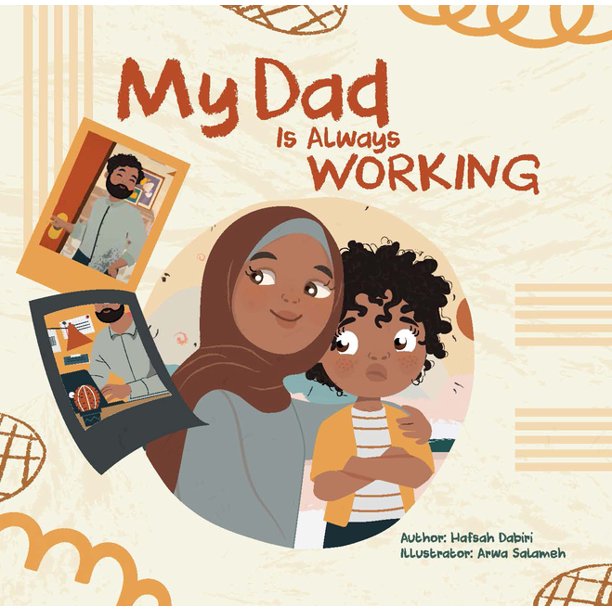
This sweet 26 page story addresses a universal feeling with Islamic flavor.  The Black Muslim family in the illustrations is adorable, the sprinkling in of Islamic terms is lovely, and the concept of dad working unseen for the benefit of his child is touching, (I hope a Mom book is forthcoming).  The text size changing for no reason bothered me though, as did some of the wordiness and possible contradictions.  Ultimately the story will resonate with many children and mirror a common feeling that is not often addressed for young children, and I’m glad I have it on my bookshelf.

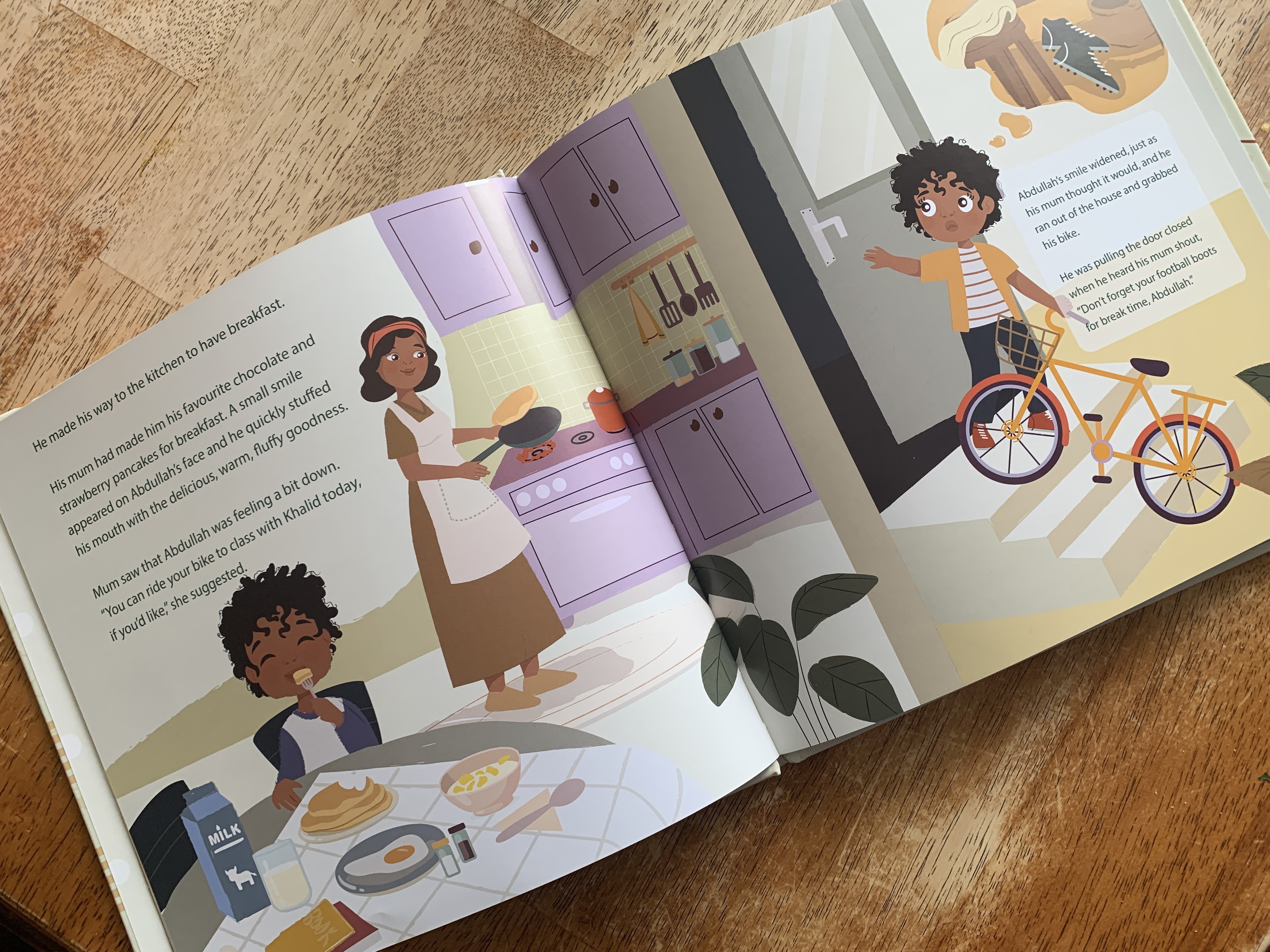
The book starts with Abdullah waking up for class and noticing his clothes laid out on his bed, and his dad with a dirty shirt rushing off to work.  He misses his dad and muses that his dad is “always working,” As he eats his favorite strawberry and chocolate pancakes.  He then jumps on his bike with his clean cleats and heads off to Sunday class with his friend Khalid.

In class they learn about “JazakhAllah Khair,” and homework is to make a card for a person who deserves our thanks.  When Abdullah’s mom, not dad, picks him up he decides to make a card for his mom who has woken him up, set out his clothes, made him breakfast and picked him up for class.

At dinner however, when he discusses class with his mom and the homework the mualimah has assigned, Abdullah’s mom shares with him all that his dad has done and Abdullah reconsiders why his dad is “always working.”

I don’t quite get why the next night when dad is cooking the food is burned, nor am I sure why it said Arabic school, when it seems it is Islamic school, or why he rode his bike to class but then his mom picks him up.  I do like that in the praising of the dad, the mom is not diminished, but rather both are elevated.  An important book, but as I often say, I just wish it was edited better, or more.   It has a lot of potential, the story idea is great, but the writing isn’t polished and it makes it hard to share repeatedly or with a wider audience because of it.

Purchased at Crescent Moon Store also available on Amazon

The Olive Tree by Elsa Marston illustrated by Claire Ewart

Standard
The Olive Tree by Elsa Marston illustrated by Claire Ewart

olive tree


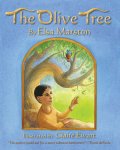
Set in Lebanon, this 32 page book for kindergarten to second graders uses the ever important olive tree as a point of contention between two neighbors. Muna’s family moved away during the conflict because they were not like the others in the village, and while they were gone, Sameer’s family cared for the olive tree on their neighbor’s property, and collected the olives that fell on their side of the wall. But now that the neighbors have returned, Sameer is not only disappointed that they don’t have a boy his age to play with, but also clashes with Muna when she says that he shouldn’t take their olives. By the end of the book, olive branches of peace will be referenced and hope hinted at in this brightly illustrated book with a lesson.

img_1647

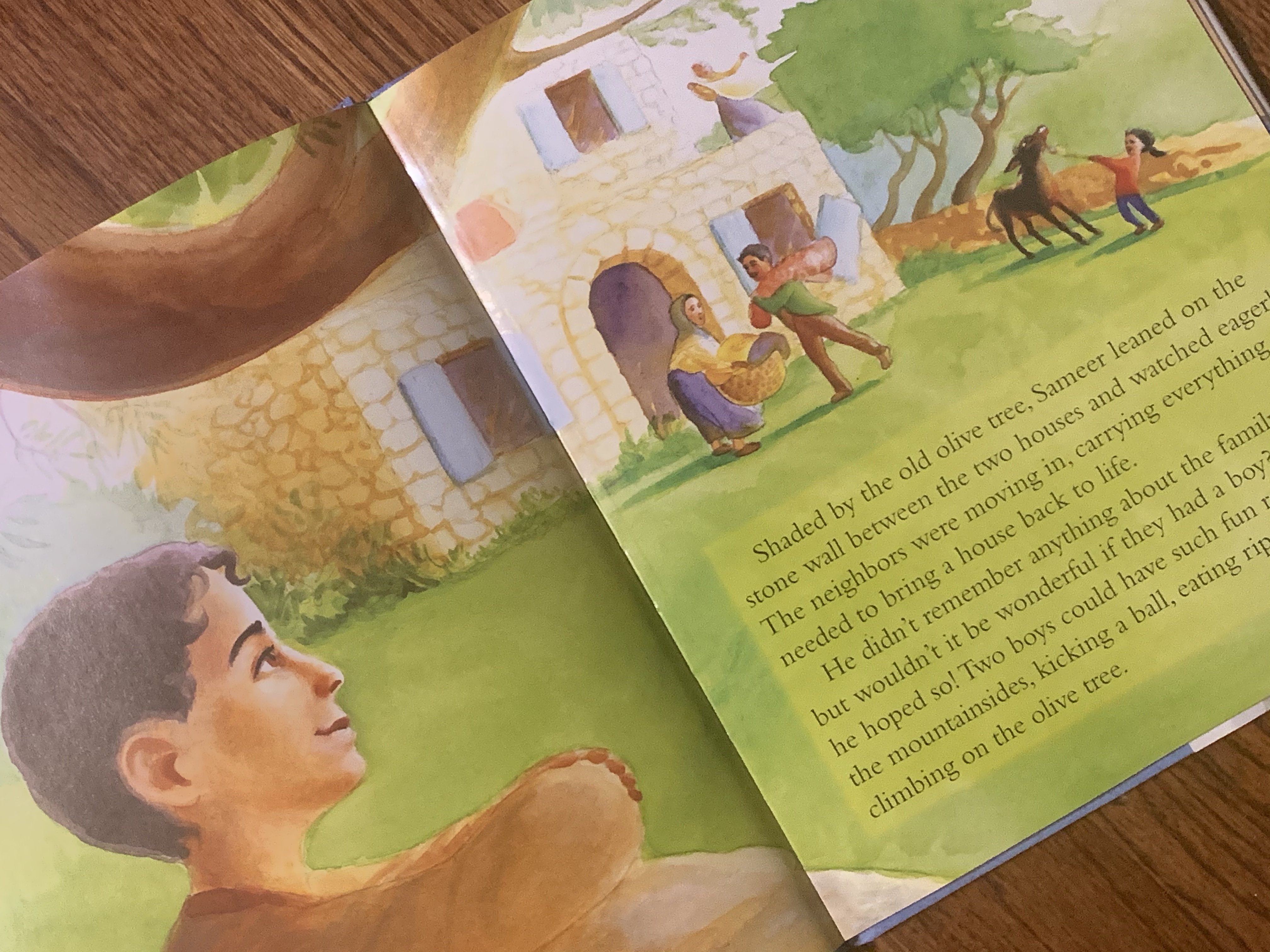
I like that why Muna’s family left is not abundantly clear, saying that “For many years the house next to Sameer’s had stood empty. . . that the family who lived there had gone away during the troubles because they were different from most of the people int he village.”  Lebanon is a diverse place and the illustrations seem to show both Mom’s wearing head scarves, the text does not detail if they are unlike each other because of religion, or culture, or some other reason, and I kind of like that it is left vague so that children learn in the end perhaps, it doesn’t matter.  

img_1648

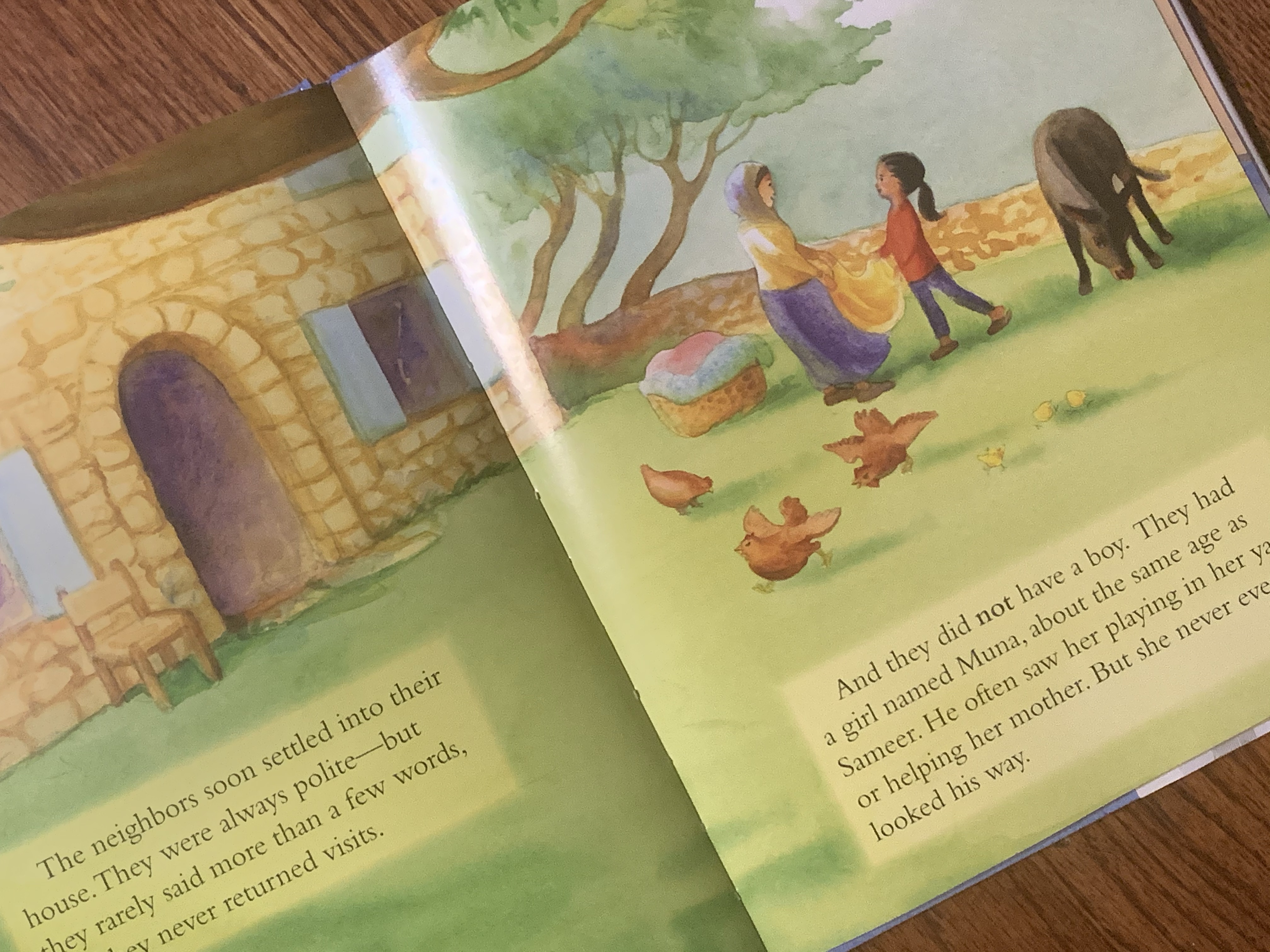
When the family moves back home, Sameer watches them and recalls the ways his mom prepares the best olives in Lebanon.  The neighbors are polite, but not friendly.  They don’t ever say much and they don’t return visits.  One day when the ripe olives have fallen on the ground, Sameer heads out with his basket to collect them.   Muna, who has never looked over at Sameer, watches him and tells him that they are her olives, and that the tree has been in her family for a hundred years.

The two bicker about who has rights to the olives on Sameer’s side of the wall and in anger, Sameer dumps his basket of olives on Muna’s side and walks off.  After that, no one on Sameer’s side collects the olives on the ground.  One night there is a storm and the olive tree and part of the stone wall are destroyed.  The adults gather to survey the damage, but walk off without saying anything.  The two children are left to decide what to do next about their beloved tree, and their relationship with one another.

img_1649

I like that the resolution is subtle, but thought provoking and that the adults don’t seem to interfere too much.  I can’t imagine that they don’t have opinions about their neighbors and the olives, but the book stays on the children and the assumptions, stubbornness, and unsaid words that have created such a divide, and must ultimately be resolved as a result.


The Prophet (salla Llahu ‘alayhi wa sallam)Described by Zaheer Khatri illustrated by Fatima Zahur, Elaine Limm and Jannah Haque

Standard
The Prophet (salla Llahu ‘alayhi wa sallam)Described by Zaheer Khatri illustrated by Fatima Zahur, Elaine Limm and Jannah Haque

prophet described

This 48 page rhyming prose filled picture book details our beloved Prophet Muhammad (saw) in accordance with the Holy Qur’an and as stated by Hadith.  The repetitive refrain highlights the two-page spread’s thematic descriptions of Rasul Allah’s appearance, speech, mannerisms, walking style, etc., and the best part is, it is all sourced and referenced at the end.  It features the same two characters and the same layout, as The Prophet’s Pond, which this book even references, but notably, my copy of that book does not have faces in the illustrations of the boy and his mom, and this new book does.  I tried to see if you could find a faceless version and could not, perhaps, that option is forthcoming.  As I often remark to those around me, there are not that many books about Prophet Muhammad (saw) that are factual, but framed in a fictitious manner for children, or that are fun and playful, and this book helps fill that void in creating love and connection to the Prophet.  It is a bit text heavy and it is very thoughtful, but the repetition and rhyme along with the beautiful large horizontal illustrations, create a mood of reflection, appreciation, love, and admiration and will be suitable for ages five and up.

img_0618

Zayd and his mom are back and the book starts with Mummy telling Zayd that one day he will meet a special man inshaAllah, and Zayd asking her to give her details so that he can guess who it is. The first set of clues describe how gracious the most handsome man is, and how he will greet Zayd one day.

img_0619

The story then moves on to describe Prophet Muhammad’s fragrance, his hands, his words, his stature, his complexion, his hair, and so on.  As the details flow, Zayd and his Mummy journey through nature, standing near beaches, and forests, and rivers and waterfalls.  They cross a bridge on their way out of the city, and the full color pages move from night (or possibly really early morning) to day to night again.

img_0620

Zayd seems to know it is Prophet Muhammad (saw), but keeps begging to hear more details, before he proudly proclaims the only human whose beauty reaches so far is Prophet Muhammad, peace and blessings be upon him.  The book then says he will be waiting by a pond, but that is a story for another day, giving a shoutout to its companion book.

img_0624

There are questions recapping what is learned in the story before 10 pages of reference material.  It really is incredibly well done and is a great resource in addition to being a lovely story.  Thank you @crescentmoonstore for getting the book to me so quickly.

img_0625