Tag Archives: fear

Doctor Bear and Helpful Bunny: The Travelling Dentist by Emma L. Halim & Her Mum Mary Tucker illustrated by Alissa Mutiara

Standard
Doctor Bear and Helpful Bunny: The Travelling Dentist by Emma L. Halim & Her Mum Mary Tucker illustrated by Alissa Mutiara

Sometimes you just need a sweet little story about a traveling (sorry one l I’m not British) dentist going under the sea to help a hammer head shark with a toothache.  This rhyming story for toddlers is perfect for the demographic as duas are said to get through the pain and fear and the reliance on Allah swt that all will be well.  The Muslim animals and the fun illustrations make the story appealing whether your child is afraid of the dentist or not, and the focus on the duas in the backmatter, makes the book a good tool for repetitive use.  It is worth noting that their are 32 pages in the book, but the story is only 20 pages.  There is a glossary, multiple dedications, scanable codes for activities, ads for other books, duas, sources for duas and author bios in the back.

The book starts with Doctor Bear and Helpful Bunny introducing themselves as traveling dentists for all animals, even those under the sea.  When they get a call from Sonny, they set an appointment time, gather their gear on a boat and then head underwater to the shark village.

Sammy is glad they are there, as he is in pain. They clean his teeth, but need to remove the wiggly one, and that scares him.  He says a dua and before he knows it the huge tooth is out, alhumdulillah.

The book then has a two page spread about duas that help when you are “feeling funny inside” in Arabic, English transliteration, and their meanings in English.  A fun book with a great mix of story, silliness, education, and heart.

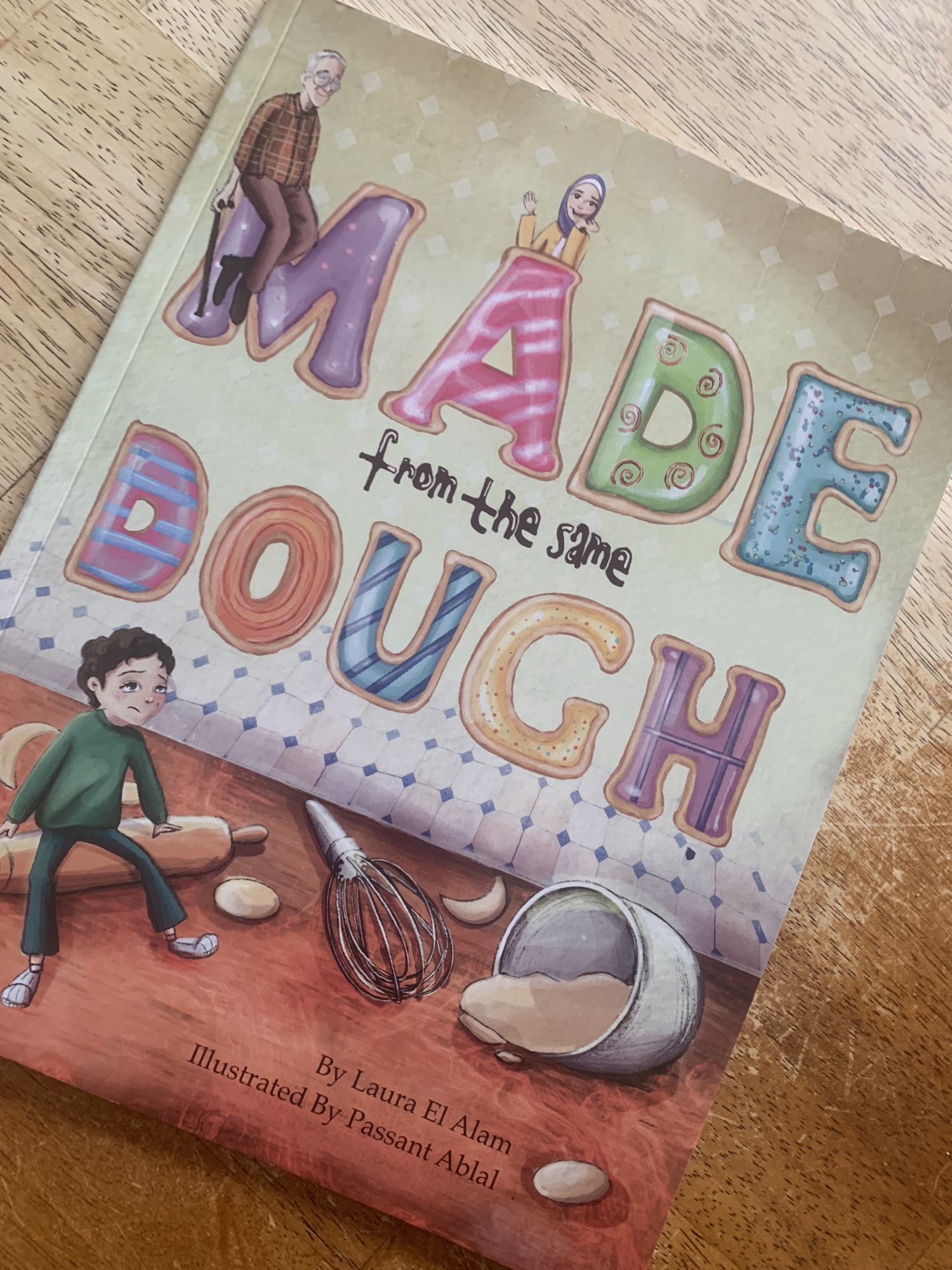
Made from the Same Dough by Laura El Alam illustrated by Passant Ablal

Standard
Made from the Same Dough by Laura El Alam illustrated by Passant Ablal

img_3052-1

Not all books about Ramadan have to be lists of facts. It is ok to show Ramadan and Islamic elements in stories that have their own plots, character arcs, conflicts and resolutions that are not just about abstaining from food and water, or losing your temper.  This book set in Ramadan is a story about a  Muslim boy and his Christian grandfather, and a whole lot of heart.  As a child of a convert, this book spoke to me, and I saw myself in that relationship, not only as a child, but even as an adult bringing my grandparents to my kids Islamic schools, friends’ lunches, and asking them to wait on the side while we pray.  I absolutely love the perspective of the protagonist, that he is worried about what Muslims will think of his grandfather not fasting or praying, as opposed to the often shown character worrying about what non Muslims think about us. The paradigm shift is subtle, but empowering to Muslim readers to see that they are not “other” in any environment.  The authenticity and how it all comes together in the clear text of the book is beautiful, but I must say, I really struggle with the illustrations.  I know art is subjective, and I am no artist, but yikes, I feel like the pictures actually distract from the story unfortunately.

The book starts with Papa coming over to his daughter’s family home and smelling something cinnamon-y delicious.  He dives in to the harira soup and recalls the cinnamon Christmas cookies they used to make.  Rayan wonders if Papa even remembers that the rest of them are all fasting.

Mama invites him to join the family at Auntie Hana’s for iftar the next night, and Rayan worries what Papa will do when they all pray, or if his friends will wonder why he came to iftaar if he is not fasting.

img_3054-1

Papa agrees and offers to make cinnamon cookies to share.  Rayan doesn’t like the idea of Christmas cookies at iftar and tells grandpa that Santa won’t be there.  The next day when Grandpa comes over to bake, Rayan refuses to help. Part scared, part frustrated, part anxious, Rayan hears everyone having fun, but stays in his room.

When they arrive at the iftaar potluck, Rayan reminds Papa to take of his shoes and then devises a plan to keep the Christmas cookies from causing any embarrassment. Only his sister Aliya foils his plan and Rayan will have to face his own feelings and make things right.

I’ve read this book easily close to twenty times, since ordering it, evaluating it for the Muslim Book Awards 2023, (it won the Holiday category), writing this review, and reading it to my littles at bed time, and it still hits close to the heart every time.  It reminds me of my own grandpa, who has been gone almost exactly a year, who may not have always understood our actions as Muslims no matter how often we tried to explain them to him, but never loved us any less.

img_3056-1

You can purchase your copy here at Crescent Moon

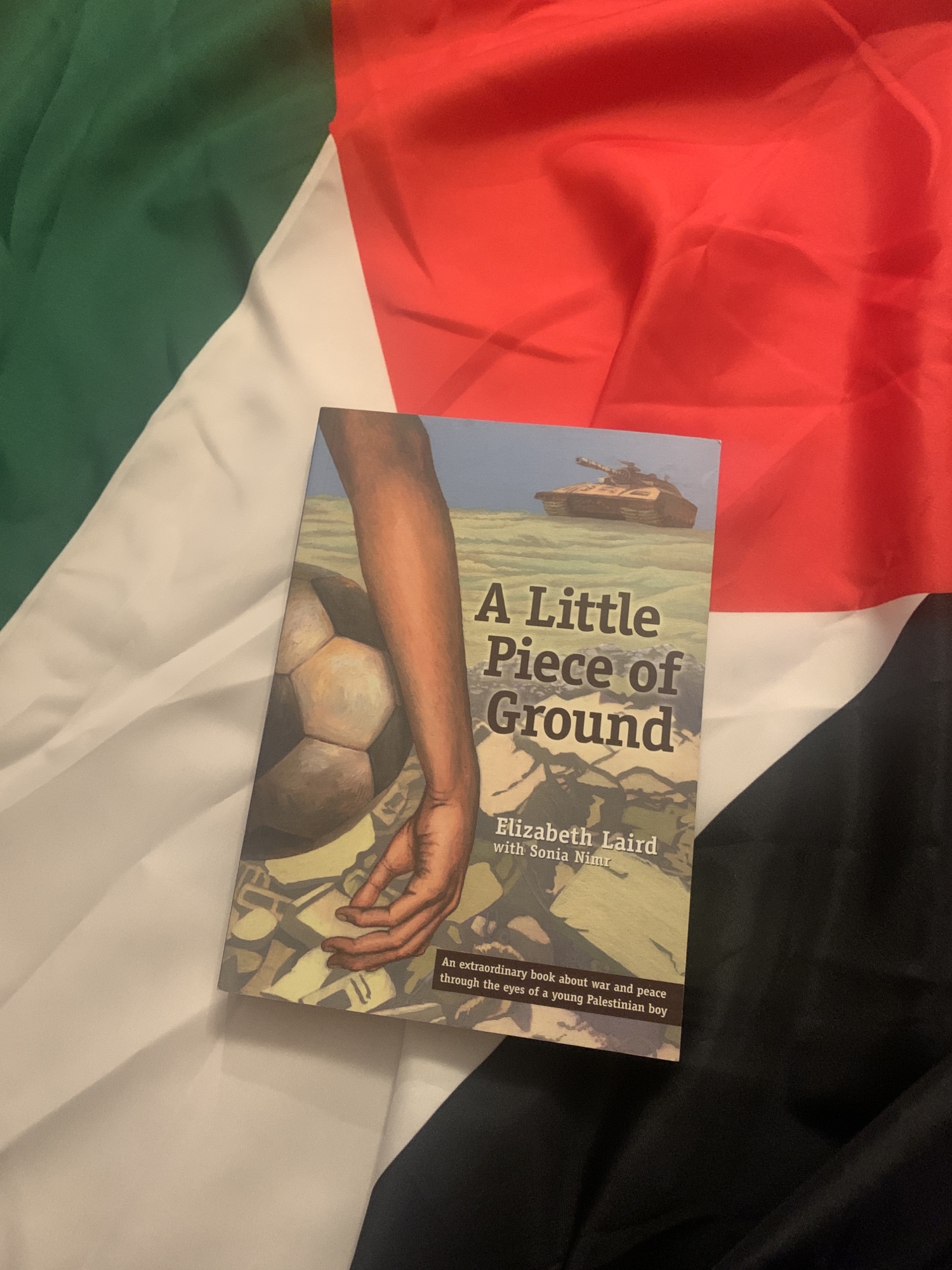
A Little Piece of Ground By Elizabeth Laird with Sonia Nimr

Standard
A Little Piece of Ground By Elizabeth Laird with Sonia Nimr

img_2165-1There are so few Palestinian middle grade books, so on that premise alone this 216 page book has a lot of value.  Because I am not Palestinian, I do not live, nor have I ever lived under occupation, I can argue some of the concerns from a point of privilege, and I acknowledge that is not my right.  I have been asked numerous times about this book and how it frames the suicide bombing mentioned in the text and blurbed about on the back of the book. It honestly is not a large part of the story, that being said, in my outside privileged view, I do not know that a 10 year old in the west will have context to understand the act of this level of desperation from the oppression and humiliation mentioned in the book. This is why I have held off my review.  The truth does not need to be defended or explained, and I fear my reservations will be taken as such, which is not my intention.  Would I let me 8 year old read this, yes, but we will read it together and discuss.  My children are aware of what is going on in Palestine, but Karim, the 12-year-old protagonist supports the bomber, and that notion is not clearly pushed back on. With discussion, absolutely, I think readers, will truly get Karim’s perspective that something has to be done to change the status quo.  The fear when Karim is alone and the target of soldiers, the settlers forcibly seizing the family land, the humiliation of strip searching men at checkpoints, the curfews, and constant fear of attack and imprisonment are all presented through the main character’s eyes, and would also do better with some discussion, so that empathy and duas and action can result.  But, the commentary as to the suicide bombing are minimal, there is even a prank package bombing that is presented as rebellion by a side character, and I would worry how a young child, without guidance, would internalize it.   Additionally, this is yet another difficult book for me to review, primarily because it was first published in 2003, and because I don’t know how much comes from a western gaze and how much the Palestinian voice played into it. Islam is clear on the prohibition of suicide.  In the early 2000 the news out of Israel was often about such attacks, but as an outsider, I honestly do not know if it was simply Israeli propaganda and stereotypes amplifying the idea as part of their public relations strategy or reality, seeing as now that Palestinians have direct outlets to share their daily life under an oppressive occupation, there is rarely talk of suicide bombing attacks. The author states on her website:

“I first visited Israel in 1968, and enjoyed a warm welcome from many Israeli friends. Later, I lived in Beirut with my husband and son during the civil war there, and became aware for the first time of the tragedy of the Palestinian refugees. I visited both Gaza and Ramallah, in the occupied territories, in 2002, while leading workshops for Palestinian writers. I was appalled by the circumstances in which people were living, and became aware that we in the West know very little of what life is like for Palestinians living under military occupation.

I have written A Little Piece of Ground in collaboration with Sonia Nimr, a Palestinian archaeologist, storyteller, writer and translator, who lives in Ramallah. We have tried to make our story as true to life as we can.”

The book is a hard read at times, but the joy is there.  Just as we as adults scroll through the devastation, the humanity persists.  The world may try and forget that they are attempting to erase a rich culture, but even in this book, their is laughter, and crushes, and sibling squabbles, and soccer games and friendship, and food, and joy.  There is a little Islam, not much, the main character is Muslim, a best friend is Christian.  It isn’t present in their everyday thoughts and actions, more just in identifying their faith.

SYNOPSIS:

Karim and his friends are not so much different than 12-year-olds everywhere, he loves video games, playing sports, isn’t so sure what he wants to be in the future, wonders what he will look like as he grows up, and is often annoyed with his family who he loves dearly.  Karim’s life in Ramallah is also unique, he lives under curfew, he doesn’t have freedom of movement, opportunity, or equal rights, and a simple family outing can be life altering.

The book follows Karim and his group of friend as they discover a patch of land they decide to turn into a soccer field, to claim as their own.  They work on it on days they can sneak away after school, in windows of time between curfews, and before long start to take pride in what the land can be. Adopting cats, learning about new friends from the refugee camp next store, teasing siblings about their crushes is all in contrast to Karim watching his father be stripped searched at a check point, being chased off their family land when they are harvesting olives by settlers shooting at them, and pranking soldiers in desperation of fighting back against oppression.

When soldiers roll in and occupy the land the boys have claimed, symbolic of their whole country, Karim gets stuck barricaded in an old abandoned car for days, with soldiers aiming their sights on him, and wondering if he will survive.

FLAGS:

Suicide, systemic abuse, oppression, humiliation, dehumanization, killing, beating, apartheid, genocide, violence, stripping, lying, crushes, occupation, shootings, injuries.

TOOLS FOR LEADING THE DISCUSSION:

This book does not need tools to be discussed.  It itself is a tool, to help middle grade kids be aware that this cruelty has been occurring for 75 years, this book took place 20 years ago, and today we just have social media sharing these stories more widely.  InshaAllah soon, Palestine will be free.

You can purchase this book here at Crescent Moon Store where code ISL at checkout saves you 10%

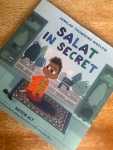
Salat in Secret by Jamilah Thompkins-Bigelow illustrated by Hatem Aly

Standard
Salat in Secret by Jamilah Thompkins-Bigelow illustrated by Hatem Aly

img_8430

It is quite remarkable in the course of 40 pages that so many themes, layers, emotions, windows, mirrors, and relevance can radiate with ease and entertainment for children four and up.  The authenticity of the text and illustrations create tangible feels in this book, that months after reading it for the first time, I am still moved to tears, both inspired by joy and as a cathartic release of being seen.  The true mastery is that even if you are not Muslim and cannot relate to the nervousness of praying publicly, you understand Muhammad’s hesitancy and feel for him as he battles not just finding a place, but watching onlookers reactions to his father, police proximity, and being brave enough to push yourself even when you are scared.  Usually when asked what my favorite book is, I stumble to narrow it down to just one, but truly this book has raised the bar of not just traditional publishing representation, but Islamic/Muslim literature across the board.  It is a gift to read, to share, to enjoy, and a blessing that such an unapologetic book is available so widely for our children to connect with, and our non Muslim friends to see us through.  Please spend time with this book and make it available to your children, your students, your community, it really is that good, alhumdulillah.

img_8431

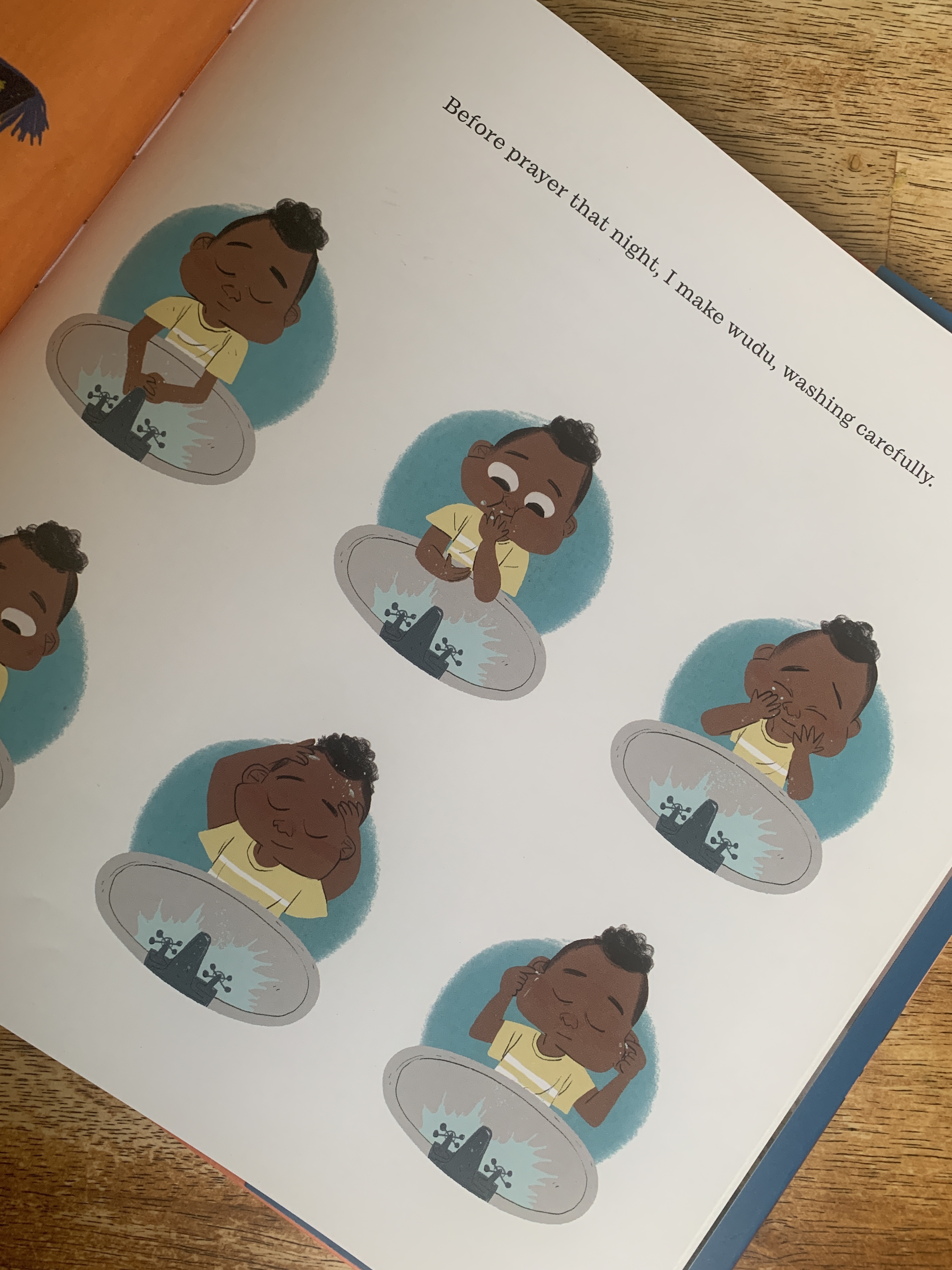
It is Muhammad’s birthday and he is seven, “Old enough to pray five times a day,” his father gifts him a prayer rug, and  Muhammad is ecstatic.  He makes wudu that night and offers salat with full attention.  He says the Sunday school words and shares his most wished for wishes to Allah swt, not even letting little sister, Maryama distract him.

After Fajr the next morning, he is determined to find a secret place at school to pray Dhuhr. Daddy doesn’t need secret places, if prayer time comes he pulls his ice cream truck over and prays on the sidewalk, “never delay salat.”  At school, Muhammad heads to Mrs. Baker to ask for a place to pray, but his confidence waivers and he returns to his seat.

img_8432

Anxiety about where to pray has him looking for spots throughout the morning, but when recess comes he finds he can’t take the prayer rug out from under his jacket.  He lingers when everyone returns to class and rushes through the words and motions in the coat closet.

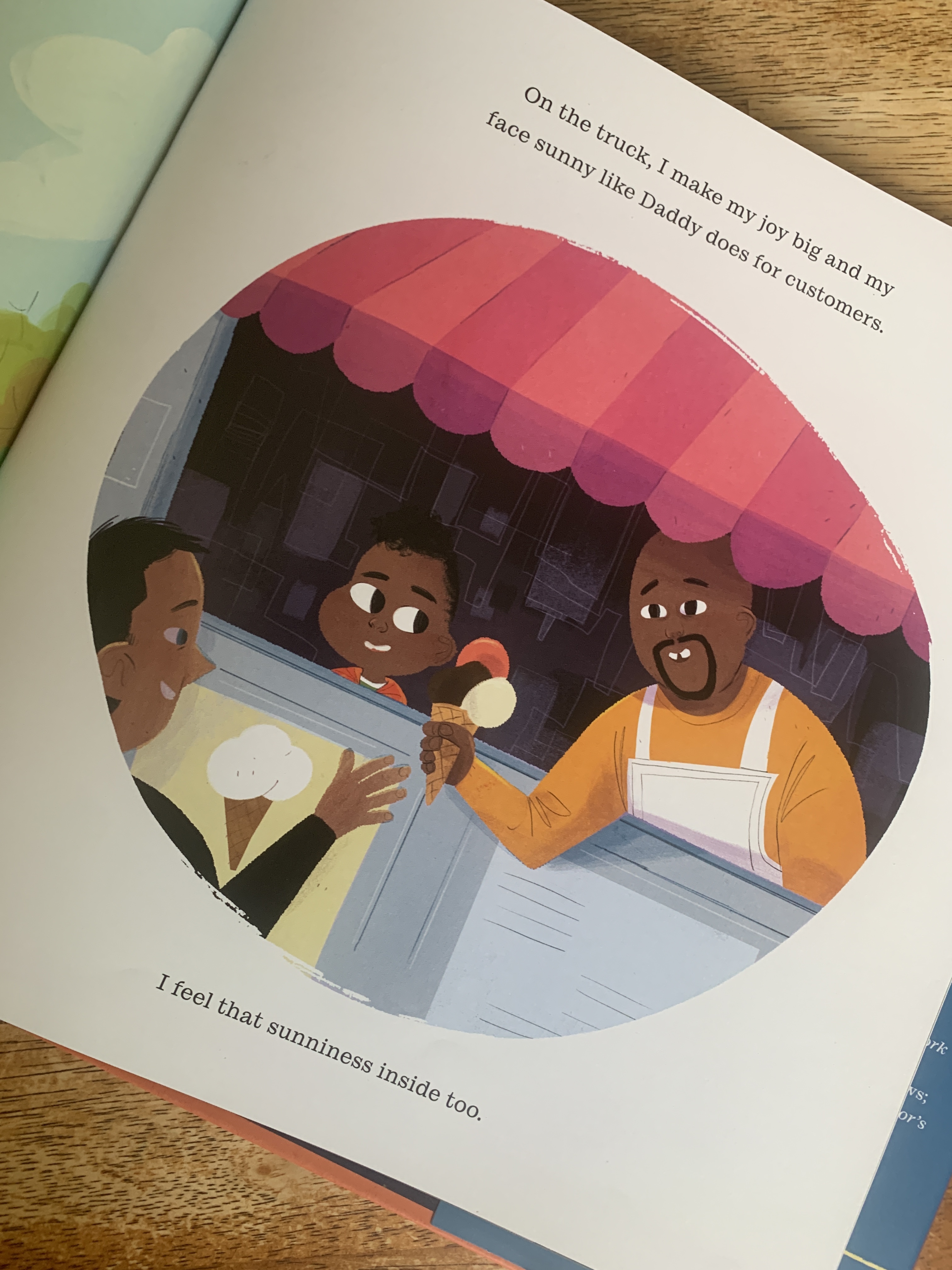
That evening he is with his daddy in the ice cream truck and the sunshine and smiles pour out of the two.  When the sun sets it is Maghrib time and Daddy heads to the sidewalk to pray, reassuring Muhammad that he can pray at home.  Muhammad watches his dad and various events spur him to make his decision.

img_8433

I love love love the way salat is approached with love and excitement and that the dad embodies safety and joy and does not pressure or force Muhammad.  The relationship is beautiful and allows for worship to be seen as both personal, as well as obligatory and merciful.  The duo also show a great parent child dynamic that warms the heart.

img_8434

I like that there really isn’t any “hate” given to anyone praying, it is hinted at, people do not understood, but the focus is not on the outside bystanders- it is what Muhammad thinks and feels.  I’m fairly certain every Muslim who has prayed in public has encountered a wide variety of responses, and this book keeps the gray to reflect and spark conversation.  It is often met with ignorance, with hate, with aggression, but it is also met with respect, apathy, and curiosity which the text and illustrations allow for.

img_8435

There is so much love and joy in the book as well as identity, that I don’t mind one bit that my littles ask me to read it over and over.  It is perfect for groups, one-on-one, and I cannot wait to share it in a story time, there is also an incredibly informative and heartfelt Author’s Note at the end.  If you haven’t preordered it yet, the book releases on June 6, 2023, please pre order it and signal the support for this book and future books that center authentic Muslim joy, Black Muslim representation, and OWN voice author and illustrator accuracy.  Request it at your library, put it on hold at your library, check it out, read it.  If you cannot preorder it, still purchase it when you can, inshaAllah it will be a beloved book in your home as well.

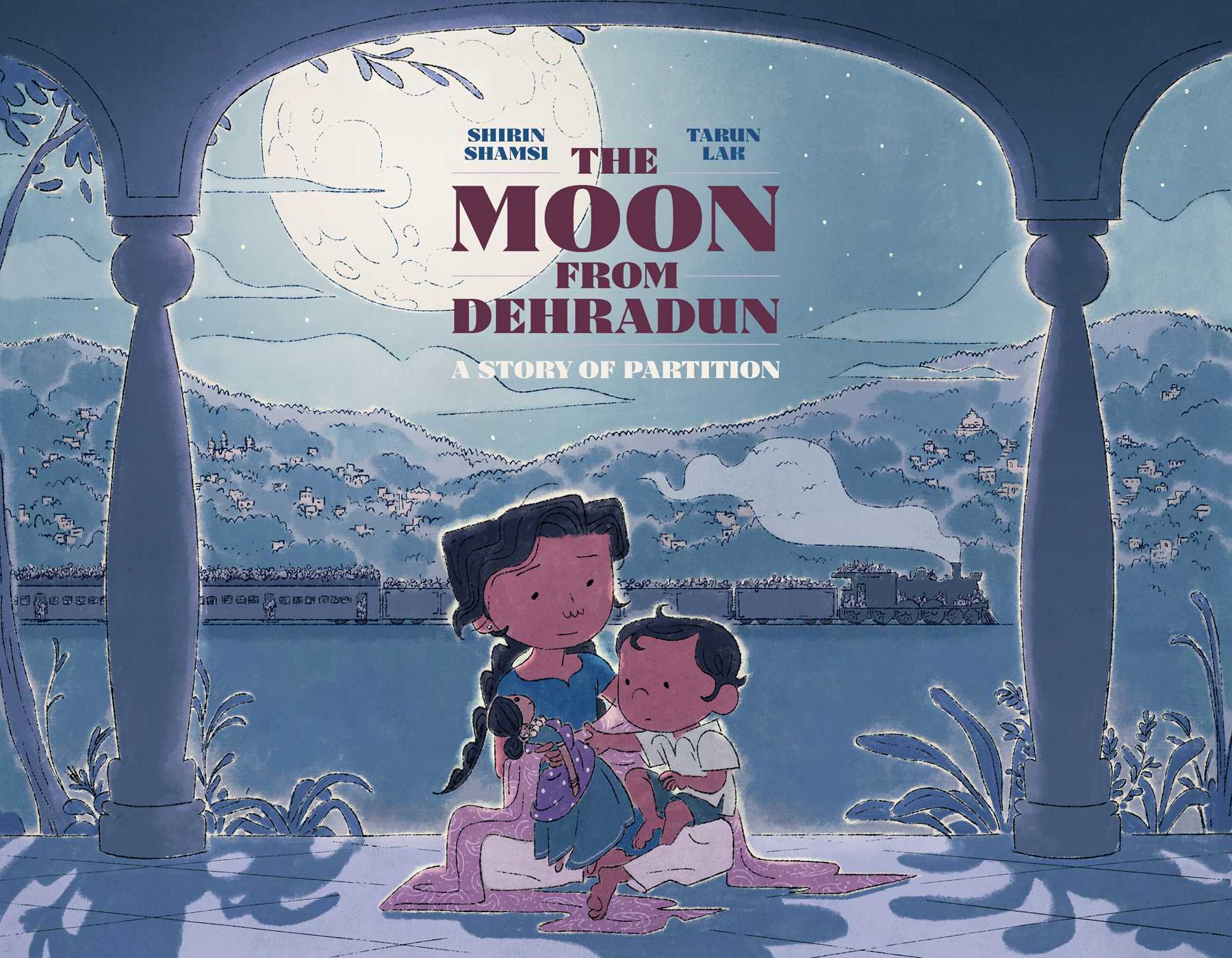
The Moon from Dehradun: A Story of Partition by Shirin Shamsi illustrated by Tarun Lak

Standard
The Moon from Dehradun: A Story of Partition by Shirin Shamsi illustrated by Tarun Lak

partition

I’ve read this book numerous times: sometimes for the text, sometimes for the tone, sometimes to slowly immerse myself in the pictures. I know the basics of my own family’s journey to Pakistan, and this book added to that understanding. I like that it forced me to slow down and to really appreciate what partition was for both sides, from a child’s perspective. Pakistan and India gained freedom from British rule 75 years ago. Nearly every Pakistani or Indian you know today, has a parent or grandparent that lived through it. It is not history from long ago, it is still very much with us, and no I’m not talking about the lingering effects of colonization, I’m talking family stories, and loss of property and wealth, memories of the journey, the terror, the fear, the relief, the determination. This book is one story, perhaps the first mainstream published in the west, of one family’s experience. There could be a thousand more books and they would all be different, all powerful, all reflective. I love that this book is Pakistani authored, Indian illustrated, I love that it offers pages with no words at all. I love that a child’s perspective for such a monumental event is told for other children. There is a lot there for desi readers to unpack, and consider, there is also a lot there for non desi’s to be made aware of, and I hope that you will seek out this book no matter who you are, and share it.

img_3563

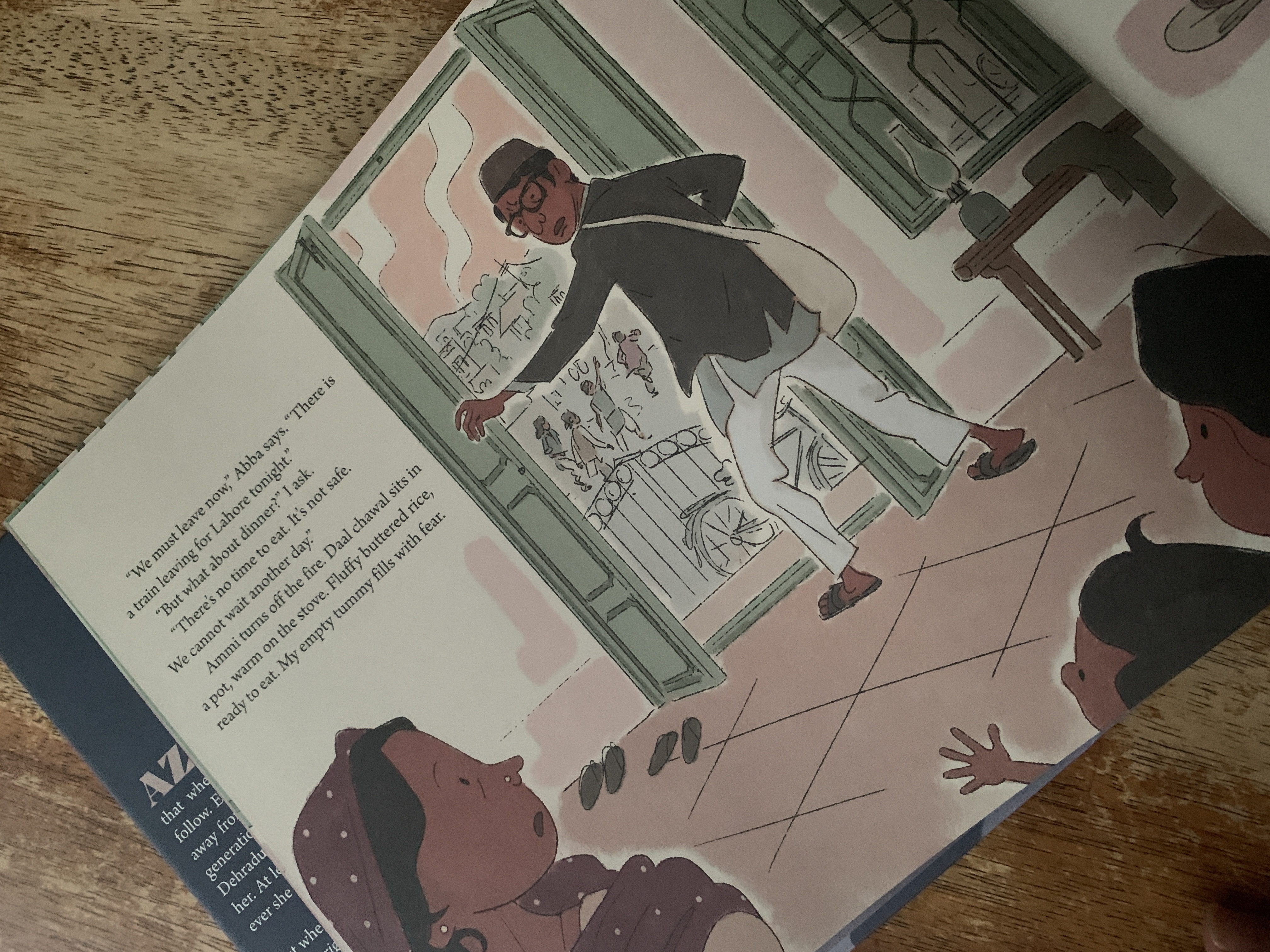
The book starts with excitement from Azra about an upcoming train ride, even though her family has lived in Dehradun, at the base of the Himalayas, for generations. Suddenly though there is yelling outside because people are afraid, and her Abba runs in saying they have to leave now. Ammi, Abba, Azra, and the baby “Chotu,” rush out the door, leaving the cooking dinner still on the stove. When they get to the train, Azra realizes she has left her beloved doll, Gurya behind. They cannot go back for her.

img_3564

Azra blames Chotu, for making her forget her doll, for taking her parent’s attention, yet as the days and nights on the train reveal tired people, sad faces, and fear, Azra finds comfort in her little brother’s embrace.

img_3568

When they arrive in Lahore, they are met with food, and shelter. They are given a house that looks like the owners left in the same manner that they had to flee. There are balls of dough with a rolling pin, laundry strewn about, and even a doll left abandoned under a bed.

img_3565

The book concludes with a map, a glossary, and an informative author’s note addressing pre-partition, partition, and the author’s own family story. There is hardship and frantic upheaval, but peace and welcome too. The illustrations illuminate the text and show the powerful emotion when words sometime simply don’t exist.

img_3566

The book is not political or even religious. There is an Indian flag when they leave and a Pakistani flag when they enter, there are sounds of athan, and packing of a rehl, and a comparison to Eid, and the doll at the end has a bindi on her forehead. The book does not make one side out to be in the right or in the wrong, if you do not know that partition of the subcontinent was a mass migration based on religion and the chaos further exacerbated by the British, this book will not spell it out for you.

img_3567

I preordered mine here and it can now be purchased from all major book sellers.

Salih by Inda Ahmad Zahri illustrated by Anne Ryan

Standard
Salih by Inda Ahmad Zahri illustrated by Anne Ryan

salih

This is an example of a picture book that should not be categorized as being only for children.  The passages of short simple text and the expansive illustrations that pull the reader in, combine to set a powerfully moving tone that holds you in it’s grips until the final page.  The names and hijab clad women could make this book a refugee tale with #muslimsintheillustrations, but because the author is Muslim, and the book so beautiful, I wanted to do a full review.  Some of the vocabulary is a bit advanced for younger children, so I think the best application of this book is not to hand it to a small child to read independently, but rather to read it to a child and let the words tickle their hearts while they immerse themselves in the pictures.  I look forward to sharing this book at story time to kindergarten through third grade.  I think the imagery, concepts, and emotion will resonate and open minds and hearts.

img_2168

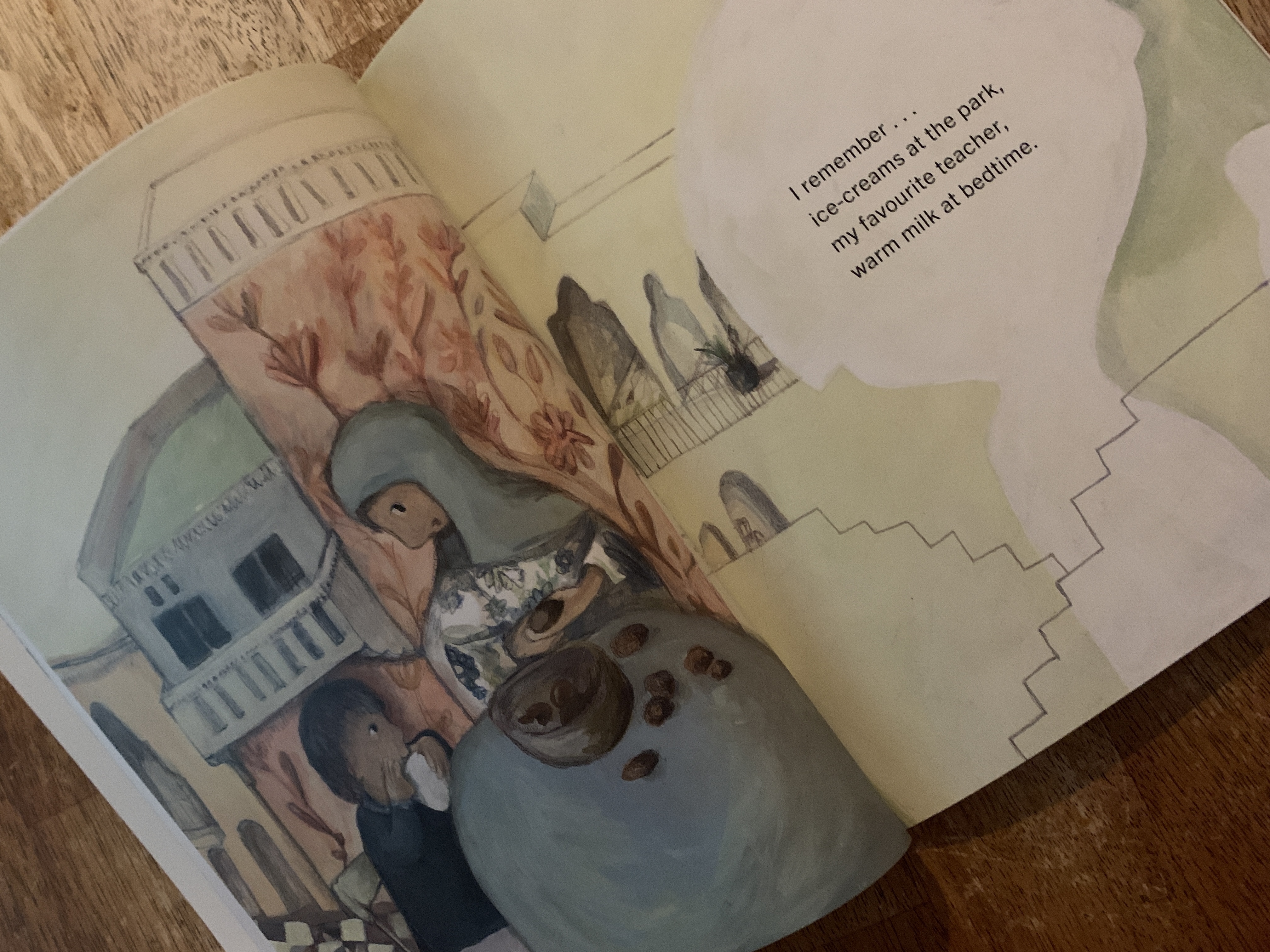
Salih is like a turtle, he carries his home on his back. He and others are heading to the sea.  He tries to remember when things were better, and forget the bad times.

An old man shows him how to paint.  Salih shares this creativity with others.  Then he slips all the paintings into bottles and when he is on the rough sea, the bottles float away.

The storm rages, but then it calms, and land is seen, and hopes and dreams return.

We, collectively, have become numb, apathetic even, to the plight of refugees.  I have been trying for a while to get this book from Australia, and even though I am over a year late since its publication, it is still timely.  It will always be timely.

img_2170

We cannot be so arrogant to dismiss the plights and challenges faced by those in our world.  That is why I say, yes it is a children’s book, but people of all ages, need to be reminded.  It isn’t the worst of the worst incidents that need to only be shared, or the over the top happy stories.  We need to not let our hearts grow so hard. And this gentle book, with a sweet boy and turtle shell imagery has a lot of potential to remind us of the human element of global conflict.

Available to purchase in the USA here

img_2172

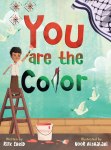
You are the Color by Rifk Ebeid illustrated by Noor Alshalabi

Standard
You are the Color by Rifk Ebeid illustrated by Noor Alshalabi

you are the color

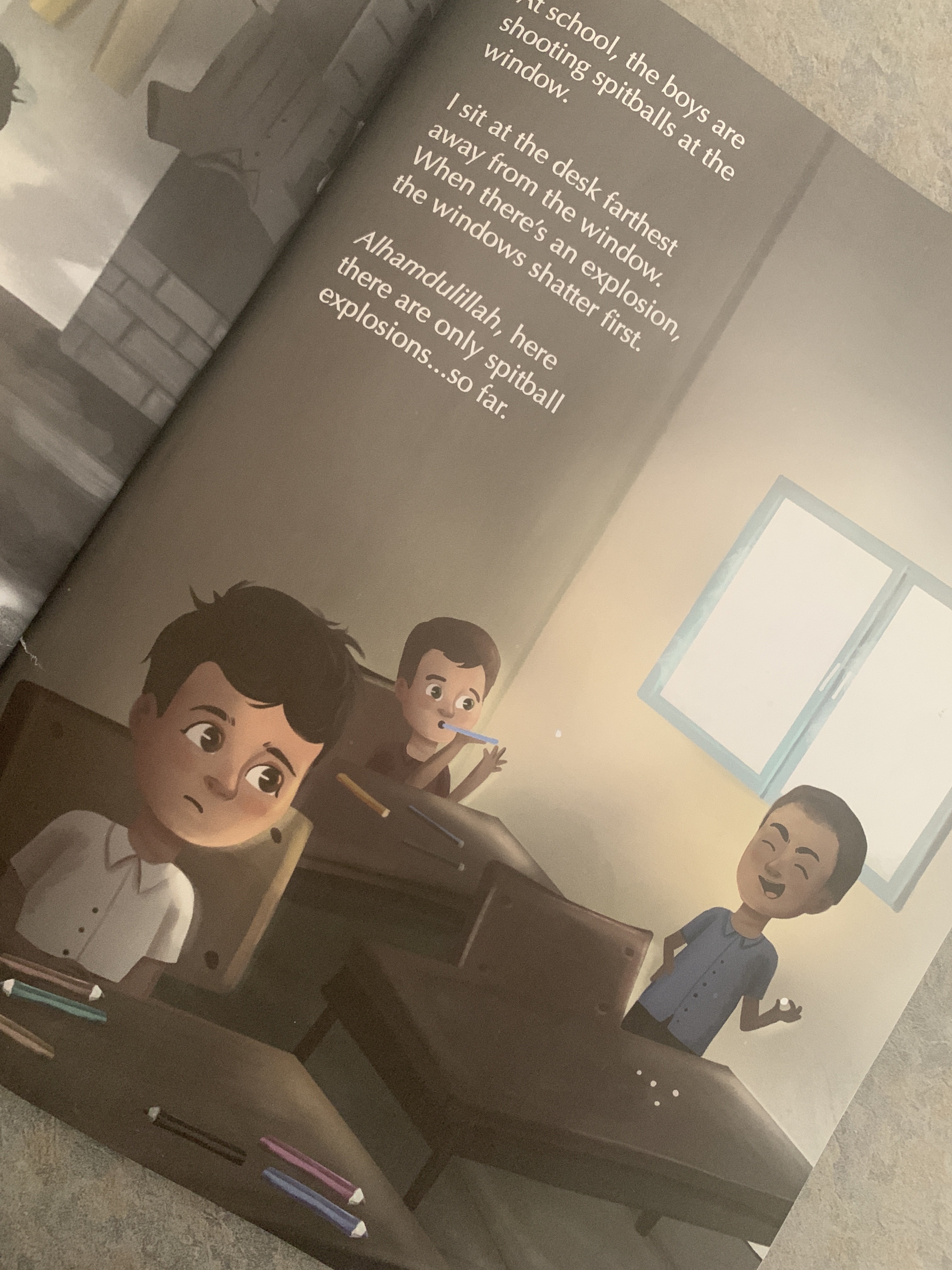
Books like this are hard for me to review, and I have gone back and forth on whether I should post anything or not.  On the one hand, we need books that are unapologetically Palestinian written by Palestinians.  They need to be celebrated and elevated and I want to offer my support to the stories, to the voices, to the authors, illustrators, everyone involved.  On the other hand, if I didn’t love it, why should I shy away from saying so, when I have purchased the book (pre-ordered and changed the shipping address even, to have it delivered to me on vacation because I didn’t want to wait to read it).  The book is emotional, but the last six pages unraveled the whole book for me, and in a picture book particularly of this nature, when you finish- if you don’t have a cathartic pull, you start to find holes in the story as you feel deflated.  The book, I would go out on a limb to say, needs to be discussed and given context even if you are Palestinian.  As someone who is not, I recognize my arrogance in such a statement and am happy to be corrected, but from a literary reviewer standpoint the book needs discussion and additional context.  The Nakba is only articulated in one paragraph in the author’s note.  In the story itself there is no indication that what happened to Thaer happened to so many Palestinians in 1948.  The use of color and how it is depicted in the illustrations is tangible and powerful, but as odd as it is to say, the words got in the way of the story.

img_0713

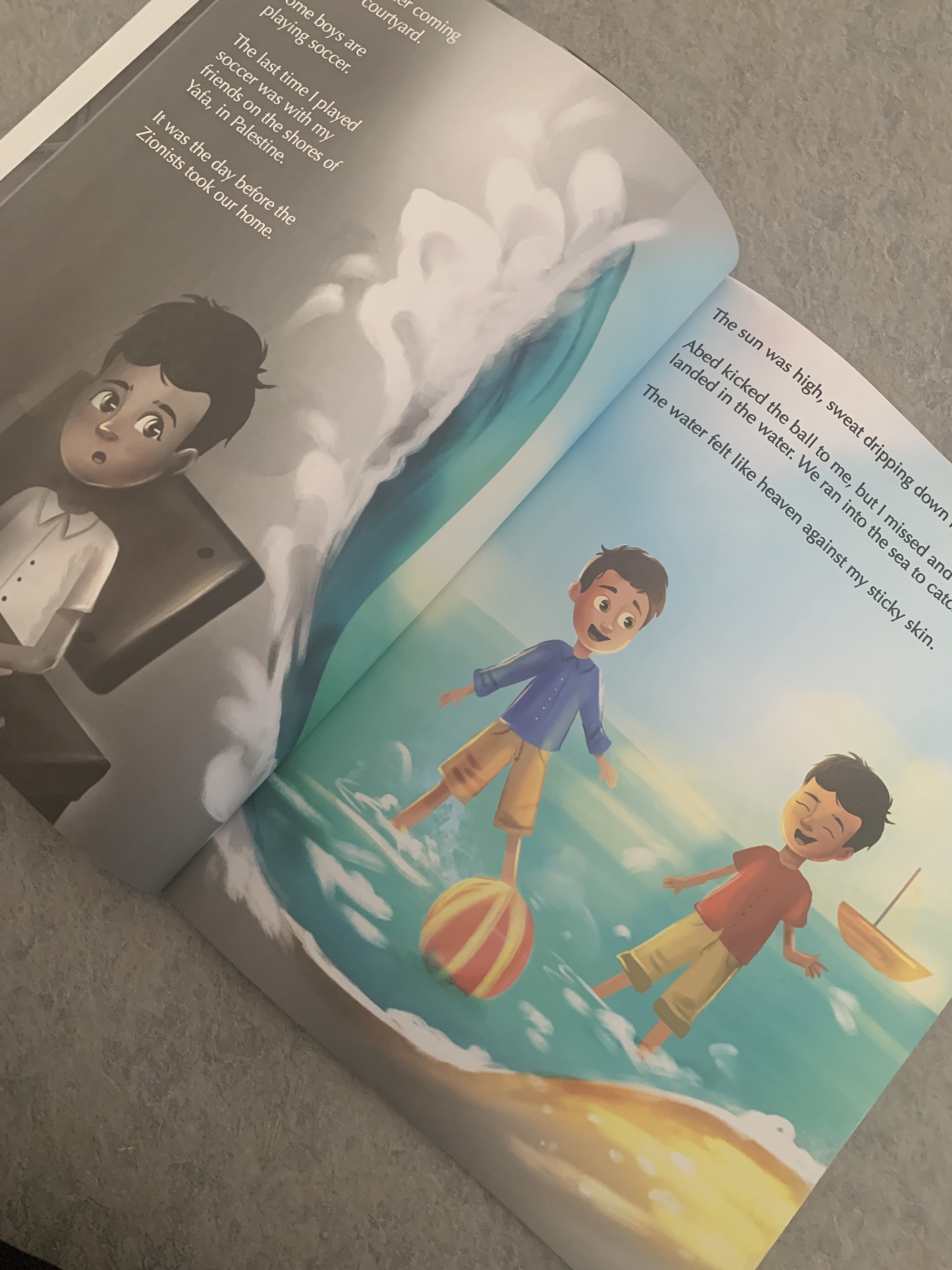
The book starts with Thaer trudging to school in dull sepia filled pages to begrudgingly sit at a desk and begin an art lesson.  He is glad the spitballs are just spitballs and not real explosions, but the tone is still melancholy.  When he sees boys playing soccer he recalls the last time he played soccer, and the memory comes alive in color.  He was in Yafa, it was the day before the Zionists came and took his family’s home.

img_0714

The teacher, back in muted tones, asks him to draw what has made him smile, and Thaer gives it a try.  Blue for the color of the sea, green for zeit and za’tar, brown for taboon to get fresh bread, etc..  When he takes the drawings home to his mother, she is not impressed.  Drawings are silly and colors aren’t going to bring Baba and Susu back.

img_0716

Defeated, the next day in class, Thaer recalls the men pounding down the door and Baba being shoved in a truck and Susu falling.  The next day at school they hang up some of their pictures and Thaer talks about his sister.  (SPOILER) On the way home Thaer paints the alleyway and brings color to his and his mom’s world.  His mama says that he is the color, and when the following day’s prompt is to draw what you want to be when you grow up it shows Thaer (presumably) on the beach as an adult painting.

img_0715

The disconnect for me occurred with the painting of the alleyway.  I was incredibly invested in the story, my heartstrings were being tugged, I was breaking for this character and his experiences, and it all came to a screeching halt because I couldn’t understand where the paint and the alleyway and the mama’s change of heart all manifested from.  As for the ending, I think I know what the author was going for, but it didn’t connect with any of my kids aged 2-15 nor my mother, a 40+ year early elementary veteran teacher.  I wish I could have taken a picture of their faces as she read the book to them.  The frozen expressions of huh and confusion at the end, until my 11 year old to broke the awkward silence to ask if the boy wants to be a painter or a father or an adult?  Those facets coupled with the often advanced vocabulary, makes the book an important one, but one that needs a lot of outside commentary to connect with the readers and to further the conversation about Zionism, al-Nakba, the occupation, and the continued oppression of Palestine.

There are flags of loss, kidnapping, sorrow, violence, etc., that parents will have to gauge if their children can handle. I’m not sure what age group is the best fit, the murder of a young girl, the forced displacement from one’s home, the removal of the father are all heavy themes.  I appreciate that it isn’t “watered down” for a western gaze so to speak, but I wish there was more about what happened to the dad, is there hope he is alive? I wish there was something about this not being an isolated reality for the protagonist and his family.  I wish there was some conversation or connection between the mother and son, because the loss of continuity really derailed the story.

As for the idea of the story, and the use of the illustrations to physically show two worlds I think is a great idea, it just sadly fell apart for me at the end: the faltering conclusion and the loss of emotional buildup that the first two thirds of the story worked so hard to create.

Little Seeds of Promise by Sana Rafi illustrated by Renia Metallinou

Standard
Little Seeds of Promise by Sana Rafi illustrated by Renia Metallinou

seeds

This sweet, well-done 48 page picture book for early elementary aged readers shows the fear associated with being in a new place, the love of an elder family member, and the courage it takes to make new friends.  The story focuses on a young Pakistani girl who has recently moved to a new country and how she tries to remember the wisdom of her Nani to blossom in her new home.  The culture rich story is universal and lyrical, with hints of making duaa, greetings of salam, and the soothing sounds of the athan that make memories of home so foreign to her in her new residence. Young readers will empathize with Maya, and see the symbolism in the seeds she is anxious to plant and cultivate.

img_4475

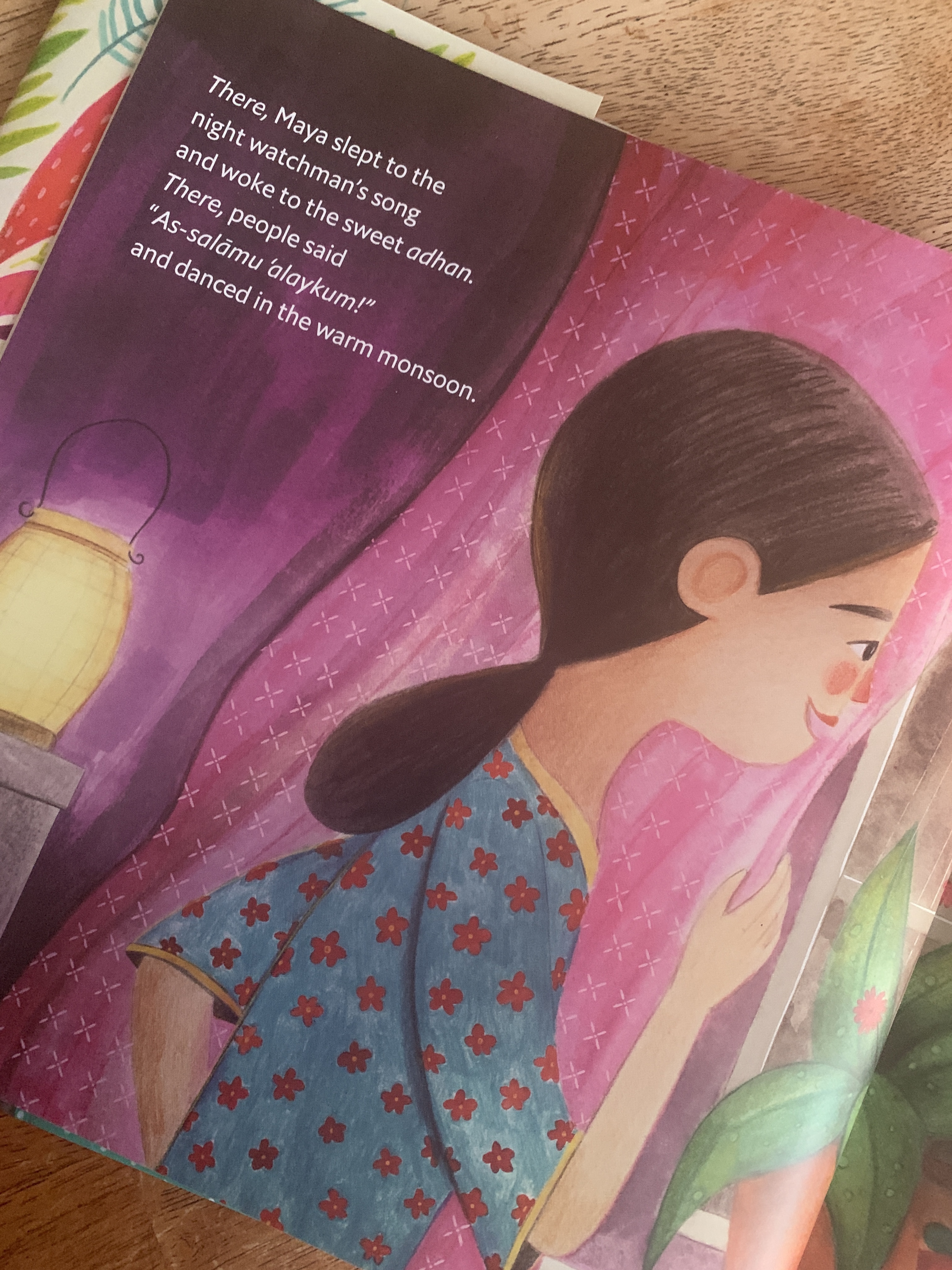
Maya finds her new home unfriendly and cold, she feels different with her food, and clothes, and way she speaks.  Home to her is dancing in the warm mansoon rains, saying As-salamu ‘alykum, and waking up to the sweet athan.  Nani was also there, her old home.  Sweet Nani with her hundred wrinkles, smelling like flowers.  When Maya left, Nani gave her a gift.  Little seeds of promise, so that they and she might bloom where planted.  But Maya doesn’t know where to plant them, she carries them with her everywhere she goes, but like a secret, she keeps them close.

img_4477

Channeling her Nani’s tenderness, she knows that she has to plant them if one day she wants to be surrounded by flowers.  Maya loves flowers, dancing around them, praying among them.  Maya finds a patch of earth.  She longs for rain, she hopes for warmth. She makes way for the rays of the sun.  The text talks of flowers, the illustrations show both the plant and the growing friendships.  For days nothing happens, with the seeds or the classmates.  But Maya remembers that seeds have a long journey from the ground up.

img_4476

Maya nurtures her seed, just the one she dared plant, with love and kindness.  She too feels ready to burst.  Can she be brave enough to plant all the seeds, can she share them, and her self in her new world? Can their be warmth here, like there was over there? Can this too be home?

img_4478

I love the symbolism and juxtaposition of the seeds growth with her own.  The character arc and the transition of home being one place to being the other, is very well done, older readers will feel an aha moment when they grasp it and younger kids will enjoy both the surface story and the dialogue you can have with them about blossoming where planted.

img_4479

Religion is not a strong thread, but Islam is present in her memories of her maternal grandmother and all the warmth and love that those memories contain.  I love that the classmates were never mean, they just didn’t know her either.  I wish there was a bit more diversity of skin tone and mobility in the classroom illustrations and the friend circle she is hoping to join.  Overall, a beautiful OWN voice picture book that will be enjoyed for multiple bedtime, small group, and classroom readings.

The Cat I Never Named: A True Story of Love, War, and Survival by Amra Sabic-El-Rayess with Laura L. Sullivan

Standard
The Cat I Never Named: A True Story of Love, War, and Survival by Amra Sabic-El-Rayess with Laura L. Sullivan

img_8275

This amazingly captive 370 page, nonfiction autobiography details life during 1992 through 1995 in Bihać, Bosnia through the eyes of a 16-year-old Muslim girl.  The horrors of war, her determination to survive, a lifesaving cat, and her coming of age, all come together to make for a compelling read that is both reflective and inspiring.  I had a hard time putting the YA/Teen book down even knowing that she would obviously survive and being vaguely familiar with the Serbian attacks and ethnic genocide that occurred.  In an easy to read flowing first person narrative, somehow the book avoids being overly political, while still managing to convey the role of the media, the international world, and the hateful mindset that turned friends and neighbors into enemies.  I think teens, 15 and up, should spend some time with this book as well as adults, it really serves as a wake up call to how fragile nations can be when we turn on one another.  We must know the past, to as not repeat it.

SYNOPSIS:

The book starts out with Amra on a train returning from Belgrade where she took tests as she is one of the brightest kids in the region.  Immediately it is made clear that she is incredibly smart, and independent as she travels alone into the heart of Serbia.  The war has not yet come, but on the return trip Serbian Nationalist soldiers board the train and she is desperately afraid that she will be sexually assaulted.  Fortunately, she does not “look Muslim” and the soldiers physically leave her alone.  Her naivety, however, is lost as she realizes the war is closer than her family thinks.

Her family lives in a beautiful home that they designed and saved for, they wear hand me down clothes and watch expenses as a result.  Amra has a younger brother Dino, her older brother seemed to have some disability and has passed away, her parents are honest and value education. Her family is everything to her, they are incredibly close knit.  They are ethnically Muslim, but do not practice.  She mentions it regularly, that they are being attacked for a religion they do not practice.  They wear bikinis and date, eat pork and drink alcohol, they identify first as Bosnian and then as Muslim.  But they do identify as Muslim and they suffer for it, over and over and over again.

The story sets the stage by showing how diverse Bihać is and how Serb, Croats, Bosnians, Muslims, Christians, Catholics all live together.  It is Amra’s birthday, it really isn’t, but they could not afford the food and gifts at the time of her 16th birthday, so they are celebrating it now with a sleepover with her closest life-long friends.  When Amra and her father go in to town to get the cake, they see tanks rolling in, refugees from other cities seeking safety and Amra and her father start handing out whatever money they have and take a couple home with them.  At the party, they don’t discuss what they have seen, but when Amra’s best friend, a Serb, cannot spend the night, the parties tone changes and the mood is set for the next chapter in Amra’s life.

At school she shares how Muslims are treated and forced to take Russian, while the Serbs are encouraged in English, while the children get along as many are mixed ethnicities, there is rampant favoritism from the adults.  When one day only the Muslims arrive at school, the Serbs have all secretly evacuated in the night, there is no more denying that the war has come to Bihać. With the comfort of her cat, who she simply calls, Maci, cat in Bosnian, and his “luck” to somehow delay her or warn her of bombings, she and her family endure the first wave of attacks by hunkering down in a cousins basement.

Ultimately they decide that they cannot stop living.  Death is striking at every turn and no one is more safe in one location than another and the family returns home.  They still have electricity at first, but it soon disappears, the phone lines stay, but food starts to get scarce.  At times the family goes out of the city to stay with family on a bee farm and survive off the honey, but it is not safe there either.  School resumes a few days a month, but all the Muslim’s records have been “lost” and paper is in short supply.

Over the four years of the war, Amra’s aging diabetic father is called to fight, an explosion at the house renders her mother deaf, friends and family are killed while somehow the day to day of surviving continues.  Amra graduates from high school, works as a tutor when she cannot pursue her own education, and finds work as a translator for international workers after she teaches herself english.  There are times she is so malnourished her hair is falling out, her gums are bleeding and she blacks out, and there are times when the family is able to trade honey for food and can open a small store in the corner of their house.

The resiliency and heartache is not something a review can capture, you feel for Amra at every turn, both in delight as well as in fear and devastation.

WHY I LIKE IT:

It has a map! Seriously, thank you.  I love that the book is so emotional, it doesn’t get hung up on dates and events, but how whatever is happening affects Amra and her view of the world.  As a character, ultimately a person, she doesn’t stay down, she is capable and strong, which is so remarkable in the best of times and absolutely heroic living through this war.  The cat is a remarkable character, and while at times it seems forced, it is a great thread that keeps her story being relatable on all levels.

There are a few chances for Amra to leave her family and get away to safety, the first time it is presented to her she would have to change her name, she decides she cannot.  This is a testament to her love of her family, but also to her identity.  She is proud of who she is, which is mind blowing to me.  I talked about it in my review of The Day of the Pelican, about how Bosnian refugees I got to know in the late 90s knew nothing about Islam, but were being slaughtered for being Muslim.  Repeatedly she talks about how in Bosnia there were some conservative traditional Muslims, but that most of them are not, her family is not.  Yet, my heart truly cried out when her and her mother are trying to get food from drunk soldiers and are certain that they are going to be raped or blown up by land mines and she says the only prayer she knows.  One that she learned after the war started: “Auzubillahi Minahs Shaitan ir Rajeem.  Bismillah ir Rahman ir Rahim.  Rabbi Yassir wa la Tua’ssir, Rabbi tammim bil khayr.  I seek refuge in Allah from Satan in the the Name of Allay the Most Gracious, the Most Merciful.  O God make it easy and don’t make it difficult, O’ God, complete this with good.”  

She explains the cover of the book at the end, “the book’s jacket presents my authentic self, a liberal Muslim teen, yet a Muslim who was still so profoundly hated.  The jacket illustration serves as a reminder that the hate is a product of its perpetrators rather a reflection of its victims.

FLAGS:

The book is about war, it has rape, sexual assault, death.  At times it is descriptive and detailed, not sensationalized, but powerful.  There is kissing, boyfriends and girlfriends, nothing lewd.

TOOLS FOR LEADING THE DISCUSSION:

I learned about this book from Lovely Books Podcast when she interviewed the author: https://lovelybooks.buzzsprout.com, it is a great introduction along with many of the interviews and articles that Dr. Amra Sabic-El-Reyess has done.

I would love to do this as a book club, but I think it would have be done on a high school level, not middle school.  The dialogue and understanding I would imagine surrounding this book would be compassionate and thoughtful.  I hope those leading book clubs for older students and even adults will consider this book.

Flying Over Water by Shannon Hitchcock and N.H. Senzai

Standard
Flying Over Water by Shannon Hitchcock and N.H. Senzai

This middle grades, upper elementary book is a character driven contemporary story of two friends with their own fears coming together: one a native of Tampa, the other one a refugee from Syria arriving in the US on the day Trump’s ‘Muslim Ban’ goes in to effect. In 272 pages of alternating narratives, two 12 year old girls find strength and kindness in themselves, in each other, and in many around them. Islamaphobia is focused on in the story, but the inclusion of diversity, Black Lives Matter, anti semitism, mental health, social justice, and US immigration makes the book relatable to everyone and interesting to explore. The book is remarkably similar to another book published this year, A Galaxy of Sea Stars, and I wish I had not read them so close together. Both are well done, and I honestly don’t know if one is better than the other, but space them out so you don’t find yourself comparing them. I got my copy from Scholastic, and I’m always happy when the school market shows accurate strong Muslims, so if you see this in the book order forms that come home or book fairs and are wondering if you should get it, do it, it is worth your time and your child’s, inshaAllah.

SYNOPSIS:

Noura’s family has escaped Syria and had been living in Turkey when they learn they have been granted assylum in Tampa, Florida, USA. When the book opens Noura is practicing controlling her fear of water as the plane flies over the ocean. Her twin brother, Ammar, her parents and baby brother Ismail are greeted with protesters when they land. Whisked away by a church group and local Muslims, the family is given support and assistance in a new country.

One of the members in the church group that have volunteered to help the Alwan family, is Jordyn and her mother. Jordyn is going to be Noura and Ammar’s Student Ambassador at Bayshore Middle School and Jordyn’s mom has offered to help Noura’s mom learn English. Jordyn is the state title holder in swimming, but while she was swimming her fastest race, her mom was having a miscarriage, and both have a lot to work through to function as they once did.

The two girls immediately hit it off, and the families follow. Noura’s love of birds is mirrored in Jordyn’s love of water and fish, and both have their fears and mental health coping skills to bond and confide in with one another about. The girls and Ammar are assigned a Social Studies assignment and Jordyn getting close to the Alwans is not well received by Jordyn’s close friend Bailey who’s brother was killed while fighting in Afghanistan. Other classmates also show bigotry and with the real incidents of 2017 incorporated in to the story of a mosque being burned, Jewish cemeteries being ransacked, pedestrians being run-over in France, and more, the Alwans are questioning their new country, and their friends are wondering how America has gotten this way.

While praying at school Ammar and Noura are constantly harassed no matter where they relocate to, and finally ask the administration if there is a safe place they can worship. Florida law says a space can be set aside for all faiths to have the same access as clubs do (I’m overly simplifying), and many different and diverse students come together to turn an old closet into a place of peace, worship, freedom, reflection, and meditation. As expected, the space is destroyed, the culprits never caught and complaints to the school board mount. The ultimate climax involves the kids speaking up about what the space means to them, and waiting to see what the final school board vote is. Along the way there are smaller victories, such as Jordyn teaching Noura to swim, Ammar speaking about the white helmets saving him, and Jordyn and her mother working together to heal.

WHY I LIKE IT:

I love that the Muslim Ban is discussed in a way that it is personal, not political. By highlighting a fictional manifestation of refugees affected by such policy, even people that don’t know anyone affected, I’m certain would feel a connection to a concept and its affects in a very real way. I love that N.H. Senzai was brought on to make the story’s Islamic elements ring true and that the prayer room, a very American Muslim construct ends up being at the center of the story. Noura and her family eat halal, wear hijab, and pray. I enjoyed that other diversity and acceptance issues were carried in to the story by the supporting cast including a Jewish boy, a Cuban girl, a Hindu and more. Overall the book is well written and solid, the mental health and coping skills are so beautifully normalized. Both girls have sought help and found success with it, and both are brave in addressing their fears and opening up about them to those around them. It really is empowering.

The end of the book features more information about the real Syrian children heroes mentioned in the book: the ten year old model builder Muhammad Qutaish, the Olympic swimmer Yusra Mardini, and education activist Muzoon Almellehan. There is also information about the two authors and how their collaboration came to be.

I would love to not compare this book to A Galaxy of Sea Stars, but just to highlight a few of the near exact similarities would prove my point that had these two books not been published the same year, one would definitely be accused of copying the other. Both feature middle school girls, both have a refugee arriving to a coastal town with their families (one Afghan one Syrian), both have the American born protagonist loving water, being an only child, and have mothers going through their own life changing crisis. Both have two side kick friends, one that is very anti Muslim and one that is on the fence. Neither have a completely resolving happy ending with the three girls’ friendship and there is doubt in both books of friend’s possible involvement of hate motivated actions. Both feature a side character’s brother being killed in conflict in a Muslim majority country. Both feature an amazing teacher that is very involved in opening minds and facilitating growth regarding prejudice. Both feature PTSD issues, and fear of water issues as well as a major hobby being destroyed by an angry classmate character. The ‘ethnic mom’ in both stories is rather one dimensional but loves to cook and feed everyone. Sure they also have their differences, one alternates point of view and is tied closely to current real events, but both have remarkably similar themes of friendship, overcoming fear, and finding similarities over differences.

FLAGS:

Some mention of violence as the Alwans recall the destruction and fear of war in Syria. Mention of a cartoon drawn by a classmate mocking Jordyn getting her first bra, but it isn’t detailed. The swimming coach is a lesbian and she mentions her wife at one point.

TOOLS FOR LEADING THE DISCUSSION:

I would definitely encourage elementary teachers to have this book on their shelves and encourage students to read it and respond. I think it would be too predictable for middle schoolers to read in a critical manner, however, they would probably enjoy it as a light read. With Covid 19 still keeping me from starting up book clubs again, I have been asked to consider helping put together some side reading lists/suggestions, and this book would definitely find its way on that.

Happy Reading!