Tag Archives: factual

Ramadan on Rahma Road: A Recipe Storybook by Razeena Omar Gutta recipes by Faaiza Osman illustrated by Atieh Sohrabi

Standard
Ramadan on Rahma Road: A Recipe Storybook by Razeena Omar Gutta recipes by Faaiza Osman illustrated by Atieh Sohrabi


I would not know where to shelve this 40 page in a library, it has beautiful pictures, it is informative, resourceful, useful, and interesting- I’ve only delayed sharing it because I really have had to think, how best to use this book to its maximum potential, to make it truly effective. It is formatted externally as a picture book, but it reads much like an chapter book anthology with the stories connected by the road the diverse folks live on, Rahma Road, all coming together for a communal iftar, with some fasting and some not.  The spreads feature vignettes on the left of what each house is making, including tidbits of culture, facts about Ramadan, insights about method or ingredients, with the facing page being the recipe.  The book is incredibly meticulous and intentional in appealing to Muslims and non Muslims alike, as well as a variety of ages.  It works as a book for Muslims to see themselves in, non Muslims to get a peek at iftaar excitement through, messages about community and diversity celebrated, foodies to see new recipes that they can try, cultures to explore through food and native words, a story framing to feel connection, I really could go on and on with the layers and inclusions this book provides, alhumdulillah.  I think the best way to use and share the book is going to be for me to read it with my 5 and 9 year old children a week or so before Ramadan.  Where I can read the story portion, getting us excited for Ramadan, slipping in some reminders, appreciating Islam’s global presence, and then talking about the recipes so that they can pick dishes to try in Ramadan and add needed ingredients to the shopping list (I wish I made the effort to be this organized all year long).  I then will plan to leave the book out and have my teens flip through to find any recipes that they think sound good and will commit to making.  The book would work all year long, but as a new release, I’m sharing my plan with hopes that it can help your family as well. 

The book contains 25 globally inspired recipes, featuring 11 with accompanying stories.  I absolutely love that at the bottom of the recipes are page numbers for additional items that would pair nicely, or be condiments or beverages or desserts for the dish.  This allows easy personalization, fusion meals, and more importantly a way for different age groups to be able to help each other in the preparation.  Maybe koshari is a bit advanced for your kid, but the mint lemonade paired with it might be something they can tackle a bit more independently. 

The framing of everyone on the road coming together book ends with the neighbors sharing a meal at the end,  I love the backmatter explaining Ramdan, about the recipes, even about Rahma Road.  The message to the reader and the naming of consultants really is a credit to the time and effort put into this book.

A few of the dishes and countries featured are: Atayef from Palestine, African American Sweet Potato Pie, Nigerian Puff Puff, Japanese Temaki Sushi, Morrocan Harira, Uyghur Lamp Stir-Fry, Guatemalan Dobiadas, Turkish Chicken Gozleme, Malaysian Teh Tarik, Australian Mini Strawberry Pavlovas, South African Bunny Chow, Mexican Elotes  .I can’t wait to report back if my plan was successful, if the dishes prepared were a hit, and ideas for further maximizing the use of the contents it contains.

Momo & Bronty’s first book about Prophet Muhammad (saw) by Zanib Mian illustrated by Laila Ramadhani

Standard
Momo & Bronty’s first book about Prophet Muhammad (saw) by Zanib Mian illustrated by Laila Ramadhani

I’ve mentioned it numerous times over the years how few children’s books there are about Prophet Muhammad (saw), and I love that this new book by Zanib Mian is a wonderfully illustrated 14 page board book for toddlers introducing them to some of the basics about our beloved Rasulallah. Momo and his toy dinosaur Bronty are featured in the illustrations, but do not dominate the text, which keeps the focus on Prophet Muhammad (saw) being the last of Allah’s messengers sent to tell us Allah is One, that the salutation is said after his name, and that he is always smiling, truthful, and making duas for us all, his ummah. I read the book a few times to myself and stumbled over some of the short sentences, but oddly enough when I read it aloud to my kindergartner it flowed fine. I always read picture books aloud before writing my reviews, as I was taught to read my essays aloud in school before submitting them, to effectively find errors. So, I’m not sure why for this book, I stumbled when reading to myself, but not aloud, a first for everything I suppose. The last spread though I did benefit from reading beforehand, as the order of what text comes next is not clear on first look. The pictures contain a lot of accessible details and discussion points and even early elementary aged children will find themselves drawn to the book, the reminders, the messaging and the simple text.

The board book is not just a list of facts, but doesn’t have a plot either, it is somewhere in between as it stays on level and flows between ideas, keeping the readers engaged. It starts by explaining that Allah swt sent Prophet Muhammad to us, the Qur’an through him, the message he carried, and why we love him. It shows that he exemplifies what a Muslim is and gives some examples, it then highlights that “His face was more beautiful than the full shining moon” and that “he played with little ones and made them laugh.” It concludes with connecting us, his ummah, as being important to him as he knew “the message he brought from Allah,” would spread.

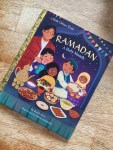
A Little Golden Book: Ramadan: A Holy Month by Malik Amin illustrated by Debby Rahmalia

Standard
A Little Golden Book: Ramadan: A Holy Month by Malik Amin illustrated by Debby Rahmalia

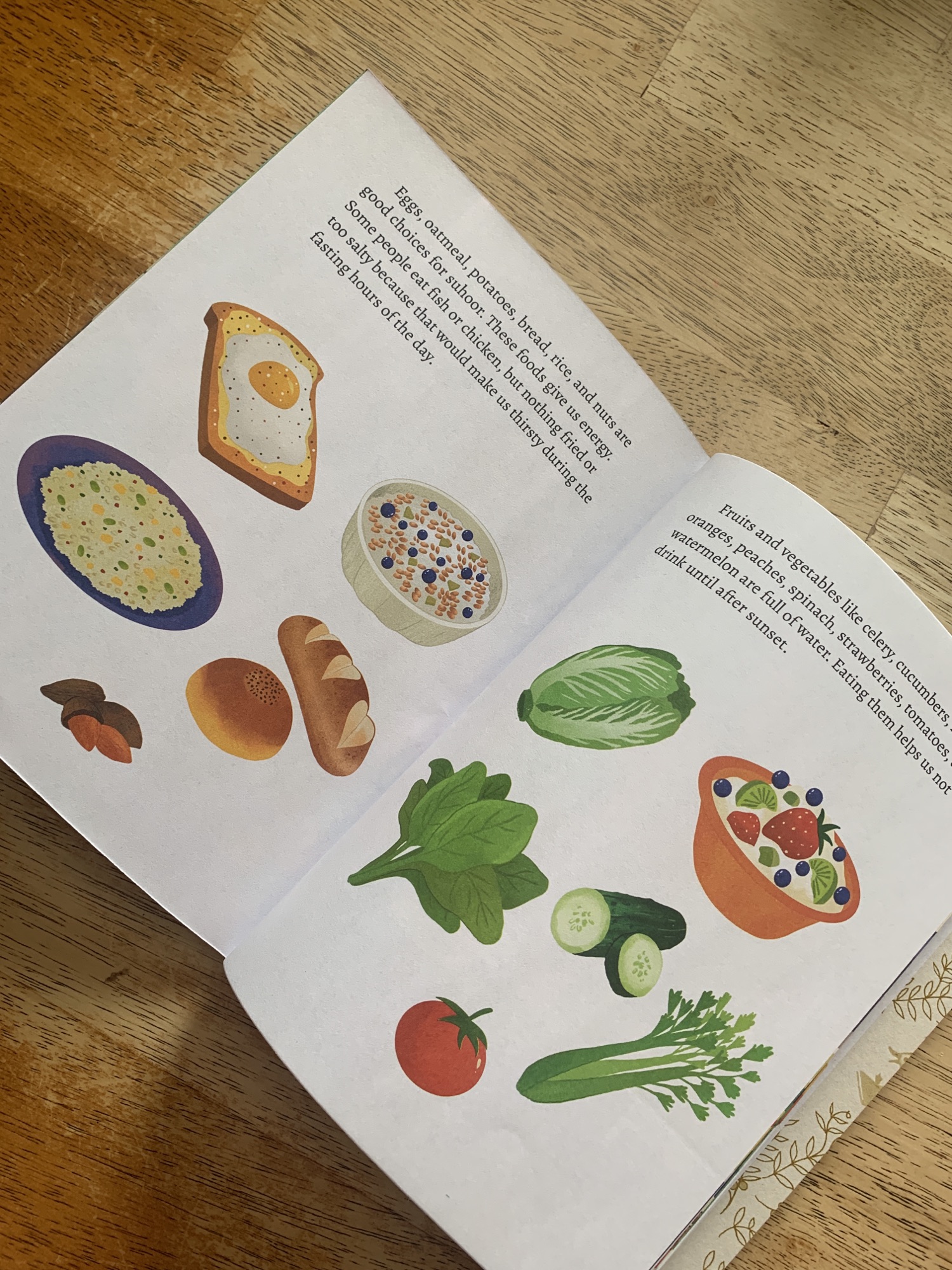
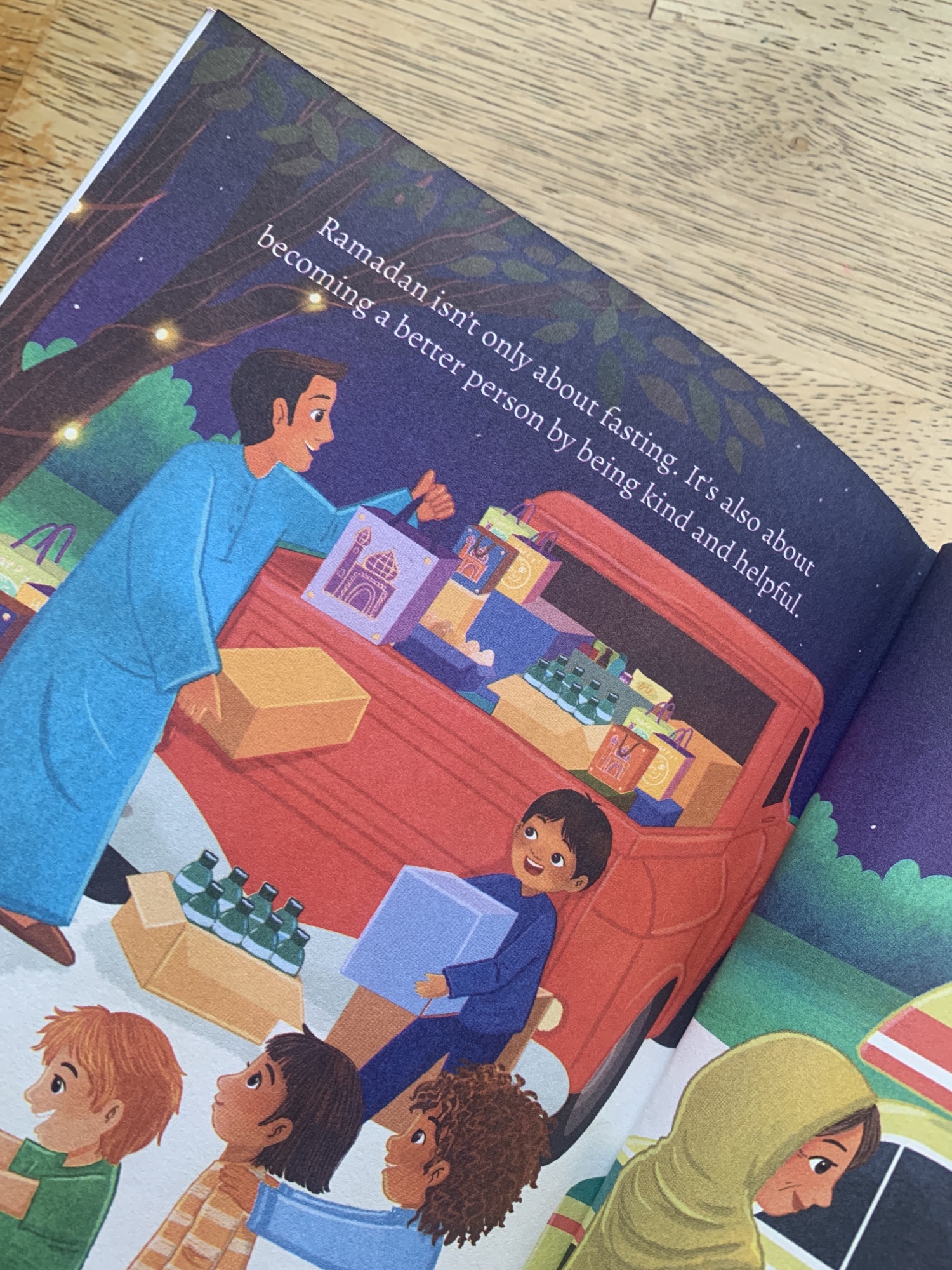
As a child I had a stack of Little Golden Books, my libraries always have a good part of a shelf with Little Golden Books, my own kids have a few dozen of them, but honestly I don’t know that I love any of them, aside from the Monster at the End of the Book.  They are a staple, they have spanned generations, but I always find them a bit abrupt, the text to small and dense, and the vocabulary a little too advanced. So, on the one hand I am thrilled that this timeless brand has a Ramadan title, but on the other hand, some of the food descriptions contain vocabulary a bit advanced for the recommended 2-5 year olds.  If you have been reading my 2024 Ramadan and Eid reviews, you will however be glad to know that this Ramadan book, does pack a lot of information into the pages, and when it asks why do Muslims fast? It says unequivocally “because it is written in the holy book called the Qur’an.” Suhoor is said to be before the sun even rises at one point, and then dawn at another, but then, however, it kind of equates dawn and sunrise, I’ll let it pass, cause it is a little vague with the equating, after saying when we eat clearly. My only real gripe are the food tangents, detailing not to eat fried and salty foods at suhoor, to they hyper specific “creamy curries, fresh soups, and rich stews. Fragrant rice dishes paired with grilled meat or kofta” at iftar.  Yeah it almost seems like the author wrote the book while fasting, with food heavily on his mind.   It does mention doing extra good deeds, more prayers, and it reads as an easy non fiction book.  It doesn’t try and interject the information into a fictionalized framing, it just tells about Ramadan.  It would be nice though, if it was sourced, but with the reasonable price point and accurate information, makes it a solid book to add to gifts and to share.

The story is told in the first person and opens with a family searching the sky for the moon. It then says in a single paragraph on a two page spread that “during Ramadan, Muslims eat and drink only when it is dark.”  It then asks why? Answering on the next spread with, “the Qur’an.”  It says that it is read in many different languages, which technically isn’t wrong, but I wish it would have said that it is written in Arabic. It continues to say that “the Qur’an tells us how to be Muslim.” To care for people, to pray. to fast, but that children and those that are sick aren’t required.

It then details foods to eat and foods to avoid for suhoor before returning to the more spiritual aspects and traditions of being kind and giving charity.  It explains Ramadan Mubarak and then finds its way back to foods, highlighting iftar drinks and foods.

Ramadan is a month, followed by Shawwal and then the celebration of Eid, making sure to note that on Eid we cook our favorite foods.

Overall, a lot of information clearly conveyed, with bright, fun, joyful illustrations.  The final page is a gloassary of words and phrases.  I purchased my copy here on Amazon.

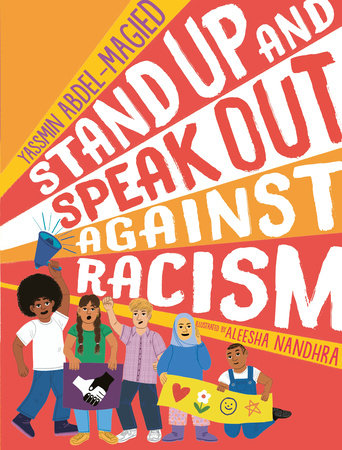
Stand Up and Speak Out Against Racism by Yassmin Abdel-Magied illustrated by Aleesha Nandhra 

Standard
Stand Up and Speak Out Against Racism by Yassmin Abdel-Magied illustrated by Aleesha Nandhra 

stand

The very first page of this practical Muslim authored, visible Muslim featured, how-to book draws you in with the author’s conversational tone and approach.  She presents life as being a mountain we all are born to climb and articulates that we are all given different tools to do so.  The book sets out to understand how race and racism affect the climb, how we can make it more fair, and uses questions from kids in the UK as the general organization of the 128 page book for middle grade readers and up.  As a Black Sudanese born, Australian raised, immigrant London woman who speaks Arabic, is Muslim, has authored five books, is an engineer and social justice advocate, she acknowledges privilege, and injects plenty of InshaAllahs, Alhumdulillahs, and global perspective to racism, its history, and what we can do to stand up and speak out about it.  I do wish the book was sourced, but the first person perspective, and her own intersectional identities, carry confidence and OWN voice power in making the world a better place for all.

SYNOPSIS:
The book starts with a section about how racism started, then moves into what racism looks like today and how it shows up and affects us all.  It then concludes with a focus on the action of standing up and speaking up.  The book spends time reassuring the reader that the contents might create strong emotions and to breathe acknowledge your feelings and find a safe way to express them. Chapter 6 discusses religions, even though the book is about race and says it does so because it is the same social construct of grouping a very diverse group together because of something “other” that they share.  It spends time on anti-Semitism, and Islamophobia.  The book doesn’t have to be read cover to cover, it can be read in sections, in any order, there is also a glossary and index at the back to find particular topics to look at.

WHY I LIKE IT:
As an American, I love that the book is global in focus and shows the effects of colonization and attitudes, and thus realities.  I also like that it takes time to discuss internalized racism, as well as interpersonal, institutionalized, and systemic.  Pointing out schools and how many of your teachers or principals look like you, really drives the points home.  I love that there is a whole page on hijab and truly that you see the author regularly bringing in Islam to the conversation which is great.  The action steps of what to do if you see racism, what to do if it is aimed at you, are well presented in metaphors that are easy for kids to see why the course of action suggested is doable, logical, and important.  It doesn’t shy away from acknowledging that pushing back on racism escalates the situation, and encourages individuals to be safe and do what they can. There are pull-out boxes, comic strip scenarios, bolded and bulleted text, and colorful engaging illustrations and infographics that connect with 9 year old and up readers independently or in small groups.

FLAGS:

The book discusses an emotional topic, but I don’t think there are any particular flags to be noted for 4th grade and up  There are important conversations to be had based on what is shared, but nothing is overly graphic or sensationalized.

TOOLS FOR LEADING THE DISCUSSION:

I think this book would be great to share with students regularly and often.  It should be on library and classroom shelves and should be used in small groups, large groups, and one-on-one.  The variety of methods that the information are conveyed make a useful tool when concerns arise, and a great reflective piece to encourage children to think deep, better themselves, and be aware at all times about the privilege and effects of their thoughts and actions.

Available for preorder on Kindle here https://amzn.to/3PH98u2

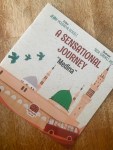
A Sensational Journey “Medina” by Jenny Molendyk Divleli illustrated by Seda Cubukbi Antli

Standard
A Sensational Journey “Medina” by Jenny Molendyk Divleli illustrated by Seda Cubukbi Antli

img_8808

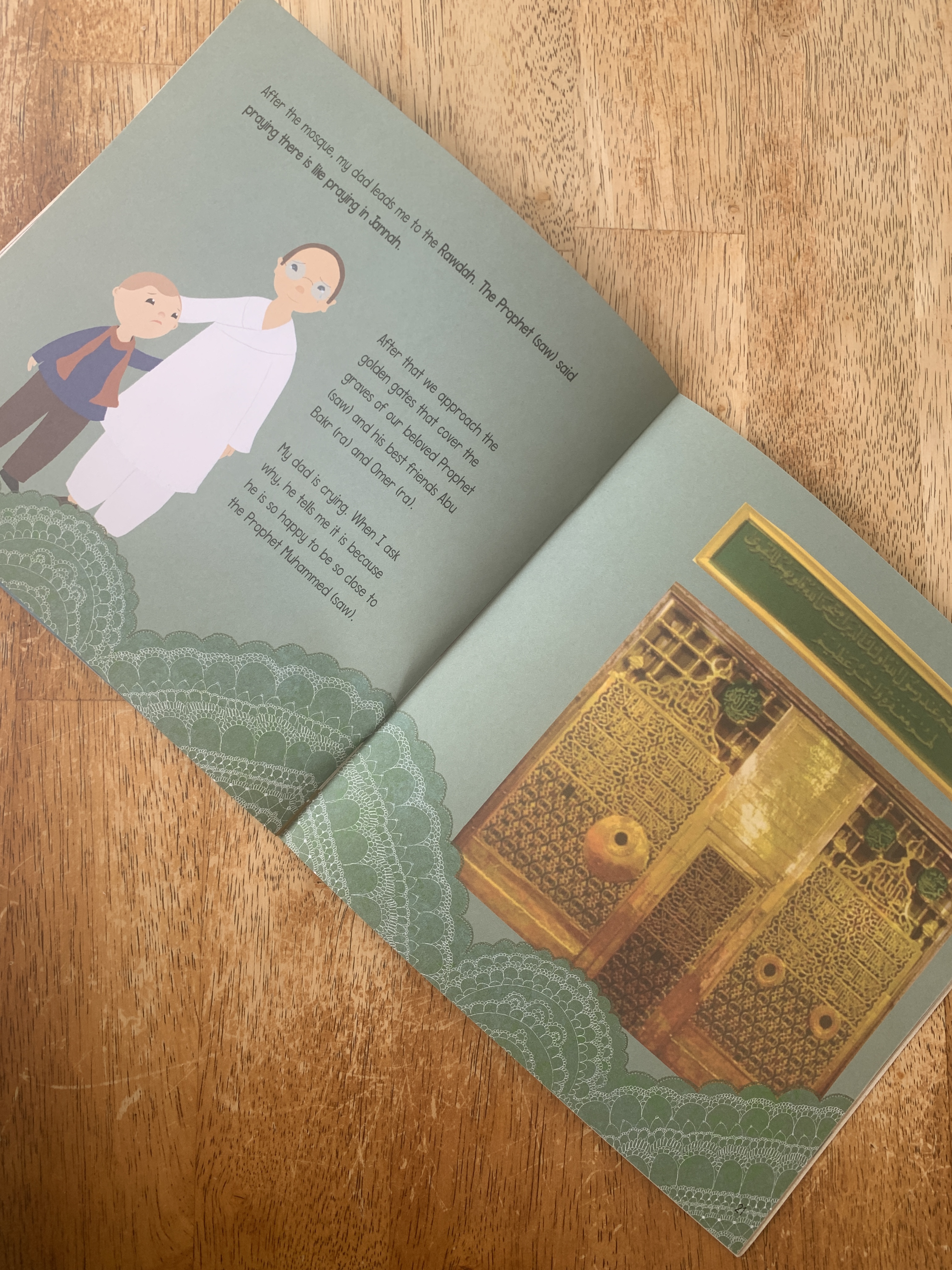
A journey to and through Medina with a focus on the five senses is a lovely concept for a book and the book is an enjoyable read for young children with the internal map, details about he Rawdah, the inclusion of Masjid Quba, Masjid al-Qiblatian, Mount Uhud, Archers Hill, and ajwa dates. The book is a little text heavy, as a decent amount of information is shared, but the illustrations are enjoyable and will help hold the attention of early elementary children.  The use of sight, smell, taste, feel and sound are woven into the story, they are not highlighted or the organizing format of the book.  Bonus material includes a QR code to listen to “Tala ‘al Badru ‘Alayna,” a glossary, and follow up activities.

The book starts with a little boy headed from Mecca to Medina, “the city of Prophet Muhammed’s (saw) mosque and grave, and a hope to find out why “everyone says Medina feels ‘special.'”  As he sees Bedouins in the desert he wonders what they eat and how they survive.  He then sees a gas station lit up like an amusement part.

img_8809

As they get closer to Medina they listen to “Tala’al Badru ‘Alayna.” When they arrive at the hotel they smell oud and fall asleep.  The next morning he wakes up to the sound of the athan and they walk the streets taking in the sights and smells. The color of the green dome is noted and the rose smell of the carpet when they make sujood included.  

The Rawdah and the umbrellas each get their own two page spread, and then a tour guide takes them to Masjid Quba, Masjid Al-Qiblatayn, and Mount Uhud. The tour finishes with a visit to the date orchards and playing and napping in the mosque.

img_8811

I wish it used the word Masjid every time, it uses both, and I’m not sure why it doesn’t just say Fajr instead of the morning prayer.  I appreciate framing it as a story, but the beginning with the Bedouins and the gas station seemed to slow the story down and my littles wanted answers as to why there were so many lights and how the people in the desert survived.  I also would have liked if the backmatter detailed more about Masjid al Quba and Qiblatayn, and Uhud, ultimately I wish there was more showing the little boy feeling why Medina is special and not just saying he now understands.  

 I’m not sure why I only ordered the Medina book and not the Mecca one as well, they are stand alone reads, but the Medina one references that that they have come after being in Mecca so consider if you are getting one to get both.  I ordered mine here. Use code ISL (Islamic School Librarian initials) at checkout to save 10%.

img_8810

A Cat Like Me! A Fun Hajj Tale by Emma Halim illustrated by Aissa Mutiara

Standard
A Cat Like Me! A Fun Hajj Tale by Emma Halim illustrated by Aissa Mutiara

img_8799

A rhyming cat centered book about hajj that has been checked by a Shaykh!  Over 46 pages, preschool aged children and up will be able to see the steps of hajj in a fun, engaging and accurate way.  This book is great for bedtime and small group story time and the reasonable price makes it perfect for sharing too.  The illustrations do not have faces with eyes, but the joy comes through and Bissa the cat makes sure you know how special hajj is.

img_8800

I love that the book identifies what type of hajj is going to be shown and thus signals that there are different ways.  I also love that the book is sourced and the Shaykh is named and qualifications listed.  For so long erroneous information in children’s books has gone unchecked and it really is such an important   verification for something critical in our faith to be sourced and checked. Plus it is reassuring for the reader to feel confident in sharing the information with others.

img_8802

The book radiates with excitement and information and the rhymes and illustrations keep kids engaged.  The book is 8.5 x 8.5 so it might not work in big groups.  I purchased mine from if you use code https://crescentmoonstore.com if you use my initials ISL (Islamic School Librarian) at checkout you will save 10% it is also available here on Amazon.

img_8803

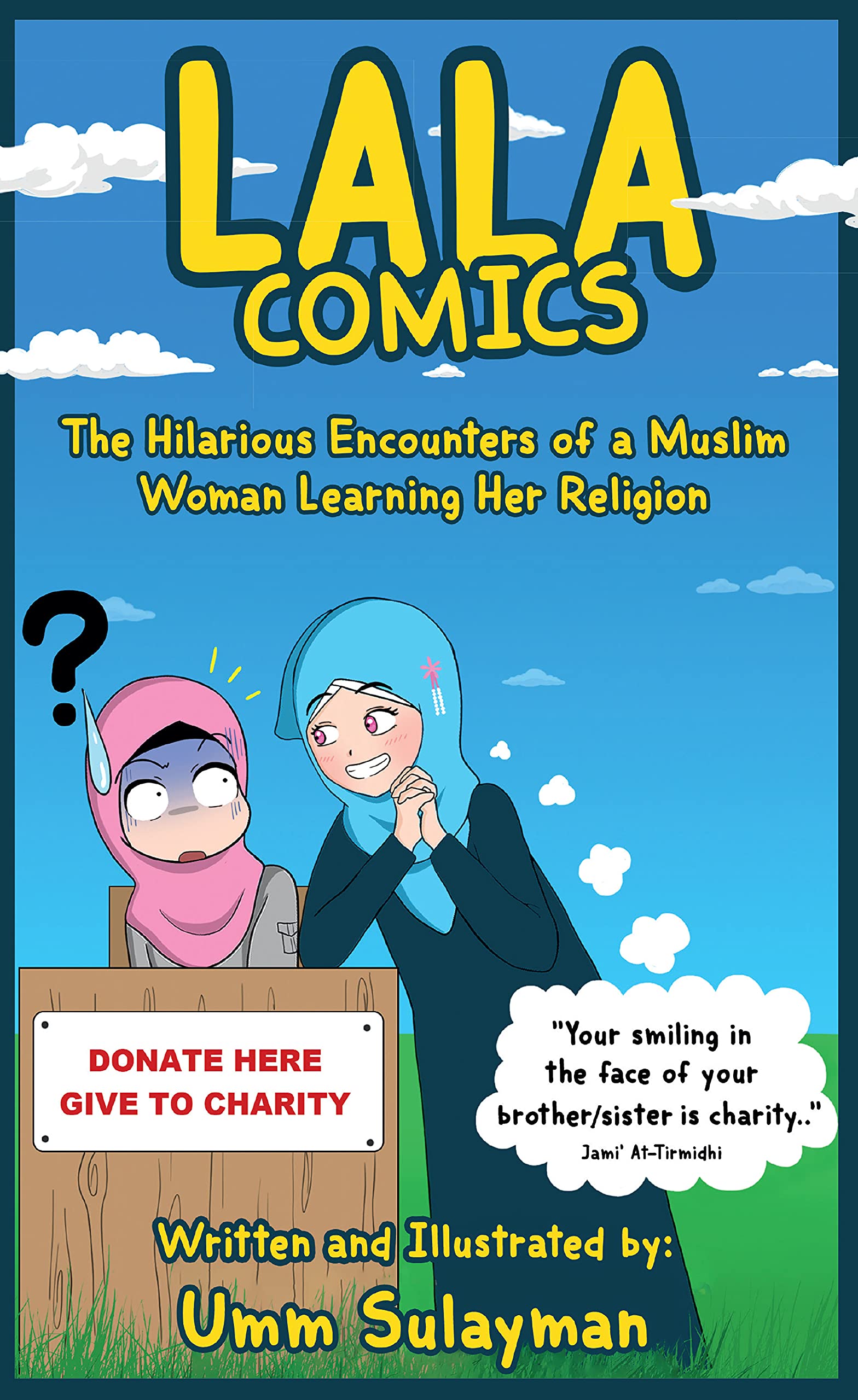
Lala Comics: The Hilarious encounters of a Muslim Woman Learning Her Religion by Umm Sulayman

Standard
Lala Comics: The Hilarious encounters of a Muslim Woman Learning Her Religion by Umm Sulayman

Lala

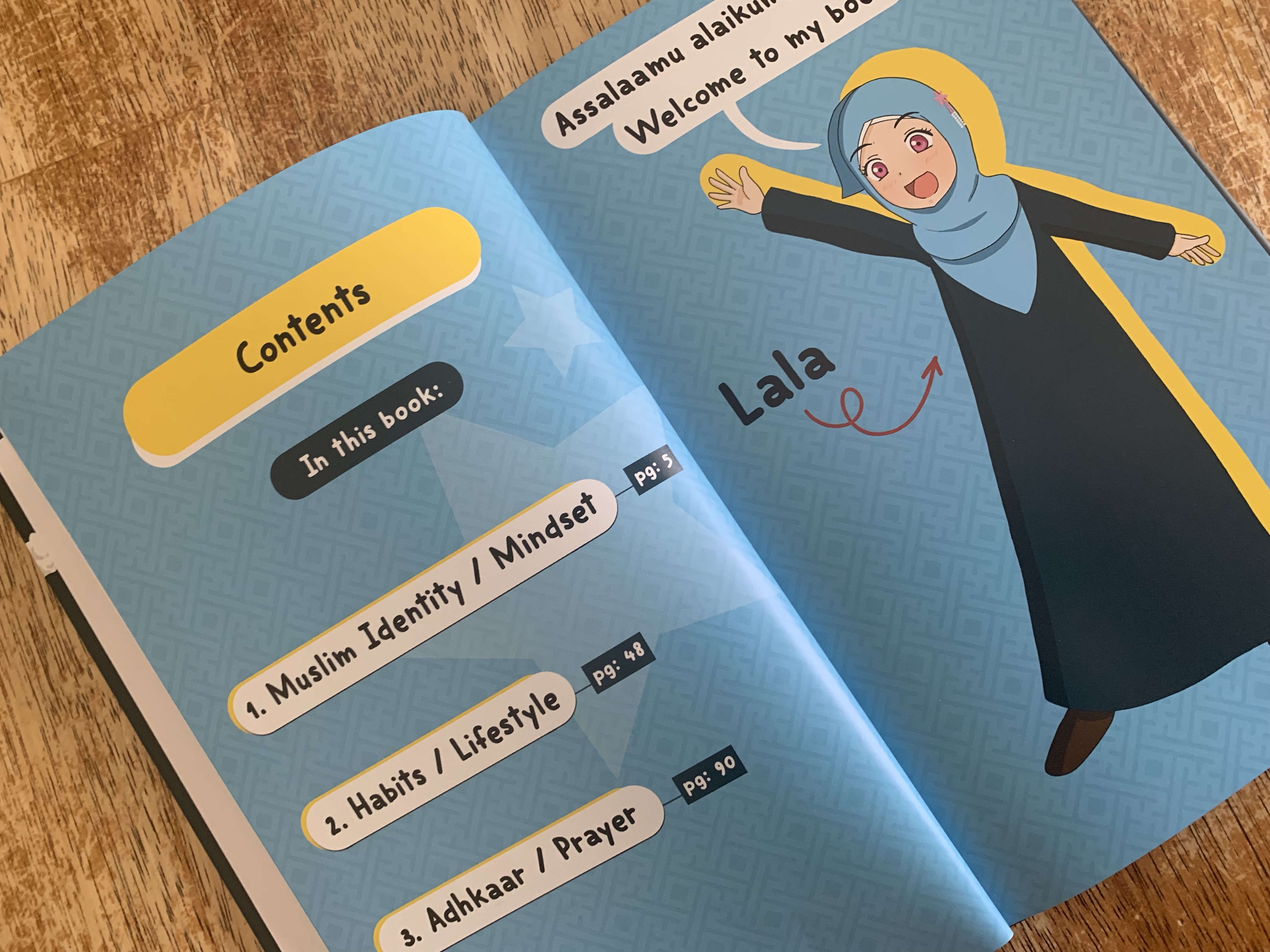
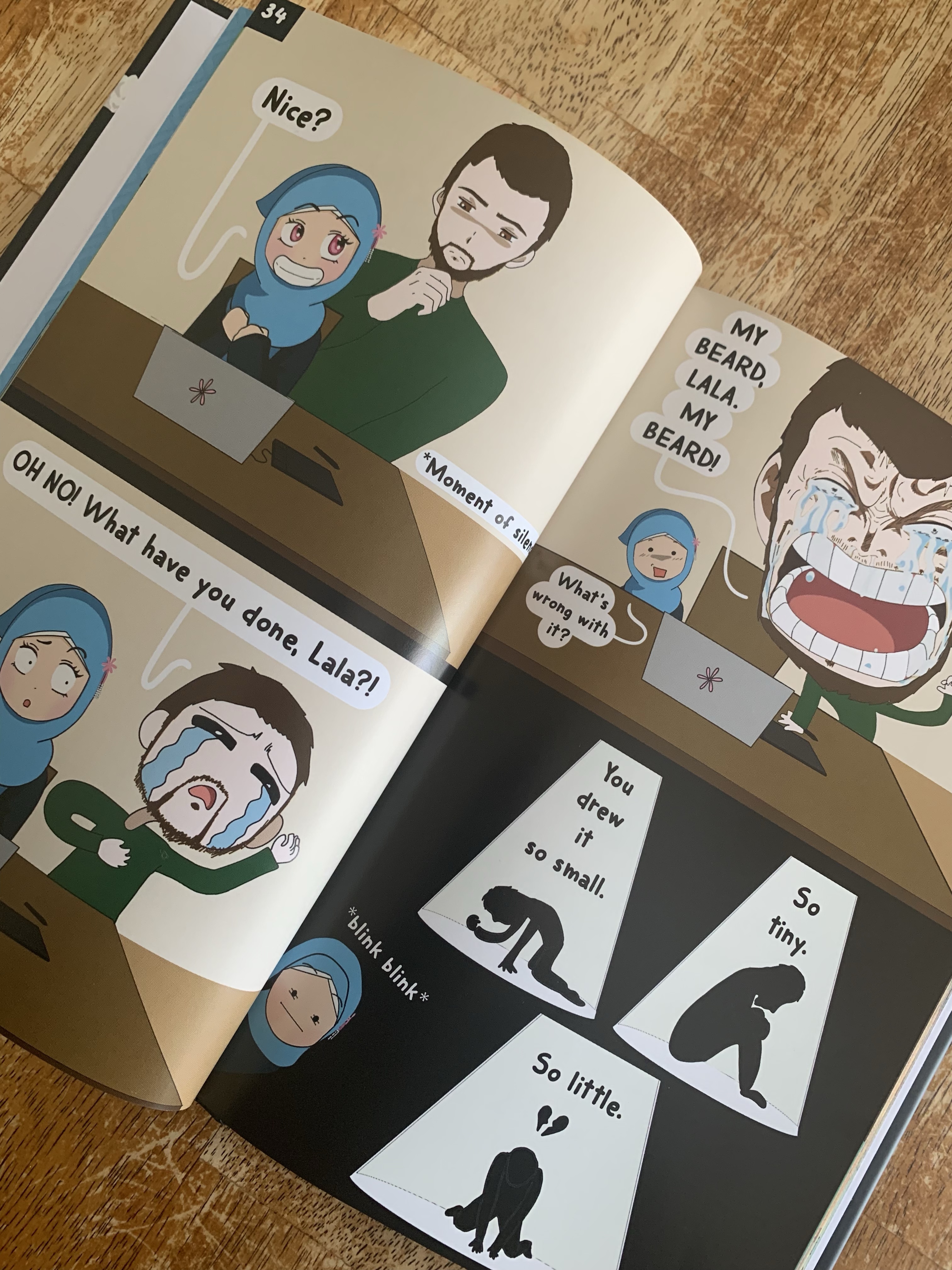
A mix of information and entertainment, this 124 page comic book is divided into thematic sections which further break down in to mini-episodes or comic strips that feature a situation, an Islamic advice often based on a Hadeeth or Quranic ayat that is noted, and a misinterpretation taken to a comical extreme. The book is a great way to remind ourselves and children, middle grades and up, aspects of our faith that we might know, or introduce us to specifics that we should know, by showing the concept in exaggerated action. Because the examples are relatable and come from everyday life, the humor is that much more enjoyable, and as a result makes the “lessons” that much more memorable.

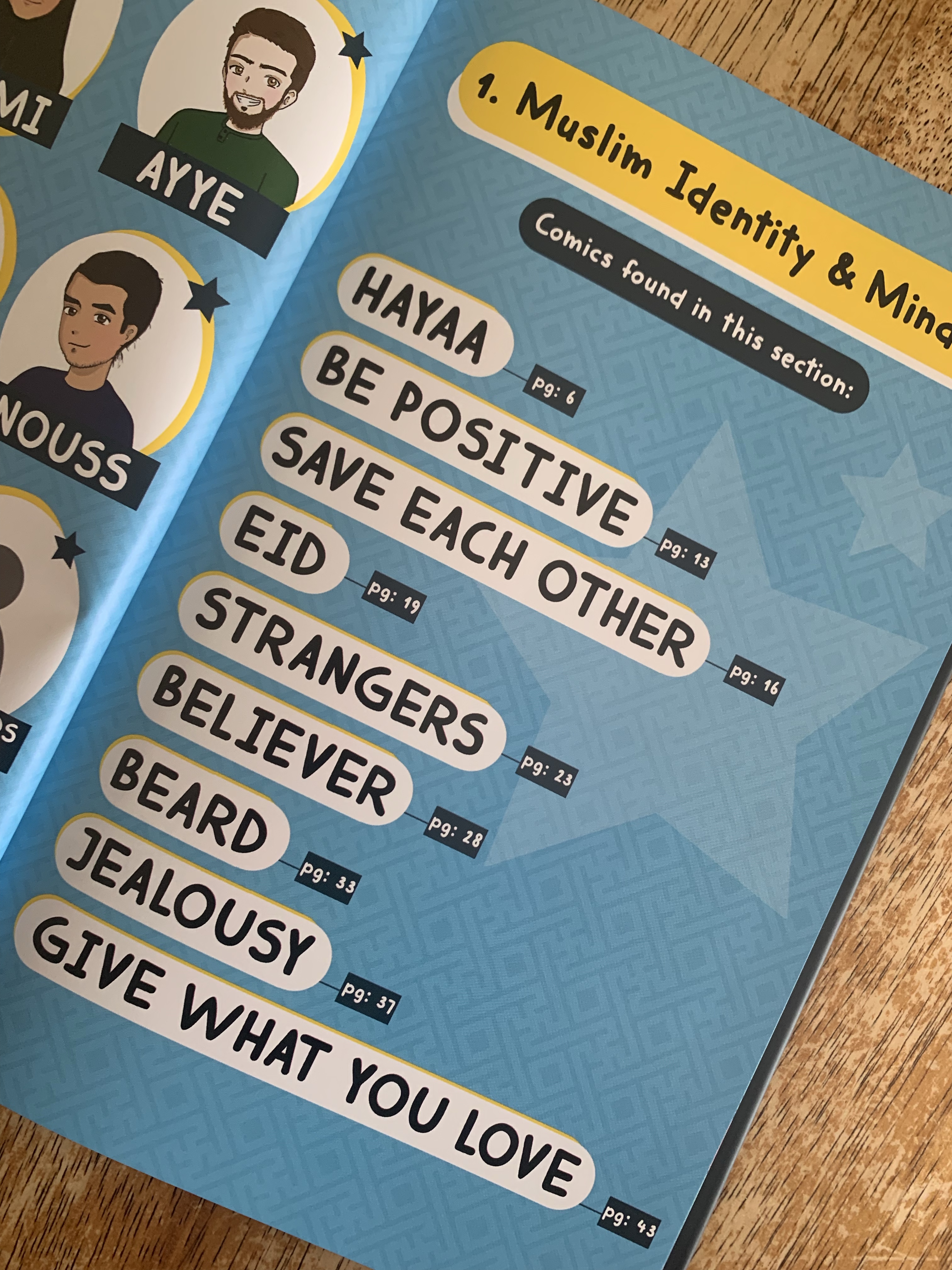
The three sections cover topics included in 1: Muslim Identity/Mindset, 2: Habits/Lifestyle, and 3: Adhkaar/Prayer, after an introduction of the characters, and the magic of the ‘Aalim Hat are explained, the stories begin. They are not sequential and can be read in any order, and are about four to 10 pages each. The book surprisingly does a good job of not getting overly predictable. Even though you know something is going to be taken incorrectly or to the extreme, it doesn’t drag on or get redundant. At times Ayye, is overly preachy, ok, all the time, but the persona is intentional and reads intentional, as his grounding of events is actually the point of the book.

The illustrations are clear and enjoyable. They are expressive and easy to follow. The glossy pages and full color print help keep the readers, especially the younger ones, tuned in to what the lesson is, and what silliness is ensuing. The hardbound 6 x 9 book is great to have around where it can be picked up and thumbed through. I read the entire thing in one setting, as did my 12 and 14 year old, and all of us have subsequently picked it up and flipped through it to muse over sections once again. A few of the pages seem to bleed into the binding and require some effort to see the cut off text, hopefully the book will have multiple reprints and this can be rectified. If you don’t follow the author on Instagram you should @LalaArtwork.

It is important to note that I am not a scholar, or anywhere remotely qualified to opine on the authenticity or interpretation of the points given in the book. The hadeeth are sourced, stating if it is a Saheeh hadith or found in Bukhari or Muslim for example or who narrated it. And ayats from the Quran tell the surah and verse. They are sourced when stated, there is not a bibliography at the end.

Potential concerns in the book: it does show a Muslim celebrating halloween and birthdays in a comic about Eid. In an episode about being strangers in this duniya, it mentions drinking and clubbing and nudity, boyfriends, etc. as things to avoid in this world. There is hyperbole and revenge, and bad judgement, but it is all in fun to make clear Islamic points and I think children nine and up will have no trouble understanding what is real and what is exaggerated, inshaAllah.

Escape from Syria by Samya Kullab, Jackie Roche, and Mike Freiheit

Standard
Escape from Syria by Samya Kullab, Jackie Roche, and Mike Freiheit

9781770859821.jpg

I have read a fair amount of fictionalized accounts of the war in Syria, the journey of refugees, and their resettling in various countries, but this was the first graphic novel on the subject that I have seen, and I was excited to wait my turn behind my kids to read it.  My 7th and 4th graders read it in about 20 minutes and said they really liked it, knowing that it was a quick read, I wanted to take it in slowly and examine each picture to grasp the full message that the author, a Lebanese journalist, was conveying.  Definitely meant, for ages 5th grade and up because of the content, I appreciated the book more than I loved it.  It seemed rather choppy and the fictionalized parts come across just as a front to convey facts.  The book definitely is a great introduction to the conflict, and the format will appeal to a broad range of individuals.  

SYNOPSIS:

Told from the voice of Amina, a bright young girl who rushes home to show off her latest A grade paper to her family, is met instead by a bomb striking the beautiful peaceful neighborhood.  The images on the first page are destroyed as her younger brother Youssef must be located in the rubble and debris.  Now in Canada, Amina tells the story of their journey from Aleppo.  The bouncing around of time, provides some context to how life became under the rule of Bashar al-Assad, how checkpoints and emergency rule changed everything about Amina’s life.  As war creeps in it isn’t just inconveniences and fear, but also death, as further shown through Amina’s uncle who has joined the rebel army.  The family decides they need to flee to Lebanon and truly believe it will be just for a little while. 

IMG_2082

They rent an apartment for a year, but when they cannot afford rent they relocate to a refugee camp, where they stay for two years.  Amina’s father is determined that Amina stays in school but as work remains scarce and Youssef’s health continues to deteriorate.  Amina is forced to take a break from school to try and find work.  Eventually her father arranges to go by raft to Europe to try and start a new life and bring his family there once he is settled.  The terms of the loan to pay the smugglers is steep and when the raft doesn’t make it too far before tossing its passengers, Amina’s father Walid is forced to return to Lebanon unsuccessful. 

It isn’t until Amina’s family considers, like many other families in the camp, to get her married to keep her safe.  That Amina upon picking up some aid at a UN reception center, spills everything to a worker there, and a week later the UNHCR contacts the family to help move them to Canada.  The readers at this point I would assume are relieved the family will be safe, and are surprised when the family isn’t sure if they want to leave.  Syria is there home, and before the mom will agree to anything, she wants to go back to Syria to see her newborn niece.  Once in Syria, she sees that her home is no more as she remembered it, and agrees to be resettled anywhere.  Through the same flashbacks and flash-forwards in time, we also see that life in Canada is not easy.  The family is welcomed and helped and grateful, but it isn’t yet home, and the ghosts of Syria are still present.

WHY I LIKE IT:

I kind of like how choppy it is upon further reflection.  At first it annoyed me, but as I thought about it more and more, I have decided I like that it isn’t easy and smooth and fleshed out, the tone of the unknown comes through by not over narrating the emotions and circumstances.  I also like that everything that happens to Amina and her family is anchored in reality and the footnotes, references, and facts are all in the Endnotes.  Having said that, I wish their was a little more character development, it reads like a bunch of facts strung together and connected by this fictional family.  There isn’t anything wrong with it, but a little more warmth for the characters would have added a beautiful level and would not have been hard to come by at all.  There are so many stories from this conflict out there, and the reason they resonate with so many isn’t from all the facts and numbers, but often from the individuals that make the numbers real and haunting.  I felt like this book fell short on the human element unfortunately.  The only character I really felt had some heart, was the dad, he was awesome, and his love for his family and determination for his daughter’s education was definitely felt.

The book does drop some acronyms and political alliances to add context but not overwhelm the reader.  It definitely hints that there are a lot of groups vying for power, and control: Assad, Russia, ISIS, US, rebels.

IMG_2084

I love that the flashbacks to pre-war Syria are so relatable.  Kids need to really understand that we are all so much more alike than different.  Not just in our hopes and dreams, but even in our daily lives.  The characters in the book are the same as us, their lives look great,  maybe even better.  They have friends, and families and jobs, and cell phones, they also unfortunately, have war.

There were a few surprises for me, for example that buses between Lebanon and ISIS held Syria took/take people back and forth.  Similarly,  I was surprised to see that the punishment of smuggling cigarettes was being beheaded, but maybe more surprised that the book included it.
IMG_2083

It is reassuring for readers to know that the family survives, but the harrowing journey of seeing body bags, cutting costs to survive, risking it all to trust smugglers with fake life jackets, paint pictures of a journey that will stay with the reader.  The book doesn’t talk down to anyone, if something seems too simplistic, it almost encourages the reader to go research more about it.  

There isn’t any mention of Islam or religion, the females wear hijab, that is the only indication along with their names that they are a Muslim family.

FLAGS:

The violence, is pretty haunting and while the images and text aren’t graphic, the splatter of blood and guns and death are very present.  There is also mention of cigarettes.  While not explicit and possibly over the heads of some readers, the book does show that the loan sharks would be willing to take Amina, “Something nice and sweet…like you,” to help pay off the family’s debts.  A former classmate of Amina also invites the family to her wedding.  At 13 Amina’s family is also considering getting her married as a way to help keep her safe.  

IMG_2085

TOOLS FOR LEADING THE DISCUSSION:

This book would be better in Social Studies class more than in a Language Arts one. It would be a great supplement to share even, when discussing current events.  Its a quick read, a factual account and a powerful one at that.  

Book Trailer: https://www.youtube.com/watch?v=AsZZwxM7YyQ

Publisher’s Synopsis: https://www.fireflybooks.com/index.php/catalogue/product/11566-escape-from-syria