Category Archives: YA FICTION

Rebel of Fire and Flight by Aneesa Marufu

Standard
Rebel of Fire and Flight by Aneesa Marufu

rebel

I struggled with this 384 page young adult fantasy.  It skirts and plays with Islamic doctrine as the characters and plot points dance with fantasy and fiction; and because I never felt that the author was completely in control of the story and where it was going, I could never relax and be swept away.  The author identifies as Muslim and in the backmatter addresses how experiences with Islamophobia influenced her writing, yet I don’t know why jinn and hijab were in the book when fictionalized creatures and cultural dress would have sufficed.  Clearly the character on the cover is in hijab, the names of half the characters are Muslamic, the culture is very desi, the broad concepts of jinn, the ghaib, sihr, Prophet Sulaiman, call to prayer, are all Islamically rooted, but characters go to worship at temples, jinn and jinniya eat corpses and are described so often as looking like smoke.  There is no clear identifier that these characters are in fact Muslim, it is simply hinted at, which makes the fictional parts seem like extensions of religious doctrine and ultimately made me uncomfortable with much of the story.  It also makes me think readers will not know where the lines are, if my brain was muddled, I can’t imagine a  young teen reading it and keeping it clear.  There is a few rushed romantic scenes of kissing, there is a trans character who’s gender identity and born gender is a significant plot line in the story, and there is a lot of oppression, racism, death, abuse, misogyny and fear.  It is a dark read that metaphorically takes real societal concepts and sets them in shades of gray with the added use of fantasy. There are a lot of layers in the story, and while it wasn’t poorly written, there were definitely places it needed to be better.  I really didn’t like any of the characters, I didn’t understand their motives, their relationships, their drives, the commentary on occupiers and rebels was weak as was the push back on misogyny after the first few chapters.  I didn’t feel a love of hot air balloons or feel that the battle scenes accounted for many of the characters that would suddenly be missing from the scenes.  I think the dual perspectives kept the intensity of the climaxes at bay and halted the rising action.  Too many misses for me to recommend this standalone book, but if you’ve read it and can talk me through it, I’m willing to listen.

SYNOPSIS:

In a land where girls are running out of time to be arranged in marriage at 17 and transportation is done in hot air balloons, there are two groups of citizens: the darker Ghadaean’s are the rulers and the lighter skinned hāri are oppressed.  The book establishes this power dynamic early on in a quick synopsis: the hāri came from the Himala mountain range to trade to Ghadaea, but their greed and lust for power drove them to try and seize the land.  They failed, and now 90 years later the hāri are punished for the mistakes of their grandfathers (4%).  Both groups fear sihr and jinn.  Everyone is vegetarian because jinn are attracted to rotting corpses, animal and human, and thus anything dead is quickly burned.  When a radical hāri group, the Hāreef, is formed with a new leader, sihr and jinn are no longer enemies but tools to rebel against the racist oppression, and assist in the war to change the balance of power.  

Khadija is 16 and with her mother and younger brother deceased at the hands of some hāri, her older sister married and off in a balloon, her father is desperate to get her married.  Most females are not allowed to read, nor are they even allowed out of the house alone.  The fear of the jinn is weaponized to keep them in, and misogyny prevents from proving themselves.  While out meeting with a suitor, Khadija in a burst of desperation leaves her father and jumps in to an escaping balloon.  Khadija does not know how to fly a balloon, having never even ridden in one, but when it lands in different town she meets Jacob.

Jacob is hāri and the second of the dual perspectives telling the story, he is orphaned and is unique in that he is an apprentice of a glass blowing Ghadaean.  He meets Khadija and offers her food, and in the span of a few hours she saves him and he saves her and both seem to have a dead glass blower on their hands.  Add this to his growing rift with his best friend William, who has joined the Hāreef, and is now dead, and you have Khadija and Jacob escaping in a balloon, not trusting each other nor knowing who and what they support.

From here on the two’s friendship and motives wax and wane as they are drawn in to battle together, and against each other.  Neither are “good” or “bad” nor are their decisions always clear, but they will be forced none-the-less to figure out what they want and what they stand for as peri’s are tortured, nawab’s are killed, jinnya queens are called upon, wishes are granted and a group of hāri and Ghadeans known as the Wazeem offer a unified collective.  Unfortunately, change and power never come easy and when a dead son is brought back as an ifrit and an ancient princess in the jinn world is ready to battle, all the shades of gray that exist in politics, revolution, rebellions, families, hate, racism, gender identities, and control all come spilling out from balloon baskets and the ghaib. 

WHY I LIKE IT:

I honestly kept reading to see how the author was going to bring it to a conclusion and wrap up all the loose threads.  And while the book lagged at times, she definitely got it concluded.  Aside from the religious signaling, but never owning identity problems, I struggled with the writing too.  The hāri Jacob doesn’t read like a little brother, he and Khadija read the same age, and so his importance in the Hāreef seems an ill fit.  Plus he is very duplicitous and I get that that is part of the story, but I never liked him so it just got annoying how many second, third, fourth chances he got, and I mean, why would anyone care? 

Khadija seems like she is going to battle misogyny early on, I hate that marriage and arranged marriage is equated to oppression, but the not being allowed out and not being educated seems to fizzle in the middle and then come out a bit in the final scene.  I hoped it would have been commented on in every new city they arrived at.  The set up was there, but because it wasn’t, it made it seem more of a shortsightedness of her own father, and not a larger problem when strong women existed elsewhere.  This also reinforced a “brown Muslim” man stereotype that is never pushed back on.  

The racism, power struggle oppression is more consistent, but with the foundation that the hāri came and tried to take over nearly  90 years ago makes it hard to feel too bad for them.  They tried to occupy and now are enslaved.  Neither is ideal, but why didn’t they just go back? We aren’t talking more than one generation, it is the “crimes of their grandfathers,” they had a home, they were kicked out, they should leave.  Yes, I know they are human and racism is wrong, my point is a literary one, that the foundation should have been stronger, more detailed.

The love interest I also felt was lacking, Darian comes out of nowhere, they are in love, he gives her his heart so he is saved, I didn’t feel the tension, I didn’t get it, not at all.  It was forced and cheesy and I just know he kept getting hurt, they would kiss, and then he was back to getting hurt or possessed or something, had no personality what so ever.

The seal of Prophet Sulaiman and the hundreds of pieces of it didn’t sit right with me, nor the jinns being smoky and eating corpses.  I truly don’t understand why very real Islamic concepts were brought in and twisted.  Why not just create your own characters and say they were loosely inspired.  I felt like the religious rep and OWN voice kept one foot in the religious inspired world and one in the fantasy is fiction so I can do what I want, and it didn’t work for me.  I think it crossed in to being disrespectful, and had the author not identified herself as Muslim, I would have been furious as the book reads like an outsider who doesn’t get that jinn are real, Prophet Sulaiman was real, sihr is real, the ghaib is real.  It really needed some some clarification on where the story existed and where the religion or religious inspiration started and stopped.

The trans character is worth highlighting because it does touch into Islamic rulings regarding hijab, even though we don’t know if Anam or any of the characters are Muslim. Anam is born a male, but leaves her family of exorcists and is a leader of the Wazeem as a female. She presents as a female, but when she enters a room where numerous Wazeem women are changing many hide, draw their hijabs, make horrified gestures etc., it has to be explained to Khadija why this is.  It does not bother Khadija. Story wise it is a critical point because the Jinniya Queen Mardzma is the queen of female warriors and it is unknown if Anam would be seen as female or male. When Anam went from being an exorcist to the greatest human warrior present is beyond me, but there was a lot of assumptions you had to accept while reading.

FLAGS:

Death, erroneous religious rep, kissing, murder, killing, lying, torturing, threat of sexual assault, murder, coming back from the dead, oppression, racism, trans, misogyny, abuse, hetero relationships, stealing.

TOOLS FOR LEADING THE DISCUSSION:

I would not shelve this book in an Islamic school library or classroom, nor would I use it as a book club selection.  Although if my local public library or some adult Muslims read it and were planning to discuss, I would join to hear their thoughts about it.  I would not be able to lead, but I would enjoy picking it apart with others.

The book releases shortly, just because it didn’t work for me, if you think it sounds like something you would like, you can preorder and purchase it HERE.

Spice Road by Maiya Ibrahim

Standard
Spice Road by Maiya Ibrahim

spice

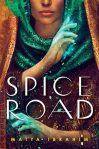
I have no idea if the author identifies as Muslim. I saw the 2023 YA book described as a Middle Eastern fantasy, characters with Arabic names,  djinn representation and possibly a hijab wearing protagonist on the cover, so I requested an advanced reader’s copy, squealed with delight when I got approved, and happily fell into the 464 page world of The Sahir and Kingdom of Alqibah.  Their is no Islam in the book, it is not a hijab, but I’m sharing it here, not just to let readers know it isn’t Islamic rep, but to let them know that for the genre it is pretty clean, and the story is an engaging easy read.  At times Imani is whiney and annoying, but she has a developed arc, and the book has a few slow patches, but nothing that lasted long enough to tempt me to give up on it.  I think 14 year olds and up can handle the three brief kisses, the sexual assault that is thwarted, the lusting glances, the killing, the potential addiction, and the commentary on colonizers and oppressors.  It is the first book in a series, so this review is only for this book and not an evaluation of the rest of the books that perhaps are not even written yet.

SYNOPSIS:

In Qalia, the Shields protect their community from monsters with the Spice entrusted to them, misra, that magically empowers affinities in them.  The top Shield, Imani, has an affinity for iron, and with the support of her powerful clan she exists in a world of privilege and opportunity.  When her powerful brother, Atheer, is assumed dead after stealing misra and suffering from magical obsession, the family’s reputation is not as pristine as it once was.  Imani’s younger sister, Amira, is also keeping secrets as she is caught stealing, skipping school, and refusing to follow family orders and country laws.  When the two girls find themselves following Atheer’s horse into the forbidden waste, they learn that their brother might not be dead and that there is more to their world than they ever were allowed to know.  With desperation to learn more about her brother’s location clouding her judgement, the Djinni Slayer, Imani, bonds with Qayn, a djinni who claims to not only know Atheer, but to have been his close friend.  Imani scrambles to know what to do, and seeks out answers and permission from Council, that results in her and three other’s heading off on a rescue mission to the Kingdom of Alqibah.  Everyone’s orders, however, are not the same, and first they must survive the desert, the monsters, and each other if they are to find Atheer.

WHY I LIKE IT:

I love  that the world building is not at the expense of character development.  The single linear story line does mean that at times side characters are seemingly forgotten, but the focus of the world through Imani’s eyes allows the gaps to be overlooked as her concerns and priorities take center stage.  I love the emphasis on family, it is sibling love that is motivating the protagonist and closeness to an aunt that allows for privilege and opportunity. The romantic threads and tangents never overshadow the familial importance- it isn’t a forced obligation it is very warm and it is nice to see and feel the truth in the characters approach to family.  I love the Arabic names, foods, and while my electronic version did not have a map, the author has one on her Instagram page that suggests the physical book will have a map.

I love that the book discusses colonizers and oppressors.  It may be fiction and fantasy, but there are some very real themes included in fleshed out way that would allow for a lot of deeper discussion and connections to be made. The book is well polished, I don’t know that it reads like a debut, which is always a good thing I suppose.  At times Imani is really unlikeable, but fortunately it doesn’t last too long, same goes for Amira and her bouts of childishness juxtaposed with her glimpses of maturity. Taha, is noted to be very different depending on the company he keeps, so while frustrating- it seems to be intentional. The only real hiccup I felt in the book was understanding how at times the language differences were such an obstacle and how at other times Imani could read the graffiti and be understood.

FLAGS:

Magic, romance, lust, kisses, flirting, attempted sexual assault, lying, killing, addiction, alcohol, drinking, murder, abuse, physical abuse, bullying, oppression, colonizing.

TOOLS FOR LEADING THE DISCUSSION:

I don’t know that I would pick this as a book club read, but I would definitely shelve it in a class, school, or home library.  I think it is a fun read for teens and up and I look forward to the rest of the series.  The book releases in January 2023 and as always presales are the biggest way to show support to authors and titles.  You can find the book here.


The Love Match by Priyanka Taslim

Standard
The Love Match by Priyanka Taslim

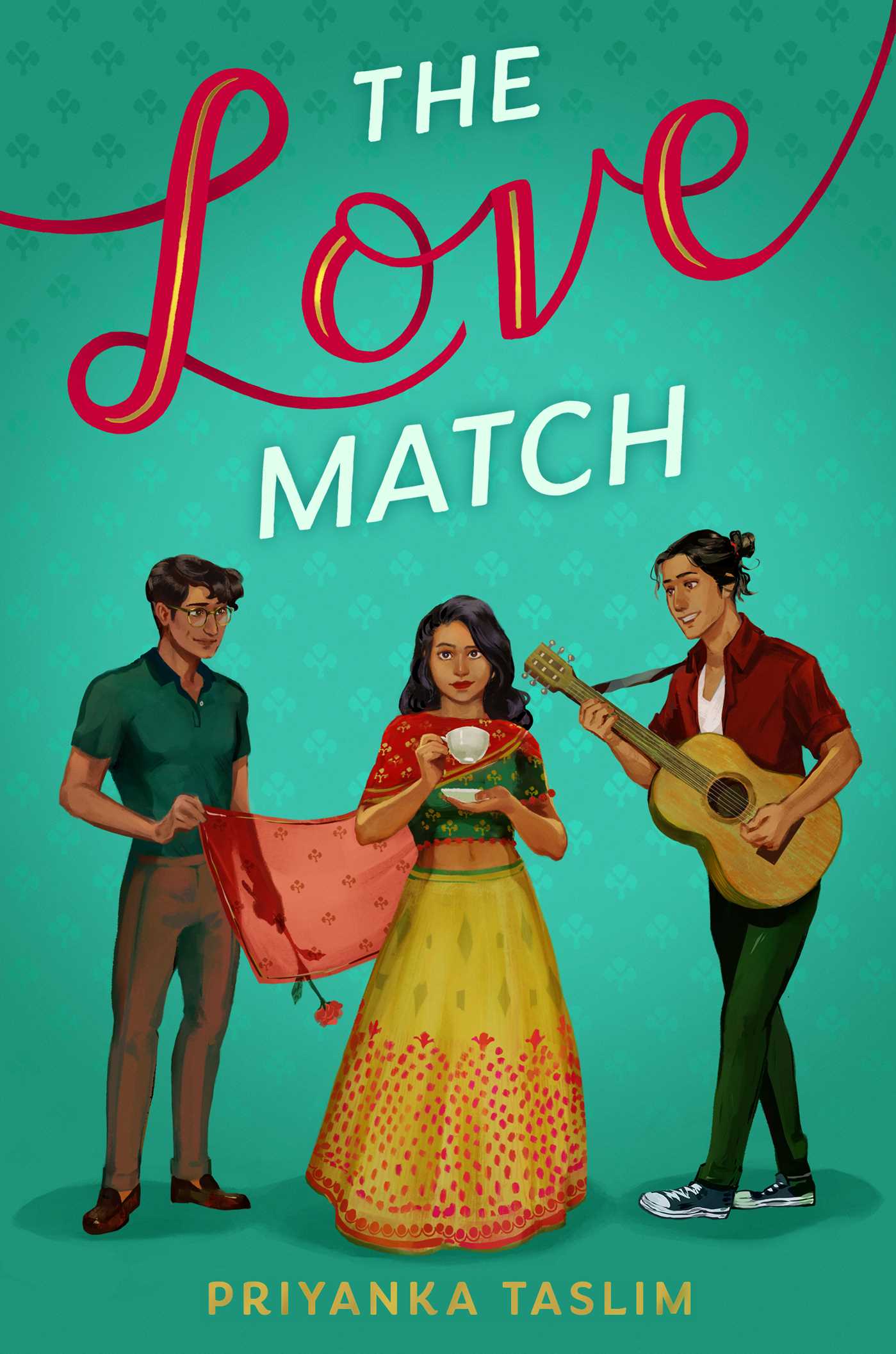
This new YA book features Muslim characters, but is not a religious conscious read that fits in the halal category.  There is a lot of Islam: waking up for fajr, celebrating Eid, a hijabi, mention of jummah, but the OWN voice rom com sets boundaries based on Bangladeshi culture and American perspectives.  The book does not other, or have internalized Islamophobia, or fall in to tropes of oppression and rebelling- quite the contrary- it normalizes everything: LGBTQ+ relationships, dating, music, etc.  The book is well written from a literary perspective: easy read, fleshed out characters, resolved plot lines, I wish there would have been more slow burn and heightened emotion, and cathartic release, but it happily held my attention for 388 pages, so I can’t really complain about plot holes or development.  The problem I have as an Islamic School Librarian is the non issue dating and romance is for the characters with their parents knowledge, both lesbian and heterosexual.  The book doesn’t get graphic, in fact there is only a handful of kisses, but there is a lot of hand holding and pdas in front of parents and even a sleepover with a lesbian couple in a Muslim family’s home, again, nothing “racy” occurs, but the normalization is worth noting for those thinking a Salaam Reads book is going to be a more Islamically centered publication.

SYNOPSIS:

Zahra Khan has graduated high school, and while she’d love to be heading to Columbia to study writing with her best friends, she is stuck deferring her admission and scholarships, and hiding her dream to be an author.  Two years earlier her father has passed away and Zahra works in a tea shop to help keep a roof over the heads of her mother, grandmother, and siblings.  In the Bangladeshi community in Patterson, New Jersey Zahra’s mom imagines arranging a marriage to a wealthy family for Zahra to ease their financial stresses.  When a potential match comes a possible reality, Zahra takes control to try and keep the peace and keep her dreams within reach.  In Jane Austin-y feels, a love triangle emerges, friends step up, culture and family touchstones shared and appreciated, and decisions about the future will have to be figured out at 18 years old.

WHY I LIKE IT:

I loved how easy a read the book is, the cultural framing was warm and rich and never overly explained or apologized for.  It is what it is, it is who the characters are, and while at times they push back on the negatives, it doesn’t disregard the love that exists at the core.  Unfortunately, I really struggled though with the ease in which the characters date with their parents’ knowledge, hold hands, cuddle.  I really couldn’t imagine a practicing Muslim family being so supportive of a lesbian daughter in the way that the Tahir family is and allowing a sleepover, nor could I see a hafiz attending musical concerts and Bollywood movies or an imam passing on “love” notes, even side comments about a loan between mother and daughter being paid back with interest felt off.  I know I know, there are lots of shades of Muslims, but the normalcy of haram I feel in a review of this book should be noted. It isn’t side mentions, they are central to the story and large portions of the book.  The reason I also feel they are worthy of note, is because the book includes a lot of Islam as well.  The characters pray and fast and eat halal.  They are conscious of chaperones in some settings and keeping things appropriate.  There is no doubt that the characters are Muslim, but I think intentionally, to avoid perhaps critiques such as mine, Islam is not used as a reason to do or not do anything, Islam is not used in the thought process or conscience of the characters, culture is.  There is no haram police setting boundaries, it just isn’t what “good Deshi girls do.” To be fair, I don’t think the author has ever claimed that this is a halal love story, or that the characters are exploring their Muslim identities, it is a love story that features Muslims is all.

FLAGS:

Straight and sapphic relationships, secret relationships, kissing, hand holding, hugging, lying, music, loss, bullying, interest.

TOOLS FOR LEADING THE DISCUSSION:

I would not be able to use this book, it would be very damaging to be given to a Muslim child from a Muslim teacher in an Islamic school.  It normalizes a lot of haram in a familiar Islamic framing that I think would really confuse YA readers who see themselves and see no push back or consequences for actions they know to be against Islamic ideology.

House of Yesterday by Deeba Zargarpur

Standard
House of Yesterday by Deeba Zargarpur

house of yesterday

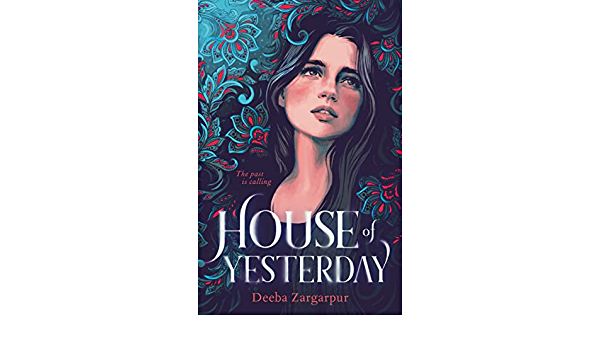
While reading this 320 page YA supernatural/contemporary book-I couldn’t turn the pages fast enough.  When finished- I was bothered that certain threads weren’t resolved, now that I’ve ruminated a bit- I think the vagueness of the author’s prose in sharing her “fever dream” on paper has lingered and the gaps not as troublesome.  The author’s OWN voice Afghan-Uzbek Muslim identity adds layers to a story that is both haunting in the literal sense and familiar in the immigration inter-generational traumas and secrets shared.  Even deeper though, the book pokes at universal themes of regret, holding on to the past, family, friendships, and grief.   The book’s characters identify as Muslim, but the story is not Islamic, nor is there much religion save a few salams and mentions of Eid.  The supernatural elements in the book, whether you understand it to be ghosts, or personified memories, or jinn, are a large part of the book, but are not framed in a belief or spiritual manner, and while some may find it Islamically off-putting, I felt the book explored what the main character was enduring and what the weight of the past was doing to her, didn’t necessarily cross the haram line.  Her father has a girlfriend he is looking to marry, but it isn’t celebrated, and there are close male/female friendships, but the book is relatively clean for the genre and would be a good fit for high school readers and up.

SYNOPSIS:

Summer on Long Island has Sara retreating into herself.  Surrounded by nearly a dozen aunts and uncles and numerous cousins, it is the separation of her parents and trouble with her best friend that makes getting out of bed every morning a challenge.  As a result, her mother ropes her in to helping with her latest remodeling project.  When she enters an old crumbling house one morning to take “before” pictures, she starts seeing things, and feeling things.  Things about her past.  Things about her beloved grandma, Bibi Jan, who is alive and deteriorating from dementia.  What is the house trying to tell her? Why won’t anyone tell the truth?

WHY I LIKE IT:

I love the mystery and the chills of the story.  As the reader you aren’t entirely sure where the story is headed, what you are to do with the bits of the puzzle you are given, but the intrigue to find out pulls you forward.  That being said, the book does reads debut, a few of the side story lines are not fleshed out enough to feel important, satisfying, or resolved and they come across as being abandoned.  I would have liked to see more of Sara and her father’s relationship, the details don’t seem to fit, and the continuity seems halfhearted.  At times so does the “night” it all changed with Sam.  I like the interpretive vagueness of the supernatural threads and that they are up for interpretation amongst readers not just at the end, but throughout the book.  I also like the family’s closeness even when they are disagreeing. For most of the book Sara and her cousins aren’t portrayed as particularly close and I didn’t invest time to differentiate one from another, but by the end, I felt that they were grounded and different and relatable, and I am not sure when that change occurred.  At times the writing seemed a bit repetitive, but the lyrical style would then catapult the story ahead.  There was one place that the fourth wall was broken though, and I was bothered by that slip.

Overall I loved that the Uzben Afghan culture sprinkles showed immigrant nuances, and that the love between the generations countered the trauma being shared as well.  The messaging is subtle but powerful long after the last page has been read.

FLAGS:

For the most part the book stays clean, the father has moved on and has met someone he would like to marry, the mom and aunts briefly recall sneaking out to attend a prom decades earlier.  There is mention of a child bride, and swimsuits, tank tops, and cocktail dresses being worn with no second thought.  For a YA book, the flags are incredibly minimal, save the “ghosts”(?). There are flags of a death that is detailed, the book is “spooky” at times, there is mental health, divorce, pain, dementia, abandonment, theft, running away, and fear.

TOOLS FOR LEADING THE DISCUSSION:

I would love to read this book with some high schoolers.  It is a quick read that would allow for a lot of self reflection, arguments, and entertainment.  The book is available here and releases in a few days, so if planning to purchase, please consider preordering and showing your support.

The Bird and the Blade by Megan Bannen

Standard
The Bird and the Blade by Megan Bannen

bird

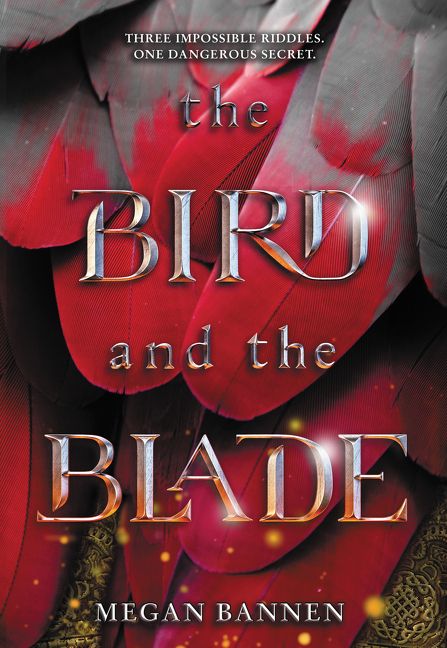
I didn’t know what to expect as I opened this 416 page book: it was recommended to me, my library had it, and I wanted a break from reading on a screen, so I dived in.  The map, the character list, and the setting of 13th century Mongol empire had me bracing for a complex read. I gave myself a goal of a few chapters to see if I could connect, but by page 20 I was completely absorbed and not to be disturbed.  The character driven plot is written in a rather contemporary manner, although the setting is historical fiction (with a lot of noted liberties) it reads really quickly and easily.  It is definitely 16 and up, romantic YA and has triggers of suicide, murder, drowning, death, war, abuse, misogyny.  While reading it, there often felt like there were holes in the plot as the story builds on itself in quiet layers- the story is fairly linear just broken up and rearranged in time, but the informatio

n shared is gently teased out, and nearly every hole filled by the final page.  I think if someone told me about the book in detail, I would not have read it.  There are many things that I feel like I shouldn’t like about it, but truth be told, I enjoyed the story.  The tokenish Islam found a way to convince me it was done intentionally, the (few) main characters present held my intention at all times, the backmatter detailing the research and liberties just all combined masterfully, that I feel compelled to share the story on my platforms even though the Islamic rep is only slightly more that the YA equivalent of a #muslimsintheillustrations tag.

I tried really hard not to include spoilers, so forgive some of the vague sentiments.

SYNOPSIS:

The story without any spoilers is quite simple- a slave girl, Jinghua, is mourning her dead brother and comes across Prince Khalaf, son of Timur, the ruler of the Kipchak Khanate, while working in the family’s service.  Shocked by his kindness, and persona, she falls hopelessly in love with him and when his family is exiled she decides to stay with the prince and the khan rather than flee.  They journey together and their feelings grow.  To save his family’s rule, however, Prince Khalaf decides to attempt to wed the daughter of the the Great Khan.  Princess Turandokht is exceptionally beautiful, wise, and powerful.  She refuses to wed and has set up a test for any prince wishing to try and marry her.  She has three riddles, each one to be answered in seven minutes, anyone who answers wrong is immediately put to death.  Numerous suitors have been killed.  When Khalaf sneaks off in the night to test his wits, the story of how how intertwined Jinghua and Khalaf’s stories are comes to light before the final riddle is answered.

WHY I LIKE IT:

It is not OWN voice, it is researched and based on a tale from The Thousand and One Days, but having very little to no knowledge of Mongol history (I’ve read the book Ghenghis Khan and the Making of the Modern World years ago, but that is about it), and have never seen or read the opera, poetry, or stories that this tale has presented as, I have nothing to compare it to. The book does not need knowledge of the story or time frame to make sense, but the backmatter is well done and makes the process of the story more fulfilling.

For the majority of the book, Islam and the khan and prince being Muslim is just a label occasionally remarked upon when the khan praises the Eternal Blue Sky, instead of Allah swt, and that is about all.  In fact Allah swt I don’t think is ever mentioned in the book.  Based on the information in the back about Mongol’s and a few dialogues in the book it seems that many practices were a hodgepodge of many faiths and traditions, especially by leaders to unite their subjects.  A few ayats from the Quran are mentioned as are some hadiths loosely, which are sourced at the end.  Khalaf gets drunk, and acknowledges that it is haram, and sleeps next to Jinghua for warmth which he also notes is haram.  It mentions a few times that he prays.  There is a weird emphasis on his turban, but it could be culturally Muslim (?), so I let it slide.

The first person voice really sets a good pace for the story, and all of its twists and turns, but does make the love, crush, infatuation theme seem very naïve in the beginning, with more telling than showing.  I think it is accurate for Jinghua, but does require the reader to just accept it and keep reading.  It seems at times she is also rather helpless and so desperate to be seen that the stereotype is a bit cringe, particularly at the end.  I get that appearance and women’s worth is tied to the time and setting, but it still doesn’t completely absolve how triggering the main character’s portrayal can be.

Jinghua’s religious beliefs of the Song Dynasty made me understand the offerings made to her ancestors and the ghost of her slain brother to be religious in context, not literary fantasy.  Many places have labeled this a fantasy romance book, but I don’t know that the world building was fantasy as much as it was historical reimagining.  Either way, there are ancestral ghosts that the main character dreams about and often sees, the epilogue pushes this element, but in my mind still adheres to the same point of ghosts and ancestors being a religious thread.

A found the fear of water story detail a little forced as she was not scared of water when washing out the bloody clothing in the river alone, but then was terrified to stand near a river.  Perhaps a minor detail, but one that I noticed none the less.

My favorite character is the the cantankerous old goat, I’m not going to say much about him other than if at first you hate him, stick around, he might win you over.

FLAGS:

There are multiple suicides and it is glorified, seen as a mercy, and shown as an act of desperation.  There is cruelty and classism along with misogyny and reducing a woman to her appearance.  There is talk of penises and them being seen when urinating, as well as one scene of an erection being felt.  There is killing, war, battle. murder, death, that is fairly detailed.  There is language and crudeness.  There is talk of rape, and affairs, and fornicating.  There are a few kisses, one while a character is drunk, one forced upon a nonconsenting woman. Jinghua disguises herself as a boy. There are theological concepts present and ghosts.  Alcohol and wine are consumed. Nothing is over the top or overly stressed to the point of being obnoxious, but it is present and older YA readers can probably handle it.

TOOLS FOR LEADING THE DISCUSSION:

I would love to discuss with readers, but not my students, I don’t think it would work for an Islamic school book club selection.  The “Muslim” character gets drunk, kisses two different women, has an alter to honor the dead, places offerings of wine.

As Long As the Lemon Trees Grow by Zoulfa Katouh

Standard
As Long As the Lemon Trees Grow by Zoulfa Katouh

as-long-as-the-lemon-trees-grow

Anything I write about this YA book will fail miserably in conveying how powerful, beautiful, lingering, moving, emotional, and overall masterfully written every one of the 432 pages are; it just might be my favorite book of the year.  I do know that this will be my new standard for Muslim OWN voice stories, as the authenticity was absolutely engulfing, I’m not Syrian and I could feel it and naturally, I also verified it.  There is no pandering to a western gaze, the story and characters pull you in and show you Syria from the ground, there is no telling, there is no lecturing, it is mesmerizing storytelling at its finest.  The book has mental health issues, war, and a sweet “halal” romance, that I think upper YA, 16 plus, can handle and appreciate.  I hope every adult will spend time with this book, it truly is incredibly well done, alhumdulillah.

SYNOPSIS:

Homs is under the protection of the Free Syrian Army, but that isn’t enough to keep pharmacy student Salama and her family safe.  Her mother is killed, her father and brother taken, and so she moves in with her best friend Layla, her pregnant sister-in-law, her only family left.  Working as a doctor in the hospital where anyone remaining is given responsibilities far above their skill level, education, and experience- every day is a struggle to survive.

Haunted by the physical manifestation of her fear, “Khawf,” who urges her to fulfill her promise to her brother of keeping Layla safe and getting them out of the country, Salama at eighteen years old has to find a way.

Before all the pieces come together to escape, a boy enters the picture, Kenan, who gives Salama hope, who distracts her from the death and destruction that has consumed their lives.  A boy unwilling to leave his beloved homeland.

WHY I LIKE IT:

I’m a crier, but this book brought out ugly angry tears, shocked tears, heartbroken tears, sentimental tears, you get the point, this book held me in its grasps and never let go. I.COULDN’T. PUT. IT. DOWN. If this is the author’s debut novel I can’t even fathom what is yet to come.

I love that the characters are Muslim, and that they pray together, that they plead with Allah (swt) and meet at the mosque.  It is who they are, it is not up for debate or in need of explanation, it is what it is and it is not anything to discuss.  The parts where a character pleads with Allah for death over being taken, absolutely wrecked me.  Just as efforts to keep everything halal between Salama and Kenan made me beam.  (If I’m completely honesty, I did on occasion get frustrated, I mean come on they are being shot at, bombed, nearly sexually assaulted, scoop her up in your arms and console, her, I know haram, but it is fiction and I was invested, and there is a war.  Thankfully, I am not an author and she kept it all clean and her characters much stronger and mindful of the shortness of this world.)

I love that there are political voices, but that it isn’t a political book trying to give back story to the conflict.  In so many ways the news has failed to keep a light shining on Syria and books such as this, remind those of us outside Syria without strong connections to the land, that the conflict is still raging.  If this was a journalistic article it would be a human interest piece, it is character driven.  Readers see themselves in the characters that live lives that most of us of privilege could never imagine, yet here we are spellbound by the characters, their choices, their dreams, and their safety.  This book shows the power of fiction in opening our eyes to the horrors that are happening in our time, by giving us a face and a character to care so deeply about, that we are spurred to action and determined to not remain apathetic.

FLAGS:

Death, torture, physical abuse, sexual assault, fear, loss, coercion, war, murder, torture, child abuse, crimes against humanity, starvation, mental health, PTSD.

TOOLS FOR LEADING THE DISCUSSION:

I would love to use this book in a high school book club.  The story and themes of the book would open themselves up to discussion so effortlessly and the beauty of the writing would be a gift to share with students.

Love from Mecca to Medina by S.K. Ali

Standard
Love from Mecca to Medina by S.K. Ali

mecca to medina

This book is a game changer, or better yet: an industry changer.  It is about Muslims, for Muslims, by a Muslim- but it is MAINSTREAM and a huge panoramic window for anyone and everyone to see a “halal” fictional Muslim love story in action.  With every page proudly mirroring various Muslim experiences this sequel-ish standalone-ish book is unapologetically real, without compromising good storytelling, interesting characters, and engaging plot points.  In much the same way Reem Faruqi’s Golden Girl raised the bar for upper MG/lower YA, this book shows that upper YA Muslamic stories can be told.  That the publishing world isn’t always limiting OWN voices, and that it is up to us, the consumers, to purchase these particular books, pre-order them when announced and spread the word so that the message is loud and clear that we want more books like this.  I have no doubt S.K. Ali had to fight for her vision and advocate for her book at every turn, but now that it is here, we need to step up and show support with our purchasing power.  I’ve pre-ordered mine, and I hope you will do the same before the book releases on October 18, 2022, if you cannot, please purchase it when you can, and if that is not an option please request your libraries to shelve the book (and all of her books) and put them on hold so that the gate further opens for mainstream Islamic fiction.

Preorder link on Amazon

SYNOPSIS:

Adam and Zayneb are back after falling in love in Love from A to Z and getting their nikkah done.  They aren’t living together yet, though, and they are worlds apart with Adam jobless in Doha, and Zayneb homeless in Chicago.  When communication breaks down, exes show up, and a trip to Umrah is underway with the couple divided into gender segregated groups, the couple might fall apart in the same fashion that brought them together in the first place.  The steps of Umrah are beautifully highlighted and experienced, and characters from Misfits and A-Z come back to tie it all together and help the couple, keeping hope alive.  Throw in some marvels and oddities, artifacts and interpretive labels, a unifying cat, and a whole lot of love, and you have a sweet conclusion to a Muslamic love story.

WHY I LIKE IT:

So, I obviously love the standard of unapologetic Islam that this book offers on every page while still being accessible to the larger audience.  It took a little bit for me to be sucked in to the 352 page story, but by page 100 or so, I couldn’t put it down.  The steps of Umrah brought tears to my eyes and the awesome Sausun is fierce feminist friendship goals.  I honestly didn’t love the cat narrative that frames the story, but luckily it is sparse so I could see past it. I love that this book exists, I think I love the Misfit based duology a tiny bit more, but loved that this book had crossover characters and gave many of them a final bow of sorts as well. I read the book in two days and will probably re-read it when I receive my physical copy.  It really is remarkable how much Islam is present in a fictionalized story: not a oppressed Muslim story, or biographical memoir, or refugee story, but in a solid fiction story.   There is no “othering,” this is us, and this a love story about a Muslim couple trying to make it work with outside support and stresses, and beautiful writing.  Alhumdulillah, very well done.

FLAGS:

I’d encourage mature, older YA because the characters are married and sexually active and while it isn’t graphic or depicted it is often just the words mentioning them kissing, and sleeping together and sexting.  Nothing titillating or anywhere near inappropriate, but I think a bit of maturity would help it better reflect the values of Islamic marriages and relationships.  There is some minor language and hate speech.

TOOLS FOR LEADING THE DISCUSSION:

I would absolutely use the book for high school book club if it is mostly juniors and seniors.  I think it gives a good look at what a relationship can look like; the characters’ religious lens and lives will resonate with Islamic school students.

Dahling, If You Luv Me, Would You Please, Please Smile by Rukhsana Khan

Standard
Dahling, If You Luv Me, Would You Please, Please Smile by Rukhsana Khan

img_1788

I’m not sure how I missed this 1999 published YA book by the OG-groundbreaking-industry-changing- Rukhsana Khan, but until @bintyounus mentioned it to me recently I didn’t even know it existed.  The book has so much Islam, ayats, hadith, salat- Islamic fiction self-published often doesn’t have as much as this mainstream book has, but I would be lying if I didn’t say that some of the content was a bit shocking.  Part of my surprise I think comes from the fact that the book is only 206 pages, it takes its title from a game I remember playing in elementary school at recess, the main character is in 8th grade and the cover is soft pinks.  This book is solid YA both now, and nearly 25 years ago, it carries some incredibly heavy themes: attempted suicide, topless photographs, sexual coercion, cigarette smoking, assault, racism, misogyny, toxic relationships, neglect and more (see flags below).  The book is memorable and hard to put down, the Islam is confident and explored, even when weaponized by an older sister, but there is no denying the story telling abilities of the author, and  while I won’t be letting my 11 or 13 year old read it any time soon, I know I benefitted from reading it- reminiscing about wanting Lucky Jeans and standing in awe of how EVERY. MUSLIM. DESI. author making it in mainstream today is benefitting from the path paved by Rukhsana Khan.  On behalf of readers everywhere- thank you.  Thank you for fighting to tell your stories your way, raising the bar, and offering real Muslim characters from a Muslim voice. 

SYNOPSIS:

Zainab has no friends and doesn’t own a pair of Lucky Jeans, she is the only one in 8th grade that doesn’t.  She feels like if she could trade in her polyester pants for the “cool” pants everyone has, she’d be accepted.  When that plan fails and lands her in trouble, she gets tasked with directing her house’s school play.  The teacher convinces her that it will be a way for her to make friends, and earn her classmates respect, but middle school is never that easy.  Everyone is in love with Kevin, including Zainab, but he is a jerk and if he isn’t the lead, no one else will audition.  Jenny is poor, but has a big chest, so even though she is nice to Zainab, she is more in love with Kevin who only wants her for one thing, and takes advantage whenever his girlfriend isn’t around.  Add to the drama Zainab’s very strict older sister who lists off Zainab’s faults every night with Islamic references to try and make Zainab a better person, and this coming of age story will require Zainab to sort through it all and find her own way to be.  There are a lot of subplots that circle around the play, social circles, toxic relationships, and self growth, that while the characters are worried if they will win the competition and break the curse, the readers (at least this 41 year old mama) are hoping that the characters will survive the year unscathed. 

WHY I LIKE IT:

I love that the family is the same family that will become its own story in Big Red Lollipop just grown up, with names changes, and that the story is summarized.  I’m still a little torn if I love the raw grittiness of the way the two sisters interact or if it goes too far and leaves a bitter taste about Islam.  I really am on the fence about how young readers, both Muslim and non Muslim, in 1999 and in 2022, would view the role of Islam in the dynamic.  I think it reads powerfully, but I had a hard time going back to look at it through my 13 year old eyes and it as an adult it is intense.  I still can’t believe that this book was published with how much Islam it contains, even the play put on in a public school was religiously centered.  White privilege is called out and stereotypes about whites are stated, a Hindu character and the Muslim main character work through their baggage, economic privilege is opined on, women’s rights and expectations discussed, comments about “othering” are present-  it really covers a lot. Quite impressive in a lot of ways. 

The relationship and love themes are not shied away from which caught me off guard.  I expected some making-out and heavy petting, but was surprised it went to topless photos, a character’s mom being a nudist, and that there is a lot of forced touching.  I think for most Islamic school 8th graders, this book would be too mature, in fact I genuinely hope it is. Not to say it is not accurate, but it is very critical to the story and I think would need some discussion.  

I love that the characters draw you in, as much as you despise everyone picking on Zainab, you know she isn’t a pushover and you really pull for her.  I didn’t want to put the book down and kept reading because I wanted to make sure she was ok, see what choices she made, and in a fairly short book, that is remarkable story telling.

FLAGS:

The book is for mature readers in my opinion.  There are relationships, assault, cigarettes’, nudists, kissing, spying, sexual assault, coercion, topless nude photographs, attempted suicide, bullying, teasing, cheating, physical assault, language, verbal abuse, stereotypes, talk of female anatomy, and use of Islam to hurt.

TOOLS FOR LEADING THE DISCUSSION:

I don’t know that I would shelve this in the library, I would see if perhaps there is a version with a different cover, one that might signal a more mature reader.  I would worry if an early middle schooler read this, I think it would be a lot for them to take in, process, and reflect on.  It isn’t a light read, and would need some discussion, but ultimately I don’t know that a middle school book club at an Islamic school would be the right place for it. It could be for sure, but not the one I’m currently at.

A Darkness at the Door by Intisar Khanani

Standard
A Darkness at the Door by Intisar Khanani

darkness

Y’all I was devastated when Theft of Sunlight ended on a cliffhanger, but Alhumdulillah, this conclusion was well worth the wait.  My heart is at ease, even if I am trying to figure out how to get the “Blessing” so that I can forget I read the book, and enjoy it all over again for the “first” time.  I don’t normally review second books in the series, and this won’t be a typical review, but truly if you have not read Thorn or Theft, what are you waiting for, go get those books and start reading.  I don’t know a lot about the publication drama of this fantastic book, but I do know that it was not published in the USA by the same publisher as the first book in the duology, and the thought that we, the readers, could have stepped up the pre-sales and shown our love for the series, the author, and the characters weighs heavy on me.  Thankfully, the UK publisher kept the book and the author found a way to get Darkness to us in the US (it publishes later this summer), but truly we have the power to support good, quality stories, and we must actively show it so that they get published, rather than simply complain about what options are made available to us. This is the author’s website: http://booksbyintisar.com/ if you sign up for her newsletters you can get all the bookishly delicious info.  She is not asking me to promote her or her books, but I happily share and direct support to her, because her stories really are great, and from what I can fangirl find out about the author, so is she.

The book picks up where Theft leaves off, and manages to remind readers what might have been forgotten in the interim.  It had been over a year since I read book one and while I fumbled a little at the beginning, the author caught me up to speed and didn’t let me lose a beat in Rae’s latest and ongoing adventures.  It starts with Rae aboard a slavers ship with children bound for a horrible fate.  More than just her life is at stake, as the information she has recently discovered implicates palace officials, the Circle of Mages, an heir to the throne and so much corruption.  With the help of street thief Bren, Rae gets herself in and out of trouble quicker than most expect.  Her clubfoot, sharp brain, and genuine values, force anyone who underestimates Rae to find themselves scrambling to keep up.  She has grown to love her body and the strengths that it affords her, and in her actions and dedication to changing the world she becomes a formidable river Pirate Queen that you genuinely care for, cheer on, and hope gets a happy ending.

Yes, if you have read Theft and are wondering why I didn’t mention Princess Alyrra, Red Hawk, the Cormorant, Niya, Stonemare, Artemian, and everyone else, fear not, they are all present, and get their story arcs, I just don’t want to risk a single spoiler.  If you’ve waited for this conclusion, you will find yourself desperately dreading the final pages, and wishing the story would never end.  The fantasy, action, characters, world building is all incredible and so hard to put down.  The author is Muslim, but there is no Islam present in the stories, although hints of desi culture do seem to present in the Sweetening atleast. 

The book is YA, but I think 15 and up or so would be a good fit. Like the others in the series, it has magic, murder, killing, lying, thieving, alcohol, corruption, implications of sexual abuse, assault and threat of rape, but this book also has some language, talk of infertility, and some implied banter about marital relations. The romance is very halal and clean, but the violence is graphic as dealing with the implications of murder and slavery are grappled with and thus a thematic element of the story.

Thank you Netgalley UK for the arc, if the book looks interesting and fun for you, please preorder the book wherever you are.

Welcome to the New World by Jake Halpern illustrated by Michael Sloan

Standard
Welcome to the New World by Jake Halpern illustrated by Michael Sloan

new world

I really like the concept and approach of this 192 page non-fiction graphic novel.  It isn’t a memoir or OWN voice retelling, it is basically an in-depth news story about a Syrian refugee family that has been fact checked and then illustrated.  Unfortunately, parts of the story are really choppy and unresolved, details shared for no purpose and occasionally reinforcing of stereotypes.  The book is an easy read and the Muslim family is shown to practice and be fleshed out, but more than once I found myself questioning what the author’s commentary was suggesting/implying based on what was being included.  I allowed my 12 year old son to read it before I was finished, but the last few pages had both misogynistic and homophobic slurs coming from bullies so I made sure to discuss that with him.  I think upper middle school to YA is probably the ideal readership because of the subject matter of escaping war, facing financial insecurities, PTSD, bullies, islamophobia, and navigating a new environment when you are not quite a child, but not yet an adult either.

SYNOPSIS:

Naji’s family is undecided if they should leave Syria or not.  Part of the family has permission to travel to Connecticut in America, but part of them still do not, including Naji’s grandmother.  The war has already imprisoned Naji’s father and uncles in the past and with the US election showing Trump having a chance, they feel like they need to make a decision quickly.  Naji loves all things American and is the only one in the family anxious to get to the US and get on with life, but when the moment of saying good-bye arrives, he has doubts.

Once they arrive in America, all their doubts multiply as life is difficult, help is hard to come by, and day to day fears of safety have not been left behind.  School, finding jobs, learning the language, and facing hate are just the big things that plague a family who has left everything to start over in this detailed account that follows Naji and his family as they navigate their new world.

WHY I LIKE IT:

I like that the book has been approached as a news article.  I just didn’t like the unresolved threads that seem to take up so much of the narrative only to be abandoned.  I really struggled with the idea that Naji knows America and obviously media is global, but is shown to be confused by a dining table.  I didn’t like the commentary of Naji’s sister Amal and her hijab, I find it hard to believe there aren’t other hijabs in the school or larger community and why it is made to be such a big deal by her, and those trying to help her.  It would seem small after everything she has been through.  I do like that there are a few other Muslims in the school and at least they discuss that there is not a nearby masjid.  I wish other Muslims would have been around to help settle the new family.  I know a few groups that helped in immigrants in New England, so that there were no Muslims in the welcoming groups seemed hard to accept.  By and large it does show Islam being practiced, not just names and hijabs, which I appreciated, but for a book that is based on a real family, with graphics, I really expected a stronger emotional impact that ultimately for me was just not there.

FLAGS:

Death, abuse of power, war, language, bullets, shooting, kidnappings, detainment, destruction, kids making out in hallways, implied rape/sexual assault, death threats, racism, islamophobia, misogyny, slurs, name calling, differential treatment, fear.

TOOLS FOR LEADING THE DISCUSSION:

This wouldn’t work for me for a book club selection, but if I ever teach a journalism class again, I think I would some how incorporate this book as a way to show what journalism can be, and also as a clear way to show how what parts you include and what parts you keep out affect the messaging of the story as well.