Category Archives: YA FICTION

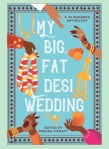
My Big Fat Desi Wedding by Prerna Pickett, Aamna Qureshi, Syed M. Masood, Tashie Bhuiyan, Noreen Mughees, Payal Doshi, Sarah Mughal Rana, Anahita Karthik

Standard
My Big Fat Desi Wedding by Prerna Pickett, Aamna Qureshi, Syed M. Masood, Tashie Bhuiyan, Noreen Mughees, Payal Doshi, Sarah Mughal Rana, Anahita Karthik

EDIT: I have been made aware that some/many of the included authors in this anthology have chosen to stay silent or “both side” the ongoing genocide in Palestine. Please be aware and be intentional and informed with your support

This 288 page YA short story anthology features eight stories of Desi weddings threaded together by an auntie with a bob haircut and a mole on her lip that appears and disappears into stories with magical realism, Tamil Brahman vampires, competing food dynasties, high school debate rivals, gorgeous clothes, delicious food, and sparks of romance.  Usually collections are hit or miss with writing quality and interest, but I found this collection enjoyable from start to finish.  My only real critique is that of the YA label and as a result some stories read more juvenile and at least one a bit more mature.  As a whole, the book, particularly for the genre, is fairly clean.  It is YA, it is romance, there are a lot of Muslim characters, with five of the authors being Muslim, but I would not classify any of the relationships or stories as halal.  That being said, I think mature teens 16 and up won’t find anything too alarming in the pages. There is music and dancing, close male female friends, secret relationships, a few kisses, some dances and hand holds, and a few that mention sex, condoms, and LGBTQ+ possibilities in passing, but most focus on weddings, culture, parental relationships, strong women, caste ideology, and hinting at happy every afters.  Many of the stories are simply set during a wedding or wedding prep, others are the bride or groom themselves, I don’t have a favorite or even a least favorite, as each has its own flavor, writing style, and focus.

SYNOPSIS:

Framed from an Auntie embarking on the wedding season, the short stories begin and follow one after another until the Auntie returns to conclude the book.

The Disaster Wedding by Prerna Pickett:  In a family where the words the females speak can come to fruition, an erroneous slip, claiming that her sister’s wedding will be a disaster brings on the challenges for the enemies to lovers side characters trying to not upset the marital couples multicultural Indian/American dream wedding.

A Cynic at a Shaadi by Aamna Qureshi follows a young Muslim girl nursing her broken heart from a recent breakup with her secret boyfriend.  Set during her cousins wedding, an upbeat optimistic boy makes her smile and gives her heart hope.

Sehra by Syed Masood involves a Muslim marrying a non Muslim girl that has the family refusing to attend.  The groom-to-be’s brother is torn and wants to attend, but he never goes against his parents.  His best friend who has grown up with the family and is facing her own community othering because of her “Mickey Mouse” hijab style, is planning to go, and together the two friends help wrap the groom’s turban.

Fates Favorites by Tashie Bhuiyan features magical realism with the words of soul mates appearing on skin.  The words appear and disappear sometimes unseen and possibly even as a result of one’s subconscious, thus the couples don’t always find one another, but when they do, the relationships can be magical.

The Wedding Biryani by Noreen Mughees is possibly the most religious of the short stories with high school debate rivals finding themselves cooking at the masjid for a couple that doesn’t have a family to celebrate the marriage.  Themes of losing a parent to death and simply leaving are present, as well as some internal reflection of boundaries, Allah swt, and body image.  The conclusion is the teens meeting up to dance.

A Confluence of Fates felt like the longest short story, and while many Zoroastrians it notes did come to India, the story focuses on Iranian Zoroastrian culture.  It is almost a story within a story as a couple gets a second chance at their relationship with the backdrop of a marriage play during the wedding unfolding in the background.

A Wedding Recipe for Disaster by Sarah Mughal Rana has competing family businesses: one Punjabi and the other of Pashtun culture, coming to a head when the offspring of the rival companies decide at the girl’s wedding to someone else, that they should be together.  With vibes of a Romeo and Juliet style family feud, the happy ending has readers craving achar and contemplating racism within the community.

And finally, A Very Bloody Kalyanam By Anahita Karthik goes gothic with a Tamil Brahmin vampire wedding occurring when offspring from two enemy cults imprint on each other.  This story is more mature with talk of sex, but has an emotional forgiving between the bride and her parents that makes the vampires lovable.

FLAGS:

It focuses on romance, and none of the stories are “halal.”  Music, relationships, boy girl friendships, Talk of sex, hints at LGBTQ+ identities, mention of condoms, vampires, magic, magical realism.

TOOLS FOR LEADING THE DISCUSSION:

Probably not a book to seek out for an Islamic school shelf, high school can probably handle it and understand it is not halal.
Six Truths and a Lie by Ream Shukairy

Standard
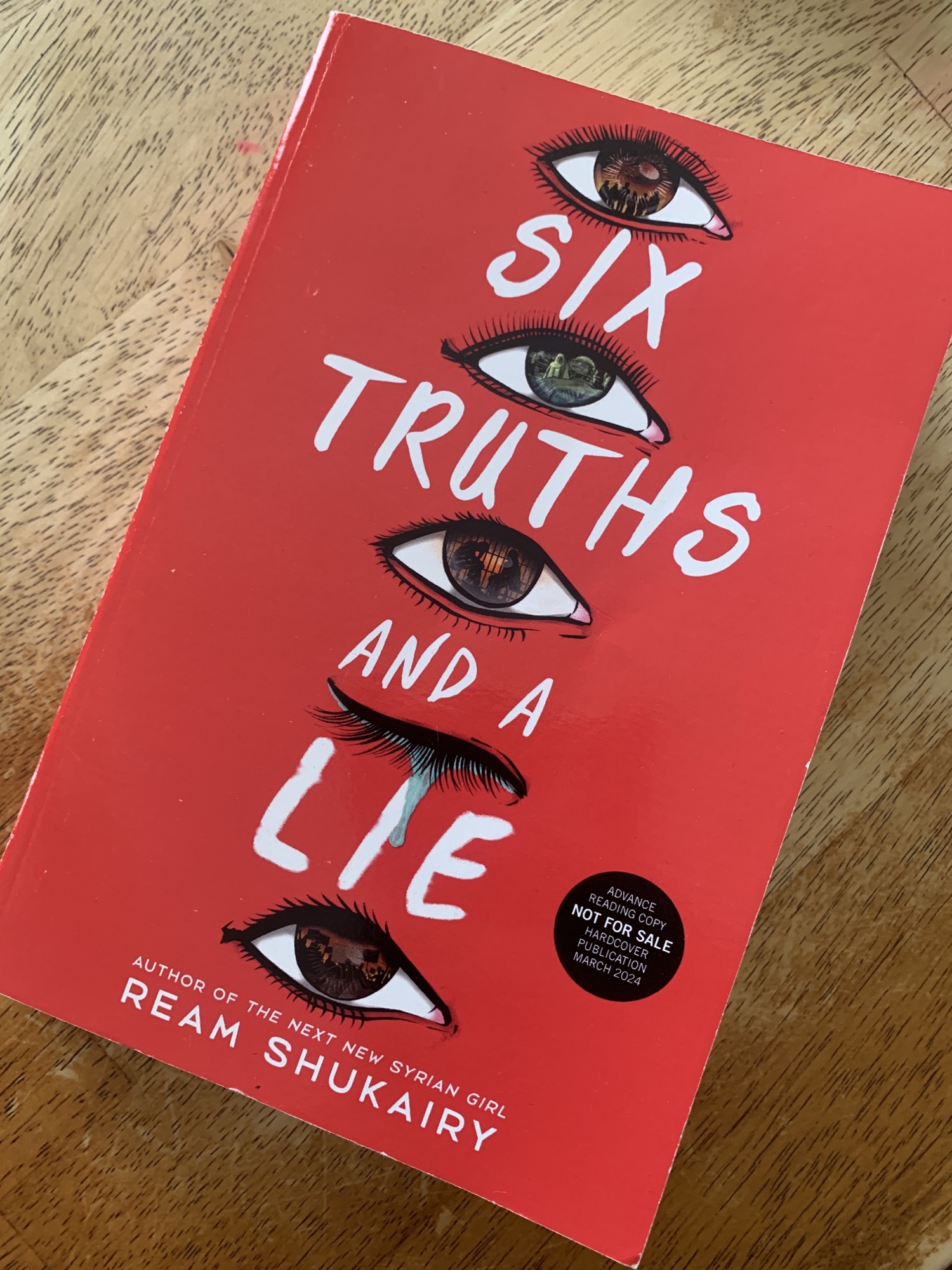
Six Truths and a Lie by Ream Shukairy

Woah baby, that was a wildly fantastic ride of a read.  The very first page grabs you and makes you sit up and pay attention.  I have never been so happy to sit in a waiting room so that I could read in peace.  This 387 page book is mature YA, I was gifted the knowledge prior to reading that there is a line that is toed, possibly stepped on, but not carelessly crossed, so I will gift that knowledge on to you, so that you might enjoy the story without that anxiety. Told from numerous perspectives, a group of Muslim teens find themselves arrested for an act of terror.  Strangers from different schools, different backgrounds, and different dreams for their future, are fiction, but their stories, their secrets, the broken system that they find themselves in, all feels very real.  The plausibility and commentary from an OWN Muslim author is incredible, I do wish their was more spiritual centering, Islamic framing, or even a more Muslim conscience present. Some of the characters do discuss hijab and one does find solace in prayer, but none of them really pour their heart out to Allah swt in the isolation of their cells, and in the predicament they are placed in, and it seems like they would.  Ultimately though the writing is remarkable, it has been a long time since I was truly tempted to skip ahead and read the last few pages because my heart was racing.  There is just one storyline thread that is so overly emphasized that comes close to a haram line, that I wish was a little down played so that I, as an Islamic school librarian, could encourage younger teens to pick up the book and dive in.

SYNOPSIS:
It is the fourth of July, and the MSA kids from the local different high schools are gathering at the beach for bonfires, fireworks, and socializing.  Everyone present will witness a crime, six teens though will be accused of committing it.  Qays, the Palestinian golden soccer boy who can charm everyone and anyone.  Nasreen, the outcast from a private Catholic school there to meet someone.  Samia the hijab wearing social media star. Muzhda the Afghan refugee with undocumented parents.  Zamzam the girl with a singular dream to be a doctor, and Abdullahi, the quiet EMT in training.  Six strangers whose histories and alibies link them to the outside world, but leave them skeptical of one another as they face charges in a world not concerned with the truth.

WHY I LIKE IT:

I love that the characters are Muslim and feel so real and developed. The characters are not tropes or their families stereotypical.  They know what Islamophobia faces them from others, they know what internalized issues they are dealing with, and they are not having a religious identity crises amidst everything else they are experiencing.  The writing allows each voice to be unique and clear, which is quite impressive as there are a lot of perspectives that move the plot along.  It is really hard to write a review that doesn’t spoil the book, so yes I’m being vague, and you are welcome.
FLAGS:

There are a lot of profanities not just when the stakes are high, but normalized as well throughout.  There are close relationships between boys and girls.  They take about dating.  There is weed, and the legalities of using, being in possession, and being high.  There is lying, death, incarceration, Islamophobia, some physical abuse mentioned.  There is a story line of a girl that doesn’t know if she is attracted to girls, she doesn’t act on it, but it is something that has tangled up her alibi and she choses not to explore it, but it keeps coming back up.

TOOLS FOR LEADING THE DISCUSSION:

This would be an awesome mature YA book club, just like some of the characters are being held in juvie and some being tried as adults, I think for Muslim readers a little older will benefit and be able to process, discuss, and see themselves in the book.  The book mentions that it could happen to anyone, and for a Muslim audience, to recognize and discuss that concept would be beneficial and engaging.

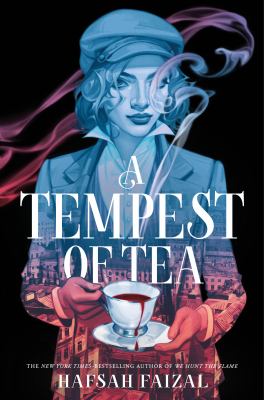
A Tempest of Tea by Hafsah Faizal

Standard
A Tempest of Tea by Hafsah Faizal

tempest

At 352 pages this YA vampire book is remarkably clean, a little slow burn, a few kisses, and some killing, but for the genre, I was quite impressed.  The book is written by a Muslim, but there is no Islam in the book, the closest it gets is a character named Laith Sayaad, but he is from Arawiya, so the fictional world stays in its lane.  The commentary of colonialism, classism, found family, however is very real.  Throw in some tea, some vampires, and a heist with a less than trustworthy crew and I was swept away.  As a Muslim book reviewer, I often schedule in breaks to read books I don’t have to screen shot, annotate, and scrutinize, aka non Islamic books.  So this book was a bit of a surprise for me once I realized I would not have to read it with all the critical lenses in place, but would still feature it because the author is Muslim.  As a result, this review will be a little different from my normal format.

Told in multiple voices, Arthie, Jin, and Flick, the linear story moves along with each characters progression. The story however, twists and in a style that feels a bit slight of hand, we are told what to look at and see, but in an unveiling that makes you want to slow down, flip back, reread, and then carry on.  Honestly at times the book is utter chaos, but again, because I knew this wouldn’t be a typical review, I kept on keeping on.  When plot pieces started to fall into place, about two-thirds of the way into the book, and details in passing started carrying weight, the book was impossible to put down.  I didn’t find many of the “plot twists” super surprising, but I was utterly delighted to know that they connected so many crumbs of the story.  I’m a bit of a sucker for “no loose ends,” and while the ending left a lot for me to desire and grapple with, the story for the most part felt satisfying at its close.

Arthie Casimir and Jin Casimir, siblings by choice, run a tea house by day, a blood bar by night.  Always on the run from the ruling Ram, they have networks of spies, and years of criminal experience, to make it all look rather easy.  When Spindrift is threatened, the two will be tested to pull together a team, enter the dark vampire world of the Athereum and take on the colonizing rulers that hide behind masks.  Things don’t always go according to plan, and their plotting, successes, failures, and backstories make the book a fast-paced read that ends too soon.

FLAGS: Death, attraction, romance, fantasy, colonization, violence, stealing, systemic corruption, spies, etc.  I would be fine with 15 and up reading it.

Hope Ablaze by Sarah Mughal Rana

Standard
Hope Ablaze by Sarah Mughal Rana

This young adult book is an intense raw unflinching read, containing  incarceration, assault, politics, Islamophobia, immigrant pressure, and loss throughout the 384 pages that mix poetry and traditional writing.  At times the book is incredibly hard to put down as the commentary on two party politics and Muslims in America is articulated in a way that transcends the fictional constrains and affirms reality.  But unfortunately, it took me a long time to complete the book, because when I did put it down, I didn’t feel that relentless urge to pick it up and see what happens next.  I had been alerted to the fact that there were elements of magical realism, but even with that knowledge, I still felt it misplaced, and truthfully, unnecessary.  The pacing was inconsistent, and many points unnecessarily forced.  It often felt the author was simply trying too hard to tell the story and make sure the reader got all the messages intended.  As a result many characters are flat, many plot holes exist, and the reader is left wishing things were done just a little bit different to make the book what it could have been, not what it is.  I know it is a debut, so I’m not going to be overly detailed in my harshness, I am fairly positive I will read anything this author writes down the road, I took pictures and shared passages that I loved on my socials.  The book is good, it just really could have been great.

SYNOPSIS:

Nida is a poet, her uncle is a poet, and her uncle is in prison.  When Nida is frisked, her hijab removed by a political candidate’s team as she makes salat in a public park, Nida is forced to find her words, her voice, and her place in an unkind Islamophobic world.  High school friendships, immigrant Muslim community pressures and idiosyncrasies persist for Nida as she navigates media manipulation, injustice, slander, and political talking points.  Life was already complicated with her father’s departure, her maternal uncle’s wrongful incarceration, and the goats that her mother brings home to sacrifice, but with the support of the Poet’s Block, her Muslim community, family, and the thread tied to her family through generations, she will find she isn’t alone, and she has support, she just has to take a stand.

WHY I LIKE IT:

I love how much mirrors contemporary reality, the MIST competition, the politics, the media, the dirtiness of it all. I also like that it has a fair amount of humor, the Islamic accuracy, friends getting called out for boys and girls texting each other.  Overall though, it just felt so forced. I think some subtly and nuance and undercurrents would have given the reader the ability to connect the dots for themselves, so the book would have lingered and taken up space long after the last page was read.  It is hard to write a book about how great a writer is, how powerful poems are, so at times it really felt spoon fed that this is powerful, here read it, see it was powerful.  Additionally, I think when the author did try for subtlety, it just came across as lacking.  I still don’t fully understand any of the side characters, their relationships, or their purpose.  From the betrayal of a school friend, to the new friend from MIST, to the little brother, to the friend and his uncle who is imprisoned, there ultimately lacked a lot of emotional heart for minor characters, who remained stagnant, while passionately emphasizing issues at their expense.

The OWN voice Islamic rep is so spot on even if the evil eye passages seemed amplified and repetitive. Islam is centered, it is unapologetic, it is the characters identity, comfort, and soul.   Only one point really stood out as erroneous, but I read a digital ARC so it could have been fixed or it could have been a spacing issue since it was in a poem, but it has sajood in janazah, and I’m really hoping the final book will not have it wrong, as there is no sajood in janazah.

FLAGS:

Assault, frisking, incarceration, death, profanity (not a lot, damn, hell, shit), Islamophobia, racism, systemic abuse, lying, talk of terrorism, stereotypes, gaslighting.

TOOLS FOR LEADING THE DISCUSSION:
I’m on the fence about using this book for a book club read.  I love the Pakistani culture, the Islam, the contemporary relevance, and the political commentary.  I think it would have actually more success in a guided or required reading situation with teens than it would as a pleasure read.  Undoubtedly I will order a copy to put on my library shelf, but I might test it out a bit on a few readers to see how their thoughts before I present it as a book club selection or not.

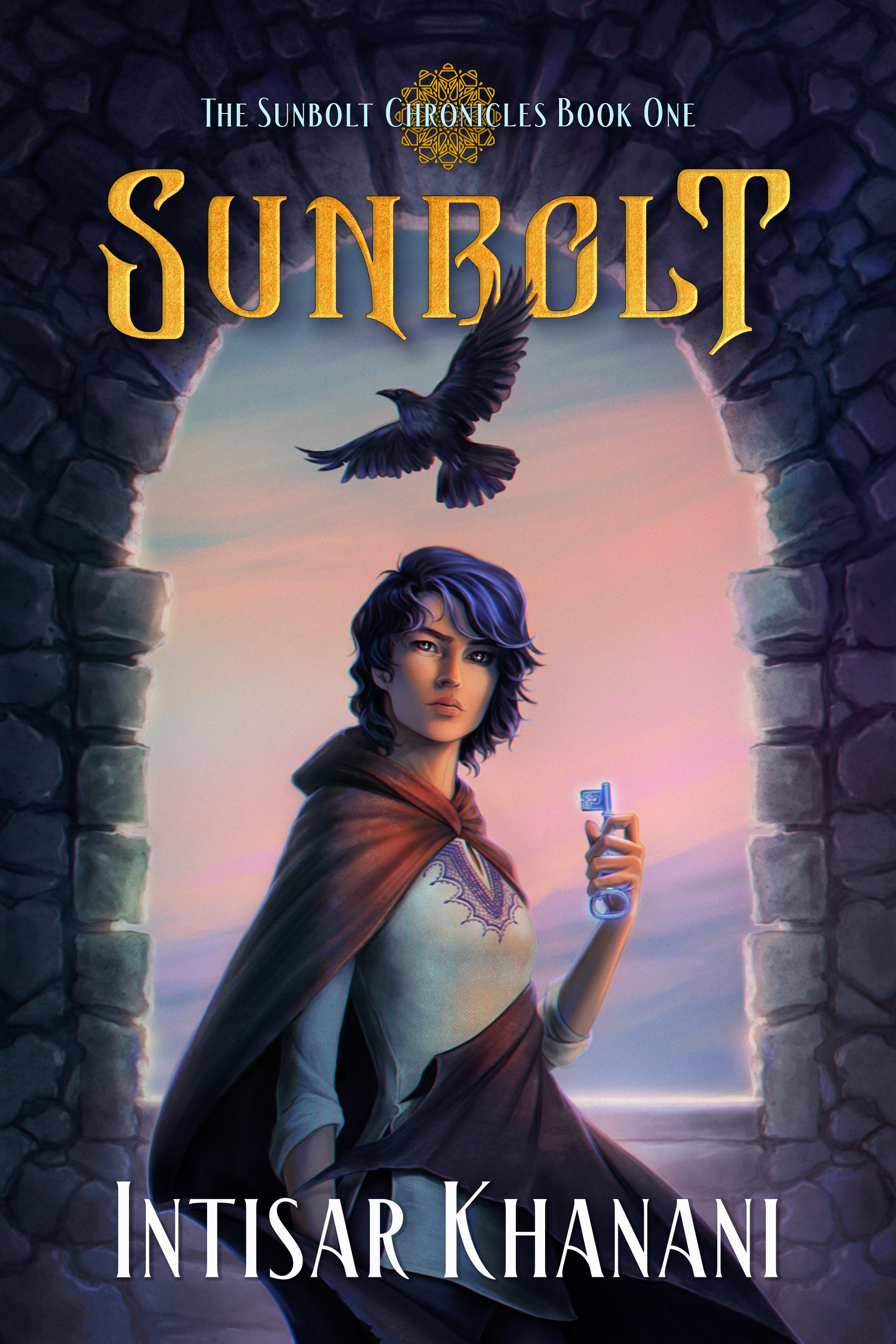
Sunbolt by Intisar Khanani

Standard
Sunbolt by Intisar Khanani

Sometimes you remember reading a book and liking it, but not a lot more.  Why I never wrote up a review about this Muslim authored 153 page young adult fantasy novella (?) in 2013 when it was first published I have no idea, but now that it has a new cover and some minor tweaks I am happy to share it, support it, and urge you all to do the same. My only complaint is the book is too short.  It tells a complete story, but I did not want it to end.  The print version includes the prequel Shadow Thief in the backmatter, and I believe the series will total three books when complete, but I’m not a patient person and even the second time reading this had me sucked in from the very first page and unable to put the book down until I finished The paranormal world building, character development, intrigue, interest, adventure, and curiosity, is masterfully written and conveyed to take the reader on a journey where the next turn is completely unexpected, yet plausible, worrisome, yet hopeful, fast passed, but not rushed, and before you know it the last page has been read, and you are still emotionally attached to Hitomi, longing for Karolene, and anxious to see what will happen next.  There is no Islam in the book, many names come from Arabic though, and there is killing, death, vampires, soul suckers, magic, and lots of secrets yet to come to light.

SYNOPSIS:

Hitomi is still an outsider in Karolene unable to blend in even though she has been there for years.  Her skin and features give her away, but it is her secrets that she tries to hide more than her appearance.  She is part of the Shadow League, and when she gets a chance to help with a mission to save a political family that opposes the Arch Mage Blackflame, her life with the fish sellers is about to change. She encounters vampires, is taken through a portal to a landlocked northern land, is imprisoned with a Breather and starts to test the power of her own magic.

WHY I LIKE IT:

The twists and turns of the book are a wild ride.  You don’t know what is going to happen next, and while it takes a minute to share details of 15-year-old Hitomi’s world and Karolene at the beginning, the connection it creates to the main character is worth it as the story progresses.  In a short time you really feel you know how she sees the world, functions in it, and thus the emotional bond makes you invested in what is to come.  I love that Hitomi is mixed race, young, female, fallible, smart, strong, and empathetic and likeable.  She isn’t perfect, but you are definitely cheering her on.

FLAGS:

The book has magic, killing, death, plotting, secret, torture, politics, but for the genre and age is relatively clean. The prequel novella, Shadow Thief, does mention rape.

TOOLS FOR LEADING THE DISCUSSION:

The book is a bit too short for a full book club discussion, but I would absolutely recommend, shelve, and encourage middle school readers and up to grab a copy and take an hour or so off from their lives to read about Hitomi’s and make predications about what will happen next.

To show support to this incredible author, and this fun book, please preorder/order here.  You can also suggest your library shelve it, put it on hold, once it arrives, check it out, and enjoy it.

Messenger: The Legend of Muhammad Ali by Marc Bernardin illustrated by Ron Salas

Standard
Messenger: The Legend of Muhammad Ali by Marc Bernardin illustrated by Ron Salas

img_9626

I’m always curious how books about Muhammad Ali will present his “Islam” and this 240 page graphic novel was no exception.  I was a little hesitant with the title, and with the foreword establishing that this book is akin to the heroic poems of Odysseus and Gilgamesh, and that “inspired by truth, and truth itself, aren’t the same thing.”  I did appreciate that it says if you are going to take a test on Muhammad Ali and this is your only source, you will fail.  It seems to recognize that Ali means a lot of very different things, to different people and this book at times is true and at times just feels true.  Broken into 12 chapters, 12 rounds, the author offers sources in the back, but leaves wiggle room for creative liberty.  I think if you are familiar with Ali’s life the book doesn’t provide anything shocking and you will enjoy seeing it play out in graphic novel form. If you aren’t familiar with him, the book is a little too choppy to paint a comprehensive biography and you will be confused and need outside clarification at times. I looked into the book before diving in, and many reviews say that the story makes his life accessible to middle grade and middle schoolers, the publisher says 10th-12th grade, and I think with the panel of a prostitute trying to talk to him, alcohol being offered to him, the recreation of him being positioned as a saint being martyred for a magazine cover shoot, comments about being with a lot of women, and some of the politics, the book is best suited for high schoolers.  

SYNOPSIS:

Framed around the lighting of the Olympic torch in 1996 the book then goes back and fills in the gaps on some of the big events of Muhammad Ali’s life:

Round One: Schwinn. 1954. Having his bike stolen and being introduced to boxing.

Round Two: Olympian. 1960. Winning Olympic gold.

Round Three: Church. 1961. Meeting Malcolm X.

Round Four: Sonny Liston. 1964. The fight.

Round Five: Media. 1967. Interview with Howard Cosell.

Round Six: Martyr. 1968. Esquire cover shoot.

Round Seven: Defendant. 1971. Draft evasion charges and fight with Joe Frazier.

Round Eight: Candle. 1974. Meeting a child with leukemia.

Round Nine: Rumble. 1974. Rumble in the Jungle.

Round Ten: Patient. 1980. Early signs.

Round Eleven: Shepherd. 1990. Iraq hostage negotiations with Saddam Hussein.

Round Twelve: Survivor. 1996. Lighting the Olympic torch.

WHY I LIKE IT:

It does articulate that he parted ways with Nation of Islam in chapter 11, Elijah Muhammad and Nation of Islam is pretty prominent in the book up until then, and then in Iraq it does show him praying salat, mentioning the blessings of Allah swt in freeing the hostages, and noting he is going as the most recognizable Muslim American.  I always enjoy reading about Ali and Cosell’s relationship, so I particularly enjoyed those scenes and like the premise of the book established, who knows if they are true, but they feel true and in many ways make Ali seem almost fictious with his equal parts arrogance, humility, humor, and insight.  I had to do a bit of outside reading about the Esquire cover shoot, and the Iraq hostage situation, the book did not seem to make it clear, and got me to thinking perhaps some of the other chapters only seemed clear because I had read about those incidents before.  

Normally I like books to be sourced and a book that is biographical to be accurate, but I almost wanted this book to just be extravagant.  To have fun with the persona of Ali and make him into something of legend that the foreword seemed to hint at.  What I thought was going to make him even more so “the greatest” seemed to just provide a safety net of protection to imagine what was going on in Ali’s head during the 12 rounds highlighted.

FLAGS:

There are some offers of alcohol which he refuses, some pointed political positions, a prostitute in a hallway invites him for free, he refuses. He recreates a martyr scene even once he established he was Muslim and wasn’t ok with it, but a phone call to Elijah Muhammad’s son, made it ok because it was for money, there is a lot to unpack there for kids.  He makes a comment about being with a lot of women at one point, not in your face, but in a graphic novel, to dedicate a panel to it, makes it stand out.  Racism, hate, bigotry, prejudice.

TOOLS FOR LEADING THE DISCUSSION:

I am a bit on the fence with this book.  I think it would work for a high school book club, but with a lot of context.  If you are discussing Ali, this would be a suitable supplement in a high school classroom.  If you are an English teacher talking about Homer and heroic poetry, I think this would be a great contemporary example. I don’t know that I would stop mature middle schoolers from reading it, but I don’t know that I would be suggesting it either.

If the book seems like a good fit for you, you can order it here.

Huda F Cares? by Huda Fahmy

Standard
Huda F Cares? by Huda Fahmy

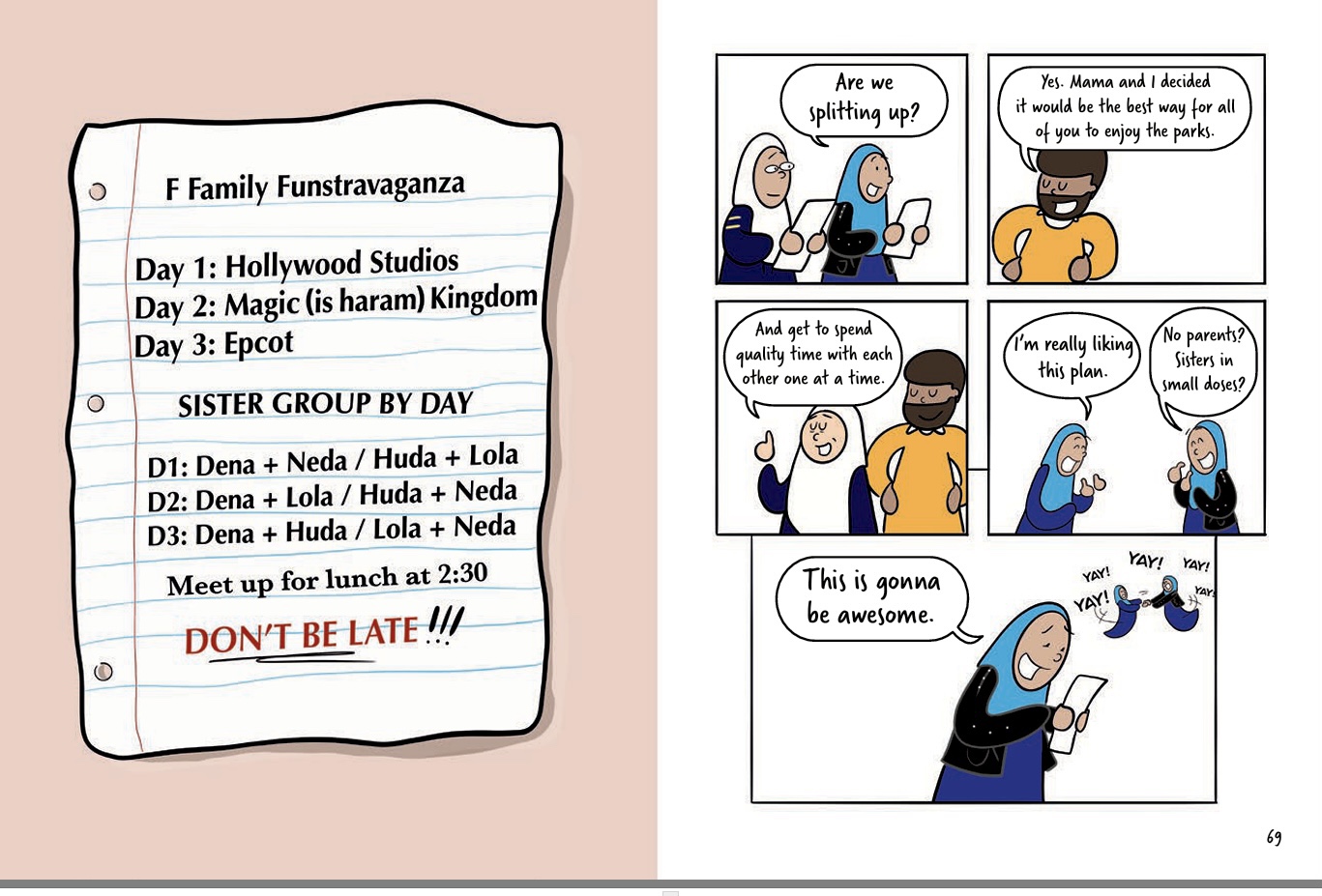
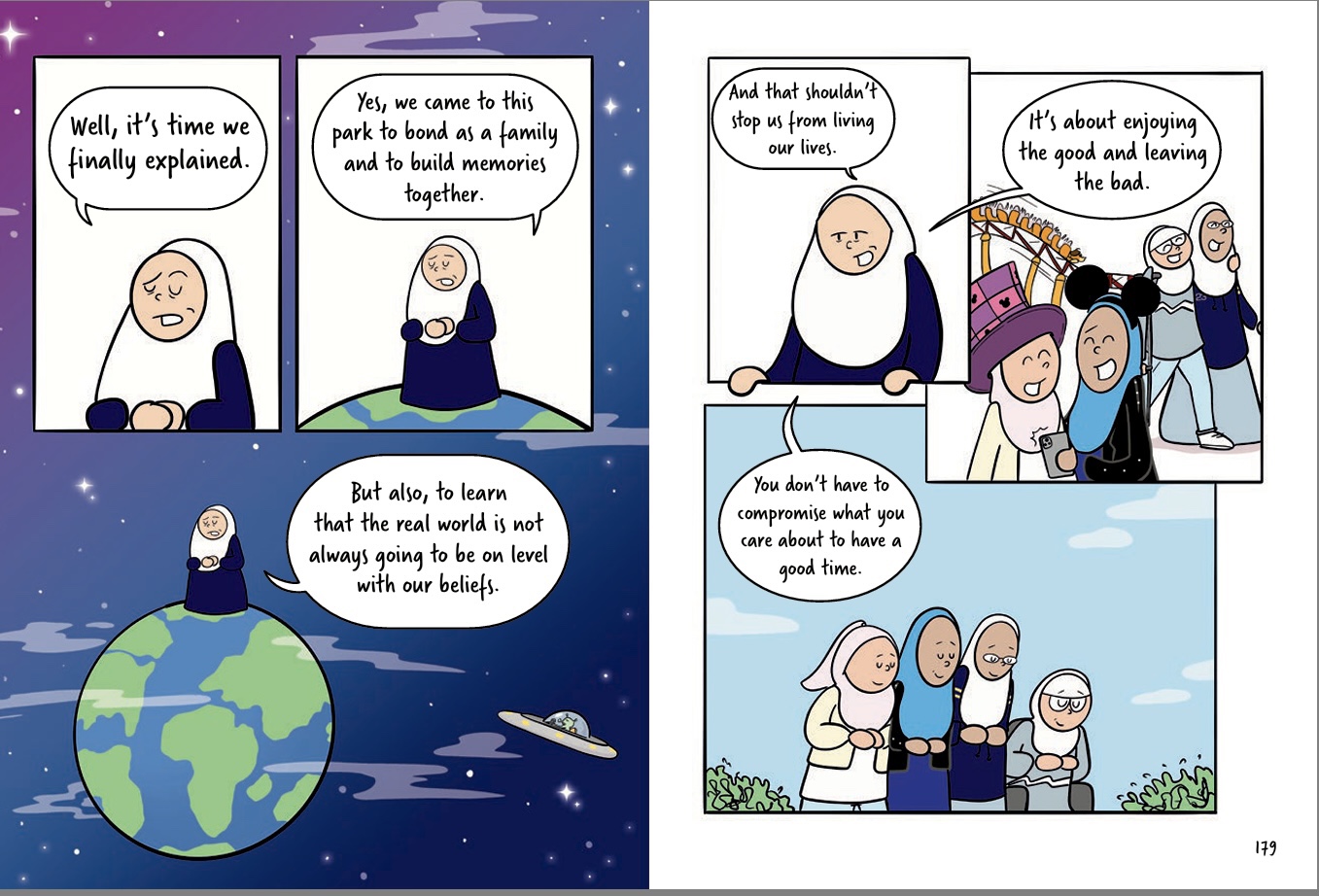
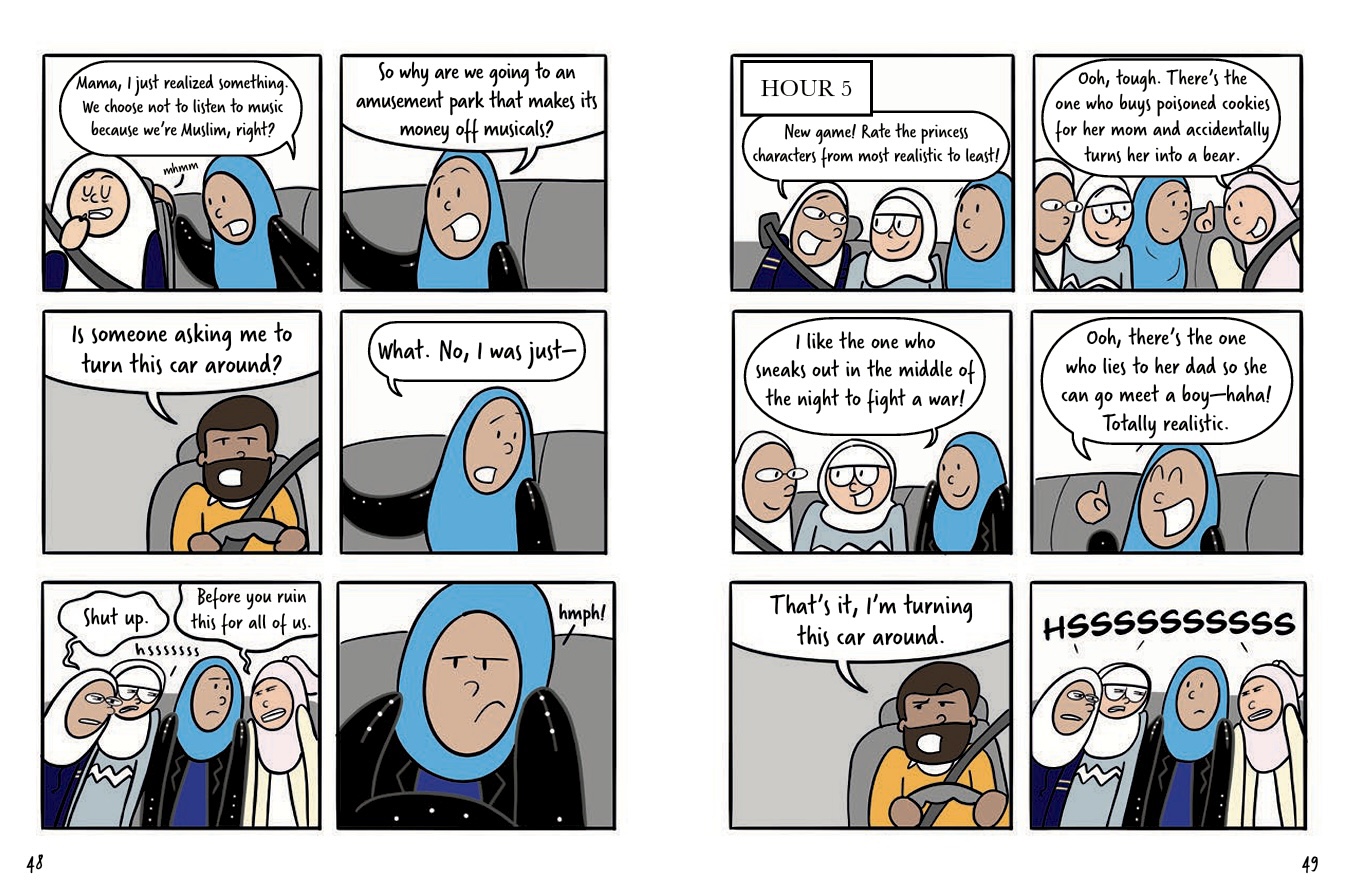
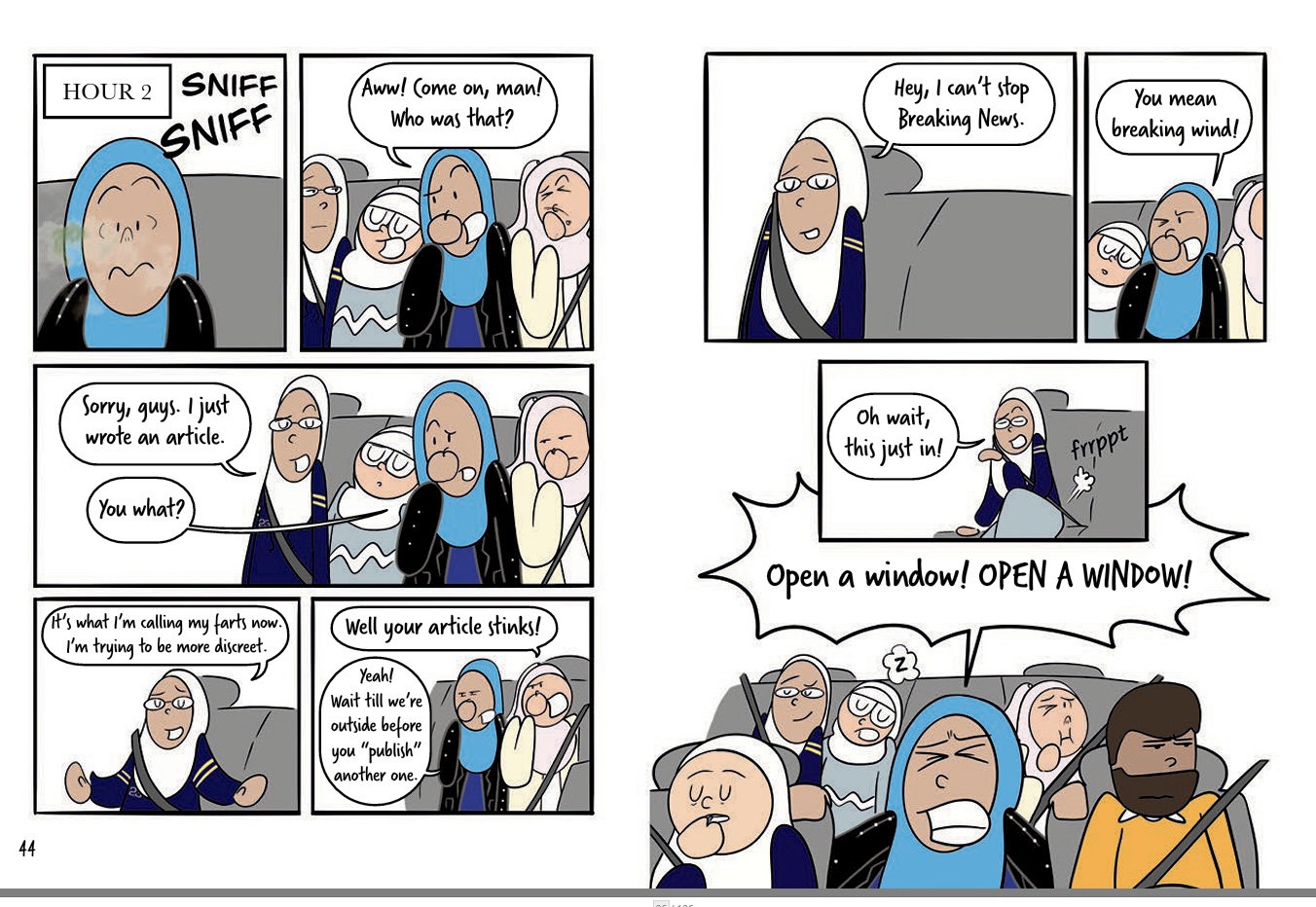
There is nothing quite like reading a YA graphic novel where you feel so completely seen, where you laugh out loud and snort at the shared idiosyncrasies, and where you don’t have to worry that the next page will normalize something haram.  This book, and the entire series, are such a gift to us all that I’m posting this review now, knowing full well that the book does not release until October, with the hopes that you will all preorder it.  This OWN voice authentic rep needs all the support we can offer it to signal to publishers that we want to see books like this published for our kids, ourselves, to share with our Muslim and non Muslim friends and that we want to see similar unapologetic voices in the future.  Huda loves Islam, she is Muslim, but that doesn’t mean she doesn’t feel uneasy at the idea of praying in public, or making wudu at a rest stop.  Her sisters sing Native Deen’s M-U-S-L-I-M to call her out, she fan girls about We Hunt the Flame, and the entire book reads like time spent with friends who can keep you laughing, comfort you when needed, and who are willing to share their very real relatable world with you as they take on Disney World.

SYNOPSIS:

It is summer and Huda and her family are heading on a road trip to Disney World. One sister hangs back for a Quran intensive, the one sister she likes.  Determined to make the best of it she piles in the back seat of the family car with her three other sisters and they hit the road.  The 24 hour one way trip is filled with sibling bickering, rest stop stresses, and parental gems.  Once they get to the park though, their parents have some surprises for them, and Huda finds herself bonding with her sisters despite herself.

FLAGS:

Fart jokes, bullying, punching, self defensive, hitting a boy in the privates for attempting to pull off a hijab, forced physical touch, lying, nothing YA can’t manage.  The title might seem crude to some, I, personally, love the ownership of one’s name, but the book is not offensive.

TOOLS FOR LEADING THE DISCUSSION:

This book won’t work as a book club selection, but I hope it finds its way to every home, middle school and up class and library.  Boys and girls will enjoy the content and I have no doubt, like the other books in the series preteens and teens will be regularly thumbing through the pages giggling and sharing their favorite parts.  You can preorder your copy here https://amzn.to/44Be87O

Please preorder if you can, and if you cannot please request your public library to shelve it, check it out, read, suggest, and enjoy!

Definitely one of my favorite books of the year, decade…..ever?

The Grimoire of Grave Fates by Hanna Alkaf and Margaret Owen

Standard
The Grimoire of Grave Fates by Hanna Alkaf and Margaret Owen

I keep saying I won’t read anymore anthologies or collections, but this 464 page YA fantasy mystery intrigued me because each chapter is written by a different author, presenting a different character to unravel a whodunit.  In total there are 18 character perspectives, 18 authors, and one murder that needs to be solved.  With two Muslim authors included and it created by a Muslim writer, I hoped there would be some Islamic representation.  The list of authors is quite diverse, and I think every character presents some minority label to normalize a specific culture or identity.  The Muslim characters both wear hijab, but nothing more about their religion is mentioned and no other faith is included.  There are Black, Asian, Hispanic characters, and every letter of LGBTQ+ is highlighted and seemingly the focus of the book.  At times it is just attempted normalizing that a character is queer or gay, but other times it is central to the plot such as when two girls spending the night together provides an alibi, and a few times it really takes away from the story, for example at one point two boys (one magical, one neutral) kissing and falling in love.  There are gender fluid, non binary, pronoun preferences, trans male-to-female, female-to-male characters as well. I kept reading to get to Hafsah Faizal and Karuna Riazi’s chapters, which were 10 and 12 and by then I was so close to the conclusion, I just finished.  Some chapters are stronger than others, but the resolution was really anticlimactic and didn’t do the buildup justice.  I share this review not just to comment on the story, but to also give a heads-up to the content so that you can decide if the book is suitable for you and your children.  I would not shelve this book in our Islamic school library, which is unfortunate, because I think even with the weak ending, I like the theoretical storytelling concept.

SYNOPSIS:
In moving school for magical students, a murder has been committed, and the students who all feel like they are the “chosen one” are determined to solve the case.  The characters share what they know and add to the “solving” of the case for the reader with their different magical abilities.  Some of the students are werewolves, some necromancers, there are those whose dancing is magical, others whose embroidery is, a few are the same, many are unique.  They don’t compete with one another so much as they are in their own world trying to prove their worth and right to belong.  When a homophobic, racist teacher “dies” secrets are uncovered and dirty administrators are called to account.

WHY I LIKE IT:

I like seeing a glimpse of the action from a character and then not really seeing that character again, it made it seem more puzzle-like in the coming together of the clues.  I also liked it because if I didn’t particularly like a character or writing style, it didn’t last the duration of the book.  I wish it didn’t feel so token representation though.  If the goal was to be inclusive, the mirroring uniqueness was lost when each character seemed to have to tick a box.  It made it read formulaic.

The conclusion just unraveled, and I know mysteries and horror stories tend to fall in to this trap, but I was hoping it would go out with a bang.  The buildup was strong, but then it became a lot more just telling, then sleuthing, and I don’t know if it was a reflection of the individual authors, or the overall arc of the book.  Either way, I felt like it could have concluded with a bigger punch and wrapping up of some of the loose ends.  Hanna Alkaf didn’t have a chapter, presumably she wove it all together and made it flow cohesively with the internal memos and emails and notes.

I wish the two “Muslim chapters” would have had some more representations about Islam or the girls’ cultures influencing their magical style or goals, but with token rep it is often just a label, an identifier, and then nothing more.  The two connect over fear of Islamophobes blaming them for the death of their teacher.

FLAGS:

The focus of the book is largely on relationships, mostly LGBTQ+ but some hetero crushes as well.  Trans, non binary, gender fluid, bullying, racism, prejudice, murder, magic, lying, sneaking. The Muslim characters do not have crushes or romantic relationships mentioned, but one has a close male identifying gay friend that she does have physical contact with, a reassuring hug- so the book does have Muslim girls with close male friends. Fear of Islamophobia, stereotypes.

TOOLS FOR LEADING THE DISCUSSION:

I would not be able to teach this book or shelve it in an Islamic school.

Forty Words for Love by Aisha Saeed

Standard
Forty Words for Love by Aisha Saeed

fourty

This YA magical realism book by a Muslim author contains no Islam, and while it is a love story of sorts, and there is a kiss, it remains clean for the demographic.  It is a snapshot of daily life for a few characters in a small magical town.  There is no real understanding of the premise, or the magic, nor resolution to what happens or why any of it matters, there aren’t even forty words for love provided, yet the author is good at writing, so I kept reading, even when the plot holes and rationale for the “point” of the book clearly were not coming.  The ethereal lilting tone was lovely and lyrical at times, but honestly, I was left with more confusion about the leaves, the tree, the pastel waters and the cause of blame and bigotry at the end, than when I started.  It is an easy read, I don’t regret it, but it is hard to suggest others invest in a 304 page book that doesn’t really leave you feeling satisfied.  I wouldn’t object to it on a shelf, and others might absolutely love the infusion of other worlds into a grounded reality to tell a story of industry leaving a town, and two kids moving from friendship to romance, but I just wanted more: more world building, more tension, more resolution, more backstory, more detail, more magic, more understanding, more character development and connection.

SYNOPSIS:

In the vey first chapter, a small child drowns.  The child had wandered off from his nanny and died in the ocean.  That is the day that the pink and purple waters of Moonlight Bay turned angry and black.  Eighteen year old Raf, a Golub, blames himself because he was about to tell his childhood friend Yasmine that he was in love with her.  A rule that he has been told for the last decade will mean that his leaf on his arm will fade and he will have to leave his community.  When he is about to approach Yas he sees that she is cozying up with Moses, and he stops.  When the body is then found, a scream breaks loose and  everyone runs to the little boy. Later that night the Golub tree opens and two kids, a brother and sister emerge, and the tourist rich city is no longer beautiful.  The candy factory that relies on the healing waters closes up shop and most of the townsfolk move away.  Many of those that remain blame the Golub for the town’s misfortune.  The Golub arrived by tree a decade before when their own homeland froze over.  They live in the forest and eagerly await the tree to thaw signaling that it is safe for them to return home.

Yas and Raf carry on, Raf working in the diner, and Yas gathering shells for her mother to shape into stars that heal.  Both dream of leaving the confining town, pursuing their passions: Yas art and Raf architecture, but rules, family, and obligation keep them from leaving and keep them from being more than just friends.

WHY I LIKE IT: (SPOILERS):

I like the tone of the book.  It is like a dreamy lullaby that floats around, but I really needed answers.  If certain threads were unresolved, I could take it as being left up to interpretation, but this was more than a literary devices, this reads underdeveloped.  So much happens in the first chapter, and the rest of the book really doesn’t keep up.  The reader never learns why the leaves fade or pulse or why Uncle came to the conclusions he did even if safety was his motivation, we don’t know how Kot and Nara got through the tree or survived for 10 more years in Golub.  It is hard to believe that in a decade so few Golub tested out their leaves? And what purpose do they even have? They allow them to return, that is it? That is their rumored, untested magical ability? Were the waters healing before the Golub came, the confusion of what Yas and her mom do and the arrival of the tree seem a bit inconsistent. Yas feels electricity when Raf is around it is mentioned a few times, but never explored.  We are told that Jake hates Golub, but does anyone else really?  How can a city that reads like 10 people have its own high school? It doesn’t feel fleshed out, it reads like there are a few families is all, and doesn’t contrast it to when the town was thriving, it is rather stagnant.  I get that bigotry and hate are illogical and the story is perhaps a bit of an allegory for that, but the town has pink and purple waters with healing properties that changed overnight and a group of people arrived through a tree with leaves tattooed on their arms, I don’t see how the magic or the leaf on their inner arm is what is being blamed for Sammy’s death or the water changing.  It is a weak premise.  Even when we learn that Uncle lied, no one seems to get any truth out of him or be determined to figure stuff out. It is a bit hard to believe no one ever looked at the beach at night, and what exactly are the Weepers doing?  Some history or back story about Moonlight would be great to explore. Are Golub and humans different in any way? What was the cause of death of Raf’s dad? Absolutely nothing set out by the book is resolved, nothing is learned, no characters grow, the only closure is that Raf and Yas have told each other how they feel, and the Golub have learned that they can travel further than 40 miles from their tree, that is it.

I do like the mix of names of the characters coming from different cultures all existing without othering or explanation. I like that the slow burn angst is clean, it is nothing a 14 and up couldn’t handle, even if it is a bit obvious.

FLAGS:

Magic, a gay couple own the movie theater, there is some angst, a couple of kisses between Yas and Raf, bullying, premonitions, family fighting, lying, sneaking, romantic hetero affection.

TOOLS FOR LEADING THE DISCUSSION:

There is no Islam and the plot is centered around two teens’ feelings for one another so I would not host this as a book club, nor would I really want to do so.  But, if I knew there was a a group of people gathering to discuss this book, I would totally join in to see if any insight to all the unanswered threads could be resolved.

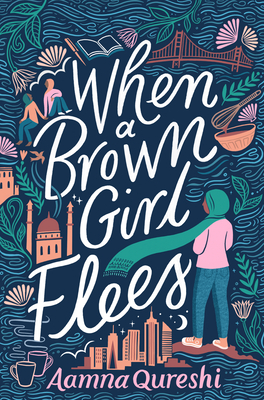
When a Brown Girl Flees By Aamna Qureshi

Standard
When a Brown Girl Flees By Aamna Qureshi

when a brown girl flees

I was both nervous and excited to read this contemporary book having loved the author’s fantasy, but unsure how a Brown Muslim Pakistani American girl running away from home would be presented.  Alhumdulillah, the author approached the story from a place of love.  There is no internalized Islamophobia, self othering, or in broad strokes even an identity crisis. The protagonist has made decisions, drastic ones, and is trying to piece her life back together on her own terms, but the love of culture, family and faith, is always upheld.  It reads like Islamic fiction, with very didactic passages and moral positioning, I’m still quite surprised that it is traditionally published.  The version I read had grammar errors, so I’m hoping that they will be corrected when the book releases in a few weeks.  The story is engaging, but the writing a bit monotone.  Much of the story is telling, not showing, and because of the surface level spoon feeding of so much of the plot, when the catalyst or rationale is not provided, the book seems underdeveloped, or lacking, unfortunately.  I would not recommend this book for the target audience of YA readers (12/13 and up) it contains sex, slut shaming, self harm, depression, suicidal thoughts, physical and emotional abuse, profanity, and mentions drug use.  I do think though, early college age readers will enjoy and benefit from reading the book.  At a time in the reader’s life when they are defining themselves on their own terms, owning up to their own mistakes and laying out a future path, this book will provide relatability amplified by religious and cultural touchstones.  The heart of the story is the connection of a girl with Allah swt after she has sinned, the guilt and regret she feels, and how she finds herself, and returns to try and fix things with her family.  The characters are flawed and the overall messaging beautiful, hopeful and uplifting.  Unfortunately, it just reads like an early draft and I wish it had a bit more refinement.  Keeping that in mind though, it does have a place, and I’m glad to see our “new adults”  can find reflections of  themselves in a piece of literature that amplifies their Islamic identity instead of criticizing or questioning it.

SYNOPSIS:

The book starts with Zahra deciding to run away from home.  She parks her car, leaves her phone and catches a flight to New York from California.  The reader doesn’t exactly know why she is running, only that a few days after high school graduation she is escaping a toxic home life, an impending wedding, and misery.  As the story peels back layers we start to see some of the nuance of what she is running from as characters from her past find her and physical space allows her some perspective to see her own role in her “old” life.  When she arrives in New York, it isn’t the city life that she seeks, but rather the nature and pace of Long Island that offers her a fresh start.  She heads to the masjid, makes a friend, and starts to put her life together without parental obligation, outside interference, and self loathing.  She cannot run forever though and she cannot escape herself.  She must confront her past, own her mistakes, be honest with her new friends, and find peace with her family, not because she has to as a Brown daughter of immigrants, but because she trusts Allah, loves her family, and wants to “fix” things.

WHY I LIKE IT:

I’m a sucker for books that show redemption through the love and mercy of Allah (swt).  Yeah her new friends were idyllic in their family life, relationships and worship, but we all want friends that make us better Muslims, so I let it slide. Islam is centered, she wears hijab, she reconnects with salat, it is her identity even when she is just going through the motions. The author at times conflated culture and faith, but it never issues blanket statements or falls into universal stereotypes for Desi culture or Muslims.  She does a good job of keeping the negatives to the people and the critiques to the failure to push back on dangerous expectations. My issues weren’t the character flaws either, I’m onboard with the messiness of being human and the ability to seek and receive forgiveness from our creator.  I just wanted to feel things more.  So much was just told when it should have been shown.  I wanted to see the stress and anguish of her family life, not simply told it was depressing.  I wanted to see her cutting life long friends out and being isolated, not told she had lost her friends.  The book focuses on her running, and why she ran, but a big plot point for why she ran, having sex, needed more fleshing out.  Why was she driven to such an act? I know that she was depressed, I’m not belittling that, but what pushed her to such a strong stance, when she was already allowed on the school trip, she hadn’t yet been given the ultimatum and over and over the book says “I miss my family,”” I miss my home,” “I miss my mom.”  I didn’t feel the connection or understand what she was feeling, thinking, and it seemed like a huge hole in the book.  For all the themes of mental illness, faith, generational trauma, misogyny, abuse, expectation, depression, lying, culture, life choices, higher education, family dynamics, self harm. the book never quite felt rich with emotion or deeper than the surface level story.  At the beginning the author says she first wrote the book when she was a senior in high school, and while that may have made the main character’s perspective and voice ring true, as a successful author now, I wish she would have added the nuance, the insight, the subtlety that would have drawn the reader in and allowed them to get inside Zahra’s head and heart to see her and perhaps even themselves.

FLAGS:

The author and book identify triggers in the book “please be mindful of TWs: depression, anxiety, emotional abuse, physical abuse, self-harm, suicidal ideation, slut-shaming, PTS.”

There is also music, boys and girls alone in cars together, lying, cursing, generational trauma, misogyny, abuse, expectation, depression, anxiety, guilt, life choices, higher education, family dynamics, cutting, a brother who is often high or smells like weed/pot, it mentions partying, a sexual event, deceit, physically assaulted by a parent.  Nothing haram is glorified, but it is there and it is detailed, and not everything is resolved.

TOOLS FOR LEADING THE DISCUSSION:

I would not be able to shelve or teach this book in an Islamic school library, but in a college MSA book club or a youth group of a similar age this book would be incredible to read and discuss.