Category Archives: STEM

The Prince of Stars: Ulugh Beg’s Quest to Map the Stars and Seasons by M.O. Yuksel illustrated by Zelma Firdauzia

Standard
The Prince of Stars: Ulugh Beg’s Quest to Map the Stars and Seasons by M.O. Yuksel illustrated by Zelma Firdauzia

This gorgeous 40 page picture book biography is both flowing in its storytelling and informative in its sourced details of a fairly unknown, underappreciated figure.  I was humbled reading this book and learning about the accomplishments of someone I had never heard of before.  Truly this book, bringing to the attention of our young and old ones alike, such a remarkable figure, is a much needed gift.  The publisher suggests the book for 4-8 year olds, but I think it also will appeal to older readers familiar with Copernicus, Galileo, and Ptolemy and who will appreciate the efforts driven by curiosity from someone so long ago. The diction in a few lines did give me pause, but nothing that overshadows how well the author has once again proven to master the storytelling of non fiction Muslim accomplishments in an engaging, accessible, exciting way for today’s audiences.

The book opens with a map of the Timurid Empire in 1405, before showing the reader a young prince, Ulugh Beg, gazing out and the stars and wondering how many there are.  The next spread makes no sense to me, but I acknowledge others might not be bothered, how can the young boy be watching days fade into weeks, into months, into years, and then wonder how many days are in a year? Seems that either those terms weren’t yet around, or some details about the generalized meaning made him curious about the specifics.  Either way, him wanting to know how many days in a year and the changing of seasons, along with counting the stars are the questions he wonders about as a child and works to answer throughout his life.
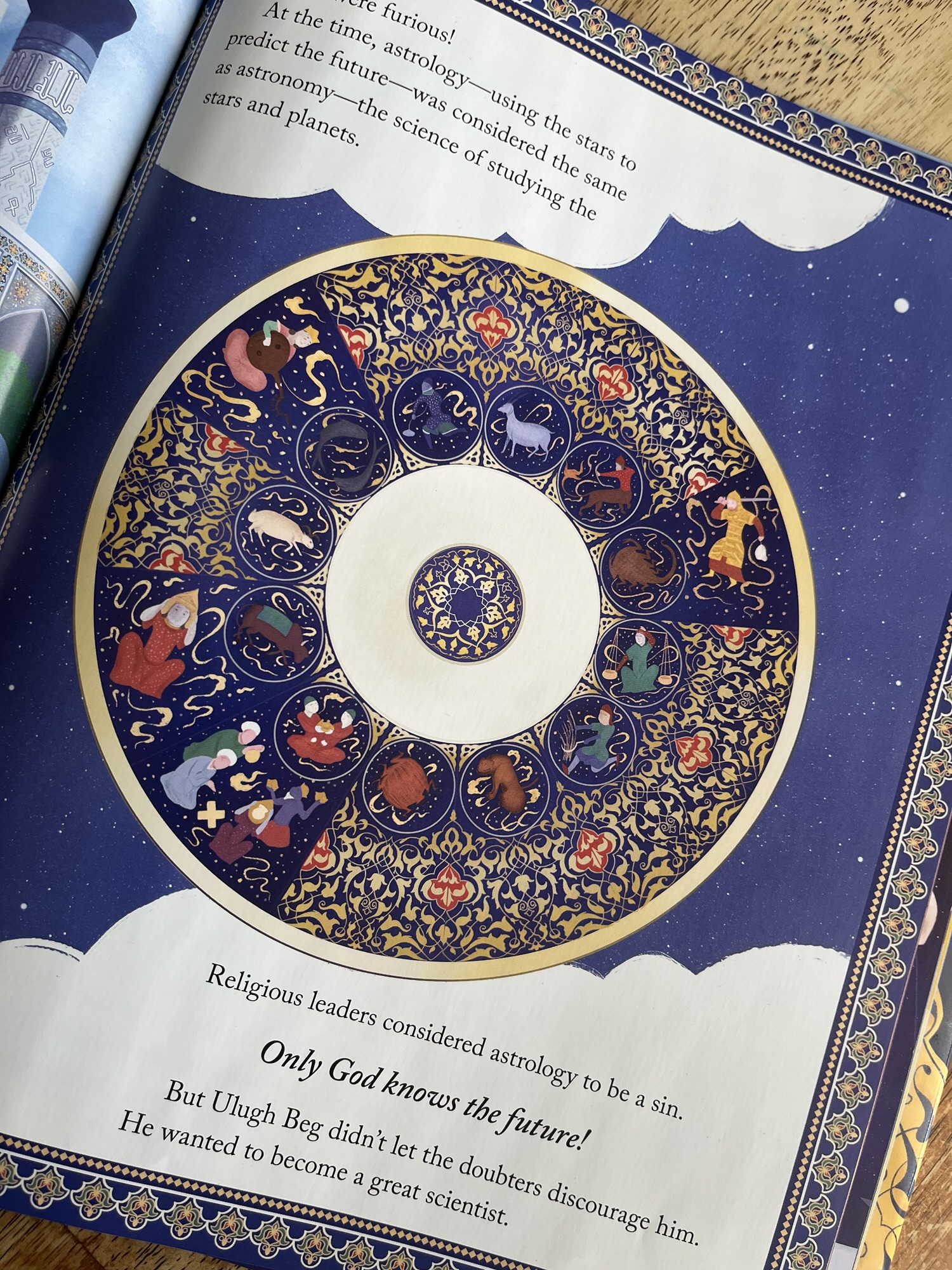
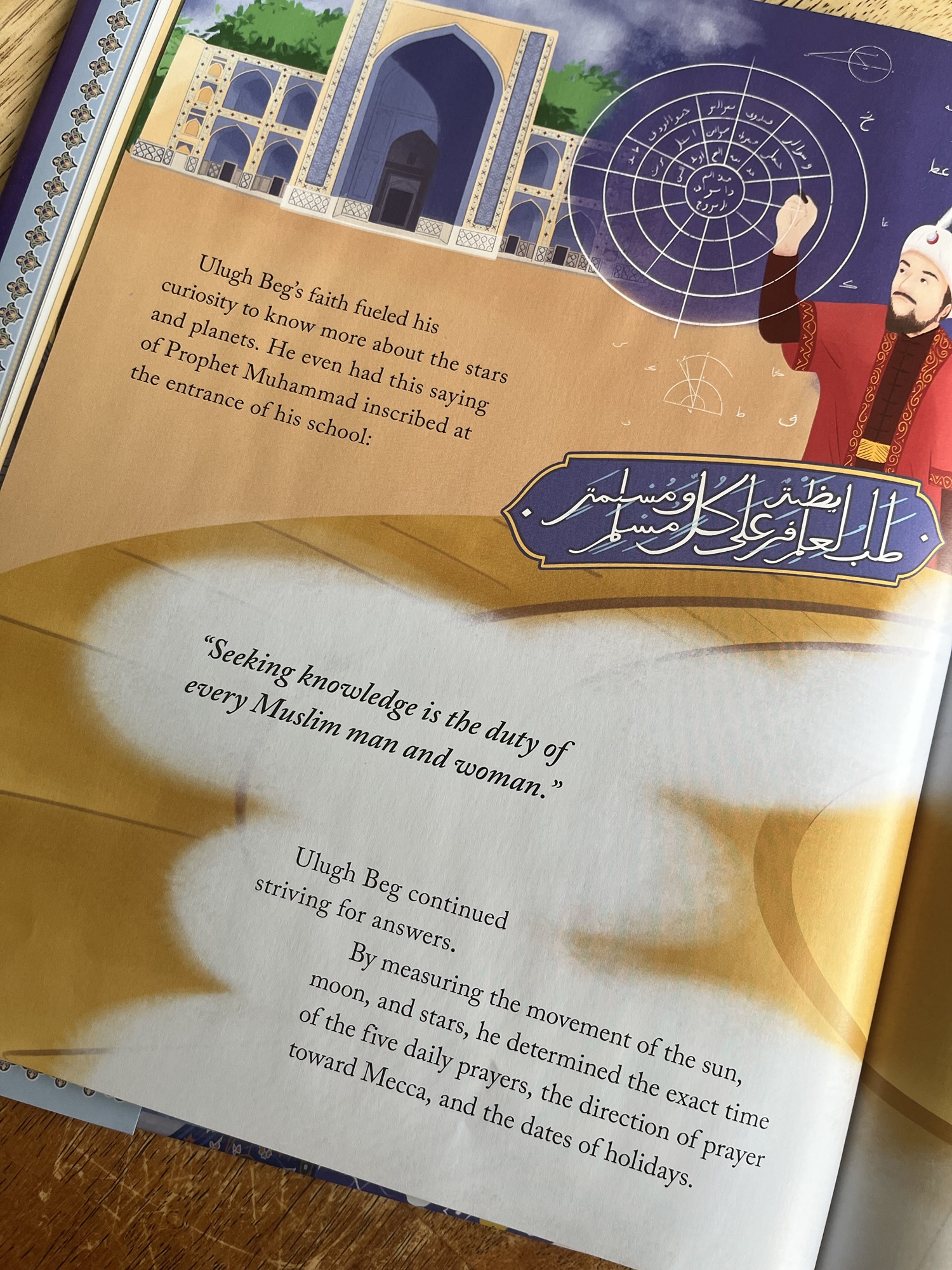
The king of the Timurid Empire, Ulugh Beg’s grandfather, insured his intelligent grandson had the best teachers and was allowed to travel, learn, and follow him curiosity.  At 15, when Ulugh Beg became the ruler of Turkistan, he built a madrasa and invited scholars, artists, students, philosophers, and inventors to attend making Turkistan “a mecca of learning.”  Yes, the usage of mecca here made me laugh.  I know it is appropriate, but it seemed a little on the noise in a book where Mecca, the direction we pray is also mentioned.  The book then details the controversy of studying the stars, as astrology and astronomy at the time, were seen as one and the same.  And with only God knowing the future, he had to assert that he was curious about the science of the stars and planets.
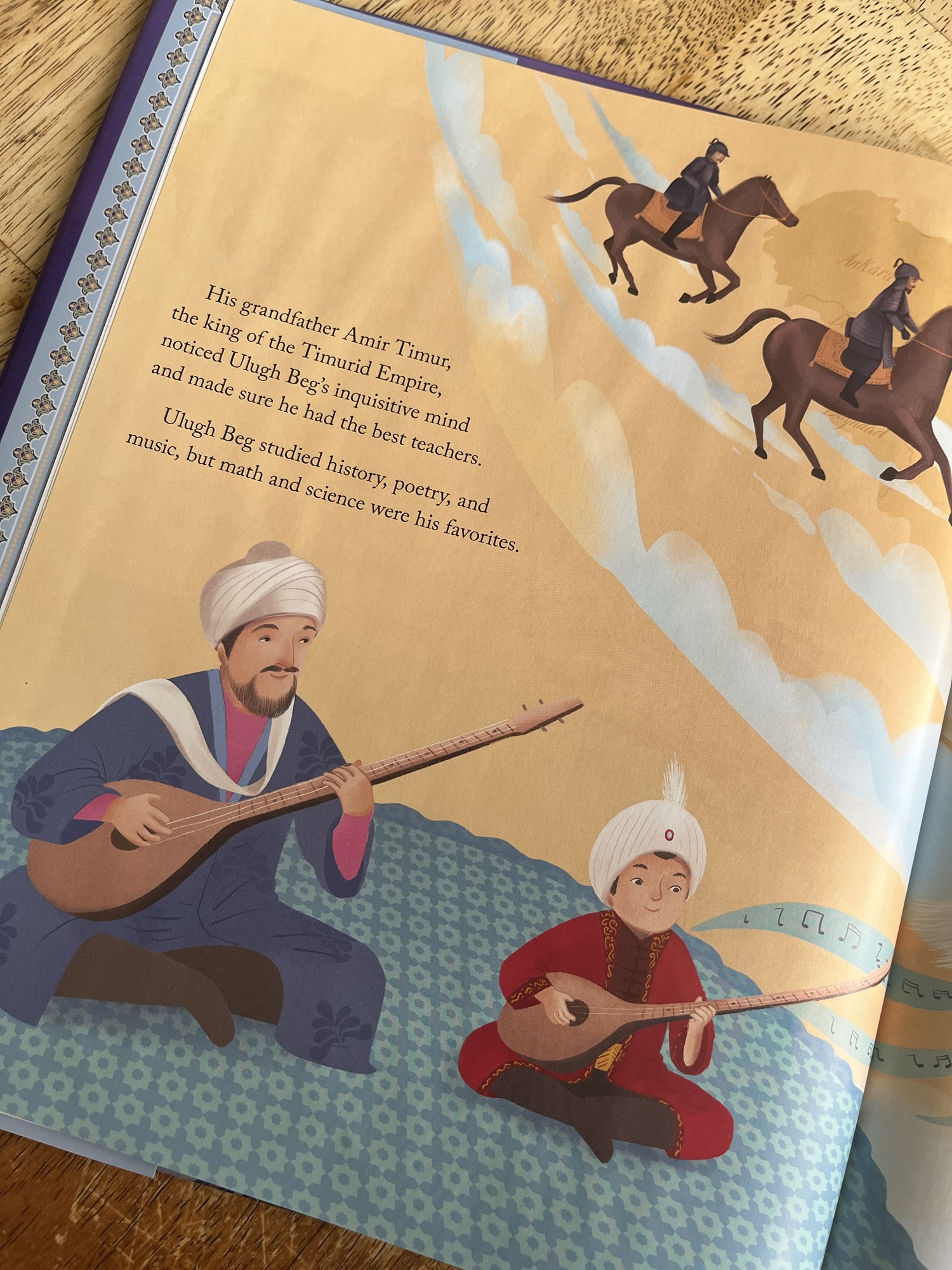
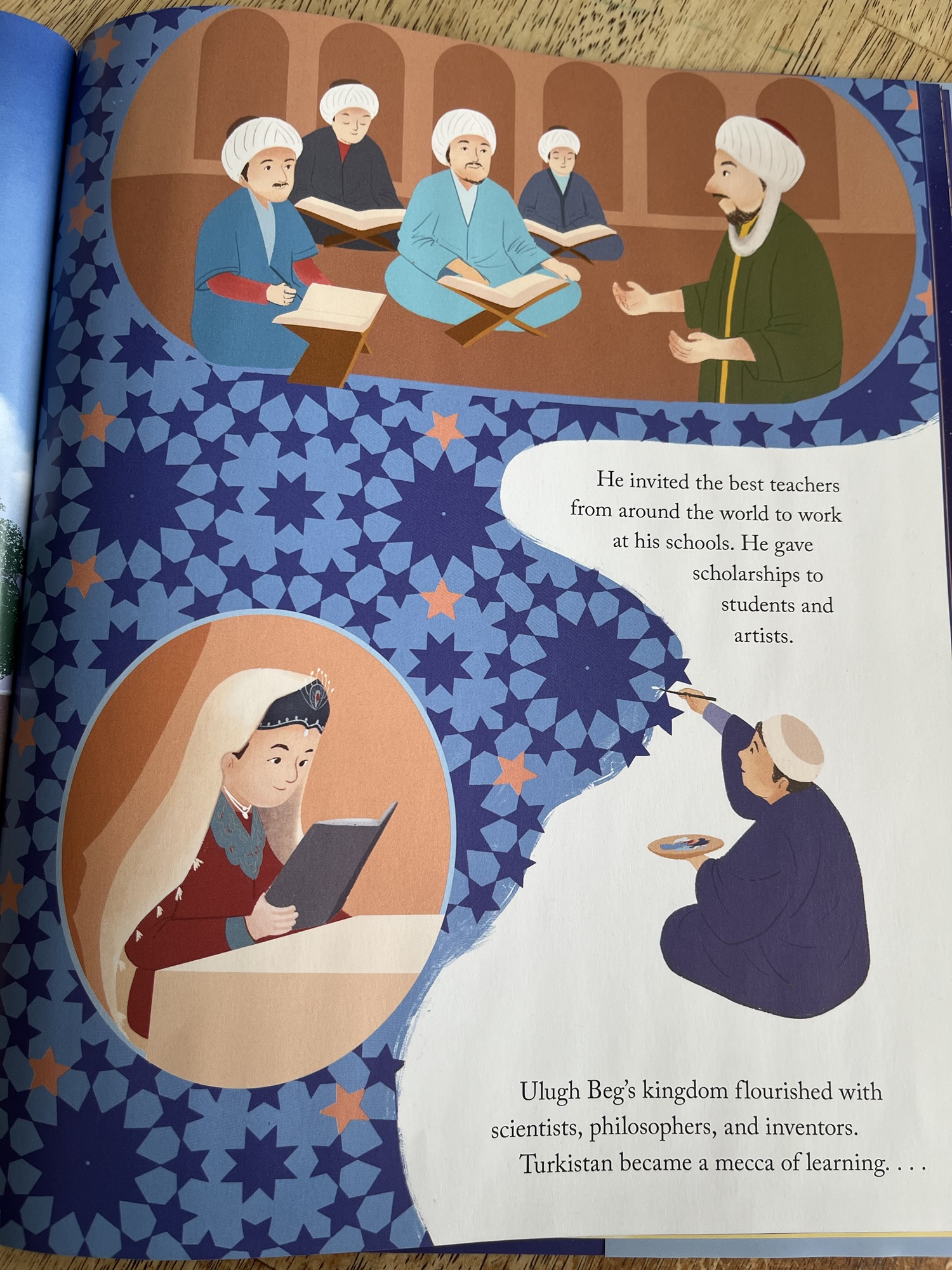
I love that faith and Islam is centered and that the inscription on his school is “Seeking knowledge is the duty of every Muslim man and woman.” But it alludes that this is a hadith, and while I agree it is inspired by a saying of Prophet Muhammad (saw), I think adding the man and woman part, where to the best of my knowledge the hadith is just “every Muslim,” is something that should be clarified. None-the-less, that it was Ulugh Beg’s motto, so to speak, and that he made a point to articulate “woman” is remarkable.  He determined the exact time of the five daily prayers, the direction to Mecca, and the dates of holidays.
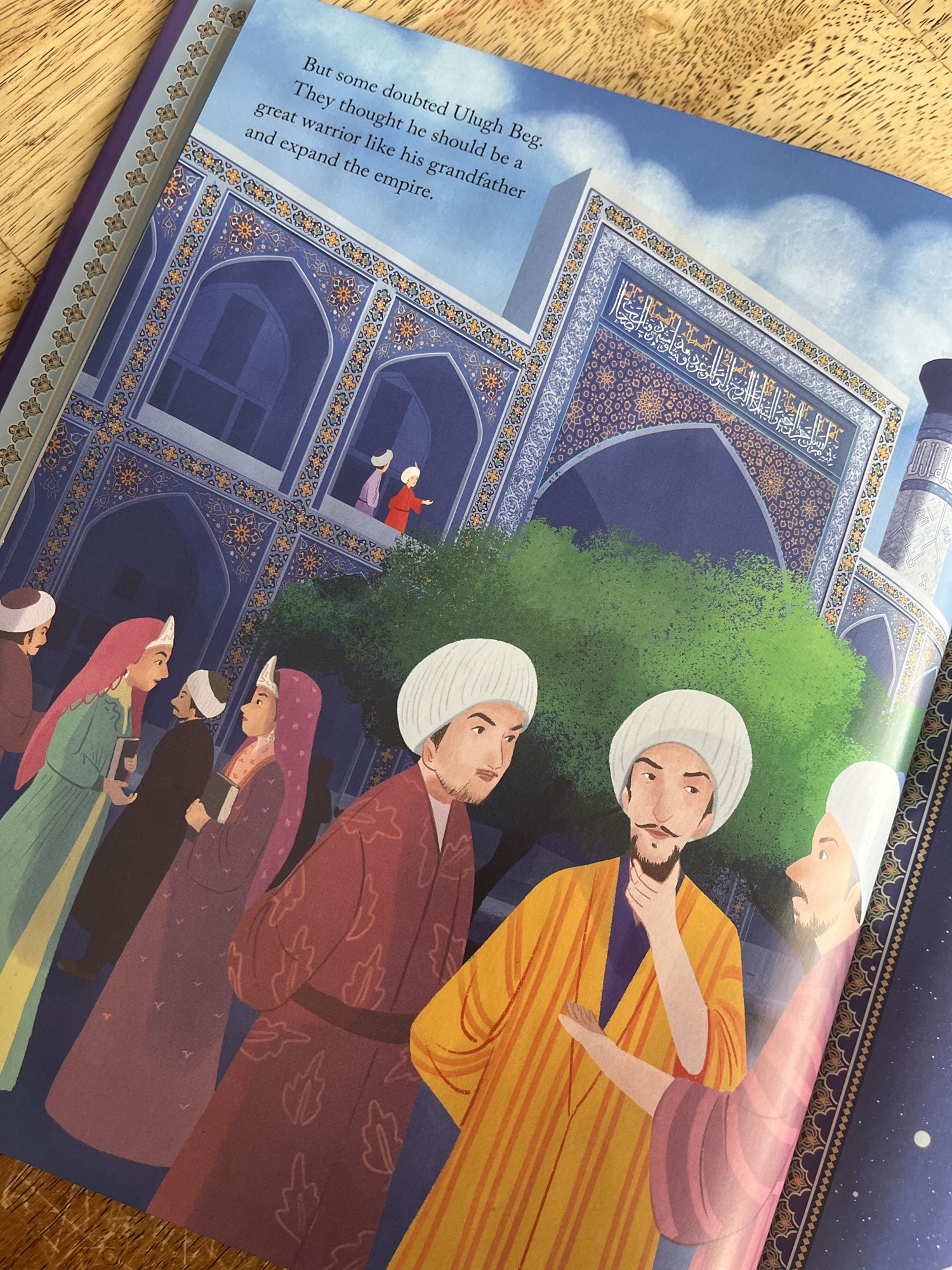
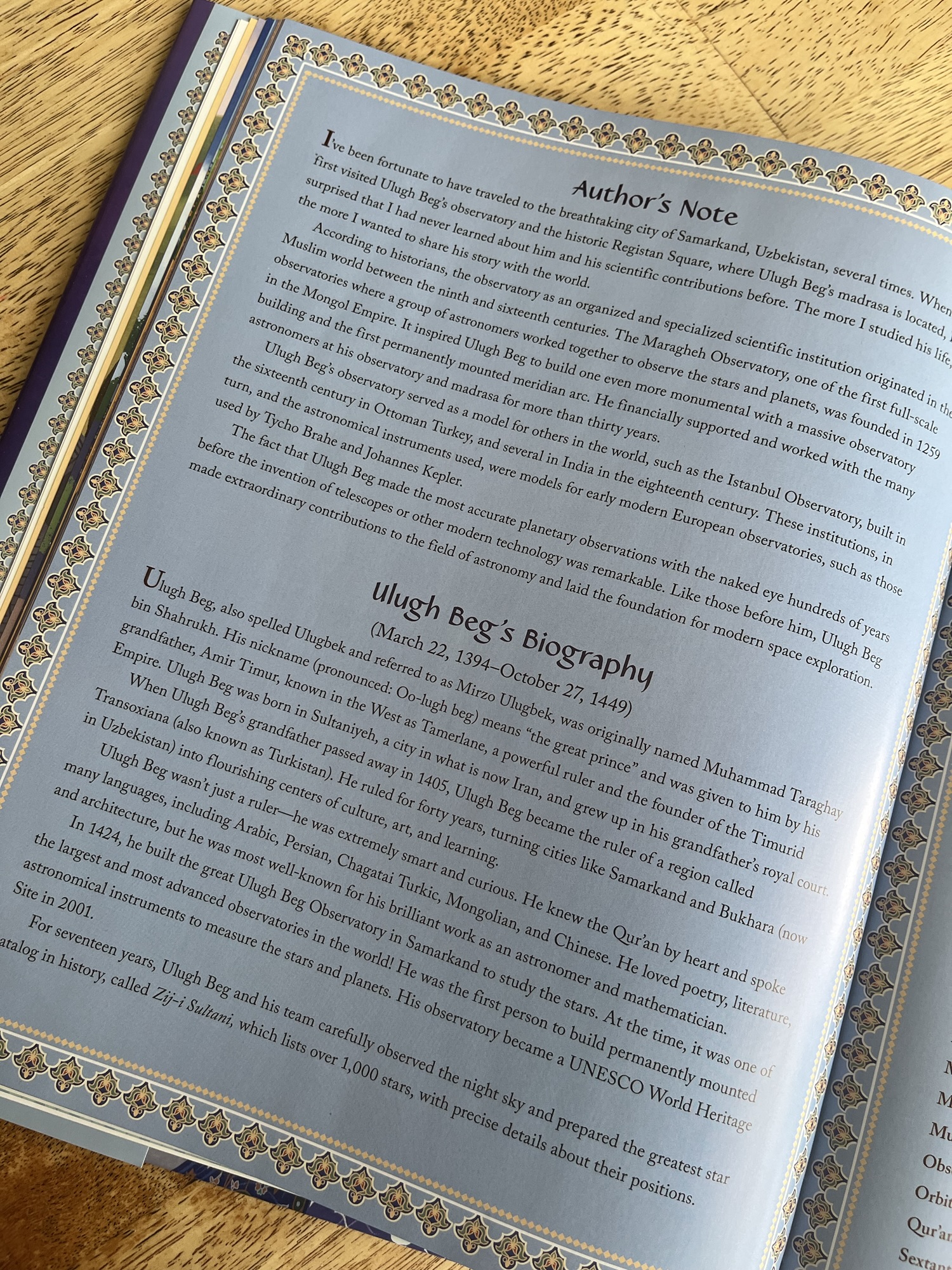
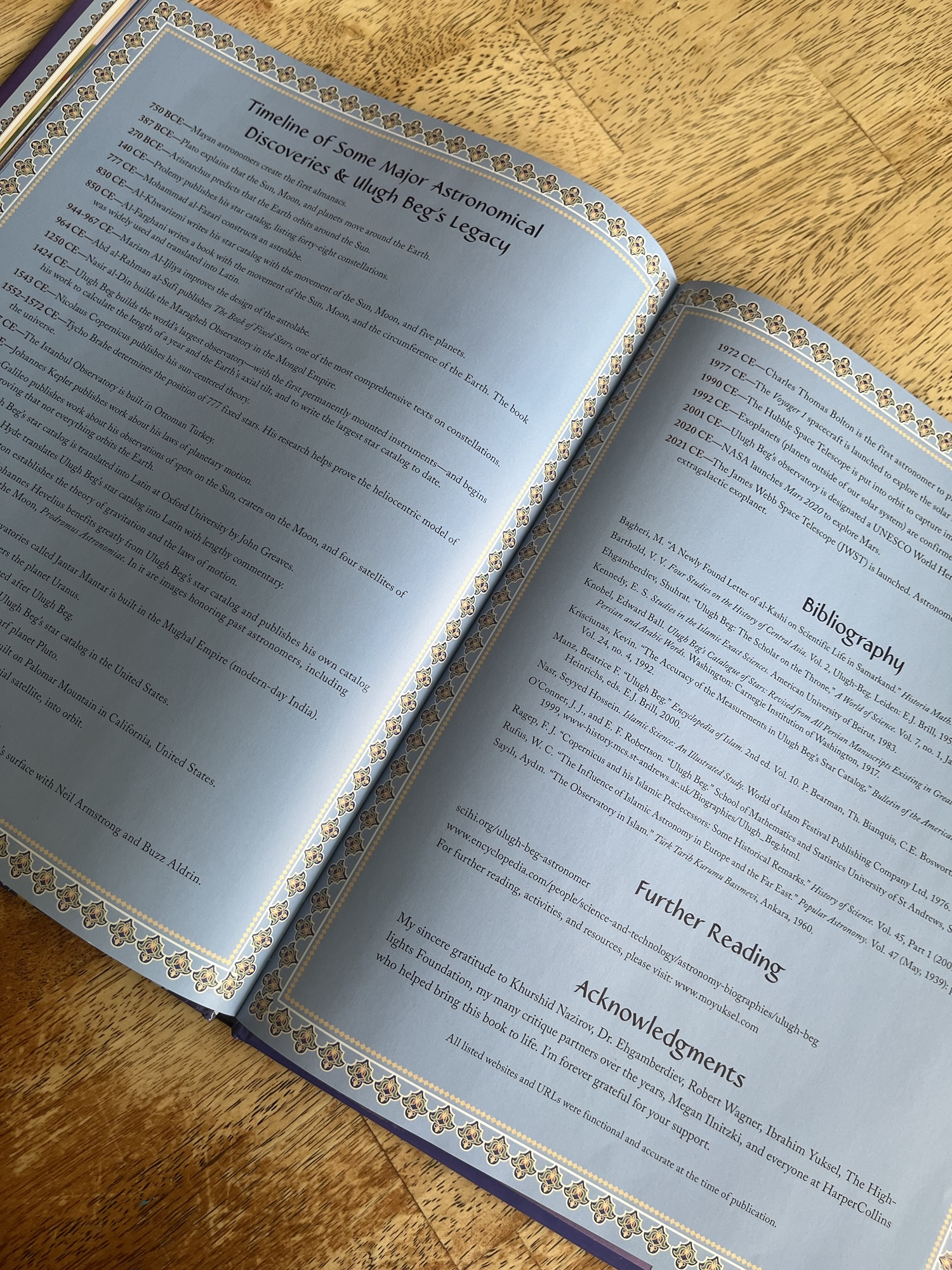
He also built the world’s largest observatory, and numerous tools, including the Fakhri sextant to measure the location of the stars and movement of planets.  He encouraged being challenged and challenging others’ findings, and over 17 years wrote a star catalog of more than 1,000 stars. He answered how many days in a year, down to the seconds, why the seasons change, and inspired future astronomers and scientists.

As incredible as the story is, the backmatter is equally impressive with an Author’s Note, Ulugh Beg’s Biography, a Glossary, Astronomical Timeline, Bibliography, Further Reading, and Acknowledgements.
The illustrations are the cherry on top, somehow I don’t love the cover, but the inside spreads are nice and match the tone of the words and the detail of what he was accomplishing.  The book is on preorder and I hope, teachers, librarian, and families will prioritize learning about him, and giving him credit for what he helped us to understand, about our world.

Leena Mo, CEO by Deena Shakir illustrated by Nez Riaz

Standard
Leena Mo, CEO by Deena Shakir illustrated by Nez Riaz

img_5445-1

For ages four to eight this 40 page picture book really introduces great concepts of leadership, business, support systems, and dreaming big.  Before Leena Mo, leads a company though, she thinks up ideas to solve a problem, she turns her ideas into a plan, tests her hypothesis with her prototype, and takes her invention to the next step when demand grows.  Investors, employees, storage, sales, Leena Mo has not only created a product and a company, but she is leading a business, and inspiring others, even back in her Mama’s home in Iraq. With a Mama wearing hijab, a singular mashallah in the text, and the Arabic word for “my dream” Helmy being what she names her snow clearing robot, children everywhere will be inspired and encouraged to think a little bigger than they may have done before.

I love that this business concept is brought down to an early elementary age (and even younger), in a way that they not only will understand, but also be inspired by.  Younger kids might not get the steps, but the fun engaging illustrations, and simple text builds to show that the idea is also growing, and even four and five year olds will grasp that this is exciting.  There are books about science, inventions, even increasingly more about financial literacy, so this is in many ways a next step, that touches on those concepts, but really focuses on the investors, growth and leadership.  The story and concepts weave together, and that culture finds a place as well, is a testament to the quality of this solid, joyful OWN voice read.

The book starts with Leena playing outside in the snow with her friends, when her Mama asks her to shovel before it gets dark.  Leena hates shoveling.  She finds it worse than raking leaves, doing the dishes, and even taking out the garbage.  Instead of complaining though, she starts to dream up an idea of something that would make clearing the snow easier.  She decides on a robot, and gets to work designing and building and testing.

Once it works, a neighbor, Miss Irma, asks to borrow Helmy, and when she returns it, the rest of the neighborhood wants to know where they can purchase one of their own.  When Miss Irma invests in Leena and her team, the next phase begins and as parts turn into products, and equations determine cost, the team of Leena, Olivia, and Lily starts rolling out Helmies.

The sweet ending of inspiring others, will also hopefully inspire readers to think bigger, dream bigger, and recognize the role support,  teamwork, and leadership all play in bringing ideas to life.

The book can be preordered and soon ordered anywhere and everywhere books are sold.

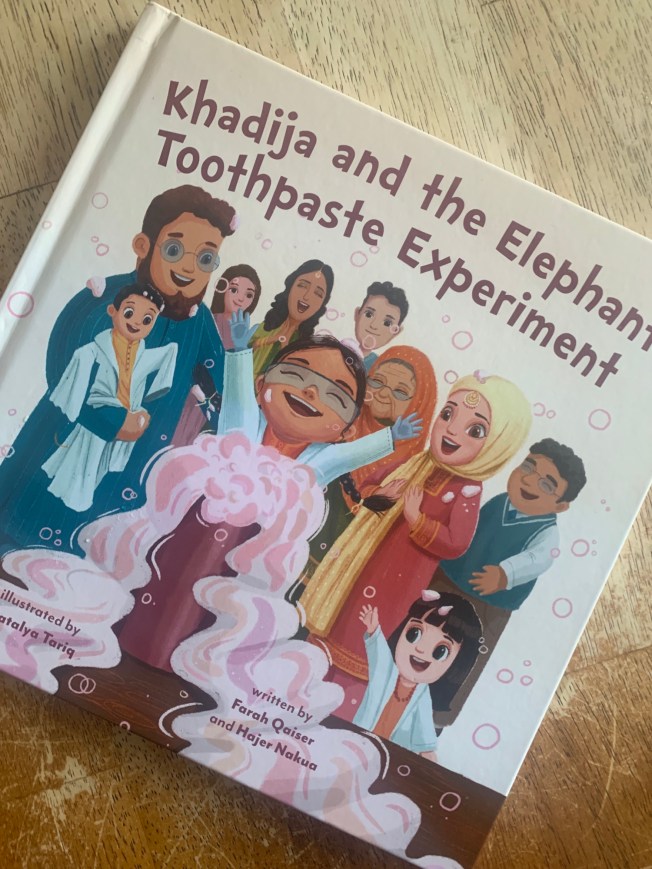
Khadija and the Elephant Toothpaste Experiment by Farah Qaiser and Hajer Nakua illustrated by Natalya Tariq

Standard
Khadija and the Elephant Toothpaste Experiment by Farah Qaiser and Hajer Nakua illustrated by Natalya Tariq

img_3251-1

This 26 page book is set on Eid, it does not specify Eid al-Fitr or Eid al-Adha, but it isn’t overly impactful on the story outside of the framing, so really it is a non issue.  The book shows a Muslim family and is a benefit for appealing to women and girls in science, unfortunately it has some plot holes though.  A big point of the book is the girl, Khadija, wondering if she can be a scientist who wears hijab because she doesn’t see any scientists at the fair wearing one. When she voices this concern to her parents, her father reassures her saying, “Anyone can be a scientist.  Scientists can wear a hijab like Amma, or glasses like me.”  First of all, I don’t like it equating hijab to glasses, hijab is a religious practice, not a tool to help you see or an accessory.  I’m well aware not every book has to have Islam centered, but I do worry that if hijab is relegated to an article of clothing, and Khadija doesn’t wear hijab, that readers might just be confused and not be able to connect the dots.  With weak writing, a confusing premise, and a climax of doing an experiment, that is not included for the readers to do at home, included in the book; I am struggling to recommend this for every bookshelf.  It isn’t a bad read, it just should be better.  I love the joyful engaging illustrations, I like the female Muslim science representation even. I just ultimately think the weak writing drags the book down and will have some kids confused why she is worried about a scarf she doesn’t wear impeding on a career she doesn’t have, and be unable to see that as a Muslima she will want to wear hijab as an act of worship when she grows up.

img_3252-1

The book starts with Khadija and her family heading to her school for the science fair after Eid salah.  She sees lots of scientists, but notices none wearing hijab.  She gets a science kit to do at home and then the family starts to prepare for guests coming over for dinner.

img_3253-1

Khadija can’t wait to do her experiment so she quietly gathers up supplies, and heads to the bathroom to make elephant toothpaste. It works, a little too well, but then it is everywhere and mom and dad show up to help her clean.  Khadija wonders if she is not cut out to be a scientist.  Mom and dad console her, the people arrive for an Eid party, and her parents and her do the experiment for all to see.

The story is pretty straightforward, but I sure have a lot of questions: why is the “big day” the science fair and not Eid.  It is at her school but the science fair is not students sharing projects, but professional scientists? And does she purchase a science kit, why does her mom give it to her at the fair, but then she asks the scientist is she can do it at home? What else did she see or learn at the science fair, she just went saw scientists in lab coats, got the kit and left?  How was it still morning when she got home after the fair, after Eid salah?  There is a whole page of her getting an Eid gift and squealing with delight, but never shares what the gift is.  I also really, really wish it had the experiment in the book. I want to know what it is and why it is called, “elephant toothpaste.” I truly do not know why this book has no backmatter.  Information about women in science, how to do the experiment, maybe something about hijab or Eid. A link or scannable QR code to see the experiment would have even added something to increase knowledge and excitement for science, representation, and dreaming big.
img_3256-1

Nadia and Nadir: Ramadan Cookies by Marzieh A. Ali illustrated by Lala Stellune

Standard
Nadia and Nadir: Ramadan Cookies by Marzieh A. Ali illustrated by Lala Stellune

nadia nadir

This 32 page early reader is part of the Nadia and Nadir series that can be read and purchased as a standalone.  It shows the sibling duo problem solving, working together, sharing, and getting excited for Ramadan.  With the theme of cookies, the book could work as a read aloud in a small group with an activity of making cookies following it, but the small leveled reader size and text volume would make it a hard selection for larger groups.  The setting is Ramadan, the female characters wear hijab (even in the home with just family), but there is not a lot of religious beliefs or practices included in the story. It does detail the lunar calendar and phases of the moon, but thankfully does a decent job of inserting that knowledge from Nadia who has learned about the moon in science class.  There are a few salams, and it mentions that Nadir isn’t fasting because he is young, Nadia gets up for their predawn meal, and snuggles back in to bed after saying her prayers. There is articulation that Ramadan is a month for Muslims and a time to share blessings when the kids share their cookies with the neighbors.  There is a handful of Urdu words sprinkled in and a glossary at the end.  The book shows a family’s traditions and radiates joy, it is a solid addition to Muslim and non Muslim book shelves in showing Ramadan cookie making and excitement in action, but would not inform a lot about the religious aspects, uniqueness, or basic practices about the month.

img_6746

Nadia and Nadir start the book with their binoculars around their necks waiting for Abu to arrive home from work, Ammi is already on the roof and they are determined to spot the Ramadan moon.  The kids are all sorts of confused where to even look in the vast night sky, but once Abu helps them out they find it and declare, “Chand Mubarak.”

img_6748

Nadir wants to know why it isn’t a full moon, and his older sister Nadia explains the cycles, they are then off to make cookies as per their families Ramadan tradition.  The dough is ready, the star cookie cutter has been found, but where is the moon cookie cutter? Nadia has an idea, and sure enough her problem solving skills allow crescent moons to be made.

img_6747

The next morning Nadia has her predawn meal of cookies and milk and when Nadir wakes up he has the same.  The kids pack up bags of cookies with their Ammi to pass to neighbors and friends, with only one left who will get it Nadia or Nadir?

img_6750

The books are available widely at places such as Amazon but for the same price I hope you will support a small Muslim owned bookstore and purchase your copy at Crescent Moon, if you use my initials ISL (Islamic School Librarian) at checkout you will save 10%, link:

Nadia & Nadir Series

img_6749

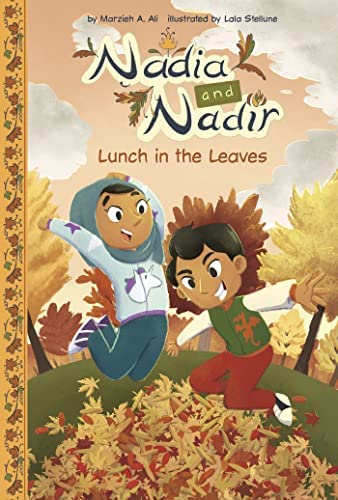
Nadia and Nadir Lunch in the Leaves by Marziah A. Ali illustrated by Lala Stellune

Standard
Nadia and Nadir Lunch in the Leaves by Marziah A. Ali illustrated by Lala Stellune

nadia

This 32 page early reader is absolutely adorable with jumping in the leaves, sibling love, imaginary unicorns and dragons, yummy food, Pakistani culture and delightful illustrations.  Books in this genre aren’t particularly known for their story telling, but with chapter breaks and relatable experiences I was absolutely pulled in to Nadia and Nadir’s world and family.  My seven year old loved that he could read it independently and was delighted to see himself so reflected in the text, infact I have given in and we will be having chicken tikka and raita for dinner tomorrow, but I’m not raking the leaves, haha.

img_4006

SYNOPSIS:

Siblings Nadia and Nadir are woken up by there mother with the promise of a surprise.  The hints are crunchy and colorful, and when the kids realize it isn’t a giant bowl of cereal outside, they are excited to jump into the giant pile of leaves their abu has raked up in the yard.  The kids dive and swim and imagine themselves to be dinosaurs and unicorns as their dad grills chicken tikka and their mom watches on shelling walnuts.

The kids bump heads and decide to play something a little safer by making faces with the leaves, branches, walnut shells, and flowers.  They create a family portrait and then it is time to eat lunch and drink chai.

img_4005

WHY I LIKE IT:

I love that it is a very recognizable family: the women are wearing hijab, urdu words are sprinkled in, and Pakistani foods are being eaten, there is no othering, all kids will enjoy the story, and Muslim and desi Muslims specifically will feel seen.

I love that there is imagination and dad cooking and hanging out in a chill environment.  There is a glossary at the back, but for this demographic I actually really like it.  It allows for the independent reader to use a book tool to understand a word.  I also like that illustrations of the words flutter around the cartoon author and illustrator blurbs.

There are details about the trees dropping the leaves as well as why the leaves are changing color.

img_4007

FLAGS:

None

img_4008

TOOLS FOR LEADING THE DISCUSSION:

Too young for a book club selection, but ideal to have on the shelves of a classroom library, school library, or home library.

Well done alhumdulillah.  Paperback and library bound additions available here.  The book is part of a series, but can be purchased individually or as a set.  I plan to review each of the six books over the next few months.

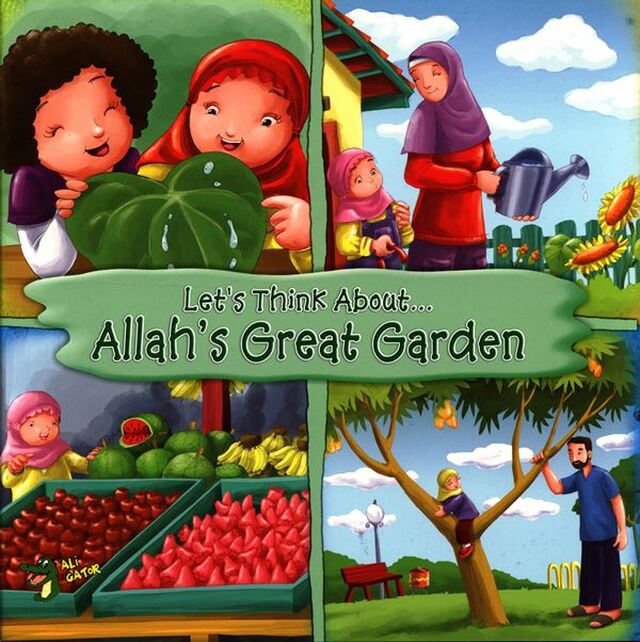
Let’s Think about Allah’s Great Garden by Ali Gator

Standard
Let’s Think about Allah’s Great Garden by Ali Gator

allah's garden

At 22 pages this book’s title aptly describes the contents within: at times factual, sometimes breaking down the fourth wall and asking readers to do something engaging, at times fictionalized, and often meandering and reflective.  The book is all over the place and only cohesive in theme.  It has sat on my shelf untouched by my children for quite a while, but when I needed options for the library during Earth Day, this book did a great job in facilitating discussion with pre k to 1st grade.  It isn’t a story time book so to speak, but it gets kids thinking and can be tailored to their level of discussion.  I don’t think that is how the book was intended, and as it is written it is rather unimpressive, but when pulled apart it did serve a very specific purpose.

img_9837

The book starts out with a few lines about Allah’s blessings of all things particularly trees and plants and gardens.  I wasn’t sure if it was trying to rhyme or not, but I think the first lines are just incidental rhyme as the flow and words quickly unravel. It talks of climbing trees and the narrator’s father telling him to be careful. It then discusses watermelons and how they grow in the ground, not on a tree and asks readers if they can see the watermelon seeds in the illustrations.

img_9836

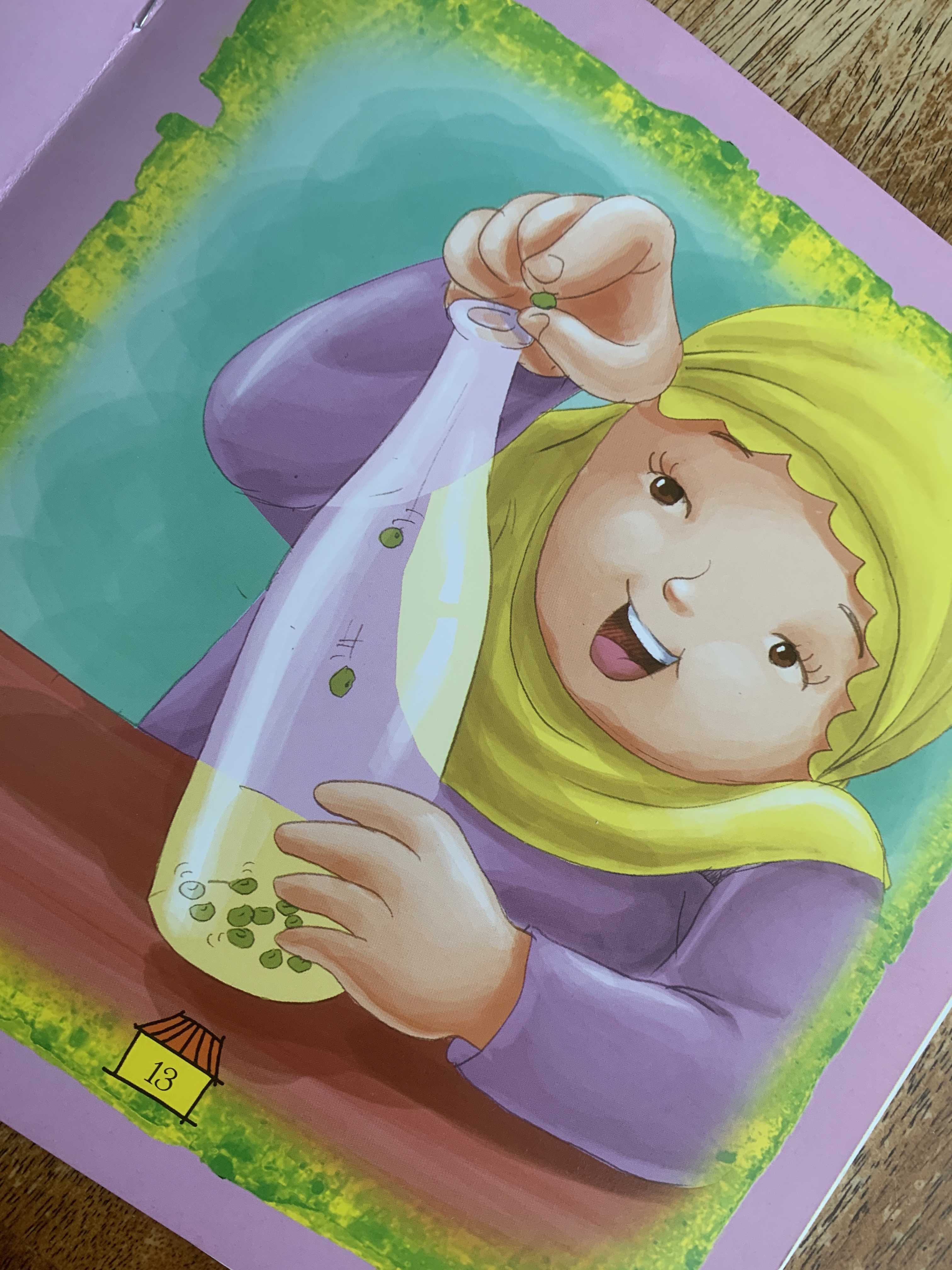
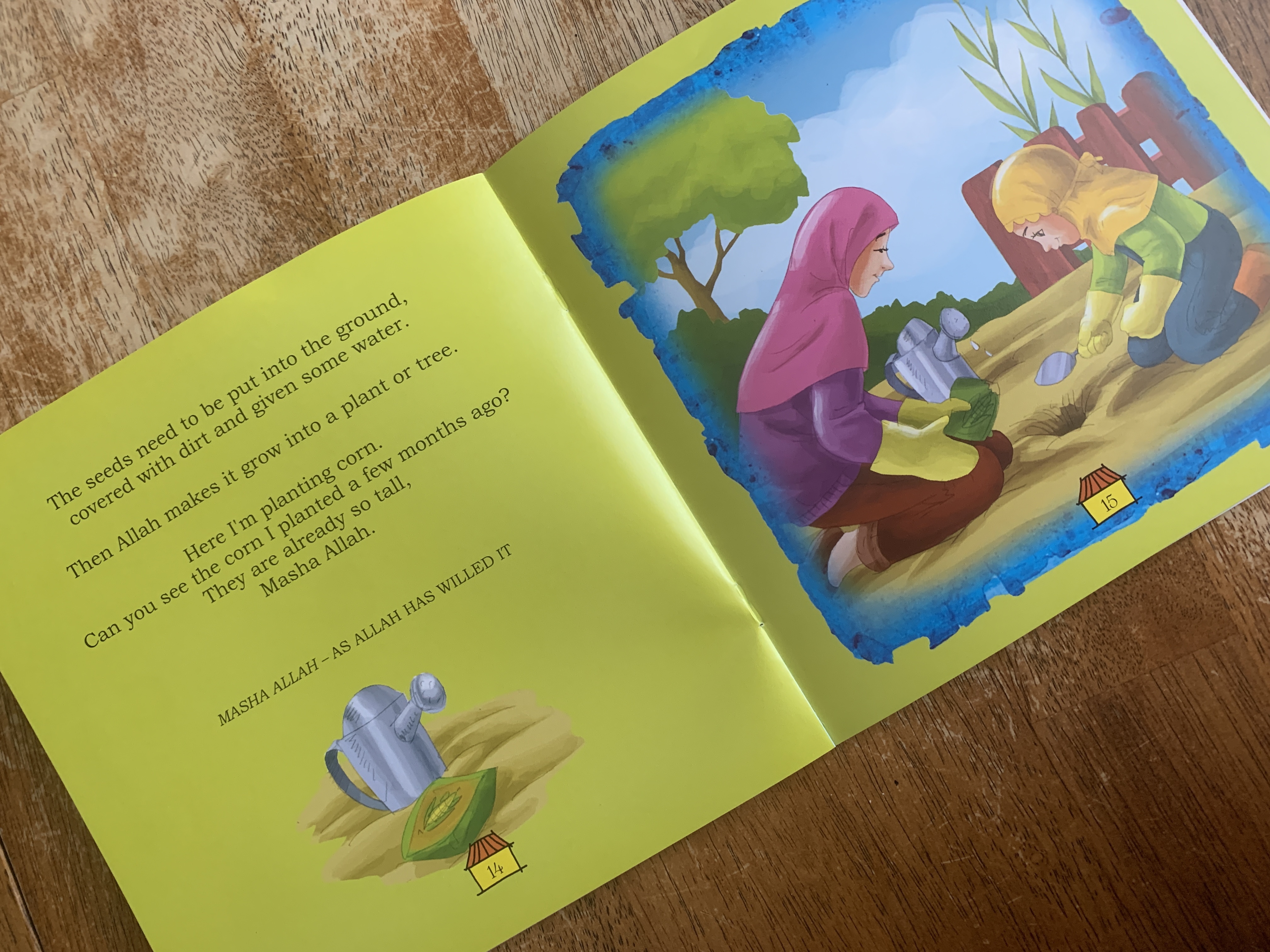
The book focuses on the life cycle of plants: seeds, flowers, trees. Drawing on that information it then shows the little girl collecting seeds to plant.  It then talks about the planting process and the needs all growing things have to prosper if Allah so wills it.

img_9838

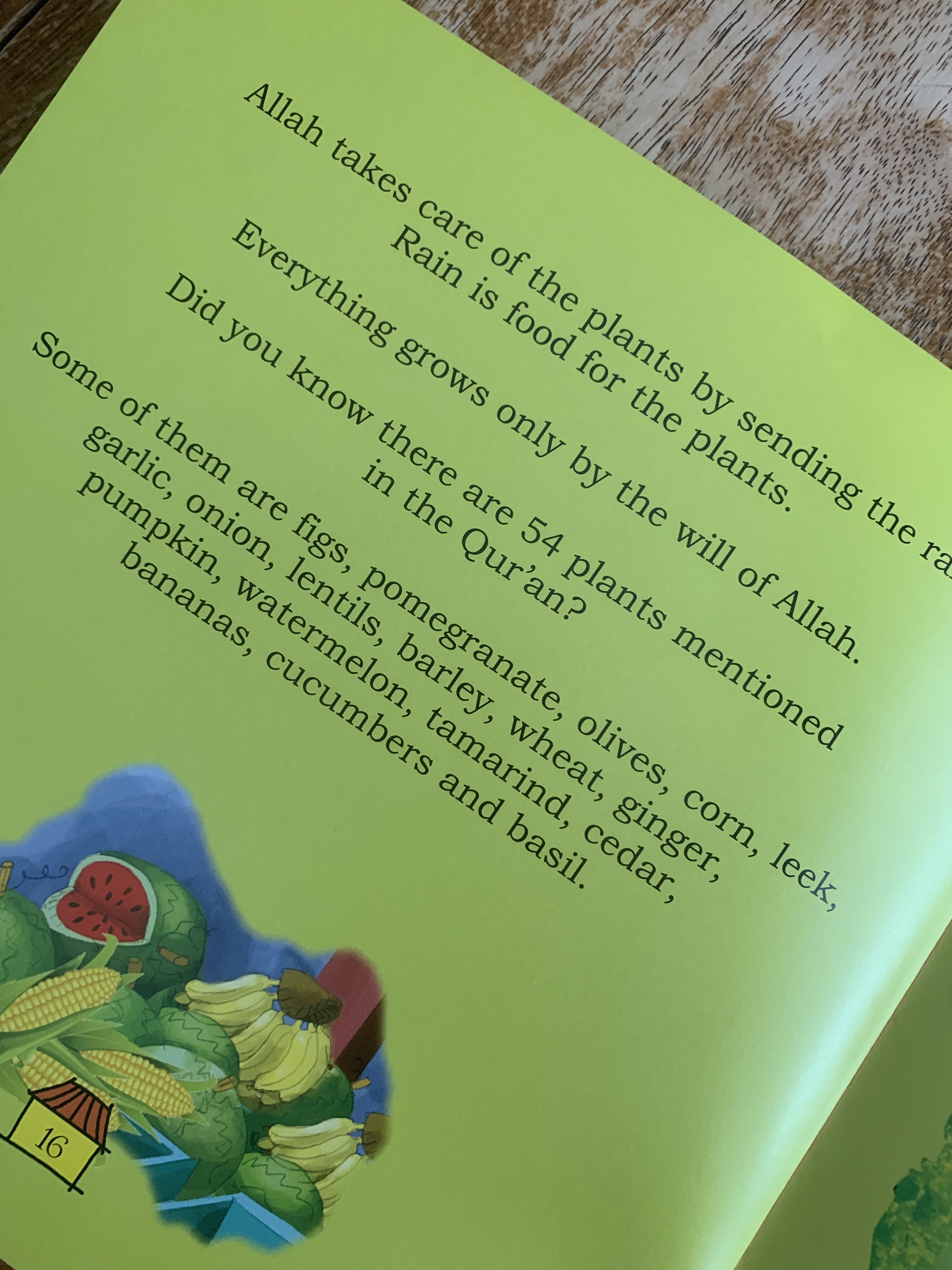
Then the book gets interesting and starts to discuss the plants mentioned in the Qur’an before returning back to the half hearted narrative remarking on how the flowers complement the color of their house.

img_9839

The story seems to then end, but it isn’t denoted that the remaining pages are factual or set aside as back matter, it just pivots and begins discussing rain in Surah an-Nahl, Trees in Paradise as mentioned in Qur’an and Hadith, and then again, but this time in table form, the fruits and vegetables mentioned in the Qur’an, and highlighting dates specifically.

img_9841

The book is all over the place, and I doubt it will be read again until next year.  There are a few other books that have come out about his topic, and I plan to look in to them to see if they work better for story time readings and child engagement.

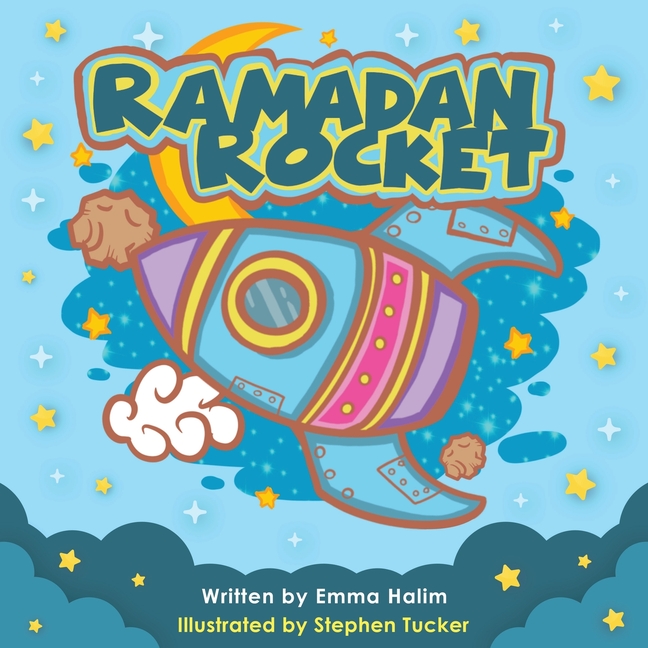
Ramadan Rocket by Emma Halim illustrated by Stephen Tucker

Standard
Ramadan Rocket by Emma Halim illustrated by Stephen Tucker

ramadan rocket

The banter in this 36 page Ramadan moon book is fun and engaging, and as the mom of five kids who was once a kid herself, the struggle is real to try and spot the Ramadan moon.   Most years, frustration abounds and nothing is seen. Haarith has the same problem, but last year he did something about it.  In this 36 page book for preschoolers and up, the faceless pictures will have kids giggling and their imagination’s soaring as they try and determine if Ramadan is about to begin.

img_7572

Haarith loves listening to stories about Ramadan, but always has trouble seeing the Ramadan moon. Last year, he decided to get a closer look.  He set out to build a rocket, but his best friend Hakeem had one he could borrow, so Haarith recruits two other friends, Jawaad and Khaleel, and plans are underway.  Jawaad will pilot since he flew out of a swing last week, and Khaleel will be in charge of food because his mom makes awesome cakes.  The boys head to space, passing, satellites, drones, and NASA rockets, before they see the moon and head back home.  After maghrib the community heads to search the sky and when they see nothing, it is Haarith that can locate exactly what they are looking for.

img_7571

I wish the moon was shown as super thin and hard to see in the illustrations, instead of as a thick crescent so that kids that might not have personal experience could at least understand why Haarith is struggling.  Also, I’m not sure why the line spacing on one page is double what it is on the others.  Many of the pages are text heavy and could have used some editing to tighten it up, but overall the story is fun.

img_7573

The premise though sent my head spinning, and yes I’m going to show my ignorance here, you can judge me. If you go to space, the moon is spherical, the earth and shadows are no longer at play right? So wouldn’t a new moon, a full moon, or a waxing gibbous all look the same? Clearly my confidence in this matter is non existant, and while I have no problem with the characters borrowing a friend’s rocket, it has been sitting unused for a year after all, I’ve been struggling to get this point clarified in my head.  And I believe it would all depend on where the rocket is and thus the boys’ point of view.  According to the University of Maryland, “The reason that we do not always see a Moon which is half lit is because of our position relative to the Moon and the Sun. As the Moon moves in its orbit, different portions of it appear (to us!) to be lit up as we look at it from Earth. This is why we see lunar phases.” So I suppose that depending on the rocket’s position in space would determine if the moon looked like a “Ramadan moon” or say a third quarter moon.  I’ve linked a NASA video that explains that the International Space Station sees the same phases as earth, so umm yeah, maybe I should take a break from fiction and go read some nonfiction basic science books. 

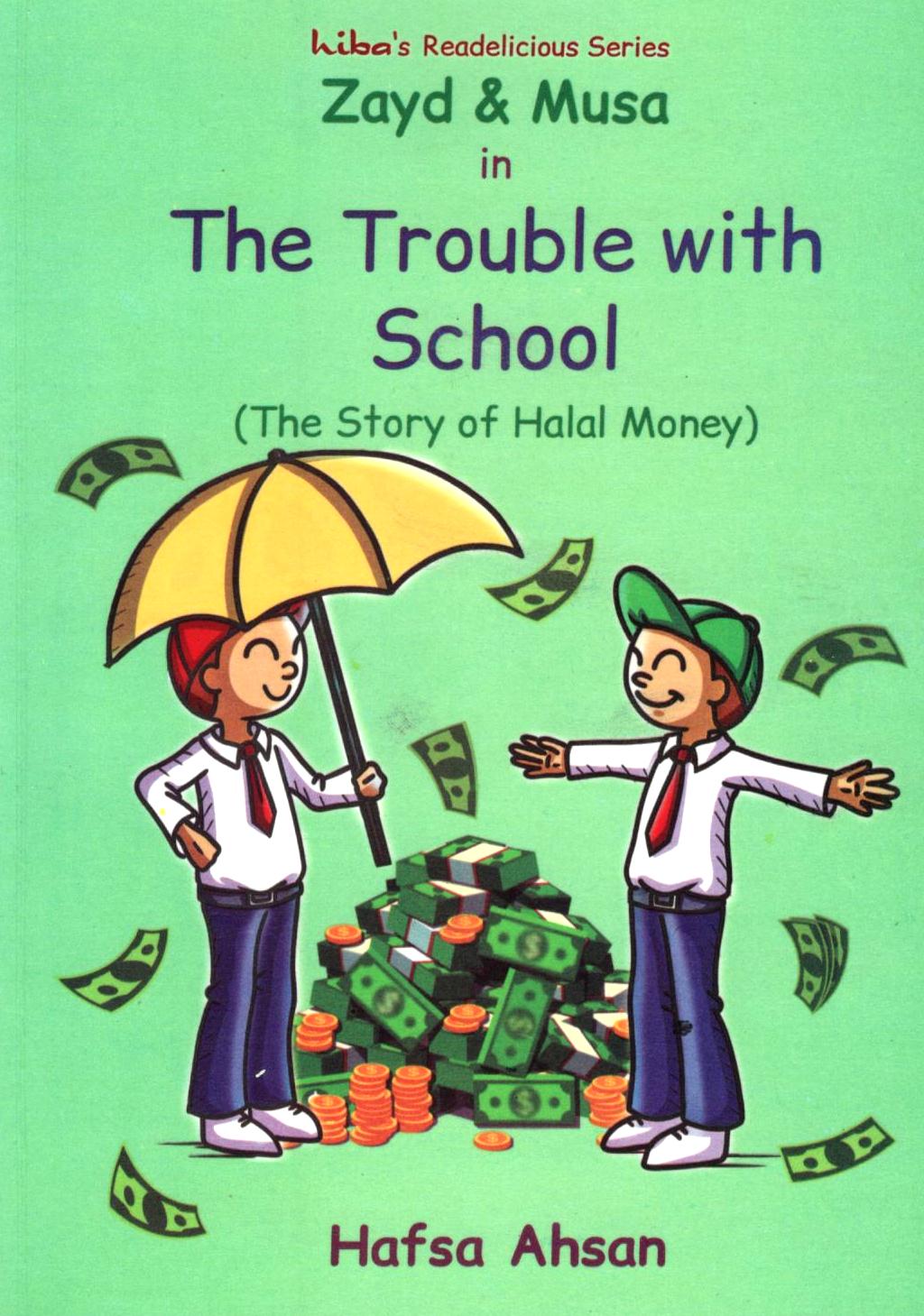
Zayd & Musa in The Trouble with School (The Story of Halal Money) by Hafsa Ahsan illustrated by Yusra bint Absar Kazmi and Urooj Khan

Standard
Zayd & Musa in The Trouble with School (The Story of Halal Money) by Hafsa Ahsan illustrated by Yusra bint Absar Kazmi and Urooj Khan

money

This delightful 70 page early chapter book is filled with humor, Islam, and a sweet story that ties it all together.  The book definitely has a teaching agenda, but it carries it with hilarious banter and relatable examples, all while covering a topic not often discussed in children’s books: money.  The book has a few grammar, vocabulary, and consistency concerns, but they are easy to overlook for readers 2nd grade and up.

SYNOPSIS:

Twins Zayd and Musa are very, very different.  Both boys enjoy cricket, but Zayd is more focused and enjoys homework, whereas Musa tends to daydream and often says something funny, but unintentionally.  When Musa makes the case in Science class that food, water, shelter, and money are all needed to survive, the class finds him hysterical.

Musa knows not to argue, his teacher is his elder and he knows he should have taqwa and be respectful, but he doesn’t give up on his idea either.  When the boys’ mom talks about halal money and gives them Islamic references for how money should be handled, Musa has a great idea: kids should be paid to go to school.

Once again, the whole school finds him funny, but Saeed Uncle, a neighbor who helps feed the poor at a roadside stand, doesn’t dismiss Musa’s idea and tells him, in some places kids are paid. And offers to take him and show him.

With references to sahabas who had great wealth and examples of how wealth can be used for good, Musa and Zayd learn numerous lessons, and share them with those around them, in a fun, engaging manner.

WHY I LIKE IT:

I get that the book is preachy, but in my mind, it is a story built around a teaching concept, so it doesn’t bother me.  I love the jokes and the tone.  At times the book is written quite formally, but being the author lives in Karachi, Pakistan, I assume that part of it, is just different standards.  I appreciate the Quran Circle table that lists where the Quran mentions wealth and the glossary.  I didn’t quite get all of the random facts included throughout, as some were about money, others about school, but I think kids will enjoy them none-the-less.  The illustrations are enjoyable, the text bubbles often hilarious (once again, a few I didn’t get).

I liked that it mentioned not drawing faces, and not going somewhere alone with someone you aren’t close with.  It is said in passing, but I love that those little nuggets exist in a book that is about something more, but normalizes and takes advantage of the opportunity to remind children of basic safety and Islamic concepts.

There are some awkward tense changes, and a few gaps in the story, but overall, I really enjoyed it and need to find the first one in the series.

FLAGS:

None

TOOLS TO LEAD THE DISCUSSION:
This would be a great book to use in a middle grades Islam class as a starting point to having students research the Quran and Sunnah to find information on a topic.  The humor will keep kids engaged, and the concept is an important one.  I plan to make all my kids read it, so that we can discuss as a family, and benefit from the lessons presented.

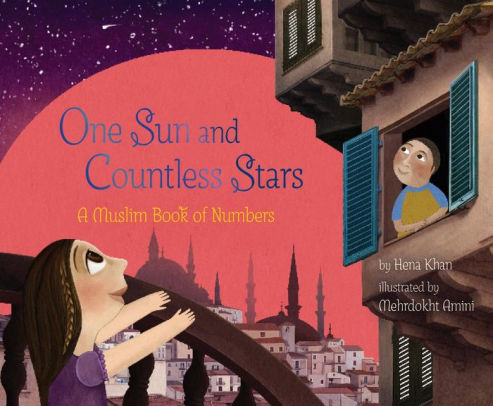
One Sun and Countless Stars by Hena Khan illustrated by Mehrdokht Amini

Standard
One Sun and Countless Stars by Hena Khan illustrated by Mehrdokht Amini

one sun

I don’t think that Hena Khan is necessarily a controversial figure, but some days her work feels very polarizing as some praise her ability to share OWN voice desi American Muslim stories while others feel like she waters down the very stories she is sharing to appease the majority.  Irregardless of our nuanced views, many of us first were made aware of her when we we were swept away in 2012 by the mainstream book, Golden Domes and Silver Lanterns.  Since then she also has published a book about shapes in the same format, and now this counting book that reminds me how beautiful and powerful it is to see Islam so unapologetically presented to all children.

Screen Shot 2021-11-10 at 10.25.04 PM

The author’s note at the end is important:

There are many significant numbers in Islam.  They include one for God, five for the pillars of the religion and daily prayers, seven for the circles pilgrims and visitors walk around the Ka’aba during hajj and more.

Mathematics and astronomy were among the intellectual pursuits of early Muslims.  They helped to develop algebra and used geometry to create the elaborate patterns found in Islamic art.

For this book, I chose concrete and illustratable terms rather than abstract concepts.  The representations for each number focus on things we can count in the world around us.

The book counts the diverse and global parts of a practiced faith.  The unique and the mundane, all beautifully illustrated and richly conveyed.  From cups of tea and shoes taken off for prayer to two hands making dua and four lines of a surah being memorized.  The book counts up to nine and then marvels at the countless stars that we see each night.

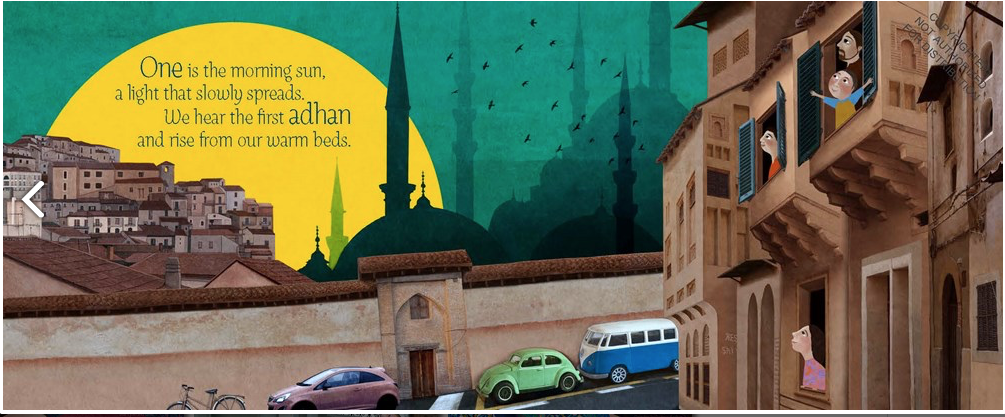
The first page is possibly a bit problematic in accuracy.  The tone and framing of starting the day with the sun rising and the sound of the adhan is warm and beautiful, but the adhan is not called at sunrise for the first prayer of the day, fajr.  Fajr begins at dawn.  There are only 21 words on the first page, so I’m inferring a lot about the correlation of the sun and athan that may or may not be present.  It is something frequently misrepresented, so it catches my attention. And yes, the seven tawafs mentioned in the author’s note would also apply to umrah, not just hajj.

Overall, the book is lovely and will remind many of us what made us all celebrate Hena Khan and her stories so many years ago.

Environmental Sunnahs: Emulating the Prophet One Earth-Friendly Act at a Time by Alia G. Dada illustrated by Sarah Hafeez

Standard
Environmental Sunnahs: Emulating the Prophet One Earth-Friendly Act at a Time by Alia G. Dada illustrated by Sarah Hafeez

This beautiful book explores how intertwined Islam and caring for the earth are in a kid appropriate manner.  The rhyming lines and fun illustrations are accompanied at the end by very detailed sourcing, references, and tips.  All non fiction or fictionalized fact books should be sourced this well, it really has set the bar, and left most books in the dust.  My only real critique of the book is that I wish it was larger.  The pictures and dancing text need more space to be poured over and enjoyed. The 8×8 size doesn’t do the 36 page book justice.  The inside text should also be a more uniform/consistent in size.  At times the rhyme is off and feels forced, but because there are facts on each page the story isn’t read consecutively.  You break the rhyme scheme to ponder over the “Did you know?” sections, so the beat and cadence isn’t super important.  Overall, a well-done book to share and discuss with children ages 5 and up, and a great reference, resource, and memorable teaching tool to bring us all closer to the prophetic mannerisms we strive to emulate.

img_5042

The book starts off with a message by naturalist, Director of the Art and Wilderness Institute and author of “How to Draw 60 Native CA Plants and Animals, a Field Guide (and my former childhood penpal) Sama Wareh.  It then jumps in to exploring the miracle of nature on land and under the sea. It shows desert landscapes, and mountainous ones, jungles, and farms, valleys and cities.

img_5043

The book talks about water: Zam Zam and wudu and where clean water comes from.  How little water we should use according to hadith and how to respect all living things. It talks about Prophet Sulaiman (as) showing kindness to even an ant. And how planting a tree is charity. It shares information about reusable goods, limiting waste, and understanding eco systems.

img_5044

The book concludes with easy to read Hadith references, Quranic references, a glossary, and action items.