Category Archives: OWN Voice

The Thirty Before Thirty List by Tasneem Abdur-Rashid

Standard
The Thirty Before Thirty List by Tasneem Abdur-Rashid

This is the second book I’ve read by the author and while I didn’t do a full review of the first (Finding Mr Perfectly Fine), I am going to do a full review of this one, because the book might not be “halal, halal” or intentionally Islam centered, but with a robust Muslim cast it stays impressively clean and there is a lot of Islam present.  I’m glad I bought a physical copy so my nieces or my daughter can pick it up and enjoy Rana’s growth and antics.  The book is nearly 400 pages long, but they fly by, and if you are 16 and up looking for a rom com style escape book this will fit the bill.  The only thing that really gave me pause is an early label the protagonist slaps on her self as “not being a devout Muslim.”  I get the point is to not let the stereotype of an arranged marriage and strict brown parents overshadow the initial impression of the book, but the author is a better writer than that early statement indicates.  As the story progresses you see her Islam IS very much part of her identity, her environment, her outlook, and the author shows it in relatable nuanced ways that the early “telling” was not needed.  Yes, the book has the protagonist and a different boy or two alone at times, and there is some hand holding and a few hugs, but the intention is always to find a spouse, and religious lines are usually clearly on the character’s radar.  There is some talk about mortgages, and a side Muslim character that has a girlfriend he keeps secret as they go on holiday together, but again, nothing obscene, or defensive, just realistic actions from contemporary characters viewing things their own way and doing the best they can.

SYNOPSIS:

Maya’s life is pretty predictable, she lives at home, goes to work, hangs out with her childhood friend on the weekend, and dodges any attempts to be set up for marriage.  Then one day on the tube a mysterious stranger, Noah, his leather bound notebook, and everyone else in her life moving forward, prompts her to open the notebook and copy his 30 before 30 list.  Adapting what doesn’t make sense at all for her life, she never peeks ahead, but rather takes one adventure at a time.  When people from different circles in her life start interacting, and Noah reenters her life, Maya will have decisions to make and a new list to commit to, her own.

WHY I LIKE IT:

I needed a diversion, I was going to be spending a few consecutive days in waiting rooms at hospitals and knew I’d need something light, easy to read, pause, and return to, and something to make me smile.  Maya is likeable, and her family and friends relatable.  Her Bangladeshi and British culture add depth and I was genuinely surprised and appreciative with how much Islam managed to find its way in to the plot and character arcs.

FLAGS:

Relationships outside of marriage, nude model, lying, hugs, hand holding.

TOOLS FOR LEADING THE DISCUSSION:

This would make a great adult, college, or even 12th grade book club selection, for just a fun book to laugh about and enjoy with friends.  It isn’t that deep, but there are threads that will hit, and to chat about it will bring friends closer together.

The Prophet;s Sunnah by Ayesha N. Rahmaan illustrated by Laila Ramadhani Ritonga

Standard
The Prophet;s Sunnah by Ayesha N. Rahmaan illustrated by Laila Ramadhani Ritonga

This joyful 20 page board book shows our littlest (and biggest) Muslims some of the Prophet’s sunnahs in a way that they can also do in their lives.  The adorable illustrations appeal to kids and the simple text showing the acts are relatable and engaging.  I did cringe at times with the changing size of the basic font and the perspective of some of the lines being told to the reader as “your” and others as “our,” but I’m a bit of a sucker for kid’s books about Rasulullah.  Some of the vocabulary might need some explaining, but overall my little ones enjoyed the book when I read it, and I have caught them looking through it on their own, so yes I’m aware that I’m over looking a few basics.

The book starts with a hadith on the dedication page and is then followed by an ayat in Arabic and English meaning of the translation about following Prophet Muhammad (saw) if you love Allah swt.  It  introduces Prophet Muahmmad saw to the little readers, not stressing the call to Prophethood and revelation, but him as a “neighbor, friend, father, husband, leader and teacher.” Starting with Bismillah, sharing, and helping, visiting the sick, being humble, some pages are filled with multiple images, and others a single scene.  Some have Arabic transliteration and one has Arabic script accompanying the English.

The illustrations show different sizes, colors, abilities.  Some of the girls wearing hijab, some not.  Readers are bound to find someone in the book that looks like them.  The binding quality and page thickness is well done and the 8.5 square size makes it great for story time or reading in small groups.

The Boldest White: A Story of Hijab and Community by Ibtikhaj Muhammad and S.K. Ali illustrated by Hatem Aly

Standard
The Boldest White: A Story of Hijab and Community by Ibtikhaj Muhammad and S.K. Ali illustrated by Hatem Aly

The third and final book in the standalone series is finally out and I absolutely love that Islam, salat, and the masjid are front and center. Faizah is once again brought to life through the incredible illustrations that provide all the emotional beats and make the book memorable.  The story though is only just ok, to be honest, it is clunky and disjointed.  I have read the book a half a dozen times to myself and twice aloud and I do not understand the Eid story line.  I doesn’t fit the themes of fitting in, being a leader, being bold, it just seemed to be there to motivate a white hijab being purchased, and it was very distracting to the cadence and continuity of the story. Every time Faizah is self reflecting on her fear, suddenly a conversation about Eid with a friend named Sophie disrupts the story. Even the refrain that “Bravery grows in your mind.  But its roots are in your heart,” sounds lovely, but is never explained or developed, so what are you to water it with? What are the right reasons?  I’m sure most will be fine with the concepts and presentation and not be bothered, but this book is an auto buy for Muslims and non Muslims alike, and while I appreciate the packaging, I wish the story itself was more, well “Bold.”

The book starts with Faizah going to Jummah with her mom and sister, and loving being part of the crowd, she then goes to fencing and loves being part of the crowd, “it feels right.  I feel right,” she says.  But then the coach calls her name and she starts to worry.  She doesn’t like when people stare at her, she worries she did something wrong. The coach has already reminded her to “saber first, then move forward,” so I’m not sure why she worries after if she did something wrong, it is a class, reminders and corrections are what happen in a class.

Then on Sunday, the trio is back at the masjid for salat before Asiya’s fencing lesson.  The coach asks Faizah if she wants to come in for extra practice before the tournament.  Faizah isn’t planning on participating in the tournament though and would rather think about Eid.  Thinking about getting together in the future with Sophie to pick out Eid clothes, is more fun than fencing.  The reader doesn’t know when Eid is, or why Faizah seemed to break into a day dream when asked about fencing.  Furthermore the reader doesn’t feel the worry of being in a competition because Faizah is not shown to be worried.

Later that night Asiya teaches Faizah the moves she learned and Faizah practices alone.  There is then a two page spread that I do not understand, on one page she is saying, “When no one is watching, I ‘m the best fencer in the world,” three lines later it says Even when others are watching, I can do it.  I can be the best.”  What happened in between? I get the following line, “but it’s hard to be my best when I have to stand out to do it,” but the the line in the middle makes no sense.  What is the point of the book if she can do it and knows it at the mid point?  And no, I’m not reading an arc, I checked out this copy from the library.

The family is back at the masjid on Friday and reassuring Faizah as they head to fencing, that she can do it even when people are watching, that bravery will come.  She hasn’t been nervous at class before, and hasn’t signed up for the tournament, so why is she suddenly uncomfortable, when at the start she loved fencing class as she felt she fit in.

Then it is Saturday, and Sophie finally comes, but not to prepare for Eid, just to discuss, how they will prepare for Eid.  At least now we know it will be next week. The next Friday, I know I feel like a calendar should have been included, it is fencing class again and Faizah is called up to demonstrate.  She finds her strength and she is shy, but realizes they are not just looking at her, but looking at what she can do.  She is leading, she is helping, she is being brave.

Finally it is Sunday, and Sophie and Faizah are at the hijab shop, and Faizah picks a white hijab because it matches the fencing clothes, and she is going to the tournament.

Yeah, sorry I spoiled it, I just really am sad that the book wasn’t as great as it could have been.  It connected the dots eventually, but not in a memorable way, and for the team responsible for this book, it really could and should have been amazing.

My Olive Tree by Hazar Elbayya

Standard
My Olive Tree by Hazar Elbayya

img_7154-1

I love that this author illustrator traditionally published book shows the ways that olive trees and their fruit connect people.  The little girl, Salam, can’t wait to grow her very own tree, but it takes a while, and when it finally sprouts, it is trampled by soldiers.  Heartbroken to lose her plant, her community shows her how they are like their beloved olive trees: their roots are deep, and they are a part of the land.  The tender illustrations, the poignant symbolism, and the love and unity that radiates through, makes this book an important read for children and adults of all ages and backgrounds.  There are no countries mentioned in the text (Palestine appears only in the author’s note), nor any religion, there are visible Muslims in the illustrations, even the soldiers are unnamed, but the setting is clear.  Picture books take years to be published and that it released at this point in history, shows how long the struggle for freedom has been taking place, and how strong and resilient Palestinians are.  This book that will be read over and over, shows even in the sadness, the feeling of hope abounds.

The book starts with Salam noting how old her grandpa is, and that only the olive trees are older than Sido.  Sido then explains to his granddaughter how the olive trees connect them all: farmed, picked, pressed, oil used to cook, olives sold to eat, added to dishes, and made into soap.  Salam goes to plant her seed and be part of the connection. She waters it and waits, but it doesn’t seem to be growing.

Finally a spout, and then a little plant, and then the soldiers march into their lands and destroy everything in their path, even Salam’s olive tree.  Sido reassures her that she will plant more olive trees in her lifetime, but Sido also wants to show her that she is not alone.  Friends, family, and neighbors, come together to show her, “just like the olive trees, when they try to break us, we grow back stronger.”

A truly beautiful hopeful book, subhanAllah.

img_7144-1


Esma Farouk, Lost in the Souk by Lisa Boersenand Hasna Elbaamrani illustrated by Annelies Vandenbosch

Standard
Esma Farouk, Lost in the Souk by Lisa Boersenand Hasna Elbaamrani illustrated by Annelies Vandenbosch

img_7161-1

This fun and silly picture book takes place in a Moroccan shopping center, where a visiting Esma Farouk, suddenly can’t find her mother.  Lost and tearful, the community comes together to help her out: from water carriers, to a man with a monkey, the acrobats, the fortune teller, the musicians, and even the snake charmer. Esma is encouraged to be brave and together they all put on a show, and reunite Esma, Mama, and Auntie Fatima.  There is no Islam, or any religion, in the text, but their are plenty of visible Muslims in the illustrations, in this OWN voice book inspired by the author’s memories of packing peanut butter and cheese on summer trips to visit family.

The book starts with Esma and her family heading to Morocco with their bags bursting with gifts, when they get there they are emptied and quickly refilled with the gifts their family is giving to them.  Esma wants to go to her favorite place, the souk, and Mama and Auntie Fatima are happy to take her.  Mama is in her new purple djellaba’ bargaining, and Esma is watching a snake charmed by music, when suddenly she realizes, Mama is not there.  Panic sets in, but Esma is quickly surrounded by kind strangers willing to help her find her family.

I enjoyed the illustrations and the love and joy and excitement that they brought to the text.  I have no way to know if the details are accurate, but I hope they are as my kids enjoyed going back and getting lost in them, even after the last page was read.  The sense of community and kindness is wonderfully portrayed and the action at the souk, makes it seem like a fantastic place that everyone should go and visit.

The Hysterical Girls of St. Bernadette’s by Hanna Alkaf

Standard
The Hysterical Girls of St. Bernadette’s by Hanna Alkaf

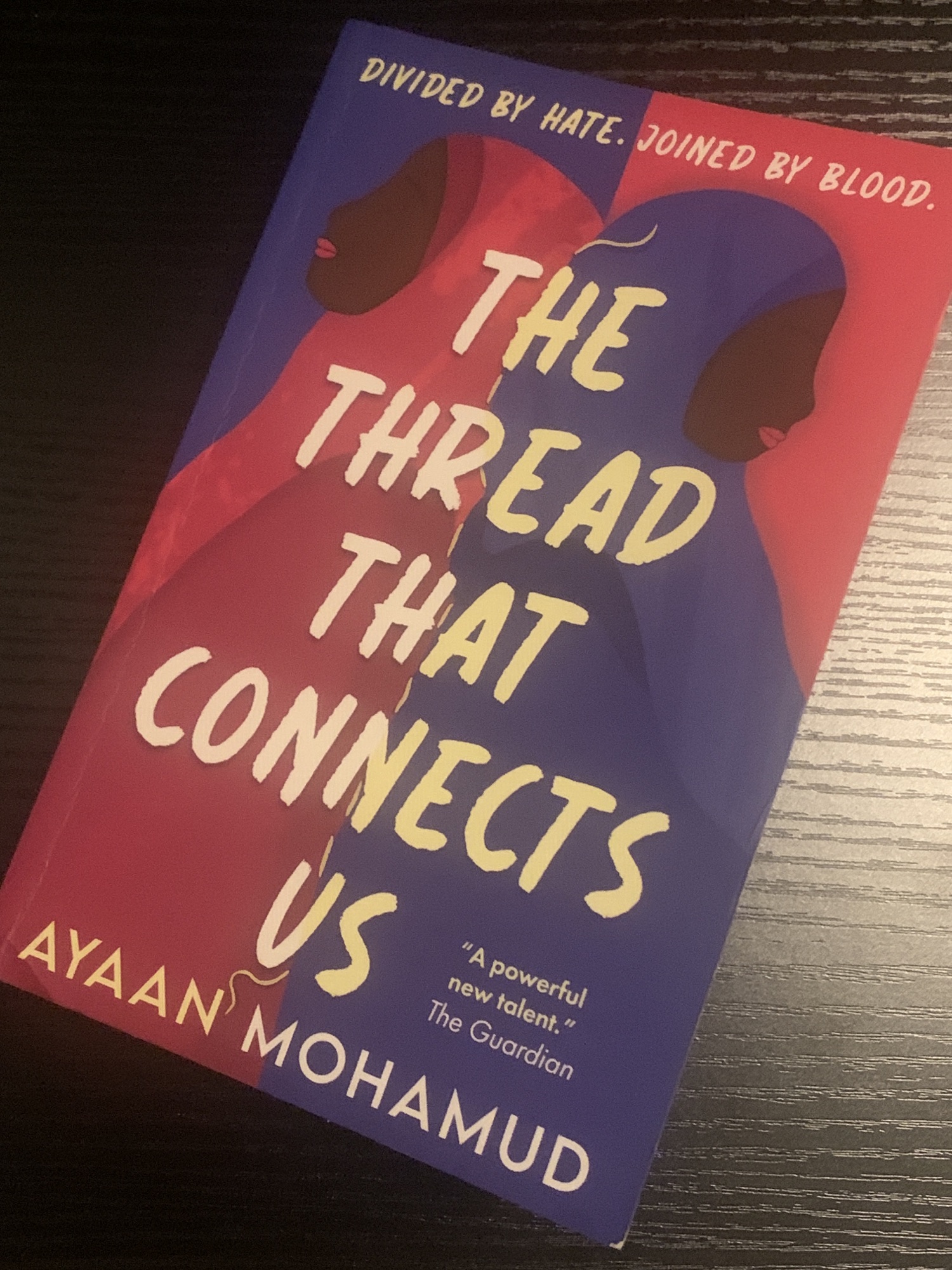
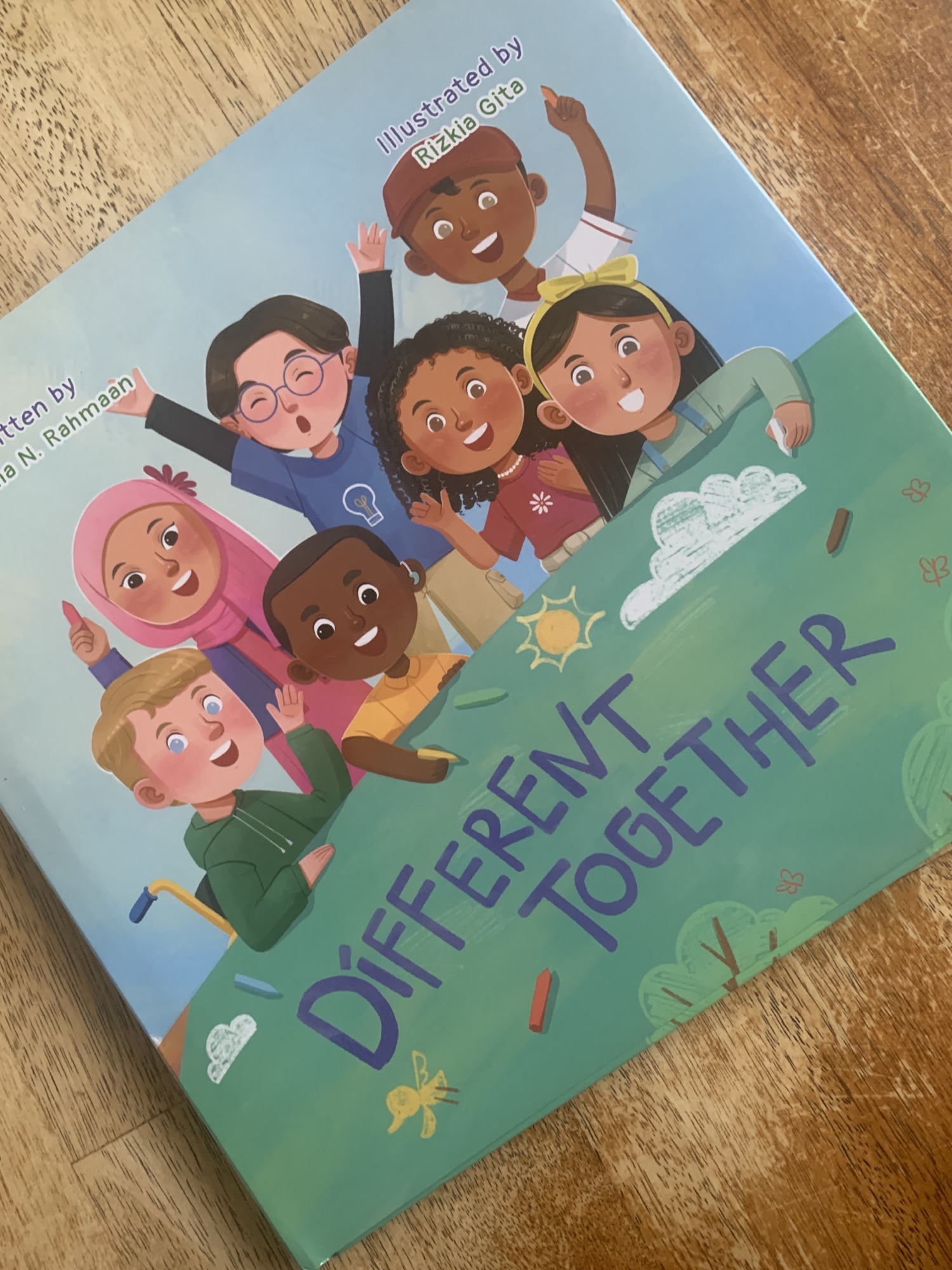
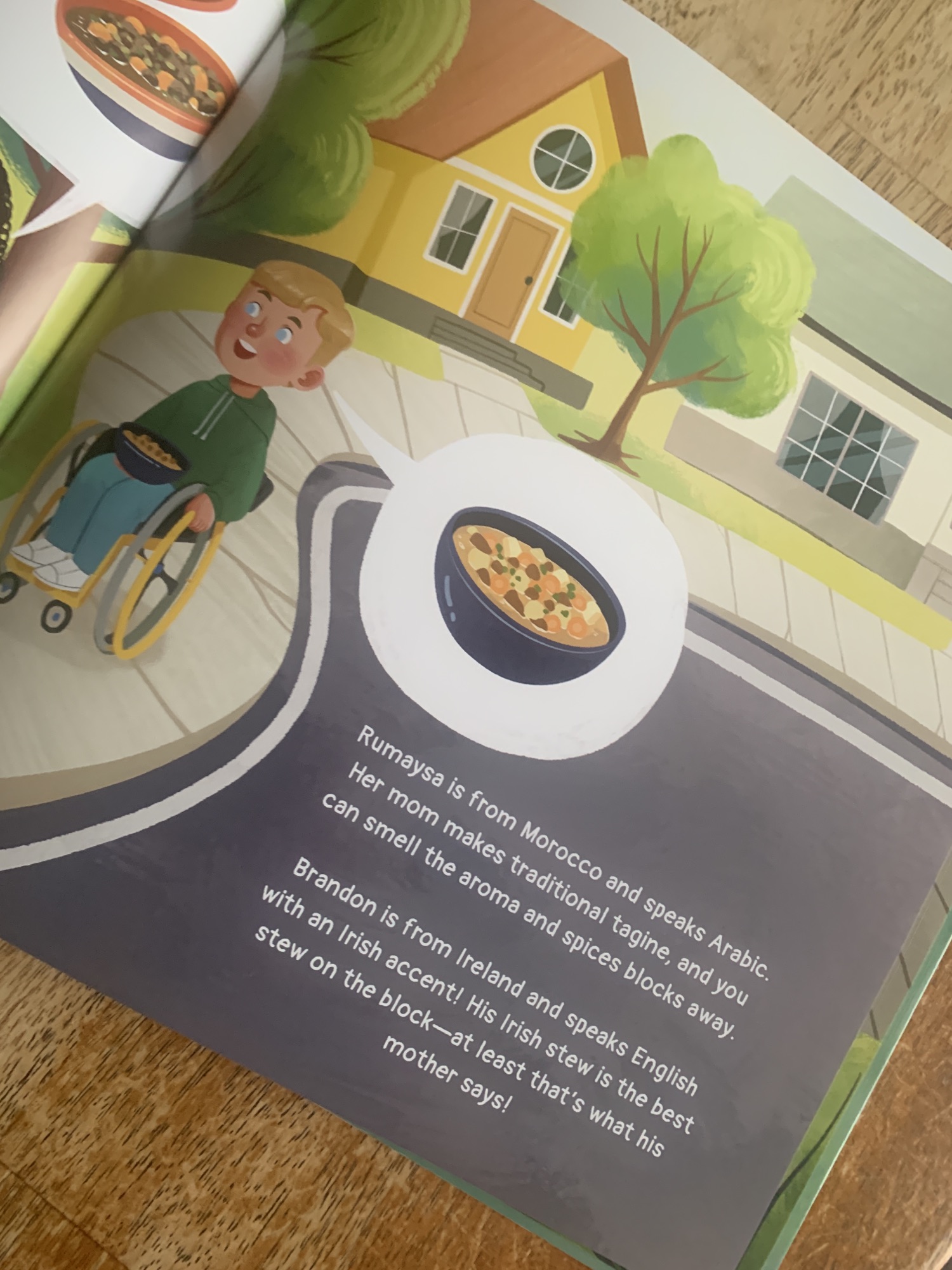
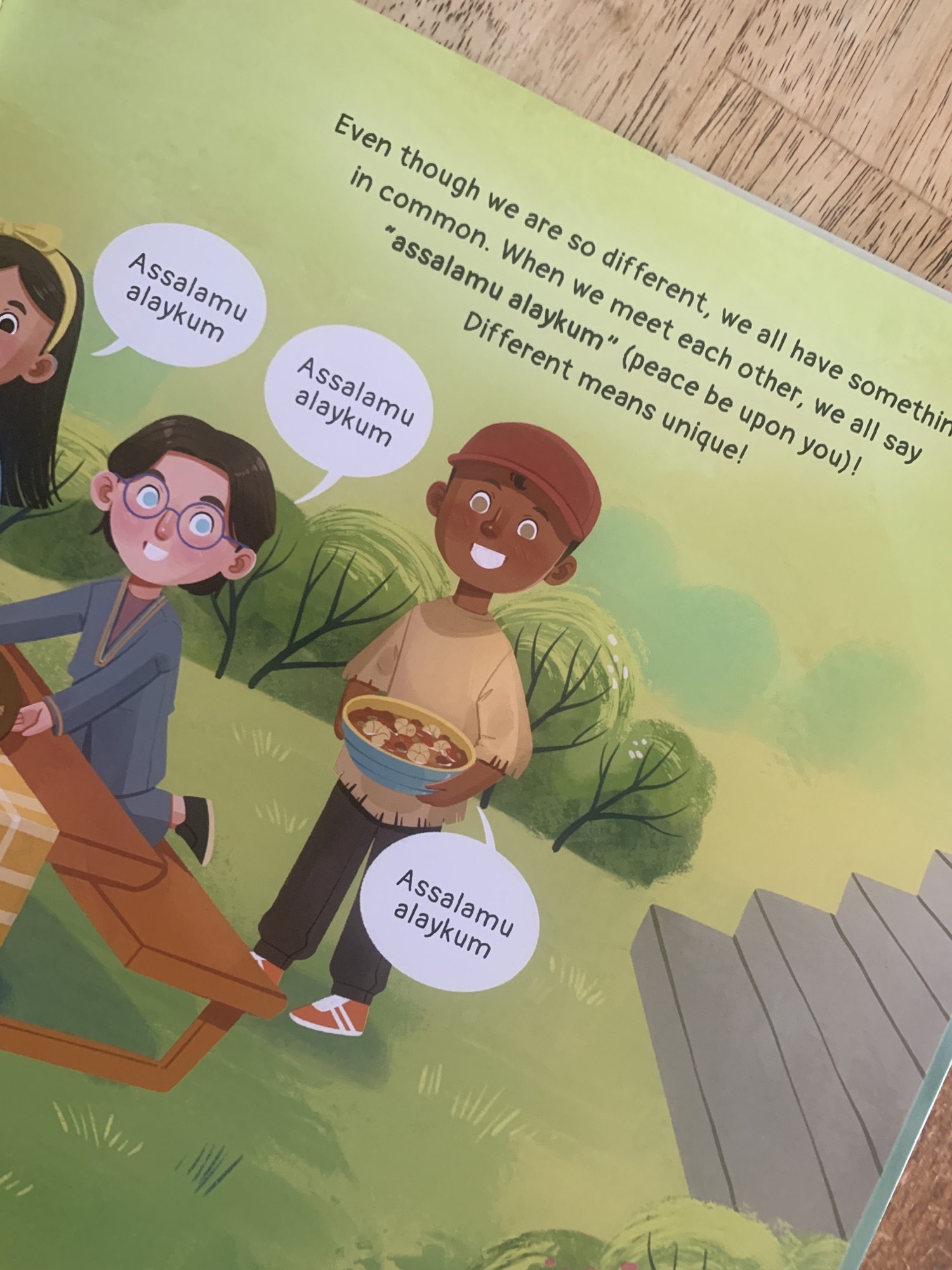
This 352 page young adult mystery, thriller could possibly be classified as magical realism, or speculative fiction, I’m not really sure, but I do know, that my expectations were really low, and I was so pleasantly surprised by how the story pulled me in and kept me engaged.  Told primarily by dual points of view, Khadijah and Rachel, the book offers commentary on sexual assault and believing victims.  The book starts with a trigger warning of “ghosts and monsters, some of whom hide beneath human faces. It includes discussions and descriptions of sexual assault, trauma, and PTSD,” before diving in to a prestigious Malaysian girls school full of secrets, hysteria, and a past that seems to be repeating itself.  There are no religious identity crisis or issues, the student body is diverse and it is a non-issue, Khadijah recites Ayat ul Kursi, makes time to pray, and wears hijab as she tries to figure out what is making the students at St. Bernadette’s scream, what happened to those that have gone missing, and how to overcome the trauma that has made her stop speaking.  The symbolism is solid, the book starts out with the screams, but builds on it by adding backstory to the main characters, mystery with the disappearance, and numerous red herrings to keep the reader guessing.  I told myself to get to the midpoint before calling it quits, but once I was there, I read the second half of the book in one sitting. I appreciated that the book was unique, there was no relationship side stories, the cultural authenticity heightened the reading experience, and that I understood the haunting magical elements.

SYNOPSIS:

St. Bernadette’s is an old prestigious all-girls school, but one day a chain reaction of girls screaming starts and the hysteria doesn’t seem to be stopping any time soon.  When Khadijah, who is dealing with her own trauma of being sexually assaulted by her step-father, starts to look into the causes, more questions than answers arise.  In efforts to protect her younger sister, Khadijah discovers not only has this happened as their school before, but it doesn’t stop with the screaming, and the shadows, last time a girl went missing.

Rachel’s life is controlled by her single mother, who is determined that Rachel is successful and a reflection of how perfect and successful they are, despite, Rachel’s father abandoning them.  When in an act of rebellion Rachel signs up for monologue competition, she plans to get into character, not to become the character.  As Rachel starts to lose her self to the girl with pink lipstick and white ribbons in her hair, she starts to notice sights and sounds around the school, but when she falls victim to the screaming hysteria herself, will anyone care enough to save her?

WHY I LIKE IT:

So often with magical realism, I honestly don’t get it, so I’m not sure if my excitement of having it all be clear means the book was a bit simplistic, if I’m getting better the more of the genre I read, or if the writing was just good.  If I’m being honest, it is probably a little bit of all of it.  Often with the author’s book, the story is really good, until it is not, and I honestly feel like this is her best book yet, with the threads coming through, the ending feeling satisfying, the pacing being consistent, and the plot not getting lost on tangents and over explanation.

I loved the symbolism of screaming and it being largely brushed aside as society’s collective apathy to victims of sexual assault.  No one at the school has answers, no one likes questions being asked, everyone just wants to carry on as if nothing is happening, and the juxtaposition of the silence and the hysteria for me was powerful. A few plot holes were the result of telling over showing such as the case of the Khadijah and her sisters relationship, but that Khadijah stayed largely silent throughout the book, did not mean she was unable to communicate or not present, and I thought it was shown in a meaningful way.

I liked that the overbearing mom, with high expectations, and lacking emotional maturity was not from the Muslim parent, at least in Western literature, that is a common trope.  But it is worth noting that presumably the rapists mentioned in the story are Muslim.  Their faith is not a factor, but I noticed, and so I do feel that should be shared.

FLAGS:

Sexual assault, ptsd, rape, kidnapping, trauma, hysteria, lying, ghosts, monsters, magic, fear

TOOLS FOR LEADING THE DISCUSSION:
I think this would be a great high school book club read.  The conversation about sexual assault, both in the story and in real life would be important to have in a safe space.  The triggers would require some evaluation if the book is a good fit, but I think the elements that unfold and the commentary on expectation, honesty, trauma, monsters, etc. would create incredible discussion.

With All My Heart by Aasia Khan (Book One in the Exciting New Maren Springs Series)

Standard
With All My Heart by Aasia Khan (Book One in the Exciting New Maren Springs Series)

img_6993-1

I would assume this 185 page book sets out primarily to be a wholesome halal romance and to that end it probably meets its goal and gives teen Muslim girls a sweet idyllic fluffy love story within the bounds of Islamic rules. The main couple are hinted at as being alone a few times, but they are aware of it, and there is no touching, the intent is always to marry, it is worth noting there are birthdays celebrated, females singing in front of males, some element of threat, murder, criminal activity and hinted at (not described) obscene images. So for what it is, it is a fine, but for anyone not clamoring for any and all clean halal romance books, the plot is very, very weak, the climax none existent, the lacking rising action incredibly frustrating given the premise and thus potential of the book. Even the plot holes are a bit hard to overcome, even given their propensity in the genre. Written in third person omniscient keeps the book at arms length, and further prevented me from connecting with any of the characters.  The entire path the book will take is established in the first few pages, and with no twists or turns, or emotional connection, the book drags.  The perfect wealthy family of hafizes, that have no flaws, fix and provide everything and make no mistakes, are too unrealistic for me, and I found it off-putting, which isn’t to say your 14 year old dreamy eyed daughter won’t absolutely love it, but for me it is rather forgettable.

SYNOPSIS:

Two brothers, married two sisters and each have a son, the boys are raised as brothers.  At some point a family friend’s daughter, Layla, drinks from a bottle that contains the breast milk of Asad’s mom, and thus Layla becomes his “foster” sister, but not Usmans.  The baby the milk was intended for passed away early on, and through it all the families stay in touch, but never again meet.  The children, Usman and Layla have not met since Usman was 5 and Layla 1, yet they think of each other often and don’t know why the families keep apart.   Both can sense each other, identify what they have touched, and where they have been.  When Layla’s parents are killed and Layla turns up at the family’s estate in Maren Springs, Usman knows he will marry Layla, as the family welcomes their missing foster daughter/niece home.

WHY I LIKE IT:

I honestly had to read the prologue five times, and I flipped back to it while reading at least that many more times, and the book is not long.  The term “foster” threw me off which is my own ignorance, but alhumdulillah the book does eventually explain it and my Lit Sisters helped me to understand that in Arabic it is Radhaa’a which translates to “foster” to describe when mother’s milk is shared and the relationships that result.  I don’t know that the family tree is necessary, I suppose it helps since the parents are called by their first names, but it should have been in the front if included, it was a bit odd at the end.  Similarly odd is the book claiming itself “exciting” on the cover.  Blurbs are usually from others describing their thoughts or excitement about the book, not part of the title from the author, I also don’t understand why the fictional location is Maren Springs is in the title, when the four main characters work and live 4 or so hours away in Orkney. They should just live and work in Maren Springs, I didn’t see the benefit of them commuting every other chapter for no reason, and taking up unnecessary page space detailing if they were here or there, coming or going.

I feel like the book would be better in dual point of view, the characters as written don’t stand out, and there is too much telling and not enough showing.  Layla is shown to be helpless, but told to be strong, and the brothers too overly good, there needs to be more backstory of the characters, to ground them, flesh them out, and make them more interesting.  As for the plot, (SPOILERS) had the cause of why Layla was running, the murder of her parents been a looming threat, the blackmail emails with doctored images, the witness protective program been woven in, the book would have had readers intrigued, and on the edge of their seats.  Sadly it is all glaringly absent, and thus it becomes so dry just to read page after page about everything being perfect and then when it isn’t, the brothers just take care of everything in a few sentences to resume it to being, you guessed it, perfect.  The idea of Layla being on the run after her parents’ death and finding refuge in old family friends, is a great set up, but there is absolutely zero follow through. Layla doesn’t even know where the boys work, the name of the company, the reader is never really sure what they do, what anyone’s skill or academic background is, it is very vague.  At times it is downright juvenile that the heads of the company are called “big bosses,” the magical realism connection between the couple, referred to as the “alien” or “Martian” connection. Clearly the premise of the relationships and the positioning of bringing everyone together was thought through by the author, but the execution on the page sadly doesn’t reflect it.

I know in the romance genre the plot holes are always present, but to have them so early before any character development has occurred provides little incentive for the reader to overlook them because they are invested in the story.  A love connection between a 1 and 5 year old is a pretty big leap the reader is expected to be ok with, no backstory showing how close the families were, no phone calls or Facetime sessions, just letter writing, doesn’t convince the reader that there is a foundation to revisit when tragedy strikes.  The ease in which the “climax” is resolved and minimized feels dismissive and will highlight the missed opportunity even to younger readers.

I know this reads as a harsh review, but I wouldn’t have bothered writing my thoughts up if I didn’t think there was some potential for revisions to be made. The book isn’t awful, it just really is close to being a lot better than it currently is, and I hope the author will consider revisiting the story and elevating it (the benefit of Amazon print on demand) to a book that our Muslim teens can fall in love with.

FLAGS:

Some threat, birthday celebrations, singing in the car in mixed company, murder referenced, fear

TOOLS FOR LEADING THE DISCUSSION:

I purchased the book and will get it to the Islamic school library, but it isn’t a candidate for a book club selection as there is nothing really to discuss.

All Mixed Up by Raj Tawney

Standard
All Mixed Up by Raj Tawney

all mixed up

The premise of this slightly biographical middle grade book is that of a very multicultural boy, Kamal, finding his voice, with the help of a Pakistani Muslim friend, Jaz, a year after the 9/11 attacks.  It brings in themes of Islamophobia, terrorism, bullying, friendship, alcoholism, immigration, refugees, “legal” and “illegal” citizens, Pakistan and India’s partition, and growing up and feeling alone over 208 pages.  The writing style seems deliberately loose in touching on very complex themes, but not preaching on them, and instead letting the reader draw on their own thoughts and experiences to form their own opinions. It is debatable if enough information is even provider for the reader to ruminate on the themes, or care to, or feel enough of a connection to the characters to want to know how all the dots connect, but none-none-the less it seems to have been done with intent, and with the middle grade POV for some it might get away with key information and the resolution going unexplored.  For me though, honesty I just couldn’t get past one line, one line tossed out with no explanation, no arc, no real purpose, never revisited even, at 16% it says “Allah is stupid.”  Yes, I debated tying the phrase out.  I don’t know why it has this line, it has no real impact on the story and could have easily been replaced for another reason Jaz received a purple nurple from a bully in Pakistan.  Later in the book there is a scene where Jaz has brought a prayer rug to school, he states he doesn’t always pray, but clearly he does practice Islam, not just maintain the label in name only.  I am not saying that the scene is not based on the author’s real life, or that people don’t say stuff of this nature, but it is hard to read in black in white in a book with no discussion.  I don’t know what the author’s intent was in including it, but I think it is a disservice to so many of the themes in the book and does not serve the target audience as a mirror, or a respectable takeaway either. For this one line, I truly don’t feel like I could have this book on my shelf, which is unfortunate.

SYNOPSIS:

Kamal Rao is half Indian, a quarter Puerto Rican, and a quarter Italian living in New York, he is relentlessly bullied at school, has no friends anywhere, and is dealing with a father that drinks a little too much most nights since he lost his job.  When a new boy, Jaz shows up at school, that can pronounce his name, a friend just might be what Kamal needs to find his voice, confidence, and place in the world.  Except Jaz has his own issues, and remains pretty mysterious about his past, his home life, even his name.  When a Halloween terrorist attack occurs, Jaz makes a run for it and Kamal has to decide what his friendship means.

WHY I LIKE IT:

I really can’t decide if I like the writing style or not. I recognize that to stay on a middle grade point of view the banter between Kamala and Jaz is often done when it is just the two of them in a scene, making sense of a world they might not know much about. Unfortunately, that also means a lot of erroneous statements, perspectives, and facts get unchecked, and possibly perpetuated.  It also means that at times the boys seem really worldly and competent: riding across town on their bikes, living pretty independently, but also being really naive about being a brown Muslim kid waving around a gun in public, even if it is pretend.  The inconsistencies often are in relation to Islam, so they particularly stood out to me, for example Kamal knows what a hijab is, but not that Muslim’s pray five times a day.  I think when a book is OWN voice and based on lived experiences, but so much of the plot pivots around someone who is so different from you, some of the details just seem inauthentic.  Admittedly, I was turned off early by that one statement, and I am not the target audience, but it was hard to relate to Jaz because it seemed so forcefully trying to present him in an almost performative way. A place of love no doubt, but overly polished to make the reader accept him and feel a kinship to him as Kamal did.

FLAGS:

Halloween, lying, terrorism, bullying, abuse, alcohol, sneaking

TOOLS FOR LEADING THE DISCUSSION:

I cannot encourage this to be on an Islamic school library or classroom shelf. That line even with discussion can’t really be explained, there is no point to it.  I’d like to assume that as a child he was frustrated with life and was lashing out in fear or grief or desperation even, but there is nothing in the text that would support or suggest that, it is just there.  I read an electronic ARC, and I hope that the line has been removed in the final copy.


Growing Giddo’s Hair by Sumayyah Hussein illustrated by Milton Bazerque

Standard
Growing Giddo’s Hair by Sumayyah Hussein illustrated by Milton Bazerque

The latest batch of Ruqaya’s Bookshelf books have arrived at my house, and this was the first book my youngest picked to have read to him.  The book is silly, over the top and an easy read. The little boy shows initiative and creativity in trying to surprise his grandfather by sneakily applying hair regrowing serum on his Gido’s bald head.  It, as expected, causes a bit of mayhem, but I think 4-8 year olds will recognize the comedic intent of it all, as the love Nuh has for his Gido comes through the silliness.  I was a little surprised that it centered a birthday, it isn’t just the setting, it is the  main foundation of the book, and I was also a little surprised that the Muslim authored, Muslim published book, contained no Islam in the text.  The only featured Islam was the mom in hijab in the illustrations.

The book starts with Nuh trying to figure out what to get for his grandfather who is turning 70 in a week.  He contemplates a 70 layer cake with candles, 70 pairs of shoes, even a 70 flower bouquet, but nothing seems right until he stumbles on a picture of his grandfather years ago, when he had hair!  Later that night he sees a TV commercial for hair growth gel, and Nuh knows just what to get and can’t wait for the surprise.  Once it arrives, the biggest obstacle is getting it on Gido’s head without him noticing.  But Gido doesn’t stay still and the hair product has unintended results as it doesn’t just grow on one’s head.

The book in all its silliness, does offer a few “teachable moments” if desired: false advertising, lying, sneaking your parent’s credit card, etc..  My kindergartner thought it was silly, and enjoyed the illustrations.  For the most part so did I, although, the page of the razor shaving the hair on the tongue definitely makes me squirm and my tongue itch…yeah, my son found that pretty funny as well.

Crestar and the Knight Stallion: The Legend Begins by Robertson, Ahmad, Jasim, Gastonny, and Robinson

Standard
Crestar and the Knight Stallion: The Legend Begins by Robertson, Ahmad, Jasim, Gastonny, and Robinson

This new comic book series combines a lot of exciting elements.  It is a comic book and soon to be live action movie, it is both action and comedic,  it features Desi (Pakistani) and Arab (Iraqi) representation in the title roles, as it is in part written and created by the “characters” themselves. There are Muslim hijabi side characters, cultural Islamic phrases, and a whole lot of saving the day in a plagued Dearborn, Michigan setting.  I admittedly am still very much an outsider to comic books, what all goes in to them, their target audience, and what norms and expectations they carry.  So, I say what I am about to say from a very non critical, simply informative stance, when I say it has what I would consider mature content for elementary aged kids.  The comedy found in the offhand comments, the profanities that are substituted with symbols, surprised me. I anticipated a level of violence and killing, and appreciate that this book doesn’t have the near naked females being shown as many comics do, but I don’t think it is appropriate for younger audiences, probably more middle school and up.  I have not seen the live action, in a different format it might hit different so to speak, but I’m sharing some pictures of the text so that families can decide if the comic books are a good fit for their readers or not.

I love the idea of Muslim rep superheroes, that one is an Iraqi immigrant having to find himself in American society and accept himself, that Crestar is mysterious and his background and motives not known, the cultural and religious infusions, and matchmaking stresses are all amazing subplots to the evil that is destroying the community.  Theft and killings are the norm, Crestar is fighting back, when he discovers Ali has survived an explosion, he begins testing him with the hopes he will join him as the Knight Stallion. The first book is an introduction to the characters, the setting, and the protagonists meeting, it ends hinting that Crestar and the Knight Stallion will be working together, which isn’t much of a surprise given the title of the series, but it sets the stage.

I am not going to write a full review, because I can’t. I just really don’t know if the superhero parts are new and unique or tired and tropey because I don’t know enough about comics to have a valid opinion.  There are trailers online and the first two comic books available are top industry quality in terms of graphics, binding, length etc.