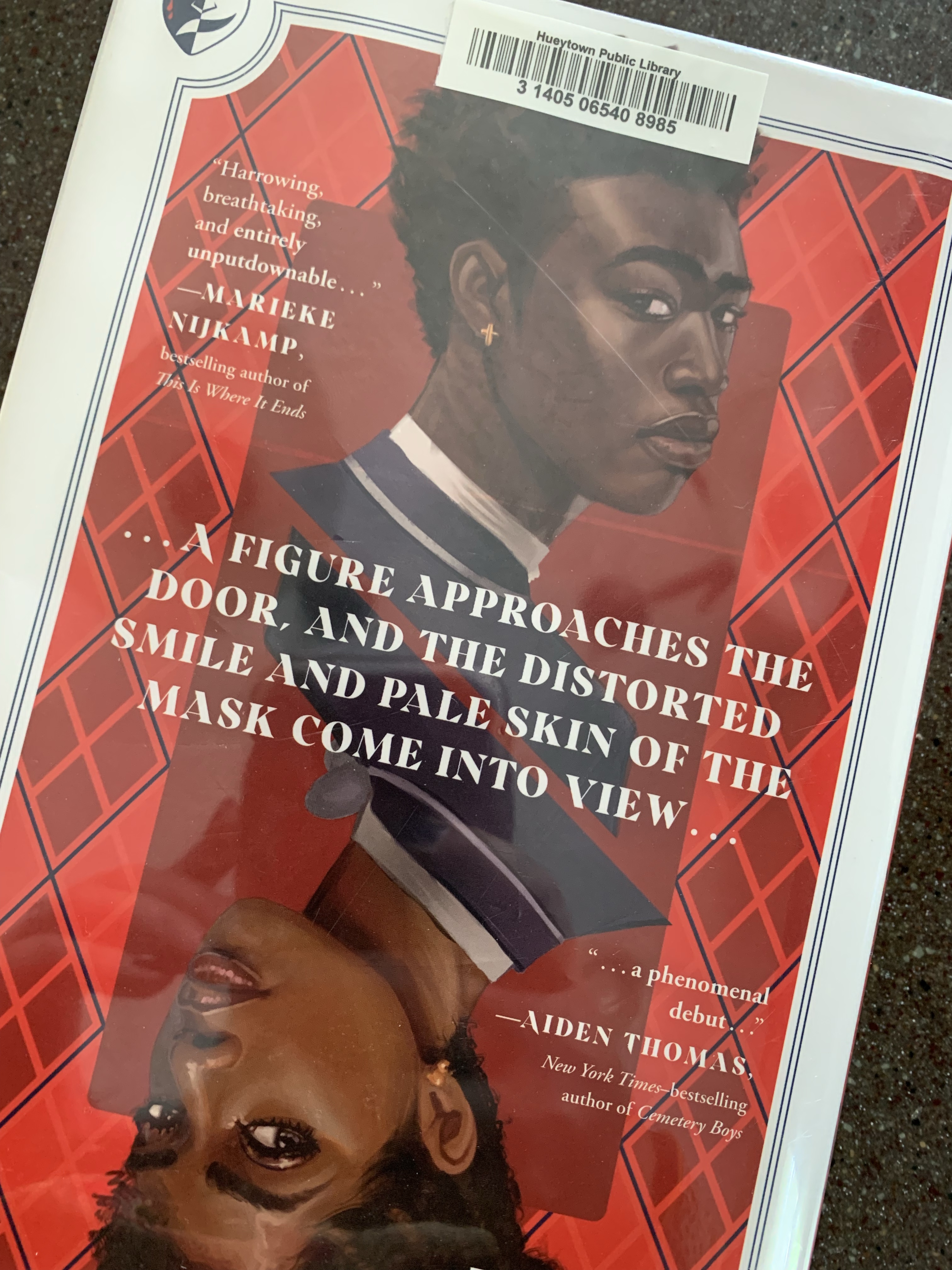
Talaal and the Whispering Worrier by Shereeza Boodhoo illustrated by Khalif Koleoso

Standard
Talaal and the Whispering Worrier by Shereeza Boodhoo illustrated by Khalif Koleoso

talaal

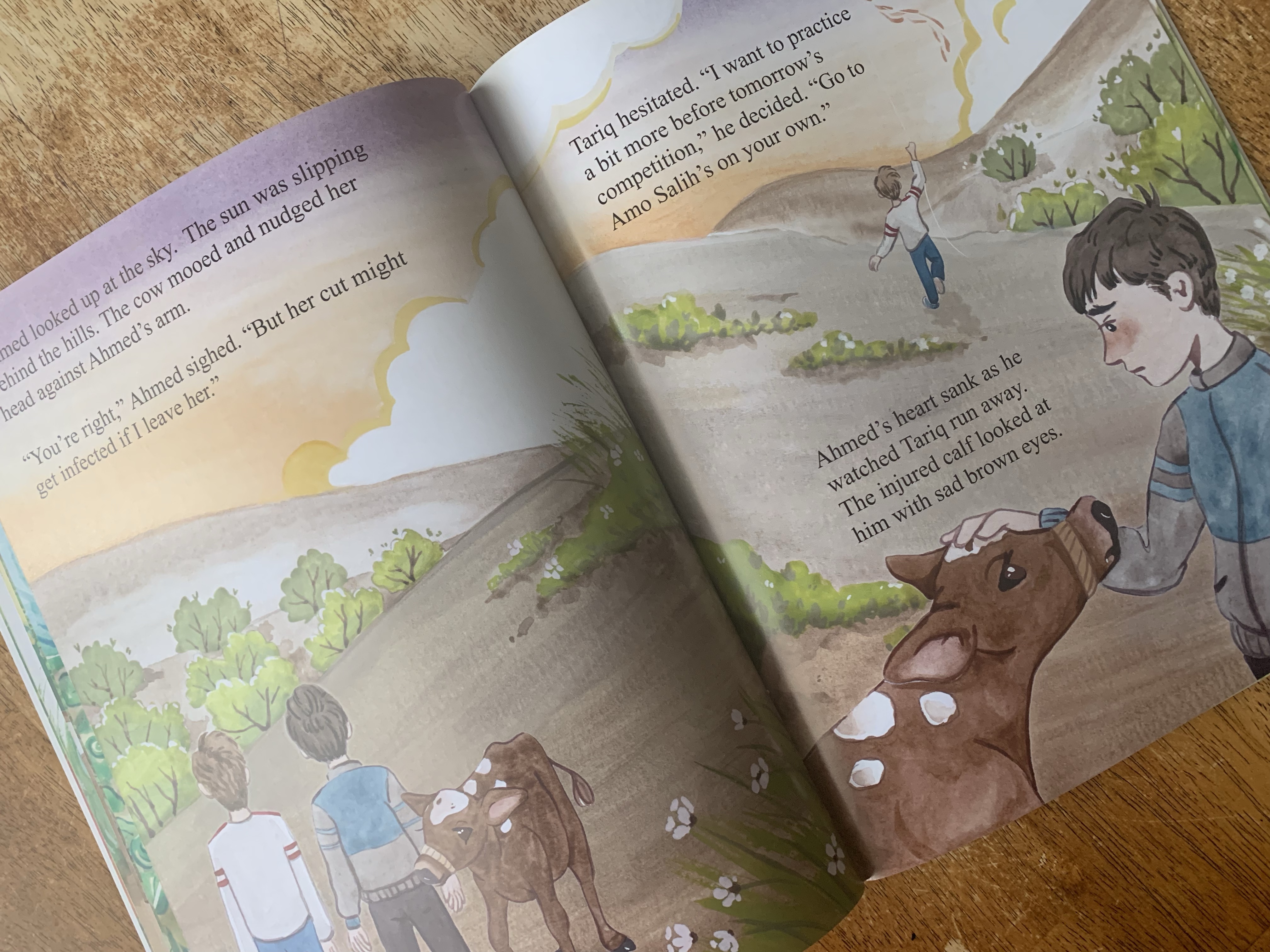
This 38 page book addresses anxiety and self confidence with Islamic tips and tools to help kids cope and feel less alone in their struggles.  The rhyming text on some pages is flawless, and elsewhere falters and distracts from the text.  Similarly, the panda that personifies the “Whispering Worrier” is at times a compliment to the story, and at other times seems to muddle the seriousness being discussed (I don’t understand the ever-present watering can).  The book is long and the text small, but overall the message is good and presentation sufficient.  Books like this by qualified professionals are incredibly valuable and important.  The use of Quran and trust in Allah swt to feel confident and at ease is something we need to share with our young ones early, often, and regularly. 

img_2530

Talaal comes home from school and declares that he feels sick and is not going back to school.  His parents can’t seem to find anything wrong and send him to go do his homework.  He passes his older sister who is praying and seems so relaxed, when she is done she comes and talks to him.  He explains how he felt when the teacher asked them to share and how the fear and nerves felt like his heart was being beat on.  She reassures him that she feels the same way at times and that a Whispering Worrier whispers unhelpful thoughts to tear us down.

img_2531

She suggests countering the negative thoughts with helpful positive ones.  She also suggests reciting Qur’an.  She then has him practice some ayats.  He recites the begining of Surah Ikhlas, and starts to feel better.  Talaal excitedly goes to tell his parents what is going on, and the suggestions his sister has given him for coping and overcoming his stresses.  They let him know that they too get nervous.  His mom, goes a bit off topic and explains various wonders that Allah swt has created and they reassure Talaal that he too is beautifully made.  Talaal starts practicing and finds over time, in different situations, he starts to calm his Whispering Worrier.

img_2533

I like that the advice is rooted in Islamic concepts and that his sister, not an adult, is who coaches him and guides him, making it seem normal and not a punishment.  I like that it isn’t an instant fix, but something to work out and be consistent with over time.  The end has a note to caregivers and some tips.  I think reading the book and having discussions is the first step and inshaAllah if your child or student is struggling that professional help will be sought, so that children don’t have to suffer needlessly.  
img_2534

I read this to a group of early elementary students to try and normalize the topic and encourage them to talk to a parent or teacher if they felt similar to Talaal.  Unfortunately, the book had a hard time keeping their attention and I think, in retrospect, it might be a better selection for smaller groups or one-on-one so that discussion and feedback can safely occur.

img_2539

Samira Surfs by Rukhsanna Guidroz illustrated by Fahmida Azim

Standard
Samira Surfs by Rukhsanna Guidroz illustrated by Fahmida Azim

surfs

I have been anxiously waiting for this middle grades 411 page book in verse to be published.  The last few books I’ve read in this style with smart strong female protagonists have blown me away.  This book unfortunately really fell flat.  I think the difference is most OWN voice narrative do so well in prose when the emotion can be felt and explored deeply, so that when the story moves forward with sparse words the reader can forgive the gaps and jumps.  This didn’t have that insight, sadly, and just left a lot of holes for me. The author’s family on her father’s side is Muslim, she is Persian Indian Chinese, not Rohingya or Bangladeshi, and that isn’t to say that she can’t write a story about them, but it just felt lacking, and this is my assumption as to why.  The author is a surfer, and that is where the detail and passion really shines. The book is fine, it just didn’t inspire me or move me.  It checks boxes for having characters with strong Muslim identities, highlighting a persecuted population, showing diversity within subcultures, and showing universal similarities, so I’m glad the book was written and is available, I just wanted it to be so much more.

img_2388

SYNOPSIS:

Samira and her family have recently made the perilous escape from Burma to Bangladesh.  Burma decided that the Rohingya must be killed and convinced the majority Buddhist to turn on their Muslim neighbors.  Her parents and brother survived, but her grandparents, her Nana and Nani, drowned on the way.  Samira’s family were turned away from the over filled refugee camp in Cox’s Bazar and have set up with others, their own meager living on the outskirts.  Samira’s father works for very little illegally as a shrimper, her brother as a waiter, and she sells eggs on the beach to tourist.  Ever on the lookout for police and from angry Bangladeshis, life is lonely and frightening.  Slowly Samira starts to make friends with other girls, her brother Khaled is helping translate and is beloved by his employer.  When their father gets injured however, the family is thrown in turmoil as they need his income.  At this same time Samira starts to be tempted by the ocean and the surfer girls that seem so free and fearless as they take on the waves.  Knowing that her family will not support her surfing, her brother agrees to teach her how to surf in secret, like he is teaching her to read and write English.  A surfing contest is announced for boys and girls with a substantial monetary prize for the winner, but Samira is not allowed to be in the water, and the Bangladeshis in charge of the surf boards are not happy with how much potential Samira has to win the competition.

img_2389

WHY I LIKE IT:

I love that the story brings some awareness to the under represented Rohingya and that it shows resilience and strength.  It talks about religion, they opt not to fast in Ramadan because the father is weak after his accident and he proclaims that if he isn’t fasting no one should.  The men go to the mosque, the mom talks about hijab.  Cultural words are dropped in and foods mentioned.  The illustrations are fun and engaging and do a good job of breaking up the text and keeping the reader connected.  I loved the dad and his way of supporting his kids, I also loved the brother sister relationship, but ultimately, the plot holes just overwhelmed the straightforward story line.

I wanted to know more about the tourist near this refugee camp, who were they (Bangladeshis? foreigners?) and what was that dynamic like.  I wanted to know where the eggs came from and how that was set up as a job for Samira.  How come the family was nervous about Samira being on the water since that was how her grandparents died, but not her brother? I get that as a female grows the family might not want her in a bathing suit out swimming for modesty issues, but I didn’t like how the book just chopped it up to swimming being against Islam, clearly she was taught to swim and obviously it isn’t.  I was looking forward to some big reveal about the brothers notebook of drawings.  I thought maybe he would get them to a newspaper or get them shared somehow to give insight to what his people were experiencing.  It seemed like it was teased that there was going to be a climax there, but there wasn’t and it felt misleading.   I didn’t get the whole standoff with the other surfers protesting if Samira wasn’t allowed to surf they wouldn’t either.  If the organizers weren’t letting her that makes sense, but why would her parents care? There wasn’t a clear connection and the speed and vagueness in which it was resolved was disappointing as it was presumably the point of the story.

img_2390

FLAGS:

Fairly clean.  There is bullying and mention of death.

img_2379

TOOLS FOR LEADING THE DISCUSSION:

I don’t think I would do this for a middle school book club.  It is a solid middle grade read.  Possibly it could be used to supplement a larger unit of study about refugees or particularly the Rohingya.  Older readers will be left with more questions than they had when they began the book though, and wonder what the point of the story was at all.

img_2373

Eid al-Adha: Festivals Around the World by Grace Jones

Standard
Eid al-Adha: Festivals Around the World by Grace Jones

nonfic eid

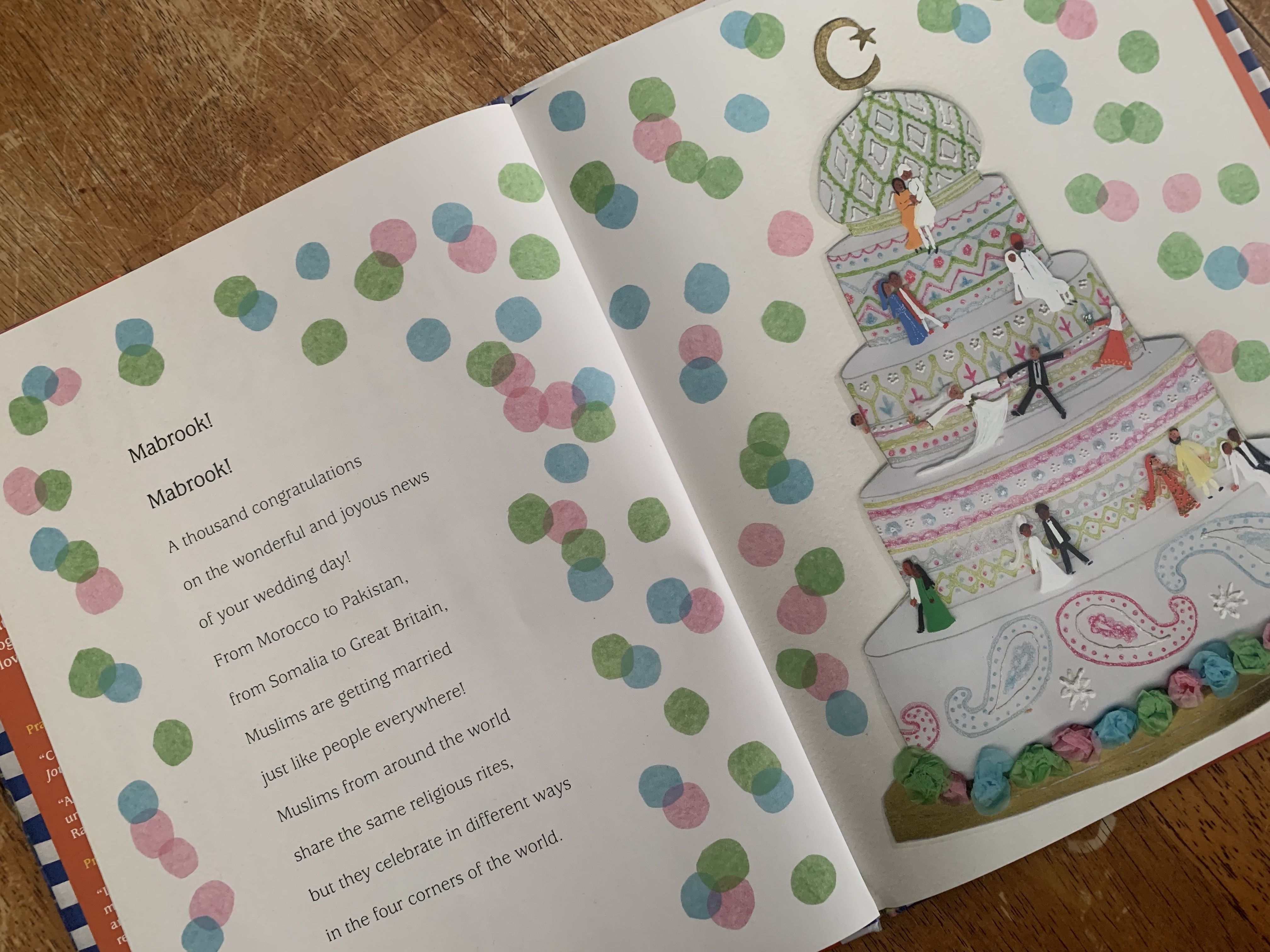
I had hoped to go through all the recently published non fiction hajj and Eid al-Adha books at my local library, the same way I went through the Ramadan and Eid al-Fitr ones to check for errors and accuracy, but they really didn’t have many, and those that they did have were not published in the last few years.  I did find this book from 2017 and because it has some errors: saying Eid is in September every year, not mentioning all the parts of Hajj, which is ok, but overly stressing the stoning at the jamarat, pronouncing Hajj as Harj, etc.,  I thought to share it with you all, so that you too can contact the publisher and your local library and/or bookstore to see about pulling it if you are so inclined (booklifepublishing.com)

img_2345

The 24 page non fiction book is a large 9.5×12 horizontal layout with beautiful pictures of diverse Muslims worshipping and celebrating.  A little cartoon character, Noor, guides you to word pronunciation with a glossary at the end.img_2346The book starts out with a two page spread defining what a festival is.  The next two pages define Islam.   Page 8 then states that “Eid al-Adha is a festival celebrated by Muslims in September of every year.”  And page 9 of the book says we throw pebbles at a wall, not that we throw pebbles at three representative pillars.  It also says that Eid is celebrated for two to four days depending on the country.  Religiously, it should say it is a three day holiday.

img_2347It then tells the Story of Eid al-Adha aka Ibrahim (as) being to told to sacrifice his son.  I’m not sure why the book doesn’t says that Muslim’s consider Ibrahim a Prophet (peace and blessings be upon him), and instead call him a wise man.  Indeed he was, but it seems very awkward to not mention how Muslims regard him, and seems to go out of its way to not say he is a prophet in Islam.

img_2348

The next section is about Hajj which tells that it is performed in the last month of the Islamic year and that we walk around the kaaba seven times.  No other info is given, but in the next section it again mentions the throwing of pebbles,  really dismissing any other steps and making the sacrifice and stoning rituals seem to be the whole of Hajj which is incredibly misleading and erroneous.

The book shows that those not at Hajj, pray in congregation wearing new clothes, give and receive gifts and giving charity.  In the section about Festive Food it only Buriyani from India is featured, it seems random.  It should have been stronger that one third of the sacrifice goes to the poor, one third to friends and family, and one can be kept for oneself.  This would show that meat is the highlighted festival foods in any culture celebrating.  On the “Noor Says” page at the end, it has Hajj pronounced as “harj” which is wrong, it is Hajj, or possibly hadj.

My standards have dropped considerably, and would sadly not consider much of this major.  But, it does provide another example of how involved and aware we need to be in our representation in mainstream nonfiction publications.

The Colours of My Eid: Memories of Hajj and Eid al-Adha by Suzanne Muir illustrated by Azra Momin

Standard
The Colours of My Eid: Memories of Hajj and Eid al-Adha by Suzanne Muir illustrated by Azra Momin


colour


At 18 pages, this 8 x 8 book focused around colors contains a lot more information than what initially meets your eyes.  The warm beautiful, full page pictures fall opposite a highlighted color and a description of that color in the child’s world that reminds the characters of their time at Hajj or celebrating Eid al-Adha.  On each of the fun text pages is a light green text box at the bottom with factual information that older children or adults will benefit from and be able to share with younger listeners.  The main text is ideal for toddlers and up, and older kids up to 3rd grade will benefit from the nonfiction highlights that can educate or remind Muslims and non Muslims alike, about the importance of Hajj and Eid al-Adha.  

The book starts with an introduction about the Islamic language and perspective used, and clarifies that the colours emphasized are to help visualize the point being made, it also gives information about Eid al-Adha.

The colors highlighted are: white, black, brown, green, grey, yellow, and purple.  The large simple text takes something relatable such as the monkey bars, or balloons, or the sky and corresponds it to a memory of Arafat, or ihram, or the hills of Safa and Marwa.

The nonfiction text gives specific dimensions of the Ka’aba, the story of Hajar and baby Ismail, the requirement of Hajj and some of the steps.  There is a lot of information conveyed which at times is incredibly detailed, and sometimes, rather vague and generic, i.e. Tawaf is when Muslim pilgrims circle the Ka’aba as part of the Hajj rituals. Overall, this little book packs a punch, and I was equally impressed at how it held my five year old’s attention with the colors, and my interest with the facts detailed below.


The Wild Ones by Nafiza Azad

Standard
The Wild Ones by Nafiza Azad

wild ones

At times this 352 mature YA book was really hard to read for a variety of reasons: the subject matter, the writing style, the pacing of the story, and the numerous characters and inconsistencies.  At other times, the book was descriptive, and ethereal and hard to put down.  It took me over a month to finish the book because it really is all over the place and a lot of internal force and motivation was required to get through it, yet for all its flaws, I find my thoughts drifting back to it often.  The book contains a lot of violence against women, as that is the thread that brings this feminist group together.  There are hetero, lgbtq+, trans, and nonbinary individuals and relationships in the book, but they are not explicit, the rape, assault, suicide, prostitution, child trafficking and murder are more detailed.  The book takes place all over the world, and often mentions the athan being called or a mosque being passed.  Many characters have “Islamic” names, but there is no religion specifically practiced in this hijabi authored women powered tale.

SYNOPSIS:

The premise of the book is simple and straightforward.  A girl, the daughter of a prostitute, is betrayed by her mother when she is sent to a man.  As she runs through the city to escape, she crosses paths with a young boy who tosses her a box that contains stars.  A star embeds itself in her palm and allows her to enter a place called the “Between.”  The Between is a magical corridor made of magic that contains doors that lead to locations all over the world.  Once she enters she stops aging and is now made of magic.  She has the power to scream which can destroy other middle worlders and she can go invisible when around normal humans.  She travels the world finding other girls betrayed by those who had been entrusted to protect them, and offers them a star and a place in the Wild Ones.  This has been going on for centuries.  When the boy with the star eyes is in danger, he is reunited with the girl and her gang, and they pledge to protect him.

WHY I LIKE IT:

The concept of the book is pretty good, but the plot for more than half of the book it seems focuses on the girls constantly arriving in a new location, exchanging diamonds for local currency, finding food, and getting settled in, before doing it all over again.  It is repetitive and pointless.  Sure it is nice to read about exotic locations and savor local foods, but these girls live forever essentially and we learn so little about them or what it is they do.  Toward the middle of the book you start to see them helping other girls, but this should have been made clear much earlier on, I’m sure many people stopped reading before they saw how part of each girls’ healing involved helping others.  It is not developed or shown, which I think other than the two encounters detailed would have created some connection between the characters and the reader.

The cause of most of the confusion is that there are 11 Wild Ones, and you never really get to know any of them, the point of view switches between Paheli, and unknown speaker, and it has pages of prose from other Wild Ones that are neither explanatory of their life before or in relation to what they are currently experiencing. The fourth wall is broken periodically, but inconsistently.  So often, I just had no idea what was going on.

At times the characters speak like they are the teens that they are when they entered the Between, really noticeably and painfully, but they are decades old at the youngest, and centuries old for some of them.  Also, Taraana is presented as a young small boy that needs coddling a lot, although he too is centuries old, but then as the girls start protecting him, he suddenly is this incredibly handsome man in love with Paheli.  I get that their physical ages are suspended, so a relationship really might be possible and not creepy, but Taraana seemed to change, and it wasn’t explained.

The world building overall is weak, which is a shame, because it isn’t disjointed from the real world, it is just a slight addition to what the reader already knows.  If the Between is just hallways how is there a library? Can you live in the Between? Can all middle worlders access it? If so why aren’t the corridors crowded?

The pain of the girls, their rage, their ability to deal with their traumas in their own way and time, is very empowering.  I wish the sisterhood was more mutual than blindly following Paheli, like lost little children.  These girls/women can decide what to partake it, and leave the group if they want, so they are strong and capable, they just don’t seem to get to show it as they bounce around from place to place to place eating and doing what they are told.

The book almost seems to have been written in sections and then dropped in to place.  Much of the character information comes too late to make the story resonate.  Sure part of it is intentional to clarify and create “aha” moments, but it creates really boring stagnant chapters, when these girls should be fierce and powerful, not lounging and mundane.

There were a few spelling errors and grammar gaps, but I read an advanced readers copy, so I’m hopeful they will be resolved.

FLAGS:

Prostitution, rape, assault, suicide, death, murder, child trafficking, torture, drowning, infanticide, girl/boy kissing, girl/boy and girl/girl flirting. Many of the online reviews make it seem more lgbtq+ than I felt it was.  There are two lesbian characters that flirt and imply that their relationship will move forward, but within the Wild Ones they aren’t all hooking up.  Paheli and Taraana kiss, but nothing more graphic.

TOOLS FOR LEADING THE DISCUSSION:

I don’t think there is any way I could do this as a book club selection at an Islamic school, nor would I want to. The book has powerful commentary on the status and crimes against women the world over, and possibly older, say early 20 year olds, would benefit from reading and adding their voices to a dialogue regarding life experiences. But, the story line might be too simplistic for older readers to bond with, and the confusion and inconsistencies may not be worth the time needed to finish the book.

Little Rocket’s Imaan Boosting Journey by Ilm Bubbles

Standard
Little Rocket’s Imaan Boosting Journey by Ilm Bubbles

img_2180

This 32 page toddler to first grade picture book at first appears to be just another book praising Allah’s creation from the ground level up to the heavens as the main character is a personified rocket ship.  However, I was delighted to see that after a few pages the book goes deeper in both Islamic messaging and in literary action.  Told in rhyme, Little Rocket will face dangerous comets, make desperate humbled duas for help, be rescued by Officer Cosmo, show gratitude, and grow in his imaan and understanding of Allah’s creation and mercy.  With a guide at the end to further involve children in the lessons of the book, and a glossary; the bright glossy illustrations will give little Muslims important well woven in lessons in a fun story packaging.

img_2184

Little Rocket is about to take off from his little town, it is his first flight, so he is a little nervous.  A little dhikr calms his heart and bismillah he is off. He prayers for courage as he looks down and sees so many of Allah’s creations.

img_2181

As he enters space the colors of Earth become the dark sky full of stars and planets that do not fall.  Careful not to get too close to the burning sun.  Little Rocket wants to keep heading toward Neptune, but needs to take a rest on a rocky moon.  As he drifts off to sleep in the quiet of space he is abruptly awoken by comets hitting the surface.

img_2183

Little Rocket is hit and the ash is thick from the destruction.  He gets stuck from falling debris and prays to Allah swt for help.  A brave blue rocket, Officer Cosmo, hears something, and comes to Little Rocket’s aid.  SubhanAllah Officer Cosmo is able to save a very grateful Little Rocket.

img_2182

Little Rocket heads home feeling closer to Allah swt then he did when he left that morning and knows that “There is none worthy of Worship, but Allah.”

img_2185

The power of Dua saved the day and with concepts and vocabulary of space all combined in a story with a sweet plot, this book will be requested over and over, and inshaAllah help little ones to appreciate and trust Allah always.

I Can Help by Reem Faruqi illustrated by Mikela Prevost

Standard
I Can Help by Reem Faruqi illustrated by Mikela Prevost

i can help cover

This 44 page early elementary book is absolutely beautiful: the message, the relatability, the representation, the heartfelt author note.  Reem Faruqi is brilliant.  Once again she takes something so personal to her and allows the readers to see pieces of themselves in her OWN voice narrative.  This book at it’s core is about peer pressure, but the way it stays with the reader will resonates deeply and powerfully.  Readers will remember the choice Zahra made and the way it changed not only her relationship with Kyle, but also her own view of herself, while forgetting the names of the classmates that teased her and made her question herself.  It is not the outside reprimanding that gives this book it’s strength, but the guilty conscious that such a young character has to come to terms with as she moves forward.

  i can help 3

There are 18 kids in Zahra’s class in early fall, when the leaves are about to be the color of Nana’s spices.  One of the kids is Kyle.  Kyle often needs a helper, and Zahra is happy to help him with his cutting and gluing and writing.  The two have become friends.  Kyle is funny and nice and shares his cookies.

i can help 2

Zahra also likes the praise she gets for being such a good helper.  One day when the leaves have darkened, Zahra is climbing a tree and hears some of the girls making fun of Kyle.  She doesn’t want to listen, but her ears want to hear.  When she comes down, they ask her why she helps him.  She doesn’t really know.

i can help1

When she is helping him later, she sees the girls staring at her, and she snaps at Kyle.  The next day Ahmed helps Kyle instead.  Zahra misses being around Kyle, but he says that she is mean and he doesn’t know her any more.  Zahra doesn’t know herself any more either.

i can help 5

The next year finds Zahra at a new school, and when the opportunity presents itself for her to help someone, she jumps to offer herself as a helper remembering Kyle and finding her voice, one that she recognizes.

i can help8

The book is inspired by the author’s own experience, and the rawness and relatability shines through.  The illustrator also relates to the book and needing help with physical limitations.  There is nothing overtly religious or cultural other than the mention of the spices, Zahra’s and Ahmed’s names, and the term for Zahra’s grandfather.  The diverse kids in the classroom and the universal messaging make this book a must read for every kid and big person.  Be kind, always be kind.

i can help 9

Silverworld by Diana Abu-Jaber

Standard
Silverworld by Diana Abu-Jaber

silverworld

At 304 pages this middle grades fantasy OWN voice book attempts to weave together a granddaughters love for her Teta, with her adventures in a mythical world that only she can save.  In much the same way of Narnia, or Gregor the Overlander, or even Alice in Wonderland, the book takes a realistic character and pushes them, in this case Samara aka Sami, just beyond, into a world filled with mystery, adventure, and lessons.  The Lebanese flavor sprinkled in adds a little depth and uniqueness to the story, and aids a bit in the world building, but it isn’t a strong presence outside of ifrits and character’s names.  Teta is a Beduin that has a prayer rug and tarot cards and a painting of the Virgin Mary that she calls Fatima, and Sami’s deceased dad was American and the house has Christmas lights.  At one point the book remarks that Teta “likes to pick and choose her beliefs.”  The premise starts with Teta showing signs of dementia: speaking in a language no one but Sami can understand, and not eating and seeming present, the resolution as a result could give children the wrong idea about treatments for such real conditions, and adults might want to make sure their middle graders wont be triggered by the decline of a loved one.  The book is written well and holds reader’s interest, the world building is decent and the character’s relatable, I don’t know that it is overly memorable, but it is a fun light magical read with culture and family and friendship at its core that readers will enjoy.

SYNOPSIS:

Sami and her brother Tony, along with their attorney mom Alia and maternal grandmother, Serafina, have just moved to Florida from Ithaca, New York.  The children’s father was killed and the family has moved a few blocks away from his sister to start anew.  Sami is not settling in, and to make matters worse, Teta has stopped talking coherently, and Aunt Ivory and Alia are looking for a nursing home to place her in.  For some reason though, when it is just Sami and her grandma, she can communicate just fine, and Teta tells stories of her adventures with her flicker Ashrafieh in Silverworld.  Sami doesn’t necessarily believe the stories are true, but she gets the idea to use her Teta’s fairy stories to try and save her grandma, but when she finds her Teta’s spell book and peers into an old beloved mirror, Sami is taken to Silverworld and realizes that it is not just her grandmother’s future at risk.

In a world of flickers and shadows, Sami finds two balancers that taker her in and guide her: Dorsom and Natala.  The world is a reflection of the Actual world, but the Shadow Nixie is consuming the land and taking prisoners.  The balance is off, and Sami is convinced that this darkness is what is also harming Teta.  Between shadow spies and giant rotifers, magic and prophesied destinies, Sami must push her fear away and accept that she can be the one to set things right.

WHY I LIKE IT:

I like that Sami has to step in to her own and fight for what she wants, even when she is afraid.  I love the relationship she has with her Teta it is very warm and palpable.  I feel like the “saving Silverworld will save her Teta thread,” however, is lost in the middle of the book, it might be the catalyst and might have worked out that way in the end, but I don’t know that the middle makes the case that the two efforts are one and the same.  I appreciate that there are glimpses of Lebanon in the story with the athan in the background and spinning dervishes, but outside of Teta and a bit of the food, the cultural elements seemed a bit forced and deliberate instead of stemming from a natural flowing place.  A bit odd since it is an OWN voice novel, but maybe I was just wanting more. I would have liked more information about how Teta settled in America, learned English etc., or about her tattoos and Beduin upbringing. Another thing that seemed off to me was the close relationship of Dorsom and Sami at the end.  I hadn’t over nearly 300 pages realized that they were that much closer than Sami and Natala.  I even went back to see if I had missed something, but I couldn’t find that I had.  I wasn’t entirely sure why they were going to see Nixie either, I mean yes it was logical for they type of book it is, but I don’t know that Sami really had a plan for Silverworld or her Teta, she was just going to Nixie’s castle to get there.  There were also a few inconsistencies such as Sami wishing her and Tony could go fishing or surfing, when the book has made it clear that Sami is afraid of the water, particularly the ocean.

FLAGS:

There is magic, killing, death. There is talk of goddesses, there is a female character, a shadow, that has two flicker husbands and children with them both.

TOOLS FOR LEADING THE DISCUSSION:

I don’t think this would appeal to middle school readers, it is a solid middle grade book.  I do think fourth and fifth grade shelves would benefit from having this book available to be picked up and enjoyed.

A Sweet Meeting on Mimouna Night by Allison Ofanansky illustrated by Rotem Teplow

Standard
A Sweet Meeting on Mimouna Night by Allison Ofanansky illustrated by Rotem Teplow

img_0532

A story about the Morrocan Jewish holiday, Mimouna, that marks the end of Passover introduces readers to a small but growing Jewish celebration from Northern Africa.  Stemming from the historical fact of Jews often borrowing flour from their Muslim neighbors to make the traditional Maufletot, thin pancakes, after a week of not eating flour.  The story focuses on a Jewish girl and a Muslim girl meeting each other, celebrating with each other, and finding similarities between Ramadan and Mimouna.  Over 36 pages, kindergarten to second grade readers will get an introduction to two different faith holidays and see that friendship and kindness are possible everywhere.

img_0526

It is the last day of Passover in Fes and Miriam is tired of eating quickly baked unleavened matzah crackers, she is ready for the sweet dough pancakes of Mimouna, and she is willing to help her mom make them.  But before Passover, all flour was removed from the home, and she asks her mother where they can get flour tonight before the  party.

Mom and Miriam begin to walk.  They leave the part of town that Miriam is familiar with and Miriam sees a building with a dome and minarets.  “What is that?” she asks.  Her mother replies, “It is a mosque, where our Muslim neighbors pray.”

img_0529

They then enter a courtyard where a woman and her daughter about the same age as Miriam appear and invite them in for tea.  The two women say salaam and kiss each other’s cheeks.  Miriam’s mom gives the other lady a jar of fig jam and invites her and her family to come to the house to celebrate Mimouna with them. When the women are done drinking tea, Jasmine is asked to go to the store room for two bags of flour and Miriam is sent to help.  Jasmine is told one bag is for them, and one is for their guests.  The two shy girls go get the flour, and when Miriam trips, Jasmine catches the bag just in time.

img_0525

On the way home, Miriam has so many questions about the lady and how her mother knows her and how come they don’t have a jasmine vine. But, when they get home there is a lot of work to be done before the guests start to arrive.

By the time Jasmine and her parents come the house is full and music is being played and songs are being song.  The first plate of maufletot goes to Miriam’s grandfather, and when she trips and they go flying it is Jasmine who catches them.  The girls giggle and Miriam teaches Jasmine to play the song, “Alalla Mimouna” on her tambourine.

img_0524

The party moves from house to house and at one home green wheat is dipped in milk and sprinkled over everyone’s head as a blessing for the upcoming year.  By the time the girls get back home they are tired, and as they share one last pancake, Jasmine tells Miriam about the nightly feasts of Ramadan after a day of fasting.  She invites Miriam to join them, and Mariam is excited, but Mariam’s mom explains that they are moving to Jerusalem.

img_0527

The following year on Mimouna Night, Mariam heads to the store to buy flour, but thinks of her friend Jasmine back in Morocco as she smells the jasmine growing in her home, and wonders if her friend is also thinking about her.

img_0528

The author is an Amerian Israeli, and I was nervous that there would be political overtones, but she deliberately wanted to avoid that and focus instead on presenting this little known Jewish holiday in an interfaith manner.  There is an info section at the end of the book explaining Mimouna and a recipe for moufletot.  In author interviews you can read more about how the story came to be, and what her hopes were in telling it: https://jewishbooksforkids.com/2021/03/14/interview-with-allison-ofanansky-author-of-a-sweet-meeting-on-mimouna-night/

The Magical Reality of Nadia by Bassem Youssef and Catherine R. Daly illustrated by Douglas Holgate

Standard
The Magical Reality of Nadia by Bassem Youssef and Catherine R. Daly illustrated by Douglas Holgate

nadia

This middle grades AR 4.5 OWN voice book by Muslim author/comedian/surgeon/activists Bassem Youssef mixes text, comic strips, and illustrations over 166 pages to tell a story about ancient Egypt, friendship, leadership, xenophobia, and life sprinkled with magic.  It has a lot of potential, and I liked the lessons that Egyptian-American Nadia learns, but it just seemed lacking to me.  It seems to be book one in a series, and in many ways it reads like an introduction.  The magical element is underdeveloped to me and often just annoying.  The micro aggressions,  racism, and character’s ages would suggest upper middle grader readers would gravitate toward the book, but the overall writing style and length would more appeal to younger readers.  This disconnect makes the book hard to pin down and hard to connect with.  I’ll definitely check out future books in the series even though no religion is mentioned, because this brown girl has a lot of potential to break down Arab-American stereotypes and empower readers to be proud of where they and their families are from as universal obstacles are worked through.

img_1640

SYNOPSIS:

Nadia has just come back from a summer vacation visiting family and friends in Egypt and can’t wait to get ice cream with her best friend Adam.  She picked up an Egyptian comic book for him and is anxious to see if he likes it.  Except the comic book seems to have disappeared and when she asks her many bobble heads to help her find it, her necklace with a hippo amulet starts to glow and an ancient Egyptian teacher, Titi, starts talking to her from the now found comic book pages.  As Nadia figures out how to control this ancient man who lives around her neck and in papers around her, she also has to deal with a new kid that acts like a bully and has the admiration of her best friend Adam.  Nadia loves facts and her and her friends call themselves the Nerd Patrol.  Nadia can be a bit bossy though, and while usually her friends let it go, she seems to be stepping on toes lately, especially with Adam.  When a competition at school is announced that will result in an exhibit at the Museum of American History, Nadia will have to use her “genie” to get help coming up with ideas for her display, coping with a bully, restoring friendships, and learning how to be a leader before her friendships fall apart.

img_1641

WHY I LIKE IT:

I love that Nadia is so proud of her culture and doesn’t feel like she has to pick one of her hyphens over another.  She brings Egyptian food for lunch, wears Egyptian inspired clothing, and is still very “American” as well.  Ancient Egyptian tidbits as well as modern day Egyptian information seeps through and weaves into the story smoothly.  The  diverse side characters are also a plus.  I think her trying to handle the bully in multiple ways makes the story resonate with other kids and gives readers something to ponder over.  I worry that most readers, however, won’t know who Elvis Presley is, or get if Titi is really helping or not and how it all comes together for him.  I am curious to see if he is a major character in future books, because I still have a lot of questions about his knowledge and understanding of the world after being trapped in an amulet for so long. Really, she could have learned so much from him, she just scratched the surface.

img_1642

FLAGS:

There is teasing and bullying and racism, subtle and overt.

TOOLS FOR LEADING THE DISCUSSION:

This book is too short and superficial for a middle school book club selection, but it could be a fun read aloud in a 3rd or 4th grade class.