Tag Archives: Urdu

Music of the Mountains: A Story in Pakistan by Sabrina Shah illustrated by Manal Mirza

Standard
Music of the Mountains: A Story in Pakistan by Sabrina Shah illustrated by Manal Mirza

Set around an Eid concert in the North-West Frontier in Pakistan, a young girl must find her courage to play the rabab in front of an audience, even though she is still learning her first song. The beautiful illustrations of Manal Mirza and focusing on an under represented population, made me hopeful that this book would transcend the musical focus and weave in Islam and culture. Sadly, though, the book falls victim to cliche lines that mean nothing, and a story that doesn’t make a lot of sense once you move past the superficial attraction. The backmatter infographics about the rabab, where it can be heard, details about the Pathan/Pashtun people, What Eid is, the traditional clothing, and a Pashto Glossary, add to the vibe of the book, but still fail to offer any specific “hospitality, courage, and rich traditions,” that are only ever referenced in generalized terms and statements.

The book starts with Roohi’s favorite time of day, the sun is settling behind the snow capped mountains and her family is gathering around to listen to her grandfather, Neeka Baba, play the rabab. No they aren’t praying maghrib, or breaking their fast, so presumably it is not Ramadan.  When Neeka Baba plays, “songs full of rhythm echo through the cherry blossom hills.  Songs from long ago tell stories of folklore, heroes, and love. . . songs of Roohi’s ancestors.” A beautiful sentiment, but it is not a thesis statement or main idea of the book as we, the reader, never learn about her ancestors, or folklore, or about the culture.” We are just told they all had courage, and she needs to channel that strength.

She will need strength to play the rabab at her school concert, except remember “she hasn’t even learned a whole song yet.” She also worries she won’t be as good as her grandfather, but presumably he has been playing longer and she is just starting, so I never connected why she felt she should be as good as him.  No one in the story compares them, or says she should be as good as him, or even strive to be as good as him.  There is nothing that hints that this is even a part of the characters development other than the repetitive refrain that she must “play with the courage of those who came before her.” So the cathartic release of being told “to play like yourself” also seems forcefully contrived and not a natural arc of growth and understanding.

As Eid creeps closer, Roohi has lessons with her grandfather on the rabab, and then Neeka Baba coughs and is in the hospital. The reader has no idea how this man falls ill, or recovers, if it was sudden or a known affliction, but he is no longer the focus, the rabab is, and so the story continues.

At the school concert, Roohi is introduced as playing music from the North-West Frontier Province.  Hold up, yes I thought I skipped a page.  They live in the North-West Frontier, don’t they, this is a school concert? What an odd introduction, did they travel? At the end there is a “smile as wide as the lush valleys back home.”  When did they leave home? And why a silent prayer, why not a “bismillah.” Isn’t the point of OWN voice to have the little details and the voice that can’t be imitated by researched work?

I am going to spoil the ending, she freezes, Mama and Neeka Baba help her find her beat in the audience and she steals the show so to speak. The ending is sweet, but not anywhere near as heartfelt as it should have been if the audience would have been shown the strength and courage of the Pashtun culture, not just repeatedly told it, felt the warmth of their hospitality, the rich ancestral values that would be threads that manifest in the music that she is hoping to share with others. Sadly we are just expected to know that they all exist and cheer for Roohi to succeed.

Disappointing, considering how fantastic the illustrations are, sigh.

Our World: Pakistan by Rumaisa Bilal illustrated by Nez Riaz

Standard
Our World: Pakistan by Rumaisa Bilal illustrated by Nez Riaz

img_4412-1

This 20 page board book doesn’t come out for a few months, but it really is adorable, and I love that it centers Islam, so I’m putting it on your radar hoping you might preorder to show your support.  This ever growing series highlights different countries by OWN voice authors, focuses on simple text, cultural insight, linguistic samples, and bright illustrations.  The book follows a little girl from morning to bedtime and then highlights parts of the unique cultural aspects shared in the back-ish matter.

img_4413-1

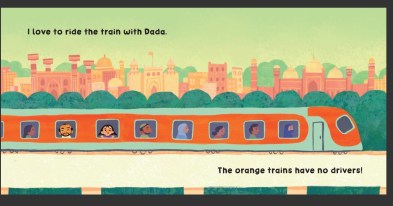
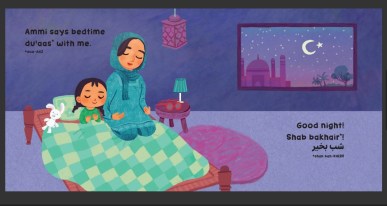
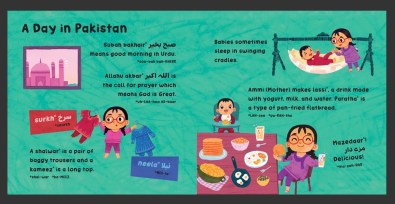
The book starts with Subah Bakhair, good morning, written in Urdu and English, before AllahuAkbar and prayers are made. Then it is time to get dressed and deciding what to wear.  Little brother is in a swinging cradle, and paratha and lassi are shared with family.  The little protagonist then heads on the driverless orange trains with her Dada, grandfather, to do some shopping, concluding with bedtime du’aas.

img_4415-1

Board books are a little tricky for me as if they are more than just a few words on a very basic topic, they seem to be really jumpy or really wordy.  If they manage to not have long blocks of text, and stay on the intended audience’s level, they seem to be random in what is included.  This book is no exception. I am not sure how the words were chosen to include in Urdu script, why some words are given for specific things like shalwar kameez, but not for the joolah.  Not sure why the bathroom, getting ready for bed scene is included, and why lota is highlighted in the end, either.  I’m sure to someone else it seems logical, there is nothing “wrong” with it, it just seemed a little disjointed from the rest of the inclusions.

img_4416-1

I love the illustrations, they are engaging and joyful.  Desis have a decent amount of rep in children’s books, but a board book dedicated just to Pakistan widely available here in the west, that is OWN voice, features Islam, and well done, really is delightful to see, alhumdulillah.

img_4418-1

You can preorder your copy here

img_4417-1

Awe-Samosas! by Marzieh Abbas illustrated by Bhagya Madanasighe

Standard
Awe-Samosas! by Marzieh Abbas illustrated by Bhagya Madanasighe

img_4196-1

I was really enjoying this book about a determined young girl and her dad making samosas for friends, missing Dadijan, adapting and problem solving, an encouraging Urdu speaking parrot, a reference to Ramadan, and incredible illustrations… and then I froze.  On page 32 of the 40 page book it says the word “pepperoni” clearly affirming that the Muslim girl who’s dupatta wearing Dadijan wakes up at fajr to call her, has made pepperoni pizza samosas for her friends.  Perhaps I’m over reacting, it is one word, but I truly cannot get past it.  The first time I recall asserting myself as Muslim was in preschool making pizzas and me telling my teacher at three and half years old that I cannot eat pepperoni.  Sure as a middle aged adult, I know you can get beef or turkey or faux pepperoni, but the standard is pork, and this book does not clarify that it is not pork.  The word is intentional, the story would be exactly the same if it were just a cheesy pizza samosa, yet it articulates it as a peperoni pizza samosa. And I truly cannot fathom why.  Classrooms and libraries will shelve this book, teachers and librarians will read this book, little Muslim kids that look like Noor, are going to shrink when they get to that line: either they will question if we can have pepperoni (why else was it in Noor’s home), or have to now convince adults and classmates that the book is wrong in addition to explaining that Muslims do not eat pork, a big task for the intended audience of preschool to third grade.  If you omit that one word, the book is wonderful, layered, joyful, and a lot of fun.

Noor’s friends are coming over, two girls and a boy, for the first time and Noor wants to make samosas to eat with them.  It is too early to call Dadijaan in Pakistan, and Noor thinks she remembers how to make them.  Abbu offers to order pizza, but Noor is determined, even when she discovers they don’t have the necessary ingredients.  She puts on Dadijaan’s kitchen dupatta, and with her parrot, Mithoo, encouraging her every time she gets stuck with “Sab theek hai. Sab theek Hoga! Everything’s great, everything’s going to be okay!” Noor heads to plan B, Awe-Samosas, samosas with unique fillings.

img_4197-1

Noor gets Abbu onboard and helping and when her friends arrive, the turmeric colored pastries are ready for eating.  Some are apple-cinnamon filled, and remind Kaitlin of her grandma’s Fourth of July apple-pie, some are stuffed with honey and pistachio like baklava according to Layla, and Jonathan finds the cheesy peperoni samosa genius.  When Dadijaan sees the pictures Abbu has sent at fajr, she calls and praises Noor with the friends hoping to have another samosa party when she is visiting next.

The book concludes with Dadijaan’s Special Samosa Recipe, and a Glossary.  The book is widely available, including here on Amazon.

img_4200-1

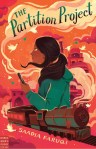
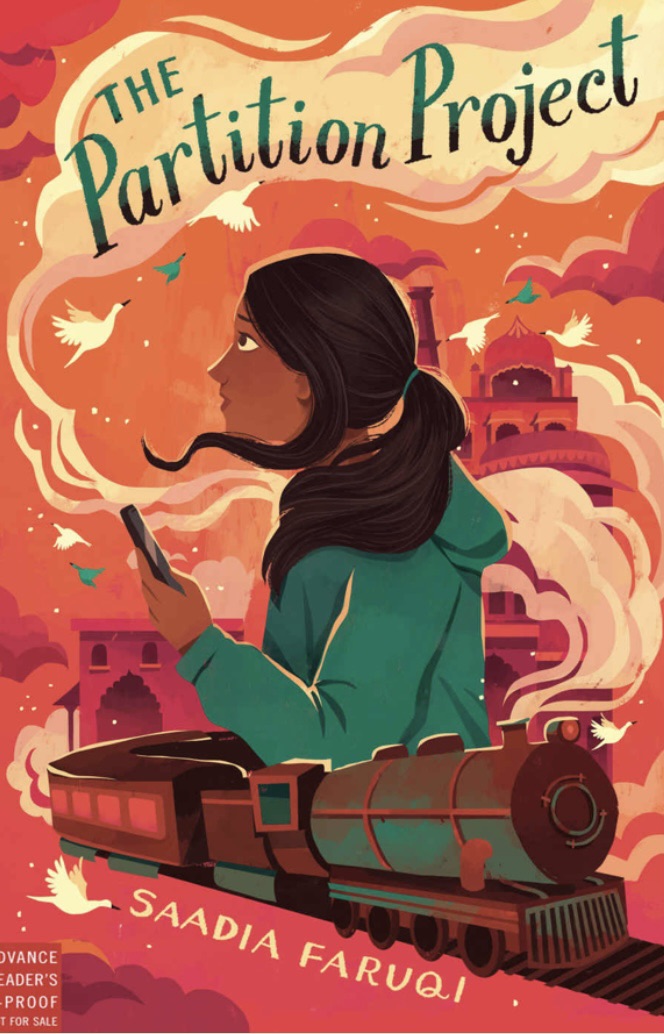
The Partition Project by Saadia Faruqi

Standard
The Partition Project by Saadia Faruqi

Screenshot

I have always maintained that my reviews are not personal, and for over 10 years, I kept to that. I recently made a public exception however, for Palestine. I cannot and have not checked every author, every illustrator, every publisher, or every agent, to see who has spoken up about the genocide, but there are a few prolific authors that are standards in the niche of Islamic fiction literature. Who have elevated our representation with a standard of quality and consistency across multiple age groups over the years, whose stature made their silence, seeming or actual, to the occupation, the apartheid, and the ongoing attempted erasure of a people and culture impossible to miss. No there is no standard or bare minimum, this is all emotion, and if you are thinking who am I to judge, or maybe I missed something, yes you are right. None-the-less it definitely caught my attention that an author who remained silent, wrote a 416 page middle grade book about partition, a historical event impossible to separate from colonization. I know the timeline for books to be published is not quick, but when I read the characters discussing that, “If we only read books by perfect authors, we’d read…nothing, I guess.” It felt a little defensive, and while I never set out to shame anyone, I have written this disclaimer to hold to my word, and to acknowledge that as much as I have set out to write the remainder of this review as I would review any book, my own disappointment in the author, may show through. Literary wise the book is moving, heartfelt even, but the performative othering, the internalized Islamophobia, and the catering to a western gaze, are subtle, but undeniably there. Perhaps the biggest example is the word “British,” the whole reason for partition, is only mentioned a grand total of six times.

SYNOPSIS:
Mahnoor, aka Maha, is in seventh grade, and her whole world has just flipped upside down. Her Dadi, her paternal grandmother, has just moved in from Pakistan, taking her room, and her free time. Plus Dadi is old and grumpy, and Maha is not amused. With parents that are too busy to spend time with her, Dadi slowly but surely starts to fill in a lot of pieces that Maha didn’t know were lacking in her life. Through food and stories and the start of Ramadan, Maha learns about Islam, Pakistan, friendship, and with a school documentary assignment, partition. A historical event she had never heard about before, starts to be all she can think about. It also seems to hang over everything she encounters from a book on a novel study English assignment list, to the train in their neighborhood, everyone at the senior center, and even Texas history. With dreams of being a journalist, Maha’s singular focus because almost obsessive, according to her friend Kim, but the more she learns, the more she changes. And the changes are for the better, even if there are some stumbles along the way, fighting with Kim, making Dadi runaway, calling out her parents preoccupation with work, missed fasts. The book has a happy ending though, as the unlikeable privileged Maha at the beginning, transforms to being someone the reader is cheering for at the end.

WHY I LIKE IT:
I am Pakistani-American, being half Pakistani and half American, the hyphen for me signals both my parents. So I was thrilled a year or so ago when I first heard about this book. I am a bit removed from partition because my father was the first in his family to be born in Pakistan, and my in-laws did not move from India until much later. That being said, I know it is a part of me, as all desis do, and was eager to read this middle grade book. Please note though, I am also white passing American (albeit with a hijab), so I can tell when I am being pandered to as well.

Do I feel the book did the topic justice? Absolutely not, by not discussing colonialism and British occupation, a huge part of the setup is conveniently ignored. It also is very placating of what the Muslims, Seikhs and Hindus seemed to want as Jinnah and Nehru are only name dropped once. Gandhi not at all. I get that the book presumably isn’t about that, but by ignoring it all together, there is some intent there, possible watering down for a white audience, that doesn’t sit right with me.

This book feels like it is written for non Muslims. The dialogues about being a good person even though they don’t follow Islam as they should, and pray and fast and eat halal, seem like internalized Islamophobia, that is trying to normalize not practicing. When the text goes so far as to call those that do fast all 30 days “ultra-religious” it seems to walk back the numerous passages of Maha loving fasting and finding peace in prayer. The takeaway for a Muslim reader will be a little self doubt, for a non Muslim reader it will reinforce the labels of “those Muslims” and “extremists.” It makes what many Muslims find basic faith requirements, come across as optional here in America, like taking off shoes when entering your house. With that being said though, the book does have a lot of heart, and in many places Islam and Pakistani culture are warm, but that warmth often comes through attempts to appeal to a non Muslim western lens. Similarly the stereotypes do as well. Pakistan is considered conservative, which is dismissed as meaning, “code for no swimsuits.” Wow, a whole culture and religion, so easily labeled and stereotyped. Stings a bit, not gonna lie.

Maha’s parents are not religious, so much of Maha’s knowledge of Islam is coming from what she sees her Dadi do, pray, fast, read Quran, etc. Except, Maha knows how to read Quran, and pray, she just needs practice. So explain, how she doesn’t know what inshaAllah means? This is just one example of inconsistency bumps in the text. At one point they eat iftar, and then a few hours later have dinner, I mean sure it is possible, but it seems weird. Her frail grandma runs away on a hiking trail? She wants the archive curators approval for her documentary and not her Dadi’s? Ahmed says he only eats hala, Maha is eating a non halal chicken salad and then they share it. Overall, Maha rarely reads like she is 12. At the start when she is whining, is about it, the rest of the book she reads much much older.

FLAGS:
Boy girl close friendships, angry mobs with guns, death, cholera, internalized islamophobia, talk of gods and demigods in Percy Jackson, mention of J.K. Rowling negative comments on trans community, fear.

TOOLS FOR LEADING THE DISCUSSION:
I cannot in good conscious purchase, recommend, or even check this book out from the library. I received an advanced digital arc, but my heart is too heavy by the author’s silence in the face of the atrocities occurring in front of us regarding Palestine.

Ali the Great and the Market Mishap by Saadia Faruqi illustrated by Debby Rahmalia

Standard
Ali the Great and the Market Mishap by Saadia Faruqi illustrated by Debby Rahmalia

Akin to her beloved Yasmin series, author Saadia Faruqi offers up a new set of books similarly rich with culture, family mishaps, problem solving, and fun for early readers.  This is the first book in the series, with three more announced that follow the Pakistani American family, and seem to perhaps even connect to Yasmin (based on the cover pictures).  The books are not religious, Ali’s mom wears hijab, and there is an Eid title in the series, but having only seen this particular book I’m not sure if it is faith detailed or not.  Over three chapters and 32 brightly illustrated pages, second grader Ali Tahir, along with his little brother and Dada head to the South Asian store to find some snacks and ends up having to find little Fateh.  With a family portrait and Urdu words defined at the start, the story concludes with some jokes, some details about traditional desi snacks, questions to consider and info about the Muslim author and Muslim illustrator.

It has finally stopped raining and Dada needs snacks, so he puts Fateh in the stroller and the three of them head off to the market.  Dada is from Pakistan and he and Dadi live with Ali’s family.  Once they make their way to the store, they take in the sights and start looking for Dada’s favorite chips.   Ali has to let go of Fateh’s hand to catch a spicy chips display from falling over, and that quickly Fateh disappears.?

I love that the Yasmin series is such a staple and so widely beloved that a similar series with a boy protagonist is now going to grace our classroom, school and public libraries.  This particular book might only have a #Muslimintheillustrations, but it normalizes religious garb, cultural traditions, and larger themes that unite us all in a fun, age appropriate book that will get early readers smiling and brown Muslim kids glad that yet another mirror exists for them and a window for those around them.

The Glass Witch by Lindsay Puckett

Standard
The Glass Witch by Lindsay Puckett

glass witch

Another Scholastic published book that I genuinely cannot understand why the author forced a Muslim character to be a part of, and no it isn’t just a token hijab on a character named Fatima.  It mentions she goes to the mosque, there is a Quran on the book shelf, her parents don’t understand her obsession with monsters, she is desi, and there is Urdu in the text as well.  This isn’t me just doubling down on Halloween being a pagan holiday that I’m against, this book is about witches and magic and while it does take place on Halloween, and the witches are Good(e), it is their last name, it is a weird inclusion flex for me.  The book also has the Muslim grandpa crushing on the grandma witch, he even kisses her hand and they are revealed to be soul mates.  There is evil possession, different men that could be the protagonists father, killing, and a pageant.  The book has good qualities- positive body size messaging, focus on family love, self acceptance, and is fast paced and entertaining, but even as a parent that lets my kids read fantasy books, and books that mention Halloween, this book went too far for me.  It normalizes Muslims being ok with magic, it isn’t world building and fantasy, it is very much the real world with sihr characters and practices. It positions the parents as being loving when they come around to accept their daughter’s love of monsters, it also seems to normalize men and women relationships, and for a middle grade 224 page book I just can’t support a Muslim character’s role in such a story. 

I know sometimes I’m ok with magic in books, this one just seems a bit intense, we might just have to agree to disagree if you feel differently, and I’ll own my possible inconsistency in the matter as well.

SYNOPSIS:

Adelaide is heading to her grandma’s house with her mom, and being dropped off for three months- abandoned is more like it. The family dynamic is stressed even on a good day, and today is not a normal day.  The Goode family of witches are all that remain of the witches in the town and more than three can not exist within town lines.  Additionally, if at least one witch is not always in Cranberry Hollow, all the magic will be lost.  Adelaide, doesn’t have magic though, toss in that she is a bigger girl than most other twelve year olds, and that she never feels like she is enough, and the bees within her are buzzing. 

The plan was to drop off Addie and head out of town.  The neighbors, Hakeem and his granddaughter Fatima show up though, and before Candice can sneak out, she finds herself heading to the Cranberry Hollow Halloween Festival with Fatima, Addie, and her mom.  The town loves the Goodes, they help crops grow better, cancer to be cured, and so much more.  Of course they don’t know that they are witches, but they know that they are helpful.  When the time to leave arrives, Aunt Jodie stays on the other side of the town line and they prepare to say their goodbyes and keep the fourth Goode outside the imaginary line, but Addie in a last ditch attempt to make her mother notice her, pulls her mother back across and thus sets off the curse of having too many witches in the town.  The hated Hern family is going to be possessed, and Addie will be hunted come midnight on Halloween.

WHY I LIKE IT:

The book is intense and scary at times, just toeing the line of what a MG reader can handle, I just don’t get the Muslim character.  It really seems intentional and thought out, and I would love to find out why it was a conscious choice.  There is a small passage equating Addie standing out because of her size with Fatima and her hijab, but I can’t imagine that is enough of a reason to have a practicing Muslim loving Monster hunter in the book.  I know we want representation, but this didn’t work for me, and while I know others are ok with Halloween and some with sihr in a fictional sense, having a Quran on a shelf above the book of monsters and jinn that the Nana has collected, just rubs me the wrong way.  The book is published by Scholastic and will undoubtedly be in book order offerings and in book fairs, and if you are ok with it for your children, that is your choice, I just feel obligated to share my concerns so that you can decide what is best for your family.

FLAGS:

Magic, witches, curses, killing, death, Halloween, crushes, romance, kiss on the hand, premarital sex not detailed (two options at least for who Addie’s father is), cigarette smoking, bullying, mention of a kid at the festival with two dads.

TOOLS FOR LEADING THE DISCUSSION:

I wouldn’t shelve the book in an Islamic school library or classroom.  I would also pull it from a Scholastic Book Fair display at our Islamic school.

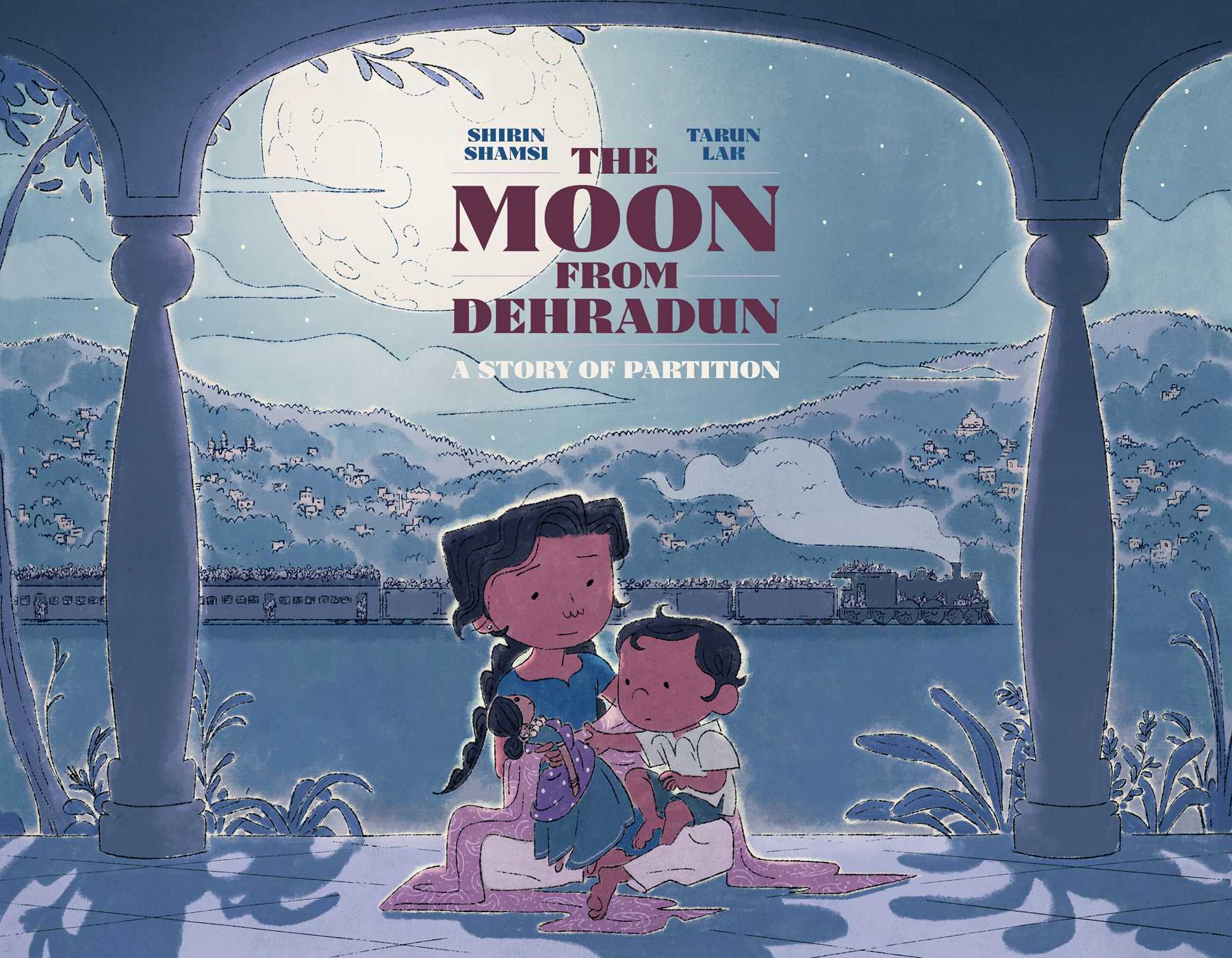
The Moon from Dehradun: A Story of Partition by Shirin Shamsi illustrated by Tarun Lak

Standard
The Moon from Dehradun: A Story of Partition by Shirin Shamsi illustrated by Tarun Lak

partition

I’ve read this book numerous times: sometimes for the text, sometimes for the tone, sometimes to slowly immerse myself in the pictures. I know the basics of my own family’s journey to Pakistan, and this book added to that understanding. I like that it forced me to slow down and to really appreciate what partition was for both sides, from a child’s perspective. Pakistan and India gained freedom from British rule 75 years ago. Nearly every Pakistani or Indian you know today, has a parent or grandparent that lived through it. It is not history from long ago, it is still very much with us, and no I’m not talking about the lingering effects of colonization, I’m talking family stories, and loss of property and wealth, memories of the journey, the terror, the fear, the relief, the determination. This book is one story, perhaps the first mainstream published in the west, of one family’s experience. There could be a thousand more books and they would all be different, all powerful, all reflective. I love that this book is Pakistani authored, Indian illustrated, I love that it offers pages with no words at all. I love that a child’s perspective for such a monumental event is told for other children. There is a lot there for desi readers to unpack, and consider, there is also a lot there for non desi’s to be made aware of, and I hope that you will seek out this book no matter who you are, and share it.

img_3563

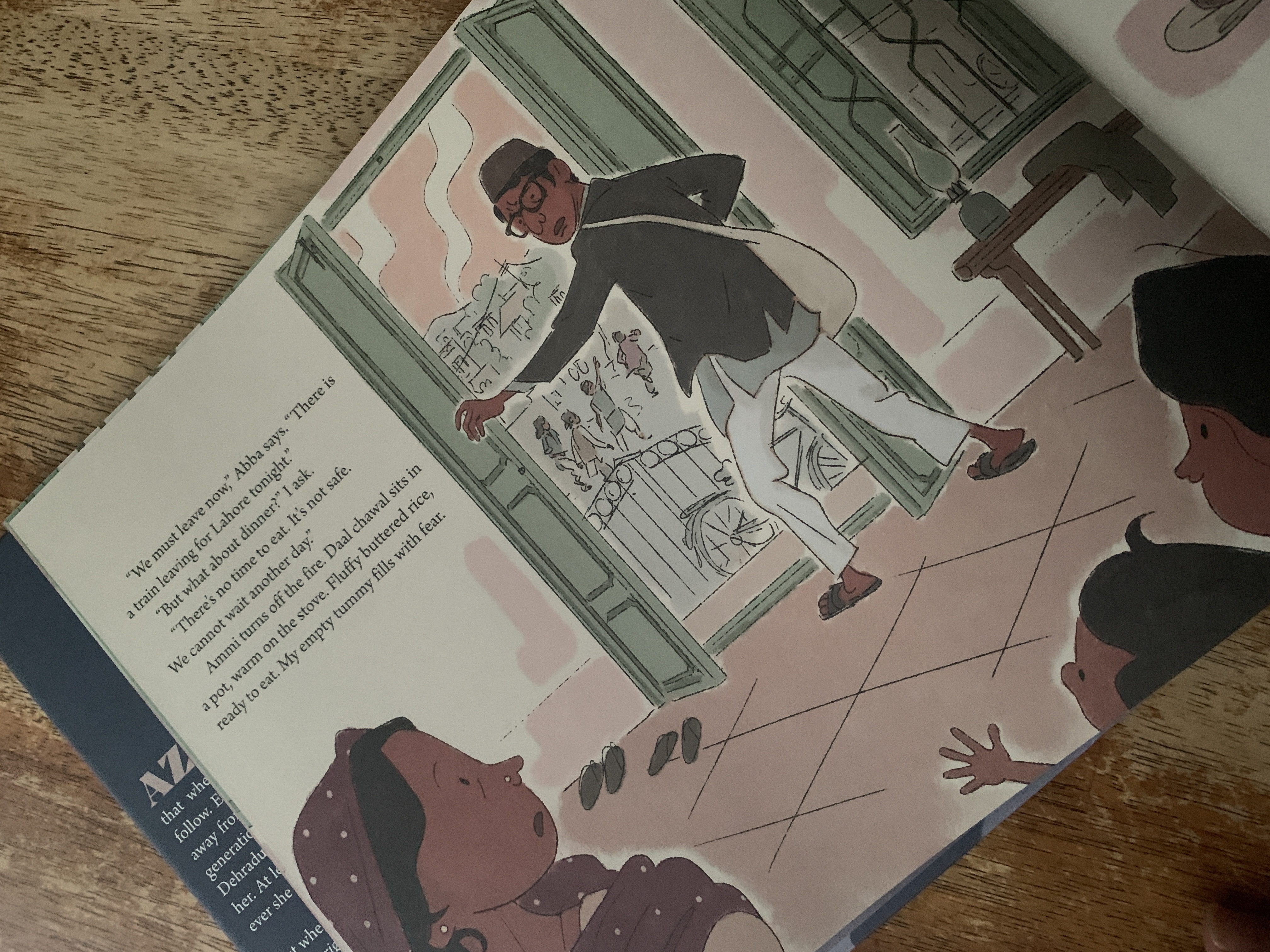
The book starts with excitement from Azra about an upcoming train ride, even though her family has lived in Dehradun, at the base of the Himalayas, for generations. Suddenly though there is yelling outside because people are afraid, and her Abba runs in saying they have to leave now. Ammi, Abba, Azra, and the baby “Chotu,” rush out the door, leaving the cooking dinner still on the stove. When they get to the train, Azra realizes she has left her beloved doll, Gurya behind. They cannot go back for her.

img_3564

Azra blames Chotu, for making her forget her doll, for taking her parent’s attention, yet as the days and nights on the train reveal tired people, sad faces, and fear, Azra finds comfort in her little brother’s embrace.

img_3568

When they arrive in Lahore, they are met with food, and shelter. They are given a house that looks like the owners left in the same manner that they had to flee. There are balls of dough with a rolling pin, laundry strewn about, and even a doll left abandoned under a bed.

img_3565

The book concludes with a map, a glossary, and an informative author’s note addressing pre-partition, partition, and the author’s own family story. There is hardship and frantic upheaval, but peace and welcome too. The illustrations illuminate the text and show the powerful emotion when words sometime simply don’t exist.

img_3566

The book is not political or even religious. There is an Indian flag when they leave and a Pakistani flag when they enter, there are sounds of athan, and packing of a rehl, and a comparison to Eid, and the doll at the end has a bindi on her forehead. The book does not make one side out to be in the right or in the wrong, if you do not know that partition of the subcontinent was a mass migration based on religion and the chaos further exacerbated by the British, this book will not spell it out for you.

img_3567

I preordered mine here and it can now be purchased from all major book sellers.

ABC’s of Pakistan by Marzieh Abbas illustrated by Michile Khan

Standard
ABC’s of Pakistan by Marzieh Abbas illustrated by Michile Khan

abcs of Pakistan

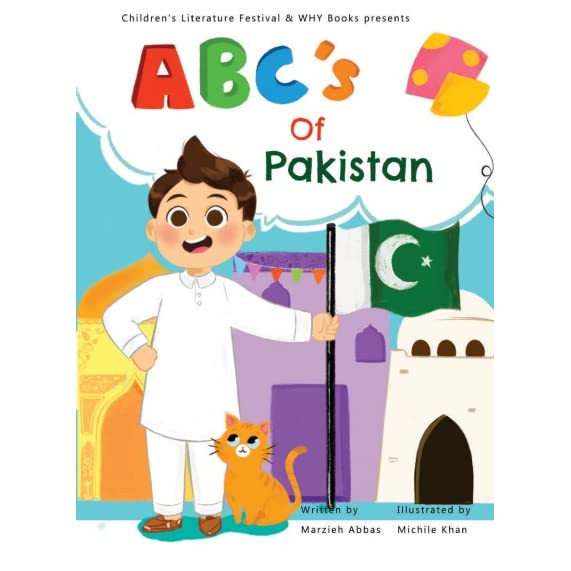
I absolutely love this ABC book, it truly does Pakistan proud and I’m thrilled that I could obtain it, it wasn’t easy, sorry not sure where you can get it in the USA, and it isn’t available even at Liberty Books in Karachi, but if you can find it, grab a copy, or two because it really is a well done tour of the country.  My only suggestions would be thicker pages, the hardback 8.5 x 11 binding is nice, but the pages seem to have curled in the transporting from overseas.  Also, some pages have a large A or E, but others such as the words for B, C, D, are just all flowing story style over a two page spread.  I don’t mind one way or another, but I do side with consistency, either have the letter on all pages singled out, or on none.  The effort to string the pages together makes it read very much like a story, and I appreciate that it features little snippets of fact and history in talking bubbles throughout.

img_7514

Little Hassan and his cat Makhan introduce themselves and then take you on a tourney of Pakistan.  Included are landmarks, handicrafts, foods, famous people, festivals, sports, and more.  It concludes with a reminder to carry facemasks and hand sanitizers, which might date the book a little in the future, it was published in 2020.

img_7517

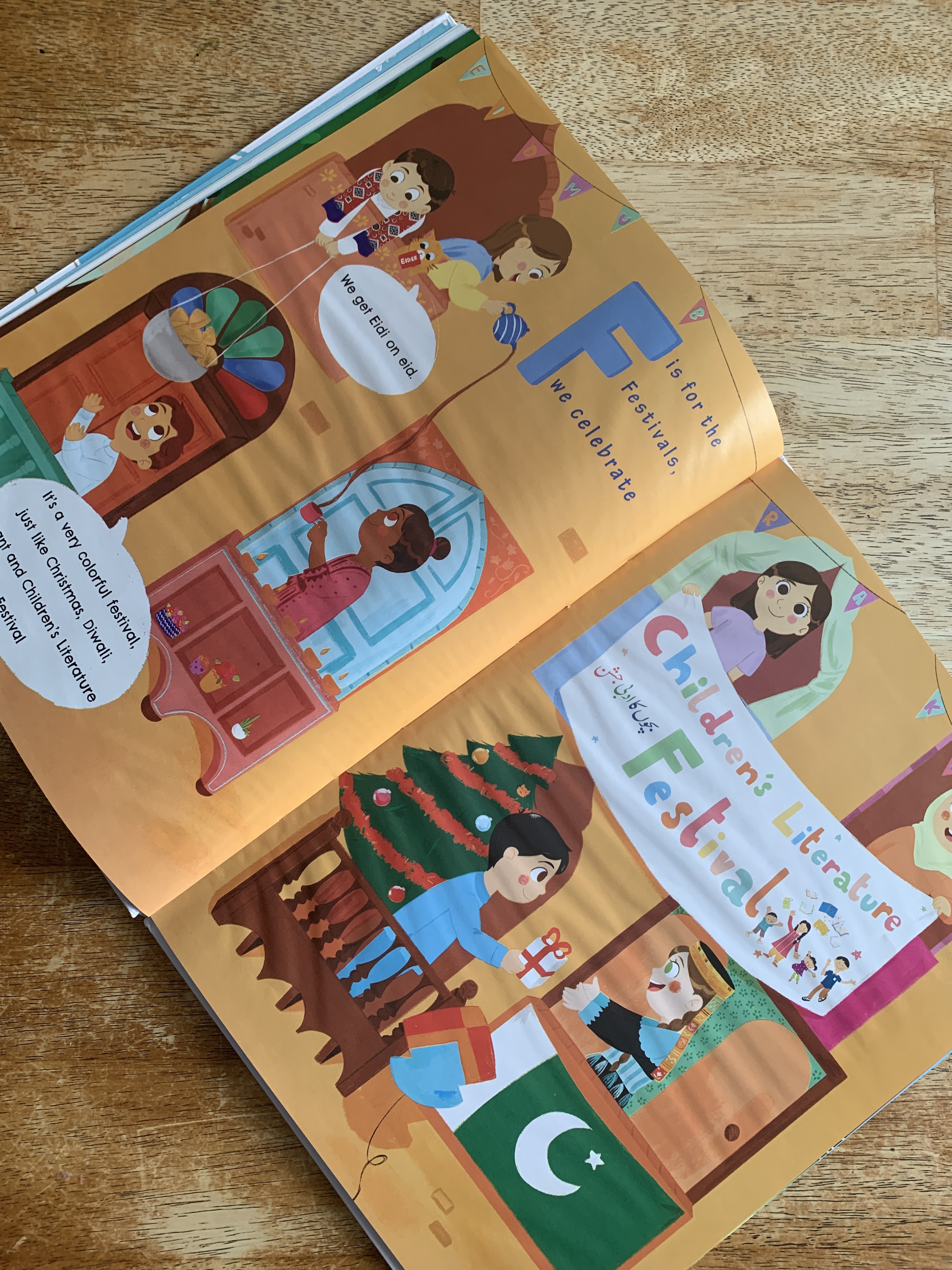
The book works for non Pakistani’s to learn, especially those of us with children that have not been to the “homeland,” as well as for Pakistanis in Pakistan to feel proud of their culture, history, tradition, and landmarks.  There are beautiful masjids and the azaan mentioned and hijab wearing and non wearing women, as well as famous men and women included.  It is inclusive on the F for festivals page where it mentions Eid, Basant, Christmas, Diwali, and Children’s Literature Festival.

img_7516

Enjoyable text and illustrations alike. InshaAllah, will be more readily available if we can convince the author and illustrator and publisher that there is demand, I hope, hint hint.  Happy Reading!

Birmingham Boy by Kate Rafiq

Standard
Birmingham Boy by Kate Rafiq

birminghamboy

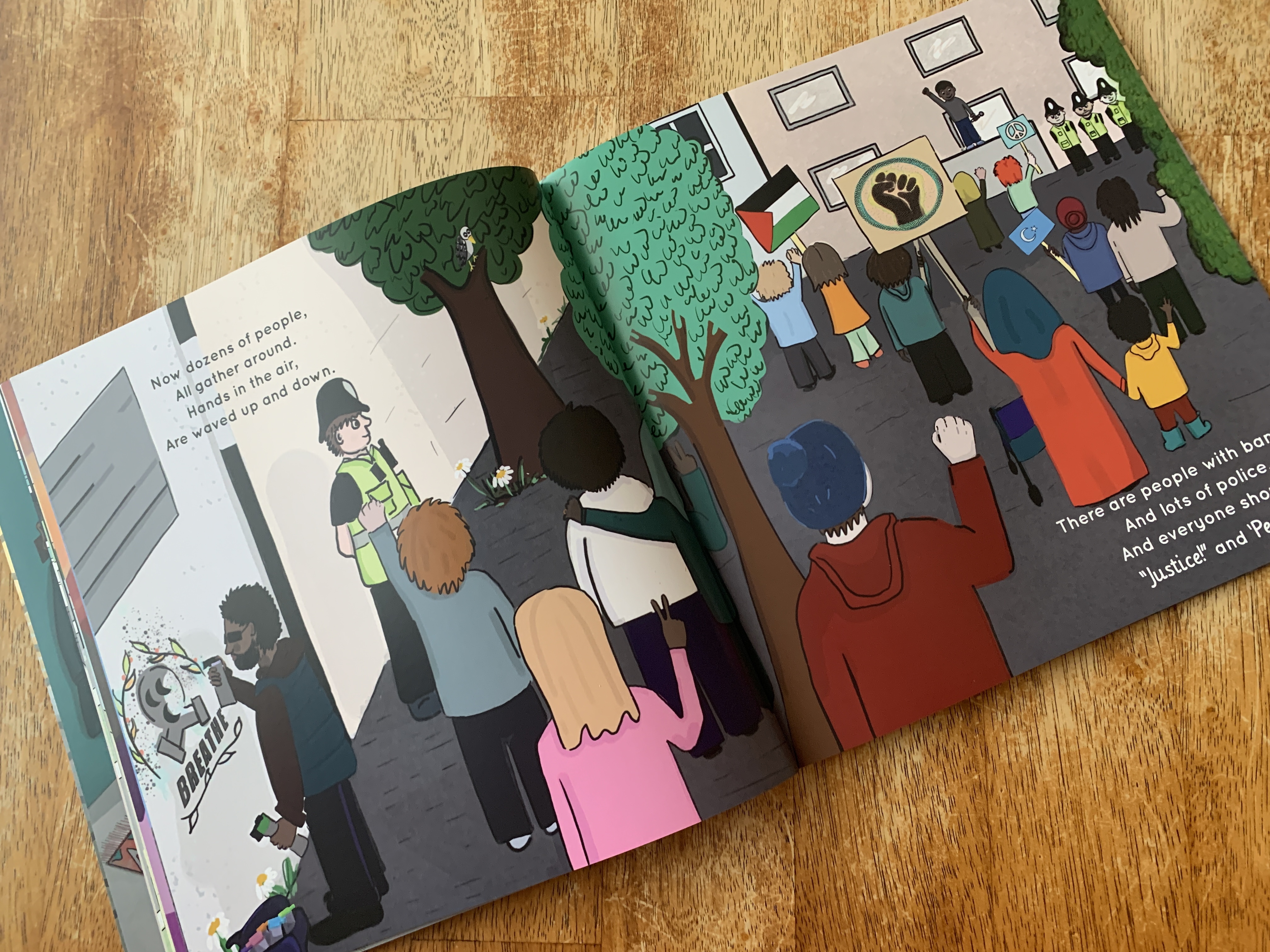
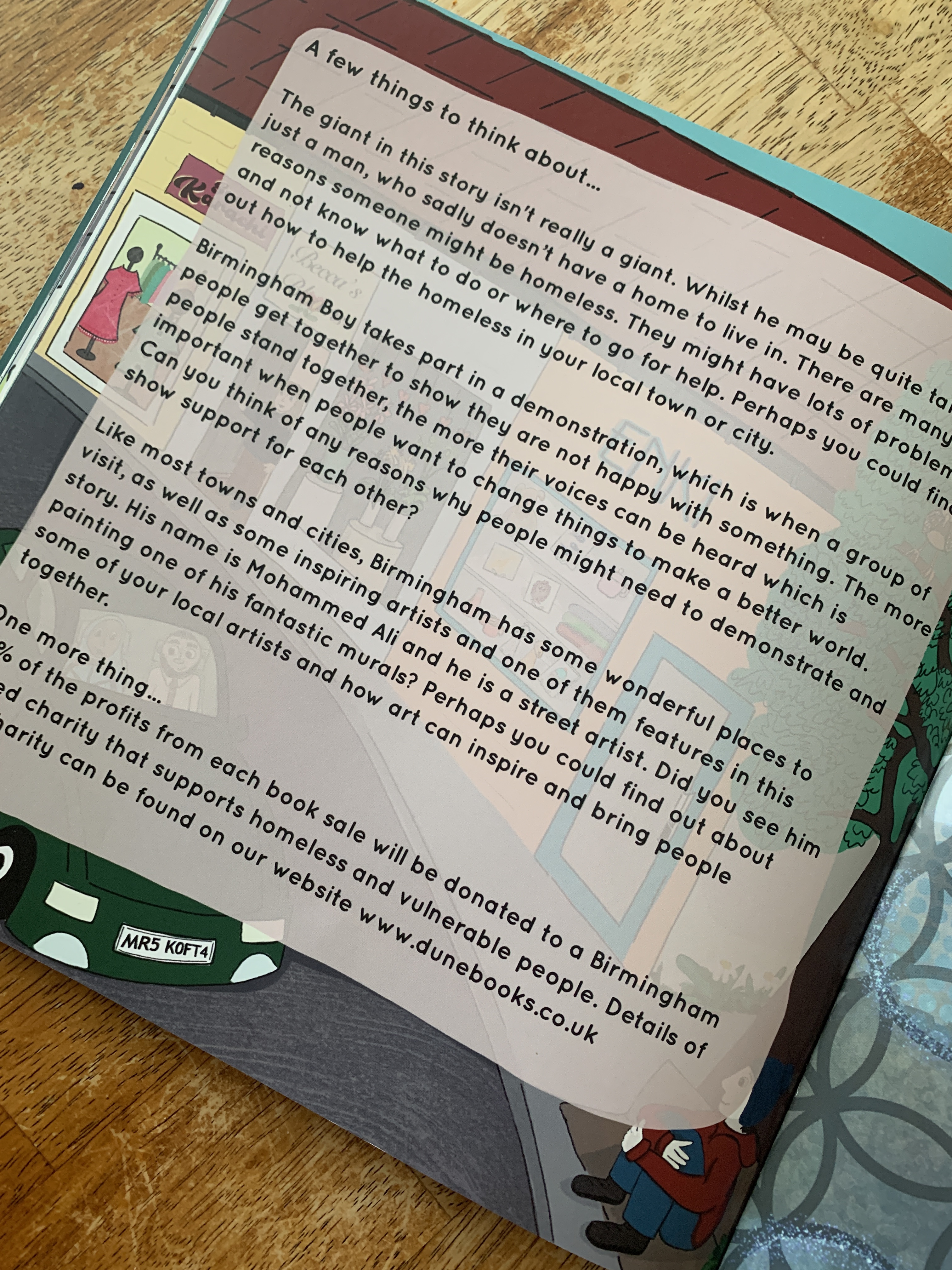
This 36 page ‘day-in-the-life-of’ book, follows a young boy and his mom on a day out and about in his city of Birmingham, England. Told in rhyme a few Urdu words are sprinkled in as general city observations are made, fun is had, and kindness is shown. The book touches on homelessness and protests, and the illustrations take the story deeper and show support for Black Lives Matter and Palestine, multiple hijab wearing women (#muslimsintheillustrations) throughout the city (including a burkini swimming mama), storefront signs acknowledging a diverse community, street artists, and different races, religions, and cultures everywhere.

img_6412

The book starts off with Birmingham Boy waking up, based on the Arabic signage in his room, I’d guess his name is Zakariya, everything is quiet and still- except for a giant that he sees outside his window.   He refers to the homeless man throughout the story as a giant, it doesn’t seem to be a negative description, nor is the boy scared, he shares food with him at one point, it is just what he refers to him as. 

img_6413

He then heads downstairs for breakfast of toast and dudhu (milk), before getting in a pram and heading out in the town.  They go past the deli and the flower show, and the giant on his cardboard mat.  They see someone getting their hair cut at the barbershop and they arrive at the swimming pool.

img_6414

The mom and son swim and play and Birmingham boy takes a nap in his stroller as his mom and he head off to their next location.  He wakes up to the sounds of the masjid and sees his mom praying.  He plays and then joins her in salat.

img_6415

After the masjid it is off to a cafe for cakes and tea, which they share with the giant, before they head off to a rally for justice and peace.  The book carries on in this sweet style of visiting places and interacting with the community until ending with a bath and dinner and getting tucked in to bed for the night.

img_6416

Being American and living in Birmingham, Alabama, my kids and I also learned about the sights of a different Birmingham and they got to learn some British words such as pram and wellies.  I loved the inclusion of Islam in their daily life and the joyful illustrations.

Golden Girl by Reem Faruqi

Standard
Golden Girl by Reem Faruqi

golden

I began reading this book not having any idea what it was about. All I knew, or all I cared to know, was that the incredibly amazingly talented Reem Faruqi wrote it, so I wanted to read it. While I know it will be hard for most to avoid knowing the plot, I think it was a blessing that I was able to be swept away so completely and so fully in a story that is wonderful and memorable, and truly sets a higher standard for the way that a story can be told. Faruqi’s voice and authenticity had me in tears. I didn’t even realize my eyes were dripping until my son asked me if I was ok. It wasn’t the plot that had my emotions spilling over, sure it helped, but it was the storytelling, the hadith and deen and snapshot of a life so unlike my own that simultaneously is exactly my own that a physical reaction emerged. It is the power of OWN voice storytelling. It is the power of brilliant writing. It is not just a book about a Muslim character, this book blurs the lines for me between Islamic fiction and fiction with Muslim characters. Middle school readers (mature middle grade readers) will enjoy the book, older readers will enjoy and appreciate the 336 page story told in verse. You can pre-order the book and I hope you will, it helps convey the message to publishers that this book is highly anticipated and that we need voices like this. Additionally, Goodreads currently is hosting a giveaway, you can head there to try and win a free copy.

(If you don’t want to know what the story is about, maybe skip the next section.)

SYNOPSIS:

Aafiyah’s name means well-being, protection, health, money, happiness, everything good, but Aafiyah has secrets too. She is privileged and loved, and she knows it, but sometimes when she sees something she likes she accidentally borrows it. Sometimes it isn’t an accident. Sometimes she doesn’t just borrow. Much of her life is wonderful, a best friend that lives next door, doting parents, tennis, vacations, trips to Pakistan to visit grandparents, and a love of “weird but true facts.” So what happens when all that changes. When her grandfather gets sick and the family wants to bring him to America for treatment, when Aafiyah’s dad gets detained and imprisoned on the way home, and Aafiyah’s secret may be a way to help her family?

WHY I LIKE LOVE IT:

I absolutely love that the characters are so well rounded and developed. Yes, Muslims have vices, and even young practicing Muslims have tests and struggles. The bar has been raised, we aren’t just a monolith, and our only struggles aren’t girl/boy issues, alcohol, not being oppressed and getting an education, we are complex people, we are human. The bulk of the story is Aafiyah growing up: her responsibility within her family, her changing body and appearance, her friendships, her responsibility for her actions, her desire to want to help and improve and step in to her own. I love that all these layers of life somehow are explored in such sparse lines. It doesn’t drag, but it gives the necessary pauses to involve the reader in her logic and view of the world. Aafiyahs’ kleptomaniac tendencies, her father being detained, her grandfather’s illness. they all move the story along, but they are foils for a much more intimate character story. A story that is surprisingly funny and light and impossible to put down.

I absolutely love how Islam is woven in, how she exudes Islam in all that she is, because she is a Muslim completely, the good and the bad. The guilt she feels, the desperation to be forgiven, the knowing that Allah swt sees all. The book is never even close to being preachy, but she proudly owns her identity and the details of her faith are not watered down, or even justified, it is who she is and it isn’t up for debate.

Culture is presented unapologetically as well. She is critical of things she sees in Pakistan, and similarly celebrates and admires good things about Pakistan and Pakistani culture. The book does not seem to have an agenda in presenting Muslims or Pakistan as good or bad, just as Aafiyah sees them. Which isn’t revolutionary on the surface, but it really is refreshing because it highlights how many books simply don’t. It makes the contrast painfully obvious between books that are shy about certain things, when they have their characters deflect and disassociate from certain “realities” and books that confidently uphold their identity and demand that the reader steps up and truly see the characters and their experiences.

There is a beautiful and raw author’s note at the end that shares some of the inspiration for the threads of the book, a glossary, a recipe for Aloo Gosht and resources for help with kleptomania.

FLAGS:

Stealing, lying, chatter about crushes, music, dancing. Being attractive and the reactions that it gets is woven through out.

TOOLS FOR LEADING THE DISCUSSION:

If I have a majority girl group, I will teach this. It isn’t a girl only book, but I think some of the more subtle themes would need a safer girl space to discuss.