Tag Archives: Turkey

Zeyna Lost and Found by Shafaq Khan

Standard
Zeyna Lost and Found by Shafaq Khan

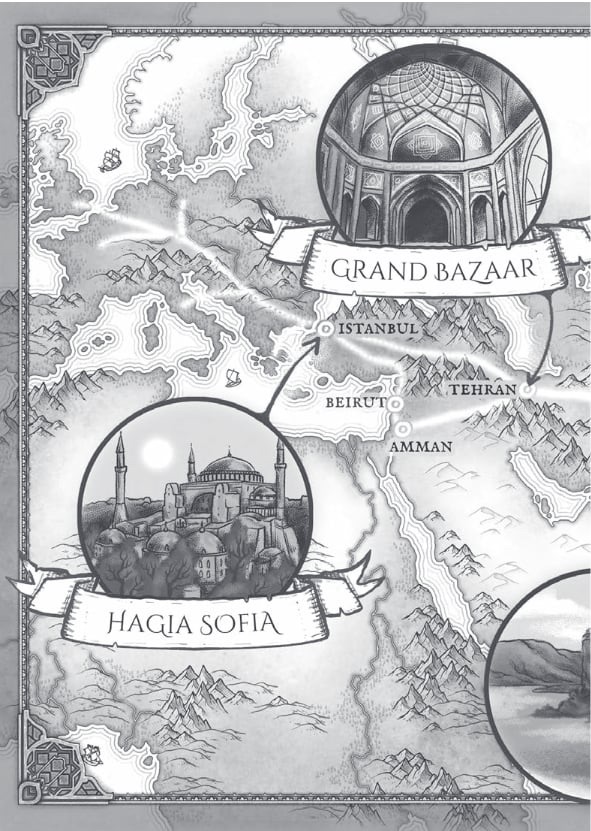
I think I needed this 336 page middle grade book that gets parents out of the way and lets a trio of kids  hop from country to country to solve a mystery, track down the bad guys and save the day. Set in the 1970s in the UK and on the Hippie Trail between Lahore, Pakistan and Istanbul, Turkey, the book is a fast paced read with humor, heart, and adventure.  I absolutely love Zeyna’s snark and voice, and her relationship with her brother and cousin, ground the story and make you cheer for them even when their antics are incredibly dangerous and improbable.  As an Islamic school librarian, my one critique with the book is that I wish there was more/any Islam. I, at one point considered that they are not Muslim, and I’m not sure what the author identifies as, but she does thank “Al-Barr, for all that is good” in the acknowledgements, and Zeyna does mention an Eid party in passing, so while I’m still on the fence, I’m going to assume they are all Muslim.  Major beats in the plot are meeting at both the Badshahi and Blue Mosque, but none of the characters ever pray, or mention the names of prayers when the athan is heard.  When they see women in burkas and chadors, Zeyna stares, not connecting the clothing to hijab, that one would hope she would know. There is only one salaam in the whole book, and the story is predominately set in Pakistan, Afghanistan, Iran, and Turkey. Granted I am sensitive, but it almost feels like a deliberate exclusion to the point of going out of the way to not let those details be present.  There are plenty of Urdu and Punjabi words and titles and cultural commentary, so it doesn’t seem that the author was concerned about watering down authenticity, a theme of the book infact is finding your place and accepting yourself.  All that aside I really enjoyed pickpocketing, imaginative, determined, sarcastic, loyal detective Zeyna, and I think kids will join me in hoping this is the first in a series.
SYNOPSIS:
Zeyna is 12, and likes to imagine she is a detective on a case, sneaking and snooping, and roping her inventing younger brother Mahir to be her Watson. The city is on edge with the theft of the Shirin Jewel, a large Persian ruby, a case involving the 15, that Zeyna would love to solve.  When she sees a man with knife in London, who later seems to be following her and her mum, and then drops a paper with their street name on it, Zeyna is convinced this her chance to prove her self. A sudden trip to Pakistan though dampens her mood as the clues to the case will be left in the UK. She doesn’t stay down long though, as her parents start acting peculiar in Lahore, meeting with strange people, lying about why they suddenly made the trip at all, and when the police show up at the familial home to arrest her parents, they all discover that her parents have vanished.  Zeyna realizes her parents and the events in London are tied to the missing ruby, and with the help of Mahir and their cousin Amina they set off to solve the case and find her parents.
WHY I LIKE IT:
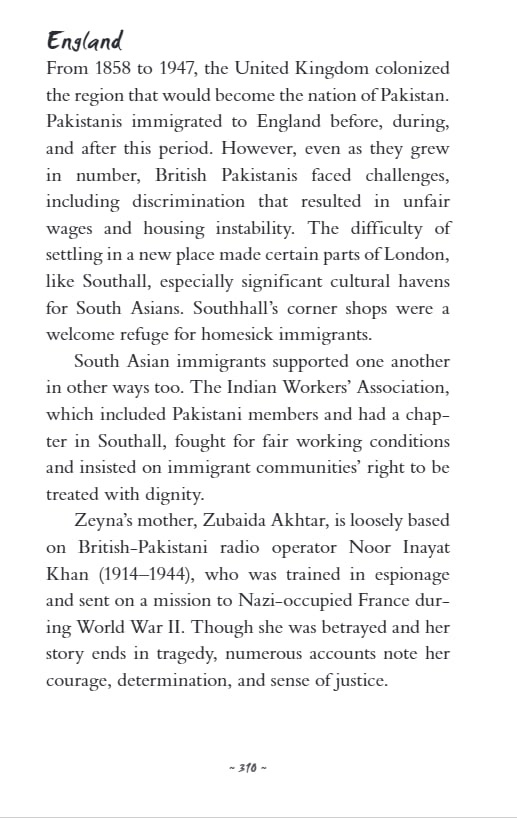
It’s hard to review a book like this without giving the twists and climax and resolution away, but more than once I gasped in delight when something happened on the page, and it crystalized where the book was going in my head.  Sure there were some particularly outlandish connections and a few plot holes, I even Googled when fax machines were invented, but I had a blast reading the book.  I loved the historical backmatter discussing the events in post partition Pakistan, a year before Bangladesh was independent, Soviet Union and UK competing over influence in Afghanistan, the discontent voices in Iran toward the shah, and the role of the Pudding House for messages in Turkey.  There are also discussion questions, a glossary, acknowledgements, and about the author at the end.

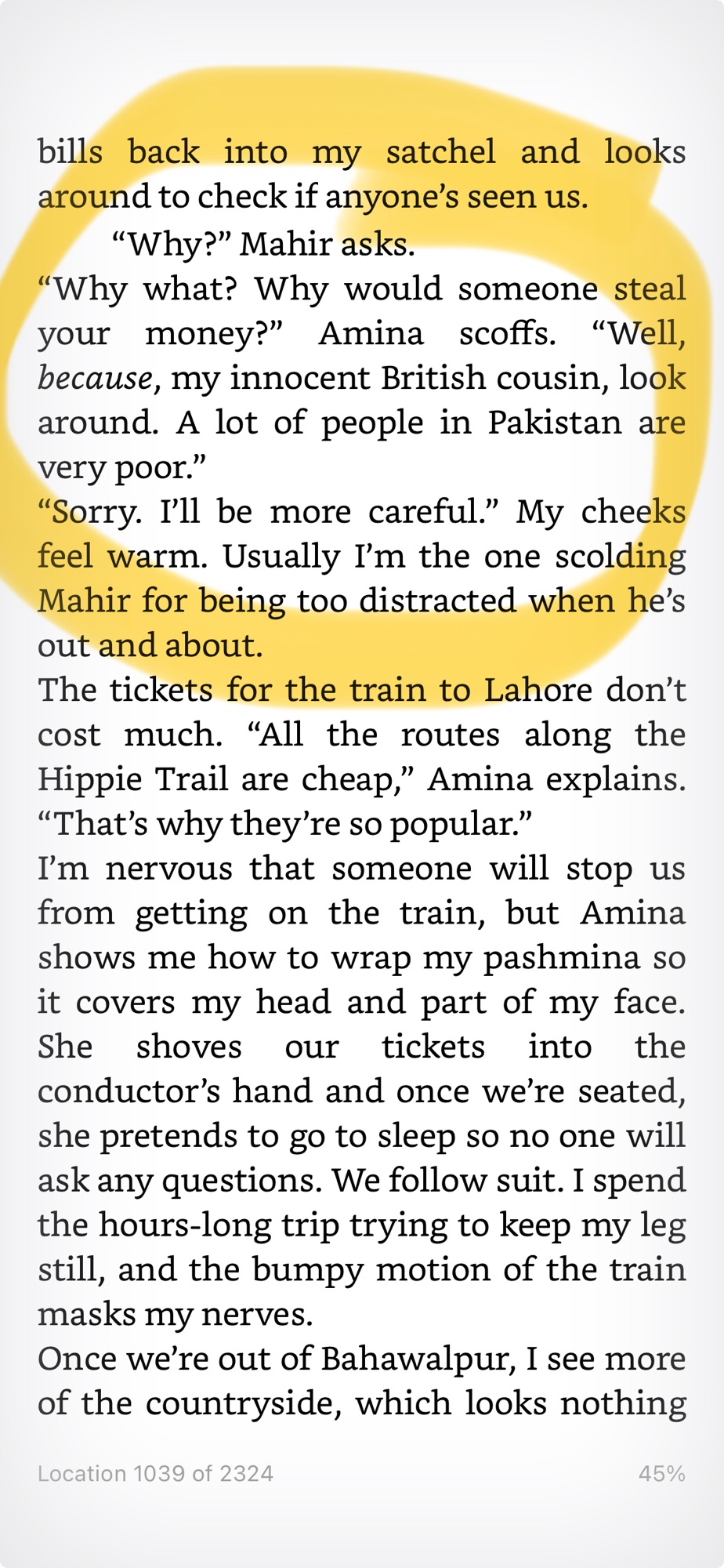
One tiny concern was the assumption that money could be stolen because the people around them are poor, it is just one paragraph, it isn’t a constant in the book, but it struck me as odd and stereotypical, and really not needed.

FLAGS:

Lying, stealing,  deception, pretending to be someone you are not, breaking and entering, eavesdropping, snooping, its a heist book!
TOOLS FOR LEADING THE DISCUSSION:
This would be an awesome book club book or novel study read, I can’t wait for it to be released in a few weeks so that I can have my kids read it.

More Hands by Jenny Molendyk Divleli illustrated by Ekinsu Kocaturk

Standard
More Hands by Jenny Molendyk Divleli illustrated by Ekinsu Kocaturk
img_6180-1

This 32 page picture book blends food and the concept that teamwork makes things better, when a young boy asks his grandfather why his pishmaniyah is so delicious, and Grandpa Yahya offers to share his secret ingredient. The book is a fun bedtime or story time read as the more hands needed builds and builds. As someone though who has now read the book over a dozen times, I do wish there was more backmatter. I would love a recipe for the cotton candy type sweet, maybe some history of what pishmaniyah is (I had to Google it), and how it is traditionally prepared. The text dances around the pages, and the fun illustrations will appeal to children and help explain the process. There is a “bismillah” in the book and it mentions “baraqah” on the back cover, athere are also a few hijabis in the illustrations, but the book is universal for all readers toddler and up.


The book jumps right in with Sami asking his grandfather about his pishmaniyah. It is unclear if grandpa was planning to make it, or if it was a question out of the blue, but either way, Grandpa Yahya offers to share the secret ingredient. The ingredients are pulled out, and then more hands are needed, and then more and more and more. Once the whole family, and neighbors, and their kids are all involved it is time to eat and enjoy the dessert together.


As an adult I wonder what would have happened if so many people were not available to help, and did they wash their hands, and how big is their house, but kids won’t care, kids will just think it is funny. And that is ok too, books that show family, community, and teamwork with humor are always great additions to share with our littles.

img_6185-1

Ramadan Kareem by M.O. Yuksel illustrated by Hatem Aly

Standard
Ramadan Kareem by M.O. Yuksel illustrated by Hatem Aly

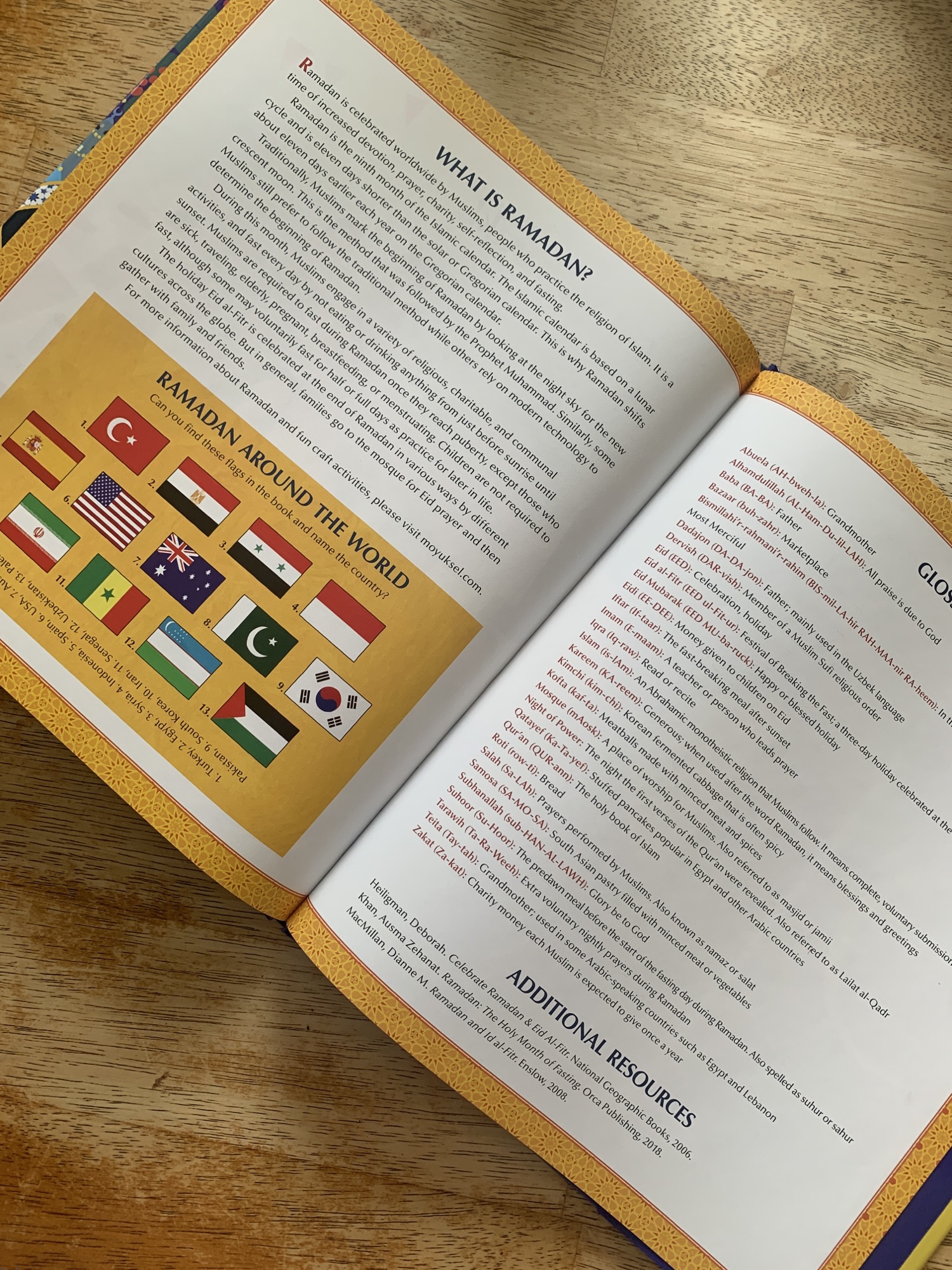
The lyrical text that shows joy, Muslim joy, all over the world during the most wonderful time of the year is felt, truly truly felt in this rich, beautiful book. The illustrations, the text, the sentiment, it all comes together so splendidly, that when you turn the last page you want to start over again. Hundreds of people are wondering what book to read to their children’s public schools this year, what book to start off masjid story times this Ramadan, what book to read every night leading up to the blessed month to get their children excited, what book to hand to your children to look through so they can have a few more minutes of sleep and alhumdulillah to all the above, I whole heartedly suggest, this one. Even with the errors.  The book states “the Night of Power is better than a thousand nights,” and should read, better than a thousand months.  The backmatter says “by not eating or drinking anything from just before sunrise until sunset.”  The story itself though has it correct and says “suhoor is a predawn meal” and notes the “sun is still sleeping.”

A universal story of celebrating Ramadan, with waking up for suhoor, greeting neighbors, having self control, praying, volunteering, iftar, community.  It is a singular story, but each two page spread showing a child in a new country continuing the narrative.  The worship uniting us all as Muslims even while our unique traditions add diversity and layers to the acts that we share.

It starts with gazing at the new moon in Turkey and mom saying that the narrator can fast. The drummer than beats her drum and it it time to wake up in Egypt. The call to prayer and remembering you are fasting reaches Syria, and donations are given in Indonesia. In Spain Qur’an is read in abuela’s lap and neighbors are visited in the United States.  Donations are packed in Australia,  friends and family are visited in Pakistan, and kimchi after dates for iftar in South Korea.  It is then off to Iran for prayers, Laylatul Qadr in Senegal, and getting ready for Eid in Uzbekistan.  Palestine is the final stop as Eid joy erupts for Muslims everywhere.

The book is widely available, you can order yours here at Crescent Moon or here on Amazon

Hakim’s Odyssey: Book 2: From Turkey to Greece by Fabien Toulme’

Standard
Hakim’s Odyssey: Book 2: From Turkey to Greece by Fabien Toulme’

hakimcover

It is easy to assume that refugee stories are all the same, but in my experience, the more I read about the journeys people take in desperation for safety, the more I realize it doesn’t matter if “parts” are similar, the individual experience should never be dismissed or become commonplace.  I try to make a point to read them, and spend time with them, and be affected by them, so as to not grow apathetic.  I have not read the first book in this series, but this book, the second book can stand alone, and I hope that you will keep an eye out for it when it is published, and spend time with Hakim and his son Hadi.  In much of the way the middle grade novel When Stars are Scattered, swept me up and consumed me, this book also enveloped me in the characters’ emotions and left me sobbing and heartbroken more than once.  The framing of the story, gratefully shows that Hakim survives, but the power of the words, illustrations, and experience, still physically move you and make you imagine how truly horrific situations must be that force people to risk it all to leave their homes and start over.  This 264 page book focuses on the part of his story that takes Hakim from Turkey to Greece, but references to Syria and his life there allow for a fleshed out understanding and appreciation for the trials he has faced, and continues to face, subhahAllah.  Suitable for mature teens, at least 16  or 17 and up.

SYNOPSIS:

The book starts out with the author/illustrator heading off with his daughter to interview Hakim.  His young daughter has heard a lot about Hakim and his family, but never met them.  They “recap” the first part of his journey, the first book, and settle in to hear more of his life and the extraordinary circumstances that he has faced to reunite with his family since fleeing the war in Syria.

The birth of his son Hadi is a definite high point in Hakim’s life and the daily struggle of selling enough goods on the streets of Turkey to provide for his son keep Hakim looking forward.  With his wife, Najmeh, and her family around them, they crave stability, but are managing.  As the days stretch on though, Hakim is prevented from selling without the proper permissions, and his father-in-law is still unable to find work. Hakim’s wife and family are granted permission to relocate, but Hakim and Hadi cannot legally join them.  The tearing apart of the family is devastating.  And carrying for his young son alone while trying to earn enough to survive is incredibly challenging.  When Hakim has exhausted all the legal ways to join his family in France, he considers illegal methods.

An Iraqi neighbor offers him the money needed to hire smugglers, so Hakim is faced with deciding what risks he and his young son are willing to take to “start living.”  The step in to the unknown, the crossing of the sea in an inflatable life raft, brings them closer, but with one more book in the series, and not knowing who the children are in the present time scenes, your heart will be made incredibly fragile as you hope that young Hadi survives.

WHY I LIKE IT:

I love that you get to know the characters and can see why they make the decisions they make, or rather why the choose to do what they choose based on the information they have, and the impossible choices before them.  I also love that it shows so much humanity.  You see Hakim’s story brought to life and you see him and his family as whole people, not just numbers or nameless, faceless victims.  You see the joy and devastation, the testament to human strength and mental anguish, it is moving and powerful.  I also love that you see the side characters, see the little mercies, and the horrific injustices, often in the same scene. The graphic novel format allows the subtleties to show without the words, it adds to the connection of emotions and truly putting yourself in the character’s shoes.

I like that it should how happenstance much of the journey was for Hakim, at times he didn’t know who to talk to, where to go, what to expect.  I was a little confused about the payment to the smugglers, and how it had to be handled after he arrived.  I don’t know if my own understanding of how shady the smugglers are based on the media is making it muddled, or if I just missed something in the telling.

There is not a lot of Islam in the book, they don’t stop and make salat or say Bismillah, but they reference thanking Allah swt, and praying to Allah in desperation.  Hakim’s mother in law and wife wear hijab.

FLAGS:

Fear, smoking, cheating, lying, illegal immigration acts.  There is nothing obscene, the older audience recommendation is because of the weight of the subject matter, and the lingering effects of war and escaping.

TOOLS FOR LEADING THE DISCUSSION:

This would be an amazing high school book club read.  The characters, the relatability, the empathy, it would be great to share it with a group of students that might have similar experiences and provide them with a platform to share with those that might not.

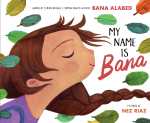
My Name is Bana by Bana Alabed illustrated by Nez Riaz

Standard
My Name is Bana by Bana Alabed illustrated by Nez Riaz

bana

OWN voice books are always important, and while we see a rise in minority voices claiming their own stories, to read a child’s story about war and hope by a child, is particularly impressive.  Bana Alabed was born in 2009, she is an activist, a Syrian refugee, and now an author.  Her clear voice doesn’t stumble and her perspective is unapologetic, yet hopeful.  Over 40 pages she tells her story in her own words with beautifully warm and complementary illustrations filling the pages.  For kindergarten and up, this book stands out in a crowded field of refugee inspired stories for its authenticity, strong author, and overall emotional connection.

img_4629

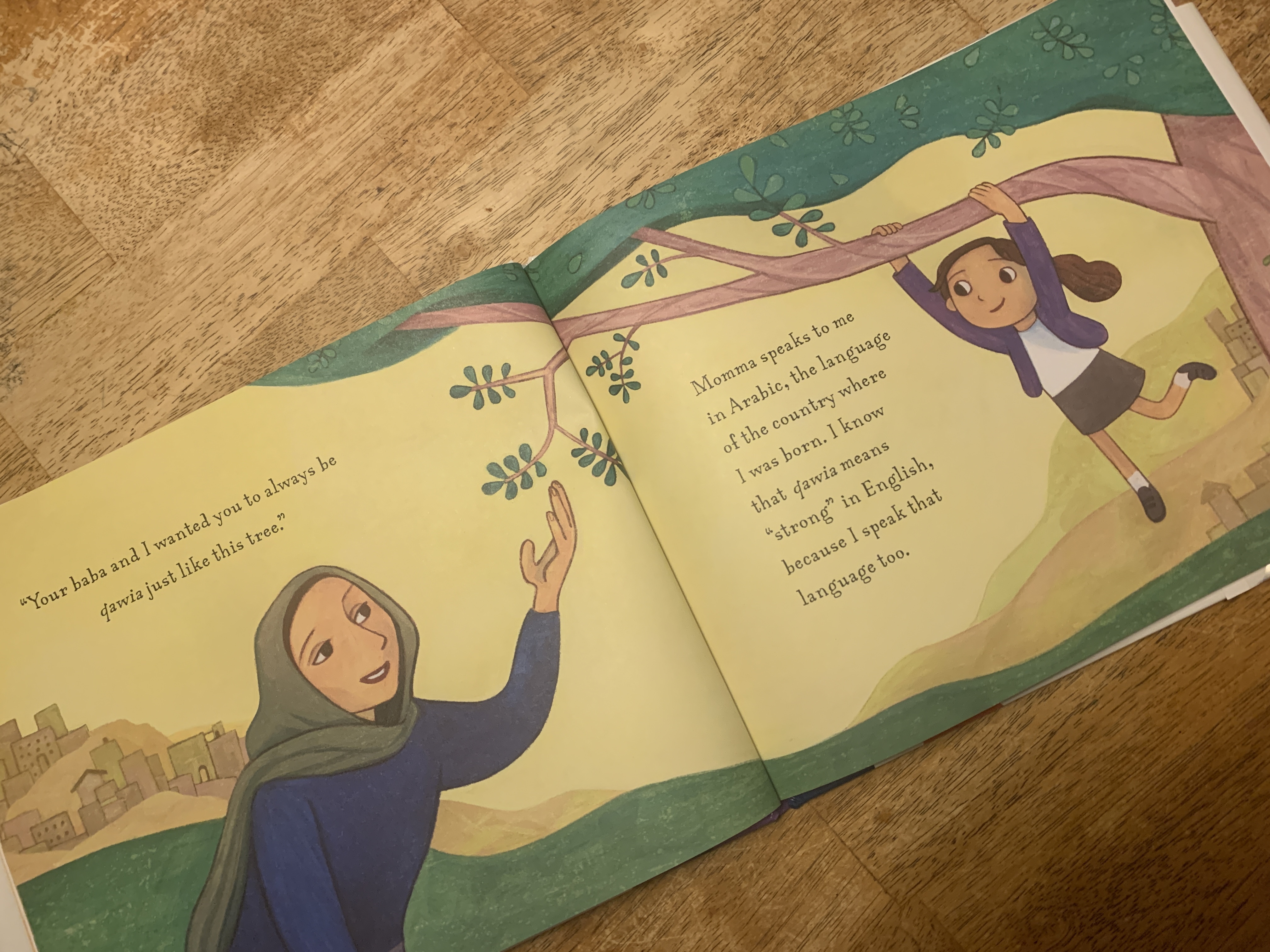
Bana begins her picture book memoir by asking her mother why she was named Bana.  Her mother explains that she was named after a tall bushy tree that grows in Syria.  Her favorite tree.  A tree that is qawai, Arabic for strong.

img_4630

Bana then asks what it means to be strong.  And once again her mother lovingly explains, that strong is to be brave even when you are scared, and to be sturdy so others can lean on you.  It also means you use your mighty voice to speak up when something is wrong, you read, study, and exercise your body.

img_4631

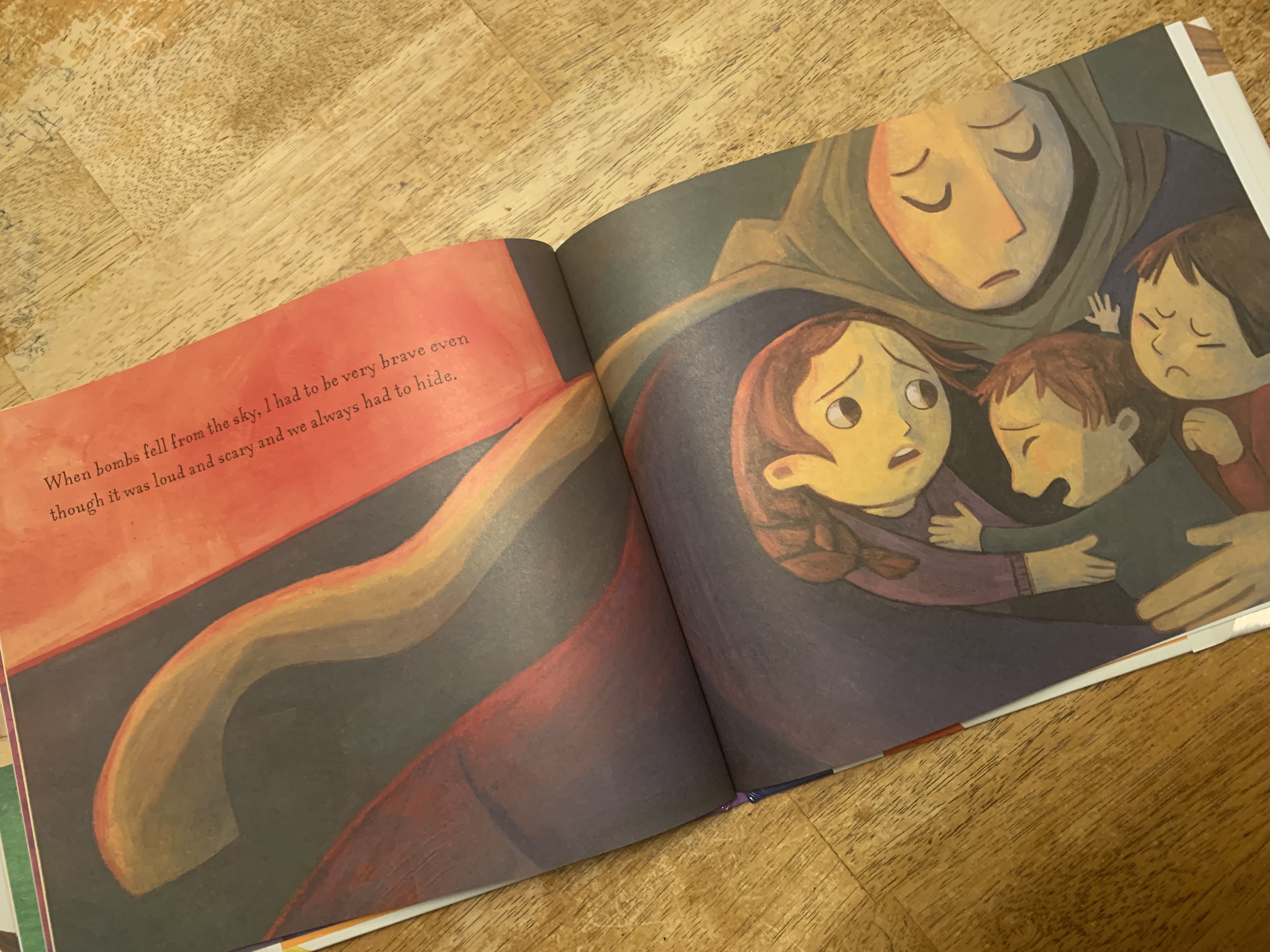
Bana appreciates her name, and being strong, because war came to her country.  When bombs fell they had to hide, when her brothers were scared, she had to keep them distracted, when they moved to a new place where they didn’t know the language or any people, she had to be strong still.

img_4632

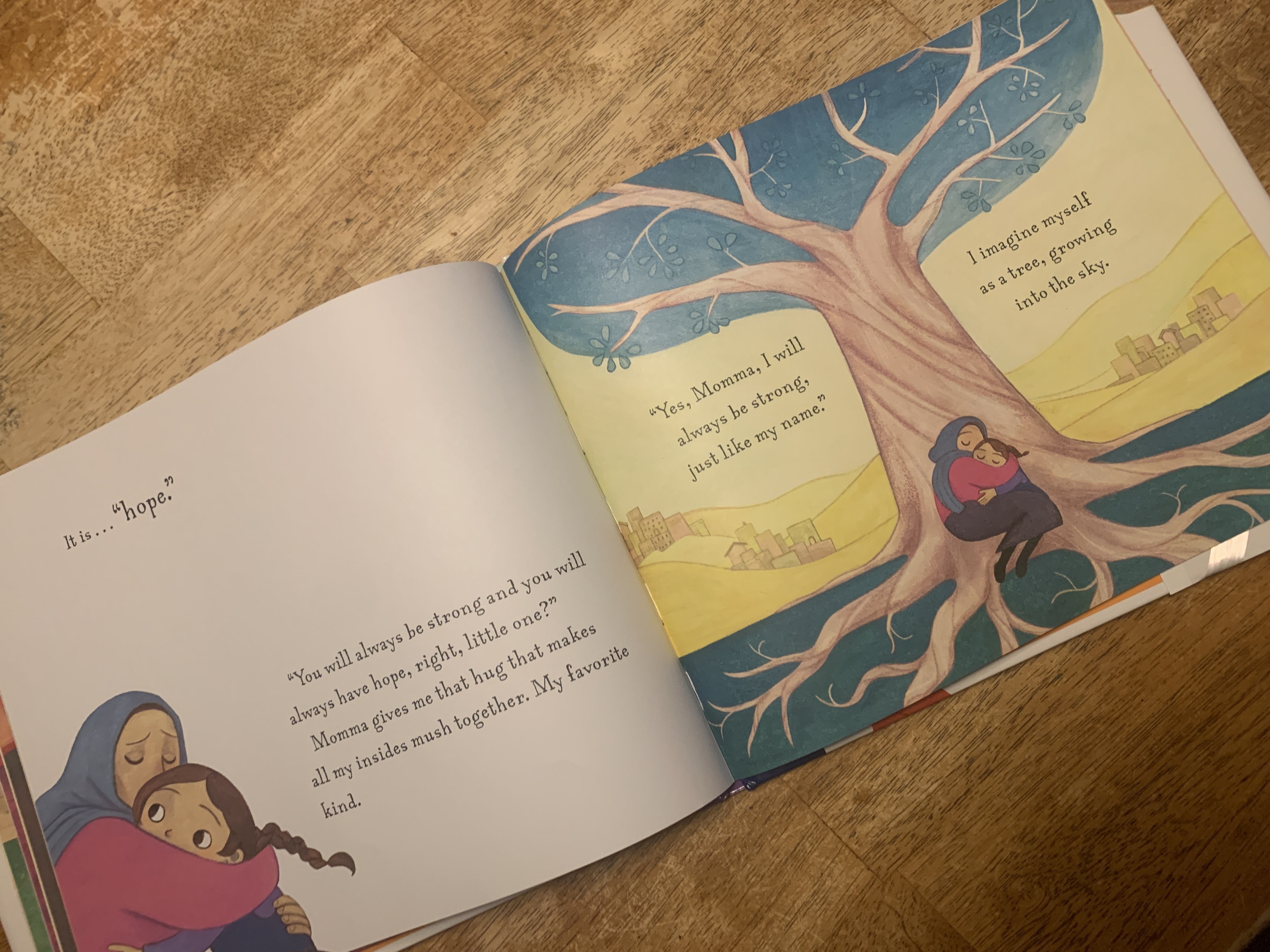
As a young girl, Bana tweeted about the war, the book doesn’t touch on that, but it does show her being strong as she shares her story all over the world.  It then returns to her and her mother discussing amal, Arabic for hope, and Bana imagines herself strong, reaching into the sky.

img_4633

The book ends on a simpler note of acknowledging her little brothers’ names: Laith and Noor, lion and light.  The Author’s Note at the end is just as powerful as the text of the book and provides more information about Bana’s experience and outlook. The way that war is handled is not overpowering for young readers, and will provide a great starting point of discussion.  The relationship between Bana and her mother is warm and supportive and equally deserving of mention with the little people you share the book with, alhumdulillah.

“Kids shouldn’t have to always be strong.  Every child deserves to live in peace.” Bana Alabed

Mosque by David Macaulay

Standard
Mosque by David Macaulay

mosque1

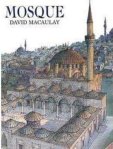
This 96 page “picture book” written on an AR 8.4 is not for everyone, but for those interested in architecture or structural engineering, or 16th Century Ottoman culture, or even Turkey in general, this book is fascinating, beautiful and most of all informative.  It first caught my attention when I was planning a story time to remind children of how they ought to behave in a mosque, needless to say it didn’t fit the occasion, but this fictionalized account of how a typical Ottoman mosque would have been built and why was perfect for my 7th grade daughter who loves legos and design and has been to Turkey.

IMG_4394

SYNOPSIS:

The story starts with a wealthy Turk realizing his own mortality and wanting to follow his Islamic faith in giving back his wealth and providing for his community before he passes.  Thus he commissions the building of a mosque, madrese (religious school and library), an imaret (a soup kitchen for preparation and serving of food), hamam (public bath) and a cesme (a public fresh drinking water fountain).  

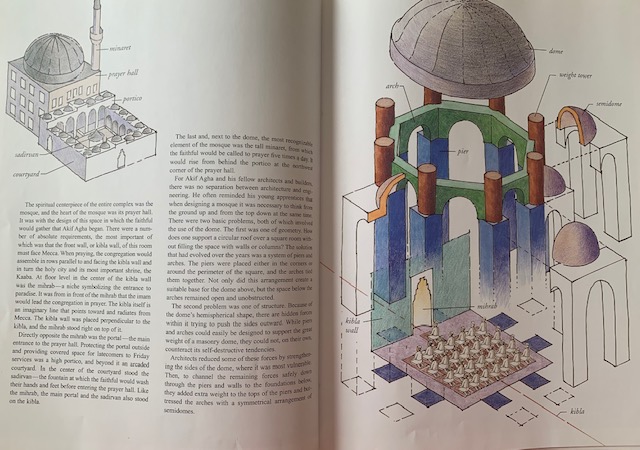
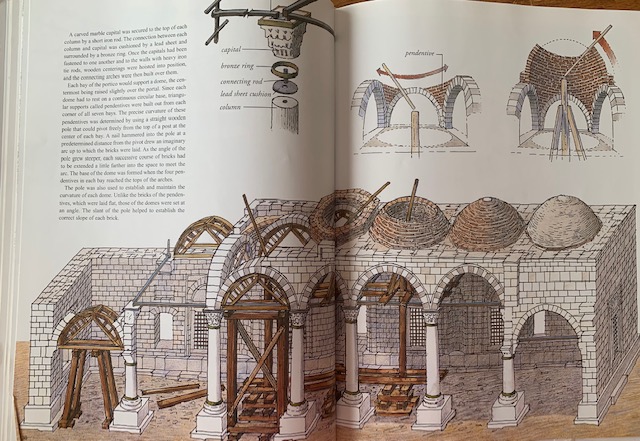
From there the book details how the foundation to the minarets are designed, crafted, erected and used.  Explaining how domes are supported to how stones are laid and stained glass windows constructed, so many details are illuminated and kept simple at the same time. 

Aside from the physical construction of the buildings, it really is incredibly remarkable and gives insights into how Islam shaped cultures, and similarly how Mosques became integral  parts of societies.

IMG_4393

WHY I LIKE IT:

The book is fact and historically based with a fictionalized story layered on top to move the information along.  The pictures are detailed and informative with labels and descriptions that make the technical jargon of the text visually understood.

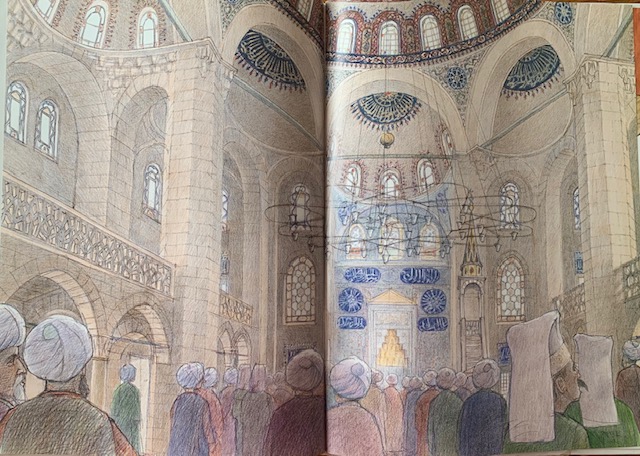
If one has ever been to the Blue Mosque, even in its fiction, the book will explain the function and thought process behind the gardens and porticos and women’s spaces in a very satisfying manner.

I love that it mentions how even Jews and Christians contributed to building of such Mosques and how the all facets of the community took pride in the completed works.  I’m not sure why the author specified the blood of a ram being spread out, as it isn’t Islamic culture, but with my limited knowledge of 16th century Ottoman practices, I didn’t dwell on it too much.

IMG_4392

FLAGS:

Clean.

IMG_4391

TOOLS FOR LEADING THE DISCUSSION:

I feel like this book would be great in any middle school STEM class to just have to look at and thumb through, Muslim or not.  The author has written numerous books about different structures (Cathedral, Castle, City) and breaks down how they were constructed and why.  A great resource for anyone willing to ponder and marvel at the structures around them and take their understanding to the next level.

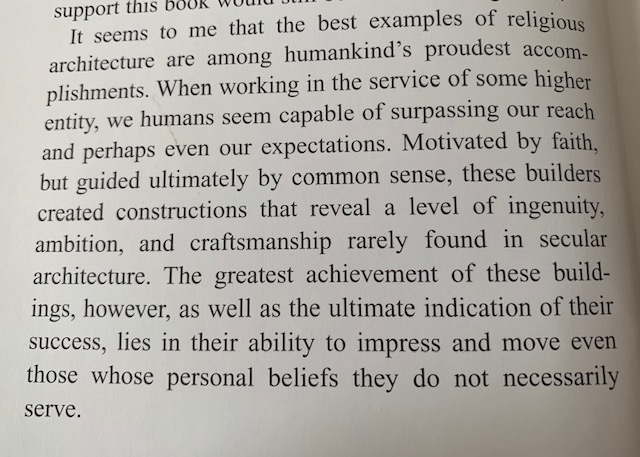
There is a Glossary at the end, and I really enjoyed the last paragraph of the Preface at the beginning:

IMG_4388

IMG_4390


Who Will Help Me Make Iftar by Asmaa Hussein illustrated by Saliha Caliskan

Standard
Who Will Help Me Make Iftar by Asmaa Hussein illustrated by Saliha Caliskan

IMG_3796

This sweet story shows how even when people refuse to help, we should treat them with kindness, as our actions should be to please Allah alone, and inshaAllah in real life, much like in the story, people will fix their ways and offer their help in return.  This new story reads very much like the old(er) favorite Nabeel’s New Pants, where everyone is too busy to help, but then come around to realizing that helping one another is a way to show people we care.  This 32 page 8.5 x 11 soft back story is well bound with large glossy pages and clear text.  The story works well for ages 4 and up, as they will understand the moral message and inshaAllah feel inspired to find ways to help as well.  

IMG_3797

It is a 40 year tradition that Mustafa Amce and his wife Ayse Teyze feed iftar to their friends and families on the first day of Ramadan.  This year, however, Ayse is not well and Mustafa is confident he can enlist the help of neighbors and family to help him keep the tradition alive. 

IMG_3798

Unfortunately, everyone has an excuse.  His daughter is tired, his grand daughter is too busy with her video games and his neighbor doesn’t want to get his new shirt dirty.  Their sad reasons don’t stop old Mustafa Amce, and he makes the salad, and cooks the rice and beef by himself.

IMG_3799

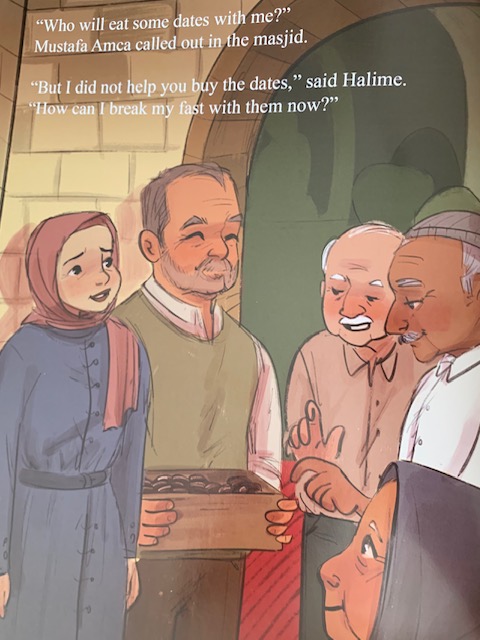
When iftar time arrives, he offers sweet dates to those at the masjid and invites everyone to come to his courtyard to break their fasts together.  All those that had early refused to assist him feel incredibly guilty and don’t want to take advantage of a lovely meal. Mustafa reminds them that, “God loves those who are generous especially to their families, neighbors, and guests.  and I always want Got to love me.” So they join in the delicious meal.

IMG_3800

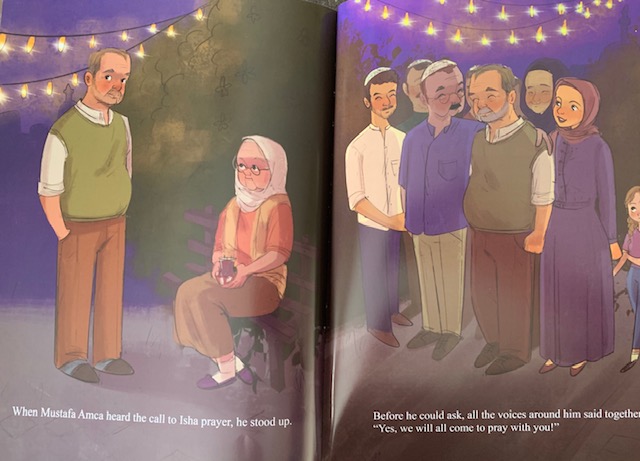
After food Ayse Teyze shows that while she might be ill, she can still save the day when her husband realizes he has forgotten to prepare dessert.  The guests then offer to wash the dishes and sweep the floor and take the leftovers to the poor.  And best of all when the athan for isha prayer calls out they all without prompting stand to join Mustafa Amce in praying salat together.

IMG_3801

The names are Turkish with a pronunciation guide at the end, as well as a paragraph about Ramadan.  The book would work for non Muslims and Muslims alike as the story is set in Ramadan, but more about coming together to help out.  The illustrations are large and detailed and descriptive.  You see the warmth between Mustafa and his wife as well as the apologetic feelings from those that were unwilling to help. 

IMG_3803

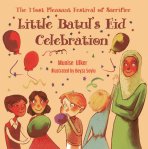
The Most Pleasant Festival of Sacrifice: Little Barul’s Eid Celebration by Munise Ulker Illustrated by Beyza Soylu

Standard
The Most Pleasant Festival of Sacrifice: Little Barul’s Eid Celebration by Munise Ulker Illustrated by Beyza Soylu

batul.jpg

This book is beautiful, it feels great in your hands, the raised glitter embellishments in the illustrations, the price point, everything except the text.  The gist of the story is even fine, the execution is just off.  It reads very much like it has been translated from another language in to English, and yes my privilege might be showing, but the phrasing, the passive voice, the orphanage, all make the book with its massive text passages hard to convince kids younger than 7 to sit through.

batul9

The story starts off with parents and two kids , Murad and Batul, driving to a friend’s house for dinner, commenting on the Christmas decorations that they see.  The parents ask what the kids know about Eid al-Adha that is coming up and the kids remember how much fun they had in Turkey.  Except it is really awkward to get this bit of information out.  They discuss Eid last year, and then remind each other that they were in Turkey, and how it was much more fun.  Noting that international travel is expensive and they won’t be able to go again, the Mom over dinner discusses how they can make Eid fun for the kids with her friend.

batul2

It is decided that the Muslim and non Muslims will celebrate together and include a local orphanage.  “Each Muslim family would be responsible for buying new clothes for two children from the orphanage, and they would take their own children along to do the shopping.” This would teach the kids to thank Allah and learn about community and sharing.  A great lesson overall, again just a concept presented in a really wordy, round about, awkwardly forced manner.

The Mom contacts the library and gets permission to decorate an information table, the kids make Eid cards for their grandfather in Turkey, at Sunday school they make gifts for friends.  They learn about Zakat and sacrificing an animal like Allah commanded Abraham to do, they even send cards to their neighbors.  Oddly though remarking how fun it is to get candy outside of Halloween.  After the first two pages explaining Christmas and telling that Muslims don’t celebrate it, I found it odd that they would, 15 pages later, be referencing Halloween. 

bat

Some of the sentences also don’t made sense.  About half way through I didn’t understand what the author meant by the boys “celebrating each other’s Eid” after they put their new clothes on and went to Eid prayer.

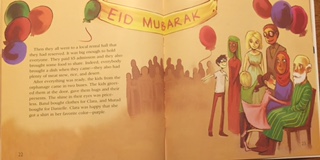
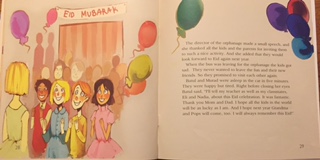
Once at the party, they give specific details of how much they charged everyone, yet no details about the food they all brought.  The kids enjoy a pinata and everyone including the orphans get Eid gifts.  Despite everyone’s fun the party has to end, and the orphans return to the orphanage and Murad and Batul declare they “will always remember this Eid.”

batul3

The illustrations are great, it is really yet another example of a book just needing a good editor.  From the very beginning, even the title isn’t really right, the book isn’t even mainly about Batul, to the random details shared, the book is just too long and too unpolished.  It is really unfortunate, because it has so much going for it on its 32 pages.  The main points however, I feel are lost about Eid and the reason it is so dear to Muslims everywhere.

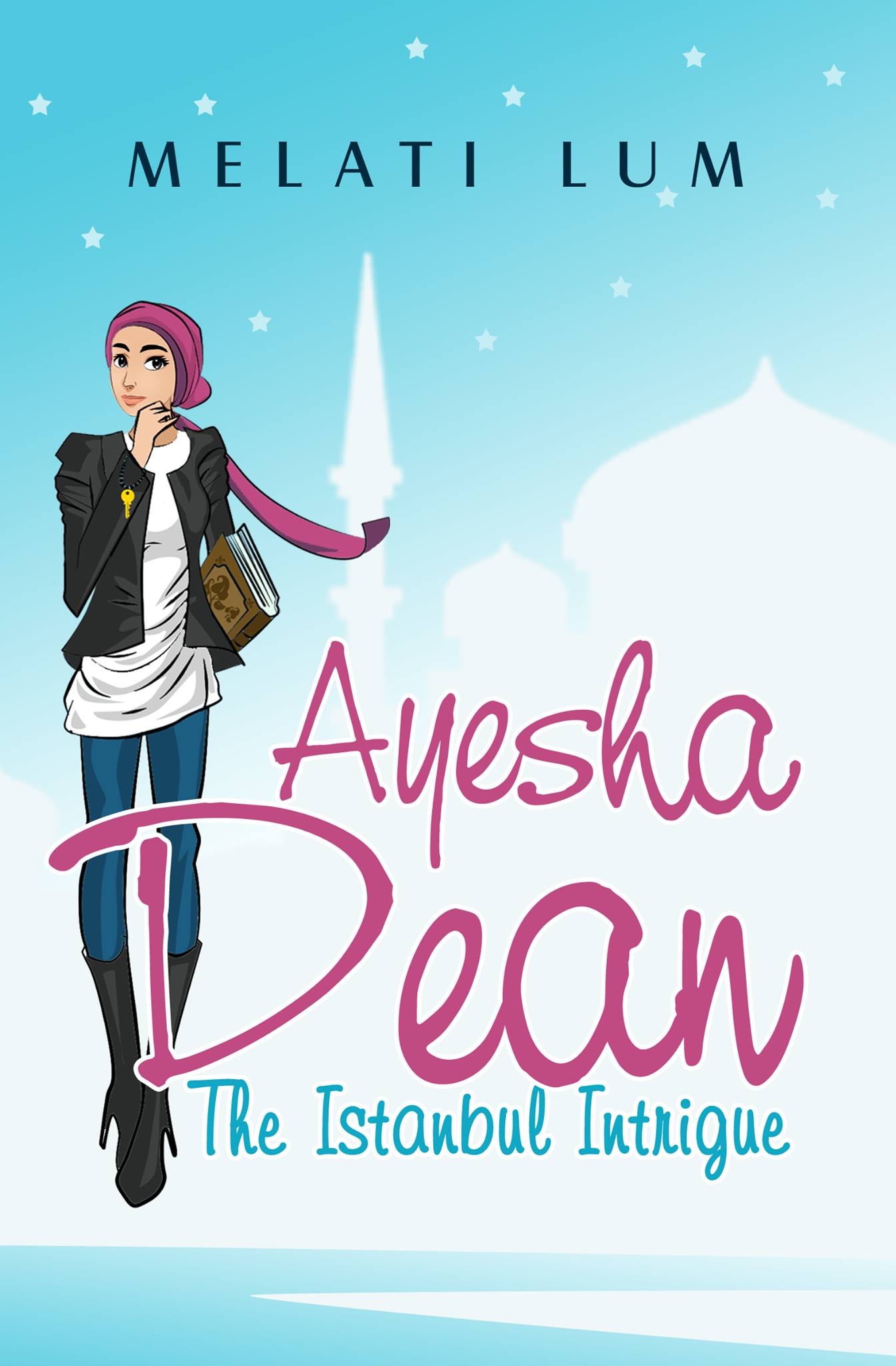
Ayesha Dean: The Istanbul Intrigue by Melati Lum

Standard
Ayesha Dean: The Istanbul Intrigue by Melati Lum

ayesha dean.png

I’ve tried numerous times to get my preteen daughter to read a Nancy Drew book with little success, yet she devoured this mystery and is eagerly waiting for more.  The protagonist is relevant, resourceful, fun, and a practicing Muslimah too.  At 240 pages, the spacing and large font make the book easily accessible, and tempting to dive in to.  The pacing is pretty good, and while there are a few hiccups with storytelling style, the book overall is worth adding to yours and your child’s reading list.

SYNOPSIS:

Ayesha’s parents are deceased, but her Uncle Dave has raised her as a Muslim following her parent’s wishes.  Having graduated high school she is off on a celebratory trip with her two closes friends: Jess and Sara, her uncle and her friend’s dad to Istanbul, Turkey.  The adults have a business conference and the girls are hoping to explore and enjoy all the sights of the Turkish Bazar, the Hagia Sophia, the Blue Mosque and more.  While looking for a book to gift Uncle Dave, Ayesha and her friends discover a secret message sewn into an old book of maps and set off to collect clues and solve a 100-year-old ibn-Arabi mystery.  Obviously, I don’t want to give too much away but there are villains, and shady characters, and dear friends, and lots of yummy food.

WHY I LIKE IT:

I love that the heroine is a hijab wearing, salat praying, Tae Kwon Do trained, fashionable, kind, young lady.  She has integrity and resourcefulness, that make the reader want to cheer her on.  Her friends are significantly less developed, I really couldn’t tell you much about them, and honestly had to look back to recall their names.  I understand why they are in the story for Ayesha to play off of, but I’m hoping that they will have a bit more substance in future novels.  Other side characters had more depth than Sara and Jess did, and even getting them out of the way for the climax seemed to further diminish their roles and importance.

I loved learning about Turkey through the characters, the history, architecture, the food.  The author really shined when talking about Islamic history as well.  When Ayesha and Emre explore the Sultan’s Privy Chambers at the Topkapi Palace, and look at Prophet Muhamad’s (saw) sword and bow, the excitement and reflection is palpable.  In other places however, I felt like the narrator’s voice was completely jarring and distracting to the engaging story at hand.  In the midst of pursuing a lead, the story comes to an almost standstill to say, “the friends chatted amiably as they walked, admiring the city as they went (69).”  The majority of the descriptions are so vivid that the few places where they cease are noticeable and awkward.

I also loved the diversity of the friends, even Ayesha’s own personal makeup adds some depth and appreciation that she has chosen to practice Islam.  Ayesha prays and tries to make sure she is not alone with a boy, she is conscious of her hijab and notes the Islamic elements in her own life and in her environment.  Obviously the book takes place in Turkey and she is unraveling an Islamic mystery of sorts, but I think the book works well for Muslim and non Muslim middle schoolers alike.  The book is not preachy, and the translations of prayers and poetry are framed in a historical or inspiring, not doctrine manner.  Similarily, I think you might be able to get boys to read it too.  It inspires girls who perhaps can identify with the main character, but I think even boys will be impressed with what Ayesha can accomplish.

FLAGS:

The book is fairly clean, there is some intense moments with kidnapping and having guns drawn, but nothing too haunting.  Ayesha obviously makes a good “friend” but nothing happens or is even detailed as wanting to happen between her and Emre.  Just Emre’s dad regularly teasing them as he looks for a wife for his son.  The only real flag for me was the exploring of the harem at the palace and the mention of concubines, and eunuchs.  A lot of detail is not given just that the women must have felt trapped, but it is a heads up if your child asks you about it, to be ready to answer.

TOOLS FOR LEADING THE DISCUSSION:

I think this would be a fun book club book to explore deeper some of the sites and history of Turkey.  I would have to explain the harem before hand I think, but I think it can be done factually to avoid to much over thinking for the young readers.  I think to track the clues and “map” out the trail in a group completely with pictures of the real places would really bring the story to reality.

Interview with the author: http://mvslim.com/meet-melati-lum-criminal-lawyer-who-also-has-a-passion-for-writing/

Why we need more heroines like Ayesha Dean: http://www.muslimkidsguide.com/why-do-we-need-more-muslim-heroines-like-ayesha-dean/


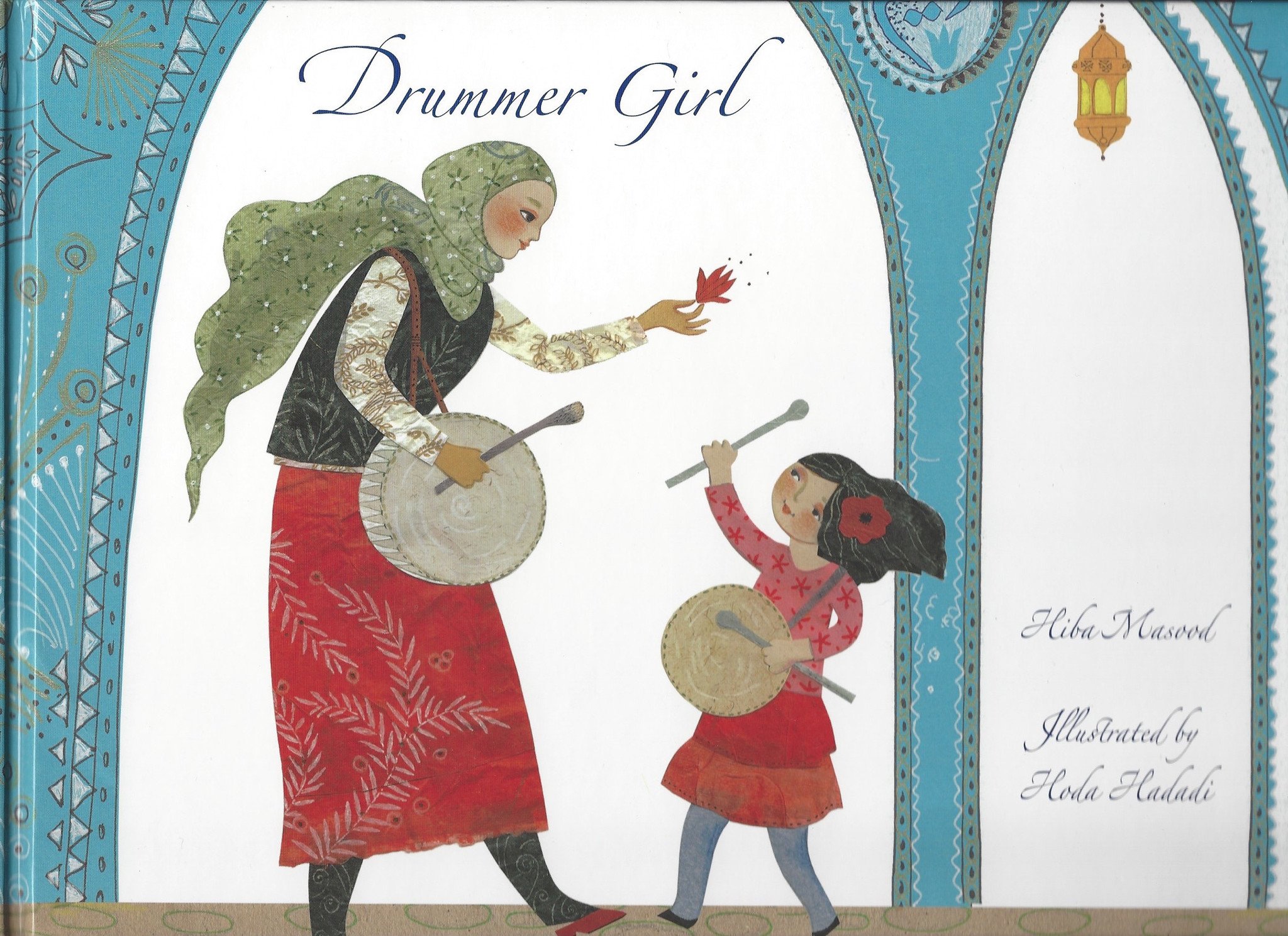
Drummer Girl by Hiba Masood illustrated by Hoda Hadadi

Standard
Drummer Girl by Hiba Masood illustrated by Hoda Hadadi

drummer girl.jpg


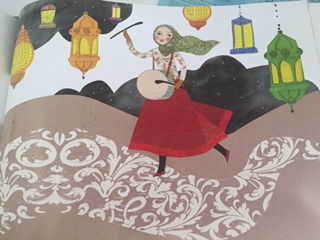
Before she was Grandma Najma, she was just Najma.  A girl in Turkey with a secret dream of being a musaharati, the person who walks the streets waking up the neighbors for suhoor in Ramadan.  But, a girl had never done this and thus the dream stayed hidden until she was 12 and the neighborhood musaharati was feeling ill.  Confiding in her baba, his love and support makes her dream come true against cultural norms and naysayers.  The line from her Baba, “Girls can be anything they like,” is so clear that her one girl revolution grabs the hearts of the reader and turns readers into cheerleaders.  The added beauty is her father’s support is not limited to his words, he accompanies her out every night almost challenging anyone to say she can’t do it.  Overtime she becomes the pride of the area, and her brothers accompany her if she doesn’t want to go alone, and then eventually her husband and her children.
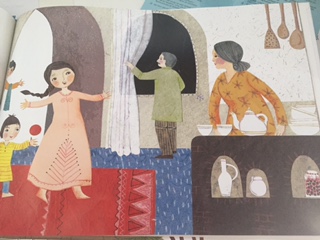
drumemrgirl2The book warms the soul and uplifts the spirit.  The text seems geared to 7 year olds and up, as there is a lot of it, and at 26 pages does require some ability to focus. But with minor tweaks and condenscing the story appeals to children 4 and up and the pictures help hold their attention as they create a mood of wonder and whimsy.

drummer text

Structurally the book is hardback and dust jacket free, yay! the cover is printed on and thus easier to maintain.  The book is longer horizontally with most illustrations on the left side making it great for story time where the kids can see the pictures and the reader can hold and easily see the text without blocking the children’s line of sight.  There is a glossary, an author’s note telling where the story comes from, and a little biography of the author and illustrator and publisher in the back.
drummergirl1

A beautiful, beautiful book to share with children this Ramadan and all year long, alhumdulillah.