Tag Archives: school

Odd Girl Out by Tasneem Abdur-Rashid

Standard
Odd Girl Out by Tasneem Abdur-Rashid

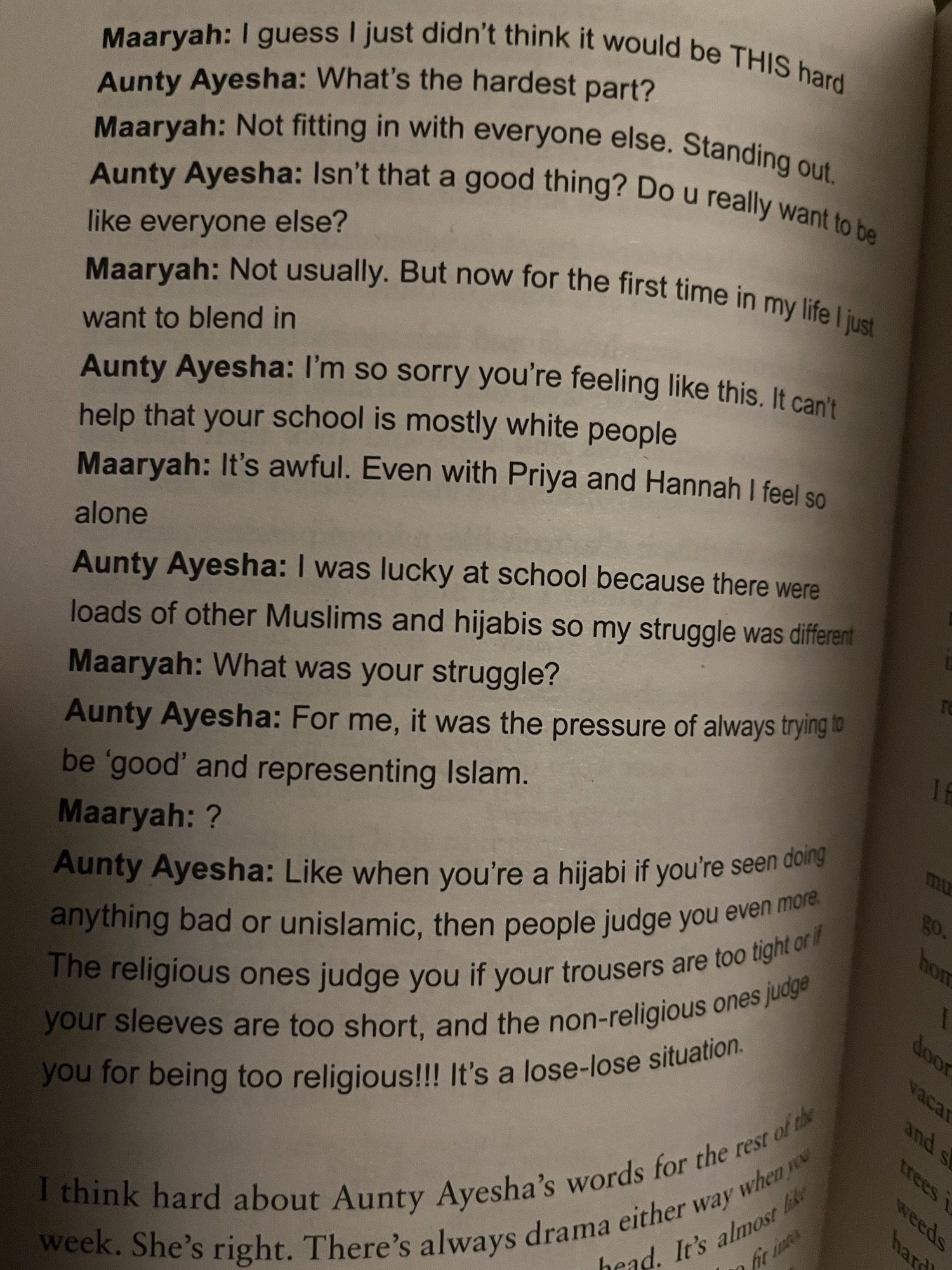
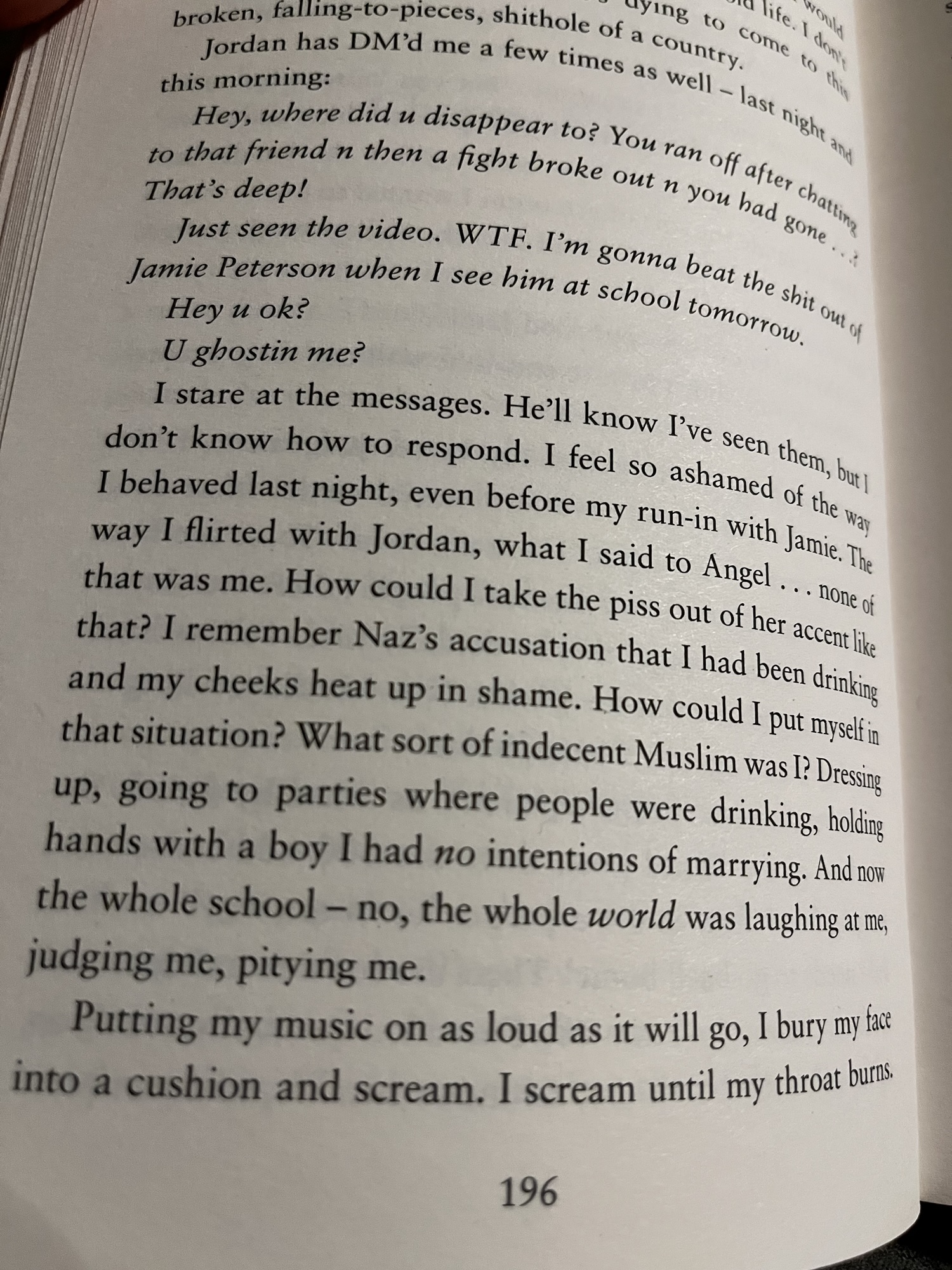
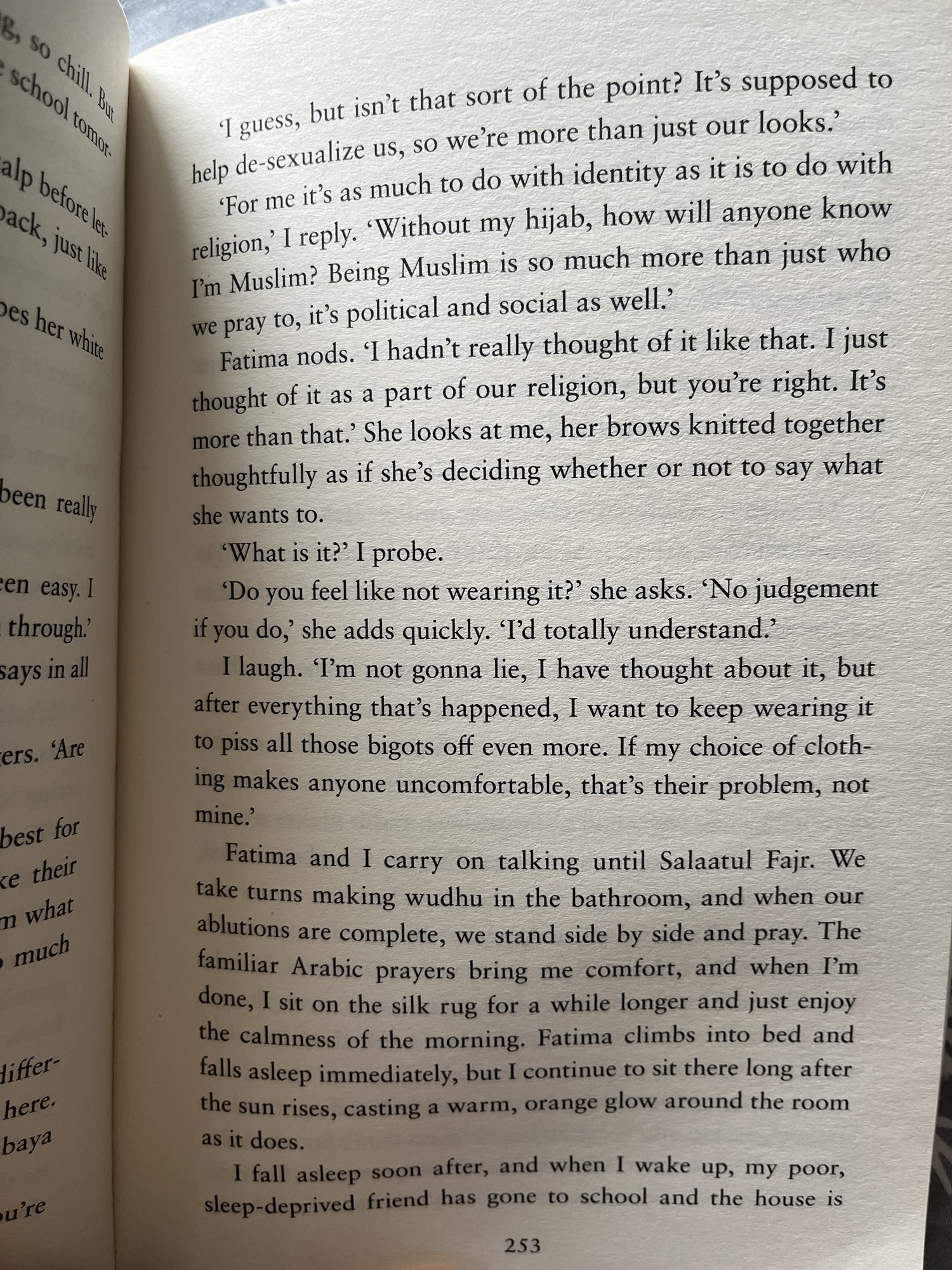
At 368 pages this identity centered mature YA book really hooked me and had me invested, which is impressive because Islamophobia stereotypes and being the new kid in a new place tropes are pretty frequently done, and often after a while, feel repetitive.  For me the charm of this book is actually not Maaryah and her peers/friends/bullies storylines, but the protagonist’s relationship with her parents and what caused her mom and dad to divorce.  Obviously as a mom of teens, I’m not in the target audience, but I feel like I benefited from the Muslim authored, Islam centered book, and think older teens, perhaps 17 and up, will also find the book enjoyable and reflective of views they have, challenges they face, and boundaries they have to establish.  I don’t want to spoil it, but SPOILER, had my dear friends that have read the book clued me in that the book will toe and slightly cross the haram lines, but ultimately show Maaryah deciding to re-establish her boundaries after being tempted not to, i.e. making a poor choice to attend a party with boys and alcohol present, and dressed in a way not typical to her hijabi style, I wouldn’t have read the last hundred and twenty pages or so with my jaw clenched in fear. The book shows a lot of Islam in practice, salat, duas, discussions about hijab, but not everyone will agree with decisions Maaryah makes or the rationale behind them as they vacillate between culture, religion, and family expectations.  I love that Maaryah is fallible and never abandons her faith, and that who we are is more than a singular mistake or instance of poor judgement. The book is not preachy, most will just take it as a girl finding her place in her new family dynamic in a new country, who happens to Muslim.  I think, an assumption really, based on what the author has said about her previous adult books, something along the lines that they are not meant to be Islamic fiction, but are stories with Muslim characters, and I think this book should probably be viewed the same.  There is swearing, hand holding, a side hug, normalized boy girl friendships, lying, running away, deceit, cheating, alcohol, mention of hookups, dating, vaping, music, flirting, hijab questioning, bullying, physical assault.  My biggest concern about the book is that it brings up Palestine, but doesn’t discuss Palestine. A side character is a non practicing Jew that visits Tel Aviv and Maaryah wants to discuss the occupation with her, but hesitates and the moment passes.  It is never revisited which I really wish it would have.  It could have modeled a bit how to have those conversations, I know it isn’t that type of book, but Maaryah mentions repurposing kaffiyehs in her designs and so it hints that it matters to her, but never pulls on that thread.  At one point it also mentions another character posted something pro Isr@*l during the genocide, which I can only assume the author thought that by the time of publication would have ended.  SubhanAllah ya Raab.

SYNOPSIS:
The tag line on the cover “From Dubai Girl to London Nobody…” very succinctly summarizes the plot.  Maaryah had an idyllic life in Dubai with her parents and close friends, spending her holidays with her mom’s family in London, and securing an internship with a famous designer.  All is going well until her parents get divorced, her mom moves her to the UK, not near her extended family, and the lack of Muslims, let alone hijabis, at her high school has her bullied with no friends to have her back.  With her mom in survival mode, their once close relationship is non-existent, and the 15 year old is left to sort through it all on her own.

WHY I LIKE IT:

There is a little pulling of punches so to speak of asserting that the boundaries are Islamic, but for the most part I think Muslim readers will see that Maaryah does view a lot of what she experiences through an Islamic lens which I appreciate. I also like that the protagonist’s connection to salat and faith is hers, it isn’t forced on her and I think for this demographic that is good micro messaging and framing.

I was very grateful that the book answered the questions about Maaryah’s family dynamic, so often parental problems are pushed to the void and let to be resolved or understood off the page. And while in the first half it was teased a little as we aren’t having that conversation right now, I did ultimately by the end feel like it was sufficiently resolved.  I also felt the mom was blaringly absent at weird times and I get that it was a plot device to get her out of the way, but if you are dragging at the 100 page mark, I do encourage you to keep reading, it does pick up.

This book isn’t meant to be didactic, and I recognize I’m putting that on it a bit, but I do think the Gaza framing missed an opportunity to show readers how to navigate that very real scenario through the power of fictional characters.

FLAGS:

Copied from above: There is swearing, hand holding, a side hug, normalized boy girl friendships, lying, running away, deceit, cheating, alcohol, mention of hookups, dating, vaping, music, flirting, hijab questioning, bullying, physical assault.

TOOLS FOR LEADING THE DISCUSSION:

I would shelve this in an upper high school classroom, I think that decision to be at the party is clearly shown to be a mistake, to put herself in that situation is something she regrets, and I think showing that she comes out from it offers a lot to be discussed.

The Misadventures of Mina Mahmood: School Trip by Farhana Islam illustrated by Simran Diamond Singh

Standard
The Misadventures of Mina Mahmood: School Trip by Farhana Islam illustrated by Simran Diamond Singh

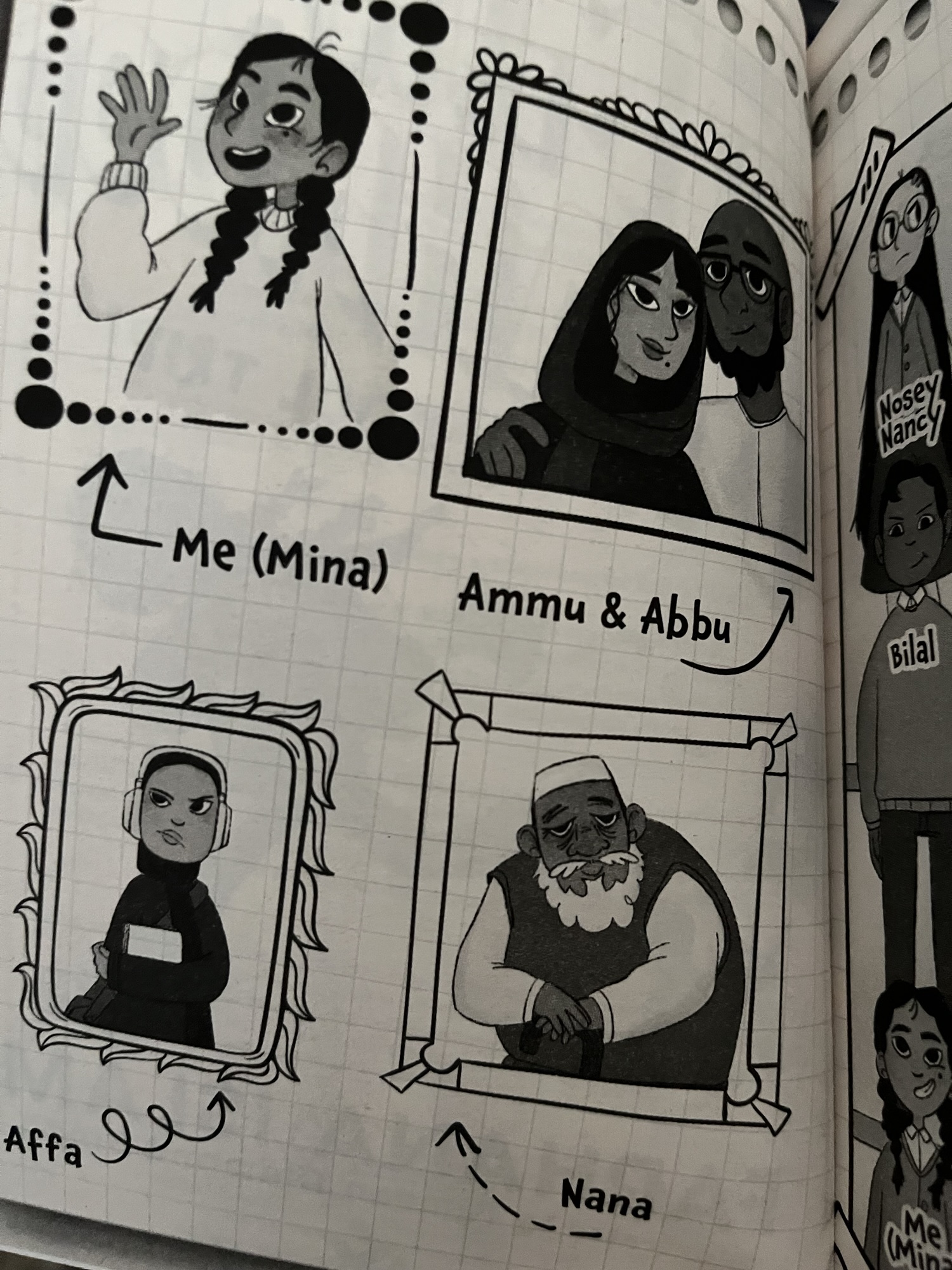
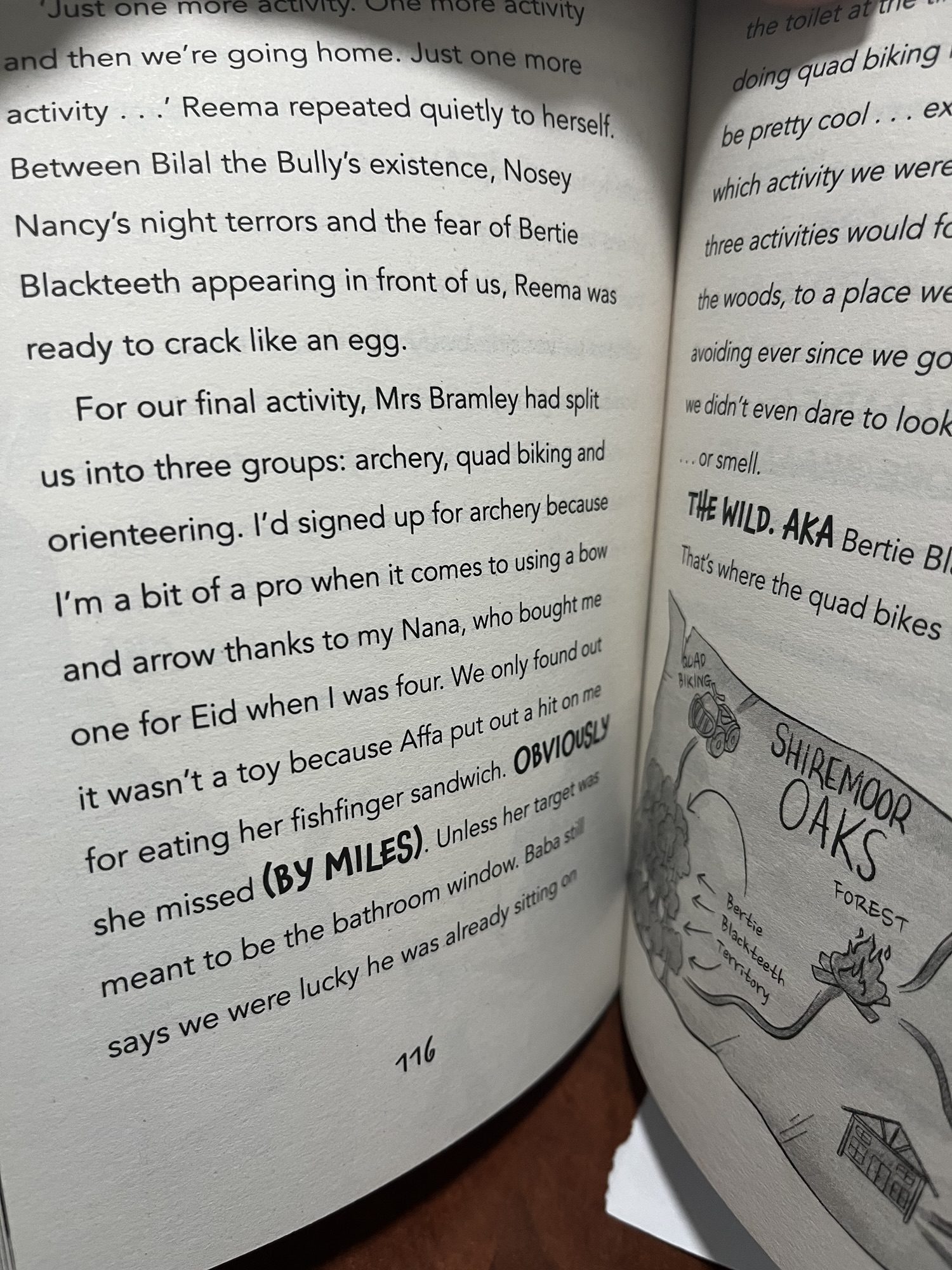
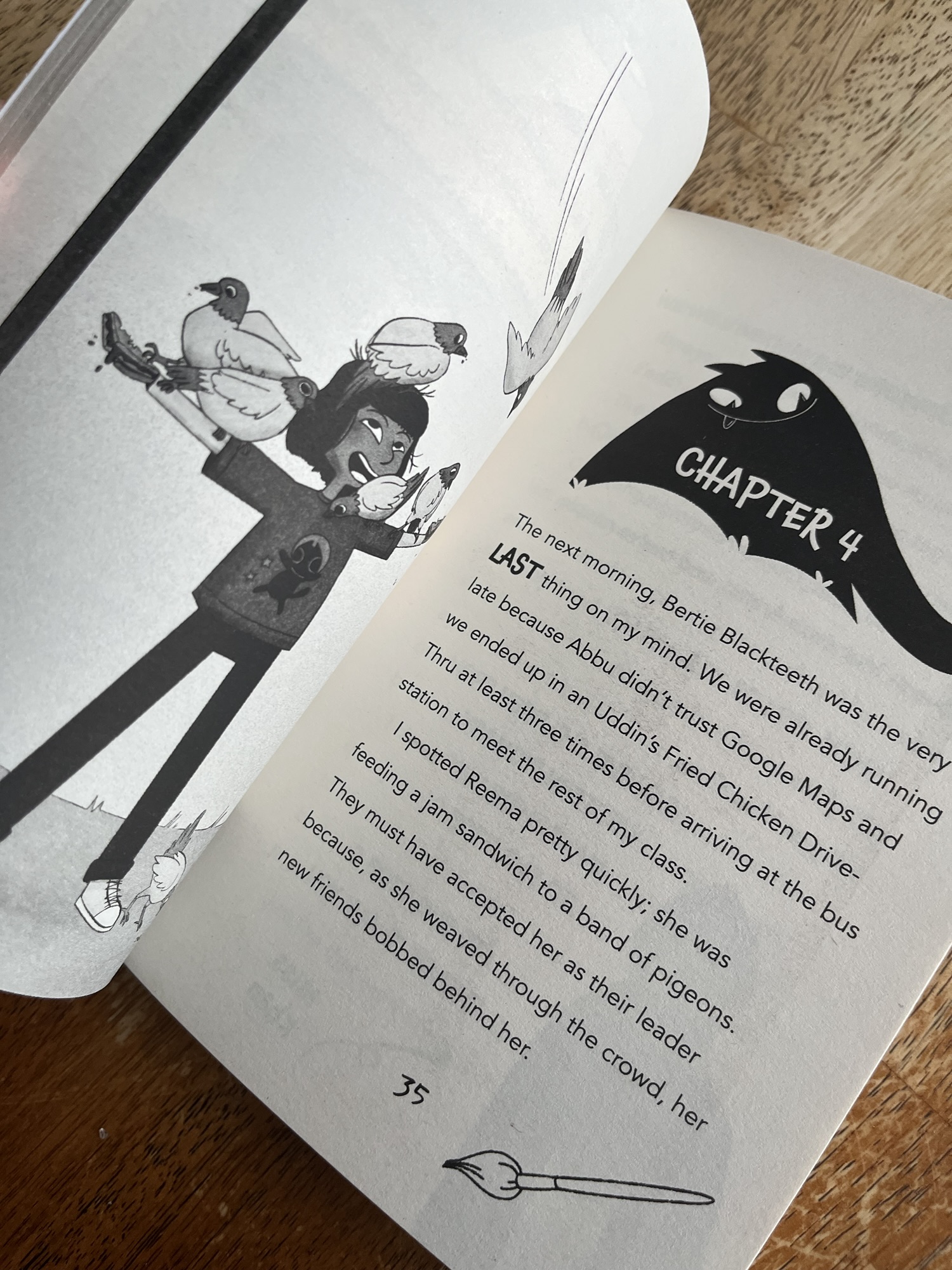
The illustrations in this book, by a Muslim author featuring Muslim characters, are impressively fun and complimentary to the story.  Yes, the 184 page book is highly illustrated.  The publisher says it is MG, and I can see that based on the length, but I think it is a solid second grade to fourth grade read.  The storyline is singular and surface level, and the scary silly bits are just meant to be funny and not taken too seriously.  I enjoyed the book, the normalizing of the Muslim kids in a non Muslim setting just living their life, and the main character’s voice had me smiling throughout.  A school camping trip is overshadowed by bullies and then consumed by the ever growing out of control scary story of Bertie Blackteeth.  An epic laser tag battle, quad adventures, and the comical banter of Mina and her friends, Mobeen and Reema, make for a light engaging read.  Sensitive kids might find the fright to be too much, but I think most will finish and be glad to learn there are more books to come in the series.

SYNOPSIS:

Mina Mahmood and her friends are ecstatic, it is finally their turn to head off on the annual camping trip to Shiremoor Oaks.  A weekend of laser tag, orienteering, archery, and quad biking without adults, well teachers, but no parents.  All Mina has to do before the fun begins is get through a family dinner with Auntie Selma and her cousins.  Mina doesn’t believe anything her cousin Abbas says, so when he mentions he went camping in school to Shiremoor Oaks and heard about a girl, Bertie Blackteeth who vanished there, Mina pays him no mind.  When her older sister Affa, also mentions that she heard the story, Mina starts to wonder if there could be some truth.  The next morning on the bus, when Bilal the Bully and his minions Owen and Brodie are also talking about Bertie Blackteeth and her need for a new body, Mina and the rest of the class are properly spooked. The fear hangs over all the activities, ruins the midnight snack extravaganza, and makes this a camping trip they will never forget.

WHY I LIKE IT:
I enjoy when Muslim kids drop mention of Eid and Ayatul Kursi in their adventures. When a character wears hijab, but she is the teacher, so the book isn’t about her identity, it is just a part of who she is.  I also really like when books are funny, characters are snarky, there is a plot, a climax and a resolution.  The book doesn’t have layers and heavy themes, sure you could discuss bullying, and fear and friendship.  At times Mina is tasked with saving Mobeen and other times advised to sacrifice him.  But considering he feels to young to be a father if the spider that just landed on him lays eggs in his eyebrows, it is probably best to just enjoy the story for what it is and not look to make it more.

FLAGS:
Could be a little scary, it is a little imaginative in the lies and embellishments of Bertie Blackteeth.  Bully and dealing with bullies.

TOOLS FOR LEADING THE DISCUSSION:
I handed it to my 10 year old and said enjoy, not much more than that is needed. A fun addition to elementary shelves, and one that will be picked up often.

Abdullah’s Bear Needs a Name by Yasmin Hanif illustrated by Sophie Benmouyal

Standard
Abdullah’s Bear Needs a Name by Yasmin Hanif illustrated by Sophie Benmouyal

I love the idea behind this 28 page book, and the illustrations are pretty great too, but I felt like the story needed a little more depth to convey meaningful emotion, appreciation, and connection.  It starts with an Eid gift, but there is nothing tying it to the holiday after the first spread.  And while it shows both Islam and Desi culture in action, I wanted to hear the stories of his family, and the connection to his culture that helps him name his bear.  I also feel like the premise was a little rocky, did everyone get family heirlooms for gifts? Did they get other gifts? Why was he gifted this special stuffed toy and not his older or younger siblings? Would a kid really be that excited to get a hand me down stuffed bear? Once you read the author’s intent, and the inspiration for the story, an adult could connect the dots and help a reader recognize the internalized othering being overcome, and discuss it, but I don’t know if all kids would not pick a cultural name for a toy, or see that Abdullah didn’t consider reflective names either.

The book starts with the reader dropped into an Eid day celebration.  Abdullah is handed a gift by his parents and when he unwraps it he finds himself the new owner of an old well-loved teddy bear.  His father was the previous owner, but refuses to tell Abdullah the bear’s name, urging him to discover it on his own.

Abdullah loves the bear, and takes it with him to the store, to school, to cricket, to madrasa Everywhere he goes he tries out names: old names at the museum, classmates names, but nothing seems to fit.  When his Abba tells him a story about his grandfather, he finally finds the perfect name for his bear.

I really like the details in the illustrations, they bring the story to life and feel authentic: the store names, the Eid spread, the activities.  I feel like this book is so close to being a standout, but I don’t know that kids who don’t find themselves exactly in Abdullah’s mindset, would be able to relate and connect to what transpires.  Unfortunately, it is unclear if he grows and learns from the experience, or if it was contained to this one incident. 


Huda F Wants to Know? by Huda Fahmy

Standard
Huda F Wants to Know? by Huda Fahmy

Huda Fahmy books always make me laugh, but this is the first one that made me cry. Centering mental health and her parents divorce, we see Huda grappling with change, loss, anger, and resolve in a raw vulnerable way. While ever hopeful, and at times comical, the book is also incredibly moving and insightful.  Whether as part of the Huda F series or her two graphic novels prior, her autobiographic books always tackle heavy topics in a joyful, hilarious, honest way that appeal to girls and boys from middle school and up.  I know at 263 pages, this book is a YA read, but in my house my kids (daughter and sons) have loved reading her perspective about hijab, arranged marriages, identity, and sibling relationships. The unapologetic Muslim authenticity is unparalleled, and that non Muslims champion her books as well, truly shows the value of good story telling, and gives me hope in an often bleak world. Huda’s books are staples: new books are anxiously awaited, previous books are regularly reread, and Huda F Wants to Know? continues in that tradition.  This book isn’t just fun, it is important- it normalizes mental health, empowers families shaken up by change, and makes us all feel seen and less alone. SubhanAllah.

The book starts with Huda’s plan for her junior year in high school, her friend Nabz and her are determined to buckle down and get scholarships.  When Huda’s parents call a family meeting, she thinks she just might be getting a car, but instead she and her sisters learn, their parents are getting a divorce. The book then rewinds to show a little lead up before Huda’s world shatters, and junior year’s blue print is tossed aside.  We see her going to the masjid for weekly halaqas where Sr Amal discusses topics like societal pressures, family expectations, gender bias in education, and other relevant topics.  At one such gathering, Dr Haifa came to talk about mental health.  We also see her crushing on a boy at school, fighting with her mom and sisters, and the girls going on a road trip to a Muslim convention.

Every storyline, every twist, every page really, has Islam woven in.  It is the way the characters see themselves, see their world, handle stresses, find peace.  Mental health is not separate from the hadith and sunnah, it is blended and approached in a holistic manner.  Divorce is understood Islamically, and the clarity in which it is articulated will, I imagine, be so reassuring for Muslims who have gone through it, and seen others go through it.  Just as my boys years ago read That Can Be Arranged, and became incredibly curious about marriage in Islam, I have no doubt that this book, will also be a powerful conversation starter for so many.  I don’t know if that is part of why Huda write, but it definitely is a result of her books.  I wish I could ask her, I’d also want to know how she decides what to share of her own life, where the line of reality and fiction for her is and how she sets and maintains those boundaries? I also desperately would like to ask her if she plans to write forever, because the world benefits from her books, needs her books, I know I do.  No pressure or anything.

 There are resources for mental health at the back of the book, some even specifically for Muslims. Please preorder this book and/or request it at your local public library as a show of support, it releases in April.

Saif’s Special Patches by Humera Malik illustrated by Ravan Sader

Standard
Saif’s Special Patches by Humera Malik illustrated by Ravan Sader

I really had no idea what this book was going to be about, and the first page or so seemed a little off with the child not knowing about the quilt he was wrapped up in, but. oh. my. heart! Every subsequent turn of the page was a hug from Saif’s patch made quilt straight to my cynical soul.  The infusion of Islam as such a part of his daily activities, his loving family and environment, and the reminder that labels can both hurt and inspire is beautifully done. The illustrations, the tone, and the messaging, is great for kids that have been called “just shy” and everyone who has ever doubted themselves (i.e. everyone) with it’s relatable emotions, and reminder that like a quilt, we are still growing.  I cannot wait for this book to be released and I can enjoy a physical copy to share in classrooms, libraries, and bedrooms. One of the best picture books I’ve read in a while, thank you.

The book starts with Ami asking Saif why he isn’t outside playing basketball with his friends.  He replies, that he “is shy.”  His mother shows him that the quilt is made of patches of Saif: experiences he has had. She shows him a patch and helps him recall the memory attached to it,  starting with last Eid when he was brave and went down the big slide. As he joins in the recollection, he then owns the label that he is brave.  It isn’t that easy though, he tries to be smart like his brother and read a lot, but reading is hard, his brother reminds him he is smart and points out the patch from when he won the scavenger hunt.  Swimming, helping at the masjid, reading Quran, calling the athan, all help Saif to realize he is more than just shy, more than one label, and that he is still growing.

I love the relatability of what Saif is going through, and even though so many of the settings and examples are Muslim centered, the book will resonate with all readers, of all ages.  A tear or more two may have stumbled out as I saw little me in the illustrations and the scenarios, and I have never been called shy. The book releases in March and is traditionally published, meaning plenty of time to pre-order a copy and request your library to shelve it, as it will be available wherever books are sold.

Almost Sunset by Wahab Algarmi

Standard
Almost Sunset by Wahab Algarmi

At 224 pages, this middle grade graphic novel has a whole lot of heart. Seventh grade is not easy for anyone, and Hassan is balancing school, grades, soccer, fasting, and taraweeh every night, while dealing with friends, video games, cousins, and falling asleep in class. I love that this OWN voice book really centers Islam. It doesn’t shy away from showing the stresses that the character and presumably the readers of immigrant kids in public schools might encounter, right alongside stresses with Muslim cousins and friends at the masjid trying to pressure you to do something you don’t want to do.  And as in any coming of age story, young Hassan does not want any special treatment or parents to get involved. SPOILER: Hassan does hide his faith and that he is fasting for Ramadan at school, he also does make mistakes, notably among them is when he breaks his fast in what he is told is a loophole of sorts, but by the end he grows and trusts and realizes he doesn’t have to do it all, all the time, and that he isn’t alone. The book is not heavy, but it has layers that serve as relatable mirrors and windows for kids who are going to thoroughly enjoy this richly illustrated book.

SYNOPSIS:

The story starts with seventh grader, Hassan dreaming about food, drooling on his arm, and then being woken up by his teacher, again.  It is Ramadan and Hassan is fasting, going to taraweeh at night, trying to keep up with school and soccer, and on top of it all, he doesn’t want anyone to know.  He also doesn’t have the latest version of the popular video game that all his friends have, and he has to explain to his childhood friend Rosie why it is no longer appropriate for them to hang out together.  Nights and weekends with family and at the masjid should be a reprieve, but somehow even there he is the odd one out, opting to pray instead of play, and being unsure if closing your eyes while sneaking food really prevents Allah swt from seeing you eating like his cousins claim.  Threaded through it all are soccer practices, games, and falling grades that are going to get him tossed off the team, making this a Ramadan to remember.

WHY I LOVE IT:

Wahoo, some Yemeni representation, I loved the flashback/dream longing for Yemen.  I like that Hassan isn’t expecting adults or others to speak for him, and his heart is really in the right place.  I did feel a bit of a disconnect though when his friends knew he fasted the previous year, why he wouldn’t just explain it was time again for him to do so. Increasingly even the most isolated western cities are aware of Ramadan, so I didn’t feel that hesitation for Hassan to own it, even when a friend explicitly asks.  SPOILER, On a similar thread, his soccer coach is Muslim and their isn’t a huge sigh of relief and immediate kinship when the information is revealed.  If Hassan really feels he is shouldering it alone, why wouldn’t this empower him to step into himself so to speak.  I also didn’t understand why the end of the season pizza party wouldn’t have just been at iftar time. The book really had a chance to model how others can support their Muslim friends, and moving a food based celebration a few hours is an easy accommodation, but the Muslim coach didn’t even do it, so why would non Muslims.  

When Hassan does sneak food during his fast, he gets away with it, but it doesn’t sit right with him and I think it is powerfully done, him coming clean also is not punished as it really is something between Hassan and Allah swt and I love how it is left to that.  Regardless of if you feel it is required of a 7th grade boy or not, the ownership of faith I feel is more important than the getting in trouble by your parents in this case.

FLAGS:

Lying, failing grades, sneaks food during fasting, boy girl friendship, hints at internalized Islamophobia.

TOOLS FOR LEADING THE DISCUSSION:

I wouldn’t do this as a book club, but would absolutely have it on shelves for kids to easily access, and I would absolutely discuss with them, what their takeaways were.

Yours, Eventually by Nura Maznavi

Standard
Yours, Eventually by Nura Maznavi

It has been a while since I’ve read Austen’s Persuasion, and I should probably remedy that, but alas, here I am reviewing another adult, Desi-fied, Muslim tinged retelling, and am embarrassed to admit I was absorbed and invested, as if I had no idea how it would play out. Sure there were author liberties, but the heart of the story hits the same beats (that I recall) and works so well when adapted for our faith and culture. It isn’t halal halal, nor is it Muslim focused, the culture and cultural expectations are definitely more centered for the Pakistani American Muslim cast. The characters are all Muslim, a few wear hijab, they abstain from alcohol, date with intent to marry, attend Bismillahs, but they aren’t shown praying, or viewing life through an Islamic lens, or Muslim conscience. There are a few kisses and hand holds, and male/female close friendships, but for an adult read, the Muslim authored 400 page novel is pretty notably clean.

SYNOPSIS:
Asma is in her final year of Emergency Medicine residency and the pressure to get married is ever mounting. With her father making poor financial choices, he and Asma’s oldest sister Iman, are moving out of their Palo Alto mansion and heading back to Sacramento. Culture won’t let Asma live alone, so she is forced to crash on an air mattress at her youngest sister, Maryam’s house in the room of her three year old twin nephews. Asma feels it is her responsibility to take care of everyone since her mother passed away, but with the family splitting up, she has to decide for once, what she wants. Eight years ago she did what she was told and broke off her engagement with Farook. Unfortunately, she has regretted it every day since and never moved on. When of all people, Farook’s sister moves into Asma’s old house, a chance encounter brings the two face to face. When Farook starts courting Maryam’s sister in law, things get particularly tense. Throw in a dozen or more side characters, amp up the drama, and settle in to see how it all unfolds.

WHY I LIKE IT:

If my recollection of the original source material holds, it takes a while to get all the characters in their desired place and position for the story to sweep the reader away, and this version does the same. At times I worried that threads and characters were being overlooked, but by the end, most everything felt resolved. I did feel Fatima’s story was underdeveloped and showed Asma as being a bit of a bad friend, and there is no way three year olds would recognize someone from a picture taken 8 years earlier, but I know, romance books require some suspension of reality to work. The premise of the plot is even a bit shaky, but once you are rooting for the characters you aren’t too worried about why they need a second chance. For the most part the writing is fairly smooth, a fair amount of characters the author managed to keep annoying, but not completely unredeemable, and I appreciated the restraint. The pacing at times was a little sluggish, with a lot of characters that the reader needed to connect with resulting in telling and not showing, so I was a bit disappointed that end felt rushed. I wanted to bask in the resolution of all that angst, longing looks, and obstacles being overcome.

There is quite a bit of commentary about pushing back on stereotypes, expectations, and cultural weight. There are aunties doing the match making and gossiping, and plenty of folks chasing wealth above all else, it doesn’t weigh down the storyline, but it at times does get a bit repetitive and shallow.

FLAGS:

Romance, kissing, hugging, holding hands, lying, death, pyramid scheme, alcohol, consumerism,

TOOLS FOR LEADING THE DISCUSSION:
I might let this be in a school library, it is clearly adult with the characters nearly 30 years old, but high school romance lovers will enjoy this, and it isn’t overly mature for ages 16 and up.

The Thread that Connects Us by Ayaan Mohamud

Standard
The Thread that Connects Us by Ayaan Mohamud


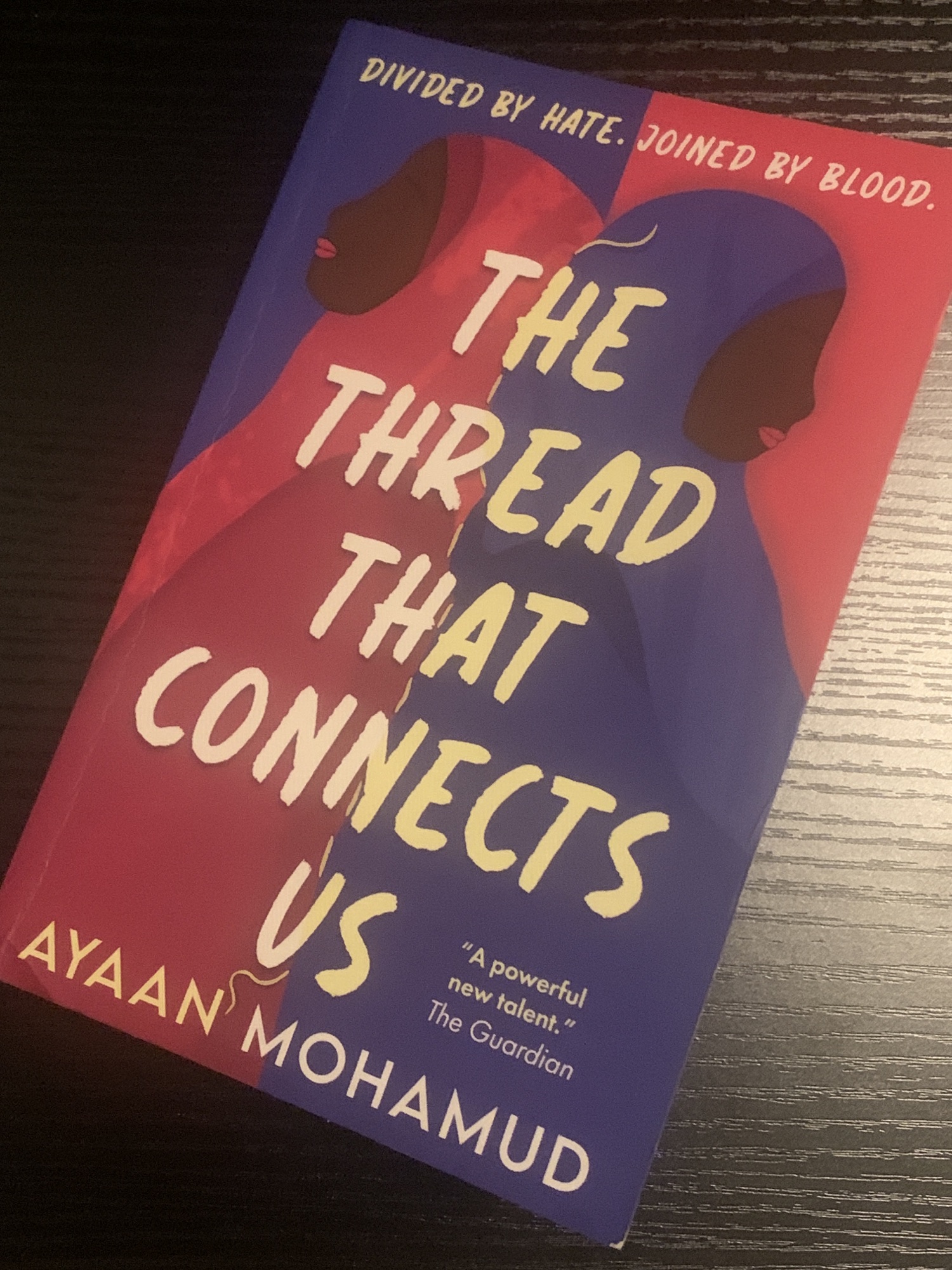
At just over 400 pages this book expertly blends the stresses of school, bullies, and friends in the UK with the twists and secrets of broken families, shattered hearts, and a past that needs to be reckoned with.  Told in dual perspectives from girls thrown together by the actions of their parents, Safiya and Halima maintain distinct voices that are rich with Somali culture, Islam, vulnerability, and ultimately love and hope.  The book is YA, but the premise is a bit mature and is better suited to older teens in my opinion, I think a high school book club would be wise to consider this book, as once you start reading, it is difficult to put the book down. 

SYNOPSIS:

Safiya is mature beyond her years.  Since her father abandoned her and her mother five years prior, she has managed the bills, the upkeep of the home, and for the most part her grades. Hooyo checked out and is rarely more than a silent being curled up unable to care for herself, much less her daughter.  With the the help from the community, particularly her best friends and neighbors Muna and Yusuf, Safiya has a found family that helps her weather the tough times.  When her dad moves back to London with his new family from Somalia, Safiya is forced to deal with not only all the painful memories of her past, but also the very real presence of her family living in her neighborhood, showing up to Eid prayers, and taking over the safe haven that school has often served as when home life has been so cold and lonely.

Halima’s father died when she was young, and life with her Hooyo in Mogadishu was good until her mother remarried, Safiya’s dad.  Her two younger half brothers that came further added to the rift between her and her mother, and now that they are moving to England with the husband, despite her protests, has her plotting a way to return to her home.  The language, the culture, the weather, are all added stresses to finding her way, and are compounded when she gets paired up to have Safiya show her around and help translate for her in school.  

The two girls hate each other, at least they have that in common, but their inability to avoid each other forces them to interact more than either wish to do.  As questions, and secrets are voiced, the two girls realize that they might have to work together to get what they want, and figure out their past.

WHY I LIKE IT:
I really enjoyed the owning of the characters’ language and culture and faith and how easy it was to be invested in their world.  Nothing pulls you out of the story, it is rich and lush and the reader can figure out why even though there is a crush, nothing is going to happen, and why they are wearing hijabs, and waking up to pray fajr, the balance is both inviting and educating, without the reader even realize it is happening, because hello, we are to busy trying to figure out what these two girls’ parents have done. 

The story has layers, and the emotional attachment I feel to both these girls, made me glad the story was over, they deserve some peace, but also desperate to know that they are going to be ok in the future too.  I can’t say too much without the risk of spoiling, but the writing is strong, the plot solid, the details intentional and relatable, and the characters very real.

FLAGS:

Lying, bullying, fighting, assault, crush, drug use, arrest, accusation, gossip, abandonment, relationships, edibles, affairs.

TOOLS FOR LEADING THE DISCUSSION:
This would be such a great upper high school read, the way the story unfolds will keep readers hooked from the first page and motivate those that start, to finish.  Students will see themselves in the characters, and be sleuths themselves trying to uncover what secrets are true and how do the pieces of the puzzle fit together.


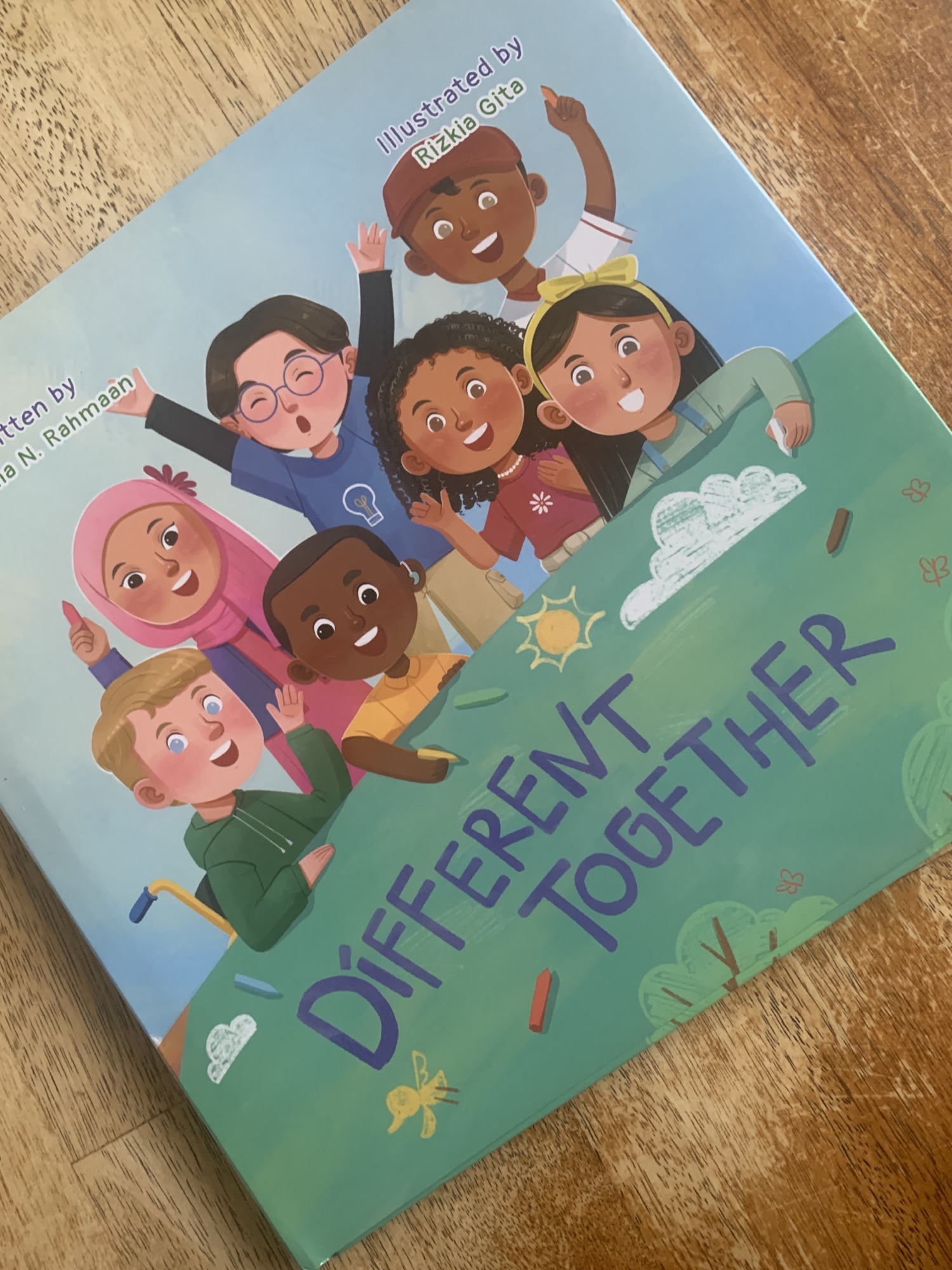
Different Together by Ayesha N. Rahmaan illustrated by Rizkia Gita

Standard
Different Together by Ayesha N. Rahmaan illustrated by Rizkia Gita

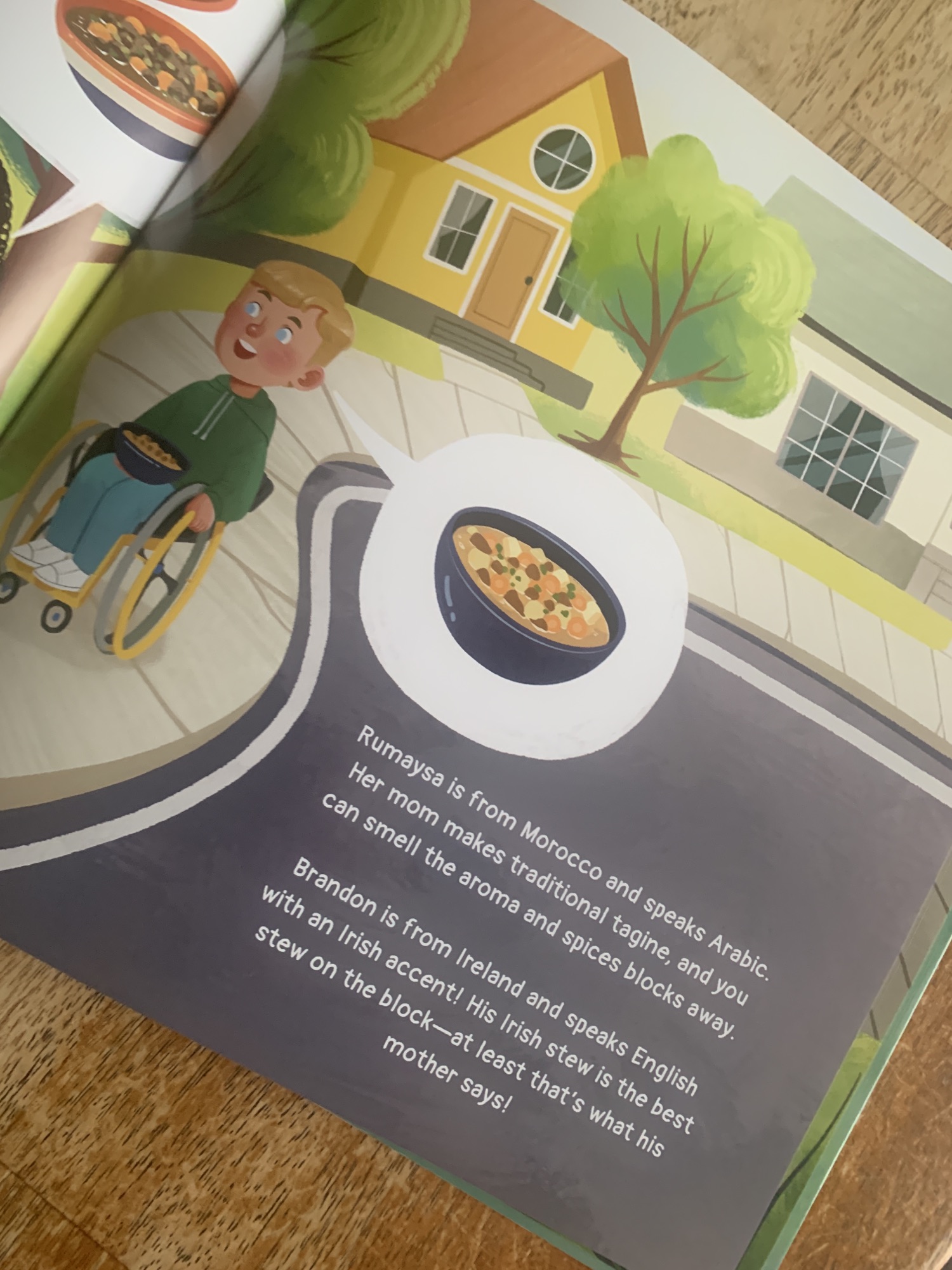
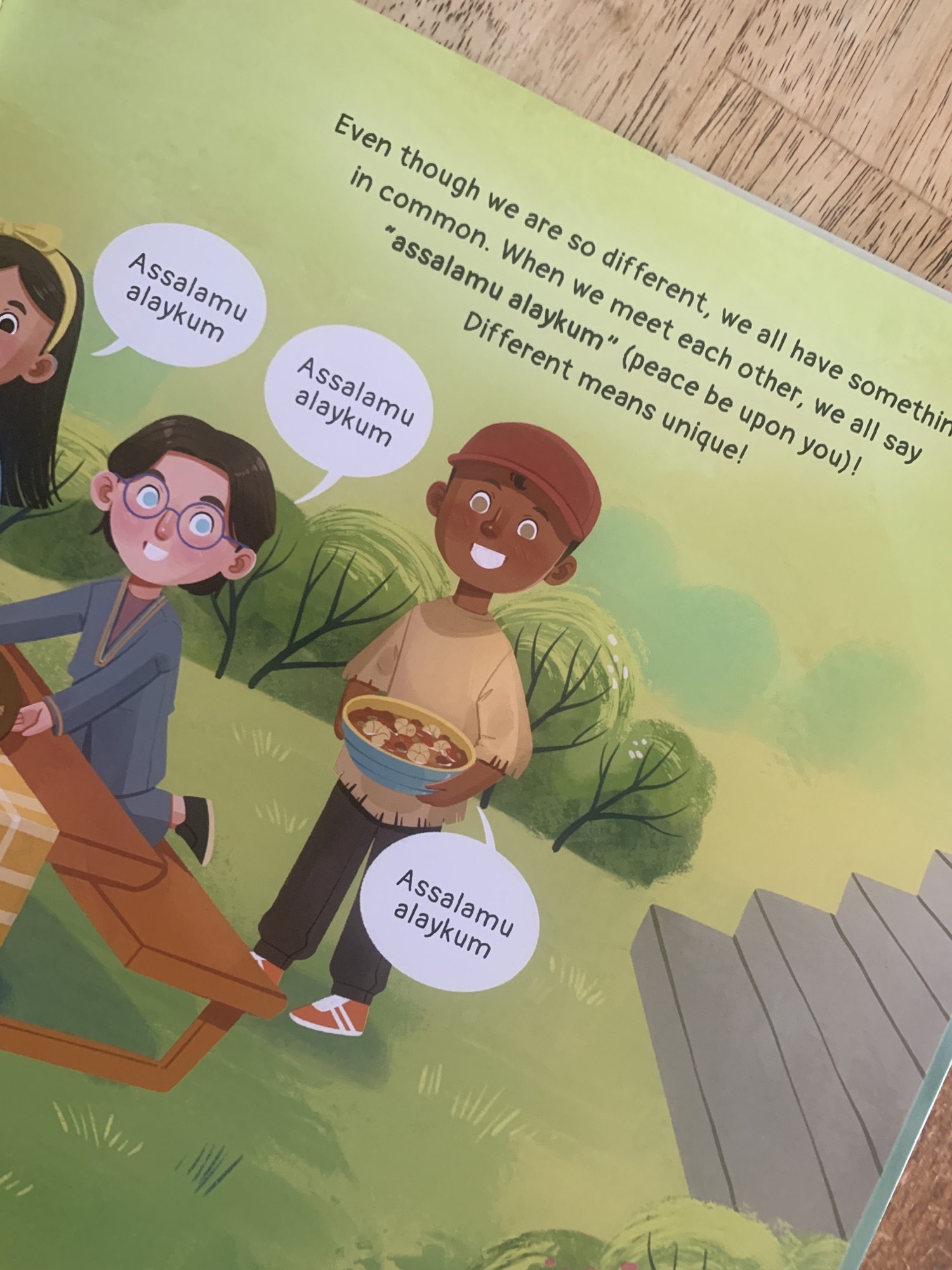
This 32 page large 10 x 10 hardback book explores how we are all different and unique, while also being the same too.  The illustrations and text present a nice way for children to learn that Allah swt created us all to be different in our appearances, what foods we like, how we dress, how we speak, but come together to all say Assalamu alaykum and stand foot-to-foot to pray.  Some of the refrains are a bit abrupt, and it really focuses a lot on physical descriptions and food, the target audience though of preschool to early elementary, will see themselves in the book, probably even a character that looks like them, and expand their understanding of al-Khaliq creating them all.


The book starts with an ayat from Surah al-Hujurat and then starts by asking the audience to imagine a world were everyone is the same.  It highlights that Allah created each of us starting with prophet Adam (as) to be just as we are, with different traits. From there, neighbors are introduced: their names, country of origin and favorite foods that all come together to make a table of sharing.

In school the students look different and play different, in the city the different building types are shown to come together, and in the masjid our hearts are in sync when we pray. The text concludes asking the reader to highlight five ways they are unique and a hadith in Arabic along with its English translation.

If You’re Not the One by Farah Naz Rishi

Standard
If You’re Not the One by Farah Naz Rishi

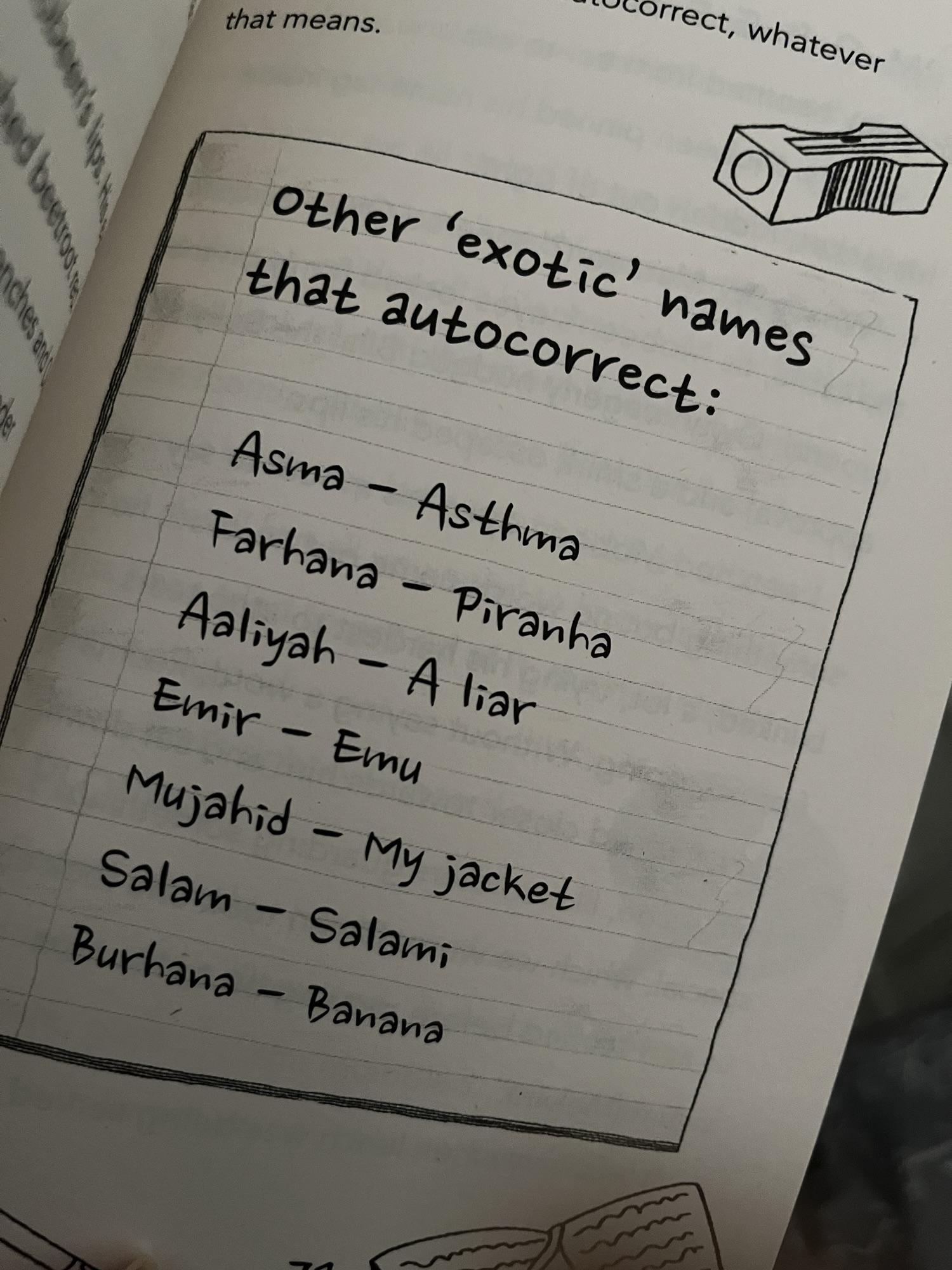
I suggest one reads my ENTIRE review of this book before deciding if it is right for you, because just the first few lines might signal that I liked this book, and honestly it was just ok, but I really liked parts of it. The protagonist is Muslim, it isn’t something that guides her view of the world or dictates her actions, but she is unapologetic, and it is not something she is grappling with. She prays, makes duas, it mentions a hadith, so I appreciate that it is there and always just below the surface. The “romance” might not be halal, halal, but it definitely isn’t raunchy and stays close to the line even when it crosses it. The male and female character are very close friends, and spend a lot of time alone together even before SPOILER there is hugging and a kiss, it is a rom-com after all. I loved the annotations, especially reading an e-version flipping to the protagonists commentary of her thoughts and then flipping back was easy and fun. I think my favorite line in a long time in the book is her translating rice to chawal (see images). My biggest frustration though, with the book is how close it mirrors the author’s biography, Sorry for the Inconvenience, which I read just over a month ago. Truly, it was like the biography was the book and this was the movie adaptation. Sure the younger brother was switched out for a younger sister, and this wasn’t as gritty or traumatic, but the romantic literary beats were all more or less the same: childhood betrothed, falling for a friend who made a bad first impression, dad being sick, parents and their on again off again divorce, medical diagnosis, it really is two versions of the same story, which meant I was never invested in the fictionalized characters, or on the edge of my seat to see what would happen next. When you have seen the behind the scenes inside scoop so to speak, it is hard to get on board with the faded carbon copy. Add in the consistent lack of communication, telling instead of showing, unlikability of the protagonist, and the non existent foundation of any of the relationships, and it made it hard to get lost in the fluff of the moment.


Side note: I had a whole paragraph rant about the cover, but when I went to post my review on Goodreads (still banned from Amazon) I saw that there is a newer cover with Marlow wearing yellow crocs. I have no idea why the illustrator and publisher would have arcs with the male lead in flip flops, but I think by now it is common knowledge there is often a lack of communication between authors and illustrators. sigh.


SYNOPSIS:
Anisa is in college, she has worked hard to get in to the all girl’s school near where her almost fiancé Isaac is already enrolled. When she takes a class on Isaac’s campus she meets Marlow, who makes a poor first impression on the very “perfect” Anisa. When Marlow and Anisa get paired up for a class paper, Marlow also offers his services as a “love coach” to help Anisa reconnect with a drifting away Isaac. The more time Anisa and Marlow spend together, and the more Anisa learns about Isaac , the more she ultimately learns about herself and what she wants out of a partner.


WHY I LIKE IT: (SPOILERS)
I’ve read a few of the author’s books, so I know she can write, which irritated me even more that this book felt so flat. Anisa and Isaac have been “together” for over six years, but know nothing about each other, don’t talk or text, and as much as the book wants to make it seem like it is an all of the sudden thing, it provides no real tangible suggestion that they have ever had any sort of connection. So why did they decide to be potentially engaged???? All the parents are on board, but how did the two of them set this into motion? With the exception of Isaac visiting her one late night before he went to school, there is so little for the reader to be emotionally invested in. Anisa has terrible communication with every character in the book, not just Isaac, even with Marlow and her family, the side characters all keep in touch just fine, and it is never addressed as a quirk, it just is accepted. If your dad was sick, or your parents divorcing, wouldn’t you be texting them periodically, or non stop? And text between characters are shown on the page, so how is Anisa texting Marlow throughout the 352 pages, but then goes MIA the last 20? It didn’t work for me clearly.

Additionally, I was so tired about hearing how perfect Anisa is, when it never seemed to show it, sure the duplicity with her outward appearance and home appearance was well done, but it never really shows up in any other facet of her life. She is unorganized, has few friends, doesn’t seem to be a very present daughter and sister, the repetitive telling and lack of showing, gave the book no foundation. I know romance-y type books often have to fudge common sense at times, but with no foundation at all, it was hard to be invested in any twists or swooning gestures. I think I just didn’t really like Anisa, and I weirdly feel guilty about it, because she so closes mirrors the author, and I liked the author’s self portrayal in her earlier memoir.


FLAGS:
Close male/female friendships, hugging, kissing, lying, “cheating,” talk of titillating role playing video games (otome) not details so much as shaming and teasing about Anisa playing them (the word porn is tossed in a few times).

TOOLS FOR LEADING THE DISCUSSION:
I think I’d shelve this book in an Islamic school library for high school students. I don’t think I would promote it, but I think those romance loving high school girls will enjoy and be able to handle this story. It won’t work for a book club, but it does make clear that Anisa “dates” with intent to marry, there is reassurance that she wants to marry a Muslim, that Marlow has been reading about Islam, but that Anisa isn’t going to force him, and that societal expectations and appearances aren’t impossible to push back on- which I think are good considerations for 16 and up readers to see fleshed out.