Tag Archives: Picture book

Spirit of the Cheetah: A Somali Tale by Karen Lynn Williams & Khadra Mohammed illustrated by Julia Cairns

Standard
Spirit of the Cheetah: A Somali Tale by Karen Lynn Williams & Khadra Mohammed illustrated by Julia Cairns

cheetah

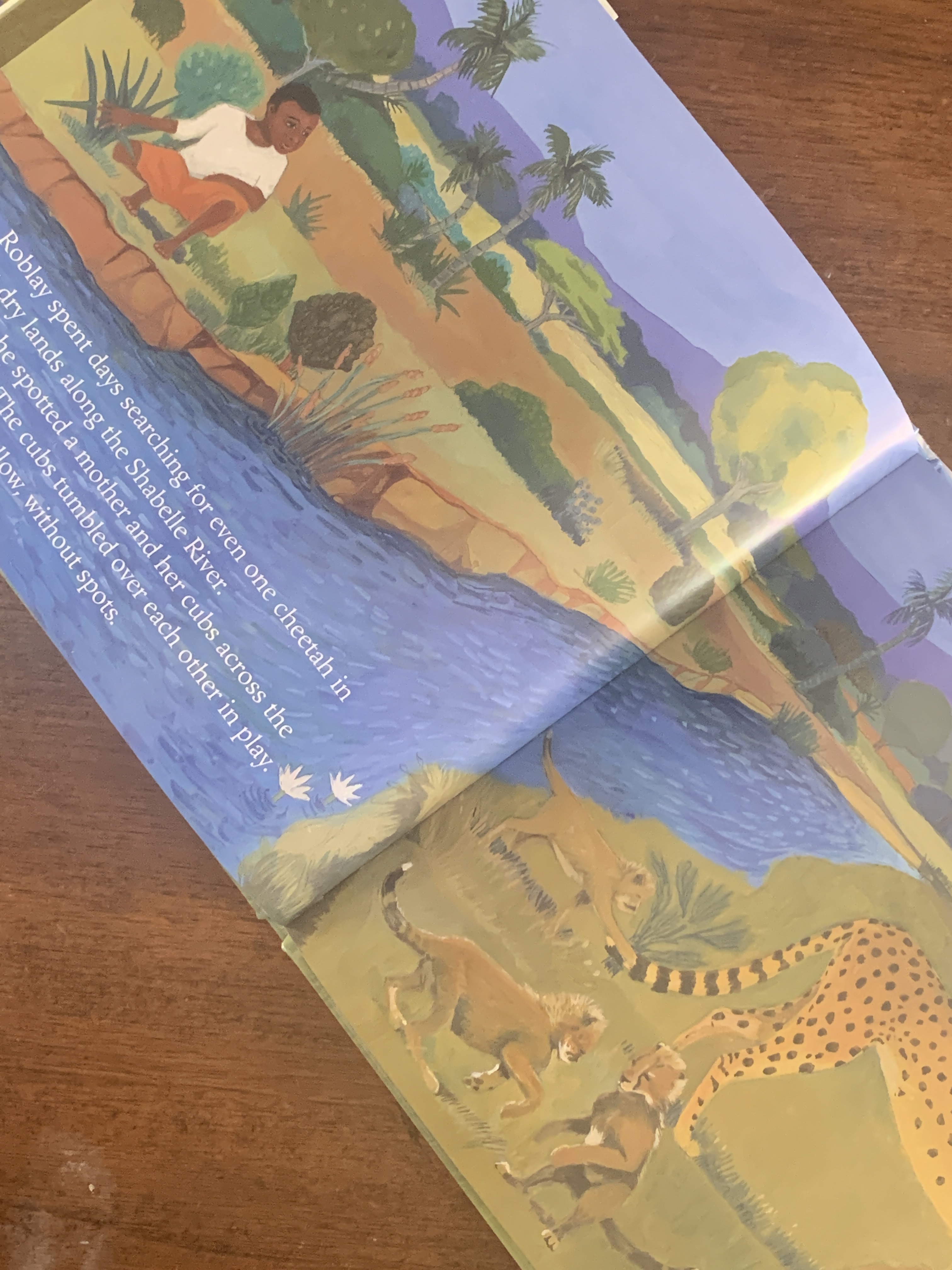
This timeless 40 page tale of a young boy as he prepares for his right of passage into adulthood is rich with wisdom, culture, and tradition.  So many gentle lessons can be found in the book, as it leaves deeper understanding and connection to be felt and explored long after the book has been closed and returned to the shelf.  There are seemingly hijab wearing #muslimsintheillustrations, and the author’s name would suggest she is also a Muslim, but with the line, “Called on the spirit of Shabelle,” and talk of the “Spirit of the cheetah,” it is hard to know for sure if the main character is.

The story starts with Roblay running everywhere in preparation for an upcoming race where he hopes to place in the top three, and prove he is a man and no longer a boy.  On the day of the race he races his fastest, but he does not come out at the top.

img_6579

His grandfather, his Awoowo, tells him that to be successful he needs to capture the spirit of their people and leave his thumbprint on a cheetah’s coat.  His grandfather then tells him about the cheetahs long ago and how the river is named after them.  He explains that thumbprints on a cheetah’s fur honor those that have proven themselves.

Roblay trains and searches for many days.  He wonders if it is enough to mark a cub.  But his grandfather asks him if he wants to remain a cub.  This motivates Roblay to work harder.  When a year has passed and the race is about to take place again, he finally touches his cheetah.

img_6580

He lines up for the race strong, proud and sleek, and he has the chance again to prove he is a man and make his family proud.  Nope, not going to tell you how it ends.

img_6583-2

The book starts with an Author’s notes from both authors and concludes with Notes on the Cheetah.

What if Dinosaurs Were Muslims? by Rabia Bashir illustrated by Laila Ramadhani

Standard
What if Dinosaurs Were Muslims? by Rabia Bashir illustrated by Laila Ramadhani

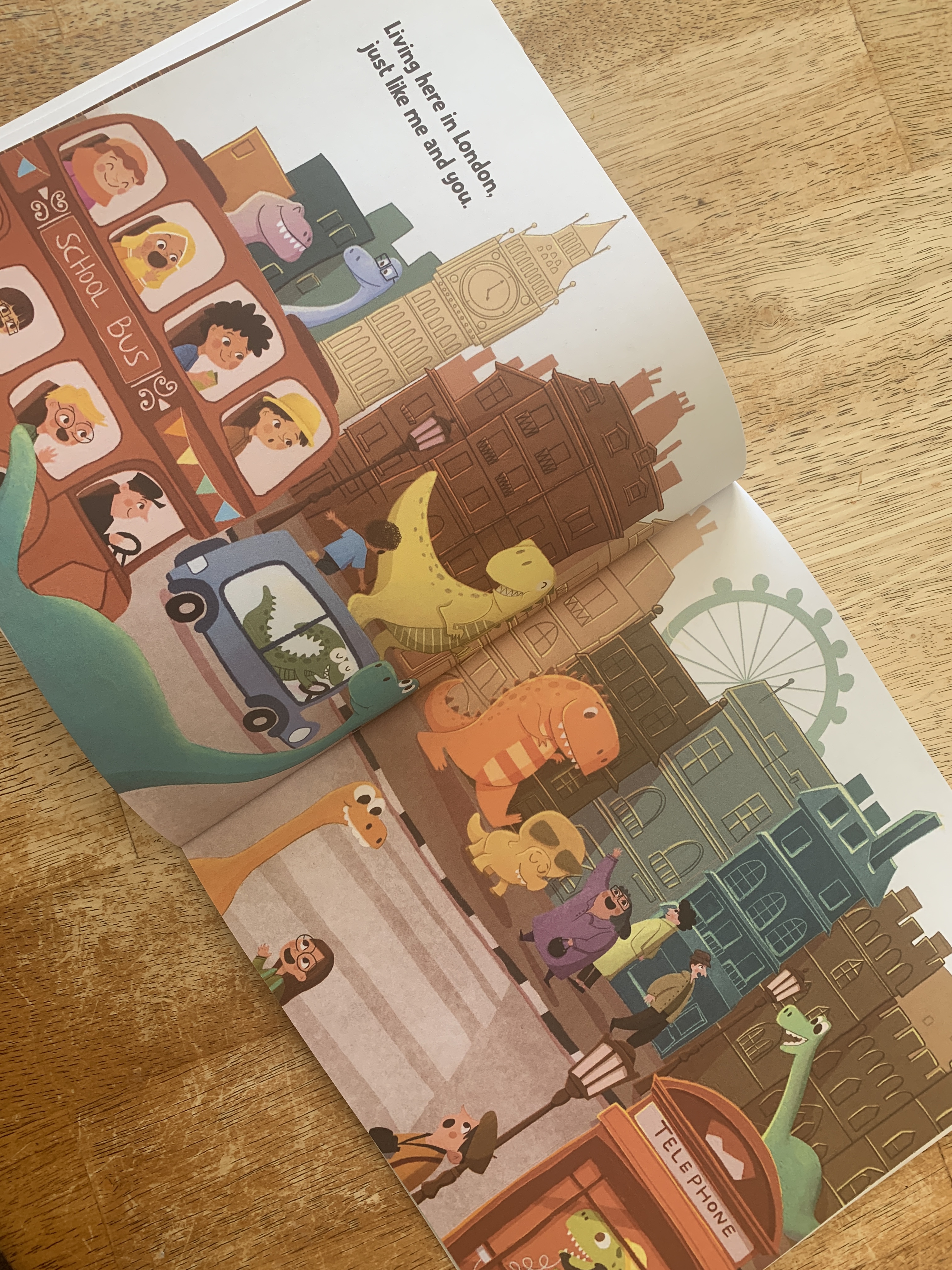
This rhyming Islamic tale wonders what dinosaurs would do if they were Muslim and alive today.  For littlest Muslim readers this repetitive tale ponders how they would eat, pray, love their mothers, respect their neighbors, dream, and feel, by tying all those things back to how Muslims behave.  The adorable illustrations kept my 6 year old glued to the story and the simple text held my 2 year old’s attention.  A fun book with wonderful supplements at the end to engage children in activities that everyone does compared to those that just Muslims do, a Fun Fact about (Muslim) dinosaurs and mums in Islam.  As well as extra activities, valuable information, and details about donations made with the purchase of this book.

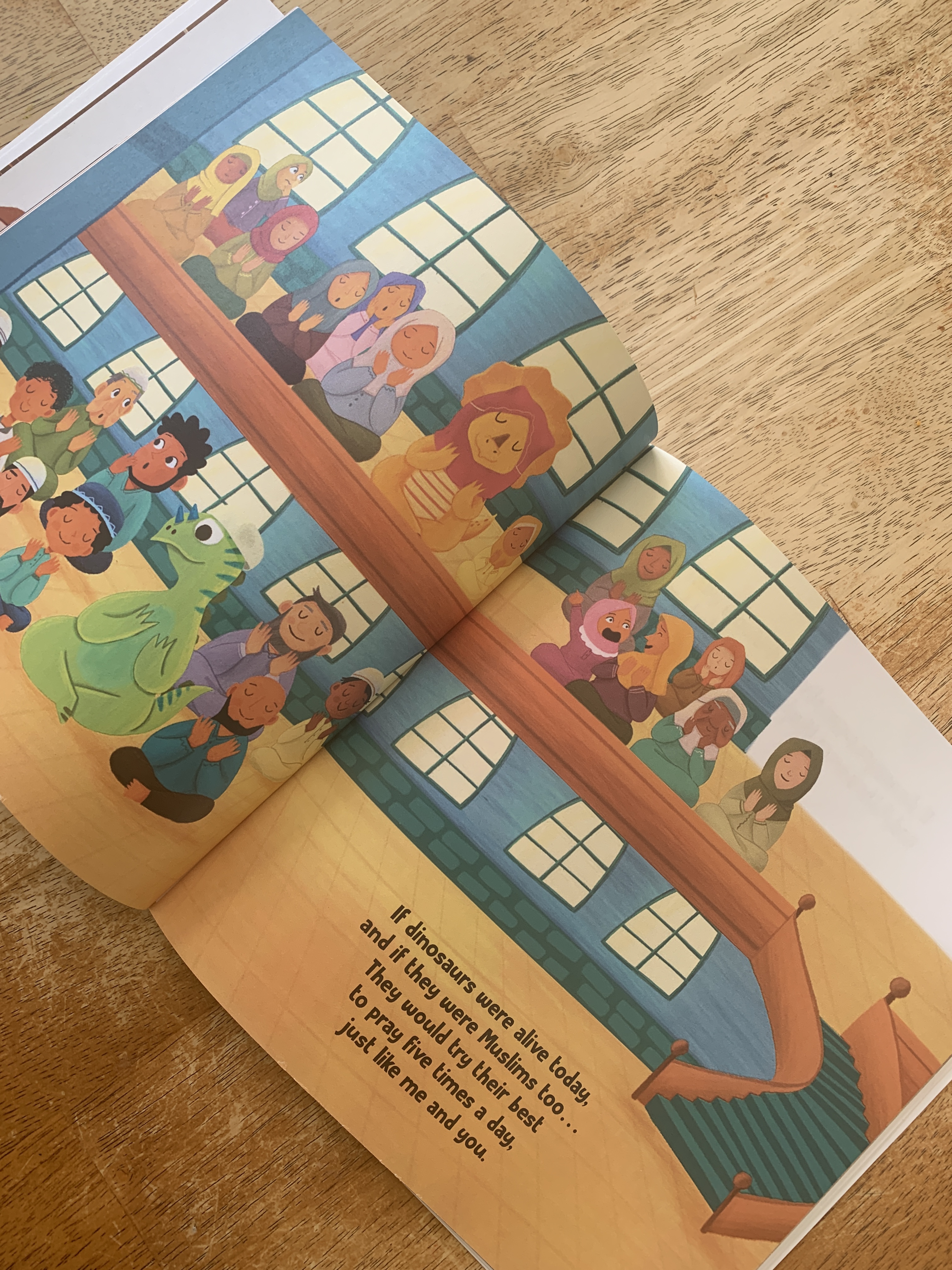
The book takes place in London and imagines if dinosaurs were alive and if they were Muslim what day-to-day life would be like.  The refrain starts out “If dinosaurs were alive today and if they were Muslims too,” before stating what they would do and having it conclude with “just like me and you.”

In a similar vein as the ever popular How do Dinosaurs series by Jane Yolen, the book teaches kids how to behave by teaching the dinosaurs.  The book is short, and the humor comes from the illustrations, primarily the facial expressions of the parents, more than from the text, but I think the wildness of Dinosaurs living today will get most little kids smiling.

The only real concern I have with the book is the text when they are in the masjid praying and it reads, “they would try their best to pray five times a day.”  I know we don’t demand our littlest ones to pray all five salat, but I don’t know if it would imply that trying to pray is sufficient even when you are older.

From start to finish I found myself smiling while reading this book aloud to my kids, even after the fourth time in a row, alhumdulillah.

My World of Hamd: A Reflective Book on Gratitude by Lateefah Binuyo

Standard
My World of Hamd: A Reflective Book on Gratitude by Lateefah Binuyo

hamd

This thick hardback 46 page book is a great next step after teaching your kids to say “Alhamdulillah” to helping them to understand what it truly means.  Meant for second graders and up, this book is text heavy and encourages deeper thought, reflection, and practice.  It is not a quick read, and some children may struggle to sit through the entire book, but any time spent, I think, will be incredibly beneficial as it strives to move from the habit of just saying “Alhamdulillah” to being intentional in our appreciation and gratitude.  The thick inside pages, warm large illustrations, and colorful reflections are well done and enjoyable.  I only wish the cover better conveyed the content within.

img_6093

The book begins with ayat 18 from Surah Nahl stating: “If you tried to count Allah’s blessings, you would never be able to number them.  Indeed, Allah is All-Forgiving, Most Merciful. With the tone set, the fictionalized story begins with Ibraheem and his mum having breakfast.

img_6090

Ibraheem is a curious boy that is only ever quiet when he is sleeping or eating.  When his mum reminds him to say Alhamdulillah after he finishes eating, he gets to wondering, “What does Alhamdulillah mean?”

img_6092

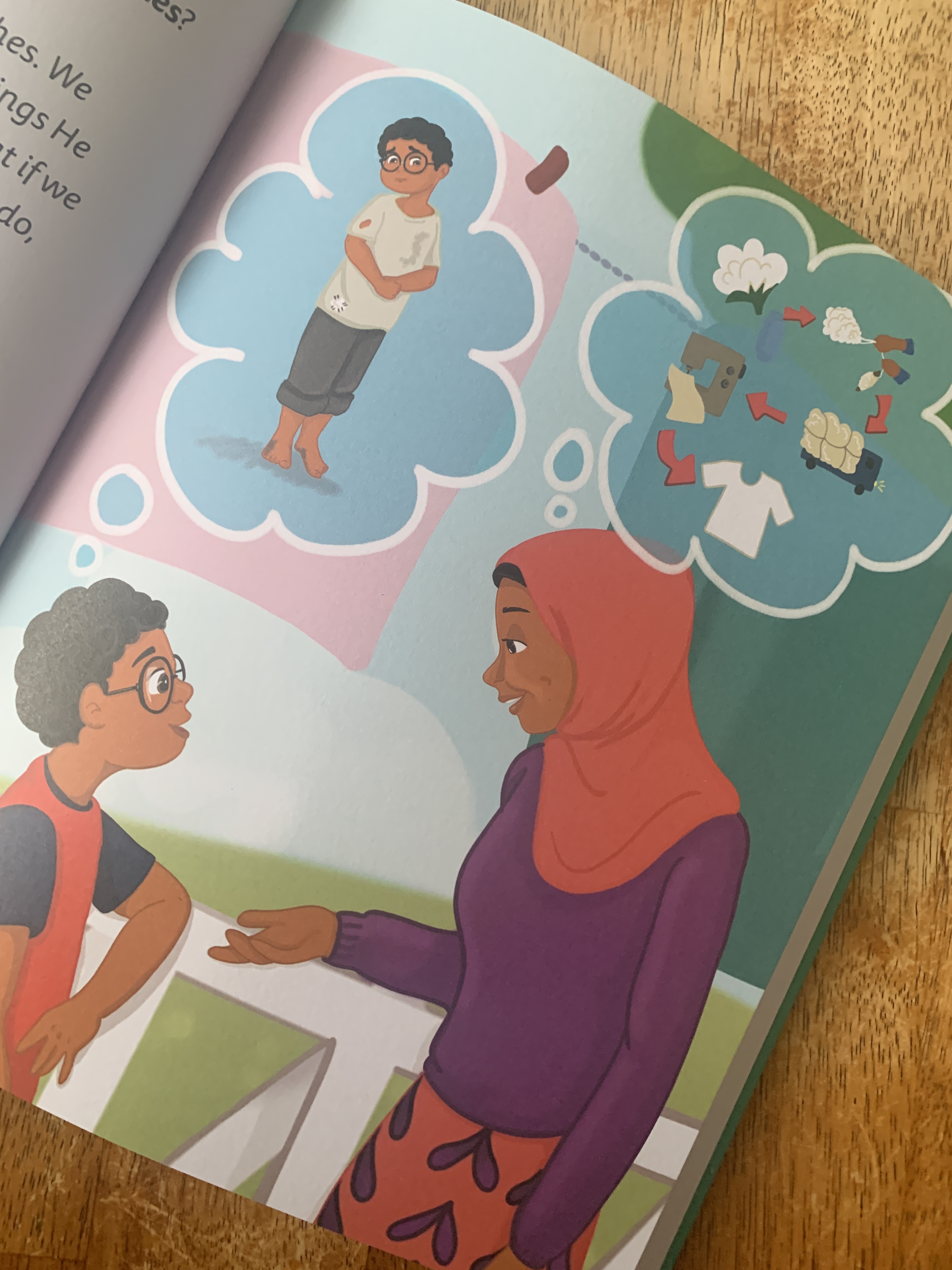
Mum explains that the hamd in Alhamdulillah means praise and gratitude, and it is for Allah swt alone.  Ibraheem then wants to know how can he feel “hamd all the time?”  He and his mum discuss that hamd has to be felt within the heart, and it isn’t just saying it after a meal, but appreciation that you have food to eat.  Appreciation when you wake up in the morning, because many do not, etc.  The two discuss small and large aspects in a day that provide opportunities to truly appreciate the gifts of Allah swt.

img_6094

The book covers topics such as: sneezing and appreciating your muscles, getting dressed and recognizing the blessing of clothing, awards at school, losing your backpack, happy times and sad times too.  Along the way mum passes on information about how when we are grateful Allah swt gives us more, about how even in sad times we have so much to learn about patience and asking Allah for help, that we can fill our days with hamd.

img_6095

The book touches on never feeling sad in Jannah, Allah’s name Al-Hameed, and explaining how we have to still thank people and show appreciation to them because Allah sends his blessings through people as well.

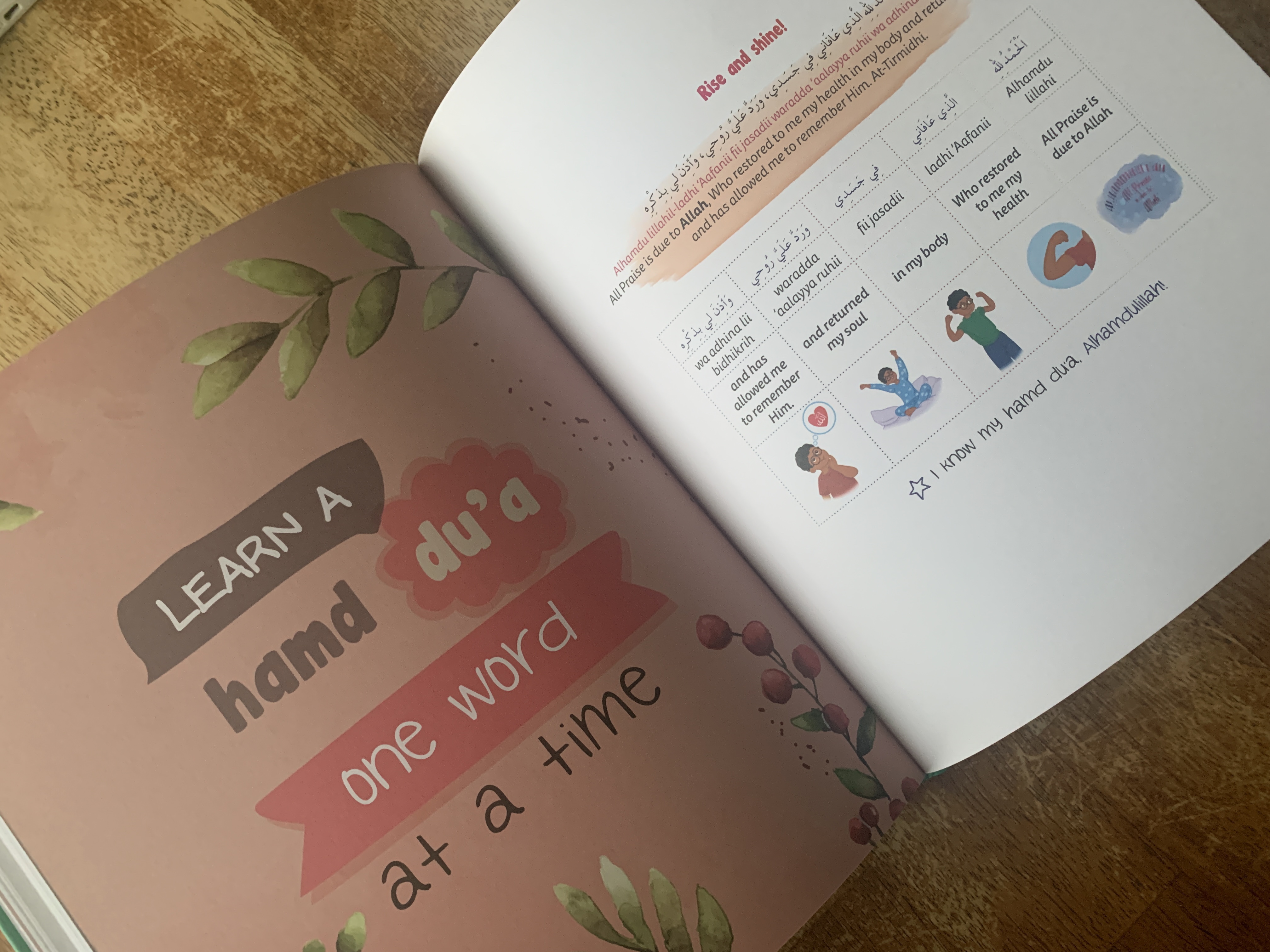
The book concludes with teaching duas about hamd one word at a time, a glossary, and tips for using the book.  There are a lot of hadith and ayats explained on a child’s level and overall really answers and provides insights about saying Alhamdulillah and feeling Hamd.

Shems and the Magic Seabream by Alwia Al-Hassan illustrated by Ada Konewki

Standard
Shems and the Magic Seabream by Alwia Al-Hassan illustrated by Ada Konewki

seabream

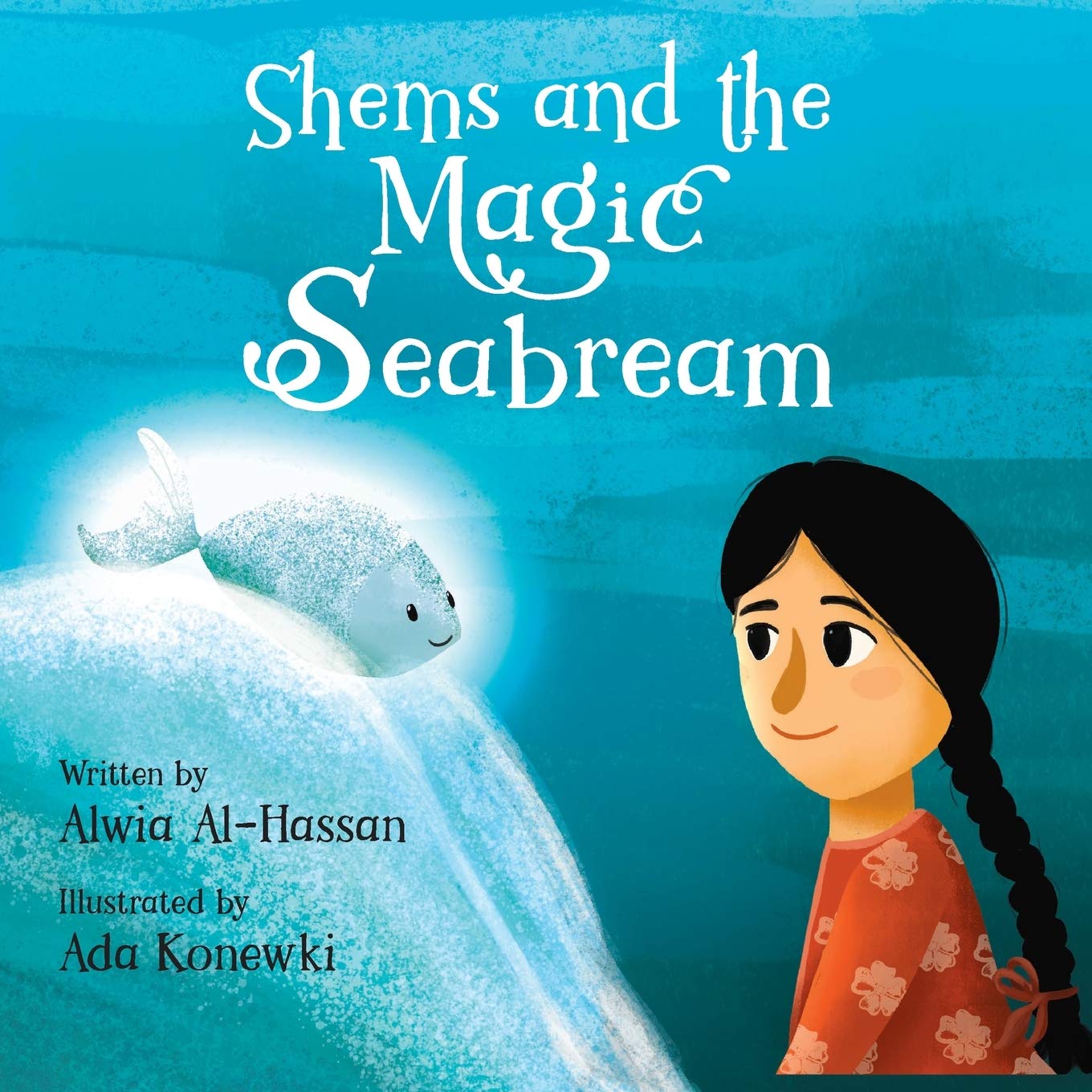
I don’t know how to review this book, I truly don’t, it claims to be based on Saudi folklore, it has #muslimsintheillustrations, and references Allah swt once, it is by a Muslim author, but it isn’t religious. And it definitely isn’t for everyone. It is terrible, and yet you can’t look away. Every stereotype about appearance and trope about step-mothers, it is all there, but EVIL CACKLE, the book is delicious, and not in the cooking the children and eating them sort of way, that is in the book too, but in the laugh-out-loud, gasp in disbelief, and be shocked at the complete disregard for political correctness, moral messaging, and lesson teaching that leaves a brightly illustrated dark tale for kids, and adults, to thoroughly enjoy. It pulls you in, it suspends reality, it makes good and bad so black and white that you accept the attempts at murder as justified, and it ultimately reminds you of the horrors that all fairytales build upon to entertain. I remember the first time as an adult I was asked to read Hansel and Gretel to a young niece. I knew the story, and started not thinking much of it, and then I froze: children are lost, they seek shelter in a home where they are not allowed to leave, the owner of the home wants to cook them and eat them. Yeah, this book is like that.

img_5299

Shems and her twin sister Shareefa live in a small town with their fisherman father. They are poor, but happy, until their father remarries and the stepmother is horrid. She is ugly and fat and covered in greasy spots, negative connotations that reflect her personality. (FLAGS: superficial judgement and body shaming). She hates children. (FLAG: Yes it uses the word hate, and calls children fat while contrasting them with cute children).

img_5300

She especially hates Shems and Shareefa. She tries to get rid of them: she puts them in the oven, abandons them in a field, tries to drown them in the night. But the girls somehow always escape and their father believes that it was all a misunderstanding. (FLAG: attempted murder).

img_5301

Now that the girls are older, they are forced to serve Mama Ouda, and when food runs low, she considers eating them. (FLAGS: abuse and threats). Luckily they are much too thin. One day when Mama Ouda is craving fish, Shems heads out to catch some seabream, yes that is a real type of fish. And the only one she catches is a magical one. (FLAG: magic).

img_5302

The next day Shems dressed as Shareefa recalls the fish’s promise near the water, and a basket of fish appears with pieces of sparkling gold. The girls eat like queens, hide the gold, and keep Mama Ouda fed. This carries on until they get caught and a murder and mermaid and moving out of their mud hut conclude the story and set up a potential sequel.

img_5298

The dad is pretty clueless and that has its own negative assumptions to counter, but if you and your kids can handle the over the top darkness, the story written in playful rhymes is sure to entertain and be asked for repeatedly. (FLAGS: stereotypes about fathers and stepmothers).

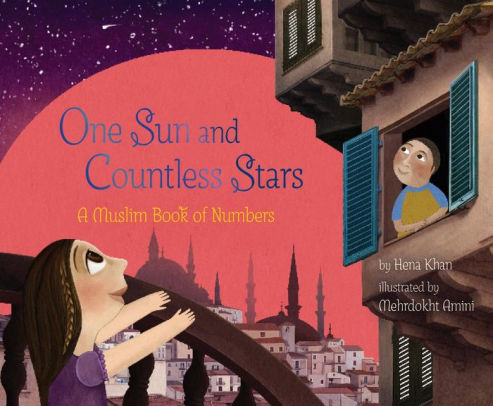
One Sun and Countless Stars by Hena Khan illustrated by Mehrdokht Amini

Standard
One Sun and Countless Stars by Hena Khan illustrated by Mehrdokht Amini

one sun

I don’t think that Hena Khan is necessarily a controversial figure, but some days her work feels very polarizing as some praise her ability to share OWN voice desi American Muslim stories while others feel like she waters down the very stories she is sharing to appease the majority.  Irregardless of our nuanced views, many of us first were made aware of her when we we were swept away in 2012 by the mainstream book, Golden Domes and Silver Lanterns.  Since then she also has published a book about shapes in the same format, and now this counting book that reminds me how beautiful and powerful it is to see Islam so unapologetically presented to all children.

Screen Shot 2021-11-10 at 10.25.04 PM

The author’s note at the end is important:

There are many significant numbers in Islam.  They include one for God, five for the pillars of the religion and daily prayers, seven for the circles pilgrims and visitors walk around the Ka’aba during hajj and more.

Mathematics and astronomy were among the intellectual pursuits of early Muslims.  They helped to develop algebra and used geometry to create the elaborate patterns found in Islamic art.

For this book, I chose concrete and illustratable terms rather than abstract concepts.  The representations for each number focus on things we can count in the world around us.

The book counts the diverse and global parts of a practiced faith.  The unique and the mundane, all beautifully illustrated and richly conveyed.  From cups of tea and shoes taken off for prayer to two hands making dua and four lines of a surah being memorized.  The book counts up to nine and then marvels at the countless stars that we see each night.

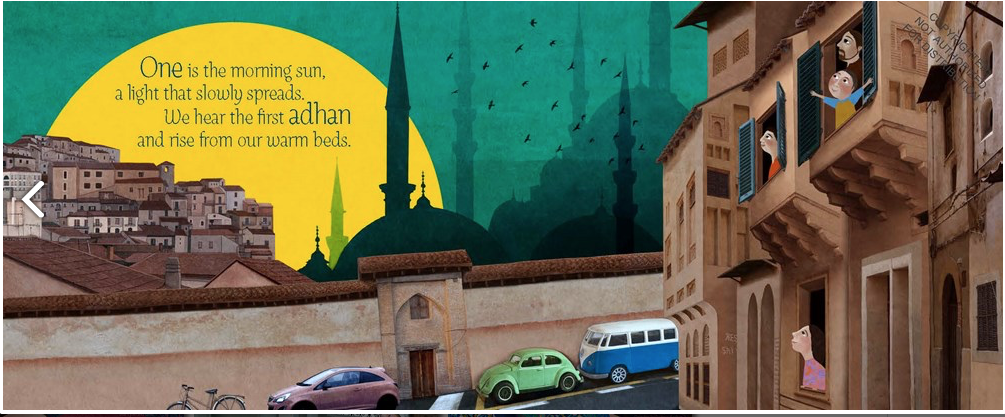
The first page is possibly a bit problematic in accuracy.  The tone and framing of starting the day with the sun rising and the sound of the adhan is warm and beautiful, but the adhan is not called at sunrise for the first prayer of the day, fajr.  Fajr begins at dawn.  There are only 21 words on the first page, so I’m inferring a lot about the correlation of the sun and athan that may or may not be present.  It is something frequently misrepresented, so it catches my attention. And yes, the seven tawafs mentioned in the author’s note would also apply to umrah, not just hajj.

Overall, the book is lovely and will remind many of us what made us all celebrate Hena Khan and her stories so many years ago.

Room for Everyone by Naaz Khan illustrated by Merce’ Lopez

Standard
Room for Everyone by Naaz Khan illustrated by Merce’ Lopez

room for everyone

I started to read this book to myself, abruptly stopped, gathered my children around, and began again aloud.  This 40 page early elementary picture book isn’t just counting up and down with silly scenarios and outrageous details, it is familiarity with a culture often not represented with universal humor, appeal, and anticipation. This rhyming book begs to be shared: one-on-one, at story time, or in a classroom.  There is so much joy and connection that I’m ready to felt-board the story, march into my kid’s school and demand an audience.  I found mine at the library, but I think I am going to order it because it definitely deserves a place on the bookshelf to be read again and again.

Musa and Dada get in a daladala and are off to the crystal blue waters of Zanzibar.  But it is hotter than peppers out and the kind driver is offering everyone a ride.  First is the old man with his seatless bike, then it is two little goats and their herder, next is vendors with their three baskets of fruits.  Each time Musa cries and protests that there is not room for anyone else, let alone their stuff.  Yet when everyone wiggles and scoots and smooshes, there seems to be room for everyone.  This continues until there are ten scuba divers joining the smelly fish and stinky chickens, umbrellas and milk pails.

Alhumdulillah, they reach the beach.  Then one by one they all get out at Nungwi beach.  Giggles and wiggles and Musa and Dada are off the minibus and swimming in the cool waters. Alhumdulillah indeed.  The book concludes with a glossary and an author’s note.

“Find me on Twinkl’s list of best children’s books of 2021!” 

Could Be Anything! by Eman Mouneimne El Ayoubi illustrated by Victoria Romanenkova

Standard
Could Be Anything! by Eman Mouneimne El Ayoubi illustrated by Victoria Romanenkova

mariam

This is not normally a book I would review because it will read like paid endorsement, which it is not.  It is a 32 page personalizable book, that I’m highlighting because it exemplifies a concept of Islamic literature, that is often lacking.  We have numerous books teaching Islamic concepts to toddlers and preschoolers, but forget to teach the secular concepts through an Islamic lens.  We often have a bookshelf of Islamic books that include learning to say Alhumdulillah, and the names of Allah swt; and a bookshelf of non Islamic books that features stories about dinosaurs, monster trucks, and being silly.  This book reminded me of how important it is to have books that do both.  Not to necessarily preach, or even teach, just to merge the two shelves and present a singular framework of Islam, a way of life, not just a religion to our youngest believers.

Sure the name and customizable appearance is fun, but deeper than that, learning about different careers knowing that Allah swt created all of us to do so many worthwhile jobs is a great lesson to be sharing.  The larger concept of teaching Qadr to our children is only presented on the back cover of the book and can be implemented by using the parent guide at the end of the story.

img_4967

The book starts with asking what you want to be when you grow up and informing the child that Allah swt has a plan for us all.  Each page after then mentions the child’s name, introduces a career, and ties back to that Allah swt has written, or decreed something for us.

img_4968

The highlighted careers vary from being a parent, to an astronaut.  A teacher to a chef, a mechanic to a dentist.  There is no priority, nor opinion on one career or job or hobby being more important or more valuable than another.

img_4970

The pages are bright and colorful and the paperback book thick and sturdy.  I did struggle with the word “could,” and often would self edit as I read and would change it to, “Ayub ‘can’ be anything.” I’m not sure why the diction is what it is, but it reads incorrect to me.

img_4969

My Name is Bana by Bana Alabed illustrated by Nez Riaz

Standard
My Name is Bana by Bana Alabed illustrated by Nez Riaz

bana

OWN voice books are always important, and while we see a rise in minority voices claiming their own stories, to read a child’s story about war and hope by a child, is particularly impressive.  Bana Alabed was born in 2009, she is an activist, a Syrian refugee, and now an author.  Her clear voice doesn’t stumble and her perspective is unapologetic, yet hopeful.  Over 40 pages she tells her story in her own words with beautifully warm and complementary illustrations filling the pages.  For kindergarten and up, this book stands out in a crowded field of refugee inspired stories for its authenticity, strong author, and overall emotional connection.

img_4629

Bana begins her picture book memoir by asking her mother why she was named Bana.  Her mother explains that she was named after a tall bushy tree that grows in Syria.  Her favorite tree.  A tree that is qawai, Arabic for strong.

img_4630

Bana then asks what it means to be strong.  And once again her mother lovingly explains, that strong is to be brave even when you are scared, and to be sturdy so others can lean on you.  It also means you use your mighty voice to speak up when something is wrong, you read, study, and exercise your body.

img_4631

Bana appreciates her name, and being strong, because war came to her country.  When bombs fell they had to hide, when her brothers were scared, she had to keep them distracted, when they moved to a new place where they didn’t know the language or any people, she had to be strong still.

img_4632

As a young girl, Bana tweeted about the war, the book doesn’t touch on that, but it does show her being strong as she shares her story all over the world.  It then returns to her and her mother discussing amal, Arabic for hope, and Bana imagines herself strong, reaching into the sky.

img_4633

The book ends on a simpler note of acknowledging her little brothers’ names: Laith and Noor, lion and light.  The Author’s Note at the end is just as powerful as the text of the book and provides more information about Bana’s experience and outlook. The way that war is handled is not overpowering for young readers, and will provide a great starting point of discussion.  The relationship between Bana and her mother is warm and supportive and equally deserving of mention with the little people you share the book with, alhumdulillah.

“Kids shouldn’t have to always be strong.  Every child deserves to live in peace.” Bana Alabed

Little Seeds of Promise by Sana Rafi illustrated by Renia Metallinou

Standard
Little Seeds of Promise by Sana Rafi illustrated by Renia Metallinou

seeds

This sweet, well-done 48 page picture book for early elementary aged readers shows the fear associated with being in a new place, the love of an elder family member, and the courage it takes to make new friends.  The story focuses on a young Pakistani girl who has recently moved to a new country and how she tries to remember the wisdom of her Nani to blossom in her new home.  The culture rich story is universal and lyrical, with hints of making duaa, greetings of salam, and the soothing sounds of the athan that make memories of home so foreign to her in her new residence. Young readers will empathize with Maya, and see the symbolism in the seeds she is anxious to plant and cultivate.

img_4475

Maya finds her new home unfriendly and cold, she feels different with her food, and clothes, and way she speaks.  Home to her is dancing in the warm mansoon rains, saying As-salamu ‘alykum, and waking up to the sweet athan.  Nani was also there, her old home.  Sweet Nani with her hundred wrinkles, smelling like flowers.  When Maya left, Nani gave her a gift.  Little seeds of promise, so that they and she might bloom where planted.  But Maya doesn’t know where to plant them, she carries them with her everywhere she goes, but like a secret, she keeps them close.

img_4477

Channeling her Nani’s tenderness, she knows that she has to plant them if one day she wants to be surrounded by flowers.  Maya loves flowers, dancing around them, praying among them.  Maya finds a patch of earth.  She longs for rain, she hopes for warmth. She makes way for the rays of the sun.  The text talks of flowers, the illustrations show both the plant and the growing friendships.  For days nothing happens, with the seeds or the classmates.  But Maya remembers that seeds have a long journey from the ground up.
img_4476

Maya nurtures her seed, just the one she dared plant, with love and kindness.  She too feels ready to burst.  Can she be brave enough to plant all the seeds, can she share them, and her self in her new world? Can their be warmth here, like there was over there? Can this too be home?

img_4478

I love the symbolism and juxtaposition of the seeds growth with her own.  The character arc and the transition of home being one place to being the other, is very well done, older readers will feel an aha moment when they grasp it and younger kids will enjoy both the surface story and the dialogue you can have with them about blossoming where planted.

img_4479

Religion is not a strong thread, but Islam is present in her memories of her maternal grandmother and all the warmth and love that those memories contain.  I love that the classmates were never mean, they just didn’t know her either.  I wish there was a bit more diversity of skin tone and mobility in the classroom illustrations and the friend circle she is hoping to join.  Overall, a beautiful OWN voice picture book that will be enjoyed for multiple bedtime, small group, and classroom readings.

What’s The Matter Habibi? written and illustrated by Betsy Lewin

Standard
What’s The Matter Habibi? written and illustrated by Betsy Lewin

matter habibi

This short silly 32 page AR 2.7 book by the illustrator of the famous Click, Clack, Moo books tells a tale of an unhappy camel in Egypt and his caring owner Ahmed’s attempt to understand what is wrong.  There is nothing religious in the book, save a few visible hijab wearing women in the bazaar illustrations, and the main human character’s name.  The cultural backdrop though,  does introduce and encourage familiarity for young readers who may not have exposure to Arabic words and people.  The author is clearly not Arab, but the book thanks the Cairo NESA delegates for their help in developing the story.  Before reading it I was nervous that because the presentation would be coming from an outside perspective,  that the messaging would be condescending and/or stereotypical.  I think I was perhaps giving the book way too much thought, because ultimately the story isn’t that deep.  The illustrations and tone are warm and focus on a camel wanting a fez and the efforts it takes for Habibi to acquire one and for Ahmed to track him down.  It is surface level silliness for younger kids, the camel and owner are kind to each other and the setting just ties it all together.  I am not Arab, and could definitely argue that the camel and his silly owner do perpetuate stereotypes, so feel free to offer up your thoughts if you have read the book.  Irregardless of where you side, the fact that I’m sure had I read this book in 1997 when it was published, I would have been gushing to see the name Ahmed in a widely available book, but here we are nearly 25 years later and I’m questioning if these are stories that are better left to be told by OWN voice perspectives.

img_4356

Ahmed and Habibi give rides to children every day, but one day Habibi refuses to get up.  Ahmed asks if it is a toothache, a tummy ache, and no response.  When he asks if his feet hurt, Habibi stands up, and Ahmed gives the camel his babouches (that magically fit).

img_4357

Habibi then takes off running through the bazaar.  He approaches the man selling fezzes and a trade is made: the slippers for a hat.  Ahmed trailing behind barefoot, then has to purchase his own shoes back.  As Habibi passes different shops and hears how handsome he is, Ahmed is able to follow him.  When they finally reunite, Habibi is surrounded by happy children, and Ahmed admits, he really is a handsome camel.  Happily Habibi gives the children extra long rides and then let’s Ahmed ride him home.

img_4358

This book would work well for story times to ages four and up.  It would lend itself to themes about silly animals, hats, Egypt and Arab culture.  The crowds of people including the children are dressed in both thobes and pants and t-shirts.  You see traditional headgear on some and none on others.  It seems clear that the camel is not the normal mode of transportation, as there are no other camels, or even cars, only people walking in the book.  Habibi is a novelty for the children and adults he passes, so one could possibly safely assume he is a tourist attraction of sorts.

img_4360