Tag Archives: Muslim

Omar & Oliver: The Super Eidilicious Recipe By Maria Dadouch illustrated by Aly ElZiny

Standard
Omar & Oliver: The Super Eidilicious Recipe By Maria Dadouch illustrated by Aly ElZiny

omar and oliver

This super cute Eid book works great for ages 5 and up.  Written in both Arabic and English, not just translated in to both languages, the book features a Muslim celebrating Eid and a Christian boy working together to try and get Omar’s sister’s cookie recipe so they can be the best cookie cooks ever!  The book would work for either Eid and with the adorable illustrations, and included recipe, the book will get lots of requests all year round.
FD053694-FBC1-4E5A-AE24-83ECB746C1C1

Omar is excited that his friend and neighbor, Oliver, is sleeping over the night before Eid.  They boys are playing when Omar’s sister Judy brags that her friend has given her the best cookie recipe in the entire world.

Naturally, Omar and Oliver want to be the best too and offer to help Judy.  She refuses, and the quest to get the recipe is on, so that Omar can make them for Eid and Oliver for Christmas.

EEAEB882-C2C0-47C2-81C9-1262372C5C23

The boys try to steal it through the kitchen window.  But Judy catches them and slams the window shut.  They then try binoculars from the stairs, but the boys can’t write fast enough and Judy grabs an umbrella to shield the recipe.  Undeterred the boys pull out a drone, but the zoom on the camera isn’t quite good enough.

The boys then see Judy rushing out of the kitchen and run in to see if she left the recipe.  They don’t find it, but they peek at the cookies and see that they are golden brown and if left in any longer might burn.
6A93627C-F29C-462A-AE8B-D5819C0127F0

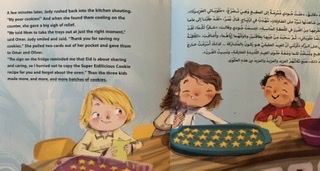
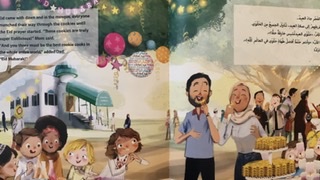
Tempted to let them burn, a sign on the fridge saying, “Eid: a time to share and show we care,” makes the boys realize saving them is the right thing to do.  Judy says she too saw the sign and rushed out to copy the recipe for the boys.  They then all work together to make lots of Eidilicious cookies and share them with everyone on Eid.

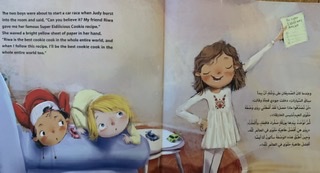
The book starts with some tips for parents on how to present the bilingual book and ends with a cookie recipe, as well as some information about what Muslims and Christians celebrate.  I love the illustrations and that they are two page spreads, but the page with the note is the whole resolution and the note is split on the folded binding and honestly I missed it when I read the book myself and when I read it at bedtime to my kids.  When I opened the book wide to take pictures it was crystal clear, and if you were reading it to a group you might not have an issue.
7EA4AAC0-C237-4ED9-81FA-8CD39832C997

I also didn’t love the word, Mashallamazing, I obviously get what it is trying to do, and I feel like it works with Eidilicious, but that Mashallamazing is a stretch.  Additionally, if it is claiming to be an interfaith book, a word like that might need some explaining.  I got a bit hung up on it, so I had my 13, 11, and 9 year olds read it and they did as well.  I also didn’t think the pulling out of the story to ask the reader if the boys were successful in getting the recipe was necessary after each attempt.

Disclaimer: I don’t speak Arabic and cannot comment on that, sorry!


Running Overload by Jake Maddox illustrated by Tina Francisco

Standard
Running Overload by Jake Maddox illustrated by Tina Francisco

5870B613-F406-493B-8203-FAB9869DE555

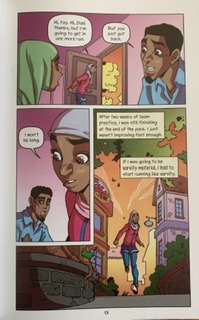
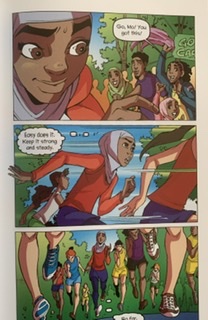
This 72  page graphic novel features a female Muslim protagonist trying to balance her desire to be a great cross country runner and the rest of her life.  Meant for 3rd graders, the lessons are applicable and relevant for readers in middle school as well.

6B290892-6842-45D4-88FE-7FE4D82BAEC6

SYNOPSIS:

Nimo Mohamed has made the varsity track team, and is determined to keep up with the older girls.  She is training too hard which her coaches and parents warn her against, but she doesn’t listen.  As a result she is lying to her family about what she is doing, her grades are suffering, and her body is exhausted to say the least.  After coming dead last in a meet, getting a D on an English test, and injuring her knee, the truth comes out and her dad has her quit the team.  Can she convince him to give her one more chance? Can she learn to pace herself?

253551C1-18E4-4A86-8BD2-315C79A685DA

WHY I LIKE IT:

There is nothing Islamic in the book except for the main character’s family.  The women wear hijab when out, not at home and they have Islamic sounding names.  I like that she is modestly dressed when she runs and that no one seems to care that she is Muslim.  This story is not about her faith, it is a universal story of balance, and the character highlighting the moral is Muslim.  Her parents are divorced, but are on the same page regarding her running and school balancing act, and they come together to support her.  I also like that the book is a sports book and has a female girl of color as the lead.  There is a lot of very intentional diversity in the book and it is refreshing to see.

There are questions at the end, and running vocabulary and tips for running as well.

B555F927-C2E0-433B-8F6B-ED1E58486CD3

FLAGS:

None

F050C711-00AF-4581-93AB-C0E440C1FDD8

TOOLS FOR LEADING THE DISCUSSION:

The book wouldn’t lend itself well to a book club, but would definitely provide one-on-one discussion opportunities.  The short linear story is all about imparting teachable moments on the reader, which isn’t a bad thing, but I think the real strength is that the book is one of a larger series that should really be in every classroom and library to show how balance and integrity and strength and diversity are values that we need to hear over and over, not just in one running book, but from a lot of different sources.


My First Muslim Potty Book by Yousfa Janjua illustrated by Golnar Servatian

Standard
My First Muslim Potty Book by Yousfa Janjua illustrated by Golnar Servatian

07041C66-B149-48A8-9CC7-B2752984EE68I’m not sure why this book is just coming out now and why I never realized how important it is.  It sounds silly, but we as Muslims are very precise about our bathroom habits and cleanliness and the fact that this is the first book to address it for children is actually, kind of surprising.  But Alhumdulillah, you only need one if it is done well, and over 16 pages of cute illustrated rhyme filled pages, istinja is explained and normalized.  The book is a great tool to use, not only, when potty training toddlers, but also for reviewing with your preschooler when they might be leaving home for the first time and/or seeing other people’s bathroom habits.

1539474F-D9B3-4803-9369-C42BDD28CA19

The book starts out with a thorough “Note to Parents” explaining istinja, tahara as well as giving parents some tips to handle potty training in general.  The book starts by noting how you started out as a baby and are now growing and part of the growth has you ready for big kid underwear.

A74AB75F-5449-414A-90F9-C80808740E2A

It talks about what it feels like when you need to go, and how when that feeling happens, you need to hurry to the bathroom.  If you hurry and still have an accident, we (the parents) will clean it up and not to worry.

F1F975D3-A359-4FB6-BFC7-4759105576F9

The book teaches that you enter with your left foot, and ask for help if you need it.  That you sit down to do your business because poop and pee are najis, impure. You then have to do istinja, which is like a germ fighting ninja!

EF818EB7-D841-4980-9EA3-C8611EDD61C3

It teaches the toddler to call for mom or dad to wash them with the lota or bidet or pot using their right hand to pour and their left to wash.  You then use toilet paper to dry.  After you flush, you wash your hands for 20 seconds, leave with your right foot and be done.

387407D6-0018-48DA-B178-68D305B53520

The book then has a glossary, some ayats of Quran and some Hadith as well as Duas relating to the bathroom.  The 8×8 hardback book is done really well and conveys the key points on a kid’s level, which is great.

FD85EF0C-098C-4AB4-B2AA-18970A399CB0

I love that the book uses Islamic Arabic words and shows a diverse family being patient and encouraging.  I am fine with the child illustrated as reading a book while on the toilet, but I think some parents might frown on that.  The book is meant for Muslim kids, and does a good job of showing the practicing family in the illustrations and in the text.

Thank you to Crescentmoonstore.com for their great price and service!


A Place at the Table by Saadia Faruqi and Laura Shovan

Standard
A Place at the Table by Saadia Faruqi and Laura Shovan

a lkace at the table

This fabulously fresh and honest book told in alternating OWN voices shows how two seemingly different 6th grade girls discover how much they have in common as they learn about themselves and their families along the way.  Sarah is a Muslim Pakistani-American, and Elizabeth is Jewish and has an English immigrant mom, the two come together over food, family stress, discrimination, and middle school social drama to form a solid friendship.  But fear not, it isn’t easy and the book will keep upper elementary/ early middle school girls hooked.  Not sure if boys will be as drawn to it, but if they can get over the brief mention of having a period, they too will enjoy the story.  The 336 page book shows how much we have in common, and how hard fitting in can be for everyone.

SYNOPSIS:

Sarah is starting a new school, a public one, having been at a small Islamic school prior to 6th grade.  She is not happy about it and to top it off, her mother is teaching an after-school cooking class at the school that she is required to attend.  Hoping to sit in the back drawing and go unnoticed, she finds she can’t sit quiet when her classmates start giving her mom a hard time.  Unaware of why she had to leave her previous school, and tired of her mom needing her help with her catering business, Sara also has to help her mom study for her citizenship test, handle two little brothers, deal with no friends at school and not being able to celebrate Halloween.

Elizabeth loves cooking. Her mother does not.   She is excited to learn Pakistani food at the cooking club even if her best friend thinks they shouldn’t be learning things from “them.” Elizabeth is admittedly nerdy, and struggling with a life-long friend finding others to spend time with, her life at home is difficult too.  Her dad is always traveling for work, and her mom is depressed with the recent passing of her mother in England, to the point of not really functioning.  With Elizabeth doing the cooking at home, and trying to get her mom to study for her citizenship test, Jewish holidays and obligations get neglected, and Elizabeth not knowing how to help her new Muslim friend handle racism,  is spiraling herself.

When the two girls decide to give each other a chance they find they might be able to be more than just cooking partners, but it seems like one of them always does something to mess it up.  Either saying something hurtful, getting defensive, or not sticking up for each other.   The girls get their mom’s together to study for their test, but it isn’t so easy for the girls, who are hesitant to trust one another.

An upcoming cooking competition, offers the girls a chance to make a cross cultural fusion dish that can wow the judges, help Sarah’s family’s financial situation, prove to the school that diversity is a good thing, and hopefully give the two girls a solid friendship.

WHY I LIKE IT:

I love how authentic it sounds and feels and how it doesn’t focus on boys or crushes, but on friendship between two girls at an awkward point in their lives and the family stresses they are experiencing.  The book is for all readers and does a great job of not going overboard with what the girls face.  I love how tolerant they have to learn to be with one another and that they have to learn to drop their defensive guards.

I read the book in two settings and didn’t want to put it down, it has enough pull that you really want to see where the book is going and are happy to overlook the slight repetitiveness of them stressing about the competition, but doing nothing but talking about the stress. Really the competition doesn’t even seem that important at the end, but considering everything going on, that to me is exactly as it should be.

I love the rich culture of Pakistan, England, Islam, and Judaism that seep in and never get preachy or dogmatic, but get celebrated and experienced.  This is why OWN voice books are so beautiful and powerful.  Admittedly, Elizabeth’s family is not super religious, but a few more similarities would have been nice.  Yes her brothers are eating pepperoni Hot Pockets, but a shout out about halal/kosher marshmallows would have really rung true for so many of us that stock up at Passover.

I also love how the side characters have substance and aren’t just used as a foil to show something about the main characters.  They get a little flesh on their own, and that enhances the richness of the story.  Seeing that they have their own struggles to overcome as well shows how none of us have it all together, and that we are all capable of improving ourselves.

FLAGS:

The girls meet during school hours when Elizabeth lies about her period starting to get out of class.  Sarah mentions that hers has already started.  Elizabeth mentions that her Jewish grandmother is visiting her son and his husband, nothing more is said, just that.  There are some derogatory things said about Sarah and being Muslim and Pakistani, but really mild.

TOOLS FOR LEADING THE DISCUSSION:

I want to find a way to do this book for a middle school book club.  I’ve already told my 13 year- old daughter it is required summer reading.  The Muslims have diversity within themselves, some wear hijab, Sarah does not.   The book is so relatable and the personas sound the age for their views and struggles and perspective.  The financial stress, the mental illness, the immigrant experience, the racism, the politics, are all wonderfully woven together, and the food, well, there is a reason I didn’t recommend this book at the beginning of Ramadan, you are welcome.  Happy Reading.


The Vine Basket by Josanne La Valley

Standard
The Vine Basket by Josanne La Valley

vine basket

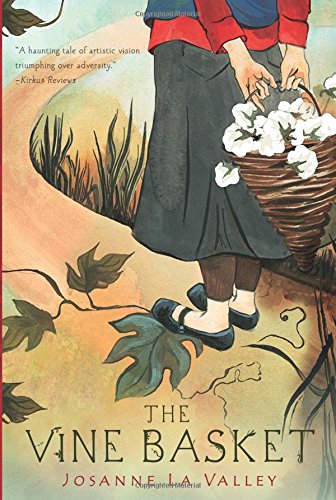
While in the midst of moving from Knoxville to Birmingham nearly 4 years ago, a lady reached out to me telling me that a colleague of hers, also an author, was a follower and fan of my blog and had recently passed away, she asked if she could send me a copy of her friend’s books.  I agreed, not knowing what type of books the lady had written and didn’t think much of it.  In the chaos that is moving, I received the books and boxed them up and then unboxed them and vaguely remembered that they were about Muslims in China.  I put them in the to be read pile and just never got to them.  Then as the plight of the Uyghurs started to be known here in the US, something tickled my brain, but nothing came of it, until recently when I realized, a lady, a non Muslim years ago was trying to tell the Uyghur’s story, and had reached out to me, and I didn’t get it, and still wasn’t getting it.  So alas, I have now read the Vine Basket, and while it might not present Islam the way we are used to seeing it in life and in print, the characters do identify as Muslim and this middle grade book is a simply woven, beautiful story that gives voice to a population that is horrifically being silenced.  The AR 5.0, 252 page book is a quiet book that will stay with me: the drunken father, the threat of being sent to a factory, the loss of tradition;  I am so glad I read the book, and only wish I could reach out to the author to hear more about her knowledge of the region, of the people, of the culture that is being erased.

SYNOPSIS:

Mehrigul is 14, and since her older brother left, she has been forced to leave school to help her father sell goods in the marketplace.  More often than not though, it is solely Mehrigul’s responsibility as her father drinks and gambles away the meager earnings the family makes. Her mother, ashamed of the poverty the family endures along with some presumed mental illness and headaches, seeps further and further away from the reality of life and the chores that need to be done to ensure food and survival of the family.  Her younger sister is the only spark in a dreary and difficult life, and Mehrigul is determined that she should stay in school and be shielded from the darkness hanging over the family.

One day while in the market, an American woman approaches Mehrigul and asks to purchase a frivolous grape vine basket Mehrigul had made and hung to decorate the cart.  She offers her 100 yuan, more money than Mehrigul has ever seen, and asks her to make more baskets, and that she will be back in a month to purchase them. The basket serves no purpose like the willow baskets her grandfather weaves and despite the money, Mehrigul’s father is not happy.

Mehrigul is forbidden from making the baskets for the American, and the fact that she will even return is dismissed.  Her father grows increasingly cruel toward Mehrigul and keeps her busy to prevent her from making more.  Mehrigul seeks solace in her elderly infirm grandfather who tries to help her find inspiration and time to make her baskets as he sees in her a gift that has value in their old culture.  At one point as her father steals her baskets to take on a “religious” pilgrimage to the mountains.  And her planting crops in the fields leaves her hands cut and swollen, unable to make more with just days left before the American lady is due to return.

WHY I LIKE IT:

At first I was really uncomfortable with the idea of a white American savior coming to a dying oppressed culture to offer hope, until I read the afterwards and understood that much of the story was inspired by the author’s own experience and that she worked with Uyghur’s to get the story right.  The book reads like historical fiction which makes the day to day life of this modern book all the more heart breaking, it isn’t about the past it is the present, and life in East Turkestan is bleak.  I like the character of the father, he is an abusive mess, yet somehow it isn’t that easy to write him off, he has his own struggles and the depth of character I found in him, in a middle grades book, is haunting.  I also really like how Mehrigul’s story is so foreign to us here in America, yet her emotions and insights are universal and thus relatable.  She wants to find her place, and excel, and help her family, and she is scared, doesn’t know who to trust, and takes on more than most children any where should, but often are forced to do.

The characters identify as Muslim and as a people the Uyghurs are Muslim.  They say salam in the story, but only to the grandfather, and the girls all cover their hair with scarves.  The father obviously drinks and gambles, two practices, not permitted in Islam.  Mehrigul fastens a talisman and connects her prayers to it as a form of worship which I would imagine is cultural perhaps, and when things go awry she remarks she should have prayed to Allah swt.  The father goes on a pilgrimage to a mountain shrine, which again seems off from traditional Islam, but is presented in the book instead as odd because the father is not normally religious.  Islam is not a big part of the book, so it is hard to know if the representation of it are isolated to who the author met, or a larger norm of the community.  Considering how isolated and oppressed the Uyghurs are, I tried really hard to suspend judgement, or offer my privileged limited critique of the people.

FLAGS:

Drinking, gambling, abusive father, anger, lying, deception.

TOOLS FOR LEADING THE DISCUSSION:

I would consider this for a middle grades or even middle school book club, there is so much going on in China and in the erasing of Islam there that this book would supplement the news and few stories we are hearing.  It opens up the culture and gives it a face that is not political, but personal.  The faults of the father are not glorified at all, and the discussion about his desire to hold on to culture and fear about his daughter surpassing him would be fascinating to hear from people the protagonists age.

Eid Breakfast at Abuela’s by Mariam Saad illustrated by Chaymaa Sobhy

Standard
Eid Breakfast at Abuela’s by Mariam Saad illustrated by Chaymaa Sobhy

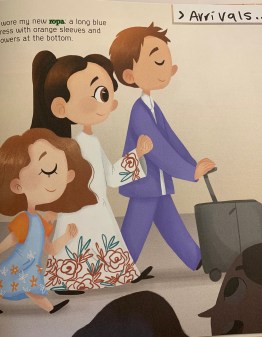
breakfastThis book is the first in a series (hopefully) called Trilingual Sofia, where English is the predominant language, and Spanish and Arabic are interwoven to tell the story.  Focusing on Eid and spending the holiday in Mexico with her non Muslim grandmother, the story with bright illustrations is a celebration of diversity, acceptance, family, and Eid.
DBFF1967-9421-47C8-B88C-4AAF8703E31F

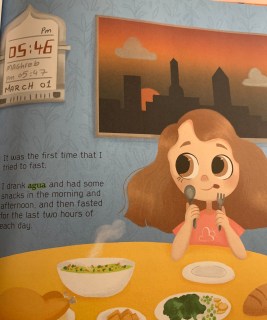
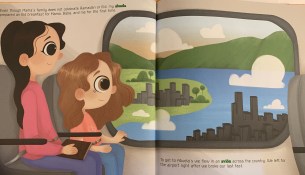
Sofia has had a special Ramadan.  She tried fasting for the first time and now that the month is over, they are breaking their fast and then getting on a plane to Mexico to have Eid breakfast with her Abuela.

On the plane she keeps her pretzel bag to add to her scrapbook and then they get changed into their Eid clothes before they land.  Once in Mexico they go straight to the mosque to meet their friends and then to Abuela’s house.

2CA2CEE1-B699-4E8E-A829-C25E3E313FBC

Abuela’s house is decorated for Eid and all the family is there.  They eat breakfast together and the kids play games and sing songs and take pictures.

084D716E-6D5D-448E-A580-95E48C73FDD0

The 32 page 8.5 by 8.5 inch hardback book claims to be for toddles and preschoolers, but I think it is more for kids in early elementary with the small and ample text.  The Spanish words are highlighted in green and Sofia teaches some Arabic to her Mexican cousins.  There is a glossary of all three languages at the end.  

0DA1427C-192E-4E78-B3DE-A564B98A4327

The book is not meant only for Muslim children, but it doesn’t explain Ramadan or Eid, so while Muslim’s might be able to connect the dots of why she only fasted the last two hours of a day or why they went to the mosque before they went to Abuela’s, I wish the book explained it.

00BE02BE-79D1-4753-BA92-A48C7311B4C3

I love that their are subtle connections between the three languages, like Angel Gabriel/Jibreel and the name Yusuf/Joseph.  The book is a great example of Islam outside of the Middle East and the Asian subcontinent and I truly hope there are more books in this series and more books like it to show the diversity of Islam and the commonalities we all share.

We are Muslim, Al-Hamdu Lillah! by Kathy Fannoun

Standard
We are Muslim, Al-Hamdu Lillah! by Kathy Fannoun

we are muslim

In digging through and pulling out board books for my nine month old to chew on, I realized I never reviewed this staple.  Published in 1994, this 16 page 4 x 5 book does a good job in rhyming verse discussing the universal bond of Islam for our littlest ones.

72F3DEAA-A0DD-4BEC-9667-E782A5AFE53E

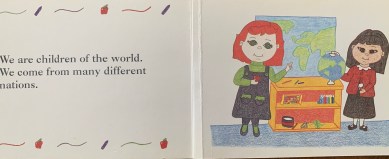
It starts out by stating that we are children form many different nations, and are different shapes and sizes, but that Allah swt created us all.

B32A82CC-61BC-47CE-94F4-D302669CAFB4

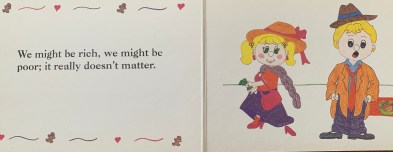
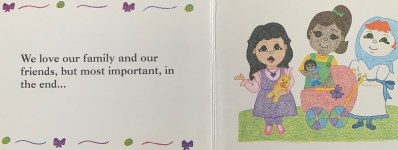
It reminds us that even though our words are different, and some of us are rich and others poor, we still enjoy God’s gifts and love our families, because in the end we all praise Allah, and are Muslims, Al-Hamdu Lillah!

D007C9D7-BB64-40AA-948A-687D94CAE643

The illustrations are clearly hand drawn and filled in with colored pencils, but they show diverse skin tones, a few different ethnic dresses, some in hijab and kufis, others not, and all smiling.

664F0608-6997-4DC6-A34F-A3B9492D4688

This book is basic, which makes it perfect for little ones at bedtime and even in small groups.  Younger children appreciate the simple message and rhyme scheme and it is the perfect size in their hands.

0E54226D-5415-4FBC-90F9-0764BC4B7154

This book is probably bringing back memories for many of you, as it was one of the first books of its kind.  A board book, that is Islamic, cute and fun, for English readers. I remember in high school reading it to my Sunday school preschool class at the masjid, sharing it at story times at the masjid as an adult, and reading it to my own kids over the years.  The binding is still holding strong, and the words still remind me how blessed I am to be s Muslim, Al-Hamdu-Lillah!

Neither This Nor That by Aliya Husain

Standard
Neither This Nor That by Aliya Husain

neither this nor that

This 251 page novel reads like a biography that has no climax or real conflict in its linear retelling of the protagonist from 3rd grade to a junior in college.  If you are part or all Desi, raised in America in the ’80s and ’90s and have fond memories of NBC’s Must See TV, rolling your pants up, your family packing Corning Ware sets to take to the homeland, and the joys of TJ Maxx, you might enjoy the nostalgic similarities you too experienced, but even at that, with no plot or character arcs, the book is easily forgettable and you might forget to finish it.  For all my critiques of Muslim stories that don’t read authentic, this one definitely does, she doesn’t rebel, she doesn’t ever go against Islam, but because she is similarly not ever tempted to, I think most readers won’t relate to this fictional girl, who’s biggest worry is smelling like her mother’s cooking.  The book seems to just want to tell her life story, and getting through it is the point of the book, not making emotional connections, giving the reader something to think about or even inspiring others, which is ultimately a missed opportunity that this book could and should have capitalized on.

SYNOPSIS:

It is the first day of school for Fatima Husein the eldest of many daughters in her Indian American suburban home.  With a mother who doesn’t speak much English and parents that don’t seem to understand Fatima’s desire to fit in, the stage is set that will carry through the entire book of Fatima loving to study and separating herself as the girl at school pretending to be more American than she really is, and the girl at home pretending to be more Indian than she feels.  As the book follows the character through college, along the way Fatima and her family have extended maternal family move to America from India and then move back, they take a trip to India which is not enjoyed at all, her dad’s family then moves from India and settles near them, they move to be closer to the masjid, and they go for Hajj.  Characters bounce in and out: school friends, community friends, cousins, etc.. The only real constant is Fatima’s love of school and her paternal grandmother grumbling about her getting married. There are the ups and downs of life that are shared, most very specific to a ABCD (American Born Confused Desi) living in the ’90s.  Fatima is religious and Islam is important to her and she never waivers in her black and white view of things.  It does take her a little while to wear hijab, but there is no real self reflection and catharsis, it is just states she wants to fit in and isn’t ready.  The conclusion is she finally accepts a proposal from the son of an old family friend who lives in Chicago.  Not so much because she likes him, but more because she has no reason not to say yes and her parents are in favor it.

WHY I LIKE IT:

If this were a biography and it was someone famous, the minutia of day to day living might be compelling, but as it is fiction and you have no idea where the story is going, it just seems to tell a story about a typical girl doing typical things.  It has value in that it shows how normal and boring even, a normal Muslim family is, but it gets really preachy at times and really dry.  None of the side characters are memorable.  I have no idea how many sisters Fatima has, when her grandfather passed away I felt nothing, when two who families died in a car accident Eid morning on their way to prayers, I had to flip back to see if the characters had ever been mentioned before.  It seems like the whole point is to get to the end, and more heart and less tedium would have made this book an amazing example of American Muslims in America.  The first page mentions friends and there is no follow up to where they are or what happened to them, and this happens all through out the book, there are no emotional connections, nor attachments among the characters to include the reader into their plight as well.  The protagonist one must assume gains her voice from the author’s experiences herself, but it just lacks internal dialogue and conviction.

Fatima lives through the Gulf War and makes big changes and has to find her place, yet the book just tells us all this, it doesn’t show us how she internalizes and processes and emerges from the experiences shared, it just gives an example and then comments on it.  The font and layout visually looks like a text book, and at times, the internal structure reads like an essay, sharing an anecdote, backing it up, and moving on to the next event on the time line.

I feel like I know the character, it definitely comes from a place of shared experience and credibility, but you have no idea where it is going, and just like I doubt anyone would want to read my life story, the book needs a little direction and editing.  In the author interview posted below in the “Tools to Lead the Discussion” she mentions that mainstream publishers wanted more rebelling and she wouldn’t compromise.  I agree with her, we need books that don’t follow that assumed track, I think that the presentation of the story, however, as it is, is lacking.  The integrity is there, but the character is really flat, and there are plenty of literary tools that could enhance the story without compromising Fatima’s character to drugs and alcohol and boys.  The book was self published in 2010 and I really hope at some point the author will re-edit it, to make it relevant to preteens and teens today and more personable.  Ultimately making it so that the successes Fatima has are cheered on by the reader, who are also inspired by her accomplishments while staying true to her beliefs.

FLAGS:

Considering how many pages are dedicated to how she and her sister are to behave in India as to not seem naughty or as arrogant Americans, the curse words flow pretty regularly in the book, and the way she speaks to her elders and in front of her elders is not always kind.  There are side comments about hooking up, STDs, and drinking, nothing any of the characters engage in, but judgments regarding these topics for those that do is present. She also talks about her mom’s failure to discuss menstruation before hand, to exemplify how things are only discussed once they need to be dealt with.

TOOLS FOR LEADING THE DISCUSSION:

I don’t know that as a book club selection today’s youth would voluntarily pick up and read this book.  There might be some ability for a teacher to assign it and then turn around and make the students write something similar about their experiences in a fictionalized form.  I think students would struggle to relate to Fatima with the outdated references and the lack of conflicts and climaxes in the narrative.


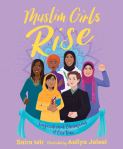
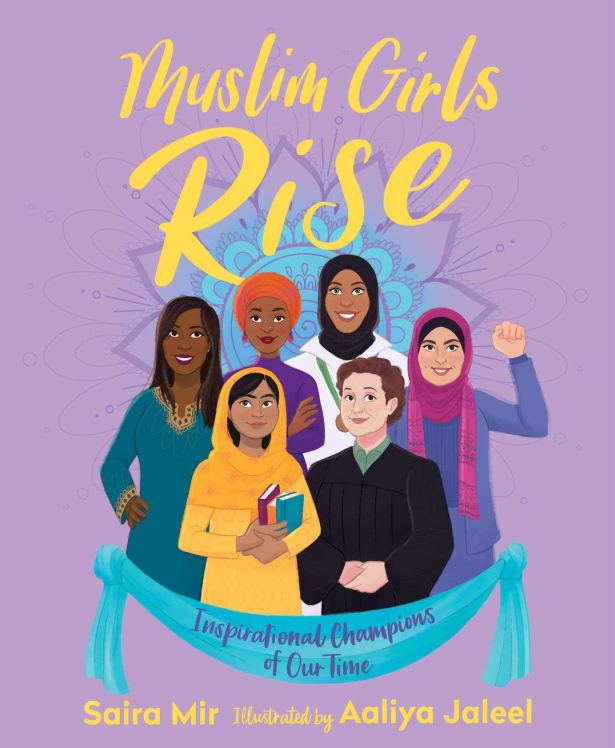
Muslim Girls Rise: Inspirational Champions of Our Time by Saira Mir illustrated by Aaliya Jaleel

Standard
Muslim Girls Rise: Inspirational Champions of Our Time by Saira Mir illustrated by Aaliya Jaleel

rise

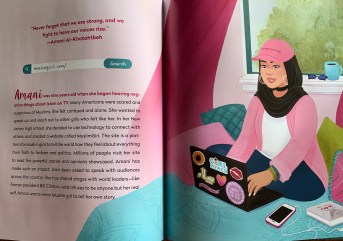
Women you have heard of, some you are meeting for the first time. Some you like, some you disagree with, women that cover, women that don’t, some young, others older, some athletic, some academic, some a little bit of both.  One fictional, a few political, but in the end, all strong women of today, all Muslim, all unique, from all over the world, all known for paving the way for others to follow.

C51C5834-B3C5-4D19-94B3-99B21ADF83EA

In 42 pages, 19 females are highlighted and illustrated to inspire Muslim and non Muslim boys and girls alike, but really Muslim girls will get the most out of it.  Sure a female gets mentioned here or there in other compilations of influential people of our time, but this one, well, this one seems mostly for us.

2D8175C8-0798-4AC1-BF15-D0A9C284AEA9

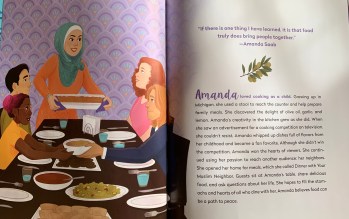
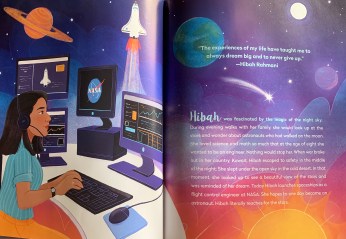
There are famous females in science, activism, fashion, film, sport, education, media influencers, make-up artists, you name it, and Muslim’s participate, so finally a book shining a light on the best of the best.  With each person getting a full two page spread, a few tidbits about who they are and what they are “famous” for are detailed in easy to read sentences that inspire, and if you haven’t heard of them before, enough general knowledge to get acquainted.  A few felt a little generic, but once you have a name, Googling them or researching them, is obviously, not difficult.

6D798E55-709C-442A-8DFF-4BA184C960E1

I wish there was a bit more information detailing who was chosen and why.  At first I thought it was  US or “western” movers and shakers, but then you have Maria Toorpakai Wazir, the tennis player in Pakistan, and Shirin Ebadi from Iran.  So then I thought ok, they are all contemporary, but Maryam Mirzakhani passed away in 2017.  Needless to say, one could argue that the list is arbitrary, and I think I would agree.

85FF7A9C-FD80-4F37-A1DE-B8726762E9CB

One could also argue, that these women may make history for notable things, but that they might say or do things that you might take issue with, and again, I agree.  They are people, they are fallible, and diverse, and have different perspectives and life experiences, but that’s ok, infact I think that might even be the point.  We all have different passions, and paths, and views and yet at the end of the day we should be able to lift each other up and inspire.  I think every person who reads this book will find someone that sounds or feels or looks like them, and that is a good thing, no, a great thing!

9C6EB606-F612-40BF-A947-092D2B76F1FE

My favorite was the Kamala Khan entry, because I didn’t realize the G. Willow Wilson was Muslim.  I erroneously assumed the other co-creator, Sana Amanat gave Kamala’s back story and home life its sense of OWN Voice, and I love that I learned I was wrong from a book.

2EC5EAF4-87F4-406C-B4D1-C95341536B66

The illustrations are right on and do an amazing job of conveying the character and the inspiration of the collection.  The book is much needed and I hope they do a similar style book for Muslim women in other time periods.

Special gratitude and appreciation to Gayartri Sethi (IG @desibookaunty) for gifting me this book for no other reason than to share the power and strength of women, and being a leader in that, by sending me a beautiful book.  May I learn from your generosity and pay it forward! Thank you.

Ibn Yunus: The Father of Astronomy by Ahmed Imam

Standard
Ibn Yunus: The Father of Astronomy by Ahmed Imam

ibn yunus.jpg

This book is part of a new Muslim Scientist Series featuring 24 glossy colorful 8×8 pages highlighting a great Muslim from the Golden Age of Islam.  Meant for Muslim children ages 4-7, the book sets out to teach and inspire little Muslims, and does a pretty decent job of presenting it in a memorable easy to understand way.  Adults might have to explain and help out a bit, but the book accounts for that too.

C6059DA8-08CC-41FE-9088-086C38EE07AC

The book starts off with some “Notes to Parents and Teachers” about supplemental activities and conversation starters to make the book relevant, and show how beneficial their contributions to science were and still are today.

A3210097-9DBA-49CC-B370-25187E4DCA3E

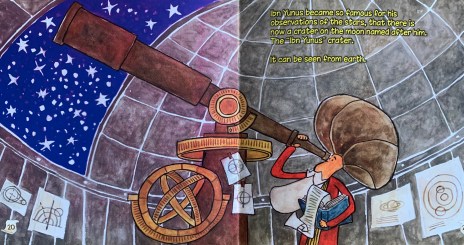
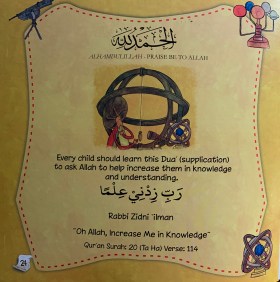
The book is a simplified biography of Ibn Yunus, and I would imagine the other books: Ibn Majid, Ibn Battuta, Ibn Al-Batar, follow the same pattern.  It tells about where he was born and when, and what he is famous for, before telling a bit about his family, an ayat from the Quran that inspired him is then given in English and Arabic and translated, before it shows how he worked toward his goal, and the accomplishments he made in his lifetime that still are used today.

938B76A9-E626-4B09-936E-446183F3141D

The fun illustrations make Ibn Yunus’s field of study easier to understand and will keep the littler listeners interested.  Adults will hopefully also learn something in the reading, and feel the same pride and inspiration of Muslim’s contributions to science.

13D95DDB-5EE2-4354-801D-85E561DABC86

It is critical to teach our children about the accomplishments and discoveries of Muslims, and this non fiction series is a great introduction to Muslim scientists, scholars, and adventurers, that they might not otherwise learn about.