My tween boys read the first two books in the Streetball Crew Series and recommended I read book one because there is a Muslim character and I’m a fan of the basketball all-star author who draws on his own life and experiences growing up in the story. It is 265 pages, an AR 4.5, and while the story is decent, and I enjoyed the majority of it, I didn’t love it. I was not thrilled at the choppiness of the story telling and ultimately the way Islam was presented. Obviously there are plenty of Muslims that will occasionally eat pork and who get violent as they get more religious, but I don’t think it is the norm and definitely isn’t a message most middle grade Muslim readers would identify with, nor want non Muslims assuming about Muslims as a whole. The book randomly has a sudden Muslim chapter toward the end and attributes some threats on the main character as being from Muslims becoming more devout. The main character is not Muslim, this is a side character and her family, and you don’t find out til the book is nearly over that she is Muslim. I worry how younger readers will be affected by the negativity toward Islam, as it really isn’t explored or even part of the story. There is enough going on in 8th grade Theo’s life with out the insertion of religion. I was glad I read it so that I could discuss it with my boys, but I would encourage the book for more middle school aged kids, if at all. The book involves basketball as a subplot, but has larger life lessons and developments away from the game. Do be aware one of the young characters smokes cigarettes, there is female objectification talk among the male characters, racism is discussed, there is some physical assault, and beer, R-rated movies, tattoos, branding, and dating are mentioned in this coming of age book.
SYNOPSIS:
Theo is 13, in 8th grade, and over the summer has grown six inches. He identifies as a science nerd and a geek and is on the Academic Olympic team at his school. He now, however, finds himself on the school basketball team, and has no idea what he is doing. Towering over everyone, he is assumed to be good, but his lanky body and new found size brings him ridicule and teasing. His life long best friend, a fellow geek, can’t figure out why he won’t just quit the basketball team, but Theo is oddly enough, enjoying the concept of team, and suddenly being recognized in the halls. When he joins a pickup game to improve his skills however, he gets in a fight with another kid, get’s threatened by some guys on motorcycles, and teased by a weird girl named Rain.
Outside of school it is just Theo and his police officer dad. Theo’s mom has recently passed away and the two are creating a new normal, that is until Theo finds out his father is giving online dating a try. After the first abysmal basketball game, Theo is forced to go visit his cousin in LA who is a tiny bit older than him, but much rougher. He constantly teases Theo and puts him down. He claims to be a great musician, but no one has ever heard his music, and suddenly on this visit, he seems a bit more insightful, which has Theo confused.
With Theo being pulled in multiple directions, he risks being kicked off the basketball team, moved down to alternate on the Brain Game Team, killed on Friday by the motorcycle gang and to top it all off, a CD of his cousins music has been stolen from Theo’s backpack and band has gone viral with one of the songs.
WHY I LIKE IT:
I like that it is a coming of age book for boys. I feel like there are a lot of girl books out there, but this one really does get into a young males head. It isn’t always pretty, and while women/girls are at times objectified in his thoughts and while chatting with his friends, I think he realizes it and doesn’t treat or talk to women in a negative way. I like that race is discussed as he is one of 14 black kids in his school of 600. There are times when he or his family are treated different for their skin color, but his mom never allowed him to accept it to be a reason for not being the best ‘you’ and she would make them put money in a jar any time they blamed race for something bad happening, a tradition they continue even though she has passed. I like the pop cultural references, a lot of books overdo it, this book makes it pretty smooth and relatable.
*Spoiler Warning* So Rain, turns out to be Matar, Arabic for Rain, she has convinced her aunt and uncle to let her change schools while her parents are in Iraq (her mom is Iraqi, her father a Quaker from Pennsylvania) and call her by her American name and let her wear American clothes (no hijab). The motorcycle villains, are her cousins, who were trying to find her and were threatening Theo to try and find out where she was. Their frustration with her behavior and dress is what prompted them to hit Rain which made her run. Rain and Theo discuss why after September 11, she was tired of being accused of being a terrorist and so she wanted a fresh start. Her uncle and aunt are noted as being nice, but clearly the devout Muslim cousins are what will be remembered. She also discusses sometimes eating pork, that hijab is modesty in the Quran, not a requirement to cover your hair, and that she is Muslim, but doesn’t know if she will be when she is older.
The book didn’t find its flow for me until nearly half way through, maybe about page 100 or so. It seemed to struggle to get all the characters introduced, flesh them out, and then decide what the book should be about. Once it got through all that it flowed better, but still left me confused as to why there was a spontaneous breakfast party, why a lawyer would so quickly get involved in the music case, why Theo was withdrawing from his friends, why Rain wouldn’t just talk to Theo, how Rain had friends she could stay with after just starting at the school, how Rain could switch schools without her parents there. Really the Rain character in general seemed really forced.
FLAGS:
I listed most of the potential concerns in the opening paragraph so that anyone, like me that would think, ‘oh fabulous a middle grade sports book by a Muslim author’ would be aware that there are a few potentially concerning elements.
TOOLS FOR LEADING THE DISCUSSION:
I wouldn’t do this as a book club selection, it is a little all over the place, my 11 year old disagrees and thinks it would be a great book club read, so I’ll leave it to you to decide.
Video interviews with Kareem Abdul-Jabbar about the book:







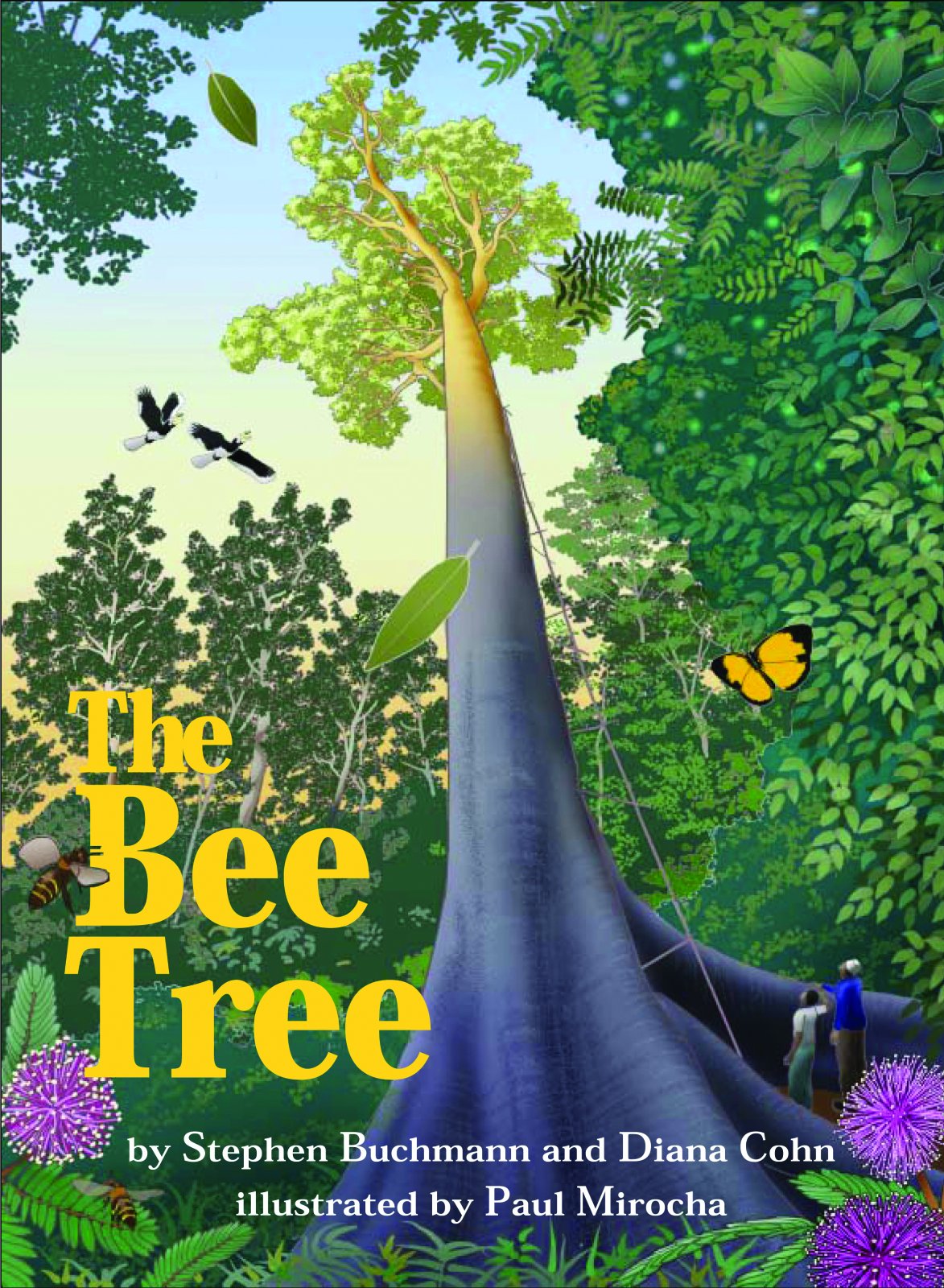 This is one of those books that it is hard to know who the target audience is and who would most enjoy the text heavy 40 pages about a boy coming of age in Malaysia by harvesting honey in a traditional manner. The two page spread illustrations are rich and inviting, and with an AR 5.7 level, the book would work well for children that enjoy other cultures, honey, insects, or children that you hope will be inspired to start seeing the world a little differently than they are used to doing.













 Mikaeel and Malaika are back in this 32 page hardback book that explores why duas sometime seem not to come true. Done in a hilarious manner that brings in riddles and problem solving elements, it is perfect for 6-8 year olds. Younger children will enjoy the beautiful illustrations and silliness, and older children (and parents) will thoroughly enjoy Big Boss’s play on words and the illustrations showing his parenting style. I’ve read the book multiple times to myself, my toddler, and even my older kids; each time surpressing a smile and enjoying the message lovingly and entertainingly conveyed: “rewards are best when the time is right.”