Tag Archives: Muslim Family

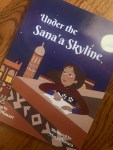
Under the Sana’a Skyline by Salwa Mawari illustrated by Mary Charara

Standard
Under the Sana’a Skyline by Salwa Mawari illustrated by Mary Charara

img_2034-1

For the last 100 days it seems the only time I truly smile is when I see images of Yemen standing with Palestine.  It is impressive, so very inspiring, and equally humbling as well.  Sadly, there are not many children’s books celebrating Yemeni culture, heritage and joy available to us in the west.  This book published in 2022 is set in the war, with memories of easier times peeking through.  When Belquis is assigned to write an inspirational story about Yemen for a global contest, she is at a loss of what to write about as she is surrounded by “bombings, fighting, blockades, loss, and poverty.” This 38 page picture book is text heavy, admittedly it isn’t particularly literary or memorable, but it shows a culture and traditions that need to be shared with our children.  The media and talking points dismiss the rich history of the countries we are attacking in attempts to dehumanize those affected.  This book does not get political or even name the sides in the conflict, it simple shows a girl and her sister rediscovering their city, their history, and their peoples’ kindness and generosity.  I hope more books about Yemen will enter the marketplace, and I pray for the bombings to stop.

img_2035-1

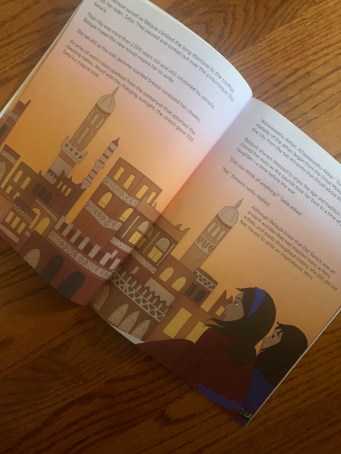
Set in Old Sana’a Belquis dreams of being a writer, but when assigned to write about something “inspirational” she is at a loss. Her geddah encourages her saying that “Some of the most inspirational stories arise from hardship.” Her father encourages her, and her younger sister Saba, to go to the roof and look out from a “bird’s-eye-view.” At maghrib time as they listen to the athan from the Great Mosque they look out at the 2,500 year old city and the qamariyat sparkling in the changing sunlight, but don’t feel inspired.

img_2036-1

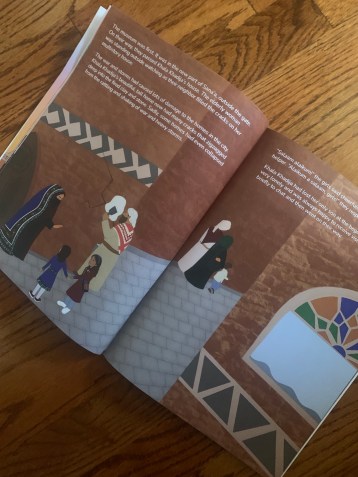
Beliquis briefly laments the looming deadline and the lack of sabaya to eat, but decides to go story hunting by taking Saba and rediscovering their ancient city.  They pass Khala Khadija’s crumbling house as they head to the museum where they are reminded about the Queen of Sheba, Yemen’s original name Arabia Felix, and Queen Arwa.

img_2037-1

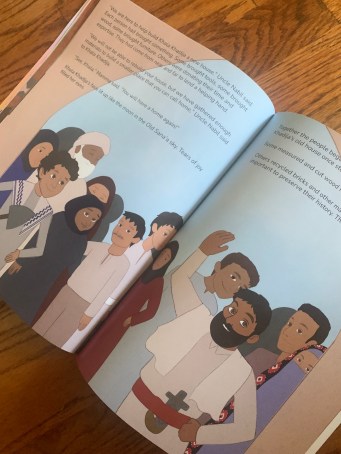
As they leave the museum and head to Souk al-Milh they pass lines of people looking for handouts of food and waiting in line for fuel. When the war started, the tourists stopped coming, so the girls are free to browse, and end up using their pocket money to buy bakhoor for their mother before heading back home.  Heavy hearts make them wish they had instead given that money to a hungry family, and when the cracks from the weather and bombs destroy Khala Khadija’s house completely, the girls, their family, and their entire neighborhood will show the inspiring generosity and spirit of the Yemeni people.

img_2038-1

As always, with most every book I read,  I wish there was a map, and while there is a glossary, I wish there was a more robust backmatter section with actual photographs of the many places, foods, items mentioned in the story. This book is important, seek it out, urge your libraries to shelve it. Learn about Yemen, make duas for the people suffering, hurting, and standing up for the oppressed, ameen.

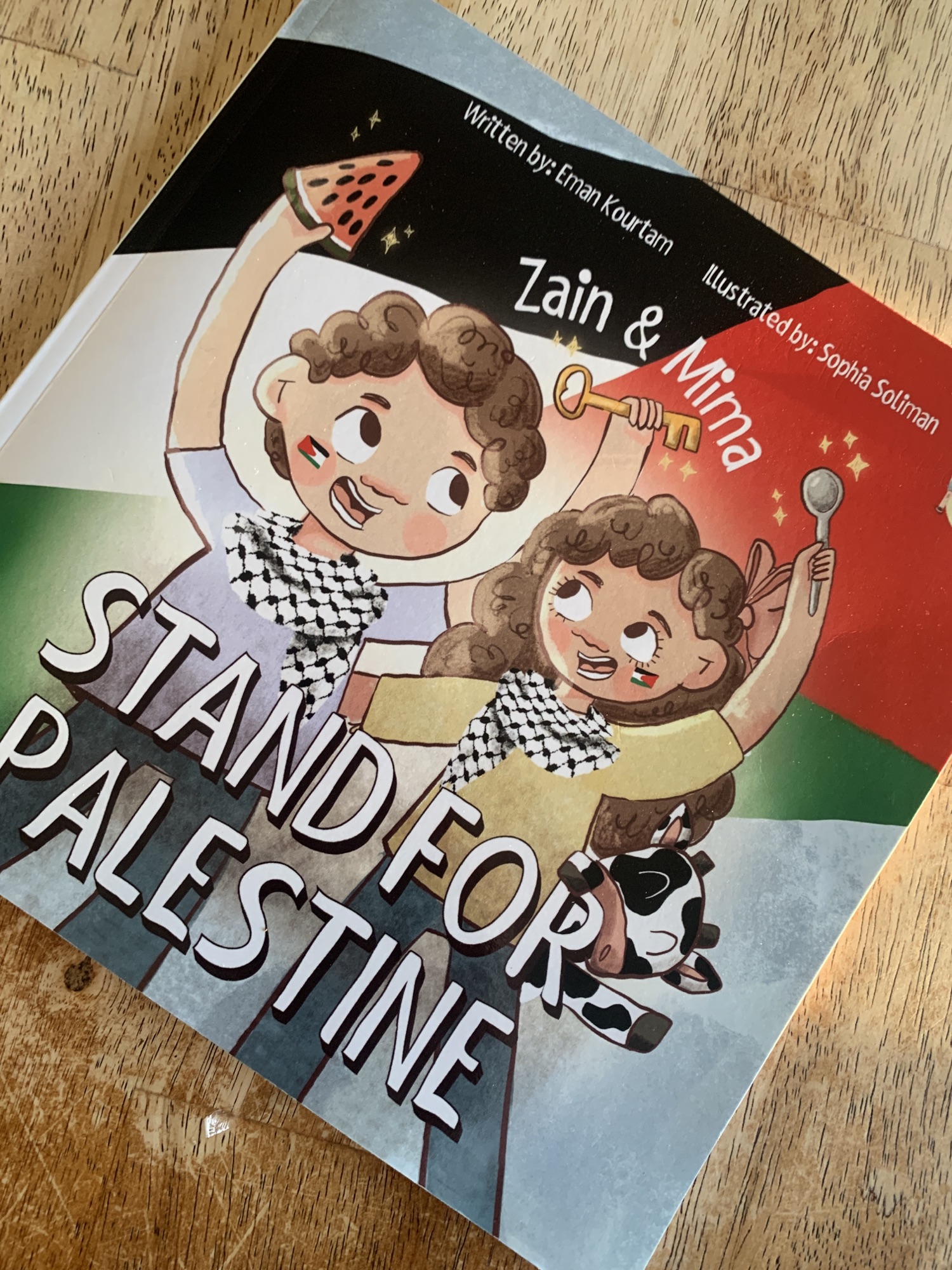
Zain and Mima Stand for Palestine by Eman Kourtam illustrated by Sophia Soliman

Standard

img_1853-1

I love this 57 page rhyming book from the perspective of a non Palestinian family pulling out their Palestine gear and taking to the streets to protest the occupation of Palestine.  Along the way the sibling duo, and thus the reader, learns about the history of Zionism, birth righters kicking people out of their homes, allyship with those on the side of Palestine, the crimes of Hitler, it shows maps of the occupation, details how movement is restricted, and even how to use BDS as a form of resistance from afar. All on an early elementary level.  There is a game at the end with an activity about resistance symbols, as well.

The book starts with Zain and Mima coming home from school tired and hungry.  They notice Mama is upset and glued to her phone, they then here noise outside and are encouraged by their mother to join the march as she hands them keffiyehs and explains that people are losing their homes in Palestine.

img_1855-1

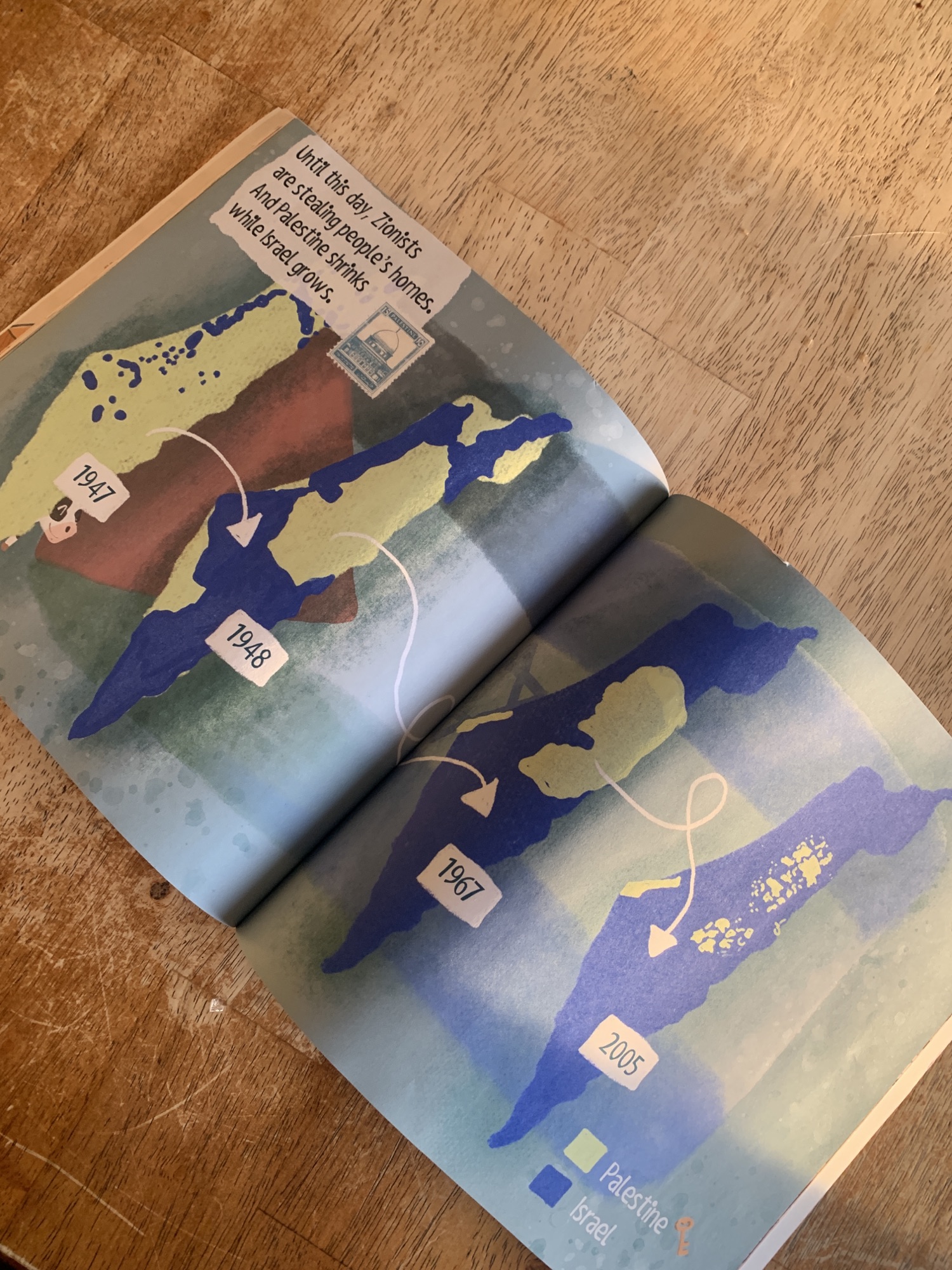
The kids are not sure of what is going on, but notice the chanting and signs and diversity of people coming together to demand freedom for Palestine.  After the protest they head home and Mama explains the history of Palestine and answers their questions.  She explains who Theodore Herzl was and his idea of Zionism.  Why it is dangerous and evil.  She then explains how Hitler’s actions in WWII gave rise to Zionism in the aftermath. A two page spread of maps show 1947 Palestine/Israel, 1948, 1967 and 2005 in easy to understand visuals. Mama then explains, without identifying any specific country, that Israel has the best weapons and Palestinians use rocks and slingshots to defend their homes and families.  It shows walls and checkpoints controlling people’s movements, and the oppression that has resulted.  When Mima asks what we can do in addition to marching and chanting, Mama explains using our money wisely with the BDS movement.  The next day, the children empowered by knowledge, make signs and are ready to stand bravely for Palestine.

img_1858-1

This book was originally written in 2022, and sadly is still so on-point.  It is available again on Amazon after being temporarily blocked, but I hope you will purchase it from a small business such as Crescent Moon Store where my initials ISL will save you 10%.

img_1857-1

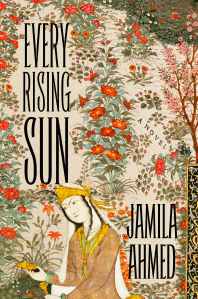
Every Rising Sun by Jamilya Ahmed

Standard
Every Rising Sun by Jamilya Ahmed

The lush writing and ever present threads of Islam captivated me from the first page of this Shaherazade retelling.  I truly could hear my own voice in my head reading each word, and falling into the masterful story-telling of the protagonist/author.  With about a third of the book left though, I was sadly stopped abruptly in my tracks.  I found myself annoyed by Shaherazade, and having to convince myself that even though this is an adult read, she is very much coming of age and finding herself, only she doesn’t evolve and grow, and doesn’t have a character arc, and by the end I felt deflated.  Is the book good? Yes.  Would I recommend it to readers 18 and up that enjoy OWN voice, strong female, historical fiction? Absolutely.  But I find myself frustrated, because when the book was good, it was so good, but as the end drew closer, I realized there were holes, big ones, that could so easily have been fixed.  The author has the skill, the knowledge, all the tools, but alas, I didn’t appreciate Dunyazade because she is largely absent.  I didn’t know the interworking of her assistants and friends so I didn’t care about them, side characters were so painfully underdeveloped. And with 50 pages left, I was for the first time perhaps ever, glad that the narrative moved from showing to telling (I know, who am I even). I needed the articulation to connect the dots particularly of Shahryar and Shaherazade’s relationship.  The 423 page book could have, and should have, been a hundred pages longer to not feel so rushed at the end, and there should have been a map.  The book has adult themes but they are handled in almost a YA manner.  The beheadings, affairs, wedding nights, battles, war, are not detailed, but rather identified and moved on from even though they are so central to the plot.

SYNOPSIS:

In twelfth-century Persia the daughter of the Malik’s adviser stumbles on the Khatoon and her lover, she anonymously alerts the King to the affair and the beheading of wives begins.  To keep the country from revolting at their mad king, Shaherazade offers to become his next wife, to assuage her guilt for what she set in motion, on the hope that her storytelling will keep her alive come morning.  Life doesn’t pause however, as Shaherazade spins her tales, but rather amplifies.  She accompanies her husband, Malik Shahryar as they join Saladin in the Third Crusade.  The caravan, the journey, the battles, the romance, all bring the climax of returning home to a Kirman under siege will test Shaherazade’s story-telling abilities to the brink and with it the Seljuk Empire.

WHY I LIKE IT:
The prose is on point, time stood still while getting lost in a world of history, imagination, and the author’s skill.  The constant presence of Islam in the characters life was incredible. It was not established and then left to the side: the times are marked by prayers, the athan is ever-present, the duas are heartfelt.  Yes the characters drink wine, and sleep around, but they also fast and treat their prisoners of war with compassion.

I really struggled with how little I cared about people dying, there should have been more connection and more emotion for the side characters, and as the story progressed, I became increasingly irritated that I wasn’t forced to care about them, to know them, to appreciate what they meant to Shaherazade.

I also felt that the majority of the story took place over one year.  How do you forget that you are telling stories to save your life and (SPOILER) start sneaking around with some other guy.  You have a guard detail that follows you everywhere, you are in a caravan and you live in a tent, everyone knows everything!  Shaherazade is also clueless a lot of the times asking soft questions and then told how intelligent she is and allowed to plot and scheme with various rulers.  I love that she has a voice, she isn’t silenced, that she is never apologetic for being opinionated and her very presence is never a kindness, she takes up space and doesn’t look back, but the inconsistencies in her judgement needed some smoothing out.  Show her understanding grow, and increase her intellect to wisdom, don’t have her charming and manipulating leaders one minute and then being so naive the next.  She should have been so much smarter by the end of the book than she was shown to be in her personal dealings.  Her political knowledge was strong, and she was a force, and that level of insight into her own life would have been a character arc to see.

The book is adult, but it almost reads YA and I’m not sure why, it is sourced, the historical presence is exciting, the words and flavors intoxicating.  I normally love when the characters are shown and the reader doesn’t have to be told things, but the only reason I finished to the end was honestly because I got some telling.  I was relieved to hear from Shahryar what he knew, what he felt, what he could own up to.  Perhaps had there been more showing of the intricacies of palace life with the side characters the book would not have gotten to that point, but the lush writing could only carry the book so far.

FLAGS:

Relationships. sex, kissing, fornication, killing, beheading, lying, hangings, war, battle, drinking wine, scheming, kidnapping, attempted rape, it is Adult, but nothing is overly detailed or glamorized.

TOOLS FOR LEADING THE DISCUSSION:

I would love to chat about this book, I think I could be swayed to love it, or play the devils advocate and argue for the sake of arguing.  Being how highly recommended this book came to me from a dear friend, I’m ready to battle and anxious to discuss!

I got my copy from the library, but can be purchased here.
We Know What to Say: Phrases Commonly Used by Muslims by Sabria Chao

Standard
We Know What to Say: Phrases Commonly Used by Muslims by Sabria Chao

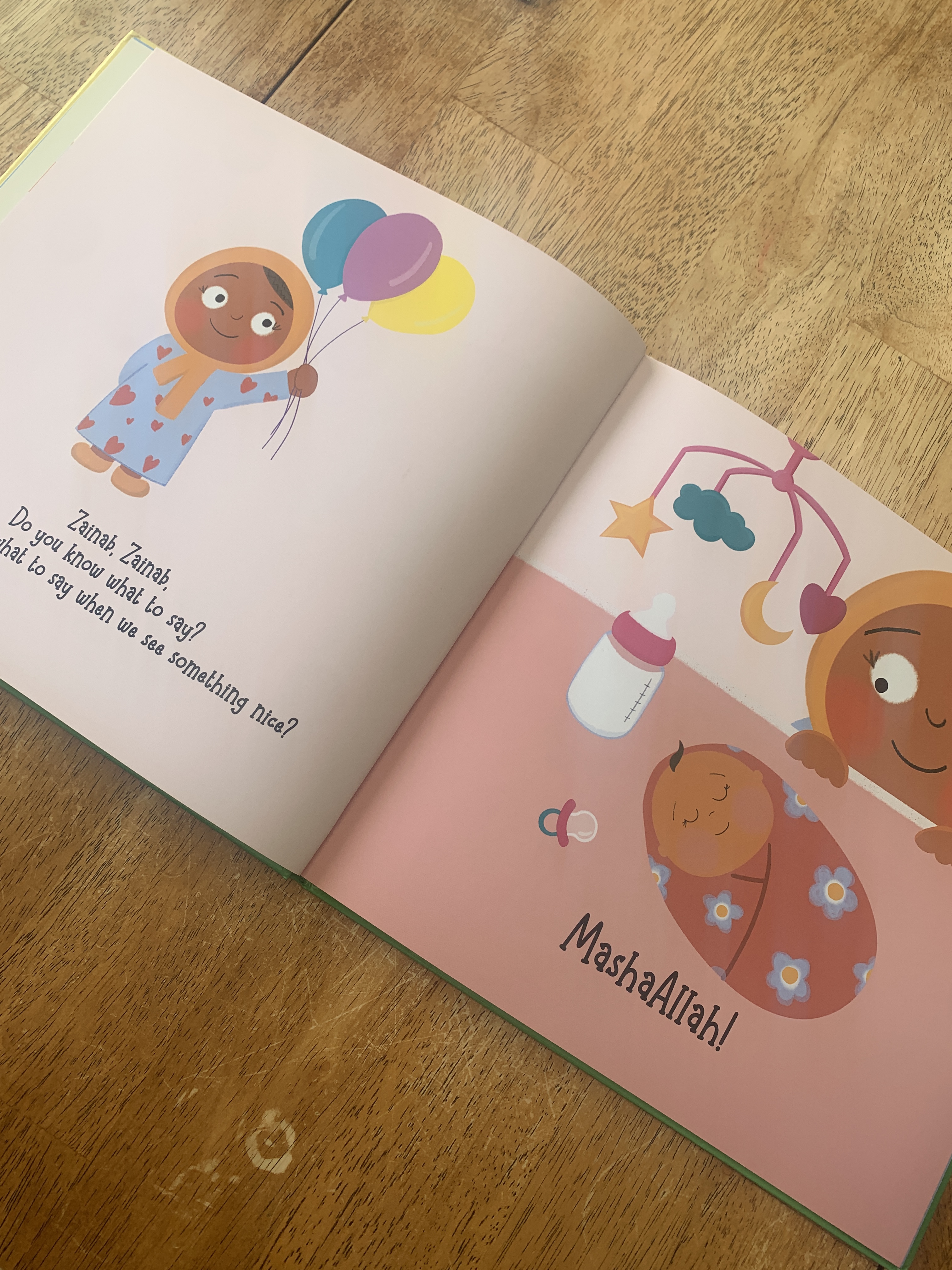
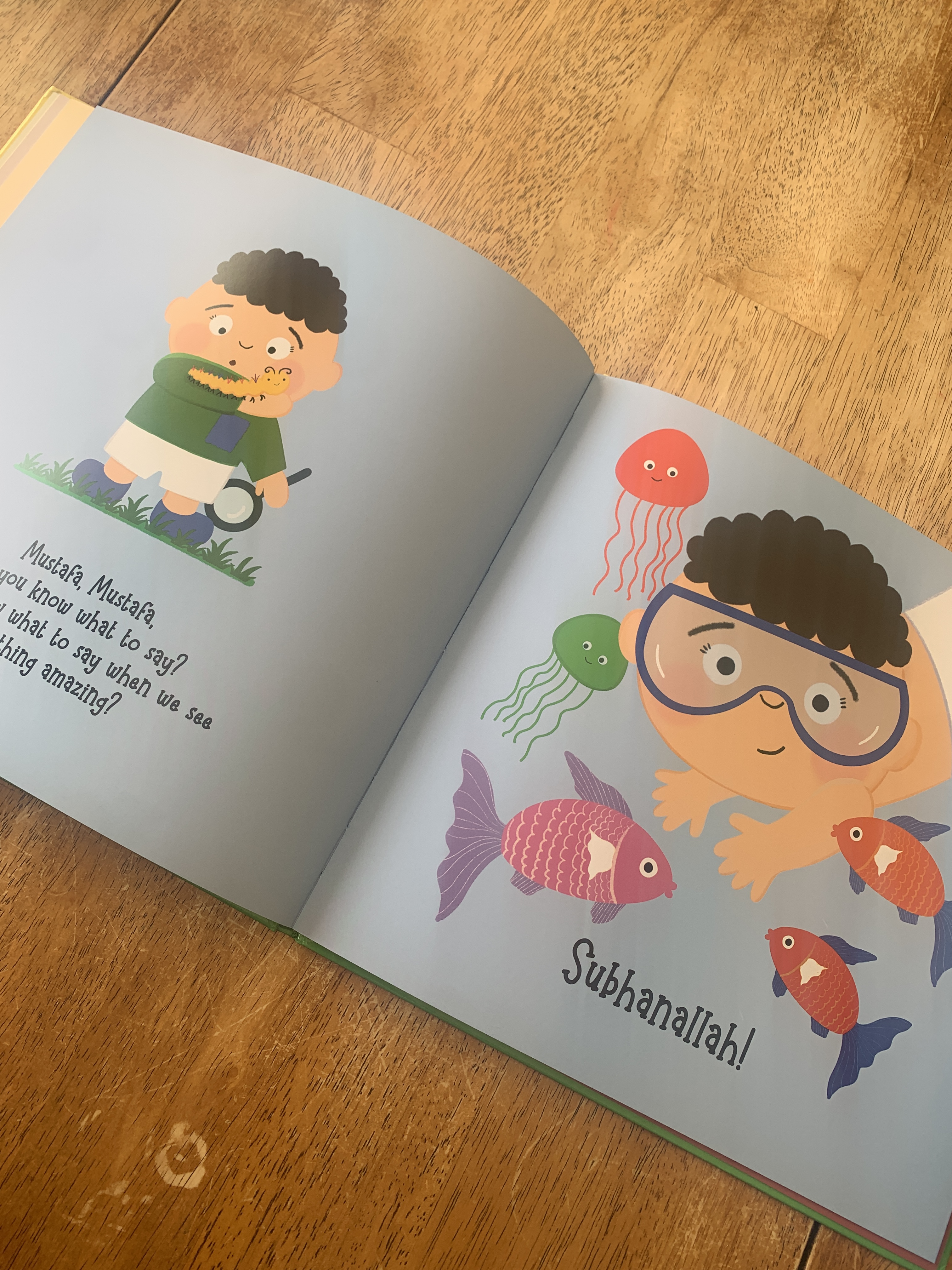
The concept behind this 42 book is really nothing new, but the presentation is wonderful.  The large hardback size, the clear inviting illustrations, and the repetition allow the book to be a delight at story time and bedtime alike.  Each Islamic term is introduced by a diverse character with a common Muslim name being asked if they know what to say in a situation.  The child gives the word, the following two-page spread restates the term and when to use it. All the terms are shown at the end in a two page spread along with a glossary and a Note to Parents.

I love the relatable scenarios: zoom calls, rain, getting sick, etc..  I also like the rhythm of the book, it reminds me a little bit of Brown Bear, Brown Bear.  The bright colors, the simple engaging illustrations and the big size make me ecstatic to share this at story time.  So many of the books that focus on Islamic terms for toddler to preschool level are small board books.  They serve a purpose, but we have long needed a large clear book for groups of children to learn, practice, and review together.

This book was nominated for the 2023 Muslim Bookstagram Awards, but you can purchase a copy here

Majdi Mansoor and the Book of Miracles by Anisa Bezak

Standard
Majdi Mansoor and the Book of Miracles by Anisa Bezak

img_0030

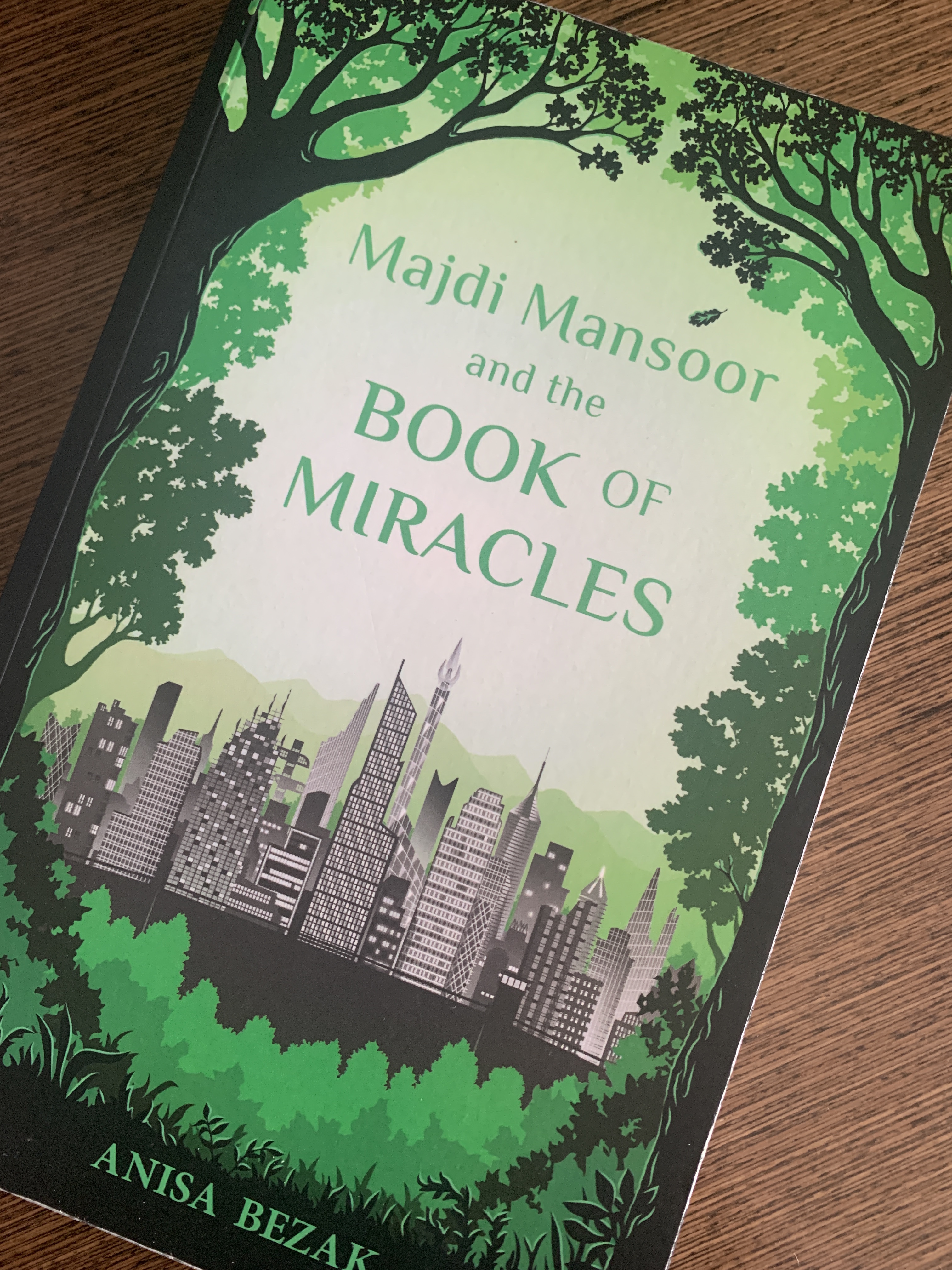
I don’t think I have ever seen or even heard of any dystopian Islamic fiction reads, we have a handful of Islamic historical fiction, and dystopian with Muslim characters, but the genre made me curious, and with that motivation I began the 458 page book.  The beginning didn’t immediately grip me, but I told myself to read a hundred pages before deciding to DNF it or keep reading, and long before that arbitrary mark, I was intrigued by the story, invested in the characters, and impressed by the consistent writing, pacing, and role of Islam.  The book is preachy and idyllic, but that is to be expected, the way Islamic ideas and concepts and concerns were included as plot points though, is surprisingly well done.  For much of the story, I kept wondering who the target audience would be.  The vocabulary is a bit advanced, and the pages full of small text.  The book starts story wise-solid middle grade, but I think by the end I would recommend this book for advanced middle grade or early middle school Muslim readers.  I’ve heard from some adults that they read a chapter to their kids each night, and I think that aloud younger kids might also enjoy the story and be swept away to a future land run by a corporation where religion is banned, books are a thing of the past, a boy speaks only in Quranic ayats and hadith, and bullies of all sizes will have to be faced.

SYNOPSIS:

Twelve year old Jacob is an orphan in Tanas World and is unwillingly part of a gang.  One day in a boarded up old building he finds a book, a physical book, the Quran.  Religion is not allowed, Islam most of all, but he reads the book, and even though he doesn’t believe, he keeps rereading the pages.  When an attempt to steal some tech takes him outside the boundaries of the walled off city, he meets a small boy, Majdi Mansoor, who talks in a peculiar way. When threatened by the gang, Jacob decides to take Majdi’s side and that one act sets the two boys on a course that will change them forever.

I don’t want to give away too much, but Jacob is taken in by the Mansoor family who live in isolation and in hiding outside Tanas Corps patrols.  The parents are kidnapped, the children seek to save them and along the way meet smugglers, a Muslim community corrupted by bidah and djinn, Muslim Defense Unit rebels seeking revenge, and the executives who want the MEECA device to imprison the planet.

WHY I LIKE IT:

I was honestly impressed with the quality of writing, but I honestly don’t know if it was because my expectations were so low, or in fact was sufficiently edited and refined.  The characters have heart, the world building is believable, and the Islam is handled with an even hand.  At times members of the Mansoor family are too “good,” but Jacob has a sense of humor, is fallible, and curious which allows the story to stay moving and on task. There are some major plot points that are not resolved, and I’m assuming the political details will play out in the second book.  I’m hoping at least. The book doesn’t talk down to the reader, but older readers might find it too preachy.

I’m hoping my early teens who love Islamic fiction chapter books such as The Broken Kingdom series, The Adventure of Nur Al-Din books, and The Moon of Masarrah quartet will similarly enjoy this.

FLAGS:

Death, bullying, manipulation, assault, revenge, danger, whispers of shatan, bidah

TOOLS FOR LEADING THE DISCUSSION:

I would love to do this as a Middle School book club, I think it would be a bit too cheesy, but I think there would be some great discussions to be had about seeking, temptation, bidah, forgiveness, and the way that Majdi talks and Islam is woven in to the text.

A Boy Named Ibrahim by Sitti Aminah “Flexi” Sarte illustrated by Aaron Asis

Standard
A Boy Named Ibrahim by Sitti Aminah “Flexi” Sarte illustrated by Aaron Asis

img_9818

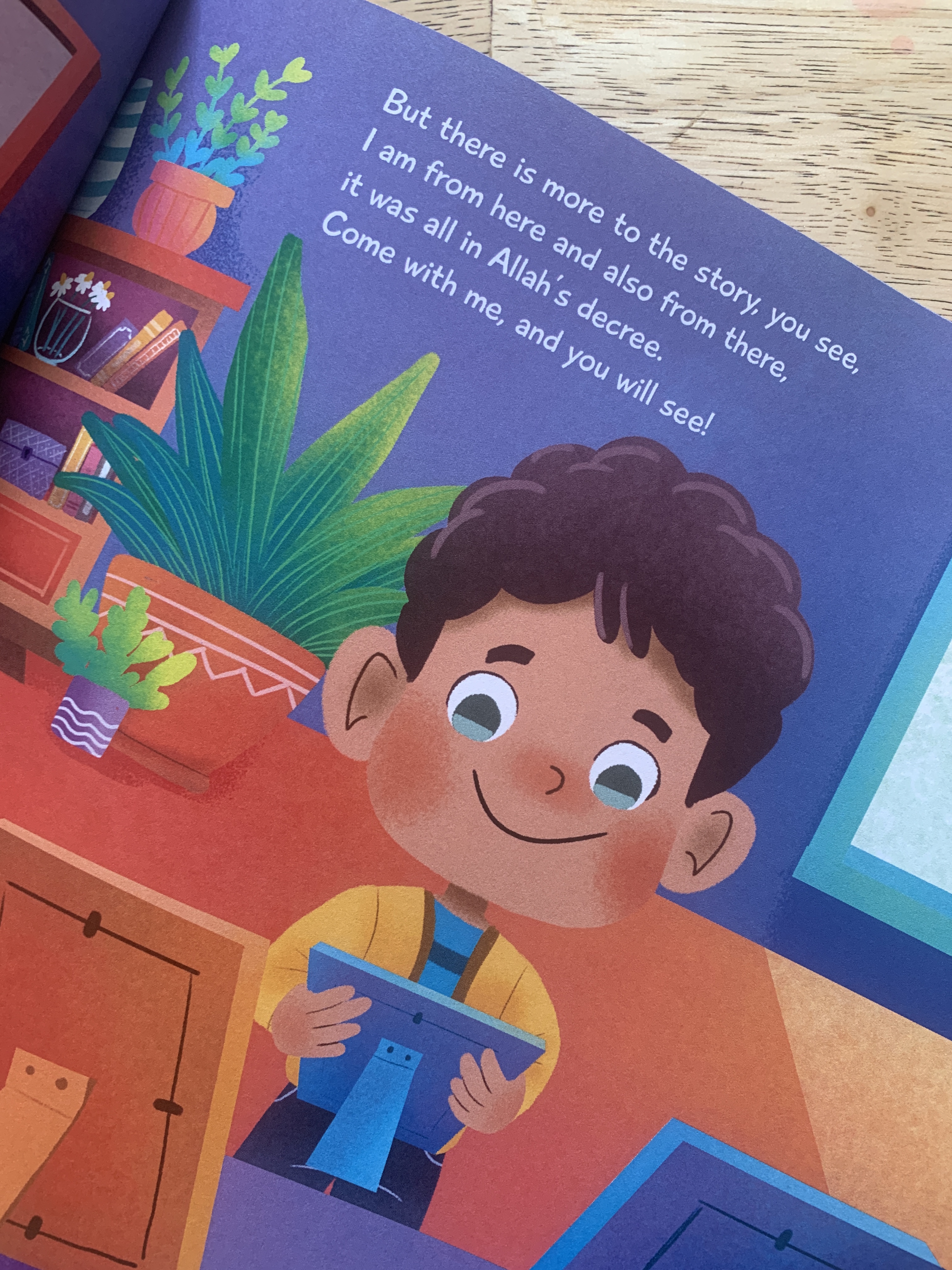
This 24 page Filipino book originally published in 2014 was republished with a new traditional publisher earlier this month and reads and feels like solid Islamic fiction.  The book focuses on the five daily prayers throughout the day of a young boy’s life, with the repetitive refrain being the steps of wudu. Ibrahim leaves his activities to pray, wakes up early to join his parents in salat, loves his mother, and listens to her reminder about prayer being an important way to remember Allah swt.  The book is preachy, religious, and unapologetic.  The timing of fajr is a bit questionable, but roosters do crow at all hours, and the light outside the window might be a street lamp and not the rising sun.  Islamic phrases are used, but it does say “Alaikum Salam” in response to “Assalamu Alaikum” which is a variation of the norm.  Overall, the book is a nice addition to share with young children highlighting the importance of prayer, it also works well to learn and review the steps of wudu, and the names and order of salat, alhumdulillah.

The sun is about to rise, Ibrahim says, “Bismillah,” makes wudu and joins his father for prayer.  It is the first day of school and Ibrahim is excited.  He spends half his day at school, then prays Dhuhr.  He makes wudu and prays.  While playing soccer in the afternoon, he leaves the game to pray his Asr, but first he makes wudu.

Once home he chats with his mother about prayer, and coming closer to Allah swt, while he enjoys a snack and then makes wudu and prays maghrib.  Baba then comes home, they eat and pray isha all together.

I enjoyed the illustrations and the simple story.  The book is straightforward, and the contentment and unapologetic portrayal of prayer in a person’s day is sweet and important to highlight. For preschool to early elementary this book would be a great addition to shelves, story time, and bedtime as well.

The book can be ordered on Amazon here

img_9830

Three Holidays and a Wedding by Uzma Jalaluddin and Marissa Stapley

Standard
Three Holidays and a Wedding by Uzma Jalaluddin and Marissa Stapley

3 holidays

I don’t think I have ever sat down and watched a complete Hallmark Channel holiday movie, but I know the stereotypes and I’ve caught enough scenes while hanging out with my grandma to know that reality has to be suspended, there will be a happy ending, and the snow and small town charm is going to be laid on pretty heavy as the wholesome romance plays out.  This book is the literary equivalent of such a movie. So with that in mind, there are somethings I will concede can be overlooked, but religiously there are some things that need to be noted (see below).  I also have to admit that I couldn’t put the book down and read the entire 384 page Adult book in two sittings. The book is told in alternating perspectives: Maryam and Anna.  Maryam and her family are Muslim, the book takes place in 2000 when Ramadan/Eid, Christmas and Hanukkah all took place within days of each other.  Anna celebrates Christmas, but grew up celebrating Hanukkah too.  Even if a romance that has Muslims ok with adopting “Christmas-y” celebrations during the last ten nights of Ramadan no less. is not a book that appeals to you, it is worth noting that this book does an incredible job of not becoming performative.  There is no internalized Islamophobia, self-othering, no over explaining, convincing, justifying or religious or cultural identity crisis. For a book co authored by a Muslim and a non Muslim and traditionally published, I am excited for the precedence this book sets.

SYNOPSIS:

Anna is in a perfect relationship, with the perfect guy, and accidently sees the perfect ring in her boyfriend’s luggage.  With Christmas plans in Toronto to meet Nicks wealthy parents, it is clear that the perfect proposal is also going to happen.  But Anna is not perfect, and who she seems to be to Nick is not who she is or wants to be.  It feels so fake.  With separate flights from Denver to Toronto, getting redirected and stranded in Snow Falls, Ontario gives her the pause she needs to decide what she wants.  She meets Josh, someone in town visiting, which complicates things, and she sorts through her grief of loosing her father and the speed in which her ex step mother moved on, all why becoming good friends with Maryam and her family in this idyllic town that she doesn’t want to leave.

Maryam is the oldest daughter who shoulders the expectation so that her younger sister can live her best life.  She became a pharmacist to carry on the family business, so Saima could be a physician with Doctors Without Borders.  Now Saima has decided that she wants a wedding in Ramadan and Maryam has to plan it. The flight being diverted and the wedding party being stuck in Snow Falls has long ago crush Saif and Maryam sorting through their past and a possible future together.  

The two protagonists, their past, future, love interests are all multiplied by a town full of love and holiday activities, a wedding that might be missed, a Holiday Hoopla show, a movie being filmed, fasting in Ramadan, and wise old Dadu, a former Bollywood director guiding the characters to a happy ending.

WHY I LIKE IT:

The book is an easy read, it really is a guilty pleasure escape from reality and that it comes from a place of- we are Muslim, we fast, we pray, we don’t/shouldn’t date without marriage in mind, and everyone in the book already knows all this makes you feel ok about indulging.  It even has a thread of analyzing parental expectation and peeling back some of the assumptions regarding the disconnect worked in throughout the story.  

It took a few chapters for me to stop fighting and accept that the snow is so bad that the airport is closed, but every store, restaurant, and the roads in the town are open.  That the phones are out, no one has a charger, but the payphone works and food can be ordered and delivered.  That Anna is strolling around in a cocktail dress and can find a sweater, but she can’t find pants, and holiday gifts for everyone were not a problem to obtain.  The book notes the idyllic diversity and amazing payphone, but you really just have to let it go if you are to enjoy the book.

Some things I couldn’t let go though are the Islamic religious portrayals.  The characters note that a wedding in Ramadan is a terrible idea, but for as authentic as the waking up for suhoor and fajr are every day and iftar is every evening, the Muslim wedding party spend the last 10 days and nights of Ramadan watching Bollywood movies, dancing at a music filled mehndi party, planning and performing in an interfaith holiday show, and listening to Christmas music.  I know Ramadan staples of reading Quran, doing thikr, and praying, don’t fit the genre, but there are enough people to make jammat, one night it mentions they go to the musallah for taraweeh salat, but I really wish it was every night, and that more traditional Ramadan foundations were shared.  I did love that why Dadu couldn’t fast was explored, and that when Saima was stressed she went to the musallah, but really Bollywood marathons and parties in Ramadan are uncomfortable even in fiction.

FLAGS:

For Adults and New Adults the book is remarkably clean.  The romance is tame even for YA, the characters are all adults and it is more the Ramadan non worship and Christmas normalization that is more flag worthy to me if a Muslim teen were to read it, than the relationships.  So take what you will from the flags: Anna and Nick seem to live together at the beginning, Anna and Josh hold hands, kiss.  Maryam and Saif hold hands and hug.  Saima and Miraj hug.  There are some other hetero couples that kiss. Mention of Maryam’s prior relationship features her husbands infidelity, and Saif admits to having a girlfriend.  There are a few LGBTQ+ couples in the town that own stores and the inn, but don’t seem to be Muslim, and their relationships are not significant plot points.   Muslims joining in Christmas activities. Alcohol and a pub are mentioned, but Anna partakes, no Muslim characters.

TOOLS FOR LEADING THE DISCUSSION:

I don’t think I could do this as an Islamic school book club choice for middle or high school.  But I do want to gush about it with my Lit Sisters.  You can preorder it here https://amzn.to/3L7K9wQ

From Here and There by Larissa Olinda illustrated by Herry Prihamdani

Standard
From Here and There by Larissa Olinda illustrated by Herry Prihamdani

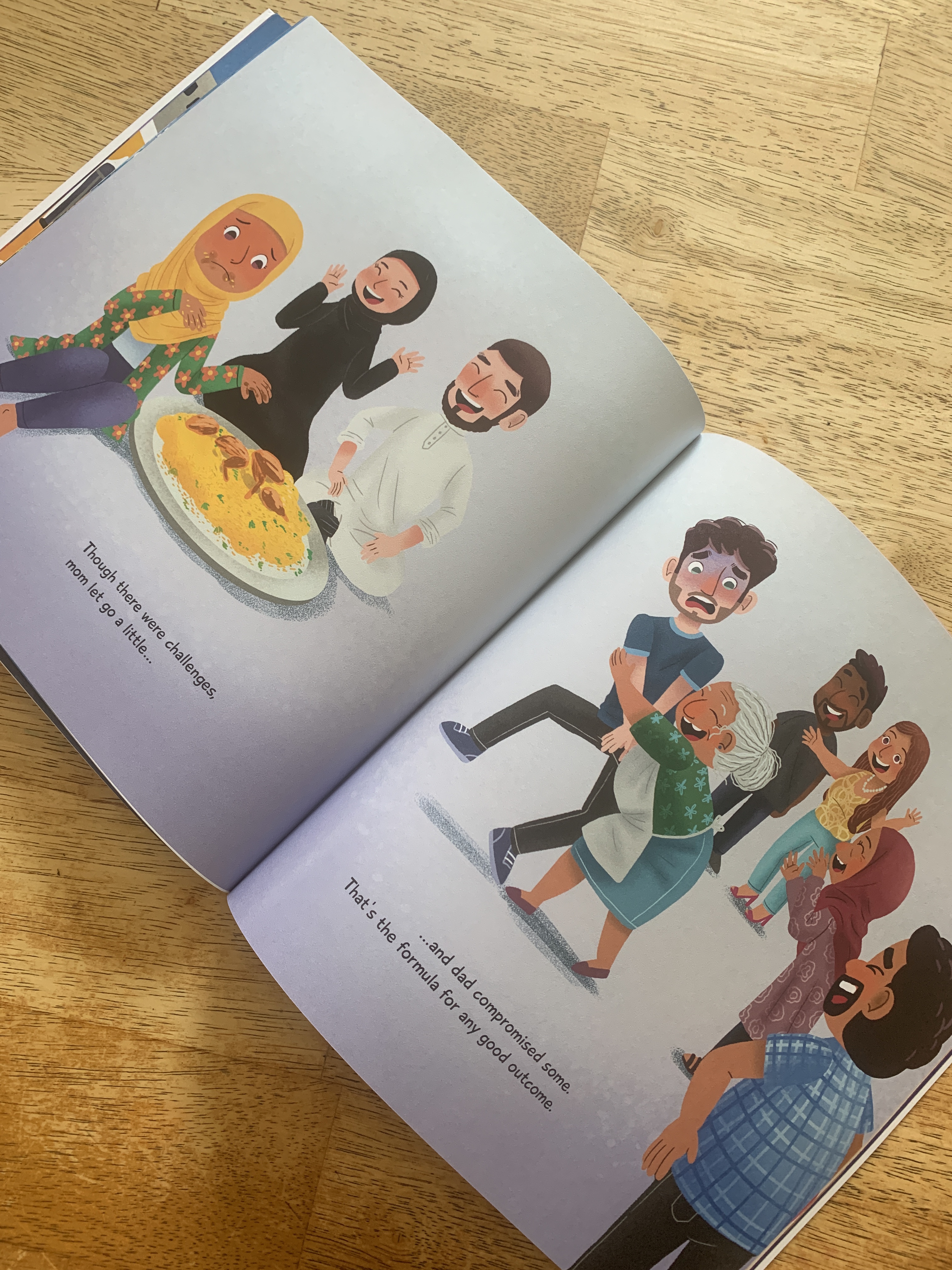
This sweet rhyming picture books discusses, focuses, and celebrates being a multicultural child.  Not the often seen child of an immigrant living in a society that is different than their parents, this story doesn’t even discuss where the child in the story resides, it just joyfully explores having a Brazilian mom and a Saudi father, while centering Allah swt in bringing them together.  The book highlights each culture, notes some differences, and acknowledges compromise, making this a reflective book for kids with parents from different cultures, but also a window of coming together that all readers can enjoy. Toddlers to early elementary will enjoy the 31 pages with bright engaging pictures and introduction to cultures and a topic not often seen in Islamic fiction, or any books for that matter.

The book is told from the child’s perspective as he breaks down his appearance and him being half his mom and half his dad.  He discuss the different sounds of Arabic and Portuguese, how meals are eaten, time is spent, people dress, and handwriting looks, without belittling or othering either culture.

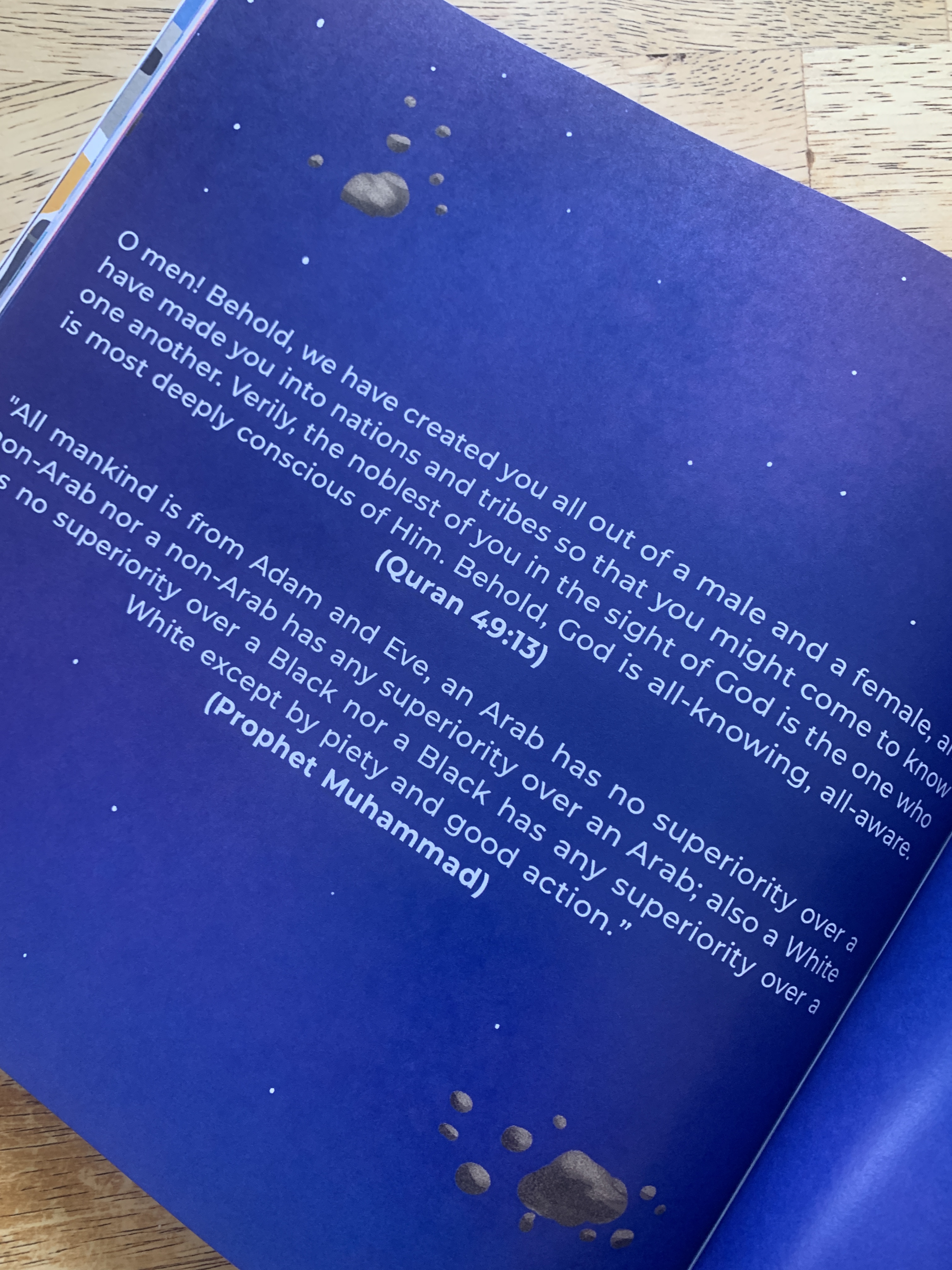
The little boy circles back numerous times that this is all Allah’s decree, that brought his parents from different parts of the world together.  It shows challenges and compromise at time, and ultimately love and smiles.  The book concludes with helping readers like him to feel seen and articulates Prophet Muhammad (saw) saying that no person is better than another based on where they are from.

The book concludes with an ayat from the Quran and a hadith, and is based on the author’s life. I can really see this book being used in a class as an introduction to a lesson asking kids to write their own family traditions coming together. It also works well at bedtime, or anytime.

You can order the book here

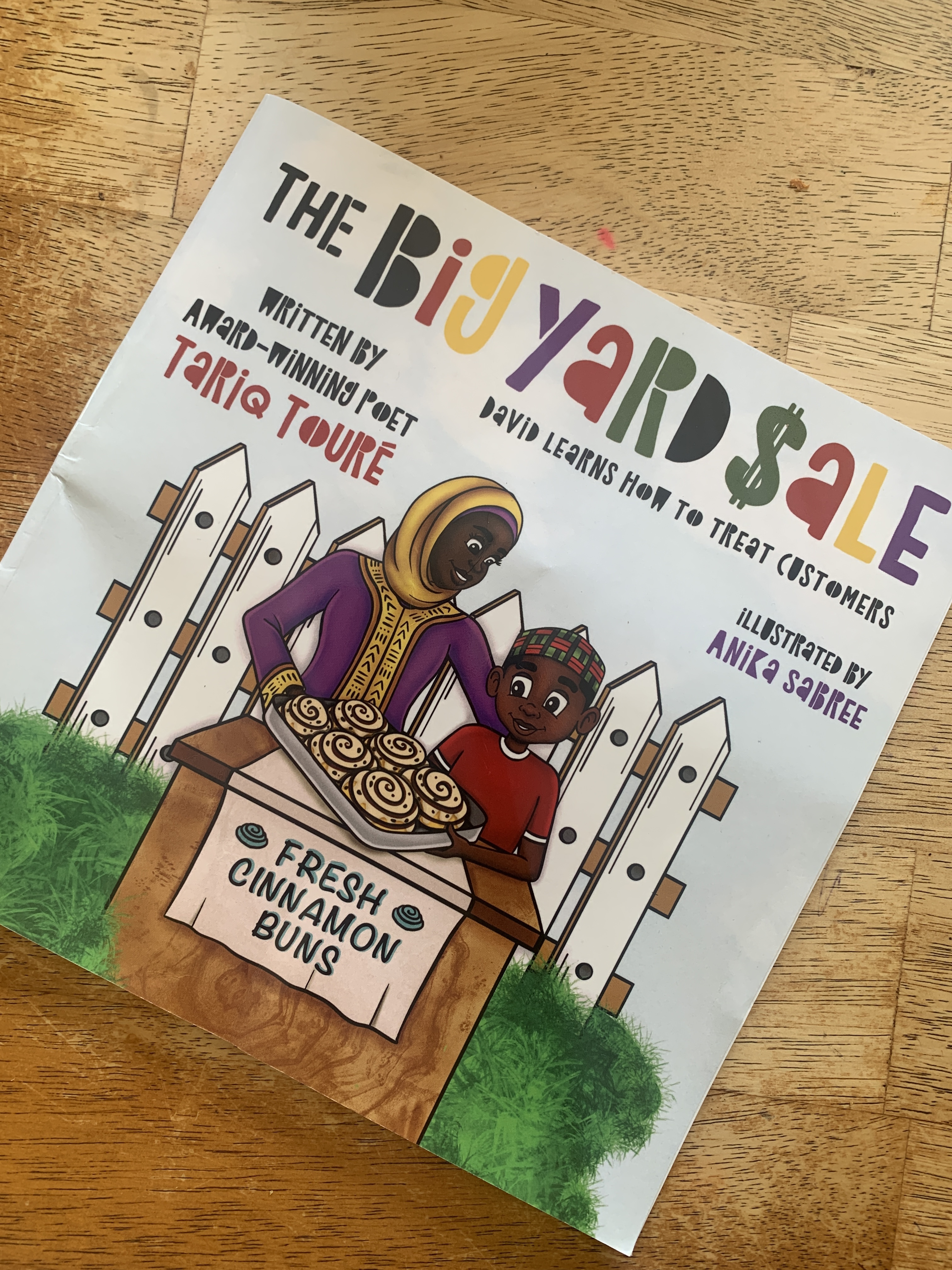
The Big Yard Sale: David Learns How to Treat Customers by Tariq Touré illustrated by Anika Sabree

Standard
The Big Yard Sale: David Learns How to Treat Customers by Tariq Touré illustrated by Anika Sabree

img_9753

David Kareem is back and learning how to treat customers at his neighborhood yard sale.  The 26 page rhyming poem, turned children’s book (note there is little punctuation) is brightly illustrated as it follows David on his selling journey.   With Mommy’s baking and guidance on how to treat customers, his Saturday morning offers lots of lessons, mistakes, learning, and entrepreneurship for David and the reader alike.  There is a hint about a smile being charity, an Imam stops by, and David puts on a kufi.  It has good lessons and the same community vibe as the first book David’s Dollar, with visible Muslims in the illustrations and with Muslim names in the text throughout. But there was a page with two typos which disappointed me, a changing number of cinnamon rolls, and when the copy arrived it was pretty damaged and bent (probably/possibly not the fault of the author, but it cost $25 through the preorder Launchgood, so disappointing none-the-less, alhumdulillah you can now purchase it here from Amazon for $12).

David wakes up and hears commotion outside, he thinks he left a toy on, but soon realizes the neighbors have their stuff on tables and are selling things.  David wants in on the action, but can’t figure out what to sell.  He seems to gather up some toys and household items in the early illustrations, but ultimately it is about him selling his mother’s cinnamon rolls.  She is a baker, and is testing them out, but he says he only needs five and is off to peddle his wares.

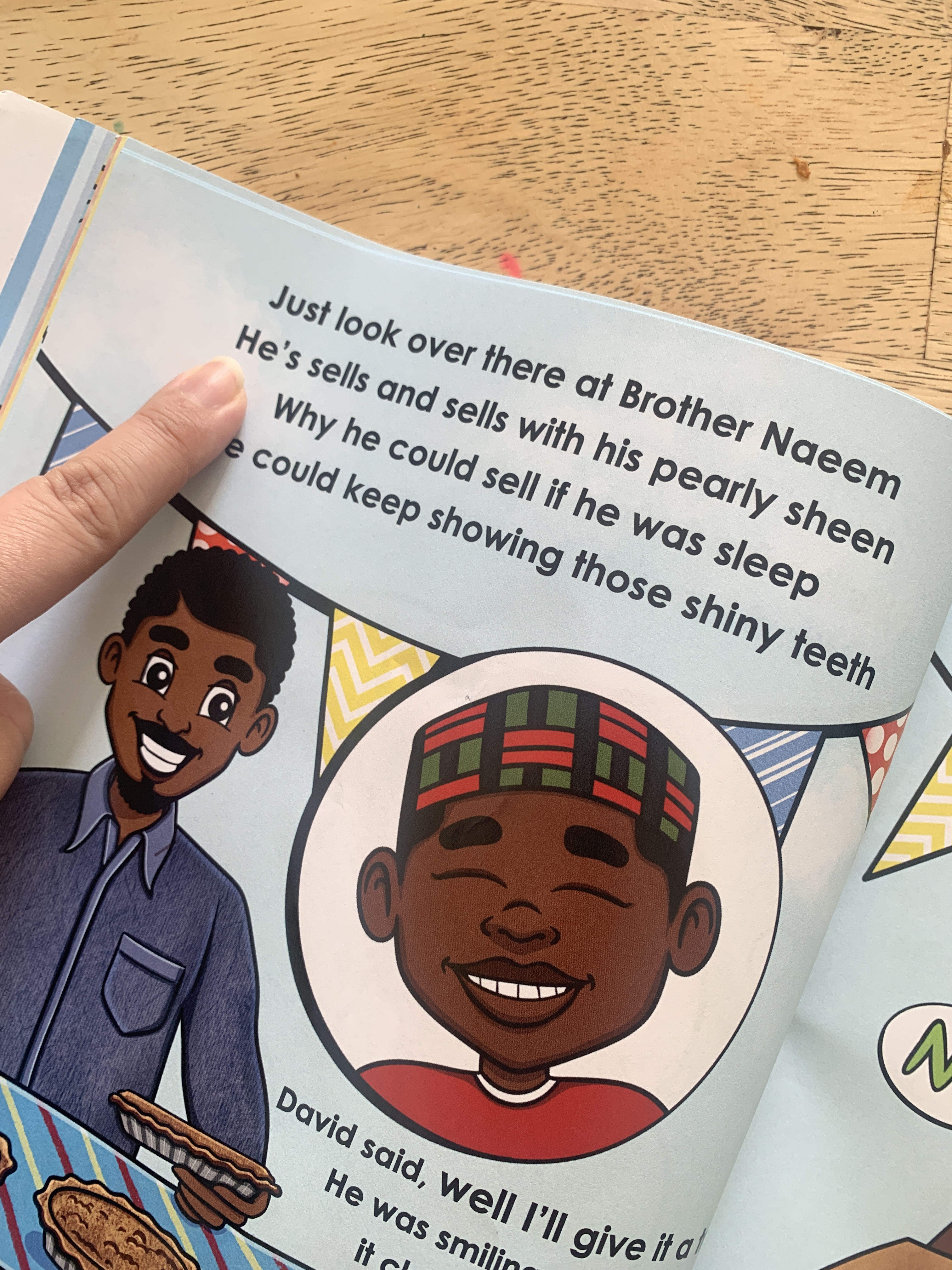
The first costumer comes, and leaves, he asks his mom what he did wrong, and she advises him to adjust his attitude by smiling.  They look at Brother Naeem as an example. The next costumer comes, but asks if he can warm up the now six cinnamon rolls in the illustrations.  David says no, and once again he turns to his mom to find out why.  She tells him that “the customer is always right” heads off to get a heat lamp, and uses Sister Khadijah selling beads for reference.  When Imam Musa comes, David completes the sale, but Mommy says he needs to learn gratitude.

img_9757

One page has “He’s” when it should be “He,” and “sleep” when it should be “asleep.”  I get the lack of punctuation is stylistic, but I don’t feel like these two on the same page are intentional, they just seem erroneous, and being that they are on the same page, makes it seem like the page was just missed perhaps in editing.

Overall I enjoyed the presentation, representation and content of this book and am glad I preordered it months ago. I wish it had a smidgen more Islam in it, but I think this book would be great in an early elementary story time with recently traditionally published books about business for a similar demographic, including the author’s earlier book, David’s Dollar. Teaching kids about entrepreneurship, ethics, gratitude and doing it with Muslim characters is incredible to see and important to share.

Yusuf and Yusra’s Spooky Dilemma by A. Dawood illustrated by Fatimah Farooqi

Standard
Yusuf and Yusra’s Spooky Dilemma by A. Dawood illustrated by Fatimah Farooqi

This 54 page early chapter book about a Muslim kid being tempted by Halloween somehow didn’t really center Islam much, it didn’t explain the origins of Halloween, and it meant well, but I didn’t get the messaging, it actually felt othering.  Young Yusra lies to her parents, gets a costume, attends a school Halloween party, and then once caught goes out to lunch and taken to a museum with her brother and friend Fatima. At the museum the vibrant room is the “From Around the World” exhibit, and the depressing room is “The World Around Me.” the dichotomy is stereotypical and presumptuous without sufficient insight.  The book’s concluding lesson being, don’t give in to peer pressure and feel like you have to celebrate something that isn’t right, “think of all the millions of Muslims in the world not celebrating.”  Wait? What? That is the exact same thing- do or not do something because other people are doing or not doing it! Literary wise there were numerous paragraphs and pages I had to reread to know who was talking, the side characters were underdeveloped as they would get mad and storm off and then be chatting shortly after, and at the end, Umar completely ceased to exist.  Having already reviewed the other title in the series Merry Dilemma, I’m going to allow myself a little forgiveness in comparing the two books, as I would imagine many consumers will buy both, and I found the messaging and presentation in the Christmas book, a lot stronger in facilitating conversation and reflecting Muslim kids’ stresses, than this Halloween book was able to do.  The discussion of Isa (A.S.) and the messaging of what Christmas means and why it is problematic for Muslims was more clear and allowed me to overlook some of the literary inconsistencies and weaknesses; I’m glad I read it first.  If you read this with your kids plan to supplement and discuss because the book does not leave you feeling like you really know why Yusra, or Muslims, don’t celebrate Halloween.

SYNOPSIS:

Halloween is here and Cedarcrest Elementary is throwing a huge party.  Yusuf isn’t going, he knows Halloween isn’t for him as a Muslim.  Family friends, Fatima and Umar, aren’t going either.  But Yusra’s best friend Amanda is really excited, and Yusra thinks she can just help Amanda celebrate, it is just for fun any way right? It isn’t like she is celebrating, she will just be there.  She tells her parents she can’t miss school, her dad buys her a costume, not for Halloween, just for dress-up, and now she is at the school party with glitter and candy and a whole lot of guilt.

WHY I LIKE IT:

I like that the parents try and meet the kids where they are.  I think a lot of Muslim parents buy candy and costumes on clearance the day after Halloween so their kids can still have treats without partaking in trick or treating and enjoy imaginative play after the holiday.  The book having the costume being purchased before the holiday, thus is a relatable occurrence.  Yusra wanting to go is also believable.  But, the parent’s letting it play out to their fourth grade daughter actually lying about a quiz and going to school is a bit of a stretch.

I struggled with the lack of explaining why Muslims don’t celebrate Halloween and what the origins of Halloween are.  It said I don’t do it because I’m Muslim, I don’t celebrate because my parents told me not to, and thank you for explaining it aunty- but in fact, there was no explanation.

The writing wasn’t great.  At one point it says, “Let’s go to the frozen food section we need milk and cereal.”  There were multiple places I didn’t know if Yusra or Yusuf were talking, they sound the same age and I don’t think they are twins, but maybe they are, they are family friends with a brother sister: Umar and Fatima at their school, but Fatima is not in Yusra’s class either, the school vibes feel more junior high than elementary. Back to Fatima though, she gets mad when Yusra doesn’t take a firm “Muslim’s don’t celebrate Halloween position” with Amanda and she walks off being labeled a party pooper, but after school everything seems fine. The plan is all four Muslim kids will hang out instead of going to school for the party, but Umar is not with Yusuf and Fatima when they bust Yusra, or at the museum, so where did he go?

The messaging hinges on Yusra’s guilt.  I don’t know that the book explores it enough, doesn’t have her struggling with it a lot, so it comes across that it is more the getting caught that caused the realization.  She remembers Allah swt when caught, she apologizes to her mom, which is good, but not celebrating Halloween then seems more a family expectation not a religious no-no.  Ultimately the book felt a bit like a missed opportunity to explain the origins of Halloween and let the child decide what to do based on their understanding of Islam and the holiday.

FLAGS:

Lying, going to a Halloween party.

TOOLS FOR LEADING THE DISCUSSION:

I have a few teenagers and a 3rd grader and a toddler, I don’t think this book will do much to foster communication and deepen their understanding about Muslims and Halloween.  For my oldest three when they were in early elementary, we would listen to a NoorArt CD Qu’an for Little Muslims it had a track about Halloween that seemed to work when they were young: you can listen to it here.

If you think this book will work for your needsthough, you can order it here.