This middle grades companion book to Amina’s Voice, reads in much of the same way as a lot of Hena Khan books in that I feel she is presenting Pakistani Muslims in America to non Pakistani non Muslims in the west. In the first quarter or so of this 288 page book that takes place in Lahore, I felt a different tone than really spoke to me. Granted I am (half) Pakistani and Muslim, but when Amina says good-bye to her family, I was in tears. It was relatable and powerful and so real to me that I got emotional, the rest of the book, sadly, not so much. It’s not to say that it isn’t well written, I just feel like the majority of the book are borderline issues for many Muslims looking to see themselves in literature: music, school dances, boy/girl friendships, and when presented that a religious family is permitting and celebrating of these issues, it seems to be trying to make us fit in, rather than support us for holding to a different perspective. There is a lot of good in the book about finding your voice, sibling and family relationships, friends, and challenging stereotypes, that I think the book would be great for some 3rd graders and up. However, if your family is against the aforementioned potential flags you may find the book that talks about reading Quran and praying makes the characters harder to separate from your own kids, you may want to hold back in recommending it to them. Don’t get me wrong the book is clean and well done, I just know from personal experience that sometimes when characters do things that you family doesn’t agree with it is easier to say that those things are for them, not us, but when the family doing them looks a lot like your family, you have to be ready to explain the differences.
SYNOPSIS:
Amina is in Lahore exploring the city with her brother and cousins. She is visiting her uncle who had come to visit in Amina’s Voice and as the trip comes to an end, she doesn’t feel like she is the same person that came to Pakistan a month ago. She is closer to her older brother Mustafa, she feels connected to her extended family, and she is growing more comfortable with pieces of her self she didn’t know existed before. Excited to go back to America and tell her friends about her summer, she finds they really aren’t interested, and she is unsure how to keep her promise to her uncle to show the world the beauty of Pakistan.
Once school starts, Amina is assigned a wax museum project in Social Studies that requires her to research and present a person that has changed the world. She picks Malala, but when she explains to her class at a midway check how Malala was shot for going to school, rather than feel inspired, her classmates feel sorrow that Pakistan is so backward and oppressive, the complete opposite of what Amina felt surrounded by such vibrancy and strength while in Pakistan. Determined to set things right, she reaches out to her cousins and uncle in Pakistan, except her uncle is back in the hospital and worry consumes Amina and her family, who are torn with being so far away from their loved ones.
At the same time Amina is feeling like her best friends Emily and Soojin are drifting apart. Emily is in chess club, Soojin is running for class president, and Amina just wants to write music, produce songs and sing. There is a new kid Nico, who is half Egyptian, and has music computer software that when he offers to help Amina produce music she says yes, and he starts spending a lot of time at Amina’s house.
Friends new and old along with immediate and extended family, love and support Amina and cheer her on as she finds her voice to share the beauty of Pakistan, fight for her friendships, and be content with all her pieces that make her unique.
WHY I LIKE IT:
I love that Amina realizes her culture is more important than following rules and her grade. She breaks from the assignment to spread light on more strong, brave Pakistani women than just the one, and is ok with her grade suffering as a result. I love that she realizes the headlines don’t reveal reality and that you have to see more than one side to the story. I love that she is religious and that the imam is cool and that her whole family is service oriented and compassionate. I love that her friends are diverse and their families are close friends as well. The sense of community established is carried over from the first book, and I think it gives the book a level of comfort that is pure and honest.
I have issues with Amina’s family being ok with her going to the school dance. She goes with her female friends, but to me it seems like a conversation is missing or she shouldn’t be going. It is mentioned that Mustafa went alone to a high school dance, but never explains why. Similarly, Amina is nervous about having Nico over and her family at times is bothered by it, but again it never specifies why. I feel like if there was a conversation about why her family would be weird about it or why she is nervous to tell her mom that the friend coming over is a boy then when Amina reminds her mom that her best friend in kindergarten was a boy and everyone was fine with it, or that when her mom asks if there is anything more than friendship going on, the reader would know why it is such a big deal. It seems to skip the explanation part and jumps from the nervous to have a boy who is a friend, to defending the friend being a boy, and skip the why part.
I didn’t get why Nico identifies as Muslim and Christian but never says salam, and I especially didn’t get why Amina’s mom was more relaxed when she thought he might be Muslim.
I also wish that after the whole emphasis on music, that the lyrics would have at least been shared. I was looking forward to it and was let down by it not being shared.
FLAGS:
Nothing blatant.
TOOLS FOR LEADING THE DISCUSSION:
I don’t think that this would work level wise or content wise for a middle school Islamic school book club.

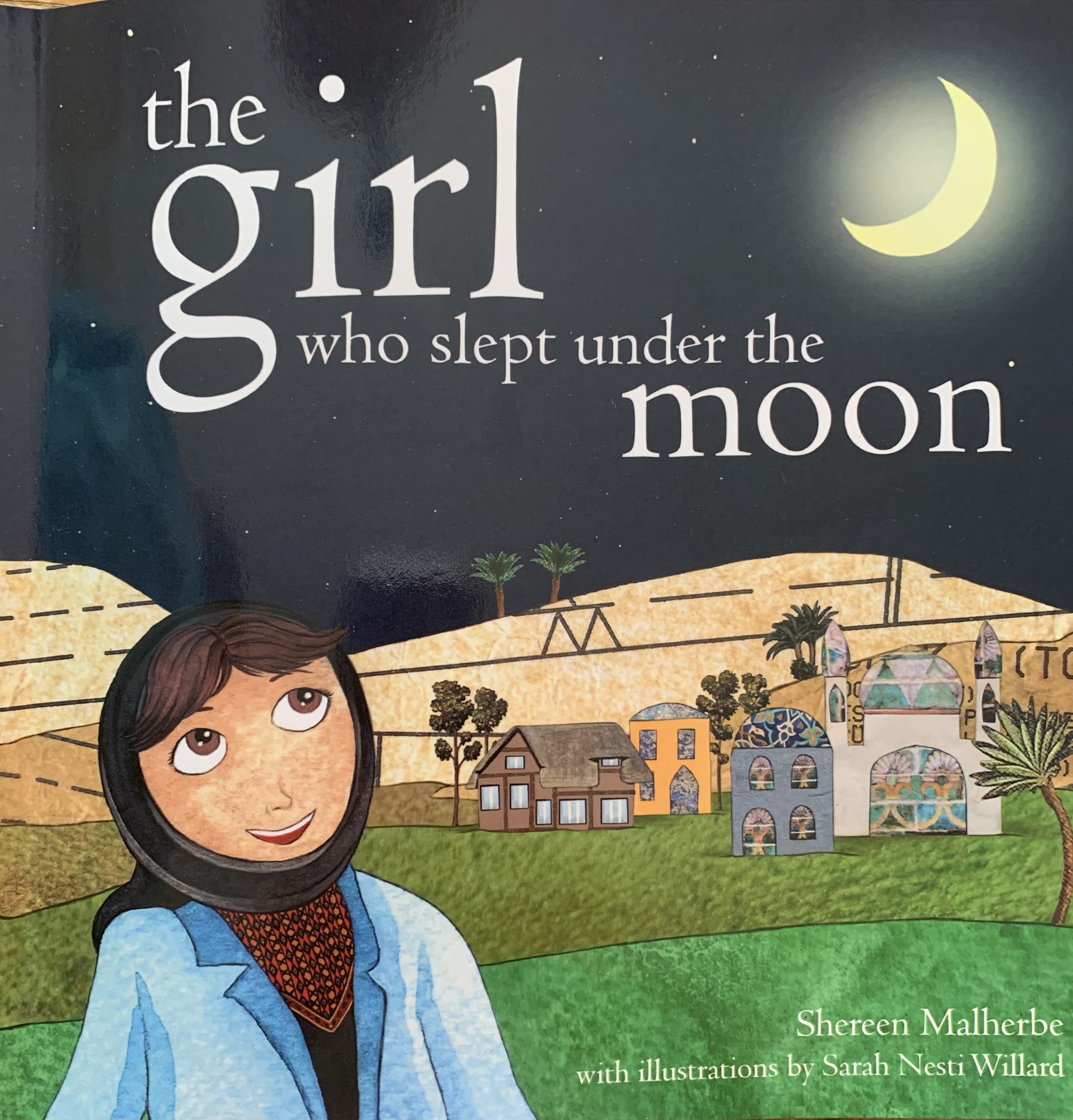


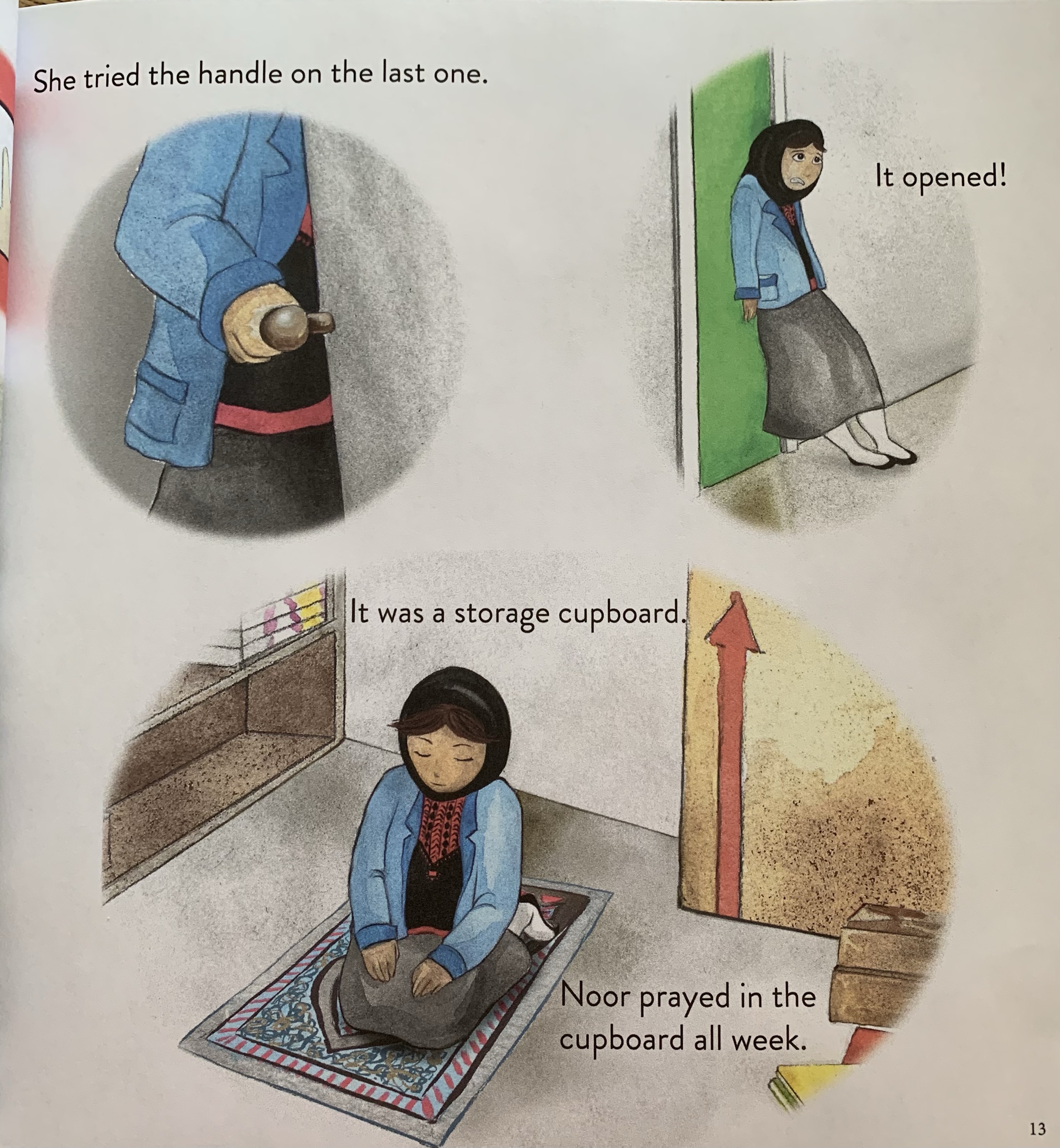
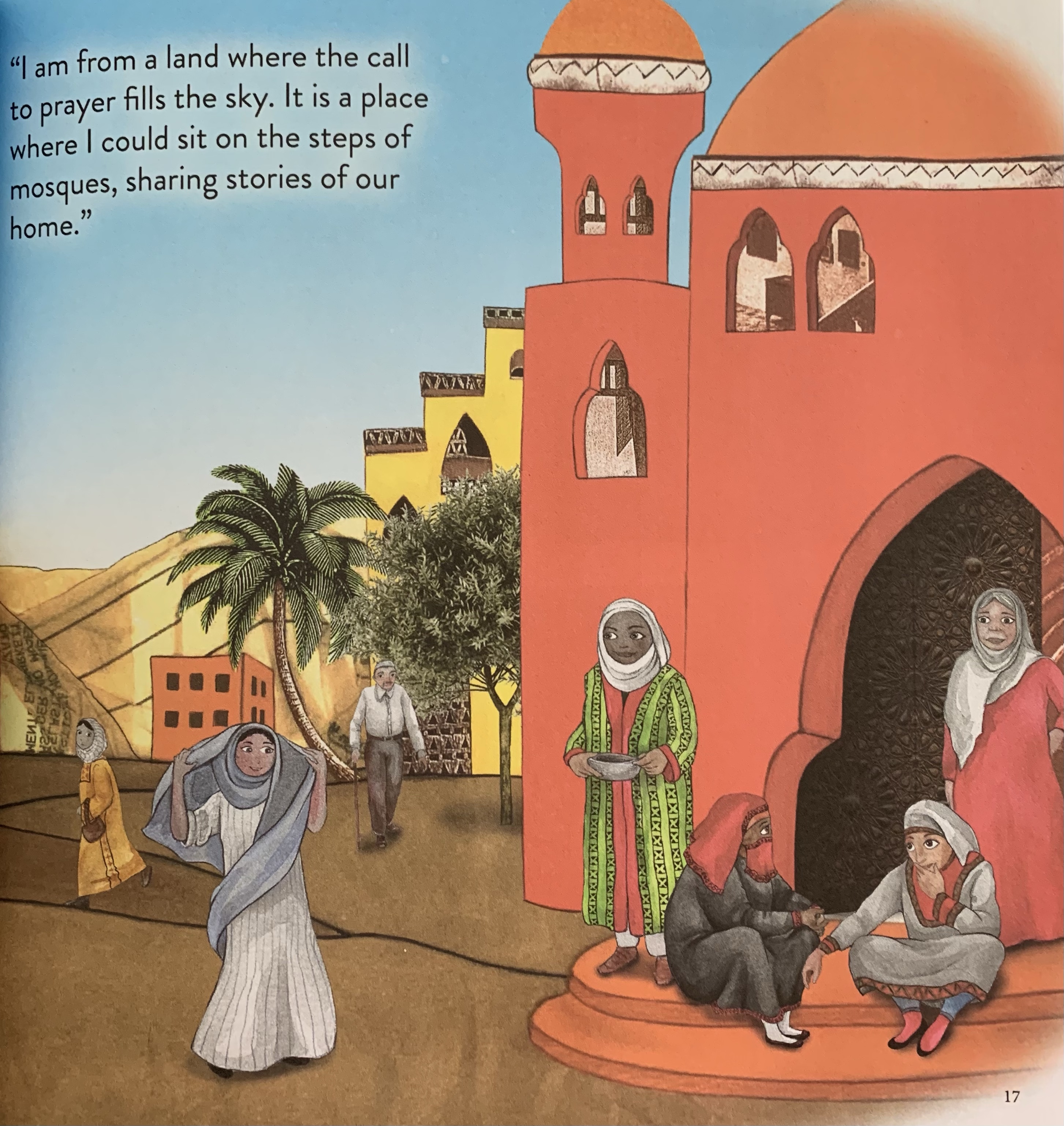













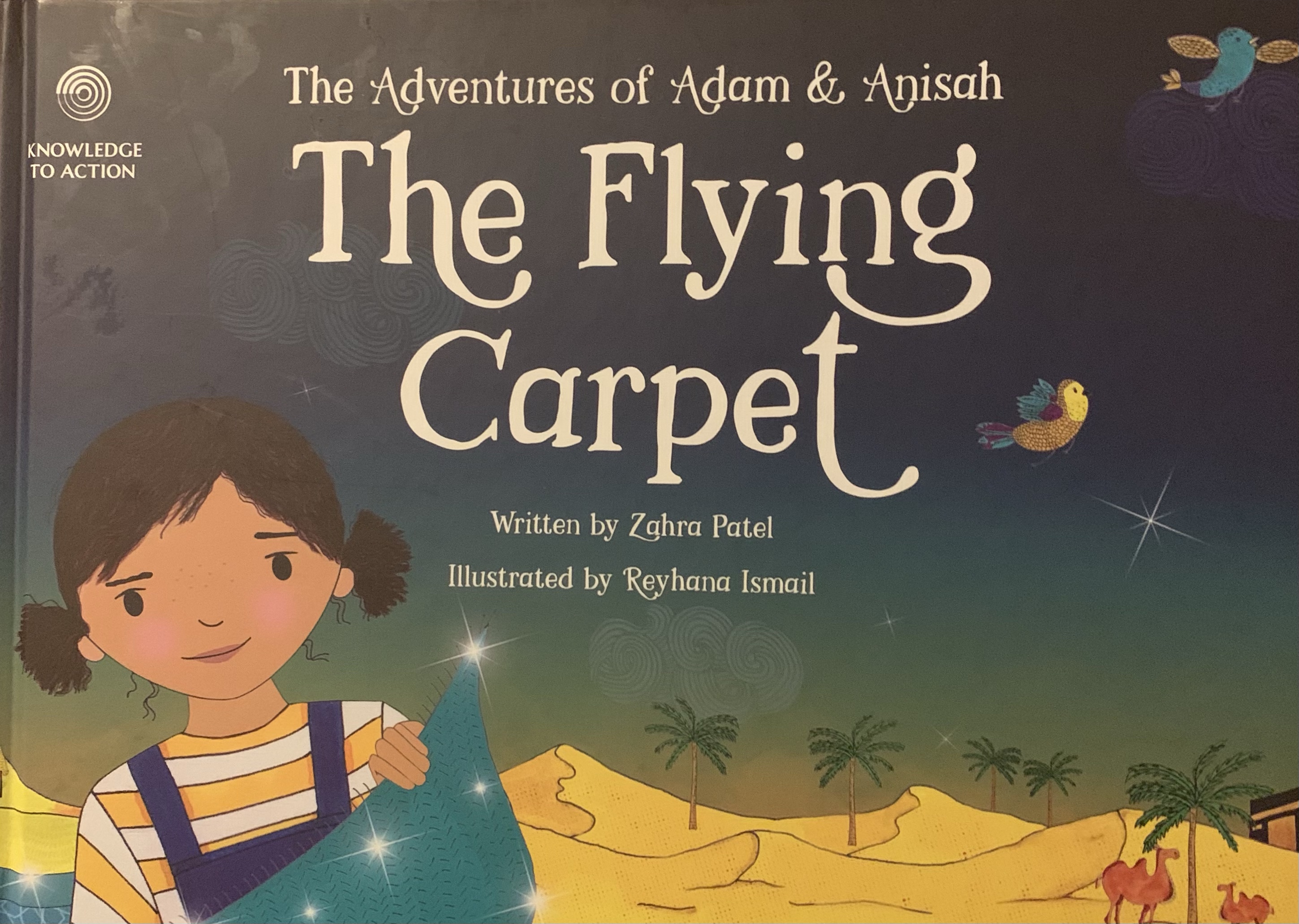 I am confident that every Muslim child has imagined their prayer rug at one time or another to be a flying carpet, so how absolutely heart filling as an adult to find a book that embraces this idea, roots it in Islamic fact and presents it so beautifully for our littlest Muslim believers.