Tag Archives: music

Music of the Mountains: A Story in Pakistan by Sabrina Shah illustrated by Manal Mirza

Standard
Music of the Mountains: A Story in Pakistan by Sabrina Shah illustrated by Manal Mirza

Set around an Eid concert in the North-West Frontier in Pakistan, a young girl must find her courage to play the rabab in front of an audience, even though she is still learning her first song. The beautiful illustrations of Manal Mirza and focusing on an under represented population, made me hopeful that this book would transcend the musical focus and weave in Islam and culture. Sadly, though, the book falls victim to cliche lines that mean nothing, and a story that doesn’t make a lot of sense once you move past the superficial attraction. The backmatter infographics about the rabab, where it can be heard, details about the Pathan/Pashtun people, What Eid is, the traditional clothing, and a Pashto Glossary, add to the vibe of the book, but still fail to offer any specific “hospitality, courage, and rich traditions,” that are only ever referenced in generalized terms and statements.

The book starts with Roohi’s favorite time of day, the sun is settling behind the snow capped mountains and her family is gathering around to listen to her grandfather, Neeka Baba, play the rabab. No they aren’t praying maghrib, or breaking their fast, so presumably it is not Ramadan.  When Neeka Baba plays, “songs full of rhythm echo through the cherry blossom hills.  Songs from long ago tell stories of folklore, heroes, and love. . . songs of Roohi’s ancestors.” A beautiful sentiment, but it is not a thesis statement or main idea of the book as we, the reader, never learn about her ancestors, or folklore, or about the culture.” We are just told they all had courage, and she needs to channel that strength.

She will need strength to play the rabab at her school concert, except remember “she hasn’t even learned a whole song yet.” She also worries she won’t be as good as her grandfather, but presumably he has been playing longer and she is just starting, so I never connected why she felt she should be as good as him.  No one in the story compares them, or says she should be as good as him, or even strive to be as good as him.  There is nothing that hints that this is even a part of the characters development other than the repetitive refrain that she must “play with the courage of those who came before her.” So the cathartic release of being told “to play like yourself” also seems forcefully contrived and not a natural arc of growth and understanding.

As Eid creeps closer, Roohi has lessons with her grandfather on the rabab, and then Neeka Baba coughs and is in the hospital. The reader has no idea how this man falls ill, or recovers, if it was sudden or a known affliction, but he is no longer the focus, the rabab is, and so the story continues.

At the school concert, Roohi is introduced as playing music from the North-West Frontier Province.  Hold up, yes I thought I skipped a page.  They live in the North-West Frontier, don’t they, this is a school concert? What an odd introduction, did they travel? At the end there is a “smile as wide as the lush valleys back home.”  When did they leave home? And why a silent prayer, why not a “bismillah.” Isn’t the point of OWN voice to have the little details and the voice that can’t be imitated by researched work?

I am going to spoil the ending, she freezes, Mama and Neeka Baba help her find her beat in the audience and she steals the show so to speak. The ending is sweet, but not anywhere near as heartfelt as it should have been if the audience would have been shown the strength and courage of the Pashtun culture, not just repeatedly told it, felt the warmth of their hospitality, the rich ancestral values that would be threads that manifest in the music that she is hoping to share with others. Sadly we are just expected to know that they all exist and cheer for Roohi to succeed.

Disappointing, considering how fantastic the illustrations are, sigh.

Kamal’s Key by Rifk Ebeid illustrated by Sophia Soliman

Standard
Kamal’s Key by Rifk Ebeid illustrated by Sophia Soliman

This 44 page hardback book gently, yet powerfully, focuses on the Palestinian resistance symbol of the key, by sharing a multi generational tale of new beginnings, heartache, hope, and resilience. The writing is moving, and flows with simple lines, beautiful illustrations, and maintaining a focus on a singular theme. So often well meaning books about oppression, war, politics, try and include numerous details that the picture book suffers in its appeal to younger audiences, the opposite is often true with books being so generalized that it isn’t clear exactly where refugees are from or what turmoil is being discussed. This book strikes a beautiful balance of calling the incoming occupiers a dark cloud and not giving them space or attention, while focusing on Palestinian experiences through a lens of hope, joy, and love.

The book starts with the key. It is a beginning to Kamal’s home. It is on his belt at his wedding, it is the beginning of his and Huda’s new life starting together, a symbol of their home when their son is born. It is the beginning of Jalal’s imaginative play of using it as a dhulfiqar. It is secured around Huda’s neck when they are forced to leave their home, and find refuge in tents. It is hung when the tents become walls.

One day Jalal takes it down, when the hurt in his father’s eyes is too much for him to witness. When Jalal becomes a father though to Salma, the key becomes her toy, her microphone, her connection. When Kamal gifts the key to his granddaughter it becomes her art, her poetry, her necklace, a symbol of her hope and a people’s right to return.

I’ve read this story a few times to myself, as well as with my children, and I only wish it was a little larger in size. It works well one-on-one or with a few, but it is a story that needs to be shared in large story time groups, and the 9 x 9 inch size makes it a bit difficult.

img_8454-1

The book concludes with an author’s note, an illustrator’s note and a glossary, not just of terms, but traditions, concepts, and information about the song. I purchased my copy from Crescent Moon Store.

Hidden Fires by Sairish Hussain

Standard
Hidden Fires by Sairish Hussain

I will not be getting over this book any time soon. It broke my heart, and all my other critical organs, in the most delightfully well-done way possible, and undoubtedly I am better for it. I don’t read a lot of adult fiction these days, and with some diabetic retinopathy concerns, I couldn’t read the 384 page adult book about generational trauma, partition, the Grenfell Tower fire, family dynamics, bullying, self-harm, and resilience, but was pulled in to the audio book version instead. The Desi-British voices of Yusuf, Rubi, and Hassan were refreshing to my American ears.  The multi-perspective book told in parts richly develops the characters, their relationships, and their current, past, and future struggles.  The author is Muslim, as are the characters, and while they all practice in their own way, it is undoubtedly who they are, and their Islamic identity is not questioned, feared, blamed, or apologized for.

SYNOPSIS:
The book weaves three distinct voices. Yusuf, is an 80 year old an immigrant who lived through partition, raised his family in the UK, has lost his wife a year prior, and is struggling with haunting memories of the past, failing health, regular loss of friends, and loneliness.  Hassan, Yusuf’s youngest son is a workaholic who is married to a non Muslim, non Desi who is suffering from fibromyalgia and who’s mother unexpectedly passes away in Spain.  Rubi, is Hassan’s 16 year old girl who is overweight, bullied, lonely and about to take her GCSE exams when she is dumped on her grandfather Yusuf’s door while her parents head to Spain.  The book opens in Ramadan the night of the Grenfell Tower fire and the horrific event affects them all, stirs memories, and shapes futures.  From there the layers of each character slowly unravel as they cope with the swiftly changing present as they desperately work to break free from the past.  As dementia plagues Yusuf, Rubi finds purpose in being needed, and Hassan is forced to re-prioritize his life before it is too late.

WHY I LIKE IT:
The book takes a slow approach to building up the characters and their back stories. It is almost feels like world building as a book would if it were a fantasy, it doesn’t info dump, but at some point the hooks are so deeply embedded that you really cannot leave the characters and their world and you have to finish the book, just to ensure they are ok.  Because I listened to the book, I feel like there might have been some Islamic content that was not completely ok, but again I was having vision issues and couldn’t note where to go back and check.  I think it is fine, and because it is an adult read, I think the audience can discern accuracy, but please know, I’m not 100% green lighting the Islamic rep.  It is undoubtedly well done and fasting and praying are a part of the characters, but their relationship to their faith and their understanding of it, is presented as theirs, it doesn’t get preachy or make broad statements about Muslims everywhere or Islamic doctrine.  

FLAGS:
There is body shaming, self-harm, trauma, death, torture, killing, lying, abuse, fear, guilt, dementia, bullying, assault, physical violence, drug use (mentioned), attempted suicide (mentioned), music, theft, make-up, close male and female relationships, Muslim marrying a non-Muslim, hallucinations.

TOOLS FOR LEADING THE DISCUSSION:
I think mature high school seniors or possibly even juniors could benefit from this book with discussions.  I think Rubi’s voice tied to her father and grandfather, will really open up youngsters perspectives, and provide a great vehicle to hear their thoughts, fears, worries, concerns about body image, self harm, aging grandparents, accessibility to parents, etc..

The Great Henna Party by Humera Malik illustrated by Sonali Zohra

Standard
The Great Henna Party by Humera Malik illustrated by Sonali Zohra

img_3465-1

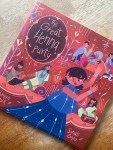
This 32 page story shares a desi family at a henna party before a wedding.  There is nothing Islamic in this book by a Muslim author, it is simply cultural.  The story on its own is fine.  It is sweet and joy filled, as a girl tries to decide who’s name to have hidden in her henna design.  I do wonder though, if the book is meant to be a window into desi culture, why the Urdu word “mehndi” isn’t used instead of henna.  It mentions it in the backmatter, that mehndi is the Urdu word, but it seems a little inauthentic and western gaze presenting throughout the story, and honestly I really struggled to get past it.

img_3466-1

The book starts with Noor entering the henna party, the night before her cousins wedding, to sing with the ladies of the family and have their hands painted.  Her mother asks her if she knows about the name game, where the bride hides the grooms name on her hands, and if he finds it, he wins, and if he does not, the bride wins. Noor asks if she can hide someone’s name and her mom says yes, just tell the artist.

img_3467-1

She watches her dad setting up decorations and wonders if she should have his name hidden.  She then sees her Mama playing the dholki and singing and wonders if she should hide her mother’s name.  She continues through various family members before making her decision.  Along the way the reader learns about the music, the food, the clothes, and how the paste dries and leaves a color.

img_3468-1

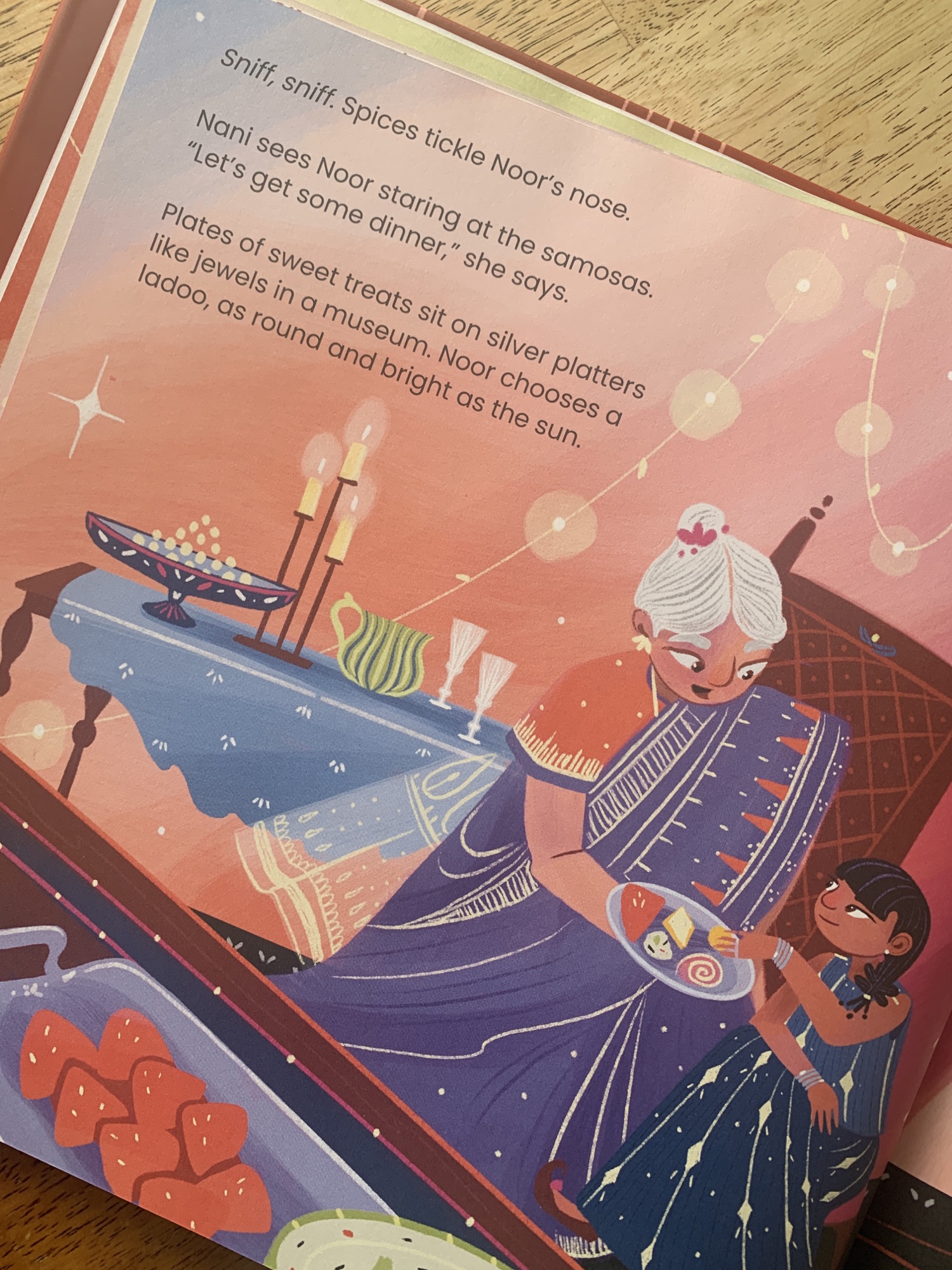
The page on food starts with spices, then talks of samosa and then they are eating ladoo, and while I’m glad there is not a glossary, I don’t know that the lacking context clues make any of those scrumptious foods known. I do like that her grandfather helped her pick out her lehenga, and her father is shown decorating to show full family involvement.

Ultimately, though I think the tricky thing about cultural weddings, is that every family has their own traditions, and while in a desi wedding some things might be widespread, when presenting them to readers outside your culture, it is hard to know how they will be perceived.  I almost feel like this book makes it seem that every family hides names in the mehndi as a staple of the festivities. And based on other reviews I’ve read, people seem to feel that this is insightful into the culture, or that hiding and finding names has more weight, a stress even, than just being fun.

img_3469-1

I could be over thinking it, but it feels like even the backmatter is trying to cast a wide net over every religion and culture that uses henna and ends up being oddly vague in this specific example.  Like I said the book is adequate, I like that the little protagonist Noor, loves so many people and solves her dilemma on her own, it has plot, and conflict and resolution, it just seems to lack the exciting tone and thus fails in immersing the reader into the henna party.

If You See a Bluebird by Bahram Rahman illustrated by Gabrielle Grimard

Standard
If You See a Bluebird by Bahram Rahman illustrated by Gabrielle Grimard

This cultural picture book shows life of an Afghan family before fleeing the country and after.  In the flashbacks the women are wearing hijab, now in the west they are not.  I debated if I should do a complete review or just a Muslim in the illustration tag, and ultimately decided to do a review so that I might document what I fear is a new trend.  In the last ten years most Afghan books addressed international involvement, the Taliban, and refugees, but seemed to still feature Islam and the characters as Muslim.  This book carries the refugee theme, but Islam is seen in the “before” illustrations only.  Another recently published book, The Carpet: An Afghan Family Story, similarly contained no Islam, but interestingly also kept it out of the illustrations.  Realistically, I know that two books don’t make a trend, but with the change of politics in Afghanistan, I think the OWN voice narratives are important to watch and be aware of.  In the past an Afghan book would be conflated with also being an Islamic rep book, and I don’t know if that will continue to be the case.  I also don’t know what the take away impression would be upon a kid if they were to pick the book off the shelf.  Would they find the head coverings in the unsafe country and the lack of hijabs in the safe country as a message about Islam, would they understand the politics, would they even notice?  The sweet story of a boy picking berries with his grandma involves music, wishing on birds, and reflecting on the violence that forced them to leave Afghanistan.

The book starts with Ali and his Nana waking up early to pick blackberries.  They don’t want to wake his exhausted parents, and quietly pack a lunch and get on their bikes and head out.  The blackberries are not as sweet as the mulberries he remembers from Afghanistan.  Suddenly he misses home.

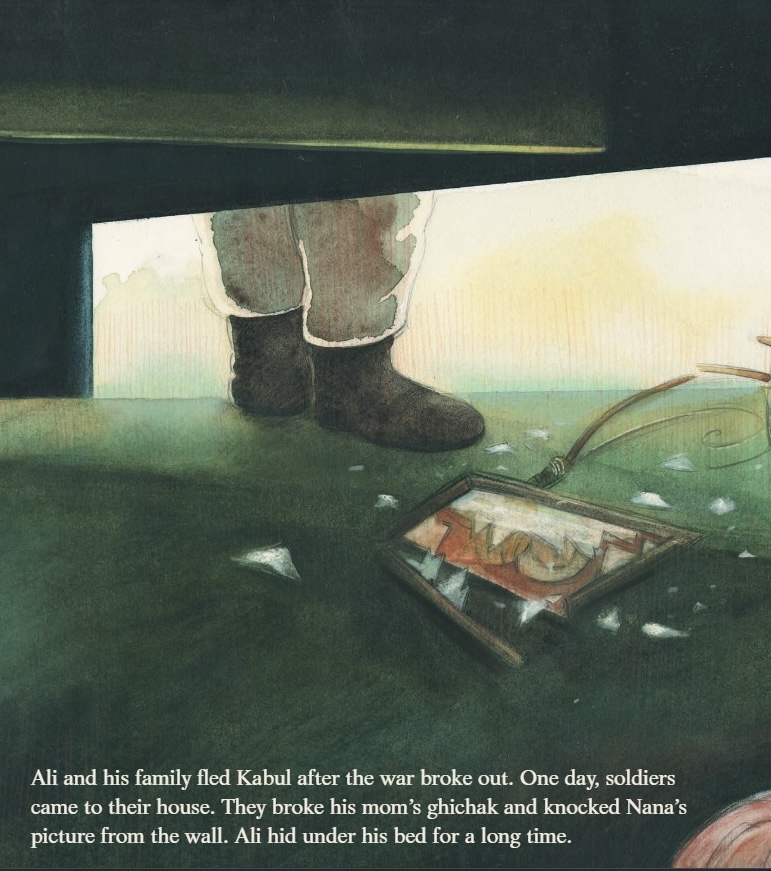
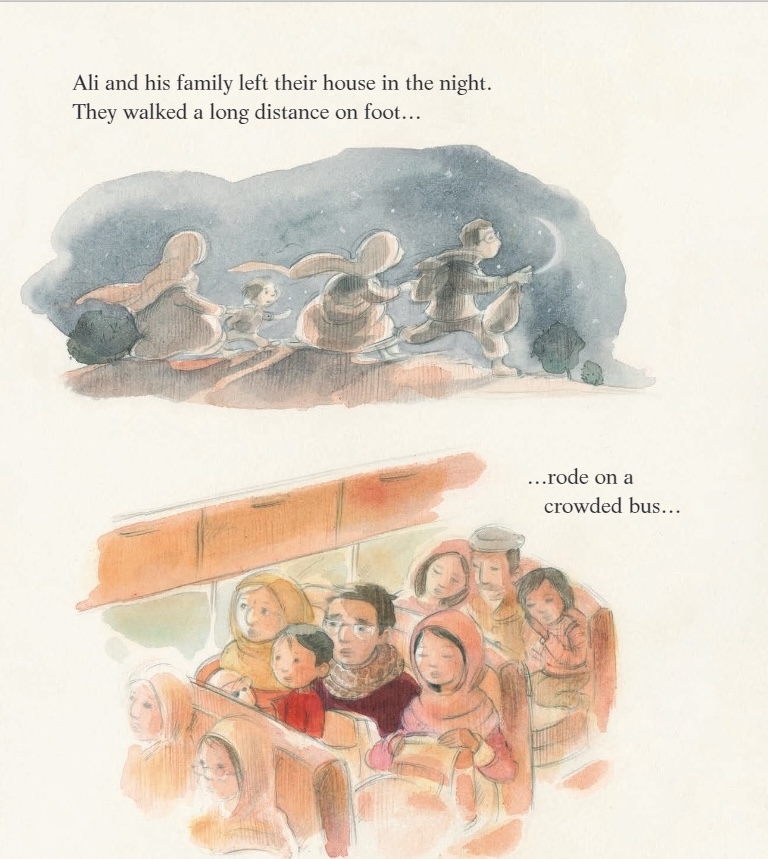
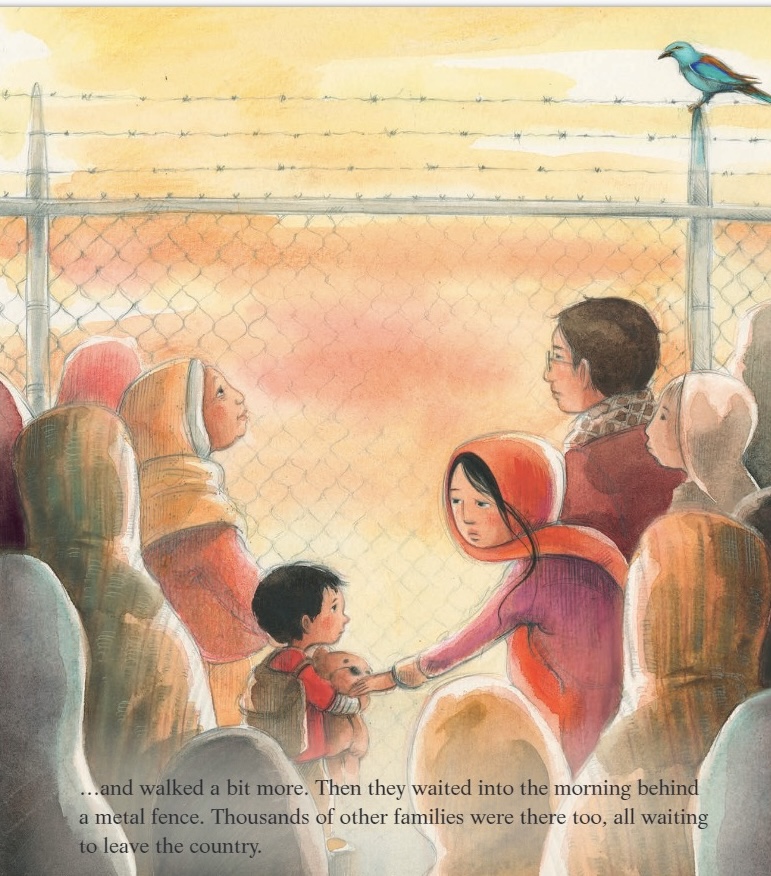
The family left Kabul after soldiers came to their house and they knew it wasn’t safe anymore.  He couldn’t bring both of his stuffies and the family left on foot at night.  They rode a bus and waited behind a fence before they boarded a plane.


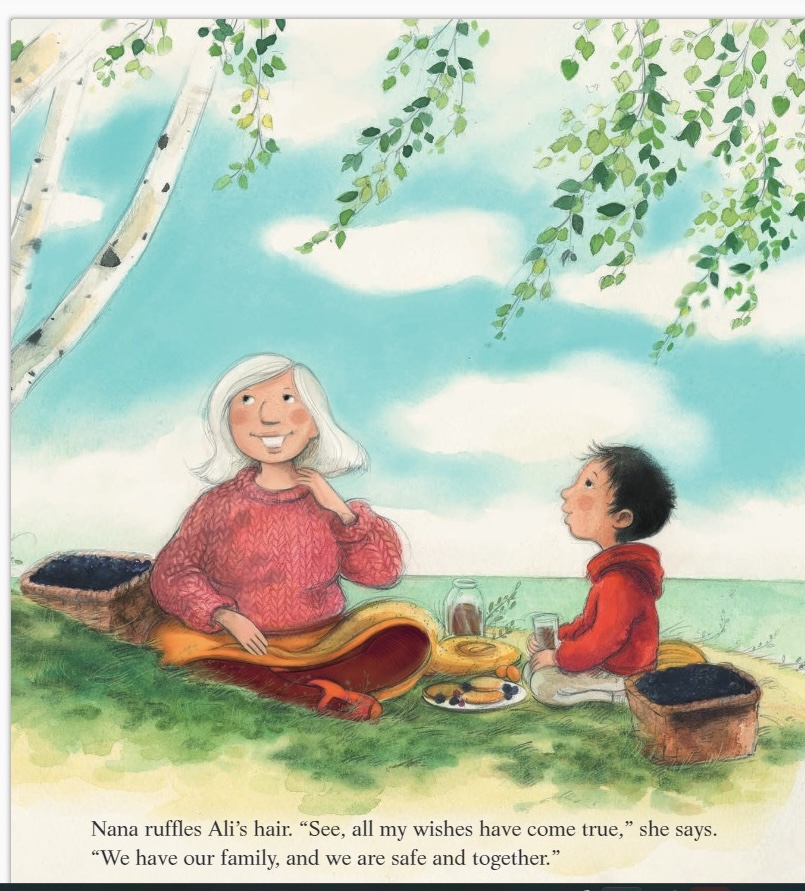
Back in the present the two eat their picnic, when a bluebird arrives, Nana tells Ali to make a wish before it flies away.  Nana says all her wishes have come true: the family is safe and together.  Ali is whisked back to sitting beneath the mulberry tree with his parents laughing and his toys around, he wishes for home.  Nana explains that home is not a place, it is the love you have.  The book concludes with Ali appreciating his loving family and his new “home.”

Girls Rock: Indonesia by Claudia Bellante illustrated by Josefina Schargorodsky

Standard
Girls Rock: Indonesia by Claudia Bellante illustrated by Josefina Schargorodsky

img_8112

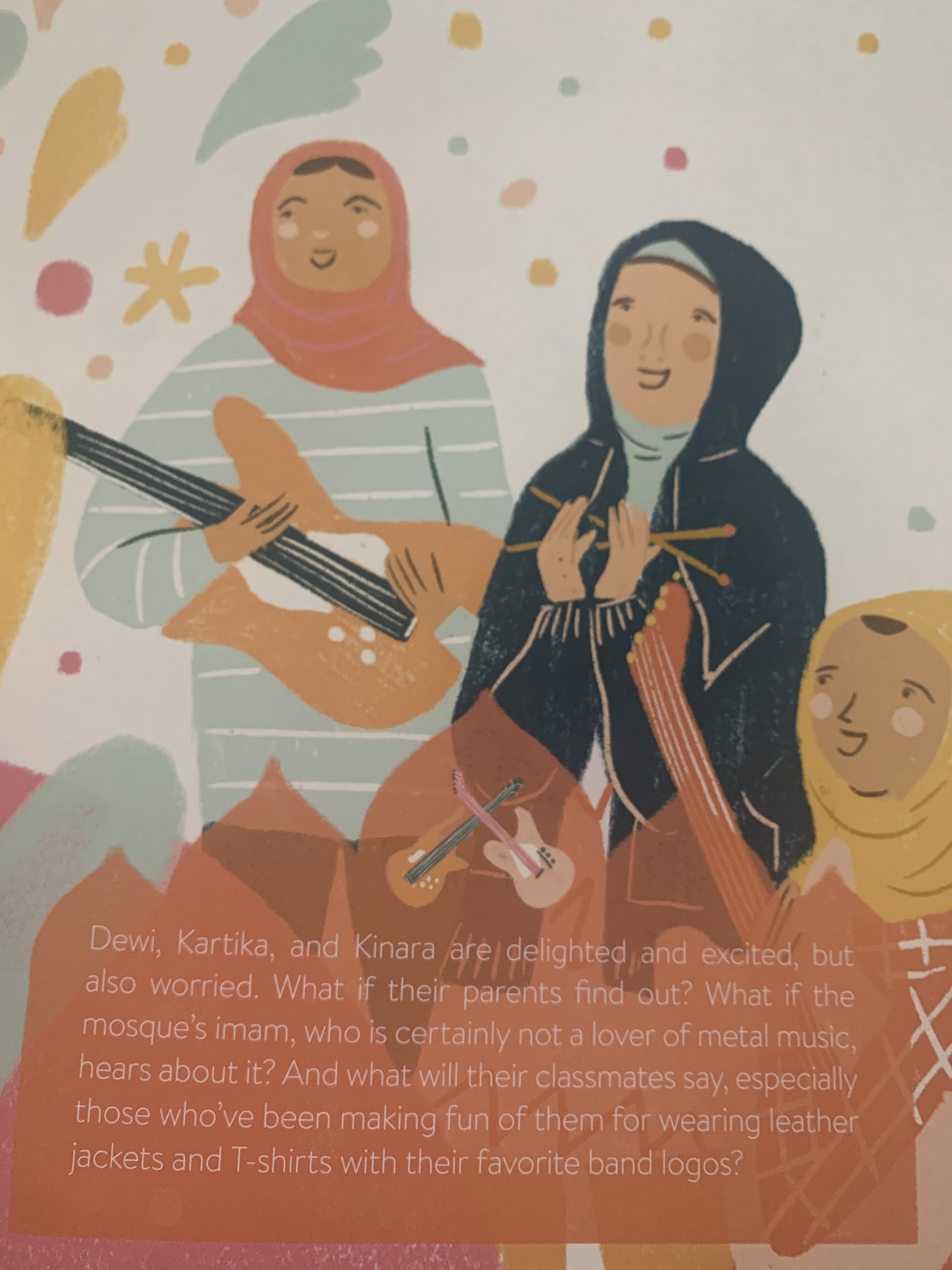
This book is part of a series that claims to want to bring the world closer to American children.  It is based on a true story, with noted liberties taken regarding the protagonists, and yet the Author’s Note says she went to Indonesia and was unable to meet with the characters whose lives the book is about.  I am not against non Muslims and non Indonesians per se writing a book about Muslims in Indonesia, nor am I naïve to the fact that music inspires many and radicalism is a real threat, but to conflate ideas without explanation, and not containing that OWN voice authenticity or biography feel, really leaves this book fighting against self made stereotypes and trying to seem woke and relevant while maintaining a very Western American paradigm of what it means to be happy and fulfilled.  The book (and series) may have had good intentions, but it just felt off to me, and with a publisher suggested reading age of 5-8, I think this book assumes too much about the readers prior understanding of hijab, Quran, Indonesia, music, heavy metal, radicalization, small village life, culture, Islam, Quran, imams, and prejudice and fails to assist in connecting the concepts, opting to use them interchangeably and ultimately making the 32 page book rather pointless.  I think if older children read it, it is one of those books that makes one feel like they are cultured and supportive of those breaking stereotypes, but I think Indonesian and Muslim readers will just be confused about why a book is supporting sneaking and lying and why music is ok, but loud metal is not, and why a Muslim teacher could have a band years before, but the current characters are receiving backlash now, amongst so many other things.

img_8105

The book starts with basic information about Indonesia: Java, Jakarta, religion, and the motto.  It also includes hijab as something some Muslims wear but does not detail why or what it entails.  It then introduces the reader to three girls that go to school and study Quran, as the pride of their parents and village. The girls feel something is missing and while they are “studying” they in reality are often secretly watch YouTube videos after learning about the heavy metal band Metallica from their teacher.

img_8106

The girls want to learn to play, but fear their parents will get mad, why they would get mad is not articulated, so they go to their teacher and whisper their passion for heavy metal “as if they are confessing a sin.” Their teacher, Pima, says she used to play in a metal band, and that they can use the instruments in her garage to learn and practice.

img_8107

So while their parents think they are studying, they are playing music.  The book says music is not against their dreams, not against Islam, they choose to wear hijab, they start to write their own lyrics, and their teacher arranges for a producer to come listen to them. The girls worry the imam will get mad and so will their parents. When a local interview airs, the teacher asks negative folks, “who says a girl in a hijab can’t play loud music? Does the Quran forbid following your dreams?”

img_8109

Pima regrets letting the naysayers deter her from her music dreams, but earlier said her band broke up when the members moved or got married.  The parents seem fine when a festival in Jakarta is about to happen and presumably they live happily ever after.

img_8108

The backmatter then throws in radicalism and Muslim feminist groups, and I’m not sure what the takeaway would be for Muslim or non Muslim children reading this book.  I admittedly haven’t read the other books in the series, but I would be skeptical of their portrayal of cultures and religion after reading this one, it isn’t so much that it is wrong, but it just seems to water the reality down to make it more “palatable” and “acceptable” to American children which results in strong themes of “othering” and dismissal.

The Together Tree by Aisha Saeed illustrated by LeUyen Pham

Standard
The Together Tree by Aisha Saeed illustrated by LeUyen Pham

img_7924

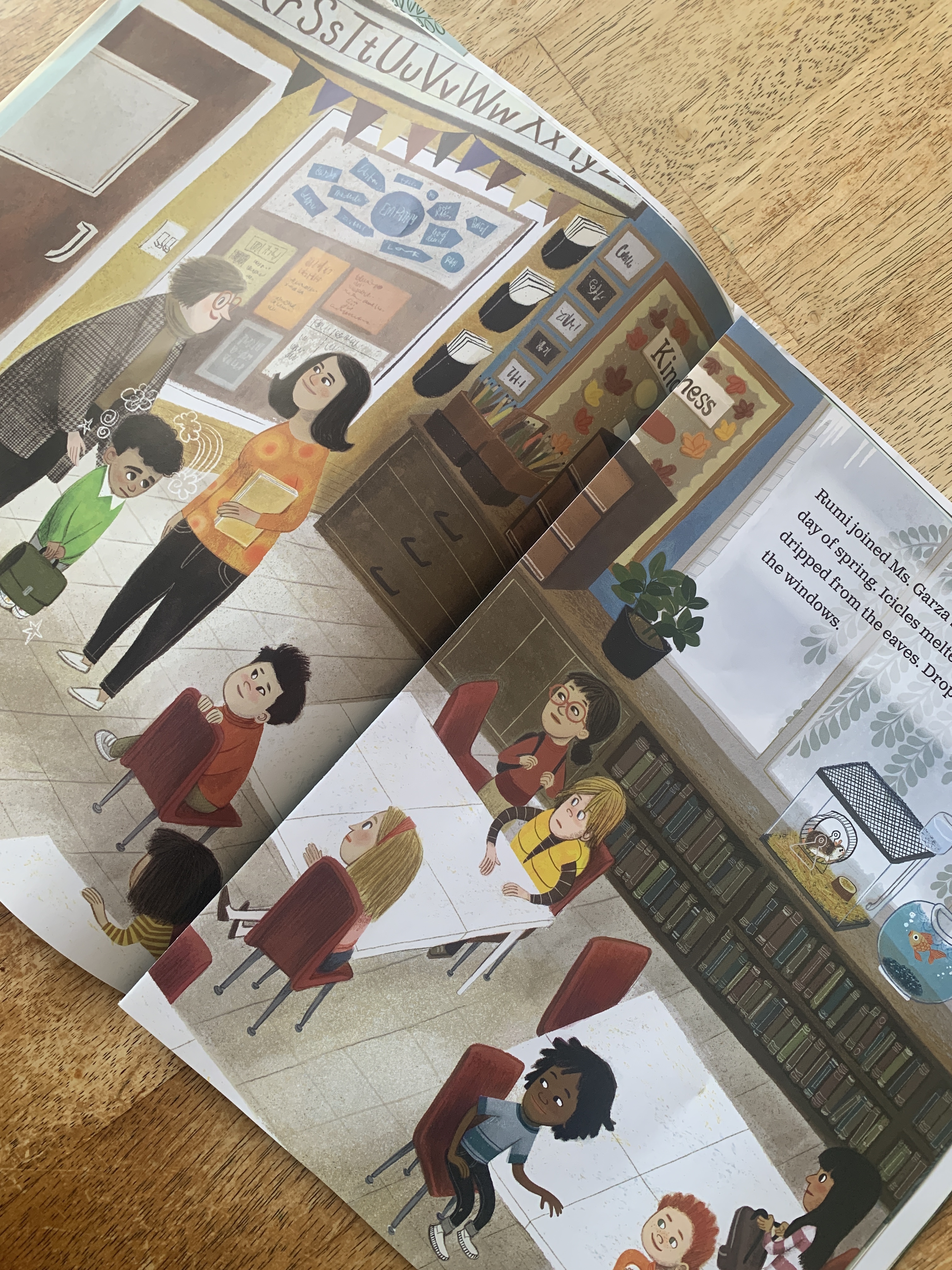
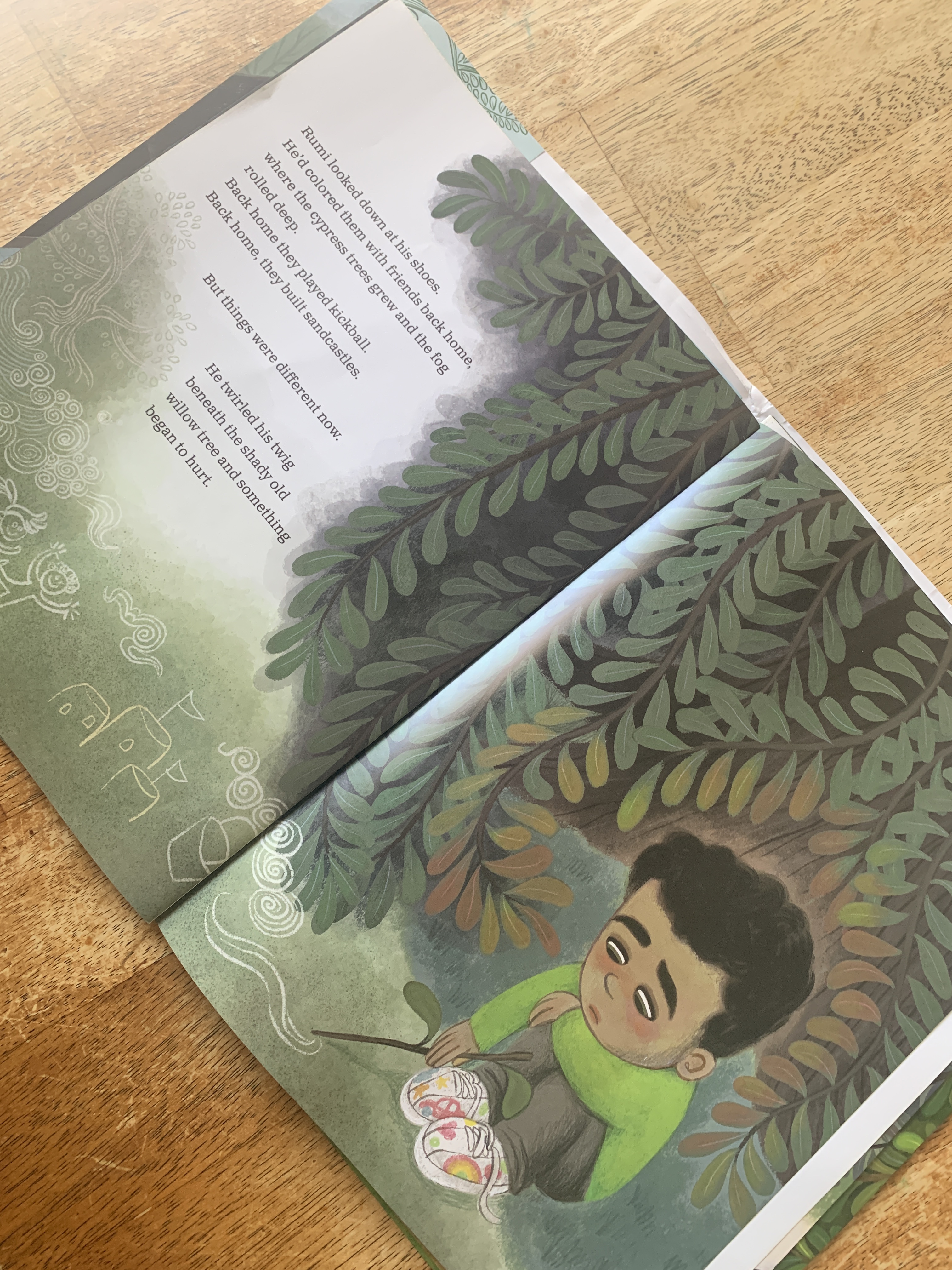
Being the new kid, not having friends, and being teased are not new themes in literature (or life), so if you are going to write a book about them, take a lesson from Muslim author Aisha Saeed and make sure the story is heartfelt, emotional, and well-told.  There is no Islam in the book, no foreign culture, or teasing because of skin color, it is a boy named Rumi who has moved from San Francisco to the other side of America and his shoes, with their drawings and colorings, that cause the kids to stare and start bullying.  Rumi seeks solace under a willow tree and fellow classmate Han has to be brave to put a stop to the mistreatment by finding his voice and not simply staying silent.  The text and illustrations provide a lot of opportunities for children to see themselves in the story, in the various characters, and ruminate over the actions and feelings from different points of view.  The book is lyrical, it is not heavy handed or preachy, and the Author’s Note at the end is equally touching and hopeful.

img_7925

Rumi is quiet, and on his first day in Ms. Garza’s class the kids stare at him as he stares out the window.  At recess he wanders off to sit beneath the willow tree when Asher, Ella and Han leave the swings to see what he is up to.  Asher and Ella start to make fun of Rumi, Han is uncomfortable, but stays quiet.

Rumi recalls coloring his shoes with his friends, and how different it was to where he is now, he picks up a twig to twirl as the hurt grows. In music class when the giggling starts, he tries not to cry.  At recess he retreats to his refuge under the tree.

When the bullying escalates, and tears fall, Han speaks up and breaks the cycle. Others follow and see the world Rumi has created with his twig and are drawn to it and to Rumi.  Forgiveness is asked for, and granted and the tree becomes a place of friendship and togetherness.

img_7928

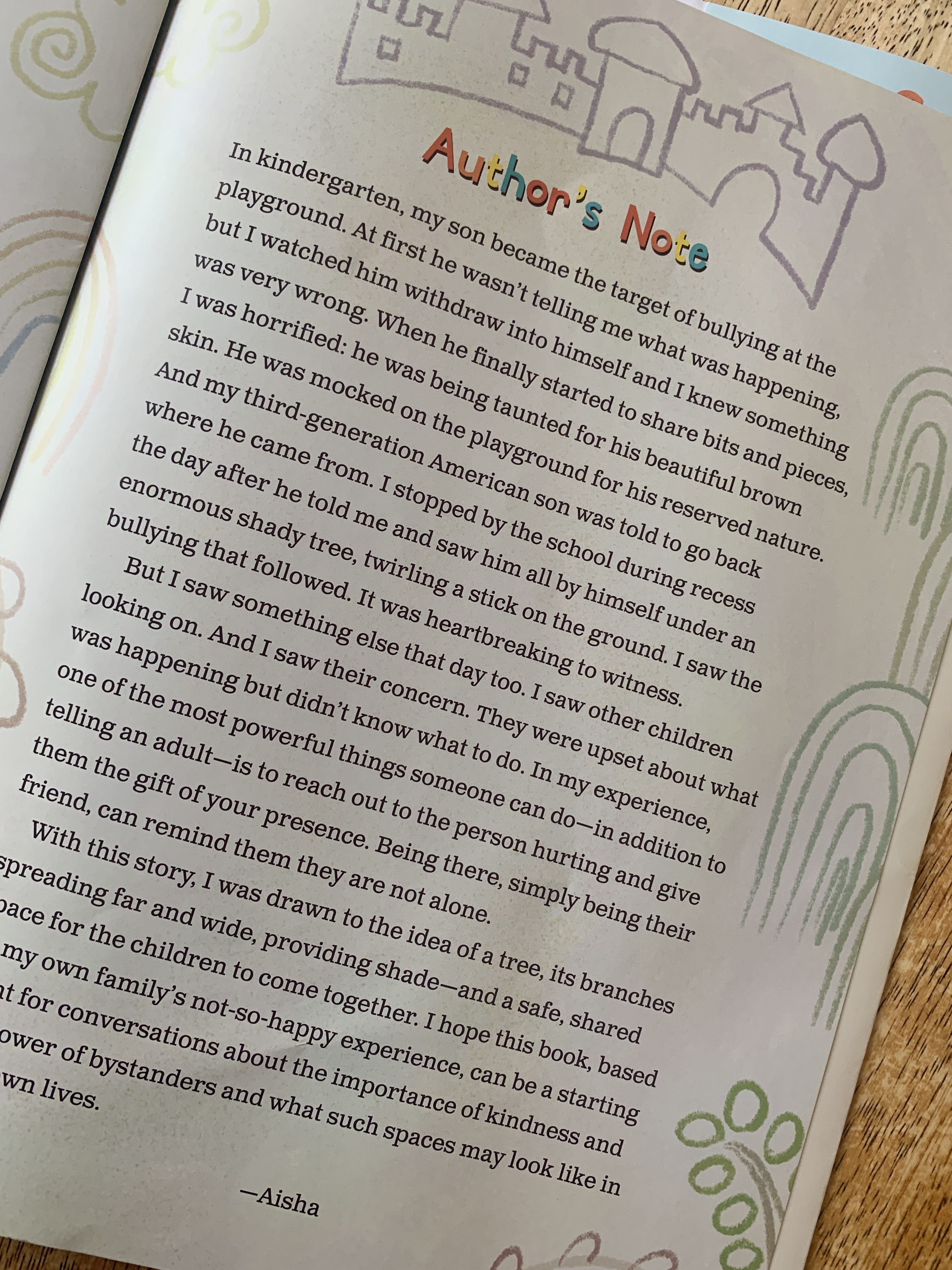
The Author’s Note shares the real life observations of the author about her son in kindergarten and how while heartbreaking, there was also hope in the concern shown by other kids that simply weren’t sure what to do.  I love that even though Rumi is being teased for his shoes and being different, he doesn’t stop wearing his shoes or try and clean the drawings off.

img_7926

I think this book is a must read in classrooms and homes were kids can slowly peel back the pieces and see where they can relate, how they can plan to act, and what parts they identify with.  The book is deliberate and slow, and while a child could read it on their own and enjoy the story and illustrations at hand, the real power it has, is being a catalyst for discussion and empathy and speaking up.

Pre order/order here on Amazon

img_7927


A Bit of Earth by Karuna Riazi

Standard
A Bit of Earth by Karuna Riazi

earth

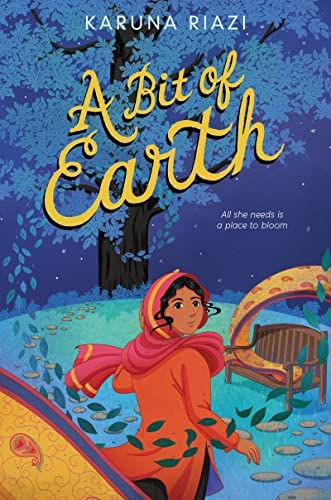
This Secret Garden retelling mixes the heart of the original with a dash of modernity, the flavor of desi culture, and the lyricism of a good writer.  Over 368 pages the slow plot but rich imagery will draw readers in, hold their attention, and leave them thinking about the characters they have been fortunate to spend time with on Long Island.  Islam is practiced and normalized and naturally woven into the Muslim characters’ daily lives without othering or over explaining.  I did struggle a bit trying to keep the relationships of who was supposed to be caring for the protagonist at various points since her parent’s died clear, but once I abandoned stressing about it I was able to be swept away.  I recently reread The Secret Garden with my own children and the original is not plot heavy, nor action packed, but I watched as my own children were drawn to the slower, more grounded (pun intended) nuanced tale, and I think this book, in the same vein, will find its way in to the hearts of middle grade readers.  The book is clean, there is a possible crush hinted very slightly at the end, periods are also endured, and I do have reservations of the terrible marital relationship between Mr. and Mrs. Clayborne, but it establishes that change will occur, so at least it isn’t normalized.  There are sprinkles of magic implied regarding the house, but it is always framed without clarity and in a subtle way to set the tone and the emotions the characters are feeling more than centralizing something rooted (see I did it again) in fantasy.

SYNOPSIS:

The book updates and mirrors the original fairly well with an obstinate orphan arriving at a sprawling house, finding a prickly boy, and setting off to form a tentative toleration of one another with friendly neighbor kids in a garden that is unquestionably off limits.

Maria Latif arrives from Pakistan against her will to be taken in by a distant relative (I’m not sure how she is related), but Asra has been called away and she is forced to stay with Lyndsay, the new wife of Mr. Clayborne.  The first wife was a friend of Maria’s family, but Lyndsay is just as emotionally overwhelmed and lost as the child in her charge.  With Mr. Clayborne away on businesses, his mother Charlotte keeps them all on edge.  When Colin Clayborne is expelled and returns home, more tension erupts and the two children find themselves in an off limits garden trying to make the most of a difficult situation.

WHY I LIKE IT:

I love the mix of poetry and standard novel format.  It is beautifully written and clearly the author does a remarkable job of making her very unlikeable characters worm their way in to the reader’s heart.  Both Maria and Colin are thorny and difficult, stubborn and rude, but you seriously cheer for them, and I did shed a few tears at the end.  With the author’s writing ability apparent, I’m still not sure why the foundation of the relationships and getting Maria to the Clayborne home is so cumbersome.  It is too muddled and it drags the book down every time it is revisited.  The Dadi having the aunt’s phone number was too easy, the inconsistency of the neighbors having no relationship to the Clayborne’s for so long and Lyndsay not even pausing to think another Bangladeshi family living a few houses down might be my husband’s first wife’s friends, seems inconsistent.  Honestly Lyndsey in general needed to read like a competent woman struggling, not a teenager in over her head. I disliked her and Mr. Clayborne’s relationship and I would hate to think any reader would find it ok or normal.

I love the Islam and how it presents when the character has to pray, she goes and prays, it is part of the story and it is seamless.  I don’t think the culture is handled quite as well.  Lyndsay is a foot writer who is always cooking, yet knows nothing of desi foods? If Colin’s mom is desi, wouldn’t she at some point tried to cook familiar foods for him.  Half the neighborhood is Bangledeshi, so it seems everyone has a parent or step parent or distant relative that is desi and I loved the normalizing, but it seemed a bit assuming.  I don’t think kids will wish it was more clear, but as an adult reading it, I felt like it needed to be interjected more without explanation, or if left as is, adding some context. I also wanted to know what Maria’s parents did and a little introspection from Maria.  Again as an adult I see how her anger and grief changes how she remembers them, but from them always being away, to such soft poignant memories at the end, I think kids will need a little hand holding to understand the grief process and her understanding of them.  As it is, they just seem terrible and then all of the sudden great, and the pacing gets thrown off in the process.

FLAGS:

It seems to hint at the end that Maria might have a bit of a crush on Colin, I honestly thought up until a single line that they were making a chosen family with the people who cared for them, but that line seemed to suggest it might be more of a romantic feeling than friend or brotherly.  I read an early copy, so this is subject to change.

Maria gets her period and it is detailed what she is feeling.  I think boys and girls can and should read it.  It is presented on age and appropriately: cramps, achy, dry about blood leakage, having it start young like her mother, etc..

Implied magic (possibly), music and musical instruments being played, milaad, lying, sneaking, being kicked out of school for physical assault, close male and female friendships, ADHD stigma.

TOOLS FOR LEADING THE DISCUSSION

I think this book would work in a classroom and would appeal to readers in an Islamic or public library.  I would consider it for a middle school book club, I think readers will connect and feel empathy for Maria, Colin, and Lyndsay and be better for it.
I preordered my copy HERE and I hope you will do the same

The Love Match by Priyanka Taslim

Standard
The Love Match by Priyanka Taslim

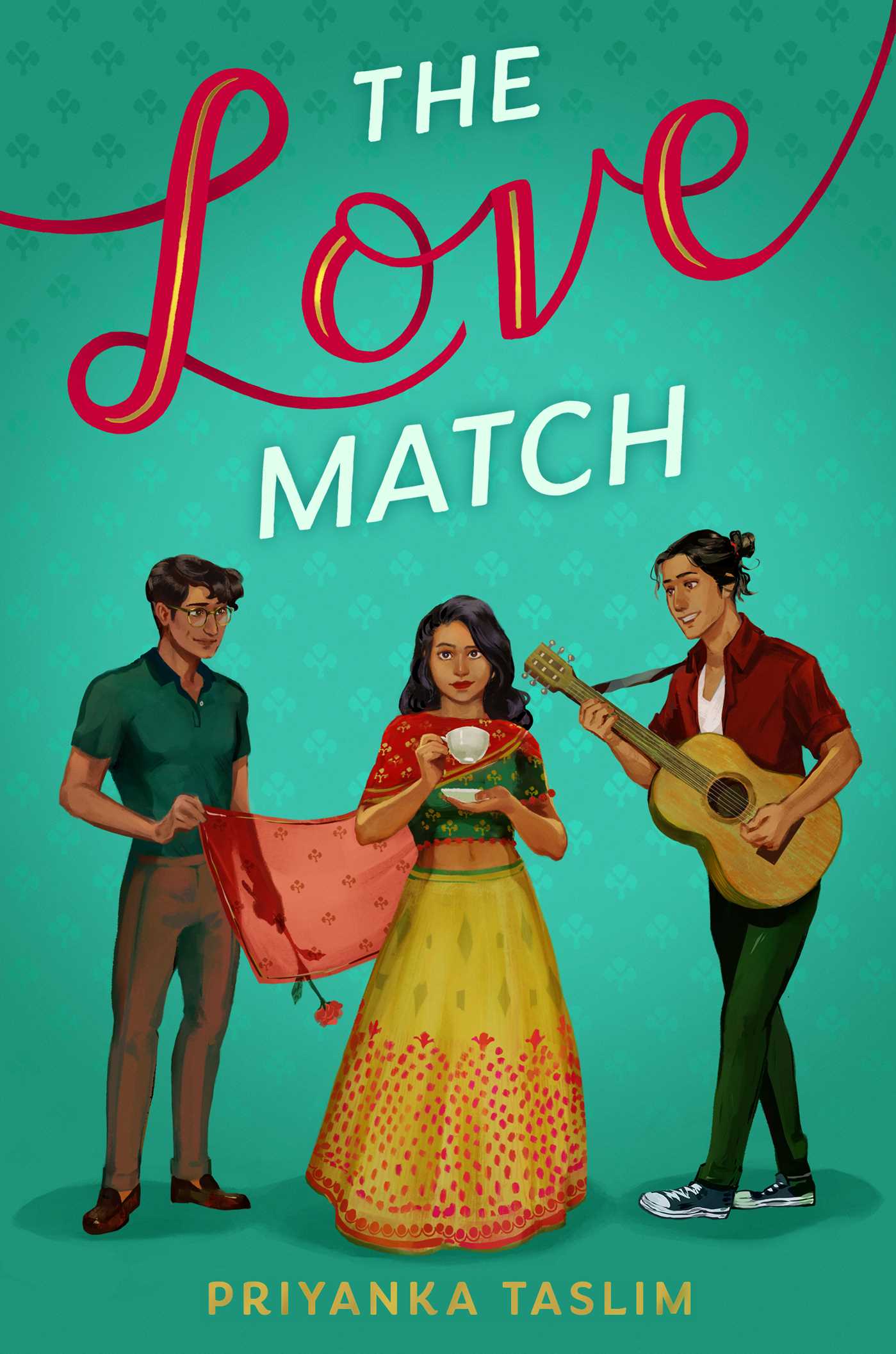
This new YA book features Muslim characters, but is not a religious conscious read that fits in the halal category.  There is a lot of Islam: waking up for fajr, celebrating Eid, a hijabi, mention of jummah, but the OWN voice rom com sets boundaries based on Bangladeshi culture and American perspectives.  The book does not other, or have internalized Islamophobia, or fall in to tropes of oppression and rebelling- quite the contrary- it normalizes everything: LGBTQ+ relationships, dating, music, etc.  The book is well written from a literary perspective: easy read, fleshed out characters, resolved plot lines, I wish there would have been more slow burn and heightened emotion, and cathartic release, but it happily held my attention for 388 pages, so I can’t really complain about plot holes or development.  The problem I have as an Islamic School Librarian is the non issue dating and romance is for the characters with their parents knowledge, both lesbian and heterosexual.  The book doesn’t get graphic, in fact there is only a handful of kisses, but there is a lot of hand holding and pdas in front of parents and even a sleepover with a lesbian couple in a Muslim family’s home, again, nothing “racy” occurs, but the normalization is worth noting for those thinking a Salaam Reads book is going to be a more Islamically centered publication.

SYNOPSIS:

Zahra Khan has graduated high school, and while she’d love to be heading to Columbia to study writing with her best friends, she is stuck deferring her admission and scholarships, and hiding her dream to be an author.  Two years earlier her father has passed away and Zahra works in a tea shop to help keep a roof over the heads of her mother, grandmother, and siblings.  In the Bangladeshi community in Patterson, New Jersey Zahra’s mom imagines arranging a marriage to a wealthy family for Zahra to ease their financial stresses.  When a potential match comes a possible reality, Zahra takes control to try and keep the peace and keep her dreams within reach.  In Jane Austin-y feels, a love triangle emerges, friends step up, culture and family touchstones shared and appreciated, and decisions about the future will have to be figured out at 18 years old.

WHY I LIKE IT:

I loved how easy a read the book is, the cultural framing was warm and rich and never overly explained or apologized for.  It is what it is, it is who the characters are, and while at times they push back on the negatives, it doesn’t disregard the love that exists at the core.  Unfortunately, I really struggled though with the ease in which the characters date with their parents’ knowledge, hold hands, cuddle.  I really couldn’t imagine a practicing Muslim family being so supportive of a lesbian daughter in the way that the Tahir family is and allowing a sleepover, nor could I see a hafiz attending musical concerts and Bollywood movies or an imam passing on “love” notes, even side comments about a loan between mother and daughter being paid back with interest felt off.  I know I know, there are lots of shades of Muslims, but the normalcy of haram I feel in a review of this book should be noted. It isn’t side mentions, they are central to the story and large portions of the book.  The reason I also feel they are worthy of note, is because the book includes a lot of Islam as well.  The characters pray and fast and eat halal.  They are conscious of chaperones in some settings and keeping things appropriate.  There is no doubt that the characters are Muslim, but I think intentionally, to avoid perhaps critiques such as mine, Islam is not used as a reason to do or not do anything, Islam is not used in the thought process or conscience of the characters, culture is.  There is no haram police setting boundaries, it just isn’t what “good Deshi girls do.” To be fair, I don’t think the author has ever claimed that this is a halal love story, or that the characters are exploring their Muslim identities, it is a love story that features Muslims is all.

FLAGS:

Straight and sapphic relationships, secret relationships, kissing, hand holding, hugging, lying, music, loss, bullying, interest.

TOOLS FOR LEADING THE DISCUSSION:

I would not be able to use this book, it would be very damaging to be given to a Muslim child from a Muslim teacher in an Islamic school.  It normalizes a lot of haram in a familiar Islamic framing that I think would really confuse YA readers who see themselves and see no push back or consequences for actions they know to be against Islamic ideology.

Sway with Me by Syed M. Masood

Standard
Sway with Me by Syed M. Masood

sway

This author won me over with More Than Just a Pretty Face, and his ability to celebrate and show flaws within our desi cultures while simultaneously presenting relatable Islamic experiences in a romantic comedy.   I have been yet to determine if this YA/Teen 328 page book follows in those footsteps, or cuts a little too critically and close on the Islamic presentation.  Undoubtedly the story is hard to put down, culture and Islam are present, but I don’t know what the lingering taste of Islam would be for a non-Muslim reading the book.  Would they see the faith separate from those that practice or actively don’t practice, would Muslim readers?  Literature is quickly showing how Muslims are not a monolith, but I worry that that nuance might be lost in this particular book, and the takeaway would be far more stereotype affirming, than critically thought provoking.  The packaging of the story is memorable characters and quality writing, even if the plot and purpose is a little shaky at times.  I admit for as much as I crave discussions on representation and twists and defined characters, this book has me at a bit of a loss on how to feel about the book overall.  I think it is possibly the first time I just haven’t seen myself and my experiences mirrored at all in a book with this much Islamic content. As a reviewer it makes me feel useless, but as an American born Muslim, I kind of love the uneasiness and challenge that my head is trying to wrap itself around.  The references, the language, lust, plentiful innuendos and physical abuse make the book a solid high school and up read.

SYNOPSIS:
Arsalan lives with his 100 year old Nana in Sacremento.  His mother has passed away, and his father is out of the picture in Arizona as he attempts sobriety.  Homeschooled and isolated from other kids, technology, and the world around him, he suddenly finds himself in a public high school trying to make his way.  Afraid that when his Nana passes he is going to be all alone in the world, he reaches out to the stepdaughter, Beenish, of the community match maker to see if she can help him with an arranged marriage.  She agrees on one condition, he dances with her at an upcoming competition.  He agrees, but first a makeover is required and before you know it a romance is blooming.  Awkward and formal and ever the gentleman, Arsalan uncovers that there is no competition, the dancing is required to break up Beenish’s sister’s wedding.  The girls’ biological mother was a dancer and the shame it brought on them all as it destroyed her career, her marriage, and the family has made her daughters the black sheep of the family and community.  The stepmom wants to get them out of the house as soon as possible and thus dancing of any kind is forbidden at Qirat’s upcoming nuptials.  Beenish despises the groom and hopes her dancing will not only remind the family that the mom has been banned from attending the wedding, but also hopefully prevent the wedding from taking place.  As the story moves forward with learning to dance, relationships must be reconciled, friendships developed, and growing pains felt, with some sass from Nana at every turn, more than one character will have to learn to make hard decisions and accept the outcomes that result.

WHY I LIKE IT:

Right from the start Arsalan makes it known that he is not a practicing Muslim, that he is “nominally one.”  His Nana has raised him to be a skeptic, his abusive father would beat him when feeling religious and guilty for his alcohol consumption, and his deceased mother was more spiritual than disciplined.  So, for the next few chapters, whenever Islam was mentioned I would snap a picture.  Twenty pages later and dozens of pictures of text made me stop and realize that this coming of age book is not a story about Islam, but rather the characters are dealing with their own identities and Islam just happens to be present, for all of them.  Arsalan remarks how our roots shape us as he quotes hadith, ok paraphrases them, and discusses sahaba, eventually having to accept that knowledge and wisdom and truth must be recognized, even when it comes from a source that he doesn’t favor.  Similarly, the most presenting tough guy, music and sports and appearance obsessed character is always hanging around the mosque, at the MSA, and encouraging Arsalan to come and pray.  The love interest calls out Muslims for their fake religiosity saying that her stepmom wears it as a fancy dress, she owns it, but takes it off when she wants.  Her father came to Islam late, and is relatively strict and conservative as a result, she is Muslim, but more culturally as she doesn’t seem to have sorted it out herself.  The characters dance, which involves touching and immodest clothing, at the end they do kiss.  There is language which is noted as being course and vulgar, and there really is no “model Muslim” or any characters that want to be.  So, similarly there are no haram police commenting when the characters, as individuals seemingly step out of line.  The sister character is quote unquote religious, but I don’t know if she covers, she doesn’t seem to be representative of anyone other than herself and she has her own cultural family issues, so her Islam is just stated, but not explored.  Some only eat halal, that gets included but not really opined on.   It really is the first time I feel like I’ve read so many Muslim characters in one place that represent only themselves, which is very much real life, but also a shift in Muslim rep in literature.

The story has some foundational issues which made me laugh when reading the author’s note that says he, “writes in the dark.”  Meaning he doesn’t know where he is going until he gets there.  I think it might show in this book more than he realizes. Aiza Aunty is shamed as scandalous because of her dancing in Lollywood (Pakistan’s version of Bollywood, which is India’s version of Hollywood) films.  She apparently got her sari a bit too wet in a waterfall scene, and it was too much shame to rebound from.  So why did that ruin her life? I mean any production has rehearsals, and blocking, and post editing, and retakes, why does one scene seem to fall squarely on her shoulders, every single decision maker along the way passed it through.  I’m not buying it.  I also don’t buy the whole wedding is hanging on a single thread of dancing, it tries really hard to make it make sense, and by the end the reader really is just prepared to go along with it, but holding auditions, not planning to tell Qirat, really is expecting the reader to suspend reality just a tad more than the genre should be asking one to do.

The book is smart and it expects the reader to be smart.  The references the character’s personas and need to be seen and loved is not always spelled out, it has to be pieced together and I love it.  The Thanksgiving scene, the misfit members of each family coming together and bonding with Nana and Arasalan is sweet, but actually really sad, and I love that it doesn’t say it, it shows it.

Of all the characters I love Diamond the most, I just wish we knew more about what motivates him.  He reads too nice and too puppy doggish and I wish we got just a bit more to see why he is the way he is.  Truly all the characters are memorable, and I’m pretty sure they will stay with me for a while.

FLAGS:

There is kissing, romance, crude language, lots of sexual innuendos, physical violence, physical abuse, child abuse, death, shaming, manipulation, alcohol addiction, religious zealousness, dancing, intimate dancing, body objectification, music, singing.

TOOLS FOR LEADING THE DISCUSSION:

I could never teach this book, but please, please, please, read it and help me to understand how I feel about it.