Tag Archives: immigrant

Say Something, Poupeh Babaee!: A Graphic Novel by Haleh Massey illustrated by Ghazal Qadri

Standard
Say Something, Poupeh Babaee!: A Graphic Novel by Haleh Massey illustrated by Ghazal Qadri

I had planned to just flip through this 176 page middle grade graphic novel to see primarily if there was any Islam mentioned, and if so, to see how it was framed. The blurb makes it clear it is culturally Iranian immigrant in focus, and set during the Muslim ban.  The heightened intrigue is that it isn’t just metaphorically about finding your voice, the character is labeled as having selective mutism and the author who is a clinical psychologist truly has her protagonist voiceless in nearly every setting for the majority of the book. The bright illustrations, and easy read though, had me reading the book front to back and finding that Islam is by-and large-not present. The flashbacks to her life in Iran show her wearing a scarf, and praying, and the memories are warm and inviting, with no internalized Islamophobia or political commentary, or Islamic practices at all following Poupeh to America. In fact when sought after news is finally heard the family exclaims, “it’s a Christmas miracle.”  It is hinted that the female cousin has a girlfriend, and the book features a lot of stereotypes about aggressive men, name mispronunciation, bullying for ethnic foods, and anti immigrant ideologies.  On the plus size it normalizes therapists, shows character arcs for the main and minor characters, and shows that inability to speak, doesn’t mean someone doesn’t understand.  While the book was better than I thought it would be in many ways, it ultimately didn’t have a climax, all the build up for two questions, really fell flat for me.  I also felt like while the Muslim ban was a fairly unique premise (shout out to Kareem Between!) all the other tropes are overly done, and render the book forgettable even though the format of a graphic novel should make it a standout.

SYNOPSIS:

Poupeh Babaee has come to America from Iran alone, her parents were held up settling their affairs, and they didn’t want her to miss more school, so she is sent ahead to stay with her aunt, uncle, and cousin. She understands English, but when she messes up the national anthem on her first day of school and is teased, she simply stops talking, not even to correct when everyone starts calling her “poopy baby.”  When the Muslim ban blocks travel for her parents to come, the fate of her family rests on being able to plead their case in an immigration interview. Yes, she is 10 and will be asked two questions to determine if her parents are terrorists or not.  There is teasing, tension with the cousin she has to share a room with, and a sympathetic therapist that flesh out the story of trying to get Poupeh to say something.

WHY I LIKE IT:

I like many of the pieces, and I like the format, but I really felt that the build up to the interview, the pressure she was under, was not warranted by the interview itself.  Had some commentary existed about the brevity of the interview or the chaos of America’s immigration policies perhaps it would have been worth the anticipation.  As written though, it felt rushed.  Same for the portrayal of the men in the story: from Poupeh’s own father, her uncle, to Trevor’s dad, all are aggressive, and I’m glad her own father apologizes, but again, it felt rushed and anti-climatic.  I don’t expect literary masterpieces from most mg graphic novels, but some of the “meanness” seemed abrupt for shock value, and made the cousin, the dad, the uncle read very inconsistent.  I had hoped a therapist author would have brought not just a storyline of mental health, in this case, selective mutism, but some nuance to the immigrant experience, moving beyond food, clothes, and names.  Speaking of names, I googled what Poupeh’s name means in English, and it really should have been in the book, or at least the backmatter.

FLAGS:

Stereotypes, racism, hate speech, hints and relationships, mental health, anger, homesick, bullying,

TOOLS FOR LEADING THE DISCUSSION:

The level and format would not make it a good choice for a book club read.  I probably would not unshelve this book, but I wouldn’t seek it out either.

Rainbow Fair by Diana Ma

Standard
Rainbow Fair by Diana Ma


If you see this 224 page middle grade book, the title might hint that the content is LGBTQ+ as the rainbow often symbolizes such, but if you look closely at the cover you don’t see a rainbow flag, just a Chinese scene on one side and on the other you will see crescent moon lights being hung up above a masjid silhouette, merging together with a little girl holding a rehal, a book and some art supplies. If you then turn the book over, or search the internet, and read the blurb, you will learn that the book is about Sophie, a Chinese Muslim girl learning and sharing her heritage at the school’s Rainbow Fair. As a result, I requested an arc to read and review. No where does it reveal that the book centers queer characters, LGBTQ+ support and allyship, consistently parallels Islamic faith with sexual and gender identities, and prioritizes intersectional identities and agenda over plot and insight. Had I known this, I wouldn’t have read the book, I share this review simply as a heads up to its contents, so families can decide for themselves if it is for them. The book is MG and honestly, it feels misleading and intentional that it is not articulated in a book meant for nine to 12 year olds.  With identity exploration of being Chinese, a child of immigrants, a main character being bisexual, the protagonist repeatedly claims to want to learn about her Muslim identity, but very little information or interaction with the knowledge is sadly ever shown.  The plot seems to just become a forced juxtaposition of two marginalized communities: Muslim and LGBTQ+, to make the point that we are all more than one label. I understand that my view and practice of Islam, is not every Muslims, but trying to have a faith identity and sexual/gender identity parallel one another by having the protagonist “coming out as Muslim,” and being “outted” as Muslim by her bisexual friend before she is ready, is an awkward read. It continues in this approach comparing a trans character being misgendered in a locker room to a Muslim character not having a space to pray, and likens the diversity of a mosque BBQ to the pride parade. I support finding common ground, but when questions about Muslims stoning gays are left hanging, the reader never getting a convincing answer to why her parents hide their Islam, and there is no real rising action, climax, or character arcs- I feel like the labels and the author’s agenda, even if OWN voice, are the point of the book, and it doesn’t make for a compelling read.

SYNOPSIS:

Sophie and Katie did their school’s Chinese booth together last year at the Rainbow Fair, they are best friends and do everything together, but since Katie has come out as bi, she has new friends and is petitioning to add an LGBTQ+ booth, and the rules say she can only be at one booth.  When a sleep over breakfast calls attention to Sophie not eating bacon, it comes out that she is Muslim, not something she meant to keep secret all these years, but something not even Katie knew about.  When discussions about being Muslim spill over into class when booths are being assigned, Sophie decides to do the Muslim booth. She is afraid her parents will be disappointed, and even though she knows nothing about Islam, she is ready to learn.  A new kid at school, Anna, is Muslim and joins Sophie at the booth, and as the two become friends, Anna tells Sophie there “is more than one way to be Muslim” and of course she is a “real Muslim.”  Empowered by not having to pick one identity, Sophia and Katie and all the other kids change Rainbow Fair and show how everyone is more than just one label.

WHY I LIKE IT:

The premise on the back of the book is promising, I just feel like the book missed meeting its own stated intention. The characters are not developed, there are no moments of growth or self reflection, they have no arc or relatability outside of a label.  Sophie paints her parents to be strict, but the precious little that is shown, never backs that up. As a result the reader has no idea why Sophie doesn’t just tell her parents she is doing the Muslim booth and ask them about Islam. After they see the booth at the fair, they say they don’t talk about Islam because of Islamophobia in America and feeling othered in China, but that is it.  Exploration of that would be a far more interesting story: Why did they leave China for Taiwan? When did they migrate to America, was it recent, or did they slowly start to hide their Islam? Dad learned to read Arabic in Taiwan, what was the Chinese community like? Why don’t they celebrate Eid, but have a Christmas tree, did something happen? Why do they not eat pork but drink alcohol? Sadly the two dimensional parents are not fleshed out and Sophie faults them, while constantly trying not to let Chinese stereotypes define them, but the repetitive contradiction, just leans into the labels and fails to make them feel real and relatable.

The book is all talk and no show, and with no real plot, the talking gets repetitive. Breaking the fourth wall we are taken in circles of the same talking points that more than once had me checking if I had bumped the screen and gone back to pages already read. Threads are introduced and then abandoned: what is the point of the whole roller derby thread aside from showing Sophie makes powerpoints, and her parents give in? The girls never go roller skating, it is not something that bonds them. We only know they are close because we are told they are. The beginning and end show Sophie can smell food and decipher its contents, so why isn’t that part of the story as she is trying to figure out Eid foods, cooking, the lunch offerings at the mosque? It hints that the Black culture booth is being suppressed, but it never develops it, nor articulates any real push back, it just skirts the issue. Why the judge-y competitive aunt and uncle? Is their inclusion meant to make Sophie’s parents more or less likeable? Does it reinforce or dispel Asian stereotypes?

From the very start the book feels forced.  Sophie has never gone to a sleep over, her best friend plans a sleepover birthday, but is willing to change it if Sophie can’t come.  What kind of stilted set up is this, why wouldn’t these bffs plan the birthday together, and get Sophie’s parents on board first? It makes no sense that if she can’t come it will be changed and not be a problem because they are so close and she has to be there. It also immediately contradicts the looming conflict of the book, that the parents are strict.  They gave in to roller derby, they give in to this sleep over, and have no problem that two of the girls are dating that sleep over, and “Shane is non binary and doesn’t identify as a girl or a boy.” Clearly the parents are very supportive.

Consistently Sophie drops words, or cultural practices, but doesn’t explain them or engage with them, both the Chinese historical and cultural rep, and Islamic, quick example, she has a Quran but never reads it, we don’t learn about the immortals her dad wants her to feature at the Chinese booth.  It makes it seem superficial and further distances the reader from connecting with Sophie, with culture, with faith, with the book.  Speaking of books, it really bothered me that two books mentioned as being intersectional, Black Muslim Author, Autumn Allen’s All You Have to Do, and Queer Muslim Author Adiba Jaigirdar’s Hani and Ishu’s Guide to Fake Dating are YA books, isn’t that off to mention repeatedly books that your target audience won’t know, or be in the demographic yet to read?

I could go on and on, but I will stop, I think it is clear I didn’t enjoy the book. 

FLAGS:

Islamophobia, alcohol, LGBTQ+, microagressions, racism, labels, stereotypes

TOOLS FOR LEADING THE DISCUSSION:
There is no way I could shelve this in an Islamic School.

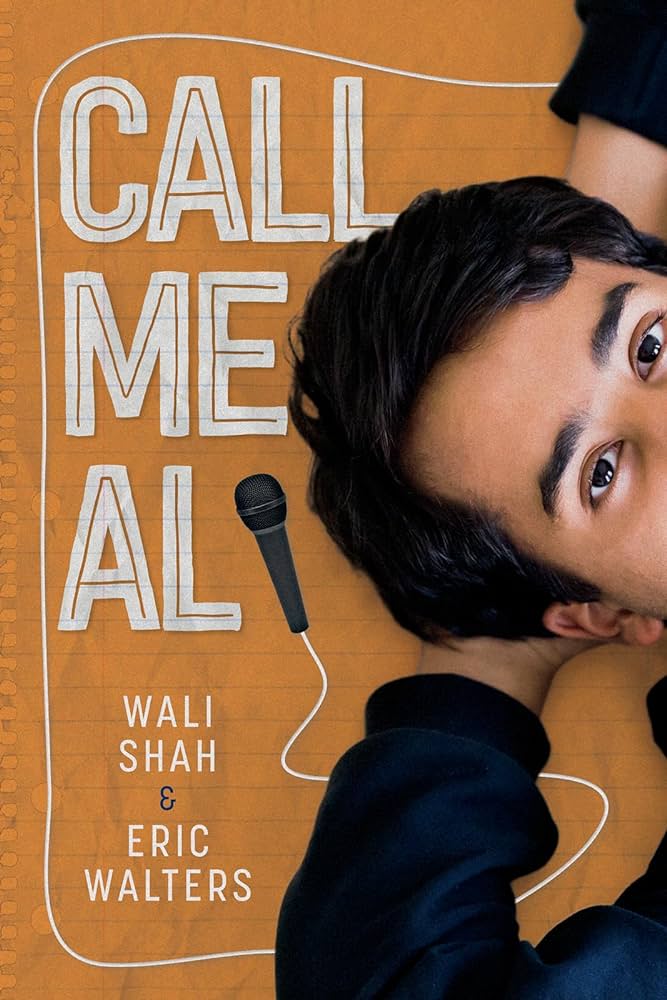
Call Me Al by Wali Shah and Eric Walters

Standard
Call Me Al by Wali Shah and Eric Walters

albook

I feel like I should have really liked this 264 page book: OWN voice, Muslim, MG, Pakistani, author is poet laureate for the City of Mississauga, Ontario, co authored by a prolific YA writer, but it unfortunately reads inconsistent and unpolished.  The characters at the beginning and their relationships with one another don’t read consistent with who they are in the middle.  Sure the character arcs from the middle to the end are nice, but it feels really disjointed from the first quarter of the book.  There are parts that feel so rushed, and other parts that are heavy handed with the preaching and the moral lessoning that I found myself skimming whole pages.  He says his family isn’t that “religious,” but Islam is centered with quotes from “the Prophet” (no salawat given, only a few times Prophet Muhammad is mentioned to identify which Prophet is being quoted) and “Imam Ali” (who the protagonist is named after), yet Al telling a girl he likes her is no problem at all.  He fasts because he has to, but tells his younger brother it is ok to sneak food, and the grandfather gives a whole speech on how the purpose of fasting is to feel empathy for the poor (face palm, in case you don’t know, it is a commandment of Allah swt).  I really struggled with how “Whites” are seen as opposites to “Muslims,” there is some push back with quotes from Malcom X on his hajj experience, but I didn’t feel like the character really ever accepted that Islam is a religion for all people, and White is a skin color.  Honestly the book reads like an early 2000 memoir.  I know it is fiction, but the cultural be-a-doctor-nothing-else-matters-stereotypes, and Islamophobic talking points that feel performative for a Western gaze, combine with a very unlikable arrogant protagonist, and result in a book that was difficult to connect with and get through.

SYNOPSIS:
Al, short for Ali does everything perfect, he has perfect grades, always listens to his parents, and respects the rules.  The book opens with him sneaking off campus with friends for lunch at the mall where he is caught by his grandfather, who seems incredibly strict, but later is the soft spot in a firm family.  His parents have moved to Canada from Pakistan, his mom used to be a teacher, but now takes care of their apartment building, his father was a physician and now drives a taxi.  It is non negotiable that Al will be a physician when he grows up.  The middle child of all brothers, his older brother Sam, short for Osama, has set the bar very high with his valedictorian status in high school, scholarships to start college, and student of the year award in middle school.  Al is in 8th grade and is expected to follow in his footsteps.  When Al’s crush on Melissa results in him writing a poem about her, he realizes he likes the written word to express himself.  His father thinks poetry is a waste of time. With a teacher that encourages creative writing, Islamophobia and hate crimes hitting close to home, and Al coming of age, the story focuses on Al’s 8th grade year as he discovers his own identity, with some help from his friends and the month of Ramadan.

WHY I LIKE IT:

I like that his friends really pushed back on him to own some of his internalized Islamophobia.  Zach is probably the most fleshed out character, and his humor, his teacher crush, his ability to apologize and make things right, is really the heart of the book.  It contrasts so greatly to how I feel about Al.  By the end he was ok, but at the beginning, his arrogance is obnoxious. I get that he is bright and a hard worker, but, yikes, he needs some humbleness.  The supporting characters are rather flat.  Al’s crush Melissa is shallow and only desired for her appearance, Dad is strict and demanding, not in an abusive way, but in a cold undeveloped way, mom is idyllic and supportive, and Ms. McIntosh is the driving motivator for Al. The other characters do little to flesh out the main players which is unfortunate.  I think some depth would have shown Al more rounded. His so called friends don’t know he is Muslim or what he eats, but they are friends, not just classmates, seems off and lacking.  The grandfather gives all the teachable moments, he starts off stern, and then is not, and the transition is jarring.  He speaks in quotes and lessons, and if it were quirky, it might help the flow of the book, but he really is the Islamic conscience of the book so to speak, but we know so little about him and his relationship with Al.

I didn’t like how fasting and Ramadan were presented. Al is embarrassed by fasting and being different.  I like that it says the family goes to the mosque, not sure why masjid wasn’t used, but there are no Muslim friends and no praying, so it has no real impact, which furthers the feeling that it is performative.  Al doesn’t seem to consider faith or culture until others question him about it, which is a missed opportunity to give Muslim kids a mirror to see themselves in the characters.  There are chapters of the book that really are wonderfully written, they just are sadly too far and few between.

FLAGS:

Crushes, Islamophobia, physical and verbal assault, racism, classism, bullying, lying, sneaking out, discussion of partition violence including great grandfather being killed. The book though, aside from the crush thread at the start and end, is quite clean, and the crush is pretty innocent.

TOOLS FOR LEADING THE DISCUSSION:
I wouldn’t seek out this book for a classroom shelf, but if it was in the library I would leave it.  I don’t think most kids would pick it up and make it past the first 25 pages though, Al is really unlikeable at the start.

Hope Ablaze by Sarah Mughal Rana

Standard
Hope Ablaze by Sarah Mughal Rana

This young adult book is an intense raw unflinching read, containing  incarceration, assault, politics, Islamophobia, immigrant pressure, and loss throughout the 384 pages that mix poetry and traditional writing.  At times the book is incredibly hard to put down as the commentary on two party politics and Muslims in America is articulated in a way that transcends the fictional constrains and affirms reality.  But unfortunately, it took me a long time to complete the book, because when I did put it down, I didn’t feel that relentless urge to pick it up and see what happens next.  I had been alerted to the fact that there were elements of magical realism, but even with that knowledge, I still felt it misplaced, and truthfully, unnecessary.  The pacing was inconsistent, and many points unnecessarily forced.  It often felt the author was simply trying too hard to tell the story and make sure the reader got all the messages intended.  As a result many characters are flat, many plot holes exist, and the reader is left wishing things were done just a little bit different to make the book what it could have been, not what it is.  I know it is a debut, so I’m not going to be overly detailed in my harshness, I am fairly positive I will read anything this author writes down the road, I took pictures and shared passages that I loved on my socials.  The book is good, it just really could have been great.

SYNOPSIS:

Nida is a poet, her uncle is a poet, and her uncle is in prison.  When Nida is frisked, her hijab removed by a political candidate’s team as she makes salat in a public park, Nida is forced to find her words, her voice, and her place in an unkind Islamophobic world.  High school friendships, immigrant Muslim community pressures and idiosyncrasies persist for Nida as she navigates media manipulation, injustice, slander, and political talking points.  Life was already complicated with her father’s departure, her maternal uncle’s wrongful incarceration, and the goats that her mother brings home to sacrifice, but with the support of the Poet’s Block, her Muslim community, family, and the thread tied to her family through generations, she will find she isn’t alone, and she has support, she just has to take a stand.

WHY I LIKE IT:

I love how much mirrors contemporary reality, the MIST competition, the politics, the media, the dirtiness of it all. I also like that it has a fair amount of humor, the Islamic accuracy, friends getting called out for boys and girls texting each other.  Overall though, it just felt so forced. I think some subtly and nuance and undercurrents would have given the reader the ability to connect the dots for themselves, so the book would have lingered and taken up space long after the last page was read.  It is hard to write a book about how great a writer is, how powerful poems are, so at times it really felt spoon fed that this is powerful, here read it, see it was powerful.  Additionally, I think when the author did try for subtlety, it just came across as lacking.  I still don’t fully understand any of the side characters, their relationships, or their purpose.  From the betrayal of a school friend, to the new friend from MIST, to the little brother, to the friend and his uncle who is imprisoned, there ultimately lacked a lot of emotional heart for minor characters, who remained stagnant, while passionately emphasizing issues at their expense.

The OWN voice Islamic rep is so spot on even if the evil eye passages seemed amplified and repetitive. Islam is centered, it is unapologetic, it is the characters identity, comfort, and soul.   Only one point really stood out as erroneous, but I read a digital ARC so it could have been fixed or it could have been a spacing issue since it was in a poem, but it has sajood in janazah, and I’m really hoping the final book will not have it wrong, as there is no sajood in janazah.

FLAGS:

Assault, frisking, incarceration, death, profanity (not a lot, damn, hell, shit), Islamophobia, racism, systemic abuse, lying, talk of terrorism, stereotypes, gaslighting.

TOOLS FOR LEADING THE DISCUSSION:
I’m on the fence about using this book for a book club read.  I love the Pakistani culture, the Islam, the contemporary relevance, and the political commentary.  I think it would have actually more success in a guided or required reading situation with teens than it would as a pleasure read.  Undoubtedly I will order a copy to put on my library shelf, but I might test it out a bit on a few readers to see how their thoughts before I present it as a book club selection or not.

The Unlovable Alina Butt by Ambreen Butt-Hussain

Standard
The Unlovable Alina Butt by Ambreen Butt-Hussain

img_9079

This middle grade book in many ways reads like a memoir, it isn’t, it is OWN voice fiction, but the chapters often come across like short stories with their own climax or punchline.  The lacking continuity of smaller threads being resolved means if you put the book down, you aren’t necessarily itching to pick it back up to see what happens next.  There isn’t a larger pressing conflict driving much of the book, yes the girl is bullied, but by one kid, and she has a great group of friends and a supportive family, so the intensity is just not present.  I do like the growth of the character toward self-acceptance, but I don’t know that the target audience will get the 90s references of Spice Girls,  CDs, lava lamps, and gel pens.  The book hits most of the stereotypical immigrant tropes of feeling othered by one’s name, clothes, food, and while she works through them to deal with the bully and find her own confidence, she unfortunately never deals with her internalized Islamophobia, which is disappointing.  She puts Islam on her parents as something they practice, and only begrudgingly seems to acknowledge she too is Muslim when she doesn’t eat pizza with non halal meat.  She is embarrassed when her friends see Islamic calligraphy at her house, hear the athan, she doesn’t reply to her parents salaams, she calls her mother “the most devout in our family” as the reason she has to wear tights under her skirt: she only seems to ok with being Muslim when outsiders give their approval.  The book for me is mediocre, nothing to rush out and buy, nor anything to pull from shelves.  I’ll send my copy to the Islamic school library shelves as the book is fairly clean: a few giggles about naked statues at the museum and very lightly hinted at boy/girl crushes. The older sister deals with a boy who wants to date her and harasses her to the point of affecting her personality, but I think if a 10 or 11 year old picked up the book and read it, they would be ok to see the characters finding their voice, good friends, and sibling support.

SYNOPSIS:

Eleven year old Alina Butt is in her fourth school in three years since arriving in England from Pakistan.  She never fits in, and never has friends, but she is determined that if she can keep her last name a secret, she might have a chance.  One the third day of 6th grade though, her last name becomes known and Adam Atkins has his eyes set on giving her a hard time.  With encouragement from her older sister and love from her baby brother, Alina puts herself out there to make friends and when the teacher assigns her a new group, she finds herself among three girls happy to welcome her in.  The new group also puts her sitting across from Adam, but at least now she doesn’t have to face him alone.

At home, she navigates life as an immigrant trying to blend her worlds.  Her loving family lives above the grocery store they own and face Islamophobia and settling in together as they each have to find their strength and voice and resilience to drive, stand up to harassment, and for Alina, to love herself.  Alina gets the courage to try out for the school play, but when she lands the part of Gus in Cinderella, she has to dig deep to be happy for her friend, forgive a bully, and step in to the spotlight.

WHY I LIKE IT:

Alina is likeable enough, and I love that she grows to love herself too, I’m not sure she was ever unlovable though as the title suggests.  I don’t like that potentially really big plot points are mentioned and then abandoned.  She cuts her bangs way too short, her mom says something and no one else ever mentions it, and she never brings it up again.  Her dad is so sick he leaves the truck on the side of the road and sleeps and the mom takes care of everything, and what was wrong with the dad is never revisited.  These are just two examples of rising action that present that they are going to be important that are seemingly undermined by the lack of follow through.

I love that she finds a way to stand up to the bully and she even helps her sister deal with the boy antagonizing her.  It is strong and resonates with the reader, but it should also be noted that as soon as she has friends, they are gossiping and being rude to Adam too.  I’m not saying it isn’t warranted, and he definitely is worse, but if she is modeling behavior she should perhaps at least feel bad teasing him even before she knows that he has a bit of a rocky home life.  Plus he is one kid with two stereotypical sidekicks, yeah he is annoying and mean, but she has friends and family and teachers that are completely on her side too.  And Adam bullies her about her name, but no one else even acknowledges it or asks her about it.

I didn’t quite get the schooling, but it is probably because I am American.  She is in middle school, but she has one teacher all day and they play on the soccer fields at break and her kg aged brother does field day with her?   The 90s references were fine for me, but I don’t know that the target audience will get some of them, and it might be a little annoying to get through for younger readers.

Ultimately, the way Islam was presented was really disappointing.  It feels like we should be past the internalized othering of our faith.  The culture was worked through and appreciated internally for Alina, but for some reason, religion was only ok when the outside influences deemed it acceptable, and I’m not sure that in 2023 this angle of narrative is doing anyone any favors.  She loves her mom, and part of the character arc is seeing and appreciating her mother’s strength, but very early on mom is labeled as “devout” even though they are all Muslim.  And this self othering to be the reason her mom is keeping her from dressing like everyone else left a bitter taste in my mouth.  Never once does it feel that Alina has a connection to Allah swt, no matter what she is going through there is no bismillah, or prayer, or dua to ask for help, and strength, or show appreciation.  I absolutely get that not every story will have that, but the way Islam is presented as something foreign and never circled back on or portrayed as something that she embodies, makes all the mentions of faith seem deliberately othering, and as a Muslim book reviewer, I feel it is an important point to mention about this book. I wonder if it was intentional or an oversight sensitivity reading would have helped resolve.

FLAGS:

Birthdays, music, bullying, harassment, teasing, othering, mention of naked statues, some sneaking and dishonesty.

TOOLS FOR LEADING THE DISCUSSION:

I wouldn’t use this as a book club selection, and as stated above I wouldn’t rush out to buy the book to shelve at home, in a class or school library, but if it found its way to the shelves I would not remove it.  The book has heart, I just feel like along the way the messaging of finding your voice and putting yourself out there to make friends, the book also hints that the Quran on your walls, modesty, the athaan, eating halal, are all things that are weird, unless your friends think it is cool, then it is ok- and that is not messaging I would really want to spread.

A Bear for Bimi by Jane Breskin Zalben illustrated by Yevgenia Nayberg

Standard
A Bear for Bimi by Jane Breskin Zalben illustrated by Yevgenia Nayberg

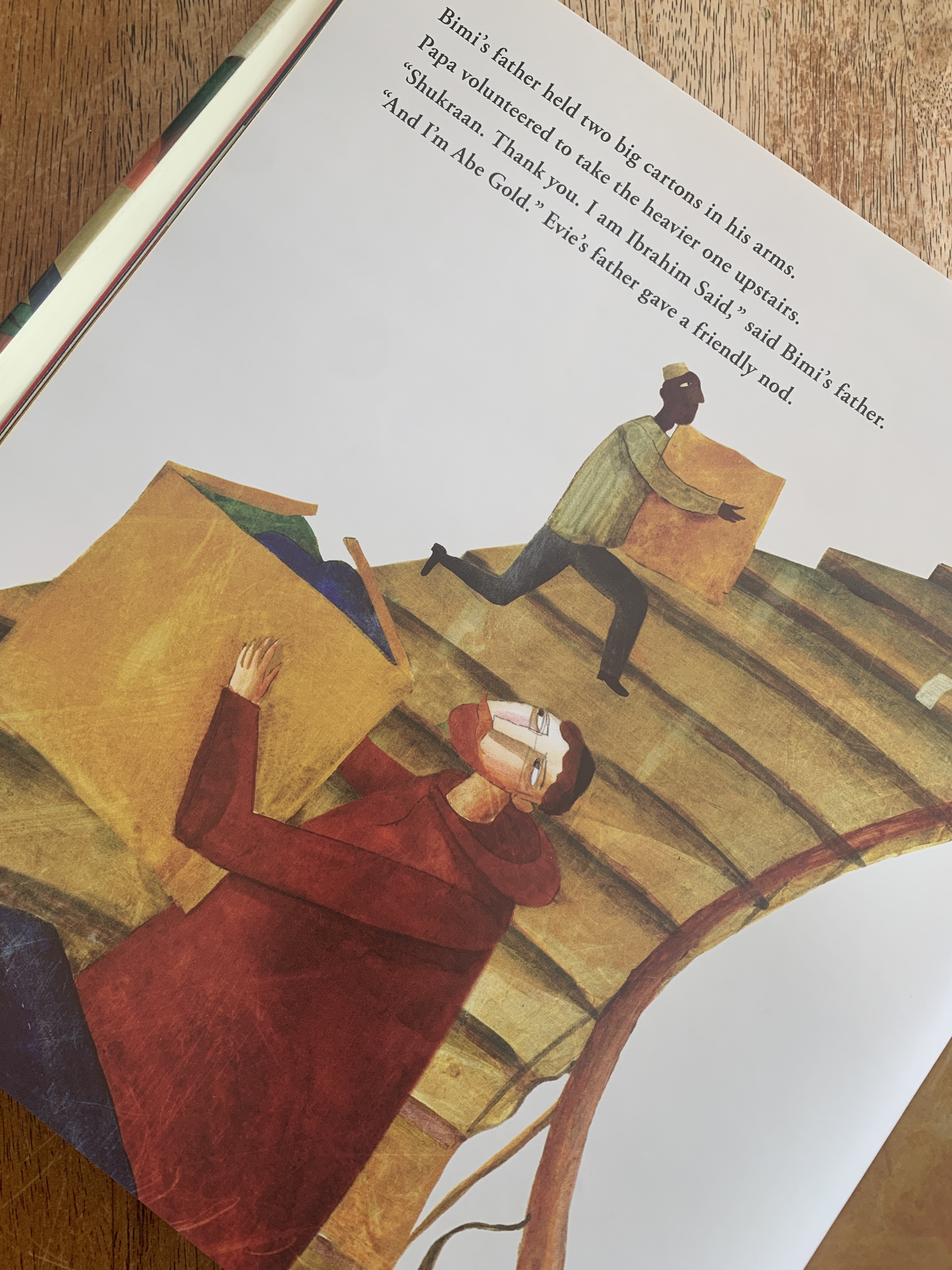
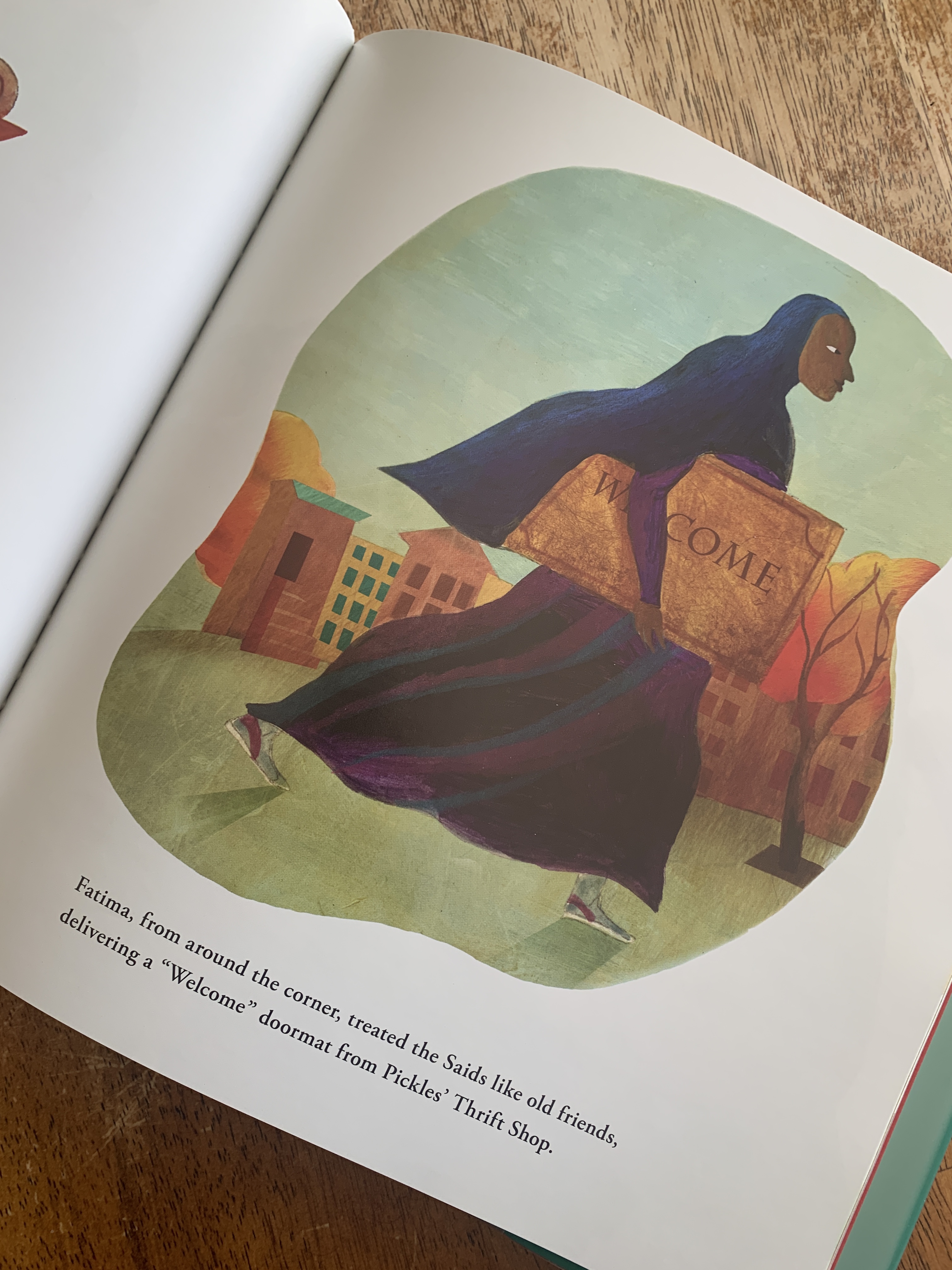
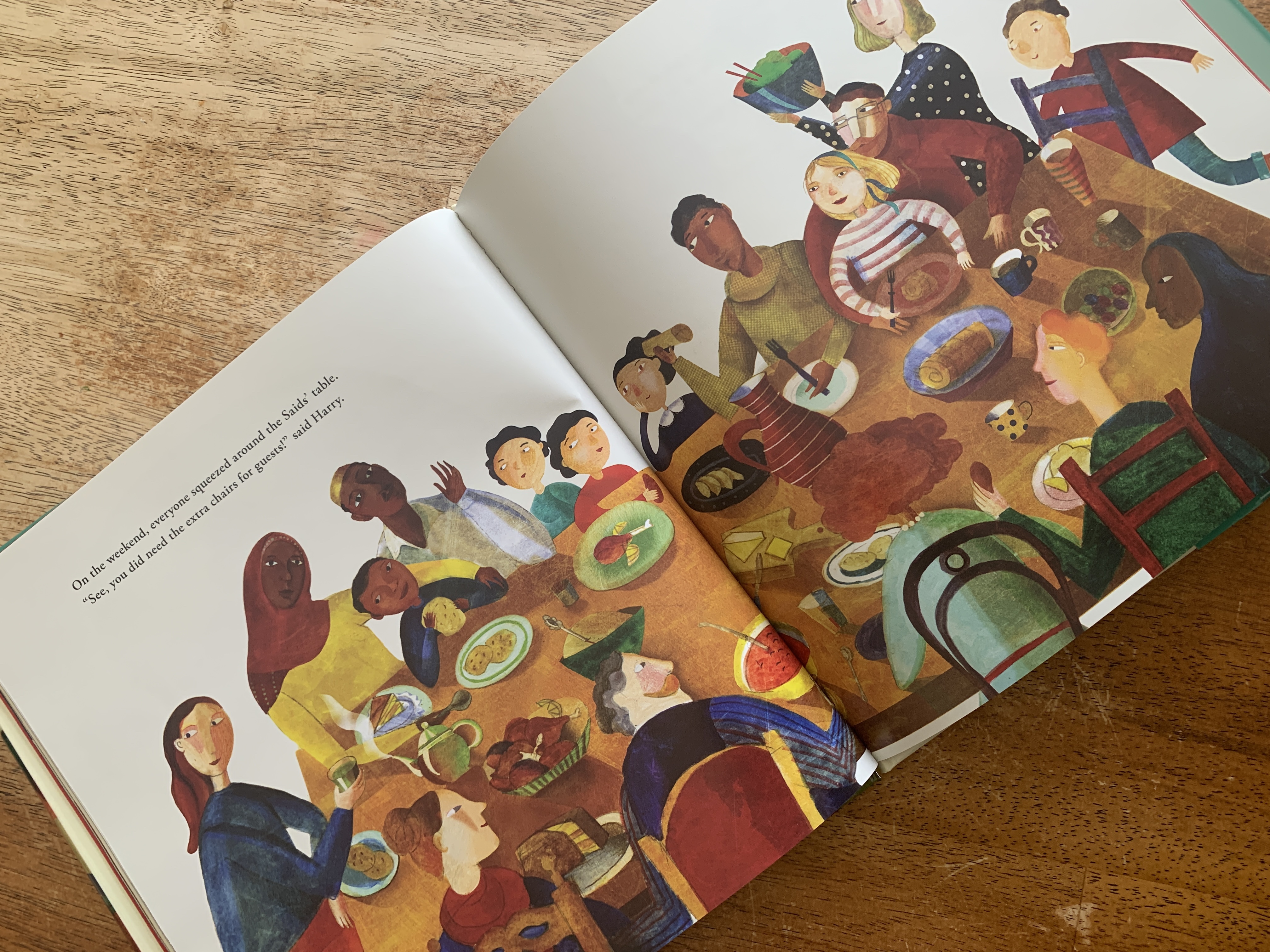
This 40 page picture book for preschool and up does a decent job of highlighting how many of us have immigrants in our family history who have relocated much like the immigrants today. The story focuses on Evie and her family welcoming a Muslim family to the neighborhood.  Some are excited to help, including a Muslim neighbor, others are not so welcoming.  The book shows some of the obstacles an immigrant might face, ways someone already established can help, and just how to be a good neighbor- all on a simple pre-schoolr to first grade level.  For little kids it is a good story to start a discussion, and for slightly older kids it is nice to see Islamic names in the text, smiling hijabis in the illustrations, and different characters to identify with.

Evie’s parents tell her that a family from far away is moving in next door, she asks if they are coming like her grandparents did, and indeed they are.  When they arrive Evie runs out to introduce herself to Bimi. Evie’s parents help the Said family move in.  But one neighbor, Mrs. Monroe just glares out the window.

Bimi asks his parents about Mrs. Monroe and Evie asks hers.  Bimi’s parents tell him that some people are scared of people that seem different, and Evie’s parents wish Mrs. Monroe would remember what it was like when she first came to America.

That night Evie has an idea to help furnish Bimi’s house.  The whole neighborhood helps out, including Fatima who lives around the corner.   After getting the apartment set up, they all share a meal, everyone that is, except Mrs. Monroe.

When the kids go out to play, Mrs. Monroe’s shopping bag spills, and Bimi helps her and Mrs. Said invites her in.  Later Evie gifts Bimi her teddy bear and Bimi gives Evie a stone from his grandma’s garden.  Evie asks him what he will name the bear, and when he says Evie, the reader knows the two are friends, and Bimi is “home.”

The book isn’t exciting, emotional, or particularly memorable, but there is value in it and I appreciate the Islamic representation.

Zara Hossain is Here by Sabina Khan

Standard
Zara Hossain is Here by Sabina Khan

zara

After reading a few chapters of this book, I really had no intention of finishing it, knowing that my review highlighting the main character’s bisexual identity and romance would draw critiques from both people that don’t want to see Muslim character’s identifying as any of the LGBTQ+ labels and those angered by my mentioning of them as potential flags.  Alas, I did finish the book, and I am reviewing it because as a (former) Islamic School Librarian, I would want to know how much romance is in any book that I would shelve or recommend, and this book particularly gives no insight about any romance in the blurb on the inside flap.  The author’s first book was very clearly about being a queer Muslim, but this YA short 244 page book focuses a lot on Zara’s relationships, her parents support and acceptance of her being bisexual, and her new romance with a girl.  The book is not graphic or even overly steamy, but the blurb suggests the book is only about immigration, hate crimes, and bullying.   So, I write this review to give a heads up to parents, like me, that might see this book on the library shelf or if like the author’s first book, which was picked up by Scholastic, in a school book fair, and not realize that there is a fair amount of discussion about her sexuality and how it is perceived in the Pakistani and Islamic culture, as well as how she doesn’t see the need to fast in Ramadan or pray five times a day, but still identifies as Muslim.  All that aside, I also didn’t love how the book was written, it is a lot of telling and not showing, I feel like the mom is painfully underdeveloped and flat, and the story threads don’t weave together consistently;  it reads scattered.  The book is pretty short for YA and with so many heavy themes, it ultimately can’t spend much time exploring any of them particularly well, a shame since the author in real life seems to have endured much of what she writes for her characters in regards to immigration status and citizenship.

img_2132

SYNOPSIS:

Zara Hossain is a senior at a Private Catholic school, in Texas, she has friends that have over the years become family as the parents too regularly get together.  Zara came to American when she was three.  Her family left Pakistan for more educational opportunities and after her father’s pediatric residency, he stayed on with a work permit and green card waiting for citizenship.  The process continues to drag on, and it isn’t finalized.

A boy at school, Tyler, is harassing Zara for being Muslim, an immigrant, and brown.  Her father wants to discuss it with the principal, her best friend Nick wants to beat him up, and her mother just worries.  When finally a meeting with the principal is set, Tyler’s father doesn’t show, and things escalate.  Zara’s locker is defaced with profanity, Tyler is suspended, and the Hossain’s house is vandalized.  When Zara’s dad, Iqbal, goes to talk to Tyler’s father, he is shot, by Tyler’s dad.  He ends up in a coma in the hospital.  During all this Zara is crushing and pursuing a relationship with Chloe, who has just come out to her parents.  Zara’s family is very accepting of Zara being bisexual, and take Chloe in when she needs a break from her conservative Christian family.

Tyler’s dad is well connected in Corpus Christi, and while Iqbal recovers, he is faced with trespassing charges.  Although trespassing is a misdemeanor, by pleading guilty and paying a $200 fine, a criminal record will further complicate their citizenship status, and where they call home.

WHY I LIKE IT:

I like that it shows how messed up legal immigration often is. Dr. Hossain is the victim, he is shot,  he is a vibrant member of his community, but is being forced to leave and uproot his family.  The issue however about trespassing isn’t ever completely clear, the reader is never given a play-by-play account of what happened that night.  I wish we were.  It would be nice to not leave that area gray.  Also a lot of what lead up to Tyler causing Zara so much trouble is rather glossed over.  I wanted to hate him and be angry with him, and then be forced to examine how much was his doing and how much was his father’s, but I never really felt that emotion until the book told me to be mad.

I vaguely recall from the book that she is in a religious high school, the inside flap when I took the picture (see above) seems to stress it more than the story does.  She does mention that they couldn’t start a Pride Club, but I wish she would have talked a bit about being Muslim in a Catholic school, or better yet, shown the reader.  She doesn’t come right out and say that all Muslims are different and this is her.  I wish she would have, instead she talks a lot about being annoyed at having to explain why she doesn’t pray and fast.  Yet she never tells the readers why she doesn’t.  She goes to mosques to counter Islamophobic protests, and talks of going to Sunday school to learn Arabic as a child, but she is very clear that she was encouraged to question religion and God, but not what she found or why she still identifies as Muslim if she doesn’t believe it.  I was curious if she doesn’t believe it actually, why fast at all? If she is still questioning, why not say that.  I really felt that Islam and being Muslim was just a box to be checked to justify the hate crime, but really, she could have just focused on the culture.  There are Urdu phrases, and lots of foods mentioned, she clearly loves Pakistan and talks highly of it and often points out the good and bad in both Pakistan and America.  Food is in the book a lot, and not just Desi food, frozen yogurt is a crutch for the story, and it gets a bit annoying.  I wish there was as much character development as there was food detail and banter.

I liked that her parents defend and stick up for their daughter.  Whether you accept the lifestyle of Zara and her family or not, it is wonderful to see families stick together.  The nosey aunty got put in her place and if you have ever had to deal with the stereotypical aunties or the threat of what everyone will say, you had to cheer for Zara’s parents.  I don’t care what your thoughts are about LGBTQ+, that scene was awesome.  Great job Iqbal and Nilufer.  It was one time that Nilufer got to shine, I really don’t get why Zara’s mom is relegated to the cooking, feeding, worrying stereotype for much of the book.  I lost track of the number of times the book says, “no need to worry your mother,” or something to that effect.  The lady clearly is loving and strong, but doesn’t get developed, and it is frustrating.

The ending is a bit abrupt, yes time is ticking, and whether to move to Pakistan or stay and fight the system is definitely not an easy decision, but how is Canada suddenly the magical answer? I assume for most it is enough, and being the OWN voice tale seems to be very close to reality in this regard, I have no room to roll my eyes, but Canada has civil rights issues with Muslims too, and this 2021 published book kind of made it seem like it is just the perfect answer to all their problems.

FLAGS:

Violence, bullying, Islamophobia, profanity, vandalism, crime, shooting, stereotypes, hate, lying, straight and lesbian romance, crushes, kissing.

TOOLS FOR LEADING THE DISCUSSION:

This book would not work for an Islamic School middle school book club selection.

Boy, Everywhere by A.M. Dassu

Standard
Boy, Everywhere by A.M. Dassu

boy

In a very crowded field of refugee themed books, this 400 page middle grades/early middle school novel sets itself apart by really focussing on the quality of life enjoyed in Syria compared to the life of a refugee on the move and in getting reestablished as an immigrant.  Where other books allude to how things in Syria got worse and then perhaps focus more on the horrific journey desperate individuals are forced to take, this book is very direct in showing the young protagonist’s daily life in Damascus and really cementing in the notion for western privileged readers, that losing everything could happen to anyone. The book does show hardships on the perilous journey by truck and boat as well as showing that life in England isn’t immediately better.  Side characters throughout the book show diverse opinions and strengths that for the preteen target demographic would provide starting points for wonderful discussion and dialogue to take place. Overall, the book does a decent job of not falling into the same cliche’ narrative even though the book does have a hopeful and happy ending.

SYNOPSIS:

Sami is the 13-year-old son of a surgeon and principal.  He has a little sister, a best friend, a desire to be on the football (soccer) team, the latest Air Jordans, a love of video games, his iPad, and a very comfortable life.  When he orders the newest soccer shoes to wear for tryouts and begs his mom to go pick them up from the mall, the Syrian civil war which has seemed an arm’s length away, comes to Damascus and to Sami.  The mall is bombed while his mom and little sister are getting his shoes and while they survive Sara is traumatized and stops speaking.  The family decides immediately and secretly that they have to leave.  Sami is kept slightly in the dark and thus, so is the reader as to how quick everything must be liquidated and how uncertain the future is for the family.  

Sami is forced to turn over his iPad to his parents, he stops going to school, and before he has time to talk to his friends, he is saying good bye to his grandmother and heading to Lebanon with his parents and sister.  The journey is perilous and fraught with danger.  The constant state of fear and silence, the peeing in bottles, the trust in smugglers is all so palpable.  The rooms they are locked in with other refugees and the the bonds and fears and squalor that Sami experiences is such a stark contrast to the life he has known of drivers and maids.  In one smuggler’s den in Turkey Sami befriends a boy slightly older than him that is traveling alone, Aadam.  Desperate to help his new friend, Sami tries to steal his father’s cell phone and some money to help Aadam ensure his seat on a boat, not a raft, to cross the Mediterranean.  Sami is used to his family helping others, this situation of not being able to help, not being able to help themselves, is very new to him, and causes a lot of stress and strain between Sami and his father.

Sami has a fear of boats and water, having nearly drowned years earlier, the idea of getting on a make shift boat in the night with rough water is not something Sami is mentally prepared to do and when a boat near them capsizes, the reader is made painfully aware that even those that survive this journey are not left unharmed.  The family makes it to England to claim asylum, they are put in a holding area, a prison more or less, to await the next stop in a long process.  Here Sami and his father are assaulted and the threat of physical violence and imprisonment start to really affect Sami.  When they eventually get to a distant family members house in Manchester, their struggles are far from over as the family is unwelcoming.  School brings out the racists, the parents take jobs as factory workers and cleaners and Sara is still not talking.  With the guilt of his family’s condition weighing heavily on Sami, the constant bullying by his family in England, and the sad condition of his family’s finances, Sami decides he needs to return to Syria to care for his Tete and unburden his family of his presence.  

Yah, sorry, I’m not going to give it all away.

WHY I LIKE IT:

I love that the book really articulates how Sami’s life is in Syria and has him remark multiple times in England how much nicer things were in Damascus.  It doesn’t come across as a criticism, but rather a rattling of the paradigm that the west is so much better across the board.  I love that Sami’s best friend in Syria is Christian and that they are so respectful of each other’s faith and it is a non issue.  I love that some of the refugees in the holding apartment are kind and some in the detention facility in England are criminal.  It allows for the reminder that people are people even when they are refugees and cannot be assumed to be a monolith.  It also opens the door to discuss how desperation changes people.  Sami’s family is usually very generous, but with their own futures in turmoil, they cannot afford to be, they also presumably are very social and yet, the silence between strangers and within their own family is very telling of the stress and worry that plagues them.  I like how the process humbles the characters.  Not that I enjoy or feel that the characters needed necessarily to be humbled, but it is a transition that the reader benefits from seeing.  Sami’s father is/was a doctor, a surgeon, but is loading boxes in a factory, the desire to take care of ones family trumps degrees and expectation.  The transition is conveyed to the reader and I think will plant a seed of empathy in even the hardest hearts.  

The family in Manchester, particularly the boy Hassan, is awful and the friend, Ali, from school is amazing.  These opposing Muslim characters also help break the stereotype of where bullying comes from, and who is welcoming, allowing for people to be seen more as individuals than they often are in literature and in real life.  Islam is presented as characteristics of the characters when it does appear.  They ask Allah for help and say salam, attend various mosques, but there are not heavy religious overtones.  

At times Sami is annoying, and as an adult reading the book, I had to remind myself that that is probably exactly how a 13 year old boy would behave.  He sees things in black and white and is often singularly focused on contacting his friends.  He doesn’t understand the bigger picture, nor is told a lot of the bigger picture.  It is a hard age of being kept from stuff because you are too young, and being expected to rise up and be mature because of the gravity of the situation.  The book is not overly political, it is character driven and very memorable thanks to Sami’s perspective and voice.

The book is researched, it is not an OWN voice story, and while it is a compelling and engaging read, that I hope is accurate, the framing of the story is not incredibly original.  Aside from other Syrian refugee focused books, the book reminded me quite a bit of Shooting Kabul, albeit the country being left is different.   Both plots focus on a boy leaving with his family and blaming himself for the tragedy that has befallen a younger sister and the repercussions it is having on the family as they reestablish themselves as immigrants.  In both books the character plans to board an airplane to return “home,” as well.  

I like that there is a map, a glossary, and an author’s note included in the beautifully spaced, visibly accessible book.

FLAGS:

The assault is intense as is the fear of physical assault.  There is nothing detailed in the bombing, but the implied stresses of war, the journey of the characters, and the situations that they are in would be best for ten year olds and up.

TOOLS FOR LEADING THE DISCUSSION:

I am hoping to use this book as a Middle School book club read to start next year off.  The book is not yet out in paperback, otherwise I would do it this year.  There are so many things to discuss: from Sami’s unhappiness, his strengths, his desire to help others, to considering life from Aadam’s perspective and Hassans.  This book begs to be talked about with young readers and I’m so excited to hear what their thoughts are and who they identify with.  They could be Sami, he is a boy, everywhere, and if we can all remember that, we all will be better humans, period, the end.

Fatima’s Great Outdoors

Standard
Fatima’s Great Outdoors

fatima's great outdoors

As a partially brown person who enjoys camping and does it frequently, I have been anxiously waiting to get my hands on this beautiful 40 page, kindergarten to fourth grade picture book. So, trust me, I’ve read it multiple times to myself, to my children, and even to a Muslim storytime group to try and figure out why I like it, but, unfortunately, really don’t love it. Ultimately, I think it is because there is just too much going on.

Everything about this book is wonderful: the idea to encourage brown people to go camping, to highlight that time in the wilderness is for everyone and doesn’t have to look a certain way, that bullying and micro aggressions are oppressive, that immigrants have diverse and full lives in their home countries and work hard when they come to America, that culture and language and food and music is diverse, yet universal, that learning new skills and trying hard things makes you a super hero, that dad’s can cook and mom’s can be great fire starters and critter catchers, truly it is all so powerful and affirming, it is just a lot for one book.

It could easily be a three book series with just the information and layered themes presented, and I really wish it was spread out. If you are a 4th grade desi kid who has been camping or desperately wants to go camping this book is a great glimpse to mirror your place in the hobby without compromising your unique spin on it, but I think for anyone not in that demographic, many of the little celebrations, messages, themes, and cultural nuggets will simply be lost.

I wanted to hear the campfire stories and jokes, and laugh at the lyrics being belted out, not just told about them. I wanted to feel Fatima’s accomplishment at helping set up the tent and maybe see her struggle and rebound, not just be told she suggested reading the directions. The book has a ton of industry praise and personally came with a lot of expectation for me, so perhaps I’m overly critical, but kids in my storytime were struggling to stay focused when they couldn’t relate to the cultural touchstones being tossed out, they didn’t get the “not being good at math stereotype,” they needed the non text pictures to be explained to grasp their impact on the story, and they wanted to know why of all the Islamic things a Muslim family could do while camping, halal bacon was the only Islamic reference and came with precious little contextual defining.

The story starts with a Fatima and aapa waiting to be picked up after a terrible week of school to go camping for the first time. The Khazi family has immigrated from India and their father has told them that camping is an American pastime. During the week Fatima has been teased for her pronunciation and lunch, had her hair pulled and done poorly on a math test. But when her parent’s pull up with a packed car and the girls jump in to enjoy samosa and Bollywood songs, the weekend holds promise.

When they get to the campsite, Fatima and her dad tackle the setting up of the tent. Dad cannot seem to figure it out, and after the week she has had, Fatima is scared to help, but after a while she suggests looking at the directions and it seems that does the trick. The family enjoys shami kabab and rotis from home for dinner, before the girls climb in the tent.

A spider on the outside of the tent is magnified inside, and has the girls terrified it is a monster. Mom, the ever brave lizard and scorpion disposer in India reassures them that it is nothing and sends them off to brush their teeth before settling in for the night.

The next morning mom shows the girl the small spider keeping the mosquitos out and they all share a laugh while dad is cooking anda and roti on a gas grill. He calls the girls to come out in urdu to attempt a campfire to cook the halal beef bacon on like other American’s do. Dad and Fatima can’t get it to light, so mom, who is from a smaller town in India has to show them how it is done. Along the way Fatima looks at the other campers and is annoyed that they aren’t having trouble and that her family always is so different. The other families it is worth noting are white.

The Khazi family then starts to pack up and then they go for a hike, play in water and when the time to leave comes Fatima is sad. She doesn’t want to go back to the life they live where they are different and teased and her parents have to work two jobs each. But aapa suggests she share her fun at show and tell, and the family reassures her that they will be back.

The book ends with Fatima telling her class she is a superhero because she can build fires and tents and isn’t afraid of spider monsters. There is no glossary to define the urdu words used and spoken, but there is a reference at the end about the author’s @brownpeoplecamping initiative.

I think the book is rather remarkable and ground breaking because of its subject matter. The illustrations are wonderful, and the book a great reminder that camping and being outdoors is for all. I just wish it focused on a theme or two and highlighted them for this Indian American Muslim Family with relate-ability for other types of minority groups. The book set its own standard in what it wanted to achieve and convey, and sadly I think it missed the mark.

Home is Not a Country by Safia Elhillo

Standard
Home is Not a Country by Safia Elhillo

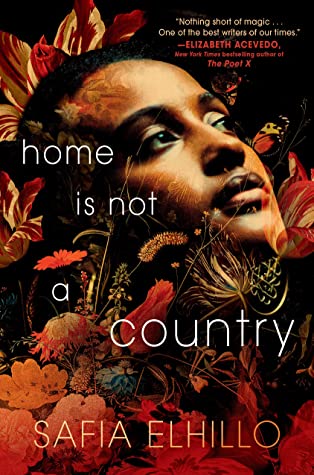
home is not a country

This upper middle school/high school 224 page novel told in verse touches on familiar themes of finding yourself and wondering about what could have been, but is anything but predictable.  Through magical realism, religion, culture, and phenomenal imagery, this book is haunting and powerful as it sweeps you into the possible alternate reality of a young 14 year-old-girl yearning to be someone else, consumed by a life that could have been, desperate for the other half of her mirrored existence, and for a home that she does not know, but so desperately longs for.  As a Muslim child of an immigrant, the daughter of a single mother, and nearly invisible at school, readers will feel her story, more than know it, and find themselves in her own awakening.

SYNOPSIS:

Nima feels like she exists in pieces.  No one understands her and she doesn’t feel comfortable in her own skin.  At school she is invisible, she is foreign and teased for it.  She has one friend, Haitham who is always there for her at home, but just a familiar wave in public.  At home Nima enjoys old Arabic songs and movies, hobbies she is teased for at weekend Arabic school, her hardworking mother is graceful and beautiful, Nima is neither.  Her world is the aunties and family in her building, but her Arabic is weak and she doesn’t fit in anywhere.  Her father passed away before she was born in a country she has never known.  Her twin sister died before birth, one for each parent in each world.  Nima imagines if she wasn’t Nima, but Yasmeen instead.  If she was bright and loud and loved and confident. The name she was nearly given, an alternate life she has become obsessed with.

When Haitham and her get in a fight, when her mother removes her headscarf and the bullying intensifies, Haitham ends up in the hospital, assaulted, barely hanging on and Yasmeen appears to help a floundering Nima escape a meal she can’t afford, a man that intends to assault her, and a world where she might find answers. The two girls travel to the homeland in the photographs to understand their parents, to understand why their mother left and Nima to the realization that only one of the girls can truly exist.  

WHY I LIKE IT:

I love that I had no idea where the story was going and how much would be spelled out and how much would be left for the reader to interpret.  It affected me in a way that I wasn’t expecting and reminded me of the blurred lines of reality from books like Beloved (Toni Morrison) and Her Fearful Symmetry (Audrey Niffenegger).  I love that the Arabic script is present and often not translated.  The unapologetic connection to the character and author is powerful and beautiful to see in a deeply introspective book.  I enjoyed that the “country” wasn’t named as it added to the concept of not knowing you home, it was frustrating, but for all the right reasons.

There isn’t a lot of practiced Islam mentioned, she doesn’t talk about praying, but does talk about the athan and longing for it.  Her mother wears hijab, but takes it off and wears a hat instead. The daily life of living in two worlds is taken to mean something very literal and the journey to both worlds is remarkable and memorable.

FLAGS:
There is physical assault, theft, lying.  Nima has to escape a man that intends to rape her, his intention isn’t detailed, but Yasmeen helps her escape when he brings her to a hotel.  Haitham’s dad has an affair with his mom and she is pregnant with him when the story flips back to the past and the couple are not married.  There is singing and music and dancing throughout. I think 14 and 15 year olds will be able to grasp the intensity of such situations while also not being shocked by them.

TOOLS FOR LEADING THE DISCUSSION:

I am on the fence if I could do this as a middle school book club, I might suggest it to the high school advisor.  There is so much to unwrap in the lyrical text that will draw the students in and force them to reflect on their own impressions to understand Nima’s reality.  I think there would be so many conflicting thoughts that the discussion would be amazing.  

Here is a better synopsis than mine: https://www.npr.org/2021/03/04/973389493/home-is-not-a-country-imagines-the-lives-we-could-have-led

Q and A with the Author: https://thenerddaily.com/safia-elhillo-author-interview/


https://www.npr.org/2021/03/04/973389493/home-is-not-a-country-imagines-the-lives-we-could-have-led