Tag Archives: Hena Khan

Dark Nights and Light Hearts: A Muslim Book of Opposites by Hena Khan illustrated by Mehrdokht Amini

Standard
Dark Nights and Light Hearts:  A Muslim Book of Opposites by Hena Khan illustrated by Mehrdokht Amini

Every few years, for the last 13 or so, we get a new title in this series, and each one warms my cynical heart with its unapologetic Islamic representation and vibrancy.  The heartfelt rhyming lines, the Islam centering, and the enveloping illustration make these books timeless, sought after, and beloved.  This installment covers opposites, previous books in the series focused on colors, shapes, and numbers. From the BIG ummah to a SMALL baby’s aqiqah, HOT oud to COLD rain bringing barakah, SLOW honey full of shifa to FAST cars heading to Jummah, the book uses two page spreads per each term in the opposite pair with rhyming couplets in large clear font to introduce/remind, describe, and highlight an Islamic tradition.  As both opposites and Islam are conveyed, the cadence and illustrations pull Muslim and non Muslim children in and make the book delightful at storytime, in small groups, at bedtime, and for kids to look through on their own, over and over again.  Alhumdulillah.

The book is 36 pages with a Glossary of Islamic words at the end with an Author’s Note.  It is available wherever books are sold and a great reminder that well done Islamic books can make it from traditional publishers.


We Are Big Time by Hena Khan Illustrated by Safiya Zerrougui

Standard
We Are Big Time by Hena Khan Illustrated by Safiya Zerrougui

With themes of being new in school, balancing sports and school, teamwork, focusing on the positive and pushing back on media stereotypes, this 240 page middle grade graphic novel inspired by a true story is a feel good story that can be enjoyed by all.  The all hijab wearing Muslim high school girls’ basketball team is researched and noted in the backmatter, and while often Hena Khan books feel performative, the tone of this is not identity based. The characters are Muslim, they are not questioning their religion, and in fact push back on the media who try and make it about what they have to overcome by practicing their faith, rather than on their abilities on the court.  That isn’t to say that the Islamic representation is strong.  For characters in an Islamic school, a whole page is dedicated to being the new kid in each class, but only one “salaam” is offered.  The team informs their non Muslim coach when they need to pray which is nice, but surprisingly with a Muslim author and Muslim illustrator when the protagonist prays at home with her family, the men and women erroneously stand together.  The framing, the setup, the accomplishments are all Muslim centered, but the book is not particularly Islam centered. The take away of teamwork, hard work, and normalizing Muslim hijabi women in sports is well done, and I think an easy book for kids to identify with as they read the panels of Aliya dealing with stresses and changes, on and off the court. This book releases next month, and I encourage you to consider for yourself if you feel the author has done enough with her platform to speak about Palestine before supporting or not supporting the book.

SYNOPSIS:
The book starts with Aliya, her two brothers and parents stuck in a car headed from Tampa to Milwaukee.  They are relocating to be closer to her grandparents, and the kids are not excited.  The first day for the trio at Peace Academy stands out because the school is big.  Aliya who has played rec basketball in the past, now decides to try out for the school team.  Tryouts are a bust, only nine girls show, so they all make the team.  With hopes of turning a failing program around, the school has hired a new coach, a non Muslim who used to play Division 1 ball.  It seems Aliya might start to make friends with her teammates, but then she is named co-captain which ruffles some feathers, her grades start slipping, and the team still isn’t winning. When the media takes an interest in the team, the pressure mounts to represent themselves, their school, their faith, and show what they can do on the court.

WHY I LIKE IT:
I love that identity is not in question and that the characters articulate the worries they have about their representation in the media, not because of something they’ve said or even Islamophobia, but just based on the framing of the questions, and assumptions that abound.

I read a black and white arc, so at times I didn’t know who was the dad and who was the older brother, but even with that confusion, the beginning is a bit stilted.  The dad doesn’t know if his daughter was any good at basketball, and the dialogue is so flat to set the stage, that I was glad it only lasted a few pages.  I appreciated that the parents were stressing grades, but were not overly narrow minded, they were presented in a very level headed supportive way as to not fall into a common desi/immigrant stereotype.

I don’t know why the prayer scene is wrong, but the more I try and tell myself it was just a mistake, the more mad I get.  This is why beta reading is so important, Muslim kids will notice, it will make the book feel just that much less authentic, and it so easily could/should have been fixed.

FLAGS:

None, a little bit of Islamophobia, but it is pretty clean

TOOLS FOR LEADING THE DISCUSSION:

The graphic novel format makes the book a pretty quick read, and most of the discussion points are handled in the text, so I don’t know that a book club would benefit.  I do think having it on the shelf for kids to pick up and read, will keep the book bouncing from one reader to the next.  I know my kids have all read it…that’s the beauty of graphic novels, just having it around means it gets picked up, read, and often finished, despite the readers age or even interest.

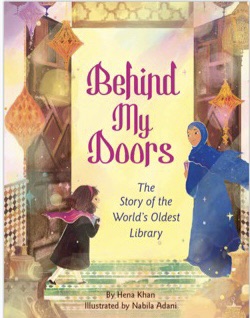
Behind My Doors: The Story of the World’s Oldest Library by Hena Khan illustrated by Nabila Adani

Standard
Behind My Doors: The Story of the World’s Oldest Library by Hena Khan illustrated by Nabila Adani

img_3557-1

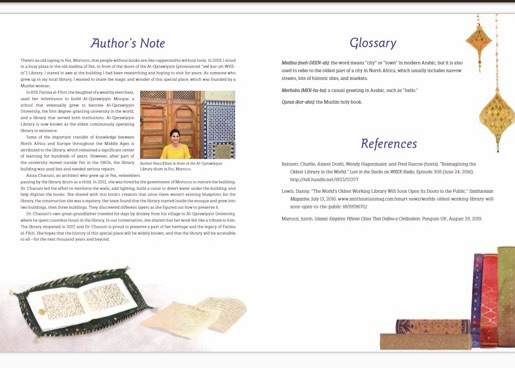
The world’s oldest library proudly stands in Fez, Morocco: started by a Muslim woman, restored by a Muslim woman, and in this 40 page book the library itself tells its own story in a book authored by a Muslim woman.  The personified library shares a few highlights from its early start as a corner in Fatima Al-Fihri’s masjid and university to collections spanning multiple buildings, from a bustling center of learning and knowledge to a place of disrepair and neglect.  Staying on an early elementary level, the informative author’s note and references make the book engaging for older readers as well, and an incredible addition to bookshelves everywhere.

img_3558-1

The book starts with the library introducing itself and welcoming the reader. “Merhaba! I am Al-Qarawiyyin Library–the oldest library in the world.” At over a thousand years old, the library begins at the hands of Fatima Al-Fihri in 859 who dared to dream big and created a space of learning and worship in Morocco.

img_3559-1

As the courtyards and collections grew, seekers of knowledge, from all backgrounds, gathered to discuss, debate, and learn.  Special rooms with special locks kept books safe: a Quran written on camel-leather, a philosophers drawings in gold ink.

img_3561-1

Nearly destroyed once by a fire, the library endured, but over time the rooms were no longer filled with the bustle of people.  One day a small girl, Aziza, paused at the door, but did not enter for many years.  When she did return, she came as an architect with a team to restore the library and invite people back in to read, learn, and dream.

img_3565-1

It delights me that such an important story is available to be widely learned from and appreciated.  You can preorder a copy here from Amazon.

img_3566-1

Drawing Deena by Hena Khan

Standard
Drawing Deena by Hena Khan

This 232 page middle grade read with a beautiful cover, has a beautiful heart as well.  A Muslim girl in a Muslim family is struggling with anxiety and family financial stresses, remarkably the book avoids tropes of blaming immigrant parents, culture, or religion.  It also doesn’t have any relationship crushes, or catty friends, bullies, or annoying sibling squabbles.  It was refreshing to see a strong character that seemed to not lack a voice, really find her voice,  advocate for herself and those she loves, apologies when in the wrong, and be surrounded by friends and family members that truly love one another.  I also appreciate that a licensed school psychologist was consulted and named in the backmatter.  As with nearly all Hena Khan chapter books, there is Islam and culture, but as an Islamic school librarian, I long for more.  There are a few inshaAllahs, mashaAllahs, salams, and references to praying, there is one solid paragraph that mentions dua, dhikr, and the Quran, but that is about it in a book that focuses a lot on fashion, make-up, social media, drawing portraits and hanging them in the home.  The protagonist is in middle school, but this is a solid middle grade read that teachers and librarians can feel confident having on the shelves and sharing with students.

img_2301-1

SYNOPSIS:

Deena loves art and to draw, she’s also really good at it.  She longs to take extra classes outside of school, but she knows it isn’t a priority with her bite guard already causing a lot of stress on the already financially strapped family.  Overhearing her parents fights about money adds to her anxiety and makes her nauseous every morning before school.  Determined to help her mom grow her basement clothing boutique, and increase the family income, she dabbles in social media, designs a logo, and sets up a website.  One of the new customers is a real life artist, who encourages Deena to look at art differently, and offers to take her under her wing to teach her about the power of art and decolonizing her mind. Things are starting to look up for Deena, but a disagreements with her cousin Parisa, feeling like she let a close friend down, and being overwhelmed at an immersive Van Gogh exhibit culminate with her having a panic attack at school.  The school counselor wants her to attend some therapy sessions at the school, but first Deena will have to convince her parents that this is something she needs and wants.

WHY I LIKE IT:

I mentioned a lot of my likes and loves above, but really it is a solid middle grade read where the character just happens to be Pakistani American and Muslim.  I like that Deena is just a sweet girl.  I think a lot of kids that have the emotional intelligence to know how fortunate and privileged they are, often push down their emotions and troubles, because they know others have it worse, don’t want to worry their parents, and/or seem ungrateful, and that this book can normalize getting help, advocating for yourself, and communicating with your parents, is really quite impressive.  Deena has a diverse group of friends, religion doesn’t come up much or seem to shape her perspective which is unfortunate, but it doesn’t make things harder for her either.  She isn’t bullied, there is no Islamophobia, or self-othering or stereotypes.  Deena is who she is, with a good head on her shoulders, and throughout the book you find yourself cheering for her and her success.

FLAGS:

She does draw faces, and they talk of hanging up the images in the living room.  There isn’t lying, but it kind of skirts the line at times. Anxiety.

TOOLS FOR LEADING THE DISCUSSION:

For even a young middle school book club, I think this book would be a quick read, but open the door for some quality discussion about anxiety that would benefit middle graders and up.  The book on the shelf will tempt readers, and handing it to kids will yield results.

The book goes on sale February 6, 2024 and you can preorder/order it here.

Zain’s Super Friday by Hena Khan illustrated by Nez Riaz

Standard
Zain’s Super Friday by Hena Khan illustrated by Nez Riaz

img_9576

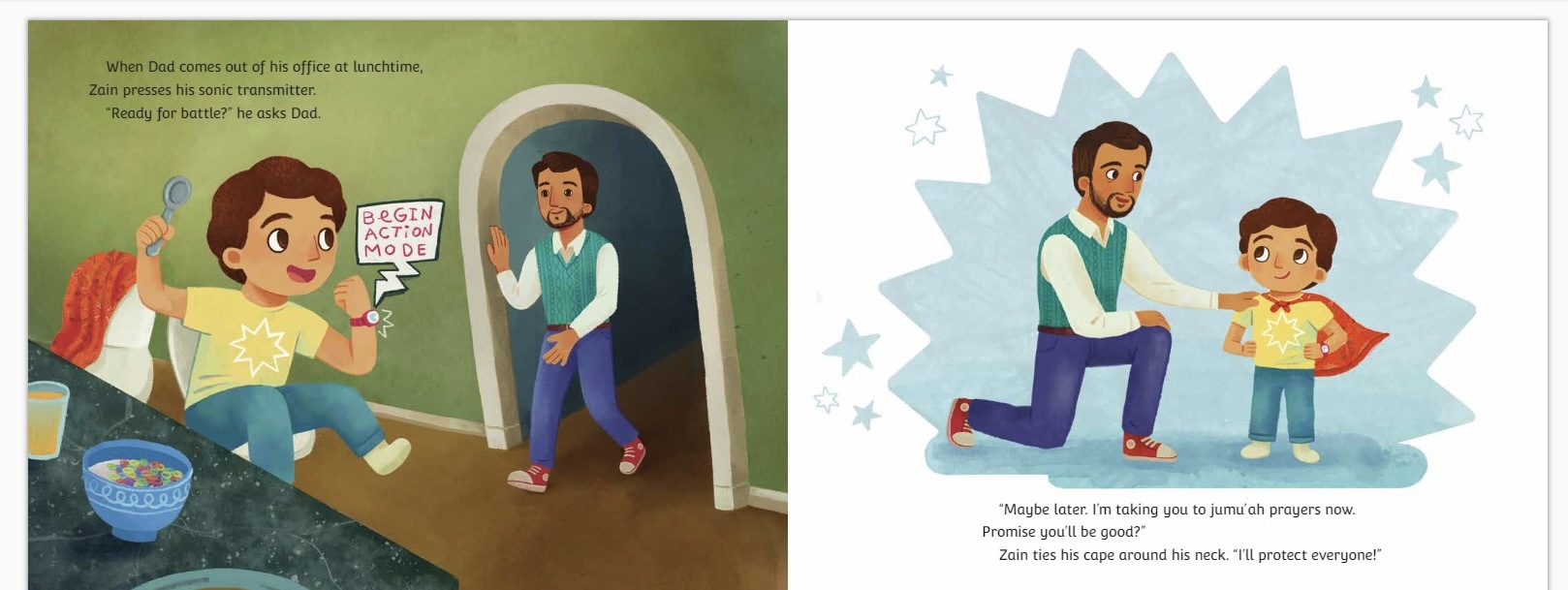
I love the joy and normalizing of mainstream titles celebrating salat, Jummah, and the masjid becoming increasingly available for us to read and share.  This particular book is great for preschool to early elementary aged children that enjoy going to the masjid, but sometimes want to put on a cape and be the hero battling aliens, that know how to behave during salat, but sometimes have a hard time sitting still, and parents that want to play with their kids, but sometimes have to get some work done first.  With  threads of patience, kindness, and determination woven in to masjid activities, the book is both a mirror for Muslim kids and a window for those that wonder what a Friday prayer service looks like.  The 32 page book is unapologetic, joyful, and a great addition to book shelves.

img_9578

Zain wakes up early Friday morning and is ready to save the world. Dad greets Zain with a “Jum’uah Mubarak,” but has to pass on battling the aliens taking over the kitchen.  At lunchtime, when dad takes a break from work, Zain tries again to engage him in heroic play, but it is time for Jum’uah.  Zain slips on his cape and vows to protect everyone.

When they get to the mosque, aka command central, Zain tries again, but dad redirects him to make wudu before salat. Heat action dries his feet, but the adhan starts and giant shoes and aliens will have to wait, yet again.  During the khutbah, wiggly Zain sits by his dad, but when the Imam encourages them to stand for salat and fill any gaps, Zain takes it as a call to duty and races to the front announcing, “Here I come, Commander Imam, reporting for duty.”

The kind Imam knows just what to do, and as Zain controls his focus, even dad finds time to be a hero and battle the aliens on this super Friday at the mosque.

img_9580

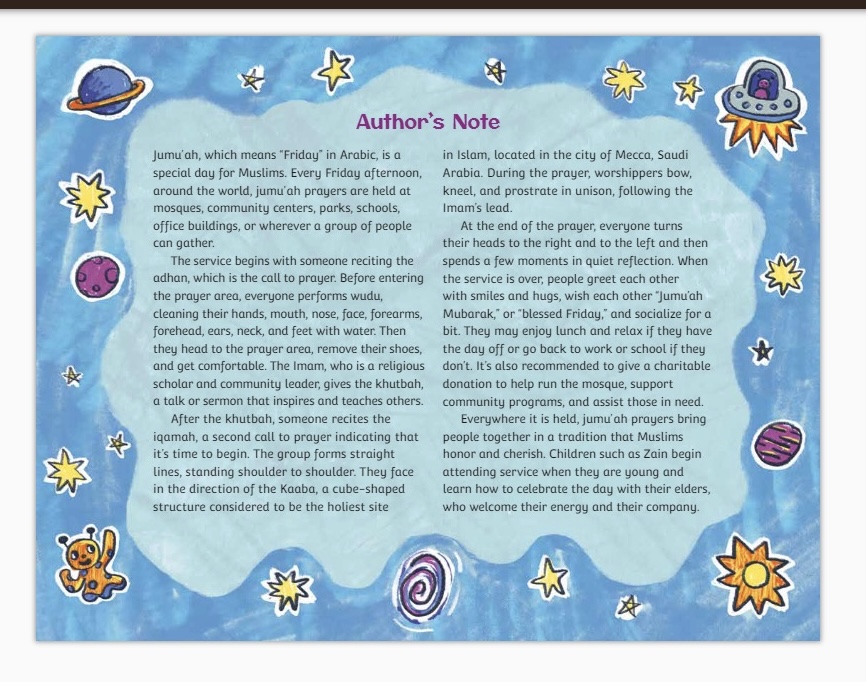
I love that wudu, athan, khutbah, Imam, are all used without a glossary and that the Author’s Note is informative and unapologetic in tying it all together and making the terms clear.  I wish masjid was used instead of mosque, but I know that is just my personal preference.  I love that the Imam is kind and the dad is gentle and playful.  Even when Zain is not getting to do what he wants, he is not unhappy with being at Jumuah, or making salat, or being redirected, he just wants to indulge his imagination.  The warmth and joy of the illustrations reinforces the tone of the book, and with the inclusion of charity, and the happy ending, I can’t wait to have a physical copy of this book in my hands.

The book releases on October 10, 2023 and can be preordered/ordered here on Amazon and I’m sure will be available once released at Crescent Moon Store, where my initials ISL at checkout will always save you 10%.

img_9582

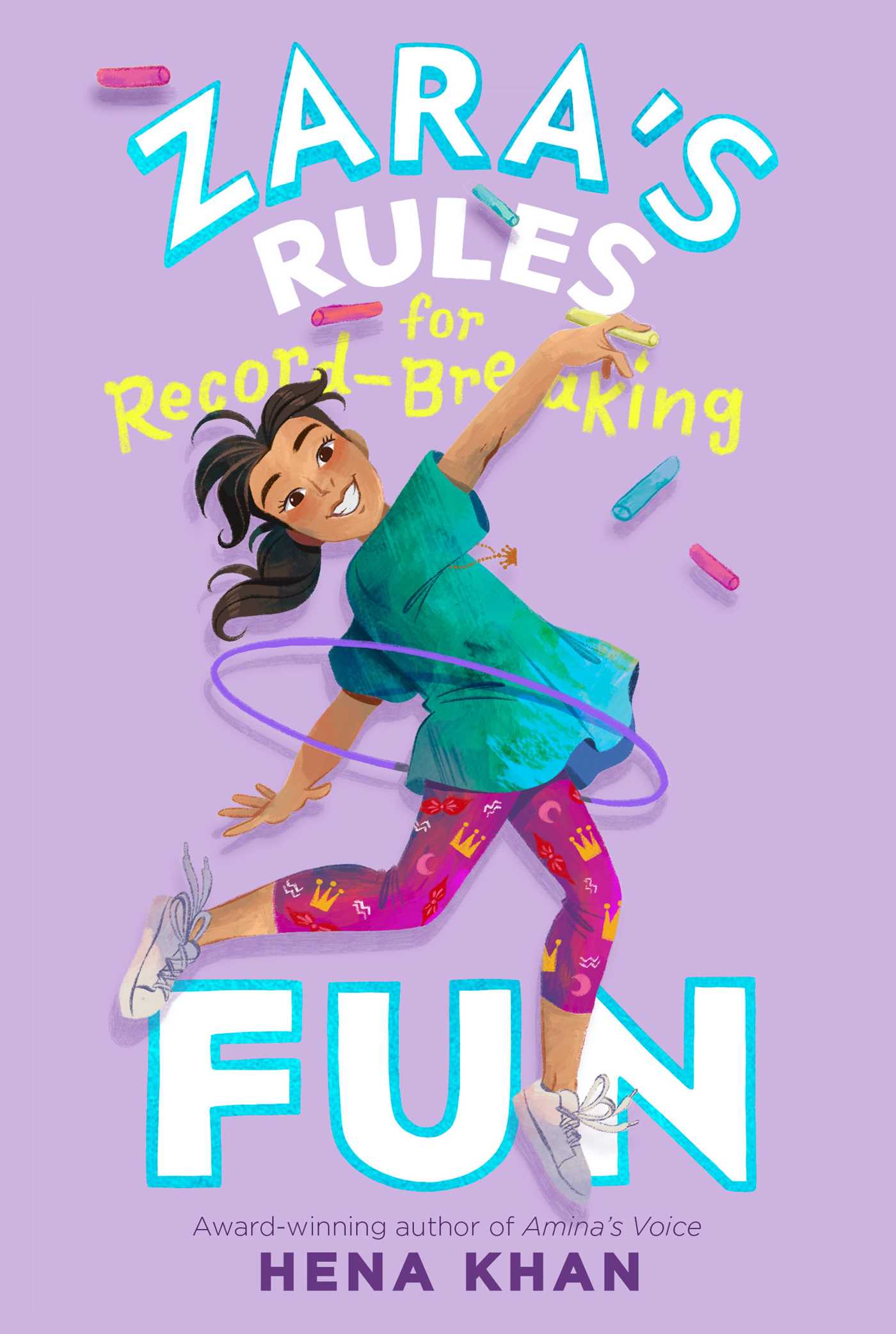
Zara’s Rules for Record-Breaking Fun by Hena Khan illustrated by Wastana Haikal

Standard
Zara’s Rules for Record-Breaking Fun by Hena Khan illustrated by Wastana Haikal

zara

This early chapter book packs a lot of personality, growth, and fun into 127 pages.  The writing quality is engaging and the characters relatable.  If you have read the Zayd Saleem books you will recognize the family in this new stand alone series.  Either way though, from the surprising Naano to the fun Mamoo, the neighborhood children and the desire to maintain her reign as Queen of the neighborhood, the book may be meant for 7-10 year olds, but based on the kids in my house, anyone that picked it up, read the entire book before putting it back down.  The grandma covers her head, it mentions she reads Quran, there is a Salaam or two, an InshaAllah, and desi cultural foods mentioned.  The focus is not on religion or culture, but the layer adds depth to the characters, and normalizes names and practices in a universal plot.

img_9060

SYNOPSIS:

Zara’s neighborhood has a lot of kids in it, and Zara has the reputation of being the leader who rules with grace and fairness.  It is a position she takes very seriously.  When Mr. Chapman moves out and a new family moves in, Zara fears losing her place.  The new girl Naomi has a lot of ideas and everyone seems to like them.  Zara has a grand idea to set a Guinness World Record, but with her little brother Zayd messing her up, nothing is going as planned for the summer.

As she finds her self alone a lot and not having much fun, she decides to change things up.  She works to be less bossy, less controlling, more willing to to share her crown.  With a lot of heart, internal growth, recognizing her strengths and weaknesses, the neighborhood kids just might have a record-breaking summer.

img_9059

WHY I LIKE IT:

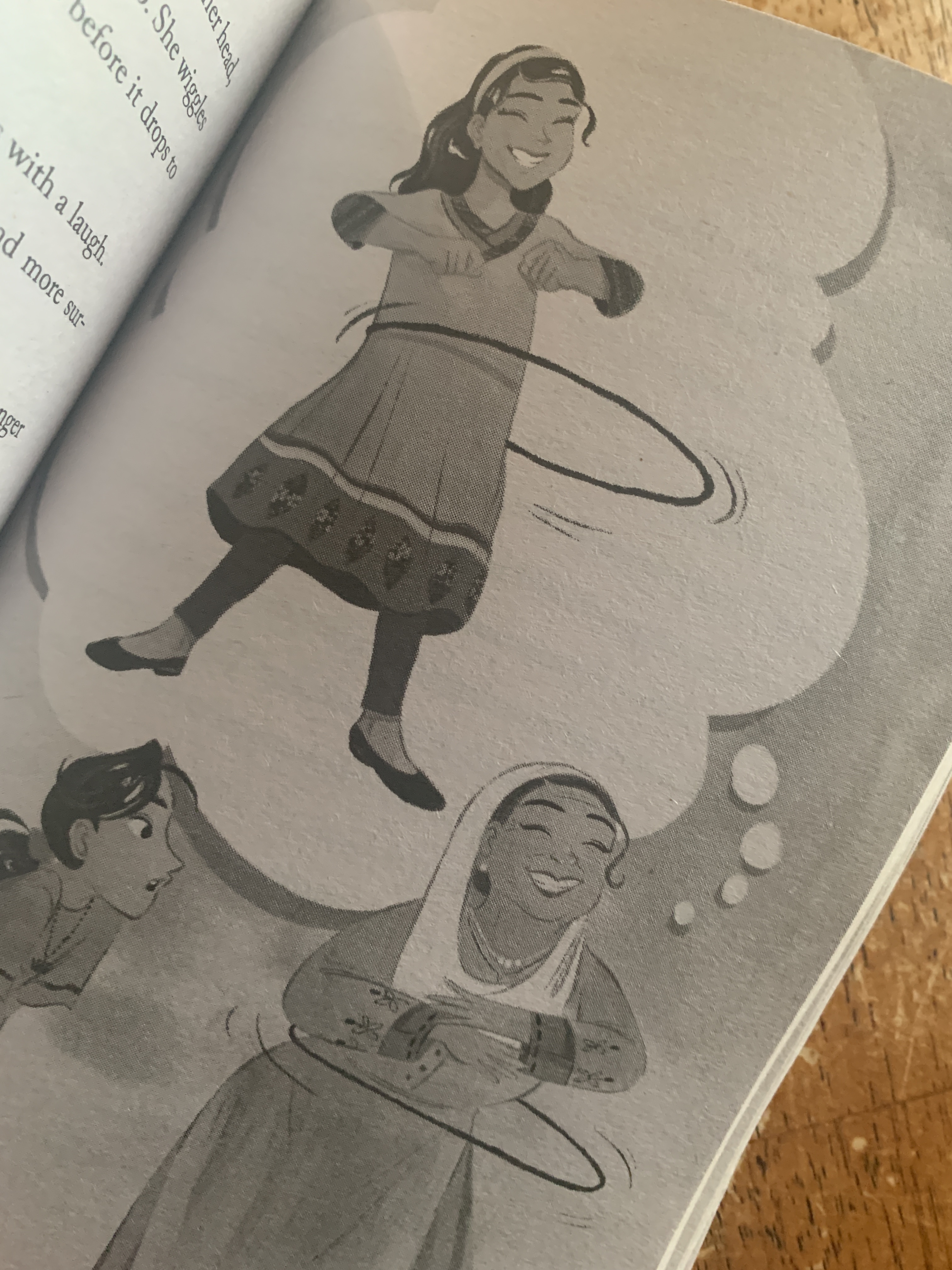
I love that the story wasn’t just surface level, it acknowledged some emotions and stresses and introspection, that I was pleasantly surprised to see played out in an early chapter book.  I really just enjoy the family, they read relatable and fun. The Nanoo’s surprise ability to hula hoop and her pettiness over a cooking competition genuinely made me smile.  The neighborhood kids and the politics of the different aged children having to find ways to compromise reminds me a lot of my summers as a kid, and the nostalgia was sweet.  I like the Islamic touchstones, I would have loved if they had to go in at sunset to pray or something of the like, but I was glad that at least that Nanoo reads Quran and an inshaAllah in the text made me feel seen.

FLAGS:

Music, dancing, frustration, jealousy

TOOLS FOR LEADING THE DISCUSSION:

I think this book should definitely be on every library and class shelf.  It releases tomorrow on Amazon, but Crescent Moon Store already has it.

The Unicorn Rescue Society: The Secret of the Himalayas by Adam Gidwitz and Hena Khan illustrated by Hatem Aly

Standard
The Unicorn Rescue Society: The Secret of the Himalayas by Adam Gidwitz and Hena Khan illustrated by Hatem Aly

unicorn

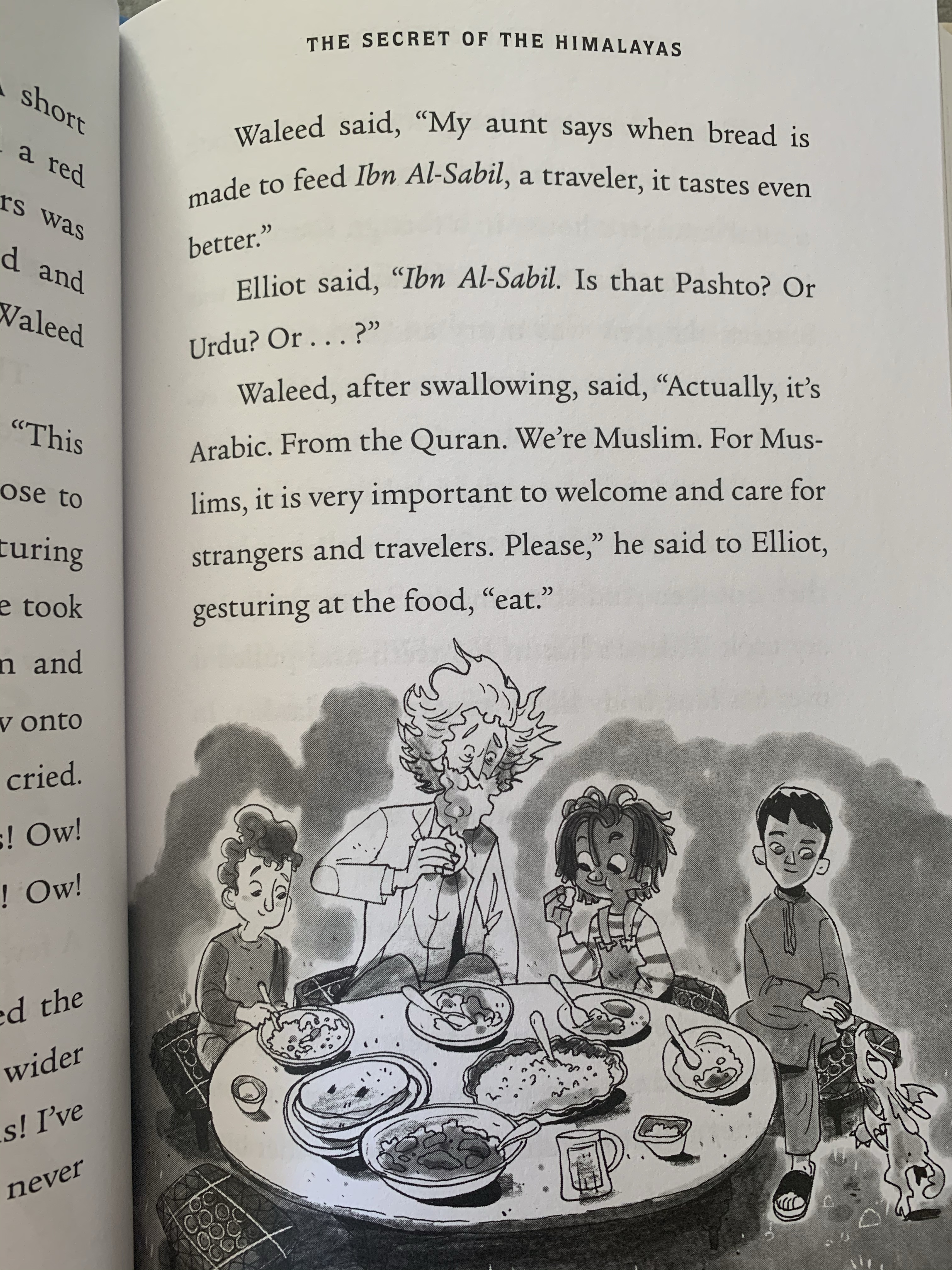
This middle grades 208 page book is part of a series, but this particular installment is co-authored by Hena Khan, takes place in Pakistan, and features Muslim side characters in the quest to find and protect the mythical, magical, and illusive unicorns.  The adventure is quick, the cultural and religious references sincere and appreciated, the characters quirky and fun, and the writing smooth and enjoyable.  I can’t speak for the whole series, but I think second to fourth grade readers will enjoy the eccentric teacher, the clever kids, and the knowledge about animals, culture, and geography that is woven in to the story to keep it engaging.  I don’t think you need to read the books in order, but I would encourage it.

img_0785

SYNOPSIS:

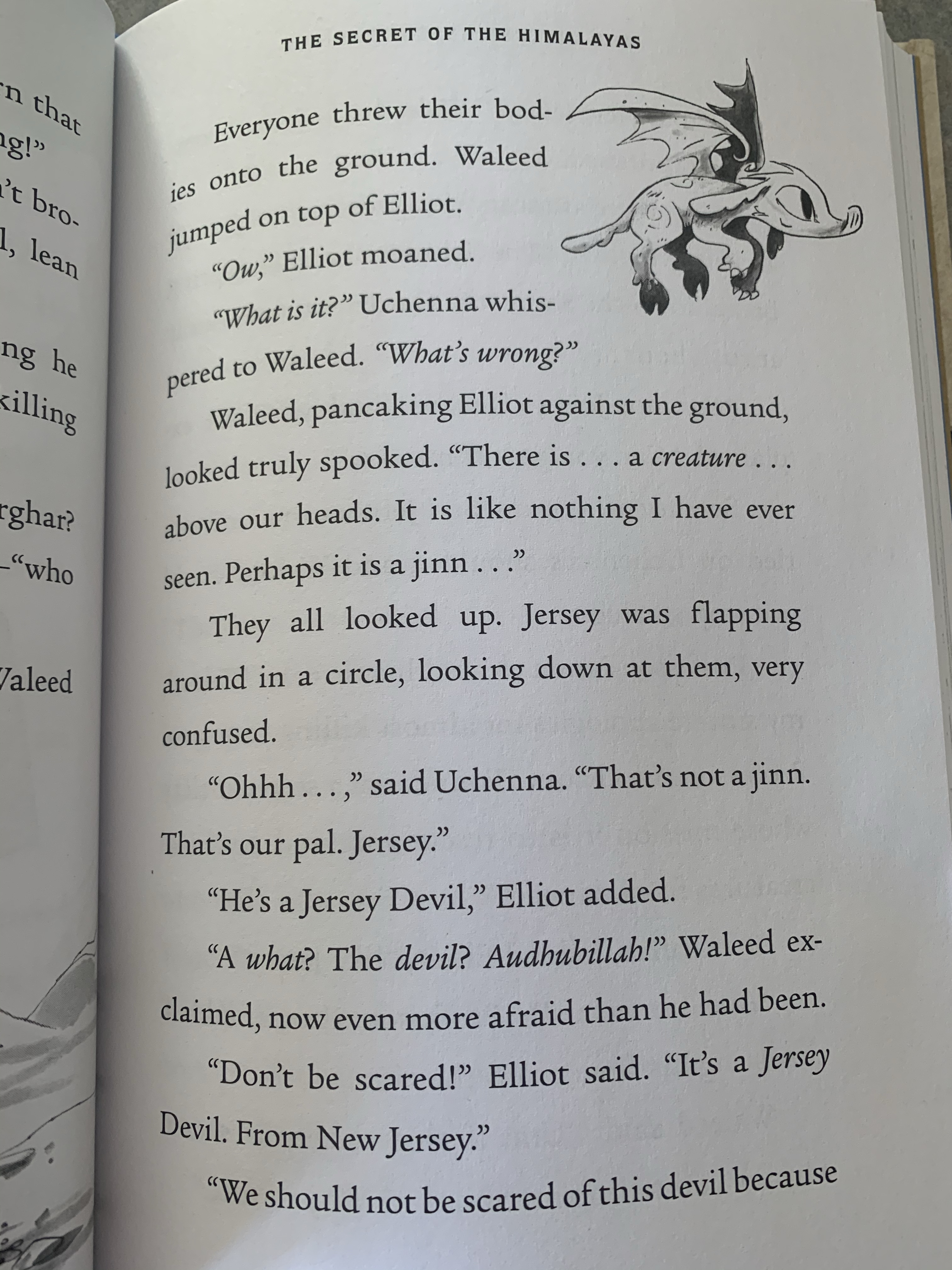
Elliot and Uchenna are elementary aged students and also members of the secret, Unicorn Rescue Society.  When a classmate starts a newspaper and interviews local businessman, the kids teacher, Professor Mito Fauna spots what he thinks is a unicorn horn in an accompanying picture and is determined to go and protect, once found, the imaginative creatures.  He enlists the kids and Jersey, a creature with a blue body, red wings, a goat face, clawed front legs and hooved hindlegs, to set off in his single propeller plane for the Himalaya mountains of Pakistan.

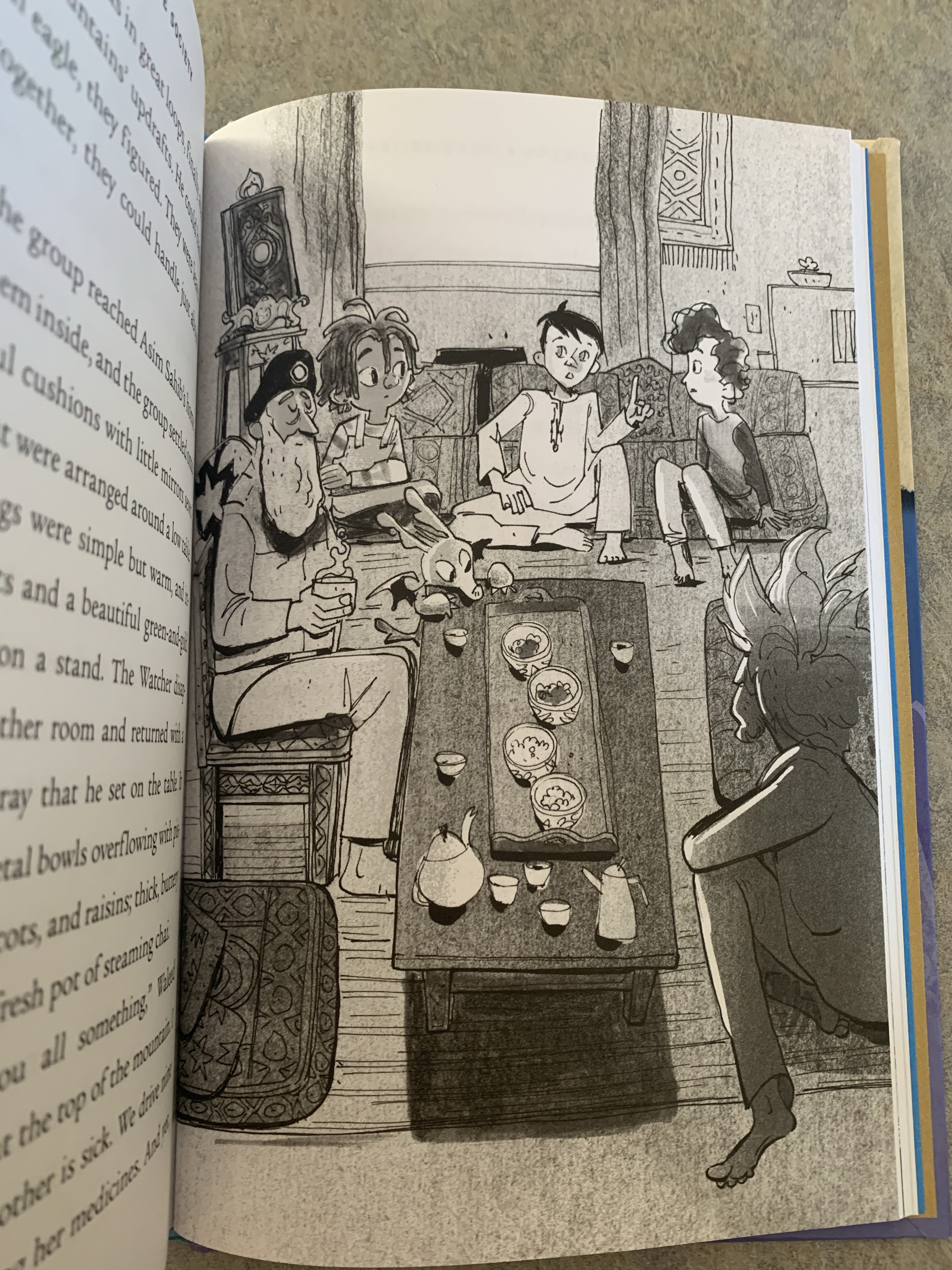
They arrive in Torghar, Pakistan and make a rough landing that nearly kills a local boy.  Alhumdulillah, Waleed is fine, and in true Pakistani and Islamic tradition the boy takes the visitors to his grandmothers home to be fed and welcomed.  Waleed agrees to help the Americans find a man known only as the “Watcher,” to see what he knows about unicorns and the hunters that come to poach for sport.

Hiking the mountains and getting short of breath makes each act that much more difficult, but alas the kids find the Watcher, aka Asim Sahib, but sadly *SPOILER* don’t find unicorns.  Rather a species of mountain goats, markhors, that have two long twisted magical looking horns. The wealthy businessman brothers also show up in their helicopter to capture, not kill the markhors.

The rescue society follows them and learn that the sinister brother are testing out the magical properties of a bezoar on pit viper bites.  Needless to say it doesn’t work and the rescue society must rescue the dying butler, and captured markhors.  All is not lost, even if they didn’t find any unicorns, at least they made new friends, and know that if they haven’t found the unicorns yet, hopefully no one else has either.

img_0778

WHY I LIKE IT:

I love that there is praying, and thikr, and ayats from the Quran quoted and explained in the book regarding saving animals, caring for each other and trusting Allah swt.  There is culture regarding taking gifts, welcoming guests, drinking tea and even breaking stereotypes of what a boy from Lahore visiting his family in the mountains knows and doesn’t know.  It isn’t preachy on any accounts, but the messages relayed in their silly way are very well woven in and leave a wonderfully represented impression of Islam, Muslims, and Pakistan.

The diversity featured in the book is nice, even within the main characters: one is an African American girl, one a Jewish boy, and the teacher is Hispanic.  The story at the end, A History of The Secret Order of the Unicorns, takes place during the reign of Charlemagne at a monastery, and features a boy named Khaled and his little sister Lubna. It is clearly intentional and a reflection of the author and illustrator.

img_0776

FLAGS:

There are some possibly gross moments featuring the goats licking urine, tea being made from the markhors’ saliva and the near death of a man requiring venom to be sucked from his leg.

img_0777

TOOLS FOR LEADING THE DISCUSSION:

The book is definitely below a middle school book club level, but I think younger elementary teachers and parents would see students get hooked on the series and would benefit from having the books around.

img_0780

Amina’s Song by Hena Khan

Standard
Amina’s Song by Hena Khan

img_7581

This middle grades companion book to Amina’s Voice, reads in much of the same way as a lot of Hena Khan books in that I feel she is presenting Pakistani Muslims in America to non Pakistani non Muslims in the west.  In the first quarter or so of this 288 page book that takes place in Lahore,  I felt a different tone than really spoke to me. Granted I am (half) Pakistani and Muslim, but when Amina says good-bye to her family, I was in tears.  It was relatable and powerful and so real to me that I got emotional, the rest of the book, sadly, not so much.  It’s not to say that it isn’t well written, I just feel like the majority of the book are borderline issues for many Muslims looking to see themselves in literature: music, school dances, boy/girl friendships, and when presented that a religious family is permitting and celebrating of these issues, it seems to be trying to make us fit in, rather than support us for holding to a different perspective.  There is a lot of good in the book about finding your voice, sibling and family relationships, friends, and challenging stereotypes, that I think the book would be great for some 3rd graders and up.  However, if your family is against the aforementioned potential flags you may find the book that talks about reading Quran and praying makes the characters harder to separate from your own kids, you may want to hold back in recommending it to them.  Don’t get me wrong the book is clean and well done, I just know from personal experience that sometimes when characters do things that you family doesn’t agree with it is easier to say that those things are for them, not us, but when the family doing them looks a lot like your family, you have to be ready to explain the differences.  

SYNOPSIS:

Amina is in Lahore exploring the city with her brother and cousins.  She is visiting her uncle who had come to visit in Amina’s Voice and as the trip comes to an end, she doesn’t feel like she is the same person that came to Pakistan a month ago.  She is closer to her older brother Mustafa, she feels connected to her extended family, and she is growing more comfortable with pieces of her self she didn’t know existed before.  Excited to go back to America and tell her friends about her summer, she finds they really aren’t interested, and she is unsure how to keep her promise to her uncle to show the world the beauty of Pakistan.  

Once school starts, Amina is assigned a wax museum project in Social Studies that requires her to research and present a person that has changed the world.  She picks Malala, but when she explains to her class at a midway check how Malala was shot for going to school, rather than feel inspired, her classmates feel sorrow that Pakistan is so backward and oppressive, the complete opposite of what Amina felt surrounded by such vibrancy and strength while in Pakistan.  Determined to set things right, she reaches out to her cousins and uncle in Pakistan, except her uncle is back in the hospital and worry consumes Amina and her family, who are torn with being so far away from their loved ones. 

At the same time Amina is feeling like her best friends Emily and Soojin are drifting apart.  Emily is in chess club, Soojin is running for class president, and Amina just wants to write music, produce songs and sing.  There is a new kid Nico, who is half Egyptian, and has music computer software that when he offers to help Amina produce music she says yes, and he starts spending a lot of time at Amina’s house.   

Friends new and old along with immediate and extended family, love and support Amina and cheer her on as she finds her voice to share the beauty of Pakistan, fight for her friendships, and be content with all her pieces that make her unique.

WHY I LIKE IT:

I love that Amina realizes her culture is more important than following rules and her grade.  She breaks from the assignment to spread light on more strong, brave Pakistani women than just the one, and is ok with her grade suffering as a result.  I love that she realizes the headlines don’t reveal reality and that you have to see more than one side to the story.  I love that she is religious and that the imam is cool and that her whole family is service oriented and compassionate.  I love that her friends are diverse and their families are close friends as well.  The sense of community established is carried over from the first book, and I think it gives the book a level of comfort that is pure and honest.

I have issues with Amina’s family being ok with her going to the school dance.  She goes with her female friends, but to me it seems like a conversation is missing or she shouldn’t be going.  It is mentioned that Mustafa went alone to a high school dance, but never explains why.  Similarly, Amina is nervous about having Nico over and her family at times is bothered by it, but again it never specifies why.  I feel like if there was a conversation about why her family would be weird about it or why she is nervous to tell her mom that the friend coming over is a boy then when Amina reminds her mom that her best friend in kindergarten was a boy and everyone was fine with it, or that when her mom asks if there is anything more than friendship going on, the reader would know why it is such a big deal.  It seems to skip the explanation part and jumps from the nervous to have a boy who is a friend, to defending the friend being a boy, and skip the why part.

I didn’t get why Nico identifies as Muslim and Christian but never says salam, and I especially didn’t get why Amina’s mom was more relaxed when she thought he might be Muslim.

I also wish that after the whole emphasis on music, that the lyrics would have at least been shared. I was looking forward to it and was let down by it not being shared.

FLAGS:
Nothing blatant.

TOOLS FOR LEADING THE DISCUSSION: 

I don’t think that this would work level wise or content wise for a middle school Islamic school book club.  

Like the Moon Loves the Sky by Hena Khan illustrated by Saffa Khan

Standard
Like the Moon Loves the Sky by Hena Khan illustrated by Saffa Khan

moon

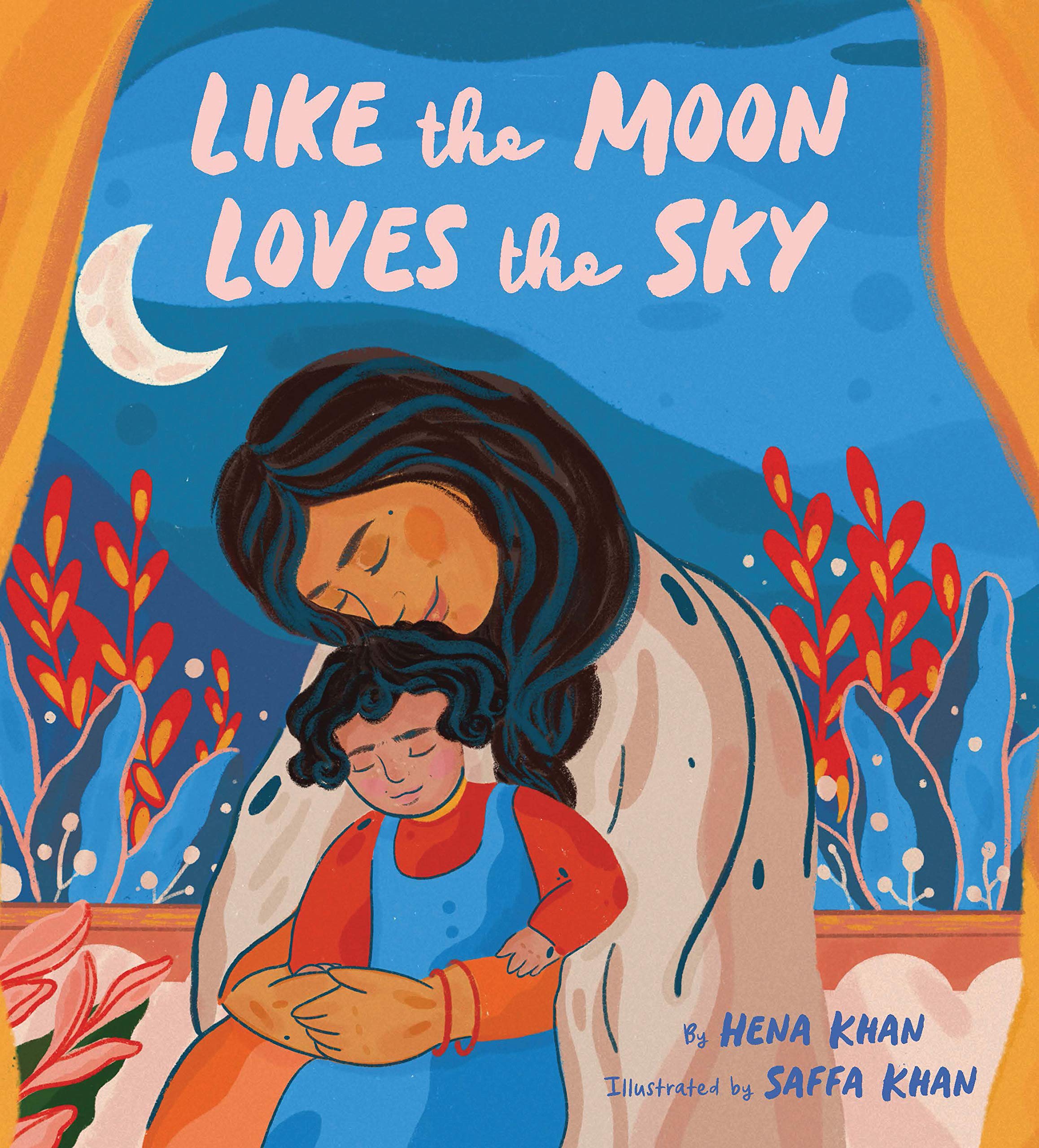
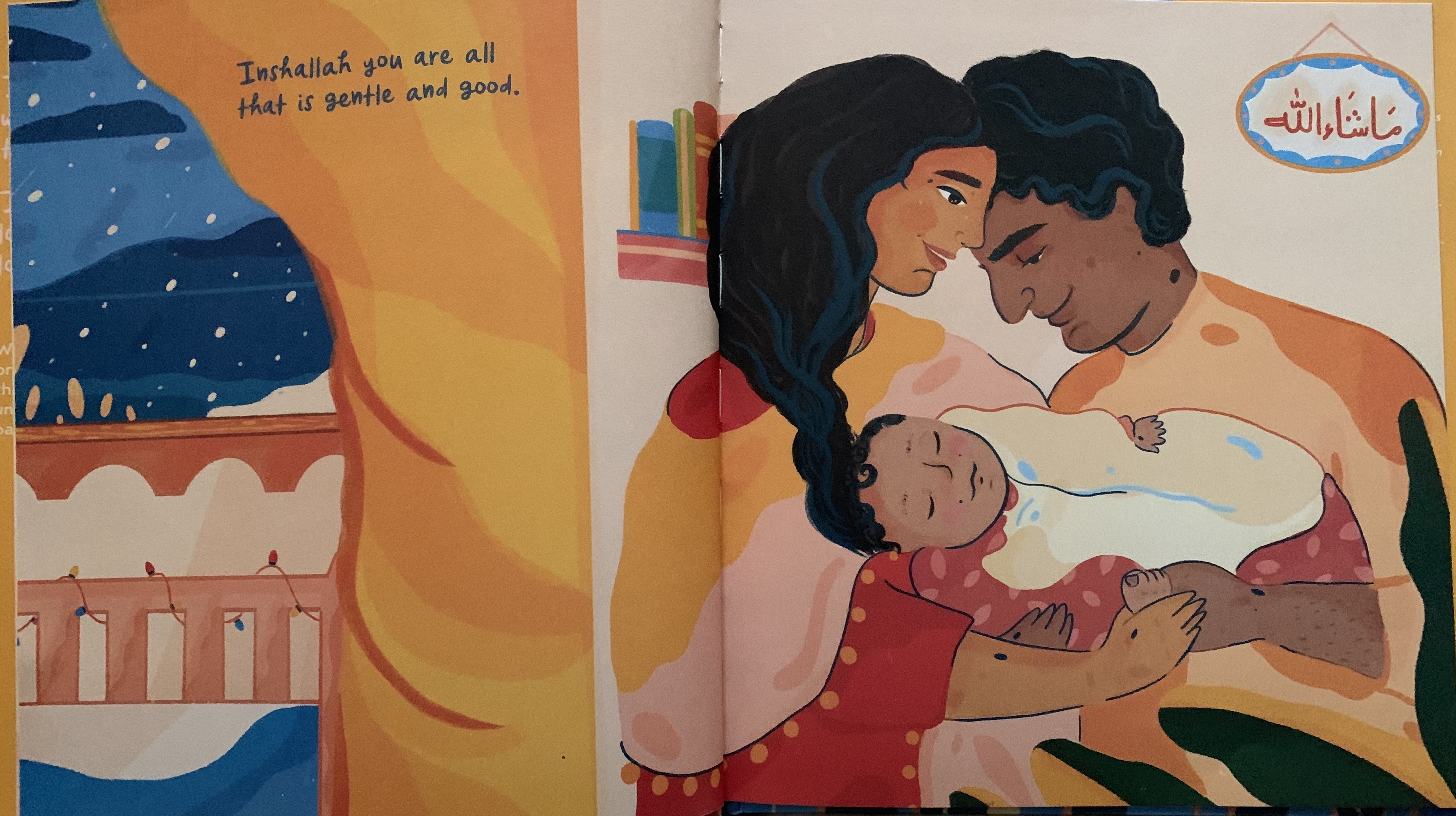
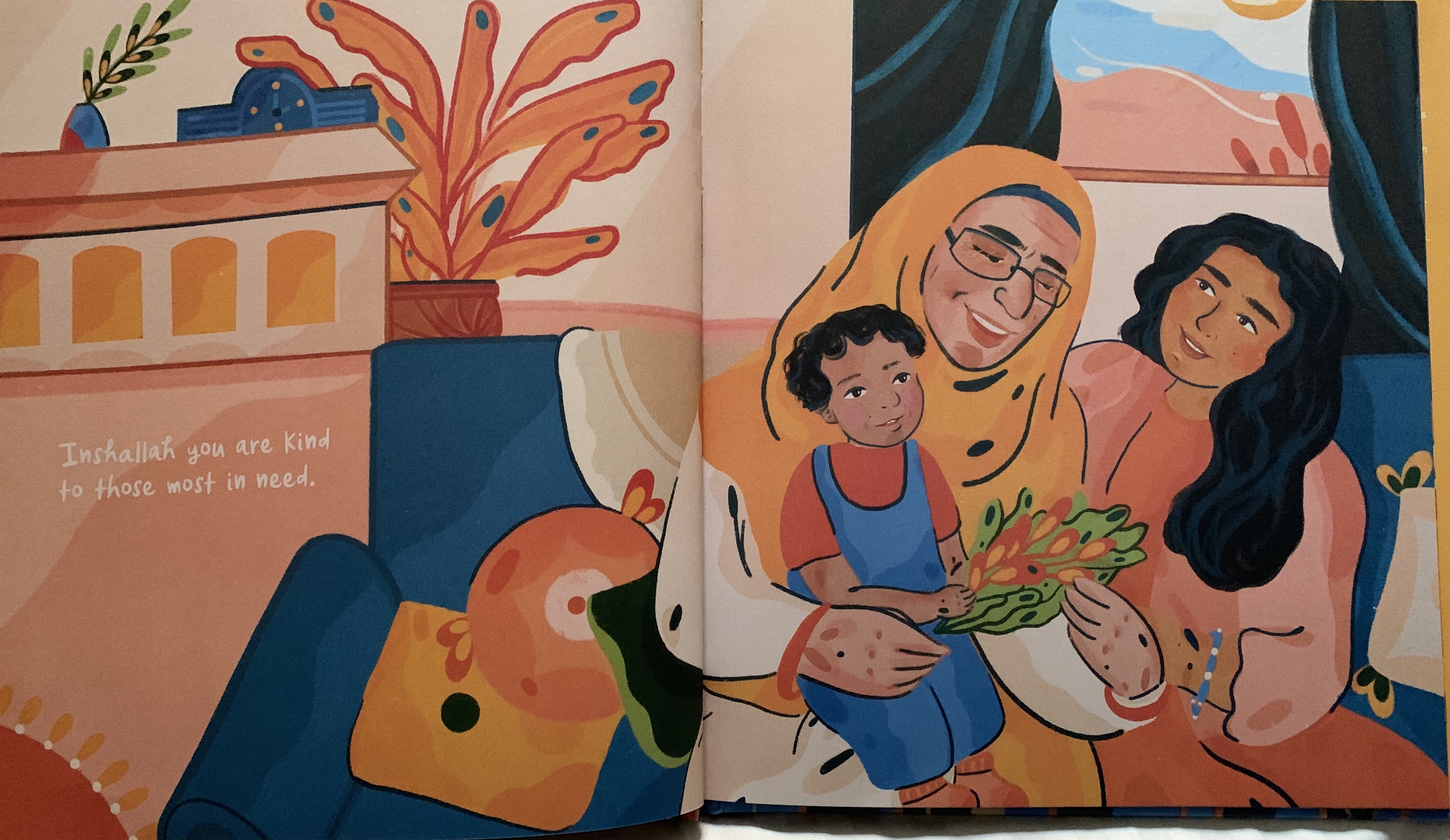
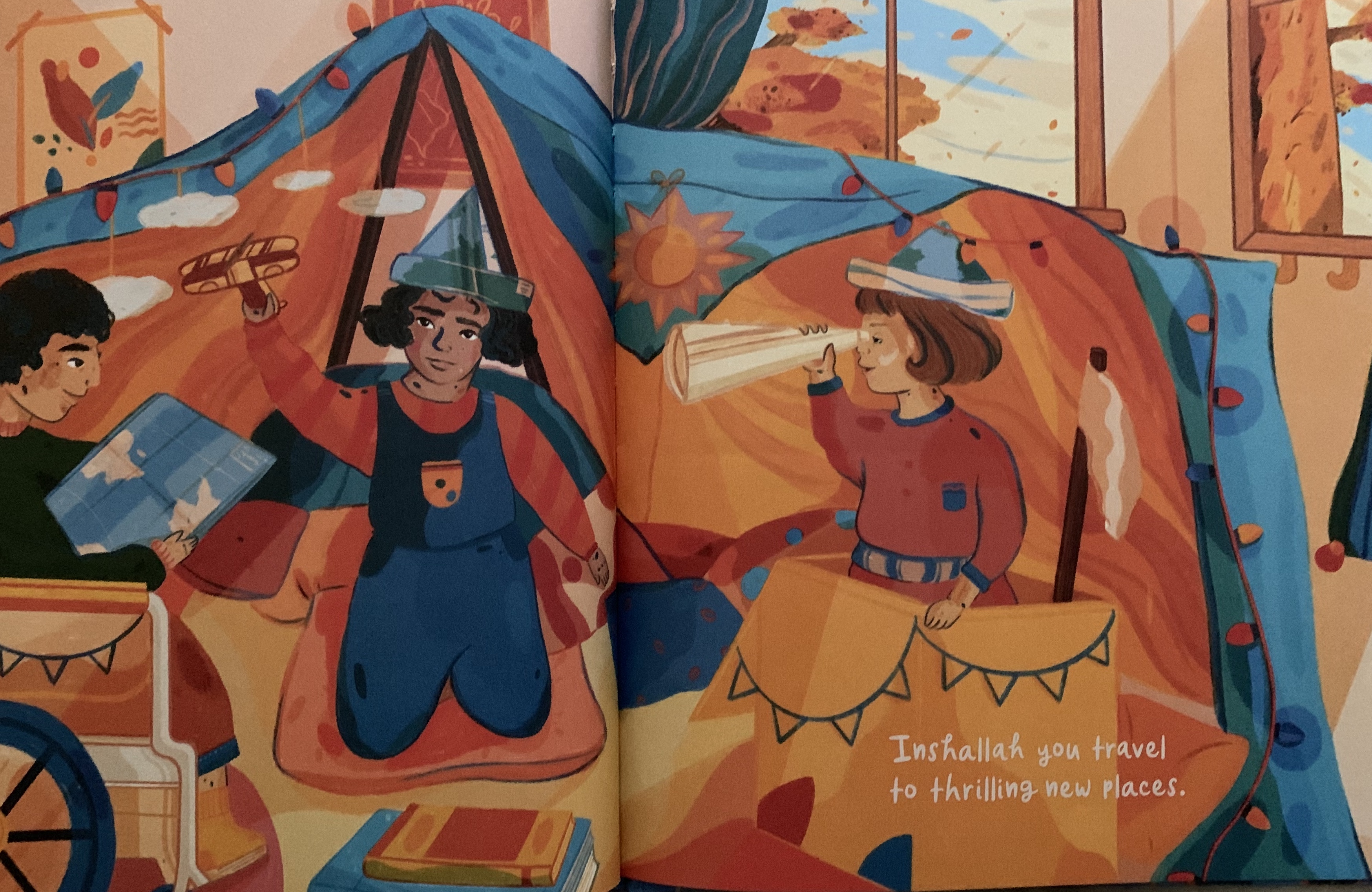
This 40 page book of prose begins each stanza with “InshaAllah” and reads as a beautiful prayer from parent to child.  Each two page spread is filled with warm vibrant colors and illustrations that radiate love while complementing the slow pace the book is meant to be read with.D900B288-5527-4519-8EDF-EE830D3A464D

The book is clearly from an Islamic perspective, yet I think any religious family would find beauty in the book.  The author has a note on the title page that defines inshaAllah as meaning God willing in Arabic and explains how it is a common wish/prayer for people of other cultures and faiths as well.  She also explains that that each line is inspired by the Quran, but universal for people everywhere.

94EE8AC2-8754-46F4-AF50-9CDB7BDFF145

Some of my favorites are:”InshaAllah you seek knowledge, reflect, and read, InshaAllah you speak truth and work for its sake. InshaAllah you have faith that won’t waiver or bend. InshaAllah you are kind to those most in need.”

287D37BD-90E8-4464-B075-524E842A4B43

The illustrations show a family that at times wears hijab and at others does not.  It shows multiple generations, and diverse characters in terms of skin color and mobility.  The illustrations at first weren’t my favorite, but they definitely grow on you.

70D903DA-9763-44CA-B765-2FE15AE34C10

Over all the story reads like a lullaby, and is soft and sweet at bedtime particularly.  The 10 x 10 size would make it work well in groups as well, and I could see it used to lull kids to sleep at nap time with great success for the youngest baby to early elementary.

F6B4AB6F-E13A-4C05-836B-24CD28BAC21C


Under My Hijab by Hena Khan illustrated by Aaliya Jaleel

Standard
Under My Hijab by Hena Khan illustrated by Aaliya Jaleel

UNDER MY HIJAB final front cover JPEG.JPG

I know, (sigh) another hijab book, but I promise it is good and you won’t be sad you bought…”another hijab book,” and  alhumdulillah, it’s a Hena Khan book, so public libraries will have it or at least they should be willing to order it if requested.  

IMG_2878

Written in rhyming four line stanzas the story is told from a young girl’s perspective about the women in her life.  The first two page spread shows the strong female as she interacts in the world and covers her self, with the following two page spread, showing her in her home, uncovered.

IMG_2879

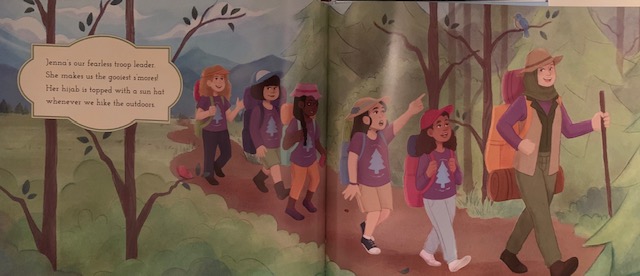
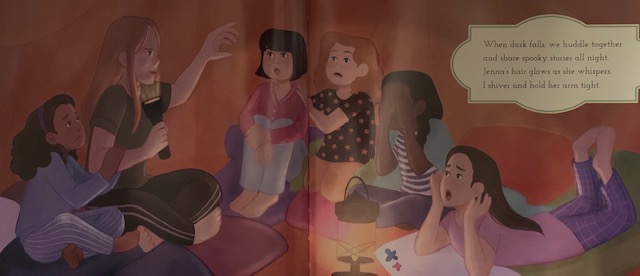
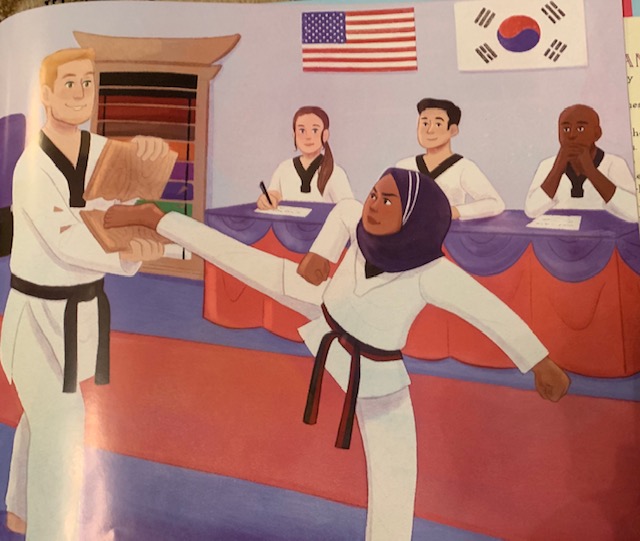
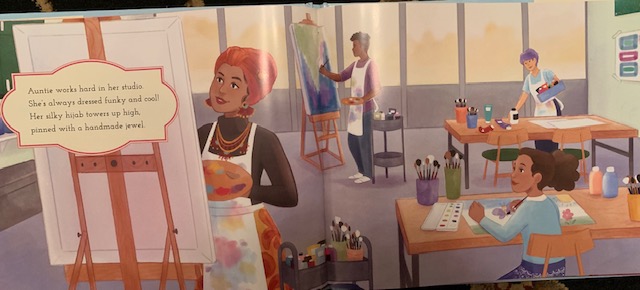
From Grandma, to Mama, to Auntie, to troop leader, to siblings and friends, the reader sees hijabs wrapped in styles as different as the person wearing them.  They also see Muslim women as doctors, artists, Tae Kwon Do students, bakers, leaders, and everything in between.

IMG_2880

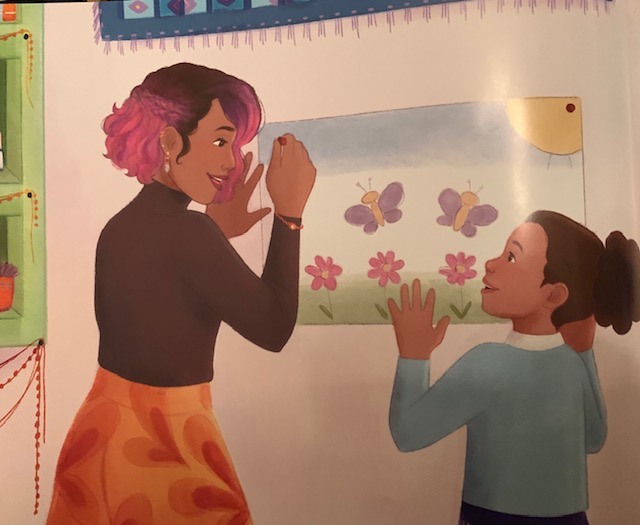
The illustrations are beautiful and perfect.  They radiant warmth and familiarity, while adding details to make the pages hold your attention a few minutes longer and smile with the diversity presented. The martial art scene is spot on!

IMG_2876

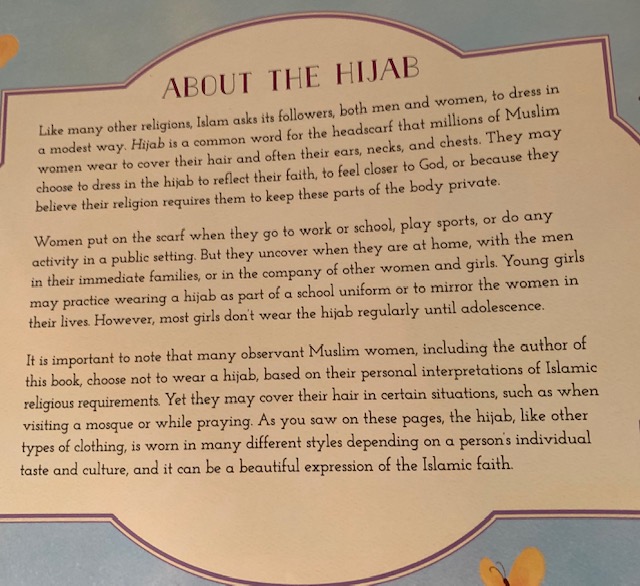
I wish they showed a niqabi, and maybe someone that doesn’t cover all the time, but at certain times of prayer or entering a mosque, like the author, who talks about herself and hijab in general in the afterward entitled: About the Hijab.  

IMG_2882

I love that the book is for children and I desperately hope adults will read it too.  It breaks down so many stereotypes, and answers so many questions in a seemingly effortless presentation.  How many times have all hijabis been asked if we sleep in our scarves or shower in them.  I love that there are shades of brown skin tones, and blond haired hijabi’s too.  
IMG_2877

And most importantly I love that it shows Muslim women to be strong and varied and to have full, independent beautiful colorful lives.  That hijab is a choice and it is strength and beauty and personal.

IMG_2881

The book does not talk about the reasons for wearing hijab, or get into the religion.  The book is a great size for story time and bedtime at 10 x 8 horizontal, hardbound, and 32 pages.  Ages four and up will enjoy this book repeatedly,  and older kids, especially girls considering covering or just starting to cover will enjoy it as well.

Alhumdulillah! Well done!

Forgive the glare in the pictures, they aren’t in the book 🙂