Tag Archives: community

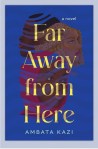
Far Away from Here by Ambata Kazi

Standard
Far Away from Here by Ambata Kazi

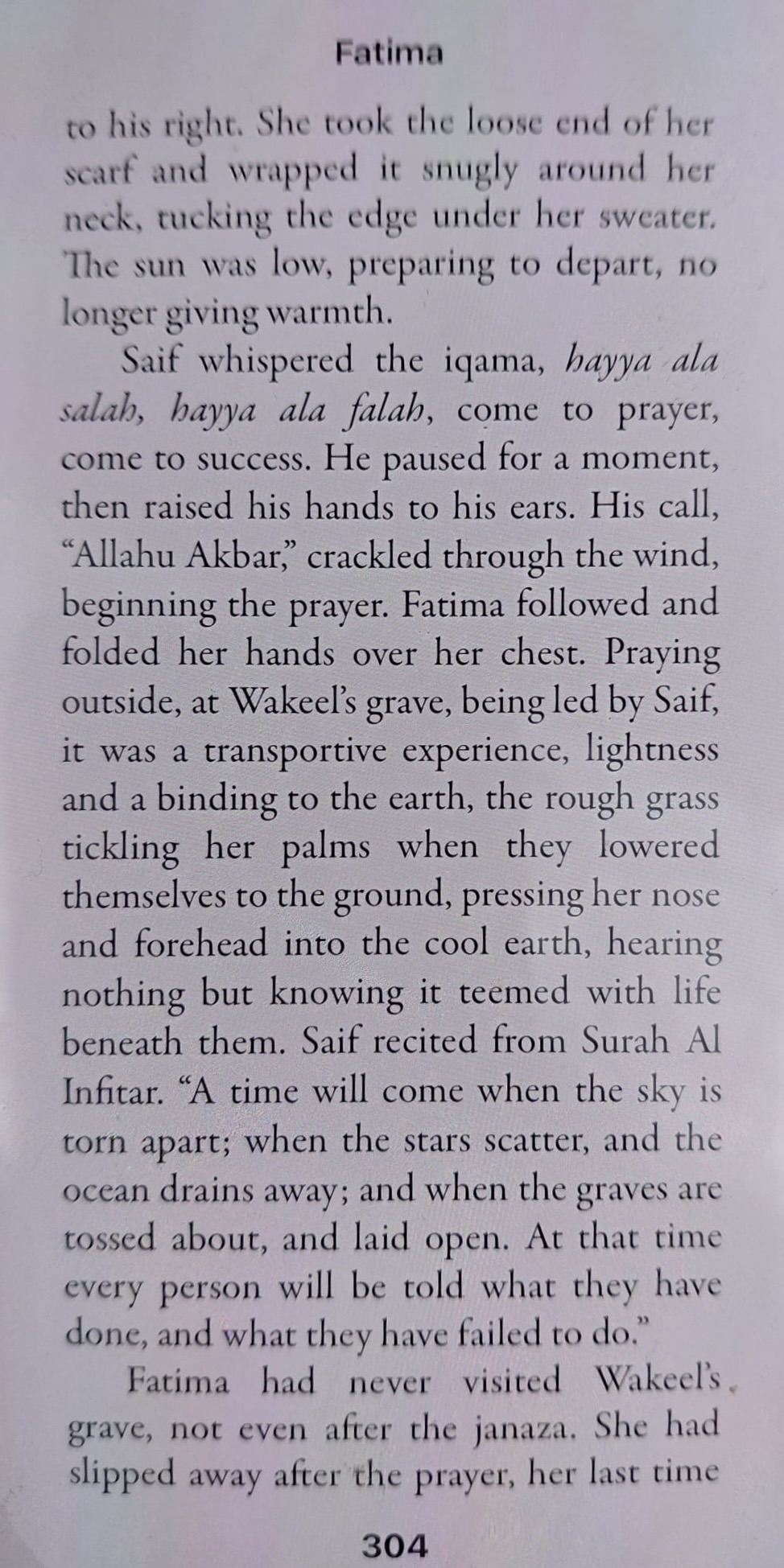
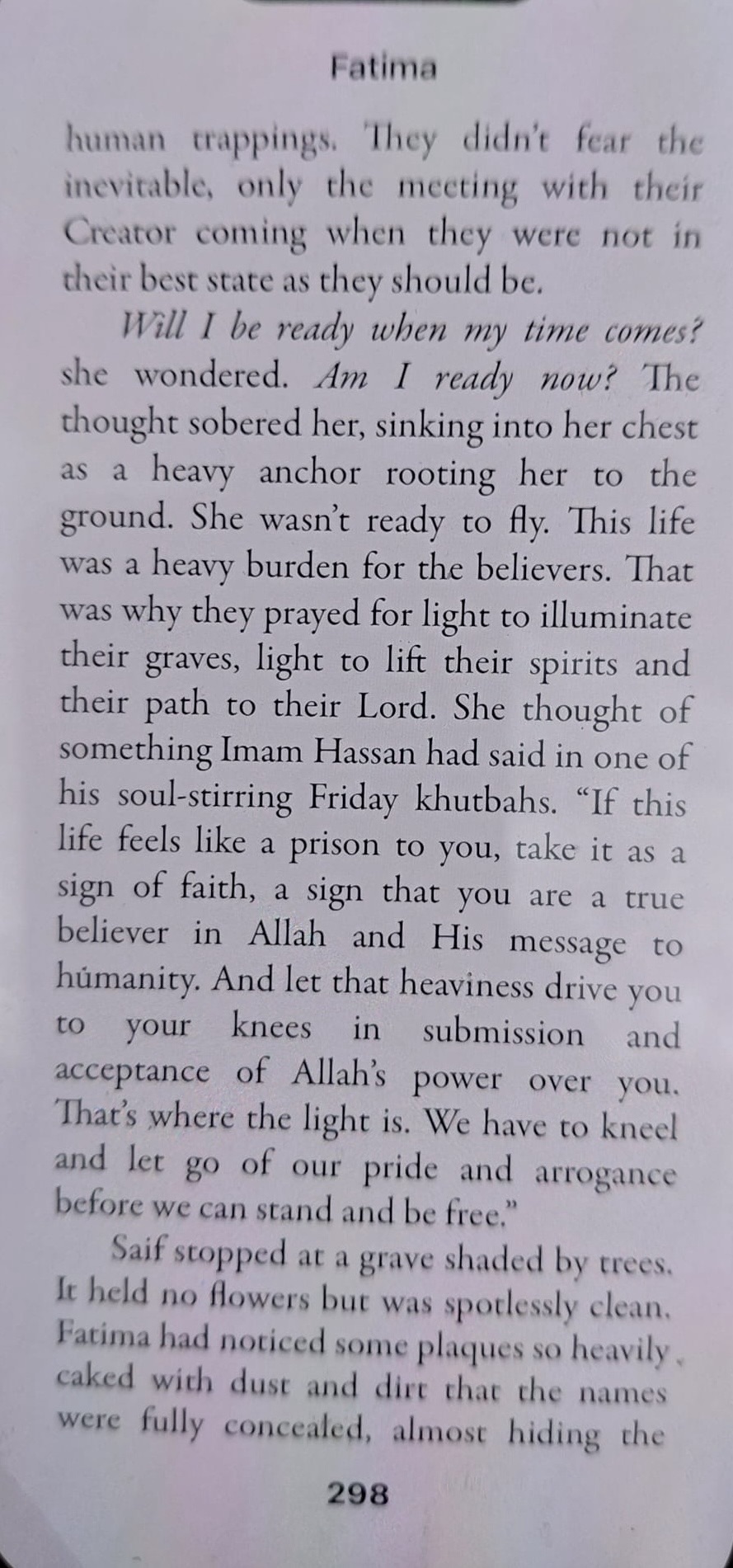
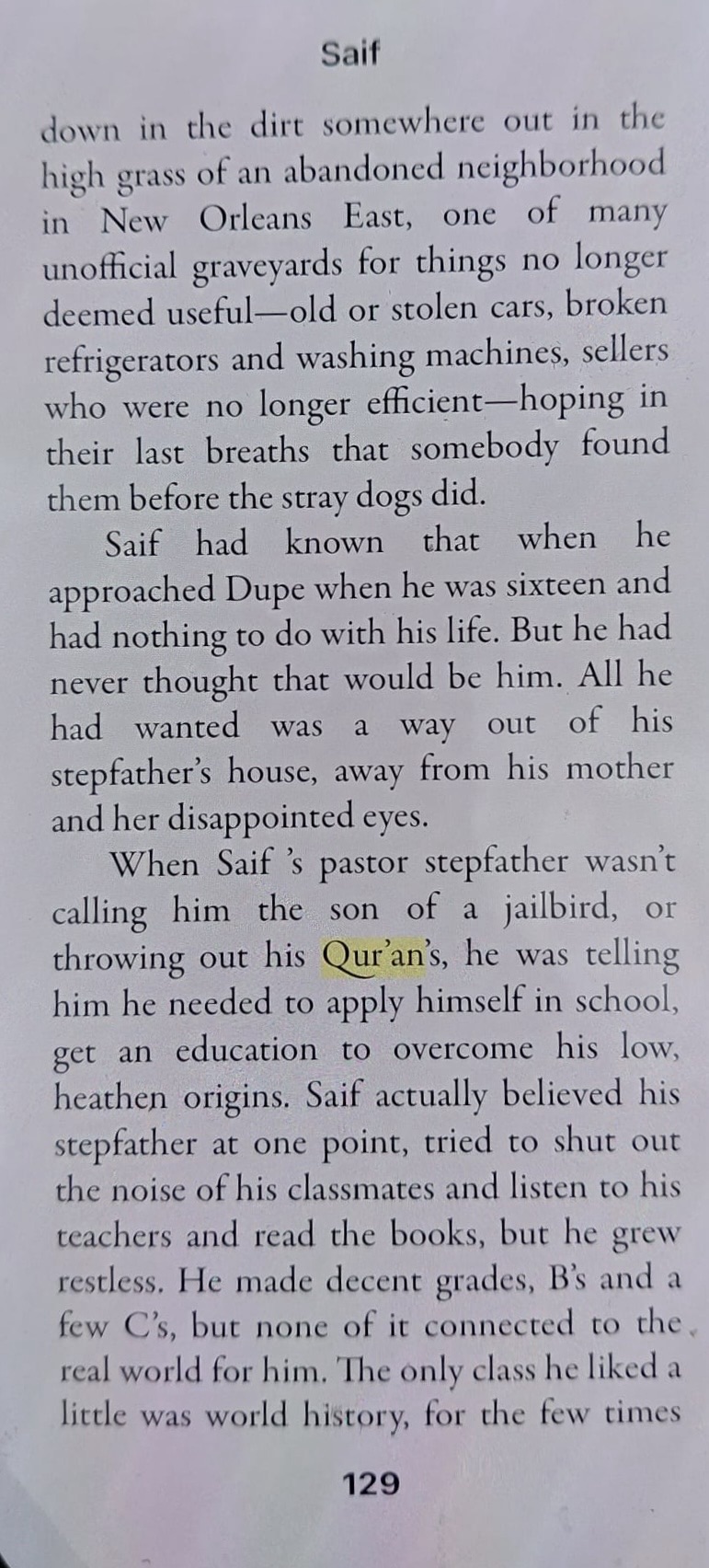
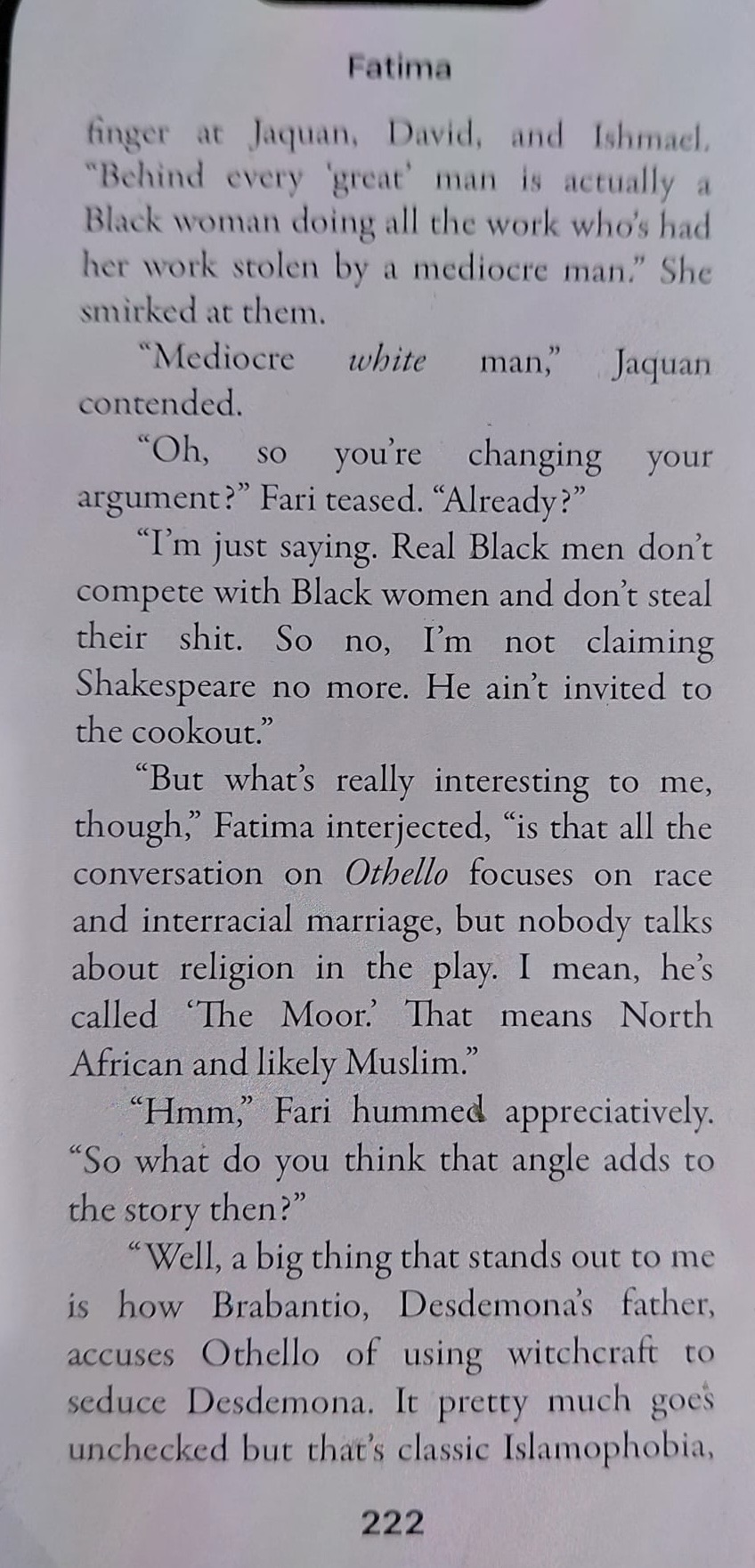
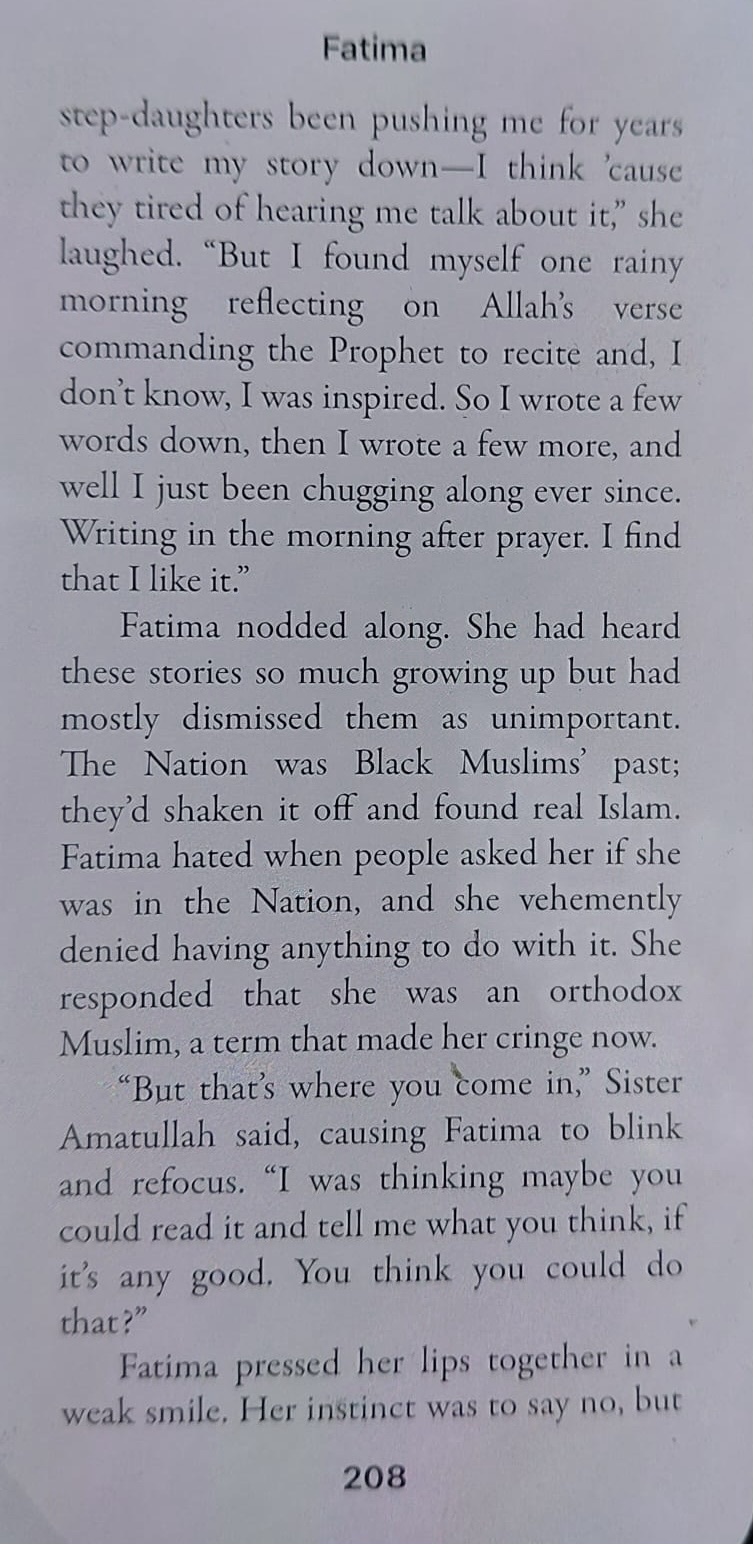
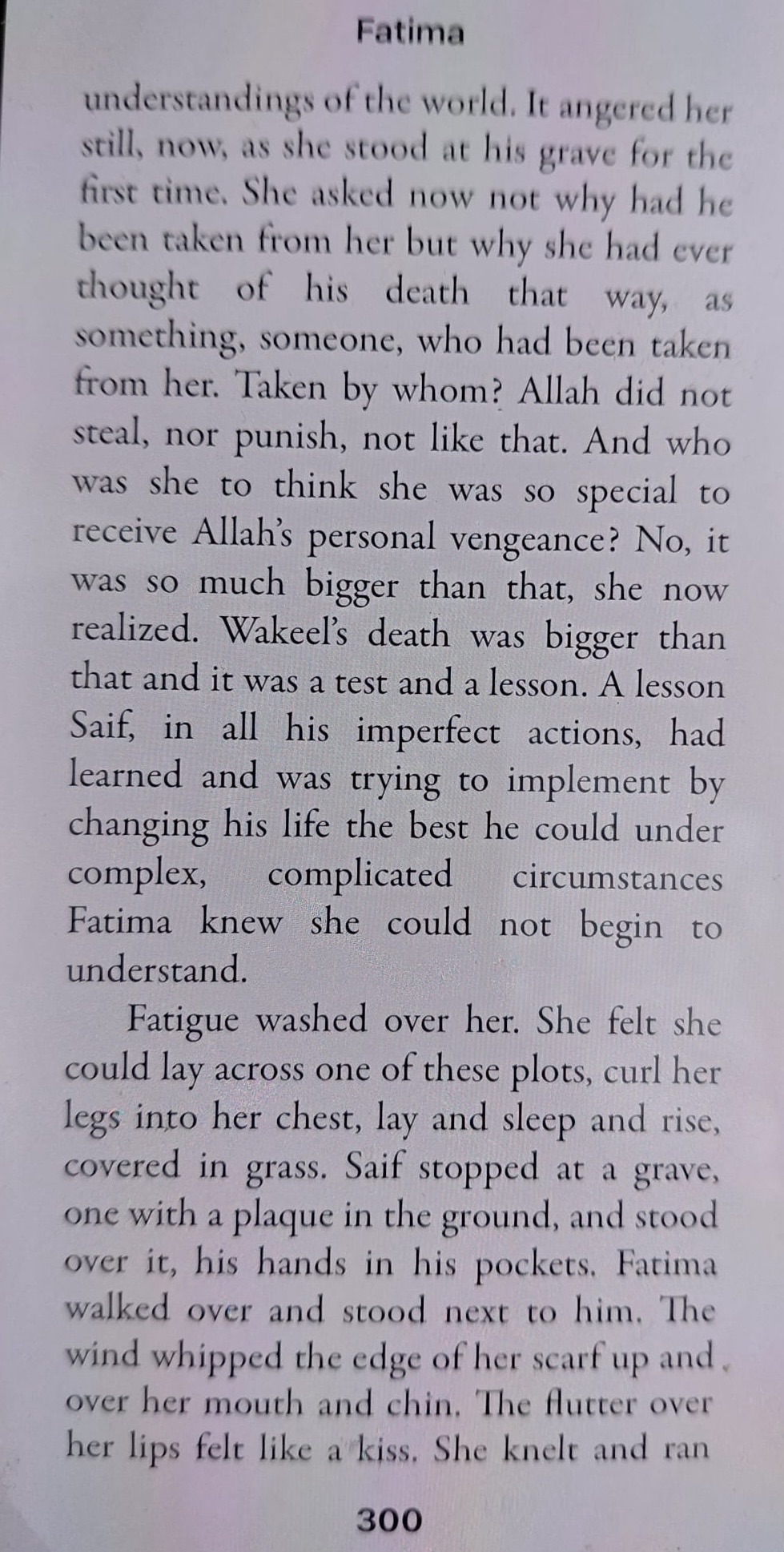
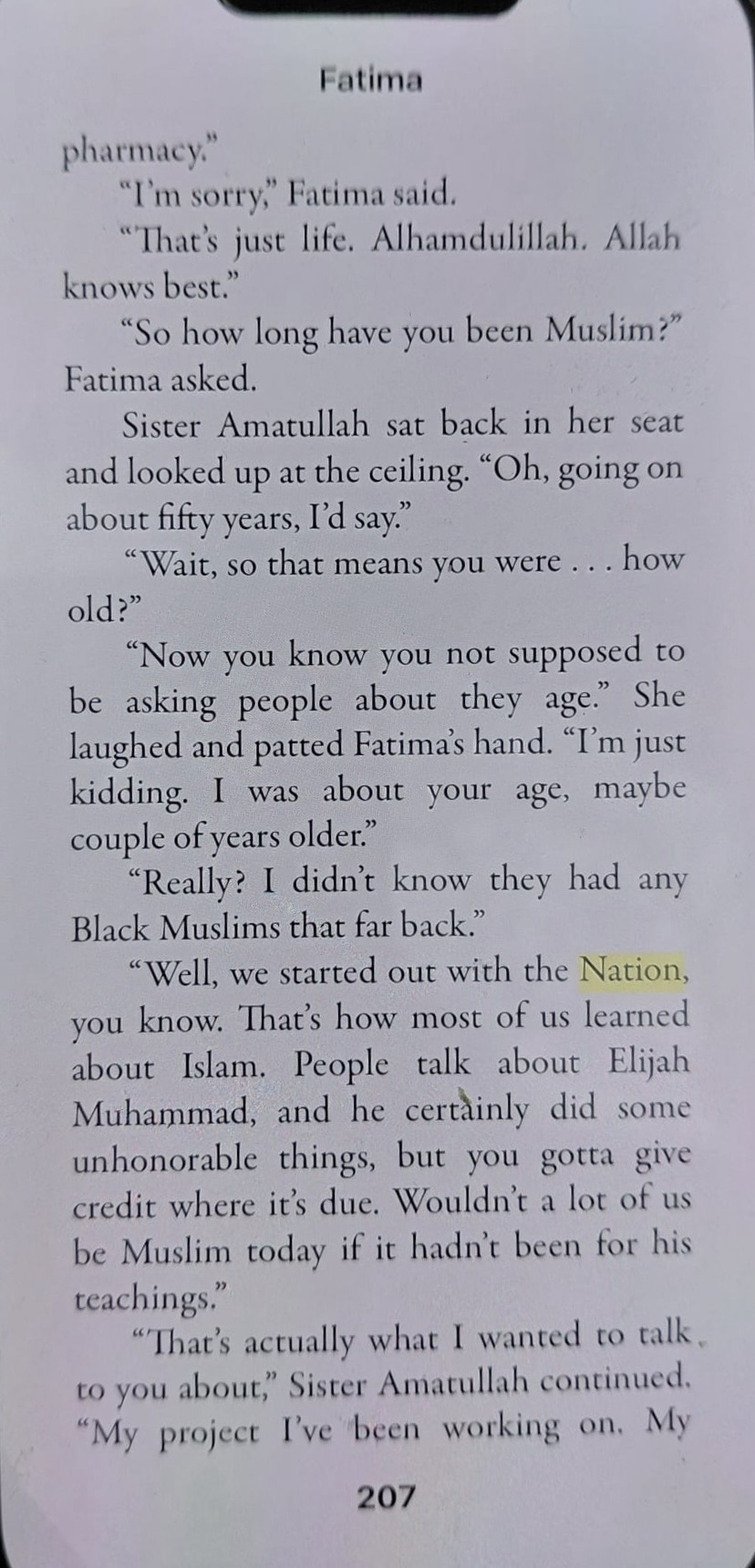
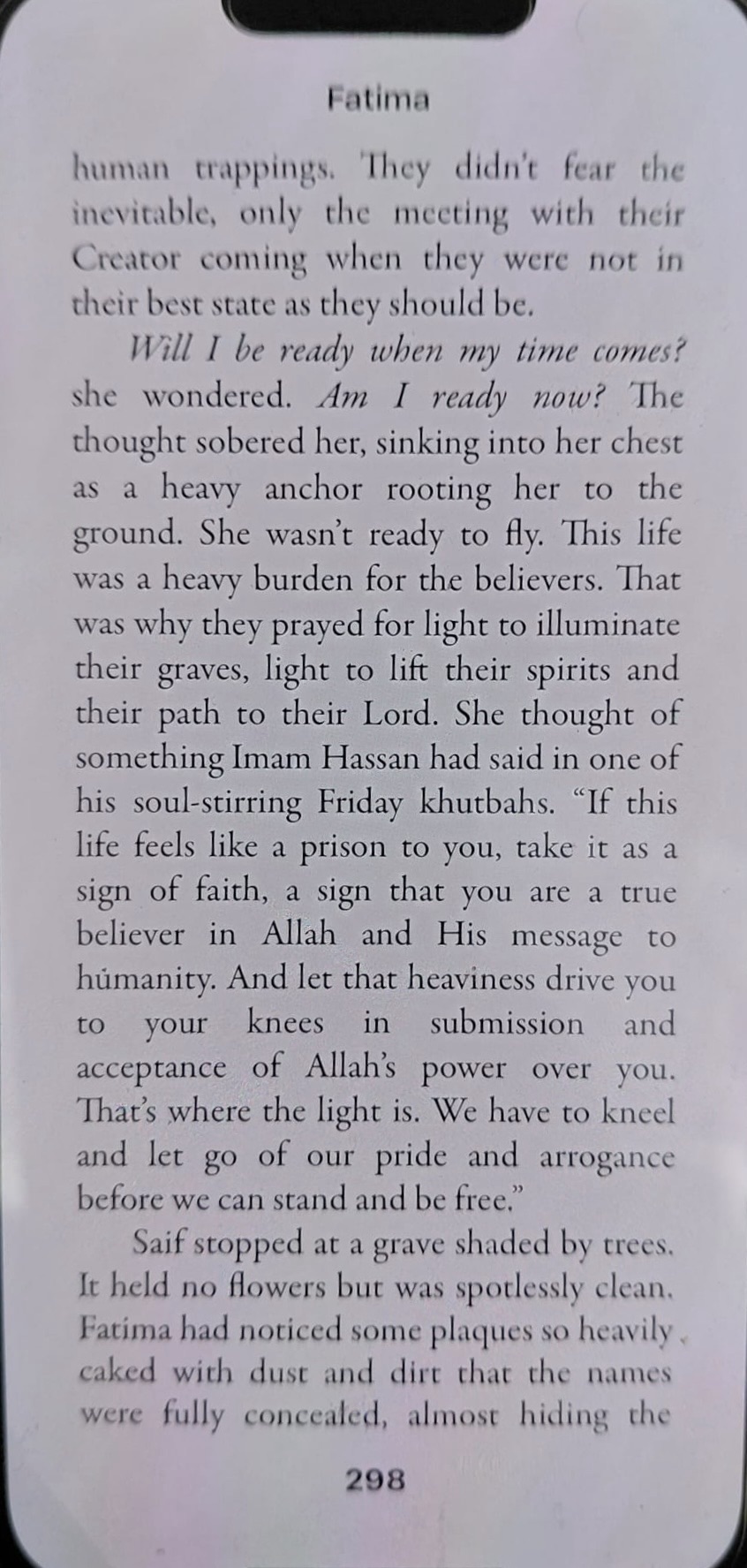
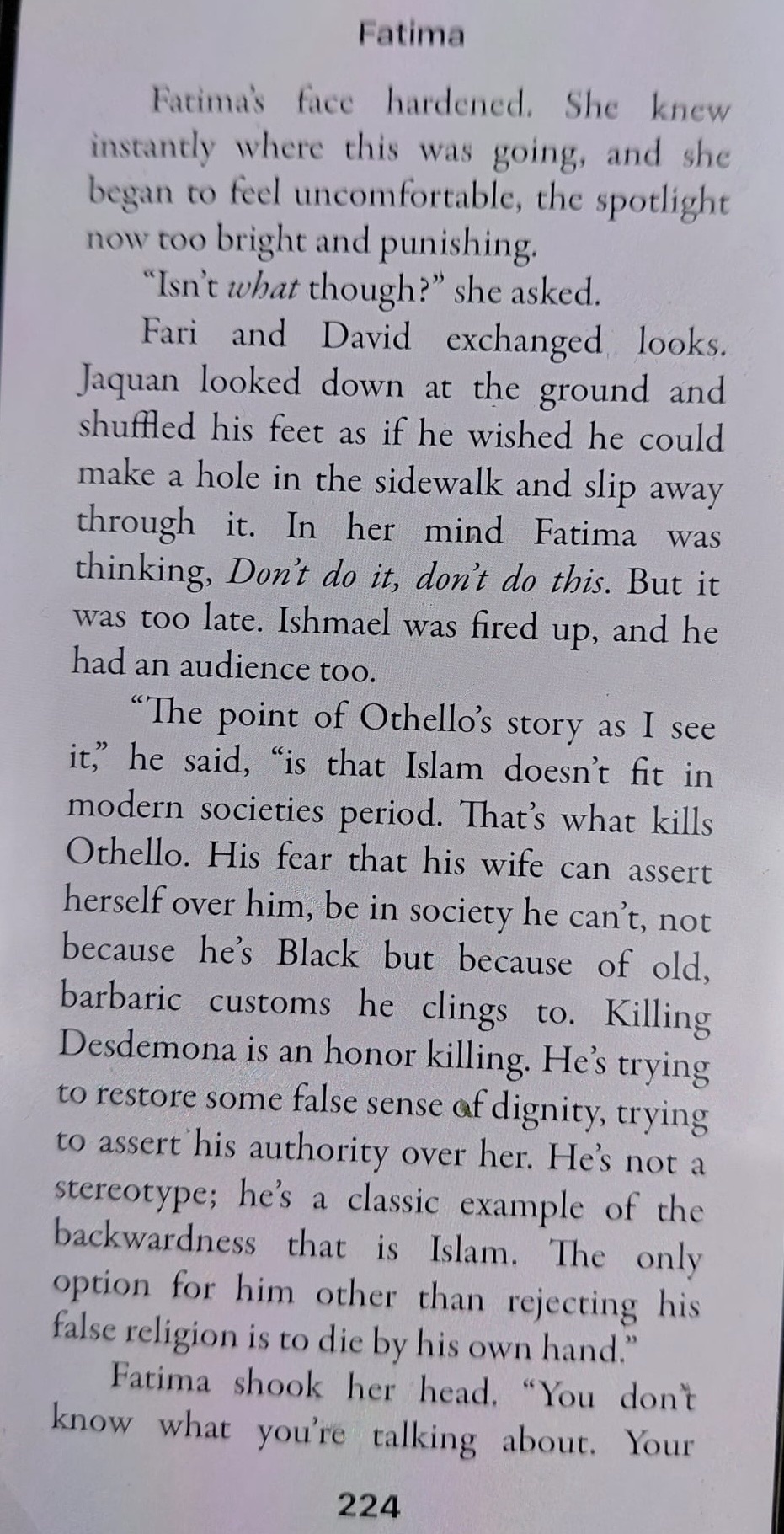
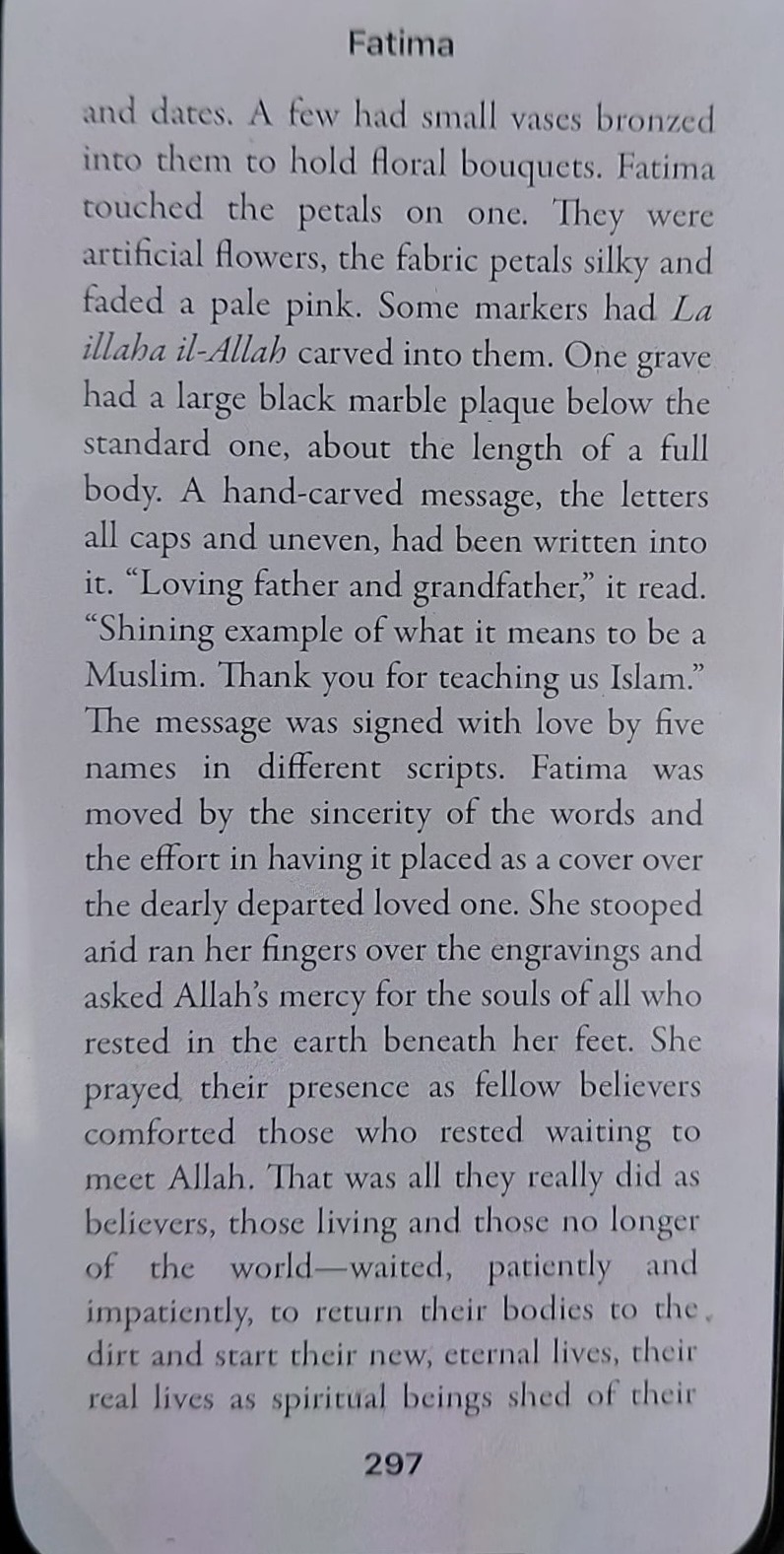
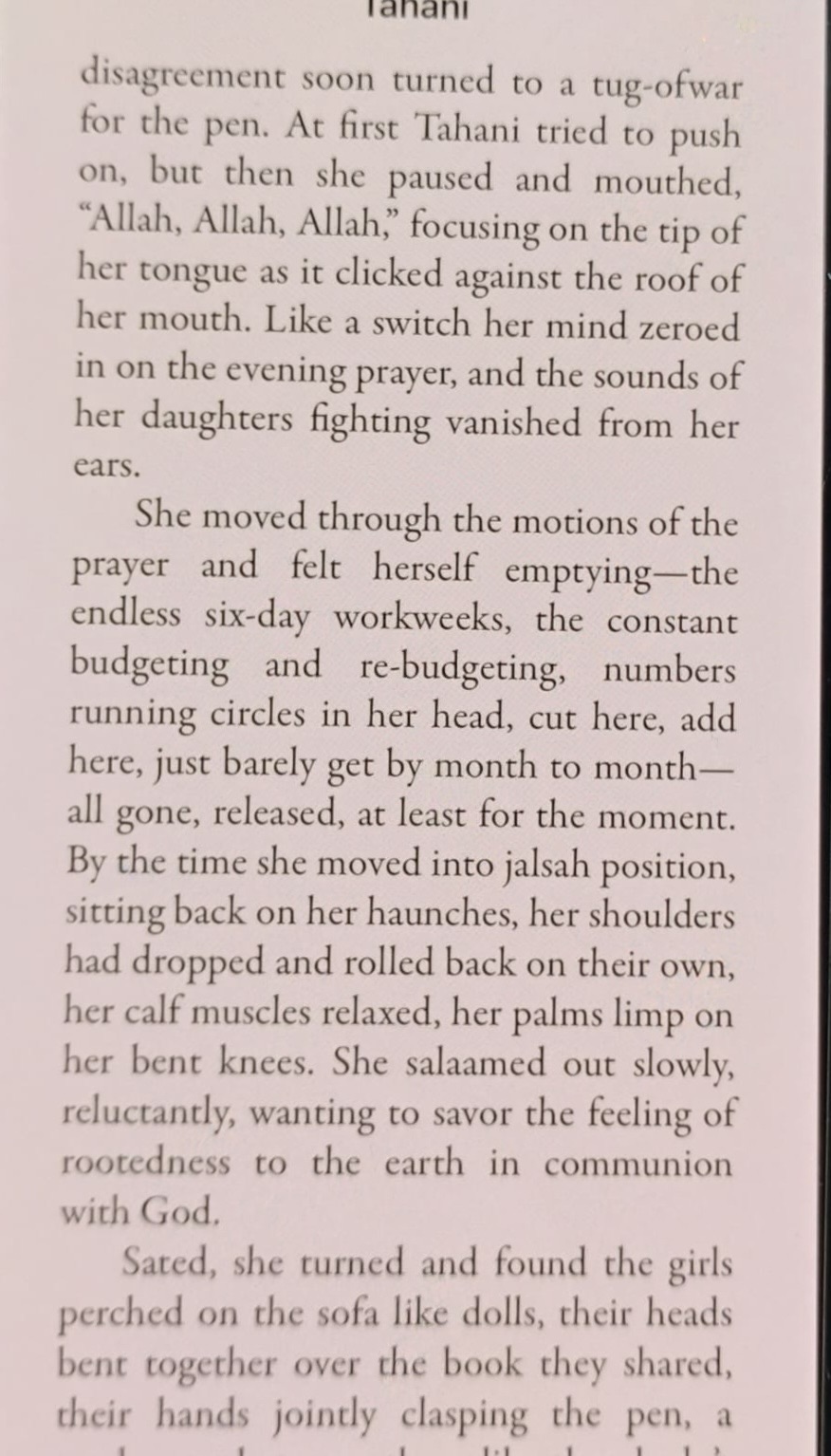
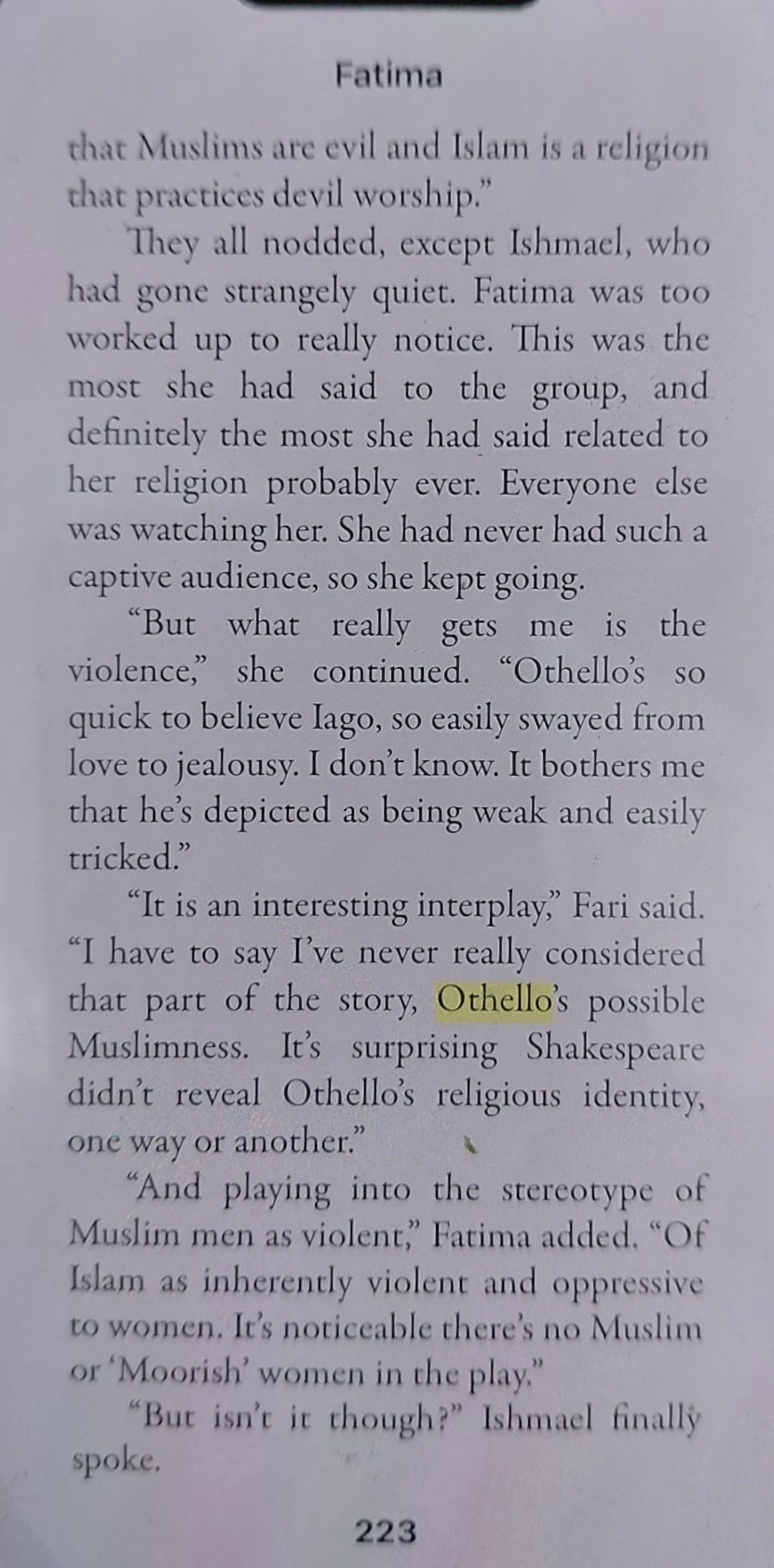
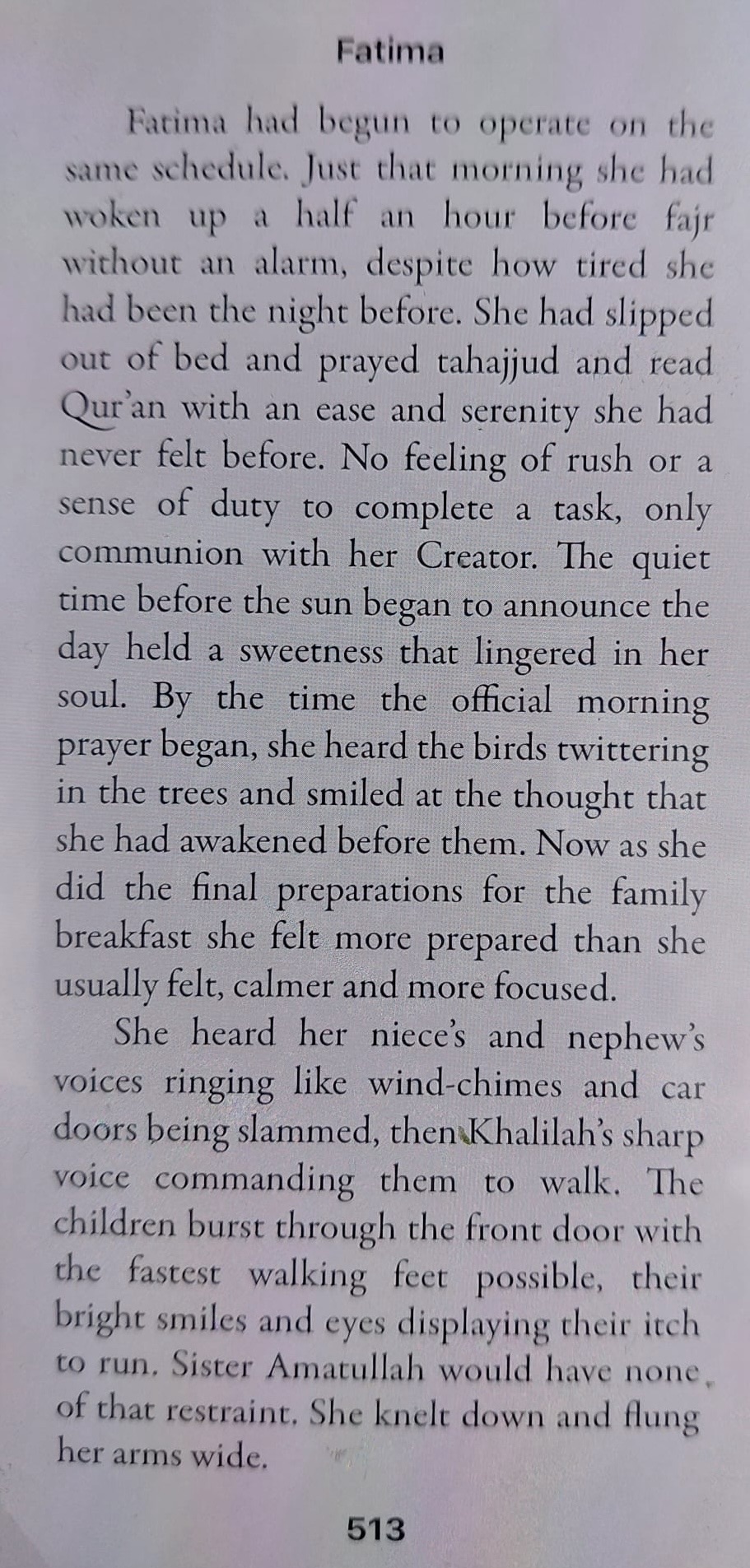
This character centered book takes the lives of three young adults, and through their own interwoven points of views shares their trauma, their choices, their dreams, and their fears in a poignant book that centers Islam and the characters relationship with their faith, their masjid community, and the concept of home.  The Islam in this OWN voice love letter to New Orleans is so much a part of the characters’ lives that I found myself snapping pictures on every page to share before quitting because it was taking me out of the story. The pictures I’m sharing, as a result are arbitrary as so many beautifully spoke to me. This adult book intentionally or not, forced me to confront my own assumptions, stereotypes, faults, and guilt, while tugging at my heart to see the growth and future possibilities for Fatima, Tahani, and Saif. The three distinct pov narratives feel real, the Black Muslim perspective so important, and the living breathing role of Islam so beautifully conveyed, that I’m just in awe of this book, and didn’t want to miss a beat recommending it to others.

SYNOPSIS:

The book opens from Fatima’s perspective as she leaves Atlanta for New Orleans.  She is returning to the place of her childhood and heartache, to care for her ex fiance’s mother in her final days.  Entering the home, reliving the memories of how Wakeel was killed, and facing Mama Tayyibah’s looming death, highlight her weakened faith and force her to confront the community and friendships she left behind.

Tahani, the only daughter in a large family of boys finds herself a single mother to two little girls when she rebelled against her mother and made her own choices.  She never really left Islam though, and the community who raised her is still a part of her life, even though her own family is not.  As she tries to chart her own career dreams and balance her daily survival, she is surprised to find her childhood friend Fatima once again part of her life.

Saif, straddles two worlds: the young man learning his deen as a respected member of the masjid community, and a seasoned criminal unable to stop selling drugs.  He blames himself for Wakeel’s death, and everyone else seems to agree that it should have been him gunned down, but Allah swt is All Forgiving and with Fatima’s return, perhaps if she can find a way to forgive him, he can forgive himself.

WHY I LOVE IT:
Oh my heart. The characters and their dichotomies brought tears to my eyes multiple times.  The drug dealer teaching the hijabi grappling with Allah’s will how to do tayammum, the young mom in revealing clothes waking up for fajr and taking her girls regularly to the masjid. What is in one’s heart is for Allah swt alone, and this message forced me to face my own assumptions, stereotypes, and judgmental paradigms without didactically calling me out, and I love the book for the fictional shaking.

The beauty of the convert stories, the history of Black Muslims in NOLA, the warmth and found family of the community, completely broke me in the best way possible.  None of the characters are having identity crisis as most literature depicts it, they are fighting their nafs, and other’s expectations, and to be shown their struggles, and yearning, in the proses gentle manner warmed my heart.

I wanted some epilogue space for Baba Kareem, and I honestly tried and failed to figure out the time line as the story circles around itself numerous times in its telling. But, I hope this author keeps writing and telling the stories we need as an ummah and larger community to hear, but to also feel so deeply.

FLAGS:

There is nothing sensationalized, but there are themes of drugs, killing, shooting, death, illness, dating, rebelling, rape, children out of wedlock, disowning, judging, fear, racism, Islamophobia.

TOOLS FOR LEADING THE DISCUSSION:

This is too adult for middle school, I do think upper high school could handle it, but it is solidly that “New Adult” category, with characters in their twenties.  At times they have some adult stresses, or coming of age options, and/or youthful possibilities. Often in multitudes they vacillate with what they have to face, and the limited experiences they have, with family expectations and independent choices.

Amal Noor: Mission: Fasting for the First Time by Merve Ozcan translated by Muhammad Izzaddin Seif

Standard
Amal Noor: Mission: Fasting for the First Time by Merve Ozcan translated by Muhammad Izzaddin Seif

Any one who has followed my reviews for very long, knows I really dislike “first fast stories,” so when this one came recommended as being different, and funny, I was hesitant to give it a try, but I caved and purchased it.  And well, it definitely is different in that it is not a picture book, the protagonist knows what fasting and Ramadan are, and she doesn’t just stumble upon her family being up at sahoor one random day, Alhamdulillah. The funny though, well, it just feels really forced, and I can’t tell if it is part “lost in translation” or if  having read early chapter books that have literary value made this one seem, thrown together.  By the end it had a bit of heart, but getting through 93 highly illustrated pages, took a lot of effort.  Amal is obnoxious, doesn’t read her age, and doesn’t have any character growth by the end. If your child likes it, there isn’t anything “wrong” with it, it reads like an attempted imitation of Planet Omar with an annoying Clementine, Junie B. Jones type personality.  The character breaks the fourth wall speaking to the reader, and labels nearly everyone in unequivocal extremes: her mother is the most perfect, the most beautiful, etc., and accomplishing the first fast doesn’t seem to change her at all, despite all the buildup.

SYNOPSIS:

The book starts with Amal proclaiming that she is going to fast the next day, she has tried before but continually fails.  She tells everyone she knows, not just her family, but neighbors, the imam, everyone, and she imagines that it will be a defining day of life before and life after.  Her confidence and arrogance, is put to the test though when she actually has to do it.  At seven-years-old she has done a lot, she runs a charity out of the mosque, she sells items and used goods, and she wanders around independently. Fasting though has alluded her, as has praying more than a couple of rakats of taraweeh, but she is eating and drinking in anticipation of tomorrow, and determined to be successful.

WHY I LIKE IT:

I do like that she messes up and gets through it, I wish though she would have been determined to have a second fast and a third fast, the idea of the first fast being a one and done still doesn’t sit right with me, when Ramadan is a whole month of fasting.  I liked that nothing was overly explained, it is a book by a Muslim for Muslims, and presumably you know what is going on, but I do wish there would have been a little information threaded in about fasting not just being about food.  Amal and her brother Obaid tease and prank each other and with no reminder about being nice being a part of Ramadan included, it seemed like a missed opportunity.  I also thought she was mean to her grandma.  I did like the full circle of her realizing other neighborhood kids her age fasted their first fast without telling anyone, or everyone. But ultimately the book is just not the level of quality that books today have risen too.  If I read this book a few years ago, I might be a lot kinder or happier with my purchase, but even traditionally published books today by Muslim authors have a lot of normalized Islam, that this didn’t feel like it brought anything new to the shelf, and what it brought was not that well done.

FLAGS:

Mean, bragging

TOOLS FOR LEADING THE DISCUSSION:

Since I have the book, I’ll shelve it, but the small 8 x 5 inch size might mean it gets lost fairly easy, and had I not already purchased it, I’d probably not rush out to get it.

Eid for Nylah by Nizrana Farook illustrated by Zelma Firdauzia

Standard
Eid for Nylah by Nizrana Farook illustrated by Zelma Firdauzia

I have read this book dozens of times and I honestly don’t know how I feel about it. If you remove the title and second to last page and just READ the words, the book could be about any holiday that you might clean and decorate for, that would involve giving gifts, putting on henna, wearing new clothes, praying, and sharing food at. The illustrations imply that it is a Muslim holiday with about half the women in the pictures wearing hijab, and a few decor items that say Eid Mubarak in English and Arabic, but readers that are unaware or unfamiliar might not grasp that it is faith based at all, and the Author’s Note mentions, but doesn’t detail much about the religious significance either. During one reading, I felt it also could almost seem like a mystery, that the title just happens to ruin. The cat Nylah goes to different houses on the street seeing and hearing the tidying and banner hanging and gift wrapping occurring, but doesn’t know why no one has time for her, until the big reveal that it is Eid. I think for little non reading kids that actually might be my approach, to share the book without the title and back blurb and see if they can figure out why everyone is too busy to play with Nylah.  I don’t know that it is tokenism, or that Islam is left out to make the book palatable for the Western gaze, I could be wrong though, I really just think this is the author’s style.  Having read her chapter books that always center animals, feature community, and include Muslim names, I think this is just an extension of her lyrical writing in her debut picture book. The book would work for either Eid, but the backmatter is the author’s reflection on Ramadan and Eid al Fitr.  I know I’m the minority that struggles with Islamic holiday books that leave out the Islam, so for those of you that do not find it disappointing, the book is sweet.  Nylah is a cat that is welcome and known to the entire neighborhood, to come and go as she pleases, the age engaging illustrations complimented by the cadence and rhythm of the structure, lines, and diction are easy to read aloud to groups of all sizes, and hold the attention of 3 year old children and up.

The book starts with a family “wiping and scrubbing, tidying and sorting, everything in sight.”  When no one has time to play with Nylah, she heads outside under the crescent moon, and goes next door to Bilal’s house, where he and his family are decorating.  When she tries to play with the ribbon, she is once again told they are too busy to play, so she slips into Reem’s house where they are doing henna.  This continues from one house to another until the next morning when her family all dressed wakes her up to go to the park with them for prayers and Nylah realizes it is Eid.  Now the children are not too busy and everyone plays with Nylah.

Yeah, I know, taking a cat to Eid prayers sounds wild to me too, kids love imagining though what chaos might ensue.  There is enough hinted at that Muslim families can find the clues and make the book more religious or holiday centered, but I wish it showed the cat seeing praying or reading Quran, hearing the athan or thikr, or something that would ground the book in Islam, but alas, it does not.

The book concludes with an Author’s Note and scanable QR Code for a free audio reading.

Ramadan on Rahma Road: A Recipe Storybook by Razeena Omar Gutta recipes by Faaiza Osman illustrated by Atieh Sohrabi

Standard
Ramadan on Rahma Road: A Recipe Storybook by Razeena Omar Gutta recipes by Faaiza Osman illustrated by Atieh Sohrabi


I would not know where to shelve this 40 page in a library, it has beautiful pictures, it is informative, resourceful, useful, and interesting- I’ve only delayed sharing it because I really have had to think, how best to use this book to its maximum potential, to make it truly effective. It is formatted externally as a picture book, but it reads much like an chapter book anthology with the stories connected by the road the diverse folks live on, Rahma Road, all coming together for a communal iftar, with some fasting and some not.  The spreads feature vignettes on the left of what each house is making, including tidbits of culture, facts about Ramadan, insights about method or ingredients, with the facing page being the recipe.  The book is incredibly meticulous and intentional in appealing to Muslims and non Muslims alike, as well as a variety of ages.  It works as a book for Muslims to see themselves in, non Muslims to get a peek at iftaar excitement through, messages about community and diversity celebrated, foodies to see new recipes that they can try, cultures to explore through food and native words, a story framing to feel connection, I really could go on and on with the layers and inclusions this book provides, alhumdulillah.  I think the best way to use and share the book is going to be for me to read it with my 5 and 9 year old children a week or so before Ramadan.  Where I can read the story portion, getting us excited for Ramadan, slipping in some reminders, appreciating Islam’s global presence, and then talking about the recipes so that they can pick dishes to try in Ramadan and add needed ingredients to the shopping list (I wish I made the effort to be this organized all year long).  I then will plan to leave the book out and have my teens flip through to find any recipes that they think sound good and will commit to making.  The book would work all year long, but as a new release, I’m sharing my plan with hopes that it can help your family as well. 

The book contains 25 globally inspired recipes, featuring 11 with accompanying stories.  I absolutely love that at the bottom of the recipes are page numbers for additional items that would pair nicely, or be condiments or beverages or desserts for the dish.  This allows easy personalization, fusion meals, and more importantly a way for different age groups to be able to help each other in the preparation.  Maybe koshari is a bit advanced for your kid, but the mint lemonade paired with it might be something they can tackle a bit more independently. 

The framing of everyone on the road coming together book ends with the neighbors sharing a meal at the end,  I love the backmatter explaining Ramdan, about the recipes, even about Rahma Road.  The message to the reader and the naming of consultants really is a credit to the time and effort put into this book.

A few of the dishes and countries featured are: Atayef from Palestine, African American Sweet Potato Pie, Nigerian Puff Puff, Japanese Temaki Sushi, Morrocan Harira, Uyghur Lamp Stir-Fry, Guatemalan Dobiadas, Turkish Chicken Gozleme, Malaysian Teh Tarik, Australian Mini Strawberry Pavlovas, South African Bunny Chow, Mexican Elotes  .I can’t wait to report back if my plan was successful, if the dishes prepared were a hit, and ideas for further maximizing the use of the contents it contains.

Saif’s Special Patches by Humera Malik illustrated by Ravan Sader

Standard
Saif’s Special Patches by Humera Malik illustrated by Ravan Sader

I really had no idea what this book was going to be about, and the first page or so seemed a little off with the child not knowing about the quilt he was wrapped up in, but. oh. my. heart! Every subsequent turn of the page was a hug from Saif’s patch made quilt straight to my cynical soul.  The infusion of Islam as such a part of his daily activities, his loving family and environment, and the reminder that labels can both hurt and inspire is beautifully done. The illustrations, the tone, and the messaging, is great for kids that have been called “just shy” and everyone who has ever doubted themselves (i.e. everyone) with it’s relatable emotions, and reminder that like a quilt, we are still growing.  I cannot wait for this book to be released and I can enjoy a physical copy to share in classrooms, libraries, and bedrooms. One of the best picture books I’ve read in a while, thank you.

The book starts with Ami asking Saif why he isn’t outside playing basketball with his friends.  He replies, that he “is shy.”  His mother shows him that the quilt is made of patches of Saif: experiences he has had. She shows him a patch and helps him recall the memory attached to it,  starting with last Eid when he was brave and went down the big slide. As he joins in the recollection, he then owns the label that he is brave.  It isn’t that easy though, he tries to be smart like his brother and read a lot, but reading is hard, his brother reminds him he is smart and points out the patch from when he won the scavenger hunt.  Swimming, helping at the masjid, reading Quran, calling the athan, all help Saif to realize he is more than just shy, more than one label, and that he is still growing.

I love the relatability of what Saif is going through, and even though so many of the settings and examples are Muslim centered, the book will resonate with all readers, of all ages.  A tear or more two may have stumbled out as I saw little me in the illustrations and the scenarios, and I have never been called shy. The book releases in March and is traditionally published, meaning plenty of time to pre-order a copy and request your library to shelve it, as it will be available wherever books are sold.

Yours, Eventually by Nura Maznavi

Standard
Yours, Eventually by Nura Maznavi

It has been a while since I’ve read Austen’s Persuasion, and I should probably remedy that, but alas, here I am reviewing another adult, Desi-fied, Muslim tinged retelling, and am embarrassed to admit I was absorbed and invested, as if I had no idea how it would play out. Sure there were author liberties, but the heart of the story hits the same beats (that I recall) and works so well when adapted for our faith and culture. It isn’t halal halal, nor is it Muslim focused, the culture and cultural expectations are definitely more centered for the Pakistani American Muslim cast. The characters are all Muslim, a few wear hijab, they abstain from alcohol, date with intent to marry, attend Bismillahs, but they aren’t shown praying, or viewing life through an Islamic lens, or Muslim conscience. There are a few kisses and hand holds, and male/female close friendships, but for an adult read, the Muslim authored 400 page novel is pretty notably clean.

SYNOPSIS:
Asma is in her final year of Emergency Medicine residency and the pressure to get married is ever mounting. With her father making poor financial choices, he and Asma’s oldest sister Iman, are moving out of their Palo Alto mansion and heading back to Sacramento. Culture won’t let Asma live alone, so she is forced to crash on an air mattress at her youngest sister, Maryam’s house in the room of her three year old twin nephews. Asma feels it is her responsibility to take care of everyone since her mother passed away, but with the family splitting up, she has to decide for once, what she wants. Eight years ago she did what she was told and broke off her engagement with Farook. Unfortunately, she has regretted it every day since and never moved on. When of all people, Farook’s sister moves into Asma’s old house, a chance encounter brings the two face to face. When Farook starts courting Maryam’s sister in law, things get particularly tense. Throw in a dozen or more side characters, amp up the drama, and settle in to see how it all unfolds.

WHY I LIKE IT:

If my recollection of the original source material holds, it takes a while to get all the characters in their desired place and position for the story to sweep the reader away, and this version does the same. At times I worried that threads and characters were being overlooked, but by the end, most everything felt resolved. I did feel Fatima’s story was underdeveloped and showed Asma as being a bit of a bad friend, and there is no way three year olds would recognize someone from a picture taken 8 years earlier, but I know, romance books require some suspension of reality to work. The premise of the plot is even a bit shaky, but once you are rooting for the characters you aren’t too worried about why they need a second chance. For the most part the writing is fairly smooth, a fair amount of characters the author managed to keep annoying, but not completely unredeemable, and I appreciated the restraint. The pacing at times was a little sluggish, with a lot of characters that the reader needed to connect with resulting in telling and not showing, so I was a bit disappointed that end felt rushed. I wanted to bask in the resolution of all that angst, longing looks, and obstacles being overcome.

There is quite a bit of commentary about pushing back on stereotypes, expectations, and cultural weight. There are aunties doing the match making and gossiping, and plenty of folks chasing wealth above all else, it doesn’t weigh down the storyline, but it at times does get a bit repetitive and shallow.

FLAGS:

Romance, kissing, hugging, holding hands, lying, death, pyramid scheme, alcohol, consumerism,

TOOLS FOR LEADING THE DISCUSSION:
I might let this be in a school library, it is clearly adult with the characters nearly 30 years old, but high school romance lovers will enjoy this, and it isn’t overly mature for ages 16 and up.

Our Neighborhood: Friday Fun by Marzieh Abbas illustrated by Anoosha Syed

Standard
Our Neighborhood: Friday Fun by Marzieh Abbas illustrated by Anoosha Syed

img_8215-1

At 26 pages and 55 words, this adorable board book conveys Jumu’ah sunnahs, joy, Islam, and community.  The simple rhyming words and bright engaging illustrations are meant for babies to three year olds, but I have a house full of older kids and this book made them all smile.  The book is part of a larger non fiction series, “Our Neighborhood,” that focuses on different communities, and the first of two that celebrate Islam.  “Excited for Eid” will be released before the end of the year.  The 7 x 7 size and thick pages can work in small groups in addition to bedtime.  Whether your audience is Muslim kids learning about Jumu’ah, or non Muslims learning about what Muslims do on Fridays, the book will have a large appeal and be a joy to read over and over.

The book establishes it is Friday and then the characters get ready for Jumu’ah at the masjid.  They shower and groom, and trim, and head to the mosque for a talk before the adhan signals the time to pray.  After duas they give charity, hug their friends, and share a meal.

The little kids, male and female, pray together, but I took it to be realistic as often little kids are with one parent and are not segregated like the adults.  The illustrations show some of the kids in hijabs, others not, some of the adults in duputta style head coverings, others in hijab, and some in niqab.  “Allah” is written in Arabic above the mimbar, and the word “sadaqah” is on a box under donations and above mosque.  All the other words are the English versions of the word, except Adhan is in the text and not defined as the call to prayer.  There is no glossary.  The book really is for Muslims, by Muslim, but as a mainstream published book, it also is an easy window to open for non Muslims to see us in our element on Jumu’ah, alhumdulillah.

img_8222-1

My Olive Tree by Hazar Elbayya

Standard
My Olive Tree by Hazar Elbayya

img_7154-1

I love that this author illustrator traditionally published book shows the ways that olive trees and their fruit connect people.  The little girl, Salam, can’t wait to grow her very own tree, but it takes a while, and when it finally sprouts, it is trampled by soldiers.  Heartbroken to lose her plant, her community shows her how they are like their beloved olive trees: their roots are deep, and they are a part of the land.  The tender illustrations, the poignant symbolism, and the love and unity that radiates through, makes this book an important read for children and adults of all ages and backgrounds.  There are no countries mentioned in the text (Palestine appears only in the author’s note), nor any religion, there are visible Muslims in the illustrations, even the soldiers are unnamed, but the setting is clear.  Picture books take years to be published and that it released at this point in history, shows how long the struggle for freedom has been taking place, and how strong and resilient Palestinians are.  This book that will be read over and over, shows even in the sadness, the feeling of hope abounds.

The book starts with Salam noting how old her grandpa is, and that only the olive trees are older than Sido.  Sido then explains to his granddaughter how the olive trees connect them all: farmed, picked, pressed, oil used to cook, olives sold to eat, added to dishes, and made into soap.  Salam goes to plant her seed and be part of the connection. She waters it and waits, but it doesn’t seem to be growing.

Finally a spout, and then a little plant, and then the soldiers march into their lands and destroy everything in their path, even Salam’s olive tree.  Sido reassures her that she will plant more olive trees in her lifetime, but Sido also wants to show her that she is not alone.  Friends, family, and neighbors, come together to show her, “just like the olive trees, when they try to break us, we grow back stronger.”

A truly beautiful hopeful book, subhanAllah.

img_7144-1


More Hands by Jenny Molendyk Divleli illustrated by Ekinsu Kocaturk

Standard
More Hands by Jenny Molendyk Divleli illustrated by Ekinsu Kocaturk
img_6180-1

This 32 page picture book blends food and the concept that teamwork makes things better, when a young boy asks his grandfather why his pishmaniyah is so delicious, and Grandpa Yahya offers to share his secret ingredient. The book is a fun bedtime or story time read as the more hands needed builds and builds. As someone though who has now read the book over a dozen times, I do wish there was more backmatter. I would love a recipe for the cotton candy type sweet, maybe some history of what pishmaniyah is (I had to Google it), and how it is traditionally prepared. The text dances around the pages, and the fun illustrations will appeal to children and help explain the process. There is a “bismillah” in the book and it mentions “baraqah” on the back cover, athere are also a few hijabis in the illustrations, but the book is universal for all readers toddler and up.


The book jumps right in with Sami asking his grandfather about his pishmaniyah. It is unclear if grandpa was planning to make it, or if it was a question out of the blue, but either way, Grandpa Yahya offers to share the secret ingredient. The ingredients are pulled out, and then more hands are needed, and then more and more and more. Once the whole family, and neighbors, and their kids are all involved it is time to eat and enjoy the dessert together.


As an adult I wonder what would have happened if so many people were not available to help, and did they wash their hands, and how big is their house, but kids won’t care, kids will just think it is funny. And that is ok too, books that show family, community, and teamwork with humor are always great additions to share with our littles.

img_6185-1

The Door Is Open: Stories of Celebration and Community by 11 Desi Voices: Hena Khan (Editor), Sayantani DasGupta, Reem Faruqi, Veera Hiranandani, Simran Jeet Singh, Supriya Kelkar, Rajani LaRocca, Maulik Pancholy, Mitali Perkins, Aisha Saeed, N.H. Senzai

Standard
The Door Is Open: Stories of Celebration and Community by 11 Desi Voices: Hena Khan (Editor), Sayantani DasGupta, Reem Faruqi, Veera Hiranandani, Simran Jeet Singh, Supriya Kelkar, Rajani LaRocca, Maulik Pancholy, Mitali Perkins, Aisha Saeed, N.H. Senzai

img_5078-1

I cannot in good conscience at the current time support this book as a whole, as many of the contributing authors have not used their platform to speak up, spread awareness, and draw attention to the genocide occurring in Palestine. As recent South Asian history involves colonization, I find this silence deplorable, disappointing and shameful, we need to do better. That being said, I am reviewing the book none-the-less because a few of the authors have spoken out, some quite a lot, and I hope those that have remained silent, will speak out. Our voices have power, and while it feels like it might be too late to take a stand, it is not. Lives might yet be saved.

img_5079-1

The 328 page middle grade book is a collection of 11 Desi voices, four of which are Muslim (Hena Khan, Reem Faruqi, Aisha Saeed, and N.H. Senzai). All 11 are threaded together by a fictional community center that houses badminton games, ameens, cooking classes, dancing for Navratri, chess tournaments, spelling bees, celebrating an aqiqah, and everything in between. The majority of the stories are joyful with threads of overcoming stereotypes being a frequent mention in a book filled with different cultures, religions, and perspectives. Potential flags and triggers: there is mention in one story of domestic violence, there are a few hetero crushes and one same sex identifying boy who isn’t ready to discuss his attractions, there is ostracizing of a single woman choosing to adopt, and a few mentions of divorce. As with all anthologies some are better written than others, but as a whole the book is pretty consistent in spotlighting something specific to religion or Desi culture, and having a hobby or family conflict push the character to problem solve, find their voice, and then be supported in a happy ending.

My favorite story is N.H. Senzai’s piece, I might be bias seeing as I check her Instagram numerous times a day for Palestine updates, but her story, with the domestic violence mom and daughter surviving and flourishing, is powerful, on level, and memorable. Framed around a mom’s prayers, duaas, she named her daughter Duaa. Duaa is a gamer that tries to make her mom happy by helping with her catering business. When she helps set up for a domestic abuse banquet at the community center she faces what her and her mom overcame by leaving in the middle of the night, and starting over.

I’m not going to review each story, but I will highlight the remaining Muslim authored ones. Aisha Saeed’s story doesn’t have any Islam specific mentions, her story is set during a mehndi at the community center. Her khala is getting married to Brian and moving to Kenya, and she is not happy, throw in cousins who are still mad at her for ruining their furniture with chocolate last year, and Maha just wants to hide in the back and pout.

Reem Faruqi brings her characters together through old fashioned letter writing. Orchestrated by Rahma’s nani, second cousins who will be meeting for the first time at an aqiqah at the community center, start corresponding to get to know one another, and gripe about siblings. When they finally do meet, in matching outfits no less, the girls decide their siblings, like their favorite candy, can be both sweet and sour.

Hena Khan’s story brings everyone together for an ameen six years in the making. Halima has finally finished the Quran and the family is throwing a party. Halima wanted a carnival type party, mom wants a formal affair, but when the community center is on the brink of being closed down, the family decides to invite everyone to show what the center offers the community.