Category Archives: Toddler

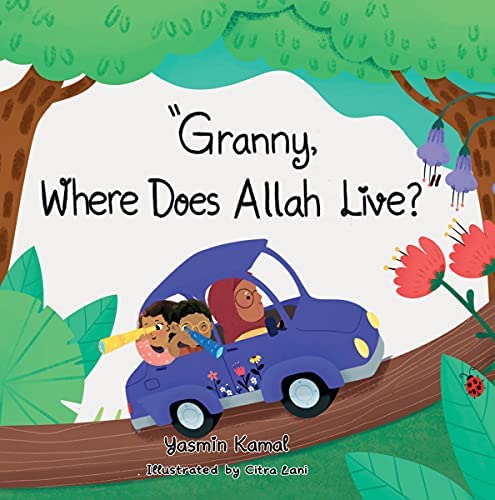
“Granny, Where Does Allah Live?” by Yasmin Kamal illustrated by Citra Lani

Standard
“Granny, Where Does Allah Live?” by Yasmin Kamal illustrated by Citra Lani


This 32 page picture book for 3-6 year olds takes readers and listeners on a car ride with Granny as questions are asked, sights are seen, and love is spread.  The rhyme is actually pretty decent, the explanation of Allah swt being on a throne above us wherever we are adhered to, and the illustrations are bright, bold, and have a lot to hold little one’s interest.  Overall, the banter between the kids and their Granny, the drive to the mosque being filled with joy and love, make me overlook a lot of little annoyances.  The book packs a lot in, but the voice and tone is easy and I think most kids will see the connection of asking where Allah is, to asking why we have to go to the mosque, to why it is important to talk to Allah swt in our prayers, etc., as a way to have their own questions touched upon.  I do wish the book was a little bigger and perhaps hardbound, to make story time sharing a possibility, the book is 7.5 x 7.5, so good for little hands and sufficient for in lap reading.  The book concludes with three activities that incorporate a few of Allah’s beautiful names.

The book starts out with a young boy and girl excited to be spending the day with their Granny and going on a ride in her special car.  No idea why it is special, but it is purple and has flowers painted on it, so lets go! The kids love to ask Granny questions when they drive.  So after saying bismillah, they wonder why people don’t have tails or shells on their backs, or where they are going, or if they can have ice creams. 

As they head to the mosque to meet Grandad  they wonder if that is where Allah (swt) lives.  Granny tells them no, so they ask if He lives in the sky, when she says no, they wonder about in the trees or in the sea.  Finally she says that they “don’t have to go anywhere to find Allah, His throne is above us where ever we are.”
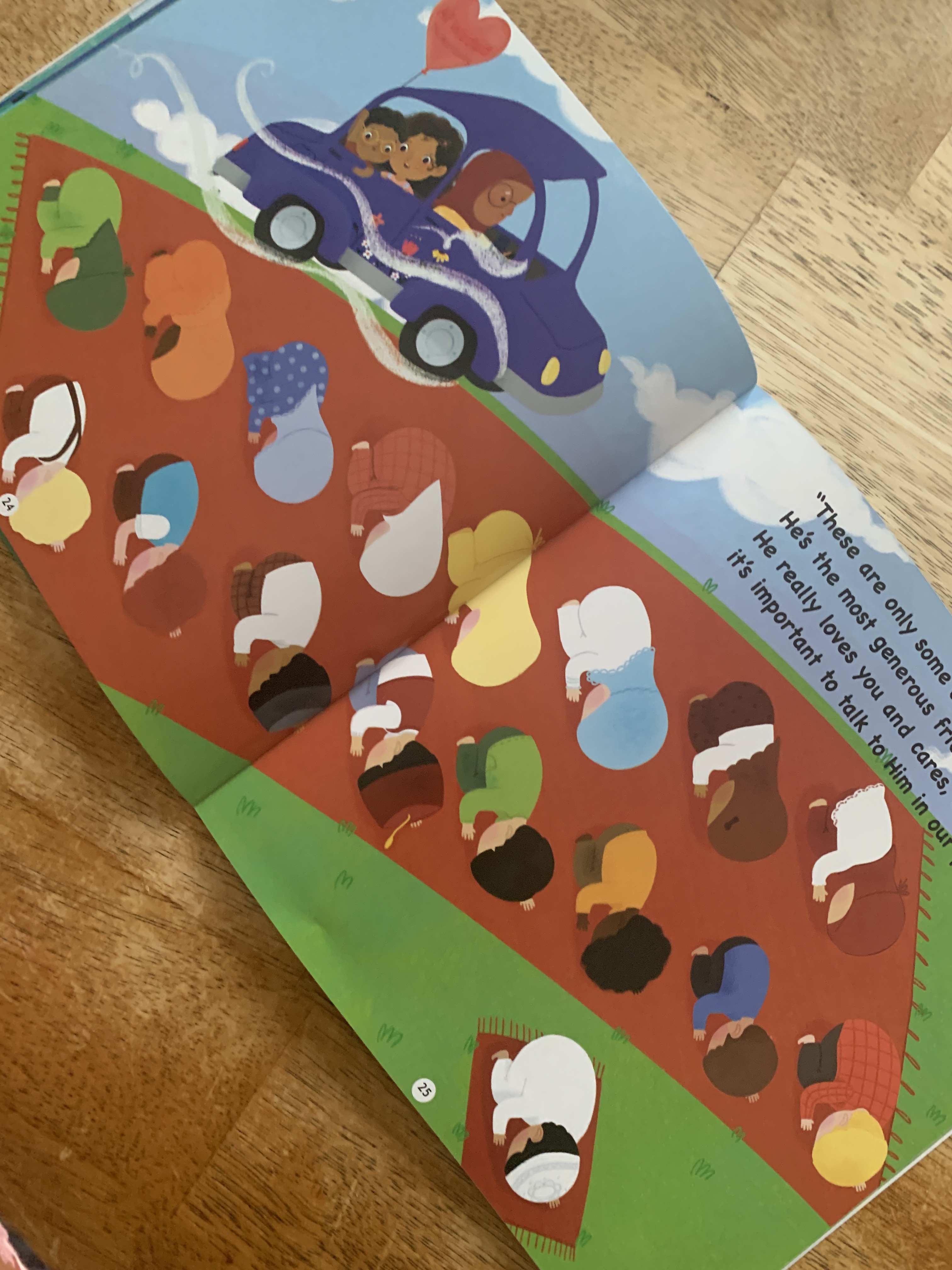
She then details how we can be reminded of Allah in things around us, nature, animals, land formations and then tells the children Allah is the most generous friend and it is important to talk to Him in our prayers. The children ask what we can tell Him, and Granny shares that we can tell Him everything and anything because He always hears.

Granny then explains that when we do good, we make Allah swt happy and when we aren’t nice we make him sad.  So then the kids want to know why we have to go to the mosque, Granny replies, to be part of a community.

The book is a string of questions, so it doesn’t come across as overly preachy, even though it is Islamic fiction, and the voice is natural.  It sounds like a conversation a grandma and some kids would have, I’m guessing the book was spawned by some real life experiences.  My kids and my mom definitely have this relationship.

 All this though, isn’t too say the book is perfect.  If  you read my reviews, you know there is always going to be a little nudge to try and elevate it from my perspective for the next go round. So with that in mind, the book does read a little long, the tangents get a little away from the simple articulate answer of stressing where Allah swt is, the text runs over the pictures a few too many times, and the people praying are not foot-to-foot shoulder-to-shoulder.  There are no salutations, saw, or asterisks after Allah. The word Jummah is not used although they are going to the mosque on Friday and a lot of people are gathering in the day, and the word mosque is used, not masjid.

The pictures are fun and will appeal to kids, especially when the car goes all magic school bus and starts flying, and going underwater.  I hope this is the first book in the series as it really does have potential to present answers to kids questions in a joyful colorful way.

Book available on Amazon 


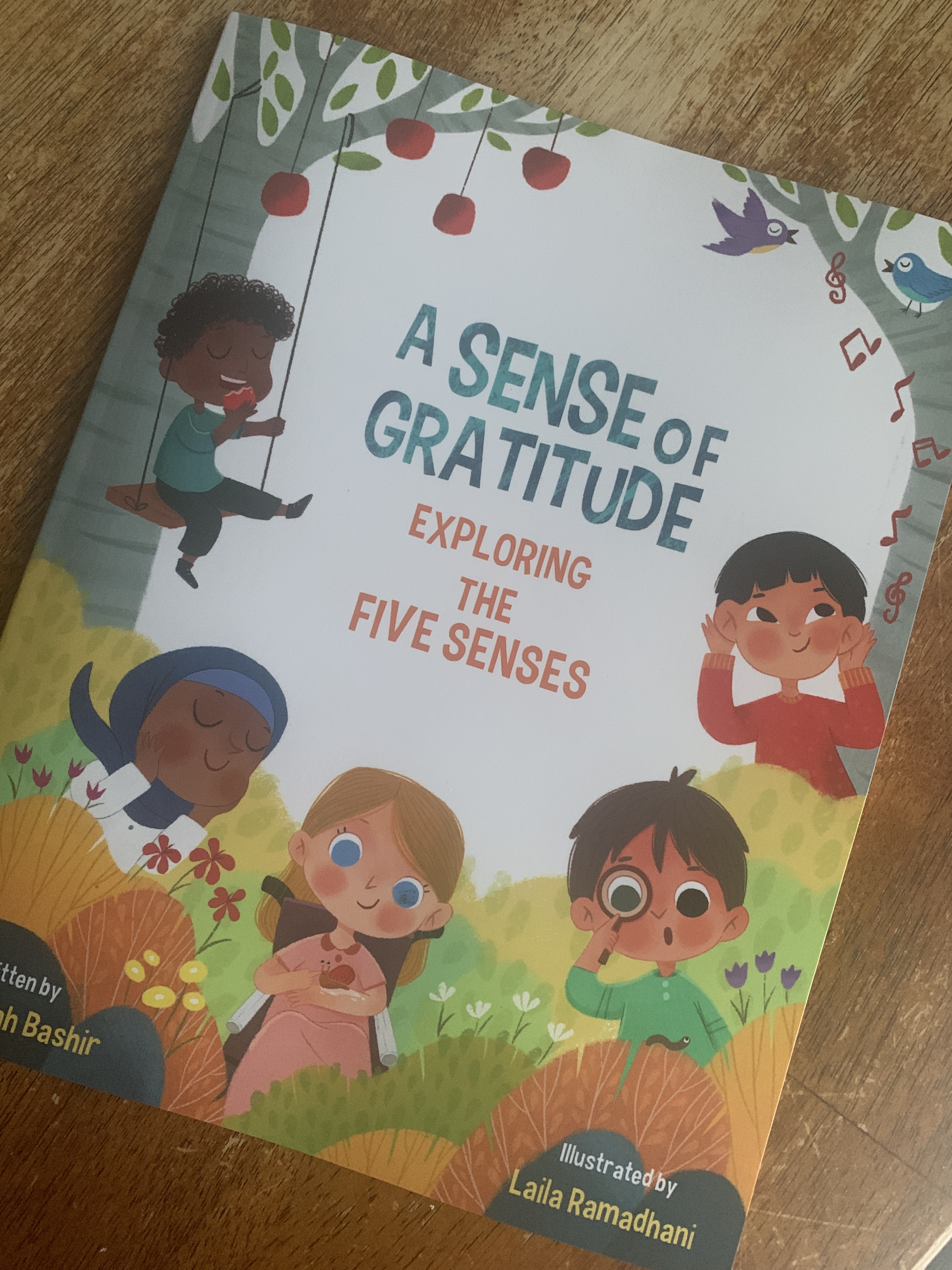
A Sense of Gratitude: Exploring the Five Senses by Halimah Bashir illustrated by Laila Ramadhani

Standard
A Sense of Gratitude: Exploring the Five Senses by Halimah Bashir illustrated by Laila Ramadhani

img_4855

As a story time host for littles, you always need books about the five senses.  Additionally as a story reader at an Islamic school, thanking Allah swt while talking about your senses and the world around us is a staple year after year.  So purchasing this book with large adorable pictures and claims of rhyme was an easy decision to make, and while it will get used, sigh, the rhyme and lacking rhythm is terrible.  There’s also frequent illogical sentence structures and a bizarre tangent- two pages on wafting.  The book is for toddlers through kindergarteners, not kids learning experiment safety protocols.  @muslimkidsbooknook did a wonderful Instagram post regarding rhyme in kid’s books, and this book really would have benefitted from some additional editing and outside eyes reading the book aloud repeatedly.  That being said, the book will still be used and will be enjoyed with real time editing.  A positive about the book, in addition to the illustrations, is Allah (swt) in Arabic script.  But overall, it really could have, and should have been so much better.
The book starts with a note to grown ups reminding them to stress the importance of being grateful and exploring God’s creation.  It starts with what eyes can be used for, stressing the beauty in nature. and moves to the nose, and has the pages on wafting chemicals, enjoying baked goods, and saying please pardon when passing bad smells.

Tongue is next and stresses that sweets are not nutritious, and then assumes that veggies and fruits are unliked by children, but the narrator admits that they enjoy consuming them.  Hands and skin- touch and feel, and also convey love.  As an FYI- the text states and illustrations show kids petting a dog. The final sense of ears and the gift of hearing wraps up the book.

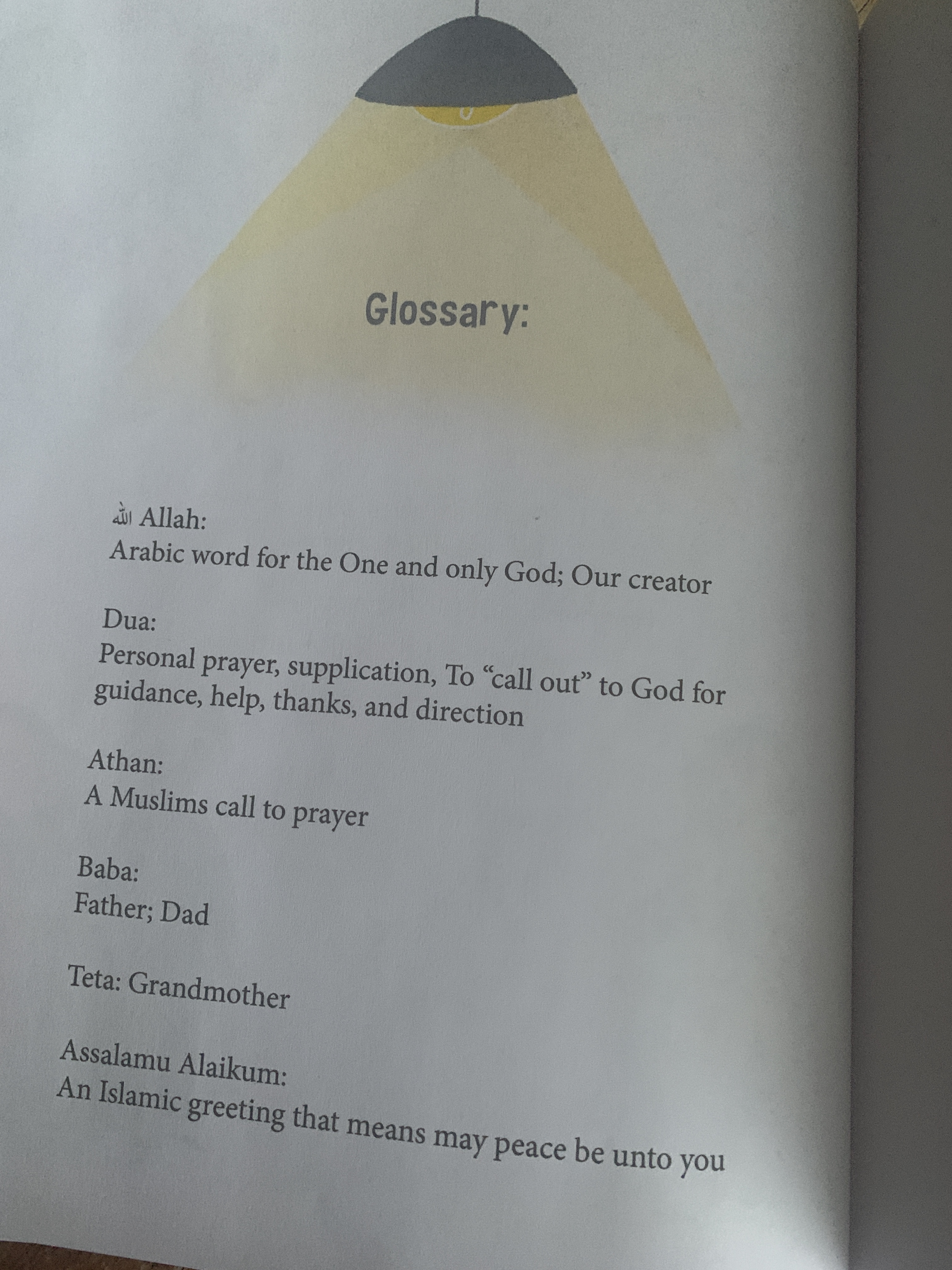
I’m terrible at grammar, really bad, but even I know not to say “colors like purple,” it should be colors “such as” purple, not “smells like Teta’s baked cookies,” but smells “such as” Teta’s baked cookies.  The formatting on a spread seems off as well with “Like slimy frogs” being under a a two line refrain and the rest of the sentence, “and hairy dogs…” being on the next page with another line and a half, it throws you off when reading aloud to keep some rhyme and rhythm going, every. single. time. On some pages the chopping of normal speech structure to make the “rhyme” is difficult to understand, and I don’t think the glossary, nor putting (God) in English was particularly necessary.

My favorite pages are when they tie directly back to ibadah and Islam, hearing the athan, using your hands to make dua and the little rhyme that starts and concludes the book. Truly the concept makes the book important on a shelf and the illustrations make it attractive, the text needs some editing.

img_4866

Iman’s Sunnah Adventures: Mama Once Told Me by Sharifah Huseinah Madihid illustrated by Lakhaula S. Aulia

Standard
Iman’s Sunnah Adventures: Mama Once Told Me by Sharifah Huseinah Madihid illustrated by Lakhaula S. Aulia

img_4560

This adorable 36 page board book had me laughing as a mom watching the increasing exasperation and dishevelment of the poor mother in the book page after page.  The book focuses on the sunnahs of welcoming guests, but the interpretations are the efforts and understandings of a small child being overly helpful, and the toll it takes on his parents.  The humor, the presentation, the introduction to various sunnahs is well done for little ones and their caregivers alike.  The book has not released yet, I viewed an e-version and I’m assuming the final spread is a lift the flap review of sunnahs.  Nothing is sourced, and salutations on Prophet Muhammad ﷺ are denoted by an asterisk throughout the book with a footnote at the end.  There are two books in the series and both share sunnahs, humor, and the main character Iman.

img_4561

The book starts with Iman feeling bored as his parents prepare for the arrival of guests.  Iman then remembers something Mama once told me (him), “That the Prophet* said cleanliness is half of eeman…” and with that the little one is off to help clean. Bubbles and more mess later, Iman is proud of himself and his parents are shocked and the bigger mess that greets them.

img_4562

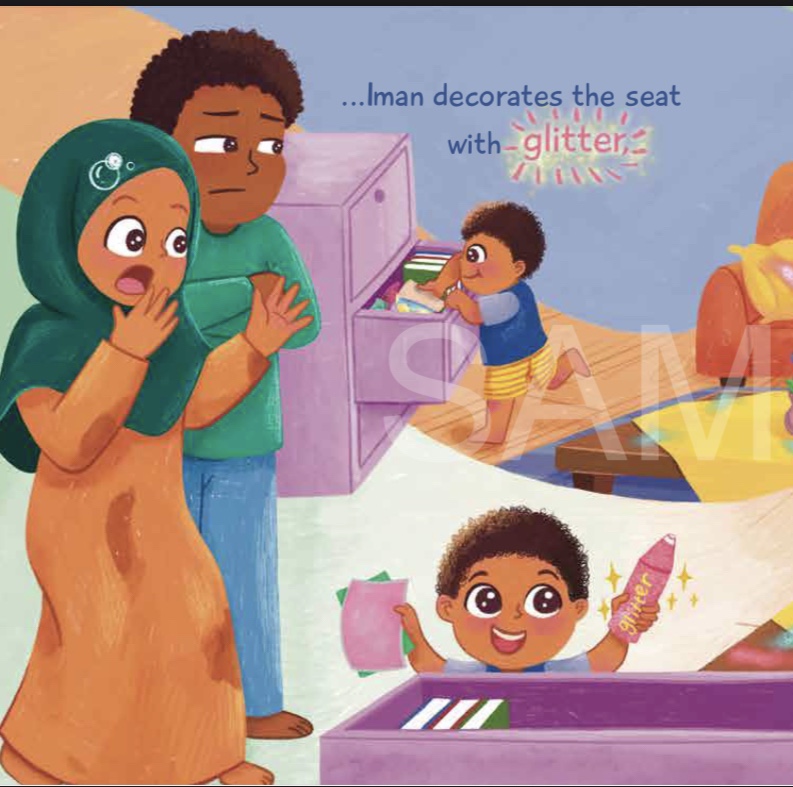
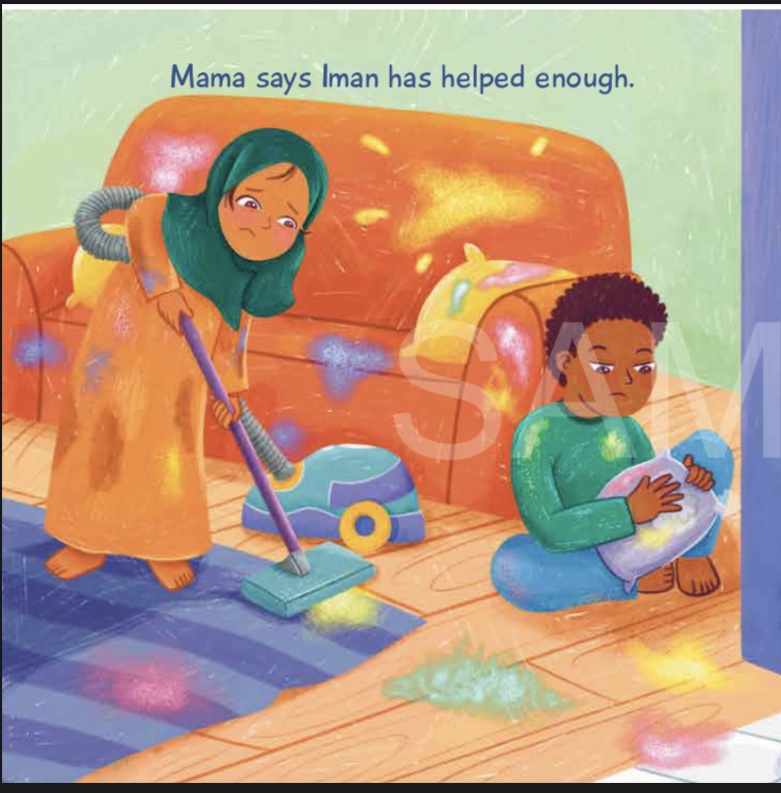
Up next is recalling that Prophet Muhammad ﷺ “would make a special seat to honor his guests” and Iman decides that glitter will be a great way to fulfill that sunnah.  When Iman is sent to get himself ready, more fulfillment occurs until Mama is exhausted and Iman finds a way to fulfill the sunnah of making his parents happy.

img_4563

The book might be a little above level of a toddler, but I think the silliness makes it a great introduction to sunnahs and will be a joy to read over and over again.

For more information about availability you can check the publisher’s website

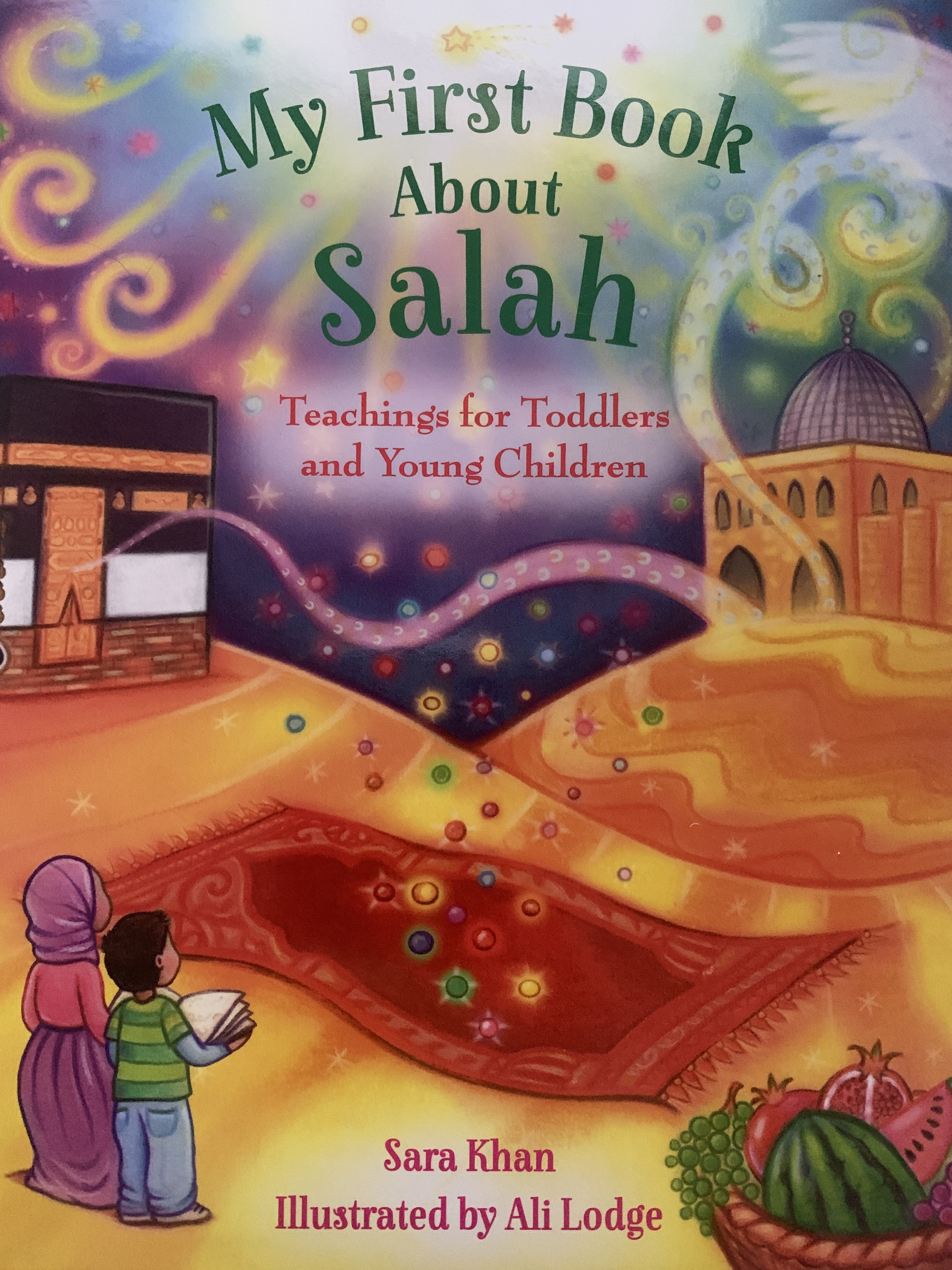
My First Book About Salah: Teachings for Toddlers and Young Children by Sara Khan illustrated by Ali Lodge

Standard
My First Book About Salah: Teachings for Toddlers and Young Children by Sara Khan illustrated by Ali Lodge

img_3719

Looking at the books in the series, reading them to my children, getting the latest one delivered to my doorstep: every step along the way makes me smile, alhumdulillah.  The soft warm illustrations and impressive amount of information lovingly conveyed in board book form really makes the series a staple for young children.  The newest addition to the series is about Salah, and I love that the framing is that prayer is a blessing, it doesn’t open with listing the five daily prayers, it begins with Isra wal Miraj.  It sets the tone that prayer is special and beautiful and a gift.  It does eventually list the five required prayers, the words of the athan, Fatiha in English and Arabic, steps of wudu, and parts of salah, but the way it is woven together is seamless and so much more than just lists of information.  With ayats from the Quran sprinkled in, the book flows from one focus to the next, leaving the end as always, for facts and questions.  Appropriate for ages two and up, this 26 page board book can and will still inspire and teach older kids.

The only pause this book gave me were the illustrations.  There is not a single page where the people praying are standing shoulder to shoulder, foot to foot.  I could see if in a few pictures the creative liberty, or Covid reality manifest itself in the pictures, but whether it is a family praying, or people in a masjid, there is a gap between the individuals, and that seemed off to me.  Additionally because of the spacing in all the pictures, the pictures where perhaps the people are not praying together, but are just shown to be making tasleem or the illustration that all Muslims of all colors and all professions and all abilities pray, it almost seems to show men and women praying together.  I don’t know that the toddlers in the audience will notice, but perhaps be aware of it if when reading it to your children.  Aside from that the illustrations show the global faith of Islam and the beauty that we all worship together.

Available to purchase here and I’m sure it will be stocked by Crescent Moon as well.  Oh PS it also comes with a sheet of stickers.

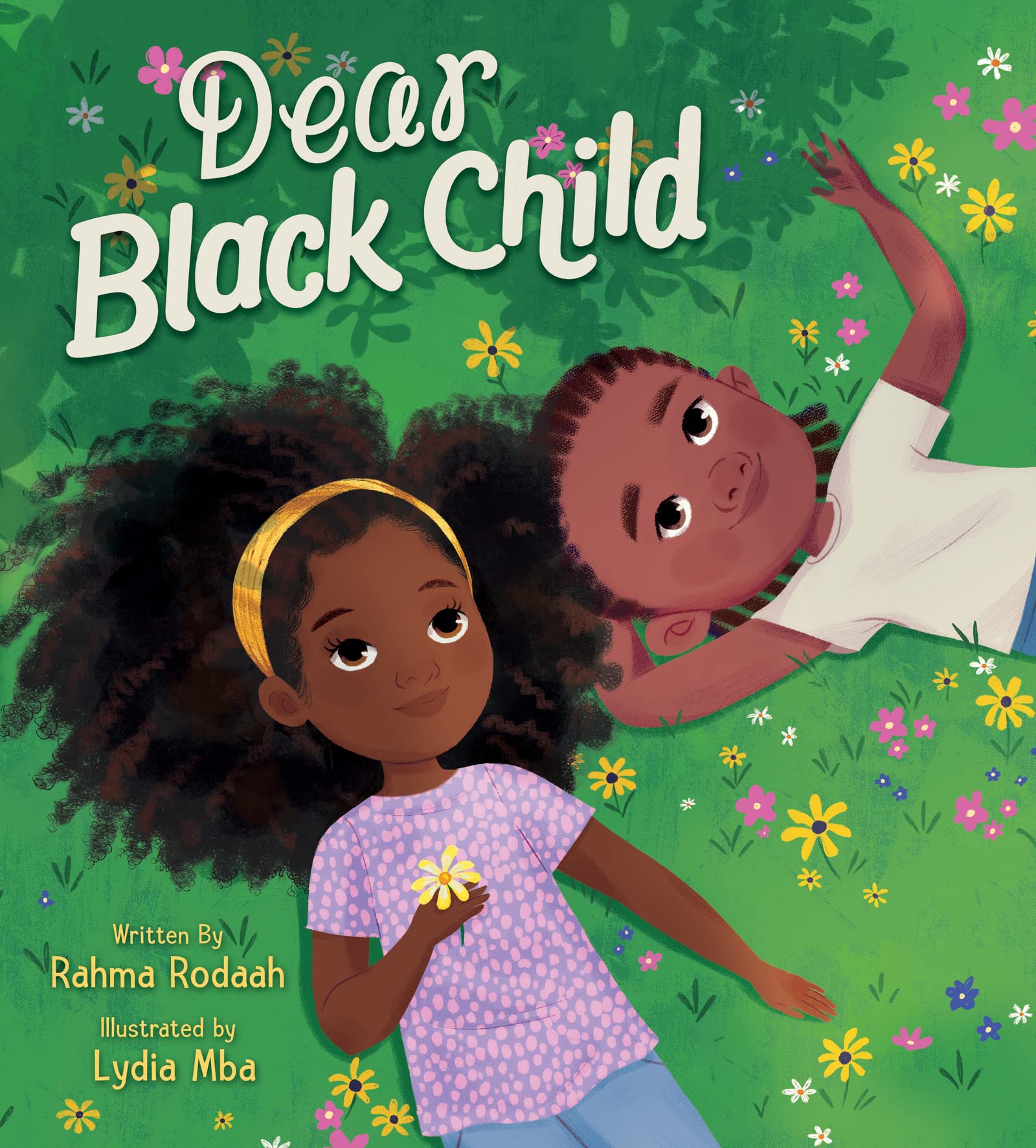
Dear Black Child by Rahma Rodaah illustrated by Lydia Mba

Standard
Dear Black Child by Rahma Rodaah illustrated by Lydia Mba

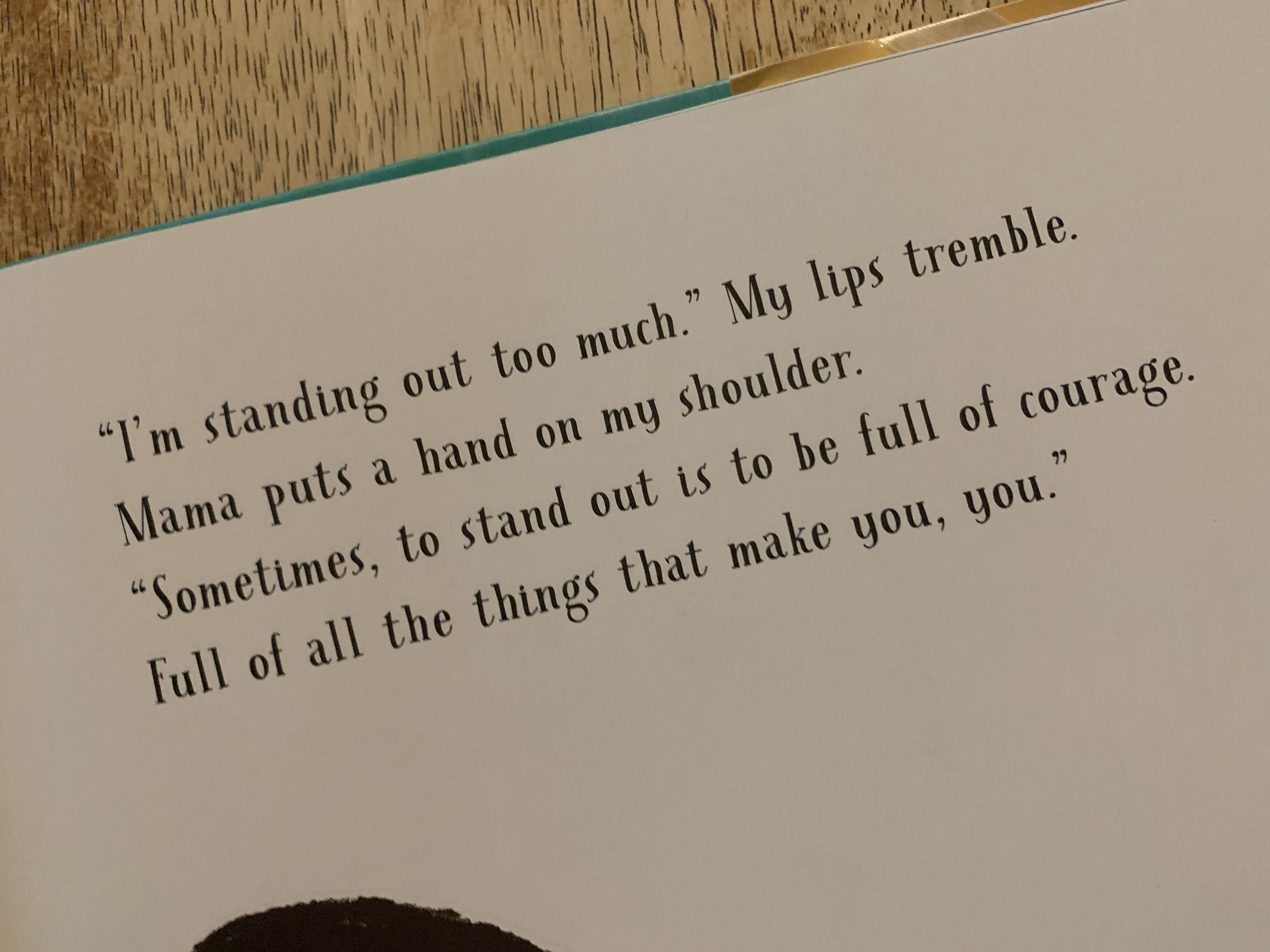
dear black child

This beautiful 32-page picture book by Muslim author Rahma Rodaah radiates joy through the text and illustrations.  The powerful and lyrical words on the page inspire confidence to take up space and encourage celebration through their messaging and tone.  My three-year-old enjoyed me reading it aloud, it kept his focus and his interest, and my seven-year-old read it over my shoulder and then numerous time on his own.  The sway and images painted by the text are so well refined that you could truly read this book a dozen times and still be moved by the passages.  The illustrations compliment the author’s message in their reflection of Black children of all shapes, sizes, shades, and mobility.  There is even a visibly Muslim woman in hijab (#muslimintheillustration) that looks like the author herself.

img_3431

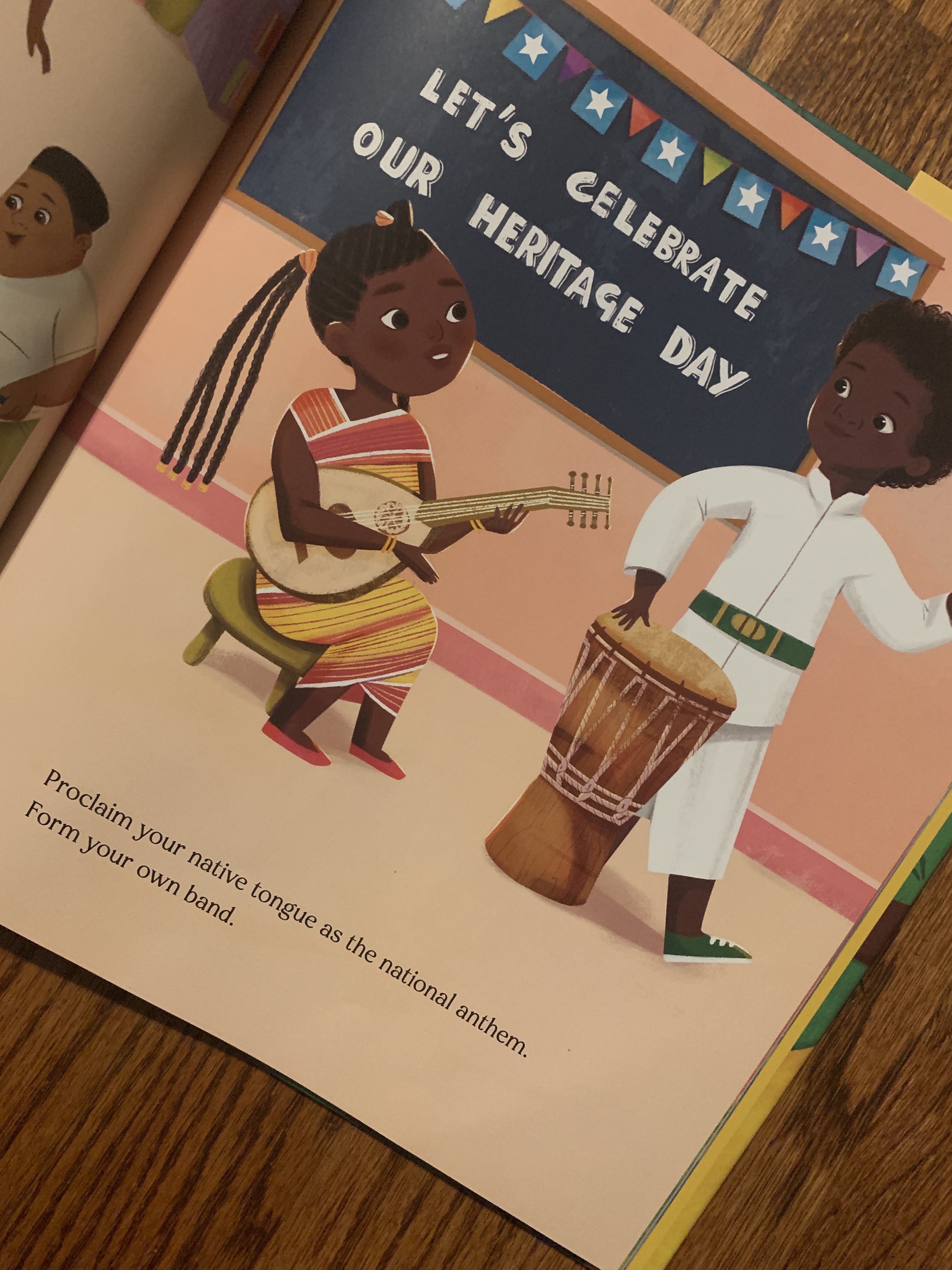
I look forward to sharing this book with various story times in the community, in my children’s classes, and in regular rotation at my own home.  Framed as a letter to a beautiful Black child, the book speaks to “you.”  It starts with encouraging you to stand in your own light, take up space, say your name proudly, and proclaim your native tongue.

img_3430

It inspires the Black child to speak confidently, roam freely, to be rooted, yet move swiftly. To write the books and tell the stories that only they can tell, and to trust their inner compass.  It also reassures them that they are not alone, that there are those that will always help, always cheer them on, and remind them of their glory.

img_3432

The book is as powerful as it is beautiful and I hope it finds a home on every classroom, library, and home bookshelf.  I purchased mine here.

img_3434

Egypt by Aya Khalil illustrated by Magda Azab

Standard
Egypt by Aya Khalil illustrated by Magda Azab

egypt

This sweet board book is part of a series, the other two books are Japan and France, releasing in October.  All are brightly illustrated, 20 page books for ages zero to four and take the littlest of readers into a country, through sights, experiences, foods and language.  This particular book does not feature any visible #muslimsintheillustrations but the author is Muslim, and so I am reviewing and sharing it here.

egypt5

The framing of the book is a day in the life of a little girl, who wakes up with bosas from her mama and baba and greetings of Ahlan.  Some of the words are written in Arabic script with the English transliteration and pronunciation provided, other times it is just the English transliteration of the Arabic with the pronunciation asterisked and written smaller immediately below the text.

egypt3

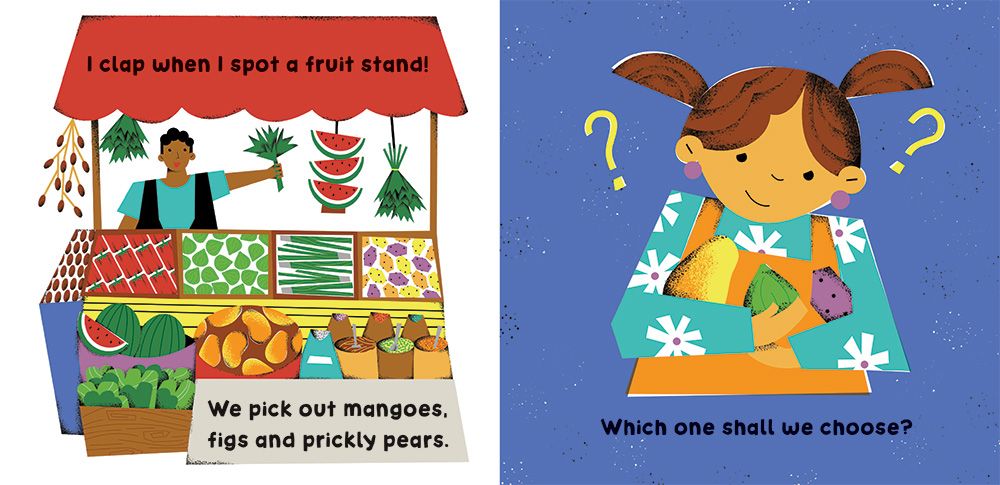
Once she is awake, she gets dressed, brushes her teeth and is off with her baba to buy pita and ful.  The busy street offers sights to see and fruits to pick from.  She ponders and asks herself and the readers which one to choose.

img_2209

At her Teita and Geddos there is dancing and tabla playing before walking back home along the Corniche.  Dinner is served and bedtime has arrived. The book concludes with a summary of her day linking the Arabic words to the illustrations and English meaning, as well as some pronunciation tips for the Arabic sounds.

egypt1

As a Muslim reviewer I had to hope there might be one hijab clad woman in the illustrations, I know many Muslims don’t cover and Egypt is diverse, but considering the lens I review from, I feel obligated to state that opinion.

egypt2

A little more critically, I was a bit surprised on the page with the colorful boats that the color names yellow, blue, and purple, were not included in Arabic and only in English.  Seemed that would have been an naturally and easy inclusion.

Overall, the book did a good job of celebrating Egypt without over explaining, keeping it bright and engaging for toddlers.  I really like the language being shared in a story context, not just a book with a picture on it and words in different languages.  I also liked that while the details were Egypt specific, there were also pages that were universal.

Available for preorder and purchase here

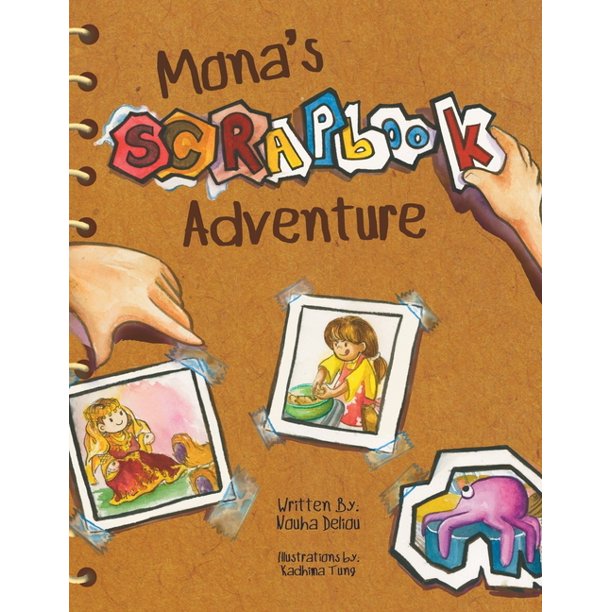
Mona’s Scrapbook Adventure by Nouha Deliou illustrated by Kadhima Tung

Standard
Mona’s Scrapbook Adventure by Nouha Deliou illustrated by Kadhima Tung

mona

Algerian culture, as far as I’ve seen, is incredibly underrepresented in western literature and not represented at all in children’s books.  I love that this author, who felt the same- did something about it.  This 40 page colorful story incorporates Algerian traditions and culture with universal themes of sibling love, wedding excitement, and being sad about change.  The OWN voice warmth shows Muslim characters in America holding to traditions and making new ones.  The book is long, but is not text heavy.  For toddlers and preschoolers up to second grade, I can see readers enjoying the detailed descriptions of the dresses and foods, and feeling the feelings of little Mona as her beloved older sister prepares for her wedding and ultimately leaving with her husband.

img_2564

The book starts on the morning of the big day, Layla’s engagement.  Mama explains to Mona that the Imam will do the kitab and that her older sister is excited because she has known Ahmed since school and likes him a lot.  Once dressed Mona watches Layla get ready in traditional Algerian clothes.

img_2565

When Ahmed and his family arrive, he and Layla announce that after the wedding they will be moving from New York to Arizona.  Mona is devastated, as the women start to zaghreet in celebration. She wonders if she can go with them, but decides she can’t leave her parents.  Later that night, Layla and Mona chat and decide that Mona will help plan for the wedding and they will make a scrapbook.

img_2566

Over the next few months, clothes are bought, cakes are tasted, flowers are decided upon, and Arayech is made.  The night of the henna is fun, but then it is the wedding, and then time for Layla and Ahmed to go. Happy tears and promises to always be connected conclude the story before a scrapbook page for the readers is revealed to make their own designs.  That is followed by a glossary, and information about the author and illustrator.

img_2567

I love the detail about the different cultural and regional Algerian dresses in the illustrations, the Algerian traditions shared through the text, and the connection between the two sisters. The book is available in hard back or paper back and I got mine from Crescent Moon Store  

https://crescentmoonstore.com/products/monas-scrapbook-adventure?sca_ref=1601585.fIPhoqtScY

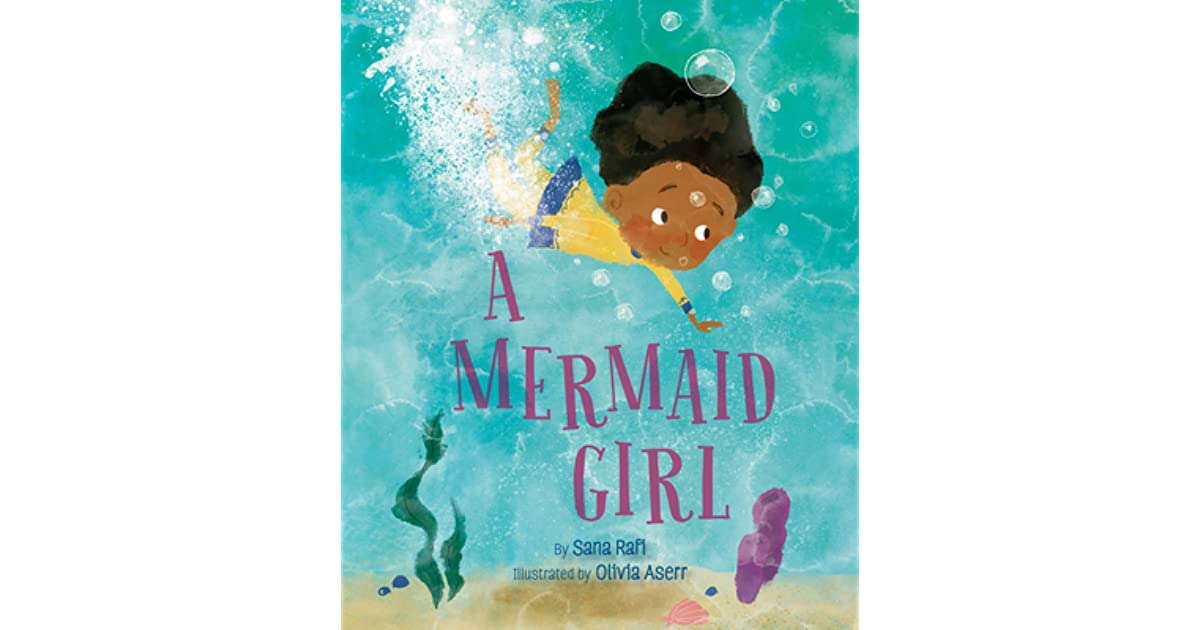
A Mermaid Girl by Sana Rafi illustrated by Olivia Aserr

Standard
A Mermaid Girl by Sana Rafi illustrated by Olivia Aserr

mermaid girl

I honestly don’t know how I feel about this book.  I have read it and reread it and thought about it and read it again, and ignored it and read it again, and alas I have no idea.  I really am having a hard time articulating my thoughts on this 40 page children’s book.  I think part of the problem is that I’m reading it shortly after reading another “religiously inclined” clothing inspired picture book for the same target demographic and I’m having a hard time not comparing them.  When I intentionally start to write a review that doesn’t compare them, I am cognizant that my readers probably will and the review spirals.  So I’m going to establish what I love about this book, and then highlight why I’m torn and leave it to you all to draw your own conclusions and opinions.  InshaAllah this will not be the new norm, I will not make a habit of straddling the fence, but for this book, I think it is the only way.

img_2174

I absolutely love the illustrations.  The warmth and joy the pictures portray are endearing and smile inducing.  I love the mother and daughter relationship and how feelings are not dismissed or belittled.  The mom connects the little girl to a legacy of strength and conveys her confidence, that the little girl is similarly brave, not just when things are hard, but especially when they are.  The little girl is shown to “feel” confident and joy in her clothing, not just “look” pretty, which is messaging that I love.  It is never too early to show that how one feels is more important than how one looks.  This depth, is not examined, but by simply using the words “When I put it on, I feel like a dainty seahorse,” rather than saying, “I look like a dainty seahorse,” the priority is not lost on the reader.  I like that the character has growth and challenges and has to reaffirm her position and as a result raises herself and those around her as well.

img_2175

So why some confusion you ask.  Well- the word burkini is used to explain the little girl’s new swimsuit.  Burkini traditionally is a Muslim implied modest swimsuit, derived from combining the words burka and bikini.  That said, anyone of any faith can order a burkini online and their faith is not a factor.  The little girl is young and doesn’t wear hijab, her hair is not covered.  The mother and the ancestors pictured wear hijab, but Islam or Muslim is never in the text.  Part of me likes this, people wear modest swimwear for a lot of reasons: comfort, religion, sun protection, personal preference.  Similarly for head coverings in a pool some people where them for hair preservation, modesty, hijab, aerodynamics, speed, preference, comfort, etc..  Unlike hijab which is in the Quran, birkini is not an “Islamic requirement.”  No one is forcing you to swim, no one is forcing you to wear this brand or that style if you choose to swim.  Covering and wearing modest clothing is a must on Muslim women, covering the awrah is required after puberty.  I both like that the little girl is covering up and wish that it said why she is, but also appreciate that it is left open.  I like that you should be able to wear whatever you want and be comfortable with it.  I like that you don’t have to conform, and you can be you and whether that comes from a religious rationale or a fashion one or a health one or a comfort one, it doesn’t matter, don’t police what women wear.  But the implied illustrated framing is Islamic and the link is not there in the text.  See why my thoughts are scattered.

img_2176

Similarly, the term “mermaid” is gender specific.  But colloquially it is often used to just describe someone with a human top half and fist tail.  So, isn’t “mermaid girl” redundant? At the end when male presenting Sam asks if he can be a Mermaid girl too is it implying gender neutrality? Is it like female kids saying they want to be a girl policeman or a lady firefighter?  Does it matter?

img_2177

The story starts with Heba and her mother looking at photographs of past generations on their wall remarking how they are all mermaid girls.  Heba has gotten a new swimsuit, and her and mama are going to match in their new burkinis.  When they get to the pool however, all the excitement is pushed back on when her friends ask her if she can swim in that, and they tell her it doesn’t look like a real swimsuit. Heba sticks up for herself, but when she looks around, she sees, they are right, she doesn’t look like everyone else.  Mama reminds her of those before her and reassures her that she is not alone. She rejoins her friends, doing all the things she wants to do, and by the end they too want to be mermaid girls.

img_2178

There is music depicted and women in one and two piece swimsuits.  As someone who wore modest swimwear my whole life, this book had a lot of mirroring of summers arguing with life guards, showing up with other Muslims at public pools to rude comments and aggressive stares, and swimming all over the world to people asking where they could get a suit like mine as well.  Definitely normalizing swimwear that looks like a burkini is a great concept to see in a book.

I do wish there was backmatter.  Perhaps giving voice to the many reasons women should be free to wear what they want at all times, but how particularly in water activities it has become a political point of judgement and policing.  Perhaps something about how this little girl is wearing it for religion and modesty, but that people everywhere wear things for lots of reasons.  I like the ambiguity, but also wish their was more of a connection to Islam/Muslims.  I leave it to you to make your own decisions.  I found my copy at my local library, it is mainstream published and can be purchased here as well.

Let’s Think about Allah’s Great Garden by Ali Gator

Standard
Let’s Think about Allah’s Great Garden by Ali Gator

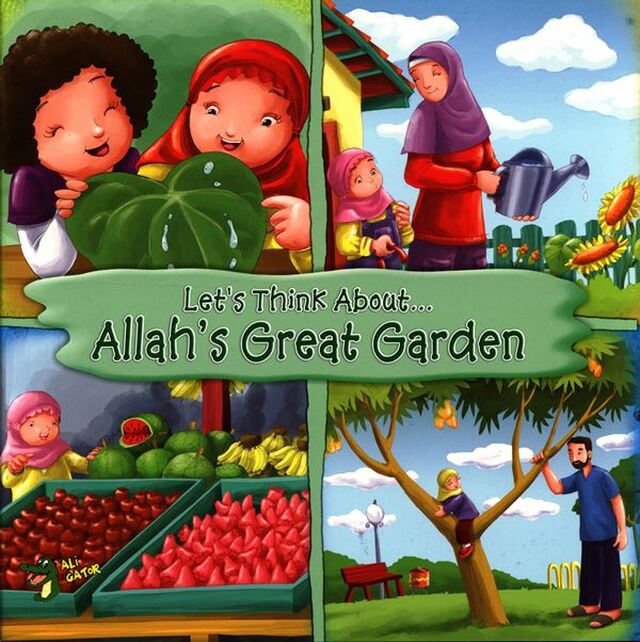
allah's garden

At 22 pages this book’s title aptly describes the contents within: at times factual, sometimes breaking down the fourth wall and asking readers to do something engaging, at times fictionalized, and often meandering and reflective.  The book is all over the place and only cohesive in theme.  It has sat on my shelf untouched by my children for quite a while, but when I needed options for the library during Earth Day, this book did a great job in facilitating discussion with pre k to 1st grade.  It isn’t a story time book so to speak, but it gets kids thinking and can be tailored to their level of discussion.  I don’t think that is how the book was intended, and as it is written it is rather unimpressive, but when pulled apart it did serve a very specific purpose.

img_9837

The book starts out with a few lines about Allah’s blessings of all things particularly trees and plants and gardens.  I wasn’t sure if it was trying to rhyme or not, but I think the first lines are just incidental rhyme as the flow and words quickly unravel. It talks of climbing trees and the narrator’s father telling him to be careful. It then discusses watermelons and how they grow in the ground, not on a tree and asks readers if they can see the watermelon seeds in the illustrations.

img_9836

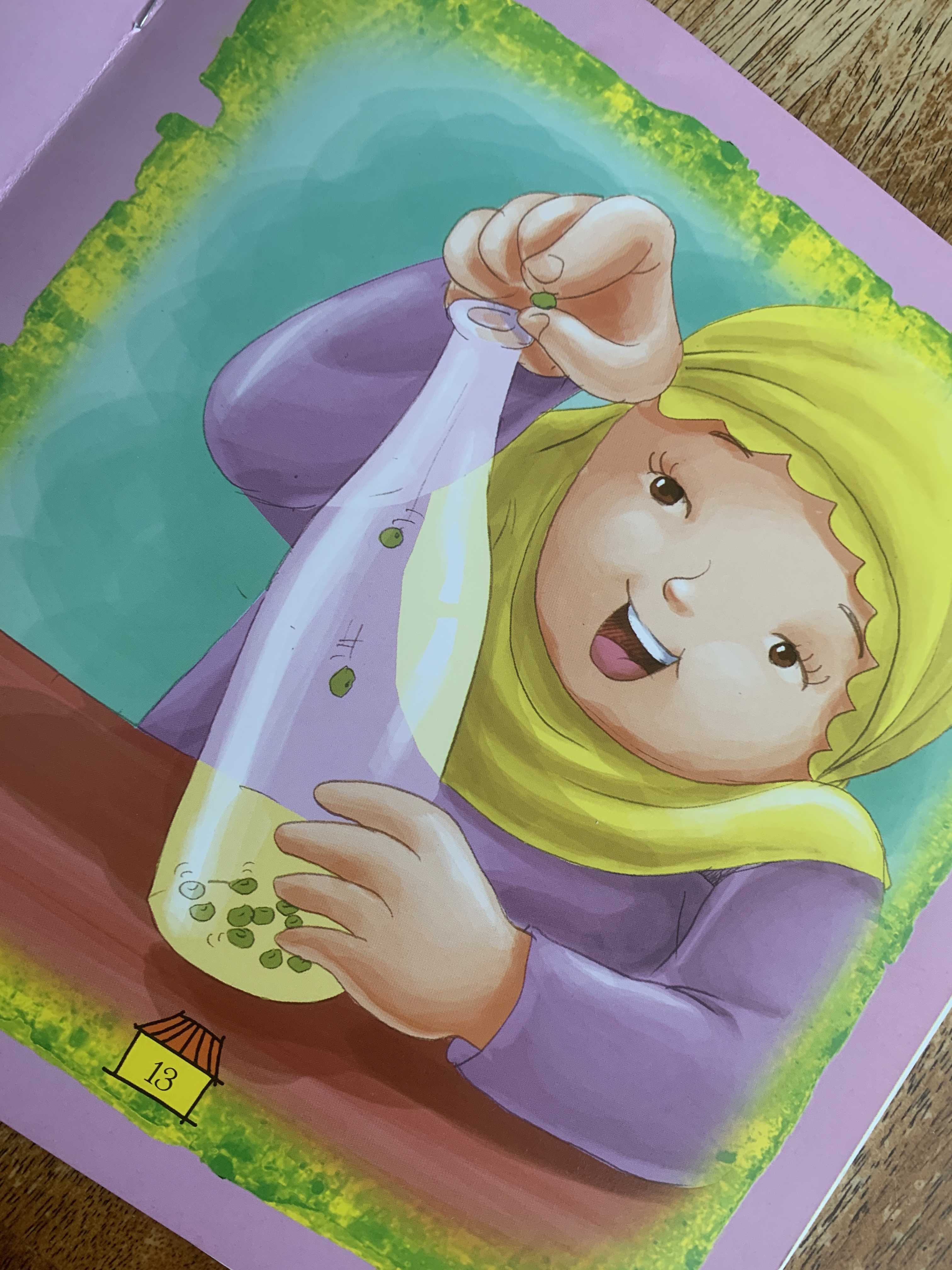
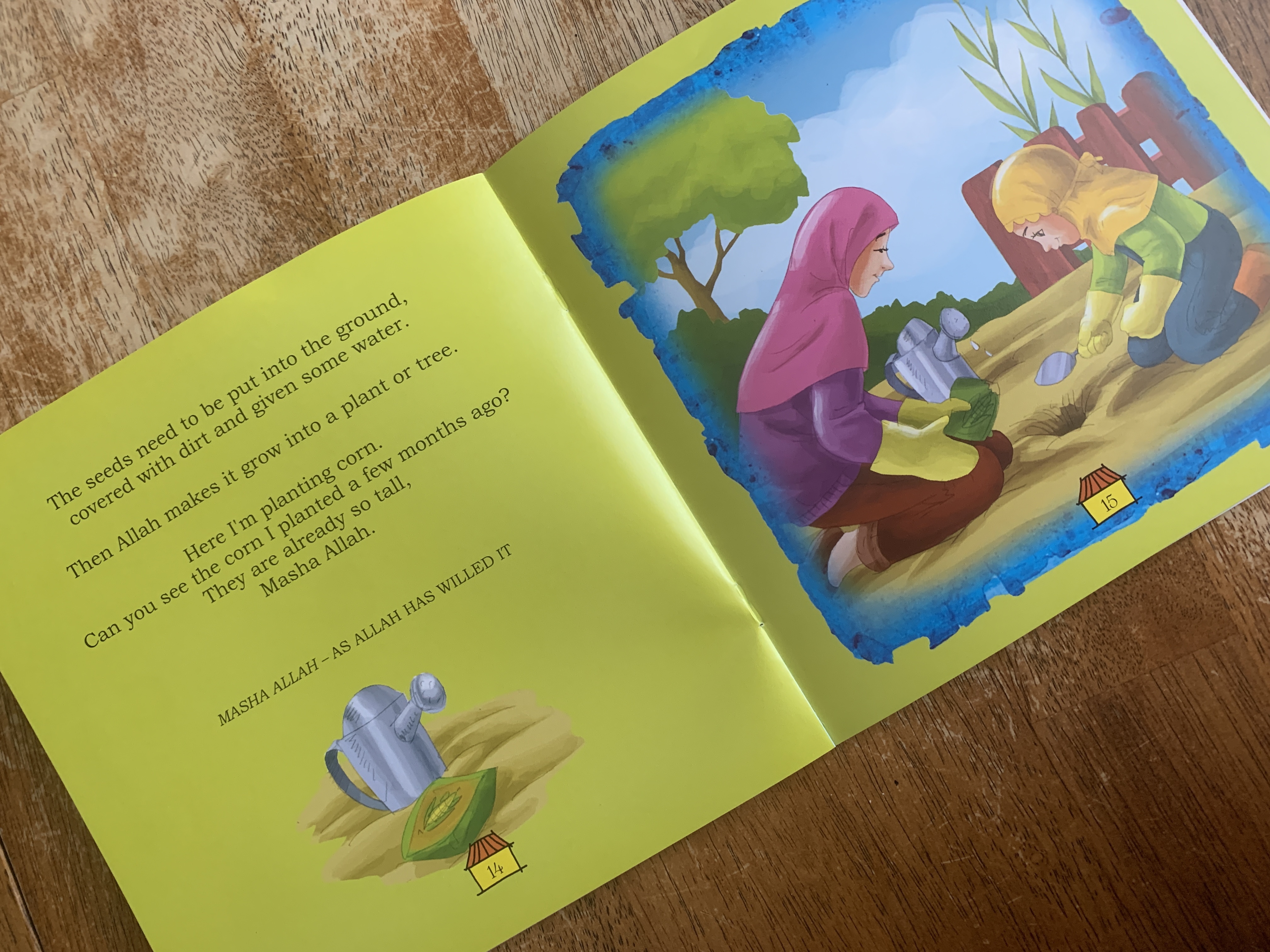
The book focuses on the life cycle of plants: seeds, flowers, trees. Drawing on that information it then shows the little girl collecting seeds to plant.  It then talks about the planting process and the needs all growing things have to prosper if Allah so wills it.

img_9838

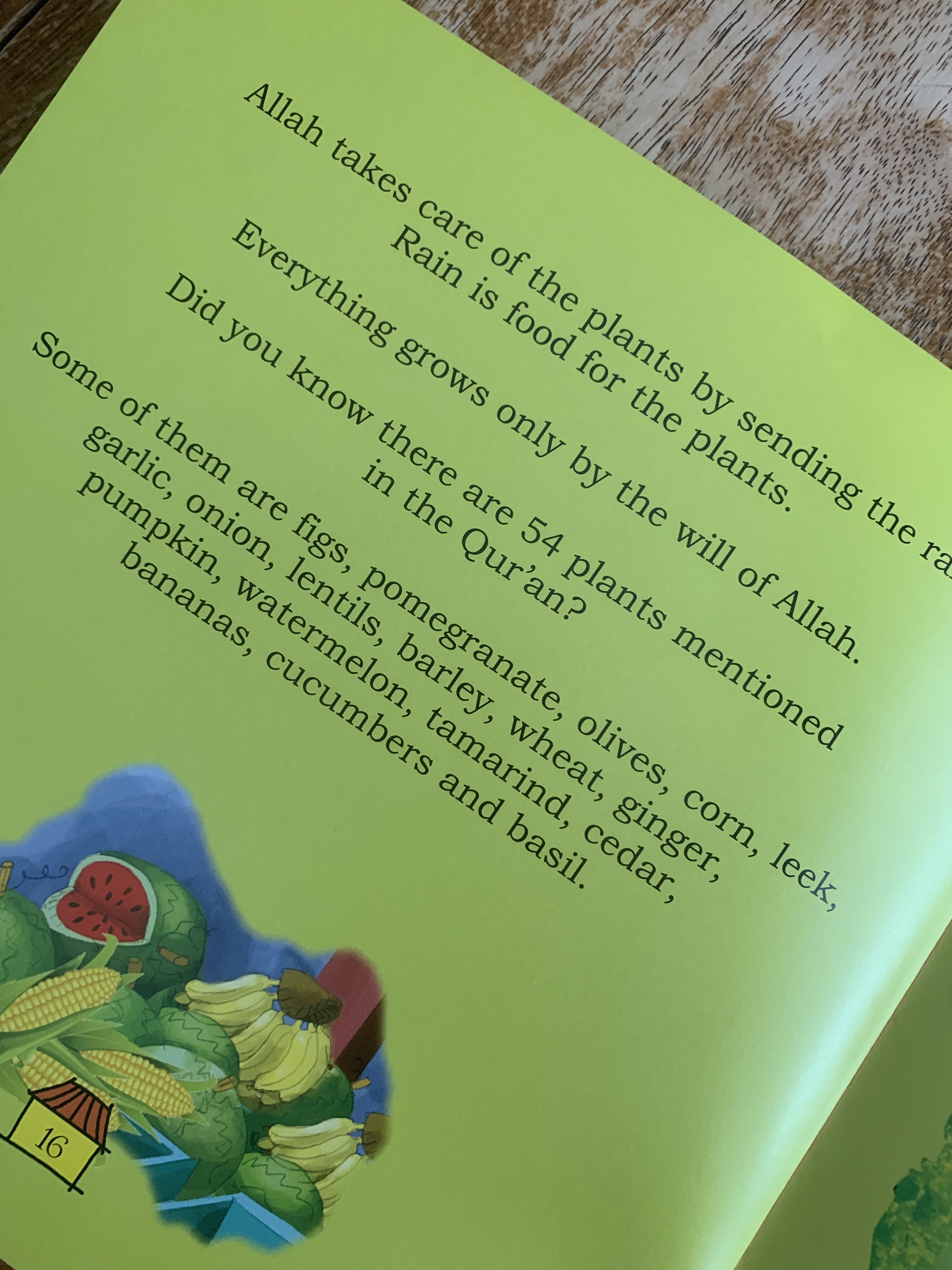
Then the book gets interesting and starts to discuss the plants mentioned in the Qur’an before returning back to the half hearted narrative remarking on how the flowers complement the color of their house.

img_9839

The story seems to then end, but it isn’t denoted that the remaining pages are factual or set aside as back matter, it just pivots and begins discussing rain in Surah an-Nahl, Trees in Paradise as mentioned in Qur’an and Hadith, and then again, but this time in table form, the fruits and vegetables mentioned in the Qur’an, and highlighting dates specifically.

img_9841

The book is all over the place, and I doubt it will be read again until next year.  There are a few other books that have come out about his topic, and I plan to look in to them to see if they work better for story time readings and child engagement.

Mr. Men Little Miss Happy Eid by Roger Hargreaves

Standard
Mr. Men Little Miss Happy Eid by Roger Hargreaves

mr men

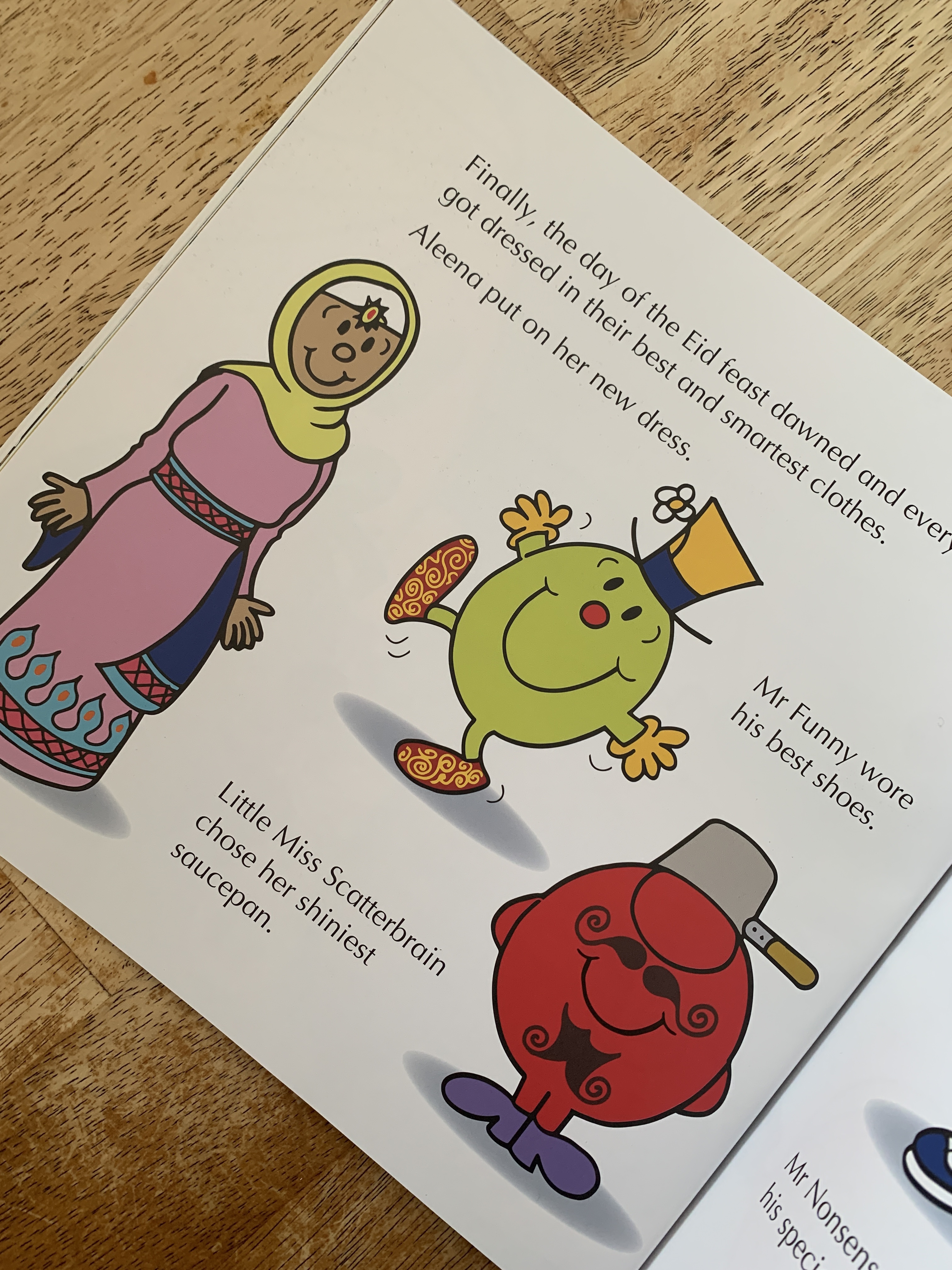
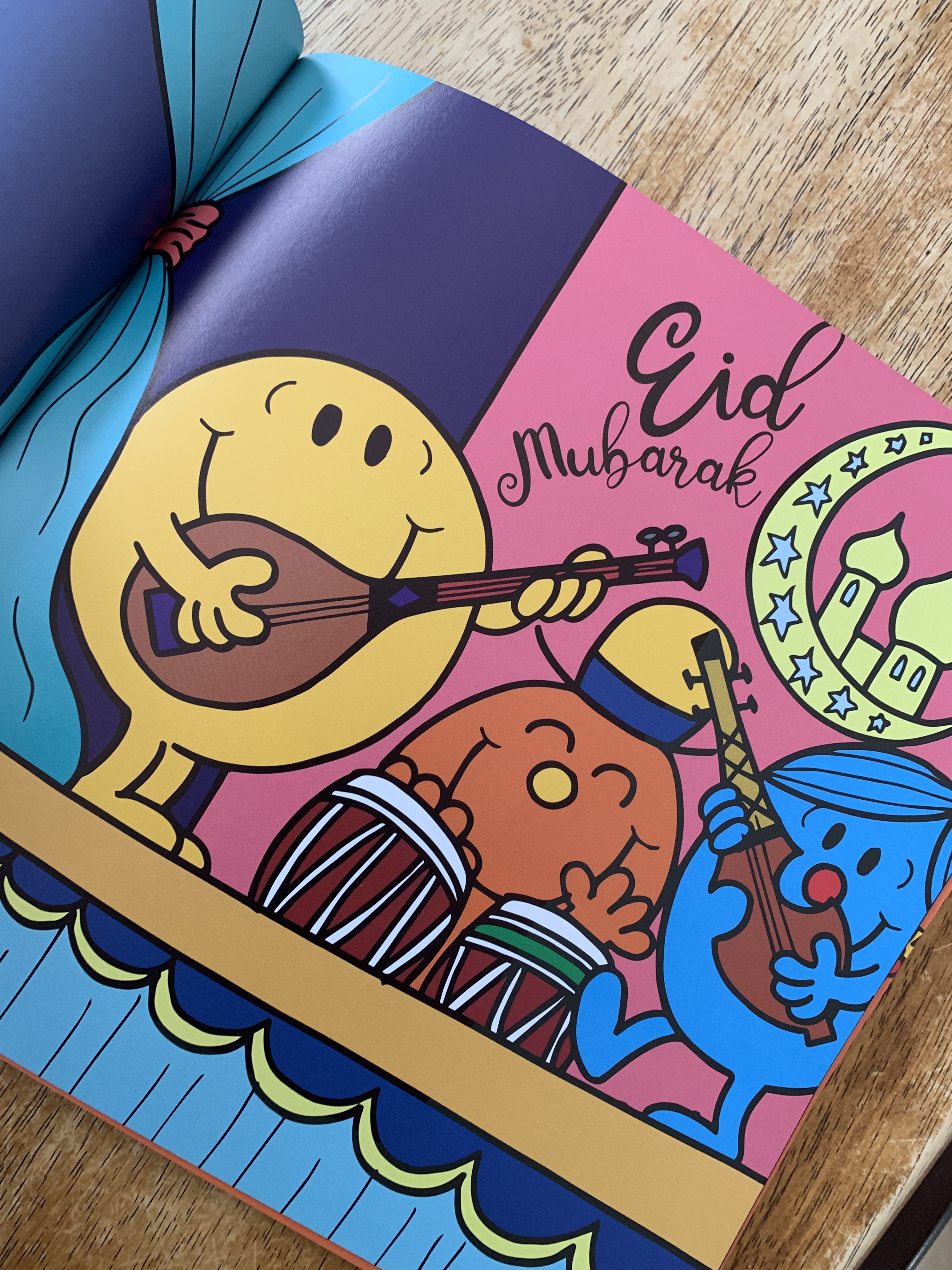
The nostalgic cast has reassembled recently, and now have an Eid title available.  Whether you grew up with Mr. Men and Little Miss or have never heard of them before, this book covers the basics of an Eid day celebration with (familiar) characters such as: Mr Greedy, Mr Bump, Miss Splendid, Mr Funny, Little Miss Scatterbrain and more.  The characters’ friend Aleena is fasting for Ramadan, the colorful crew help her to plan, and finally they all join in for the celebration.  The 32 pages are silly and random at best, but with a little discussion to help bridge the British to American English (if needed) ages three and up will enjoy the funny characters, seeing Aleena in hijab, and relating to the activities mentioned.  I love that generosity and forgiveness are included in the messaging, but was really irritated that a musical band is how they celebrate Eid night, and that Eid is compared to Christmas with gift giving.  The book is not written by a Muslim, so perhaps I should be forgiving about the Christian holiday comparison, but why write a book about Muslim joy, if you won’t let the Islamic holiday be enough on its own?  Thank you to Shifa @Muslimmommyblog for gifting me this after making fun of me for being old!

img_9333

Mr Greedy’s friend Aleena is fasting, and Mr Greedy breaks his fast nearly every hour so he is helping her.  Little Miss Inventor is out with her telescope and sees the moon, it is time for Eid.

img_9334

The days before Eid had been spent cleaning and decorating with the help of Mr Rush and Mr Bump.  They weren’t very helpful.

img_9337

Ramadan is also a time of generosity.  The football club receives donation, but what will they do with Mr Silly’s grandfather clock donation.

img_9336

Aleena puts mehndi on and is smart enough to not let Little Miss Naughty help, Little Miss Scatterbrain was not so wise.

img_9339

They all get dressed up, they give each other gifts, and share a meal. They then all settle arguments and forgive each other.

img_9338

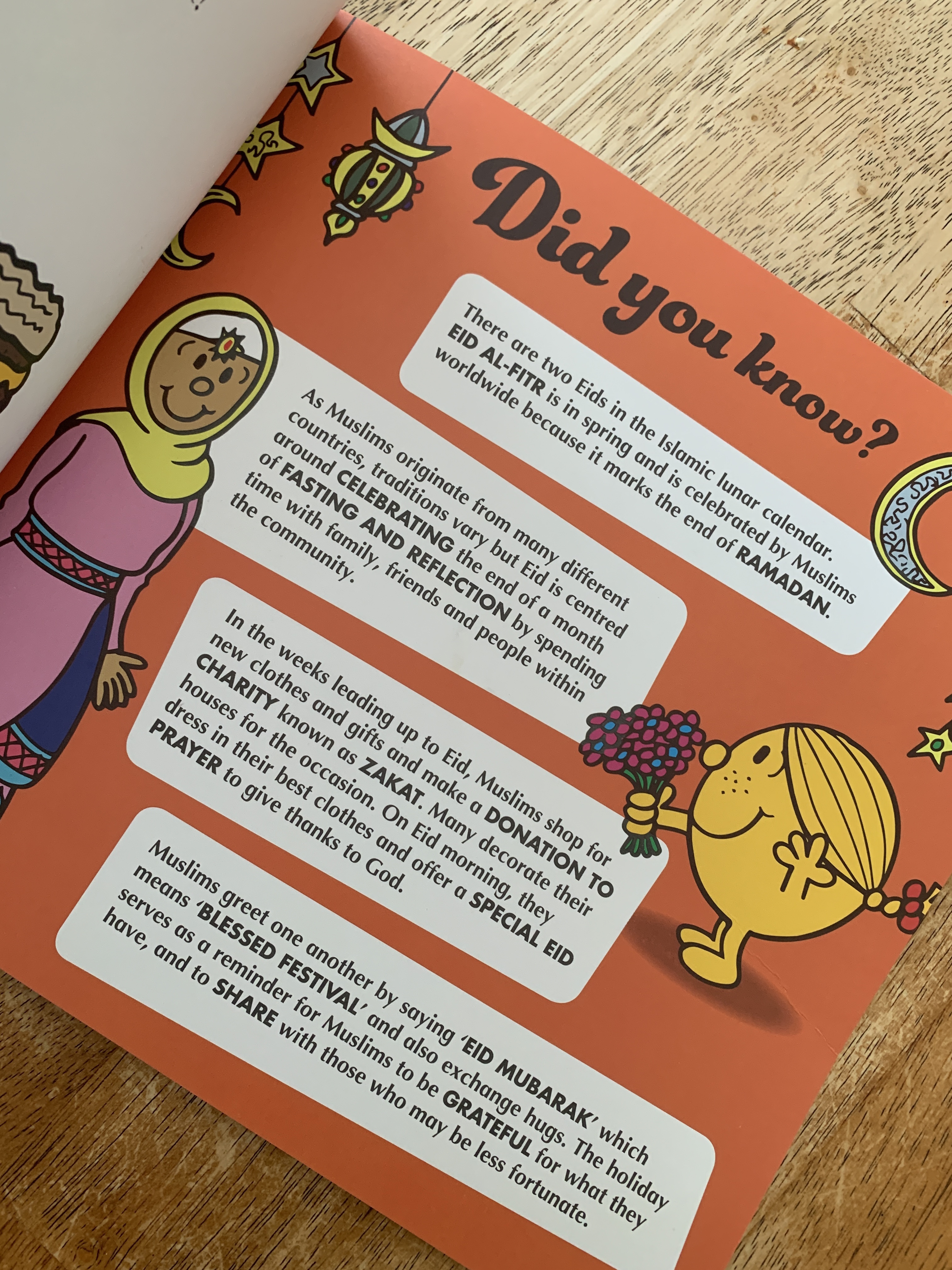
Finally, they head to an Eid fair in town and eat treats while they watch a music show.  The book concludes with some factual information about Ramadan, Eid, and Zakat.

Title is available on Amazon.