Category Archives: Story Time

The Proudest Blue by Ibtihaj Muhammad & S.K. Ali illustrated by Hatem Aly

Standard
The Proudest Blue by Ibtihaj Muhammad & S.K. Ali illustrated by Hatem Aly

blueLOVE! Yes, usually when I’m so anxious for a book it disappoints, but not this one, it warmed my heart and soul and made me smile.  In 40 pages surrounded with absolutely adorable illustrations, the reader feels the love between siblings, the strength of self confidence, the power of being true to yourself, the beauty of hijab, and the awesomeness of light-up sneakers and five cartwheel recesses.
C7E95032-E080-4057-BC93-6B25CBCAAA29

It is the first day of school for sisters Asiya and Faizah, and Faizah’s first day of wearing hijab.  The book starts out with the girls and their mom picking out a new scarf at the store.

677BD5F0-0C6E-472A-B086-05F93D4F17CC

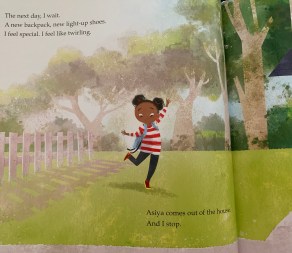
The first day of school has the girls walking to school hand in hand, Asiya in her beautiful blue scarf, and Faizah in her new shoes admiring her sister as if she were a princess.

DB80D90A-289E-4F35-A763-24526723E650

In line a classmate whisper asks Faizah about her sister, and Faizah has to find her voice to speak up about her hijab.  She then likens the blue hijab to the sky, special and regular before recalling that their mom had told them “The first day of wearing hijab is important. . . It means being strong.”

DFA253F0-16BC-464A-B630-BB93AFBFCF94

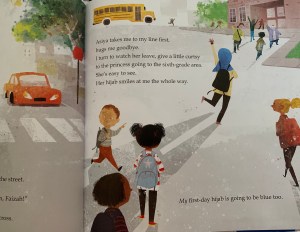
Throughout the day at school Faizah checks on her sister, sees other kids make fun of her, liken the blue to something beautiful, and then recall something their mom has told them to give her solace and strength.

06E90E71-3375-4E26-9F0A-F31DCA8058C4

As Faizah puts into practice the lessons from her mom about being strong, knowing who you are, and not carrying around hurtful words, she, like her sister finds strength.  A strength which radiates to those around them, and further connects the two girls.

C62B2893-3E2B-4628-BAAE-C195FBD3AB7A

Faizah has an amazingly sweet and authentic voice as she counts her light up steps and looks up to her older sister.  I love that the story stays on track and has its own rhythm of a school incident, a strong declaration about blue, a lesson remembered from Mama and a resolution.  With lots of mini climaxes the reader sees the strong perseverance and how being authentic will be challenged repeatedly.  The subtly of the hijab being whispered about and then proclaimed loudly is really tender and emotion filled.  Little reminders why OWN Voice stories are so important.

The illustrations are absolutely amazing on their two page spreads: the colors, tone, expressions, are perfect and a huge part of the narrative.  I love that when a boy points at Asiya, not just Faizah, but Asiya’s friends too are unhappy with the boy.  I also like that the boys being mean are not depicted clearly, but rather are shown in the shadows, furthering the point that mean words and those that spout them are not worthy of your time.

There are Authors’ Notes at the end and a picture of Ibtihaj  and her two sisters Asiya and Faizah. I think the book should be on every shelf, truly.  To be yourself and be proud of who you are is universal, as is kindness. The book does not discuss religion or mention Islamic reasons for her covering, and girls and boys alike will benefit from multiple readings of the book.


Leila in Saffron by Rukhsanna Guidroz illustrated by Dinara Mirtalipova

Standard
Leila in Saffron by Rukhsanna Guidroz illustrated by Dinara Mirtalipova

leila

I had really wanted to love this book about a young Pakistani girl living outside of Pakistan learning to love all her different parts.  Unfortunately, the book was so scattered that no point was made, no message conveyed, and sadly, no excitement at being represented in literature really felt, .

IMG_6403

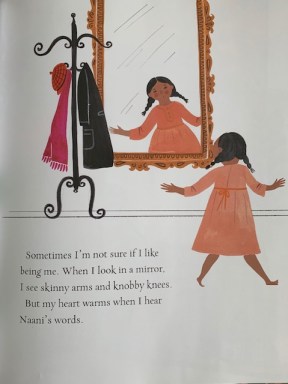
This 32 page book isn’t bad, it just really isn’t memorable.  It starts out with Leila arriving at her Naani’s house for dinner as her parents and her do every Friday.  Her maternal grandmother comments that she likes Leila’s saffron buttons.  Leila beams at this because she doesn’t know that she always likes being herself.

IMG_6404

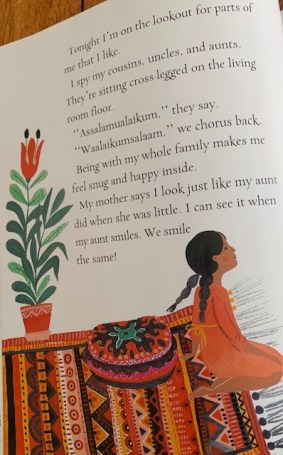
Tonight, they are joined by lots of extended family and Leila is on the lookout for parts of herself that she likes.  She feels safe with her family, and likes being told she looks like her aunt when she smiles.

IMG_6405

The book then kind of abandons the theme of finding parts of oneself to like, and moves on to cultural trinkets to enjoy.  She identifies camels on shelves and Arabic books too, and can’t wait to go on her first trip to Pakistan someday to get her own “Arabic books” and “special ornaments.”  I’m not sure why they books aren’t in Urdu, but none-the-less without any written connection to Islam, they are in Arabic, thus giving, erroneously, the reader the impression that is the language of Pakistan.

IMG_6406

Leila then helps her Naani cook which almost seems like an additional theme of the book: the passing on of traditions.  The book doesn’t really stay here though either, and has Leila running outside to get cilantro from the neighbor Miguel.  Possibly another theme in addressing multicultural neighbors or just how to be a good neighbor, is now being brought up, but nope, the book bounces back to dinner with the family.

IMG_6407

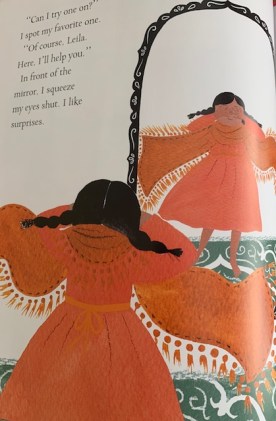
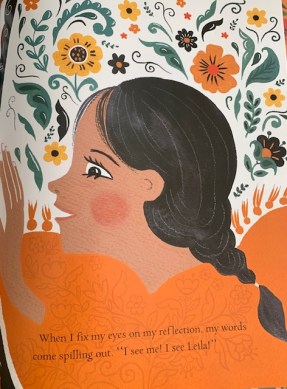
When it is time to leave, Naani invites Leila upstairs while her parents wait to leave.  Here she goes through fabric and scarves rich in color and textures and likens them to ethnic foods.  She then tries on her favorite one, but acts like she has never tried it on before or seen it before, I’m really not sure, the language is a bit awkward to me.  Anyway she opens her eyes in a surprise and likes what she sees, she likes her self, all her parts.

IMG_6408

I wish this book for preschool and kindergarteners, would have streamlined the message it wanted to convey most.  I like finding pieces of yourself and liking the completed you, but I don’t know what the pieces really are in the book.  Yes I could assume and figure it out, but I’m not 5 years old.  The book should have articulated it clearly.  Or if the book wanted to celebrate culture and family traditions, it should have stuck to that.  It really seems all over the place no matter how many times I read it.

IMG_6409

The illustrations are rich and vibrant.  They definitely give a lot to look at and the expressions on the characters faces will probably make the little ones giggle.  There are a few Urdu and Arabic words used in the story that are defined on the back cover.

IMG_6410

The characters aren’t identified as Muslim, none of them wear hijab, but they say Salam and have Arabic books, so one can assume. I picked up the book at the library and don’t regret it, but I probably wouldn’t buy it or unfortunately, check it out again.

If Allah Allah Wills by Dr. Oz illustrated by Mariya Khan

Standard
If Allah Allah Wills by Dr. Oz illustrated by Mariya Khan

if allah wills

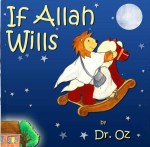
Not all books need to teach something, but when the book would lend it self so easily to dropping a fact or two, it seems like it would take it.  In 40 pages, preschoolers are taken on a highly imaginative journey to the Ka’ba, yet no information about the history of the Ka’ba, or any mention of Umrah or Hajj is shared, not even in passing.

IMG_6336

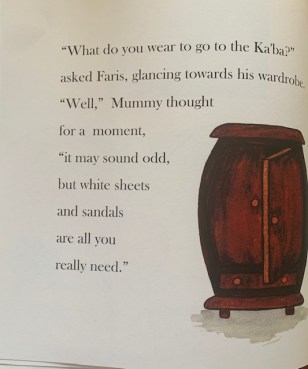
Faris wants to go to the Ka’ba but it is nearly his bedtime, so he has to act fast.  He asks his mom what he needs to wear, obviously knowing special clothes are required, but his mom prefaces the answer of white sheets as being “odd” and then adds that you need sandals.  For a book that wants to normalize Islam for children, I don’t understand why the mom would say that ihram is odd, why the word ihram isn’t used, why it doesn’t even specify the number of white pieces of unstitched cloths and why sandals would be included.

IMG_6337

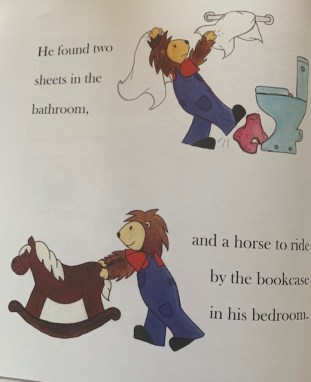
Faris then finds two white sheets, but the illustration shows him getting towels out of the bathroom (possibly showing his imagination, but kids will just think it is an error, mine did), packing some food and jumping on his rocking horse to head off for the Ka’ba.

Faris finds himself among the stars without a map and starts to worry that he won’t find his way.  He then sees a flock of birds and wonders how they know where to go.  The book however, doesn’t answer how birds know, and just has him land and find someone to ask.

IMG_6338

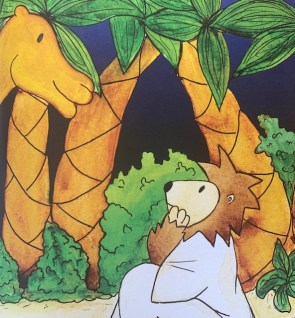
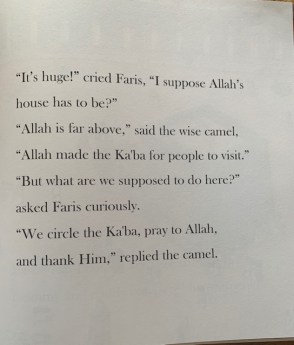
Luckily Faris finds a camel to ask, and luckily he is a nice camel and he shows Faris to the Ka’ba.  Faris is surprised at how big it is and then supposes that Allah’s house has to be.  But he asks it as a question, which makes it a little off grammatically.  The camel points out that Allah swt is above and that the Ka’ba is for people to visit.  Faris asks what is supposed to be done at the Ka’ba and the camel answers, “We circle the Ka’ba, pray to Allah, and thank Him.”  This seems like a great place to sneak in some facts about who built the Ka’ba and why or mention Hajj or Umrah, it seems so misguided to just say we circle it.

IMG_6339

Faris makes some prayers that he can return for real one day with his parents before he finds a place to eat his snack and share his food with his camel.  It is nice that he shares with his new friend, but odd that when they part Faris asks him his name and he says he doesn’t have one.  Maybe give him a name, and detail its meaning or don’t include the exchange at all.  I seriously don’t understand the purpose of the exchange.

IMG_6340

Faris makes is home with a crash and his mom tidies him up and they say InshaAllah that Faris’ prayer inshaAllah will come to fruition.

The book has a great premise of imagination and tying in the Ka’ba, but truly there is no information about Islam or the Ka’ba or even Allah swt, it gives a mood of worship, but that is about it.  I get that it is for little kids and the book is supposed to be whimsical and light, but sneak in some facts, kids can handle it.

As for the illustrations, they are just ok.  They would have benefitted from being a little smoother and not looking home-done, but there is nothing terribly wrong with them aside from the towel and sheet imagery.    The glossary cover and large font inside is age appropriate, some pages are a bit text heavy, but overall sufficient.

IMG_6341

The Adventures of Nuh’s Ark by Khadijah Khaki illustrated by Tashna Salim

Standard
The Adventures of Nuh’s Ark by Khadijah Khaki illustrated by Tashna Salim

nuh

If you are looking for a comprehensive or somewhat detailed story about Prophet Nuh (AS), this book isn’t for you or your child.  If you want a silly story with hilarious animals to introduce your little one’s to the concept of the animals boarding Nuh’s Ark as a commandment from God, then order this book already!

IMG_6160.jpg

This 24 page rhyming hardback 8×10 book written for preschoolers through early readers takes the idea of animals boarding Nuh’s ark and tells what it is like in a fictional account narrated by the animals themselves.  And focuses on a pair of confused koalas as to what is going on.

IMG_6161.jpg

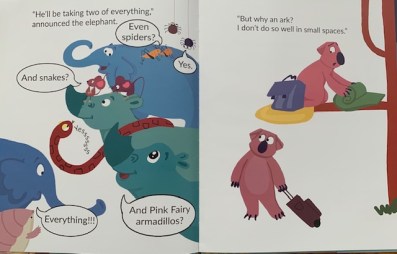
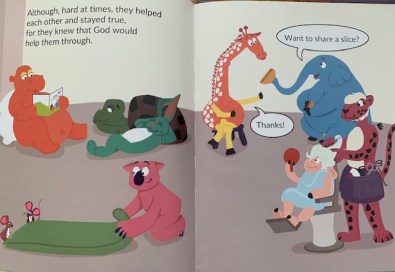
The poor koalas, are not prepared for rain and don’t do well in small spaces.  They pack too much and can’t keep up, but luckily the other animals are nice and they all work together until it stops raining and they can disembark on to land.

IMG_6162.jpg

The pictures are cute and comical and bring the text to life.  With the conversation bubbles adding to the story, even the pages that are a bit text heavy keep the younger listeners engaged, as they know something funny is about to be said.

IMG_6164.jpg

Also, the book is one in a series or three, so far, and the characters are the same ones found in the Adam and God’s Creation book as well (might be in the Ibrahim one too, but I haven’t read that one), making the nameless animal characters actually memorable as they say silly things, and are pictured being rather unique too.

IMG_6163.jpg

The books do not use the word Allah, but do mention God, and the Arabic of Nuh, rather than Noah, and there is mention of why there is a flood and how long it will last, but nothing quoted directly from the Quran.

My older elementary and middle school kids found the books silly as well, and giggled their way through.  It is a a fun read that even adults won’t mind repeating.  If you want a more Prophet story retelling, Migo and Ali Love for the Prophets is a good non fiction book, and it, along with the three book Lunar Learners serious can all be found at my favorite supplier Crescent Moon Store.


Owl & Cat Go To Hajj by Emma Apple

Standard
Owl & Cat Go To Hajj by Emma Apple

hajj.png

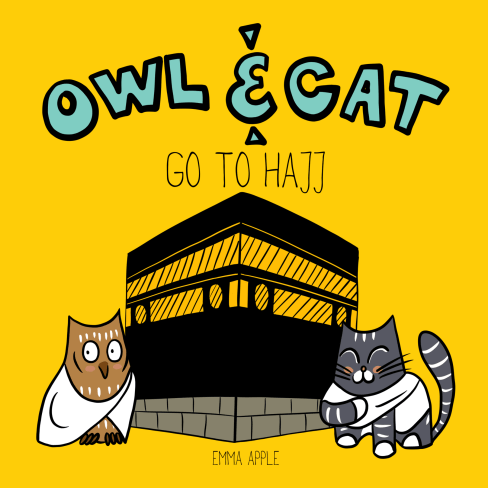
I thought I knew what this latest Owl & Cat book would entail.  I figured like the Islam is… and Ramadan is… books, this book would, in its simplicity, poignancy, and repetitive sentence structure convey the emotions and importance of Hajj.  So imagine my complete surprise when the 78 page book with two familiar characters actually detailed day-by-day the steps of Hajj for young preschool aged readers and listeners and up.

IMG_6029

Owl and Cat show what a pilgrim does on each of the 5 days of Hajj.  Each section is separated by days with color tabs on top to keep the steps clear.  The illustrations are a little crisper than in previous books which resembled little doodles a bit more to me.  And while the simplicity of sentence structure, length, and diction remains, the book is a lot more factual and didactic than sentimental, especially compared to the other books in the series.

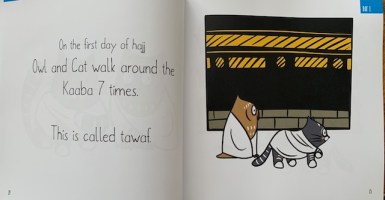
The book starts off with a a list of contents and an informative page about Hajj.  Owl and Cat then pack their bags, and travel by plane to Mecca. Day one has them putting on ihram, performing tawaf, sa’iy, and heading to Mina.  Some details about what each step means are given, but nothing overwhelming or too wordy.  The illustrations show what the text means and offer a lot to the understanding, if the concepts are foreign.

IMG_6026

Day two is going to Arafat, and standing in prayer at Jabal ar-Rahma.  They then head to Muzdalifah to rest and collect stones.  It also mentions that “many Muslims who are not on Hajj will fast.”

IMG_6025

Day three takes them back to Mina to throw their pebbles, make sacrifice, cut their hair, and change out of their ihram before they do their second tawaf, sa’iy, and travel back to Mina for Eid.

IMG_6027

Day four is in Mina stoning the jamarat as is day five before they travel back to Mecca to do the final tawaf and drink Zamzam water before their Hajj is complete.

IMG_6028

The book would probably work for non Muslims in that it isn’t preachy, but some base knowledge would be needed as there isn’t a glossary.  The book is pretty thorough for a children’s book, but I think the information is needed.  Many children do stimulations of Hajj or read simplified versions and don’t realize there is some back and forth and many of the actions are done more than once, and that it is a lot of actions, steps, and traveling in a short amount of time.


Two Pigeons on a Pilgrimage: A Hajj Story by Rabia Bashir illustrated by Aisha Dean

Standard
Two Pigeons on a Pilgrimage: A Hajj Story by Rabia Bashir illustrated by Aisha Dean

pigeons

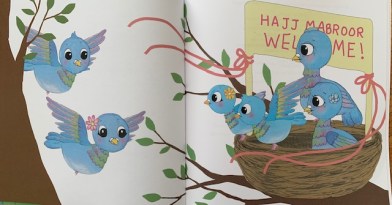
An adorable 40 page paper back book about Hajj aimed at ages 3 and up and told from the perspective of two Pigeons performing Hajj with humans.

IMG_5976

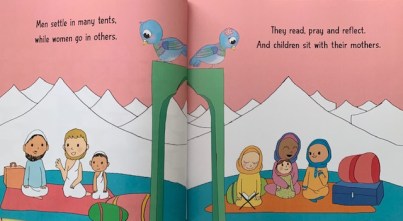
A boy and girl pigeon say Bismillah and spread their wings as they head off to Hajj.  They see pilgrims at the airport wearing ihram before they start circling the Ka’ba like the humans below.  After seven rounds they go to Ibrahim’s Station before they are off to Safa and Marwa while pausing to sip on Zamzam.

IMG_5977

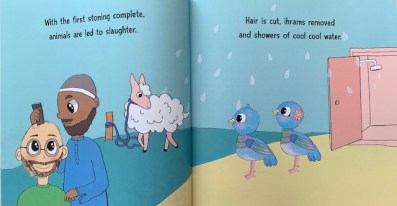
With Umrah complete they are off to Mina, then Arafat where duas are made.  They then go to sleep under the stars in Muzdalifah, before they slaughter an animal, cut their hair, shower, and throw stones at Shaitan.

IMG_5978

The concepts are simplified, but told in sequential order of how hajj is performed with very little commentary or embellishment.  The lines rhyme, so there is some creativity thrown in to keep the pattern and facts in line.  The font size, spacing and overall presentation of the book is good for reading at bed time or in small groups.

IMG_5979

The best part of the book, are the pictures.  They are sweet, colorful, and engaging and to find out at the end that they are done by a 12 year old girl is an extra added bonus.

IMG_5980

The book is factual in the steps for hajj, but because it doesn’t have a glossary, or give much information about why Muslim’s perform Hajj or details about the different acts of worship, it probably is better suited for Muslim kids that will hopefully know some of the answers, or have access to an adult who can answer and fill in the blanks.

IMG_5981

Overall, a good addition to books about Hajj to share with your little ones.  I just wish it would have come out a little bit earlier, as the Hajj starts in a few days and the book just came out.  If you can’t find it this year, inshaAllah get a head start for next year as I think the book has staying power and will be read more than once as both a learning tool, and fun book requested by kids.

IMG_5982


Secret Recipe Box by Helal Musleh illustrated by Nalan Alaca

Standard
Secret Recipe Box by Helal Musleh illustrated by Nalan Alaca

recipe-box.jpg

The publisher suggests this book for ages 4 and up, but I think it’s a bit long (30 pages) and detailed for that age group, and first grade and up will benefit more from this heartfelt story.

IMG_5872.jpg

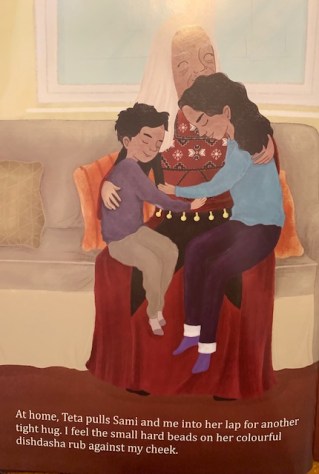
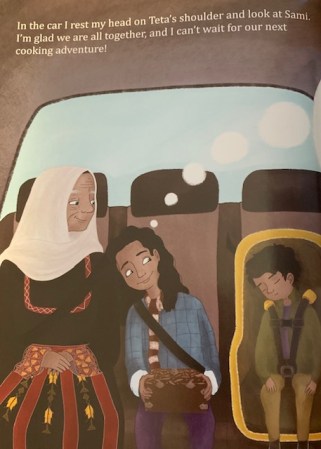
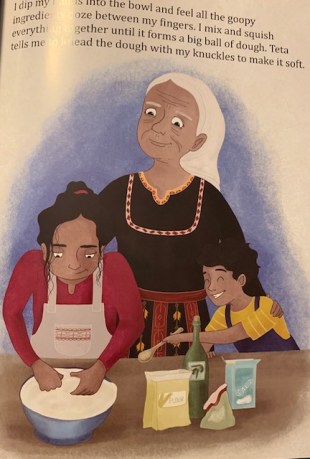
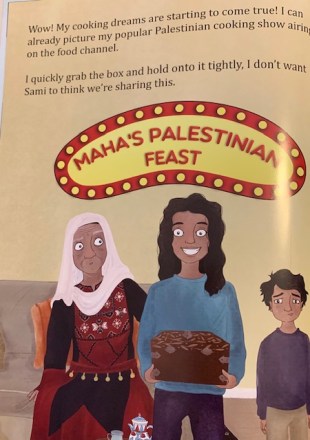
Maha is excited her Teta is moving from Palestine to live with her, her brother Sami, and parents in Canada.  Maha dreams of being a chef on a famous cooking show, and her Tata and her secret recipes will be a great way to practice.

IMG_5873.jpg

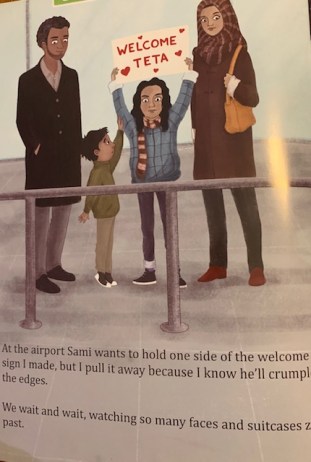
Her little brother Sami is always in the way though.  Whether it is wanting to hold a sign Maha has made, or is wanting to cook with her, she is annoyed by him at every turn.

IMG_5764.jpg

As Maha listens to Teta’s stories and learns about her life in Palestine, she starts to change in her approach to Sami and realizes that family has to take care of each other.

IMG_5874.jpg

After a day of cooking together, Maha, Sami, and Teta have made too much food and decide to go and share it with those in need at the soup kitchen.

IMG_5763

The book addresses kindness, changing, compassion, immigration, taking care of one another, multi generational lessons and love, stories, life lessons, and some highlights of Palestinian culture, food, clothing, and tradition.

IMG_5761

The book is warm and well done, with the exception of a few of the pictures which seem a bit off to me.  Overall, it is a sweet story that presents with a lot of lessons, but doesn’t force them upon the reader.  The character growth is gentle and subtle and will resonate with readers.

IMG_5762

The characters mention Halal food, and the grandma wears hijab even in the house, where the mother is shown wearing it at the airport, but not in the home.  The book would work for Muslim and non Muslim readers.

Allah Tells Me… by Ali Gator (Firhana & Ahmed Imam)

Standard
Allah Tells Me… by Ali Gator (Firhana & Ahmed Imam)

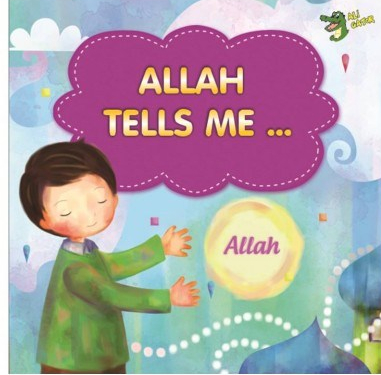
Allah Tells Me - web-500x500

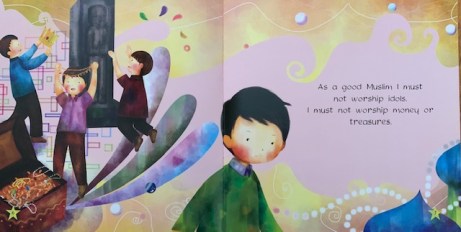
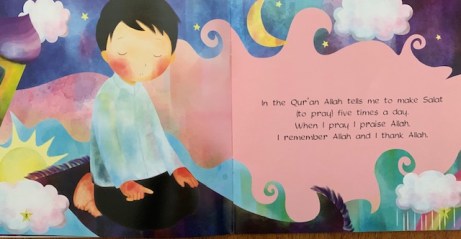
This 28 page, thick glossy full-color book for 3-8 year olds, introduces and describes the five pillars of Islam in an age appropriate manner.

IMG_5648.jpg

The book is fact based and informative, but the illustrations and voice of the text reads in a gentle inviting tone that will appeal to small children.  There is no story, but rather a boy that takes you each of the pillars and talks to the reader.

IMG_5649.jpg

The short paragraphs about shahada, salat and wudu, fasting, zakat, and hajj are detailed and will need some additional explaining if used to teach kids.  If you are using it to just introduce general concepts, the pictures and sentences will suffice.

IMG_5650.jpg

The book is in English but does use Arabic words to describe each tenant with in-text translations in parenthesis, as well as footnote translations on occasion.

IMG_5651.jpg

The book is set up as a tool for parents and teachers to use when educating young Muslim children and thus some hadith and ayats are present at the beginning and end, as well as some directions, games and activities.

IMG_5652.jpg


Yan’s Hajj: The Journey of a Lifetime by Fawzia Gilani illustrated by Sophie Burrows

Standard
Yan’s Hajj: The Journey of a Lifetime by Fawzia Gilani illustrated by Sophie Burrows

yans hajj.jpg

With less than a month until Hajj, this book should definitely start making an appearance in your children’s story selection rotation.  The focus is not on the parts of hajj, but rather the desire and intense yearning to go for the sake of Allah (swt).  Granted, it doesn’t take much to get me to cry these days, but this 27 page book for ages 5 and up, got me emotional.  Going for hajj is always something to plan for and hope for, and the sweetness of the reminder that we plan, and Allah plans and Allah is the best of planners is so beautifully brought to life, that I benefitted from the reminder and my kids from the lesson.

IMG_5485.jpg

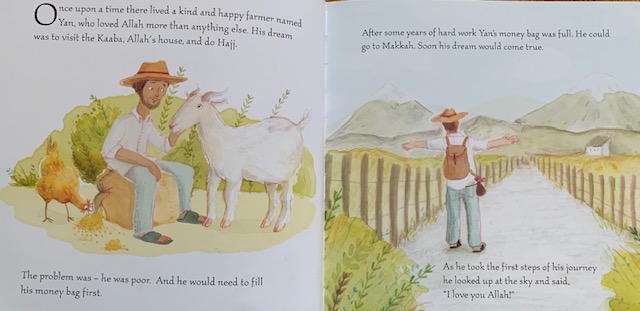
Yan is a farmer, a poor farmer, who loves Allah and wants to go for hajj more than anything else.  So he decides to work hard and fill up his money bag so that he may go.  After years of hard work his bag is full and he begins his first steps in his journey proclaiming his love for Allah.  After a few days of walking however, he comes upon some sad children who have recently lost their school to a fire.  Yan, uses his money and time to fix the school and returns back to his farm to start saving up again to go for hajj.IMG_5486.jpg

When his bag is full again and he sets out again, he is met by an injured boy who is being yelled at by his owner.  Yan, once again reaches into his money bag to generously do the right thing, in this case to pay off the boy’s debts and takes the boy home with him to be nursed back to health.

IMG_5487.jpg

After some time he again has a full money bag and sets off for Hajj.  Along the way he finds a village trying to build a mosque and after two months of helping with the funds and offering his own labor, the mosque is complete and Yan returns home.

IMG_5488.jpg

Now Yan is old, and after many years he looks in his money bag and it is not full and he sadly admits he cannot do hajj.  But then the boy he saved, Habeeb, returns with a horse cart to take him for hajj and they pass through the village where he repaired the school and is greeted with rose petals and gifts of ihram, they then pass by the mosque he helped build and the villagers gift him with food and water, they then arrive at Habeeb’s house and he is given a bag filled with money and at long last Yan’s dream comes true as he sees the Kaaba.

IMG_5489.jpg

The book shows how steadfast Yan’s love of Allah is and how generous and patient he is in pursuing that love. The illustrations of him aging are truly touching and gentle.  In some ways it reminded me of Shel Silverstein’s The Giving Tree, but with a happier ending, in bringing a large grown up concept down to size and presenting it in a genuine way.


Bilal Cooks Daal by Aisha Saeed illustrated Anoosha Syed

Standard
Bilal Cooks Daal by Aisha Saeed illustrated Anoosha Syed

bilal cooks daal

Aside from me desperately wanting to get Bilal’s family a pressure cooker this 40 page book does a good job, and follows a reliable tradition of using food to introduce a “foreign” culture while simultaneously showing universal themes that show how similar we all are when it comes to family, meals, friends and feeling loved.  

Bilal’s favorite food is daal, lentils, and when he is out riding his bike with his friends, his father calls him in to help him make it.  Confused as to why Bilal’s dad would need to start dinner so early in the day, Bilal’s friends join in, in helping make the slow cooking traditional asian subcontinent dish.

IMG_5306

They line up the spices, they put it in the pot, and then they wait.  They put their shoes back on and play hopscotch, they go swimming, they go for a hike and it still isn’t done. 

IMG_5308

At one point Bilal is worried his friends won’t like it, but after waiting all day and gathering more friends at each activity, when the time finally comes they all dive in and love it.

IMG_5309

I love the diversity of the friends and that the dad is cooking and involving his son.  I also like that everyone is willing to try something new and give it a chance.

IMG_5307

The book would work for all kids ages 4 and up with the expressive colorful illustrations, diction, and amount of text on the page.  The book is 9×8 so it works well in small groups and at bedtime.  

IMG_5310

If you eat daal your kids will love seeing themselves in the pages, if you have never had daal there is a recipe at the end following an Author’s Note. 

IMG_5311

There is nothing religious in the book, and anyone from India, Pakistan, and Bangladesh could easily take ownership of the dish and story.  The Author’s note mentions that Bilal’s grandparents are from Pakistan and with a name of Bilal chances are he is a Muslim character.