Category Archives: 5th grade and up

The Prince of Stars: Ulugh Beg’s Quest to Map the Stars and Seasons by M.O. Yuksel illustrated by Zelma Firdauzia

Standard
The Prince of Stars: Ulugh Beg’s Quest to Map the Stars and Seasons by M.O. Yuksel illustrated by Zelma Firdauzia

This gorgeous 40 page picture book biography is both flowing in its storytelling and informative in its sourced details of a fairly unknown, underappreciated figure.  I was humbled reading this book and learning about the accomplishments of someone I had never heard of before.  Truly this book, bringing to the attention of our young and old ones alike, such a remarkable figure, is a much needed gift.  The publisher suggests the book for 4-8 year olds, but I think it also will appeal to older readers familiar with Copernicus, Galileo, and Ptolemy and who will appreciate the efforts driven by curiosity from someone so long ago. The diction in a few lines did give me pause, but nothing that overshadows how well the author has once again proven to master the storytelling of non fiction Muslim accomplishments in an engaging, accessible, exciting way for today’s audiences.

The book opens with a map of the Timurid Empire in 1405, before showing the reader a young prince, Ulugh Beg, gazing out and the stars and wondering how many there are.  The next spread makes no sense to me, but I acknowledge others might not be bothered, how can the young boy be watching days fade into weeks, into months, into years, and then wonder how many days are in a year? Seems that either those terms weren’t yet around, or some details about the generalized meaning made him curious about the specifics.  Either way, him wanting to know how many days in a year and the changing of seasons, along with counting the stars are the questions he wonders about as a child and works to answer throughout his life.
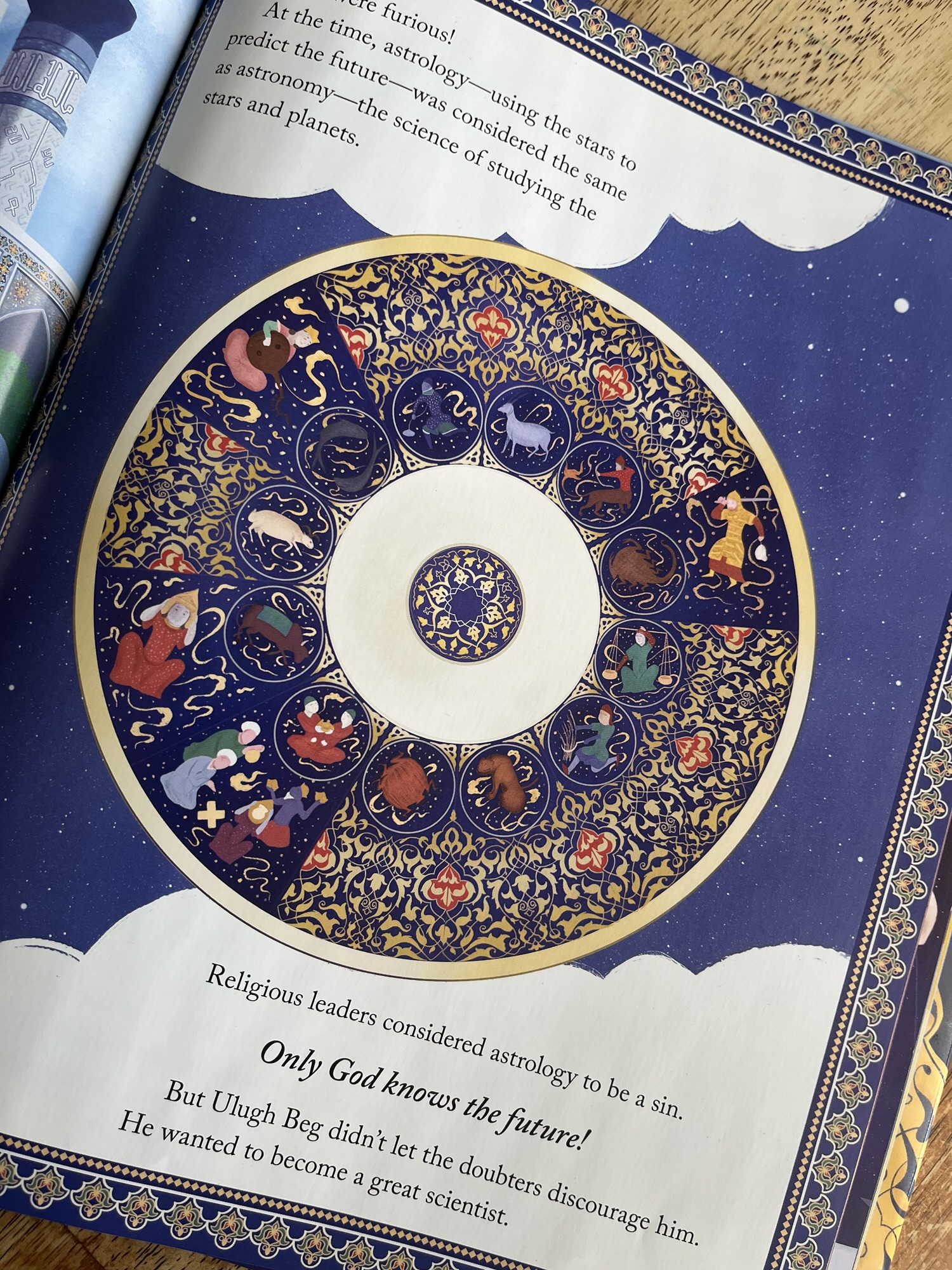
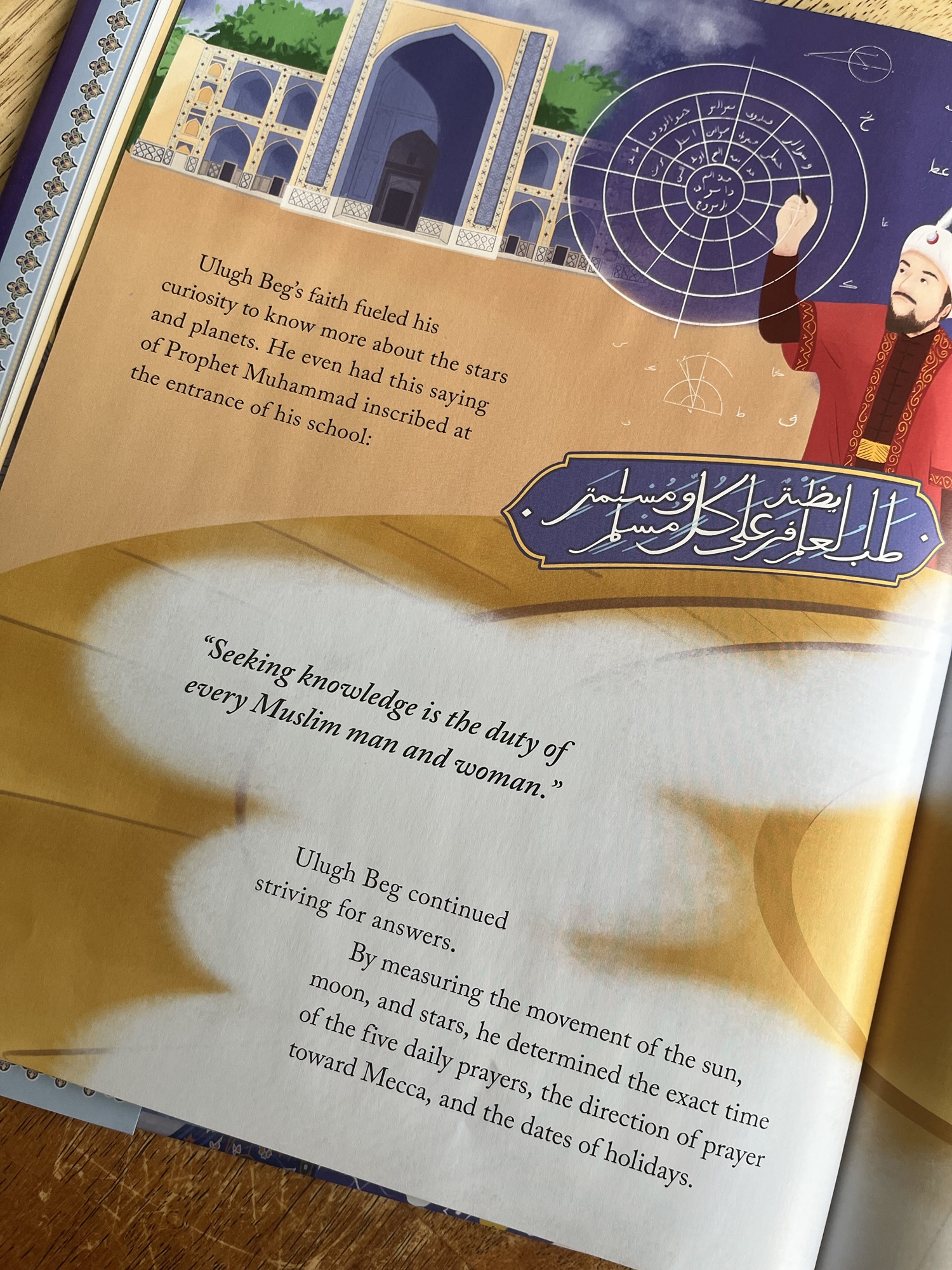
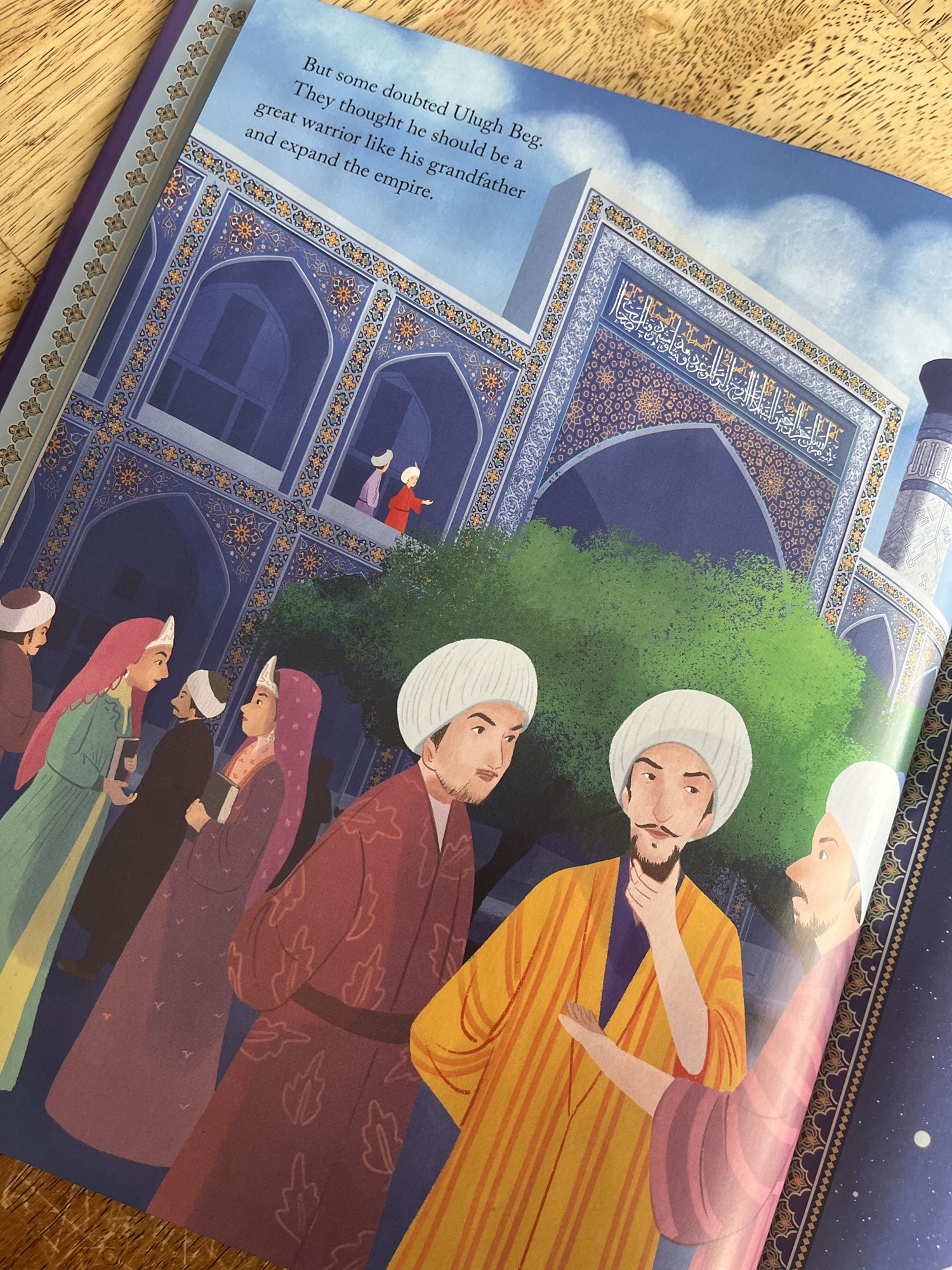
The king of the Timurid Empire, Ulugh Beg’s grandfather, insured his intelligent grandson had the best teachers and was allowed to travel, learn, and follow him curiosity.  At 15, when Ulugh Beg became the ruler of Turkistan, he built a madrasa and invited scholars, artists, students, philosophers, and inventors to attend making Turkistan “a mecca of learning.”  Yes, the usage of mecca here made me laugh.  I know it is appropriate, but it seemed a little on the noise in a book where Mecca, the direction we pray is also mentioned.  The book then details the controversy of studying the stars, as astrology and astronomy at the time, were seen as one and the same.  And with only God knowing the future, he had to assert that he was curious about the science of the stars and planets.
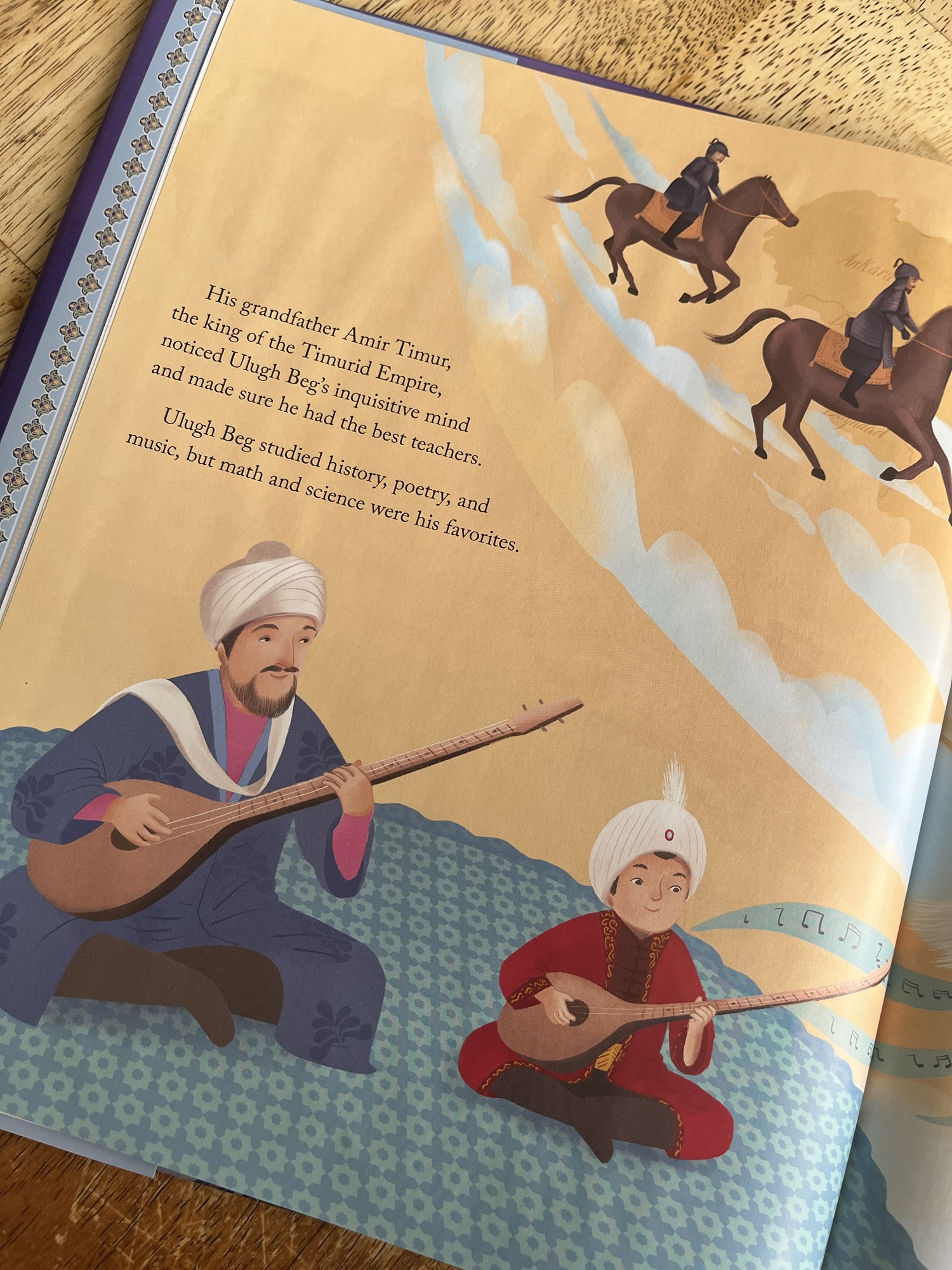
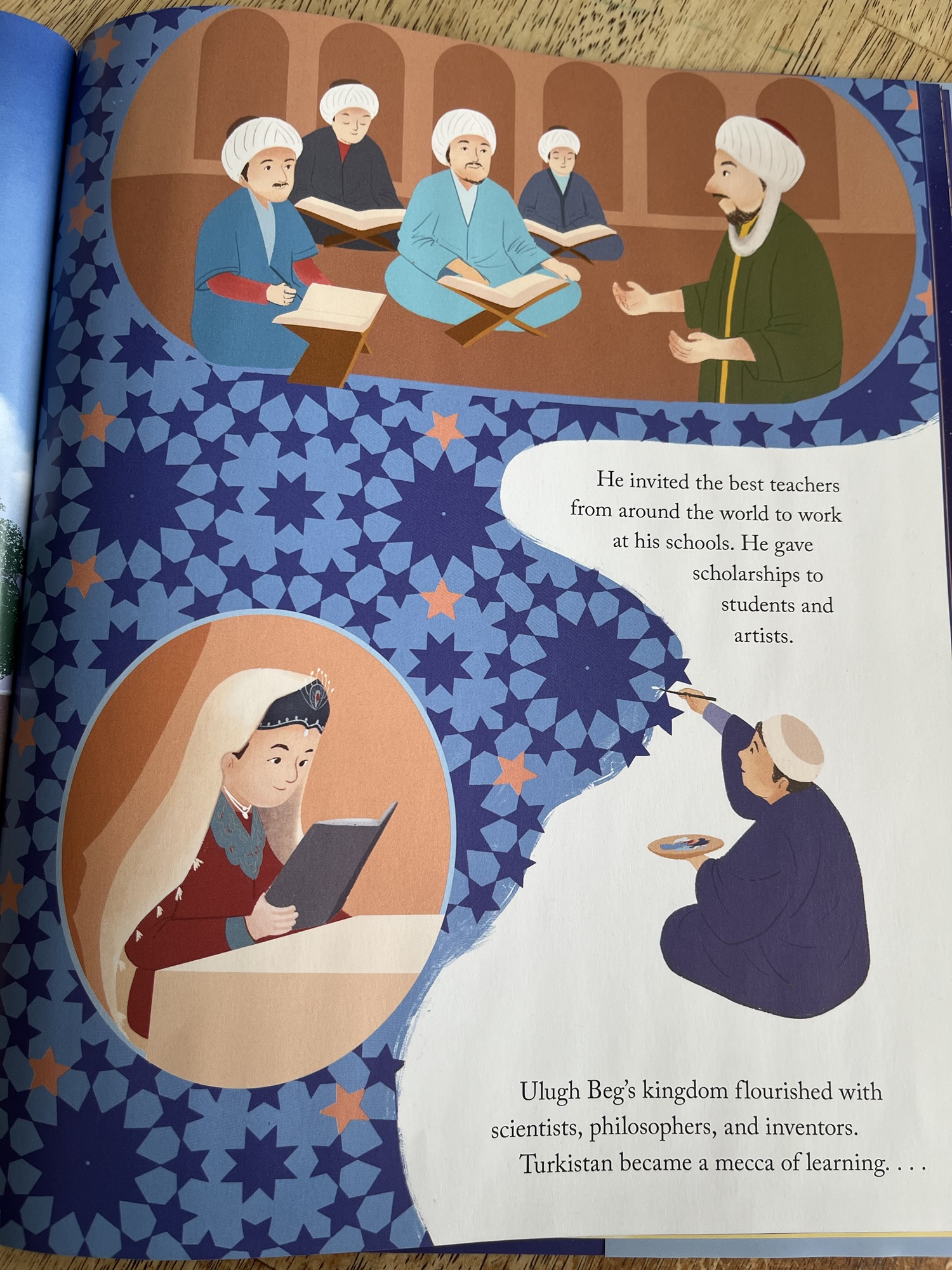
I love that faith and Islam is centered and that the inscription on his school is “Seeking knowledge is the duty of every Muslim man and woman.” But it alludes that this is a hadith, and while I agree it is inspired by a saying of Prophet Muhammad (saw), I think adding the man and woman part, where to the best of my knowledge the hadith is just “every Muslim,” is something that should be clarified. None-the-less, that it was Ulugh Beg’s motto, so to speak, and that he made a point to articulate “woman” is remarkable.  He determined the exact time of the five daily prayers, the direction to Mecca, and the dates of holidays.
He also built the world’s largest observatory, and numerous tools, including the Fakhri sextant to measure the location of the stars and movement of planets.  He encouraged being challenged and challenging others’ findings, and over 17 years wrote a star catalog of more than 1,000 stars. He answered how many days in a year, down to the seconds, why the seasons change, and inspired future astronomers and scientists.

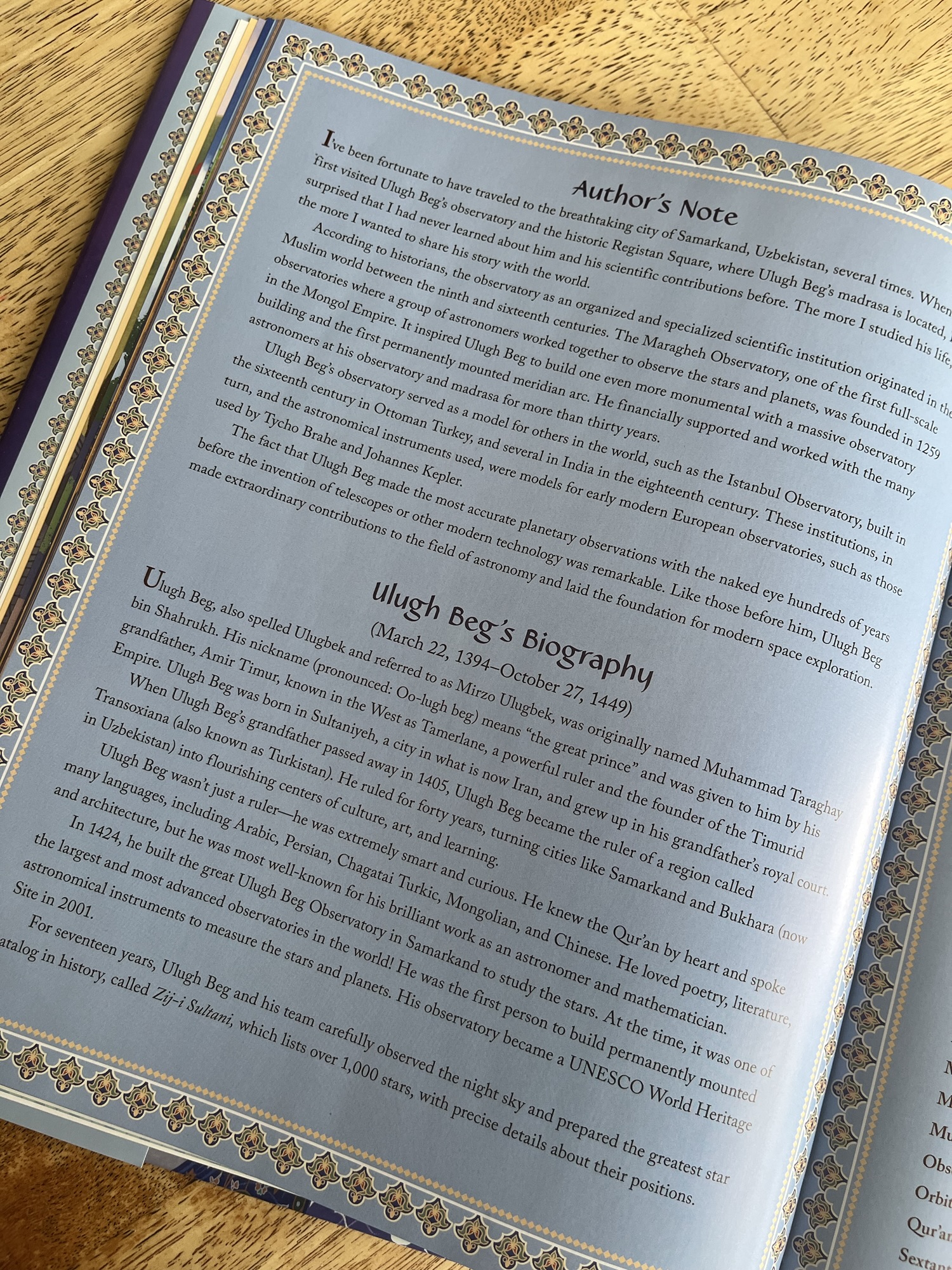
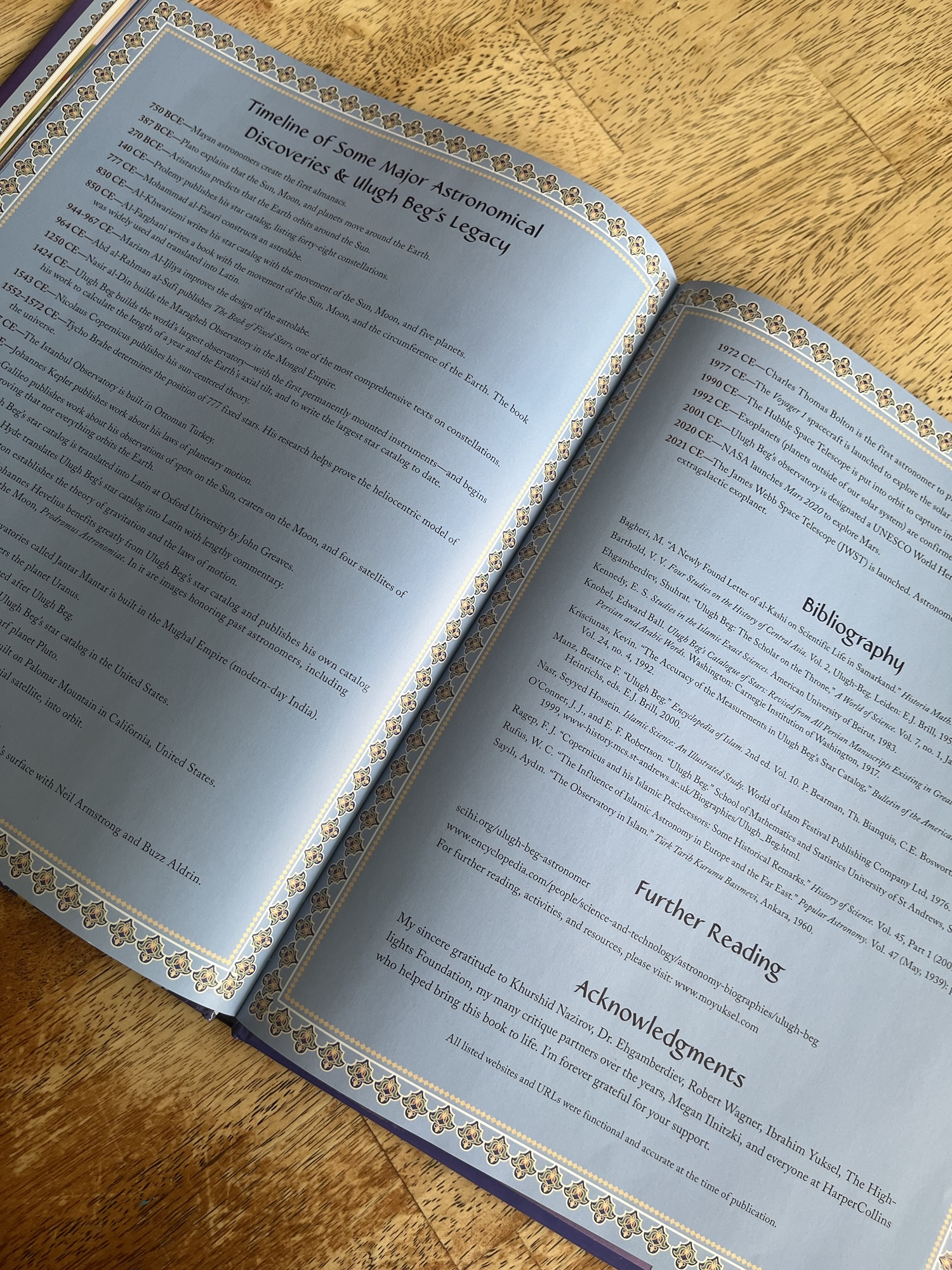
As incredible as the story is, the backmatter is equally impressive with an Author’s Note, Ulugh Beg’s Biography, a Glossary, Astronomical Timeline, Bibliography, Further Reading, and Acknowledgements.
The illustrations are the cherry on top, somehow I don’t love the cover, but the inside spreads are nice and match the tone of the words and the detail of what he was accomplishing.  The book is on preorder and I hope, teachers, librarian, and families will prioritize learning about him, and giving him credit for what he helped us to understand, about our world.

Tyger by SF Said illustrated by Dave McKean

Standard
Tyger by SF Said illustrated by Dave McKean

I don’t know that I’ve ever read a book like this 304 page middle grade fantasy, dystopian, highly illustrated adventure. It delves into philosophy, alternate universes, slavery, racism, politics, magic, identity, friendship, betrayal, human rights, education, following your dreams, saving the world, and a talking immortal tiger. It started a little stilted for me, but as the book progressed, I began to see that a lot of detail about all the above mentioned threads would make for a very adult, very lengthy read, and this is meant for 9-12 year olds, albeit they would need to be able to handle the darkness of the book at times, and caregivers, be aware there is a public hanging of a child. The author is Muslim, and the protagonist and a side character identify as Muslim.  There is not much about Islam, or shown in practice, but that they are afraid to learn and practice their faith is mentioned briefly. I think kids will enjoy the read, and not get hung up on threads unexplored as I did.  The illustrations really make it a book that feels exciting to spend time with, and one that will linger with the reader.  I look forward to sharing it when it releases soon in the US, as it was published in 2022 in the UK.

SYNOPSIS:

In short the book is about a boy, Adam, living “in an alternate London where the British Empire hasn’t ended and slavery was never abolished.” In a partitioned off Ghetto as a minority from the vague “Middle East,” who is unable to go to school, or even draw, he makes deliveries for his family to help keep them afloat. During one such delivery he encounters a tiger, an animal like so many others that is extinct, her name is Tyger, and she speaks.  She is an immortal searching for Guardians to help her heal and open a portal to the city.  When Adam, who is immediately connected to her, cannot find a Guardian, she begins to train him, time is short and when he discovers his friend Zadie, short for Scheherazade, has some training from her father, the two set out to open the doors of perception, imagination, creation, and  revelation, to save the day.

WHY I LIKE IT:

I really like that this book opens up larger discussions about society, self, literature, imagination etc, and can really be adapted to mean different things depending on what the reader brings to it. The book addresses these themes in a way that doesn’t talk down to the reader, and in many ways allows the simple bad guy of the story to not be the takeaway point, but rather the journey of understanding perspective, points of view, empathy, creating something, and hope to be far more important.

The identity of the characters being Muslim initially was just a label, one that just made Adam and Zadie more “other,” but a few cleverly crafted sentences about hiding their names, their skin color, and whether it worked or not, allow the reader to reflect on if denying yourself to appease others is effective or not, or rather more importantly knowing when and in which situations it could be a benefit or a selling out of who you are.  Zadie and her father seem to practice, and one point Solomon ( Suleiman), offers his prayers, he says Assalamualaikum and Bismilliah. Adam and his family on the other hand, have hidden their faith so as to fit in better, and thus it is simply an identity label.

I liked that the illustrations weren’t just stunning in their own right, but also highlighted the mood, and metaphysical elements of the story.  I feel like I could teach not just a few lessons on this book, but dozens, and who knows if they would be correct, but I think this book would be fantastic as a read aloud in a classroom for the story at hand and for the discussions.  The darkness, the excitement, the hope, really gripped me, and while I could opine on plot holes and lack of articulation, in some key scenes, I appreciate that over explanation would take away from all that the book gets right.

FLAGS:

Racism, oppression, colonialism, slavery, hanging, power imbalance, betrayal, lying, sneaking, fighting, killing, magic, fantasy elements.

TOOLS FOR LEADING THE DISCUSSION:

Where to even start, this book needs an educators guide, stat. I looked online and couldn’t find one and I hope that will be corrected soon because if you read my thought above, you know there is a lot to discuss.

Kareem Between By Shifa Saltagi Safadi

Standard
Kareem Between By Shifa Saltagi Safadi

img_3395-1

It doesn’t matter how many Word documents you read, Goggle docs you add comments to, and screen shots you revise; to hold a physical book in your hands that you have been blessed to observe from the sidelines through numerous revisions, is mind blowing.  Reading the final version from page 1 to page 324, plus the backmatter, has left me at a loss for words with tears streaming down my cheeks. I truly cannot imagine the book any other way. All past drafts and storylines, were just stepping stones to get the book to this version, and as a fan of literature my whole life, to see this metamorphosis in real time has added to my respect and admiration of authors.  Enough about me though, this review is of the middle grade novel in verse that tells the story of Syrian American Kareem, a loveable boy caught in between choices, siblings, friends, labels, and global acts beyond his control.  He makes mistakes, he tries to make things right, and at the center of it all is his Islamic identity, love of football, and genuinely good heart.  I am biased in that I have self appointed Kareem as my nephew, but even after dozens of readings, I was moved to tears three times during the course of this reading.  I made my teens read the book and they loved it, and like them, we hope we get more Kareem in the future.

img_3541-1

SYNOPSIS:

Kareem loves football, particularly the Bears, and dreams of seeing his Arabic name on an American jersey one day in the NFL.  Unfortunately, he hasn’t made the school team, his best and only friend Adam has moved away, and the coach’s son is offering to talk to his dad for Kareem in exchange for some school help.  Add in a new Syrian kid at school, his mom going to Syria to take care of his grandfather, and the fruition of Executive Order 13769 aka the Muslim Ban, and seventh grade has Kareem scrambling on every down to say the least.

img_3543-1

WHY I LOVE IT:

The football framing, the literary inclusions, the Arabic, the Islam, all combine with such tangible heart to create a seamless read both as a compelling story and as an example of literary craft.  The language is on point and intentional, that even if you don’t know the character or novel referenced, the Arabic words included, or football terminology used, you will be invested in the characters and plot, and find yourself cheering for Kareem.  Often debut authors show promise, but their stories have plot holes, or pacing issues, or inconsistencies, that is not the case with this book.  The crumbs are there that tie everything together, the depth of the characters’ personalities reveal how developed they are, and the timeline keeps the book moving forward.  There are no dry or slow spots in the entire novel, it is easily read in one sitting as you find yourself nervous for Kareem, and curious how it will resolve.

Boys and girls, Muslims and non Muslims, Arabs and non Arabs, all will find themselves drawn to this book, and thinking about the characters, particularly Kareem, long after the final page is read.

img_3544-1

FLAGS:

Some stress and anxiety with missing parents.  Death, bullying, cheating, fighting, lying, racism.

img_3540-1

TOOLS FOR LEADING THE DISCUSSION:

The book is a solid middle grade, but the quality of writing and engaging plot makes it work for a middle school book club read as well.  I cannot wait to share this book widely.

Preorders speak volumes and I truly hope if you are able that you will preorder a copy, you can do so here.  Requesting your local public library to shelve the book is also a tremendous help to signal to publishers what type of stories and OWN voice authentic representation consumers will support.

Daughters of the Lamp by Nedda Lewers

Standard
Daughters of the Lamp by Nedda Lewers

img_2600-1

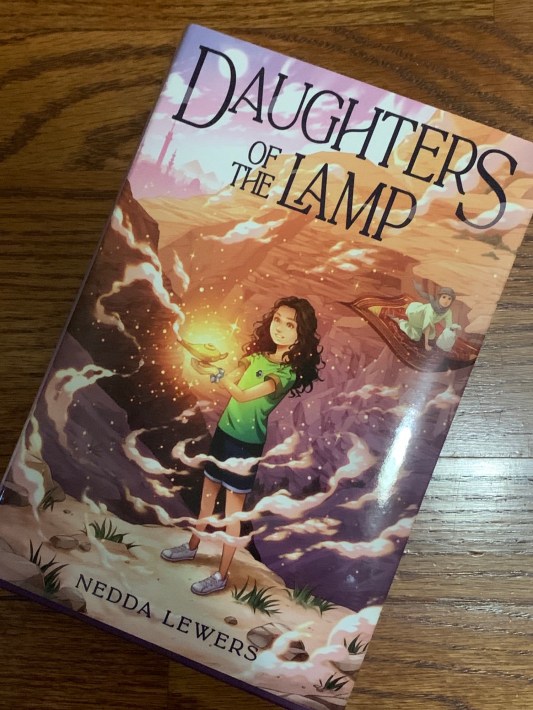
This 352 page middle grade fantasy grounded in Egypt and America didn’t initially impress me.  In fact the first few chapters felt a little forced, the voice a little off, and the threads of Islam were making me a little bit nervous, but I was advised to keep reading by a trusted friend (@muslimmommyblog), and so I did.  And I really don’t know when it happened, perhaps when Sahara finally got to Egypt, but truly the slow quiet book won me over.  It has a lot of heart and I found myself throughout the day thinking about the story, trying to sneak a few minutes here and there to read just a little bit more, and staying up past my bedtime to finish.  That isn’t to say the book is perfect, but it is a solid read despite some plot holes, and a 12-year-old protagonist who seems to not really practice Islam even though her dad and family do. If you do not feel that Islam allows for fantasy books with magic, then steer clear of this.  If you are fine with it or on the fence, know that the book quite often articulates that Allah swt is always the creator in charge of everything, but there are magical elements, fortunes told, and evil deception.  I’ve never seen anyone read tea leaves or coffee grounds, let alone believe in them, if it is something that culturally you have seen and find reflect sihr, know that it is present in the story, but it absolutely clarifies, that Allah swt is the one who controls the future.  I don’t think any reader of any age would think this story is or could be real.  I would be comfortable with middle graders reading this book.  It is long, and a bit dense for early middle graders, but it is clean, and really centers family, being a good friend, and working together to save the day.

SYNOPSIS:

Sahara Rashid is tired of being teased as being the only kid who hasn’t gone to Merlin’s Crossing, when 6th grade comes to an end, she is hoping the surprise her dad has for her is a trip to the amusement park.  Instead they are going to Egypt, her first trip there ever.  Her maternal uncle is unexpectedly getting married and her dad and her haven’t been back since her mother died giving birth to Sahara.  Shocked by the news and desperately disappointed, Sahara goes to bed and dreams of her mother. When she awakes, her aunt, her father’s sister and mom’s friend, has a necklace for her and a message that matches her dream.  Interspersed with Sahara’s story is Morgana’s.  A girl long ago who is a servant to a mawlay, Ali Baba, who has been tasked to guard treasures: lamps, apples, flying carpets, and the like.

When Sahara gets to Egypt her adventures begin, she meets her cousins, Fanta and Naima, and Sittu, her grandma, who she has always feared blames her for her mother’s death, but finds instead a loving matriarch who welcomes her wholeheartedly.  She also meets the bride-to-be a woman named Magda, a woman the cousins call, El Ghoula, the witch.  When someone tries to break into the family’s grocery store, Sahara’s necklace goes missing, and El Ghoula starts to act suspicious, Sahara and Naima formulate a plan that backfires tremendously and will test their trust, determination, and ability to save the day.

WHY I LIKE IT:
I love that Islam is woven in, but I truly do not understand how Sahara’s dad prays five times a day, her aunt in the USA who lives with them prays, but not regularly, but Sahara doesn’t pray.  Her mom wore hijab, but she doesn’t know much about hijab, yet is incredible self-conscious that she doesn’t wear it, while simultaneously being comfortable in shorts.  She also questions her dad why she needs to cover her head in front of the imam, and she brings it up a lot with her cousin Naima, who does cover.  It feels like it comes from a place of love and respect, and probably real conversations, but it seems stilted and vague which I feel like some sensitivity reading perhaps would have helped with.

The beginning of the book really sounds outdated, but I’m not sure why.  It reads like an older person trying to write a young protagonist contemporary voice and it doesn’t work, it is even cringey at times.  Once the action picks up, the voice and tone and pacing is fine, but truly the first few chapters of Sahara are cumbersome.  I do not understand why Sahara is constantly homesick.  She is on vacation and is not going to be in Egypt for two weeks, and the regular insertion that she is missing home and counting down days, is very odd.  If she was suddenly living there, or staying months, perhaps it would make sense, but truly it initially really makes liking Sahara yet another obstacle in the early chapters, that has to be overcome.  By the end, she is very likeable, but those early chapters don’t connect her to the reader which is unfortunate.

The story and action are fun, the relationship building with the family is very tender and sweet.  Her helping her cousin in a street dance battle and feeling the love from her grandma are cathartic and memorable.  Plot wise there are some holes, like how did all the sleeping victims get home, where is the dad’s family, why didn’t the mom know the family secret, why did the family let Sahara’s mom leave, how did Sahara’s mom and her paternal aunt know each other, and why doesn’t Sahara pray and why hasn’t she ever heard the fajr athan before?

FLAGS:
Magic, lying, music, dancing, evil, plotting, scheming, killing, murder, dying, theft, poisoning, attempted kidnapping, slander.

TOOLS FOR LEADING THE DISCUSSION:

This would be a fun book to read aloud in a classroom setting during lunch when it is too cold to go outside.  I think it would be fun for an upper elementary book club as well.  I think kids will reach for it, and with a recommendation will get through the first few chapters to be swept away on a magic carpet,  enjoying the story.

A Little Piece of Ground By Elizabeth Laird with Sonia Nimr

Standard
A Little Piece of Ground By Elizabeth Laird with Sonia Nimr

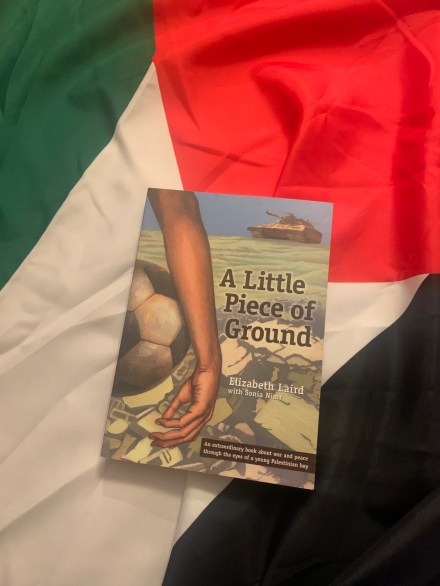
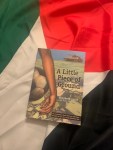
img_2165-1There are so few Palestinian middle grade books, so on that premise alone this 216 page book has a lot of value.  Because I am not Palestinian, I do not live, nor have I ever lived under occupation, I can argue some of the concerns from a point of privilege, and I acknowledge that is not my right.  I have been asked numerous times about this book and how it frames the suicide bombing mentioned in the text and blurbed about on the back of the book. It honestly is not a large part of the story, that being said, in my outside privileged view, I do not know that a 10 year old in the west will have context to understand the act of this level of desperation from the oppression and humiliation mentioned in the book. This is why I have held off my review.  The truth does not need to be defended or explained, and I fear my reservations will be taken as such, which is not my intention.  Would I let me 8 year old read this, yes, but we will read it together and discuss.  My children are aware of what is going on in Palestine, but Karim, the 12-year-old protagonist supports the bomber, and that notion is not clearly pushed back on. With discussion, absolutely, I think readers, will truly get Karim’s perspective that something has to be done to change the status quo.  The fear when Karim is alone and the target of soldiers, the settlers forcibly seizing the family land, the humiliation of strip searching men at checkpoints, the curfews, and constant fear of attack and imprisonment are all presented through the main character’s eyes, and would also do better with some discussion, so that empathy and duas and action can result.  But, the commentary as to the suicide bombing are minimal, there is even a prank package bombing that is presented as rebellion by a side character, and I would worry how a young child, without guidance, would internalize it.   Additionally, this is yet another difficult book for me to review, primarily because it was first published in 2003, and because I don’t know how much comes from a western gaze and how much the Palestinian voice played into it. Islam is clear on the prohibition of suicide.  In the early 2000 the news out of Israel was often about such attacks, but as an outsider, I honestly do not know if it was simply Israeli propaganda and stereotypes amplifying the idea as part of their public relations strategy or reality, seeing as now that Palestinians have direct outlets to share their daily life under an oppressive occupation, there is rarely talk of suicide bombing attacks. The author states on her website:

“I first visited Israel in 1968, and enjoyed a warm welcome from many Israeli friends. Later, I lived in Beirut with my husband and son during the civil war there, and became aware for the first time of the tragedy of the Palestinian refugees. I visited both Gaza and Ramallah, in the occupied territories, in 2002, while leading workshops for Palestinian writers. I was appalled by the circumstances in which people were living, and became aware that we in the West know very little of what life is like for Palestinians living under military occupation.

I have written A Little Piece of Ground in collaboration with Sonia Nimr, a Palestinian archaeologist, storyteller, writer and translator, who lives in Ramallah. We have tried to make our story as true to life as we can.”

The book is a hard read at times, but the joy is there.  Just as we as adults scroll through the devastation, the humanity persists.  The world may try and forget that they are attempting to erase a rich culture, but even in this book, their is laughter, and crushes, and sibling squabbles, and soccer games and friendship, and food, and joy.  There is a little Islam, not much, the main character is Muslim, a best friend is Christian.  It isn’t present in their everyday thoughts and actions, more just in identifying their faith.

SYNOPSIS:

Karim and his friends are not so much different than 12-year-olds everywhere, he loves video games, playing sports, isn’t so sure what he wants to be in the future, wonders what he will look like as he grows up, and is often annoyed with his family who he loves dearly.  Karim’s life in Ramallah is also unique, he lives under curfew, he doesn’t have freedom of movement, opportunity, or equal rights, and a simple family outing can be life altering.

The book follows Karim and his group of friend as they discover a patch of land they decide to turn into a soccer field, to claim as their own.  They work on it on days they can sneak away after school, in windows of time between curfews, and before long start to take pride in what the land can be. Adopting cats, learning about new friends from the refugee camp next store, teasing siblings about their crushes is all in contrast to Karim watching his father be stripped searched at a check point, being chased off their family land when they are harvesting olives by settlers shooting at them, and pranking soldiers in desperation of fighting back against oppression.

When soldiers roll in and occupy the land the boys have claimed, symbolic of their whole country, Karim gets stuck barricaded in an old abandoned car for days, with soldiers aiming their sights on him, and wondering if he will survive.

FLAGS:

Suicide, systemic abuse, oppression, humiliation, dehumanization, killing, beating, apartheid, genocide, violence, stripping, lying, crushes, occupation, shootings, injuries.

TOOLS FOR LEADING THE DISCUSSION:

This book does not need tools to be discussed.  It itself is a tool, to help middle grade kids be aware that this cruelty has been occurring for 75 years, this book took place 20 years ago, and today we just have social media sharing these stories more widely.  InshaAllah soon, Palestine will be free.

You can purchase this book here at Crescent Moon Store where code ISL at checkout saves you 10%

Majdi Mansoor and the Book of Miracles by Anisa Bezak

Standard
Majdi Mansoor and the Book of Miracles by Anisa Bezak

img_0030

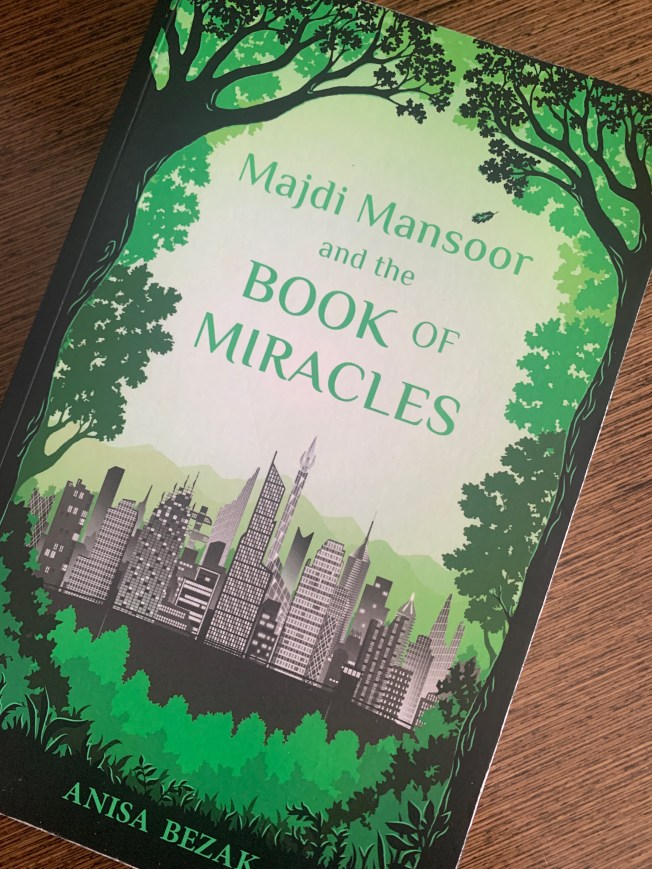
I don’t think I have ever seen or even heard of any dystopian Islamic fiction reads, we have a handful of Islamic historical fiction, and dystopian with Muslim characters, but the genre made me curious, and with that motivation I began the 458 page book.  The beginning didn’t immediately grip me, but I told myself to read a hundred pages before deciding to DNF it or keep reading, and long before that arbitrary mark, I was intrigued by the story, invested in the characters, and impressed by the consistent writing, pacing, and role of Islam.  The book is preachy and idyllic, but that is to be expected, the way Islamic ideas and concepts and concerns were included as plot points though, is surprisingly well done.  For much of the story, I kept wondering who the target audience would be.  The vocabulary is a bit advanced, and the pages full of small text.  The book starts story wise-solid middle grade, but I think by the end I would recommend this book for advanced middle grade or early middle school Muslim readers.  I’ve heard from some adults that they read a chapter to their kids each night, and I think that aloud younger kids might also enjoy the story and be swept away to a future land run by a corporation where religion is banned, books are a thing of the past, a boy speaks only in Quranic ayats and hadith, and bullies of all sizes will have to be faced.

SYNOPSIS:

Twelve year old Jacob is an orphan in Tanas World and is unwillingly part of a gang.  One day in a boarded up old building he finds a book, a physical book, the Quran.  Religion is not allowed, Islam most of all, but he reads the book, and even though he doesn’t believe, he keeps rereading the pages.  When an attempt to steal some tech takes him outside the boundaries of the walled off city, he meets a small boy, Majdi Mansoor, who talks in a peculiar way. When threatened by the gang, Jacob decides to take Majdi’s side and that one act sets the two boys on a course that will change them forever.

I don’t want to give away too much, but Jacob is taken in by the Mansoor family who live in isolation and in hiding outside Tanas Corps patrols.  The parents are kidnapped, the children seek to save them and along the way meet smugglers, a Muslim community corrupted by bidah and djinn, Muslim Defense Unit rebels seeking revenge, and the executives who want the MEECA device to imprison the planet.

WHY I LIKE IT:

I was honestly impressed with the quality of writing, but I honestly don’t know if it was because my expectations were so low, or in fact was sufficiently edited and refined.  The characters have heart, the world building is believable, and the Islam is handled with an even hand.  At times members of the Mansoor family are too “good,” but Jacob has a sense of humor, is fallible, and curious which allows the story to stay moving and on task. There are some major plot points that are not resolved, and I’m assuming the political details will play out in the second book.  I’m hoping at least. The book doesn’t talk down to the reader, but older readers might find it too preachy.

I’m hoping my early teens who love Islamic fiction chapter books such as The Broken Kingdom series, The Adventure of Nur Al-Din books, and The Moon of Masarrah quartet will similarly enjoy this.

FLAGS:

Death, bullying, manipulation, assault, revenge, danger, whispers of shatan, bidah

TOOLS FOR LEADING THE DISCUSSION:

I would love to do this as a Middle School book club, I think it would be a bit too cheesy, but I think there would be some great discussions to be had about seeking, temptation, bidah, forgiveness, and the way that Majdi talks and Islam is woven in to the text.

The Kingdom Over the Sea by Zohra Nabi

Standard
The Kingdom Over the Sea by Zohra Nabi

kigdom

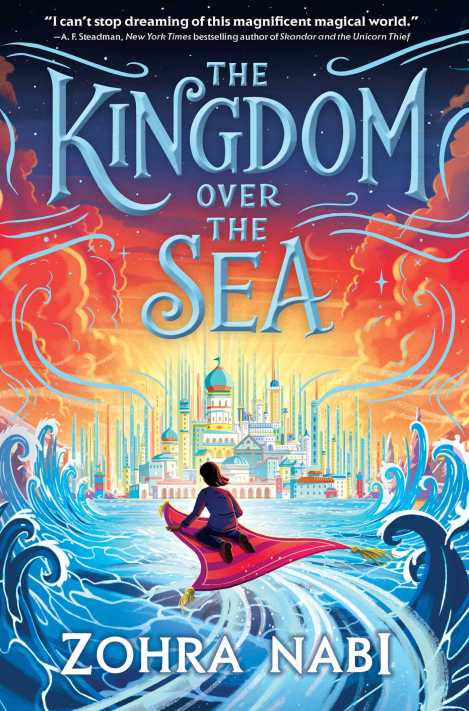
This 336 page middle grade fantasy book had a lot of promise for me, but ultimately fell a little flat.  The protagonist was likeable, there was emotion, the story was compelling, and I know it is widely said that debut novels tend to be a little weak or be underdeveloped or having pacing problems, yet I hesitate these days to use this as an excuse.  I’ve been around the industry a few years and it seems many author’s debut novel, is not, in fact, the first book they’ve written or even the first book they’ve “sold.” Books are written and finalized years before they are released for some genres particularly of late, so I’m trying not to let myself get caught up in the author’s writing journey (I’m sure I’m all sorts of wrong about what I think it would be anyway), and just review the book in front of me. This book has no religion, and I don’t know if the author identifies as Muslim.  There are a hodgepodge of Arab and Desi cultural references in the characters’ names, and in the sprinkling in of salwar qamis, abaya, head scarf, sambusak, and there is a ma’a salama at one point along with the presence of jinn (not religiously referenced). There is also mention of medicinal wine, magic, a lady who has a crush on another lady in her youth, music, and dancing. The book held my interest as I wanted to see how it unraveled, and I recognize that there is a book two, so some of my thoughts might be premature, but I struggled with the premise of the protagonist trying to understand the journey her deceased mother has sent her on, and how the person she was supposed to find for the answers simply won’t talk, even though the two are living together.  It made the story really drag in places and seem underdeveloped.  The world building, the backstories, the adventure at hand, really is imaginative, but the development of the relationships in the story are absolutely non existent, and the book overall suffers because of it. Also the ease in which rising action is resolved is often the kids just throwing an idea out and it being right.  I read and review through a critical lens and many recent middle grade fantasy books have been absolutely incredible, perhaps it isn’t fair to compare, but this book just came up short for me in developing memorable characters and plot, even though all the elements were present, capitalizing on bringing it all together stayed just out of reach unfortunately.

SYNOPSIS:

Yara’s mother has died and when she finds a letter with instructions of what to do and where to go should this moment arrive, she decides to dodge her social worker and journey to a world of magic across the sea.  Unsure of her own background, she thinks she might be Iraqi, but doesn’t speak Arabic, she longs to find a place to belong, and when she arrives in Zehaira and hears the language of her mother, she is hopeful that this Leyla Khatoun, who lives in the third to last house on Istehar Way, will provide her with answers. But alas Leyla is not there, the Sultan’s alchemists are, and Yara is now on the run in a foreign land.  Help finds her and with a little magic she finds Leyla.  Leyla begrudgingly takes her in, but refuses her any insight into her past, her relationship with her mother, or why the letter directed Yara to her.  As the alchemists poison the sorcerers, Leyla and some other kids (friends?) have to find a way to save the settlement and magic in the land.

WHY I LIKE IT:

Yara as a character is likeable, she is plucky, resourceful, determined, and despite her circumstance does not want or need pity or handouts.  She advocates for animals, the poor, is a grassroots organizer, and unapologetic in how she carries herself.  I love that she isn’t whiney or helpless, and that she trusts herself to problem solve and isn’t afraid to think outside the box, while maintaining her kindness and appreciation for those around her.

As someone who doesn’t like Alice in Wonderland type stories, this book grounded the world building in an easily consumable way, so even though it is Yara leaving the UK and stepping into a new world, the functioning of the new world didn’t feel random or surprising.  While this was beneficial for someone like me, it made the focus of the story more on the characters’ relationships in enhancing the plot, and the book wasn’t strong in showing those connections.  Yara meets a map maker for a moment and a cat, and months later recalls the cat and the map maker by name and face.  A boy, Rafi, who is also studying magic and Yara don’t get along, yet are friends because it says so, the book doesn’t show us their bond.  Rafi meets some great uncle and the great uncle is painfully underdeveloped (along with his “friend”) and the tangent weak in reinforcing the major climax. The relationship between Yara and Leyla is the center of the story and so glossed over, there is no tangible connection, or cathartic release when details emerge, it was very disappointing to say the least. Yara and Ajal, the jinn, what is that relationship even, she frees him à la Aladdin freeing the Genie, but they are friends, not friends, he looks out for her, but doesn’t like her, the telling and the showing don’t align.  Even Yara’s relationship with the settlement and the inhabitants is disconnected from the plot of saving magic.  The climax is weak because we, the reader, don’t feel any connection to any magical folk.  The emotion of the mother dying at the beginning and the slight retrospection (I’m not going to spoil it) of the mother’s love at the end, was developed and made me invested in Yara, that same energy did not present itself, sadly, in any other relationships in the book.


FLAGS:

Death, loss, poison, imprisonment, magic, mention of medicinal wine, one line mention of a female character liking another female character as more than a friend, dancing, singing, jinn, torture, male and female friendships, destruction, lying, sneaking.

TOOLS FOR LEADING THE DISCUSSION:

I wouldn’t use this as a book club selection and wouldn’t go out of my way to shelve it in the school library or classroom library.  I will probably read the second book though and see where the series goes and reevaluate. I will also probably read future works from the author as the sparks of good story telling and writing definitely show promise for the author even though this particularly book wasn’t “magical” for me.


Nayra and the Djinn by Iasmin Omar Ata

Standard
Nayra and the Djinn by Iasmin Omar Ata

img_6973

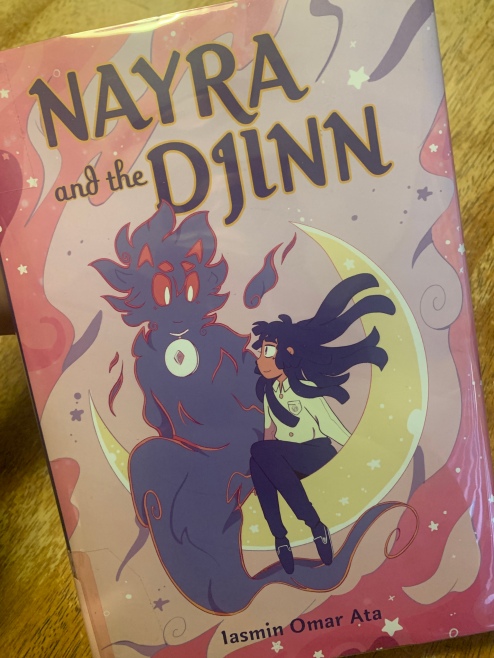
Set in Ramadan this graphic novel for middle grades has a coming of age theme brought to life with fantasy, religious practices, and storylines of bullying, acceptance, and folklore.  Nayra is fasting, she prays, she says bismillah and Assalamualaikum, her  practice of her deen is never in question and by and large I don’t know that anything is “haram” in the Islamic representation.  Yes, she says bismillah in julus, the sitting position of salat, there is sihr, magic. done by the djinn, and a lot of liberties about the ghayb (you can’t really disprove them), but honestly my biggest problem with this book is that somehow even though it is a graphic novel, more visual than text, there is way too much telling and not enough showing.  The reader is told that there is bullying, but only shown that one girl calls her “baba ghanoush,” we are told over and over that she is friends with Rami and that she needs to fix the relationship, but we never see what the friendship was before, only the forced awkwardness that it is now. The inside flap of the book stereotypes the “strict family,” but we never really see them being overly demanding or difficult, and the conclusion is very naïve with both the two girls and the two djinn resolving everything on Eid. I wanted to care about the characters, but never felt a connection to their stresses, traumas, and relationships, and many mirror my own life.  In full transparency though, I must acknowledge to you all, that I do not read a lot of fantasy graphic novels or even comic books, if the choppiness, and lack of depth is what makes the genre work for others, then this book will be fun with its pink and purple pallet and tracking of the Ramadan moon.  I really might just be the wrong person to review this OWN voice djinn fantasy authored by a Palestinian Muslim who like her fictitious djinn goes by they/them pronouns.

SYNOPSIS:

Nayra is being picked on by Tanya for messing up in volleyball in PE, and gets to calling Nayra “baba ganoush.”  When the book opens Nayra fasting for Ramadan is what Tanya chooses to attribute Nayra’s lacking skill too, and Nayra is ready to find a new school.  Her family offers no support, her older siblings set the bar high and got through by ignoring the bullies, and expect her to do the same.  The one other Muslim at school is Rami, and Nayra needs a break from her, they meet to break fast every evening, but Rami is exhausting.  When an online forum somehow gets a visit from a djinn, Nayra offers to be the anchor that Marjan needs to escape the ghayb and exist in the human world.  Marjan’s past comes back to haunt them, and when Zirkouniya arrives, there is only so much protection the month of Ramadan can offer as Eid arrives and the djinn are returned to full strength.  Djinn and human alike will have to own up to their mistakes, forgive others, and rebuild the relationships that matter.

WHY I LIKE IT:

I like the Ramadan centering, and appreciate that the coming of age story line was not an identity crisis about Nayra’s faith.  I  finished the book feeling like I didn’t understand much.  There was a lot of build up for a strict family, and djinn wisdom, that just didn’t exist.  The conflict with the friends was superficial and the resolution the same.  Maybe I missed the visual resonance as I tend to enjoy lyrical writing and relatable text, but the story seemed really simplistic, and the characters flat.

I honestly don’t know if the liberties of the djinn world and djinn themselves goes too far or if folklore, mythology, and fantasy give it fictional protection.  There are details that perhaps come from culture, or are completely made up, I don’t know.  Djinn in Islam are real, they are made of smokeless fire, some are good, some are bad, they have genders, and families, and feelings, and communities.  Outside of that, I don’t know much, and do not presume to, when I sent @bintyounus some of the pictures from the book, she remarked, “Djinn are part of the Ghayb/unseen, So it’s not like we say oh none of it is true, but we also don’t take it as 100% true.”

The magic is minor just a fixing of a flower and flower pot, so in reality the only fantasy are the details about the djinn and the journey to the djinn world.
FLAGS:

Lying, bullying, magic, sneaking out.

TOOLS FOR LEADING THE DISCUSSION:

There is not enough in the book to discuss in a book club, and because of the lacking resonance, I don’t know that most kids would read the book or be interested in it. I can see it being thumbed through, but I don’t think it would be finished by Muslim kids at the Islamic school, or by my own children.  Those that know the Islamic view of djinns won’t find that enough of a hook when the story inside is about a friendship, and not a particularly deep or fleshed out one.  They might see the bullying as relatable, but being called baba ganoush doesn’t really seem that bad compared to what many endure and pining for friends, when you have a very loyal friend, also will probably be met with some confusion.

Hamra and the Jungle of Memories by Hanna Alkaf

Standard
Hamra and the Jungle of Memories by Hanna Alkaf

hamra1

This 400 page middle grade retelling of Little Red Riding Hood bursts with Malaysian culture, magic, action, and adventure.  The main character and her family are Muslim and hijab, duas, zikr, halal, Qur’an and salat are included throughout.  The mix of legends and characters from Malaysian culture in building the fae world is not contrasted with religious faith, but assumed to both coexist without issue.  The book is clean for ages nine and up and the only concepts worth noting are some intense life and death situations, close male and female friendships, dementia, and the element of fantasy.  The book is set during the Covid-19 pandemic which will ultimately date the book as it doesn’t convey the tone for readers unfamiliar with the curfews, social distancing, controversies, and masking.  Those who have just lived through it, will not need the framing, but in a few years I do fear that the book will be lacking in fully understanding why the tourists, parents, and markets are so absent.  As with all of the author’s books there are also dated pop culture references, that slow the narrative down for today’s readers.  The book grabs you from the start and the second half flies by smoothly, but the middle quarter is a bit slow as the world building is not robust, and the reader is thrust into a magical world that is just accepted without pause, and the reader is asked to accept it at face value as well.

SYNOPSIS:

It is Hamra’s birthday, but the independent 13 year old is not being celebrated- everyone has forgotten: her mother is a front line worker, her father helping those with limited resources, and her aging grandfather and her are left to care for her memory slipping grandmother.  When Hamra, Little Red, storms off to the jungle to collect some herbs, in an act of spite, she defies the rules drilled in to her 1- Always ask permission before you enter.  2- Don’t challenge what you can’t even see. 3- Never use your true name. 4-Never take what isn’t yours. 5-If you hear someone calling your name, never, ever look behind you. She also doesn’t listen to the regular reminders to tie her shoes.  Simple rules, that when broken set the story in to motion.  Along with her best friend Ilyas, the two will strike a deal with a weretiger for their transgressions that takes them on a journey to try and save Opah, themselves, and prove their quest a success.  The characters they meet, the clues they unravel, the legends they understand, and the scenic islands they explore are as lush as the love Hamra has for her family and the drive she has to return home safely.

WHY I LIKE IT:

I love the way Islam is truly part of the characters, and a natural extension of how they see the world and act within it.  I wish there was stronger world building blending the world of the known and the fantasy for the reader.  The writing of the Malaysian setting is beautifully unapologetic and I love that there is not a glossary or overly explained descriptions, it is immersive and I appreciate that, but the framing of the two worlds I felt was a bit disjointed and needed some fleshing out.  At times it feels more telling than showing in detailing the depths of the legends or the superstitions that are true for the story.  I did enjoy the characters’ quirks and stubbornness, there is not a lot of arc and growth, but with the intensity of the adventure and culture, I didn’t feel it lacking in development.  For much of the book I didn’t quite appreciate the Covid-19 framing, but by the end I understood that it was a way to have the tourist spots void of people, the parent’s out of the way; a little more development though would have had the uncertainty of so much more fully realized.

FLAGS:

Fear, trickery, danger, loss, death, music, musical references, dammit is said.  There is some violence, close male and female friendships, and a possible trigger of dementia in a loved one.  There is myth, legend, magic, fairies, fae, and fantasy, if you are ok with the concepts in general the presentation is clean even with mixing religion and these concepts.  If you are uncomfortable of fantasy and Islam coexisting, this book draws the two worlds very close.

TOOLS FOR LEADING THE DISCUSSION:

I have taught two of her books in middle school book club discussions, and I would teach this one as well.  It is enjoyable to see Malaysian Muslim characters so confident in their identity and having adventures that are enhanced by their faith and culture while focusing on larger themes of friendship, family, forgiveness, and adventure.

The book comes out in March of 2023, I’ve preorderd mine HERE and I hope you will as well.

A Bit of Earth by Karuna Riazi

Standard
A Bit of Earth by Karuna Riazi

earth

This Secret Garden retelling mixes the heart of the original with a dash of modernity, the flavor of desi culture, and the lyricism of a good writer.  Over 368 pages the slow plot but rich imagery will draw readers in, hold their attention, and leave them thinking about the characters they have been fortunate to spend time with on Long Island.  Islam is practiced and normalized and naturally woven into the Muslim characters’ daily lives without othering or over explaining.  I did struggle a bit trying to keep the relationships of who was supposed to be caring for the protagonist at various points since her parent’s died clear, but once I abandoned stressing about it I was able to be swept away.  I recently reread The Secret Garden with my own children and the original is not plot heavy, nor action packed, but I watched as my own children were drawn to the slower, more grounded (pun intended) nuanced tale, and I think this book, in the same vein, will find its way in to the hearts of middle grade readers.  The book is clean, there is a possible crush hinted very slightly at the end, periods are also endured, and I do have reservations of the terrible marital relationship between Mr. and Mrs. Clayborne, but it establishes that change will occur, so at least it isn’t normalized.  There are sprinkles of magic implied regarding the house, but it is always framed without clarity and in a subtle way to set the tone and the emotions the characters are feeling more than centralizing something rooted (see I did it again) in fantasy.

SYNOPSIS:

The book updates and mirrors the original fairly well with an obstinate orphan arriving at a sprawling house, finding a prickly boy, and setting off to form a tentative toleration of one another with friendly neighbor kids in a garden that is unquestionably off limits.

Maria Latif arrives from Pakistan against her will to be taken in by a distant relative (I’m not sure how she is related), but Asra has been called away and she is forced to stay with Lyndsay, the new wife of Mr. Clayborne.  The first wife was a friend of Maria’s family, but Lyndsay is just as emotionally overwhelmed and lost as the child in her charge.  With Mr. Clayborne away on businesses, his mother Charlotte keeps them all on edge.  When Colin Clayborne is expelled and returns home, more tension erupts and the two children find themselves in an off limits garden trying to make the most of a difficult situation.

WHY I LIKE IT:

I love the mix of poetry and standard novel format.  It is beautifully written and clearly the author does a remarkable job of making her very unlikeable characters worm their way in to the reader’s heart.  Both Maria and Colin are thorny and difficult, stubborn and rude, but you seriously cheer for them, and I did shed a few tears at the end.  With the author’s writing ability apparent, I’m still not sure why the foundation of the relationships and getting Maria to the Clayborne home is so cumbersome.  It is too muddled and it drags the book down every time it is revisited.  The Dadi having the aunt’s phone number was too easy, the inconsistency of the neighbors having no relationship to the Clayborne’s for so long and Lyndsay not even pausing to think another Bangladeshi family living a few houses down might be my husband’s first wife’s friends, seems inconsistent.  Honestly Lyndsey in general needed to read like a competent woman struggling, not a teenager in over her head. I disliked her and Mr. Clayborne’s relationship and I would hate to think any reader would find it ok or normal.

I love the Islam and how it presents when the character has to pray, she goes and prays, it is part of the story and it is seamless.  I don’t think the culture is handled quite as well.  Lyndsay is a foot writer who is always cooking, yet knows nothing of desi foods? If Colin’s mom is desi, wouldn’t she at some point tried to cook familiar foods for him.  Half the neighborhood is Bangledeshi, so it seems everyone has a parent or step parent or distant relative that is desi and I loved the normalizing, but it seemed a bit assuming.  I don’t think kids will wish it was more clear, but as an adult reading it, I felt like it needed to be interjected more without explanation, or if left as is, adding some context. I also wanted to know what Maria’s parents did and a little introspection from Maria.  Again as an adult I see how her anger and grief changes how she remembers them, but from them always being away, to such soft poignant memories at the end, I think kids will need a little hand holding to understand the grief process and her understanding of them.  As it is, they just seem terrible and then all of the sudden great, and the pacing gets thrown off in the process.

FLAGS:

It seems to hint at the end that Maria might have a bit of a crush on Colin, I honestly thought up until a single line that they were making a chosen family with the people who cared for them, but that line seemed to suggest it might be more of a romantic feeling than friend or brotherly.  I read an early copy, so this is subject to change.

Maria gets her period and it is detailed what she is feeling.  I think boys and girls can and should read it.  It is presented on age and appropriately: cramps, achy, dry about blood leakage, having it start young like her mother, etc..

Implied magic (possibly), music and musical instruments being played, milaad, lying, sneaking, being kicked out of school for physical assault, close male and female friendships, ADHD stigma.

TOOLS FOR LEADING THE DISCUSSION

I think this book would work in a classroom and would appeal to readers in an Islamic or public library.  I would consider it for a middle school book club, I think readers will connect and feel empathy for Maria, Colin, and Lyndsay and be better for it.

I preordered my copy HERE and I hope you will do the same