Category Archives: 1st through 3rd

I Can Help by Reem Faruqi illustrated by Mikela Prevost

Standard
I Can Help by Reem Faruqi illustrated by Mikela Prevost

i can help cover

This 44 page early elementary book is absolutely beautiful: the message, the relatability, the representation, the heartfelt author note.  Reem Faruqi is brilliant.  Once again she takes something so personal to her and allows the readers to see pieces of themselves in her OWN voice narrative.  This book at it’s core is about peer pressure, but the way it stays with the reader will resonates deeply and powerfully.  Readers will remember the choice Zahra made and the way it changed not only her relationship with Kyle, but also her own view of herself, while forgetting the names of the classmates that teased her and made her question herself.  It is not the outside reprimanding that gives this book it’s strength, but the guilty conscious that such a young character has to come to terms with as she moves forward.

  i can help 3

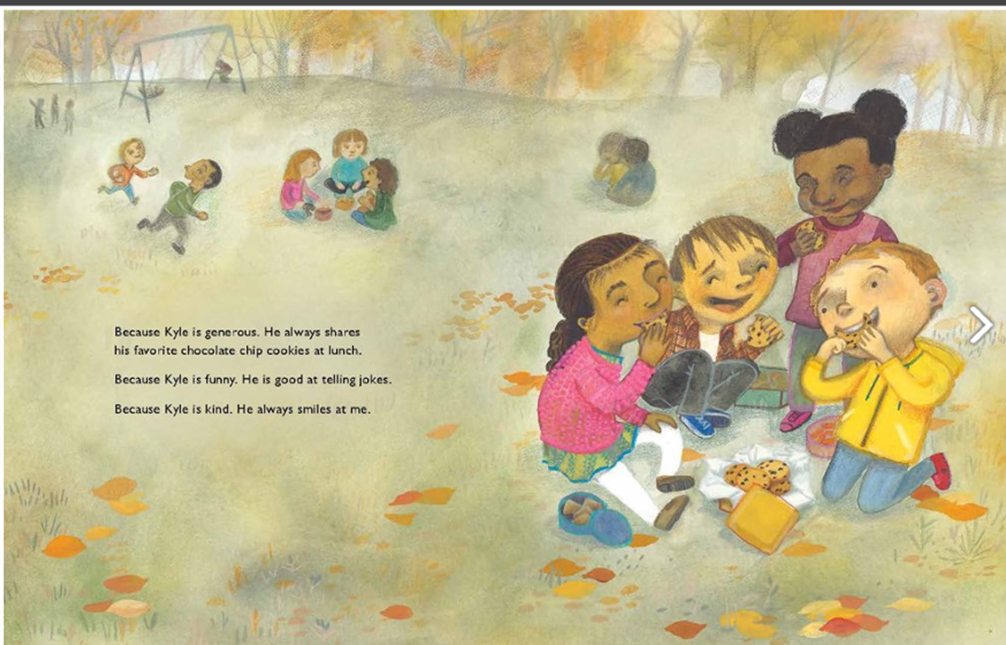
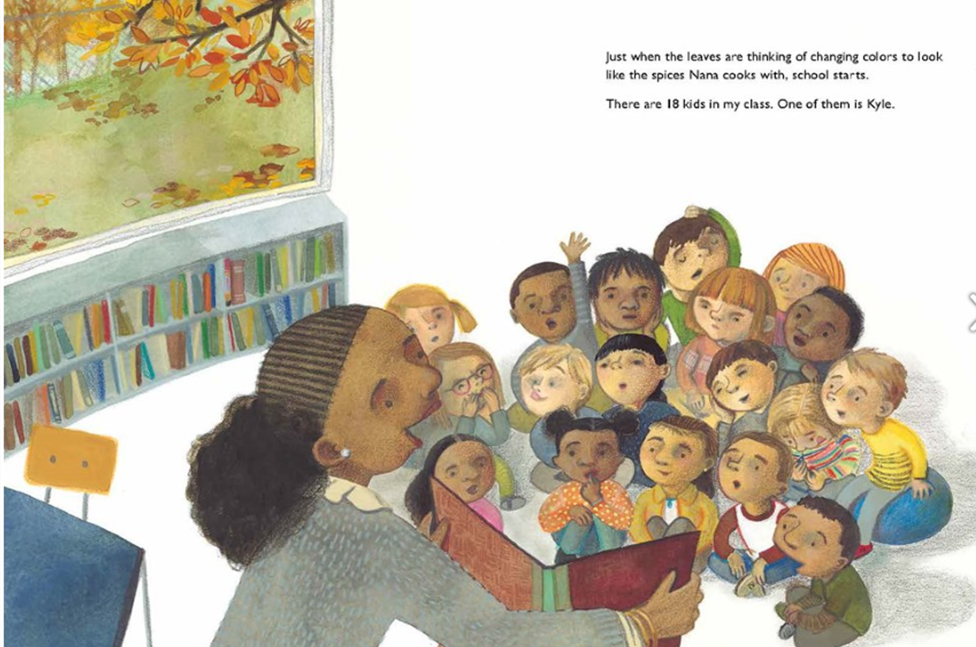
There are 18 kids in Zahra’s class in early fall, when the leaves are about to be the color of Nana’s spices.  One of the kids is Kyle.  Kyle often needs a helper, and Zahra is happy to help him with his cutting and gluing and writing.  The two have become friends.  Kyle is funny and nice and shares his cookies.

i can help 2

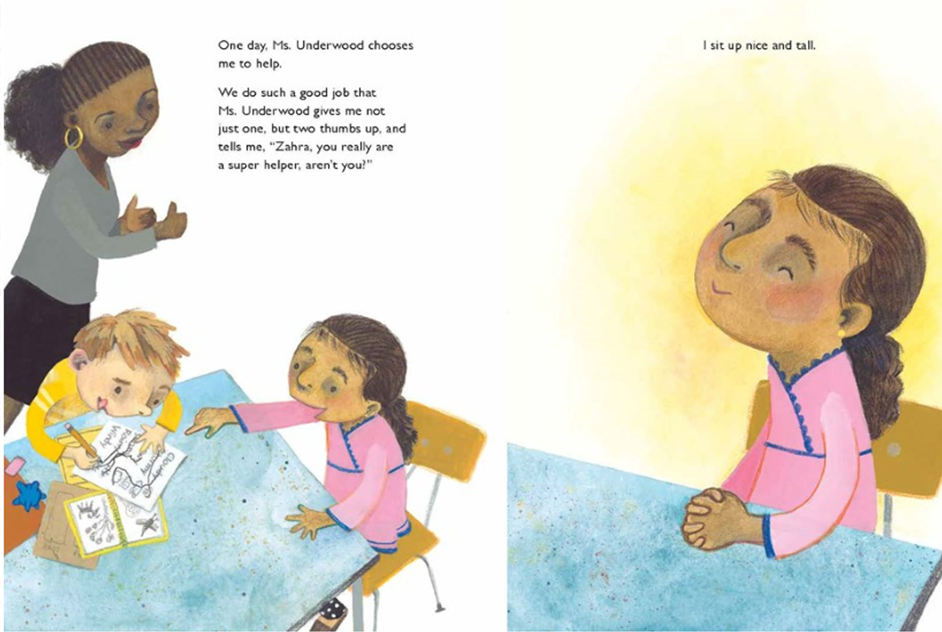
Zahra also likes the praise she gets for being such a good helper.  One day when the leaves have darkened, Zahra is climbing a tree and hears some of the girls making fun of Kyle.  She doesn’t want to listen, but her ears want to hear.  When she comes down, they ask her why she helps him.  She doesn’t really know.

i can help1

When she is helping him later, she sees the girls staring at her, and she snaps at Kyle.  The next day Ahmed helps Kyle instead.  Zahra misses being around Kyle, but he says that she is mean and he doesn’t know her any more.  Zahra doesn’t know herself any more either.

i can help 5

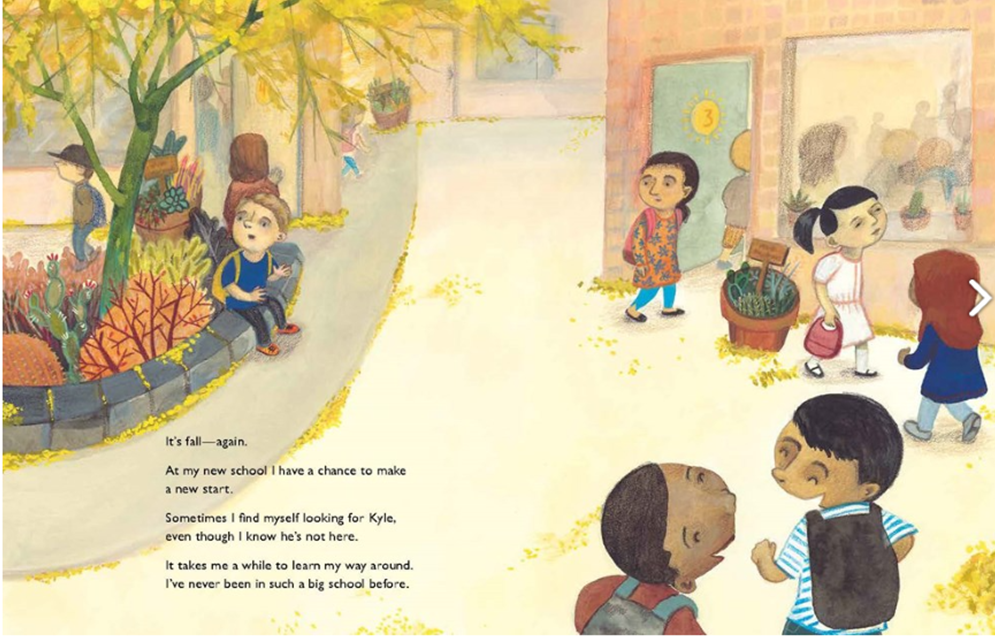
The next year finds Zahra at a new school, and when the opportunity presents itself for her to help someone, she jumps to offer herself as a helper remembering Kyle and finding her voice, one that she recognizes.

i can help8

The book is inspired by the author’s own experience, and the rawness and relatability shines through.  The illustrator also relates to the book and needing help with physical limitations.  There is nothing overtly religious or cultural other than the mention of the spices, Zahra’s and Ahmed’s names, and the term for Zahra’s grandfather.  The diverse kids in the classroom and the universal messaging make this book a must read for every kid and big person.  Be kind, always be kind.

i can help 9

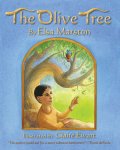
The Olive Tree by Elsa Marston illustrated by Claire Ewart

Standard
The Olive Tree by Elsa Marston illustrated by Claire Ewart

olive tree


Set in Lebanon, this 32 page book for kindergarten to second graders uses the ever important olive tree as a point of contention between two neighbors. Muna’s family moved away during the conflict because they were not like the others in the village, and while they were gone, Sameer’s family cared for the olive tree on their neighbor’s property, and collected the olives that fell on their side of the wall. But now that the neighbors have returned, Sameer is not only disappointed that they don’t have a boy his age to play with, but also clashes with Muna when she says that he shouldn’t take their olives. By the end of the book, olive branches of peace will be referenced and hope hinted at in this brightly illustrated book with a lesson.

img_1647

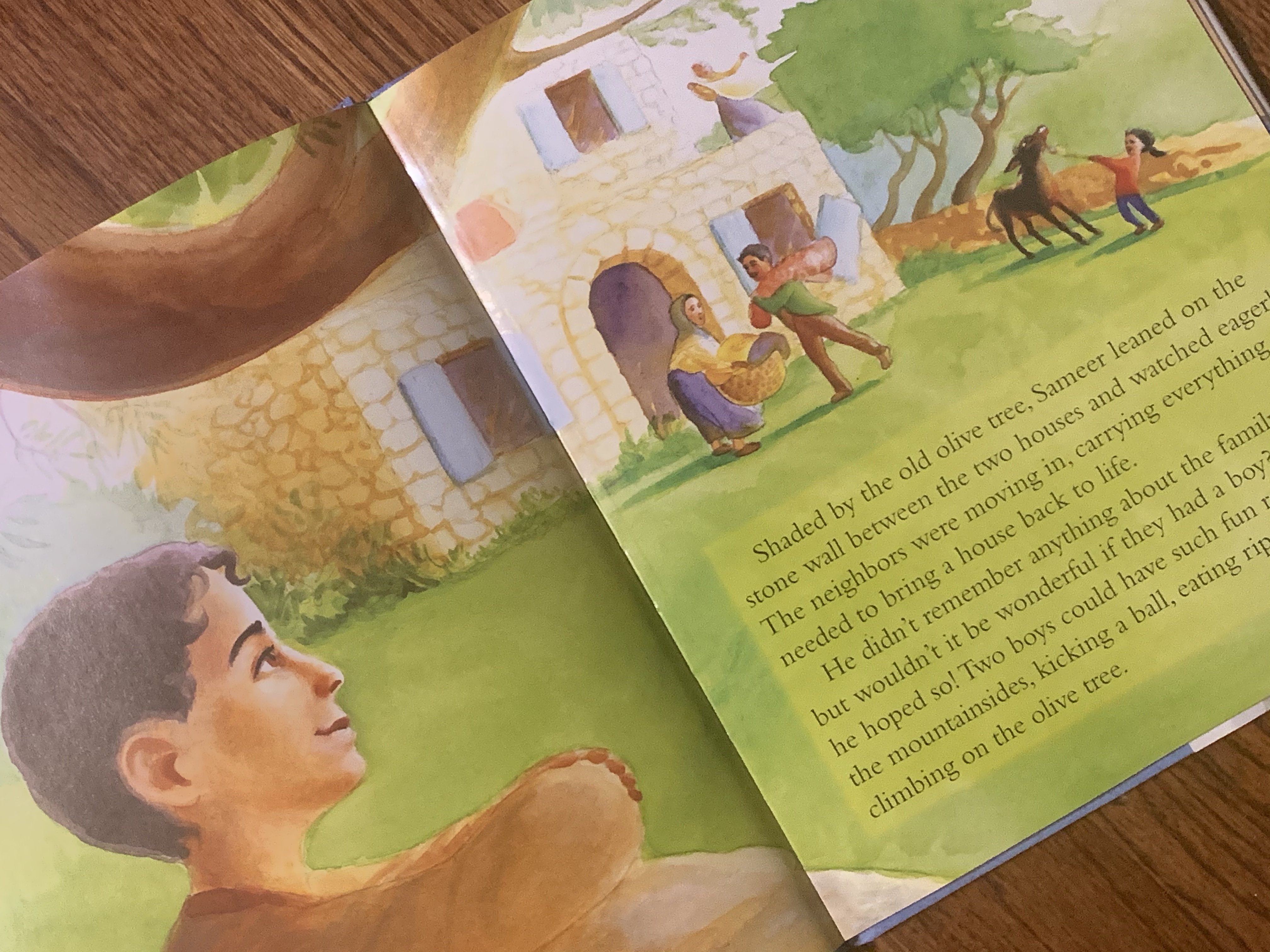
I like that why Muna’s family left is not abundantly clear, saying that “For many years the house next to Sameer’s had stood empty. . . that the family who lived there had gone away during the troubles because they were different from most of the people int he village.”  Lebanon is a diverse place and the illustrations seem to show both Mom’s wearing head scarves, the text does not detail if they are unlike each other because of religion, or culture, or some other reason, and I kind of like that it is left vague so that children learn in the end perhaps, it doesn’t matter.  

img_1648

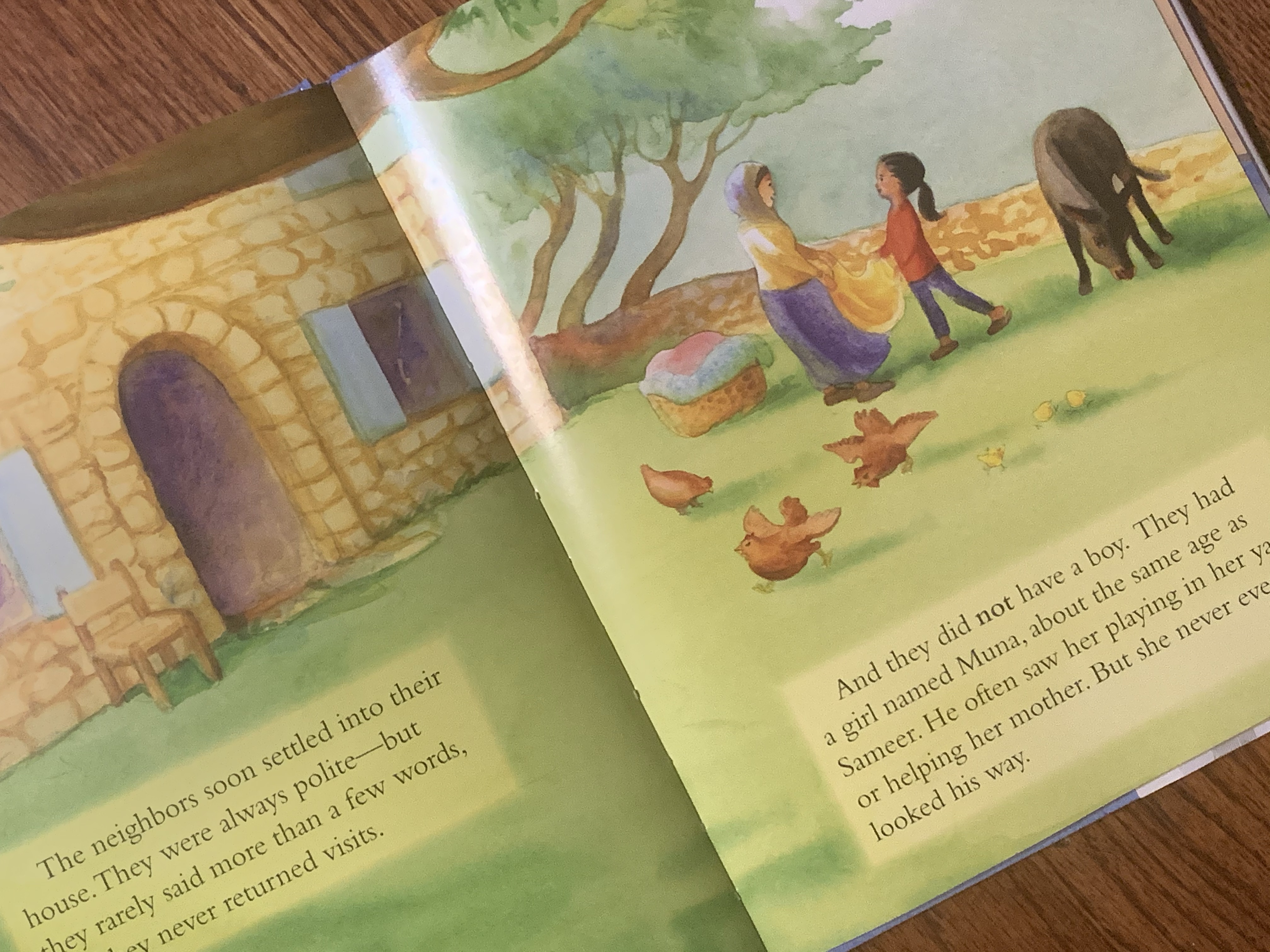
When the family moves back home, Sameer watches them and recalls the ways his mom prepares the best olives in Lebanon.  The neighbors are polite, but not friendly.  They don’t ever say much and they don’t return visits.  One day when the ripe olives have fallen on the ground, Sameer heads out with his basket to collect them.   Muna, who has never looked over at Sameer, watches him and tells him that they are her olives, and that the tree has been in her family for a hundred years.

The two bicker about who has rights to the olives on Sameer’s side of the wall and in anger, Sameer dumps his basket of olives on Muna’s side and walks off.  After that, no one on Sameer’s side collects the olives on the ground.  One night there is a storm and the olive tree and part of the stone wall are destroyed.  The adults gather to survey the damage, but walk off without saying anything.  The two children are left to decide what to do next about their beloved tree, and their relationship with one another.

img_1649

I like that the resolution is subtle, but thought provoking and that the adults don’t seem to interfere too much.  I can’t imagine that they don’t have opinions about their neighbors and the olives, but the book stays on the children and the assumptions, stubbornness, and unsaid words that have created such a divide, and must ultimately be resolved as a result.


Never Give Up: A Story about Self-Esteem by Kathryn Cole illustrated by Qin Leng

Standard
Never Give Up: A Story about Self-Esteem by Kathryn Cole illustrated by Qin Leng

img_9838

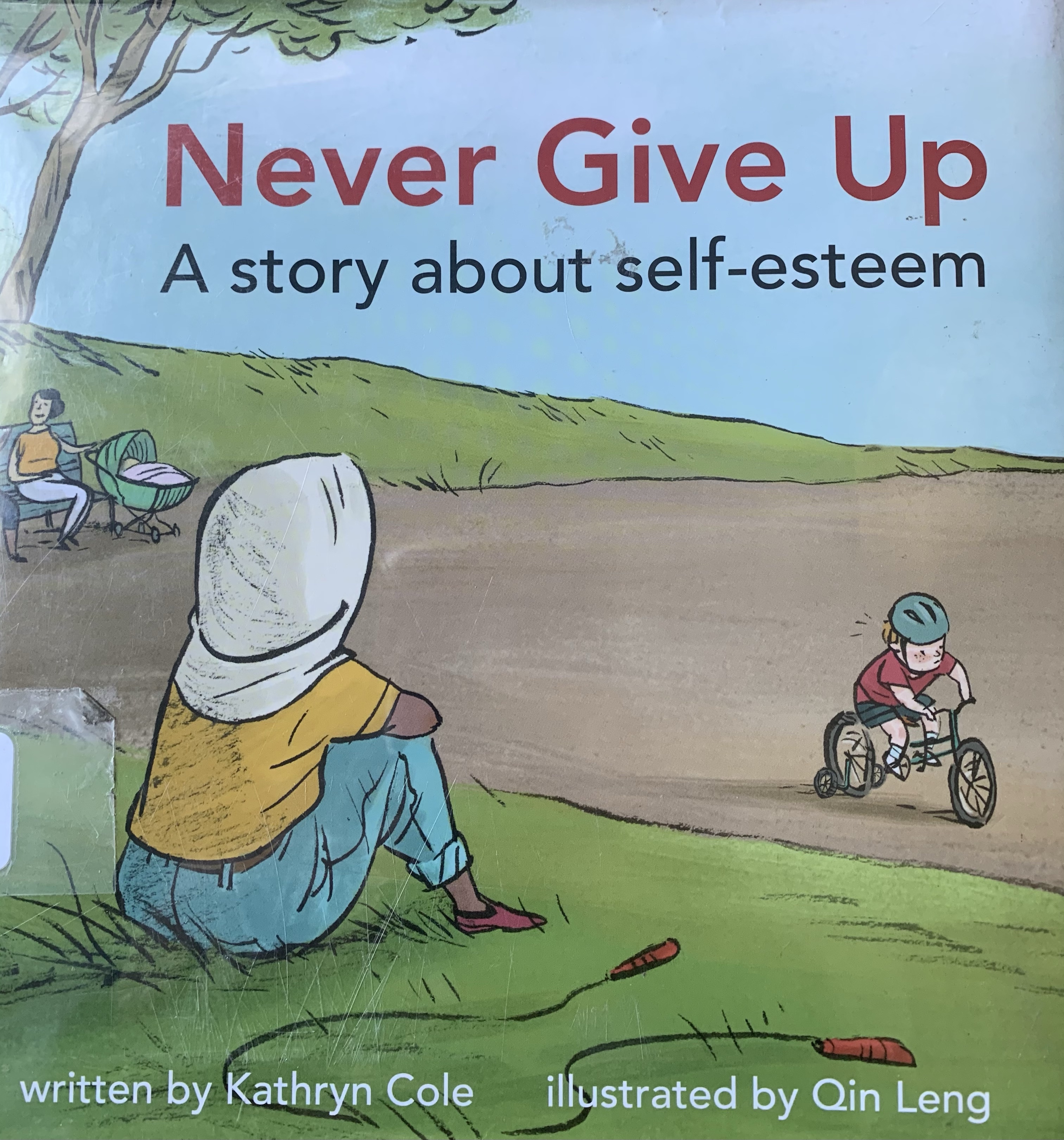
This first through third grade teaching series highlights different life lessons and concepts and features diverse characters. I reviewed a book in the series earlier with a Muslim character, not realizing that there was also one with Nadia in the lead. The 24 pages show her in hijab both at the park and at home although she wears short sleeves and is much younger than puberty, when covering becomes required. Neither the author, nor the illustrator seem to be Muslim, and religion is not present in the book, other than Nadia’s scarf. It is worth mentioning that Nadia crosses her fingers and makes a wish that her plan works, something most Muslims would say inshaAllah for and possibly want to be made aware of in a book like this. Overall the message is strong, and would be a great book to read and discuss with a child, Nadia and her friend Shaun have noteworthy traits that we can all learn from.

Nadia is heading to the park to practice jumping with her new rope. She stops when she sees her friend Shaun riding his bike with training wheels. She has been riding on two wheels for a while, and even on training wheels Shaun is struggling. Kamal, Joseph, Lin, and William start teasing Shaun, and Nadia is upset, but not brave enough to do anything about it.

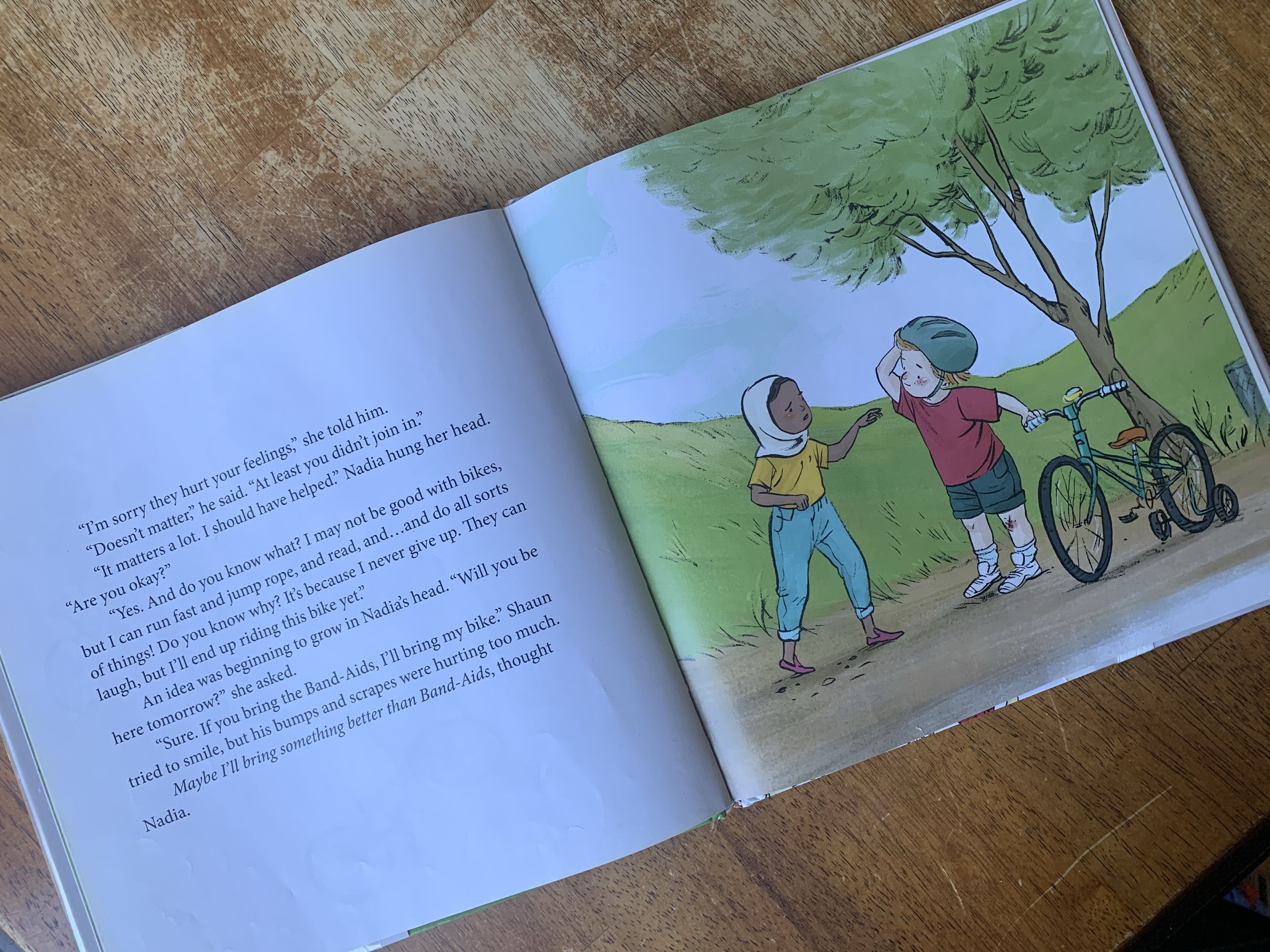
After crashing a few times, the crowd grows tired of laughing at Shaun and Nadia goes down the hill to check on him. She apologizes that the other kids were teasing him, he takes it in stride and thanks her for not joining in. He also lists off things he is good at. He is determined, and Nadia has an idea. The two agree to meet back at the park the next day.

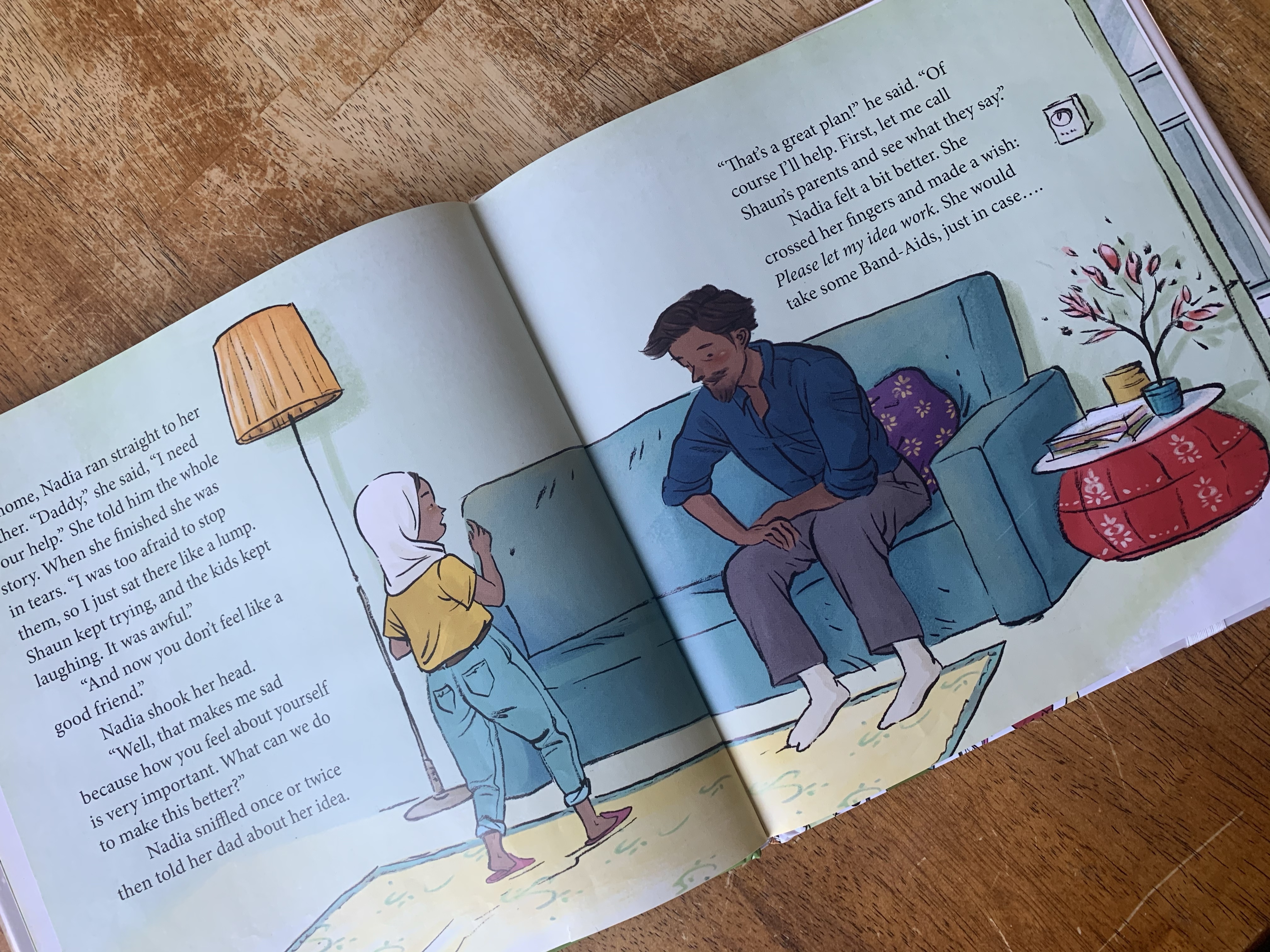
Nadia is upset when she gets home. She tells her dad the whole story and how she wishes she was a better friend. She then talks to her dad about her plan, and gets him to agree to help, her dad checks it off with Shaun’s parents and the next day they all meet at the park to take off the training wheels and teach Shaun how to ride with two wheels.

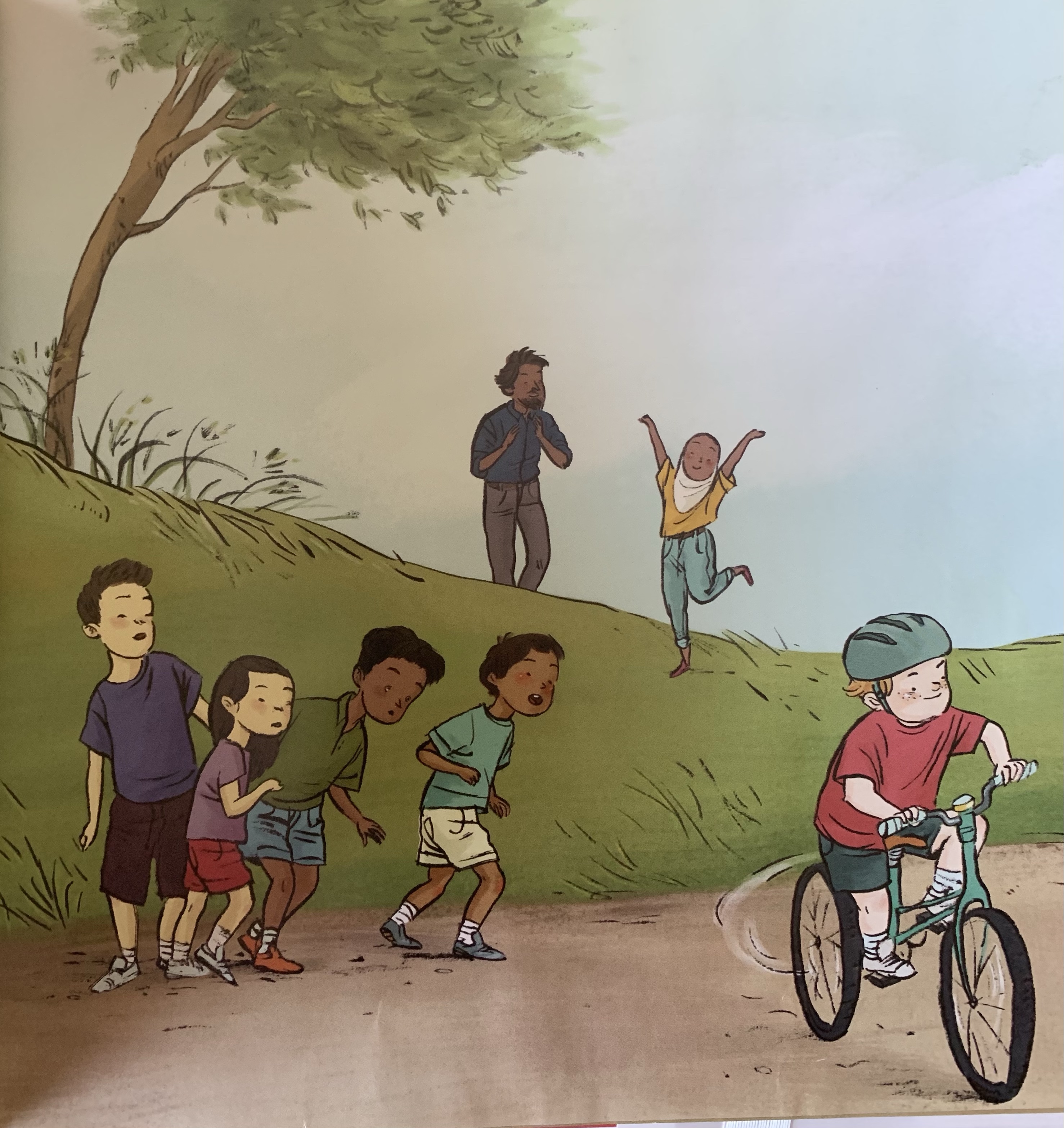
After multiple attempts and lots of cheering, Shaun is riding his two wheeler. He didn’t give up! Now it is Nadia and her dad’s turn to try jump roping, and after some struggles, it is the kids cheering on Nadia’s dad and encouraging him to try again.

The end of the book has Tips for Grown-Ups about how to develop and support children’s self-esteem.

Sitti’s Olive Tree by Ndaa Hassan illustrated by Soumbal Qureshi

Standard
Sitti’s Olive Tree by Ndaa Hassan illustrated by Soumbal Qureshi

olive trees

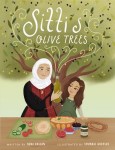
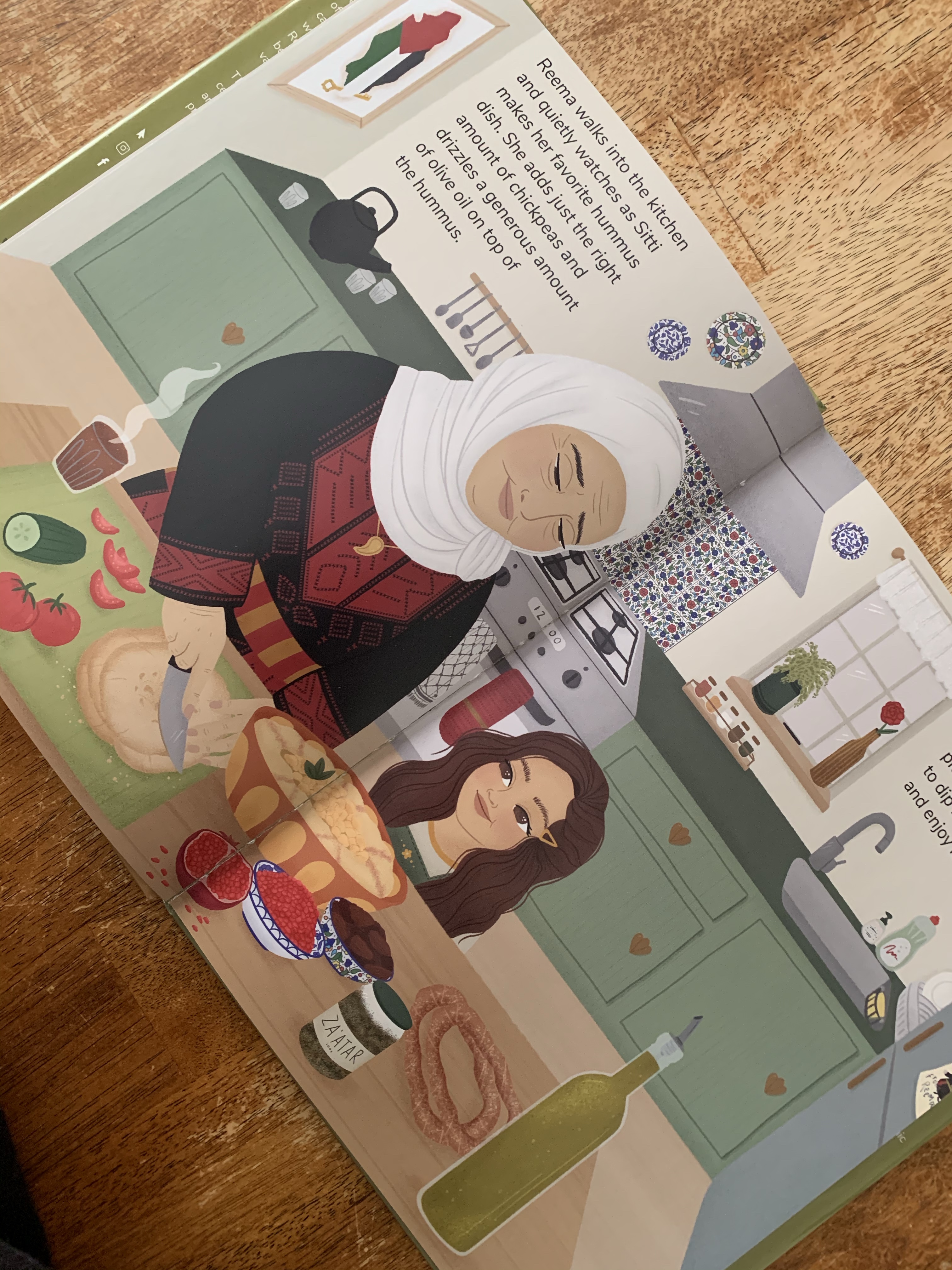
This lovely 27 page book is a story infused with love, culture, and olive oil.  The hardbound, large thick pages are richly illustrated as the text, perfect for ages preschool to second grade, tell of the olive harvesting season in Palestine.  The story is framed between a young girl learning about the past from her grandma’s memories and enjoying the olive oil sent by her uncles from their homeland.  The story is warm and informative and does not discuss politics or conflict. There is a key hanging on a map of Palestine in the illustrations, but nothing in the text.

img_1213

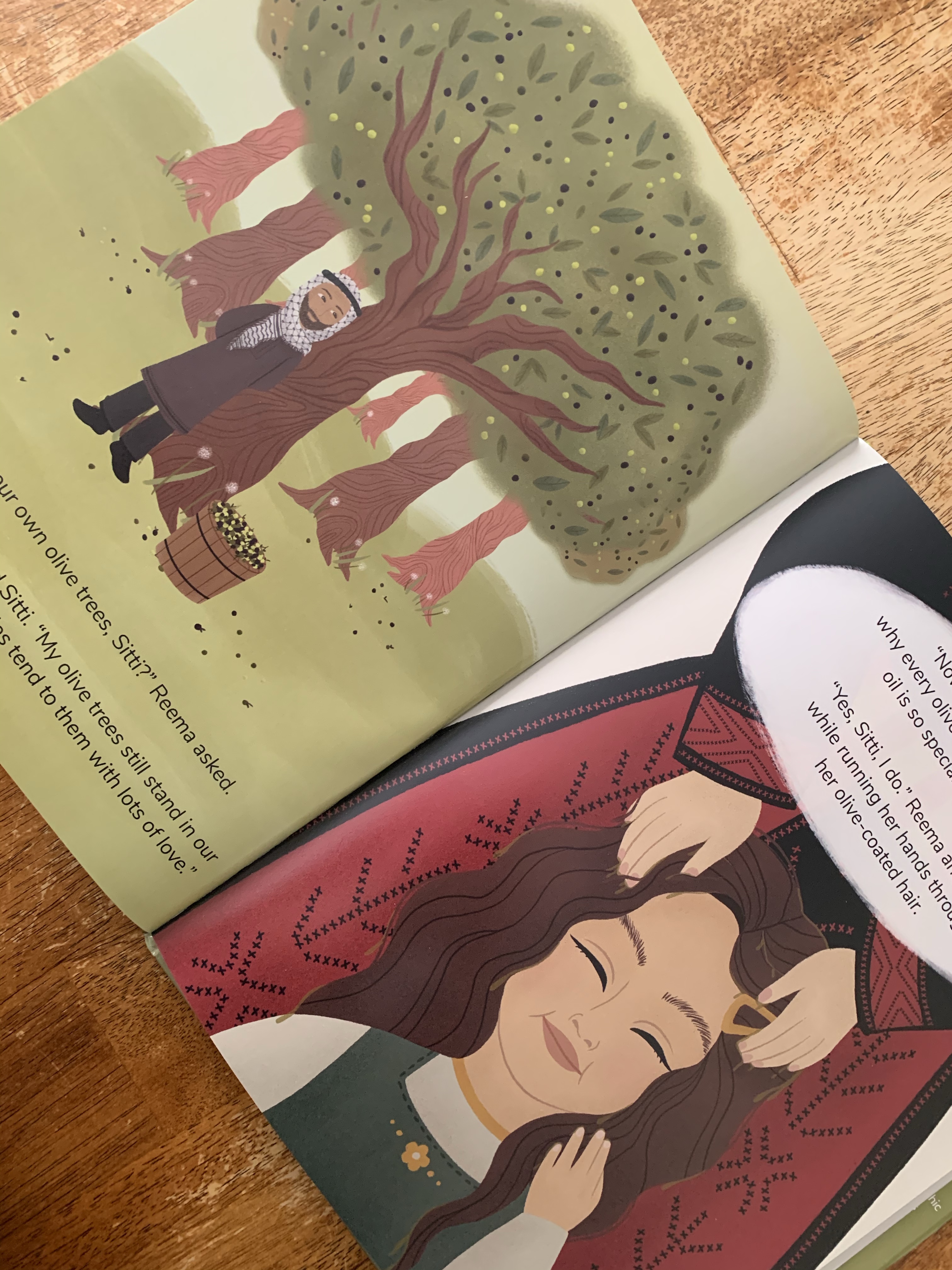
Young Reema watches her Sitti make hummus. When a drop of olive oil slips down the side of the bottle and Sitti wipes it up and rubs it in Reema’s hair.  Reema wants to know how olive oil, zeit zaytoun, can be used in such different ways. As Reema is reminded of how far the oil has traveled and recalls that her Sitti never buys olive oil at the store, the two settle in for Sitti to tell Reema some of her memories about the harvest on her ancestral land.

img_1214

Olive harvesting season comes at the end of the year and the families gather to pick the olives and fill the buckets before climbing ladders and catch the falling olives on blankets.  The elders sort them, and at the end of the day they eat and drink tea and coffee and laugh and enjoy each other’s company.

img_1215

They tell stories to pass on to the next generation just like Sitti is doing to Reema, because the olives keep the families together.  Sitti hopes one day Reema will go to Palestine and play among her family’s trees.

I wish there was a bit more detail about the hummus, it seems to imply that the garbanzo beans are whole and not smooshed or blended, also when it lists the other things Sitti’s grandparents would do with the olives, the list is olive oil, olive soap and olives for eating.  I would imagine there are more things to do with the olives, even perhaps detailing the way the olives for eating are pickled, or preserved, or prepared would have been nice.

img_1216

There is a glossary of a few terms at the end.  There is nothing religious in the text, but many of the women wear hijab in the illustrations.

Overall this book is well done and serves an important point in showing a culture that is rich and full, aside from conflict and politics.  It is a sweet story between a grandmother and her granddaughter and shows how stories, traditions, and food help pass on culture and heritage.

.

The Prophet (salla Llahu ‘alayhi wa sallam)Described by Zaheer Khatri illustrated by Fatima Zahur, Elaine Limm and Jannah Haque

Standard
The Prophet (salla Llahu ‘alayhi wa sallam)Described by Zaheer Khatri illustrated by Fatima Zahur, Elaine Limm and Jannah Haque

prophet described

This 48 page rhyming prose filled picture book details our beloved Prophet Muhammad (saw) in accordance with the Holy Qur’an and as stated by Hadith.  The repetitive refrain highlights the two-page spread’s thematic descriptions of Rasul Allah’s appearance, speech, mannerisms, walking style, etc., and the best part is, it is all sourced and referenced at the end.  It features the same two characters and the same layout, as The Prophet’s Pond, which this book even references, but notably, my copy of that book does not have faces in the illustrations of the boy and his mom, and this new book does.  I tried to see if you could find a faceless version and could not, perhaps, that option is forthcoming.  As I often remark to those around me, there are not that many books about Prophet Muhammad (saw) that are factual, but framed in a fictitious manner for children, or that are fun and playful, and this book helps fill that void in creating love and connection to the Prophet.  It is a bit text heavy and it is very thoughtful, but the repetition and rhyme along with the beautiful large horizontal illustrations, create a mood of reflection, appreciation, love, and admiration and will be suitable for ages five and up.

img_0618

Zayd and his mom are back and the book starts with Mummy telling Zayd that one day he will meet a special man inshaAllah, and Zayd asking her to give her details so that he can guess who it is. The first set of clues describe how gracious the most handsome man is, and how he will greet Zayd one day.

img_0619

The story then moves on to describe Prophet Muhammad’s fragrance, his hands, his words, his stature, his complexion, his hair, and so on.  As the details flow, Zayd and his Mummy journey through nature, standing near beaches, and forests, and rivers and waterfalls.  They cross a bridge on their way out of the city, and the full color pages move from night (or possibly really early morning) to day to night again.

img_0620

Zayd seems to know it is Prophet Muhammad (saw), but keeps begging to hear more details, before he proudly proclaims the only human whose beauty reaches so far is Prophet Muhammad, peace and blessings be upon him.  The book then says he will be waiting by a pond, but that is a story for another day, giving a shoutout to its companion book.

img_0624

There are questions recapping what is learned in the story before 10 pages of reference material.  It really is incredibly well done and is a great resource in addition to being a lovely story.  Thank you @crescentmoonstore for getting the book to me so quickly.

img_0625

This is Why We Pray: A Story About Islam, Salah, and Dua by Ameenah Muhammad-Diggins illustrated by Aaliya Jaleel

Standard
This is Why We Pray: A Story About Islam, Salah, and Dua by Ameenah Muhammad-Diggins illustrated by Aaliya Jaleel

this is why we pray

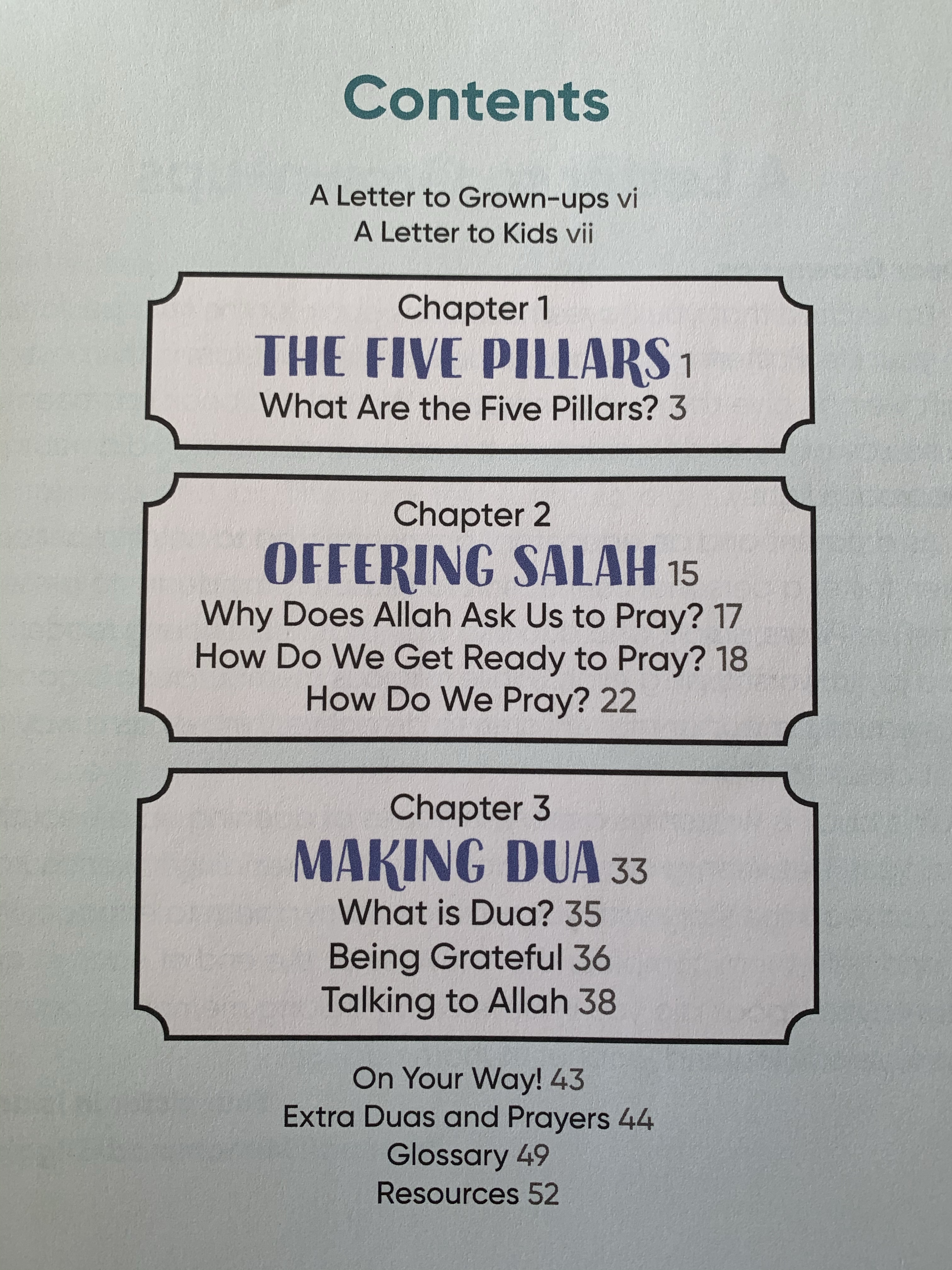
This 8×8 softbound 55 page book for ages 5 to 7 is a great resource for learning the basics about the five pillars, wudu, salah and dua.  It claims that it is a story, but I feel like that is a bit of a stretch.  It has fictionalized framing that is done well, but to call it a story I think is misleading.  It is set up like a children’s Islamic text book, think Islamic School or Sunday School curriculum, where there is a story that highlights Islamic concepts with vocabulary, there are breaks to focus on some specific idea from an outside source, in this case the Quran, there are things to think about, questions to answer, and then the same characters re-emerge in the next chapter to repeat the process. The book has an amazing illustrator, but there are only maybe three full page illustrations, four half page illustrations, and the rest are just small glimpses to compliment the heavily text filled pages.  I can see myself reading the entire book to my five year old, and then it sitting back on the shelf to be pulled out and revised when we need to go over salat, wudu, or need to learn some duas, and understand the five pillars.  I don’t think it will be requested for the “story,” or the pictures, it just isn’t that type of book.  It borders fiction and nonfiction, but I think it is closer to nonfiction, and works well as a tool to engage your children with easy to understand text, quality illustrations to see the steps of salat and wudu, and to see Islam practiced in scenarios that young children will recognize, such as playing games, going to the beach, and losing a favorite toy.

img_0647

The book is divided in to three chapters: The Five Pillars, Offering Salah, and Making Dua.  Before the chapters there is a letter from the author to grown-ups and then one to kids.  After the final chapter there are reference pages with extra duas and prayers and a glossary.

img_0649

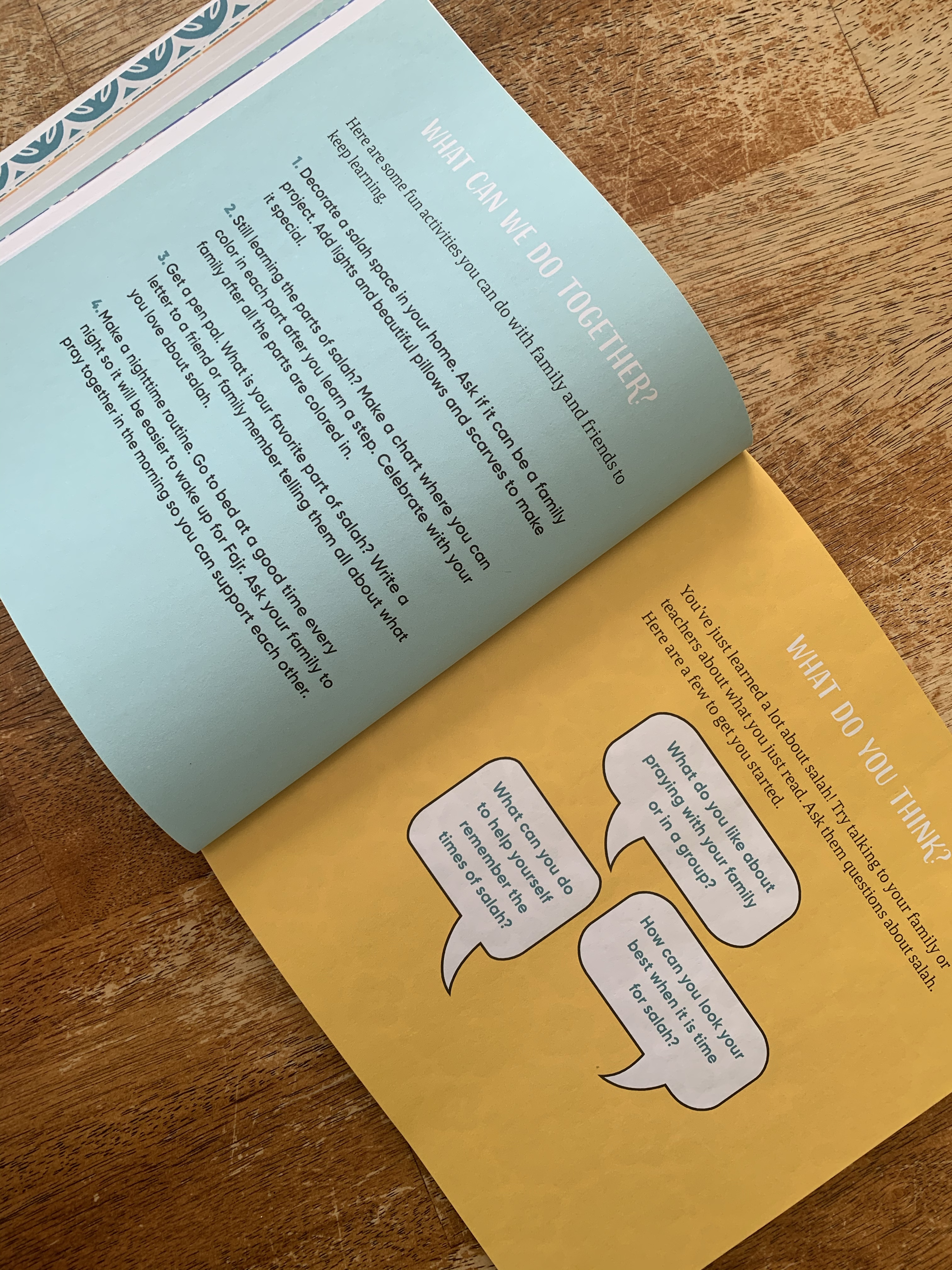
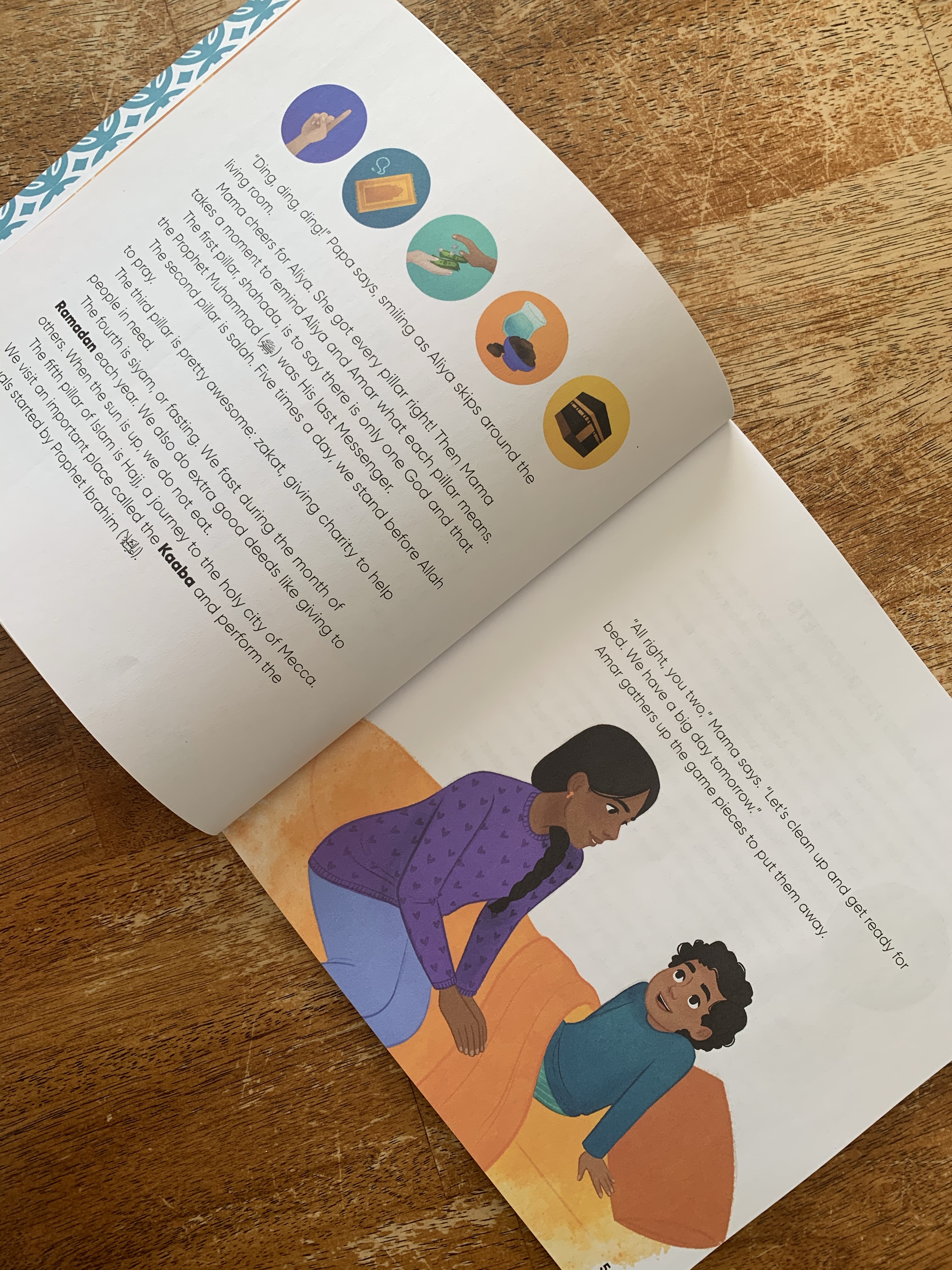
The first chapter opens with the Abdur-Rahman family playing an Islamic question game.  Older sister Aliya knows the five pillars, younger brother Amar needs a little more explaining.  The next morning the kids are heading to the beach, but first they have to get up to pray salah and send some food to the neighbor. As the kids drive they talk about Ramadan and their Uncle Sharif having just gone for Hajj.  There is then a page dedicated to a Quran Story Time that focuses on Allah swt wanting us to ask him for each and everything no matter how big or small. There is an ayat from the Quran as well as a hadith. The next page is a section called, “What We Can Do Together,” to further learn about the five pillars, and then some questions asking the reader, “What Do You Think?”.

img_0654

Chapter two has the family at the beach pausing their fun to pray.  But first they have to make wudu, and the steps are illustrated and detailed with tips and directions.  They then pray, again the steps and words are detailed and illustrated with tips about how to stay focused and the like.  The translation of the Arabic is included and the transliteration is as well.  The Quran Story Time focuses on Fajr and then the questions and ways to further engage with the information concludes the chapter.

img_0648

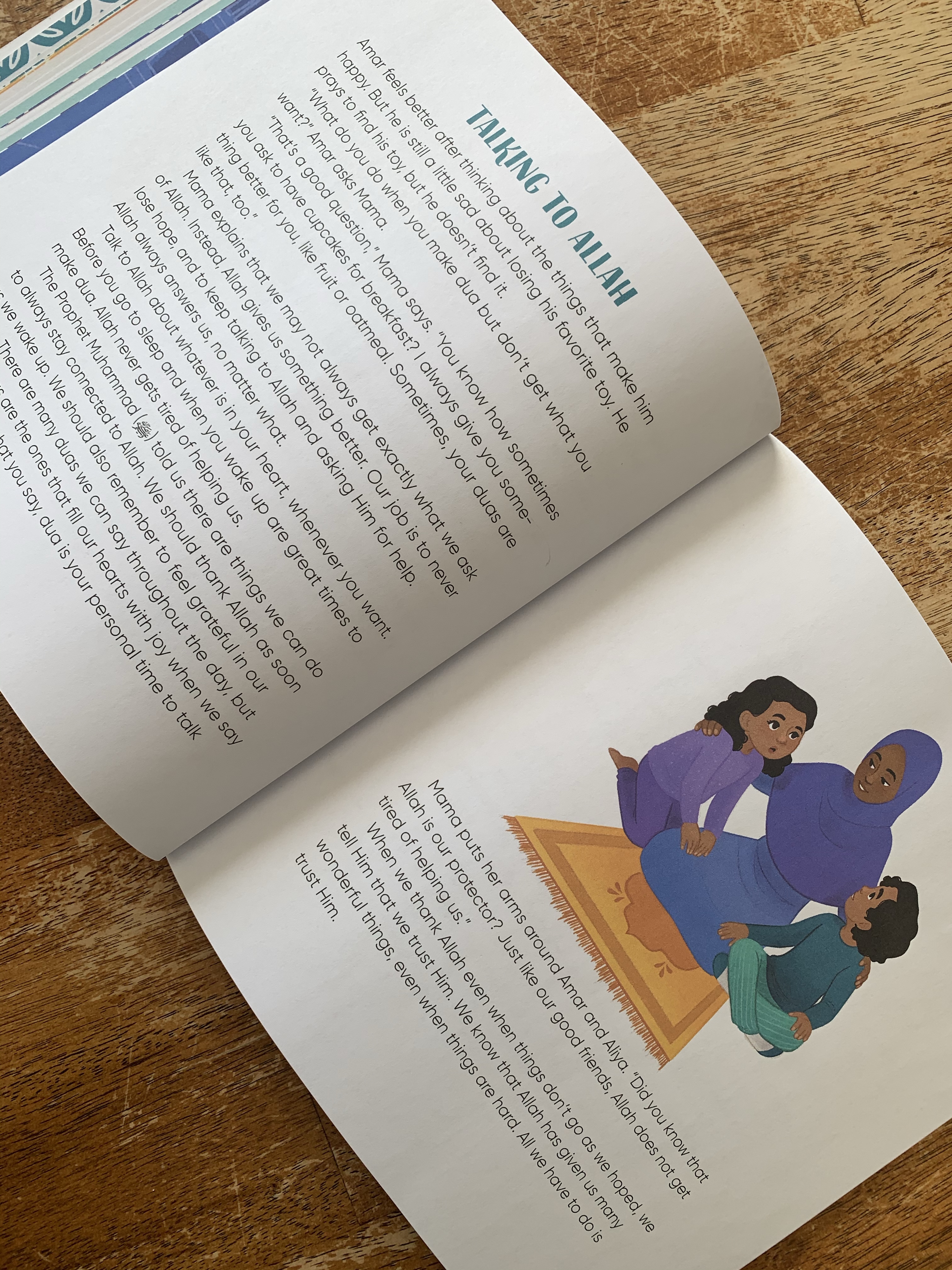
The third chapter is on Dua and has the kids barely making it to Sunday School on time.  Papa says he made dua that they wouldn’t be late, and even in class the lesson is on dua. After class Amar can’t find his toy even after making dua and is encouraged to be grateful for what he does have.  The Quran Story tells the story of Prophet Muhammad (saw) helping the old woman who is talking bad about the Prophet and how after he helps her and he tells her his name, she converts.  I don’t know that, that is in the Quran, I thought it was a hadith?

img_0655


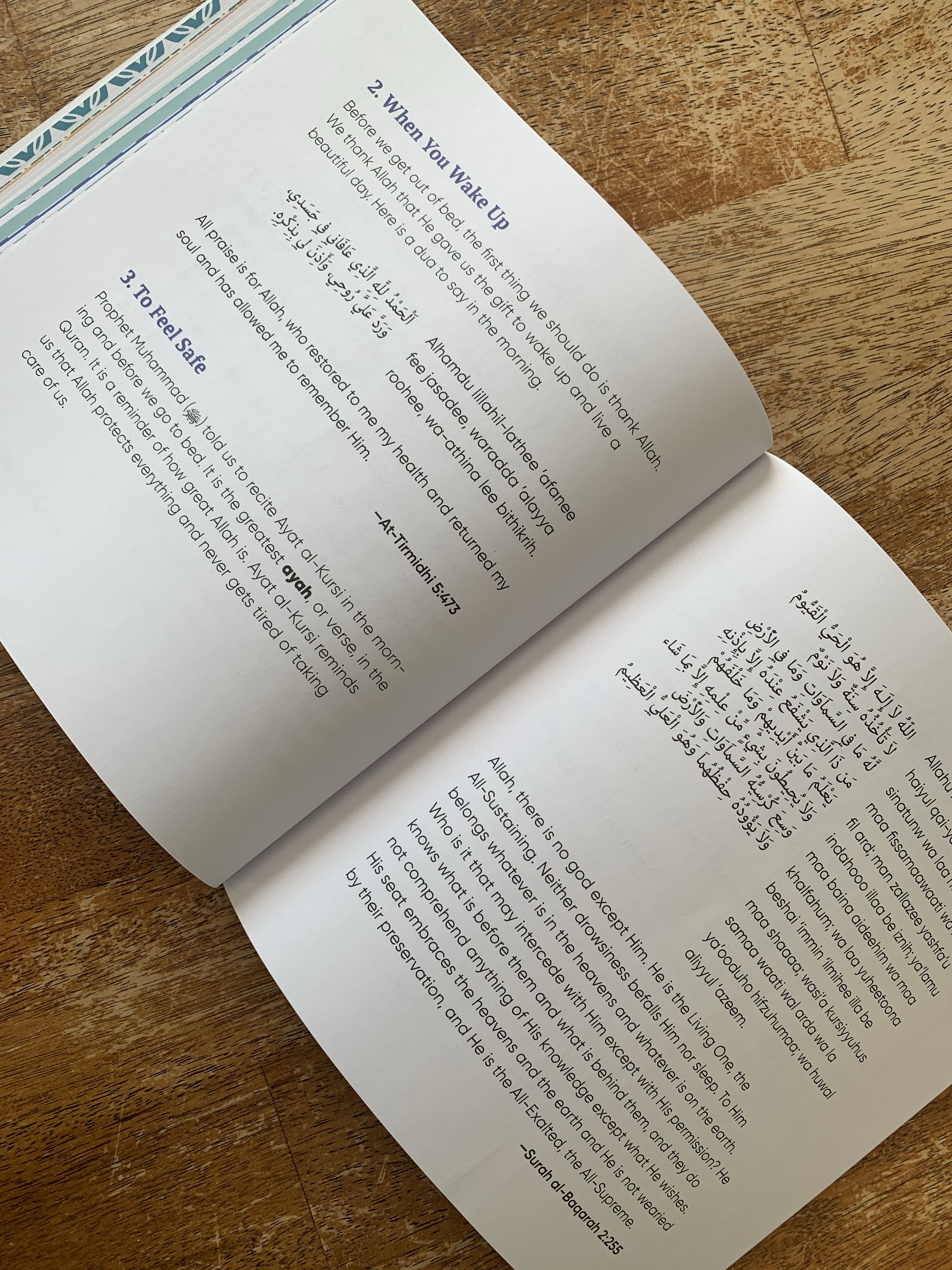
The kids learn that Allah swt may not answer duas, but will inshaAllah give them something better.  There are four additional duas to learn in the moving on section and the bolded words throughout are defined in the glossary.

img_0651

I’m not sure about the title of the book, it is about more than just prayer, so don’t think that it is limited to just that.  It also doesn’t detail the number of rakats or what breaks wudu, it is specific in somethings, but is more a broad overview than an all encompassing handbook on salat.

img_0656

I think the book is well done and will be useful for most, if not all, Muslim families with young children learning the basics, but it isn’t a picture story book in my opinion, it is more of a fun engaging twist on information that might otherwise be presented in a boring manner.

img_0650


Halal Hot Dogs by Susannah Aziz illustrated by Parwinder Singh

Standard
Halal Hot Dogs by Susannah Aziz illustrated by Parwinder Singh

hotdogs

I’m not sure what I expected this book to be, I just knew I wanted to get my hands on it, but I’m fairly certain, that even if I would have had some expectations, they would have been no where near how well done this 40 page book for four to eight year olds is overall.  It is unapologetically American-Palestinian Muslim in an inclusive funny delightful way, that only an OWN voice book can be. There have been some great picture books lately that are authentic, yet mainstream, and this book pushes that standard just a little bit higher as it normalizes jummah, halal food, dabke, hijab, with familiar threads of street food, spunky little sisters, untied shoelaces, tradition, and excitement.  The story has a twist and some intentionally misleading foreshadowing, that give the book depth and added fun.  Readers of all backgrounds will relate to this book and find something that they can relate to, as they laugh and marvel at Musa’s infectious enthusiasm for hot dogs. img_0610

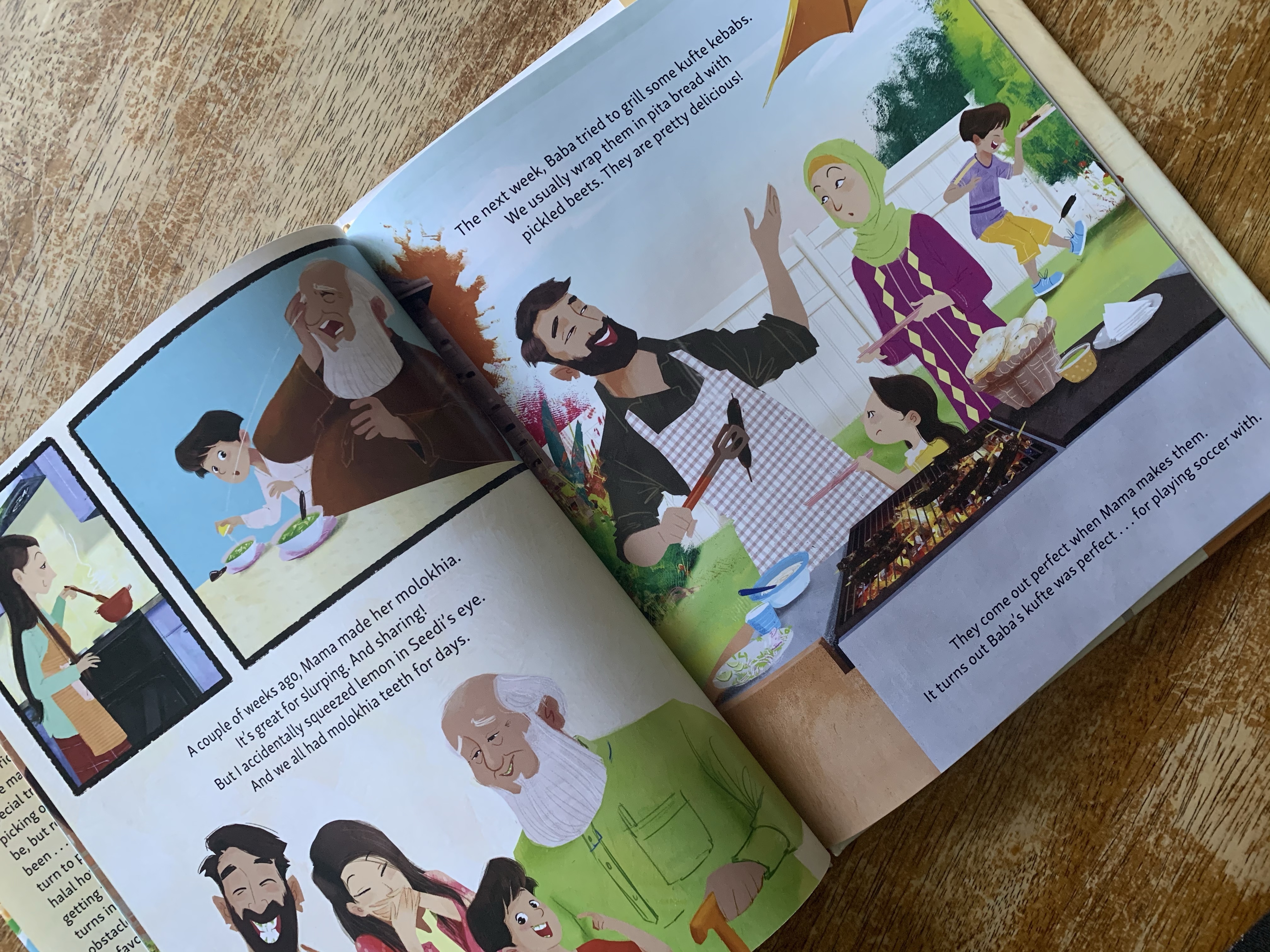
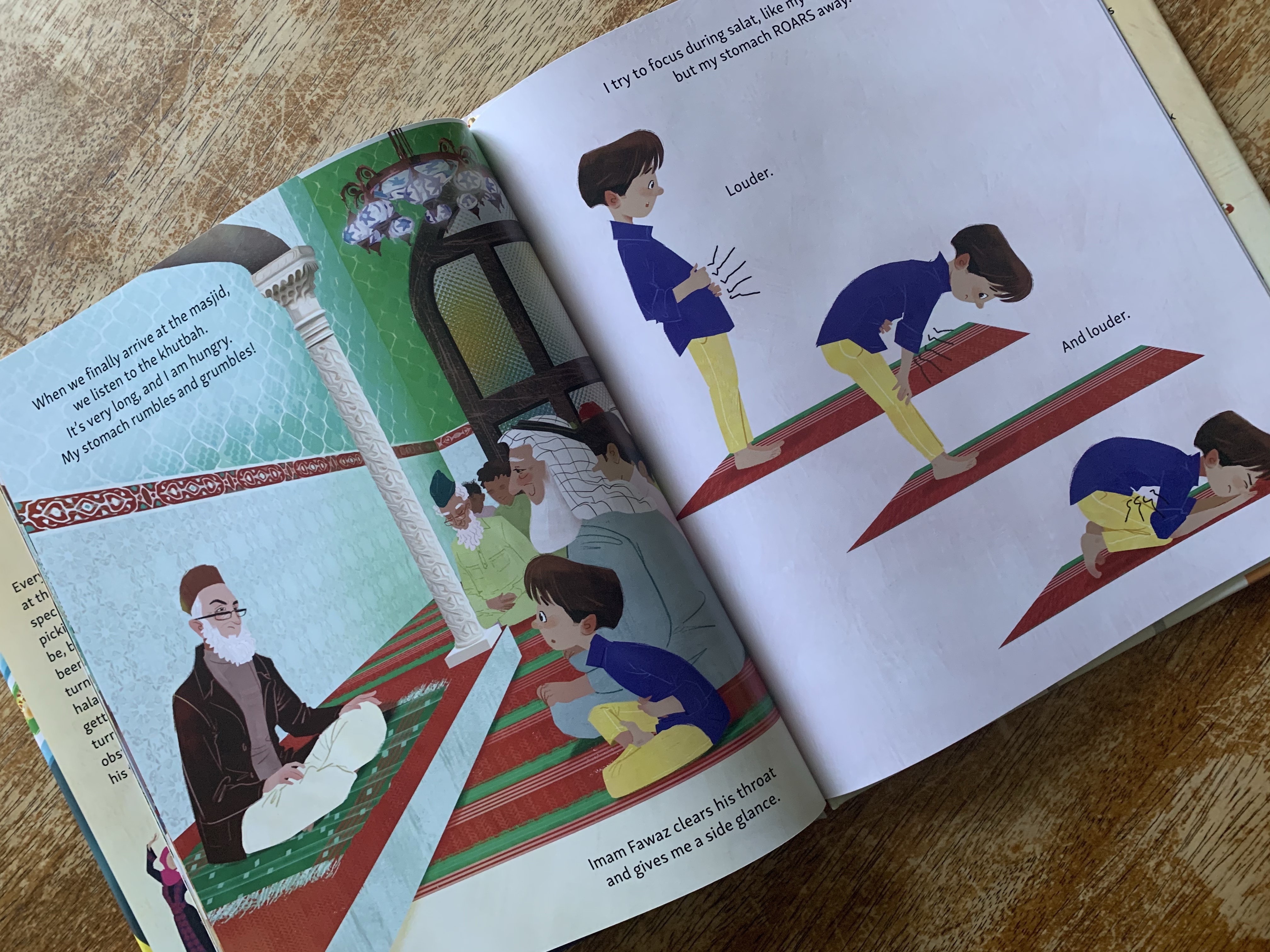
Musa Ahmed Abdul Aziz Moustafa Abdel Salam, aka Musa, loves Fridays.  His family heads to the masjid for Jummah prayer and then home for a special Jummah treat.  Lately, they’ve had molokhia, that stayed in their teeth for a week, kufte kabobs that were better for soccer playing than eating, riz bi haleeb with lost dentures, and prelicked jelly beans.  Alhumdulillah, this week is Musa’s turn to pick, and he is picking his favorite: halal hot dogs with Salam sauce.

img_0611

They head to the mosque dancing dabke as they leave their house with smiling faces.  The khutbah is long though, and during salat his stomach is roaring! Afterward he is off, but Seedi has to help Maryam find her red shoes in a sea of red shoes and mama is chatting with friends. 

img_0612

Dad gives in and lets Musa go get the hot dogs alone.  As he heads to the stall with the best hotdogs: the perfect amount of hot, chewy, juicy hot dog goodness, he passes all sorts of foods being eaten.  There is falafel and bao and tacos and samosas and churros, but he is determined to get hot dogs, even though the line is really long.

img_0613

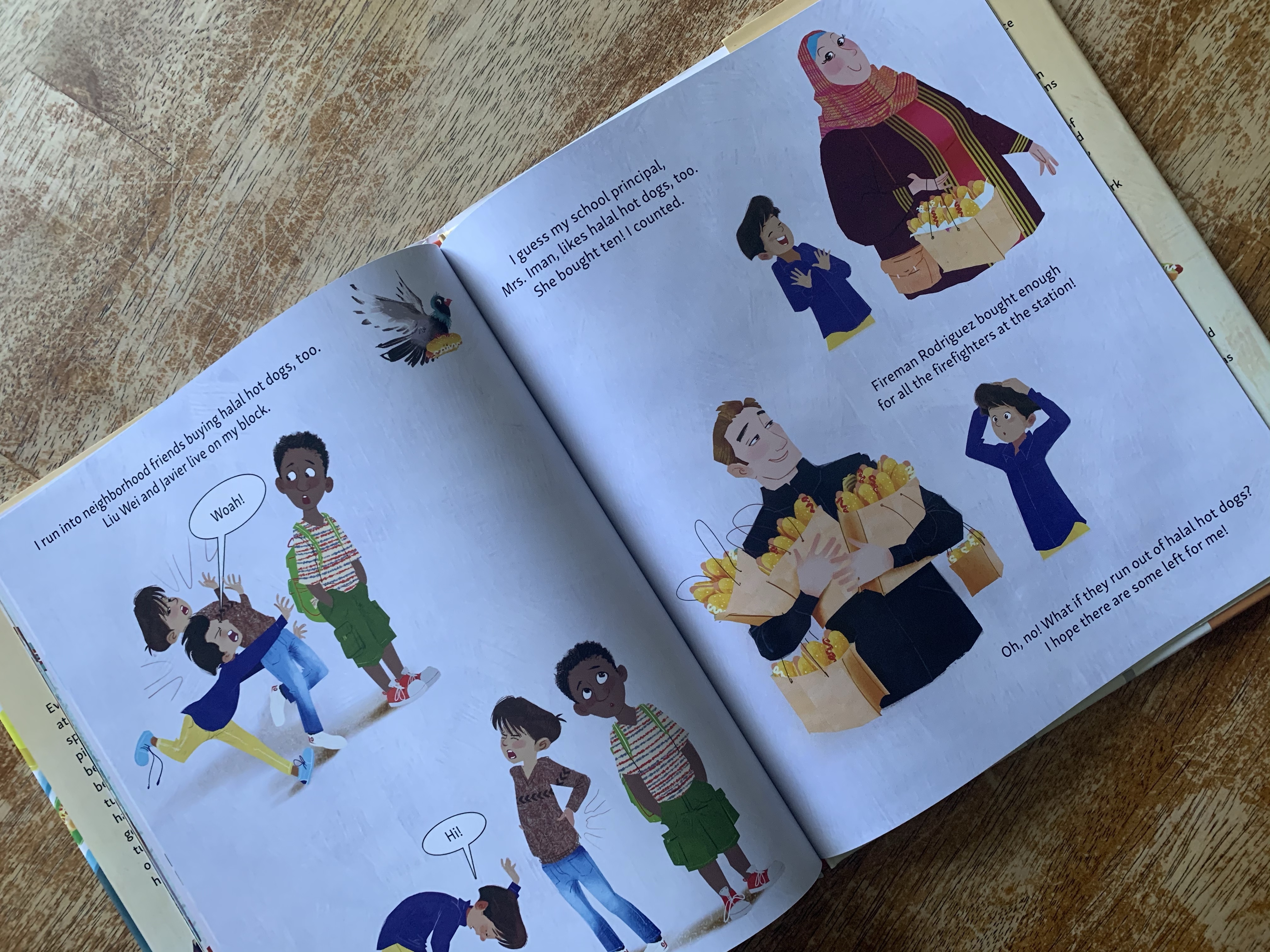
He sees friends in line, and firefighters, and even his school principal.  Everyone loves hot dogs, even birds and squirrels.  Finally he buys a whole bag full with special Salam sauce and races home to share with everyone.  But uh oh, it doesn’t go as planned, and I’m not about to spoil it, so get yourself a copy like I did from http://www.crescentmoonstore.com or your library, and maybe don’t read it while you are fasting, because you will be craving hot dogs, mmmmmm nom nom nom.

img_0614

There is an Author’s Note at the end that details her kids’ influence on the story and explains that a portion of the proceeds go to UNRWA USA, a non profit that helps Palestinian refugees.  There is a glossary of Arabic Words and Terms, and a section explaining Halal Laws.

img_0615

The book shows the mom in hijab outside the home, and uncovered within the home.  There are diverse skin colors among the Muslim and non Muslim characters in the book, as well as a variety of ages depicted.  Seedi wears a keffiyah on Jummah, but different clothes on different days.  The illustrations are wonderful and descriptive and do a lot to compliment the story by setting a relatable and diverse-positive visual.

img_0616

David’s Dollar by Tariq Toure’ illustrated by Anika Sabree

Standard
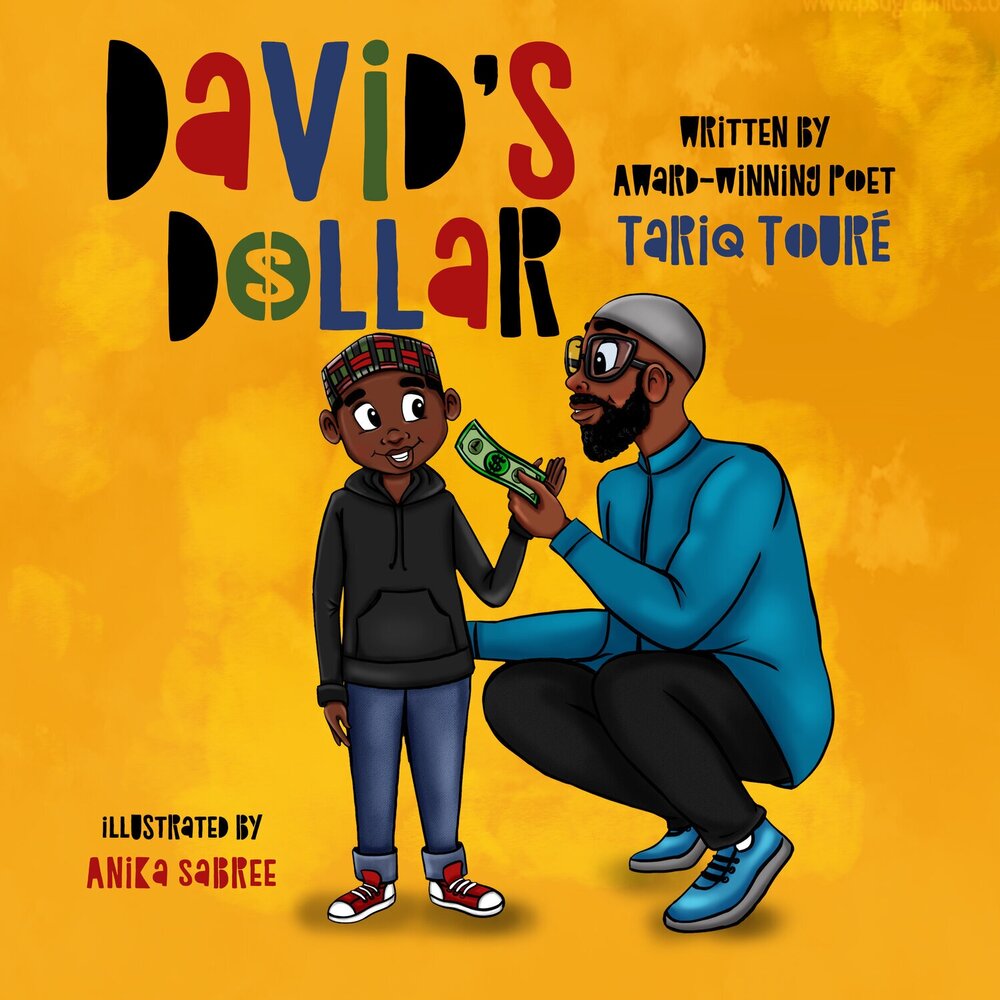
David’s Dollar by Tariq Toure’ illustrated by Anika Sabree

This early elementary 20 page story is an entertaining, yet informative look at community and economics on a kid’s level.  It features black Muslim characters, business owning women of color, commerce, charity, and relevance.  I loved the cadence of the book, the illustrations, and the simple text. Sure, maybe a dollar isn’t much and it is a transparent simplistic view, but it makes the point of how when you shop local everyone benefits, and how the path money takes impacts everyone it touches.

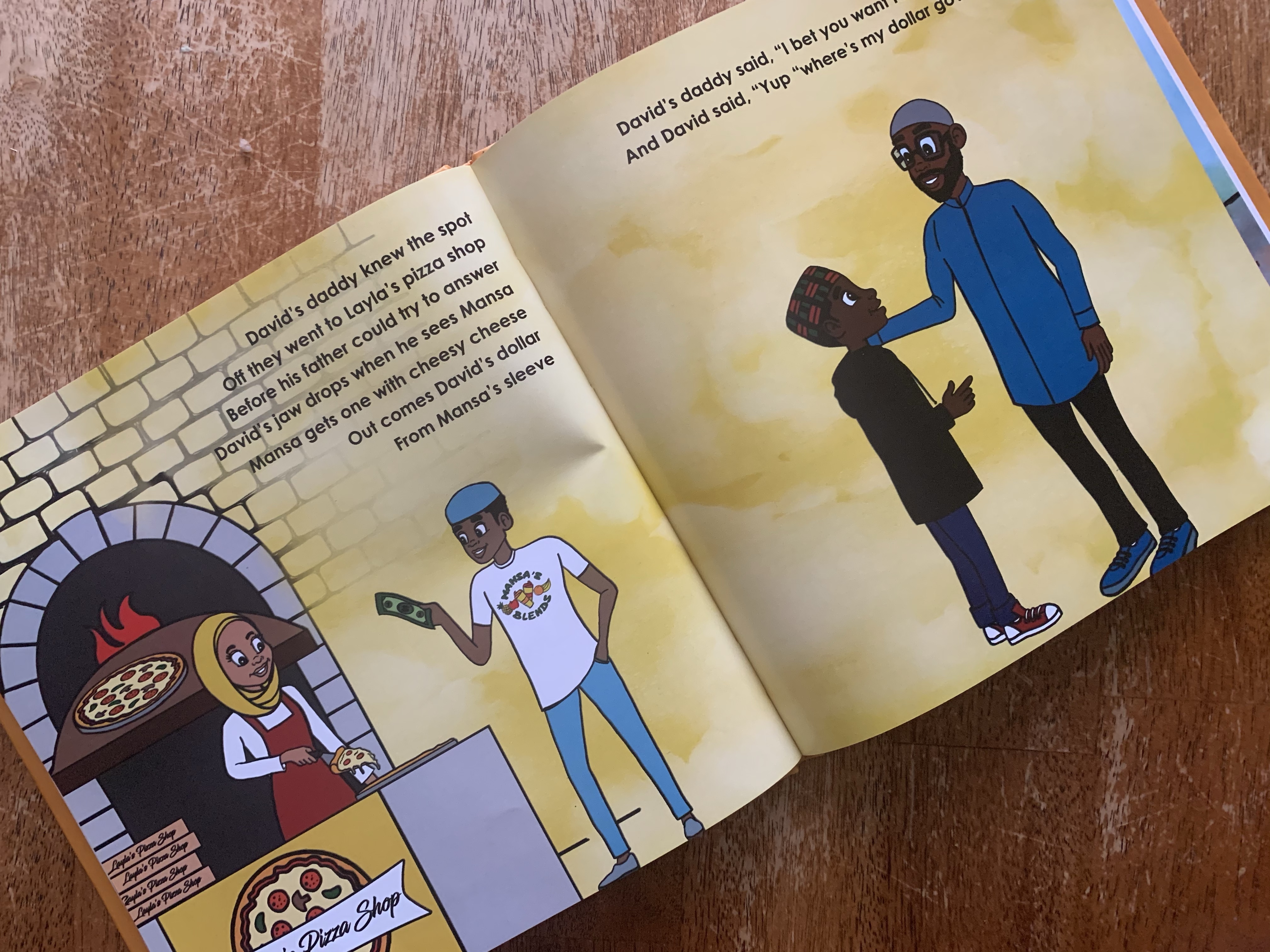
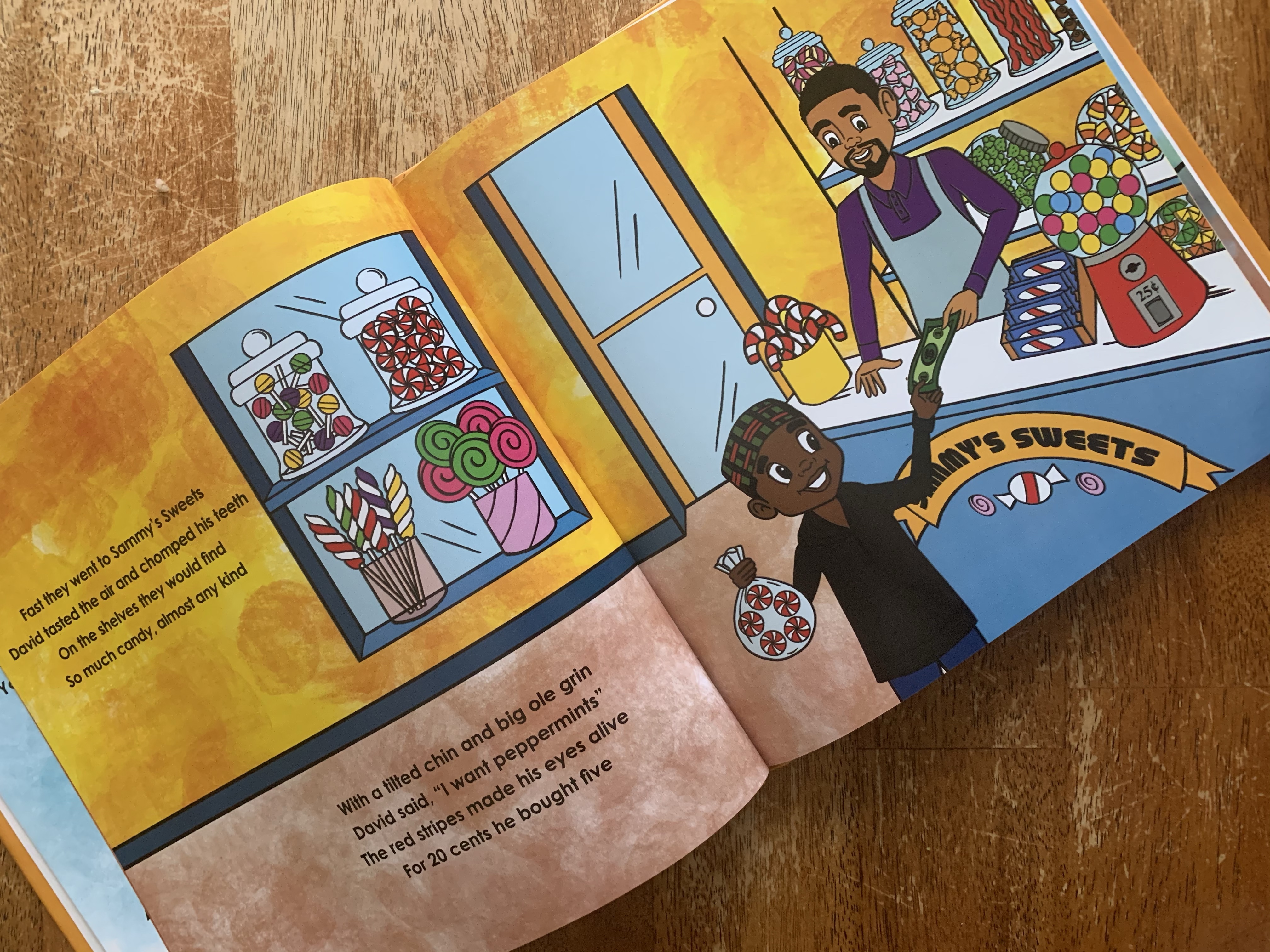
David is getting his dollar after doing his chores, and he is ready to head to the candy shop to see what to spend it on.  At Sammy’s sweets, he decides to get five peppermints, and just like that his hard earned money is gone.  He asks his dad where the money went and off they head to Mansa’s juice shop. When Sammy comes in and buys a drink, out comes David’s dollar and now it is in Mansa’s hands.

David and his Daddy follow the money and see it change hands at Layla’s Pizza Shop, and then Madame C’s Braids, before heading to Uncle Kareem’s hardware store where the dollar too has ended up.  It is time to pray so Uncle Kareem, Daddy, and David head to the mosque.

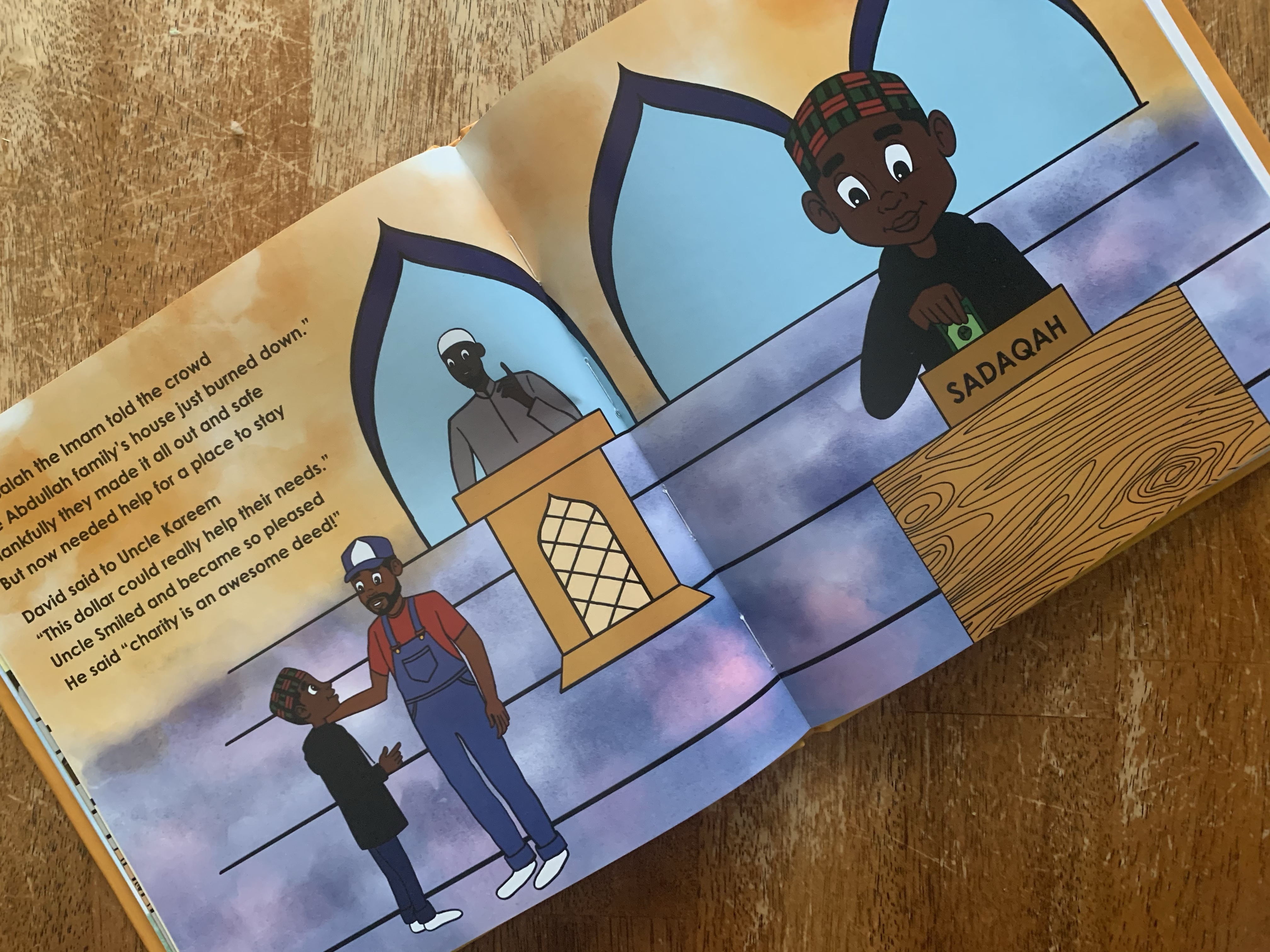
After Salah the Imam tells the crowd that a family’s house has burned down and they are collecting sadaqah.  David tells Uncle Kareem that that dollar should go to the family.  At night, David recalls all the places his dollar traveled and resolves to learn more math.

The book starts with a beautiful heartfelt gratitude message to Allah swt and the community of supporters.  The end of the book features a detailed bio of the book’s poet author and his successes and praises.

The story is rooted in an Islamic community, but is for all readers of all faiths.  There is no preaching or details about belief. many women have hijab on, there are Islamic names, they go to the mosque, they pray, and they give sadaqah.

Hannah and the Ramadan Gift by Qasim Rashid illustrated by Aaliya Jaleel

Standard
Hannah and the Ramadan Gift by Qasim Rashid illustrated by Aaliya Jaleel

img_0275

You may have seen this new 40 page Ramadan book that came out yesterday and thought, “another book about what Ramadan, is and a girl being told she is too young to fast, I’ll pass.”  And I’m here to tell you, please reconsider.  This book is wonderful and it is not the same-old-same-old.  I know the title and cover don’t hint at the heartfelt story within, but it really does an amazing job of showing, not just telling, about the feelings and purpose of Ramadan beyond the restraining of food and drink.  The text is a bit heavy, but the illustrations keep even four and five year olds engaged, and the story works for Muslim and non Muslim children alike.  The OWN voice book has a Desi slant with Urdu words, Pakistani clothing and featuring an immigrant family, but the cultural tinges are defined in the text and it flows smoothly.  This would be a great book to share with your children’s class to show how Ramadan is more than just going without food, or being just one day, or one act of kindness, it is an ongoing effort to show kindness to those near and far.  The book shows an authentic Muslim family and presents universal themes, making Ramadan and Islam more relatable and familiar to all readers, and inspiring Muslim children to find their own ways to save the world.
img_0276

The book starts with Hannah being woken up by her paternal grandfather, Dada Jaan, it is the first day of Ramadan, and she is excited.  She hopes that now that she is eight years old, she is old enough to fast.  Her heart sinks when she is told, “Fasting is for grown-ups, not for growing children,” but her spirits rebound when Dada Jaan tells her that she is going to celebrate Ramadan by saving the world.

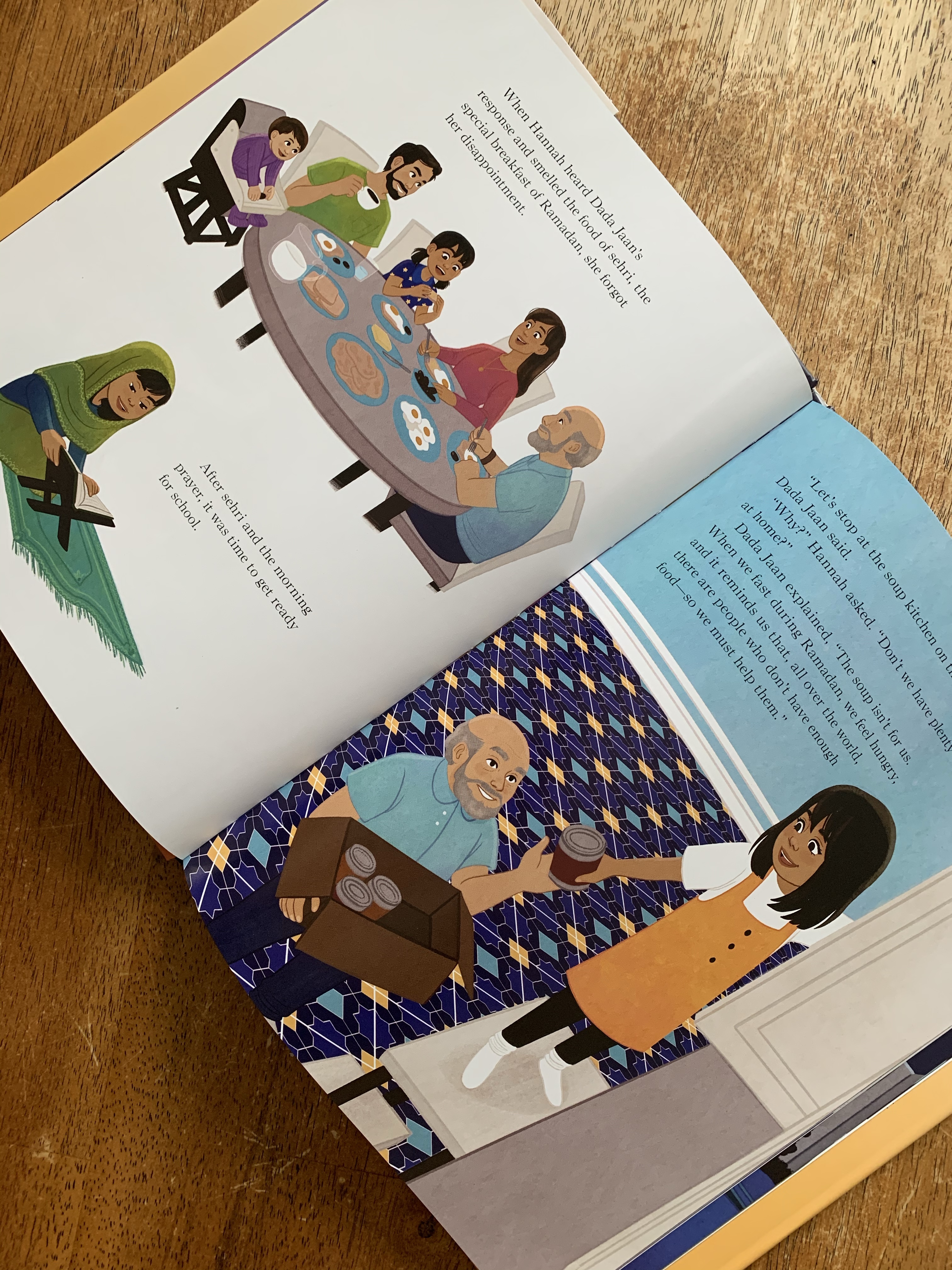
The first thing Hannah and Dada Jaan do is collect cans from the pantry to take to the soup kitchen.  Dada Jaan explains what a soup kitchen is, and why it is important to help those that don’t have enough food.  Hannah is worried they won’t be able to help everyone in the whole world, but Dada Jaan encourages her to start with her neighbors.

img_0277

Later in the day, Hannah’s friend loses a beloved family necklace, and when the bell rings she doesn’t want to be late for class, but she remembers that she is supposed to help, so she does.  Hannah finds the necklace, but her teacher is not happy when she comes to class late, and Hannah isn’t even given a chance to explain.

On the 11th day of Ramadan, Hannah and Dada Jaan decide to save the world again before they head off to the science fair.  They are packing up clothes to take to the shelter.  Hannah is worried that the people at the shelter won’t know that they are the ones that donated the clothes.  Dada Jaan says that it is enough to help people out of love and adds that the best superheroes work in secret.

img_0278

At the science fair Hannah sets up her model replica of Abbas ibn Firnas’s flying machine next to her friend Dani.  When Dani runs off to see a robot, his globe rolls off the table and Hannah saves it. Dani ends up winning and she is happy for him, but she is sad that no one knows she saved his project.

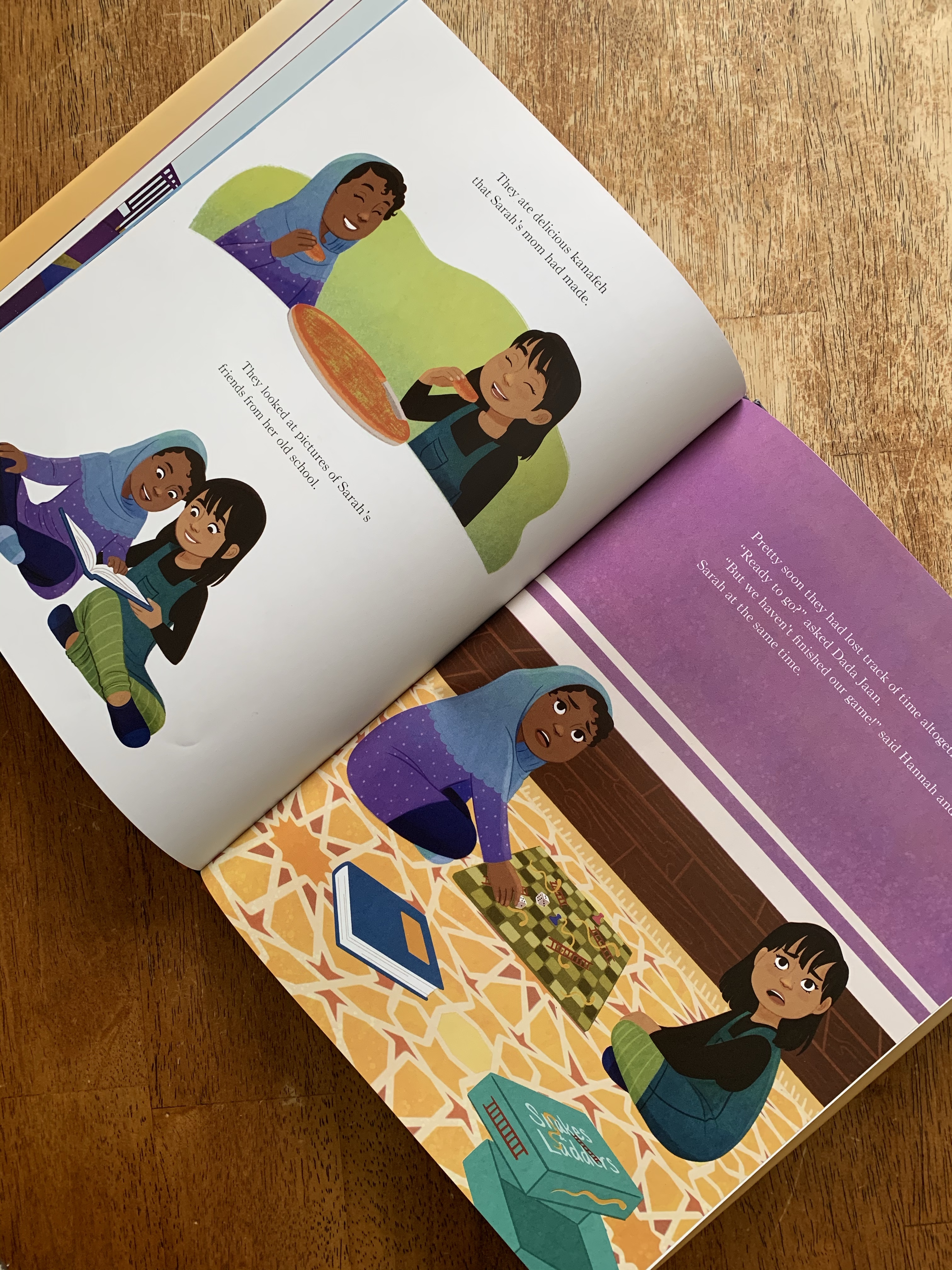
Twenty days in to Ramadan, Hannah has a play date with a girl she has never met before and Hannah does not want to go.  Sarah is new to the neighborhood and Hannah’s mom insists she goes.  Luckily Dada Jaan strikes up a deal that he will take her and they can leave when ever she wants.  Hannah and Sarah have so much fun together, Hannah doesn’t want to leave.
img_0282

When they get home, Dada Jaan shows Hannah old photographs of when he and Dadi Jaan had first come and didn’t even know the language.  They talk about how the kindness of others helped them, that and Dadi’s butter chicken.  The night before Eid, Dada Jaan asks Hannah if she helped make the world a better place, she doesn’t think she did, but he seems to think otherwise.

On Eid day they go to the mosque, then to the cemetery to pay respect to Dadi Jaan, and when they return home they find Hannah’s whole world there to celebrate with her.  Cousins, friends Maria and Dani from the church across the street and the synagog by the mosque, as well as the Sikh family that runs the soup kitchen.  Dada Jaan and Hannah enjoy gulab jamun, kheer, and jalebis as they discuss if Hannah really did help the world this Ramadan.

img_0280

It is hard in my heart to go wrong with a story that focuses on an amazing grandfather/granddaughter relationship that ends with them racing to get the last gulab jamun, so I might be a little bias.  But I was genuinely surprised and delighted by the direction the book took and the way it presented Ramadan in everyday situations that children can relate to and imitate. I was a little disappointed that the book wasn’t larger considering the phenomenal illustrations.  It is just 8.5 x 11.  I love that the characters pray and read Quran, and the mom covers and the neighbors are diverse.
The Storyteller of Damascus by Rafik Schami illustrated by Peter Knorr

Standard
The Storyteller of Damascus by Rafik Schami illustrated by Peter Knorr

storyteller

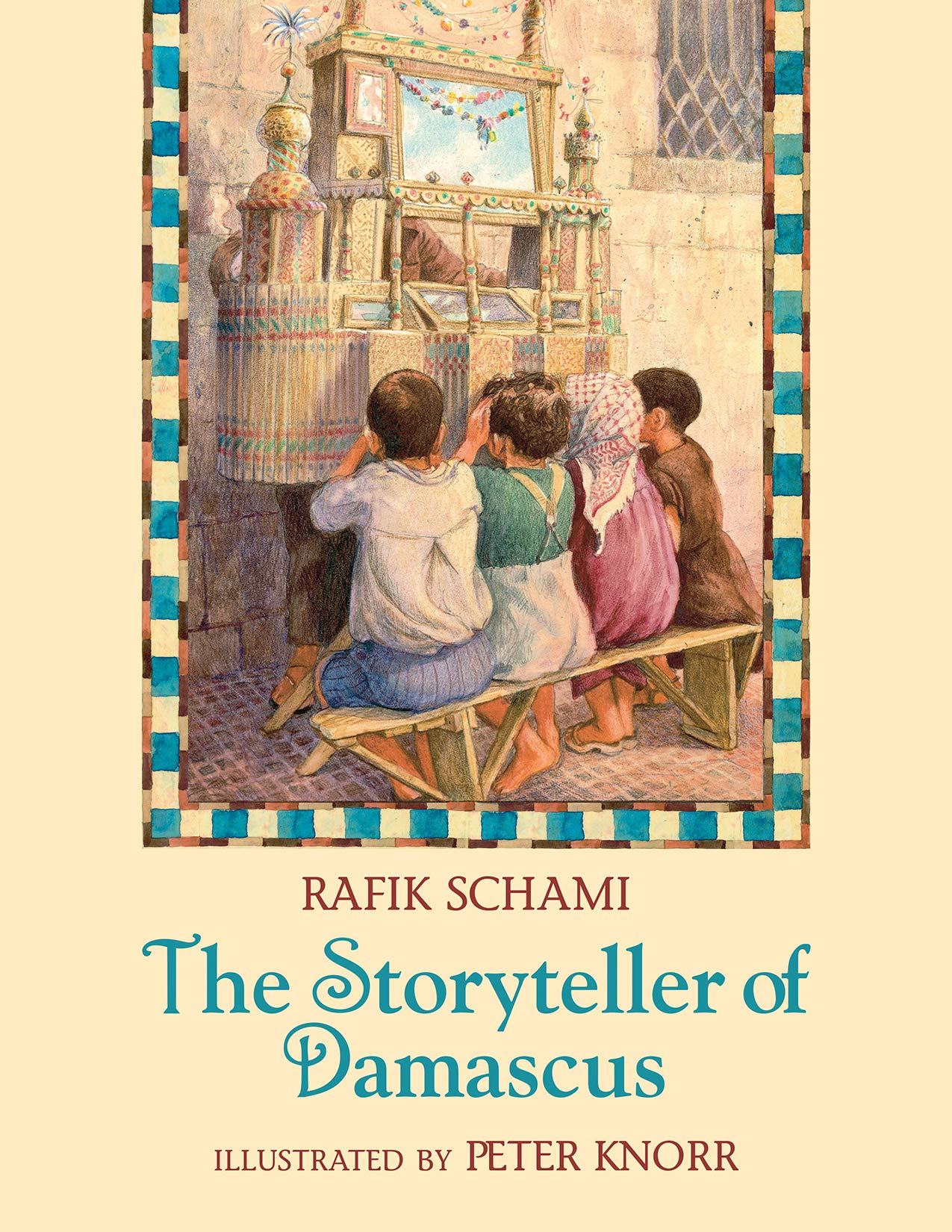
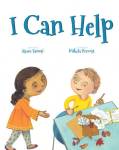
This book is not a quick read, it begs to be read aloud and the pictures poured over.  The 48 heavily text filled pages are a trip back in time before the tale twists in on itself and becomes a story that gets more outrageous with each upgrade.  It claims to be for grades first through fourth, but I think it would need a lot of hand holding and attention to get any children to read it.  The story would really come to life at bedtime with a loved one, or in a classroom with discussion, but I don’t know that most children in that demographic would willingly pick up the book, read it, enjoy it and reflect on it, without some guidance.  The illustrations show characters in hijab and thumbing tasbeehs, the text mentions Allah swt and in phrases calling on Him in exasperation.  There is a “kiss”, it is a love story after all, and some demons and sorcery, but I think it is clean enough and silly enough that kids of all ages will enjoy it and not find it offensive or scary.
img_0165

Many years ago an old man in the old city of Damascus, would walk around carrying a large chest and tell stories.  Four lucky kids for only one piaster each could look into the chest and see the images of the story, the other children could listen to the story for free.  He didn’t come often, but when he would come the children would rush to meet him and listen to the stories, their favorite the one of Sami and Leyla.

img_0166

Sami was a shepherd boy, he was beautiful, but poor.  Leyla was the daughter of the richest farmer in the village and after their “accidental” kiss Leyla and Sami met every evening despite Leyla’s father forbidding it.  The whole village is in a buzz over the two lovebirds.  When Leyla is kidnapped, her father reluctantly tells Sami that if he can bring her back then they can marry.  When Sami returns with her, Leyla’s father pretends to be ill and in need of milk from a lioness.  Once again he promises that if Sami can obtain the milk than the two can marry.  Sami not only gets the milk, but returns riding a lion.  Leyla’s dad says that he is brave indeed, but that his daughter can only marry a rich man and needs to pay 300 camels as dowry.  Sami heads to Damascus to steal the camels from the king, but gets caught and put in prison.  Lucky for Sami, a dove comes to visit him and after he saves her life, she grants him one wish.  Yes, the animals can talk.  The camels and freedom are granted, but still Leyla’s father is not willing to allow the marriage.  He summons a sorcerer to send demons to turn his daughter in to a lizard.  When night after night the demons fail and beat the sorcerer, it is revealed that the father hired him.  The next day the two are married.

img_0167

Over time the pictures in the chest began to fade and new pictures from modern advertisements are used to replace the traditional images.  Leyla becomes Colgate, yes, from a toothpaste advertisement.  She has a glorious smile and is now the daughter of a car dealer who drinks only Fresh Mountain mineral water.  She gets kidnapped and Sami hears about it on his Filix portable radio that she is being held in a club and is forced to serve ice-cold Coca-Cola.  The story continues like this, but at some point the children in the story become bored with the new version, and sing the jingles for the items mentioned instead, until the story teller packs up and leaves.

img_0168

Two years pass and no one has heard from the story teller, some say he went mad, others that he died.  Then one day he comes back to town and the children all run to listen to his stories.  There is a chest to peer in, but there is nothing inside, like magic however, when the old man starts to tell his story, the images appear in the minds of the children.

img_0169

The illustrations are wonderful and detailed, and radiate warmth and richness.  The conversation I had after with my own kids, about what was valued and the power of stories is so powerful to see dawning on the listeners.  They get it, they do, and they realize how ridiculous the “updates” were.  When they realize it is the story teller and the magic of being together and sharing a story, they too become one of the children in the book and it is wondrous to observe.