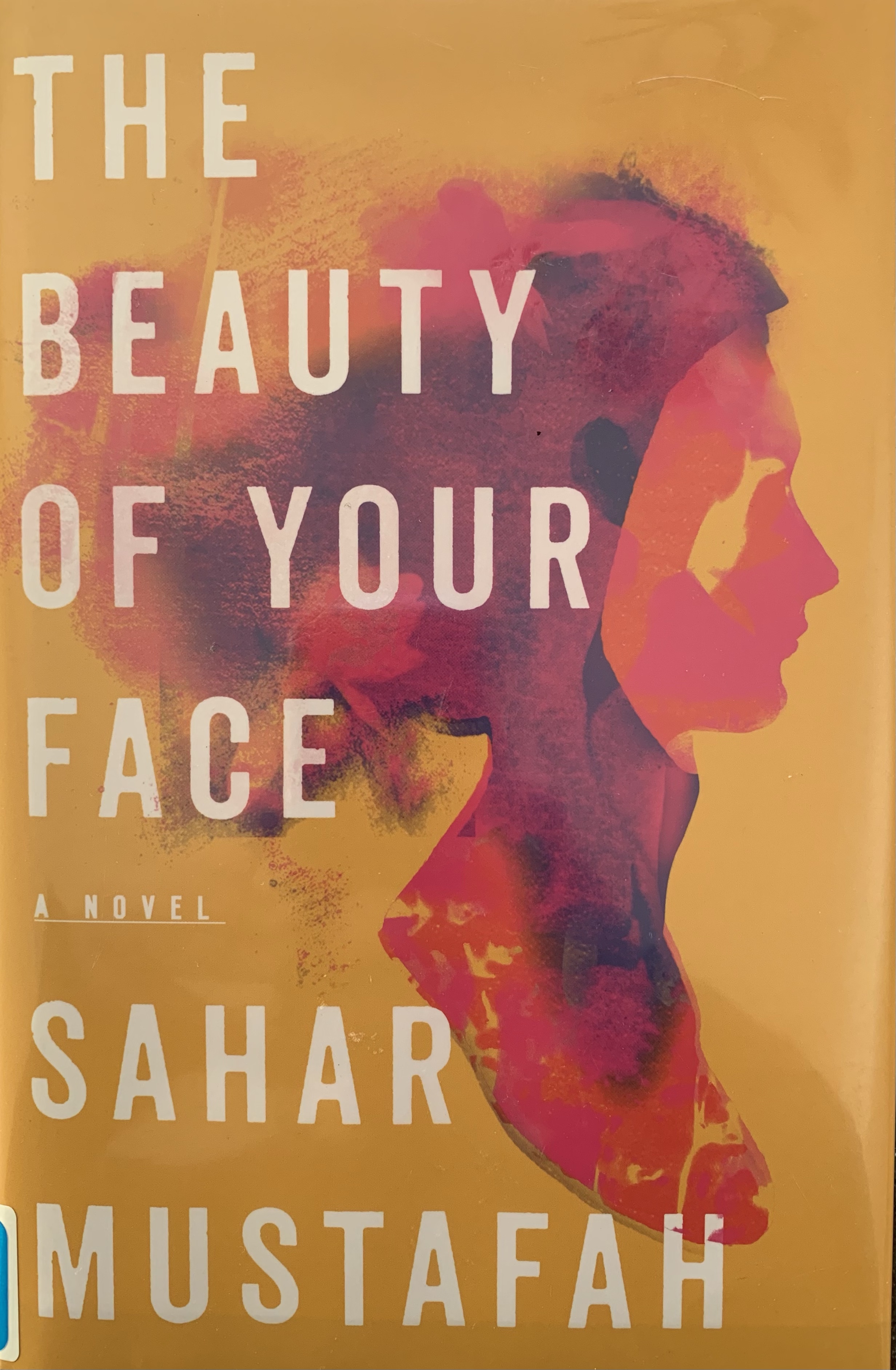
The Servant by Fatima Sharafeddine

Standard

img_6859This 157 page young adult book is translated from Arabic and while at times the story seems intentionally choppy, at other times it seems that the translation is making it more jarring than it needs to be.  I found the book interesting and powerful, in much the way a short story can be, but the length was awkward, as it was too long for a short story, and not long enough to really read as a novel with detail and depth and connection.  I love the growth and retaking of control that the protagonist embodies and I absolutely love the ending being left intentionally unresolved.  There is no mention of religion in this story set in Lebanon, until nearly the end when it states that she is Muslim.  I wonder if the translation took out some of the ‘Salams’ and ‘inshaAllahs’ that would have clarified it a bit even if prayer, or the athan or any outward signs of being a Muslim are clearly absent.  The book is probably fine for ages 13 and up.

SYNOPSIS:

Faten is essentially sold in to servitude by her family.  Her family lives in a village outside Beirut and when money gets tight she is forced to go and work as a house keeper/maid for the Zein family.  Once a month Faten’s father comes and collects her salary showing little to know affection for the eldest of his children. The small Zein family has two daughters and lives in a flat.  While the girls are in school, Faten cooks and cleans and dreams of being a nurse.  The family is not particularly cruel to Faten, they often refer to her simply as ‘girl,’ but they are not particularly kind to her either.  The highlight of Faten’s day is watching a young man across the street that drives a dark blue car, come home, study, and play piano.  On occasion she catches his eye, so he knows she exists, but the two know nothing about one another.  On Faten’s 17th birthday she decides she is going to gift her self something, and writes a letter to the blond man across the street.  She has her only friend in Beirut, Rosalynn, a much older house servant in the apartment downstairs from Sierra Leon, deliver the letter which asks the boy to meet her so that she might seek his help in a very important manner.

When Faten and Marwan meet, Faten asks him to obtain information about how she might study nursing and change her future.  The two secretly meet with Rosalynn’s help on Sunday’s, Faten’s one day off.  Faten borrows May’s books to study as she learns what exams she must take to make her dream a reality.  Marwan helps her with questions she needs assistance with and Faten and Marwan become close friends, with both feeling some attraction for one another just beneath the surface.  One day however, they are discovered by a friend of Mrs. Zein at a beach side cafe, drinking coffee and Faten is forbidden from leaving the apartment as a result.  With the oldest girl, May, married now, and nothing to look forward to on her days off, Faten dives in to her studies and is more determined than ever to pass her exams.

To even take the multiple day exam requires a few lies, a few favors, and the willingness to take a huge risk.  When the Zein’s find out she is let go, and now must face her parents back in the village.  With the help of her childhood friend, Faten clings to hope, confidence in her ability, and determination to pave her own way on her own terms.

WHY I LIKE IT:

I love that while Faten is the victim of cruel parents, and an unfortunate circumstance, she rises up and fights for control.  I love that she has feelings for Marwan, but that they don’t overshadow her future goals, nor does she become overly dependent on him.  I really love her strength in handling the situation with him when it is good, when it is tested, and when she has to walk away.  There are elements of it being a love story, but that is just one thread of the book, her charting her own path is much more the central story line.  I wish her religion and his religion would have come to the surface more, and sooner.  Lebanon is a diverse place and just saying they were of two different faiths could have provided a lot of insight and fleshing out of the culture and the dynamics the two would have faced.  The classism is a bit obvious, but even when that is explored it provides a better understanding to the characters and to the arc they are moving on.  I like that her childhood friend and family are so loving and that her mom is not completely written off as a passive flat character.  Overall, I like the story and the book, set in the 80’s it really could have gone a lot of ways, but it held close to the theme and provided enough side details that it felt grounded, believable and ultimately was enjoyable to read.

FLAGS:

When May is entertaining suitors there is some ogling that young kids might question.  There is a lot of lying and deception and the possible romance between Faten and Marwan that in the text is pretty clean, but there is some hand holding if memory serves and implied desire for the friendship to be more.

TOOLS FOR LEADING THE DISCUSSION:

The book offers a lot in terms of classism and forced labor to be discussed and the cliffhanger ending between Marwan and Faten would allow the readers to decide if they could be together despite their different faiths, economic status and families, or not.  I probably wouldn’t do it as a book club, but if I were a high school teacher, I might offer some sort of extra credit assignment involving the book, as the ending really lends itself to the reader projecting the characters’ futures based on their own perspectives which would be fascinating to hear.

The Salams: Cranky Kareem Says Alhumdulillah by Kazima Wajahat illustrated by Chaymaa Sobhy

Standard
The Salams: Cranky Kareem Says Alhumdulillah by Kazima Wajahat illustrated by Chaymaa Sobhy


img_6616

Part of me is tempted to channel my own Cranky Kareem and say how awful this book is, just because I know that the author reads my reviews of her books with bated breath, but alas I cannot lie even in jest as the book is truly adorable.  This 40 page book in a new series highlights and starts to fill the gap in children’s Islamic fiction that is so needed.  There are a number of books and series for toddlers teaching them to say Bismillah, Assalamualaikum, and MashaAllah and all the praise-filled Islamic expressions, but they are very basic, this book, and hopefully the rest of the series, goes a bit deeper.  It shows how to truly mean what you say, how to glorify Allah not just in your words, but in the way you think about things, handle stresses, and carry on.  The concepts and amount of text probably will most appeal to mature kindergarteners to early second graders at bedtime or in small groups.  I do wish that Cranky Kareem apologized to Happy Hamdi after he relentlessly attacked him at the masjid, but in much the way Oscar the Grouch gets away with being so negative, the characters in the book and the readers alike will have to settle for Kareem finally learning the lesson, in this case, of being grateful to Allah (swt) for everything.

img_6611

The book starts out with Happy Hamdi waking up in Salamville and praising Allah in appreciation of the fresh air, birds, flowers, and allergy medicine that works.  Across town Cranky Kareem is having the opposite kind of morning.  The sun is blinding, the birds annoying, coffee bitter, and he’s out of milk for his cereal.

img_6612

When Kareem finally finds some peace and quiet on a bench at the park he is disturbed by Happy Hamdi and all his happiness.  As Hamdi and bounces off to talk to Greedy Gamal and Healthy Hassan, Cranky Kareem gets an idea.

img_6614

When Happy Hamdi heads to the masjid, Cranky Kareem sticks out his foot to trip him.  Hamdi falls and gets a bruise on his nose, but still says Alhumdulillah. He then knocks sticky baklava on him and again he responds with Alhumdulillah, he then dumps a bucket of ice water on Hamdi, and Happy Hamdi says Alhumdulillah once more.  When he leaves the masjid, Hamdi’s car is not working and he has to walk home.

img_6613

Kareem can’t take it anymore and confronts Hamdi.  Happy Hamdi explains that he was hungry and didn’t mind the syrup, then the water washed the syrup off and now that he is walking home, his fur is drying.  Flabbergasted by Happy Hamdi, Cranky Kareem stomps off.

img_6615

Convinced that Hamdi’s happiness is an act, Kareem pauses to ponder how his plan failed.  Healthy Hassan jogs by and bumps in to him, knocking him off the train track and causing Kareem to twist his ankle, just before a train goes swooshing by.

Realizing that the bump saved his life, Cranky Kareem expresses his appreciation to Allah swt by saying Alhumdulillah.

I love the illustrations and the horizontal layout of the book.  The book is cute and I can’t wait to share the rest of the series with my kids.  Thank you to Crescent Moon Store for having this, and so many wonderful books available.


That Can Be Arranged: A Muslim Love Story by Huda Fahmy

Standard
That Can Be Arranged: A Muslim Love Story by Huda Fahmy

arranged

I’m not entirely sure why I didn’t review and highlight the first book, “Yes, I’m Hot in This: The Hilarious Truth About Life in a Hijab” I really should have, so to cut to the chase if you don’t follow the author/illustrator on social media you really should and you should read both her books.  Both are for all ages and while meant for adults, teens and tweens love it as well, I should know I’ve purchased and gifted over a dozen of them. I find my kids thumbing through both books a lot: my (early) teen girl and my tween boys.  Part of is it because the comics are funny, relatable, but more importantly as I’m learning from my kids, because they are curious.  In this book particularly, it is a great example of how Muslim marriages can happen, sure my kids know how my husband and my marriage was “arranged,” but they are constantly surrounded by ideas of dating and crushes and even divorce that I never realized that a book like this, featuring Muslims, actually Islamically contextualizes some of their gleamed information.  The fact that the book is hilarious and clean and rings with such honesty, makes it easier for them to articulate their questions and removes some of the taboo as well.  So, buy it for yourself to enjoy and if you have kids 11 and up in your home, you are ok to let them read it too.

img_6586

SYNOPSIS:

It isn’t a chapter book, it is part comic book, part story, part info-graphic, and all biographical.  The book opens with an ayat about spouses from the Quran and follows with an informative and funny message to the reader.  Seriously, I laughed as she explained about drawing herself with hijab in bed and noting that most people don’t read the notes to the reader at the beginning. There are also a list of helpful terms before the introduction begins.  Her story is broken up in to sections to pace and move the story along.  It starts with the ground work of expectations and cultural norms and then tells her story of how she eventually met and married her husband.  Not that it is straight forward, the book is 192 pages.  There is a decent amount of explaining Islam and the role culture plays in the many pitfalls and big decisions along the way.

img_6587-1

WHY I LOVE IT:

I think any female, born Muslim, over the age of 20 will relate to a lot in this, lots of others will as well, but that demographic specifically will find parts very reflective of their own experiences.  I love that it shows the banter between the protagonist and her mother, truly that to me was the heart of the story.  I love that it shows female empowerment and vulnerability at the same time within an Islamic context and unapologetically.  This book is by a Muslim for Muslims, but non Muslims will enjoy it as well.  It dispels and illustrates what an “arranged marriage” can mean for Muslims and shows that there is more than one way to understand the label.

I love the size of the book, the binding and the page quality.  I had no problems with “Yes, I’m Hot in This,” but after seeing the larger size of this book 7 x 8 and the thicker pages, I really preferred this presentation.

img_6589

FLAGS:

Clean

TOOLS FOR LEADING THE DISCUSSION:

Obviously not really a candidate for a book club, but I think teen girls would enjoy reading this and laughing about it with a group of friends.

img_6590

So fun and so good, alhumdulillah.

I am Brown by Ashok Banker illustrated by Sandhya Prabhat

Standard
I am Brown by Ashok Banker illustrated by Sandhya Prabhat

This 40 page celebration of diversity within the label “brown” is a sweet and powerful book that shows how the color of our skin is beautiful and perfect while at the same time making it clear that who we are and what we can be is not defined by our appearance.  The book shows adorably illustrated brown children finding strength in different cultures, clothing, religions, languages and dreams, which will hopefully empower children everywhere (and of all colors) to take labels that may have negative connotations and turn them in to positive affirmations of identity and strength.  There isn’t a story with a plot, but with the regular inclusion of a girl with a scarf on, and the mention of a mosque, I thought to highlight it.  The book is perfect for preschool and up.  

img_6226

The book starts with a little girl identifying herself as brown, beautiful and being perfect.  It then stretches to her being love, friendship and happiness.

img_6228

From there it branches out to a whole cast of kids identifying the variety of things they can be, from a writer to an electrician to a prime minister. the same kids then do and make and work on things before identifying where they come from and what languages they speak.  

img_6227

The kids all have different hair on their heads and faces and even no hair at all. They live in different dwellings, they like to do different things. 

img_6229

Brown people are not a monolith, the kids show that they eat different foods in different ways, that they wear different clothes.

img_6230

People with brown skin are roommates and teachers and friends and classmates.  Some go to temple or church, others a mosque or shrine, some not at all. 

img_6231

The book ends with a close up of three smiling faces proclaiming, “I am brown.  I am amazing.  I am You.”

img_6232

I’m sure people will argue that if you switch out white for brown the book would be deemed racist, and you are correct it would be.  But as a group that is marginalized as “other” and often the darker brown you are with in the brown subset moves you “value” and “worth” down, makes a book celebrating the strength and beauty of “brown” so necessary and heart warming.  I personally am the lightest “brown” imaginable being only half Pakistani.  So, believe me I have privilege in the desi community, but I don’t find this book offensive at all.  I’ve read this book at least a dozen times and my impressions alternate between beaming with pride and tears that so many beautiful people feel less than because of skin color and yes, anger too,  that people are MADE to feel less than.   May we all be more inclusive, more loving, and more open to the diversity of the human being. Ameen.

A Galaxy of Sea Stars by Jeanne Zulick Ferruolo

Standard
A Galaxy of Sea Stars by Jeanne Zulick Ferruolo

This middle grade, 330 page book is an easy read that touches on concepts of change within friendships and families with the back drop of life in a coastal town, finding courage, and Islamaphobia. While early middle school readers might find the book a bit predictable and cliche’, the characters, lessons, and fluid storytelling would still make the book worth their time.

SYNOPSIS:

Eleven year old Izzy spends her summer days in Rhode Island on her skiff mapping out the floor of the pond that runs next to the ocean. Fearful of the open ocean, she is, however, confident and independent in her abilities to navigate the calmer water and understand what is beneath the surface. Her father has recently returned from Afghanistan and with his post traumatic stress disorder making him angry and not the same as before. Izzy is further thrown into turmoil when the family moves out of their house and into the marina, her mother extends her already summer long absence to Block Island and middle school at a new regional school is about to start. As always she hopes to lean on her fellow sea stars, Zelda and Piper, best friends since kindergarten, however, things with them don’t quite seem the same either. Add in that her father’s translator from Afghanistan and his family have just moved in upstairs with their two young boys and 11 year old daughter Sitara, and Izzy has a lot to handle and navigate.

Piper and Zelda decide to take television production class first period to make sure they have at least one class together, Izzy is incredibly shy and while she appreciates that this has all been arranged she isn’t confident that it is a good fit for her. Dragged along, as it seems she often is by her much more confident friends, It is arranged that Sitara will also be in the class. Right away Piper and Zelda decide that they don’t like Sitara and her hijab and her “different-ness” and exclude her and by extension Izzy from their lives. As Sitara and Izzy get closer and start to learn from one another, Piper and Zelda lash out and go from ignoring to being mean to Izzy and Sitara. Sitara explains to people on the announcement show why she covers and helps Izzy to understand that her father was in danger after helping the Americans and that they had to leave Afghanistan. The anniversary of 9/11 however, turns many students into verbally berating Sitara and her having her hijab pulled off in the lunchroom. When Izzy figures out that her former sea stars were involved in the planning she is devastated and must take the lessons from Sitara and her Czech Grandma to have more courage than fear, find her voice, and do something to make things right.

WHY I LIKE IT:

I love that Izzy has a lot going on in her life and in many ways Sitara has been through a lot, allowing them to encourage each other to keep moving forward. There are some parallels in losing their homes and dealing with change that they comfort each other with, but the two characters combined show readers that strength and bravery occurs when you are afraid, and that most people aren’t truly fearless. I really feel for Izzy, her friends may have been there for her on occasion, but by and large they seem kind of dismissive of her and her fears. I think she sees them as equal, but I don’t get the feeling that they see her that way, they may be protective of her, but they kind of bully her in to doing what they want. Every few chapters is a flashback to a pivotal point in the sea stars friendship and even before Sitara enters the dynamic, I started to question Piper and Zeldas sincerity. Their best friend just moved, her dad came back from serving in Afghanistan, and her mom is not coming home, they should be concerned, not belittling her for liking art and wearing old clothes. The mom is another painful plot point, like lady I get that you have stuff going on in your life, but really you are just going to leave your child? Ya, I wasn’t a fan of hers.

I like that the story addresses Islam and Islamaphobia, and while it is very much in the story, it isn’t really about it. Izzy is front and center, and even she takes a while to warm up to Sitara. I love that it shows what Afghanis that helped fight against the Taliban went through and how painful it is for them to resume life after doing so. I think this point is so lost in mainstream understanding whenever there is a terrorist attack, that this is what the refugees are leaving, that people in Afghanistan and Iraq and Syria are running from, and when they get called terrorist it hurts that much more, because their whole lives and people they care for have suffered from the real terrorists.

I really wish there was a map, I wanted to visualize better the breachway and had I not lived in Rhode Island for a few years I probably wouldn’t have understood Block Island’s location to to the mainland. Like with so many middle grade novels I wish there was some more depth to the characters, but I truly appreciated that there wasn’t a completely happy ending, and that growth occurred in so many characters, but at different rates. It really made it clear that we all need to continuously work to get to know one another, find our voice, our courage, and be willing to change.

FLAGS:

Clean.

TOOLS FOR LEADING THE DISCUSSION:

I don’t do an elementary book club, but I think this would be a great recommendation for those that do. There is a lot to discuss and explore that kids can relate to. The majority of the characters are female, but I think the themes are universal enough that boys will enjoy the book as well. I’m confident all readers will learn something new about sea stars and possibly even television production in this sweet story.

The Cat Man of Aleppo by Irene Latham and Karim Shamsi-Basha illustrated by Yujo Shimzu

Standard
The Cat Man of Aleppo by Irene Latham and Karim Shamsi-Basha illustrated by Yujo Shimzu

cat man

This 40 page true story about Mohammad Alaa Aljaleel of Aleppo aka the Cat Man shows how one person can make a difference even in the middle of a war.  The amount of text on the page, the topic covered, and the detailed illustrations will most appeal to second graders and up, but younger kids, particularly those that love animals, will enjoy the story as well.

D63A0C5F-727E-427A-AF82-31AAB49F8F51

Alaa loves his city: the markets, the foods, the people.  When war comes, he doesn’t flee, he keeps working as an ambulance driver.  He has a big heart.  His sees destroyed neighborhoods where everyone has left, except for the cats.  There is no one to feed them and give them water, and Alaa feels for them.

E286EEDD-0114-4A0C-A712-DC8F162F4AC6

After his shift he buys meat, and feeds over a dozen cats.  He does this everyday and soon a dozen turns in to fifty and he realizes that he can no longer care for the cats alone.  He needs a place for them.

43F2DBA2-9364-4107-93F2-983172AE9191

Word spreads and volunteers and donations start pouring in.  He purchases a building with a shaded courtyard and soon cats are everywhere.  When people leave Aleppo they bring their beloved cats to him, and even other animals start arriving.  Alaa even builds a playground for the children and digs a well so everyone can have fresh water.

ABA9B59B-43F3-4EEF-83AE-8CC8461D8CAA

The book is pretty straightforward and steady, it doesn’t have much emotion for such a powerful true story, but it will still hit the mark in inspiring children to show kindness and compassion for animals and others.

6B5F68B3-1DA4-4117-A66A-7210DACC468F

There are notes from each other and the illustrator at the end that share light on their connection to the story and the situation in Syria.  There is nothing religious in the book other than a few females in hijab.

Littering Stinks by Summayyah Hussein illustrated by Eman Salem

Standard
Littering Stinks by Summayyah Hussein illustrated by Eman Salem

img_6510

This 36 page early chapter book is a good introduction to the concept that one person can make a difference.  The seven chapters flow easily, and while the names of the cities, Freshtown and Dumpton are a little on the nose and the premise a bit of a stretch, fluent 1st and second grader readers will enjoy the story and delightful pencil illustrations of a kid changing things for the better and making a difference.  One blatant hole for me was the lack of outright Islamic preaching.  For a book that is not available in mainstream outlets here the US and only through Islamic book stores, I expected more than just a Muslim family with hijabi characters and Islamic names.  I wanted cleaning up the environment and doing good deeds to have hadith and ayats quoted and referenced throughout, but alas there are none.  So, I suppose the book isn’t “Islamic Fiction.” but, in my opinion it really could and should be.

img_6514

SYNOPSIS:

Aliyah and her family have just moved to a new city, Dumpton.  Transferred by her father’s work, the family is shocked by the trash, smell, garbage and flies everywhere.  The kind neighbor lady brings them a pie and welcomes them to the neighborhood, but is later seen throwing a candy wrapper out the window.  Aliyah is shocked that such a nice lady is also a litterbug.  Aliyah calls a family meeting to come up with a plan to clean up Dumpton.

Each day Aliyah tries something new: cleaning up the street she lives on by herself, letting people know about littering, putting up signs, and finally on day four forming a clean up crew.  But nothing works.  Aliyah gets discouraged, but her parents encourage her to do the right thing no matter what.

The night before the first day of school Aliyah has an idea, she grabs a bunch of solid color t-shirts and a permanent marker and makes herself some shirts to encourage people to take care of their trash.  Every day she wears a different one with a different saying and by the end of the week people are starting to ask her about them.

The following Monday, her brother joins her and wears a matching shirt to start the cycle again, but when she gets to school the two of them aren’t the only ones wearing yellow t-shirts that say “Littering Stinks.” Everyone is!

The principal calls her into the office to discuss the potential of children to change the pollution in their city and slowly but surely they get the city cleaned up.

img_6513

WHY I LIKE IT:

I love that it encourages everyone, no matter how small, to make a differences and do what they can to make things better.  I love that it doesn’t just happen and that she gets frustrated and has to power through and stay true to herself. The main character wears hijab, but there is no mention of religion or faith which would have added some depth to her as a character finding motivation from belief in a higher cause and a responsibility to the care of the Earth.  Even some concern with starting at a new school as a hijabi would have possibly added some relatable connection to her personal strength and why she is willing to trust herself with the littering task at hand.

The premise that no one born and raised in the town seems to have a problem with the littering and pollution or that people from the outside haven’t been completely disgusted by it, but rather joined in over time, is a bit far fetched.  Sure you could make the argument that in other countries this is how it is, but it seems like a bit of a leap given the setting of the book and the target audience.

img_6512

FLAGS:

Clean, haha pun intended?

img_6515

TOOLS FOR LEADING THE DISCUSSION:

This book is an early chapter book, not to be confused as being a book for early readers.  The sentences and diction and vocabulary are for fluid readers that are just moving into short chapters and need a few illustrations, spaced lines and a bit larger font.  There are questions at the end which would make the book a great small group reading to discuss, but definitely for early elementary.  Would be a great inclusion in a unit on leadership, project planning, or Earth Day.

Hey, Presto! by Nadia Shireen

Standard
Hey, Presto! by Nadia Shireen

presto

This 32 page picture book about friends learning to appreciate each other is both silly and sweet.  An AR 2.6 the book is great for preschool through third grade and gives lots of teachable moments along the way if you want to make it more than just a fun book.  There is nothing religious, but I believe the author, who is also the illustrator, is Muslim.

3D98CA51-5683-4B47-AA1D-D2D59EC0534B

Presto and Monty are best friends.  Presto is a brilliant magician and Monty is good at singing, eating ice cream and making funny faces.  When the carnival comes to town the two decide to put on a show and become famous.

A14B6C11-5B00-402D-AC0B-6471AD953433

Monty suggests they take turns being the star of the show, and Monty decides to go first.  Monty isn’t a magician, so Presto stays behind the scenes to make sure the tricks work.  Somehow, this is how it ends up going night after night after night.  Presto never gets his turn.

BD1712A8-2E13-4AA5-9E7A-902456DD1820

Monty gets bossier and bossier, demanding things of Presto and being rude.  Presto is no longer having fun.  When Monty signs a contract to go on TV with his magic show, Presto has had enough and leaves.

C0366580-AF19-4A17-A787-22C33A3CBF90

When showtime rolls around, Monty realizes Presto has left and has to try and learn magic real quick.  The show doesn’t get off to a good start when none of the magic tricks work.  As the show goes from bad to worse Monty realizes how bad of a friend he has been.

5DF12A03-2366-4EE7-A7F9-FA6BD355C730

Presto watching from home can no longer bare it and rushes to save the day.  Monty promises things will be different and the two of them cook up a new act and realize together their show is perfect.

1A295E46-CE70-46DF-AC17-976B023930AA

A Thousand Questions by Saadia Faruqi

Standard
A Thousand Questions by Saadia Faruqi

This 320 page middle grade novel with alternating point of view chapters engulfs you like a warm genuine hug. It does not have a clear climax, it is predictable, and some characters and cultural touch points could have used more detail, but honestly, I couldn’t put it down. As a half American kid who spent my summers in Karachi, so much of the author’s love of her homeland flows so effortlessly from the pages and took me back to my childhood and how the transformation of comparing the two countries moves to seeing the best in both causes growth within your heart and makes leaving so devastatingly hard. Readers of all backgrounds will seamlessly fall in to the story and enjoy the growth of the main characters, while learning a bit about a culture and the similarities of people.

SYNOPSIS:

The back drop is the sweltering heat of a Karachi summer in the middle of elections. Mimi, Maryam, is visiting Pakistan for the first time in her life. It is her mother’s home land, but her grandparents, and her mom aren’t close. They didn’t approve of Mimi’s dad and mom getting married, and even though they have been divorced for years and he has left, Mimi’s mom hasn’t been home in 12 years.

Sakina narrates the other chapters. She is the daughter of Mimi’s grandparent’s cook. She dreams of going to school, but needs help with her English to pass the admissions test. And even if she passes her family needs her income to survive, and her father’s failing health means that she has to take over his job too.

When Mimi arrives at her grandparents home, it is awkward at best. She doesn’t really know her grandparents, she has never had servants before, and her mother is rarely around. That leaves her to get to know Sakina. Sakina finds this odd as the owners of the home rarely “chat” with her and here this American girl wants to get to know her and is fine with helping in the kitchen. The two strike a tentative friendship as Mimi agrees to help Sakina with her english, and Sakina with the permission of Mimi’s grandmother and with the use of the driver, agrees to show her some of the city.

As Mimi takes in the traditional tourists sites she gives Sakina her first taste of ice cream and soda and other “luxuries” she has never experienced. Sakina introduces her to bun kabobs and other local foods. The budding friendship isn’t smooth, mostly because Mimi constantly compares Pakistan to America and Sakina doesn’t understand why Mimi doesn’t have a father. When the girls find out that Mimi’s dad, a journalist, is in Karachi covering the elections, the girls work together to try and find him.

Throughout all of this, Mimi keeps a journal and the entries are letters to her father.

WHY I LIKE IT:

I love that the girls have to navigate their friendship without and often despite interference from adults. I also like that while societal wise one girl is seen as economically privileged and one is not, the book gives enough for even elementary aged children to see that in America Mimi and her mom are financial struggling, but in Pakistan they are not and how that disparity is arbitrary. They also see that family and safety and security are also a part of life’s quality and not country specific. Things that one girl takes for granted are envied by the other, and it goes both ways.

Even for a middle grades book, there were some plot holes. If Mimi had been late night googling and plotting on a secret map all the places her dad had been writing articles from, she should have had a heads up about Pakistan. She knows so little about Islam and has like one shelwar kamees, so it seems a bit of a stretch that she speaks urdu pretty proficiently. I feel like some stumbling with the language or some back story on that would have been great.

Religion is handled as a cultural touch point, neither girl prays, but both find solace in visiting a masjid. Various characters are in sleeveless tops, the athan is heard in the back ground. I wish there would have been a bit more finding of Islam as Mimi found her culture too, but alas it isn’t there.

The majority of the book takes place within the grandparent’s home with the elections being a big part of why they can’t go out, yet the mom goes out a lot, which really rubbed me the wrong way. She took her daughter shopping once to meet an old friend and that is it. Who travels across the world to spend zero time with her kid. I didn’t like the mom at all, and wish there was some background or even some growth on her part. A lot of the minor characters seemed to fizzle as well in terms of having some depth.

There are some cultural and country facts at the end of the book, but within the text I was surprised that more wasn’t shared. I like that it mentioned Karachi was the original capital, but it should have also in the same sentence mentioned that Islamabad is the current, I think readers would assume that Karachi is still the capital of Pakistan.

The book is an OWN voice through and through and the value of that is felt in every sentence. It isn’t all positive and rosy, but it is genuine. The author loves what she is writing about and it shines through leaving the reader with a favorable sense of Pakistan: the country, the culture and the people.

FLAGS:

The book is clean, possibly some tense moments when Sakina’s family is robbed. There is also discussion of marrying someone your parents don’t approve of, divorce, and Mimi’s mom possibly having a boyfriend. Mimi’s mom is an artist and paints pictures of people. There is lying and scheming.

TOOLS FOR LEADING THE DISCUSSION:

I think the book would be a fine choice for an elementary book club, I think any one older will find the book a tad bit predictable. I plan to have my children read it so we can discuss points of view, experiences, universal traits and social economic classes. There are a lot of wonderful lessons wrapped up in a heartfelt story that I can see 4th and 5th grade children benefiting from over and over again.

My Monster and Me by Nadiya Hussain and Ella Bailey

Standard
My Monster and Me by Nadiya Hussain and Ella Bailey

This adorable 32 page book about facing worries, anxiety, and fears is told in story format and meant for ages four and up. The personified monster isn’t scary, but he is big, and the little boy learns to talk about him to get him to shrink. The book is engaging, fun, and powerful. I had my teenager who has anxiety read it and she loved it, a few days later as she was forcing herself to get out of the car, she mentioned that she needed to make her monster small. Normalizing mental health, feeling like you aren’t alone, finding the words to explain to others how you feel, having empathy for those that are facing challenges, are all things the book conveys without being preachy or condescending. I think every child, parent, and caregiver, needs to be aware of what children are facing and find ways to be like the gran in the book and listen, so that children suffering aren’t doing so alone. The fact that the author is a Muslim celebrity chef in Britain and the protagonist is a boy with brown skin, makes the message that much more universal.

The book starts out with an unnamed boy introducing himself and his much bigger monster. He doesn’t know when the monster arrived, but it seems he has always been there, and the monster knows all about him.

The monster is big, and when he stands infront of the little boy, the little boy can only see his tummy. At night he snores too. When he asks his mom or dad or brother to take the monster away, the monster hides.

Over time the monster has gotten bossier. When the little boy is getting dressed or brushing his teeth or when he wants to play, the monster is always there, blocking him.

One day after school the monster was there and the little boy tried to lose it, but couldn’t. Gran asked what was wrong when he showed up crying, and the little boy told his grandma all about his monster.

Gran listened quietly and the more the little boy talks, the smaller the monster gets. Pretty soon the boy realizes he can make his monster go away. When he finds the monster later, the little monster is confused, so the boy puts him in his pocket.

The monster is always there, but the little boy can make him behave and he isn’t scary any more. At the end the boy is big, and the monster is little.

I love that the boy finds someone to talk to, and that he accepts that the monster may never leave. Even if you don’t have anxiety or worries, the book is a great metaphor that even little kids can understand to help them cope when stresses do occur. I love the large size of the book, the minimal text and the bright illustrations. Truly a great book that needs to be in classrooms and homes and anywhere kids are.