Author Archives: islamicschoollibrarian

From Here and There by Larissa Olinda illustrated by Herry Prihamdani

Standard
From Here and There by Larissa Olinda illustrated by Herry Prihamdani

This sweet rhyming picture books discusses, focuses, and celebrates being a multicultural child.  Not the often seen child of an immigrant living in a society that is different than their parents, this story doesn’t even discuss where the child in the story resides, it just joyfully explores having a Brazilian mom and a Saudi father, while centering Allah swt in bringing them together.  The book highlights each culture, notes some differences, and acknowledges compromise, making this a reflective book for kids with parents from different cultures, but also a window of coming together that all readers can enjoy. Toddlers to early elementary will enjoy the 31 pages with bright engaging pictures and introduction to cultures and a topic not often seen in Islamic fiction, or any books for that matter.

The book is told from the child’s perspective as he breaks down his appearance and him being half his mom and half his dad.  He discuss the different sounds of Arabic and Portuguese, how meals are eaten, time is spent, people dress, and handwriting looks, without belittling or othering either culture.

The little boy circles back numerous times that this is all Allah’s decree, that brought his parents from different parts of the world together.  It shows challenges and compromise at time, and ultimately love and smiles.  The book concludes with helping readers like him to feel seen and articulates Prophet Muhammad (saw) saying that no person is better than another based on where they are from.

The book concludes with an ayat from the Quran and a hadith, and is based on the author’s life. I can really see this book being used in a class as an introduction to a lesson asking kids to write their own family traditions coming together. It also works well at bedtime, or anytime.

You can order the book here

Sunbolt by Intisar Khanani

Standard
Sunbolt by Intisar Khanani

Sometimes you remember reading a book and liking it, but not a lot more.  Why I never wrote up a review about this Muslim authored 153 page young adult fantasy novella (?) in 2013 when it was first published I have no idea, but now that it has a new cover and some minor tweaks I am happy to share it, support it, and urge you all to do the same. My only complaint is the book is too short.  It tells a complete story, but I did not want it to end.  The print version includes the prequel Shadow Thief in the backmatter, and I believe the series will total three books when complete, but I’m not a patient person and even the second time reading this had me sucked in from the very first page and unable to put the book down until I finished The paranormal world building, character development, intrigue, interest, adventure, and curiosity, is masterfully written and conveyed to take the reader on a journey where the next turn is completely unexpected, yet plausible, worrisome, yet hopeful, fast passed, but not rushed, and before you know it the last page has been read, and you are still emotionally attached to Hitomi, longing for Karolene, and anxious to see what will happen next.  There is no Islam in the book, many names come from Arabic though, and there is killing, death, vampires, soul suckers, magic, and lots of secrets yet to come to light.

SYNOPSIS:

Hitomi is still an outsider in Karolene unable to blend in even though she has been there for years.  Her skin and features give her away, but it is her secrets that she tries to hide more than her appearance.  She is part of the Shadow League, and when she gets a chance to help with a mission to save a political family that opposes the Arch Mage Blackflame, her life with the fish sellers is about to change. She encounters vampires, is taken through a portal to a landlocked northern land, is imprisoned with a Breather and starts to test the power of her own magic.

WHY I LIKE IT:

The twists and turns of the book are a wild ride.  You don’t know what is going to happen next, and while it takes a minute to share details of 15-year-old Hitomi’s world and Karolene at the beginning, the connection it creates to the main character is worth it as the story progresses.  In a short time you really feel you know how she sees the world, functions in it, and thus the emotional bond makes you invested in what is to come.  I love that Hitomi is mixed race, young, female, fallible, smart, strong, and empathetic and likeable.  She isn’t perfect, but you are definitely cheering her on.

FLAGS:

The book has magic, killing, death, plotting, secret, torture, politics, but for the genre and age is relatively clean. The prequel novella, Shadow Thief, does mention rape.

TOOLS FOR LEADING THE DISCUSSION:

The book is a bit too short for a full book club discussion, but I would absolutely recommend, shelve, and encourage middle school readers and up to grab a copy and take an hour or so off from their lives to read about Hitomi’s and make predications about what will happen next.

To show support to this incredible author, and this fun book, please preorder/order here.  You can also suggest your library shelve it, put it on hold, once it arrives, check it out, and enjoy it.

The Big Yard Sale: David Learns How to Treat Customers by Tariq Touré illustrated by Anika Sabree

Standard
The Big Yard Sale: David Learns How to Treat Customers by Tariq Touré illustrated by Anika Sabree

img_9753

David Kareem is back and learning how to treat customers at his neighborhood yard sale.  The 26 page rhyming poem, turned children’s book (note there is little punctuation) is brightly illustrated as it follows David on his selling journey.   With Mommy’s baking and guidance on how to treat customers, his Saturday morning offers lots of lessons, mistakes, learning, and entrepreneurship for David and the reader alike.  There is a hint about a smile being charity, an Imam stops by, and David puts on a kufi.  It has good lessons and the same community vibe as the first book David’s Dollar, with visible Muslims in the illustrations and with Muslim names in the text throughout. But there was a page with two typos which disappointed me, a changing number of cinnamon rolls, and when the copy arrived it was pretty damaged and bent (probably/possibly not the fault of the author, but it cost $25 through the preorder Launchgood, so disappointing none-the-less, alhumdulillah you can now purchase it here from Amazon for $12).

David wakes up and hears commotion outside, he thinks he left a toy on, but soon realizes the neighbors have their stuff on tables and are selling things.  David wants in on the action, but can’t figure out what to sell.  He seems to gather up some toys and household items in the early illustrations, but ultimately it is about him selling his mother’s cinnamon rolls.  She is a baker, and is testing them out, but he says he only needs five and is off to peddle his wares.

The first costumer comes, and leaves, he asks his mom what he did wrong, and she advises him to adjust his attitude by smiling.  They look at Brother Naeem as an example. The next costumer comes, but asks if he can warm up the now six cinnamon rolls in the illustrations.  David says no, and once again he turns to his mom to find out why.  She tells him that “the customer is always right” heads off to get a heat lamp, and uses Sister Khadijah selling beads for reference.  When Imam Musa comes, David completes the sale, but Mommy says he needs to learn gratitude.

img_9757

One page has “He’s” when it should be “He,” and “sleep” when it should be “asleep.”  I get the lack of punctuation is stylistic, but I don’t feel like these two on the same page are intentional, they just seem erroneous, and being that they are on the same page, makes it seem like the page was just missed perhaps in editing.

Overall I enjoyed the presentation, representation and content of this book and am glad I preordered it months ago. I wish it had a smidgen more Islam in it, but I think this book would be great in an early elementary story time with recently traditionally published books about business for a similar demographic, including the author’s earlier book, David’s Dollar. Teaching kids about entrepreneurship, ethics, gratitude and doing it with Muslim characters is incredible to see and important to share.

Yusuf and Yusra’s Spooky Dilemma by A. Dawood illustrated by Fatimah Farooqi

Standard
Yusuf and Yusra’s Spooky Dilemma by A. Dawood illustrated by Fatimah Farooqi

This 54 page early chapter book about a Muslim kid being tempted by Halloween somehow didn’t really center Islam much, it didn’t explain the origins of Halloween, and it meant well, but I didn’t get the messaging, it actually felt othering.  Young Yusra lies to her parents, gets a costume, attends a school Halloween party, and then once caught goes out to lunch and taken to a museum with her brother and friend Fatima. At the museum the vibrant room is the “From Around the World” exhibit, and the depressing room is “The World Around Me.” the dichotomy is stereotypical and presumptuous without sufficient insight.  The book’s concluding lesson being, don’t give in to peer pressure and feel like you have to celebrate something that isn’t right, “think of all the millions of Muslims in the world not celebrating.”  Wait? What? That is the exact same thing- do or not do something because other people are doing or not doing it! Literary wise there were numerous paragraphs and pages I had to reread to know who was talking, the side characters were underdeveloped as they would get mad and storm off and then be chatting shortly after, and at the end, Umar completely ceased to exist.  Having already reviewed the other title in the series Merry Dilemma, I’m going to allow myself a little forgiveness in comparing the two books, as I would imagine many consumers will buy both, and I found the messaging and presentation in the Christmas book, a lot stronger in facilitating conversation and reflecting Muslim kids’ stresses, than this Halloween book was able to do.  The discussion of Isa (A.S.) and the messaging of what Christmas means and why it is problematic for Muslims was more clear and allowed me to overlook some of the literary inconsistencies and weaknesses; I’m glad I read it first.  If you read this with your kids plan to supplement and discuss because the book does not leave you feeling like you really know why Yusra, or Muslims, don’t celebrate Halloween.

SYNOPSIS:

Halloween is here and Cedarcrest Elementary is throwing a huge party.  Yusuf isn’t going, he knows Halloween isn’t for him as a Muslim.  Family friends, Fatima and Umar, aren’t going either.  But Yusra’s best friend Amanda is really excited, and Yusra thinks she can just help Amanda celebrate, it is just for fun any way right? It isn’t like she is celebrating, she will just be there.  She tells her parents she can’t miss school, her dad buys her a costume, not for Halloween, just for dress-up, and now she is at the school party with glitter and candy and a whole lot of guilt.

WHY I LIKE IT:

I like that the parents try and meet the kids where they are.  I think a lot of Muslim parents buy candy and costumes on clearance the day after Halloween so their kids can still have treats without partaking in trick or treating and enjoy imaginative play after the holiday.  The book having the costume being purchased before the holiday, thus is a relatable occurrence.  Yusra wanting to go is also believable.  But, the parent’s letting it play out to their fourth grade daughter actually lying about a quiz and going to school is a bit of a stretch.

I struggled with the lack of explaining why Muslims don’t celebrate Halloween and what the origins of Halloween are.  It said I don’t do it because I’m Muslim, I don’t celebrate because my parents told me not to, and thank you for explaining it aunty- but in fact, there was no explanation.

The writing wasn’t great.  At one point it says, “Let’s go to the frozen food section we need milk and cereal.”  There were multiple places I didn’t know if Yusra or Yusuf were talking, they sound the same age and I don’t think they are twins, but maybe they are, they are family friends with a brother sister: Umar and Fatima at their school, but Fatima is not in Yusra’s class either, the school vibes feel more junior high than elementary. Back to Fatima though, she gets mad when Yusra doesn’t take a firm “Muslim’s don’t celebrate Halloween position” with Amanda and she walks off being labeled a party pooper, but after school everything seems fine. The plan is all four Muslim kids will hang out instead of going to school for the party, but Umar is not with Yusuf and Fatima when they bust Yusra, or at the museum, so where did he go?

The messaging hinges on Yusra’s guilt.  I don’t know that the book explores it enough, doesn’t have her struggling with it a lot, so it comes across that it is more the getting caught that caused the realization.  She remembers Allah swt when caught, she apologizes to her mom, which is good, but not celebrating Halloween then seems more a family expectation not a religious no-no.  Ultimately the book felt a bit like a missed opportunity to explain the origins of Halloween and let the child decide what to do based on their understanding of Islam and the holiday.

FLAGS:

Lying, going to a Halloween party.

TOOLS FOR LEADING THE DISCUSSION:

I have a few teenagers and a 3rd grader and a toddler, I don’t think this book will do much to foster communication and deepen their understanding about Muslims and Halloween.  For my oldest three when they were in early elementary, we would listen to a NoorArt CD Qu’an for Little Muslims it had a track about Halloween that seemed to work when they were young: you can listen to it here.

If you think this book will work for your needsthough, you can order it here.

Saving Sunshine by Saadia Faruqi illustrated by Shazleen Khan

Standard
Saving Sunshine by Saadia Faruqi illustrated by Shazleen Khan

img_9623

The themes, messaging and Islamic and cultural representation in this upper MG/lower middle school graphic novel are wonderfully unapologetically present.  Yet somehow, I never connected with the characters, and the plotting seemed stiff.  I don’t regret reading the book, and I’m sure most readers will be delighted with the main story of sibling annoyance, a sick turtle, and independent kids with reflective flashbacks and OWN voice threads of Islamophobia, immigration, starting to wear hijab, identity and othering.  I just felt the tropes were predictable, stereotypical even, and when the dad takes a stethoscope to a medical conference and the TSA agent doesn’t know what it is, I cringed.  Seriously, who takes a stethoscope on vacation? Who doesn’t know what one is? I normally love the author’s characters and wish for more Islam, this book gave me the Islam, but I really disliked the siblings, they were mean, angry, and annoying.  I own that reading a book about bickering kids a few days before my own five children returned to school may have jaded me, and I do think I found the religious touchstones predictable because I do read a lot of kid lit and I’m older, so while I’m not gushing in my praise for this book, I will be preordering a copy for myself and the school library. How is that for having an opinion and then completely walking it back? Yeah, it happens.

SYNOPSIS:

Twins Zara and Zeeshan bicker, a lot.  Zara loves animals and nature, Zeeshan space exploration, and both love their phones.  When the family heads to a medical conference in Key West where their mom is getting an award, the kids get their phones taken away by their parents when the two won’t stop fighting. The parents stick to their policy and the two are forced to stick together and entertain themselves while their parents attend lectures.  At one point they find a turtle and Zara takes the lead to try and help Sunshine, but will need her brother along the way.

WHY I LIKE IT:
I love that the characters identifying as Muslim was central and unapologetic.  I liked the flashbacks that provided a little bit of depth to the parents coming to America and their life in Pakistan, along with the personal reflections about starting to wearing hijab and when the kids started to go their own way.  But the airport scene, the identity issues, and the Islamophobia seemed a little superficial and over done.  The heart to hearts with the dad and his son and mom and Zara were sweet and insightful about belonging and where you come from, and not being so angry, but they also seemed very natural and in-character for the parents which is a disconnect from the anger the kids seem to carry.  If the parents are talking to them and modeling all this, it is a bit of a stretch that they are reacting as they are in the book.
I have a brother, it is just the two of us, we aren’t twins, but growing up in the 80s as the only Muslims in the area with a convert mom and immigrant dad, we came together a lot because only each other could understand the stresses we faced in and outside our home.  I thought this book would draw on that universal theme, and I was surprised that the point of the book felt a little underdeveloped.  I know MG can handle more than we give them credit for, but I felt like this book built up to have more of a warm hug, than I felt.  I wanted more of them plotting together, I didn’t feel like Zara really needed her brother to stick up for her, she wanted it sure, but that was a foot in the door that I think was missed.  She is strong, yet was being vulnerable with her brother, and he was able to step up for her, but it needed a few more beats to be appreciated.  I also wanted more connection to the turtle, his name is in the title, I thought he’d have a bigger role.

FLAGS:

Disrespect, lying, anger, yelling, bullying, teasing, Islamophobia, stereotypes, prejudice

TOOLS FOR LEADING THE DISCUSSION:

The book would allow for discussion for middle grade readers who might see themselves in the family dynamic or be able to relate to some of the Islamophobia.  It could also cause some worry for some children that being visibly Muslim or having cultural names, and wearing cultural clothes will bring negative differential treatment to them.

Available for order here

All You Have To Do by Autumn Allen

Standard
All You Have To Do by Autumn Allen

all you have

This historical fiction YA book was hard to put down.  While being invested in the characters and learning about the historical climate from an intimate account, I could feel my mind growing and my understanding deepening. The phenomenal writing quality, and the connection between the two fictional characters from two different times rooted in reality, allowed this thought provoking book to burrow into my mind, and makes me suggest it to high school English teachers to read with their students for a novel study.  Add in that the author is Muslim and that there is inclusion of side Muslim characters, makes me really really love this 432 page book.

SYNOPSIS:

Told from two perspectives: Gibran is a high school senior in 1995 at a prestigious New England, majority white prep school.  Being aware of the efforts his mother has made for him to have the opportunities he does, the incredibly bright boy isn’t content to sit back and let injustices go unchecked.  As he understands his position in his school, and perhaps in the world, he pushes to change how the system views him and on the cusp of the Million Man March he starts to get restless when others don’t support his efforts.

Kevin is at Columbia University in New York City in the wake of the Martin Luther King, Jr.’s assassination.  While the country pays service to the civil rights leader Kevin is witnessing the injustices at Columbia, and begins to question what his enrollment at the institution means and the hypocrisy it supports.  He also reflects back on choices his own family has made and what he would like his future to look like when opportunities to protest arise.

Kevin is Gibran’s uncle and their parallels show how little has changed in America.  The fears of the family, the institutionalized racism, the helplessness of a broken system.  The desire for two young men coming of age to decide for themselves where they belong, who they are, and what they are capable of in a world that wants to take that freedom away from them.

WHY I LIKE IT:

The power of this book is incredible, truly.  I really don’t have words.  I do have words about the side Muslim characters though.  Gibran’s sister is a hijab wearing convert and is respected and accepted by the family.  Kevin’s cousin and activist is also a convert and a powerful influence on the main character.  There are mentions of Muslims praying, and salams are given.  The book was beneficial to read, the Muslim characters and knowing that the author is Muslim, and reading the phrase, “In the Name of God the Most Gracious, the Most Merciful” before the dedication was just extra amplification of voices that this story brought to light.

FLAGS:

Racism, violence, police violence, incarceration, hatred, drugs, alcohol, sneaking out, partying, lying, stealing, segregation, oppression, language.  The reality of the situations discussed is not PG, but the book does not sensationalize anything for the sake of shock, it is rooted in reality and a YA audience will grasp that.

TOOLS FOR LEADING THE DISCUSSION:

Teachers, librarians, parents, teens: read this book.  Think about what you are reading, discuss what happened, what you understand, and how it makes you feel.  Preorder/order here

Messenger: The Legend of Muhammad Ali by Marc Bernardin illustrated by Ron Salas

Standard
Messenger: The Legend of Muhammad Ali by Marc Bernardin illustrated by Ron Salas

img_9626

I’m always curious how books about Muhammad Ali will present his “Islam” and this 240 page graphic novel was no exception.  I was a little hesitant with the title, and with the foreword establishing that this book is akin to the heroic poems of Odysseus and Gilgamesh, and that “inspired by truth, and truth itself, aren’t the same thing.”  I did appreciate that it says if you are going to take a test on Muhammad Ali and this is your only source, you will fail.  It seems to recognize that Ali means a lot of very different things, to different people and this book at times is true and at times just feels true.  Broken into 12 chapters, 12 rounds, the author offers sources in the back, but leaves wiggle room for creative liberty.  I think if you are familiar with Ali’s life the book doesn’t provide anything shocking and you will enjoy seeing it play out in graphic novel form. If you aren’t familiar with him, the book is a little too choppy to paint a comprehensive biography and you will be confused and need outside clarification at times. I looked into the book before diving in, and many reviews say that the story makes his life accessible to middle grade and middle schoolers, the publisher says 10th-12th grade, and I think with the panel of a prostitute trying to talk to him, alcohol being offered to him, the recreation of him being positioned as a saint being martyred for a magazine cover shoot, comments about being with a lot of women, and some of the politics, the book is best suited for high schoolers.  

SYNOPSIS:

Framed around the lighting of the Olympic torch in 1996 the book then goes back and fills in the gaps on some of the big events of Muhammad Ali’s life:

Round One: Schwinn. 1954. Having his bike stolen and being introduced to boxing.

Round Two: Olympian. 1960. Winning Olympic gold.

Round Three: Church. 1961. Meeting Malcolm X.

Round Four: Sonny Liston. 1964. The fight.

Round Five: Media. 1967. Interview with Howard Cosell.

Round Six: Martyr. 1968. Esquire cover shoot.

Round Seven: Defendant. 1971. Draft evasion charges and fight with Joe Frazier.

Round Eight: Candle. 1974. Meeting a child with leukemia.

Round Nine: Rumble. 1974. Rumble in the Jungle.

Round Ten: Patient. 1980. Early signs.

Round Eleven: Shepherd. 1990. Iraq hostage negotiations with Saddam Hussein.

Round Twelve: Survivor. 1996. Lighting the Olympic torch.

WHY I LIKE IT:

It does articulate that he parted ways with Nation of Islam in chapter 11, Elijah Muhammad and Nation of Islam is pretty prominent in the book up until then, and then in Iraq it does show him praying salat, mentioning the blessings of Allah swt in freeing the hostages, and noting he is going as the most recognizable Muslim American.  I always enjoy reading about Ali and Cosell’s relationship, so I particularly enjoyed those scenes and like the premise of the book established, who knows if they are true, but they feel true and in many ways make Ali seem almost fictious with his equal parts arrogance, humility, humor, and insight.  I had to do a bit of outside reading about the Esquire cover shoot, and the Iraq hostage situation, the book did not seem to make it clear, and got me to thinking perhaps some of the other chapters only seemed clear because I had read about those incidents before.  

Normally I like books to be sourced and a book that is biographical to be accurate, but I almost wanted this book to just be extravagant.  To have fun with the persona of Ali and make him into something of legend that the foreword seemed to hint at.  What I thought was going to make him even more so “the greatest” seemed to just provide a safety net of protection to imagine what was going on in Ali’s head during the 12 rounds highlighted.

FLAGS:

There are some offers of alcohol which he refuses, some pointed political positions, a prostitute in a hallway invites him for free, he refuses. He recreates a martyr scene even once he established he was Muslim and wasn’t ok with it, but a phone call to Elijah Muhammad’s son, made it ok because it was for money, there is a lot to unpack there for kids.  He makes a comment about being with a lot of women at one point, not in your face, but in a graphic novel, to dedicate a panel to it, makes it stand out.  Racism, hate, bigotry, prejudice.

TOOLS FOR LEADING THE DISCUSSION:

I am a bit on the fence with this book.  I think it would work for a high school book club, but with a lot of context.  If you are discussing Ali, this would be a suitable supplement in a high school classroom.  If you are an English teacher talking about Homer and heroic poetry, I think this would be a great contemporary example. I don’t know that I would stop mature middle schoolers from reading it, but I don’t know that I would be suggesting it either.

If the book seems like a good fit for you, you can order it here.

Zain’s Super Friday by Hena Khan illustrated by Nez Riaz

Standard
Zain’s Super Friday by Hena Khan illustrated by Nez Riaz

img_9576

I love the joy and normalizing of mainstream titles celebrating salat, Jummah, and the masjid becoming increasingly available for us to read and share.  This particular book is great for preschool to early elementary aged children that enjoy going to the masjid, but sometimes want to put on a cape and be the hero battling aliens, that know how to behave during salat, but sometimes have a hard time sitting still, and parents that want to play with their kids, but sometimes have to get some work done first.  With  threads of patience, kindness, and determination woven in to masjid activities, the book is both a mirror for Muslim kids and a window for those that wonder what a Friday prayer service looks like.  The 32 page book is unapologetic, joyful, and a great addition to book shelves.

img_9578

Zain wakes up early Friday morning and is ready to save the world. Dad greets Zain with a “Jum’uah Mubarak,” but has to pass on battling the aliens taking over the kitchen.  At lunchtime, when dad takes a break from work, Zain tries again to engage him in heroic play, but it is time for Jum’uah.  Zain slips on his cape and vows to protect everyone.

When they get to the mosque, aka command central, Zain tries again, but dad redirects him to make wudu before salat. Heat action dries his feet, but the adhan starts and giant shoes and aliens will have to wait, yet again.  During the khutbah, wiggly Zain sits by his dad, but when the Imam encourages them to stand for salat and fill any gaps, Zain takes it as a call to duty and races to the front announcing, “Here I come, Commander Imam, reporting for duty.”

The kind Imam knows just what to do, and as Zain controls his focus, even dad finds time to be a hero and battle the aliens on this super Friday at the mosque.

img_9580

I love that wudu, athan, khutbah, Imam, are all used without a glossary and that the Author’s Note is informative and unapologetic in tying it all together and making the terms clear.  I wish masjid was used instead of mosque, but I know that is just my personal preference.  I love that the Imam is kind and the dad is gentle and playful.  Even when Zain is not getting to do what he wants, he is not unhappy with being at Jumuah, or making salat, or being redirected, he just wants to indulge his imagination.  The warmth and joy of the illustrations reinforces the tone of the book, and with the inclusion of charity, and the happy ending, I can’t wait to have a physical copy of this book in my hands.

The book releases on October 10, 2023 and can be preordered/ordered here on Amazon and I’m sure will be available once released at Crescent Moon Store, where my initials ISL at checkout will always save you 10%.

img_9582

Huda F Cares? by Huda Fahmy

Standard
Huda F Cares? by Huda Fahmy

There is nothing quite like reading a YA graphic novel where you feel so completely seen, where you laugh out loud and snort at the shared idiosyncrasies, and where you don’t have to worry that the next page will normalize something haram.  This book, and the entire series, are such a gift to us all that I’m posting this review now, knowing full well that the book does not release until October, with the hopes that you will all preorder it.  This OWN voice authentic rep needs all the support we can offer it to signal to publishers that we want to see books like this published for our kids, ourselves, to share with our Muslim and non Muslim friends and that we want to see similar unapologetic voices in the future.  Huda loves Islam, she is Muslim, but that doesn’t mean she doesn’t feel uneasy at the idea of praying in public, or making wudu at a rest stop.  Her sisters sing Native Deen’s M-U-S-L-I-M to call her out, she fan girls about We Hunt the Flame, and the entire book reads like time spent with friends who can keep you laughing, comfort you when needed, and who are willing to share their very real relatable world with you as they take on Disney World.

SYNOPSIS:

It is summer and Huda and her family are heading on a road trip to Disney World. One sister hangs back for a Quran intensive, the one sister she likes.  Determined to make the best of it she piles in the back seat of the family car with her three other sisters and they hit the road.  The 24 hour one way trip is filled with sibling bickering, rest stop stresses, and parental gems.  Once they get to the park though, their parents have some surprises for them, and Huda finds herself bonding with her sisters despite herself.

FLAGS:

Fart jokes, bullying, punching, self defensive, hitting a boy in the privates for attempting to pull off a hijab, forced physical touch, lying, nothing YA can’t manage.  The title might seem crude to some, I, personally, love the ownership of one’s name, but the book is not offensive.

TOOLS FOR LEADING THE DISCUSSION:

This book won’t work as a book club selection, but I hope it finds its way to every home, middle school and up class and library.  Boys and girls will enjoy the content and I have no doubt, like the other books in the series preteens and teens will be regularly thumbing through the pages giggling and sharing their favorite parts.  You can preorder your copy here https://amzn.to/44Be87O

Please preorder if you can, and if you cannot please request your public library to shelve it, check it out, read, suggest, and enjoy!

Definitely one of my favorite books of the year, decade…..ever?

Sitti’s Key by Sahar Khader Ali illustrated by Noor Alshalabi

Standard
Sitti’s Key by Sahar Khader Ali illustrated by Noor Alshalabi

sitti key

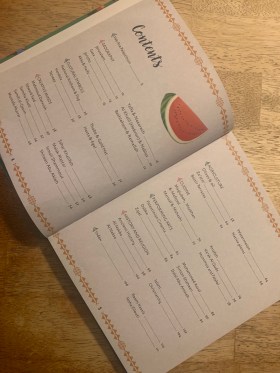
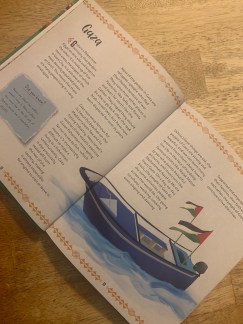
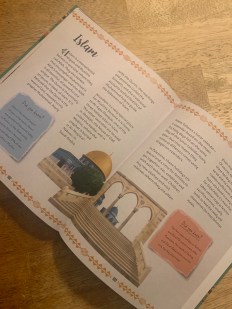
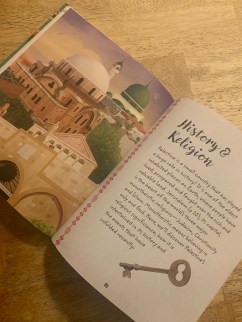
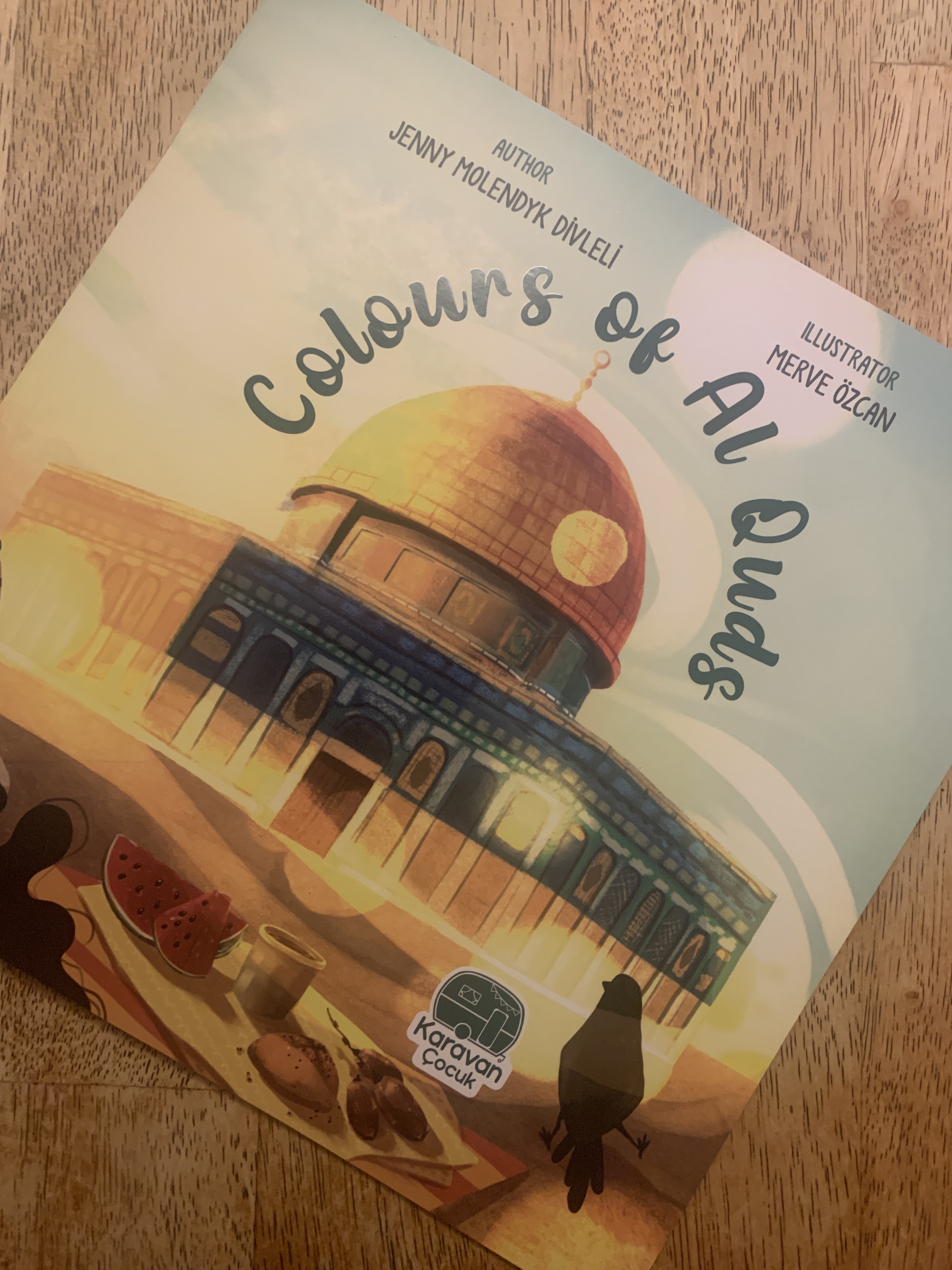
I try and buy, read, and review every children’s book about Palestine that is published, it is the least I can do.  I also try not to compare them to each other as they present different aspects of oppression, perspectives of strength, examples of joy, and messages of hope, even among many similar themes of food, keys, traditions, and culture.  I really appreciate that this book though is incredibly blunt.  It isn’t lyrical, it isn’t poetic, and as Israel is bombing Jenin as I write this I’m glad it doesn’t mince words about the Nakba. I do think caregivers though, should probably read it first as it might be a little triggering for sensitive children.  The story is OWN voice and probably best suited for middle elementary aged children.  It is perhaps also worth noting that the book could be seen as making Jews synonymous with Zionists.  The characters are Muslim, Islamic phrases and Arabic terms are sprinkled throughout, and even despite the pain the family has endured, the book stays hopeful and proud.

Sitti is coming and Amal is excited, it has been two years since she last saw her.  She loves how excited her mom and grandma are to unpack gifts of olive oil, dates, and zataar from friends.  Amal isn’t sure what to do with the “old lady thoub” she has been gifted, but she smiles in appreciation none-the-less.  When Sitti pulls out an old key, Amal starts to ask her about it, but her mother shuffles her off to bed.

The next day at school, Amal has to work on a presentation about “culture,” but there are no Palestinian books in her school library, so she just watches the other kids.  At home they eat and listen to Sitti’s stories of long ago in Haifa, and Amal asks her why she left Palestine.  Despite her mother trying to redirect, Sitti says it is time she knew about the Nakba.

Sitti tells about living on the land for generations and how the Jews believed the land belonged to them.  In 1948 the British decided Palestine would be the homeland for the Jews.  Armed men came and arrested anyone who tried to stay in their homes. Sitti’s brother was handcuffed and never seen again.  The family grabbed what they could including the key to their home as they made their way to a refugee camp in Lebanon.  They stayed for three years, before making their way to America.

When Sitti concludes her story she hands the key to Amal and her hope that she will return to their home inshaAllah.  Feeling the pride and warmth of home, Amal has a determination to reclaim her heritage and share her “culture” with her classmates.

The illustrations are sweet, the mom and Sitti wear hijab even in the home, and the inshaAllahs and salams come naturally. The book does not stop to define zataar or marimya, which helps the flow. I also like how it shows that there aren’t books about Palestine in the school library, it is strong and important detail.  I don’t understand where Sitti is coming from though, it would seem Palestine as she is bringing gifts from friends, but in the story it says after Lebanon they made their way to America, so I’m not sure where Sitti lives, and how the logistics of the family work to be honest.  I also kind of wish there was a  recipe for zataar in the book and lyrics with translation for the song the family sings.

Book is available on Kindle or can be ordered from www.littlehibba.com