Tag Archives: OWN Voice

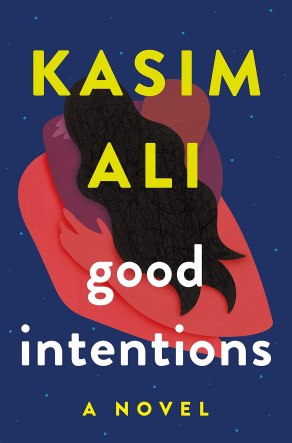
Good Intentions by Kasim Ali

Standard
Good Intentions by Kasim Ali

good intentions

There is a reason that I read juvenile fiction: from board books to YA, but lately the “New Adult” category has really been tempting me.  Muslamic romance novels, often really need the protagonist to be looking to get married to make the plot work with some authenticity,  which means the main character usually needs to be a bit older than in their teens.  I decided to start my tiptoeing into the genre with this book, because I was intrigued at the racial and mental health themes that the blurb teased.  Sadly after reading the 288 page story, I still was waiting for more racial and mental health insight or enlightenment or perspective or deeper appreciation or anything really.  I kept reading hoping for more character growth, and to find out if the relationship worked.  I understand after finishing, that the book was intentionally more subtle and nuanced, and part of me appreciates it, but I still felt the book ultimately provided too little in either regard for me to feel satisfied or content that I had spent time with the characters.  The abruptness and harshness of the first few chapters, seemed disjointed from the dialogue filled introspective remainder of the book that showed so much potential, but left me feeling strung along for no real purpose.  The book covers mature themes of sexuality, drug use, racism, co-habitation, relationships, culture, mental health, and more.  The characters’ identify as Muslim, but aside from Eid prayers, iftar, and mentioning once that they should pray more, there is nothing religious practiced, mentioned, or contained in the story.

SYNOPSIS:

Told in a variety of timelines that all follow the relationship of Nur and Yasmina, the story begins with Nur finally after four years getting up the nerve to tell his desi parents that he has a Black girlfriend, and wants to marry her.  He leaves out that they have been living together for years, and the book then flips back to how they met and bounces around filling in the gaps that bring them back to the big reveal.

While in college, Nur had just broken up with Saara, but still goes to her fairly regular house parties.  At one such party he meets Yasmina, as a small group at the party sneak off to smoke pot, and he is immediately crushing.  His hungover broken-hearted gay friend Imran calls him out on it immediately, and his roommate Rahat chastises him for going to his ex’s parties.  Nearly all the main characters are met early on, and the rest of the book focuses on Nur and Yasmina growing closer through college, after school, through their early years of jobs and grad school, and the overshadowing of the fact that Nur has yet to tell his family about Yasmina, while Yasmina’s family is fully aware and fully supportive that they are living together.

All the characters are Muslim, but practice is pretty minimally detailed.  Yasmina tells Nur at their first meeting that she wishes she prayed more, and later it is mentioned that her parents were raised strict so they have raised their own children less so.  It is possible that Nur’s mom wears a scarf, but not clear either way, and they don’t seem to be bothered that she is living with her boyfriend.  Nur on one of his visits home goes for Eid prayers with his father, his mother and sister do not go, and it mentions that they are fasting.  Rahat does not find dating is for him, and wants to have a traditional arranged marriage, but it does not disclose if this is because of religious or cultural views.  Imran discusses his family praying and that he had to square away his sexuality with Allah swt more or less.

Nur and Yasmina’s younger sister have mental health afflictions.  Nur has anxiety attacks, and Hawa severe depression.  It does not label or identify or diagnose, this is my assumption, it does detail their experiences though, and how they affect those around them.

WHY I LIKE IT:

I actually enjoyed the writing style and the ease in which it flowed-save the beginning of the book. The beginning was a little crass, almost like the author was trying too hard to get the characters’ environment to read that they were in college.  The crude talking about sex and them talking about their parents’ intimacy and smoking and drinking and being vulgar, was in such contrast to the very subtle nuanced rest of the book that tried to show the layers of Nur and Yasmina’s relationships and lives.  Once I got through it, I genuinely wanted to know if they could make the relationship work.  No I’m not going to spoil it, but that really is why I kept reading.

I was disappointed that the book didn’t draw mental health out in the open.   I also wanted some religious based push back on racism.  It is a big thing in our communities and the book really could have had the characters argue it and make their points, right or wrong, for the disconnect between faith and culture.  It didn’t have to be preachy, or even mean that anyone changed their opinions, but it mentions numerous times, something to the effect of Nur’s parents being racist, but doesn’t detail why that is the suffocating presence in disclosing his relationship.  In four years I would imagine the opportunity to correct his parents way of thinking would have arisen, and he could have challenged it.  I get that might negate Yasmina’s point that Nur is racist, but I think it should have been made more clear then that he didn’t speak up when opportunities presented, otherwise it just seems unexplored and we, the reader, are expected to just accept the characters on face value, when the book really very easily could have nudged us, to self reflect and look inward.

FLAGS:

There is sex, and drugs, and lying, and racism, and all the other flags that adult books often have.  There is one “steamy scene” between Nur and Yasmina, but the rest of the relationship is very mild.  Nothing else is graphic in detailing their day-to-day living, or the day-to-day relationships of the other characters in the book: gay or straight.

TOOLS FOR LEADING THE DISCUSSION:

No. Would never, could never encourage unmarried Muslims living together, fictionally or otherwise.

Nour’s Secret Library by Wafa’ Tarnowska illustrated by Vali Mintzi

Standard
Nour’s Secret Library by Wafa’ Tarnowska illustrated by Vali Mintzi

library

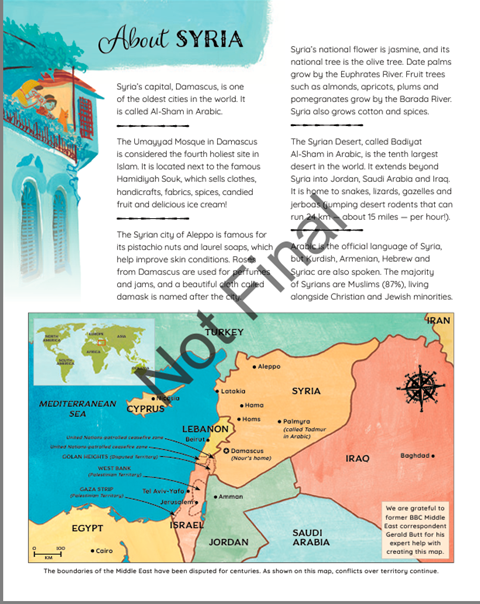
Set in Daraya, and based on a real events in Syria, as well as the author’s own life in Lebanon, this 32 page elementary and up story does an amazing job of showing relatable childhood adventures and ingenuity shining through even in the most horrific of environments.  The book is inspiring and warm, but the backdrop of war is very much present.  Some young children may be bothered by the images and text, while others will benefit from understanding the humanity that is affected by such violence.  I know the book says the pages are not final, but I wanted to put it out to help drum up interest.  I feel this story would best work in intimate settings where discussion, compassion, and gratitude can all intuitively transpire.

library1

Nour’s best friend is her cousin Amir, they love to read and imagine adventure and secret societies.  As their dream to create a secret club, complete with a secret password and handshake, for them and their friends starts to come to fruition, war arrives first. 

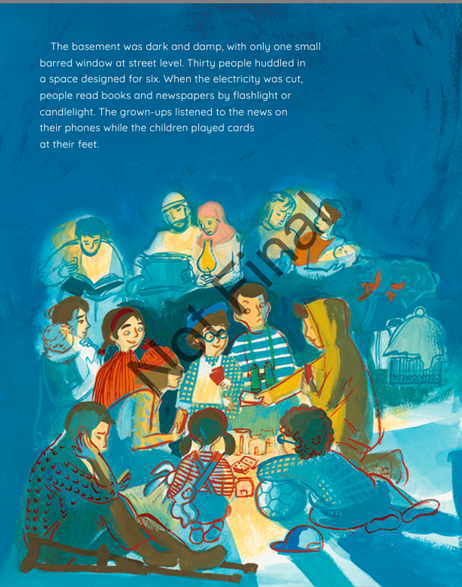
Families are forced to seek shelter away from the bullets at night in their basements, and only are allowed to venture out when absolutely necessary.  Every time Amir goes out, he collects any books he finds, and encourages his friends to do the same.  

library2

They begin sorting the books, and trying to decide what to do with them, when Nour has an idea to create a secret library.  Everyone pitches in when an empty, half destroyed basement is located, and the books are moved and set up on discarded planks of wood.  A boy next door is entrusted with the secret handshake and becomes the deputy librarian.

As word spreads, everyone from boys and girls to soldiers and rescuers, collect books to stock the shelves and checkout books to keep their minds busy.  The library, named Fajr, is open every day from morning to evening and closed during Jummah.  It becomes the city’s best kept secret and a source of hope for the community.

library3

There are references at the back that tell about the true story of the Secret Library in Syria, the author’s memories of hiding in the basement in Lebanon, a glossary of terms, information about Syria, the illustrator’s research, information about the war, and famous libraries in the Middle East.

library4

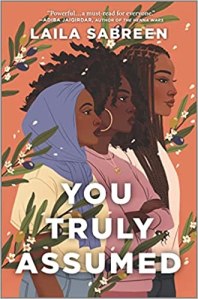
You Truly Assummed by Laila Sabreen

Standard
You Truly Assummed by Laila Sabreen

We need more diverse books, especially within Islamic rep stories.  So I was so excited to receive an arc of this 352 page YA/Teen Black Muslim authored and featured OWN voice story.  I was prepared for rawness and grit and insight and all the feels.  Sadly to say, it is not that.  It is surface level plot points that are unexplored, disjointed, emotionless, and overshadowed by poor writing, contradictory details, and errors. Admittedly I saw an early copy and there is hope that the spelling errors, continuity mistakes and numerous contradictions can be fixed, but I highly doubt the narrative, character arcs, and holes, will or can be rewritten.  It is such a shame, because every time I was ready to put the book aside and claim I could not finish it, a powerful beautiful paragraph or sentence would pull me in and give me hope that the book would turn around and be what its own blurb claimed the book set out to do: “shatter assumptions” and “share truth.” In full disclosure, this book centers the intersection of being Black and Muslim, an experience I do not share firsthand nor claim to know in all of its multitudes and complexities.

SYNOPSIS:

Sabriya, Zakat, Farah: three Black female Muslim 17-year-olds in different parts of America, with different passions, different life experiences, and different dreams, take one alternating chapter at a time to tell their stories with occasional blog posts scattered between.  A terrorist attack in the in the D.C. metro, lots of serendipitous technology events, and a need to find community and the girls come together to create a blog that gathers followers and haters alike in the summer before their senior year.

Sabriya “Bri” is a ballet dance, and often one of two black ballerinas in class.  The book opens with her preparing for the summer intensive audition process when news of the nearby metro attack makes time stand still.  Her mom cannot be reached, and multiple people are killed and many more injured.  Bri and her younger sister Nuri identify like their father, as Muslim, but their mother is not.  It doesn’t seem to be much of an issue, except in that Bri’s mother often cannot relate to experiences her daughter is going through.  Bri asks Allah swt to keep her mom safe, but throughout the entirety of the book it does not mention her praying salat or actively showing she is Muslim aside from wearing an Allah swt necklace and her sorting through her desire to prove to others she is a Muslim versus eventually being content to be enough for her own self.  She does at one point refuse to cook bacon, but she does have a love interest, and Islam reads more of a label to her, than a practiced way of life.  Bri journals as a way to let off steam, and her younger sister Nuri encourages her to move to an app to blog.  Reluctantly Bri agrees, after being reassured that she can keep it private, she names her journal/blog ‘You Truly Assumed’ and accidentally sets it to public.

With the city reeling, the family commits to volunteering every day to provide food to those directly affected.  Bri is placed in a group with her father’s new boss and Hayat, a Muslim boy that she thought was a popular showoff, but is quickly falling for.  The micro aggressions from her father’s boss, who is also the volunteer group leader elevate, and the more she learns about him and his connection with an alt right group, the more she writes about in her journal.  By the time she realizes that it has all gone public, she decides based on the comments that she should keep it up, recruit more contributors, and get someone on board that is tech savvy.

Farah Rose lives in California with her mom.  Even though she knows who her father is, she has never had a relationship with him.  When her mom decides that this summer she should go to Boston to meet him and get away from the tensions following the DC attacks, she reluctantly agrees.  With a passion for tech, Tommy, her father persuades her by registering her for an intro computer science college course and a chance to meet her siblings.  Farah is nervous to leave her boyfriend, and worries about being a summer babysitter, but out of love to her mother, agrees to go.  When she learns about the blog, she joins to help with the tech side.

Once in Boston she struggles to connect with her father and his wife, but is immediately drawn to the children.  Her story provides some insight into the concept of privilege within black communities.  Her father and his family are not Muslim, nor did they seem to know that she was. Presumably the only reason it even comes up is when they serve bacon at breakfast and she mentions she is Muslim and a pescaterian  Farah meets a lesbian Muslim girl in her college class and learns that there has a been a hate crime and taken the life of her new friend’s friend.  Farah offers to help with the vigil and her commitment to the blog increases as hate crimes, and Islamophobes seem to be on the rise.

Zakat “Kat” seems to present the more “conservative” Muslim.  She lives in an idyllic town and attends an all girls Islamic school.  There is also an all boys Islamic school and they are big rivals of the public high school.  Kat loves art and often takes art classes in the Islamic school with music pumping through the halls, unfortunately her parents don’t want her majoring in art at school.  They were the victims of predatory college loans and want her to be more pragmatic in her chose of school and direction of study.  She is more sheltered and even has to go behind her parents’ backs to be a part of You Truly Assumed.  She shares her sketches and comics and art work and loves knowing that people are connecting with her work and messages.

When her quaint town becomes the victim of hate crimes, she has to decide if she is going to step up and use her voice, or blend in as she has always done.  Zakat prays regularly, often at the gender neutral mosque behind a female identifying imam, wears hijab, and deals with jealousy as her best friend becomes friends with a girl who years earlier bullied Kat.

The three girls’ stories intertwine as they become friends, share their own personal lives with one another, and thus the reader, and create a space to be seen and heard through the blog.

WHY I LIKE IT:

The book honestly reads sloppy.  I don’t know why it seems the growing trend is to not properly edit these Islamic OWN voice YA novels, but this is another book that indicates a troubling trend.  I love that these voices are emerging, but it sadly feels that editors are nervous or afraid to question things and demand better.  The book is so much telling and so little showing.  I don’t want to be told that the blog posts are powerful, and moving, I want to read them and feel moved.  I don’t want to read that you had to understand that you had to stop proving your religiosity to others and just live for yourself, I want to see the incidents and reflection that brought on that growth. I don’t want to be told that you are becoming friends with the other two bloggers, I want to see that they understand you when no one else does.  The whole premise of the book is to connect with the reader, but the emotion isn’t in the pages, so there is nothing to connect with unfortunately.  Saying there is a terrorist attack, saying that hate crimes are occurring, does not bring forth an investment to the story if details, context, and cathartic releases are not also included.

There are some basics errors.  Wudu is described in the wrong order, Zakat talks of living in Georgia in a fictitious town, but the landmarks and colleges are all accurate until she mentions looking out over Lake Erie.  I Google mapped it, there is no Lake Erie in Georgia (just the Great Lakes one on the Canada US border), it is only mentioned once, so presumably an oversight, not a fictitious landmark.  There are some spelling errors and grammar errors as extra words enter a few sentences (3%), dinner replace the word diner.  At one point it mentions the girls meeting on a Zoom call, and then the next line refers to it as a Skype call (54%).  The plushness of the Georgia mosque is often commented on, but they have to put down their prayer rugs to pray, this is pre covid, so a little off.

The book contradicts itself at 11% saying that they can drive to North Carolina or New York for auditions, while the rest of the chapter is convincing Bri to volunteer because they cannot. One of the reasons Farah left California was because of the tensions, but Boston is closer to the place of the attacks and also a large diverse bustling city.  When Farah is wanting to talk to Tommy and his wife about the vigil, she walks in to a room and comments on who is there, in the next line, it mentions that it isn’t a good time to have the conversation since Jess is not there.  Jess was just mentioned as being there and the conversation does end up taking place (84%).  When Bri has a blow up with her dad’s boss, Hayat is worried that she hasn’t been delivering meals all week as a result, later in the chapter it mentions that the conversation happened yesterday (77%).   When Bri introduces her friend to Hayat she doesn’t mention that the two girls know his little sister very well, and it seemed unnecessarily awkward.  Zakat stares off in to space and imagines a sketch and remarks that she has never shared a sketch before and it is something she wants to explore.  This is 81% of the way in to the book, she has been sharing her sketches on the blog since she joined.

In terms of Islamic representation, Zakat’s mosque has one entrance and doesn’t divide based on gender, there is a female imam, the steps of wudu are in the wrong order, the girls all seem to focus on their “Islamic” necklaces or rings as if they are such an integral part of the religion.  The girls never pause or hesitate to have boyfriends, kiss them, bring them around their Muslim family.  Even Zakat who reads really naive and young and goes to an all girls Islamic school decides that a logical event is to have a mixed gender party with music and none of the parents have an issue.  It is even held in a Muslim girl’s basement. There are very few salams or mashaAllahs or inshaAllahs, or bismillahs in the book.  There is music, dancing and dating.  Not naive to say that Muslims don’t participate in all these activities, but to not offer any pause, reflection, or clarification, in a book trying to show the life of some one who identifies as Muslim is a little puzzling.  At the beginning it mentions that Black Muslims are “othered” in Islamic gatherings, and I really wish this thread would have been a larger part of the book.  To see where the larger community is racist and lacking, to see where the engagements occur and where they fall short is a very unique lived experience that the book seemed to tease, but ultimately abandoned completely.

Plot points were not fully developed, a book of secrets was not built up or stressed and then became a huge issue without sufficient understanding as to why offered.  The hate crime in Boston that took the life of a young black Muslim girl was also not given enough weight in the story, or how she helped organize the galvanizing vigil.  The blog aspect was just not believable, so much happening by happenstance and then the material not being shown.  Show us the comics, the sketches, the passages.  Let us read the comments and show us your texts back and forth to see your friendship growing.  I loved the parts about Bri and her dad’s boss, about Farah’s father’s family and her interacting, the parts that mentioned Juneteenth and bean pie.  I wanted more immersion in to these characters lives.  To know their back stories and their struggles.  I wanted to feel like I was seeing something that for too long has not been given the space to be authentic and real, but ultimately I finished the book just glad it was over and I no longer needed to exhaust myself trying to imagine the book that it could have been.

FLAGS:

Domestic terrorism, hate crimes, death.  Relationships mentioned, straight and queer.  Transgendered and ungendered masjids, female imams.  Boyfriends both Muslim and non Muslim.  Mixed parties, dancing, music, art with faces, lying, cursing.

TOOLS FOR LEADING THE DISCUSSION:

I don’t think there is enough content to discuss in a book club setting, neither to relate to nor open ones’ eyes to.  I would like to discuss the book if any one has read it, if I am simply so ignorant of the Black Muslim female experience that I don’t get the book, I am happy to learn and listen and change, inshaAllah.

Huda F Are You? by Huda Fahmy

Standard
Huda F Are You? by Huda Fahmy

huda f

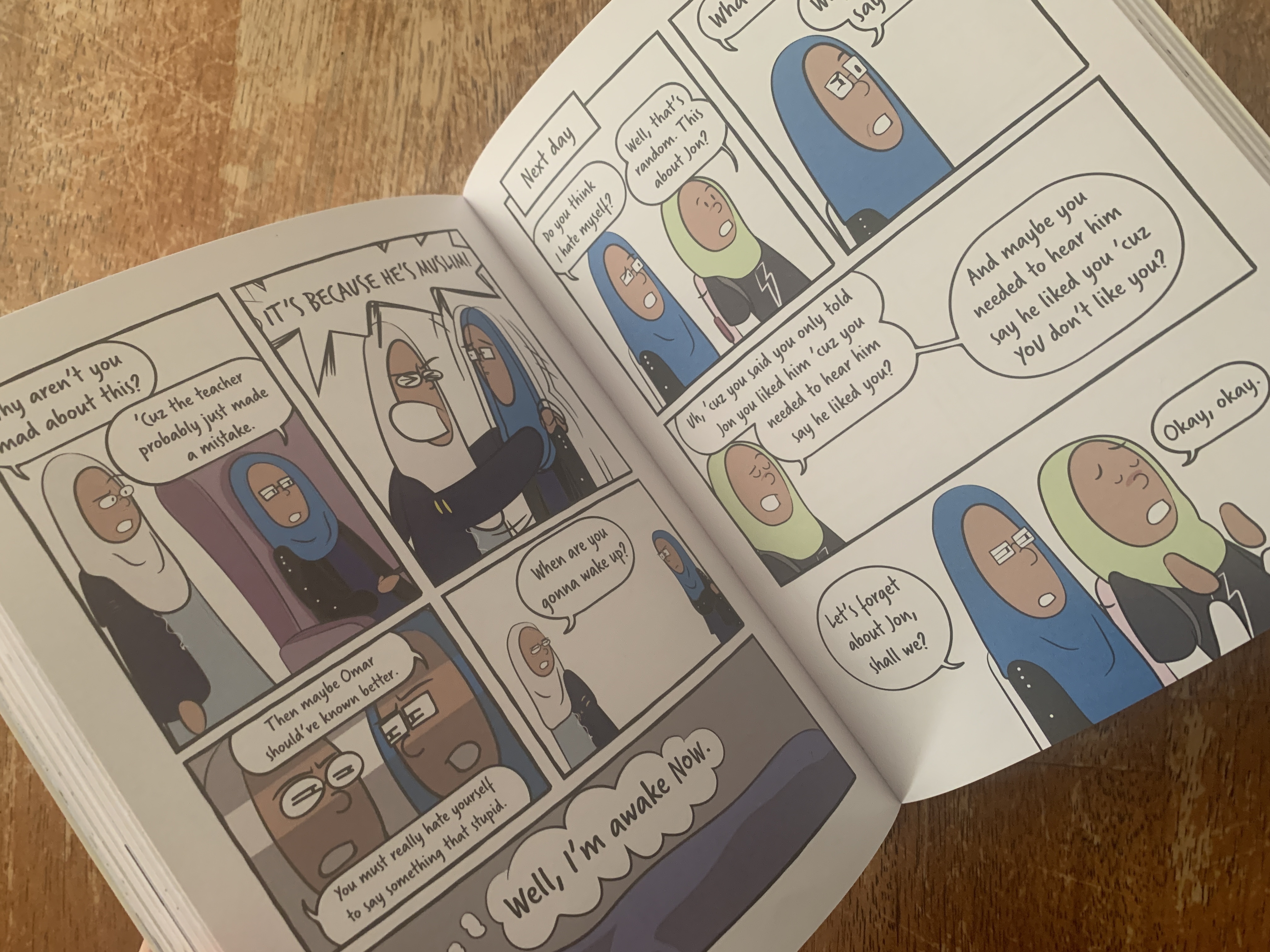
I think everyone has heard about this book by now and how fabulously fun, real, and relevant Huda’s life  is for so many.  I am happy to jump on the praising bandwagon, as this teen/YA 192 page graphic novel really is a great OWN voice unapologetically Islamic mainstream tale.  It does mention periods, relationships, hate crimes, and finding yourself, so probably 14 or 15 year olds and up.  My middle school boys read it, so it isn’t that it is inappropriate, just the target audience is more teen girl.  I know a lot of people, including Huda’s mom according to the inscription, have issues with the title, but I think it is brilliant.  She takes ownership of her name and it isn’t just for shock value, the book is about figuring out who you are, how you feel about Islam, establishing your friend circle, and growing and learning along the way.  My public library has it, as do major outlets, so what are you waiting for, go read, laugh, and feel seen.

img_5036

SYNOPSIS:

Huda has just moved to a new school and she is no longer the only hijabi.  She has moved to Dearborn, Michigan and there are A LOT of Muslims.  She is no longer defined by the cloth on her head, she has to figure out who she is.  Who she really is.  And sometimes the best way to do that, is to figure out who you are not.  

Huda tries different clubs, and different circles of friends, both at school and at the masjid.  Along the way she learns how much she craves approval and who is always in her corner.  When a kid at school is targeted for being Muslim, Huda will have to see how much internal hate she carries as well.  Her clothes change, her outlook changes, she tries new things, and she grows, all while the laughs help the story bounce from one serious topic to the next without coming across as arrogant or stereotypical.  This is Huda’s story and we are just along for the ride.

img_5035

WHY I LIKE IT:

I love that there is nothing to critique, it reads autobiographical even if parts are exaggerated or only based loosely in reality.  By being so real, and so well done, you are excited when you see yourself staring back, but you feel like you’re a friend learning about Huda even when you can’t relate exactly. Her comics online and her previous two books are all amazing, and I love that she is continually creating new material for us all to enjoy and benefit from.

img_5037

FLAGS:

She tells a boy she likes him that she doesn’t really like.  Periods are referenced and blood and a pad are shown, not graphic and gross, but the sentiment is there.  Discrimination is present, as is Islamophobia and stereotypes.

TOOLS FOR LEADING THE DISCUSSION:

Just keep the book out and around: it will be picked up, read, and mentioned, no tools needed.

One Sun and Countless Stars by Hena Khan illustrated by Mehrdokht Amini

Standard
One Sun and Countless Stars by Hena Khan illustrated by Mehrdokht Amini

one sun

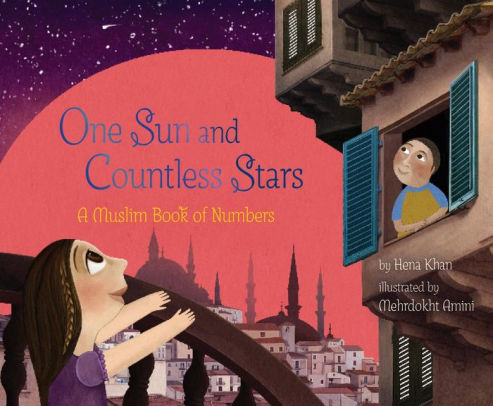
I don’t think that Hena Khan is necessarily a controversial figure, but some days her work feels very polarizing as some praise her ability to share OWN voice desi American Muslim stories while others feel like she waters down the very stories she is sharing to appease the majority.  Irregardless of our nuanced views, many of us first were made aware of her when we we were swept away in 2012 by the mainstream book, Golden Domes and Silver Lanterns.  Since then she also has published a book about shapes in the same format, and now this counting book that reminds me how beautiful and powerful it is to see Islam so unapologetically presented to all children.

Screen Shot 2021-11-10 at 10.25.04 PM

The author’s note at the end is important:

There are many significant numbers in Islam.  They include one for God, five for the pillars of the religion and daily prayers, seven for the circles pilgrims and visitors walk around the Ka’aba during hajj and more.

Mathematics and astronomy were among the intellectual pursuits of early Muslims.  They helped to develop algebra and used geometry to create the elaborate patterns found in Islamic art.

For this book, I chose concrete and illustratable terms rather than abstract concepts.  The representations for each number focus on things we can count in the world around us.

The book counts the diverse and global parts of a practiced faith.  The unique and the mundane, all beautifully illustrated and richly conveyed.  From cups of tea and shoes taken off for prayer to two hands making dua and four lines of a surah being memorized.  The book counts up to nine and then marvels at the countless stars that we see each night.

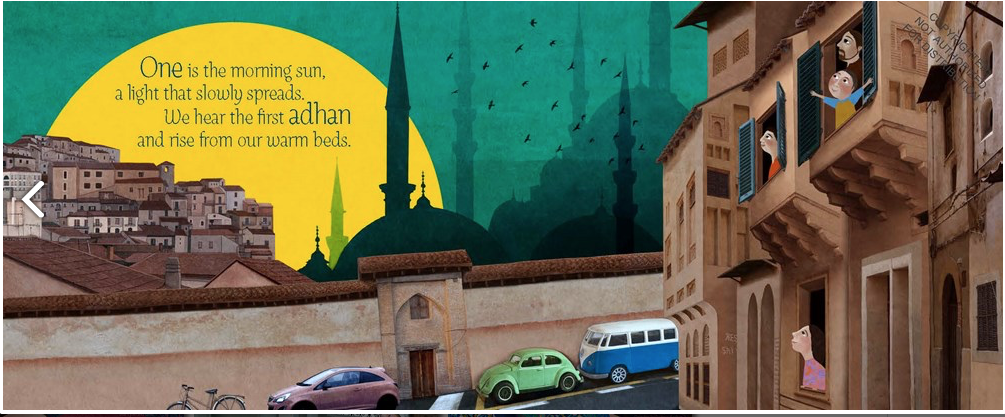
The first page is possibly a bit problematic in accuracy.  The tone and framing of starting the day with the sun rising and the sound of the adhan is warm and beautiful, but the adhan is not called at sunrise for the first prayer of the day, fajr.  Fajr begins at dawn.  There are only 21 words on the first page, so I’m inferring a lot about the correlation of the sun and athan that may or may not be present.  It is something frequently misrepresented, so it catches my attention. And yes, the seven tawafs mentioned in the author’s note would also apply to umrah, not just hajj.

Overall, the book is lovely and will remind many of us what made us all celebrate Hena Khan and her stories so many years ago.

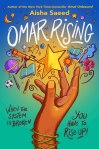
Omar Rising by Aisha Saeed

Standard
Omar Rising by Aisha Saeed

omar rising

This middle grades 224 page read is quick and memorable.  The story is set in Pakistan and the characters are probably Muslim, but there is no religion mentioned until nearly the end, and even then only in passing.  The only culture specific references are the characters’ names, social etiquettes, and the foods mentioned.  By and large, the story is universal and could take place anywhere, and probably does take place everywhere.  While I wish it would have had more cultural and religious references, it is an OWN voice story after all, the book is enjoyable, the characters endearing, and I think young readers will benefit from spending the school year with Omar, seeing classism up close, and cheering for an unjust school system to be challenged.

SYNOPSIS:

Omar is the son of a servant and when he earns a scholarship to a prestiges boy’s school for seventh grade, the entire village is bursting with pride.  When he gets there though, it is hard, really hard.  The scholarship kids aren’t allowed to participate in any extra curriculars, they have to do service hours, and they have to maintain the ridiculously high A plus grade average or be expelled.  It seems that that headmaster is out to get the scholarship kids, and Omar in particular.  As the scholarship students struggle to stay afloat, Omar has to determine if it is all worth it. He spends all his time studying, even when he goes home to visit his mother, and while he doesn’t want to let the village down, he is struggling to find the optimism to keep fighting for his place.  When Omar learns that the system is designed to make the scholarship kids fail, and that those that are kicked out are called “ghost boys,” he has to decide to how hard to push himself and ultimately how hard to push to break down the system that treats him and those like him like second class citizens.  Luckily, Omar has some supportive teachers, some loyal friends, and a whole lot of determination.

WHY I LIKE IT:

I love that the story is universal, it is at times a much tamer version of the YA book Ace of Spades which also explores second class citizens in posh private schools as a theme, and at times I even felt some Dead Poet’s Society vibes.  The cultural setting and names however, to me is a mixed bag.  I’m glad that it didn’t become another story about problems in another country with judgmental overtones, but at the same time, to be so void of cultural references seemed too far of an extreme in the other direction to make the story feel real richness and authenticity.  I love that the story isn’t about bullying and that a number of characters have depth.  I was genuinely confused for a large portion of the book about what the orientation in the summer entailed.  It was clarified much too late that it was a weekend, but I was at a loss trying to figure out how he knew some of the campus, some of the other scholarship kids, had a roommate, yet knew so little of the school and what it would be like.  I am not sure why that information was delayed, but seeing as I read an arc, I hope it is clarified in the final copy.

FLAGS:

Omar and a girl are friends, they hug at the end, but it seems rather innocent, and more sibling like as they were raised together.  

TOOLS FOR LEADING THE DISCUSSION:

This would be a good book on a shelf, and would possibly work as a read aloud to grades four or five.


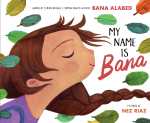
My Name is Bana by Bana Alabed illustrated by Nez Riaz

Standard
My Name is Bana by Bana Alabed illustrated by Nez Riaz

bana

OWN voice books are always important, and while we see a rise in minority voices claiming their own stories, to read a child’s story about war and hope by a child, is particularly impressive.  Bana Alabed was born in 2009, she is an activist, a Syrian refugee, and now an author.  Her clear voice doesn’t stumble and her perspective is unapologetic, yet hopeful.  Over 40 pages she tells her story in her own words with beautifully warm and complementary illustrations filling the pages.  For kindergarten and up, this book stands out in a crowded field of refugee inspired stories for its authenticity, strong author, and overall emotional connection.

img_4629

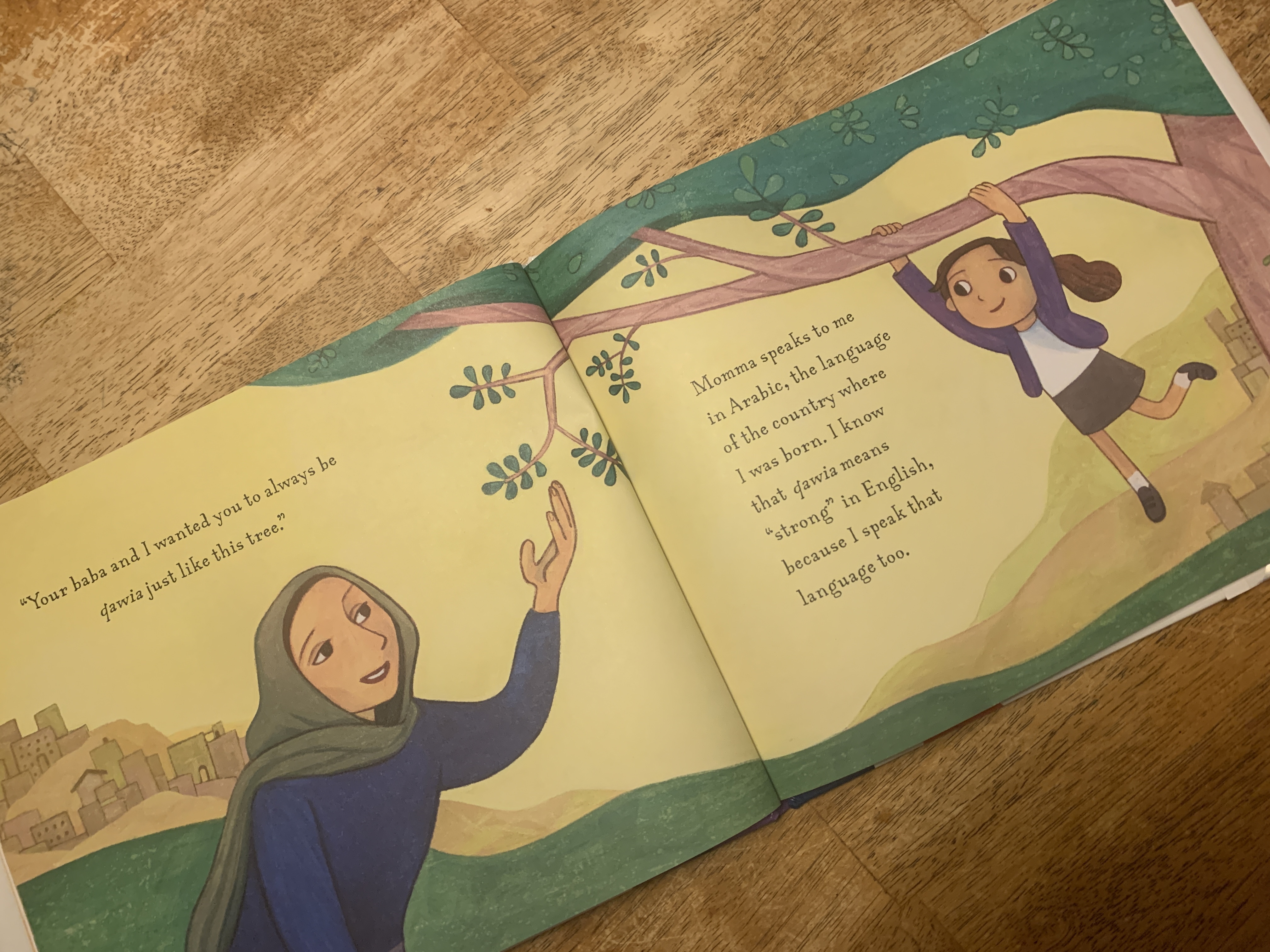
Bana begins her picture book memoir by asking her mother why she was named Bana.  Her mother explains that she was named after a tall bushy tree that grows in Syria.  Her favorite tree.  A tree that is qawai, Arabic for strong.

img_4630

Bana then asks what it means to be strong.  And once again her mother lovingly explains, that strong is to be brave even when you are scared, and to be sturdy so others can lean on you.  It also means you use your mighty voice to speak up when something is wrong, you read, study, and exercise your body.

img_4631

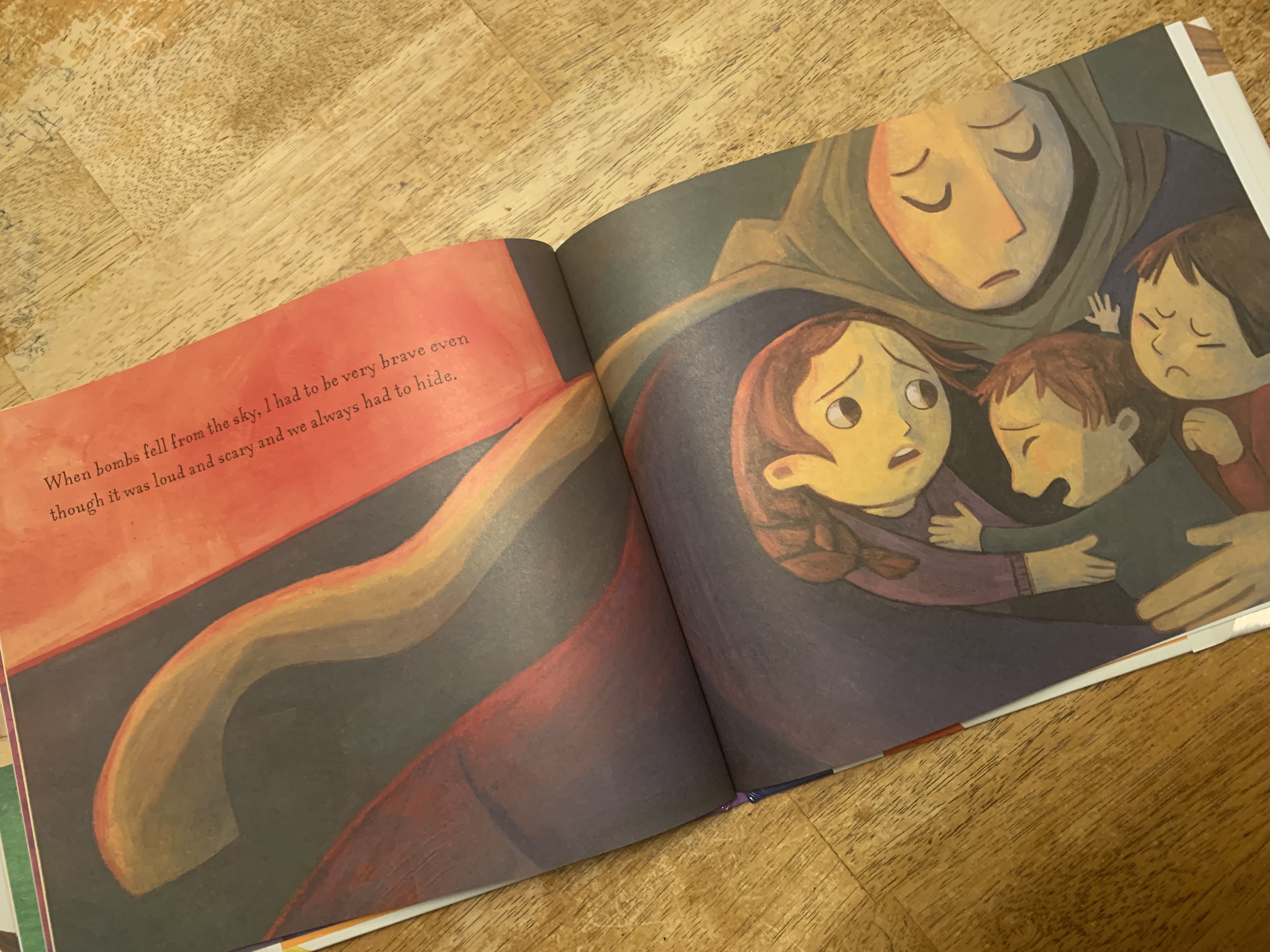
Bana appreciates her name, and being strong, because war came to her country.  When bombs fell they had to hide, when her brothers were scared, she had to keep them distracted, when they moved to a new place where they didn’t know the language or any people, she had to be strong still.

img_4632

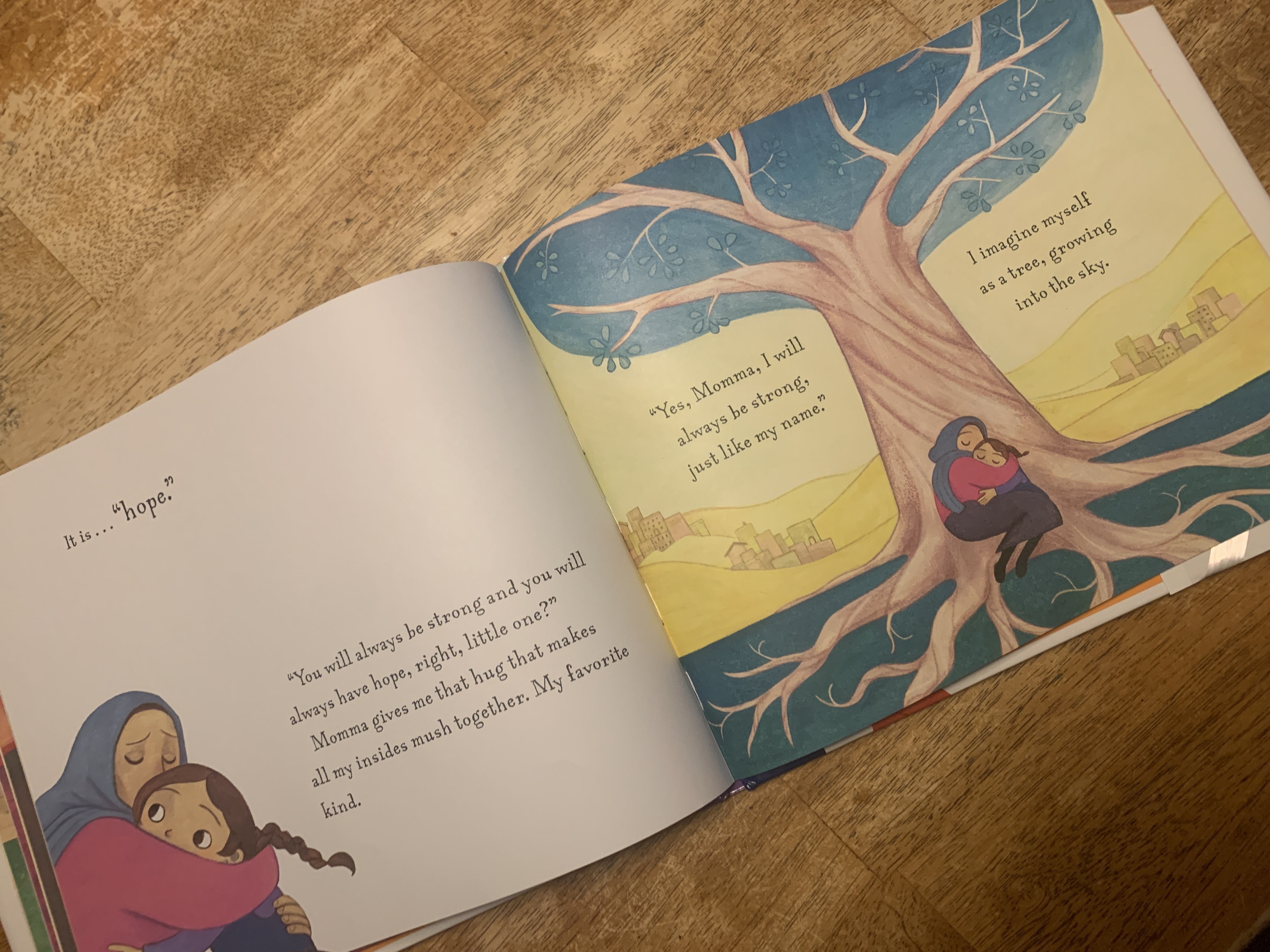
As a young girl, Bana tweeted about the war, the book doesn’t touch on that, but it does show her being strong as she shares her story all over the world.  It then returns to her and her mother discussing amal, Arabic for hope, and Bana imagines herself strong, reaching into the sky.

img_4633

The book ends on a simpler note of acknowledging her little brothers’ names: Laith and Noor, lion and light.  The Author’s Note at the end is just as powerful as the text of the book and provides more information about Bana’s experience and outlook. The way that war is handled is not overpowering for young readers, and will provide a great starting point of discussion.  The relationship between Bana and her mother is warm and supportive and equally deserving of mention with the little people you share the book with, alhumdulillah.

“Kids shouldn’t have to always be strong.  Every child deserves to live in peace.” Bana Alabed

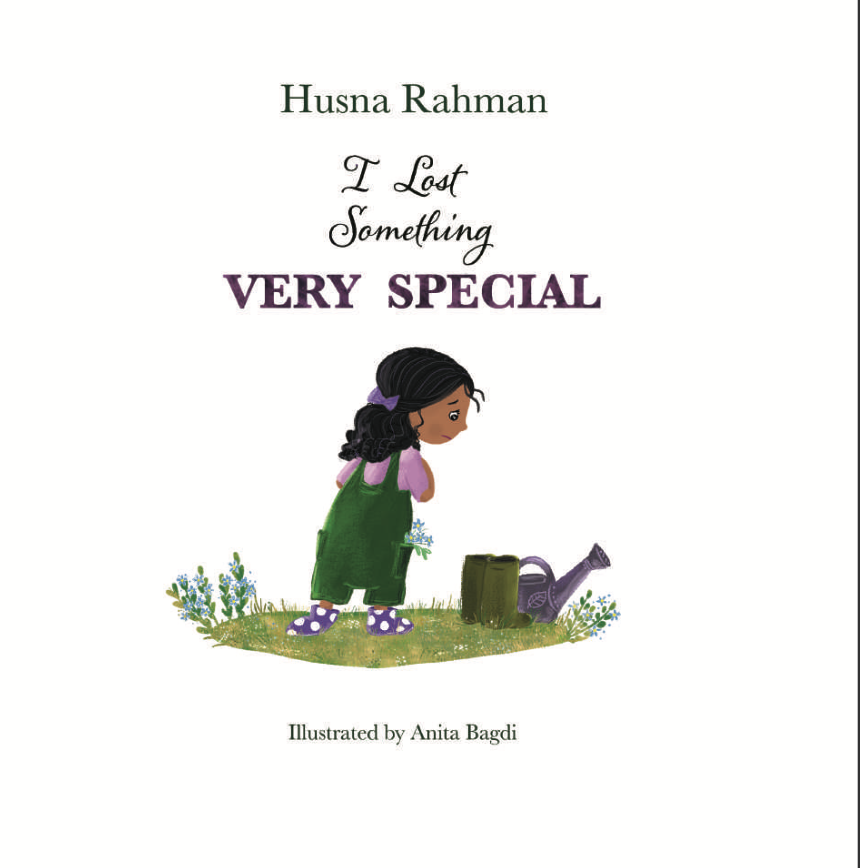
I Lost Something Very Special by Husna Rahman illustrated by Anita Bagdi

Standard
I Lost Something Very Special by Husna Rahman illustrated by Anita Bagdi

Screen Shot 2021-11-04 at 11.08.02 AM

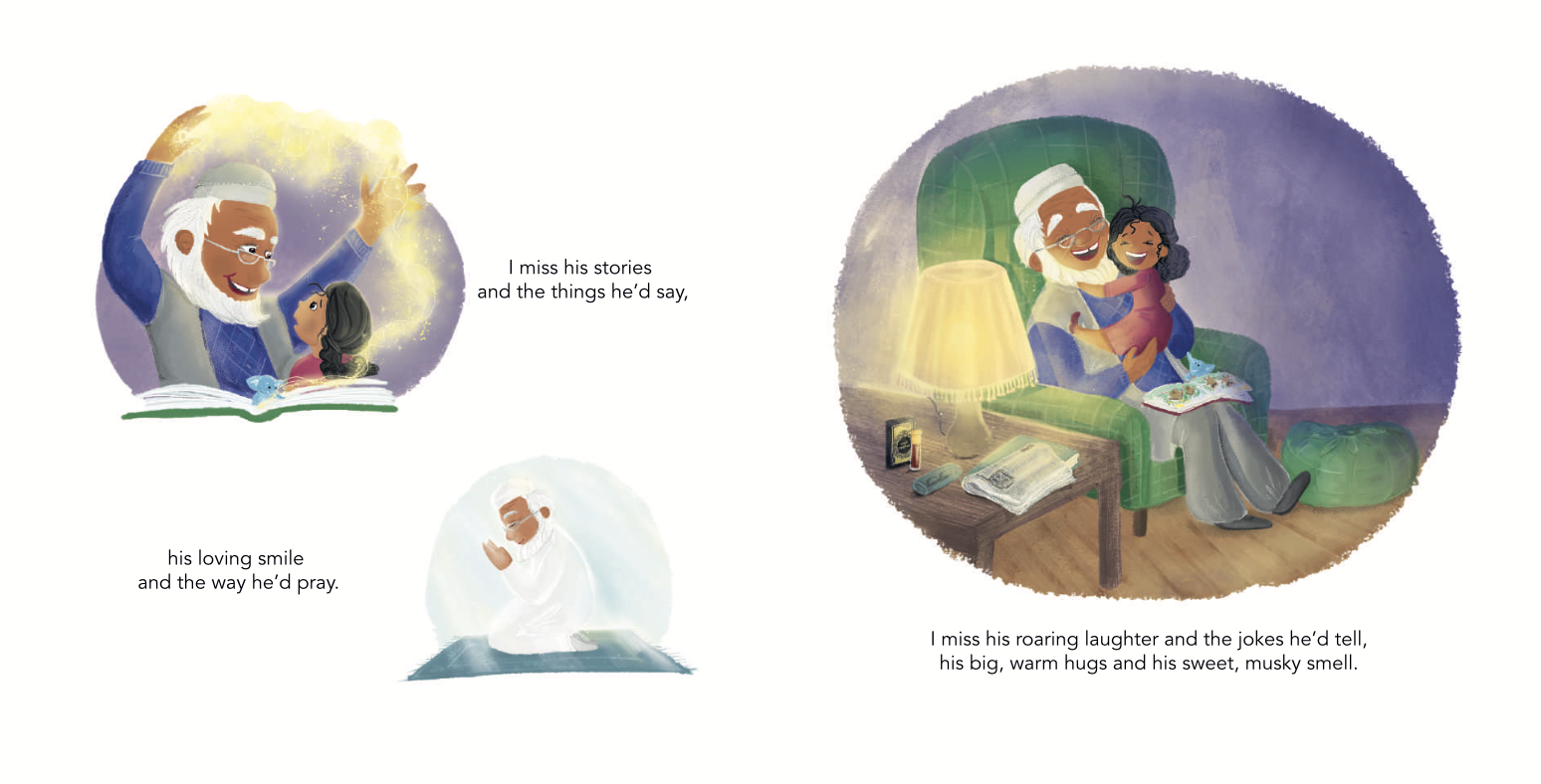
This beautifully illustrated 34 page story about the loss of a beloved grandfather is universal and heartfelt.  It is not an Islamic fiction book as there is no mention of the duniya or akhira or accepting Allah’s decree, the family however, is visibly Muslim and it shows women in hijab and the little girl narrator praying salat with her now deceased grandfather.  Similarly, there are no cultural words or references in the text, but the illustrations show Bangladeshi culture, writing, and warmth.  The author is a psychotherapist and counselor, and all readers, young children and up, will benefit from the tenderness and emotion-filled paperback book.

Screen Shot 2021-11-04 at 11.08.58 AM

A young girl starts the book stating that she has lost something.  She recalls other things she has lost, a scarf, a toy, her voice, a tooth, and how after a while the item was found or it came back and she was able to carry on.  Today, however, is not the same, she has lost her grandfather, and he isn’t coming back, and she doesn’t know if she can carry on.

Screen Shot 2021-11-04 at 11.09.36 AM

She goes to his house, and he isn’t there, and the heartbreak is palpable.  She knows in time she will forget the lost scarf and lost voice, but she doesn’t want to ever forget her grandfather.  She finds some pictures and recalls him teaching her to ride her bike, them praying together, and planting a garden, his stories, his smell, his laugh, his hugs.

Screen Shot 2021-11-04 at 11.10.21 AM

As she assembles the pictures in a scrapbook, she is filled with memories and warmth and his wisdom.  The book ends with her seemingly coming to accept her new reality and then the book asking the reader if they have felt loss, what memories they carry, and what they miss the most about those that are gone.

Screen Shot 2021-11-04 at 11.10.01 AM

The sparse text and amazingly expressive illustrations make the book a beautiful addition to help children cope with their own feelings, and to learn empathy for others going through their own trials of loss.

Screen Shot 2021-11-04 at 11.08.18 AM

Seven is Special! By Shagufta Malik

Standard
Seven is Special! By Shagufta Malik

sesven

I’ve seen this book on and off over the years, but it wasn’t until I saw @muslimkidsbooknook’s post about it, did it register that it is a chapter book, with a plot and story.  I thought it was a journal for seven year olds with prompts perhaps.  Needless to say I judged a book by its cover and hope at some point the author will consider changing the title, redesigning the cover, and tightening up the story, because there is a lot to enjoy in this book, but to get to it, you have to get it in your hands, and open the cover.  The doodles, the author’s voice, and the playful font over 128 pages will appeal to elementary aged girls, but boys will find plenty to relate to as well if you can convince them to give it a try.

img_4501

SYNOPSIS:

Seven-year-old Maryam has started taking her salat more seriously, and finally the family, her parents and her, are going on a REAL holiday.  They are going for Umrah.  Maryam is so excited, but then the trip gets canceled and her mom is sick, and Maryam is tired of always feeling different than her classmates.  Will everything work out? Will prayers and duas be answered? Will eight be great?

img_4502

WHY I LIKE IT:

I love that the book stays on a seven/eight year old level, but I do question how much stress is on how sick the pregnant mom is, and how kids will understand that.  I was sick, very sick, with all my pregnancies, and my older children saw me and it still affects them, in sometimes surprising ways.  My oldest daughter says she is never having kids.  Granted she is 14, but I would worry that reading a children’s book that mirrors something that was pretty traumatic for her to see will cement her impression about childbearing.  Obviously, I could be the exception, and perhaps like many literary mirrors it would make her relate more to the story.  I know she is above the target audience, but the illness of the mom is a large part of the book, and it is very detailed and specific.  I think if you are a young child reading it, you might ask your mom if that was her experience, and it could be a lovely conversation about heaven being at your mother’s feet, and the tests and blessings of it all, but the book really doubles down on some of the details of the throwing up and vomiting, and I wish her being sick could be shown in more situational ways.  Maybe she tried to do an activity with her daughter, but couldn’t, or she had to ask another mom to help with something she normally did at Maryam’s school, etc..  There are such wonderful tangible little nuggets in the book about salat at the park, and kids duas, and making wudu in public, that I think a little reframing of the illness and symptoms is definitely in the author’s skill set.

I love the unapologetic voice of being Muslim and some of the insecurities that Maryam faces and grows from.  Kids will enjoy seeing their concerns articulated, and inshaAllah benefit from her perspective as they make decisions about their own identity and attitude.  I know some families make a big deal about starting salat at seven, but when the book starts she has been seven for a while, so I’m not entirely sure why that was the focus of the book’s title.  Additionally, the pink cover really screams that it is a girl book, and I think boys will be nervous to be reading a “girl book,” that really isn’t gender specific in the storyline.  Yes, there are all sorts of stereotypes in that assessment, but I think you all get what I’m saying.

img_4503

FLAGS:

Illness, a bit of a temper bubbling over, stress.

img_4504

TOOLS FOR LEADING THE DISCUSSION:

I think young readers that are handed the book and start it, will finish reading it.  It is a super quick read, and with the drawings and conversational language, they will enjoy the pages as they fly by.  It is an elementary read, and anyone older will probably see the foreshadowing that the mom is expecting, while the second and third grade readers, will probably be genuinely surprised.

Little Seeds of Promise by Sana Rafi illustrated by Renia Metallinou

Standard
Little Seeds of Promise by Sana Rafi illustrated by Renia Metallinou

seeds

This sweet, well-done 48 page picture book for early elementary aged readers shows the fear associated with being in a new place, the love of an elder family member, and the courage it takes to make new friends.  The story focuses on a young Pakistani girl who has recently moved to a new country and how she tries to remember the wisdom of her Nani to blossom in her new home.  The culture rich story is universal and lyrical, with hints of making duaa, greetings of salam, and the soothing sounds of the athan that make memories of home so foreign to her in her new residence. Young readers will empathize with Maya, and see the symbolism in the seeds she is anxious to plant and cultivate.

img_4475

Maya finds her new home unfriendly and cold, she feels different with her food, and clothes, and way she speaks.  Home to her is dancing in the warm mansoon rains, saying As-salamu ‘alykum, and waking up to the sweet athan.  Nani was also there, her old home.  Sweet Nani with her hundred wrinkles, smelling like flowers.  When Maya left, Nani gave her a gift.  Little seeds of promise, so that they and she might bloom where planted.  But Maya doesn’t know where to plant them, she carries them with her everywhere she goes, but like a secret, she keeps them close.

img_4477

Channeling her Nani’s tenderness, she knows that she has to plant them if one day she wants to be surrounded by flowers.  Maya loves flowers, dancing around them, praying among them.  Maya finds a patch of earth.  She longs for rain, she hopes for warmth. She makes way for the rays of the sun.  The text talks of flowers, the illustrations show both the plant and the growing friendships.  For days nothing happens, with the seeds or the classmates.  But Maya remembers that seeds have a long journey from the ground up.
img_4476

Maya nurtures her seed, just the one she dared plant, with love and kindness.  She too feels ready to burst.  Can she be brave enough to plant all the seeds, can she share them, and her self in her new world? Can their be warmth here, like there was over there? Can this too be home?

img_4478

I love the symbolism and juxtaposition of the seeds growth with her own.  The character arc and the transition of home being one place to being the other, is very well done, older readers will feel an aha moment when they grasp it and younger kids will enjoy both the surface story and the dialogue you can have with them about blossoming where planted.

img_4479

Religion is not a strong thread, but Islam is present in her memories of her maternal grandmother and all the warmth and love that those memories contain.  I love that the classmates were never mean, they just didn’t know her either.  I wish there was a bit more diversity of skin tone and mobility in the classroom illustrations and the friend circle she is hoping to join.  Overall, a beautiful OWN voice picture book that will be enjoyed for multiple bedtime, small group, and classroom readings.