Tag Archives: OWN Voice

Swimming on the Lawn by Yasmin Hamid

Standard
Swimming on the Lawn by Yasmin Hamid

swimming on the lawn

This 176 page book about life in Khartoum, Sudan reads almost like a memoir with short, loosely connected chapters detailing a young protagonists day-to-day life growing up.  There is no real conflict  until the very, very end, and the majority of the chapters just seem like snapshots with little to no continuity.  That isn’t to say that I didn’t enjoy all the stage setting and the easy voice detailing a time and place that I know too little about, but I don’t know that most kids will feel compelled to keep reading.  The book is slow and wandering, best suited for lower YA/middle school, if they can be persuaded to read it.  I think the book would do well taught, as some good discussions about Sudan, growing up with an English mother in Africa, the role of religion,  the 1960s, the impact of financial comfort, and the threat of violence would make the book very relatable while also being eye opening.  The power and beauty of OWN voice makes this prose filled book thought provoking and memorable in a subtle and light way.

img_0276

SYNOPSIS:

The standalone chapters follow Farida and her siblings in Sudan in the 1960s.  Their summer vacations, visiting friends, trips to villages, making tea, lots and lots of tea, reading books sent by their Grandma in England, and the abrupt arrival of soldiers.  Told from a child’s perspective the short chapters focus on the events front and center and don’t carry over or carry morals or lessons.

WHY I LIKE IT:

I like that the chapters titles are written in English and Arabic and that Islamic holidays and customs are mentioned.  Interestingly though, the family doesn’t seem to practice.  There is cultural presentation of Eid and Mawlid and talk of hajj, but not of praying or saying Bismillah or inshaAllah in daily conversations.

I wish there was more information about the mom being English and how the parents met, and what cultural obstacles maybe had to be ironed out.  I also wish there was a bit more at the end, an afterward even something that gave some closure or insight into what the ending means for Farida and for Sudan.  The choppiness grows on you, but some stories even at that were too unresolved.  The whole chapter detailing her traveling with her uncle to his village only to find her back at home the next chapter without any reflection on the journey, how she returned, the cousins she met, etc., just seemed unresolved.

FLAGS:

A birth and burying the placenta is described, alcohol is mentioned, fear of a friends dad is hinted at, soldiers being present, father being taken away by force, shootings.

TOOLS FOR LEADING THE DISCUSSION:

I think in a middle school classroom setting the book would have a lot of potential.  Read a chapter and have kids journal their impressions or thoughts perhaps, or have them imitate the style and write about themselves.  It probably wouldn’t work as a book club, but it definitely should be shelved in a school or classroom library.

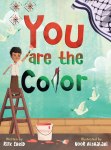
You are the Color by Rifk Ebeid illustrated by Noor Alshalabi

Standard
You are the Color by Rifk Ebeid illustrated by Noor Alshalabi

you are the color

Books like this are hard for me to review, and I have gone back and forth on whether I should post anything or not.  On the one hand, we need books that are unapologetically Palestinian written by Palestinians.  They need to be celebrated and elevated and I want to offer my support to the stories, to the voices, to the authors, illustrators, everyone involved.  On the other hand, if I didn’t love it, why should I shy away from saying so, when I have purchased the book (pre-ordered and changed the shipping address even, to have it delivered to me on vacation because I didn’t want to wait to read it).  The book is emotional, but the last six pages unraveled the whole book for me, and in a picture book particularly of this nature, when you finish- if you don’t have a cathartic pull, you start to find holes in the story as you feel deflated.  The book, I would go out on a limb to say, needs to be discussed and given context even if you are Palestinian.  As someone who is not, I recognize my arrogance in such a statement and am happy to be corrected, but from a literary reviewer standpoint the book needs discussion and additional context.  The Nakba is only articulated in one paragraph in the author’s note.  In the story itself there is no indication that what happened to Thaer happened to so many Palestinians in 1948.  The use of color and how it is depicted in the illustrations is tangible and powerful, but as odd as it is to say, the words got in the way of the story.

img_0713

The book starts with Thaer trudging to school in dull sepia filled pages to begrudgingly sit at a desk and begin an art lesson.  He is glad the spitballs are just spitballs and not real explosions, but the tone is still melancholy.  When he sees boys playing soccer he recalls the last time he played soccer, and the memory comes alive in color.  He was in Yafa, it was the day before the Zionists came and took his family’s home.

img_0714

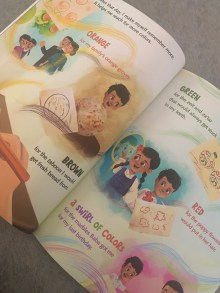
The teacher, back in muted tones, asks him to draw what has made him smile, and Thaer gives it a try.  Blue for the color of the sea, green for zeit and za’tar, brown for taboon to get fresh bread, etc..  When he takes the drawings home to his mother, she is not impressed.  Drawings are silly and colors aren’t going to bring Baba and Susu back.

img_0716

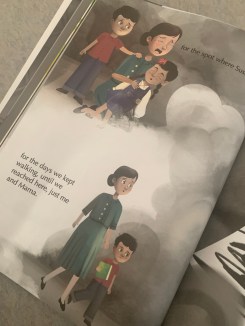
Defeated, the next day in class, Thaer recalls the men pounding down the door and Baba being shoved in a truck and Susu falling.  The next day at school they hang up some of their pictures and Thaer talks about his sister.  (SPOILER) On the way home Thaer paints the alleyway and brings color to his and his mom’s world.  His mama says that he is the color, and when the following day’s prompt is to draw what you want to be when you grow up it shows Thaer (presumably) on the beach as an adult painting.

img_0715

The disconnect for me occurred with the painting of the alleyway.  I was incredibly invested in the story, my heartstrings were being tugged, I was breaking for this character and his experiences, and it all came to a screeching halt because I couldn’t understand where the paint and the alleyway and the mama’s change of heart all manifested from.  As for the ending, I think I know what the author was going for, but it didn’t connect with any of my kids aged 2-15 nor my mother, a 40+ year early elementary veteran teacher.  I wish I could have taken a picture of their faces as she read the book to them.  The frozen expressions of huh and confusion at the end, until my 11 year old to broke the awkward silence to ask if the boy wants to be a painter or a father or an adult?  Those facets coupled with the often advanced vocabulary, makes the book an important one, but one that needs a lot of outside commentary to connect with the readers and to further the conversation about Zionism, al-Nakba, the occupation, and the continued oppression of Palestine.

There are flags of loss, kidnapping, sorrow, violence, etc., that parents will have to gauge if their children can handle. I’m not sure what age group is the best fit, the murder of a young girl, the forced displacement from one’s home, the removal of the father are all heavy themes.  I appreciate that it isn’t “watered down” for a western gaze so to speak, but I wish there was more about what happened to the dad, is there hope he is alive? I wish there was something about this not being an isolated reality for the protagonist and his family.  I wish there was some conversation or connection between the mother and son, because the loss of continuity really derailed the story.

As for the idea of the story, and the use of the illustrations to physically show two worlds I think is a great idea, it just sadly fell apart for me at the end: the faltering conclusion and the loss of emotional buildup that the first two thirds of the story worked so hard to create.

Mark My Words: The Truth is There in Black and White by Muhammad Khan

Standard
Mark My Words: The Truth is There in Black and White by Muhammad Khan

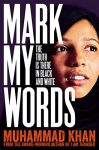
This 304 page YA/Teen book was surprisingly well written, gripping, relevant, and engaging.  I say “surprisingly” because the cover and title don’t scream pick-me-up-and-read-me, at all.  If I’m being completely honest, it looks like a self published book from the 90s, not one about to be released on June 1, 2022.  Appearances aside, it reads real and raw and even though it is very British and I didn’t understand a lot of the slang or the framing, I still was very invested.  The main character is Muslim and while part of the plot is focused on her identity, it isn’t her doubting herself, it is her in all her facets taking on stresses in her life, sticking up for what’s right, and going to bat against some very heavy hitters in the community.  The book has drugs, parties, racism, islamophobia, lying, crushes, cross dressers, gay and straight characters and relationships, privilege, assault, theft, robbery, language, hate crimes, talk of condoms, rape, sexual assault- it is raw, but the Muslim characters know who they are and engage in the environment around them as informed practicing Muslims.  The main character wears hijab and when she goes undercover she wears a wig and that conversation with herself if it is ok or not takes place, as she starts to have feelings for a boy and she tries to justify if it is ok for her, that conversation in her mind also is written out, many of her friends are of different sexual orientation and there is no judging or preaching, she accepts and celebrates them and they do the same for her. The drug use is never glorified and racism and misogyny are called out. The author is a teacher and it states in the backmatter the role his classroom and the students have in his writing and I think it shows.  The book says ages 12 and up, but I think for the content, critique on systemic racism, details about drug and drug use, gentrification, and media bias, the book is better suited for 16 year old readers and up.

SYNOPSIS:

Fifteen year old Dua’s school is under renovations which means her whole grade is being integrated with students at Minerva College, an elite private school on the other side of town.  It is an exam year, and what should be a dream for hard working Dua to get a foot in the door at her ideal school, quickly becomes anything but.  The kids from Bodley are made the scapegoats for a growing drug problem and the journalist in Dua is not standing for it.  When she doesn’t make the Minerva paper, she decides to start her own, and the dirt her and her news crew start uncovering isn’t mere gossip, it is outright illegal.  While journalism starts taking over her school life, Dua’s home life is quickly crumbling.  Her mother is falling apart mentally, failing to get to work, and struggling to keep her own demons at bay.  When Dua’s slightly estranged father tries to step in to help, Dua has to reconcile her past relationship with him and find a way to move forward.  In between all the drama at school and home is Dua’s time on the basketball court, and star Minerva Rugby player, Hugo, has taken an interest in her Kobe sneakers, and her.  The two spend some flirty time on the court leaving Dua with some decisions to make, and her questioning who to trust as everything starts to blow up.

WHY I LIKE IT:

I love how fierce and strong Dua is.  Yes, she over does it at times, but just as fiercely as she pushes for what is right in her mind, she acknowledges her errors and works to correct them.  She is Muslim because she is Muslim it is never a label she wears for attention or for someone else, it is who she is.  I love that there are also Muslim side characters including the principal.  Dua and Huda, another girl at school are always getting mistaken for one another, which is a great OWN voice (even though the author is male) inclusion.  Additionally Huda has a boyfriend, and when in the midst of a conversation she refers to him as her fiancé, Dua freezes, and Huda explains that they are getting married as soon as they turn 16 since dating is Haram and their parents all know.  I love that there is no explaining or judging at 16 year olds getting married, it just is what it is. Most of the book is written in that tone, that there are girls wearing hijab, and yes it gets pulled off at some point, there are guys writing make-up columns, there are gay guys explaining sub groups within the minority, but it all comes across as judgement free.  When racist, or homophobic, or Islamophobic, or misogynistic, or classist comments are made, other characters call them out, not to debate or preach, but to just emphasize the live and let live tone the book seems to advocate.

I was thrilled to see Dua’s best friend Liam wears hearing aids and that is very much a part of him, it isn’t a label stuck on and forgotten.  It is joked about, it is a daily presence and the author notes it in the backmatter as well.

There were some side storylines that felt a little under devolved, I would have liked a stronger emotional arc in Dua’s mom’s mental health deterioration, as well as what drove her parents to divorce.  The book is fast paced, so I wouldn’t want a lot more back story, but a little more to connect with would have been nice.

Honestly it took a few attempts to get in to the story, just because I’m American and the book is British.  I finally just read through the first twenty pages and kept going and then I was fine.  I know that is my own bias, but it is worth noting since the title, and cover aren’t attractive and then once you start it isn’t immediately clear what is going on, that some determination might be required before the book becomes difficult to put down.

FLAGS:

Drugs, drug use, sexual assault, physical assault, corrupt police, racial profiling, gentrification, systemic racism, media bias, partying, deception, bribery, expulsion, mental health, bullying, cross dressing, relationships, attraction, misogyny, hate crimes, threats, corruption, property damage, theft, stealing, cursing, language, alcohol consumption, dealing, to name a few, it is a contemporary high school setting with students taking on racist elitists.

TOOLS FOR LEADING THE DISCUSSION:

I know the flag list seems long, but I think there is a lot of sleuthing, action, character and story building and investment that give the book a lot of heart.  I think it could be shared in an Islamic high school and would result with some amazing discussions.  If you want to grab a copy, you can go through this link that will benefit me, I think Amazon gives me 2.2% back, lol, but when you pay for your own books, truly every little bit helps! Happy Reading!
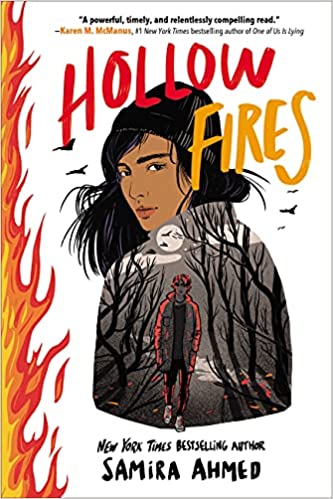
Hollow Fires by Samira Ahmed

Standard
Hollow Fires by Samira Ahmed

hollow fires

Every YA Samira Ahmed review I have written I remark at how amazing the premise is, how flat the characters are, and how forced the romance feels.  I am so happy that I did not dismiss this book, and when I return this copy to the library, I will be eagerly awaiting the purchased one to arrive so as to be placed on my book shelf.  There is connection to the protagonist, she is even likeable, the brief flirty romance is natural and not heavy handed, and the only thing better than the premise is the contemporary commentary.  The multiple writing styles, lyrical voices, and thriller/mystery elements make this 404 page teen book hard to put down.  Islam is present in different forms in different characters. There are very gentle elements of faith that really contrast the chaos of the plot and radiate peace: fajr salat, wanting a janazah, identifying as Muslim.  And while the book says 7th grade and up, I think it is more suited for high school readers.  There are strong themes of islamophobia, media, and privilege, there is killing, murder, a gay Muslim, a ghost, assault, language, planning to go to a school dance, racism, vandalism, misogyny, Halloween, relationships, hate crimes, and abuse of power, to name a few reasons that I think older readers (and adults) will appreciate and understand more deeply than most middle schoolers, how remarkable this book truly is.

SYNOPSIS:

Safiya is in her senior year at her elite private school, she’s a scholarship kid, and her passion is journalism.  As the editor of the paper she is unafraid to challenge the principal and spur others to action.  When a fellow Muslim kid, Jawad, at a nearby local school gets arrested for bringing a makerspace jetpack to school, it bothers her.  When Jawad goes missing, and events at school and in the community start putting Muslims and other minorities on edge, Safiya finds herself collecting bread crumbs and getting closer to the truth.  Throw in vandalism to her parents Desi store, smoke bombs in the bathrooms, swastikas graffitied at school, and a dead boy whispering to her and you have yourself an action packed thriller that hits close to home.  When the circumstances of how Jawad’s body are found and the clues start to fall in place, Safiya and readers will find themselves rushing against the clock.  Her to safety, and readers to see if their suspensions are correct.

WHY I LIKE IT:

I love, love, love how each chapter starts with a fact, or a lie, or an alternate fact, or truth, I keep rereading them. They are so clever, and thought provoking as the short lines stare at you in black and white and get under your skin.

I don’t think the book explains if a ghost in Islamic doctrine would be possible, but I do like that the book on more than one occasions tries to explore it.  I think for me acknowledging that it doesn’t fit, but that jinn exist and that maybe it just is what it is allowed me to overlook it and read the story for what it is.  I appreciate that the author gave the characters presence of mind to try and view it through an Islamic perspective and see answers that way, even if it did come up short.

I love the parents in the book, all of them. There is no oppression or force or lack of understanding, from the parents which was a nice break from the normal YA Muslim family dynamic presentation.  As a result perhaps, Safiya has never gone to a school dance, but when asked to Winter Formal she doesn’t have any religious or cultural hesitation in agreeing to go.  Part of me wishes it would have crossed her mind, but I think the other part wins out- that for her it is a non issue and that her view and practice of Islam is just different than mine and that is ok.  I think part of the reason I am ok with it is because there is no overly forced make-out sessions or drawn out angsty scenes.  There is a kiss on the cheek and one on the forehead, a tiny bit of snuggling, and maybe a handhold.  Suffice it to say it isn’t overboard and extreme, it never says that Safiya prays, she notes her parents do, but it seems she goes to the mosque, she identifies as Muslim and she is unapologetic, so by moving the choice to her to go or not go to a dance allows Islam to stay Islam and her actions to stay her actions.  A subtle difference I’m sure for most, but for me a very powerful one in a book that is about more than Islam’s view of premarital relationships.  I think it is also promising in that it shows how far literature has come that these nuances can exist without being overly explained or made into black and white issues.

In a similar vein is how the three Muslim characters are presented.  At one point it says they all go to different mosques because of geography or ethnicity, but to them they are just Muslim.  This includes Usman a kufi wearing Shia Hazara from Afghanistan who is always crushing on his tennis partner, or some other guy.  There is nothing more said about it, and the book carries on.

The style of the writing between the alternating voices of Safiya and Jawad are nice, but I particularly liked the inclusion of the interviews, articles, excerpts, and court transcripts.  The change of pace made it feel like it was more than a fictionalized story about the characters at hand, and a societal trend that is impactful to us all.  Which of course is a theme of the book, and was a nice way to show and convey that sentiment without having to say it over and over again to be heard.

FLAGS:

Copy and pasted from above:  There are strong themes of islamophobia, media, and privilege, there is killing, murder, attempted murder, a gay Muslim, a ghost, assault, language, planning to go to a school dance, racism, vandalism, misogyny, Halloween, relationships, hate crimes, and abuse of power. The hand of Fatima symbol is apparent in the marketing of the book, it isn’t a huge part of the story itself.  It is a key chain that was given to a character and then passed on with a message that it will keep you safe.  Clearly it doesn’t keep you safe and the irony and the passing of it from one character to another (I’m really trying not to spoil anything, can you tell) is the only significance it has on the story.

TOOLS FOR LEADING THE DISCUSSION:

I have already told my daughter she needs to read the book this summer after finals (she is 15), and while I would love to do this as a high school book club book, I don’t know that the ease of going to a dance, the normative presentation of a gay Muslim, and the ghost as a main character would be widely accepted at an Islamic school.  I think I will suggest it to high schoolers that I know, and would do so confidently as the writing, overall messaging, and critique on the media and privilege are so well executed in a compelling story, but I think the flags might keep me from “teaching” the book or shelving it in the school library.

Hungry Hearts: 13 Tales of Food and Love edited by Elsie Chapman and Caroline Tung Richmond

Standard
Hungry Hearts: 13 Tales of Food and Love edited by Elsie Chapman and Caroline Tung Richmond

hungry hearts

Occasionally I get asked about short story and/or essay from a collection that a college or high school student is hoping to share with a class that doesn’t take long to read, but shows Islamic representation.  And I never have a suggestion.  The middle grade collection Once Upon an Eid is amazing, but for younger readers.  When I learned about this collection that features two known Muslim authors, Karuna Riazi (The Gauntlet series) and S.K. Ali (Saints and Misfits, Love from A to Z), and involves food, I thought to take a look and see if I might finally have a suggestion.  Sadly, no.  None of the 13 stories wowed me, or really impressed.  A few I started then skipped, and none were really memorable.  The premise is unique: all the stories take place in the same neighborhood, feature food, and crossover characters, but some are love stories, others redemption, some have super heroes, others murder and gang violence, some really keep the food central, and others just mention it as being present.  There is familial love, romantic straight, lesbian, and trans love, there is friendship and food from many cultures served up to varying effects.  I admittedly read few short story collections, but even with that taken in to consideration, I think skipping this 353 page YA/Teen book is probably the best option.

SYNOPSIS:

I’ll only summarize the two Muslim authored stories.  A few of the others are culturally Indian, but they eat pork, so I’m assuming they are not Muslim, and the Persian one by Sara Farizan features alcohol and a lesbian romance, so since in a past book of hers I noted that I didn’t know if she or her characters identify as Muslim, I will skip reviewing hers as well.

Hearts a’ la Carte by Karuna Riazi:   Munira works at her families food cart, King of Kuisine and serves up Egyptian food to the people on Hungry Heart Row.  When a guy falls from the sky, she finds her self also falling hard for Hasan, as he regularly starts coming to eat and visit, but when it is revealed that he is a super hero (the Comet) and the reason her families cart is destroyed, Munira is not willing to pursue things further.

A Bountiful Film by S.K. Ali: Hania and her family have recently moved to Hungry Heart Row, where her father grew up and grandma Valimma lives.  Irritated that she had to leave her school, her job at Daily Harvest and friends behind, Hania is hoping to lose herself in putting together her film for the upcoming competition and beating her long time rival Gabrielle Rose.  With no clear idea of what her film should be about she starts with interviewing Valimma and her friends, which turns up a bit of an unsolved mystery involving a missing boy that keeps showing up on the security footage from local businesses.  Hania decides to pursue it, but finds herself being watched, and filmed in the process.

WHY I LIKE IT:

I like that the stories are interconnected, I don’t know that it works, but I like the idea of it.  As for the two Muslim authored stories, I like that Islam and culture are included slightly, but that the story is much more than that, and the characters have more pressing issues to figure out.  I wish in both of these two stories, food was more fleshed out.  They seemed to be lacking the magical food premise that many other stories in the collection had.

img_7244

FLAGS:

See above paragraph for some collection flags.  Riazi’s story has crushes and a budding romance, but nothing overtly “haram.” Ali’s story is clean.

TOOLS FOR LEADING THE DISCUSSION:
I wouldn’t probably even shelve the book in our Islamic school library, it doesn’t offer much in my opinion.

The Stardust Thief by Chelsea Abdullah

Standard
The Stardust Thief by Chelsea Abdullah

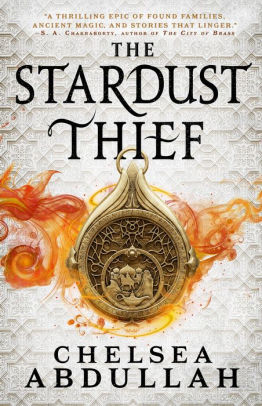
I was a little nervous to read an adult fantasy book with jinns, both in terms of length and knowing I would undoubtedly compare it to the Daevabad trilogy, but I got an ARC and dove in.  I was put off by the use of gods, and that there was no Islam present at all.  I’m not sure if the author identifies as Muslim, or what her background is, so I told myself I’d read at least 25% and then state I didn’t finish it because I primarily review juvenile fiction with Islamic content or by Muslim authors.  Well, lets suffice it to say that arbitrary percentage came and went and I had no intention of putting the book down.  So why am I featuring it? Simple, it is clean and I liked it.  Aside from the plural little g gods, the book is Arab culture rich as a retelling of the Arabian Nights, according to @muslimmommyblog the Arabic is accurate, the story is engaging, and really my only question is, why isn’t it YA?  I have a handful of reasons why I focus on children and teen lit, but one very strong one is that the books are “cleaner” in theory.  Lately though, it has been hard finding YA that followers of my reviews can confidently share with teen readers.  I think this one, although it isn’t a religious mirror, the salaams, culture, Arabic, and storyline, tinge the framing and make it a fun “safe” read to suggest to our kids.  At 480 pages, it probably is best for ages 15 and up, and it ends on a cliff hanger, so I’m not sure what the next book might introduce, just be aware this review is for this book alone.

SYNOPSIS:

Layla aka Loulie aka The Midnight Merchant hunts and sells magic jinn relics that she locates with the help of her jinn bodyguard Qadir.  After her tribe was slaughtered by a mysterious army, and she the only survivor, Qadir and her have been a team.  When her skills align with the needs of a powerful sultan she is forced to go on a journey with his son, the prince and one of his 40 thieves, to find a magic lamp that will lead her to answers about her past, offer her chances of revenge, test her abilities, plague her with loss, and fill the pages with adventure.  Stories of the One Thousand and One Nights are weaved in through oral storytelling, world building is built and explored through the characters’ understanding their world and the jinn, and the non stop action keeps the story moving forward with minimal dialogue and a lot of high energy showing.  Clearly if I say too much, the excitement will be lost, and I don’t want to spoil the characters’ arcs, their foibles, their illusions, and the climax- seeing as it is a linear story and if the motivation to move forward is lost, the book will lose its charm.

WHY I LIKE IT:

The book keeps pace pretty well, a lot of the spoilers are not dragged out and I appreciate that they are not used to dangle the reader’s interest.  The story has depth, the characters are fleshed out, and the truth and illusion reveals are done without insulting the reader.  I’m still undecided about the (SPOILER) comic book quality of death for the main characters, but it keeps it interesting, so for now at least, I’ll play along.

There aren’t a lot of characters, but there are a lot of names for each character and at times in the thick of fast paced action sequences, I did get a little confused as to what was happening to whom and who was saying what.

I don’t truly understand why the divinity is plural or why they say salaam, but nothing else “Islamic” is remotely present save the concept of jinn.  I suppose though for all the fantasy books that use Islamic terms and imagery and then present them horribly, I should be glad that this one really doesn’t conflate the two, but an athan in the background or a few inshaAllahs, sigh I suppose a girl can dream.

FLAGS:

Language, violence, murder, killing, deceit, minor seduction, betrayal.  Very clean not just for an adult fantasy, clean for most any YA or Teen book.

TOOLS FOR LEADING THE DISCUSSION:

It would be a bit of a pivot for me to feature this book as a book club selection because there is plural deities and NO Islam, but it is very tempting to suggest it to the high school advisor.  The book comes out May 17, 2022, you can preorder it which helps show support, or order after it releases on Amazon.

A Show for Two by Tashie Bhuiyan

Standard
A Show for Two by Tashie Bhuiyan

a show for two

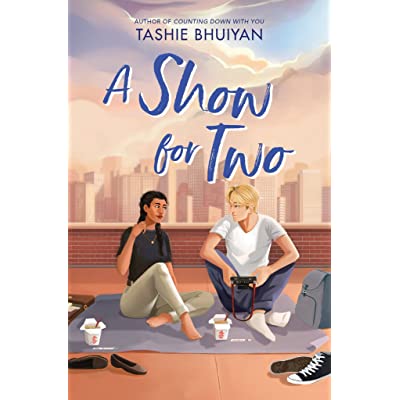
I didn’t love the author’s debut novel, but wanted to see what a second novel would offer, and sadly it really is a lot of the same: light funny romcom surface story featuring a Bangladeshi Muslim character lead mixed in with layers of mental health, a toxic family, high school stress, and cultural expectations driving the plot.  There is crude language, hetero, lesbian, bi, and pansexual relationships discussed, but nothing more than kissing is detailed in any of the scenes.  There is a lot of cultural trauma from the parents and to the book’s credit, it does establish pretty early on that the main character is not religious, but that she does believe in Allah swt.  Similarly, there is a Bangladeshi loving family in the story, so it is not making a critique on the entire culture, it is just the character’s family that is cruel.  Ultimately, at 416 pages I was surprised that there were gaps in character arcs and plot.  I never really liked the protagonist, Mina, but because of how underdeveloped and pivotal the best friend and younger sister were, when it all came to a climax, I found myself rooting for her, which is a very shallow reasoning in an OWN voice book. Additionally, the parents are terrible, and had I dnf-ed it (I was tempted until about 30% through it) I doubt I would have ever known that there was a time that they weren’t terrors.  The peeling back of the layers of the family came too late, too slow, and the progression was muddled.  I probably will not actively seek out further books from this author if the same themes and tropes are present, if she changes it up, I probably could be persuaded.  The book is marketed 7th grade and up, but with the triggers, hate, language, content, genre, language, length I would say 17 and up, if at all.

SYNOPSIS:
Samina “Mina” Rahman is waiting to leave New York and her hateful parents, and start her life at USC as a film student.  All she needs to do is win the Golden Ivy Film Competition, and get excepted to USC.  Her parents dismissing her dreams, passions, and abilities agree to only let her leave if she wins the competition, doubting that it would ever happen, they even put it in writing.  Co-president of the high school film club and best friend, Rosie is equally determined to win, there is just one big problem, every year the winning film has a cameo by a famous actor.  Cue accidental meeting of Mina and Emmitt Ramos, up and coming indie movie heart throb that is cast in the new Firebrand blockbuster.  Sent to Mina’s high school to research for his upcoming role, Mina is tasked with convincing him to make an appearance in their film.  It is a romance story, so you can see where it is headed in this enemies to lovers book.

As family, friends, and college admission stresses mount, the simplicity of what Mina wants and how to go about getting it will be called in to question as her walls crumble and she will have to evaluate people in her life and how they will be affected by her actions.

WHY I LIKE IT:

I like that the story is based on real events in the author’s life, not just the religion, culture, mental health threads, but that an actor came to her high school in preparation for a part: Tom Holland.  I also like that while her parents don’t value her, she has found a support group of sorts that do.  At times Mina reads a lot older than she is, particularly when she is admonishing the freshman, but at other times she storms off pouting and seems to be very childish.  I vacillate between this being intentional and it being an inconsistency in the writing. The younger sister Anam is painfully written.  She is bold and confrontational, yet at the same time so clingy and needy and all over the place.  At one point I thought she perhaps was suicidal and was braced for a really dark twist in the story, but no it was just Anam being Anam, I suppose, and the stress was never revisited let alone resolved.

I truly dreaded the passages about Mina’s home life and her family, they all were just awful to each other and rather than taking Mina’s side because I was shown, I found myself questioning what I was missing in the before and after dynamic.  It is clear they are wretched, the victim doesn’t need to justify the abuse. The transformation of the family dynamic just felt lacking and in fiction when parts are explored it could have really showed some of the micro aggressions and changes that existed and made the relationship salvageable so that the reader would understand why saving and fixing the family were no longer options.  Generational trauma is real and serious and a little more attention I think could have provided an amazing mirror to readers dealing with similar elements.

If the book was half the length I would assume that details would be glossed over, but this book had room, and I don’t understand why so few photography and director references seem to find their way into the text to show that these characters truly are passionate about what they are claiming to desire.  I know the story isn’t a film story or a culture story, but they don’t spend hours editing the film or working on props? Emmitt is regularly pulled away from shoots, but always seems to have enough photos to choose from?  Mina talks of her dad cooking, but foods aren’t detailed, the connection of food to love to family and that being severed seemed like a gaping hole in the crumbling home scenes.  If halal food and no pork can make it into a love relationship, that much cultural/religious depth should have made it inside a families home.

As mentioned in the intro, it didn’t bother me from a religious perspective that Mina was off kissing a boy, that Anam had boyfriends, etc. because Islam was accounted for and the characters are not practicing, so I do appreciate that it didn’t become a stereotypical rebelling against religion book.  Truly, thank you.

FLAGS:

Language, relationships (straight, bi, lesbian, pan), kissing, making out, hand holding, lying, mental health, hate, deception, cruelty, emotional abuse, angry ex boyfriend, triggers.

TOOLS FOR LEADING THE DISCUSSION:
Would not shelve or encourage young readers at our Islamic school to read this.

Abdul’s Story by Jamilah Thompkins-Bigelow illustrated by Tiffany Rose

Standard
Abdul’s Story by Jamilah Thompkins-Bigelow illustrated by Tiffany Rose

abduls story

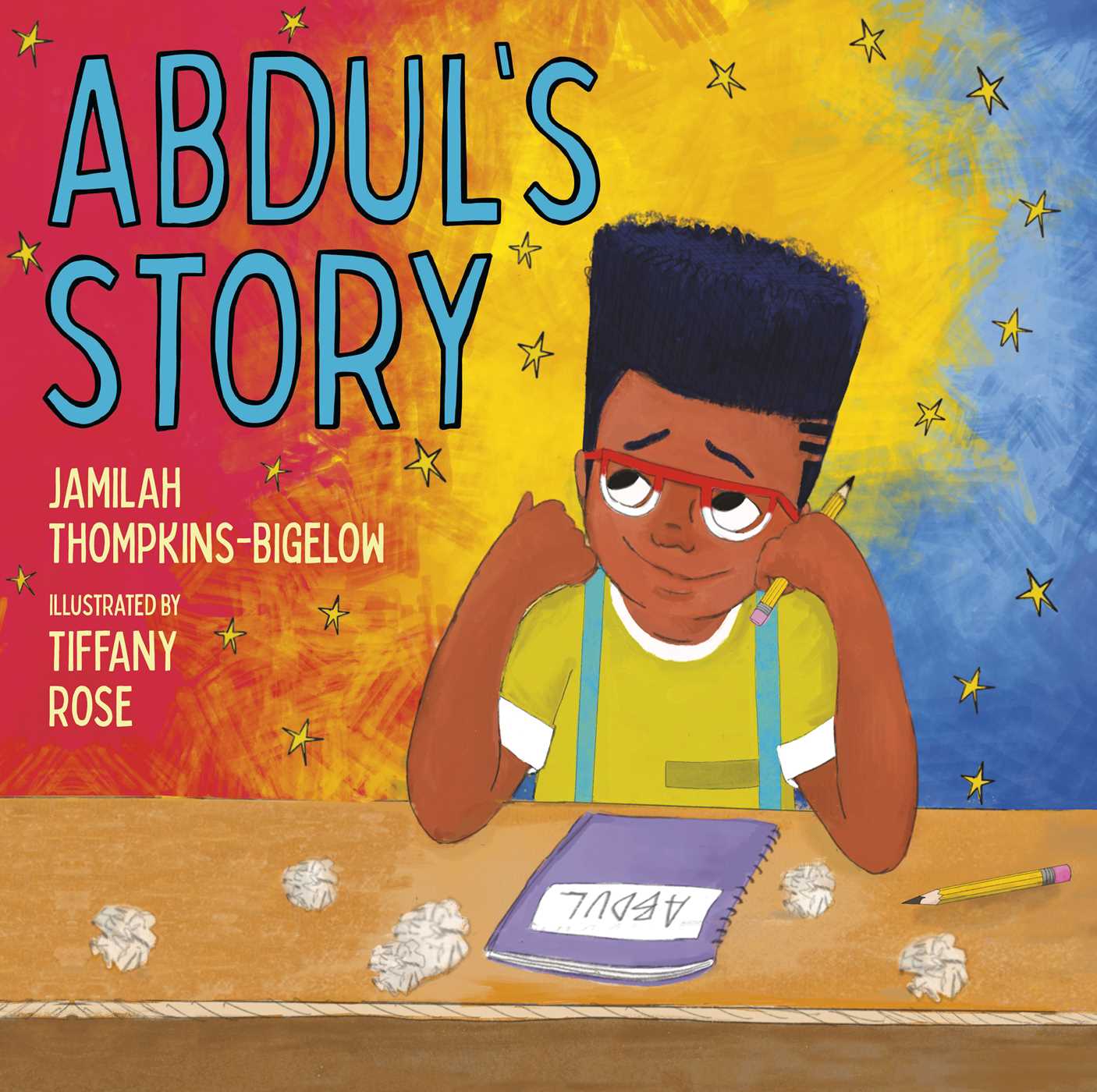
I really don’t know what more you could want from a 40 page brightly illustrated picture book for ages 5 and up.  I felt seen, I got a little emotional, I was inspired, I smiled, I felt compassion and empathy, hope and nervousness.  I was reminded of the power of role models, of getting down on a child’s level, literally.  I was reassured that we all make mistakes, learn differently, and can still thrive. Suffice it to say the book is moving.  The OWN voice lyricism will resonate with children of all colors, but that the messaging is from a Black Muslim boy and is so unapologetic and proud and beautiful, makes the emotions Abdul feels palpable.  Every classroom bookshelf needs this book, every child needs to hear it, read it, and explore the layers contained within.  Alhumdulillah.

img_8766

The book starts out with absolute joy.  Abdul loves to tell stories.  Writing stories, however, is something else.  The letters are tricky, they get turned around, they aren’t straight and crisp like the one’s the barber cuts.   His pages don’t look like the neat lines of his classmates.

He decides that maybe his stories aren’t for books.  It isn’t like he even sees stories like his in books:  stories about the people and places that he knows.

img_8767

Then one day a visitor comes to class, Mr. Muhammad, and he is a writer.  He encourages the children to, “write new stories with new superheroes.”  Abdul tries, but he keeps making mistakes, and then he has to erase, and before long his paper is covered in smudges and holes.

img_8768

Mr. Muhammad encourages Abdul to keep trying and fix the messes later, Abdul has an idea, and with a “bismillah,” he gives it another go.  There is no perfection, there is just determination.  The struggles, success, and support of his peers and Mr. Muhammad, just might change Abdul’s mind about his stories.

img_8769

I love that the book is Black centered and Muslim centered.  There is praying salat, mention of bean pies, a classmate in hijab, and saying of Bismillah.  I’ve read the book seven or so times and it has yet to get old.  The characters burst with personality, even the side ones, that I’m positive it will be a favorite at story time and bedtime alike.

img_8770

Can be purchased at Crescent Moon Store or Amazon

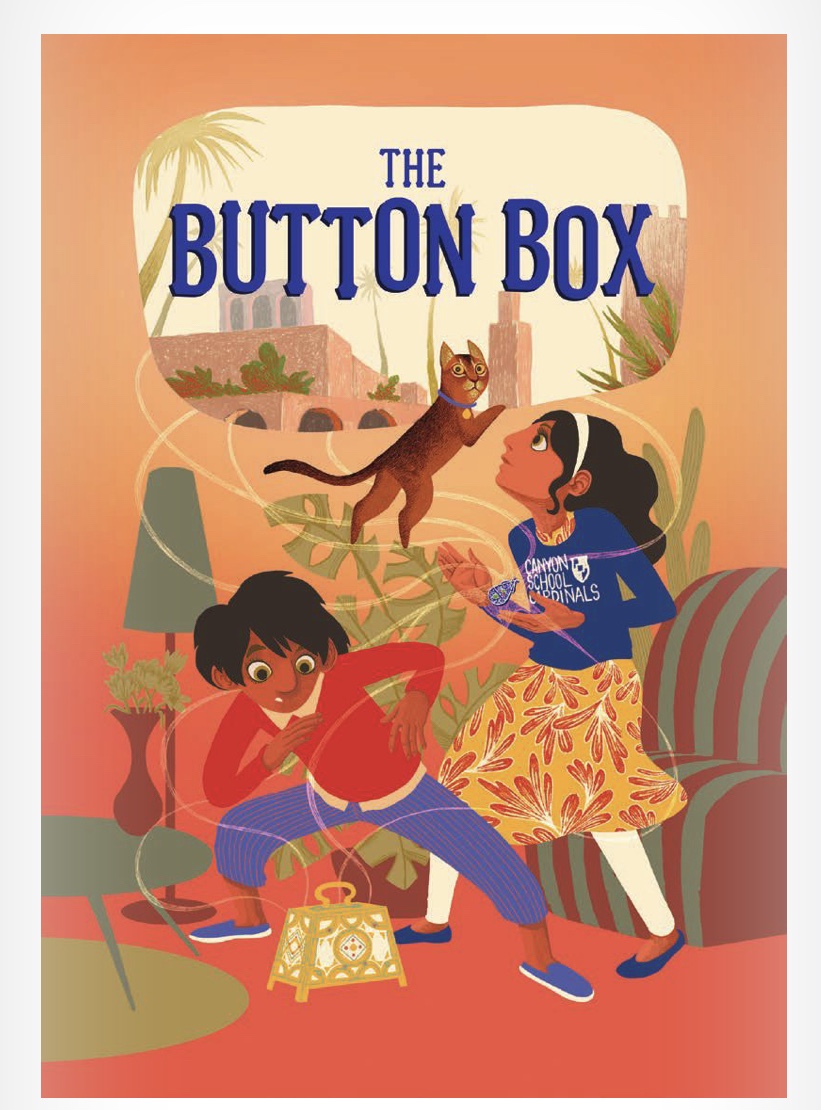
The Button Box by Bridget Hodder & Fawzia Gilani-Williams

Standard
The Button Box by Bridget Hodder & Fawzia Gilani-Williams

img_8336

This 152 page book reads like a historical fiction interfaith Magic Treehouse for middle grades tale, and I thoroughly enjoyed it! I learned about Sephardic Jews, the language of Ladino, Prince Abdur Rahman, and a tiny bit about the Abbasids overthrowing the Ummayads.  I love that it starts with a map and ends with sources, facts about what information is real in the book and what is fiction, and a bit about Muslims and Jews and how to be an ally if you witness prejudice.  The book is co-authored, and in many ways the Jewish narrative does take the majority of the focus, but the Islamic phrases sprinkled in, the Islam practiced by a major character, and the setting, allow for both religions to shine and combine to make a compelling magical time traveling story for third graders (and their parents) and up.

SYNOPSIS:

Cousins Ava and Nadeem are in fifth grade and spend their afternoons afterschool with their Granny Buena.  Granny and Ava are Jewish and Nadeem is Muslim, though they believe differently, they always seem to find more that is the same, and respect is always given.  When they face bullying at school Granny Buena pulls out a crystal box full of buttons and tells the children, and the cat Sheba a tale about their ancestor Ester ibn Evram.  When she stops the story short, the two kids exam the button closer and find themselves back in time tasked with saving Prince Abdur Rahman and getting him from Africa to Spain.  They aren’t sure if that will be enough to get them back to their own time though, but they don’t have time to overthink it because if they fail, the Golden Age of Islam won’t happen, peace won’t come to Muslims, Jews, and Christians in the region, and their Jewish ancestors may face the backlash of helping the Muslim escape.  Along the way, they learn about their own family traditions, beliefs, and gain wisdom to handle their bullying problem at school.

WHY I LIIKE IT:

I love that I learned so much, and from what I could Google and ask about from those more knowledgeable, the facts about the time period and cultures all seem to check out.  Only one passage comparing Jewish belief and the text of the Quran is phrased oddly in my opinion, the rest of the Islamic sprinkling is well done.  There are numerous bismillahs, mashaAllahs, stopping for salat, quoting of the Quran and more.  The narrative is primarily Jewish, but the setting Islamic with athans being called and Salams being given.  The book does have a lot of Jewish detail, but I don’t think it was preachy, and the further uniqueness of Ladino words and culture I think would appeal to all readers no matter how familiar or unfamiliar they are with the two religions.

There are some questions that as an adult reader I wanted to know more about: how Nadeem and his mom are practicing Muslims in a strong Jewish family, how making sure history happened as it happened the first time sent the two kids back…then why were they sent there at all, is there going to be more button adventures, were their two cats or was it the same cat?   Honestly, a lot of the more obvious fantasy plot holes were accounted for and done quickly and simply: how their clothes changed but the button remained, how they could speak the language, how confused their aunt would be when her real niece and nephew arrived, etc.. The writing quality kept it all clear for the reader, and did so without the pacing of the story suffering.

FLAGS:

Near death experience, magic, mention of killing, fear, deception, bullying, fighting, physical altercation, misogynistic assumptions.

TOOLS FOR LEADING THE DISCUSSION:

This would be a great story to share if I return to the classroom. The history, the religions, the storytelling would provide so much to connect to and learn about.  As a book club selection though, it would be too young for our middle school readers and ultimately too short.  I would consider it for a read a loud with fourth and fifth grade.

To Purchase: Here is the Amazon link: https://amzn.to/3D9LyxI

Queen of the Tiles by Hanna Alkaf

Standard
Queen of the Tiles by Hanna Alkaf

queen

This 320 page YA book is hard to put down and middle school readers and up that love words, a good mystery, and fantastic writing are in for a treat.  I can’t recall the last whodunit that had me absolutely sure that I knew who was guilty, while simultaneously doubting myself until the reveal.  I mean, maybe there wasn’t even a crime to unravel? And fear not, I’m not going to spoil anything in this review.  Just know that this Muslim authored, Muslim character filled, Malaysian set, Scrabble feast is worth a space on your shelf as it will undoubtedly make a place in your heart and beg to be read again and again to see what you missed.

SYNOPSIS:

It has been one year since Najwa has competed in a Scrabble tournament, one year since her best friend, Trina Low, died playing Scrabble at the very same tournament, at the same hotel, with many of the same participants.  And with Najwa battling her angry negative thoughts, splotchy memory, nerves, and grief, she is walking a fine line of functioning and faltering.  When Instagram posts and messages start popping up from Trina’s account, everyone becomes a suspect in unraveling what really happened and doing it fast enough to prevent it from happening again.

The backdrop is the Scrabble games that are still taking place, the play on words, the scoring, the plotting, the twists, the scrambling, and unraveling of so many characters that are more connected than they first appear.

WHY I LIKE IT:

I love Scrabble, my mom and I used to play weekly when I was in junior high through college, and while the games were “friendly,” and neither us very good, the game holds wonderful memories. Usually chess is referenced for strategies in real world approaches, so to see Scrabble on a competitive level and have it being in many ways a metaphor for the larger storyline truly had me giddy.  I’m still grinning in fact as I write this review.  The mixing of the two story lines is flawless, with the word play, and scoring, and definitions, that I am just beyond impressed with the writing, the clarity, the intensity, and the way it holds the readers attention.

Many of the characters are Muslim and they mention their hijabs, waking- or rather trying to wake each other up for fajr. At one point Najwa and Mark, Trina’s ex-boyfriend are meeting to talk and she acknowledges the halal gap left as they sit down and how they are both always mindful of her Muslimness and his non Muslimness.  Islam is there, but is not a big part of the story. I beamed when it popped up, but if doesn’t influence the story much, for example one night Najwa plans to sleep in her hijab incase she has to run for her life, so you know, she won’t be slowed down by trying to cover her head.  Yeah, the book has some dry humor too.

There is a large mental health role in the book, as it seems in all of the author’s books: The Weight of Our Sky and The Girl and the Ghost.  Najwa is coping with her grief and trauma and working closely with her doctor to improve her situation.  Other characters mention going to therapists and likewise getting professional help.  I love that it isn’t just a character trait, but that it is a big part of the story, and not in a negative way, but in an actively working to manage it way.

I like how the gender neutral character is handled and pronouns are used.  It is not opined upon, it is not in your face, it is a side character, they have a preference of how to be referred to as, a quip is made that if they win they don’t want to be queen of the tiles, but a more less gendered term perhaps monarch, and that is it.  It is not a judgement, it is not a big part of the story, and no one makes it a huge issue, the character isn’t fleshed out much, but they are respected and have more to their personality than this one facet.  I think that provides a great approach in seeing something in literature that can perhaps spark important conversations in real life in need be.

The only slight pauses the book gave me were when it talks about how incredibly wealthy and distant Trina’s parents were, but then for much of her life she lived in a modest town house style house.  Also, despite Mark and Najwa’s awareness of boundaries, and Najwa being called out for crushing on Mark, at one point he hugs her and I don’t know if that is an oversight or was intentional.

FLAGS:

There is death, murder (?), poisoning, deceit, plotting, cheating in multiple ways, kissing, crushes, relationships, multiple mental health threads, intense competition, danger.

TOOLS FOR LEADING THE DISCUSSION:

I would love to do this as a book club selection.  I think as long as no one spoils the outcome there would be so much to chat about: the twists and turns, the way Islam and Malay culture is shown, the influence of western culture, concept of competitive Scrabble, pronoun sensitivities, and healthy friendship.  Girls and boys in middle school will be drawn to the story, and I can’t wait to share.