Tag Archives: nonfiction

Momo & Bronty’s First Book About Allah by Zanib Mian illustrated by Laila Ramadhani

Standard
Momo & Bronty’s First Book About Allah by Zanib Mian illustrated by Laila Ramadhani

The short simple texts spread out over 14 thick pages talking about Allah swt is a great addition for our littlest believers.  Accompanied by engaging adorable illustrations, this book offers a great way to encourage kids to think, talk, and center Allah swt.  It isn’t just a list of all Allah swt created, it dedicates a spread to that, but then builds on it by sharing that He wasn’t born, He is one, He loves us, and that is why we worship Him and do what He has asked, so that we can one day see Allah swt in Jannah, inshaAllah.

The illustrations on every spread burst with joy and make it fun for older preschool and kindergarteners.  I love that it clearly states that “We do the things He asked us to.  And don’t do the things He said not to.”  I don’t recall ever seeing this articulated in a child’s book, and the simplicity is powerful.  Anyone that has kids, know they have a lot of questions about Allah swt and this book is a great start to cultivating the love and connection between child and creator.

I purchased my copy from Crescent Moon and if you use my initials at checkout (ISL) you will save 10%

Prince Among Slaves by N.H. Senzai illustrated by Anna Rich

Standard
Prince Among Slaves by N.H. Senzai illustrated by Anna Rich


462575630_1072301494218509_2457799047040333197_n

This 48 page biography tells a story that we all should know, yet are probably hearing for the first time.  The story of how West African Prince, Abdulrahman Ibrahim Ibn Sori, was forcefully taken and sent to America to be a slave on a plantation, what he endured for decades, and how he made his way back to the African continent.  The large emotional illustrations and poignant text tell of his his life in Fouta Djallon, the painful journey to Mississippi, the trials as a slave, the joy of being a husband and father, and his attempts to return home a free man.  With each challenge and at each stage, him additionally showing amazing strength and trust in Allah swt.  The heartbreaking tale unearths so much evil, ignorance, and faith, that the story is not meant to be read once, it begs to be reflected on, pondered over, and shared far and wide. The treatment of Prince Abdulrahman shown in some of the illustrations are difficult to look at, as they should be, there is also a very passionate kiss shown up close between him and his wife.  I think the story’s words and illustrations emphasize the anguish, the strength and the humanity, but I mention the illustrations for each to decide on their own.  There is not a biography or sources in the book, but rather mentions in the Author’s Note the source matter being a film by Unity Production Foundation.  It is not unusual to adapt a biography from a film, and I read an ARC, but I do hope the final copy will be sourced.  The book is for middle grade readers, and I cannot wait to add a physical copy on my own bookshelves, and gift numerous ones to teachers to share in their classrooms.

WARNING: SPOILERS: THE SYNOPSIS CONTAINS A FULL RETELLING, as it is historical, I hope that is ok, but in no way shape or form is my summary taking away from the details, emotion, and writing the actual book contains. 


In 1762, the Fulbe enjoyed prosperity and peace under the king, and when Abdulrahman was seven he started school in Timbo. He loved learning about the Prophets in the Qur’an, and excelled at his studies.  So much so that his father sent him to Timbuktu to continue his studies at age 12. Five years later he returned to train as a warrior, when the first white man, a surgeon, Dr. John Cox appeared injured and lost, they helped heal him and sent him back home to Ireland.

By age 26, Prince Abdurrahman was a warrior, a scholar, soon to be king, a husband and a father of a son.  One day while on patrol, he was captured. He and 170 others were loaded on a ship, for eight months, and sent over 3,000 miles across the Atlantic Ocean.

On August 16, 1788 he arrived starved in Natchez, Mississippi, for $930 he and another man became the property of Colonel Foster.  Resigned that this was his fate, he helped share his knowledge of cotton, and the plantation prospered. In 1975 he married, Isabella.  They had nine children and eight grandchildren.  

In 1807 while selling goods in the market, Abdurrahman sees Dr Cox (subhanAllah), and the doctor pleads with Colonel Foster to free the Prince.  Foster could not be moved and when the doctor died, Abdurrahman once again accepted his fate. 

His story though had started to spread, and a printer, felt a softness to the Prince turned slave and printed often embellished stories trying to help his cause.  He asked the Prince to write a letter, the Prince wrote an ayah from the Quran and the printer passed it to Mississippi senator Thomas Reed explaining the Prince’s desire to return to Africa.  Senator Reed got the letter to Henry Clay, the Secretary of State under John Quincy Adams, who then got the message to the President of the United States.

The letter was written in Arabic, and they assumed Prince Abdurrahman was thus from Morocco.  The Sultan of Morocco was touched by his plight and petitioned for his release, and the Prince kept quiet not wanting the truth of where he was from to remove the help he was receiving.

He was finally freed and able to purchase the freedom of his wife Isabella with the help of those who had heard his story, but the efforts to free his children were not as successful.  The truth about him not being Moroccan became known, and despite extensive travels and pleas, his declining health forced him to leave America with out his children.  He arrived in Monrovia, Liberia, but would die before he could reach his home of Fouta Djallon.

462563778_440473032154161_1815006209353878188_n


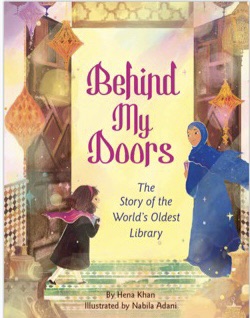
Behind My Doors: The Story of the World’s Oldest Library by Hena Khan illustrated by Nabila Adani

Standard
Behind My Doors: The Story of the World’s Oldest Library by Hena Khan illustrated by Nabila Adani

img_3557-1

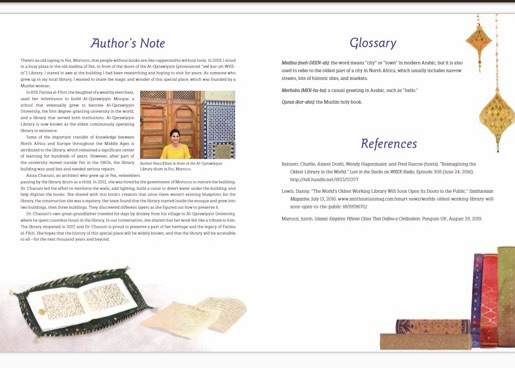
The world’s oldest library proudly stands in Fez, Morocco: started by a Muslim woman, restored by a Muslim woman, and in this 40 page book the library itself tells its own story in a book authored by a Muslim woman.  The personified library shares a few highlights from its early start as a corner in Fatima Al-Fihri’s masjid and university to collections spanning multiple buildings, from a bustling center of learning and knowledge to a place of disrepair and neglect.  Staying on an early elementary level, the informative author’s note and references make the book engaging for older readers as well, and an incredible addition to bookshelves everywhere.

img_3558-1

The book starts with the library introducing itself and welcoming the reader. “Merhaba! I am Al-Qarawiyyin Library–the oldest library in the world.” At over a thousand years old, the library begins at the hands of Fatima Al-Fihri in 859 who dared to dream big and created a space of learning and worship in Morocco.

img_3559-1

As the courtyards and collections grew, seekers of knowledge, from all backgrounds, gathered to discuss, debate, and learn.  Special rooms with special locks kept books safe: a Quran written on camel-leather, a philosophers drawings in gold ink.

img_3561-1

Nearly destroyed once by a fire, the library endured, but over time the rooms were no longer filled with the bustle of people.  One day a small girl, Aziza, paused at the door, but did not enter for many years.  When she did return, she came as an architect with a team to restore the library and invite people back in to read, learn, and dream.

img_3565-1

It delights me that such an important story is available to be widely learned from and appreciated.  You can preorder a copy here from Amazon.

img_3566-1

Not Yet: The Story of an Unstoppable Skater by Zahra Lari and Hadley Davis illustrated by Sara Alfageeh

Standard
Not Yet: The Story of an Unstoppable Skater by Zahra Lari and Hadley Davis illustrated by Sara Alfageeh

img_2890-1

Despite my initial hesitancy, the book really won me over.  The inspiration behind the story is impressive, but even if it was complete fiction, it would still be a cute book.  Over 40 pages, the illustrations and simple text introduce you to Zahra, a young girl in the UAE with big dreams and a lot of determination.  And that is before she even sets foot on the ice.  Four to eight year old kids will enjoy the humor, with the older readers appreciating what she was able to overcome and accomplish.  Adults will appreciate the authors’ and illustrator’s notes at the end and seeing their kids being inspired to pursue their dreams.

The book begins with Zahra watching a movie at a theater and being inspired by the skaters on the screen.  She slides across the floor in her socks that night when she gets home, and declares she is going to be a figure skater.  Her brother points out that she doesn’t know how to skate. When she asks her friend to make her a costume, it is revealed that she isn’t even taking lessons. It seems everyone wants to point out the flaws in Zahra’s plans.  To which she responds, “not yet.”

Luckily her dad supports her, and takes her to the only ice skating rink in the country, where she promptly falls over again and again.  But there is something to be said for not giving up, and the true story of Zahra Lari shows that sometimes you have to be the one to break the barriers and remove the “not yets” on the path to achieving your dreams.

I found this book at my public library, but it can also be purchased here.

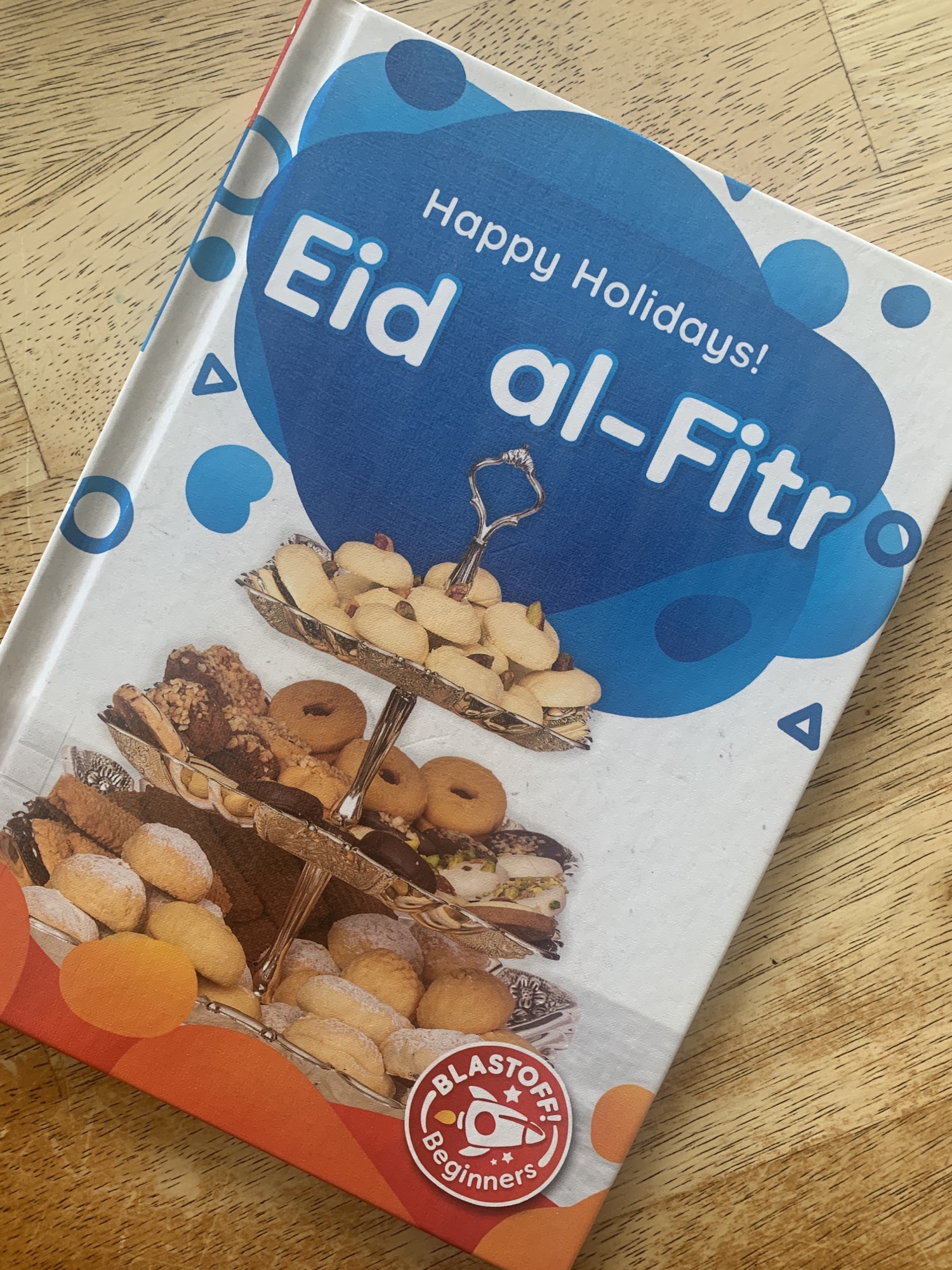
Happy Holidays! Eid al-Fitr by Rebecca Sabelko

Standard
Happy Holidays! Eid al-Fitr by Rebecca Sabelko

img_3127-1

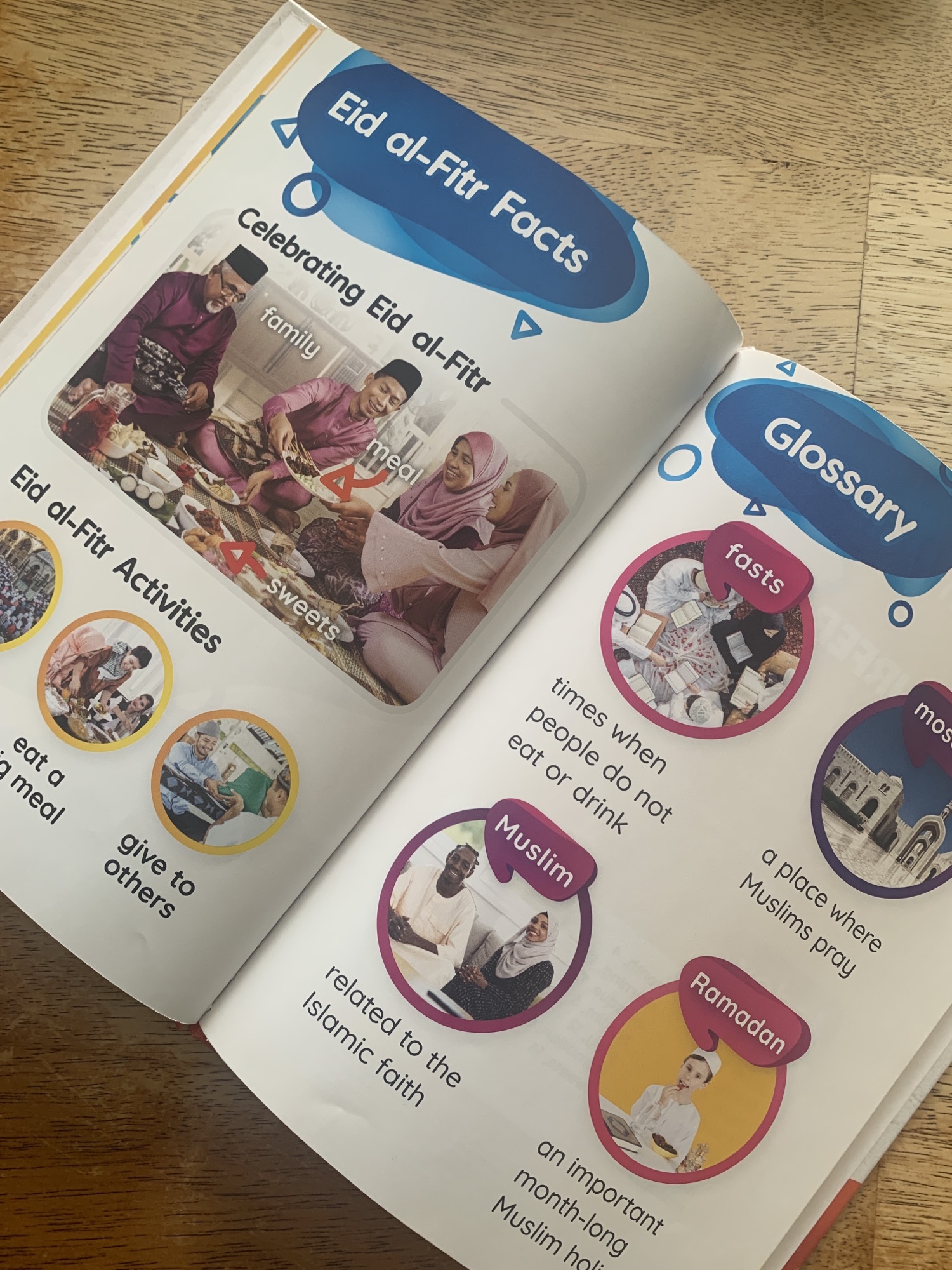
This 24 page 2023 published non fiction book about Eid, is meant for babies to seven year old according to the publisher.  A large spread of comprehension abilities that is thus required to be vague, simplistic, and at times not very successful at conveying much of anything. The large font and bright colors are engaging, and it starts out strong with sight words, and identifying Ramadan is a Muslim holiday followed by Eid al-Fitr, but then erroneously states Eid is three days.  There is then unnecessary statements such as “They honor their beliefs.” That have no clear meaning, and in fact feel a bit othering.  It seems the book is scared to say “Muslims,” saying it only once, it prefers “they,” and “people.”  Some pages are clear and accurate, but many are just awkward, such as “Happy Eid! People pray each morning.  They go to a mosque.”  It seems so stilted.  The picture glossary at the end is mostly accurate, but it defines Muslim as “related to the Islamic faith.” Overall, it seems like a little editing would clarify, correct, and even make this book a benefit, but as it is it just feels like token rep to add to a holiday library series.

The book starts with a table of contents and divides a very short book into chapters.  The first three pages tell that Ramadan is fasting, Eid is after Ramadan, and a Muslim holiday.  It erroneously says Eid is three days, and then says “the dates move each year.”  If you are aware of the lunar calendar this makes sense, I’m sure a five year old would not understand that it isn’t just a randomly selected day.

img_3129-1

Pages 10 and 11 seem vague at best, “People end their fast.  They honor their beliefs.” The previous page was taking about Eid, the following spread is about Eid, it is almost like the pages were plucked from a similar Ramadan book and erroneously dropped in to this one.

We then are at the mosque, and told people pray each morning.  I’m not sure if this is on Eid day, or every day, we do pray five times a day, and while it is good to pray at the mosque it is not required, so ultimately another unclear page.

img_3131-1

The remaining Eid tradition pages are accurate, visit family and friends and say Eid Mubarak, eating big meals and sweets, giving to others in need, and giving gifts and money.  The photographs show joy, and are bright and engaging. The Facts and Glossary at the end are then followed by an index and ways to learn more.

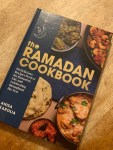
The Ramadan Cookbook: 80 Delicious Recipes Perfect for Ramadan, Eid, and Celebrating throughout the Year by Anisa Karolia

Standard
The Ramadan Cookbook: 80 Delicious Recipes Perfect for Ramadan, Eid, and Celebrating throughout the Year by Anisa Karolia

img_3081-1

Another surprising library find, this 2023 published cookbook shares meals for all the time, but organizes them with Ramadan in mind.  Unlike many online recipe pages, there is not a lot of backstory about the culture behind the recipes, or how the author has made them her own, it really is pretty direct and to the point.  The author is Desi, and the bulk of the recipes Indian, but it isn’t all of them.  I found myself flipping through the pages hoping to be inspired, but sadly most of the recipes were fairly basic.  That isn’t too say they are not good, I have not tried them, but being of Pakistani decent and that I have been cooking multiple meals a day for too many years to count, I didn’t feel compelled to check the kitchen for ingredients.  I think a big part of it is, I need pictures of the food to spark interest, and not every page had images of the food.  I think the book is fun to look through, maybe remind you of something you tried once and enjoyed, or give you ideas of something you and your family might like to try.  I would say it is for beginner cooks, but without step-by-step directions, you have to have some basic skills, perhaps it is more a family friendly cook book as she makes comments of what her children like, or dishes them come together quickly and easily.

Clearly I am not a foodie, or a cookbook reviewer, I was just excited to see a Ramadan cookbook available at the library and wanted to share.  The author shares her thoughts on Ramadan, and interjects some thoughts on the section pages. Apparently she is a famous blogger, so if you follow the author and there is something I should try, please let me know.

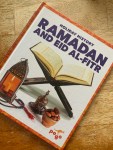
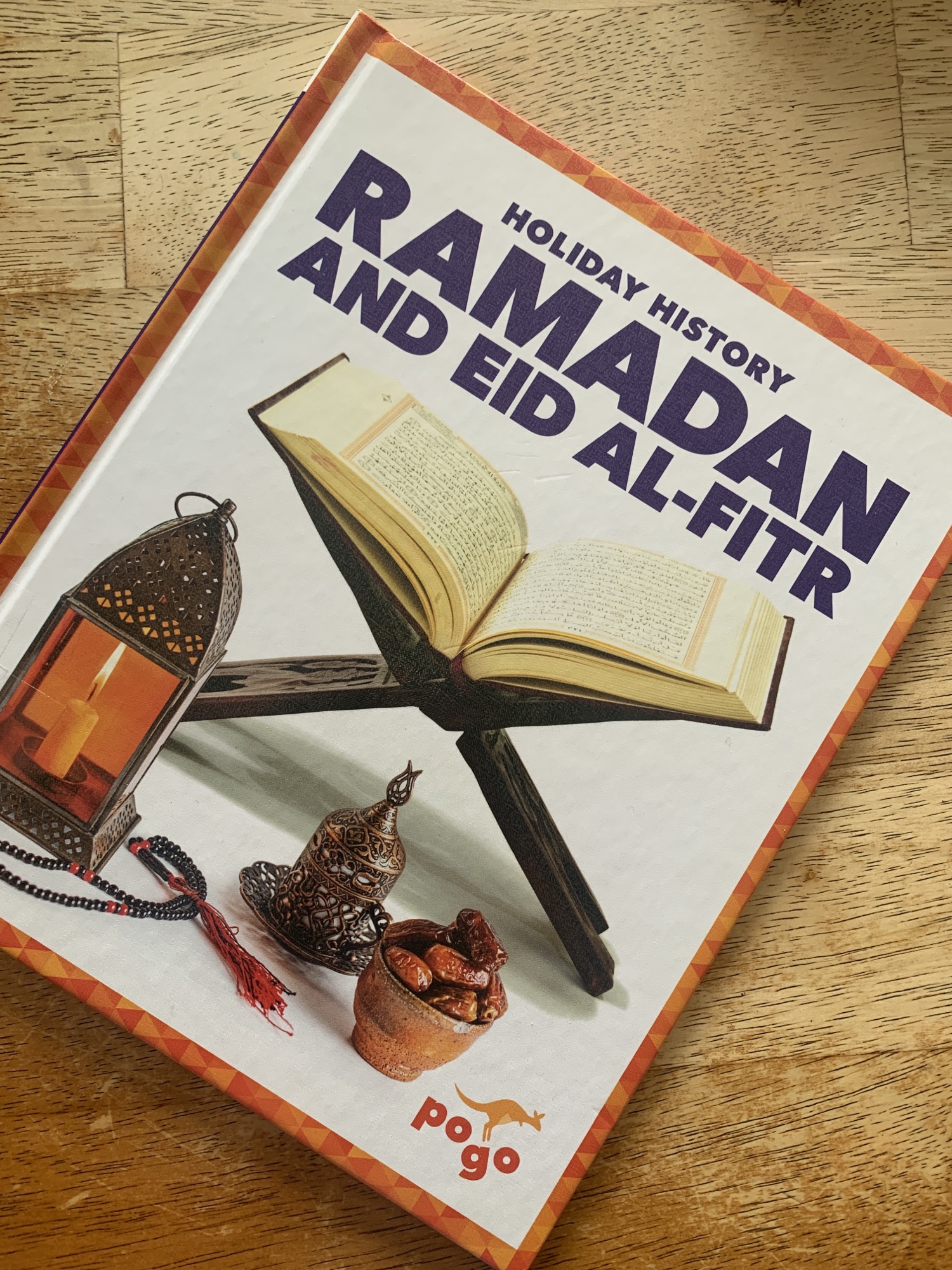
Holiday History Ramadan and Eid Al-Fitr by Marzieh A. Ali

Standard
Holiday History Ramadan and Eid Al-Fitr by Marzieh A. Ali

img_2952-1

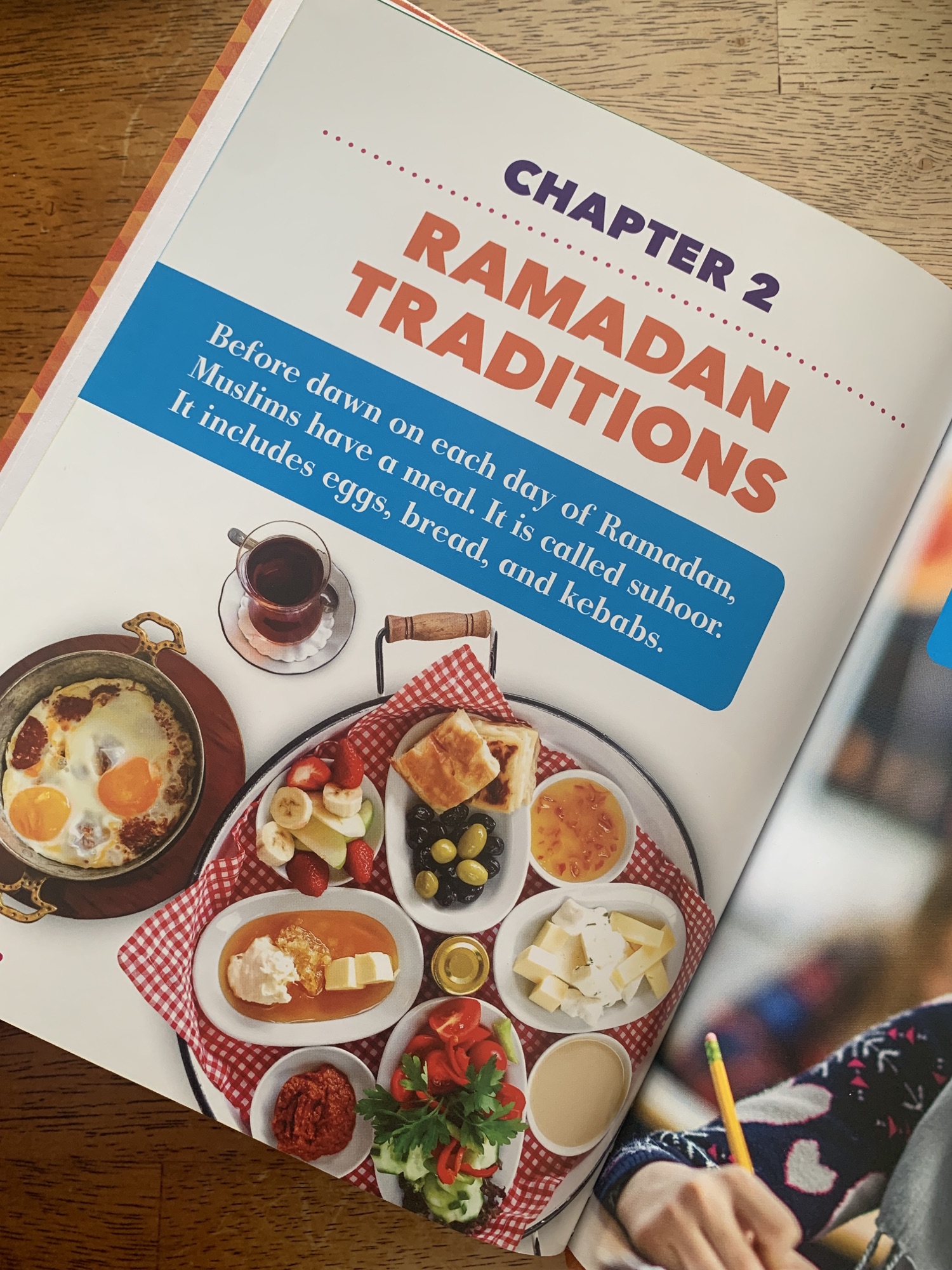
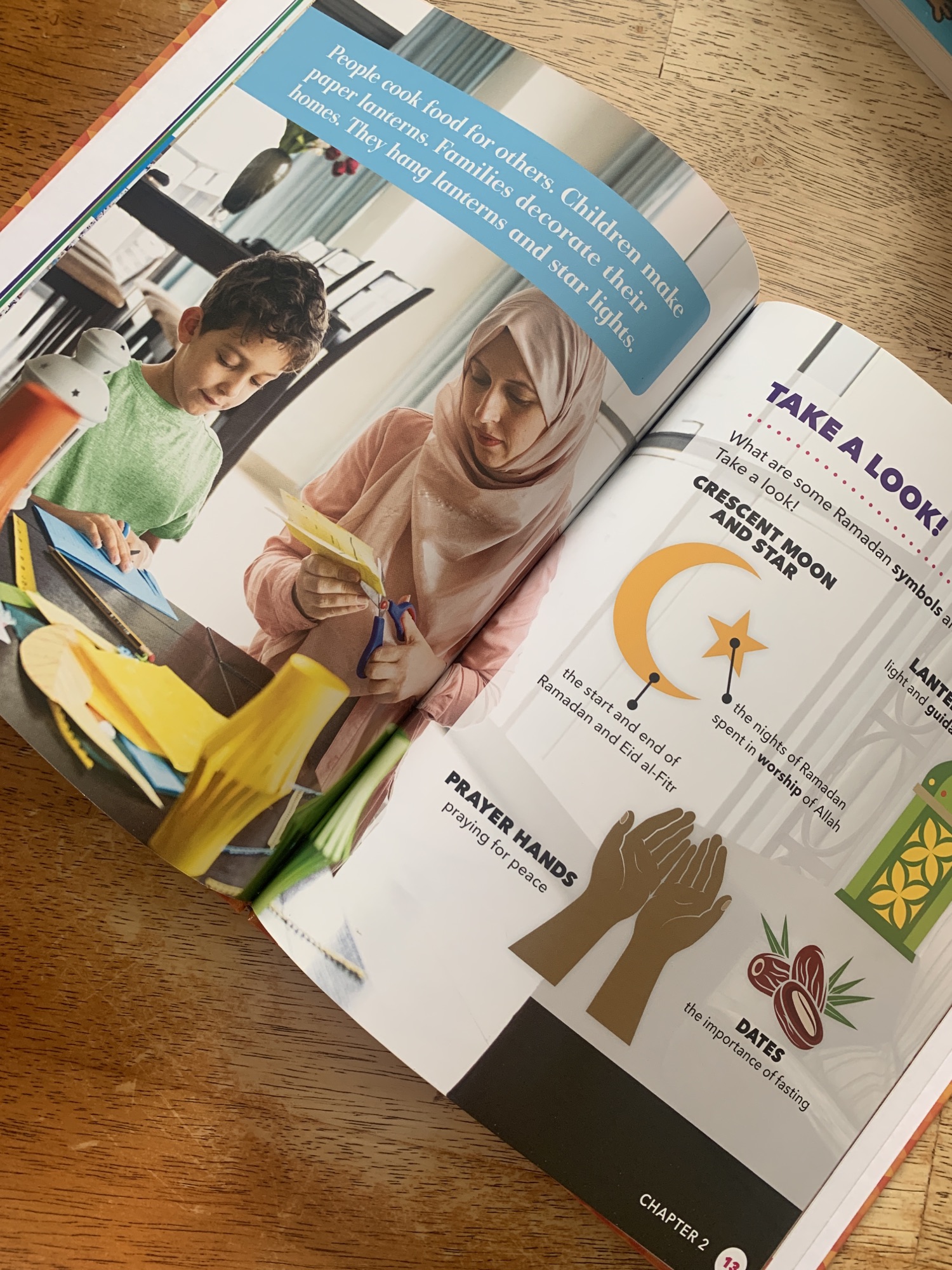
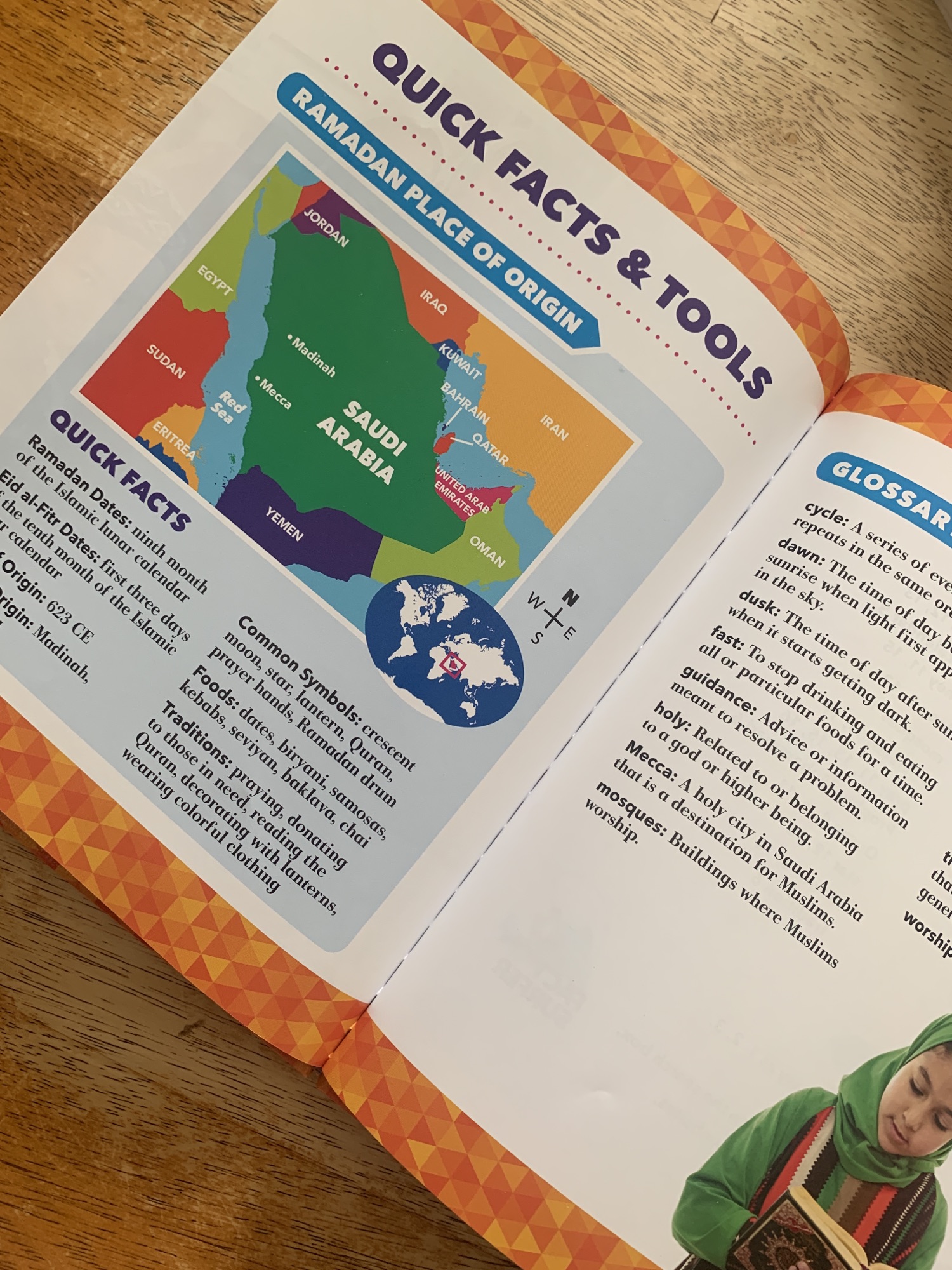
Traditionally published non fiction Ramadan and Eid books have more errors than they should.  I was hopeful with this one, the author is a Muslim and accomplished author, and it started out good, but then it hyper fixated on the foods eaten which can never be accurate.  Muslims are everywhere in the world, and no two people like the exact same foods anywhere, not even siblings  So why it would so clearly articulate, without qualifiers, what Muslims eat for suhoor or iftar is beyond me.  I do not eat eggs, bread, and kebabs for suhoor, we tend to enjoy brownie sundaes and pizza, and dates, broth, and fruit for iftar, sure makes me wonder if my nachos or pesto, rendered my fasts invalid?  Snark aside, it takes away from the quality information in the book that highlights that while fasting Muslim kids go to school and adults to work.  I also don’t like the suggestion that Ramadan is a time to reflect, pray, cook for others, and help those in need. It truly reads that this is when we do it, as if it is the only time we do it, and not that we do these acts all year, but do it MORE in Ramadan.  I know, I’m being picky, but these types of books are standards in public and school libraries, and in a world where Muslims are by-and-large having to prove their humanity, words have power, and need to be conveying that we pray five times a day, and more in Ramadan.  That we help those in need all year long, and more in Ramadan. The book is only 23 pages long, so when it spends so much space on these items worded in this way, it really becomes the takeaway message.

img_2953-1

The book starts pretty well, with clear precise sentences telling that “Islam is a religion practiced by Muslims” and that “they believe in one God” (note in the book God is not capitalized). It has that “Ramadan is the ninth month in the Islamic lunar calendar,” which I am ok with in non fiction books. And tells that “more that 1,400 years ago, the Prophet Muhammad received the first verses of the Quran” and that “they were sent by Allah through angel Gabriel.” 

img_2954-1

We then get two pages about specific foods, and told “Ramadan is a time to help.”  “It is also a time to pray and reflect.  People go to mosques.  They read the Quran.  They talk about Islam.” Stated just like that.  Making it seem that only in Ramadan are these things done. The unqualified statements make it seem that just as “They read the Quran” “Children make paper lanterns.” Apparently it isn’t optional, or a fun craft, it is just what is done.

I like that the five pillars are included, I wish it gave the terms of shahada, and sawm, and salat, and zakat and hajj, “journeying to Mecca” is a bit vague, and not at all sufficient.  I don’t know about they weight of the symbols either.  Dates show the “importance of fasting.” No they are the sunnah.  The star on the crescent symbolizes “the night of Ramadan spent in worship.” I think the symbols are a stretch to be honest.

img_2957-1

Eid al Fitr is one day not three as the book states.  The next spread then revisits the food, as if Biriyani is only eaten on Eid and all Egyptians make baklava.  The end is a one page Quick Facts and Tools and a glossary.  I have once again sent an email to the publisher asking them to edit future reprints of the book. 

img_2958-1


Palestine: The Special Edition by Joe Sacco

Standard

img_2164-1

Written between 1993 and 1995, and compiled as a complete set in 2001, this 285 page adult non-fiction graphic novel is not really something I can review, even if I knew how.  As we have passed 100 days of the escalation in Gaza, on top of the ongoing horrors of Israeli occupation, I am hoping to broaden my literary awareness to include not just children’s fiction and non-fiction about Palestine, but also adult works by those living it, those moved by it, and those reporting on it.

This particular “special edition” has a forward by Edward Said, and an introduction by the author and illustrator.  Once I started the actual story, I’ll be honest it took a few attempts to hook me, with the starting being in Cairo and being a little aggressive with alcohol and talk of women, but once I decided to just keep going, the book finds a bit of a rhythm.  It shows the author himself shaping his own opinion as he interviews, and sees, and reports on the events around him.  It is non-fiction, it is written by a journalist, at some points he acknowledges his bias, but the overall picture presented, is heart wrenching.  That the humiliation and torment and occupation of a people has been so well known and documented and ignored, in light of current events, and even in isolation, is devastating.  The exhaustion the writer feels just witnessing it, is palpable, and the complete ignorance of Israeli, former IDF soldiers none-the-less is stark.

The book is both a reflection of the time with internal political factions playing roles differently than they do in todays conflict.  There are also views about Iraq and Saddam Hussein, which might surprise readers today.  But the power of this book is what hasn’t changed, the torture, the imprisonment of children, checkpoints, illegal settlements, humiliation, restrictions from working, from moving, from being treated as equal.

I’m glad I read it, and spent time among the the ink filled pages. I am certain that many of the stories, particularly the ones from inside the prisons will stay with me and haunt me as I read headlines and scroll endlessly through the statistics occurring in real time.  How can we be so blind, for so long, how can a people endure so much and keep fighting, how does any of this make sense?

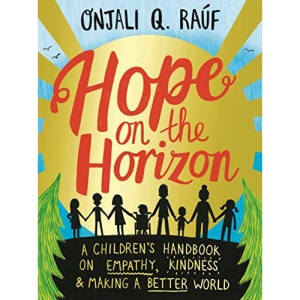
Hope on the Horizon: A Children’s Handbook on Empathy, Kindness, & Making a Better World by Onjali Q. Rauf illustrated by Isobel Lundie

Standard
Hope on the Horizon: A Children’s Handbook on Empathy, Kindness, & Making a  Better World by Onjali Q. Rauf illustrated by Isobel Lundie

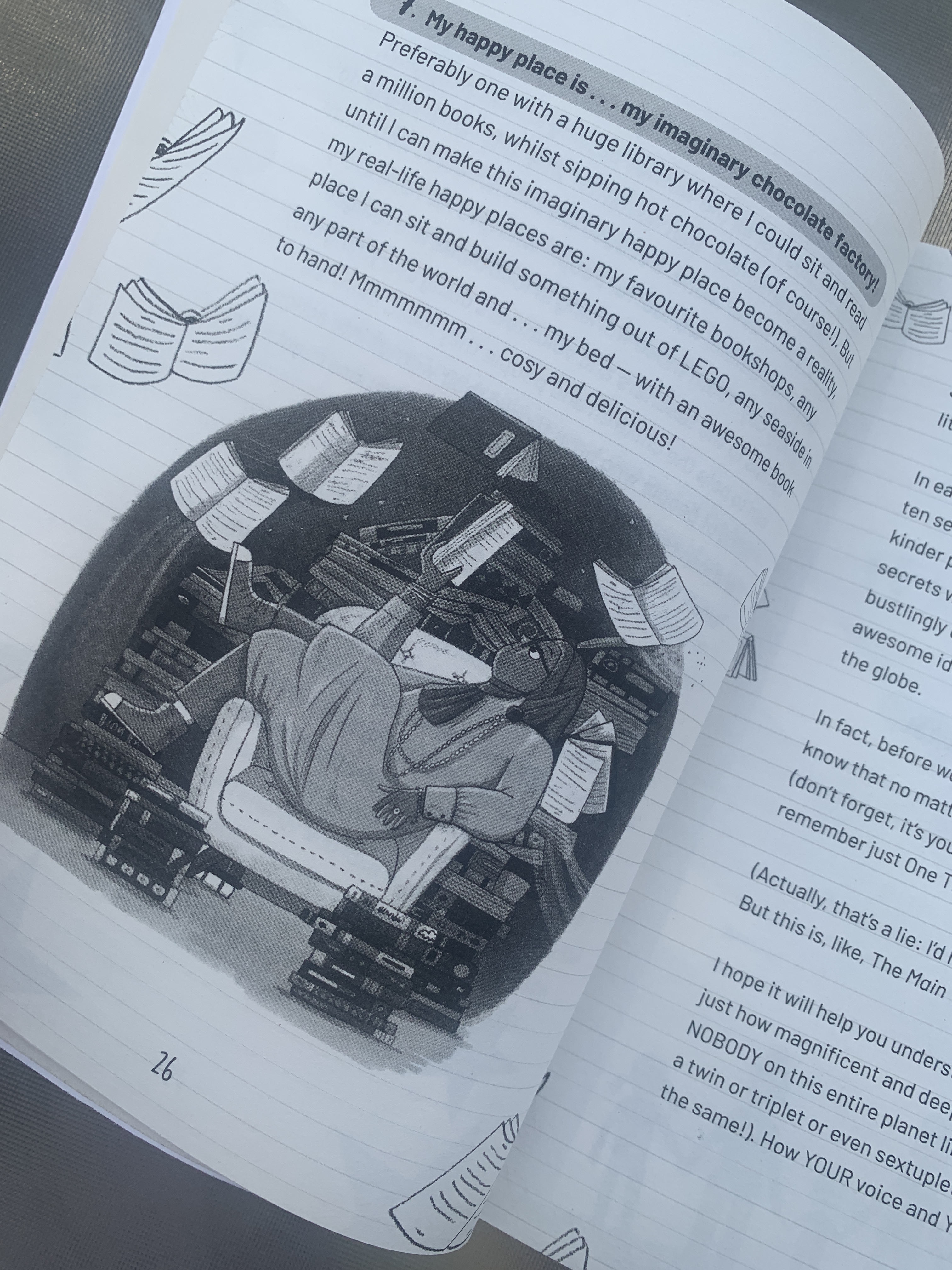
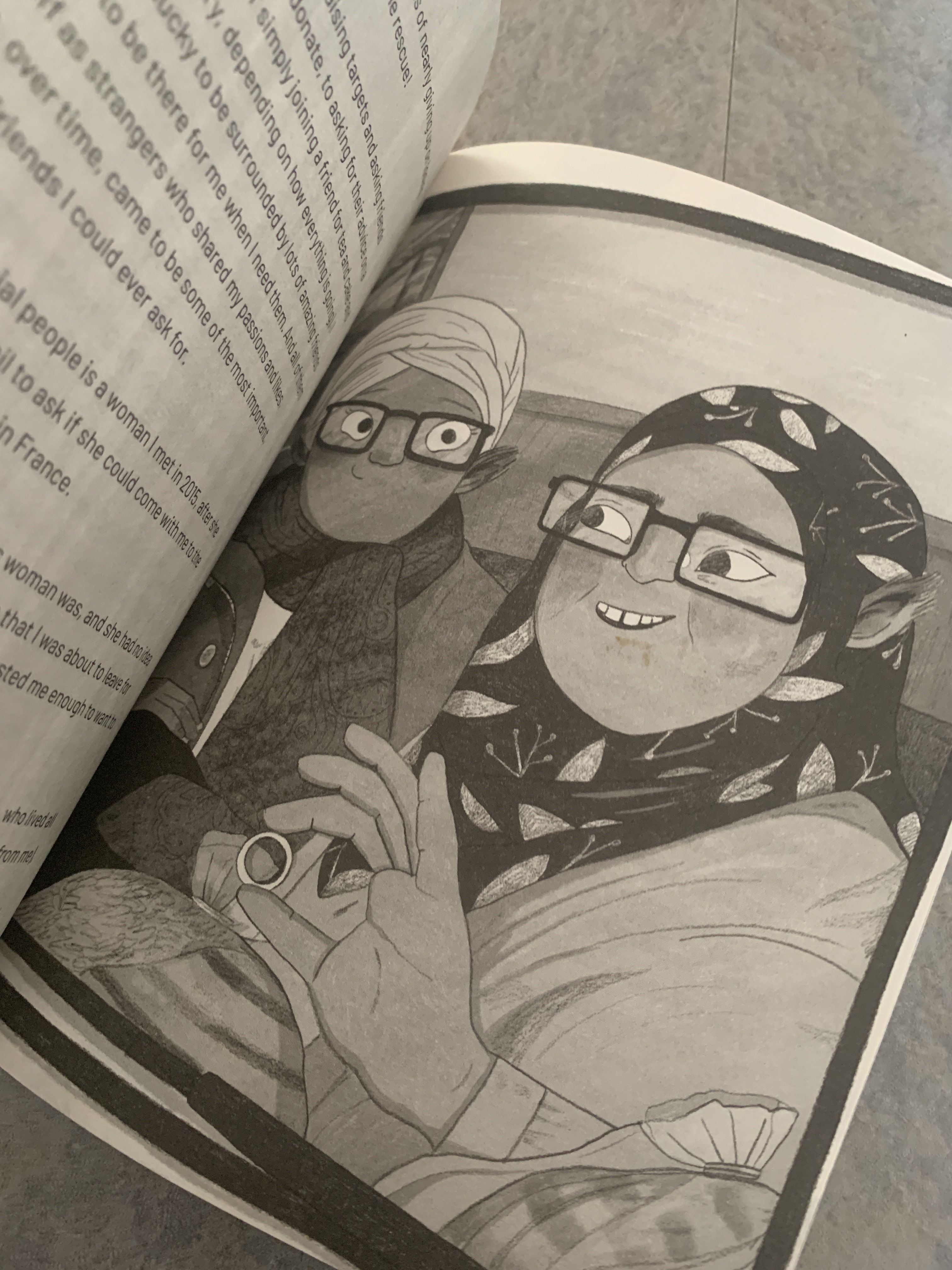
This delightful 288 page handbook pulled me in, inspired me, enlightened me, and allowed me to reminisce about incredible fictional characters from iconic books, tv shows, and movies.  Concepts such as kindness, empathy, friendship, deflecting negativity, seeing beyond labels, and asking for help, are framed around the fictional character’s strengths to introduce famous real life people from the past and present, as well as not so famous people the author personally knows and works with.  Written with the author speaking directly to the reader, there are also calls to actions, questions, prompts, and resources to help mature middle grade readers and up.

SYNOPSIS:

The book starts with an introduction about who the author is and her getting to know the reader, before introducing the concepts the book will cover and how it will go about doing so.  It establishes the super power of kindness and five golden rules.  The 10 chapters of the book then follow a loose format of introducing a fictional character and why the author admires them: Charlie Bucket from Charlie and the Chocolate Factory, Tintin, She-Ra, Superman, Samwise Gamgee, etc., her connection to them and to a theme: hope, being a ripple starter, never giving up. to name a few.  The book then highlights how the character and theme tie in to a cause that the author is passionate about, refugees, education, feeding the hungry, foster care, etc., then spotlights exceptional people the author has gotten to know personally in her activism that have made an incredible difference in the world, before offering a checklist of how you too can take action.  And finally a famous person is celebrated as being the culmination of all the strengths, characteristics, and super powers mentioned.  People such as Greta Thunberg, Albert Einstein, aerospace engineer Mary Jackson, footballer activist Marcus Rashford and more.  Often there are reflections, and the easy banter and conversation between the author and the young reader never leaves the text.  The reader and the connection to the reader is always prioritized and included in the sharing of information, motivation to action, and celebration of individuals real and pretend that have made a positive difference.

WHY I LIKE IT:

There is nothing overtly Islamic in the book, but there are Muslims featured as both famous real life examples and the author’s personal acquaintances.  Most importantly the author is unapologetically Muslim and offers glimpses of her own childhood growing up Muslim in the UK.  And as a hijab wearing Muslim, the illustrations also proudly show her smiling, eating chocolate and being an activist making the world a better place for all.

I love that the tone of the book is optimistic even when discussing difficult themes and heartbreaking realities of society.  The playfulness of the banter keeps the reader engaged and the text light.  Even if you don’t know the characters referenced, the urge to read their stories is a secondary benefit, and one that I think will further young world changers’ critical thinking skills.  Finding the good in people, even if they aren’t real, is such a lens that needs to be used more often, and the book does a tremendous job of stressing this.

FLAGS:

Talk of refugees, homelessness, food insecurities, abuse, poverty. Nothing is overly detailed, but the concepts are touched upon and explained as needed which could possibly be triggering or difficult to fully grasp to younger readers.

TOOLS FOR LEADING THE DISCUSSION:

The book can be read straight through or referenced, you can even thumb through and read sections that appeal to you.  I don’t know exactly who the book will resonate strongest with, but I’ve got my own children reading it, so I will happily report back. I think it deserves a place on every book shelf and even if only portions are shared with a class, the discussion and foundation that it could provide would be incredibly powerful.  I could see an English teacher encouraging essays about fictional character traits in the “real” world being assigned after reading, or History teachers spending time on some of the characters highlighted, it really is a great tool, a handbook, for young and old alike.

Welcome to the New World by Jake Halpern illustrated by Michael Sloan

Standard
Welcome to the New World by Jake Halpern illustrated by Michael Sloan

new world

I really like the concept and approach of this 192 page non-fiction graphic novel.  It isn’t a memoir or OWN voice retelling, it is basically an in-depth news story about a Syrian refugee family that has been fact checked and then illustrated.  Unfortunately, parts of the story are really choppy and unresolved, details shared for no purpose and occasionally reinforcing of stereotypes.  The book is an easy read and the Muslim family is shown to practice and be fleshed out, but more than once I found myself questioning what the author’s commentary was suggesting/implying based on what was being included.  I allowed my 12 year old son to read it before I was finished, but the last few pages had both misogynistic and homophobic slurs coming from bullies so I made sure to discuss that with him.  I think upper middle school to YA is probably the ideal readership because of the subject matter of escaping war, facing financial insecurities, PTSD, bullies, islamophobia, and navigating a new environment when you are not quite a child, but not yet an adult either.

SYNOPSIS:

Naji’s family is undecided if they should leave Syria or not.  Part of the family has permission to travel to Connecticut in America, but part of them still do not, including Naji’s grandmother.  The war has already imprisoned Naji’s father and uncles in the past and with the US election showing Trump having a chance, they feel like they need to make a decision quickly.  Naji loves all things American and is the only one in the family anxious to get to the US and get on with life, but when the moment of saying good-bye arrives, he has doubts.

Once they arrive in America, all their doubts multiply as life is difficult, help is hard to come by, and day to day fears of safety have not been left behind.  School, finding jobs, learning the language, and facing hate are just the big things that plague a family who has left everything to start over in this detailed account that follows Naji and his family as they navigate their new world.

WHY I LIKE IT:

I like that the book has been approached as a news article.  I just didn’t like the unresolved threads that seem to take up so much of the narrative only to be abandoned.  I really struggled with the idea that Naji knows America and obviously media is global, but is shown to be confused by a dining table.  I didn’t like the commentary of Naji’s sister Amal and her hijab, I find it hard to believe there aren’t other hijabs in the school or larger community and why it is made to be such a big deal by her, and those trying to help her.  It would seem small after everything she has been through.  I do like that there are a few other Muslims in the school and at least they discuss that there is not a nearby masjid.  I wish other Muslims would have been around to help settle the new family.  I know a few groups that helped in immigrants in New England, so that there were no Muslims in the welcoming groups seemed hard to accept.  By and large it does show Islam being practiced, not just names and hijabs, which I appreciated, but for a book that is based on a real family, with graphics, I really expected a stronger emotional impact that ultimately for me was just not there.

FLAGS:

Death, abuse of power, war, language, bullets, shooting, kidnappings, detainment, destruction, kids making out in hallways, implied rape/sexual assault, death threats, racism, islamophobia, misogyny, slurs, name calling, differential treatment, fear.

TOOLS FOR LEADING THE DISCUSSION:

This wouldn’t work for me for a book club selection, but if I ever teach a journalism class again, I think I would some how incorporate this book as a way to show what journalism can be, and also as a clear way to show how what parts you include and what parts you keep out affect the messaging of the story as well.