Tag Archives: Muslim Characters

Eliyas Explains: Angels by Zanib Mian illustrated by Daniel Hills

Standard
Eliyas Explains: Angels by Zanib Mian illustrated by Daniel Hills

img_7130

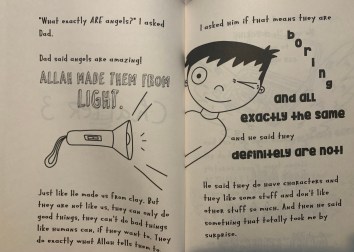
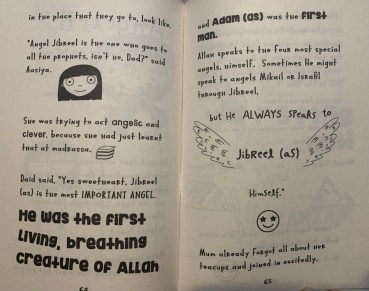
This last Ramadan I tried every day to listen to Sheikh Omar Suleiman’s Angels in your Presence series with my kids and discuss Angels with them.  I learned so much and got to wondering, why other than the 10 or 15 facts we all learn as children do we not talk about Angels more.  So when I saw the first in a new series by the absolutely fabulous Zanib Mian was about Angels I was so excited, then I forget to review it, and here we are.  The book embodies her sweet spot for personas as she writes as Eliyas, a little boy telling about what he knows about Angels with sincerity, clarity, excitement and humor.  Perfect for ages six and up, I think all children should spend a few minutes with this 81 page doodle filled book to remind us of Allah’s magnificence, Alhumdulillah.

img_7132

SYNOPSIS:

Eliyas starts the book by introducing himself and some things about him before diving in, or rather encouraging you to go put socks on so that what he is about to tell you can blow your socks off!  It starts off with him not being able to sleep so he sneaks out of bed to get cookies, because cookies solve everything, and then his dad joining him and them discussing aliens, which leads to outer space, and the knowledge of outer space being filled with angels.

Eliyas then learns about the number of wings the angels have, how strong the angels are, and some of the specific angels that do specific tasks ordered upon them by Allah swt.  The task of protecting us, appeals to Eliyas and the concept of angels the size of mountains praying with us, blows his mind.

We learn through Eliya’s dad about angels coming to Earth in human form and about angel Jibreel (as) specifically.  We also learn a dua to say when leaving the home so that the angels protecting you respond.

img_7131

WHY I LIKE IT:

I love the way that the information is presented.  It is a mix of fact and story and tied together with humor and relatability.  If you haven’t read Zanib Mian, please do, her Migo and Ali books, Hadith and Duas are all great Islamic resources, and her Planet Omar and Alien book are hilarious and warm.  I pray that the series continues, it really is a lot of fun.

img_7133

FLAGS:

None

img_7134

TOOLS FOR LEADING THE DISCUSSION:

I think this would be great to have a Sunday school class read and discuss or an Islam class offer up as extra credit.  It probably wouldn’t work as a book club selection, but it definitely has a ton of value in a classroom and in a home library.

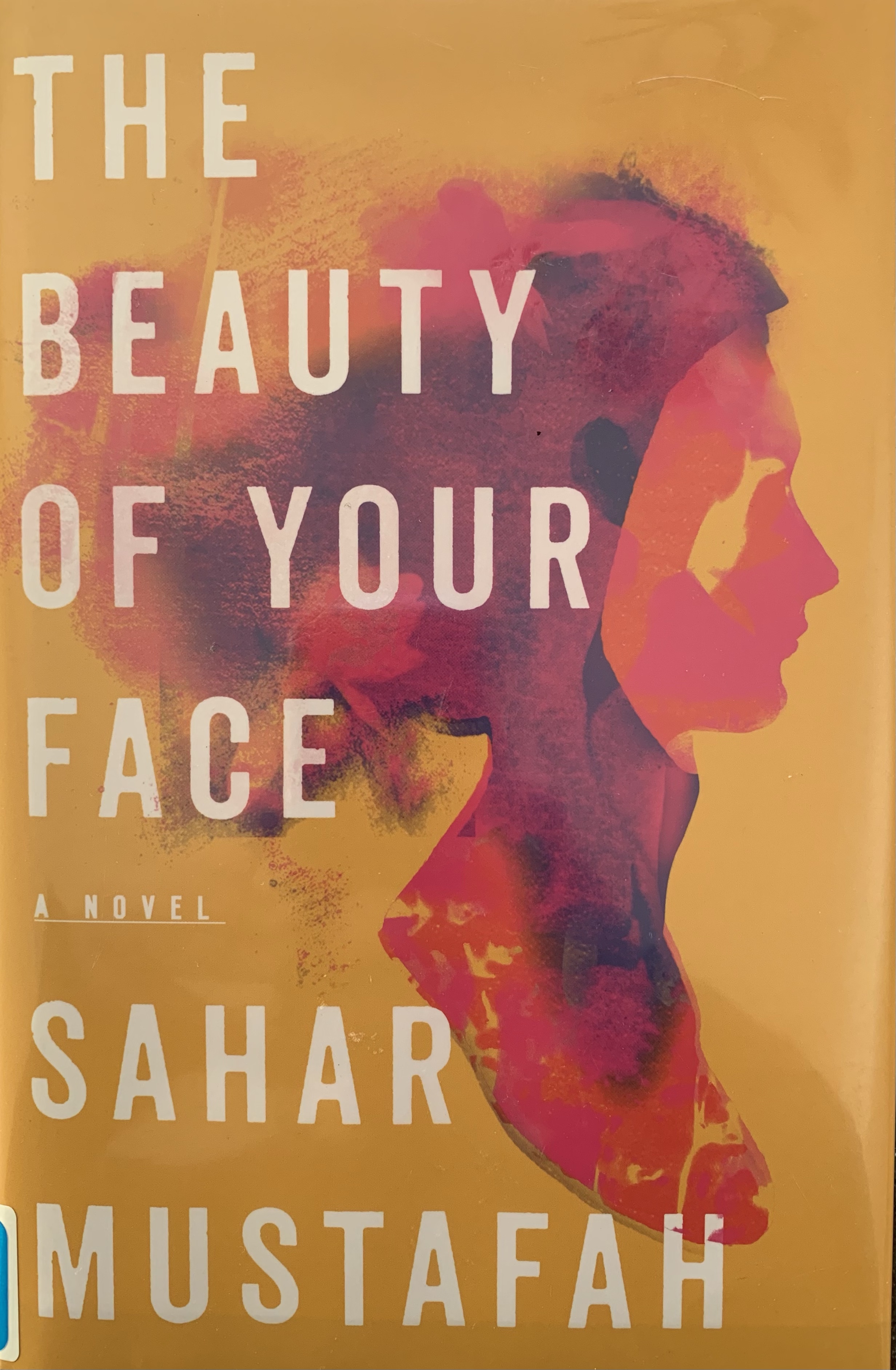
The Beauty of Your Face by Sahar Mustafah

Standard
The Beauty of Your Face by Sahar Mustafah

img_7145

I had debated picking up this book knowing that it isn’t labeled YA and I’m painfully behind on a stack of books I want to review, but after reading @muslimmommyblog’s review I opened the first page: that was 24 hours ago, I couldn’t put it down.  I’ve seen a lot of comments about this book being more YA than adult fiction because it tidies everything up so precisely at the end.  I’ve also seen critiques from non Muslims that it is overly preachy at times.  Many Muslims are so swept away by the rawness and presence in Islam in the book that they are making their teens read it.  So I wanted to read it and review it to determine if it is appropriate from my perspective for teens, and offer my take on it.  Ultimately I think while much of the Palestinian-American protagonist’s life story in the book occurs as a child and young adult coming of age, that the “flags” are so critical to the story and so numerous, that no matter how deftly and non specific she handles these issues and moments, that the book really is meant for more mature readers. I’ll detail it more below in the FLAGS section but to highlight a few mature spots mentioned in the book to varying degrees:  extra marital affair, alcohol, making out, groping, nudity, sex, voyeurism, killing, shooting, physical abuse, profanity, suicide attempt, bigotry, etc.  The writing is absolutely superb, and it isn’t sensationalized, but it is there and provides understanding as to why the characters often are as they are to a point that you need to understand them with a certain clarity.  I would think this 298 page book would most appeal to early college age readers where one is hopefully open minded enough to understand the characters relationship with religion whether they are Muslim or not, old enough to have some of their own life to reflect upon, and on the cusp of a new chapter that they realize the role their choices can make as they move forward.

SYNOPSIS:

Afaf’s life story unfolds out of order and with occasional interruptions from an outside point of view.  It opens with her at work, as a principal of an Islamic girls high school in Chicago as we see her dealing with parents upset with things taught at the school and the balance she tries to achieve in guiding her girls to be strong, confident, well-informed Muslims in a diverse America.  It then flips back to 1976 and begins the tale of Afaf’s life with her parents, immigrants from Palestine, her older sister and younger brother.  Not ever feeling like she fits in at school, she loses any sense of normalcy at home when her 17 year old sister Nada goes missing.   There were problems at home before: her mother never being happy, Afaf never feeling her mother’s affection, her father having having an ongoing relationship with another woman, but as days and months go by, and no clues can find Nada, it will be the event that seemingly tore the family apart.  Afaf’s mother has a mental breakdown, Afaf’s father takes to drinking, and thus Afaf and her younger brother Majeed have to navigate much of their life on their own.  In high school Majeed finds baseball and becomes the ideal student and son.  Afaf lets white boys feel her up and has a reputation for being easy.  She doesn’t cross the line, but her reputation and name on the back of bathroom stalls is fairly accurate.  When their father is involved in a car accident, he finds Islam.  The family is very cultural, but not religious at all.  Eventually Afaf and her brother accompany their father, much to their mother’s protests to the Islamic Center and while Majeed has no interest in religion let alone Islam and never returns, Afaf feels an instant peace and the opportunity to redefine herself and continues to go and study Islam.

The book jumps regularly in sections, not every other chapter, and at some point it shows Afaf as an elementary school teacher making the commitment to wear hijab and preparing to wed a Bosnian man with a broken war filled past.  It jumps and has her brother home from law school visiting and her mother attempting suicide by drinking drano and being found laying naked in a bath tub.  After recovering, her mother returns to Palestine and never returns.  In yet another vignette, it has Afaf and her husband and father preparing to go for Hajj, where her father passes away, and has her returning to find she is expecting her third child a little girl.  There are other surprises that I’ll not reveal, but some of these jumps are interrupted by a voice of a radical alt right mant who walks into the girls school and starts shooting, finding himself face to face with the principal, Afaf.

WHY I LIKE IT:

I am seriously blown away at the quality of writing, and the interweaving of religion and culture.  It is a main stream book and it has a lot of religion in it.  It isn’t so much long passages of preaching, the father would like it to be that way, but the other characters keep him in check.  But the quiet transformation of Afaf and having Islam save her from a life she was not content with.  I love that it has joy and happiness despite all the tests and obstacles.  The book could have been really heavy and drag, but it wasnt, it was compelling and hard to put down.  The characters will be with me a while and I can see myself rereading the book just to visit them again.  

I was a little confused with Afaf’s limited Arabic and her mom’s limited English.  How did they communicate? I get that perhaps it was symbolic of their broken relationship, but seriously when Afaf is seven and not understanding Arabic and her mom is not understanding the police and neighbor in basic English, something is a bit off.  I like that insight is given as to why Afaf is fooling around with any boy that wants her and that it shows it isn’t about the acts themselves.  I also like how it showed her conflicts in reporting an Arab child in her class being abused at home by her father and how the response was so sad by the community.  While Islam saves her and holds her to a higher standard, it doesn’t appeal to her brother, it doesn’t remove the hypocrisy of people who are Muslim: abuse, owning liquor stores, and it doesn’t make everything better for her.  She has to suffer consequences of her choices, she just feels that Islam gives her the tools to persevere and understand and have hope.  

I love the food, oh man, hearing all the dishes being cooked and served and cleaned up after, really made me very hungry.  The cultural elements of the music and songs and oud really ground the book and make the OWN voice value ring so true and strong.  The racism and bigotry feels very real as well.  The author is the daughter of Palestinian immigrants and the way that she articulates such pointed examples of not being given the chance to move up in the elementary reading group, side comments the high school coach makes to her, and the general stereotypes thrust upon her, are very powerful.

FLAGS:

So there is a lot, as stated in the intro, but I want to articulate a bit of why I maintain older teens for the book even though it isn’t overtly sensationalized. I’ll walk through some of the major flag themes.:

Take the drinking. The father is an alcoholic, but the mother and children hate it, Majeed drinks beer with his friends, but isn’t Muslim, yet the Khalti is somewhat religious and they pour amber drinks at Thanksgiving. So there is some moral lesson, which I think you could argue is fine in YA or even middle grades.

Relationships/sex/body: The father is having an affair with a much younger woman, they refer to her as sharmoota and everyone knows about it, no other details are given. Afaf lets boys touch her naked body, but draws the line at intercourse, she says she on some level doesn’t want to do that to her parents or something of that nature. Right before proposing marraige, her and Bilal do kiss. Once they are married it mentions them making love in the mornings. It mentions masterbating and blow jobs. The shooter and his girl friend have sex, the shooter watches an Indian neighbor nurse her baby through the door and sees her exposed breast with some detail and then goes home and masterbates. When the mother is pulled out from the tub after attempting suicide it doesn’t just mention she was naked, it comments on her pubic hair.

Violence: An Arab Muslim male classmate, drives Afaf away from her bike and the slaps her telling her basically that she should not be such a slut. Afaf punches another girl in a fight at school. A child in Afaf’s class is being hit by her father. Mother lashes out at Afaf, she ends up burned. The climax is a mass shooting where 14 students and a teacher are gunned down and killed. Self harm: car crash while drunk, suicide attempt with drano.

Minor: Yeah there is music, and Halloween,

TOOLS FOR LEADING THE DISCUSSION:

This would make a great book club selection for those in their early 20s and up. It is well done, just not for younger readers. The book is very popular and numerous author interviews can be found with a quick Google search.
How Much Does Allah Love Me? by Heba Subeh-Hyder illustrated by Aatena Hasan

Standard
How Much Does Allah Love Me? by Heba Subeh-Hyder illustrated by Aatena Hasan

img_6988

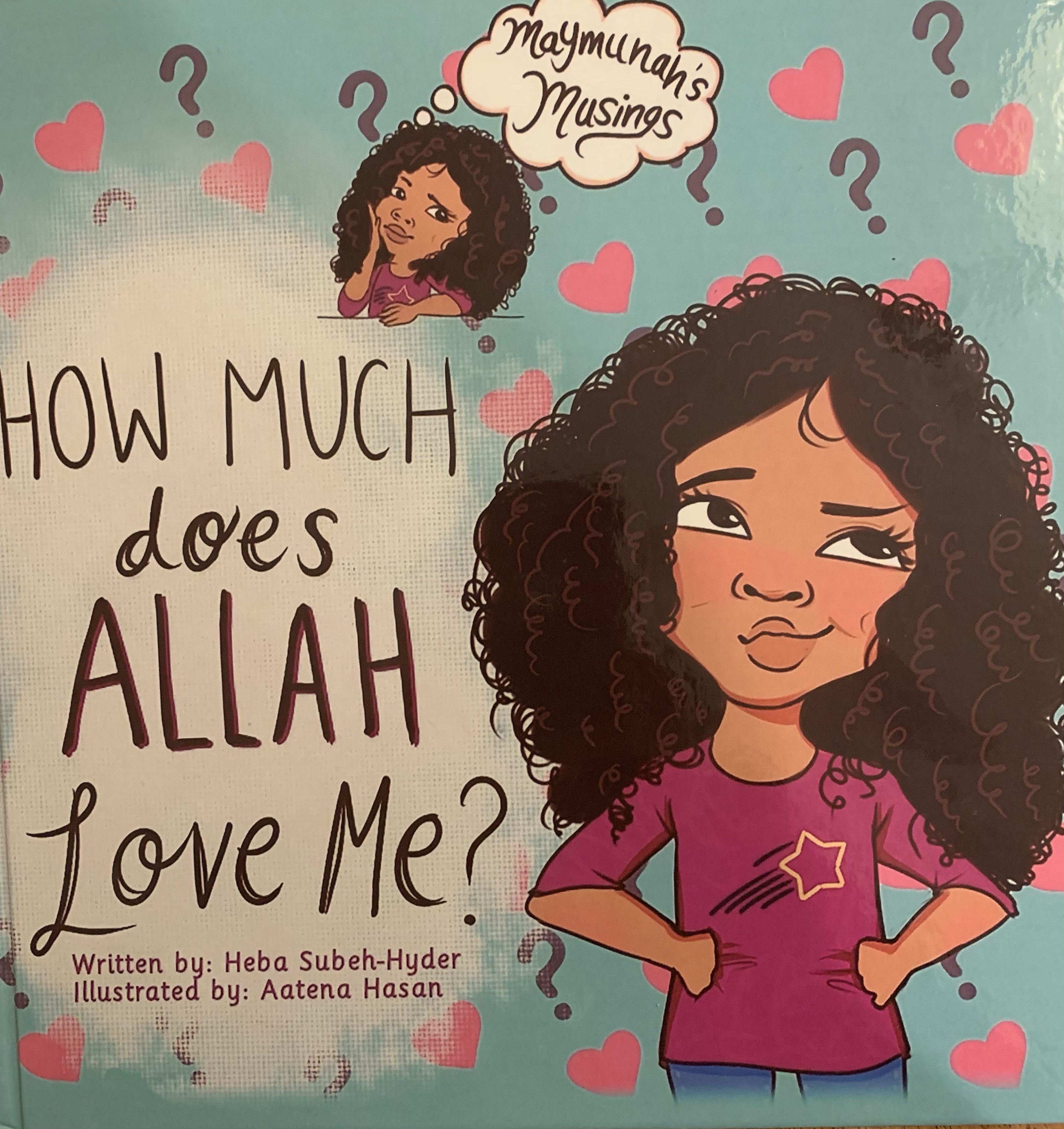
I waited to review this book to see if my initial response would change, and before I got around to writing up the review, the second book in the Maymunah’s Musings has come out.   So I am admittedly a bit late and quite a bit behind, and based on other people’s review I’m in the minority on my opinions.  This 40 page book is wonderfully presented with a multicultural girl asking her mother about Allah’s love for her.  I wanted to absolutely love the text as much as the playful illustrations, but I felt like it was a bit wordy in places, a bit out of order in the mom’s explanation to the little girl making it somewhat repetitive, and ultimately I wanted a bit more.  More ayats or references or even specific examples.  There is truly nothing wrong with the book, but at its price point I was a bit disappointed.

img_6989

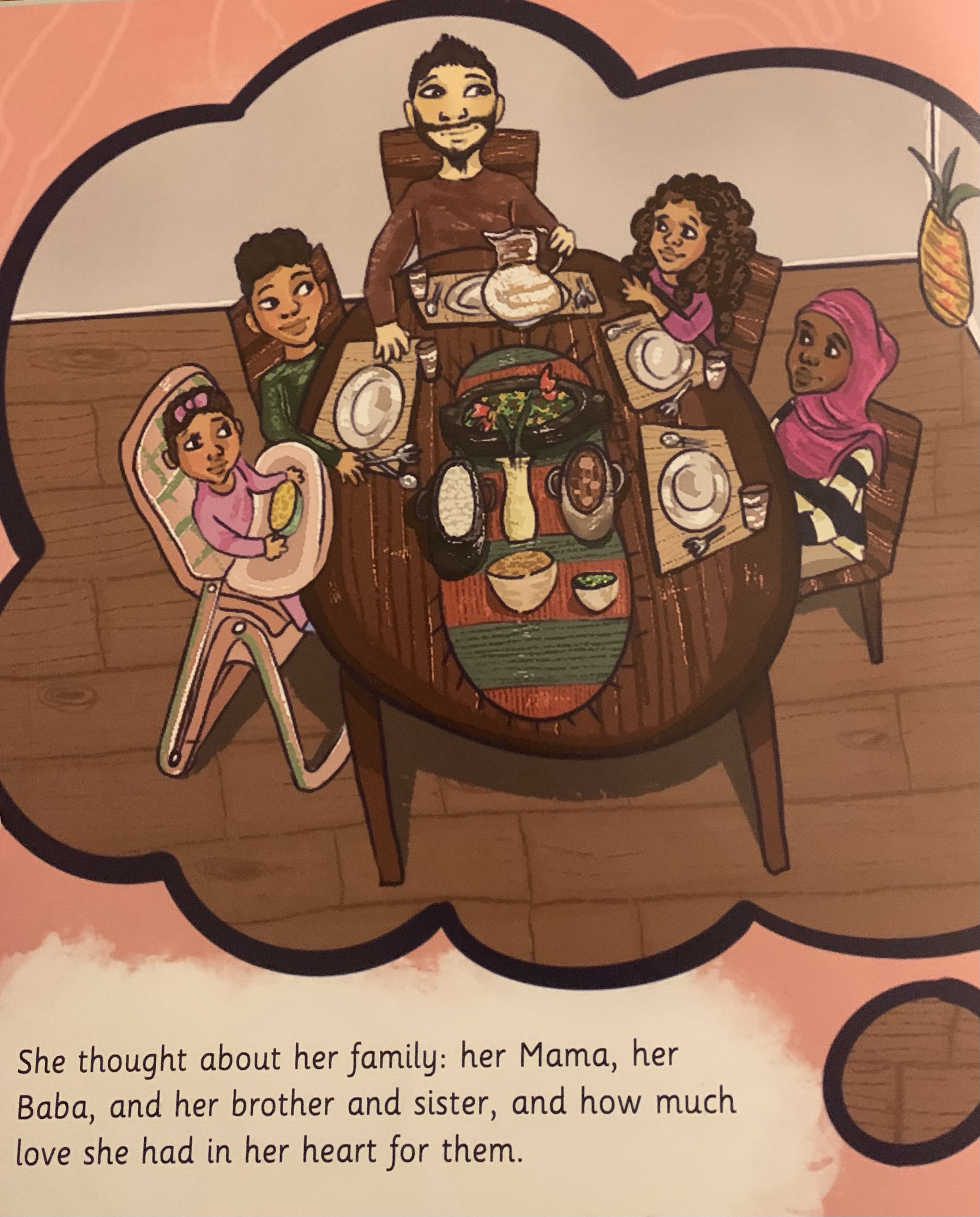
Maymunah is looking out the window and thinking about Allah swt: what she has learned in Sunday school and about His remarkable creations.  She recalls the amazing animals, the vast number of stars in the sky, the different type of trees, and her family.

img_6991

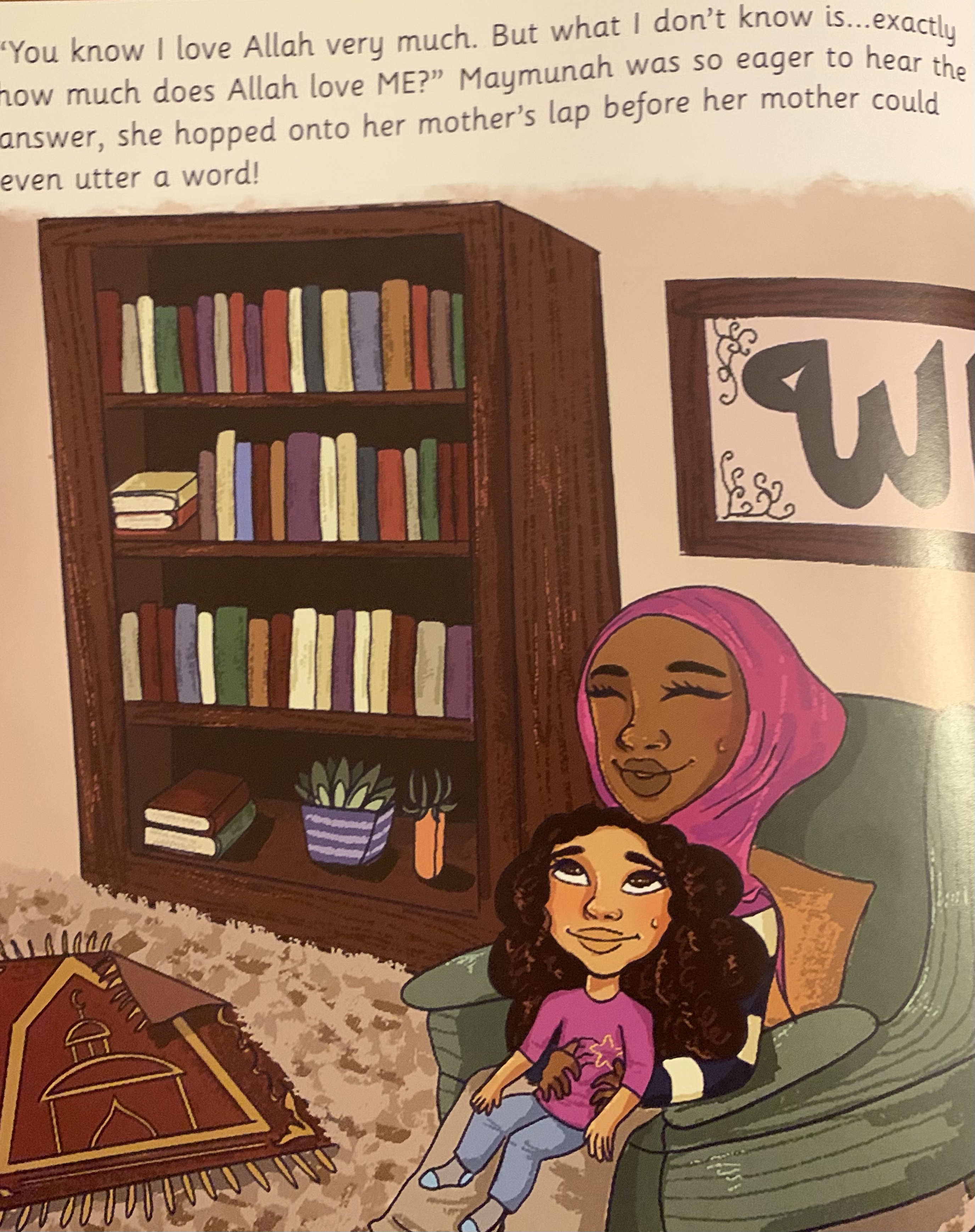
She loves Allah, and wants to know how much He loves her.  So she rushes to find her mother, the only person that can answer that question (I’m not sure why no one else can).  Her mother lovingly and patiently situates herself with Maymunah in her lap to answer the important question.

img_6990

Maymunah’s mom explains that Allah loves her more than the billions of stars in the sky, more than all the fish in the ocean, more than all the raindrops that fall, more than the billions of people in the entire world, more than all grains of sand on the beach, and blades of grass in the meadow.

img_6993

Then Maymunah’s mom asks her if she knows how much Mama loves her. Maymunah repeats back all the examples her mother has just given for how much Allah loves Maymunah.  The mom then says and Allah loves you more than that.  

Maymunah is satisfied and reflects on how much Allah loves her and then remarks that her love for her mother and her mother’s love for her is bigger than the whole wide world. The last page of the book mentions that her love for Allah is more than that and that Allah’s love for her was even bigger, but it seemed muddled to me as it started stressing how big a mother and child’s love is.   

img_6992

I felt like the natural order would be to explain to a child how much a mother loves them, then say Allah loves you even more.  Not tell all the ways Allah loves you, then talk about how much Mama loves you with the exact same examples and then say Allah loves you more.  It doesn’t even say Allah loves you ‘the most.’  

If you don’t read it over and over and take it on the surface it is probably fine, and I realize I might be overly harsh, but with only a single ayat at the end, I really wanted to feel that a child’s curiosity would be satisfied with this book, and I think it ultimately fell short for me and my children.

Ultimately, despite all this, I don’t regret buying the book from the wonderful Crescent Moon Book Store, and I will be buying the new one too inshaAllah.  I hope this review helps you to determine if this book is right for your toddlers and preschoolers.  

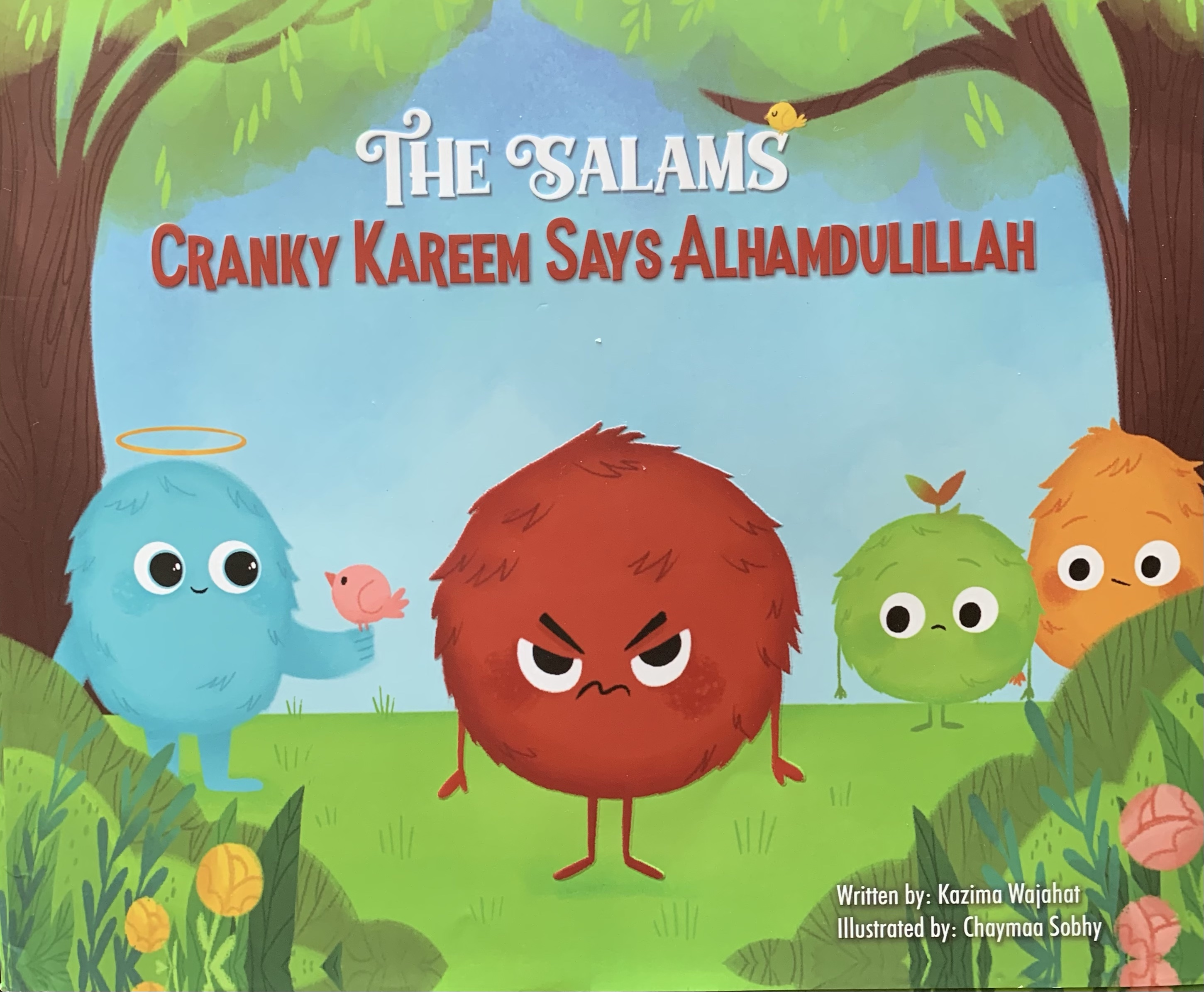
The Salams: Cranky Kareem Says Alhumdulillah by Kazima Wajahat illustrated by Chaymaa Sobhy

Standard
The Salams: Cranky Kareem Says Alhumdulillah by Kazima Wajahat illustrated by Chaymaa Sobhy


img_6616

Part of me is tempted to channel my own Cranky Kareem and say how awful this book is, just because I know that the author reads my reviews of her books with bated breath, but alas I cannot lie even in jest as the book is truly adorable.  This 40 page book in a new series highlights and starts to fill the gap in children’s Islamic fiction that is so needed.  There are a number of books and series for toddlers teaching them to say Bismillah, Assalamualaikum, and MashaAllah and all the praise-filled Islamic expressions, but they are very basic, this book, and hopefully the rest of the series, goes a bit deeper.  It shows how to truly mean what you say, how to glorify Allah not just in your words, but in the way you think about things, handle stresses, and carry on.  The concepts and amount of text probably will most appeal to mature kindergarteners to early second graders at bedtime or in small groups.  I do wish that Cranky Kareem apologized to Happy Hamdi after he relentlessly attacked him at the masjid, but in much the way Oscar the Grouch gets away with being so negative, the characters in the book and the readers alike will have to settle for Kareem finally learning the lesson, in this case, of being grateful to Allah (swt) for everything.

img_6611

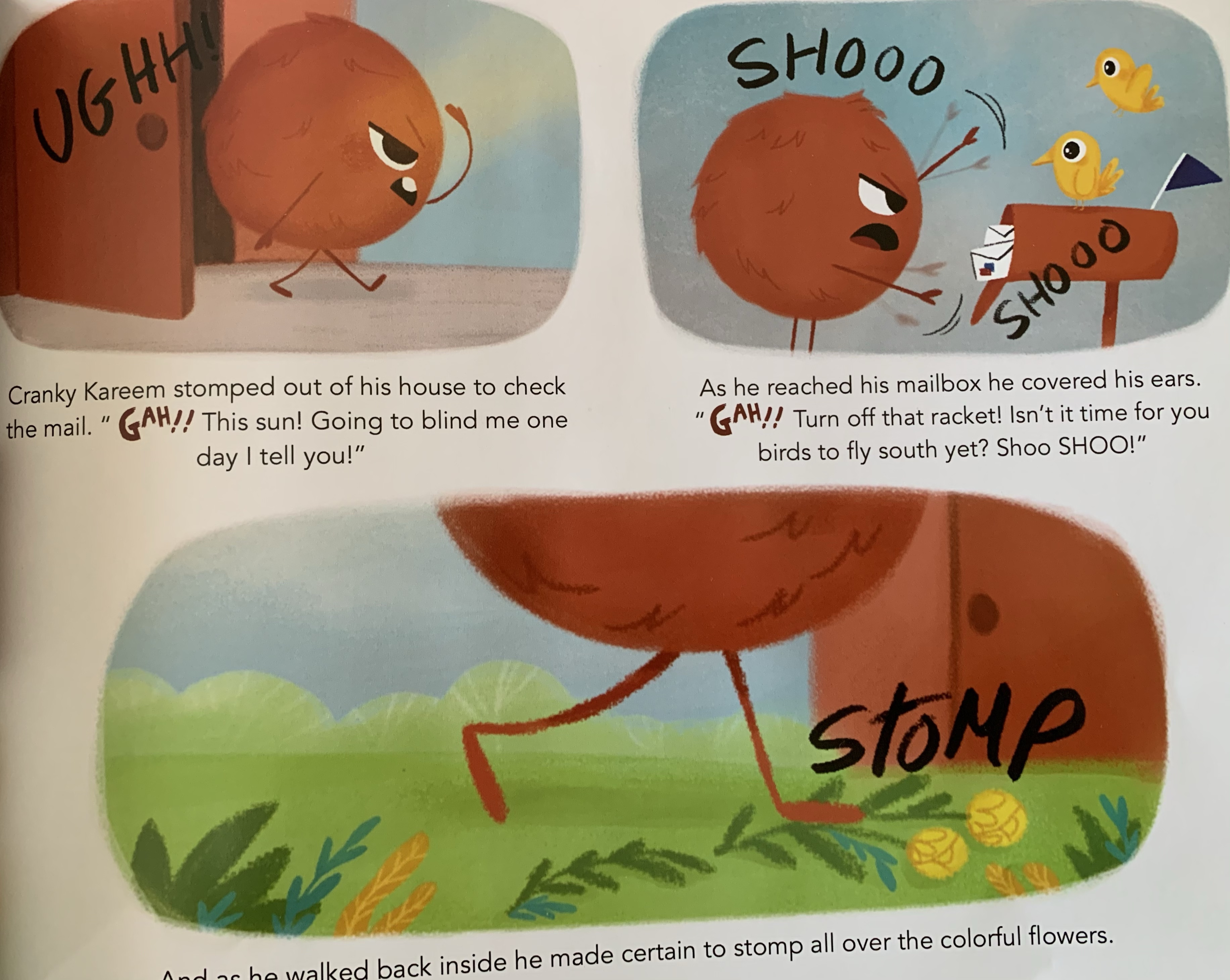
The book starts out with Happy Hamdi waking up in Salamville and praising Allah in appreciation of the fresh air, birds, flowers, and allergy medicine that works.  Across town Cranky Kareem is having the opposite kind of morning.  The sun is blinding, the birds annoying, coffee bitter, and he’s out of milk for his cereal.

img_6612

When Kareem finally finds some peace and quiet on a bench at the park he is disturbed by Happy Hamdi and all his happiness.  As Hamdi and bounces off to talk to Greedy Gamal and Healthy Hassan, Cranky Kareem gets an idea.

img_6614

When Happy Hamdi heads to the masjid, Cranky Kareem sticks out his foot to trip him.  Hamdi falls and gets a bruise on his nose, but still says Alhumdulillah. He then knocks sticky baklava on him and again he responds with Alhumdulillah, he then dumps a bucket of ice water on Hamdi, and Happy Hamdi says Alhumdulillah once more.  When he leaves the masjid, Hamdi’s car is not working and he has to walk home.

img_6613

Kareem can’t take it anymore and confronts Hamdi.  Happy Hamdi explains that he was hungry and didn’t mind the syrup, then the water washed the syrup off and now that he is walking home, his fur is drying.  Flabbergasted by Happy Hamdi, Cranky Kareem stomps off.

img_6615

Convinced that Hamdi’s happiness is an act, Kareem pauses to ponder how his plan failed.  Healthy Hassan jogs by and bumps in to him, knocking him off the train track and causing Kareem to twist his ankle, just before a train goes swooshing by.

Realizing that the bump saved his life, Cranky Kareem expresses his appreciation to Allah swt by saying Alhumdulillah.

I love the illustrations and the horizontal layout of the book.  The book is cute and I can’t wait to share the rest of the series with my kids.  Thank you to Crescent Moon Store for having this, and so many wonderful books available.


That Can Be Arranged: A Muslim Love Story by Huda Fahmy

Standard
That Can Be Arranged: A Muslim Love Story by Huda Fahmy

arranged

I’m not entirely sure why I didn’t review and highlight the first book, “Yes, I’m Hot in This: The Hilarious Truth About Life in a Hijab” I really should have, so to cut to the chase if you don’t follow the author/illustrator on social media you really should and you should read both her books.  Both are for all ages and while meant for adults, teens and tweens love it as well, I should know I’ve purchased and gifted over a dozen of them. I find my kids thumbing through both books a lot: my (early) teen girl and my tween boys.  Part of is it because the comics are funny, relatable, but more importantly as I’m learning from my kids, because they are curious.  In this book particularly, it is a great example of how Muslim marriages can happen, sure my kids know how my husband and my marriage was “arranged,” but they are constantly surrounded by ideas of dating and crushes and even divorce that I never realized that a book like this, featuring Muslims, actually Islamically contextualizes some of their gleamed information.  The fact that the book is hilarious and clean and rings with such honesty, makes it easier for them to articulate their questions and removes some of the taboo as well.  So, buy it for yourself to enjoy and if you have kids 11 and up in your home, you are ok to let them read it too.

img_6586

SYNOPSIS:

It isn’t a chapter book, it is part comic book, part story, part info-graphic, and all biographical.  The book opens with an ayat about spouses from the Quran and follows with an informative and funny message to the reader.  Seriously, I laughed as she explained about drawing herself with hijab in bed and noting that most people don’t read the notes to the reader at the beginning. There are also a list of helpful terms before the introduction begins.  Her story is broken up in to sections to pace and move the story along.  It starts with the ground work of expectations and cultural norms and then tells her story of how she eventually met and married her husband.  Not that it is straight forward, the book is 192 pages.  There is a decent amount of explaining Islam and the role culture plays in the many pitfalls and big decisions along the way.

img_6587-1

WHY I LOVE IT:

I think any female, born Muslim, over the age of 20 will relate to a lot in this, lots of others will as well, but that demographic specifically will find parts very reflective of their own experiences.  I love that it shows the banter between the protagonist and her mother, truly that to me was the heart of the story.  I love that it shows female empowerment and vulnerability at the same time within an Islamic context and unapologetically.  This book is by a Muslim for Muslims, but non Muslims will enjoy it as well.  It dispels and illustrates what an “arranged marriage” can mean for Muslims and shows that there is more than one way to understand the label.

I love the size of the book, the binding and the page quality.  I had no problems with “Yes, I’m Hot in This,” but after seeing the larger size of this book 7 x 8 and the thicker pages, I really preferred this presentation.

img_6589

FLAGS:

Clean

TOOLS FOR LEADING THE DISCUSSION:

Obviously not really a candidate for a book club, but I think teen girls would enjoy reading this and laughing about it with a group of friends.

img_6590

So fun and so good, alhumdulillah.

A Thousand Questions by Saadia Faruqi

Standard
A Thousand Questions by Saadia Faruqi

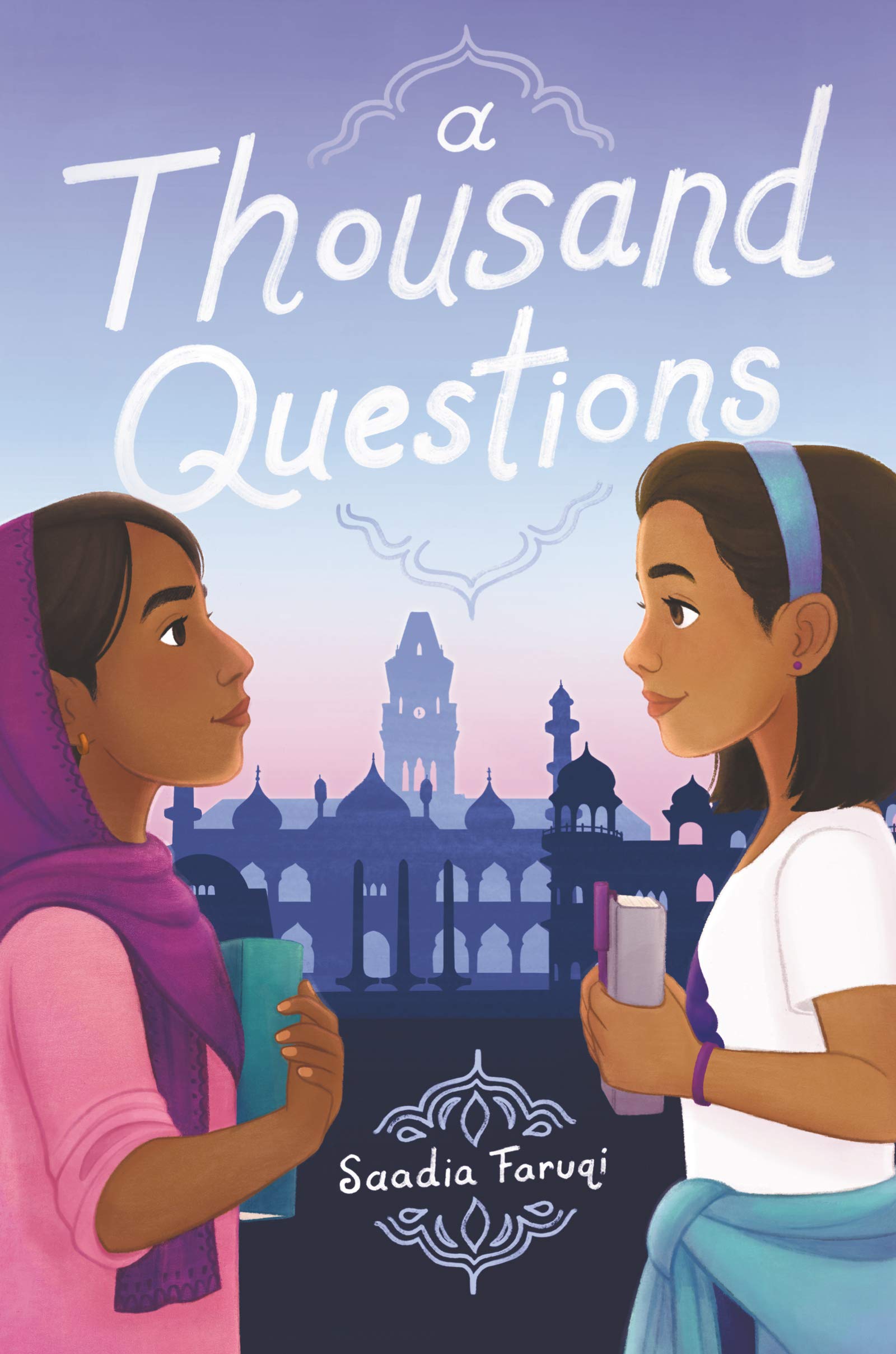
This 320 page middle grade novel with alternating point of view chapters engulfs you like a warm genuine hug. It does not have a clear climax, it is predictable, and some characters and cultural touch points could have used more detail, but honestly, I couldn’t put it down. As a half American kid who spent my summers in Karachi, so much of the author’s love of her homeland flows so effortlessly from the pages and took me back to my childhood and how the transformation of comparing the two countries moves to seeing the best in both causes growth within your heart and makes leaving so devastatingly hard. Readers of all backgrounds will seamlessly fall in to the story and enjoy the growth of the main characters, while learning a bit about a culture and the similarities of people.

SYNOPSIS:

The back drop is the sweltering heat of a Karachi summer in the middle of elections. Mimi, Maryam, is visiting Pakistan for the first time in her life. It is her mother’s home land, but her grandparents, and her mom aren’t close. They didn’t approve of Mimi’s dad and mom getting married, and even though they have been divorced for years and he has left, Mimi’s mom hasn’t been home in 12 years.

Sakina narrates the other chapters. She is the daughter of Mimi’s grandparent’s cook. She dreams of going to school, but needs help with her English to pass the admissions test. And even if she passes her family needs her income to survive, and her father’s failing health means that she has to take over his job too.

When Mimi arrives at her grandparents home, it is awkward at best. She doesn’t really know her grandparents, she has never had servants before, and her mother is rarely around. That leaves her to get to know Sakina. Sakina finds this odd as the owners of the home rarely “chat” with her and here this American girl wants to get to know her and is fine with helping in the kitchen. The two strike a tentative friendship as Mimi agrees to help Sakina with her english, and Sakina with the permission of Mimi’s grandmother and with the use of the driver, agrees to show her some of the city.

As Mimi takes in the traditional tourists sites she gives Sakina her first taste of ice cream and soda and other “luxuries” she has never experienced. Sakina introduces her to bun kabobs and other local foods. The budding friendship isn’t smooth, mostly because Mimi constantly compares Pakistan to America and Sakina doesn’t understand why Mimi doesn’t have a father. When the girls find out that Mimi’s dad, a journalist, is in Karachi covering the elections, the girls work together to try and find him.

Throughout all of this, Mimi keeps a journal and the entries are letters to her father.

WHY I LIKE IT:

I love that the girls have to navigate their friendship without and often despite interference from adults. I also like that while societal wise one girl is seen as economically privileged and one is not, the book gives enough for even elementary aged children to see that in America Mimi and her mom are financial struggling, but in Pakistan they are not and how that disparity is arbitrary. They also see that family and safety and security are also a part of life’s quality and not country specific. Things that one girl takes for granted are envied by the other, and it goes both ways.

Even for a middle grades book, there were some plot holes. If Mimi had been late night googling and plotting on a secret map all the places her dad had been writing articles from, she should have had a heads up about Pakistan. She knows so little about Islam and has like one shelwar kamees, so it seems a bit of a stretch that she speaks urdu pretty proficiently. I feel like some stumbling with the language or some back story on that would have been great.

Religion is handled as a cultural touch point, neither girl prays, but both find solace in visiting a masjid. Various characters are in sleeveless tops, the athan is heard in the back ground. I wish there would have been a bit more finding of Islam as Mimi found her culture too, but alas it isn’t there.

The majority of the book takes place within the grandparent’s home with the elections being a big part of why they can’t go out, yet the mom goes out a lot, which really rubbed me the wrong way. She took her daughter shopping once to meet an old friend and that is it. Who travels across the world to spend zero time with her kid. I didn’t like the mom at all, and wish there was some background or even some growth on her part. A lot of the minor characters seemed to fizzle as well in terms of having some depth.

There are some cultural and country facts at the end of the book, but within the text I was surprised that more wasn’t shared. I like that it mentioned Karachi was the original capital, but it should have also in the same sentence mentioned that Islamabad is the current, I think readers would assume that Karachi is still the capital of Pakistan.

The book is an OWN voice through and through and the value of that is felt in every sentence. It isn’t all positive and rosy, but it is genuine. The author loves what she is writing about and it shines through leaving the reader with a favorable sense of Pakistan: the country, the culture and the people.

FLAGS:

The book is clean, possibly some tense moments when Sakina’s family is robbed. There is also discussion of marrying someone your parents don’t approve of, divorce, and Mimi’s mom possibly having a boyfriend. Mimi’s mom is an artist and paints pictures of people. There is lying and scheming.

TOOLS FOR LEADING THE DISCUSSION:

I think the book would be a fine choice for an elementary book club, I think any one older will find the book a tad bit predictable. I plan to have my children read it so we can discuss points of view, experiences, universal traits and social economic classes. There are a lot of wonderful lessons wrapped up in a heartfelt story that I can see 4th and 5th grade children benefiting from over and over again.

The Bee Tree by Stephen Buchmann and Diana Cohn illustrated by Paul Mirocha

Standard
The Bee Tree by Stephen Buchmann and Diana Cohn illustrated by Paul Mirocha

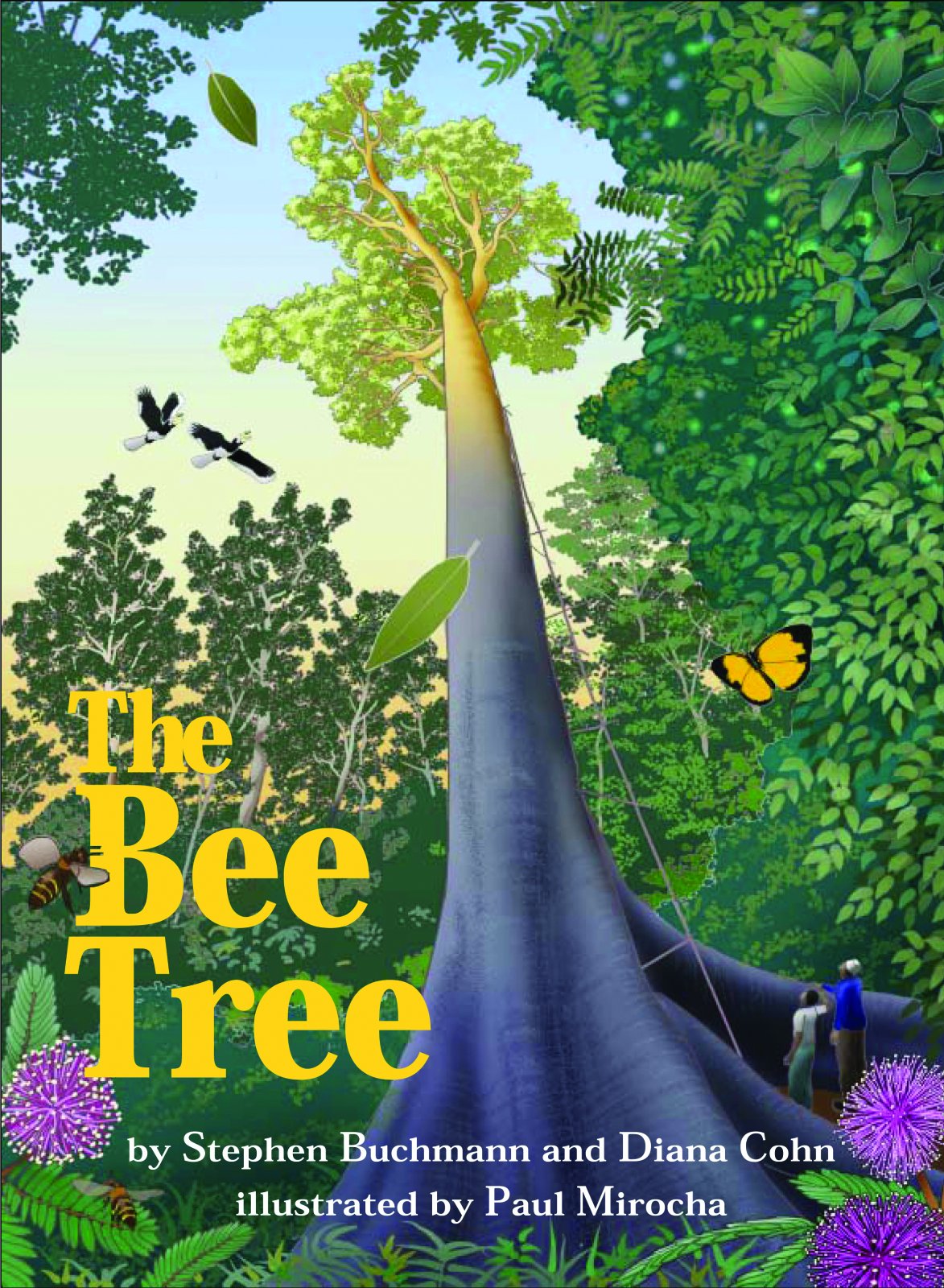
bee treeThis is one of those books that it is hard to know who the target audience is and who would most enjoy the text heavy 40 pages about a boy coming of age in Malaysia by harvesting honey in a traditional manner.  The two page spread illustrations are rich and inviting, and with an AR 5.7 level, the book would work well for children that enjoy other cultures, honey, insects, or children that you hope will be inspired to start seeing the world a little differently than they are used to doing.
5BD37914-E9B7-4D0B-BB0A-1286A8BC4C72

The story starts with a boy talking about his grandfather and how every year he goes to collect the honey from the tualang trees.  The bees travel hundreds of miles and arrive just as the rainforest starts to bloom.  The trees that they build their nests in are higher than the eye can see and grandfather, known as Pak Teh, is the leader of the honey hunting clan.

7CA311E6-B1B6-40E7-B735-FAACAD76597F

He tells everyone what their jobs will be: some will carry ropes, others pails, others torches.  One day, he tells them, someone will have to take his place as the one who climbs all the way up to the top to gather the honey.  He believes Nizam, the narrator, is the one.

To prove himself, Nizam has to practice climbing 120 feet into the sky.  Nizam and grandfather spend a lot of time together praying five times a day and walking through the dense rain forest.  He reminds Nizam that the forest doesn’t belong to them, but to the unseen protector. They enter the forest as if they are visiting a neighbors home.

837003A0-ED16-4CA9-9CD8-3CEBA7846D0A

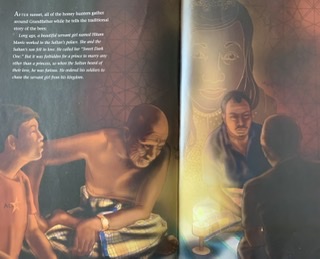
At night all the hunters sit together and Grandfather tells the traditional story of the bees.  A story that involves a beautiful servant girl named Hitam Manis who worked in the Sultan’s palace and how the Sultan’s son and her were in love.  When the Sultan found out he ordered the girl run out from the kingdom.  As she and her loyal friends fled she was hit by a metal spear.  She did not die, but her and her friends were magically transformed into a swarm of bees.  Because it was metal that harmed her, she ruled that metal was never allowed to touch the honey.  Hence, when the bee hunters harvest they use a bone knife, leather pouches, and a wooden ladder.

2637F18A-FB0A-424D-AACF-58285BE31EC5

When it is time to enter the forest, it is pitch dark with no moonlight.  The hunters tap their glowing torches against the trees sending light sparks to the ground to tempt the bees and leaving their nests free for Nizam to collect the honey from.  For seven nights they climb the trees, and then they return home.  With greetings of salam, peace be upon you, Grandfather informs the family that when he can no longer climb the tree, Nizam will carry on the tradition.

908CAC37-2CCE-477A-93BC-B3EEF723C2BF

The book ends with factual information about Malaysia, the rainforest, giant honey bees, honey hunters, and the future.

When Stars are Scattered by Victoria Jamieson and Omar Mohamed

Standard
When Stars are Scattered by Victoria Jamieson and Omar Mohamed

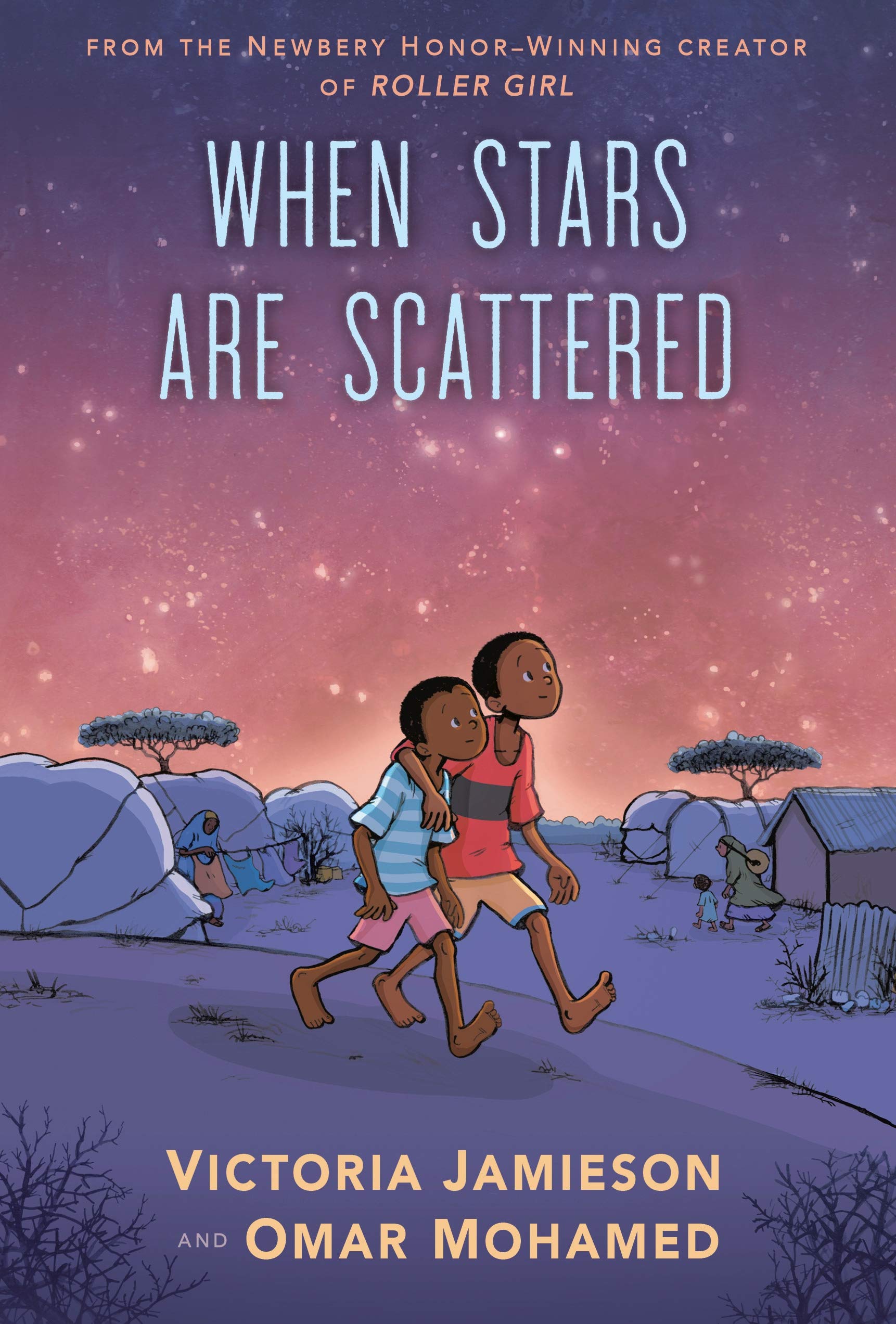
starsThis graphic novel swept me off my feet and left me in tears, not because of the hard life and sadness that life in a refugee camp entails, I had braced myself for that, but because of the hope and humanity and beauty that is so powerfully expressed and conveyed in this 264 page book.  Meant for 3rd graders and up, I think kids through middle school should be encouraged to read it.  The illustrations and colors are incredibly well done and the story is based on a true story that needs to be told and shared.  It is definitely in the top 10 books I’ve read this year and I keep catching my 11 year old re-reading this book repeatedly (like 5 or 6 times).

52BE6C8B-4246-4A92-BA66-004378A21862

SYNOPSIS:

Omar Mohamed lives in Dadaab refugee camp in Kenya.  His father was killed in the Somali war and his mother has not been seen after she sent Omar and his younger brother Hassan to run with the neighbors to escape the violence.  Hasan suffers from seizures and doesn’t speak, save one word, Hooyo, mother in Somali.  The two boys have an adopted mom Fatuma, who looks after the boys in the camp as if they were her own.  Unable to go to school, Omar spends his days looking after his brother, playing soccer with plastic bags, and waiting in lines for water, food, and news of a better opportunity.

When Omar gets the chance to go to school (5th grade) he has to make the difficult decision of pursuing his own opportunities, with the hope of helping Hassan later, or living day to day and taking care of his younger brother.  He is finally convinced that education will help them both, and that if the girls can find a way to do their chores and attend class, he can too.

Each transition from primary, to middle to secondary school requires testing, and only the top get to continue.  Determined to stay in school, Omar studies while dealing with life’s many challenges and the daily additional challenges of living with little food and resources.

When Omar and Hassan’s names finally appear on a UN interview lists for resettlement, hope seeps in, but the wait and the uncertainty prove to be yet another test.  Along the way there are side characters from the United Nations that show compassion, other families that show how generous and loving humans can be, female classmates show him how to take advantage of his privilege and friendships that move friends to family.

D74285FB-CBDC-4C4A-BD7B-070439BB08EF

WHY I LIKE IT:

The book is gripping and has heart.  I don’t know what I expected, but I truly could not put it down.  The character’s stresses are felt and emotions are conveyed so powerfully, that I don’t know that you can read the book and forget it.  The most emotional part for me was his honesty in dealing with his brother, the strength of his friends, particularly female, and the bond to Fatuma.  Truly their living arrangements and loss of family is gut wrenching, but it was the little things that touched me the most.  The honesty of Omar having to decide if he was tempted to not go to school because he was scared. Was he using his brother as an excuse to stay with something he knew.  The emotional tipping point of no return for me was when he realized Fatuma would not be able to go to the second interview with the UN and would not be a part of what came after.  Of course I knew that, but by that point I was so connected to the character, that when Omar realized it, I broke for him.  To feel that connection in a graphic novel was new for me, perhaps a first, and alhumdulillah I am better for it.

The characters are Muslim and behave traditionally with praying and Ramadan and Eid.

F9E64F9D-1722-4CBD-B905-BE754BCE6C77

FLAGS:

There is talk of khat, something the men chew on the side of the road to forget things.  There is some violence, bullying, a young girl getting married before 6th grade and having a baby.

CDD12698-52CE-4FFD-9444-29A666980797

TOOLS FOR LEADING THE DISCUSSION:

Yes! I am hoping if and when we resume school I am starting with this book inshaAllah, for my middle school book club.  There is so much to talk about and understand and empathize with.

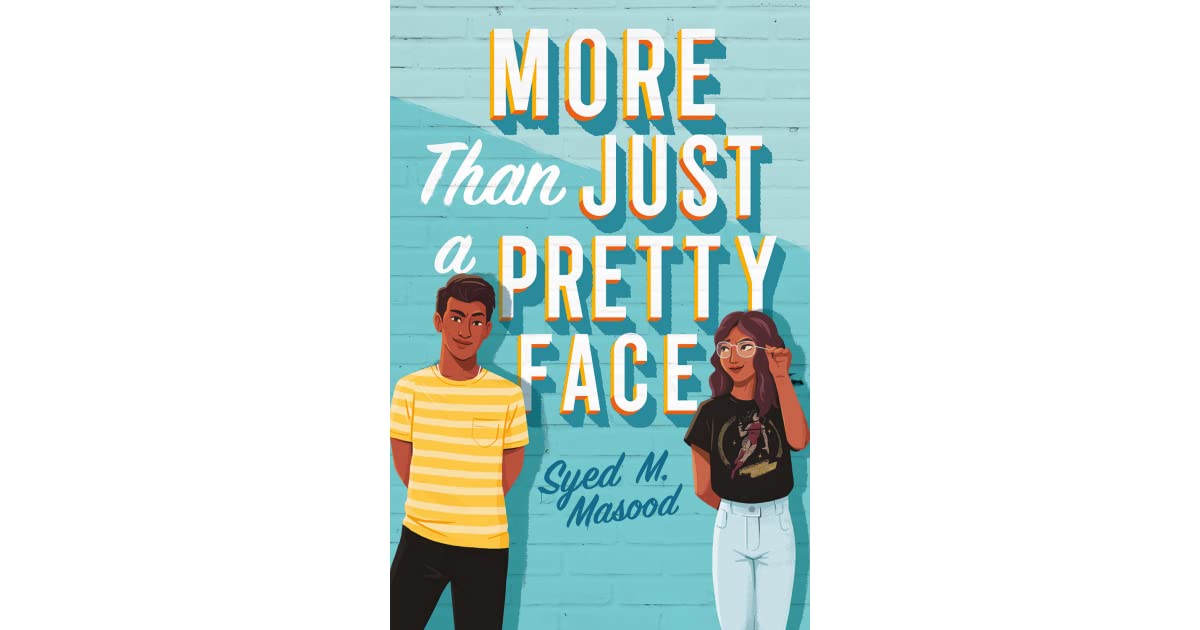
More Than Just a Pretty Face by Syed M. Masood

Standard
More Than Just a Pretty Face by Syed M. Masood

more than just a pretty face

This book is a Muslim YA romcom OWN voice written by a Muslim male.  Woah, right? And the actual story, sigh (blush) I enjoyed it, and part of me is disappointed in myself for how much I enjoyed it.  Most of the characters are Muslim and all over the spectrum in their religiosity so to speak, there are a lot of jokes at the expense of tenants in Islam and trivializing of certain concepts which really isn’t something to celebrate, but it reads real and there is a lot of Islam that is front and center and deep and though provoking. For most non Muslim readers, I’m sure 15 or 16 and up would be fine with the content and 353 page length, but as a former Islamic School Librarian, I’d have to reserve recommendations to college age.  The protagonist is 19, there is talk of sex, but not crass, the main female character has a past that includes a sex tape, and there is a lot of language, but its also really funny and really relatable and really sweet and takes place in high school.

SYNOPSIS:

Danyal is a pretty face, but he isn’t very bright.  He goes to an elite private school though somehow, and while he is admittedly dingy, he is also very kind, innocent and generous.  He was held back at some point in school and is 19 as a senior in high school.  He works in a French restaurant and dreams of being a chef.  He has no desire to go to college and as the only son of Pakistani immigrants, they are not thrilled with their son’t future plans.  Danyal is pretty chill about it though and his mom wants to arrange his marriage, and he is willing, although he is crazy in love with his friend’s twin sister.  He is religious and hasn’t really broken any of the Islamic relationship rules, he prays fajr, and just kinda floats through life doing the best he can and forgiving himself and others when they mess up.

When his mom arranges a meeting with Bisma he is willing to get to know if they are a match.  She however, fully discloses her past to him when they head out for coffee, which involves her rebelling, once a few years earlier, against her father and going to a party, further rebelling and getting drunk and then making the poor and regrettable choice to sleep with someone.  To make matters worse, the event was video taped and spread around the community forcing the family to move.  Bisma is pretty religious and really studious and really sorry, but her father and most community people don’t let it go.  Danyal thinks that is stupid, one mistake shouldn’t haunt her forever, unfortunately he doesn’t think chivalry and pity are enough of a reason to marry her as he doesn’t think they are meant for each other.  Basically, he is still really crushing on Kaval.  So he and Bisma decide to be friends.

When Danyal’s history teacher in a fit of spite nominates Danyal for a prestigious Renaissance Man competition, Danyal calls on Bisma for help.  The topic is Winston Churchill, the beloved British leader, but Danyal quickly learns he is not beloved by most Indian subcontinent people.  Kaval offers to help so that Danyal can win the competition, impress her parents and then maybe give them a chance.  But, suddenly Danyal doesn’t know if that is what he wants.  He wants to be himself, he wants to be accepted, he wants Bisma.

WHY I LIKE IT:

You know how it is going to end, you don’t know entirely how it is going to get there, but you know where it is headed, yet the book is still compelling and fun.  Between the banter of the religious friend, and the no longer religious friend, the advice the French Chef bestows on Danyal and Danyal’s complete and utter cluelessness to everything, the book is really warm and the characters really like-able.  I dislike the stereotype of the “religious” character, but the other side characters are better developed.

On occasion I think Danyal’s stupidity is over done, he isn’t an idiot, he just isn’t book smart. So when he doesn’t know what “break a leg” implies for example, it seems a tiny bit off.  I know his friends say he isn’t funny, but I think he is hilarious, especially with his commentary on the Desi community.  “It is the curse of brown boys everywhere.  We either die young or we live long enough to see ourselves become uncles.”

The role of Islam is incredibly prominent, and the characters understand what it means to be Muslim differently.  Sometime I agreed with them, sometimes I didn’t, sometimes the characters didn’t agree with each other, sometimes they did.  There is a lot to think about: destiny, Allah’s mercy, Qalb-e-saleem (a pure heart), caring for the less fortunate.  Even politically there is a strong thread of colonialism, which the characters wrestle with and with being immigrant’s children.   There is a lot packed in, but it flows so smooth and the writing rich with authenticity, that quite often I would laugh out loud and read various lines to my young children.

FLAGS:

Talk of sex and losing virginity, but not detailed, just stated.  The chef is a lesbian.  There is lots of language including the F word, not thrown in effortlessly, usually for a reason, and often reprimanded.  There are a few kisses on the cheek and lips between Danyal and Bisma, but in a Disney princess movie sort of way.

TOOLS FOR LEADING THE DISCUSSION:

Not for middle or even high school book club. I don’t think that it is a completely “halal” romance story, but I think I wouldn’t be concerned if juniors and seniors were reading it, I think they would love it, and I might just have a few that I want to suggest it to…


Mikaeel and Malaika: The Power of Dua by Kazima Wajahat illustrated by Gustavo Gutierrez

Standard
Mikaeel and Malaika: The Power of Dua by Kazima Wajahat illustrated by Gustavo Gutierrez

power of duaMikaeel and Malaika are back in this 32 page hardback book that explores why duas sometime seem not to come true.  Done in a hilarious manner that brings in riddles and problem solving elements, it is perfect for 6-8 year olds.  Younger children will enjoy the beautiful illustrations and silliness, and older children (and parents) will thoroughly enjoy Big Boss’s play on words and the illustrations showing his parenting style.  I’ve read the book multiple times to myself, my toddler, and even my older kids; each time surpressing a smile and enjoying the message lovingly and entertainingly conveyed: “rewards are best when the time is right.”

A8CB8717-C5BF-43A7-9A6D-AF90A8915A89

The book starts out with a problem to be solved, a mystery: who took the shoes from the masjid.  I know such a real world problem in a picture book, but fear not, super hero siblings Mikaeel and Malaika are on it.  There is just one problem, their super powers are gone.

04419E7B-4F57-4ACB-91CE-06F246F1C205

They head to Big Boss, aka their father, to find out what happened to their powers, only to learn they were part of a “14 day free trial” and their superjet? It was sold on Spamazon. At a loss of what to do, Big Boss reminds them that they have one super power left, the power of dua.

EA088D63-50D9-400D-A80D-A0C70FF1BF6A

The kids run to pray and then they wait.  When they can wait no longer, they go to see if the shoes have been returned, but…they haven’t. Big Boss gives them some sage rhyming explanaition that they don’t understand, but try to unravel in an apple orchard.  When that doesn’t work, he gives them more advice and they follow it up in a butterfly garden. With no answer insight, Mikaeel gets frusterated and wants to know why his dua won’t come true.

FE59775D-8071-4E5E-87FD-16CE71F341D5

Finally understanding that Allah (swt) does things at the perfect time and only at the perfect time, the children change their dua and the shoes are found, and the lesson learned and shared.

E5E3FE5E-EAA4-4B55-B192-BF82D8C69BA6

I love Big Boss, and this book makes it much more clear than in Mikaeel and Malaika: The Quest for Love, that his advice and riddles are in rhyme, but that the rest of the text is not.  I love that he is a hands on parent changing diapers, cooking, and guiding his kids. His steralizing of an infintile waste unit, and skimming a superhero manual are awesome and silly.

The book is about Muslim children, for Muslim children, but I think any child would enjoy the story to learn what Muslims believe, and any religious child who believes that there is one creator would be able to relate to the story as well.

671A295E-6B03-40AC-9172-C3F8085E7A73

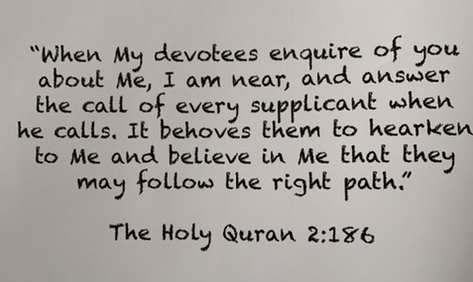
The book ends with an ayat from the Qur’an in English promising that Allah swt answers the prayers of the supplicants.  InshaAllah there will be more Mikaeel and Malaika adventures, and more of Big Boss and Super Agent M.O.M., too.