Tag Archives: Muslim Characters

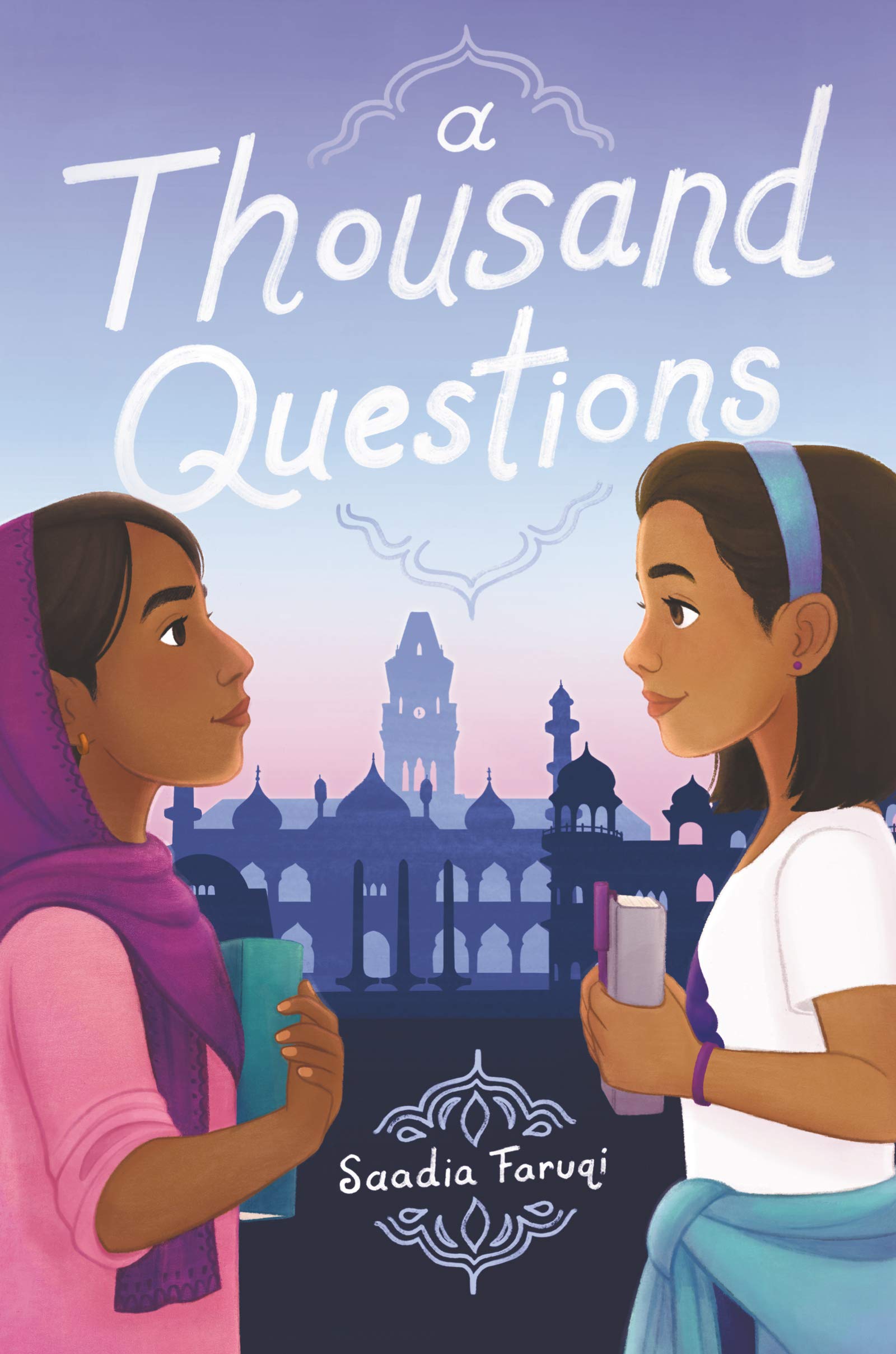
A Thousand Questions by Saadia Faruqi

Standard
A Thousand Questions by Saadia Faruqi

This 320 page middle grade novel with alternating point of view chapters engulfs you like a warm genuine hug. It does not have a clear climax, it is predictable, and some characters and cultural touch points could have used more detail, but honestly, I couldn’t put it down. As a half American kid who spent my summers in Karachi, so much of the author’s love of her homeland flows so effortlessly from the pages and took me back to my childhood and how the transformation of comparing the two countries moves to seeing the best in both causes growth within your heart and makes leaving so devastatingly hard. Readers of all backgrounds will seamlessly fall in to the story and enjoy the growth of the main characters, while learning a bit about a culture and the similarities of people.

SYNOPSIS:

The back drop is the sweltering heat of a Karachi summer in the middle of elections. Mimi, Maryam, is visiting Pakistan for the first time in her life. It is her mother’s home land, but her grandparents, and her mom aren’t close. They didn’t approve of Mimi’s dad and mom getting married, and even though they have been divorced for years and he has left, Mimi’s mom hasn’t been home in 12 years.

Sakina narrates the other chapters. She is the daughter of Mimi’s grandparent’s cook. She dreams of going to school, but needs help with her English to pass the admissions test. And even if she passes her family needs her income to survive, and her father’s failing health means that she has to take over his job too.

When Mimi arrives at her grandparents home, it is awkward at best. She doesn’t really know her grandparents, she has never had servants before, and her mother is rarely around. That leaves her to get to know Sakina. Sakina finds this odd as the owners of the home rarely “chat” with her and here this American girl wants to get to know her and is fine with helping in the kitchen. The two strike a tentative friendship as Mimi agrees to help Sakina with her english, and Sakina with the permission of Mimi’s grandmother and with the use of the driver, agrees to show her some of the city.

As Mimi takes in the traditional tourists sites she gives Sakina her first taste of ice cream and soda and other “luxuries” she has never experienced. Sakina introduces her to bun kabobs and other local foods. The budding friendship isn’t smooth, mostly because Mimi constantly compares Pakistan to America and Sakina doesn’t understand why Mimi doesn’t have a father. When the girls find out that Mimi’s dad, a journalist, is in Karachi covering the elections, the girls work together to try and find him.

Throughout all of this, Mimi keeps a journal and the entries are letters to her father.

WHY I LIKE IT:

I love that the girls have to navigate their friendship without and often despite interference from adults. I also like that while societal wise one girl is seen as economically privileged and one is not, the book gives enough for even elementary aged children to see that in America Mimi and her mom are financial struggling, but in Pakistan they are not and how that disparity is arbitrary. They also see that family and safety and security are also a part of life’s quality and not country specific. Things that one girl takes for granted are envied by the other, and it goes both ways.

Even for a middle grades book, there were some plot holes. If Mimi had been late night googling and plotting on a secret map all the places her dad had been writing articles from, she should have had a heads up about Pakistan. She knows so little about Islam and has like one shelwar kamees, so it seems a bit of a stretch that she speaks urdu pretty proficiently. I feel like some stumbling with the language or some back story on that would have been great.

Religion is handled as a cultural touch point, neither girl prays, but both find solace in visiting a masjid. Various characters are in sleeveless tops, the athan is heard in the back ground. I wish there would have been a bit more finding of Islam as Mimi found her culture too, but alas it isn’t there.

The majority of the book takes place within the grandparent’s home with the elections being a big part of why they can’t go out, yet the mom goes out a lot, which really rubbed me the wrong way. She took her daughter shopping once to meet an old friend and that is it. Who travels across the world to spend zero time with her kid. I didn’t like the mom at all, and wish there was some background or even some growth on her part. A lot of the minor characters seemed to fizzle as well in terms of having some depth.

There are some cultural and country facts at the end of the book, but within the text I was surprised that more wasn’t shared. I like that it mentioned Karachi was the original capital, but it should have also in the same sentence mentioned that Islamabad is the current, I think readers would assume that Karachi is still the capital of Pakistan.

The book is an OWN voice through and through and the value of that is felt in every sentence. It isn’t all positive and rosy, but it is genuine. The author loves what she is writing about and it shines through leaving the reader with a favorable sense of Pakistan: the country, the culture and the people.

FLAGS:

The book is clean, possibly some tense moments when Sakina’s family is robbed. There is also discussion of marrying someone your parents don’t approve of, divorce, and Mimi’s mom possibly having a boyfriend. Mimi’s mom is an artist and paints pictures of people. There is lying and scheming.

TOOLS FOR LEADING THE DISCUSSION:

I think the book would be a fine choice for an elementary book club, I think any one older will find the book a tad bit predictable. I plan to have my children read it so we can discuss points of view, experiences, universal traits and social economic classes. There are a lot of wonderful lessons wrapped up in a heartfelt story that I can see 4th and 5th grade children benefiting from over and over again.

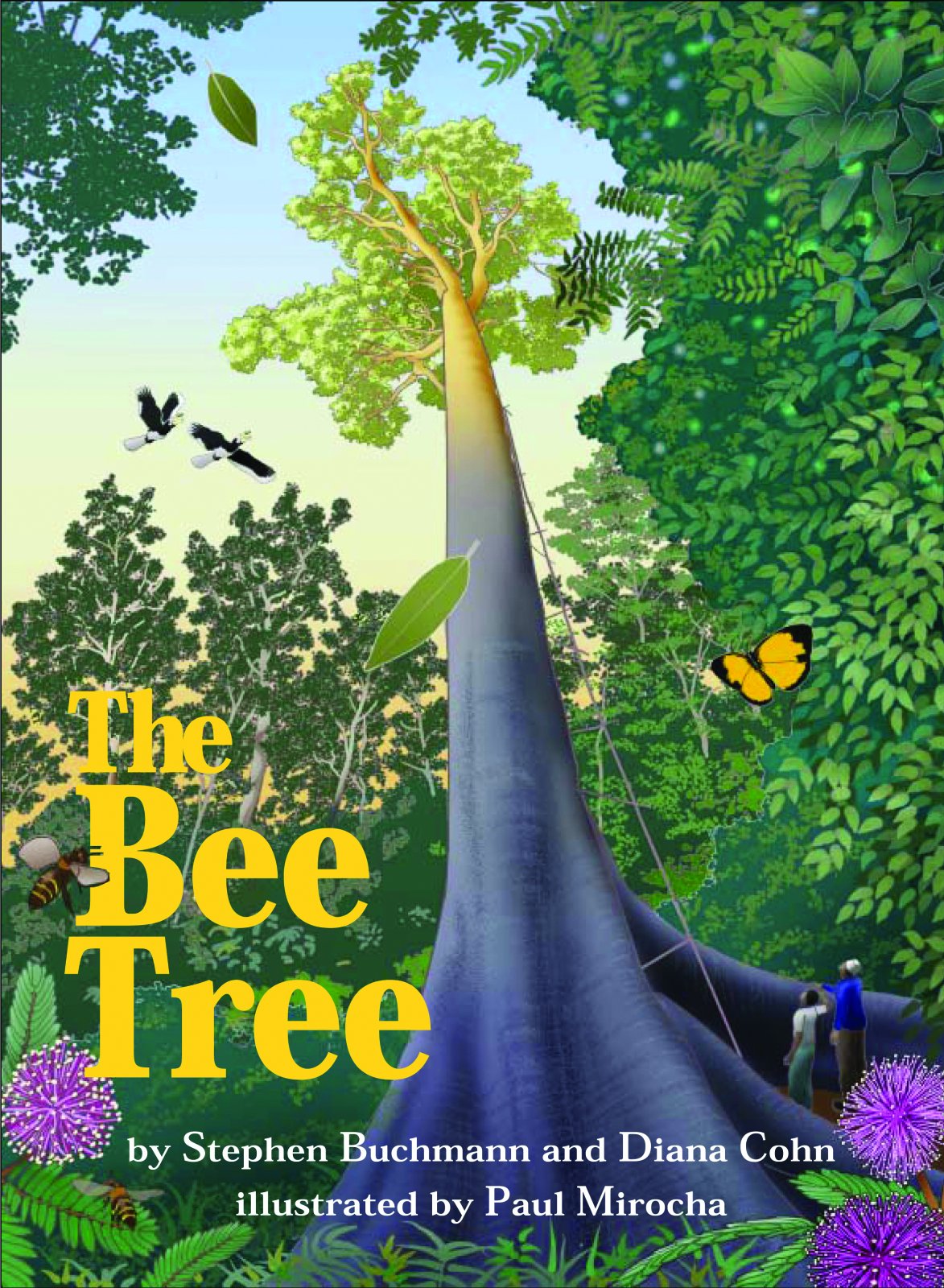
The Bee Tree by Stephen Buchmann and Diana Cohn illustrated by Paul Mirocha

Standard
The Bee Tree by Stephen Buchmann and Diana Cohn illustrated by Paul Mirocha

bee treeThis is one of those books that it is hard to know who the target audience is and who would most enjoy the text heavy 40 pages about a boy coming of age in Malaysia by harvesting honey in a traditional manner.  The two page spread illustrations are rich and inviting, and with an AR 5.7 level, the book would work well for children that enjoy other cultures, honey, insects, or children that you hope will be inspired to start seeing the world a little differently than they are used to doing.

5BD37914-E9B7-4D0B-BB0A-1286A8BC4C72

The story starts with a boy talking about his grandfather and how every year he goes to collect the honey from the tualang trees.  The bees travel hundreds of miles and arrive just as the rainforest starts to bloom.  The trees that they build their nests in are higher than the eye can see and grandfather, known as Pak Teh, is the leader of the honey hunting clan.

7CA311E6-B1B6-40E7-B735-FAACAD76597F

He tells everyone what their jobs will be: some will carry ropes, others pails, others torches.  One day, he tells them, someone will have to take his place as the one who climbs all the way up to the top to gather the honey.  He believes Nizam, the narrator, is the one.

To prove himself, Nizam has to practice climbing 120 feet into the sky.  Nizam and grandfather spend a lot of time together praying five times a day and walking through the dense rain forest.  He reminds Nizam that the forest doesn’t belong to them, but to the unseen protector. They enter the forest as if they are visiting a neighbors home.

837003A0-ED16-4CA9-9CD8-3CEBA7846D0A

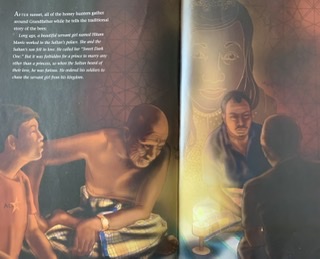
At night all the hunters sit together and Grandfather tells the traditional story of the bees.  A story that involves a beautiful servant girl named Hitam Manis who worked in the Sultan’s palace and how the Sultan’s son and her were in love.  When the Sultan found out he ordered the girl run out from the kingdom.  As she and her loyal friends fled she was hit by a metal spear.  She did not die, but her and her friends were magically transformed into a swarm of bees.  Because it was metal that harmed her, she ruled that metal was never allowed to touch the honey.  Hence, when the bee hunters harvest they use a bone knife, leather pouches, and a wooden ladder.

2637F18A-FB0A-424D-AACF-58285BE31EC5

When it is time to enter the forest, it is pitch dark with no moonlight.  The hunters tap their glowing torches against the trees sending light sparks to the ground to tempt the bees and leaving their nests free for Nizam to collect the honey from.  For seven nights they climb the trees, and then they return home.  With greetings of salam, peace be upon you, Grandfather informs the family that when he can no longer climb the tree, Nizam will carry on the tradition.

908CAC37-2CCE-477A-93BC-B3EEF723C2BF

The book ends with factual information about Malaysia, the rainforest, giant honey bees, honey hunters, and the future.

When Stars are Scattered by Victoria Jamieson and Omar Mohamed

Standard
When Stars are Scattered by Victoria Jamieson and Omar Mohamed

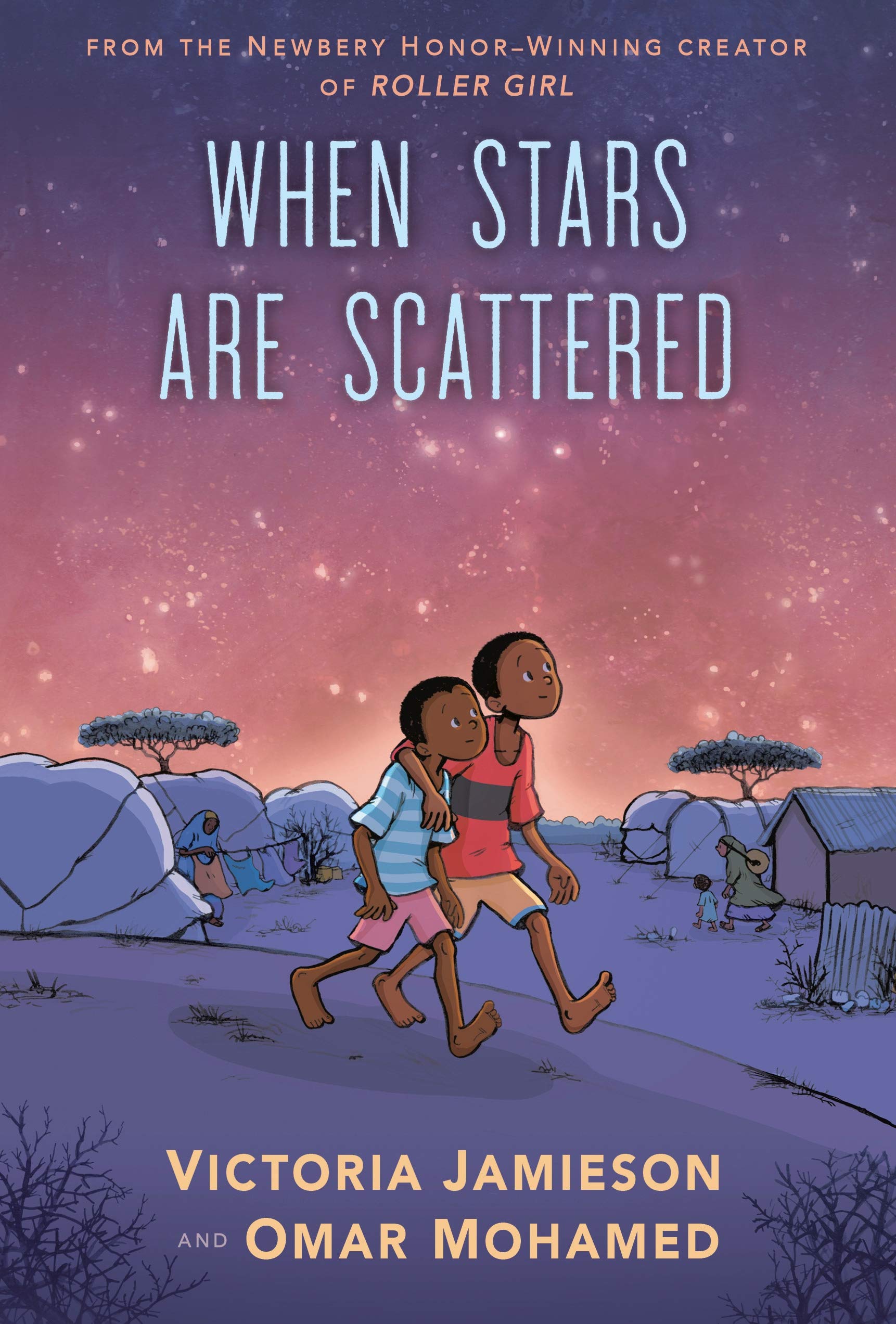
starsThis graphic novel swept me off my feet and left me in tears, not because of the hard life and sadness that life in a refugee camp entails, I had braced myself for that, but because of the hope and humanity and beauty that is so powerfully expressed and conveyed in this 264 page book.  Meant for 3rd graders and up, I think kids through middle school should be encouraged to read it.  The illustrations and colors are incredibly well done and the story is based on a true story that needs to be told and shared.  It is definitely in the top 10 books I’ve read this year and I keep catching my 11 year old re-reading this book repeatedly (like 5 or 6 times).

52BE6C8B-4246-4A92-BA66-004378A21862

SYNOPSIS:

Omar Mohamed lives in Dadaab refugee camp in Kenya.  His father was killed in the Somali war and his mother has not been seen after she sent Omar and his younger brother Hassan to run with the neighbors to escape the violence.  Hasan suffers from seizures and doesn’t speak, save one word, Hooyo, mother in Somali.  The two boys have an adopted mom Fatuma, who looks after the boys in the camp as if they were her own.  Unable to go to school, Omar spends his days looking after his brother, playing soccer with plastic bags, and waiting in lines for water, food, and news of a better opportunity.

When Omar gets the chance to go to school (5th grade) he has to make the difficult decision of pursuing his own opportunities, with the hope of helping Hassan later, or living day to day and taking care of his younger brother.  He is finally convinced that education will help them both, and that if the girls can find a way to do their chores and attend class, he can too.

Each transition from primary, to middle to secondary school requires testing, and only the top get to continue.  Determined to stay in school, Omar studies while dealing with life’s many challenges and the daily additional challenges of living with little food and resources.

When Omar and Hassan’s names finally appear on a UN interview lists for resettlement, hope seeps in, but the wait and the uncertainty prove to be yet another test.  Along the way there are side characters from the United Nations that show compassion, other families that show how generous and loving humans can be, female classmates show him how to take advantage of his privilege and friendships that move friends to family.

D74285FB-CBDC-4C4A-BD7B-070439BB08EF

WHY I LIKE IT:

The book is gripping and has heart.  I don’t know what I expected, but I truly could not put it down.  The character’s stresses are felt and emotions are conveyed so powerfully, that I don’t know that you can read the book and forget it.  The most emotional part for me was his honesty in dealing with his brother, the strength of his friends, particularly female, and the bond to Fatuma.  Truly their living arrangements and loss of family is gut wrenching, but it was the little things that touched me the most.  The honesty of Omar having to decide if he was tempted to not go to school because he was scared. Was he using his brother as an excuse to stay with something he knew.  The emotional tipping point of no return for me was when he realized Fatuma would not be able to go to the second interview with the UN and would not be a part of what came after.  Of course I knew that, but by that point I was so connected to the character, that when Omar realized it, I broke for him.  To feel that connection in a graphic novel was new for me, perhaps a first, and alhumdulillah I am better for it.

The characters are Muslim and behave traditionally with praying and Ramadan and Eid.

F9E64F9D-1722-4CBD-B905-BE754BCE6C77

FLAGS:

There is talk of khat, something the men chew on the side of the road to forget things.  There is some violence, bullying, a young girl getting married before 6th grade and having a baby.

CDD12698-52CE-4FFD-9444-29A666980797

TOOLS FOR LEADING THE DISCUSSION:

Yes! I am hoping if and when we resume school I am starting with this book inshaAllah, for my middle school book club.  There is so much to talk about and understand and empathize with.

More Than Just a Pretty Face by Syed M. Masood

Standard
More Than Just a Pretty Face by Syed M. Masood

more than just a pretty face

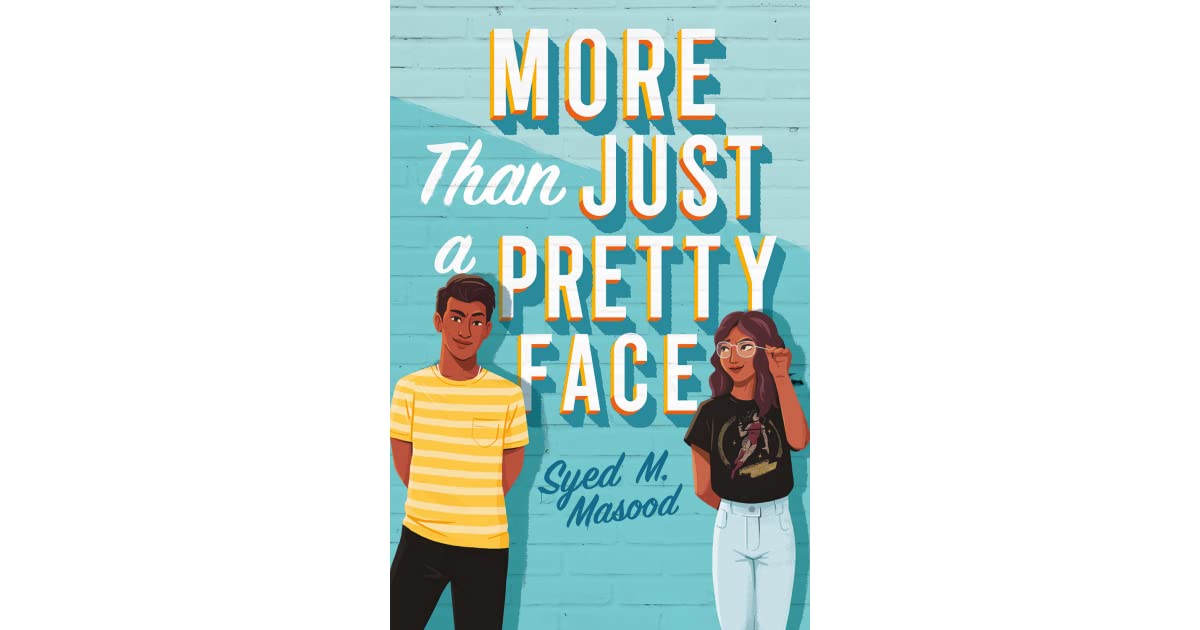
This book is a Muslim YA romcom OWN voice written by a Muslim male.  Woah, right? And the actual story, sigh (blush) I enjoyed it, and part of me is disappointed in myself for how much I enjoyed it.  Most of the characters are Muslim and all over the spectrum in their religiosity so to speak, there are a lot of jokes at the expense of tenants in Islam and trivializing of certain concepts which really isn’t something to celebrate, but it reads real and there is a lot of Islam that is front and center and deep and though provoking. For most non Muslim readers, I’m sure 15 or 16 and up would be fine with the content and 353 page length, but as a former Islamic School Librarian, I’d have to reserve recommendations to college age.  The protagonist is 19, there is talk of sex, but not crass, the main female character has a past that includes a sex tape, and there is a lot of language, but its also really funny and really relatable and really sweet and takes place in high school.

SYNOPSIS:

Danyal is a pretty face, but he isn’t very bright.  He goes to an elite private school though somehow, and while he is admittedly dingy, he is also very kind, innocent and generous.  He was held back at some point in school and is 19 as a senior in high school.  He works in a French restaurant and dreams of being a chef.  He has no desire to go to college and as the only son of Pakistani immigrants, they are not thrilled with their son’t future plans.  Danyal is pretty chill about it though and his mom wants to arrange his marriage, and he is willing, although he is crazy in love with his friend’s twin sister.  He is religious and hasn’t really broken any of the Islamic relationship rules, he prays fajr, and just kinda floats through life doing the best he can and forgiving himself and others when they mess up.

When his mom arranges a meeting with Bisma he is willing to get to know if they are a match.  She however, fully discloses her past to him when they head out for coffee, which involves her rebelling, once a few years earlier, against her father and going to a party, further rebelling and getting drunk and then making the poor and regrettable choice to sleep with someone.  To make matters worse, the event was video taped and spread around the community forcing the family to move.  Bisma is pretty religious and really studious and really sorry, but her father and most community people don’t let it go.  Danyal thinks that is stupid, one mistake shouldn’t haunt her forever, unfortunately he doesn’t think chivalry and pity are enough of a reason to marry her as he doesn’t think they are meant for each other.  Basically, he is still really crushing on Kaval.  So he and Bisma decide to be friends.

When Danyal’s history teacher in a fit of spite nominates Danyal for a prestigious Renaissance Man competition, Danyal calls on Bisma for help.  The topic is Winston Churchill, the beloved British leader, but Danyal quickly learns he is not beloved by most Indian subcontinent people.  Kaval offers to help so that Danyal can win the competition, impress her parents and then maybe give them a chance.  But, suddenly Danyal doesn’t know if that is what he wants.  He wants to be himself, he wants to be accepted, he wants Bisma.

WHY I LIKE IT:

You know how it is going to end, you don’t know entirely how it is going to get there, but you know where it is headed, yet the book is still compelling and fun.  Between the banter of the religious friend, and the no longer religious friend, the advice the French Chef bestows on Danyal and Danyal’s complete and utter cluelessness to everything, the book is really warm and the characters really like-able.  I dislike the stereotype of the “religious” character, but the other side characters are better developed.

On occasion I think Danyal’s stupidity is over done, he isn’t an idiot, he just isn’t book smart. So when he doesn’t know what “break a leg” implies for example, it seems a tiny bit off.  I know his friends say he isn’t funny, but I think he is hilarious, especially with his commentary on the Desi community.  “It is the curse of brown boys everywhere.  We either die young or we live long enough to see ourselves become uncles.”

The role of Islam is incredibly prominent, and the characters understand what it means to be Muslim differently.  Sometime I agreed with them, sometimes I didn’t, sometimes the characters didn’t agree with each other, sometimes they did.  There is a lot to think about: destiny, Allah’s mercy, Qalb-e-saleem (a pure heart), caring for the less fortunate.  Even politically there is a strong thread of colonialism, which the characters wrestle with and with being immigrant’s children.   There is a lot packed in, but it flows so smooth and the writing rich with authenticity, that quite often I would laugh out loud and read various lines to my young children.

FLAGS:

Talk of sex and losing virginity, but not detailed, just stated.  The chef is a lesbian.  There is lots of language including the F word, not thrown in effortlessly, usually for a reason, and often reprimanded.  There are a few kisses on the cheek and lips between Danyal and Bisma, but in a Disney princess movie sort of way.

TOOLS FOR LEADING THE DISCUSSION:

Not for middle or even high school book club. I don’t think that it is a completely “halal” romance story, but I think I wouldn’t be concerned if juniors and seniors were reading it, I think they would love it, and I might just have a few that I want to suggest it to…


Mikaeel and Malaika: The Power of Dua by Kazima Wajahat illustrated by Gustavo Gutierrez

Standard
Mikaeel and Malaika: The Power of Dua by Kazima Wajahat illustrated by Gustavo Gutierrez

power of duaMikaeel and Malaika are back in this 32 page hardback book that explores why duas sometime seem not to come true.  Done in a hilarious manner that brings in riddles and problem solving elements, it is perfect for 6-8 year olds.  Younger children will enjoy the beautiful illustrations and silliness, and older children (and parents) will thoroughly enjoy Big Boss’s play on words and the illustrations showing his parenting style.  I’ve read the book multiple times to myself, my toddler, and even my older kids; each time surpressing a smile and enjoying the message lovingly and entertainingly conveyed: “rewards are best when the time is right.”

A8CB8717-C5BF-43A7-9A6D-AF90A8915A89

The book starts out with a problem to be solved, a mystery: who took the shoes from the masjid.  I know such a real world problem in a picture book, but fear not, super hero siblings Mikaeel and Malaika are on it.  There is just one problem, their super powers are gone.

04419E7B-4F57-4ACB-91CE-06F246F1C205

They head to Big Boss, aka their father, to find out what happened to their powers, only to learn they were part of a “14 day free trial” and their superjet? It was sold on Spamazon. At a loss of what to do, Big Boss reminds them that they have one super power left, the power of dua.

EA088D63-50D9-400D-A80D-A0C70FF1BF6A

The kids run to pray and then they wait.  When they can wait no longer, they go to see if the shoes have been returned, but…they haven’t. Big Boss gives them some sage rhyming explanaition that they don’t understand, but try to unravel in an apple orchard.  When that doesn’t work, he gives them more advice and they follow it up in a butterfly garden. With no answer insight, Mikaeel gets frusterated and wants to know why his dua won’t come true.

FE59775D-8071-4E5E-87FD-16CE71F341D5

Finally understanding that Allah (swt) does things at the perfect time and only at the perfect time, the children change their dua and the shoes are found, and the lesson learned and shared.

E5E3FE5E-EAA4-4B55-B192-BF82D8C69BA6

I love Big Boss, and this book makes it much more clear than in Mikaeel and Malaika: The Quest for Love, that his advice and riddles are in rhyme, but that the rest of the text is not.  I love that he is a hands on parent changing diapers, cooking, and guiding his kids. His steralizing of an infintile waste unit, and skimming a superhero manual are awesome and silly.

The book is about Muslim children, for Muslim children, but I think any child would enjoy the story to learn what Muslims believe, and any religious child who believes that there is one creator would be able to relate to the story as well.

671A295E-6B03-40AC-9172-C3F8085E7A73

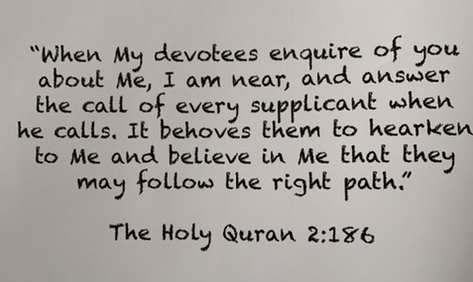
The book ends with an ayat from the Qur’an in English promising that Allah swt answers the prayers of the supplicants.  InshaAllah there will be more Mikaeel and Malaika adventures, and more of Big Boss and Super Agent M.O.M., too.


You Must Be Layla by Yassmin Abdel-Magied

Standard
You Must Be Layla by Yassmin Abdel-Magied

layla

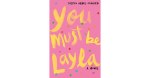
This OWN story, upper middle grades book, is heavy on the pop culture, relatable on the Islamic family presentation and honest in its portrayal of Islamaphobia, yet somehow the tidiness in which everything wrapped up seemed too forced and a bit flat.  At 293 pages, including a three page glossary, the book is a quick read meant mainly for girls.  It involves robotics, academic achievement, and invention, while also discussing crushes, a character coming out to his family and friends, and mention of girls not praying at certain times of the month.

SYNOPSIS:

Layla lives in Australia and goes to the Islamic School of Brisbane. Her Sudanese family: older brother, younger twin brothers, and parents, her Doctor mom and medical machine tech dad, are active Muslims and proud of their culture.  They assimilate to Australian norms in varying degrees, but with all the kids at ISB, Layla doesn’t feel all that different in her school and social life.  Unfortunately she wants more, she wants to be an adventurer, and when she meets Adam over the break and learns about the various opportunities he has it his school, Layla decides she wants to prove herself on a larger stage.  Going in to “shut down” mode Layla has tunnel vision to ace the scholarship and entrance exam and go to a new school.

She gets in to Mary Maxmillion Grammar School and when she goes to meet the board they let her know that the decision to accept a girl like her was not unanimous.  Layla is an immigrant, she is black, she wears hijab, she is loud and proud, and apparently very smart, but as one trustee asks, is she brave?  On the first day of school she arrives late to first period, insults the teacher repeatedly and also makes friends with a group of slightly diverse boys.  At the end of the day however, Peter, a boy who had insulted her earlier, reinforces his disapproval of her being allowed at their school and pushes her.  Standing her ground, she verbal attacks and then head butts the boy in front of a large portion of the school at dismissal.  No one offers any help, nor speaks up when she is suspended for a week, her scholarship and admission put on probation, no one even asks for her side of the story, Peter, is let off completely free, as he is also the son of the Board Chairman.

Layla decides to prove she belongs at the school she is going to win a prestigious robotics competition and since everyone already is on a team, she decides to go for it solo.  The only problem, is she doesn’t know what to invent.  When she returns to school, her friend that she is crushing hard on is acting weird, and she gets caught up in a lie of sorts that serves as both the idea and silliness turned cleverness of the book.  While choking on gummy worms, she says she is working on an edible actuator for her robot, and somehow has to make that come to fruition.

The rest of the book is Layla making a lot of silly errors of judgement: missing classes being in SD mode in the workshop, forgetting to file the paperwork and registration to actually compete in the competition, and leads up to the resolution between her and Peter, learning her crush is gay, and deciding to be herself and proud of it.

WHY I LIKE IT:

I actually like the majority of the book, I really like how Islam is presented and lived.  They pray and say salam and cover, and recite tasbeeha to reflect, and quote hadith very naturally, even how others attack them, and the anger that Layla’s brother Ozzie feels at his inability to get a part time job reads and feels very authentic.  I also like how one of the teacher’s own experience as being a descendant of the forgotten generation and being a first nations ethnicity is woven in.  I felt the side character being gay was added and forced in as an after thought and I don’t know why, as it didn’t show Layla to be a particularly good friend.  She handled his coming out well, but when he was miserable she was wrapped up in her own stuff and didn’t reach out very well, even though he ended up being the spark for her invention.  Her friend at ISB is also an under developed character, that while I get is used to show another side of Layla, in many ways also showed her to be a rather poor friend.

I found the pop culture references annoying, not in and of themselves, but in knowing that they will date and make the book irrelevant in a few short years.  There is a lot of repetition of phrases and ideas that a few times when I put the book down I struggled to re-find my place (I know bookmarks, right?) but certain refrains and paragraphs seem so very similar.  I

There is a lot of good information about Sudan and their food and culture and traditions.  There is also a decent amount about Muslims in Australia.  I like that even within her family there are different views on how much to assimilate, and how much to fight back against perceptions, the fact that there is a lot of gray makes non Muslims and non immigrants reading the book hopefully realize how diverse all people are and to not assume anyone is only one way.  I would have liked more about Layla’s mom and being recruited to come to Australia, and how she was perceived at work, by patients and colleagues.  I also would have liked some sort of resolution about Ozzie and his job search.  Really though my biggest complaint is Layla, herself.  What does it even mean to want to be an adventurer? I like that she is fallible and human and in some ways she does grow, but I felt like her being smart and a go-getter is the foundation of the story, but that she didn’t seem to have much common sense seems a bit off.  Yes she is loud and funny and puts in hard work, but the way she talks to teachers, and misses classes and deadlines, and behaves seems like a disconnect from the pages constantly telling me how smart she is.  To me, part of being smart is knowing when to lash out and when to listen, I don’t feel like her growth arc was all that great, in a nut shell, she changed schools and confronted a bully, that is the story, while not a bad story, it could have been so much more.

FLAGS:

There is crushing, violence, a gay character, mention of alcohol at a party Layla didn’t attend, talk of hooking up in passing and some language.  There is lying but it is acknowledged guiltily, and not familiar with Australian slang, regular use of the phrase, Janey Mack, which according to google is a replacement for Jesus Christ.

TOOLS FOR LEADING THE DISCUSSION:

I don’t know why I wouldn’t use this book as a book club selection.  It just didn’t strike me as something they would benefit from.  I wouldn’t be opposed to someone picking it up and reading it in my house, but I doubt I’ll recommend it to my daughter and she is the ideal reader: she wears hijab, is in 8th grade at an Islamic school, and loves to read.  The book is really not memorable as good or bad, it just fell flat and I doubt I’ll read it again, luckily it only took two sittings to read, so I don’t feel like it was a waste of time, but seeing as I had to pay cover price and international shipping, I kind of regret rushing to buy it.

Teacher guide: https://www.penguin.com.au/content/resources/TR_YouMustBeLayla.pdf
Neither This Nor That by Aliya Husain

Standard
Neither This Nor That by Aliya Husain

neither this nor that

This 251 page novel reads like a biography that has no climax or real conflict in its linear retelling of the protagonist from 3rd grade to a junior in college.  If you are part or all Desi, raised in America in the ’80s and ’90s and have fond memories of NBC’s Must See TV, rolling your pants up, your family packing Corning Ware sets to take to the homeland, and the joys of TJ Maxx, you might enjoy the nostalgic similarities you too experienced, but even at that, with no plot or character arcs, the book is easily forgettable and you might forget to finish it.  For all my critiques of Muslim stories that don’t read authentic, this one definitely does, she doesn’t rebel, she doesn’t ever go against Islam, but because she is similarly not ever tempted to, I think most readers won’t relate to this fictional girl, who’s biggest worry is smelling like her mother’s cooking.  The book seems to just want to tell her life story, and getting through it is the point of the book, not making emotional connections, giving the reader something to think about or even inspiring others, which is ultimately a missed opportunity that this book could and should have capitalized on.

SYNOPSIS:

It is the first day of school for Fatima Husein the eldest of many daughters in her Indian American suburban home.  With a mother who doesn’t speak much English and parents that don’t seem to understand Fatima’s desire to fit in, the stage is set that will carry through the entire book of Fatima loving to study and separating herself as the girl at school pretending to be more American than she really is, and the girl at home pretending to be more Indian than she feels.  As the book follows the character through college, along the way Fatima and her family have extended maternal family move to America from India and then move back, they take a trip to India which is not enjoyed at all, her dad’s family then moves from India and settles near them, they move to be closer to the masjid, and they go for Hajj.  Characters bounce in and out: school friends, community friends, cousins, etc.. The only real constant is Fatima’s love of school and her paternal grandmother grumbling about her getting married. There are the ups and downs of life that are shared, most very specific to a ABCD (American Born Confused Desi) living in the ’90s.  Fatima is religious and Islam is important to her and she never waivers in her black and white view of things.  It does take her a little while to wear hijab, but there is no real self reflection and catharsis, it is just states she wants to fit in and isn’t ready.  The conclusion is she finally accepts a proposal from the son of an old family friend who lives in Chicago.  Not so much because she likes him, but more because she has no reason not to say yes and her parents are in favor it.

WHY I LIKE IT:

If this were a biography and it was someone famous, the minutia of day to day living might be compelling, but as it is fiction and you have no idea where the story is going, it just seems to tell a story about a typical girl doing typical things.  It has value in that it shows how normal and boring even, a normal Muslim family is, but it gets really preachy at times and really dry.  None of the side characters are memorable.  I have no idea how many sisters Fatima has, when her grandfather passed away I felt nothing, when two who families died in a car accident Eid morning on their way to prayers, I had to flip back to see if the characters had ever been mentioned before.  It seems like the whole point is to get to the end, and more heart and less tedium would have made this book an amazing example of American Muslims in America.  The first page mentions friends and there is no follow up to where they are or what happened to them, and this happens all through out the book, there are no emotional connections, nor attachments among the characters to include the reader into their plight as well.  The protagonist one must assume gains her voice from the author’s experiences herself, but it just lacks internal dialogue and conviction.

Fatima lives through the Gulf War and makes big changes and has to find her place, yet the book just tells us all this, it doesn’t show us how she internalizes and processes and emerges from the experiences shared, it just gives an example and then comments on it.  The font and layout visually looks like a text book, and at times, the internal structure reads like an essay, sharing an anecdote, backing it up, and moving on to the next event on the time line.

I feel like I know the character, it definitely comes from a place of shared experience and credibility, but you have no idea where it is going, and just like I doubt anyone would want to read my life story, the book needs a little direction and editing.  In the author interview posted below in the “Tools to Lead the Discussion” she mentions that mainstream publishers wanted more rebelling and she wouldn’t compromise.  I agree with her, we need books that don’t follow that assumed track, I think that the presentation of the story, however, as it is, is lacking.  The integrity is there, but the character is really flat, and there are plenty of literary tools that could enhance the story without compromising Fatima’s character to drugs and alcohol and boys.  The book was self published in 2010 and I really hope at some point the author will re-edit it, to make it relevant to preteens and teens today and more personable.  Ultimately making it so that the successes Fatima has are cheered on by the reader, who are also inspired by her accomplishments while staying true to her beliefs.

FLAGS:

Considering how many pages are dedicated to how she and her sister are to behave in India as to not seem naughty or as arrogant Americans, the curse words flow pretty regularly in the book, and the way she speaks to her elders and in front of her elders is not always kind.  There are side comments about hooking up, STDs, and drinking, nothing any of the characters engage in, but judgments regarding these topics for those that do is present. She also talks about her mom’s failure to discuss menstruation before hand, to exemplify how things are only discussed once they need to be dealt with.

TOOLS FOR LEADING THE DISCUSSION:

I don’t know that as a book club selection today’s youth would voluntarily pick up and read this book.  There might be some ability for a teacher to assign it and then turn around and make the students write something similar about their experiences in a fictionalized form.  I think students would struggle to relate to Fatima with the outdated references and the lack of conflicts and climaxes in the narrative.


You Can Control Your Voice: Loud or Quiet? You Choose the Ending by Connie Colwell Miller illustrated by Victoria Assanelli

Standard
You Can Control Your Voice: Loud or Quiet? You Choose the Ending by Connie Colwell Miller illustrated by Victoria Assanelli


you can controlA choose your own adventure picture book, that doesn’t have anything Islamic specific, doesn’t seem to be written by a Muslim or illustrated by a Muslim, and that was found at the public library, starring a Muslim mom and daughter.  Oh hurrah for beautiful illustrations, teachable moments, volume control in a library and the fun to read the story and have control over what happens next.

91F3712F-C173-46C0-BD30-6B6814B951BA

This 24 page book meant for kids in kindergarten to second or third grade is part of a series featuring diverse characters learning universal manners and making good choices. To see Muslims represent a universal lesson in a relatable environment is a great way to normalize seeing women in hijab in real life.

685B4BFC-16EB-437A-842F-ED10B2580851

Haneen and her mom are at the library, and Haneen finds a book about fairies and cannot contain her excitement.  Immediately the reader has to choose what Haneen does next.  If she stays loud, the story ends rather quickly, but if she tries to keep her voice down, she might get to stay at the library a little longer.

9E7FC801-D531-42AA-9542-81C4BAF75364

There is a big test when she sees a friend, and disturbs a gentlemen working on the computer, but if you make good choices Haneen gets to check out two books.  If your choices aren’t ideal you might have to just get the fairy book and get out, and if you really struggle to know how loud or quiet to be, you’ll have to come back another day and try again.

C00E287A-E463-427B-9AC4-C748681CC0F5

At the end of the book are some things to think about, to drive the point home.  I love the line, “We are all free to make choices, but choices have consequences.”  A great lesson for little ones, and a great reminder for older readers too.

3EF9066A-60F4-4A31-9E1C-19F228A0D7F4

The book is 9×8 and the expressions on the characters faces make the book a great option for circle time, story time, bedtime, and just to have on hands for kids to thumb through and enjoy.  Well done!

90F0B566-EE2F-490B-8D8C-3AD148BC0CE5

Internment by Samira Ahmed

Standard
Internment by Samira Ahmed

internment.jpg

The premise of this book is amazing, the writing and execution of it, unfortunately, falls flat.  The failure to set the stage, develop characters the reader cares about, and create a world in the near future that is both riveting and horrifying doesn’t come through in the book’s 387 pages written on an AR 4.7, but meant for high school aged readers grade nine and up.

SYNOPSIS:

Indian-American Layla Amin is 17 and since the census that her family honestly filled out and identified themselves as Muslim, their life under the new president has been shattered to say the least.  Her poet father lost his job as a professor, her chiropractic mother has lost numerous patients, Layla has left high school and they all live in fear.  With curfews and people they’ve known their whole lives turning on them openly, the book opens with Layla chooses to sneak off to see her Yemeni Jewish boyfriend, David after curfew.  The next day suits arrive to take the family to an internment camp in the desert, near the old Manzanar detention camp used to house Japanese Americans during WWII.

The new camp, Mobius, is the first one to house Muslims and the first of many slated to be built.  The detainees are divided by ethnic background, Layla’s FEMA trailer is in a block of other Desi families, Arabs a few blocks away, LatinX, converts, etc., all given minders to control them from within their own community.  As Layla whines about her cell phone being taken away and how much she misses David, a guard, Jake, takes pity on her and regularly risks his own position and Layla’s, as he sneaks her access to phones, gets her burner cell phones and even sneaks David in so the two can make out.  Somewhere along the way it seems Jake and Layla develop feelings for each other, but it really isn’t explored.  Layla makes friends and somehow becomes a revolution leader with her writing notes about life on the inside and having Jake and David get them to the media.

Those that speak out against their situation or complain, disappear and never return.  The Director of Mobius, ensures it.  In their refusal to eat dinner one night, and their protest at the front gate in front of protestors and the media, eventually Layla gets taken, but with her friendly guards, she finds she isn’t completely alone and that she just needs to be brave a little longer, stand up at the right time and get incredibly lucky to be successful in the revolt.

WHY I LIKE IT:

The President in the book is undoubtedly Trump, and I love the passages that reflect how the fictitious America didn’t become racist overnight, but that the leadership allowing it, ignited the ugliness that already existed.  It mentions making America great again and really sets the foundation of a simple “what if” that really could happen very easily.

The parts that struggle are the story elements, I really didn’t find myself cheering or even liking Layla, I didn’t find her charismatic or interesting, she was really whiney and flat to me.  I didn’t care one bit about her and David’s relationship, it seemed forced and completely not necessary.  A friend or concerned neighbor might have been more hope inspiring than a high school boyfriend she is brooding over to save her.  Her sneaking out and sneaking him in, all seemed selfish and juvenile for a character who in other arenas seemed pretty mature and level headed.  The disconnect is pretty prominent and I really cringed at all of the passages involving the two of them.

There are flash backs to life before the new President, but it isn’t engaging and doesn’t really highlight how horrific life is now, because the lack of character development and world building, everything seems like it has to be said, not shown.  Random characters at the camp would show up and then disappear, and we knew nothing about them, so there was no emotional connection or attachment to what happens to them, it really had so much potential to have heart and fear and insanity and it just doesn’t.

Layla identifies as Muslim, and lovingly recalls ayats and duas of her grandmother, but the family firmly believes that “there is no compulsion in religion” and thus doesn’t hide who they are, but don’t visibly display it in their clothing, or actions much either.  They don’t have a problem with their daughter having a boyfriend and they support it.  Layla and her mom don’t cover, but Layla does show massive respect for the Muslims that do.  Layla’s parents seem to pray, Layla doesn’t, but she doesn’t seem against it.

FLAGS:

Lots of kissing between Layla and David, a gay couple that disappears in the camp, flirting between various other characters, violence, oppression, language, death, beatings.

TOOLS FOR LEADING THE DISCUSSION:

I actually feel like this could work as a book club book because the discussion would be so great.  Yes, there are flags, but the relationship stuff is so annoying and awkward, I don’t think any kids will find it titilating or compelling at all. The writing is subpar, but the issues brought forth are important, and the students would have infinitely better plot lines for the characters that I think could make the books premise reach closer to its potential.

A letter from the Author: https://www.hachettebookgroup.com/articles/a-letter-from-samira-ahmed-author-of-internment/

Book Club Guide:https://www.hachettebookgroup.com/wp-content/uploads/2018/07/InternmentNovlBookClubGuide.pdf

Review podcast: https://teachnouvelle.com/internment-by-samira-ahmed/

There is a ton online, just google it and Happy Reading


I Say Bismillah by Noon H. Dee Iput translated by Shera Diva Sihbudi

Standard
I Say Bismillah by Noon H. Dee Iput translated by Shera Diva Sihbudi

i-say.jpg

Another adorable board book teaching the concept of saying Bismillah to the littlest Muslims. The illustrations are really sweet, and the text large and playful on their 5.5 square pages.  The story is simple, but because there is a story, and the word repeated, it does just what it intends to do and shows Bismillah being said before you start something.  It is worth noting though, that it never articulates why you say it.

IMG_8870

In this 20 page story brother and sister, Nabil and Noura are about to eat some yummy cupcakes.  Noura forgets to say Bismillah and her brother Nabil reminds her.  They both say Bismillah and then Noura says it before she drinks her milk.  Proud of herself for remembering, Nabil praises her as well, and they both head off to play after saying Bismillah again.

IMG_8871

I like that the siblings encourage each other and no one gets in “trouble” for not saying it, but rather they are gentle in their approach and it comes not from a parent or authority figure but from one another.

IMG_8872

There are a few “games” sprinkled in on two of the pages: say the colors of the cupcakes, count the cups.  There is also the word Bismillah written in Arabic at the end along with the English transliteration, English meaning and two questions: can you say Bismillah, and when do you say it, to verify comprehension.

IMG_8873

Thanks once again to Crescent Moon Store (www.crescentmoonstore.com) for their fast and friendly service and great prices.  There are four books in the series and they carry them all.