Tag Archives: Muslim Character

Samira Surfs by Rukhsanna Guidroz illustrated by Fahmida Azim

Standard
Samira Surfs by Rukhsanna Guidroz illustrated by Fahmida Azim

surfs

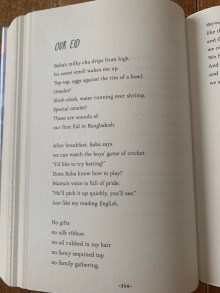
I have been anxiously waiting for this middle grades 411 page book in verse to be published.  The last few books I’ve read in this style with smart strong female protagonists have blown me away.  This book unfortunately really fell flat.  I think the difference is most OWN voice narrative do so well in prose when the emotion can be felt and explored deeply, so that when the story moves forward with sparse words the reader can forgive the gaps and jumps.  This didn’t have that insight, sadly, and just left a lot of holes for me. The author’s family on her father’s side is Muslim, she is Persian Indian Chinese, not Rohingya or Bangladeshi, and that isn’t to say that she can’t write a story about them, but it just felt lacking, and this is my assumption as to why.  The author is a surfer, and that is where the detail and passion really shines. The book is fine, it just didn’t inspire me or move me.  It checks boxes for having characters with strong Muslim identities, highlighting a persecuted population, showing diversity within subcultures, and showing universal similarities, so I’m glad the book was written and is available, I just wanted it to be so much more.
img_2388

SYNOPSIS:

Samira and her family have recently made the perilous escape from Burma to Bangladesh.  Burma decided that the Rohingya must be killed and convinced the majority Buddhist to turn on their Muslim neighbors.  Her parents and brother survived, but her grandparents, her Nana and Nani, drowned on the way.  Samira’s family were turned away from the over filled refugee camp in Cox’s Bazar and have set up with others, their own meager living on the outskirts.  Samira’s father works for very little illegally as a shrimper, her brother as a waiter, and she sells eggs on the beach to tourist.  Ever on the lookout for police and from angry Bangladeshis, life is lonely and frightening.  Slowly Samira starts to make friends with other girls, her brother Khaled is helping translate and is beloved by his employer.  When their father gets injured however, the family is thrown in turmoil as they need his income.  At this same time Samira starts to be tempted by the ocean and the surfer girls that seem so free and fearless as they take on the waves.  Knowing that her family will not support her surfing, her brother agrees to teach her how to surf in secret, like he is teaching her to read and write English.  A surfing contest is announced for boys and girls with a substantial monetary prize for the winner, but Samira is not allowed to be in the water, and the Bangladeshis in charge of the surf boards are not happy with how much potential Samira has to win the competition.
img_2389

WHY I LIKE IT:

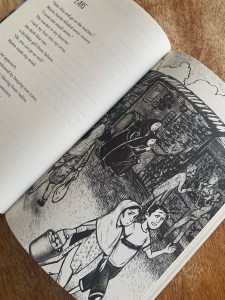
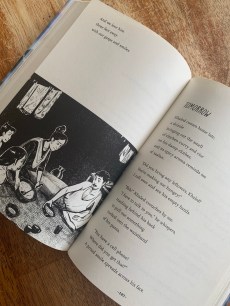
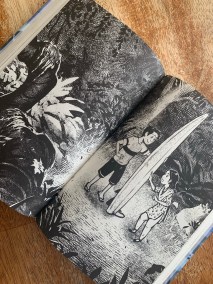
I love that the story brings some awareness to the under represented Rohingya and that it shows resilience and strength.  It talks about religion, they opt not to fast in Ramadan because the father is weak after his accident and he proclaims that if he isn’t fasting no one should.  The men go to the mosque, the mom talks about hijab.  Cultural words are dropped in and foods mentioned.  The illustrations are fun and engaging and do a good job of breaking up the text and keeping the reader connected.  I loved the dad and his way of supporting his kids, I also loved the brother sister relationship, but ultimately, the plot holes just overwhelmed the straightforward story line.

I wanted to know more about the tourist near this refugee camp, who were they (Bangladeshis? foreigners?) and what was that dynamic like.  I wanted to know where the eggs came from and how that was set up as a job for Samira.  How come the family was nervous about Samira being on the water since that was how her grandparents died, but not her brother? I get that as a female grows the family might not want her in a bathing suit out swimming for modesty issues, but I didn’t like how the book just chopped it up to swimming being against Islam, clearly she was taught to swim and obviously it isn’t.  I was looking forward to some big reveal about the brothers notebook of drawings.  I thought maybe he would get them to a newspaper or get them shared somehow to give insight to what his people were experiencing.  It seemed like it was teased that there was going to be a climax there, but there wasn’t and it felt misleading.   I didn’t get the whole standoff with the other surfers protesting if Samira wasn’t allowed to surf they wouldn’t either.  If the organizers weren’t letting her that makes sense, but why would her parents care? There wasn’t a clear connection and the speed and vagueness in which it was resolved was disappointing as it was presumably the point of the story.
img_2390

FLAGS:

Fairly clean.  There is bullying and mention of death.
img_2379

TOOLS FOR LEADING THE DISCUSSION:

I don’t think I would do this for a middle school book club.  It is a solid middle grade read.  Possibly it could be used to supplement a larger unit of study about refugees or particularly the Rohingya.  Older readers will be left with more questions than they had when they began the book though, and wonder what the point of the story was at all.

img_2373

I Can Help by Reem Faruqi illustrated by Mikela Prevost

Standard
I Can Help by Reem Faruqi illustrated by Mikela Prevost

i can help cover

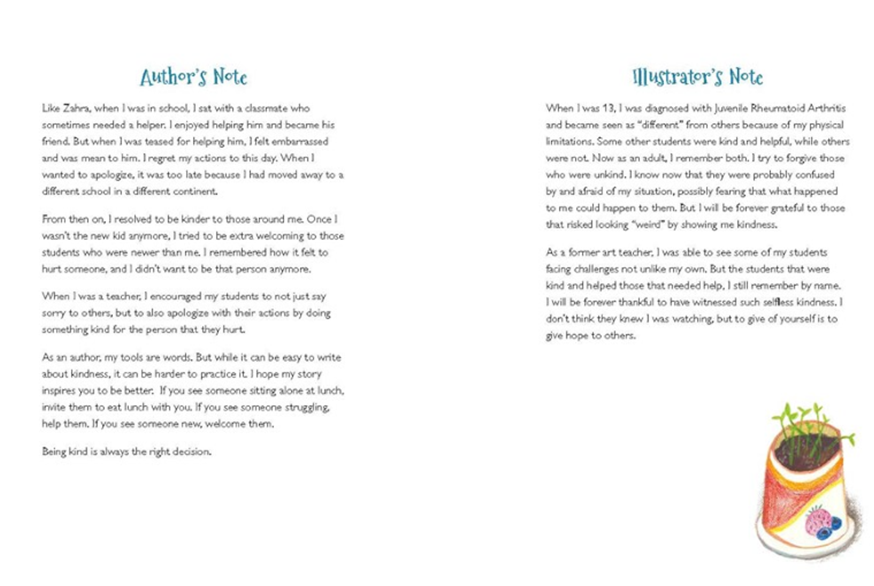
This 44 page early elementary book is absolutely beautiful: the message, the relatability, the representation, the heartfelt author note.  Reem Faruqi is brilliant.  Once again she takes something so personal to her and allows the readers to see pieces of themselves in her OWN voice narrative.  This book at it’s core is about peer pressure, but the way it stays with the reader will resonates deeply and powerfully.  Readers will remember the choice Zahra made and the way it changed not only her relationship with Kyle, but also her own view of herself, while forgetting the names of the classmates that teased her and made her question herself.  It is not the outside reprimanding that gives this book it’s strength, but the guilty conscious that such a young character has to come to terms with as she moves forward.

  i can help 3

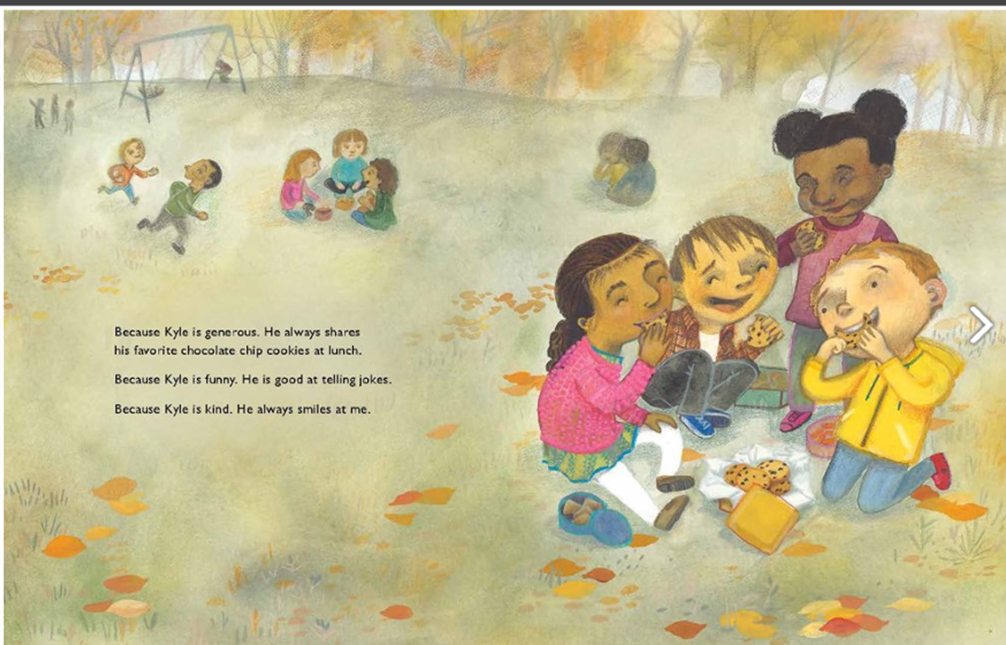
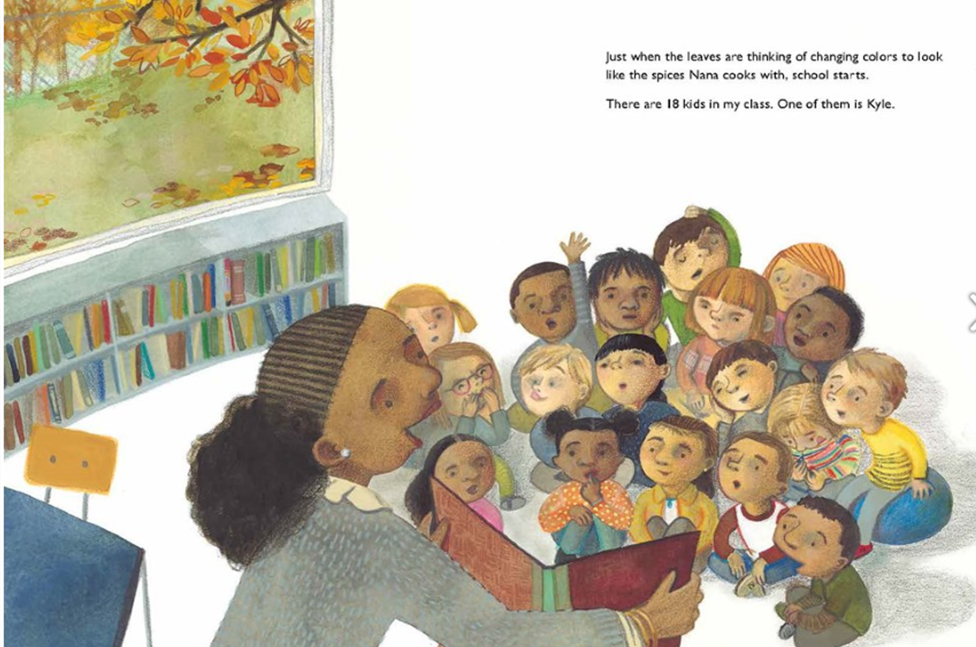
There are 18 kids in Zahra’s class in early fall, when the leaves are about to be the color of Nana’s spices.  One of the kids is Kyle.  Kyle often needs a helper, and Zahra is happy to help him with his cutting and gluing and writing.  The two have become friends.  Kyle is funny and nice and shares his cookies.

i can help 2

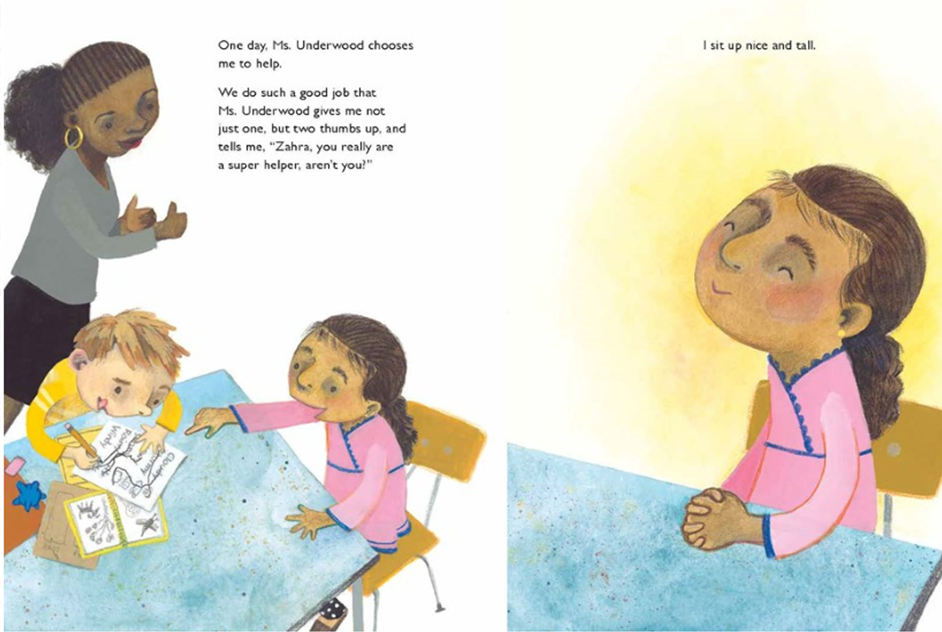
Zahra also likes the praise she gets for being such a good helper.  One day when the leaves have darkened, Zahra is climbing a tree and hears some of the girls making fun of Kyle.  She doesn’t want to listen, but her ears want to hear.  When she comes down, they ask her why she helps him.  She doesn’t really know.

i can help1

When she is helping him later, she sees the girls staring at her, and she snaps at Kyle.  The next day Ahmed helps Kyle instead.  Zahra misses being around Kyle, but he says that she is mean and he doesn’t know her any more.  Zahra doesn’t know herself any more either.

i can help 5

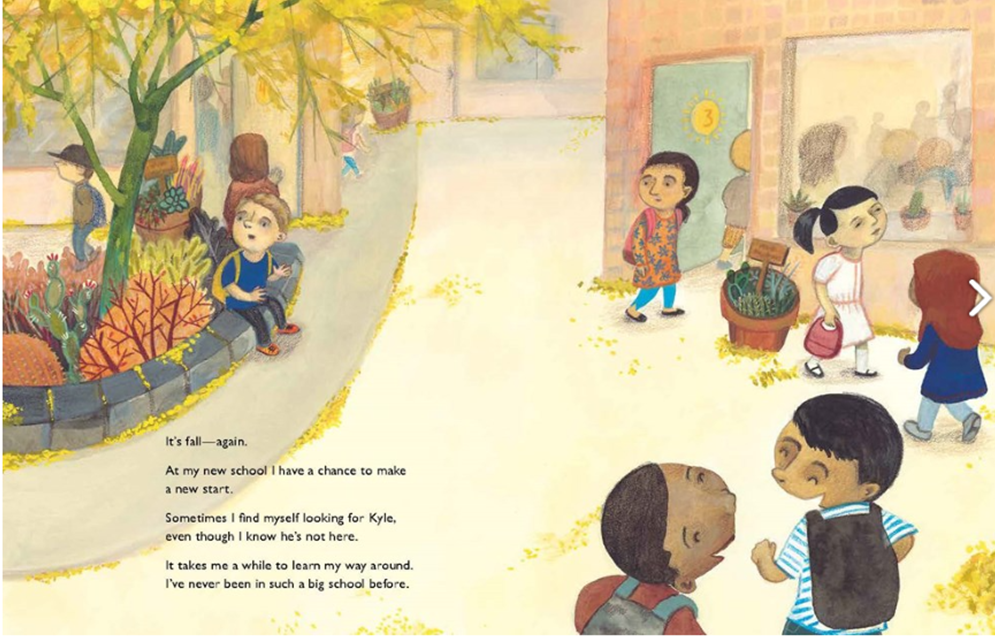
The next year finds Zahra at a new school, and when the opportunity presents itself for her to help someone, she jumps to offer herself as a helper remembering Kyle and finding her voice, one that she recognizes.

i can help8

The book is inspired by the author’s own experience, and the rawness and relatability shines through.  The illustrator also relates to the book and needing help with physical limitations.  There is nothing overtly religious or cultural other than the mention of the spices, Zahra’s and Ahmed’s names, and the term for Zahra’s grandfather.  The diverse kids in the classroom and the universal messaging make this book a must read for every kid and big person.  Be kind, always be kind.

i can help 9

A Sweet Meeting on Mimouna Night by Allison Ofanansky illustrated by Rotem Teplow

Standard
A Sweet Meeting on Mimouna Night by Allison Ofanansky illustrated by Rotem Teplow

img_0532

A story about the Morrocan Jewish holiday, Mimouna, that marks the end of Passover introduces readers to a small but growing Jewish celebration from Northern Africa.  Stemming from the historical fact of Jews often borrowing flour from their Muslim neighbors to make the traditional Maufletot, thin pancakes, after a week of not eating flour.  The story focuses on a Jewish girl and a Muslim girl meeting each other, celebrating with each other, and finding similarities between Ramadan and Mimouna.  Over 36 pages, kindergarten to second grade readers will get an introduction to two different faith holidays and see that friendship and kindness are possible everywhere.

img_0526

It is the last day of Passover in Fes and Miriam is tired of eating quickly baked unleavened matzah crackers, she is ready for the sweet dough pancakes of Mimouna, and she is willing to help her mom make them.  But before Passover, all flour was removed from the home, and she asks her mother where they can get flour tonight before the  party.

Mom and Miriam begin to walk.  They leave the part of town that Miriam is familiar with and Miriam sees a building with a dome and minarets.  “What is that?” she asks.  Her mother replies, “It is a mosque, where our Muslim neighbors pray.”

img_0529

They then enter a courtyard where a woman and her daughter about the same age as Miriam appear and invite them in for tea.  The two women say salaam and kiss each other’s cheeks.  Miriam’s mom gives the other lady a jar of fig jam and invites her and her family to come to the house to celebrate Mimouna with them. When the women are done drinking tea, Jasmine is asked to go to the store room for two bags of flour and Miriam is sent to help.  Jasmine is told one bag is for them, and one is for their guests.  The two shy girls go get the flour, and when Miriam trips, Jasmine catches the bag just in time.

img_0525

On the way home, Miriam has so many questions about the lady and how her mother knows her and how come they don’t have a jasmine vine. But, when they get home there is a lot of work to be done before the guests start to arrive.

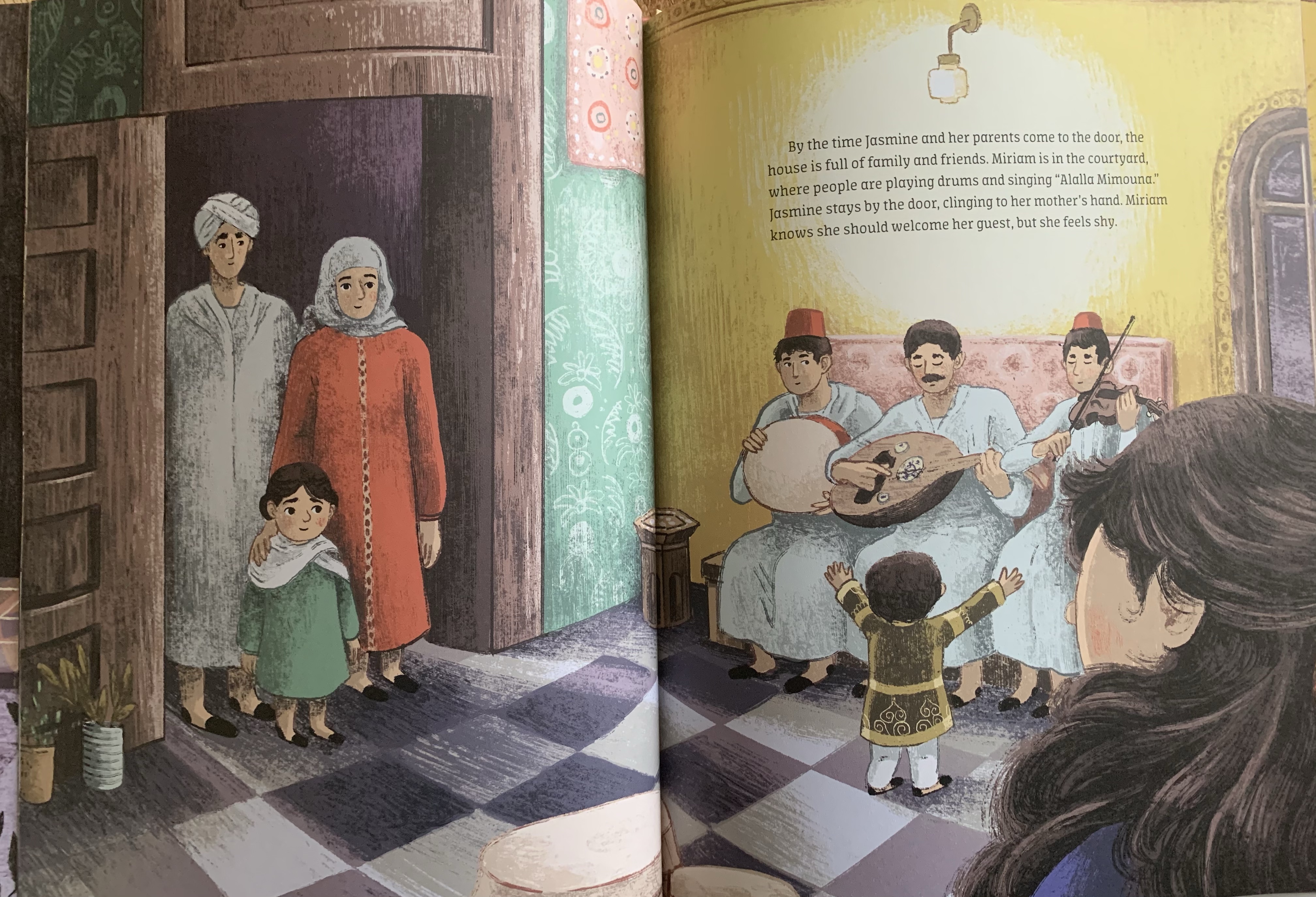
By the time Jasmine and her parents come the house is full and music is being played and songs are being song.  The first plate of maufletot goes to Miriam’s grandfather, and when she trips and they go flying it is Jasmine who catches them.  The girls giggle and Miriam teaches Jasmine to play the song, “Alalla Mimouna” on her tambourine.

img_0524

The party moves from house to house and at one home green wheat is dipped in milk and sprinkled over everyone’s head as a blessing for the upcoming year.  By the time the girls get back home they are tired, and as they share one last pancake, Jasmine tells Miriam about the nightly feasts of Ramadan after a day of fasting.  She invites Miriam to join them, and Mariam is excited, but Mariam’s mom explains that they are moving to Jerusalem.

img_0527

The following year on Mimouna Night, Mariam heads to the store to buy flour, but thinks of her friend Jasmine back in Morocco as she smells the jasmine growing in her home, and wonders if her friend is also thinking about her.

img_0528

The author is an Amerian Israeli, and I was nervous that there would be political overtones, but she deliberately wanted to avoid that and focus instead on presenting this little known Jewish holiday in an interfaith manner.  There is an info section at the end of the book explaining Mimouna and a recipe for moufletot.  In author interviews you can read more about how the story came to be, and what her hopes were in telling it: https://jewishbooksforkids.com/2021/03/14/interview-with-allison-ofanansky-author-of-a-sweet-meeting-on-mimouna-night/

World in Between: Based on a True Refugee Story by Kenan Trebinčević and Susan Shapiro

Standard

world in between

I’ve read a lot of refugee stories over the years about people leaving a variety of countries, and while each one, no matter the quality of writing, is heartbreaking and important, this middle grades 384 page historical fiction/ fictionalized biography account stands out because it is written so incredibly well.  The story shows young Kenan’s life before the Balkan War in Bosnia, a year of the war, life in Vienna, and then in the USA.  The book is personable, relatable, and informative.  I had a very hard time putting it down despite knowing that the main character, the author, obviously survived; as the story is engaging and powerful and doesn’t rely on the horrific war to carry the character building and story arcs alone.  The character identifies as Muslim, but doesn’t actively practice or know much about Islam, sports and art are highlighted as universal activities that bridge cultures, language, and foster respect.  The book mentions drinking, kissing, hints at a crush, and features bullying, death, killing, and torture.  Suitable for mature fourth graders and up.

SYNOPSIS:

Kenan has a good life in Brčko, Yugoslavia, he is good at soccer, is an amazing artist, has a bunch of friends, a teacher he likes, loving extended family, his father owns a popular gym, and his mom is an office manager, sure his older brother picks on him sometimes and he gets called, “Bugs Bunny” because of his large protruding teeth, but when it all comes crashing down because of his religion, he is at a loss as to why it suddenly matters.  While neighbors and classmates start sneaking off in the night fearing that the Serbs are going to kill all the Muslims and Catholics, Kenan’s dad holds out hope that he is well loved by everyone at his gym, no matter their religion.  But the family waits too long to leave, and friends, neighbors, classmates, and teachers quickly turn in to enemies.  Kenan’s buddies threaten and abuse him, his favorite teacher holds him at gun point, and neighbors shoot holes in their water cans.  The family ultimately has to hunker down in their apartment without much water, food, and electricity.  They get to Kenan’s aunt’s house in a safe zone, but the men have to register and his father and brother are taken to a concentration camp.  Somehow they get released, but the family’s troubles are just beginning.  Along the way they will be betrayed by people they thought they could trust and helped by people that they thought hated them- no matter the country, no matter people’s religion.  The family will get to Austria and to Kenan’s uncle, but even being away from war doesn’t give them peace.  They don’t speak the language, they can’t work, they must take charity.  Eventually they find themselves in Connecticut, and while some American’s make their difficult lives even worse, some prove to be absolute angels to a family that is trying to make a life in a new country while the war wages on back home.

WHY I LIKE IT:

I love that stories about the Balkan War are becoming more and more available, it is long overdue, and I’m glad that through literature, authentic voices are keeping the memory of the horrific acts from being forgotten.  The story is compelling, a few threads I wanted resolved that weren’t (more information on his grandma, his uncle in Vienna, his aunt that they left behind), but the narrative is rich and does a great job staying relevant to its target audience and not overwhelming the reader with politics or sensationalized emotions.  The rawness of the experience being processed by the 11 year old protagonist is impactful enough and doesn’t need to be exaggerated.  The book is not depressing, in fact there is a lot of joy and hope and kindness.  

I love that Kenan acknowledges that he has been to the mosque once with his uncle, that they don’t fast in Ramadan, but they do celebrate Eid.  It hints that at times they may drink, but they are good about not eating pork, although they eat jell-o. In shop class in the United States his first project is a replica of the mosque in their neighborhood.  Their names are known to be Muslim in Bosnia, and that is enough for them to endure the ethnic cleansing, belief or adherence, is not a factor.

I love that sports and art are universal.  Math is too, but Kenan isn’t good at math.  He wins accolades in each country for his drawings, and gets respect from classmates for his athletic ability.  Not speaking the language is hard, but being able to prove yourself in other ways is a salvation for Kenan.  He is on teams, he goes to the World Cup, he gets in fights, he is honored in the newspaper.  Life in general grounds him, yet soccer and drawing give him a release to excel in.

I love the diversity of everyone in each country.  Heroes are seen in immigrants, minorities, Americans, a Methodist preacher, an Israeli bus driver, a Serb bus driver, a Serb soldier and his family, a .  There are awful immigrants, and white Americans, and Serbs- it really shows that some people are just good and kind, and some people are not, it isn’t linked to any faith or country or culture or neighborhood or skin tone.  I was surprised that at no point were their other Muslims.   We got to know so many wonderful Bosnians in the 90s as our family helped them get settled, that I was really hoping there would be some in Connecticut working with the churches that helped settle Kenan and his family.  That isn’t a critique of the book, though, just my disappointment in my fellow Muslim-Americans for not stepping up enough in real life to make the literary cut, I suppose.

FLAGS:

Violence, torture, death, bullying, killing, shooting, hints at sexual assault, physical assault, ethnic cleansing, genocide, war.  It mentions that Kenan’s brother got to kiss a girl and have a drink, but nothing more detailed than that.  Kenan has a crush on a girl, but it manifests periodically as him just wondering if she survived and is ok.

TOOLS FOR LEADING THE DISCUSSION:

This book is on a short list for me to use next year for middle school book club.  It is a little below grade level for my group, but book club is supposed to be fun and not a burden, so I think it will be perfect.  The kids are going to absolutely love Kenan.  He is so relatable and personable, that I don’t think any supplemental questions or discussion points will be needed.  Kids will have lots of thoughts about Islam in Bosnia, friends turn enemies, restarting in new countries again and again, anger at people that didn’t step up, glee when people did, jealousy when he gets to go to a World Cup game, and hopefully empathy for so many who’s world changed so quickly.  The biggest takeaways will be how it didn’t take much to help, and I hope all readers will recognize that we can be kind and we can help and we can respect and care enough to truly help others.  

Ruby in the Sky by Jeanne Zulick Ferruolo

Standard
Ruby in the Sky by Jeanne Zulick Ferruolo

ruby

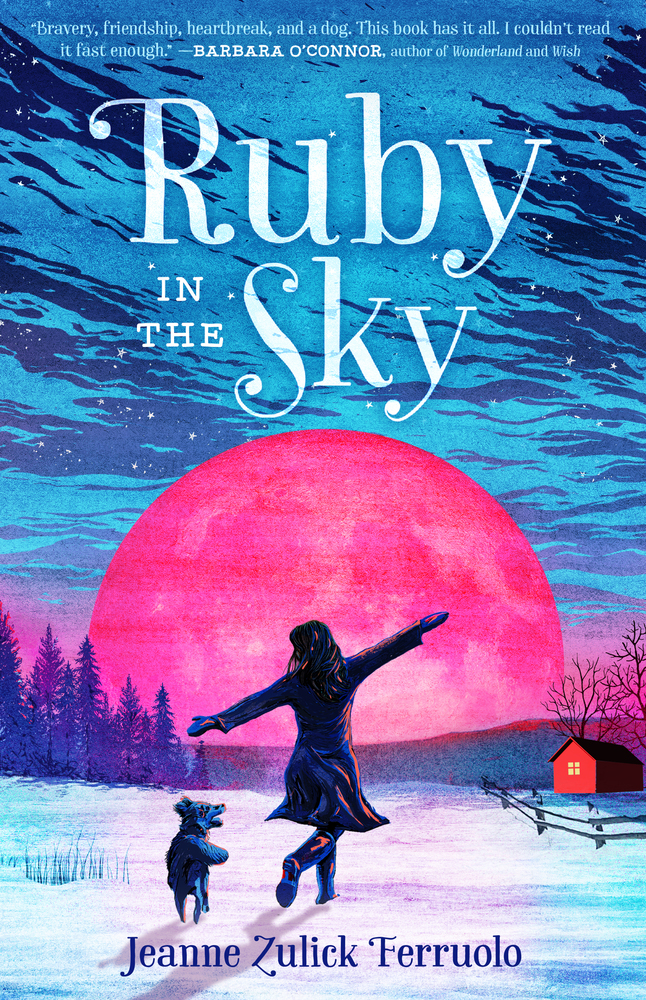
The author of this wonderful middle grades novel reached out to me after I reviewed her book A Galaxy of Sea Stars, to let me know that this book too has a Muslim character.  As we exchanged emails back and fourth I learned more about her work with Integrated Refugee and Immigrant Services in New Haven Connecticut (IRIS), and the impact the people she has met there have on her and her writing (the new paperback version of Galaxy has bonus content that reflects this).  Allies and advocates are gifts for Muslims and for our fictional representation.  The details and warmth of her Muslim character, Ahmad, a Syrian refugee, is seamless and accurate, and while this is not his story, his support of the main character helps normalize Muslims as friends and in daily life.  He takes time out for his five daily prayers, he refuses to shake a female’s hand, and he uses the word inshaAllah.  The story is Ruby’s though, and her journey pulls you in from the first chapter and leaves you cheering for her long after you close the book.  Over 295 pages (AR 4.1) you witness Ruby find her voice, dare to not be invisible, accept friendship, and help others.   

SYNOPSIS:

Ruby has just moved to frozen Vermont from their last “forever home” in Florida.  Originally from D.C., Ruby and her mom have been moving to places they have vacationed to try and find joy.  Since Ruby’s father, a police officer, died, the two of them have been broken and barely surviving.  The only constant is a cousin, Cecy, who helps them out and convinces Ruby’s mom to come back to her childhood town of Fortin, and to be closer to her.  The winter is bitter, the house is freezing, and even with Cecy arranging for Ruby’s mom to have a job, it only takes a day for Ruby’s mom to be arrested, fired, and for Ruby to be on her own.  With only a garbage bag full of belongings, and some thrift store finds for warmth, Ruby’s plan is the same as it has been in every other town they have landed in: keep her head down and be invisible.  Ruby’s dog, Bob, though has other plans, and when he takes off into a neighbor’s yard filled with ‘No Trespassing’ signs a meeting with Abigail takes place that will change Ruby.

Abigail Jacobs is known in Fortin as the “Bird Lady.”  She has a home, but lives in a shed on her property, dresses in layers of scraps and scarves, feeds the birds, and keeps to herself.  The rumor is that she killed her husband and daughter, everyone knows it, it could just never be proven.  There are also stories that she has a moon rock.  When Ruby meets her she is angry and cold, but the way she interacts with the animals and her knowledge of the moon, keeps her intrigued and even though Ruby’s mom forbids her from visiting Abigail, Ruby and her develop a friendship of sorts.

At school Ruby’s plan to go unnoticed is challenged by Ahmad Saleem, a refugee who lives with his uncle a grocery store owner and is teased by a few classmates for his accent and disappearances at lunch time when he goes to pray.  He is kind and and determined to help Ruby and immediately declares her his friend.  Ruby tries to avoid him, but eventually he starts to win her over.  With the upcoming wax museum, a Fortin favorite, drawing near, Ruby tries to explain to her teacher that they will be leaving back to D.C. before the final presentation, but Mr. Andrews isn’t letting her off and somehow she finds herself researching Michael Collins, the astronaut that stayed on the space shuttle alone to circle the dark side of the moon while Neil Armstrong and Buzz Aldrin took their historic walk. 

With the mayor singling out Abigail with his new ordinances, Ruby’s mom deciding not to take the plea deal and fight her case at trail, the short cold days, the desire to return to D.C., the wax museum approaching, and Ruby needing answers, Ruby at some point will have to stand up and speak out.

WHY I LIKE IT:

I love that the story unfolds in layers.  You don’t know where it is going, but the slow peeling away shows the complexity of people and situations.  The book doesn’t shy away from confronting stereotypes and looking beyond appearances.  I like that there is some discussion of Islamophobia, when Ahmad is overheard speaking Arabic for example, but the character that needs the most standing-up for is an elderly white woman.  The small pivot allows the book to avoid a familiar theme and shows the reader a Muslim shop owner helping the tattered woman that the town fears and resents. I enjoyed the strong reminder of how women and science and their careers have not been widely accepted until recently.  I think many readers will be surprised that much of Abigail’s rumors stem from her being a brilliant educated woman that society struggled to respect then and now.  I absolutely love the science and space aspects that bring Ruby Moon, her neighbor, and her class project together.

I wish there was a little bit more about her mom and her relationship at the end.  The disconnect in their relationship warranted the sparse information in the majority of the story, but I needed some hope for the two of them.  Same for the relationship with Cecy.  I get that Ruby doesn’t have a good relationship with her mom’s cousin, but as Ruby grew in so many ways, I wish that her appreciation of what Cecy has done for her and her mom would have also been realized in some capacity.

FLAGS:

Ruby being dishonest. Death, injury of a pet, physical assault, bullying, teasing, Islamophobia.  

TOOLS FOR LEADING THE DISCUSSION:

I probably wouldn’t focus an entire book club on this book, but I think it would be a great addition to a summer reading list.  The insight into a character trying to find herself within her own family and experiences with connections to history and science would be a benefit to any child to read and reflect upon.

Baddawi by Leila Abdelrazaq

Standard
Baddawi by Leila Abdelrazaq

Baddawi-cover

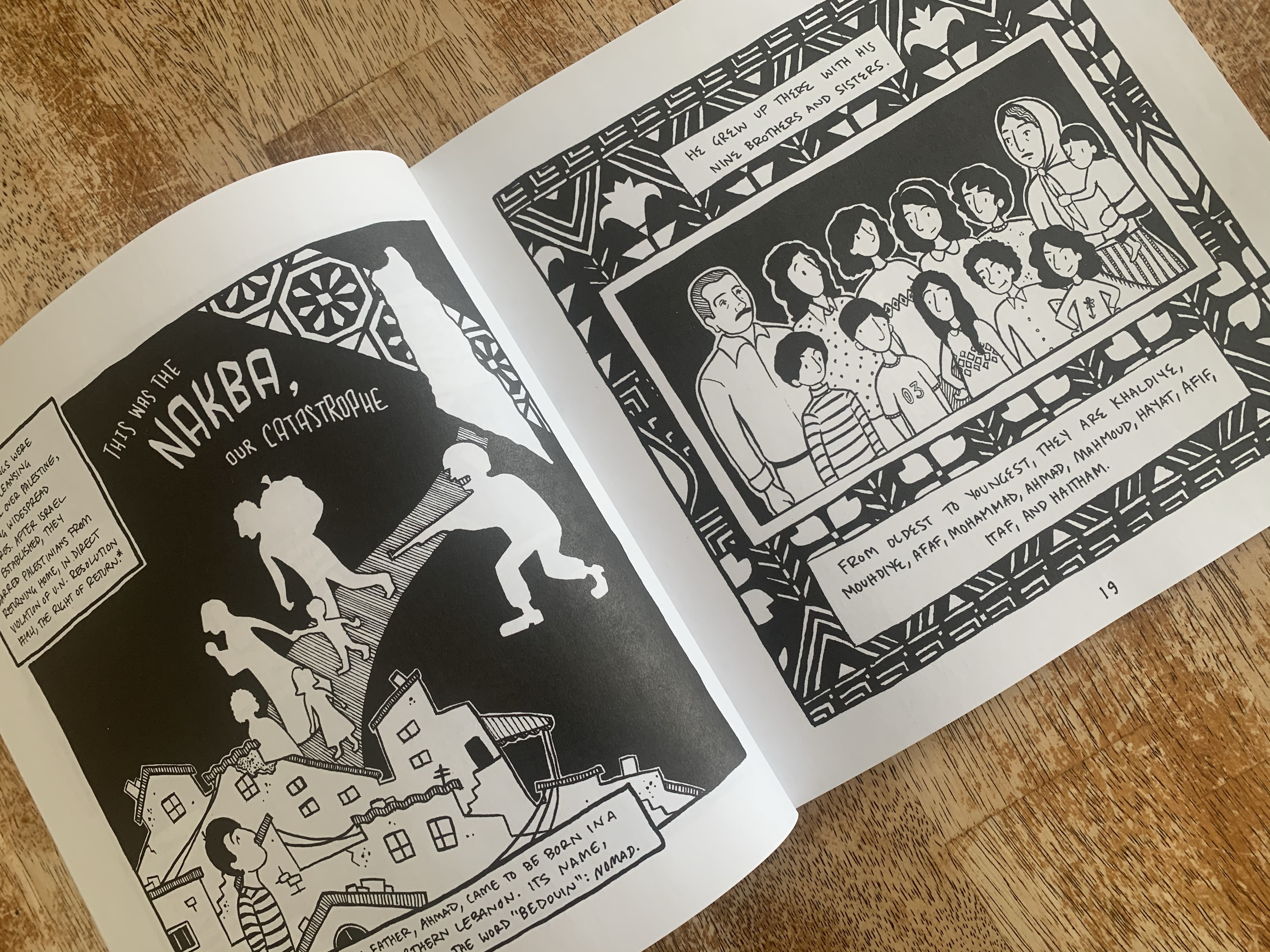
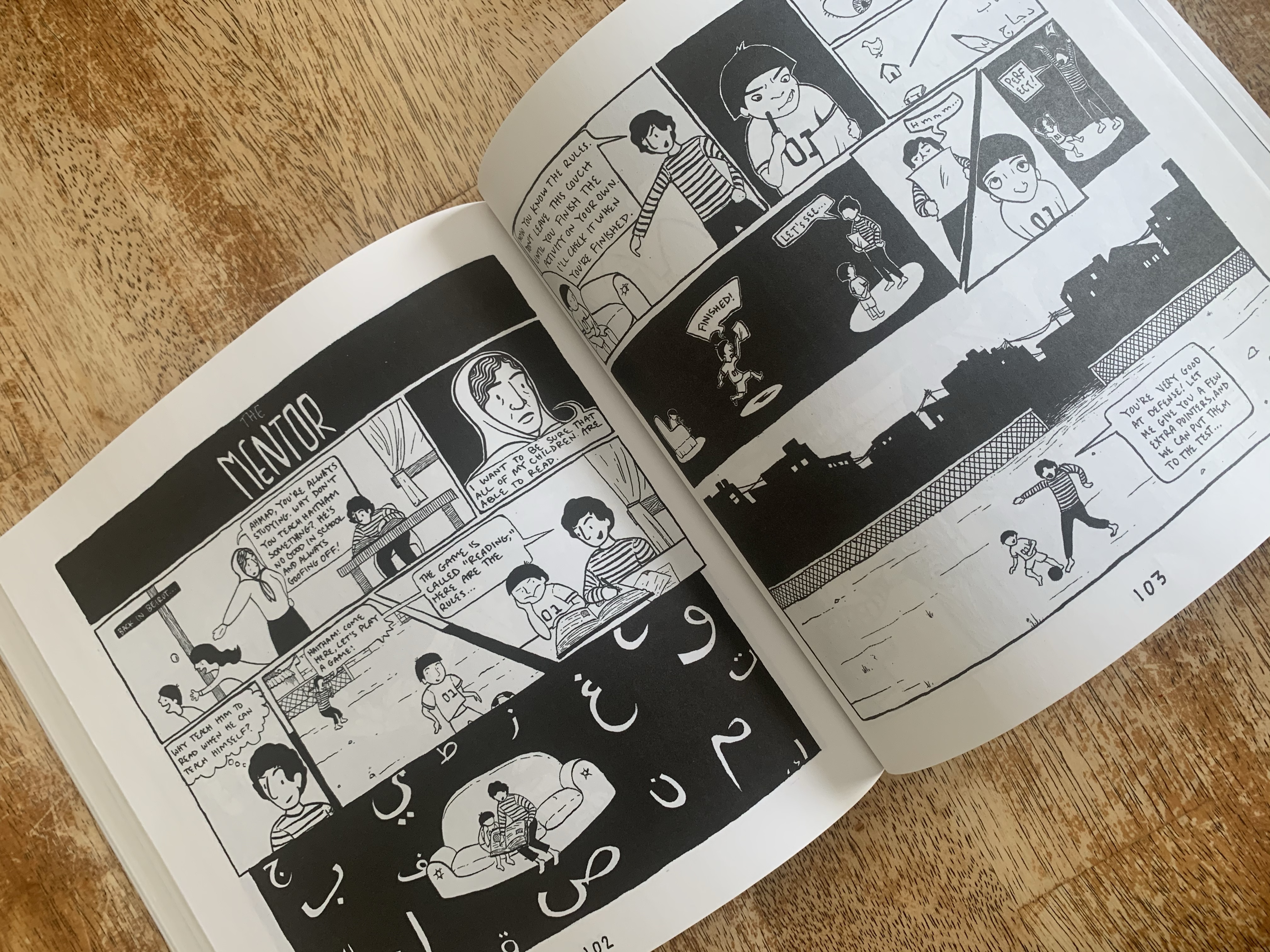
This 8.5 x 8.5 middle school graphic novel biography tells a powerful story of a young boy coming of age and striving to find his place in the chaos of the Nakba and its aftermath.  Over 128 pages the reader will learn and be outraged about the displacement and genocide of so many Palestinians as they see the events through Ahmad’s eyes and relate to his dreams and experiences despite the terror around him. The book has violence, destruction, death and mentions rape, yet the humanity shines through as it is also heartfelt and memorable.  I had my 14, 12, and 10 year olds read it and we have discussed it at length in context to what they already know about Palestine and the ethnic cleansing occurring.  It is a seamless mix of history and character driven narratives brought to life by the black and white illustrations of the author/illustrator’s family history.

img_1656

SYNOPSIS:

There are 10 children in the author’s father’s family, and her father, Ahmad, was born in a refugee camp in northern Lebanon, called Baddawi.  The story starts on October 29, 1948 when Safsaf was ethnically cleansed.  Ahmad’s father, the author’s grandfather had been in Akka at the time of the massacre, and her grandmother hid from the Israeli soldiers, the family, once reunited, would escape for a refugee camp, hoping that they would one day return.

We first get to know Ahmad as he starts first grade in Baddawi.  Things do not start well for the little guy as right away he gets teased by other students, his class is too large so he is selected to be joined with a girls class, and he doesn’t have soccer cleats so he isn’t allowed to play soccer, luckily he gets two good crayons, unlike his friend who gets a white one.  Ahmad is identifiable by his striped shirt that he wears throughout as a nod to Handala, the boy depicted with a striped shirt with his hands clasped behind his back and his face not shown.  The artist said his face would be revealed when Palestine was free, sadly the artist, Naji al-Ali passed away, and Palestine is still occupied.

Ahmad desperate to purchase soccer cleats devises a business plan that his mother takes as gambling and quickly puts an end to, in exchange she offers to pay him if he helps her collect and prepare za’atar.  It isn’t as fun, or as lucrative, but they family is busy packing up to return to Palestine.  Unfortunately the Naksa, the setback, the six day war occurs, and more Palestinians are ethnically cleansed and the families cannot return. Ahmad and all those in Baddawi carry on, playing, celebrating Eid, trying to claim normalcy.  The camp however, is not safe and soldiers raid the camp killing PLO leaders and innocent people in their way.  With no option but to keep on keeping on, these acts of violence are often taken in stride. It is so hard to believe, but what else can they do, the children still play, deal with bullies, and cope with universal struggles in addition to being shot by rubber bullets, and fearing cluster bombs and shellings.  At one point Ahmad and his siblings are left in Baddawi to finish school while his parents are in Beirut.

When the family is reunited in Beirut, Ahmad is in a better school, but violence follows as Mossad agents start raiding PLO homes in Lebanon.  Ahmad goes back and forth between Beirut and Baddawi, wherever he can go to school.  His favorite library is the one at the American University in Beirut and he hopes to attend school there, but without connections, he is at a loss to come up with funding.  His intellect finally lands him an opportunity to leave the Middle East to pursue higher education, he ends up in the United States, and when the story ends, readers are left hoping that everything works out even knowing it will be 10 years before he can return home to see his family.

img_1657

WHY I LIKE IT:

I love that the harsh horrific life is not shied away from in a war, but the little things are just as important in shaping and showing Palestinians to be resilient and culture rich.  I love how the concept of Handala is included and amplified.  The book is at times funny, and at other times devastating.  The connection to the characters is pretty remarkable, in such a relatively short book, and I am fairly confident it will be pulled off the shelf and thumbed through often.  I really wanted to know if the girl in the book that Ahmad left behind ended up being the author’s mother, or if he married someone else, but I couldn’t find it by Googling.  This book is truly powerful, and I highly recommend it.  There isn’t a lot of religion, the family is shown praying on Eid and celebrating.  It mentions the diversity in Beirut, but nothing too detailed.  Similarly, there isn’t a lot of political detail.  There is a glossary at the end, some actual photographs of Ahmad and his family.  At the beginning of the book there is a preface about Handala and how Ahmad represents more than just her father’s experience as well as information about the tatreez patterns on the pages and a map.

img_1658

FLAGS:

There is violence, torture, killing, death, bullying, and possibly gambling.  The book mentions that women were raped, but it isn’t detailed.  The war is ever present and depicted, but it isn’t sensationalized.  Ahmad and a girl study together and the family wants them to get married, but Ahmad opts instead to leave for school, nothing inappropriate.

img_1661

TOOLS FOR LEADING THE DISCUSSION:

This book might not work as a book club selection, but I hope middle school children and their teachers or parents will encourage them to read this book and think about it.  Imagine if it was their homes that were taken, imagine what they would do, and how they would manage, and to be aware that it is still going on and that we cannot be silent.

img_1660

Never Give Up: A Story about Self-Esteem by Kathryn Cole illustrated by Qin Leng

Standard
Never Give Up: A Story about Self-Esteem by Kathryn Cole illustrated by Qin Leng

img_9838

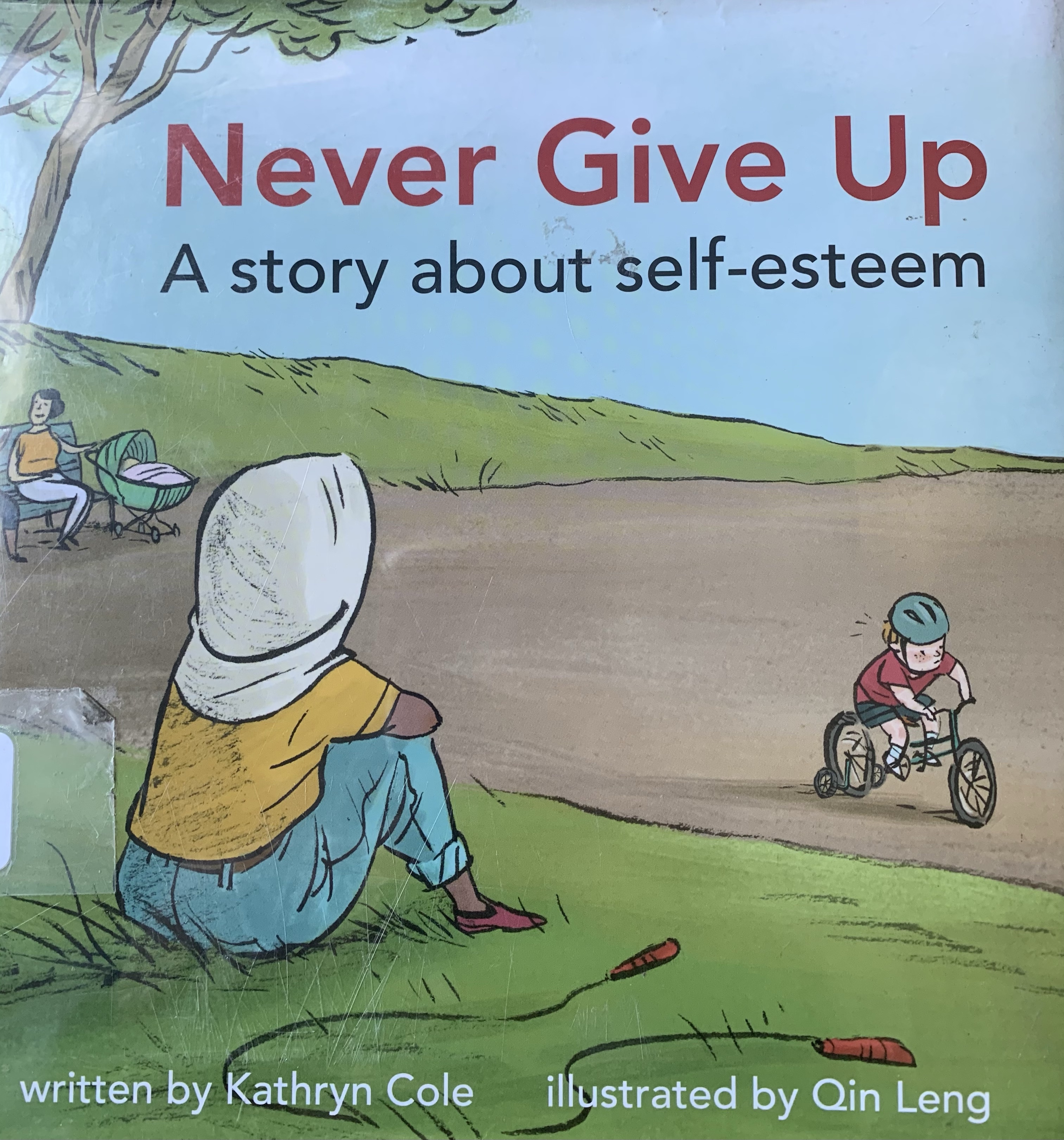
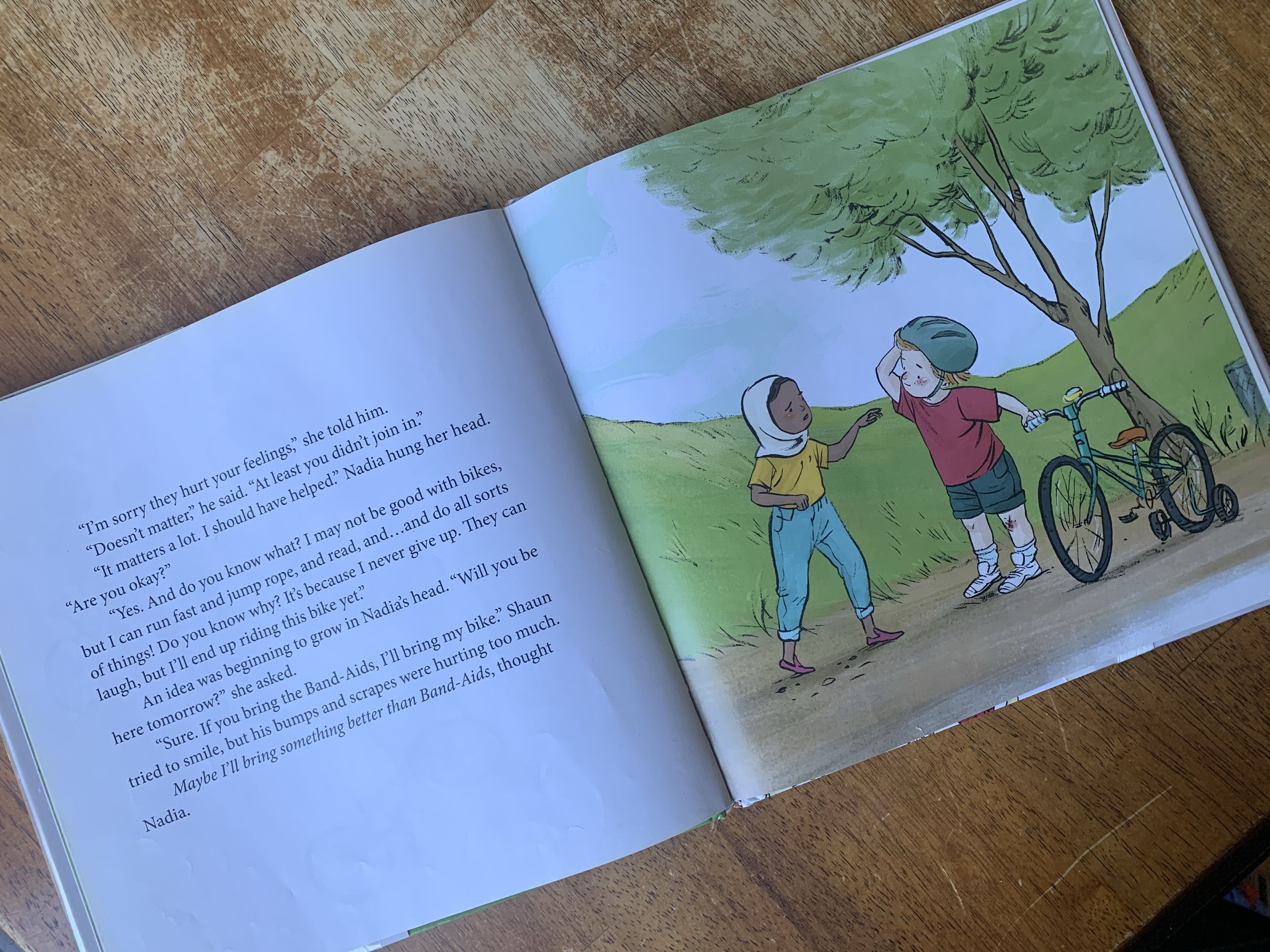
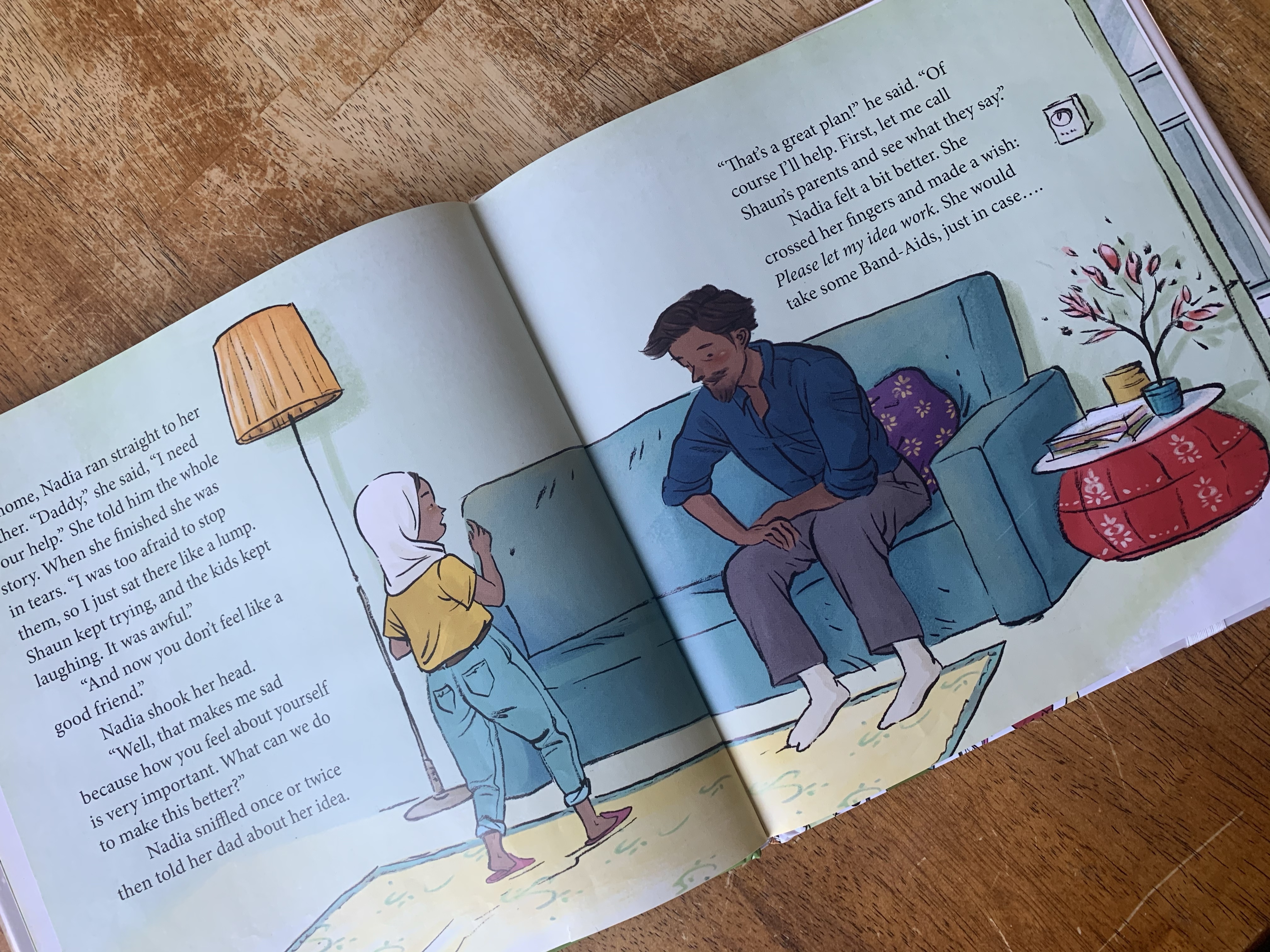
This first through third grade teaching series highlights different life lessons and concepts and features diverse characters. I reviewed a book in the series earlier with a Muslim character, not realizing that there was also one with Nadia in the lead. The 24 pages show her in hijab both at the park and at home although she wears short sleeves and is much younger than puberty, when covering becomes required. Neither the author, nor the illustrator seem to be Muslim, and religion is not present in the book, other than Nadia’s scarf. It is worth mentioning that Nadia crosses her fingers and makes a wish that her plan works, something most Muslims would say inshaAllah for and possibly want to be made aware of in a book like this. Overall the message is strong, and would be a great book to read and discuss with a child, Nadia and her friend Shaun have noteworthy traits that we can all learn from.

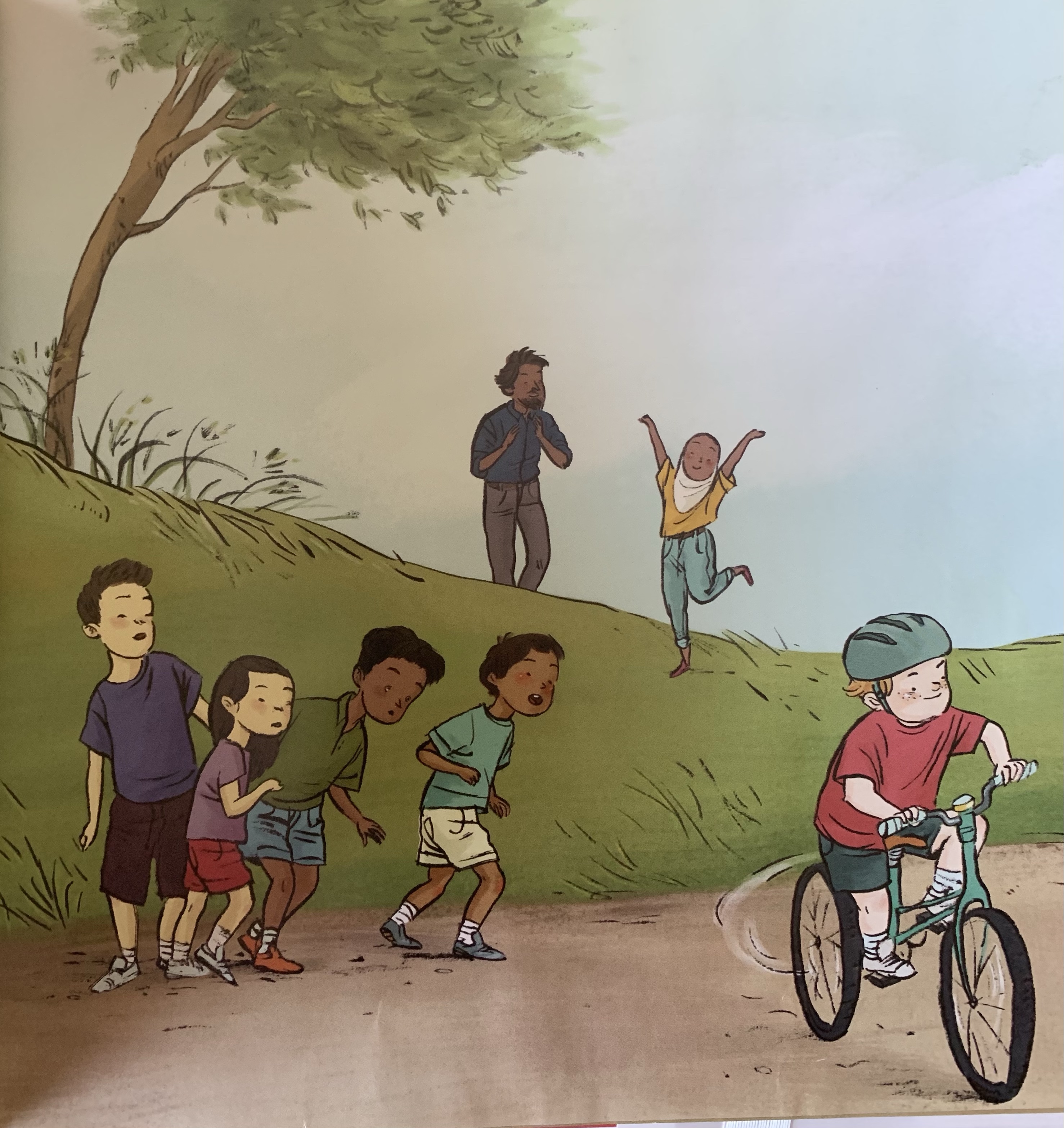
Nadia is heading to the park to practice jumping with her new rope. She stops when she sees her friend Shaun riding his bike with training wheels. She has been riding on two wheels for a while, and even on training wheels Shaun is struggling. Kamal, Joseph, Lin, and William start teasing Shaun, and Nadia is upset, but not brave enough to do anything about it.

After crashing a few times, the crowd grows tired of laughing at Shaun and Nadia goes down the hill to check on him. She apologizes that the other kids were teasing him, he takes it in stride and thanks her for not joining in. He also lists off things he is good at. He is determined, and Nadia has an idea. The two agree to meet back at the park the next day.

Nadia is upset when she gets home. She tells her dad the whole story and how she wishes she was a better friend. She then talks to her dad about her plan, and gets him to agree to help, her dad checks it off with Shaun’s parents and the next day they all meet at the park to take off the training wheels and teach Shaun how to ride with two wheels.

After multiple attempts and lots of cheering, Shaun is riding his two wheeler. He didn’t give up! Now it is Nadia and her dad’s turn to try jump roping, and after some struggles, it is the kids cheering on Nadia’s dad and encouraging him to try again.

The end of the book has Tips for Grown-Ups about how to develop and support children’s self-esteem.

The Girl Who Stole an Elephant by Nizrana Farook

Standard
The Girl Who Stole an Elephant by Nizrana Farook

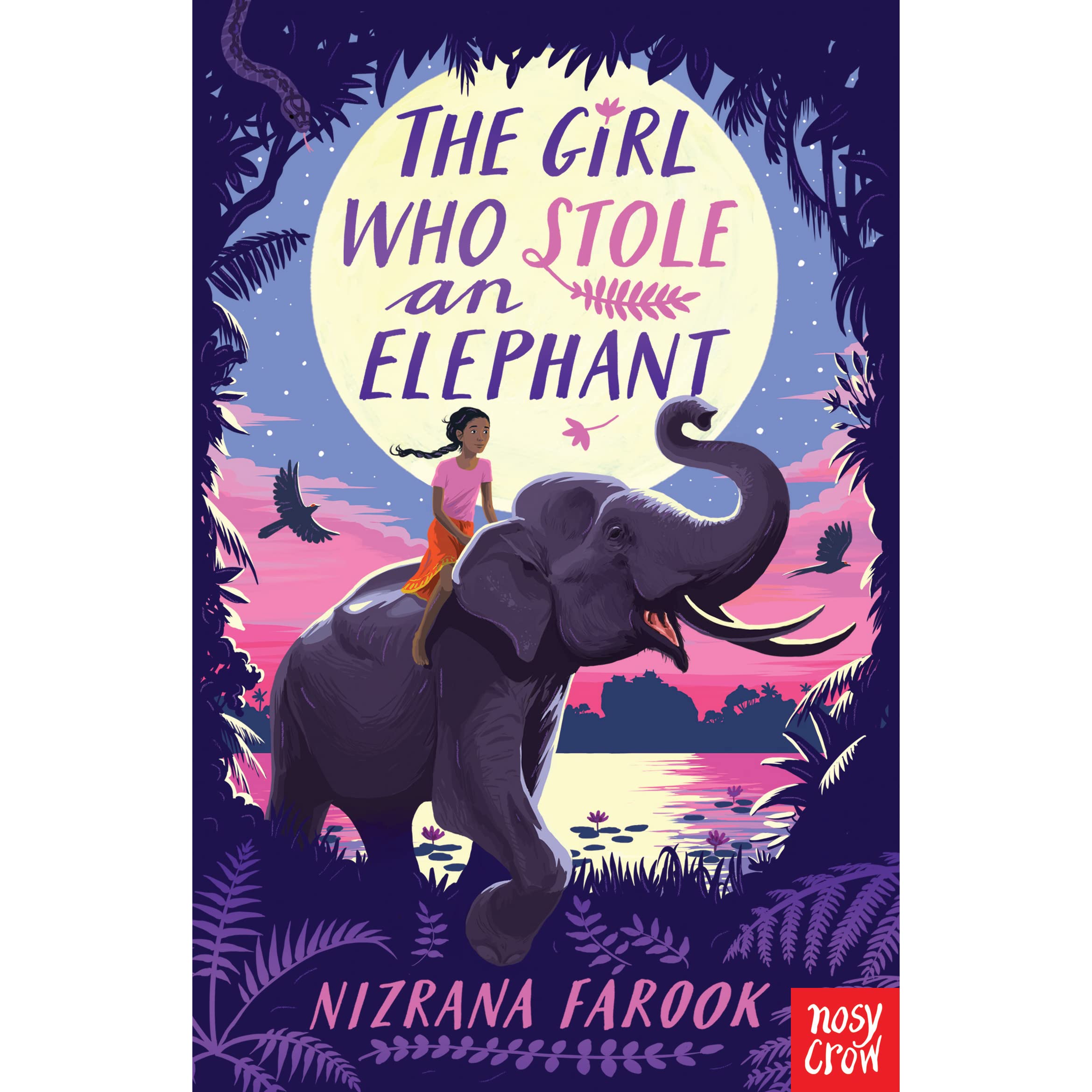
elephantI have to admit this 240 page middle grade OWN voice book had me invested and glued to the pages.  I was swept away to Sri Lanka and in disbelief at the boldness, cleverness, and spunkiness of the Robin Hood-esque 12-year-old protagonist.  I could not put it down as my head worked over time to figure out how this trio of children, one being a Muslim girl, was going to get out of the heap of trouble they had caused.  Yes, admittedly it wraps up a bit too quickly and simply, the main character Chaya doesn’t learn her lesson and is a terrible friend, and there isn’t a good moral of lying and stealing being bad.  But all that aside, the book is a fun adventure that while written pretty straightforward and clearly, is rich in adventure, culture, and excitement for second to fourth grade readers (and 40 year old moms that love strong girls).
SYNOPSIS:

Chaya is the daughter of a tribal representative, whose mother has passed away.  She goes to school, attends the temple once a week to learn Sanskrit, and at dawn is known to steal things to give to those in need.  At night time, people are on guard, expecting trouble, but dawn seems to be the perfect time to take what she needs from people that won’t even notice.  The book starts out with her stealing jewels from the Queen with the hopes of helping a friend who was bitten by a crocodile get medical help in the next town over.  The people in Sarendib have an unjust king, and stealing from his wife to help take care of people that need assistant is a job Chaya takes seriously.  Her heart is in the right place, but when a guard sees her she stops to visit a friend who works in a wood shop to hide the jewels until the heat dies down.  The box they hide the stolen goods in is purchased by a young Muslim girl, and now Chaya has to steal them back from her to get them to people that are in need.

The chain of events is just getting started, and when the jewels are discovered the wood working Neel takes the blame and is imprisoned, and the new girl in town, Nour, is determined to help free Neel from prison and save the villagers from being tormented by the royal guards.  Chaya devises a plan to free Neel from the palace dungeons, but nothing ever quite goes to plan and all the prisoners are freed.   As she runs to escape her own doom, she steals an elephant to get away, the king’s elephant.

The entire story is a series of follies and at each turn the children have really good intentions, they just keep snowballing into situations beyond their control with the stakes constantly multiplying.  I really don’t want to give it away, but they might just bring down a monarchy as they tromp through the jungle on an elephant, accidentally burn down villages, and find that even though Nour is a wealthy meat eater, they can in fact be friends.

WHY I LIKE IT:

I love that the story is outrageous, yet grounded.  I was sucked in from the first few short chapters and didn’t look back.  Chaya is oh so plucky and her fallibility and flaws make her so endearing.  She is a bit of a mean girl to Nour, but I think she shows growth.  The slight raised eyebrow regarding her, is that she didn’t learn some grand lesson, and in fact is possibly emboldened by her thieving and getting away with it.  There probably should have been some humbling at the end, but she is bold and outspoken, and not one for regrets.  I absolutely love the letter she left her father owning up to her role in the whole hullaballoo, and as an afterthought acknowledging that she skipped two days of school.  She is a cheeky one, but her heart is huge and she has her own sense of integrity that is unwavering.

I like that Nour is acknowledged as being Muslim, eating meat, and going to mosques before she moved.  It doesn’t articulate that Chaya doesn’t like her for her faith, but it isn’t helping the two girls befriend each other either.  I love the elephant, and the plants, and fruits, and animals that bring the story to life.

FLAGS:

Lying and stealing. Some destruction of property.

TOOLS FOR LEADING THE DISCUSSION:

I can’t see me doing this as a book club selection, it is just too young of a target audience, but it would be a blast to read aloud to a second or third grade class, or to assign in a classroom setting.  The chapters are really short that early chapter readers will feel accomplished when they complete the book, and the subject matter will compel them to keep turning the pages to find out what happens next.

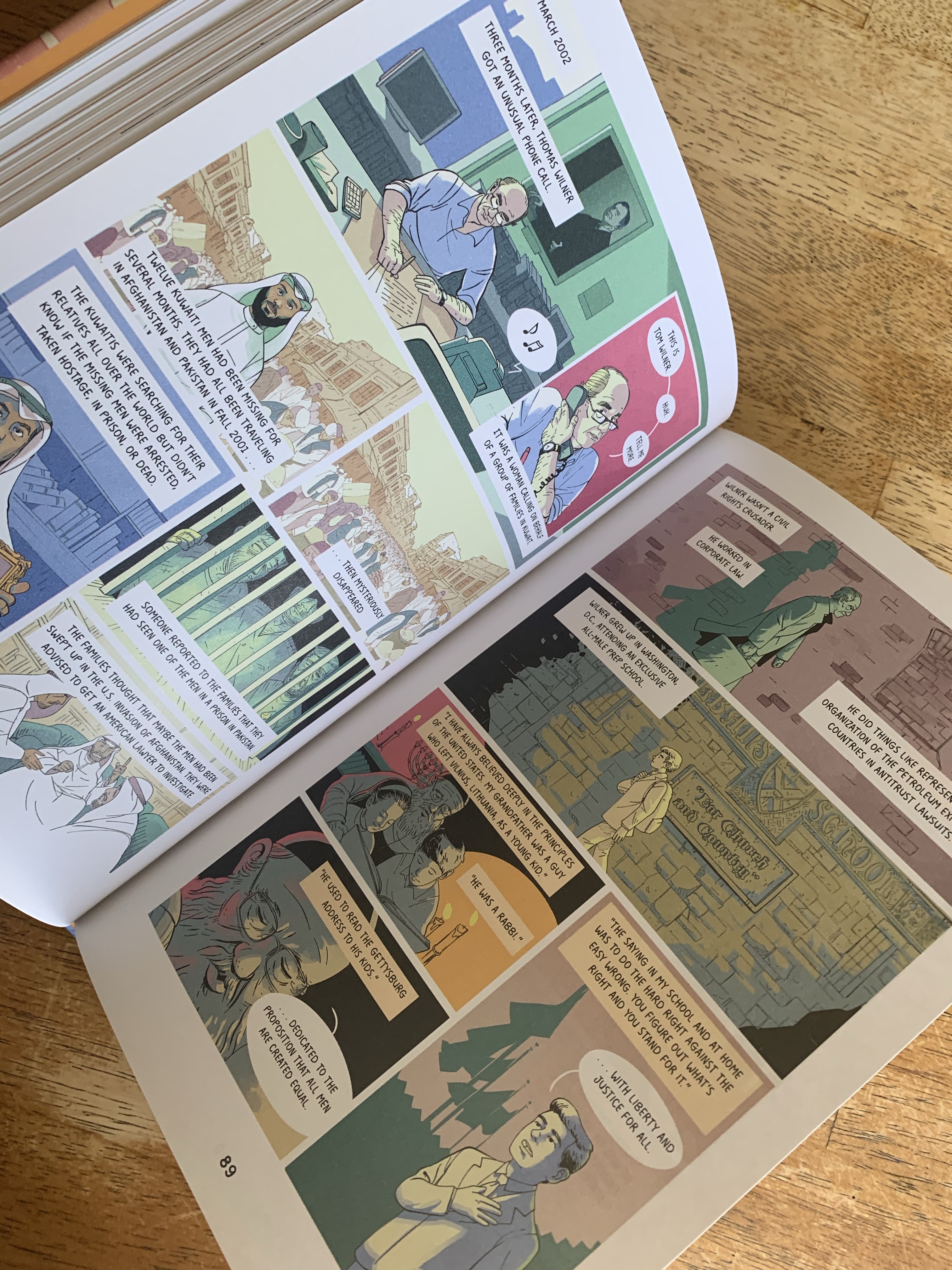
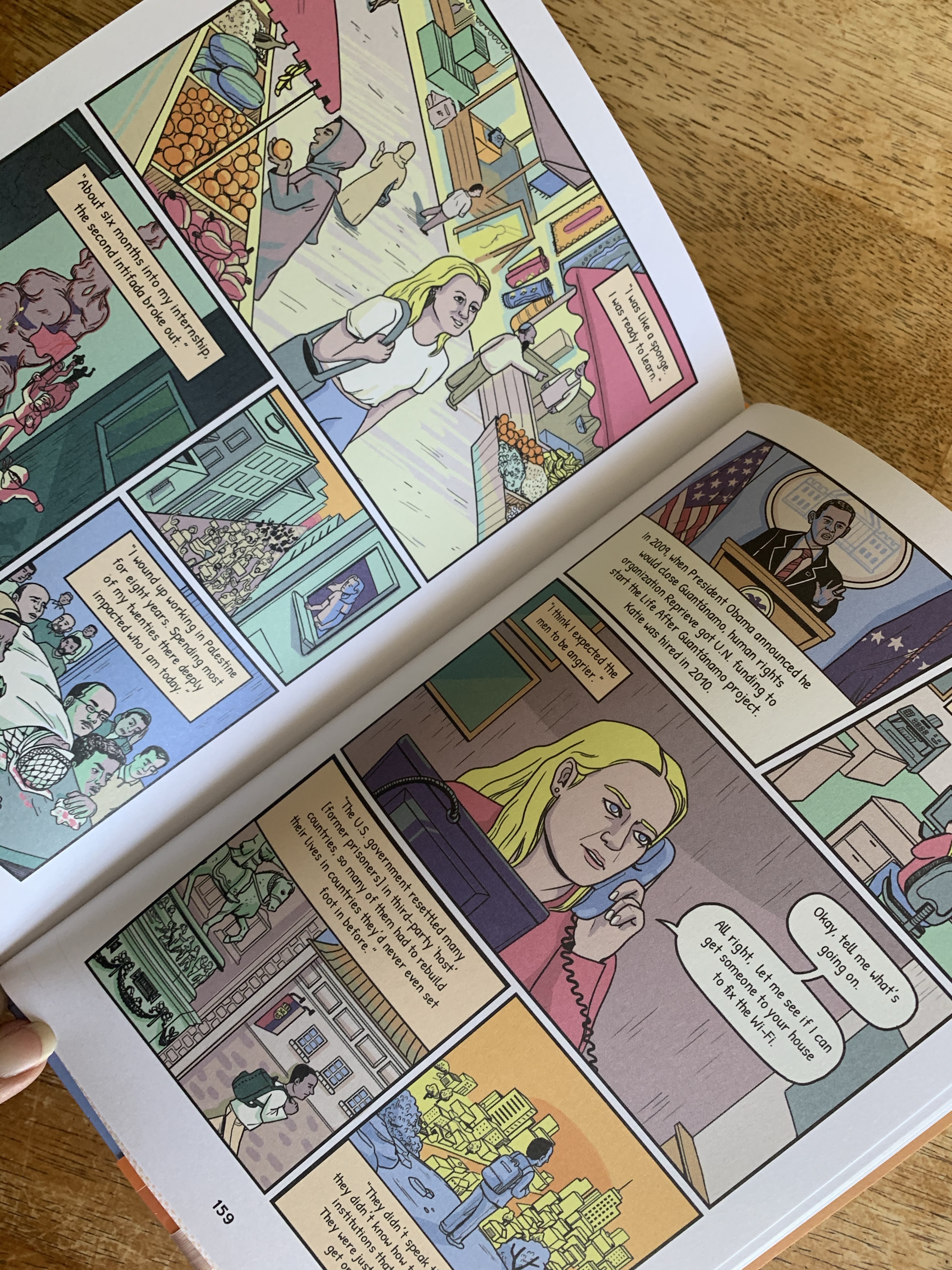
Guantanamo Voices: True Accounts from the World’s most Infamous Prison by Sarah Mirk, introduction by Omar Al Akkad, illustrated by Gerardo Alba, Kasia Babis, Alex Beguez, Tracy Chahwan, Nomi Kane, Omar Khouri, Kane Lynch, Maki Naro, Hazel Newlewant, Jeremy Nguyen, Chelsea Saunders, and Abu Zubaydah

Standard
Guantanamo Voices: True Accounts from the World’s most Infamous Prison by Sarah Mirk, introduction by Omar Al Akkad, illustrated by Gerardo Alba,  Kasia Babis,  Alex Beguez,  Tracy Chahwan,  Nomi Kane,  Omar Khouri,  Kane Lynch,  Maki Naro,  Hazel Newlewant,  Jeremy Nguyen,  Chelsea Saunders,  and Abu Zubaydah

guantanamo voices

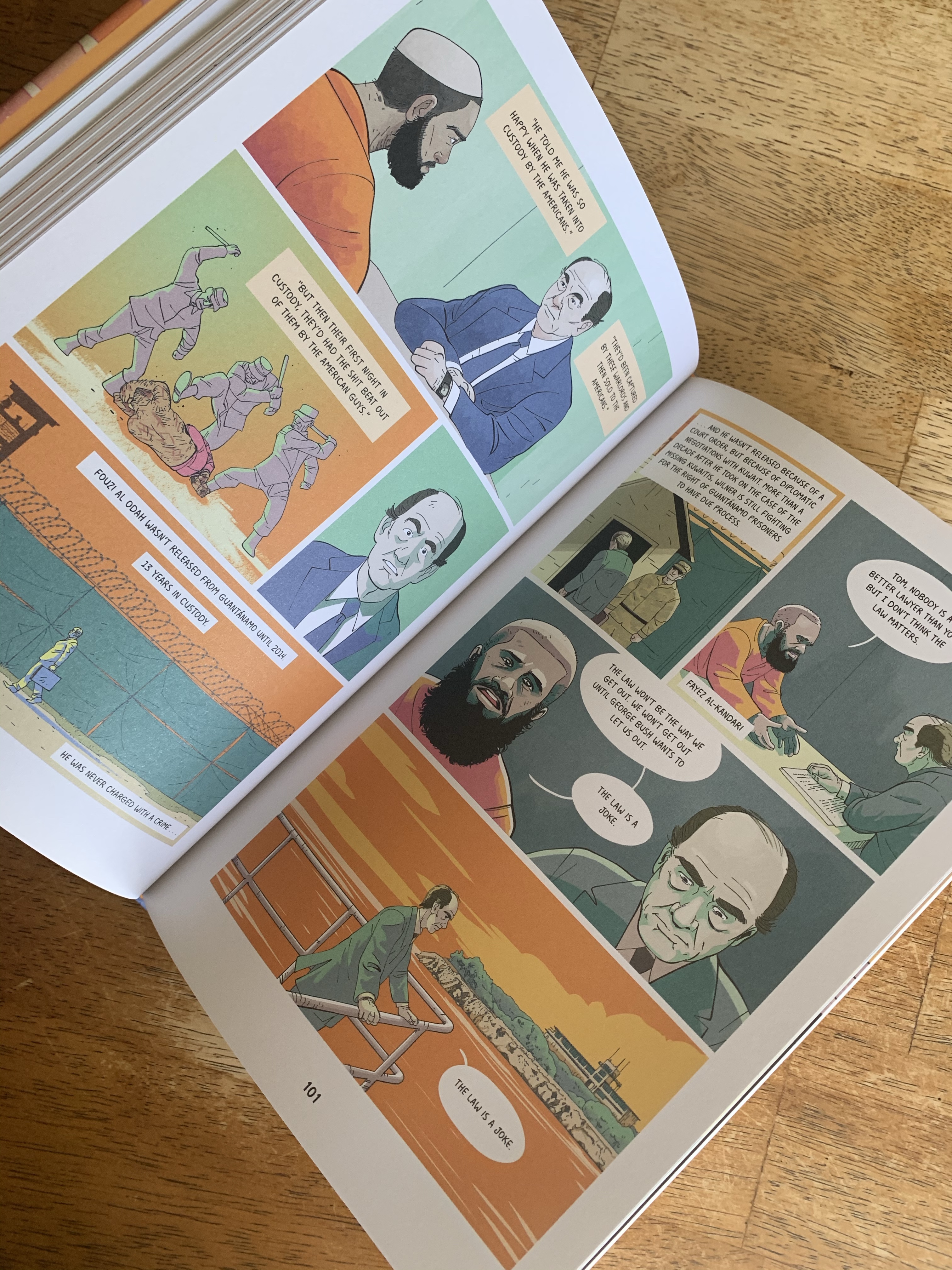
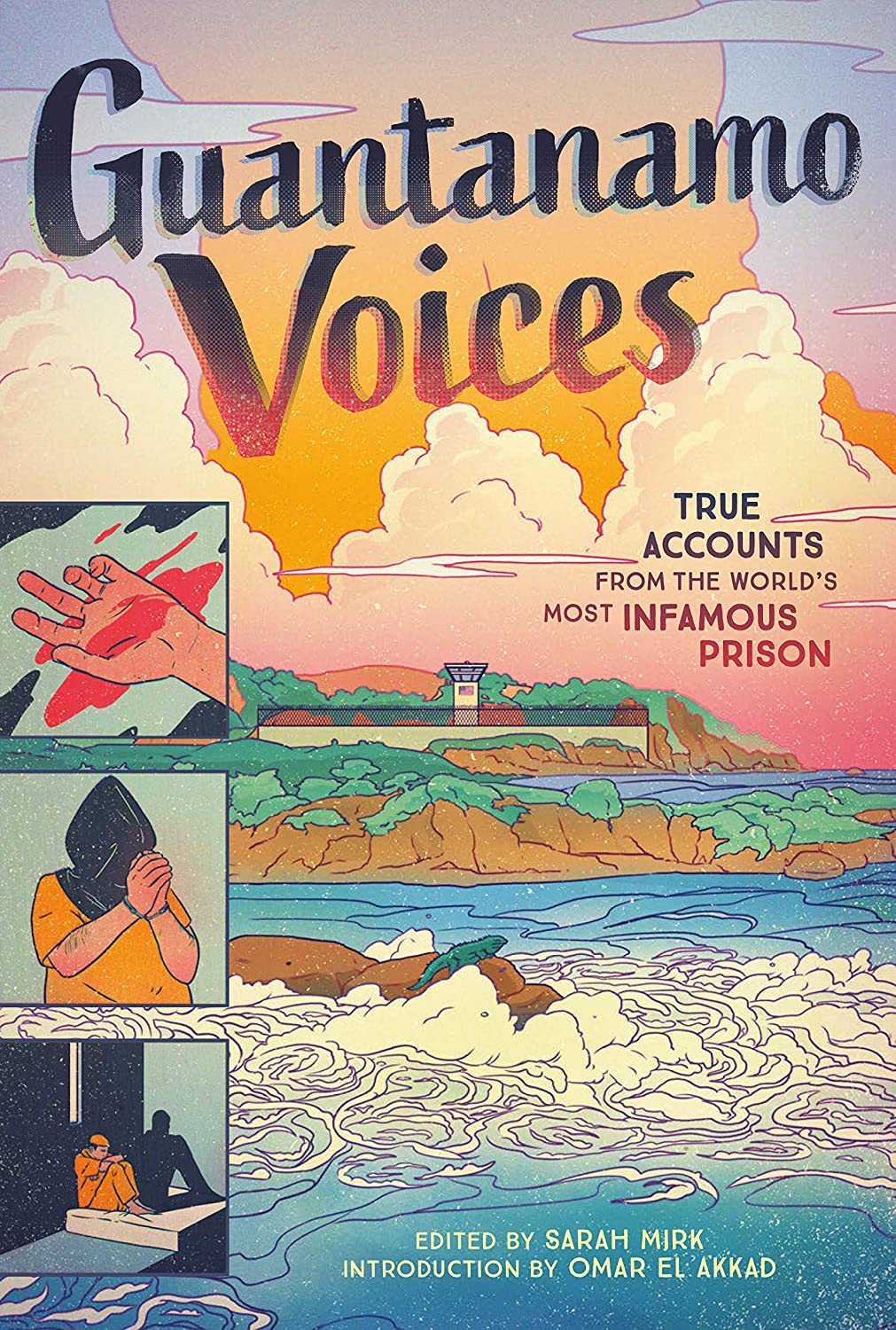
This 208 page graphic novel, is indeed graphic.  The unbelievable horrors detailed in the stories shared are all sourced and referenced in the nonfiction anthology. The intent isn’t shock and awe like the war that created such abysmal breaches of justice to be done in our name (Americans’), but is definitely a painful reminder of how fear and mismanagement allows the US treatment of individuals to grow and continue outside of the rule of law, and all that the US claims to represent.  The careful use of words such as “detainees” instead of “prisoners,” “enemy combatants” instead of “terrorists” or “criminals,” have allowed Muslim men to be held since 2002 without charges, legal representation, habeas corpus, or basic human rights.  When the prison was being filled, you’d hear about it in the news, when the government released heavily redacted reports on torture, you’d catch a headline or two, but there are still people being held, and for the most part, we, the world, have perhaps forgotten.  This book is a reminder, it is insight, it is so important that high school and college aged children are aware of what we are capable of, that adults are not allowed to forget what we are doing.  As it says in the intro, “To indict the people who did this is to indict the country that allowed it to happen.” We are all guilty, and this book is not an easy to read as it will make you angry, and devastated, and exasperated.  Don’t let the graphic novel format and simple text fool you, this is a difficult read, emotionally, and you should force yourself to sit with it- sit with the outrage and frustration, and see if it can spur you to action.

img_0435

SYNOPSIS:

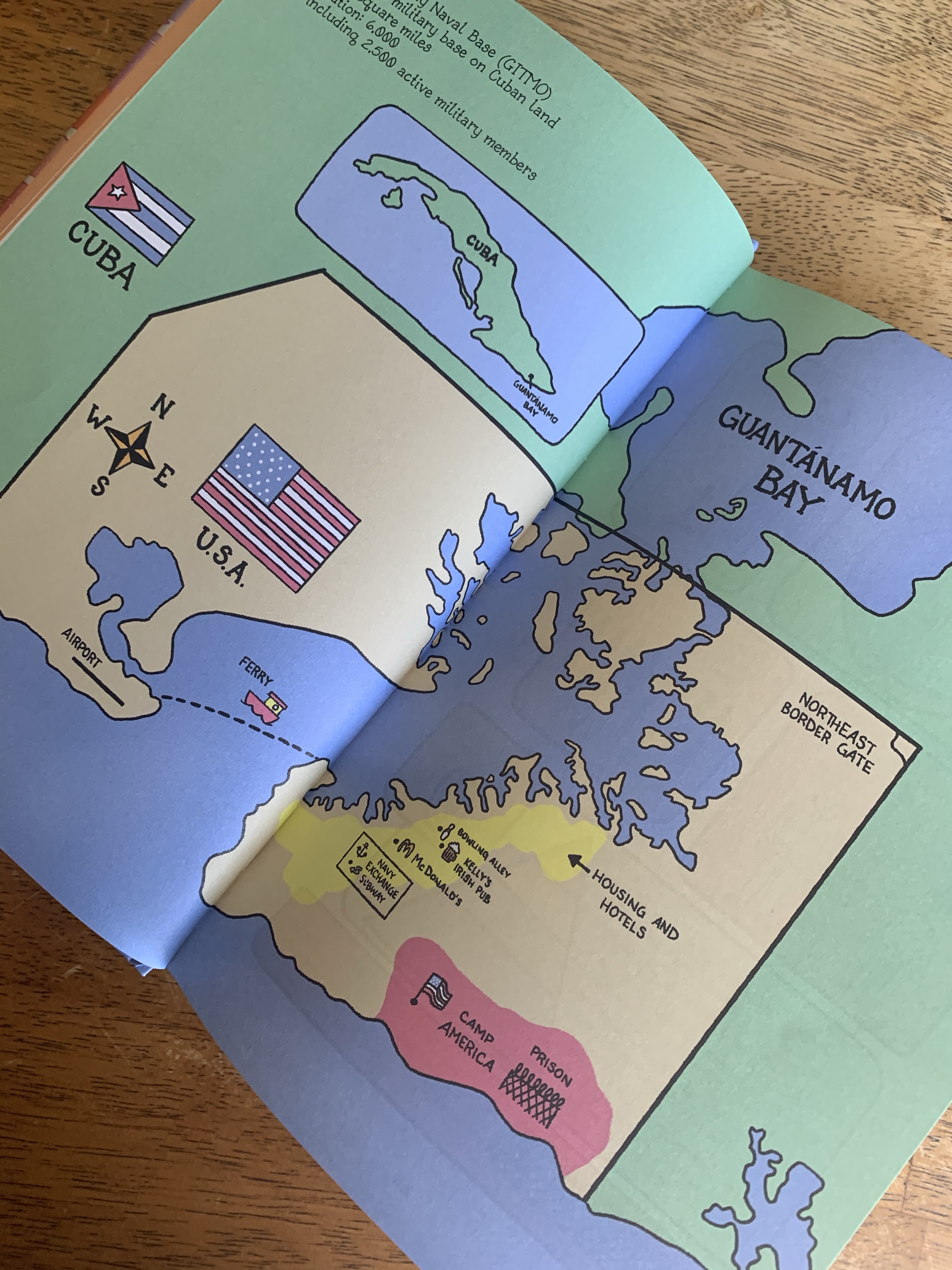
The book is broken up to provide an introduction, map, facts, and a timeline, it then starts with the author arriving for a media tour to Cuba.  Some background stories about key individuals in understanding the effects of torture and better and more accurate ways to interrogate, and then the fateful day September, 11, that changed everything.  From here the stories are individual accounts of prisoners, lawyers, politicians, etc., each depicted by a different illustrator, to show a very rounded view of the effects of the prison, and thoughts by different people in a  variety of associations. 

img_0434

Some of the prisoners were swept up by neighbors responding to leaflets promising wealth for turning people in.  Some were taken from their homes for no reason, a few were taken from the battle field, but every single one has never had charges against them, nor a day in court, the few that have been able to be represented have been released without being accused of anything, hence, found to be innocent.  The doubling down on the concept of Guantanamo being the worst of the worst, administration after administration has made it so prisoners have to be released to countries they have never been to, with unknown rights or a way forward.  Those that are still detained have been there for nearly 20 years. 

img_0437

WHAT I LIKE ABOUT THE BOOK:

I like that the book is personal, it is harder to dismiss or forget, or be unaffected when you are looking at images and surrounding yourself with guards and lawyers that are saying over and over, that these prisoners are innocent.  I like that it challenges Americans to demand more of America, it isn’t just putting the USA down nor does it read like the narrative has it out for the USA, it is very much an personal calling out, that we have made errors and continue to make errors out of arrogance.    

img_0440

FLAGS:

The images and language are at times graphic and one should be aware of the potential triggers of torture, and abuse. There are curse words spoken, and violence detailed.  High school and up.

img_0439

The Unicorn Rescue Society: The Secret of the Himalayas by Adam Gidwitz and Hena Khan illustrated by Hatem Aly

Standard
The Unicorn Rescue Society: The Secret of the Himalayas by Adam Gidwitz and Hena Khan illustrated by Hatem Aly

unicorn

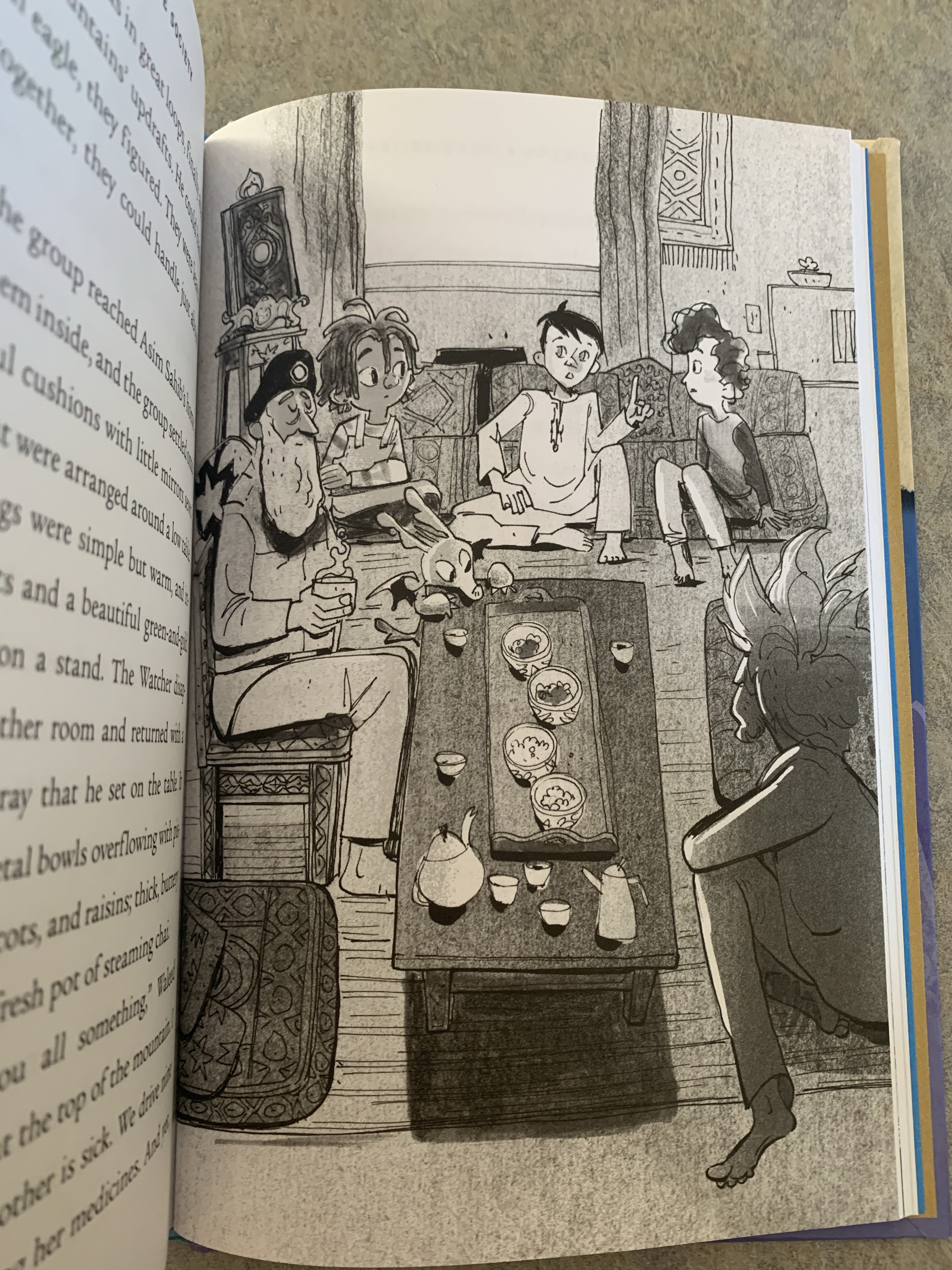
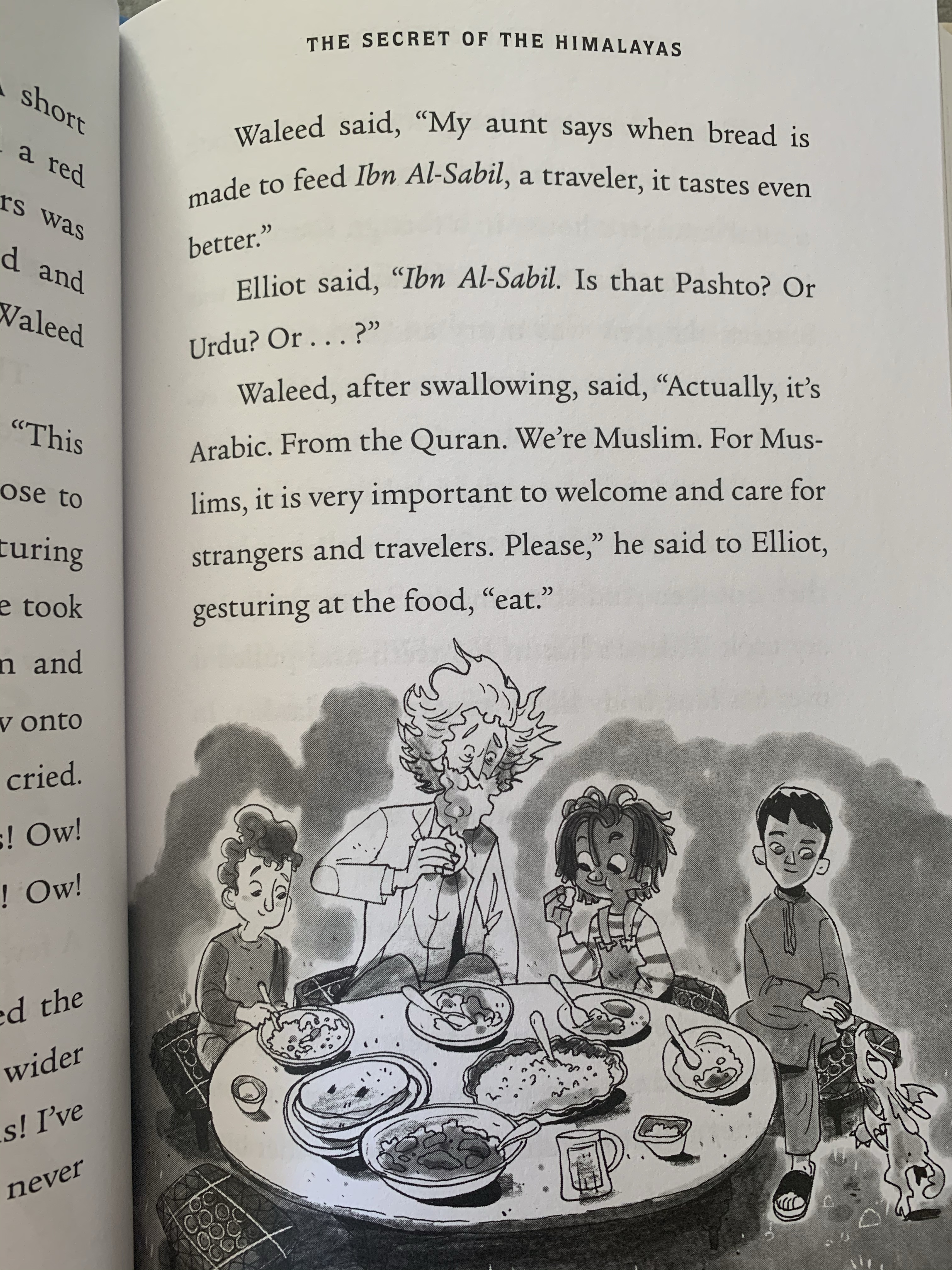
This middle grades 208 page book is part of a series, but this particular installment is co-authored by Hena Khan, takes place in Pakistan, and features Muslim side characters in the quest to find and protect the mythical, magical, and illusive unicorns.  The adventure is quick, the cultural and religious references sincere and appreciated, the characters quirky and fun, and the writing smooth and enjoyable.  I can’t speak for the whole series, but I think second to fourth grade readers will enjoy the eccentric teacher, the clever kids, and the knowledge about animals, culture, and geography that is woven in to the story to keep it engaging.  I don’t think you need to read the books in order, but I would encourage it.

img_0785

SYNOPSIS:

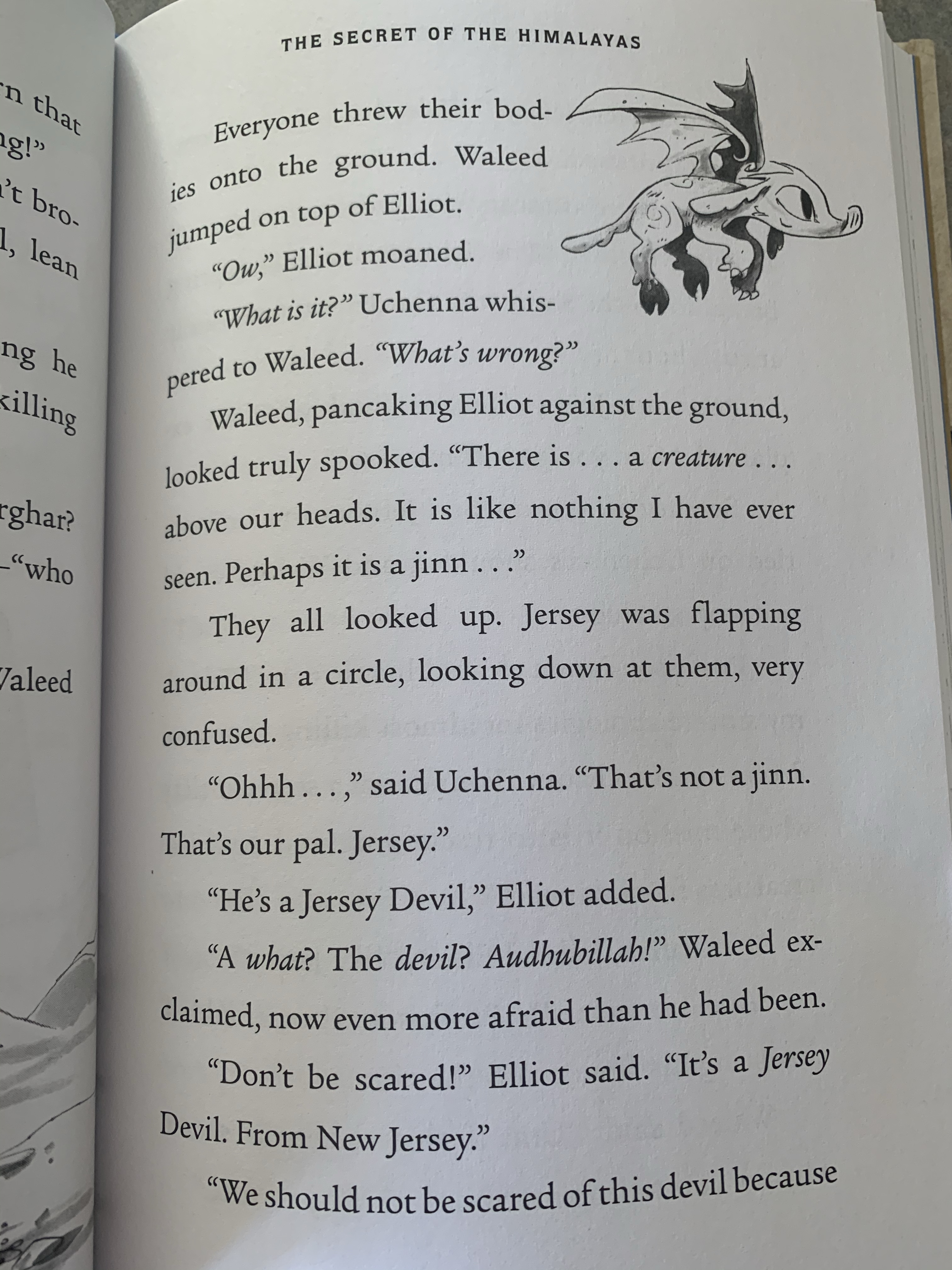
Elliot and Uchenna are elementary aged students and also members of the secret, Unicorn Rescue Society.  When a classmate starts a newspaper and interviews local businessman, the kids teacher, Professor Mito Fauna spots what he thinks is a unicorn horn in an accompanying picture and is determined to go and protect, once found, the imaginative creatures.  He enlists the kids and Jersey, a creature with a blue body, red wings, a goat face, clawed front legs and hooved hindlegs, to set off in his single propeller plane for the Himalaya mountains of Pakistan.

They arrive in Torghar, Pakistan and make a rough landing that nearly kills a local boy.  Alhumdulillah, Waleed is fine, and in true Pakistani and Islamic tradition the boy takes the visitors to his grandmothers home to be fed and welcomed.  Waleed agrees to help the Americans find a man known only as the “Watcher,” to see what he knows about unicorns and the hunters that come to poach for sport.

Hiking the mountains and getting short of breath makes each act that much more difficult, but alas the kids find the Watcher, aka Asim Sahib, but sadly *SPOILER* don’t find unicorns.  Rather a species of mountain goats, markhors, that have two long twisted magical looking horns. The wealthy businessman brothers also show up in their helicopter to capture, not kill the markhors.

The rescue society follows them and learn that the sinister brother are testing out the magical properties of a bezoar on pit viper bites.  Needless to say it doesn’t work and the rescue society must rescue the dying butler, and captured markhors.  All is not lost, even if they didn’t find any unicorns, at least they made new friends, and know that if they haven’t found the unicorns yet, hopefully no one else has either.

img_0778

WHY I LIKE IT:

I love that there is praying, and thikr, and ayats from the Quran quoted and explained in the book regarding saving animals, caring for each other and trusting Allah swt.  There is culture regarding taking gifts, welcoming guests, drinking tea and even breaking stereotypes of what a boy from Lahore visiting his family in the mountains knows and doesn’t know.  It isn’t preachy on any accounts, but the messages relayed in their silly way are very well woven in and leave a wonderfully represented impression of Islam, Muslims, and Pakistan.

The diversity featured in the book is nice, even within the main characters: one is an African American girl, one a Jewish boy, and the teacher is Hispanic.  The story at the end, A History of The Secret Order of the Unicorns, takes place during the reign of Charlemagne at a monastery, and features a boy named Khaled and his little sister Lubna. It is clearly intentional and a reflection of the author and illustrator.

img_0776

FLAGS:

There are some possibly gross moments featuring the goats licking urine, tea being made from the markhors’ saliva and the near death of a man requiring venom to be sucked from his leg.

img_0777

TOOLS FOR LEADING THE DISCUSSION:

The book is definitely below a middle school book club level, but I think younger elementary teachers and parents would see students get hooked on the series and would benefit from having the books around.

img_0780