Tag Archives: Mosque

The City of Jasmine by Nadine Presley illustrated by Heather Brockman Lee

Standard
The City of Jasmine by Nadine Presley illustrated by Heather Brockman Lee

With a release date of May 6, I really wanted to wait to post a review because the images are gorgeous in the electronic version, and I can only imagine how moving and captive they will be presented in a physical format, but alas I know the importance of presales and am sharing to hopefully encourage you to preorder and/or request from your library, this gorgeous 40 page OWN voice book.  A love letter to Damascus, and the sights, sounds, smells, taste, and feelings that the author remembers despite the mountains and oceans that now separate her, are lyrically shared with readers on a journey through the city. The ethereal lilting of words draw readers of all backgrounds in, and the complimentary gorgeous illustrations convey a palpable sense of beauty, love, and memories of home.  Even on a screen, they force you to get lost in their beauty. The cadence of the words allow natural pauses that tug on your eyes and draw them toward something in the images not seen before, forcing the readers and listeners alike to hesitate before turning the page.

The book starts with a little girl telling where she comes from, “the City of Jasmine,” “the Umayyad Mosque,” “Ghouta,” “Damascus,” “Qasioun,” “Qala’at Dimashq,” headers for spreads rich with poetry, wonder, and longing.

Neighborhoods of diverse families gathering, and sharing the foods that bring people together, and quiet bookshops that facilitate travel through time. Family memories built around orchards and fountains and laughter and love.  So far away from the author now, the memories are not lost, they can be touched when the scent of jasmine is “breathed in, and breathed out.”

The book concludes with an author’s note and a glossary.  Those of us who are not Syrian, and who have never been, after spending time with this book will undoubtedly be tempted to add Damascus to our bucket list of travel plans, and inshaAllah as the country rebuilds such trips will come to fruition.

Ibraheem’s Perfect Eid by Farhana Islam illustrated by Nabila Adani

Standard
Ibraheem’s Perfect Eid by Farhana Islam illustrated by Nabila Adani

Gorgeous illustrations, joyful Islam, and a sweet story about a little boy realizing there is more to Eid than presents. The protagonists voice is really on point and a great way to counter so many of the books, and real life antics of kids equating Eid to being about gifts. This 23 page picture book for 3-6 year olds, works for both Eid al Fitr or Eid al Adha, and follows little Ibraheem as he searches for his gifts throughout his sunnah and love filled Eid day at home and at the mosque.  I love that it shows him getting drawn into the khutba, doing takbir, ruku and sajood, eating dates before going, and taking a different path on the way home.  It doesn’t have any backmatter, but if reading it to a child, I would hope the little details in the text and illustrations would be discussed. It took me a few readings to be ok with how Ibraheem discusses his gift order with Allah swt, but I think for little kids and with the consistent tone of the book, it makes it relatable.  I also don’t know why his mom and rest of the family do not go for Eid prayers. Other females are shown at the mosque in the background, and people of various ages and mobility, but alas it is just Ibraheem and his Baba at salah, and a house full of love and family the rest of the day.

The book starts with an illustration of Ibraheem hanging up his “Eid Sunnahs” chart next to his “Dear Allah” swt list of gifts that he wants. The text then starts with it being Eid day and Ibraheem looking in all the usual places for his presents, but comes up empty. He wonders if his parents forgot, if Allah forgot, but he knows that would never happen. Luckily Baba and he are off to the mosque for prayers, maybe, he thinks, the presents are there.

As the father and son walk to the mosque they greet others, and then settle in for the “Eid day stories.” I don’t love that the khutbah is referred to as such, but that is probably just me. When the iqamah is called, it is time to pray and Ibraheem copies his Baba before they make their way into “the sea of smiling faces.”

Back at home it is time to enjoy food, games, fun, and cuddles with a bustling house.  Presents still haven’t been found, but the day has been perfect, and presents can always be opened tomorrow.

I love that this is a traditionally published book, that centers Islam on Eid and radiates with joy.  The large size makes it easy to share in all settings, and the illustrations beg to be explored and appreciated.

What Shape is Your Mosque? By Jenny Molendyk Divleli illustrated by Zeynep Begüm Şen, Ayşenur Kazan, Hümeyra Yograncı, Hatice Leyla Arslanbenzer, Gökhan Özdemir, Özlem Güneş, Rumeysa T. Karaca, Şüheda Başer Yılgör, Aybüke B. Aslanoğlu, M. Ahmet Demir, Fatma Betul Akbal

Standard
What Shape is Your Mosque? By Jenny Molendyk Divleli illustrated by Zeynep Begüm Şen, Ayşenur Kazan, Hümeyra Yograncı, Hatice Leyla Arslanbenzer, Gökhan Özdemir, Özlem Güneş, Rumeysa T. Karaca, Şüheda Başer Yılgör, Aybüke B. Aslanoğlu, M. Ahmet Demir, Fatma Betul Akbal

Framed the same as the author’s book entitled What Color is Your Mosque? The readers are taken all over the world to see masjids in a variety of shapes: conical, spiral, oblong, flower, boat shaped and more.  Each two page spread has a child introducing themselves, where they are from, the name of the mosque and some bits of information to engage the reader.  It isn’t a literary masterpiece, but I don’t think it attempts to be.  It is a fun informative book to show children the diversity of architecture, the universal practice of Islam, and be motivated by the prompt at the end to ponder how they might design their own masjid. I particularly like that the author points out that the first mosque she ever prayed in was a converted house.  This book is great in small groups and story times, where the pictures can be looked at, and lends itself to further research of looking up pictures of the mosque’s included, building mosques with blocks or legos, or paired with a similarly inspired craft.

The book starts with a note to parents, some hadith, a dedication, and then the author, Jenny introducing herself to the reader, and starting the journey.  The book shares mosques in Kuwait, Qatar, Indonesia, Germany, Pakistan, Saudi Arabia, Croatia, Kazakhstan, China. Each spread is illustrated by a different artist, but all are beautifully done.

I found the pages smile inducing, as I Googled to see real photographs of the mosques mentioned.  One of my favorites was the Rijeka Mosque in Croatia that was designed by a sculpture and changes shapes depending on the vantage point.  And I was shocked I had never seen or heard, or somehow noticed, the Kashti Wali Masjid in Karachi, Pakistan.  I masjid that is boat shaped and very near to my familys’ homes.  

I purchased my copy from Crescent Moon and if you use code ISL (my initials) at checkout you can save 10% on your entire order.

Saif’s Special Patches by Humera Malik illustrated by Ravan Sader

Standard
Saif’s Special Patches by Humera Malik illustrated by Ravan Sader

I really had no idea what this book was going to be about, and the first page or so seemed a little off with the child not knowing about the quilt he was wrapped up in, but. oh. my. heart! Every subsequent turn of the page was a hug from Saif’s patch made quilt straight to my cynical soul.  The infusion of Islam as such a part of his daily activities, his loving family and environment, and the reminder that labels can both hurt and inspire is beautifully done. The illustrations, the tone, and the messaging, is great for kids that have been called “just shy” and everyone who has ever doubted themselves (i.e. everyone) with it’s relatable emotions, and reminder that like a quilt, we are still growing.  I cannot wait for this book to be released and I can enjoy a physical copy to share in classrooms, libraries, and bedrooms. One of the best picture books I’ve read in a while, thank you.

The book starts with Ami asking Saif why he isn’t outside playing basketball with his friends.  He replies, that he “is shy.”  His mother shows him that the quilt is made of patches of Saif: experiences he has had. She shows him a patch and helps him recall the memory attached to it,  starting with last Eid when he was brave and went down the big slide. As he joins in the recollection, he then owns the label that he is brave.  It isn’t that easy though, he tries to be smart like his brother and read a lot, but reading is hard, his brother reminds him he is smart and points out the patch from when he won the scavenger hunt.  Swimming, helping at the masjid, reading Quran, calling the athan, all help Saif to realize he is more than just shy, more than one label, and that he is still growing.

I love the relatability of what Saif is going through, and even though so many of the settings and examples are Muslim centered, the book will resonate with all readers, of all ages.  A tear or more two may have stumbled out as I saw little me in the illustrations and the scenarios, and I have never been called shy. The book releases in March and is traditionally published, meaning plenty of time to pre-order a copy and request your library to shelve it, as it will be available wherever books are sold.

The Boldest White: A Story of Hijab and Community by Ibtikhaj Muhammad and S.K. Ali illustrated by Hatem Aly

Standard
The Boldest White: A Story of Hijab and Community by Ibtikhaj Muhammad and S.K. Ali illustrated by Hatem Aly

The third and final book in the standalone series is finally out and I absolutely love that Islam, salat, and the masjid are front and center. Faizah is once again brought to life through the incredible illustrations that provide all the emotional beats and make the book memorable.  The story though is only just ok, to be honest, it is clunky and disjointed.  I have read the book a half a dozen times to myself and twice aloud and I do not understand the Eid story line.  I doesn’t fit the themes of fitting in, being a leader, being bold, it just seemed to be there to motivate a white hijab being purchased, and it was very distracting to the cadence and continuity of the story. Every time Faizah is self reflecting on her fear, suddenly a conversation about Eid with a friend named Sophie disrupts the story. Even the refrain that “Bravery grows in your mind.  But its roots are in your heart,” sounds lovely, but is never explained or developed, so what are you to water it with? What are the right reasons?  I’m sure most will be fine with the concepts and presentation and not be bothered, but this book is an auto buy for Muslims and non Muslims alike, and while I appreciate the packaging, I wish the story itself was more, well “Bold.”

The book starts with Faizah going to Jummah with her mom and sister, and loving being part of the crowd, she then goes to fencing and loves being part of the crowd, “it feels right.  I feel right,” she says.  But then the coach calls her name and she starts to worry.  She doesn’t like when people stare at her, she worries she did something wrong. The coach has already reminded her to “saber first, then move forward,” so I’m not sure why she worries after if she did something wrong, it is a class, reminders and corrections are what happen in a class.

Then on Sunday, the trio is back at the masjid for salat before Asiya’s fencing lesson.  The coach asks Faizah if she wants to come in for extra practice before the tournament.  Faizah isn’t planning on participating in the tournament though and would rather think about Eid.  Thinking about getting together in the future with Sophie to pick out Eid clothes, is more fun than fencing.  The reader doesn’t know when Eid is, or why Faizah seemed to break into a day dream when asked about fencing.  Furthermore the reader doesn’t feel the worry of being in a competition because Faizah is not shown to be worried.

Later that night Asiya teaches Faizah the moves she learned and Faizah practices alone.  There is then a two page spread that I do not understand, on one page she is saying, “When no one is watching, I ‘m the best fencer in the world,” three lines later it says Even when others are watching, I can do it.  I can be the best.”  What happened in between? I get the following line, “but it’s hard to be my best when I have to stand out to do it,” but the the line in the middle makes no sense.  What is the point of the book if she can do it and knows it at the mid point?  And no, I’m not reading an arc, I checked out this copy from the library.

The family is back at the masjid on Friday and reassuring Faizah as they head to fencing, that she can do it even when people are watching, that bravery will come.  She hasn’t been nervous at class before, and hasn’t signed up for the tournament, so why is she suddenly uncomfortable, when at the start she loved fencing class as she felt she fit in.

Then it is Saturday, and Sophie finally comes, but not to prepare for Eid, just to discuss, how they will prepare for Eid.  At least now we know it will be next week. The next Friday, I know I feel like a calendar should have been included, it is fencing class again and Faizah is called up to demonstrate.  She finds her strength and she is shy, but realizes they are not just looking at her, but looking at what she can do.  She is leading, she is helping, she is being brave.

Finally it is Sunday, and Sophie and Faizah are at the hijab shop, and Faizah picks a white hijab because it matches the fencing clothes, and she is going to the tournament.

Yeah, sorry I spoiled it, I just really am sad that the book wasn’t as great as it could have been.  It connected the dots eventually, but not in a memorable way, and for the team responsible for this book, it really could and should have been amazing.

Muhammad’s Recipe for Remembering By Maidah Ahmad illustrated by Shruti Prabhu

Standard
Muhammad’s Recipe for Remembering By Maidah Ahmad illustrated by Shruti Prabhu

img_4274-1

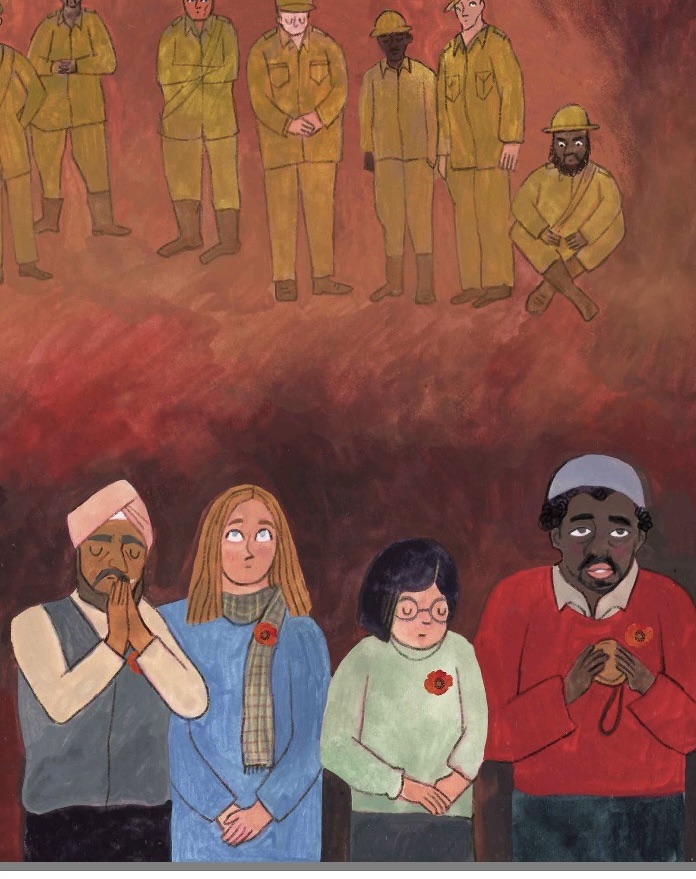
I feel like the idea and heart of this 40 page picture book is decent, but the story, presentation and takeaway are just really poorly executed.  The pitch is a Muslim Desi kid feeling left out when all his friends are rehearsing for the upcoming veterans assembly because he doesn’t have anything to share.  He then starts asking his family, and the Muslims and non Muslims hanging out at the mosque to find out about Muslim and Indian involvement in the World Wars.  A rarely explored topic, considering in the West WWI and WWII are taught from a Western centric perspective, no doubt.  Unfortunately, most early elementary readers, the book’s target audience is 4-7, have limited knowledge of the World Wars, let alone about the subcontinents own politics and that they were occupied themselves under colonial rule at the time, and this book does nothing to explain any of it.  The inconsistencies, plot holes, vocabulary and ultimate lack of sharing a single story from a descendant of someone who fought, make the book rather pointless and forgettable.  Truly the take away is that there were Muslims among the Indian army, they made roti and prayed.  No real idea what they experienced, saw, endured, or gained in return for being forced to fight for Britain on the global stage.

img_4275-2-1

The book starts with Muhammad listening in to his classmates talk about their family members that are veterans and him feeling left out.  At recess they don’t let him battle in the reenactments and instead make him be the cook. When he gets home his dad is making rotis and Muhammad asks his dad if they have veterans in their family, they then go ask his grandfather if his great great grandfather fought in either World Wars.  Dada jaan recalls that “they sent my grandfather to France in World War One.”  But he never spoke about it except to mention that they shared rotis.  He suggests they go to the mosque the next night as that is where, “a kaleidoscope of people gather.” He learns from a Sikh uncle in a turban that whole villages went to fight and from Imam Rafiq that the soldiers fasted in Ramadan, prayed, and celebrated Eid.  No one has any visible tokens of their family’s service as they were lost over time.  Determined not to let the stories be lost, Muhammad shares roti at the assembly.

img_4277-1

Ok, buckle up, I have a lot to point out, but first the positive.  I like that the dad makes rotis.  Mom isn’t in the book, but there are a lot of pictures of a lady hanging on the walls of the house, so possibly she has passed and dad has to cook, no matter, it is nice seeing a Desi dad in the kitchen.  I also like that the mosque is central to the story, I wish it was called a masjid, and that it was explained why people that are not Muslim are hanging out there.  Brown people are generally lumped together and this seems to reinforce that stereotype, which makes me less than thrilled.  It seems like a social environment with ping pong tables and snacks happening, so why not say it is a social hall at the masjid where people of all faiths often gather.  A “kaleidoscope of people” does not explain people of different religions at a mosque to most four year olds.  The book claims the assembly is honoring veterans, so why is Muhammad only curious about WWI and WWII is never explained.  He is teased and forced to be the cook by his friends, with a very negative connotations and depiction in the illustration, but that notion is never pushed back upon, and is actually heightened with rotis being the thread that ties the entire book together.  A missed opportunity to be sure.

img_4279-1

I really struggle with the reality that the majority of Indians were forced to fight, and the book keeps it vague in the text with lines such as “joined the war effort,” and “they sent..” who is they? It sounds nice that Muhammad doesn’t want the stories, like the artifacts to be lost, but WHAT STORIES? If the book is about remembering, and stories are to be shared at the assembly, I feel short changed that the reader doesn’t get a single story about a Muslim or Indian that fought in one of the World Wars.  Isn’t that the point of the book? Yes the book has sources at the end, but it is fictionalized, make up a story, give the reader and Muhammad something to take pride in, to understand through, to imagine, what it was like for his great great grandfather.

img_4280-1

I struggled with the illustrations as well, Imam Rafiq looks off in the final image, I don’t get why Dada jaans memories seem to be on the TV either.  I also didn’t understand why rotis were the thread, but then it is paratha at breakfast that gives the idea, and who really is constantly spreading ghee on paratha or roti let alone at war, or at recess.

img_4278-1

War is not a trivial matter, and I kind of feel like this book reduced it to food, and allowed some racism, classism, and  Islamophobia, to go unchecked along the way.  I like that the backmatter has a recipe and an author’s note, but colonialism, service, war, are all heavy topics that are hard to bring down to an early elementary level picture book, and sadly this book is unable to connect and inform readers about this time in history.

Come To Prayer by Salwah Isaacs-Johaadien illustrated by Zeynep Yildirim

Standard
Come To Prayer by Salwah Isaacs-Johaadien illustrated by Zeynep Yildirim

img_3530-1

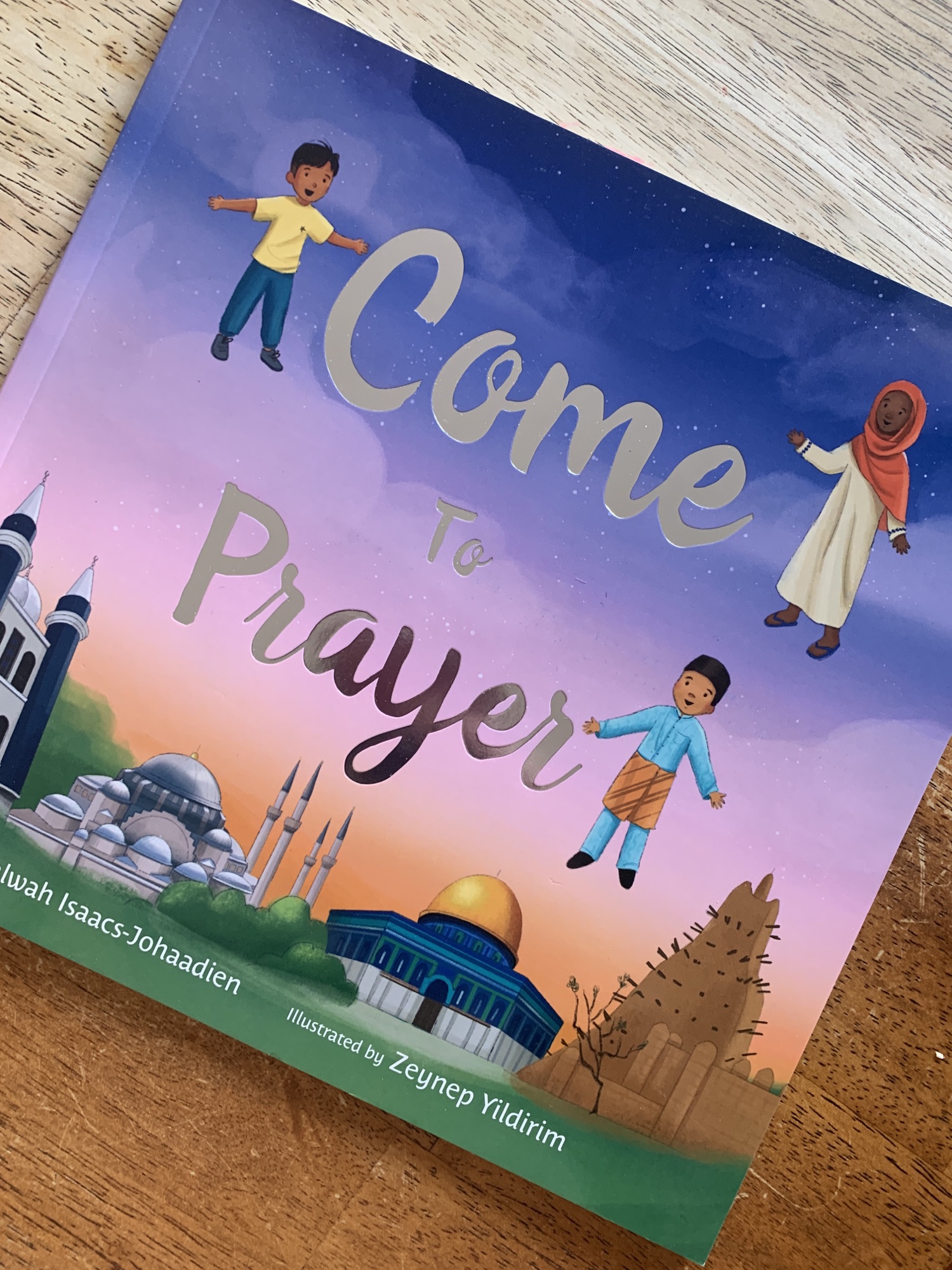
Framed around the five fard prayers, the rhyming 26 pages take readers all around the world with the refrain of “come to prayer, some to salah, come to success, come to falah” appearing after each two page spread.  Reykjavik, Honolulu, Rio, Timbuktu, Kuala Lumpur, and Makkah are shown as families gather to pray in each city.  It is hard to know if the locations were chosen for a specific reason, or to just help with the rhyming lines.  I appreciate the map at the end in showing 18 masjids in the world, but they are not the only ones pictured in the book, so honestly it was not intuitive why they were highlighted. Additional information about the masjids included and where they are located in the world would have been far more beneficial.  The rhyming at times is forced, but for the minimal lines on the pages, and the clear organization of the book, it didn’t bother me too much.  The illustrations compliment the text well and amplify the concept of Islam being a global faith through the connection of Muslims praying everywhere.  The Islamic fiction book is meant for toddlers to early elementary, and with the positive tone of salah being an invitation to success, I think it works well for the audience.

The book starts with little kids waking up in a snowy scene in Reykjavik and heading out with their parents to pray Fajr at the masjid.  Then it is rain in Honolulu that can’t stop a family of five from driving slowly to the masjid for Zuhr.  In Rio a family packs up at the beach to get to Asr salah on time.  For Maghrib, not even a sandstorm across the Sahara can keep a family in Timbuktu from getting to prayer.  And finally a family takes shelter in the masjid for Isha as thunder and lightning in Kuala Lumpur halt their tour. The story ends with everyone entering Makkah in ihraam to pray at the Kaaba.

The book is a thick paperback cover, with glossy 9 x 9.5 inch pages.  It works well for small group story times or bedtime.  It is available on Amazon here or from Crescent Moon Store here.

Zain’s Super Friday by Hena Khan illustrated by Nez Riaz

Standard
Zain’s Super Friday by Hena Khan illustrated by Nez Riaz

img_9576

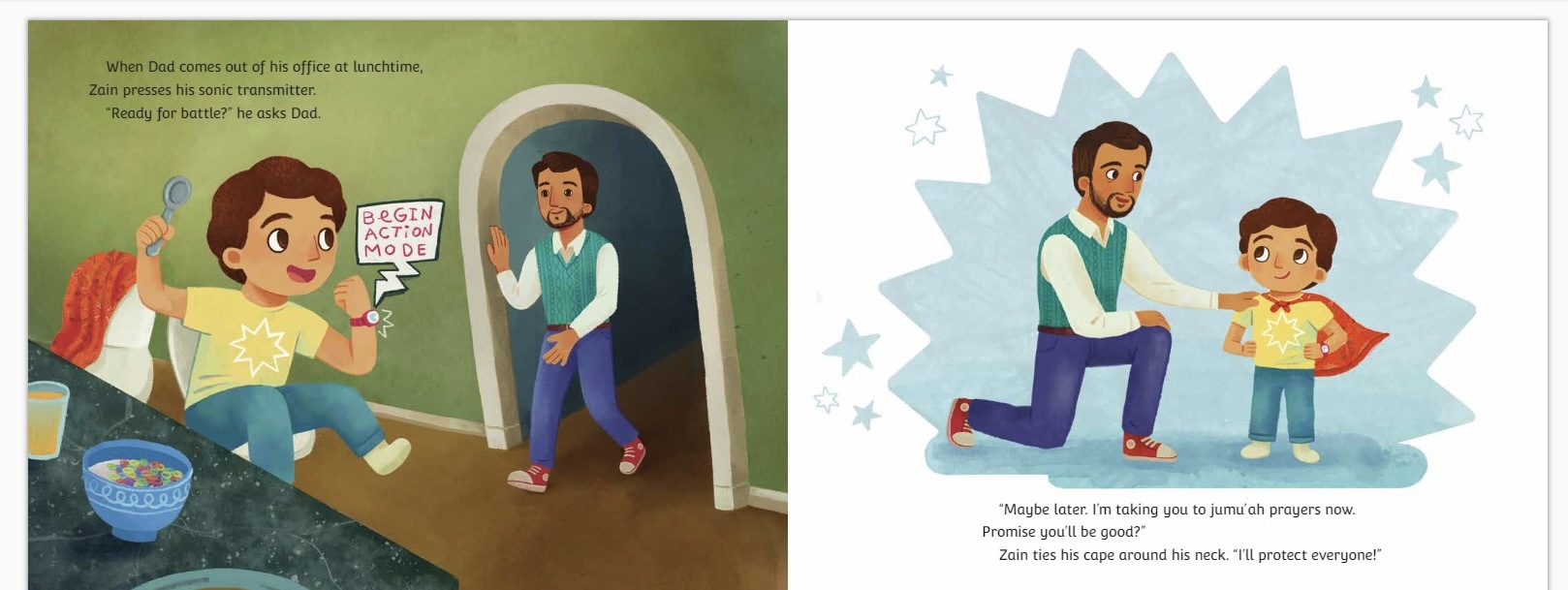
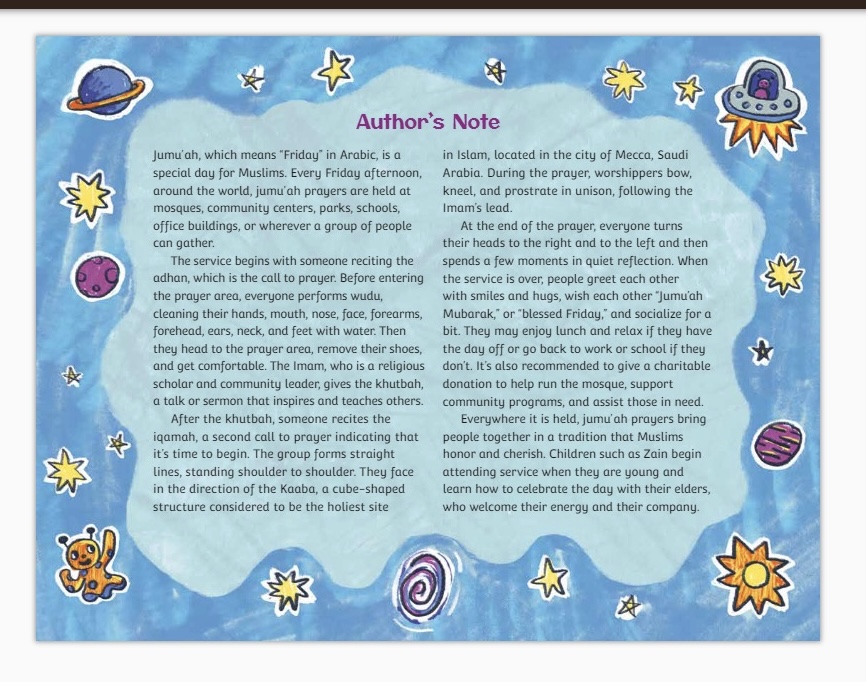
I love the joy and normalizing of mainstream titles celebrating salat, Jummah, and the masjid becoming increasingly available for us to read and share.  This particular book is great for preschool to early elementary aged children that enjoy going to the masjid, but sometimes want to put on a cape and be the hero battling aliens, that know how to behave during salat, but sometimes have a hard time sitting still, and parents that want to play with their kids, but sometimes have to get some work done first.  With  threads of patience, kindness, and determination woven in to masjid activities, the book is both a mirror for Muslim kids and a window for those that wonder what a Friday prayer service looks like.  The 32 page book is unapologetic, joyful, and a great addition to book shelves.

img_9578

Zain wakes up early Friday morning and is ready to save the world. Dad greets Zain with a “Jum’uah Mubarak,” but has to pass on battling the aliens taking over the kitchen.  At lunchtime, when dad takes a break from work, Zain tries again to engage him in heroic play, but it is time for Jum’uah.  Zain slips on his cape and vows to protect everyone.

When they get to the mosque, aka command central, Zain tries again, but dad redirects him to make wudu before salat. Heat action dries his feet, but the adhan starts and giant shoes and aliens will have to wait, yet again.  During the khutbah, wiggly Zain sits by his dad, but when the Imam encourages them to stand for salat and fill any gaps, Zain takes it as a call to duty and races to the front announcing, “Here I come, Commander Imam, reporting for duty.”

The kind Imam knows just what to do, and as Zain controls his focus, even dad finds time to be a hero and battle the aliens on this super Friday at the mosque.

img_9580

I love that wudu, athan, khutbah, Imam, are all used without a glossary and that the Author’s Note is informative and unapologetic in tying it all together and making the terms clear.  I wish masjid was used instead of mosque, but I know that is just my personal preference.  I love that the Imam is kind and the dad is gentle and playful.  Even when Zain is not getting to do what he wants, he is not unhappy with being at Jumuah, or making salat, or being redirected, he just wants to indulge his imagination.  The warmth and joy of the illustrations reinforces the tone of the book, and with the inclusion of charity, and the happy ending, I can’t wait to have a physical copy of this book in my hands.

The book releases on October 10, 2023 and can be preordered/ordered here on Amazon and I’m sure will be available once released at Crescent Moon Store, where my initials ISL at checkout will always save you 10%.

img_9582

My Baba is the Best by Bachar Houli illustrated by Debby Rahmalia

Standard
My Baba is the Best by Bachar Houli illustrated by Debby Rahmalia

img_7434

This 32 page horizontal picture book by an Australian footballer starts out much like a list detailing why a little girl loves her Baba, after a few pages though of more superficial delights, the book gets deeper.  It shows the family making duas at bedtime, going to the masjid on Fridays, it even gives a little insight into Eid and fasting before it then takes readers on a camping trip.  There isn’t really a story or plot, but the bouncing around fits the narrator’s point of view and will appeal to the intended target audience.  The book is mainstream published by Penguin in Australia, so I absolutely love the inclusion of Islam, the mom in hijab, the dad’s beard and the love shown between the little girl and her Baba.  Sometimes celebrity books feel a little forced, but having never heard of this athlete, I still found the book incredibly sweet and joyful, and the illustrations by a Muslim illustrator a great amplification of the simple heartfelt text.

The book starts with a little girl rushing to give her Baba a hug on the field as fans cheer in the background.  After all her Baba gives the best hugs, it then mentions that he is always doing something and shows him washing his boat and jumping on a trampoline with the little girl and her younger sister.  The trio garden, exercise, ride bikes, train and go fishing. They also watch movies at the theater or at home with the whole family. At night Baba reads special prayers to protect them while they sleep.

On Fridays, the family goes to the mosque for prayers, and the most special time is when they all go for Eid in their best clothes.  They listen to the imam and give donations to those in need. They open presents and after fasting they eat Lebanese pizza before going to visit teta and jeddo.

The best time is when they go camping.  They all set up the tent, and get sticks to roast marshmallows.  They even see kangaroos eating dinner before heading back to eat theirs.  On many of the pages it is just the girl and her Baba, but even when the whole family is present, the focus is on the strong relationship between the two.

The book is very endearing and as a daddy’s girl myself, I love seeing the relationship unfold on the pages with big things, and little things, fun things, and reflective things, and from the little girl’s point of view.  The book is not readily available in the United States, I purchased mine from Book Depository, where they offer free shipping.

What Colour is your Mosque? By Jenny Molendyk Divleli illustrated by Aybüke B. Mumcu, Damla Koçak,  Fatma Betül Akbal, Gökhan Özdemir, Gülşah Irmak, Hümeyra Yorgancı, M. Ahmet Demir, Menekşe Özdemir, Özlem Güneş, Şüheda Başer Yılgör, Zeynep Alptekin, Zeynep Begüm Şen  
Standard
What Colour is your Mosque? By Jenny Molendyk Divleli illustrated by Aybüke B. Mumcu, Damla Koçak,  Fatma Betül Akbal, Gökhan Özdemir, Gülşah Irmak, Hümeyra Yorgancı, M. Ahmet Demir, Menekşe Özdemir, Özlem Güneş, Şüheda Başer Yılgör, Zeynep Alptekin, Zeynep Begüm Şen  

img_5113

Sometimes the idea and presentation of a book make it stand out even if the writing is a bit bland and erroneous.  This book with bright colorful illustrations from 12 different illustrators highlighting the bold colors and designs of 12 masjids around the world is one such book for me.  I think young children will delight in seeing such beautiful masjids and appreciate that Muslims are found all over the world.  Adults and older children will also learn about mosques I’m sure they had never heard of before.  I kind of wish the book was a board book for little hands learning colors to enjoy, but the 8.5 x 8.5 style does suffice for story time and bedtime. 

img_5117

The book starts with an introduction to the author, Jenny and her sharing her favorite mosque in Turkey, Hagia Sophia. Each two page spread after that is a child introducing themselves, telling where they are from, and sharing their favorite mosque in their home country.  From Sri Lanka’s Jami Ul Alfar that looks like candy to the purple lights of Mohammed Al Ameen Mosque in Oman.  Some masjids stand out for their colors, others for their 99 domes, and some look like castles or are built out of mud.

img_5115

The illustrations reflect the beautiful buildings and radiate with joy from the smiling children introducing them.  I think the text is translated from Turkish to English which might account for some of the errors, but spelling Kabbah with two b’s doesn’t seem right in any language. 

img_5116

Despite it all, I’m happy with the book, I think we need to make a more intentional point to instill a sense of global community in our children and celebrate the beauty that our architecture and culture can result in for the worship of Allah swt.

The book is available from here from Crescent Moon Store.

img_5114