Category Archives: ramadan

Yusuf’s Ramadan Lantern by Jasmin Zine illustrated by Brad Cornelius

Standard
Yusuf’s Ramadan Lantern by Jasmin Zine illustrated by Brad Cornelius

yusuf ramadan lantern

The soft illustrations on 32 pages, surrounded by ample, large, well -paced text for second graders and up give life to a sweet story about a young boy, his grandfather, and the passing on of a Ramadan heirloom.  While not a chapter book, and a little too long for little ones to enjoy as a simple picture book, the book may not beg children to pick it up and read it, but if they do, they will enjoy a sweet story that parents won’t mind reading more than once.

10B43E53-3B8F-46E3-AE57-F9B372D1D282

Synopsis:

Yusuf’s grandparents have just returned from their trip to Egypt and Yusuf is excited to see them, and receive the electronic fanooz he asked them to bring back. But when Grandpa takes Yusuf outside to give him the gift, it isn’t the modern light up lantern he asked for, it is an old rusty, cracked metal fanooz.  Grandpa explains that the old fanooz used to be his when he was a young boy and begins his story of himself going out with his father to wake their neighbors for suhoor in Ramadan.  The subtle details of how he would be woken up, how his dad would beat the drum and the song they would sing as they would walk around, keeps the story slow and engulfing.  He then tells about returning and eating dates soaked in milk, and bread and fava beans before the white thread of light appeared.

Slowly the little boy, seeing how happy his grandfather is in his reminiscing, realizes that the fanooz he has been entrusted with is far better than the electronic one he asked for.  As he walks his grandfather out the door, he is surprised with the gift he originally wanted, the fancy new fanooz.  Not excited, his grandfather asks Yusuf what is wrong, and Yusuf, realizes that he likes the history filled one better.

The old fanooz finds a permanent place in Yusuf’s room, and he and his father fix the broken glass and polish up the metal to be regularly lit on Ramadan mornings and remind them all of grandfather as a little boy walking and waking people up before dawn.

26BA9466-BC9A-4153-AF82-313D43366B21

WHY I LIKE IT:

I love the subtlety and detail.  There are now so many books about the tradition of waking the neighbors up for suhoor, but this one focuses on the bonding of the grandfather and his father as well as the bond between the grandfather and Yusuf.  The story speaks of the tradition with the drum, yet somehow it is the lantern that ties it all together.

There is sufficient referencing about Ramadan and fasting to appeal to Muslim kids and inform non Muslims a bit.  The book is not preachy, it is cultural and religious in a narrative story sort of way.

My only main complaint is that I don’t know who the target audience is with the long pages of text, and full page pictures.  It is a hard book to place.  The illustrations are sweet and compliment the story, but in the pictures, Yusuf just seems too young.  His ability to appreciate his grandfather’s old lantern verses the electronic fanooz he asked for implies a bit older child.  In the pictures he looks like he is three or four years old, a disconnect that often distracted me from the story.  I also wish they would have used an Arabic word or title for the grandfather.

CE5EAF67-D73D-43EF-88CA-47DA31F098CC

FLAGS:

clean

60BAECF4-FF3A-4713-89DD-E22072503E47

TOOLS FOR LEADING THE DISCUSSION:

It is obviously too short and not the correct format for a book club, but I am hoping to share it at story time.  It will be a bit of a challenge for little children to sit through, but I’m thinking it is worth the effort, inshaAllah, bismillah…

DA2E16E8-7AD1-458F-BDD5-C6373BB5D04A

Rami the Ramadan Cat by Robyn Thomas illustrated by Abira Das

Standard
Rami the Ramadan Cat by Robyn Thomas illustrated by Abira Das

rami

This delightful little story about a boy, a lost cat, Ramadan and making friends, has a great lesson in empathy and understanding even when things are hard.  The 28 page beautifully illustrated glossy book (8.5 x 11)  is set in Ramadan, but is enjoyable for children 5 to 9 all year long.

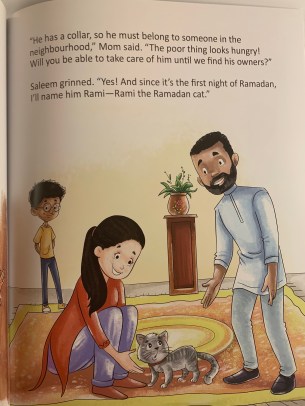
Saleem has just moved to a new city with his parents and doesn’t know anyone.  Feeling lonely on the first day of Ramadan he is outside sulking when he sees a lost little cat.  He brings it in and his parents help him take care of him until they can find the cat’s owners.

B342E851-726B-4B8A-9B63-F381F5C1009D

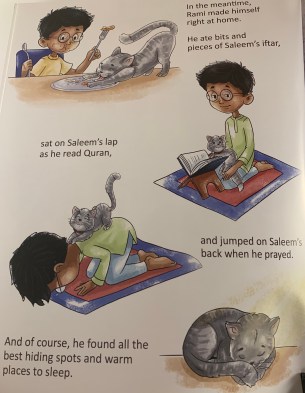
Saleem decides to call the cat, Rami the Ramadan cat for his timely appearance.  The next day the family makes flyers to post around to try and find Rami’s owner.  But no luck even after a few weeks, and secretly Saleem starts hoping they never find the owners.  Rami is his best friend, he jumps on Saleem when he is praying, keeps him company when he reads Quran, even shares his iftar with him.

22F7C85A-8891-4121-A608-421511688C49

One night at the mosque, Saleem makes Dua that Rami will stay with him forever.  After Taraweeh, Saleem can’t find his father, he waits by the door as everyone leaves, but can’t see him, he checks the shoe rack and his shoes are gone.  Feeling scared and alone he wonders if his father left him.  When his father returns from the washroom, Saleem is relieved, but wonders if that is how Rami felt that first day of Ramadan.

6E10660E-7FE3-4341-AF7E-B75EDF45DC8E

The next morning Saleem and his mom knock on every door in the neighboorhood until they find Rami’s owner.  When they find her, she is a nice lady, and tell Saleem, the cat’s name is Sammy.  Rami gives her his address and asks her to contact him if she ever needs someone to cat-sit Rami.

3634A3A5-B74D-4505-8C44-AED216D38872

Saleem’s Eid isn’t very fun without his only friend.  After prayers, there is a knock at the door, Sammy’s owner has come to offer to let Saleem keep Rami if he promises to bring him around to visit with her and her grandkids sometime.  She has other cats and sensed that he was missing Saleem.

16157CCA-24F9-4BDD-A661-B3353B6775C4

Saleem’s parents invite the lady, Mrs. Tompkins and her grand kids in to celebrate eid with them and Saleem and the children play with Rami, the best eid present ever.

The book shows Saleem praying and reading Quran and going to the masjid, but it isn’t preachy.  I think even non Muslims would enjoy the book and not be confused by anything Saleem and his family are doing.

I love that the mom so clearly wears hijab out of the house, but not in the house.  That there is some skin color diversity in the book, that Mrs. Tompkins is in a wheel chair.  I also love that the new friends, and only friends are presumably non Muslim, and that a little gray cat brought them all together, Alhumdulillah.

The Little Green Drummer by Taghreed Najjar retuld by Lucy Coats illustrated by Hassan Manasrah

Standard


A485FA5B-6839-4720-9E5B-BA2D9AB71901

This book is perfect for early readers that are more fluent than picture books, but not quite ready for a full on chapter book.  With five chapters, pictures on every one of its 73 pages, this book is a joy to read both on your own or out loud to a group.  It is fun for Muslim children and non Muslim kids, and a great addition to bedtime or story time at Ramadan, or any other time of the year for that matter.

3BC30F96-8F88-48D3-8963-99E9EFA5BE44

SYNOPSIS:

Samia and her Yaba live in Lifta, Palestine and her dad’s job in the month of Ramadan is is to wake the whole village up as the dawn waker-upper.  Samia loves his important job, and hopes one day to do it too, but her dad says a girl has never done it before.  Samia doesn’t understand why, girls can shout and bang drums as well as anyone else.

The day before the start of Ramadan, Yaba is not feeling well and doesn’t know what he will do.  Samia sees her chance and says she can do it.  Her drum is loud, her lantern is bright, and her dog, Barkie, will keep the wild wolves away.

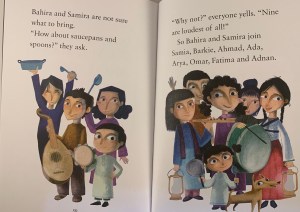
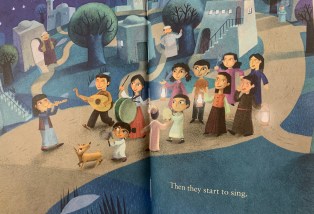
As she sets out in the dark, she sees orange scary eyes in the woods and sings a song to herself to keep her brave as Barkie defends her.  When she gets to the first house, they are surprised to see her, but the children of the home rush out to join her with their own drums.  When the three children and Barkie get to the next house, their friend Omar wants to join in with his tambourine.  This continues as the village children join together with whatever instruments, even pots and pans, they have to make sure everyone gets up in time for suhoor.  For five is louder than four, all the way up to nine being the loudest of all.

The children all sing and the villagers reward them with candy and treats.  On the way back home the wolves stay away and when they reach home Samia’s dad is feeling better and can’t wait to hear of her adventure.

44520351-F7CC-4FAA-A643-936E6858FD73

WHY I LIKE IT:

The book is based in truth which is detailed at the end of the story on three pages that tell about Lifta, and how after a war the people were not able to return.  It also tells about Ramadan as the story text itselft mentions it very little.  Yes, it takes place in Ramadan, and the people need to be woken up to eat before the day starts to fast, but the afterword gives a bit more about the holiday and Eid that follows.

I love that the book is about a girl doing something because she can, I was afraid it was going to be like Hiba Masood’s Drummer Girl, but it takes a different turn in showing Samia having to be brave, showing team work and cooperation in getting the job done, and the village not even really caring who wakes them up, her being a girl doing a “man’s job” is never even mentioned again.

The book is fun with the sound effects and inclusion of everyone and the illustrations are incredibly well done.

8A2F6DC8-8573-46E1-8CD0-364E46DDB1AC

FLAGS:

The book is clean, the “scary part” is quick and while it adds a little tension, not enough to scare even sensitive little ones.  The dog stands his ground and becomes the Dog King of the Village.

A658F1B7-5975-42C1-822A-90F652CA668D

TOOLS FOR LEADING THE DISCUSSION:

I’m trying to see if I can do this as an online story time during Ramadan amid Covid 19.  It is a super quick read, and is a lot of fun, but the small (8×5) size might make the pictures hard to see.  I think all kg through 2nd grade classes should have this story.  It explains a cultural celebration of Ramadan in a universal way that will make Muslims feel proud and non Muslims excited to learn about something new.

5871BBBF-1802-4A33-A387-A9B3C91020F6


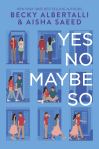
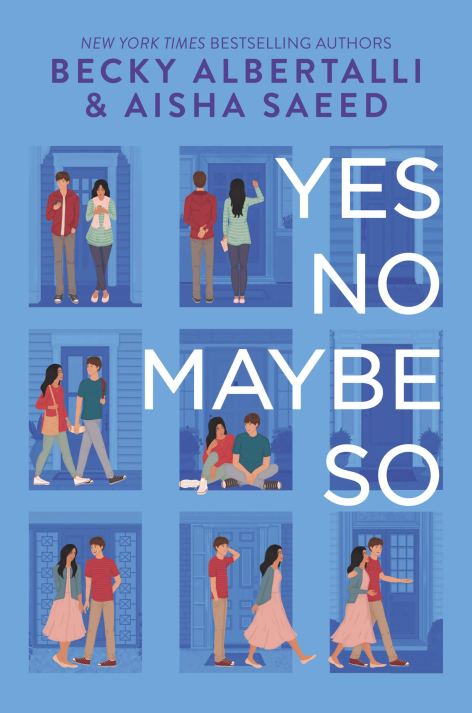
Yes No Maybe So by Becky Ablertalli and Aisha Saeed

Standard
Yes No Maybe So by Becky Ablertalli and Aisha Saeed

yes no

This new rom com in book form with a Muslim female character written by a Muslim author, sets itself apart by being co-written by a Jewish author and the other half of the love story being told by a Jewish boy’s point of view.  This YA book is very relevant as a special election in Georgia served as the catalyst of the two authors coming together and fictionalizing the effects of white supremacy, Islamaphobia, and antisemitism for the book, while real headlines were urging the two to canvas, get involved, and make a change against the increased showing of hate with the election of Trump.  The presentation of Islam is probably realistic, but definitely not ideal, and with the kissing, multiple LGBTQ+ supporting characters, the profanities, and 436 page length, the book is probably best for 15 year old readers and up.

SYNOPSIS:

Jamie Goldberg is 17 and is spending his summer helping his cousin work on a special election campaign for a Democratic candidate in an incredibly red district in Georgia.  A very nervous kid, who hates public speaking and talking to girls in general, he would rather be behind the scenes or hanging out at Target.  His little sister, Sophie’s bat mitzvah is coming and things at home are crazy with pre party planning.  His grandma, an Instagram sensation uses him for tech support and video filming, and his easy going demeanor means he spends a lot of time, being bossed around.

Maya is the 17 year old only child of a lawyer mom and physician dad and has just found out that they are separating.  With her one friend too busy with work and starting at the University of Georgia, US born, Pakistani-American Muslim Maya, is not having a very good Ramadan.  When an interfaith event reunites her with a childhood play-date friend, Jamie, her mom convinces her to help him canvas to keep busy and sweetens the deal by bribing her with a car.

Naturally the two spend a lot of time together vounteering for Jordan Rossum, stuffing envelopes, canvassing, and putting up signs.  Along their way they become good friends, and invested in the election as a House Bill banning head coverings, and antisemitic bumper stickers start getting plastered around town.  The end of Ramadan, the election, the hate the two encounter, and families changing, bring Jamie and Maya together.

Maya’s parents are pretty chill about boys, and only caution her about unnecessary complications by dating in high school, when Maya throws it back on them, that their relationship is pretty complicated, she seems to not find an Islamic reason not to make-out with Jamie.  The whole book is angsty and the two feign cluelessness, but based on the cover of the book alone you know where it is going.  The true climax is how much the relationship can be used for political gain, and if they can get their candidate elected.

WHY I LIKE IT:

I like the political setting, it is a different and very relevant slant.  It might be a little alienating to readers outside the United States, because the political process isn’t really detailed, but the characters involvement in their small slice is a major aspect of the book.  The book is definitely pro Democrat, but addresses the gas lighting, hate speech, and views of those on both sides.

I also like that two minority authors came together to share an OWN voice perspective of life today.  For the most part the story telling is smooth with the two characters getting alternating chapters to tell their story from their point of view.  A few times, I felt details were missing, for example what Maya wore for Eid, when space was given to detail that she didn’t wear ethnic clothes to an iftar, and her picking a dress for Sophie’s bat mitzvah.  Similarly, Maya’s parents seemed flat for their trial separation being a major part of Maya’s stress.  Jamie’s grandma was probably my favorite side character, and one of the most fleshed out.

I am fully aware that some Muslims pick and chose what to follow and that not everyone is strict about boy/girl relations, but I felt like for a book that is set in Ramadan, uses religion as a catalyst for civic action, Maya’s mom wearing hijab, and an opening scene being set at the masjid, there is really nothing Islam in the defining aspects of the characters or story.  It is so watered down and almost catering to non Muslims to feel comfortable, that it left me annoyed.  And I think non Muslims too will wonder why Maya’s mom covers and Maya doesn’t and how that works, or why Maya switches to having one reason for not dating and then a religious one.

The book sets out to do a lot in terms of humanizing the effects of laws and policy on average people, but I don’t know that most Muslims hoping to see a mirror to their experience will find that in Maya.  I can’t speak about Jamie, and the Jewish experience, but Maya is rather forgettable in my opinion.

FLAGS:

There is a lot of cursing, and the F word at that.  In the dialogue set in Ramadan, it becomes a joke to substitute it for something else, but once the month is over, the language resumes.  There is kissing, and making-out with the main characters.  There is talk of hooking up, but nothing explicit.  There are is a side character friend that is gay and he and his boyfriend are affectionate.  After the bat mitzvah Sophie comes out to Jamie.

TOOLS FOR LEADING THE DISCUSSION:

I don’t think that I could do this as a middle school selection, the rationale for Jamie and Maya dating, isn’t ok for an Islamic School message.  I really wish just once, a book like this would have the main character, being like, “nope, sorry.”  It is getting predictable and while I know it is countering the oppressed woman view, it is becoming equally one dimensional in its presentation of Muslim women.
 

Satoko and Nada 1 by Yupechika

Standard
Satoko and Nada 1 by Yupechika

satoko.jpg

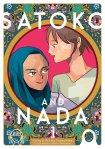
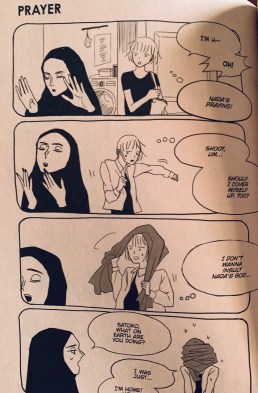
A manga series about two college roommates who have come to America to study, Nada from Saudi Arabia and Satoko from Japan.  Written by a Japanese author and translated into English, there is a lot about Muslims, particularly Muslims from Saudi, as the two characters get to know each other and become friends.  Their interactions work to dispel a lot of stereotypes and promote how rewarding getting to know people different from your self can be.  Volume one (there are three) is 127 pages, read right to left in four panel pages, and is fairly clean for all ages (they do buy underwear and bras at one point), but would most likely appeal to female readers in 4th or 5th grade and up.
8CE09DE5-2BEB-48C0-9157-96B13CC78CD9

SYNOPSIS:

The book is about two girls getting to know each other, learning about each other’s culture, and navigating life in America.  There isn’t really a plot or a story line outside of this basic framework, and with a heading every page or two it reads like a quick scene about the topic expressed in the heading.  So, for example there are headings of Veils, Ramadan, Birthday, MashAllah Choice, etc, and then a few panels showing the girls having an interaction about it, resulting in understanding, humor, or a lesson.

In a bit of a stereotype twist, Nada is more street savvy then Satoko when approached by a stranger for a ride, and thus Nada hasto educate her a bit.  The book brings in a Christian American character and a third generation Japanese character learning Japanese, to further show how assumptions plague as all and how simple conversation and an open mind, can lead to some amazing friendships.

WHY I LIKE IT:

The book is really choppy, but you get used to it and soon you forget that it isn’t a typical story.  I admittedly haven’t read a lot of manga so, I have no idea if this is the norm, or something unique.  I love that its upfront about stereotypes, if it was an American writing it, or a even a Muslim it would probably come across as preachy or arrogant, but somehow it doesn’t seem like the two characters have much baggage, nor feel a need to defend their culture by putting another’s down.  They deal with issues such as women driving in Saudi, differences between hijab, burka, abaya, niqab, being around alcohol,  the joy of a fatwa allowing soy sauce and its alcohol content to be permissible, etc.  Some things are cited for clarity and something are very Saudi, but it really contains a lot of information, about Islam that I am pretty impressed by.  There isn’t a ton about Japanese culture since I would assume it was written for Japanese readers, so it would be redundant, but I did learn, according to Satoko, how religion is viewed by Japanese, how putting age and gender and race on forms seems incredibly personal, and some information about food.

FLAGS:

There is a possible failed abduction, not sure what the guys intention was, but the girls treated it as such.  The girls do go buy undergarments, so they are visually depicted.  There is mention of alcohol.

2DF66805-A246-4150-89BA-E7E1EAF90E90
TOOLS FOR LEADING THE DISCUSSION:

I wouldn’t do this as a traditional book club, but I think I am going to get a copy of the series to pass around my daughters middle school group of friends, to

one- give them a taste of manga

two- see what they think of the Islamic rep from a Japanese paradigm and

three- give us all something to chat about

The book is fun, I got it at the public library and think it might open up a new book type for kids to try and a new point of view for many of us to consider.

My Grandma and Me by Mina Javaherbin illustrated by Lindsey Yankey

Standard
My Grandma and Me by Mina Javaherbin illustrated by Lindsey Yankey

grandma and me

I absolutely love that this 32 page picture book for children five and up breaks so many stereotypes and highlights so many commonalities between all people, everywhere.  I strongly believe that books like this, can change people’s perspective, and as a children’s books can prevent negative biases from forming in the first place.

IMG_8078

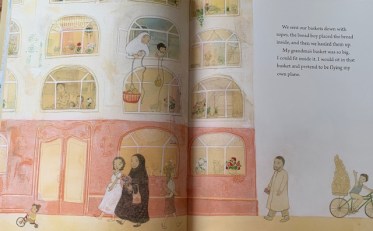
Set in Iran, a little girl absolutely loves and adores her grandma.  They pray together, they buy bread together and they share that bread with their best friends, their Christian neighbors next door.  While the little girl and her friend Annette play, the two grandmas chat, drink coffee and knit blankets to donate to the mosque and Annette’s Grandma’s church.

IMG_8079

Grandma sews chadors to wear, and Mina helps.  But, mostly she uses the scarves to make rocket ship forts, and capes to fly to outer space in.  When she returns to base camp grandma has cookies for her and wants to hear about her adventures.

In Ramadan, the little girl wakes up early to eat with grandma even though she is too young too fast.  When she gets older, they go to the mosque together at night too, after they have broken their fast.

IMG_8082

One time she hears her grandma praying for Annette’s grandma to go to heaven.  The next day Annette tells Mina she heard her grandma praying at church for her grandma to go to heaven.  The little girl imagines the two grandmas knitting and laughing together in heaven, on Mars, on Earth, anywhere.

IMG_8081

The book ends with the little girl stating past tense how wonderful her grandma was and  that she still wants to be like her.

The book touches on family, interfaith, love, helping others, faith, religion, friendship, culture, and is just really really sweet.  I wish I loved the pictures, as much as I love the story, but I don’t.  I think I like most of them with their texture and details, unfortunately the faces in some just seem a little off to me.

I absolutely love that there is no over explaining, and no glossary, the author seamlessly brings words like namaz, and Ramadan and chador in to the story, normalizing them as the pretend play, and familial bonds are so universal.

IMG_8083


The Tower by Shereen Malherbe

Standard
The Tower by Shereen Malherbe

the tower

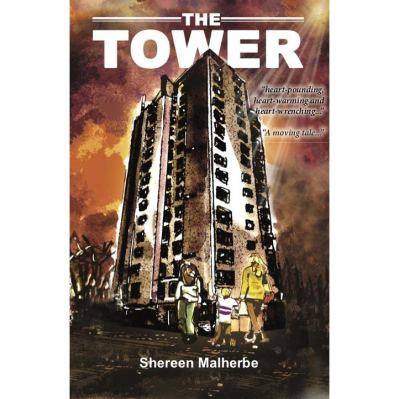
At 246 pages I’m not sure if this book would be classified as Young Adult, but I think it could be, as its message, focus and presentation makes it a valuable thought provoking read.  And the cleanliness of everything being resolved so neatly might almost be too coincidental for older, more jaded readers, where I personally wasn’t too bothered by how much emotional action was packed in to the book and how quickly it was resolved as the characters were compelling and the pacing made it an enjoyable quick read.

SYNOPSIS:

The story follows two women, Reem and Leah as their very different worlds and circumstances come together when they move in to the same apartment building.

Reem is a Syrian refugee whose past is presented in bits and pieces as her fragmented memories surface in the story.  She is searching for her 10 year old brother Adar, as well as trying to create a future for her self in London.

Leah has recently lost her husband, left her training as a doctor, and is trying to make a life for her and her son, Elijah, away from her parents’ shadow of expectation and demands.

When the two ladies meet, neither is completely settled or functioning, yet the desperation each is feeling causes Reem to ask for Leah’s help, and Leah agreeing.  The two become friends as they share parts of their world with one another and slowly start to heal.

Then Reem’s secret pregnancy comes to light, her abusive husband finds her, Leah’s posh friends abandon her, and their apartment building, the tower, catches fire.  Granted it doesn’t all happen that quick and there are lots of details that make their pasts, their friendship, and their goals for the future believable and inspiring, as well as making the pain for those lost in the fire emotionally wrenching.

As the two women once again try and survive hardship, this time together, they make progress before a terrorist attack on the mosque again sets them back.  Through all these major plot points details about how Reem got to England, and the atrocities she suffered that her mind blocked out are made clear.  Additionally, more about Leah and her families involvement in the tower fire and their friends’ involvement in human trafficking all tie the lose ends up. In the final pages there is hope and resilience and respect from the reader for the brave characters brought to life and their determination to persevere.

WHY I LIKE IT:

I love that it is a very personal, character driven story about a horrific fire, reminiscent of the Grenfell fire which claimed the lives of over 70 people.  I also absolutely love how Islam is presented.  The Muslim characters are tangibly real.  Reem wants to fast because it is Ramadan, but has the excuse that she is pregnant, but tries anyway.  She prays, she covers, she meets a Muslim that doesn’t cover, but they pray together at the mosque later and become great friends.  Leah is interested in Islam and asks questions and when she cooks for her Muslim friends she gets halal meat.  There is an amazingly helpful character Mo in the story who Leah is crushing on, but he refuses to be alone with her, or touch her, and when she tells him of her feelings, he says that everything she likes isn’t him it is his religion.  Leah and Reem discuss how the sunnah’s of the Prophet influence Mo and his brother and it is quite detailed.  Quranic ayats are quoted in character’s dialogues in natural presentations, not preachy or misplaced.  It hints at the end, when Leah has joined Doctors Without Borders and is in the Middle East that perhaps she has taken shahada, but it isn’t a plot point and isn’t mentioned explicitly.

My biggest complaint about the book is the random foreshadowing that pulls out from the story to hint that something more is going to happen between certain characters or be of more importance later.  I think it happened three times, and each time completely unnecessary. The story and characters and writing are clear and done well enough that needing the hint sells it all short and it wasn’t just annoying and irritating, it really kind of made me mad.  Here I was feeling an attachment for a character or what they were experiencing only to be reminded that there will be more, rather than letting me go along for the ride with the character.

I also was bothered by the font and spacing.  It is really tight on the pages, but with big margins, that a little breathing room would have been nice.  So, much happens in the book, that I wanted to be able to relish in each event and often I felt the presentation made it rushed and I found myself skimming, more than I would have liked.  I would have also liked to know what parts, if any, were based on or inspired by real events: the tower fire, human trafficking, stealing organs, artifacts coming out of Syria, refugee treatment in London, etc.

FLAGS:

There are memories of war and dead bodies.  The stealing of organs and dumping of bodies into the ocean.  There is a lot of death after the fire and after the shooting at the mosque.  There is a lot of blood, a terrorist act, a baby being delivered, a drunk man at a party.  Nothing is overly sensationalized, but it is a gripping book with some intense moments.

TOOLS FOR LEADING THE DISCUSSION:

I don’t know if middle school can handle the book, the characters are older, so it won’t resonate with them like a traditional YA book would, but I’m tempted to have my almost 13 year old read it so we can discuss.  I will most definitely suggest it to the high school book club adviser as there is a ton to discuss and relate to in this action packed book.

Author’s website and Q and A: https://shereenmalherbe.com/


Badir and the Beaver by Shannon Stewart illustrated by Sabrina Gendron

Standard
Badir and the Beaver by Shannon Stewart illustrated by Sabrina Gendron

badir and

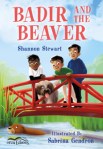
This 92 page early chapter book is a great linear story for 1st through 3rd graders.  The size, font, spacing, illustrations, chapter length, and content make it a fun read that incorporates diversity, environmental action, teamwork, information about beavers and acceptance all through the efforts of young Badir, a recent immigrant from Tunisia during the blessed month of Ramadan.

SYNOPSIS:

Badir is new to Canada and while he misses Tunisia, he is joyful and upbeat as we meet his older brother Anis, young twin siblings and classmates.  Out one night before iftar, he sees what he thinks is a giant rat swimming in a lake, but no one believes him.  When he sees it a second time, a lady at the park explains to him that it is a beaver, not a rat, and pulls out a Canadian coin to show him there is a connection between beavers and Canada.  With new knowledge about the difference between a lake and a pond, a rat and a beaver, Badir is fascinated with how beavers build homes, mate for life, and benefit the environment.  He even likens the beaver eating at sunset to his families own Ramadan schedule.

But all is not well for the beaver, as a petition is being circulated to relocate the rodent and save the trees in the park from his sharp teeth.  With new friends, a supportive teacher and classmates, Badir is determined to prevent the beaver from having to leave his home as Badir and his family had to do.

WHY I LIKE IT:

I love that this book is subtle in highlighting the welcoming of immigrants into a community, about having the main character be Muslim and it being Ramadan, and showing that diverse people can come together for a bigger cause and even become friends.  The main story line is naturally to save the beaver and the trees in the park, so the information and facts about beavers is appreciated and well presented.  I think most everyone of every age will learn something new about the common rodent.  But, by the main character being genuinely like-able and infectious, the reader will also realize that any negative stereotypes about Muslims or immigrants really aren’t a factor.  Badir’s family is really nice, the parents prepare food together, they feed their kids’ friends, and invite them over. The author does a good job at accurately making them seem like any other family.

IMG_4808

There isn’t much stress on Badir being Muslim or what that means outside of it being Ramadan, praying, and going to the mosque as a family at night.  The illustrations show the mom in hijab. The book tells a tiny bit about Tunisia, but not why they left, and definitely makes the foods they eat sound delicious.  Overall, it really does a good job of keeping the book about the beaver and finding a solution.

The book is for both non Muslims and Muslims and seems to be written by a non Muslim, and while set in Ramadan it is definitely not limited to being a “Ramadan story.”  There are small pictures on many pages and a full page picture in each of the 12 chapters.

IMG_4806

FLAGS:

None

TOOLS FOR LEADING THE DISCUSSION:

I think this book should be in classrooms and school libraries.  It really is well written, informative, and fun.  I don’t do a story time for the target audience of this book, but I think it would be a candidate for my “Lunch Bunch” meetings, when I read aloud to 4th and 5th graders once a week while they eat lunch.  Even if it is slightly below a 5th grade level, I think even older kids who pick it up and read it, or listen to it being read, will find it interesting, entertaining, and worth their time.

Publisher’s page: https://www.orcabook.com/Badir-and-the-Beaver-P3992.aspx


Musa & Friends Do Ramadan by Zanib Mian illustrated by Daniel Hills

Standard
Musa & Friends Do Ramadan by Zanib Mian illustrated by Daniel Hills

musa ramadan

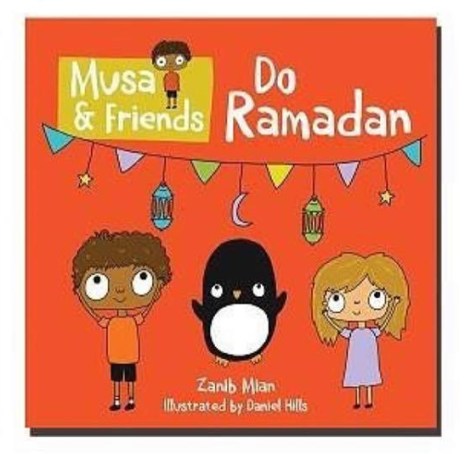
Zanib Mian has really set the standard for quality affordable children’s Islamic books title after title.  So, I really was on pins and needles waiting for these Musa & Friends board books, and then I got one (thank you Crescent Moon Store) and part of me is really disappointed, and part of me is wondering what I’m missing.

They are at cheapest $8 a book, and there are 8 pages.  Yes, the binding and page thickness is awesome, and the 5.5 square size is adorable in a toddler’s hands, but I guess I wanted more.  More pages, more feeling or tone of Ramadan, a little more substance.

IMG_4711

The illustrations are super fun and Zanib Mian has a history of writing toddler and preschool appropriate books, so needless to say I was surprised that I didn’t love this book.  Granted I’ve only seen the Ramadan book, and maybe the others in the series are much more satisfying, or maybe when you have all four together, they round each other out, which I’m really hoping is the case.

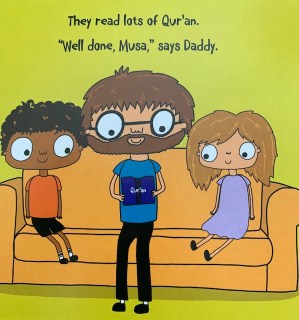
The text amount per page is great for littles, but the content is rather random in my opinion. They little diverse family and their penguin love Ramadan, they go to the masjid for taraweeh, they wake up for suhoor, they read Quran, they give money to the poor, they eat too much iftar and they love eid.
IMG_4712

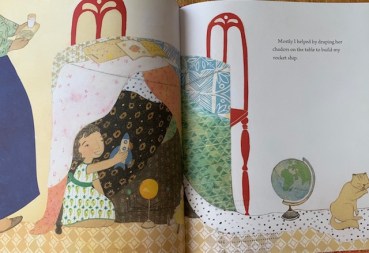
The book is meant for Muslim children as no details are given about what iftar or suhoor mean or that Ramadan involves fasting.  The illustrations won’t help much either in explaining the terms or even teaching concepts as the page on giving to charity has Musa and Penguin putting money in a jar, Musa’s dad is reading Quran, even though the text says, “Well done, Musa,” and even the penguin says “Gobble, gobble, gobble,” when eating(?).

IMG_4713

The books are cute and if you aren’t overly critical and you receive the book as a gift you will probably be very happy.  I just expected more and after the smallness of size of “A Young Muslim’s Mindful Book of Wellbeing” combined with the shortness of these books, I won’t just blindly order a bunch of Muslim Children’s Books without considering if they are worth it anymore, which makes me sad.


One Meal More: A Multicultural Ramadan Story by Emma Apple

Standard
One Meal More: A Multicultural Ramadan Story by Emma Apple

one meal more.png

Like many of Emma Apple’s books that she writes and illustrates, the concept is simple, the illustrations minimal, the message clear, and the price a tad bit high.
IMG_4409

At 50 pages this $17 soft bound Ramadan counting book is a little disappointing.  Had it been half the price, I would say it was great.  So, now that that is off my chest, let’s dive in.

IMG_4410

The concept and text follow a pattern that it is Ramadan, the samosas are on the table for the guests and then there is a knock at the door and someone from a different country has arrived with a traditional dish, one meal more, to add to the table for them all to share. They get to 10 and the athan is called, they start with a date and they all eat.

IMG_4411

I love that each of the women that arrive are not just from different countries, but that they are dressed different.  Some are covered, some are not, those that are covered are all wearing their hijabs differently.  The women are all smiling and the book shows diversity.

IMG_4412

One could nitpick and say that many of the visitors do not bring a meal, they bring a drink or a snack, but I think that is besides the point.  The point is that everyone from everywhere shares Ramadan, differently, but the same too.  And this book brings the world down to size on one table and with welcome arms.

IMG_4413

Muslims and non Muslim children ages 3 and up will get something out of it.  Whether it just be counting or hearing different international foods or understanding how Ramadan unites Muslims all over the world, the repetitive words and pictures will illustrate the beauty of the month in a simple way.