Category Archives: Non Fiction

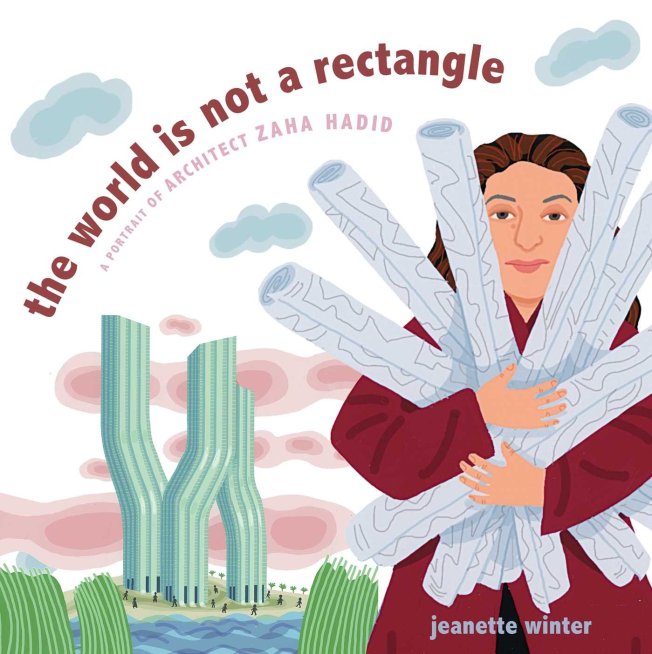
The World is Not a Rectangle: A Portrait of Architect Zaha Hadid by Jeanette Winter

Standard
The World is Not a Rectangle: A Portrait of Architect Zaha Hadid by Jeanette Winter

rectangle

This non fiction book spread over 56 pages on an AR 4.0 level is the biography of the famed Iraqi architect’s inspiration, triumph over obstacles and accomplishments.  It doesn’t go in to great detail of her life, but gives enough information for children to become familiar with her and be inspired by all that she accomplished not only as an Arab, Muslim woman, but as an architect and trail blazer of design and structure.  The pages are beautifully illustrated and the simple text flows and dances around the pages like her buildings in real life.

0BE54CFC-BBDB-4507-9DDA-FDA54576B014

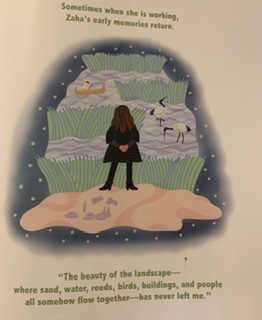
Born in Iraq where rivers flow, wind swoops across sand dunes, and cities existed thousands of years ago, Zaha finds designs and shapes throughout her home and the city of Baghdad.  She has ideas about arrangements of furniture and designs of clothing, she loves that dunes and rivers and marshes don’t have corners.

CEE97AF8-91A3-46AC-A63E-E3484F1790B1

She is a Muslim that attends Catholic school and loves math.  She goes to London for college to study to be an architect. She is relentless in her passion and fills notebooks with plans, paintings with what she sees in her mind and graduates with honors.

94EC3F0A-2584-4786-9FF8-9FE173CB04A5

She opens her own office and with a few friends, she designs buildings that swoosh and zoom and flow and fly.  The world is not a rectangle, but unfortunately no one wants to build her designs.  She keeps entering competitions, and winning, but they refuse to build her buildings.

FE2B9584-E1C6-4B19-94B8-9684A9F6BC0C

She designs buildings that come from her memory of grasses swaying, and wind blowing over dunes, and shells being cradled.  She designs an opera house like a pebble in the water, with the singer the pearl.  A ski jump that reaches the sky like a mountain.
91BAFF18-340B-4334-B856-5984A4CF1060

One by one, Zaha’s designs become buildings all over the world.  She has over 400 employees and designs buildings, shoes, doll houses, furniture, she does what she likes and urges others to do so as well.  Zaha passed away in 2016, but her visions are still carried out.


Let it Go: Learning the Lesson of Forgiveness by Na’ima B. Robert and Mufti Menk illustrated by Samantha Chaffey

Standard
Let it Go: Learning the Lesson of Forgiveness by Na’ima B. Robert and Mufti Menk illustrated by Samantha Chaffey

let it go

1AA90D6C-5528-4766-B486-219F31FF7AEC

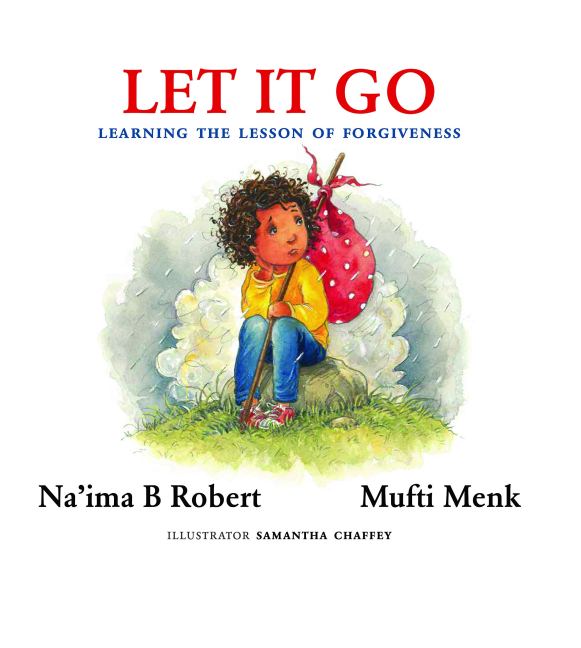
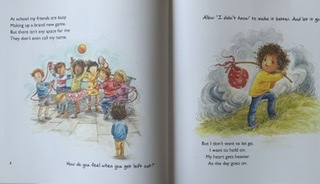
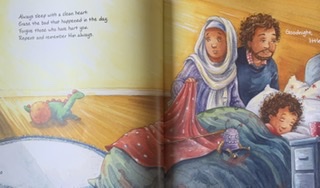
This 32 page rhyming book follows a little boy around as he is weighed down by a lot of things not going his way.  He doesn’t want to forgive until he is the one that hurts someone else and realizes we all make mistakes, forgiveness is not a weakness, and we all feel angry at times.  The book breaks from the story to ask the reader to think about their emotions in various situations, and encourages the reader to talk about their feelings.  The framework is Islamic and the repenting to Allah swt is part of the message. I found it awkward to read independently, but I read it to a small group of my own kids and their cousins, seven in all, ages four to thirteen, and it worked very well to discuss what the boy was feeling and how they would react.  I think this book would be great in a classroom or as a book an adult reads to a child at bedtime to encourage conversation.  I had to point out to the little ones, that the knapsack was getting bigger with the little boys anger, and explain what it was, but as a tool to foster dialogue it was incredibly powerful.

AF3C685C-9745-42B2-96C3-53F2B28B50B7


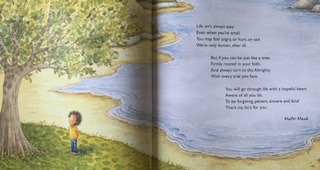
The book starts out with a poem/du’a by Mufti Menk that sets the tone for the book.  It makes clear that we are all human and feel things and that this book is a tool to understand and emotionally grow from.  No one is going to get in trouble or be reprimanded.

997B392B-E053-4EB3-AAAE-B40023247F90

The story stats with the little boy waking up happy and ready to have a wonderful day.  But then when he comes down for breakfast, his sister has eaten the last piece of toast.  The book asks the reader, “how do you feel when things don’t go your way?” and asks the little boy to let sorry make it better so that he can let it go.  But the little boy doesn’t want to let it go, he wants to hold on, and as a result it makes his heart feel heavy.

71B6DCC3-5B85-423E-A3F7-6F1F3DC80136

This pattern is followed throughout the book giving examples when the boy doesn’t get included in a game at school with his friends, when his friend kicks his football (soccer ball) in to the road and it gets popped by a passing car, and at dinner when his older brother laughs at him.

5BAA4271-891B-4D25-8451-B1A787D4C1F9

He then picks on his sister at bedtime, and doesn’t even know why he is doing it, and realizes that he too has made a mistake.  He learns that “it takes a strong person to let it go,” and that “forgiving is like taking off a heavy bag that I’ve been carrying all day long.”

4D498CEE-6886-40ED-925B-6D230205CB6C

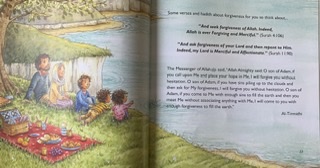
The book ends with some verses and hadith about forgiveness.  Has some facial expressions with emotions to discuss, and space to write down things that make you feel angry, hurt, or sad as well as a place to share what makes you happy, grateful, and safe.  There is also a glossary of Islamic Arabic terms on the inside back cover.

D5E111E7-2791-466B-9343-B362E7D4EB23


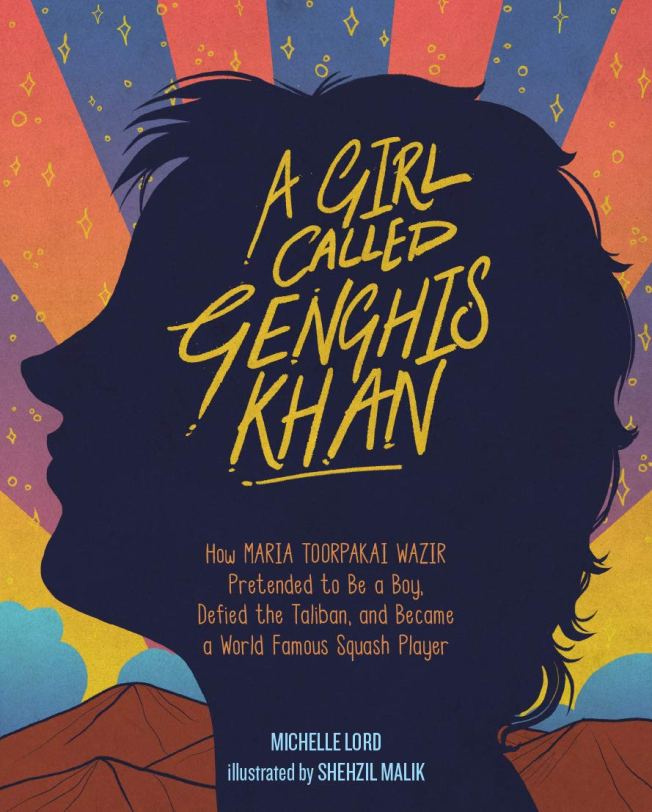
A Girl Called Genghis Khan: How Maria Toorpakai Wazir Pretended to Be a Boy, Defied the Taliban, and Became a World Famous Squash Player by Michelle Lord illustrated by Shehzil Malik

Standard
A Girl Called Genghis Khan: How Maria Toorpakai Wazir Pretended to Be a Boy, Defied the Taliban, and Became a World Famous Squash Player by Michelle Lord illustrated by Shehzil Malik

maria

This children’s biography of Maria Toorpakai Wazir, Pakistan’s world famous squash player, is simplified and suitable for children 2nd grade and up.  At 42 pages with bright illustrations older kids will understand a little bit more about the cultural norms that were being oppressive and the strength and risks Maria took to play a sport she loved and defy the Taliban while disguising herself as a boy. Younger children will probably only get her determination and perseverance, which is impressive in its own right.

C9A2CED0-B2A4-43F9-942A-B5A32B0B7E9C

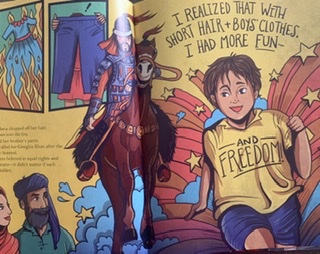
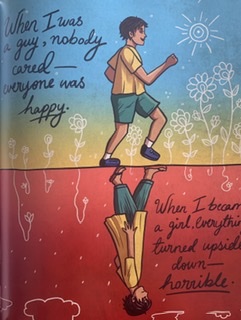
In 1990, Maria was born in the mountains of the Tribal Areas in Pakistan.  Conservative society and strict gender roles amplified by the control of the Taliban in 2001.  Maria’s parents supported rights for their sons and daughters, and allowed Maria to cut her hair, dress like a boy, and play sports.

9C7E2AE9-5668-48C6-8E41-304F1583B644

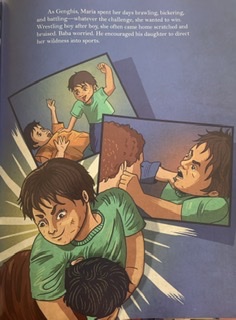
Her father called her Ghenghis Khan after the great warrior and when the family moved to the city of Peshawar he even introduced her as his son to people.  As Ghenghis, Maria was always picking fights and encouraged instead to play sports to channel her wildness.

2FB5AF13-2468-44A6-ACD2-1A118F69F9C6

She fell in love with the game of squash, and when she went to join the Squash Club she had to submit her birth certificate which revealed that she was a girl.  The director let her join the club, as the only girl among 400 boys.  But now her secret was out.
713C71CE-338C-4241-BD6F-05091868E560

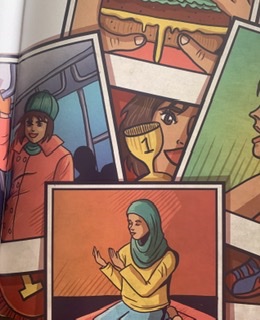
She was bullied and her family ridiculed, but she kept playing and kept winning.  The President of Pakistan awarded her honors for her outstanding achievements, but that infuriated the Taliban and they threatened her family.

FF2A709B-F539-44B0-92FB-48C336C2213B

As a result Maria had to hide, and would practice at night, in secret, and for 3 years she played against the wall in her bedroom.  Appealing to squash clubs around the world for help, she finally heard from Jonathon Power in Canada, willing to help her get away from the Taliban and be able to play.

3915AD01-442F-4473-9571-9D798C8B1389

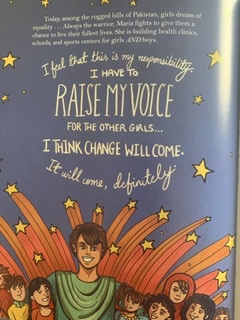
She left behind everything she knew at 20 years old to train in Toronto.  She still represented Pakistan in tournaments.  She studied, she prayed, she succeeded.  She now is back in Pakistan establishing health clinics, sports clubs, and schools for girls and boys.

The story is inspirational, and well told, it shows how culture limited her, not religion, and that in a larger city, culture was a little less conservative.  Muslim and non Muslim children will be inspired by her efforts, her willingness to look like a boy and her determination to excel.  Muslim kids will enjoy that it shows her praying, but might be surprised to see her in shorts and tank tops.  The book would be a great conversation starter about women’s rights and how it isn’t just in Pakistan that women struggle to have equal opportunity and respect.  It also might many children’s first exposure to the sport of squash.

138B3D8B-B868-437B-B7C8-5674879B81DA

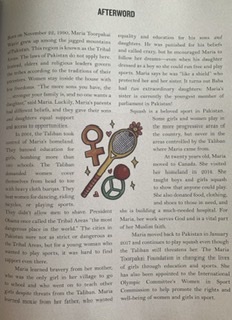
There is an afterward at the end with more information.  A list of additional reading about other inspirational women, a selected bibliography and a highlight timeline of female firsts in sports.


Our Superhero Edhi Baba written and illustrated by Maria Riaz

Standard
Our Superhero Edhi Baba written and illustrated by Maria Riaz

edhi

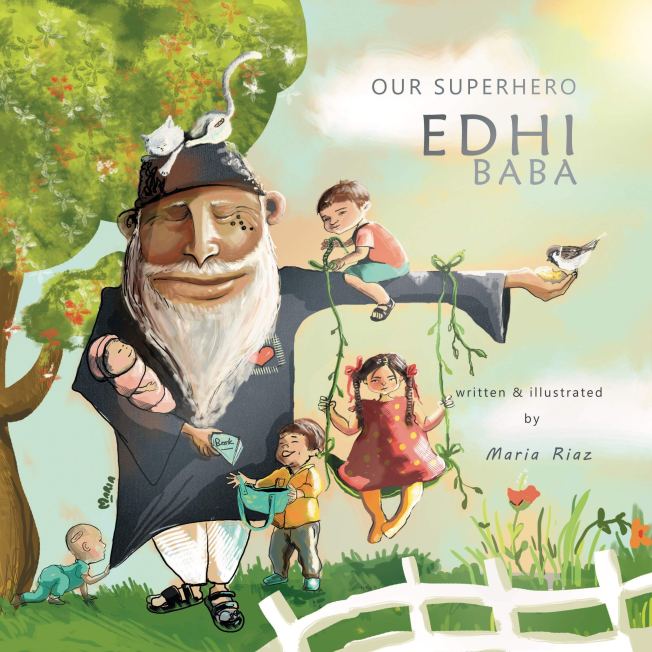
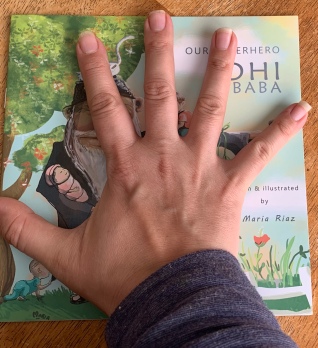
This is a hard review to write.  I have been trying to get this book in my hands since it was published and just could not.  I’d ask people to bring it from Pakistan, or try and order it on Amazon to find it out of stock.  And then finally I was fortunate that my cousin was able to purchase it for me, get it to my dad who was visiting Karachi, my dad then mailed it to me within the U.S. and voila a book that sells online for $15 (and is currently in stock) in my hand for RS 475 (less than $3), I mention this because if I had paid $15 for a 7×7 inch book that has only 16 pages, I’d be grumpy.  Having paid less than $3 (plus shipping) and involved multiple family members in the process, if I’m honest, I’m still a little disappointed with.

6A2DB5A1-8FE8-4608-8C3A-E81A352477EA

The book is beautifully illustrated, the author is the illustrator so why not make the book larger, so the illustrations could be appreciated?  The book is really short and very vague, even the note at the end could provide so much more about this national hero, his accomplishments, his struggles, his goals, his legacy.  And I’m not sure why it doesn’t.

7B314A2E-9BFA-4D25-A810-339E20A460AD

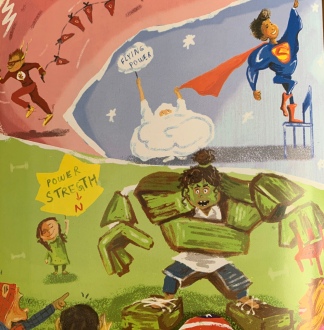
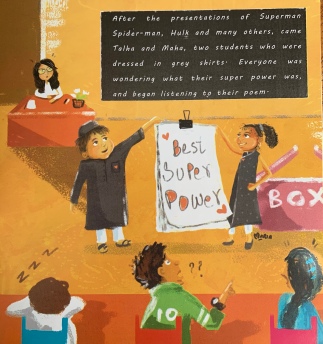
The book is framed with kids presenting superheroes in class: Superman, Hulk, Spiderman, etc., two kids wearing grey shirts and white pants start their presentation about Edhi.

B695DEF7-CC65-4623-817F-DCD780CA508B

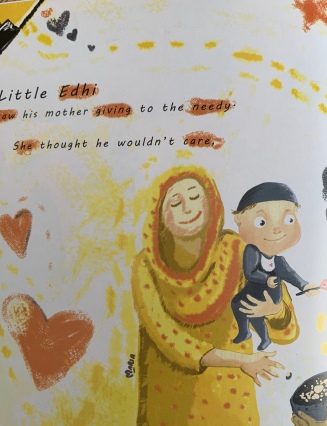
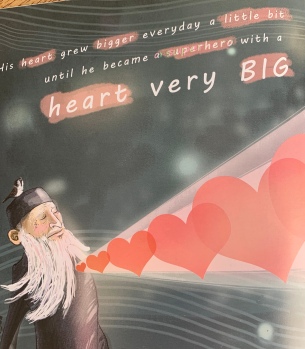
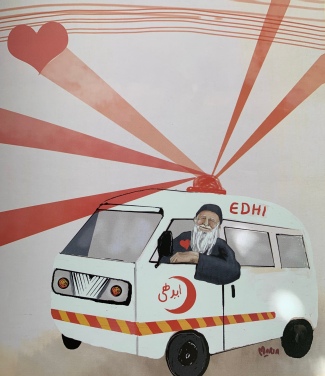
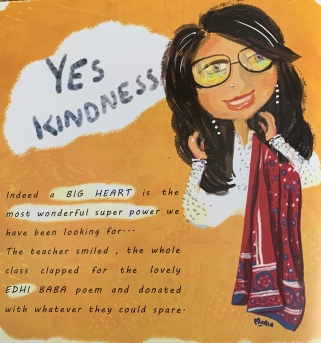
In rhyming lines the kids talk about how Edhi’s mother would give to the needy and how he continued this giving whatever he could spare from a young age.  How giving everyday made his heart grow big.  He gave to everyone and didn’t discriminate based on skin.  It mentions that he started an ambulance service and we should follow his plan of helping and donating.

A2DF1235-63EA-4FEF-8495-66B63AEFA578

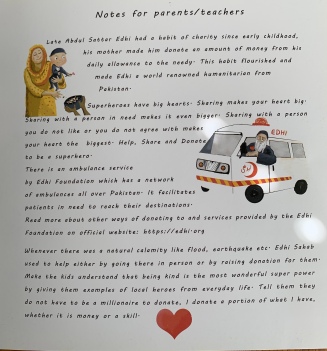
The note at the end talks about how to donate and how superheroes have big hearts and share not just with people they like, but even people they don’t like.  The author then says that she donates money and skill.

7E6B0C80-7C8B-44C5-846F-C0781DBC84DA

The writing is clear enough for the sparse words on the page.  I don’t want to critique a Pakistani writing rhymes in British English, because I speak one language, and clearly realize the beauty in being able to speak and write and convey in more than one language, but it is a bit awkward in parts.

F0FC330D-C20E-4957-9917-7C0551D0ED91

The idea of the book is beautiful.  Edhi was a humanitarian that needs recognition both within Pakistan and abroad.  But, I really wish this book had a bit more substance to it.  I think it can get a conversation going with little kids, but older kids will find it very generic, and unless a nearby adult can add to the story, it sadly won’t be remembered.

B33B93B2-BA26-4194-B1EF-F864E9B3112D

A portion of the book goes to support edhi.org, but it doesn’t specify how much.

(size reference):

97973BFE-6B49-478F-A110-B1C122ECAD9E

The Story of the Holy Prophet Muhammad (peace and blessings of Allah be on him): Ramadan Classics: 30 Stories for 30 Nights by Humera Malik

Standard
The Story of the Holy Prophet Muhammad (peace and blessings of Allah be on him): Ramadan Classics: 30 Stories for 30 Nights by Humera Malik

the story of prophet muhammad

I debated posting about this book for so long that Ramadan is more than half over.  But as a reference for years to come, I thought I should go ahead and throw my late support toward this Ramadan tradition and a book deserving of space on your shelf for children 4th grade and up.  I’ve seen people praising it for a few years, and finally I ordered it this year, however, I wanted to not only read it, but also test it out first: reading a story a day, discussing and asking the correlating questions with my own children, before reporting back.  I cannot and thus won’t comment on the accuracy of authenticity of the book, nothing stood out as erroneous to me and there is a bibliography at the back, but there is a reason I try and steer clear of non fiction, I’m just not qualified to comment.

SYNOPSIS:

The book starts with the birth of Prophet Muhammad (saw) and ends with the selection of Abu Bakr (ra) as the first Khalifah.  Each chapter is between one-and-a-half to two-and-a-half pages and the 30 chapters plus one Eid day chapter (so a total of 31), covers 103 pages in all.  There are a few pictures of where the Battle of Badr took place, the Cave of Hira, not many.  There are three questions at the back of the book for each of the chapters, but no answers.  The book is pretty linear, just the second chapter bounces back to Prophet Abraham (as) and Hagar and the story of Zamzam and then the rebuilding of the Ka’bah.  It is a glorified timeline, which in this case is a good thing.  It doesn’t go off on tangents or provide a ton of outside references, it is concise and general, but hits the key parts: marriage to Khadijah, first revelation, migration to Abyssinia, Taif, Hijrah, treatment of slaves, year of sorrow, Battle of Badr, Battle of Uhud, Treaty of Hudaibiyah, it talks of tensions with various tribes, coming to an agreement about the Khalifah, and more.

I think younger children might possibly be able to have the short chapters read to them and then explained, but really, it would be a lot to process.  The words are simplified and the gist of situations are conveyed, but topics aren’t necessarily shied away from.  It discusses that Prophet Muhammad (saw) had more than one wife, and that there were slaves, and there were tensions with the Jews, and Bilal was tortured, all things that picture books might skip over.

WHY I LIKE IT:

I like that even my young teen could read and involve herself without feeling like the exercise was childish.  Many of the answers are open ended in nature and require more than just a one word answer.  It allows for children to add other facts that they know about RasulAllah to the dialogue and make connections to our history with our current life very easily.  Even children that know the story of Prophet Muhammad (saw) will find the book engaging and smooth enough to read through again (and hopefully again each Ramadan) and learn new tidbits, understand concepts more clearly and be reminded about the beauty of our Prophet.

FLAGS:

Nothing

TOOLS FOR LEADING THE DISCUSSION:

If I was a teacher, I would definitely start each morning reading a chapter and doing the Q and A, whether it was Ramadan or not.  I think we need to be more connected to our Prophet and grow our love and appreciation for him, so books like this are such a great tool in accomplishing that goal.


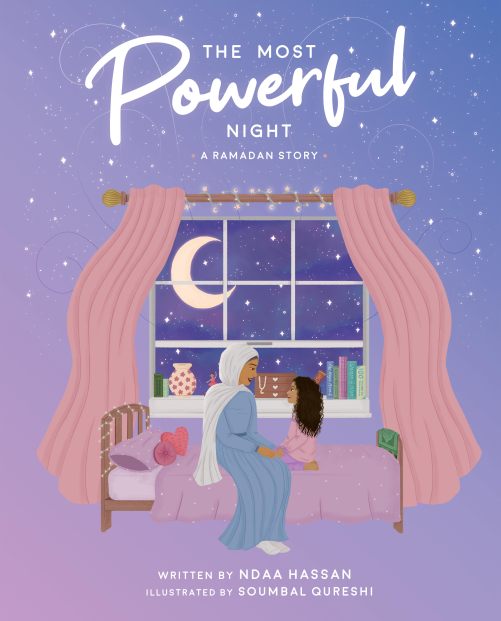
The Most Powerful Night: A Ramadan Story by Nada Hassan illustrated by Soumbal Qureshi

Standard
The Most Powerful Night: A Ramadan Story by Nada Hassan illustrated by Soumbal Qureshi

the most powerful night

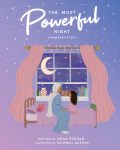
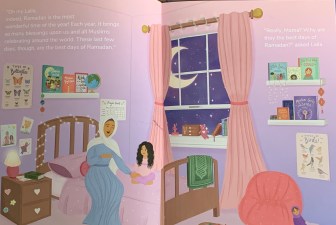
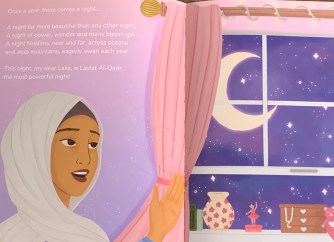
This beautiful poetic book about Laylat Al-Qadr explains in detail and wonder the importance of the most blessed night in the blessed month of Ramadan.  The soft purples and pinks of Laila’s room, and the repetitive refrains set the mood and tone of an informative bedtime story that will convey the awe and mercy of the night to seven and eight year olds.

C2080E23-FF92-40D7-A40A-49F53DD85406

The book is 40 pages, and pretty text heavy, but it flows smooth enough, and the details in the pictures are enough to keep little ones engaged. Younger and older children will also enjoy the story as both an introduction to the night the Quran first came down, and as a reminder of the gifts to be had.

816801CB-54C8-4FDE-836D-C9038DB1B538

Laila is sad that Ramadan is leaving as she peers out the window and sees the moon resmembling a crescent again.  Her mother takes the opportunity to tell her about the blessings of the last ten nights, and Laylat Al-Qadr specifically.

DD841DEB-9591-4305-80E6-CC328CAB45E6

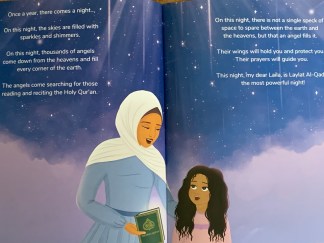
“The Night of Power and Miracles,” Laila’s mother explains is a night like no other, that comes only once a year.  Thousands of angels come down until there isn’t a speck of space that they do not fill.

13B3DC09-7A02-4921-BD9A-9DCBAAAE77D5

The night that is better than a thousand months and all our deeds are multiplied 70 times, the night the Holy Quran was first revealed to Prophet Muhammad (saw).

2F0180A5-B187-4511-A3B8-9DC0F37A55E8

Laila wants to make sure she pronounces it correctly and practices saying Laylat Al-Qadr.  Excited to make sure she is praying and reading Quran that night, she is desperate to know what day it is.  Her mother explains to her that we do not know.  Laila uses this to her advantage to get to stay up past bedtime for each of the last 10 days.

46D932B3-0A00-44AB-B44D-6A9CE84ECD65

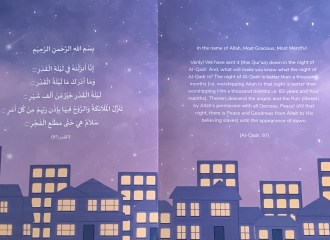
The book begins with Surah Al Qadr in Arabic and with the meaning of the translation in English.  It ends with a glossary, more information about Ramadan, and a glimpse of the author’s first book: Ramadan Around the World.

C84423A6-DCE5-4185-ABD7-3F0FF86ED59E

The 9 x 11 hardback binding and font are beautifully done and with there no other books for children that I can think of that discuss Laylat Al-Qadr, I foresee this one being read at least once a year, if not more, for many years to come, alhumduillah.


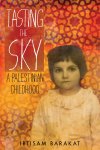
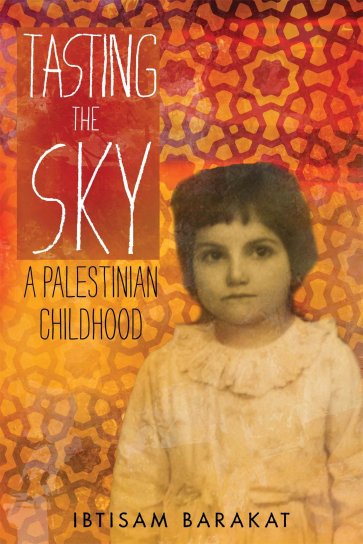
Tasting the Sky: A Palestinian Childhood by Ibtisam Barakat

Standard
Tasting the Sky: A Palestinian Childhood by Ibtisam Barakat

tasting the sky

This memoir may qualify as non fiction, but the majority of this 176 page book is told from the perspective of the author when she was three years old, so much of it reads to me as somewhere between historical fiction and autobiography.  No matter how you categorize it though, this AR 5.8 book is better suited for middle school and up. I love that this is is a Palestinian perspective of the Six-Day War and the immediate aftermath, but after reading it, I’m not haunted by the atrocities of the Israeli occupation so much as, some of the choices her family made.  I got my copy through Scholastic and in excitement, purchased multiple copies that I sadly think will sit in a box as I doubt I’ll find many students that will enjoy this book.

SYNOPSIS:

The book is divided into three parts with the first and third being short letters written in 1981, and the second part being the majority of the story taking place between 1967-1971.

The first part is a high school Ibtisam getting detained at a checkpoint after heading out to check a PO Box that she uses to keep in touch with her pen pals from around the world.  She reveals what life is like and shares the joy of learning about the outside world from her correspondence, but that she rarely talks about her childhood and her life during the war.  Part two is her sharing that.

The Barakat family lives removed from neighbors and a city, but Ibtisam loves her two older brothers and younger sister and at three years old is happy.  When war comes, the family decides to run, in the process Ibtisam doesn’t have time to find a shoe, and then she gets separated from her family and swept up with the people running for the caves to escape the bombings.  Once reunited with her family, they along with numerous other Palestinians make their way to Jordan and some safety.  Safety comes at a cost though and the family is separated as her father leaves to find work.  When the war ends, the family moves from the shelter and finds a small room to rent until they can return home.

Once the family returns home, things do not return to normal as the Israeli army begins training near their house causing Ibtisam’s mom to worry constantly in her attempts to keep the children inside and away from the windows.  Eventually, the mom takes the children and herself to an orphanage in Jerusalem saying that their father cannot keep them safe.  Ibtisam is close to her father and this dramatic change does not sit well with her.

In the orphanage, the boys get separated from the girls and eventually their father promises the mother to build a wall and make repairs to the home and purchase a goat if they come home.  They do, and the kids are grateful to be together again.  The boys then start school and the goat has a baby and life carries on.   Ibtisam grows close to the baby goat and their father promises that he will remain the children’s pet and will not be slaughtered.  But, when the boys are 8 and 9 they get circumcised and the feast involves the goat.

The next major event in young Ibtisam’s life is when she finally gets to go to school.  Incredibly smart, her mother essentially equates her love for her daughter with her success in school and with that motivation and predisposition to learn and excel, she does very well.  One day on the way home, she is sexually assaulted by an older boy, and makes arrangements to always have her brothers with her when walking.  Her parents are not made aware of the offense, and don’t seem to investigate Ibtisam’s change in attitude toward school.  When an Israeli soldier attempts to assault her mother, the family moves once again and part three is a teenage Ibtisam quarreling with her parents and once again excelling at school.

WHY I LIKE IT:

I like that tidbits of memories are woven together to give an overall impression of the author’s childhood.  The book is a quick read and is compelling enough to hold one’s attention.  The family is culturally religious, but the book makes a point that the father prays, not indicating that the rest of them do or even know how.  I love how the freedom and hope that Ibtisam has comes from learning the first letter of the Arabic alphabet, alef.  The love of language and the power found in reading and writing, is celebrated in its reverence to the learning of the letters.

I don’t get the mother, and while I get that war is a horrific time, and she is 24 when Ibtisam is 3 and has like four kids, so her life is definitely not easy, I still find it disturbing to me that she would lose a one shoe-ed daughter, take her kids to an orphanage to live while both parents are alive and well, and be so cold to her daughter.  The father seems to be loving to the kids, but he still slaughtered their pet, and I’m guessing culturally circumcisions are done at that age, because that seems incredibly cruel.

FLAGS:

War, loss, sexual assault, details about the circumcisions.

TOOLS FOR LEADING THE DISCUSSION:

I won’t do the book as a book club selection and while I know the book is in many libraries and classrooms I doubt many kids would be compelled to pick it up and read it based on the cover and synopsis on the back.  I have a few Palestinian friends that I will ask to read the book to see if they find it an accurate representative of life during the six-day war and even today as it could definitely be used to teach about the region, the conflict, and writing a biography about life for others to learn from.


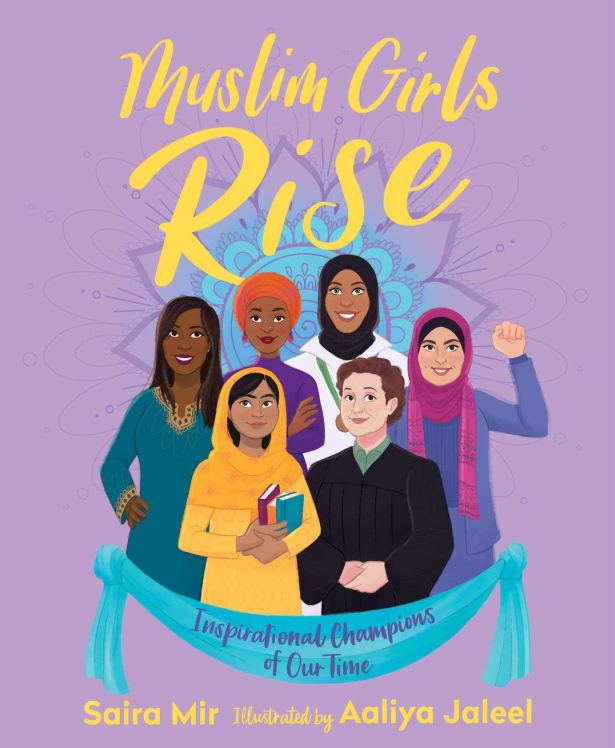
Muslim Girls Rise: Inspirational Champions of Our Time by Saira Mir illustrated by Aaliya Jaleel

Standard
Muslim Girls Rise: Inspirational Champions of Our Time by Saira Mir illustrated by Aaliya Jaleel

rise

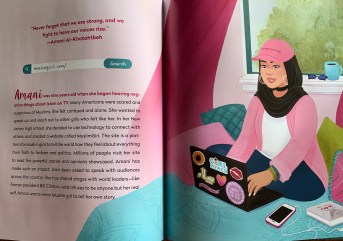
Women you have heard of, some you are meeting for the first time. Some you like, some you disagree with, women that cover, women that don’t, some young, others older, some athletic, some academic, some a little bit of both.  One fictional, a few political, but in the end, all strong women of today, all Muslim, all unique, from all over the world, all known for paving the way for others to follow.

C51C5834-B3C5-4D19-94B3-99B21ADF83EA

In 42 pages, 19 females are highlighted and illustrated to inspire Muslim and non Muslim boys and girls alike, but really Muslim girls will get the most out of it.  Sure a female gets mentioned here or there in other compilations of influential people of our time, but this one, well, this one seems mostly for us.

2D8175C8-0798-4AC1-BF15-D0A9C284AEA9

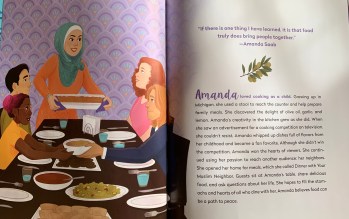
There are famous females in science, activism, fashion, film, sport, education, media influencers, make-up artists, you name it, and Muslim’s participate, so finally a book shining a light on the best of the best.  With each person getting a full two page spread, a few tidbits about who they are and what they are “famous” for are detailed in easy to read sentences that inspire, and if you haven’t heard of them before, enough general knowledge to get acquainted.  A few felt a little generic, but once you have a name, Googling them or researching them, is obviously, not difficult.

6D798E55-709C-442A-8DFF-4BA184C960E1

I wish there was a bit more information detailing who was chosen and why.  At first I thought it was  US or “western” movers and shakers, but then you have Maria Toorpakai Wazir, the tennis player in Pakistan, and Shirin Ebadi from Iran.  So then I thought ok, they are all contemporary, but Maryam Mirzakhani passed away in 2017.  Needless to say, one could argue that the list is arbitrary, and I think I would agree.

85FF7A9C-FD80-4F37-A1DE-B8726762E9CB

One could also argue, that these women may make history for notable things, but that they might say or do things that you might take issue with, and again, I agree.  They are people, they are fallible, and diverse, and have different perspectives and life experiences, but that’s ok, infact I think that might even be the point.  We all have different passions, and paths, and views and yet at the end of the day we should be able to lift each other up and inspire.  I think every person who reads this book will find someone that sounds or feels or looks like them, and that is a good thing, no, a great thing!

9C6EB606-F612-40BF-A947-092D2B76F1FE

My favorite was the Kamala Khan entry, because I didn’t realize the G. Willow Wilson was Muslim.  I erroneously assumed the other co-creator, Sana Amanat gave Kamala’s back story and home life its sense of OWN Voice, and I love that I learned I was wrong from a book.

2EC5EAF4-87F4-406C-B4D1-C95341536B66

The illustrations are right on and do an amazing job of conveying the character and the inspiration of the collection.  The book is much needed and I hope they do a similar style book for Muslim women in other time periods.

Special gratitude and appreciation to Gayartri Sethi (IG @desibookaunty) for gifting me this book for no other reason than to share the power and strength of women, and being a leader in that, by sending me a beautiful book.  May I learn from your generosity and pay it forward! Thank you.

Ibn Yunus: The Father of Astronomy by Ahmed Imam

Standard
Ibn Yunus: The Father of Astronomy by Ahmed Imam

ibn yunus.jpg

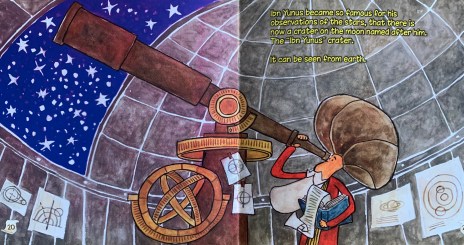
This book is part of a new Muslim Scientist Series featuring 24 glossy colorful 8×8 pages highlighting a great Muslim from the Golden Age of Islam.  Meant for Muslim children ages 4-7, the book sets out to teach and inspire little Muslims, and does a pretty decent job of presenting it in a memorable easy to understand way.  Adults might have to explain and help out a bit, but the book accounts for that too.

C6059DA8-08CC-41FE-9088-086C38EE07AC

The book starts off with some “Notes to Parents and Teachers” about supplemental activities and conversation starters to make the book relevant, and show how beneficial their contributions to science were and still are today.

A3210097-9DBA-49CC-B370-25187E4DCA3E

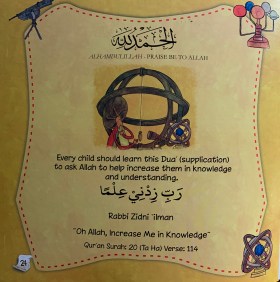
The book is a simplified biography of Ibn Yunus, and I would imagine the other books: Ibn Majid, Ibn Battuta, Ibn Al-Batar, follow the same pattern.  It tells about where he was born and when, and what he is famous for, before telling a bit about his family, an ayat from the Quran that inspired him is then given in English and Arabic and translated, before it shows how he worked toward his goal, and the accomplishments he made in his lifetime that still are used today.

938B76A9-E626-4B09-936E-446183F3141D

The fun illustrations make Ibn Yunus’s field of study easier to understand and will keep the littler listeners interested.  Adults will hopefully also learn something in the reading, and feel the same pride and inspiration of Muslim’s contributions to science.

13D95DDB-5EE2-4354-801D-85E561DABC86

It is critical to teach our children about the accomplishments and discoveries of Muslims, and this non fiction series is a great introduction to Muslim scientists, scholars, and adventurers, that they might not otherwise learn about.
Little People, Big Dreams: Muhammad Ali by Isabel Sanchez Vegara illustrated by Brosmind

Standard
Little People, Big Dreams: Muhammad Ali by Isabel Sanchez Vegara illustrated by Brosmind

muhammad ali

A few things surprised me in this latest addition to the non fiction biography series Little People, Big Dreams. First that a police officer told him to learn how to fight if he wanted to face the thief that stole his bike.  Second, that the 32 page book targeting 5 to 8 year old children has an AR level of 4.8 and finally that it does mention his conversion to Islam and shows him praying.

IMG_7247

The biography hits a lot of major milestones in the boxer’s life after showing he once was a little kid too.  He was born in Kentucky, had a younger brother and after his bicycle was stolen he started learning how to box.  He wasn’t the strongest fighter, but he was fast.

IMG_7243

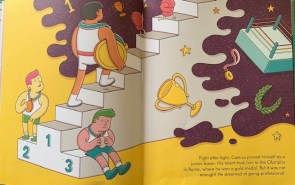
He won a gold medal at the Olympics in Rome, and then set his sights on being a professional boxer and becoming the world heavyweight champion.  Its nice that on this page the illustrations show that part of that pursuit involved physical training but the books and meditation show internal growth was valued and pursued as well.

IMG_7244

It shows how he used to taunt his opponents and that some thought it poetry, while other’s thrash talk. It also makes it clear that he used his voice to speak out for things important to him at a time when it was dangerous and accepted the consequences, whether it was African American rights or the war.

IMG_7246

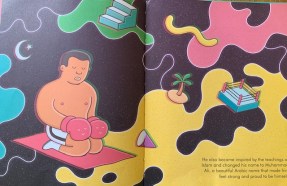
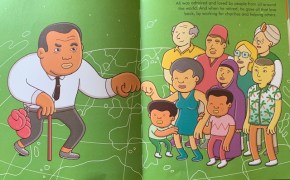
The page about him becoming Muslim explains that he was inspired by Islam, changed his name and “felt strong and proud to be himself.”  After his ban from boxing, he won the heavyweight belt three times before retiring and dedicating his life to community and giving back.

IMG_7248

The book ends with a timeline and some real pictures of Muhammad Ali, along with some other books you can turn to for more information.  The illustrations are comical yet detailed in their emotion and the information that is conveyed.  Kids will enjoy them and find they give life to the simple text on the pages.

IMG_7245

I got my copy from the library and my children aged 4-12 enjoyed the book as they have the other books in the series.

IMG_7249