Category Archives: Muslim Author

Huda and Me by H. Hayek

Standard
Huda and Me by H. Hayek

huda

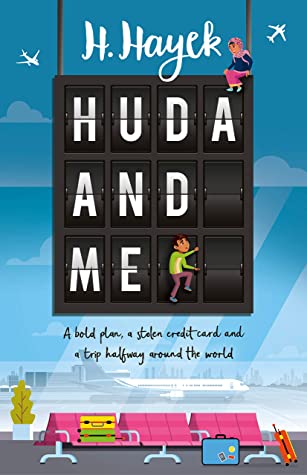
At 194 pages, this book just became required reading for all my children save the two year old.  Meant for middle graders, I absolutely loved this book.  Sure literary siblings often run away and have adventures, think Claudia and Jamie Kincaid from Mixed Up Files, or the sisters in Ticket to India, but this Australian Muslim duo adore each other and are doing it to reach their parents and save their other five siblings from an evil Aunty babysitter.  In some ways the book couldn’t and hopefully wouldn’t really happen, it is plausible however, and the way it is written bouncing back and forth in time until the resolution, and the absolute authenticity of the characters make the book hard to put down and had me laughing out loud.  The book is for everyone, Muslim kids specifically though, will feel an incredible kinship to the Muslim family and relate to the anxiety of making wudu in a public restroom, the shock of having the athan clock tossed in the freezer, the nervous looks between siblings hoping someone else will speak up about what Muslims can’t eat, mistaking a nun for a hijabi, amongst so many other little sprinkled in examples.  The power of OWN voice writing is exemplified and celebrated, and provides a mirror that a large swath of Muslims children, not just Lebanese Australians will benefit from and enjoy.

SYNOPSIS:

There are seven children in the family and when Mum and Dad announce that they have to make an emergency trip to Lebanon, the kids don’t understand why they need Mum’s friend Aunt Amel to stay with them in Australia.  They don’t really even like Aunt Amel, but they don’t really know her either and as their parents leave, they have no choice but to endure until their parents return.  When Aunt Amel assigns them all duties: 17 year old Omar is the 24/7 chauffeur, Kholoud becomes her personal stylist, twins Suha and Layla must keep her supplied with baked goods and tea, Akeal is the butler, Huda is the maid and little Raheed will be glued to her, some of the kids think it could be fun until they realize they are being used to provide Aunt Amel with a holiday in exchange for her staying with them. The kids are required to be up by five in the morning, are not allowed to talk to their parents, and some are even kept from school to provide the services Aunt Amel demands.  The kids grudgingly try to endure, but spunky Huda is pushing back, and with the help of the retired Polish Sleep Doctor next door, a plan is hatched, tickets are booked, and Akeal and Huda are making a run for Beirut. Along the way they will be met with an Islamaphobic teen pulling off Huda’s scarf, a variety of minders keeping track of the unaccompanied minors through airports and plane rides, and baited breath as they have obstacles at every step to find their parents in a country they have never even been to before.

WHY I LIKE IT:

The book is incredibly well written, I sometimes stumble a bit with Australian authored books, but this one was easy and universal in most of the dialogue and vocabulary. I enjoyed what was sprinkled in, and as a privileged American didn’t get lost at any point.  The shifts in the timeline to keep the story fast paced and moving also made the stress of “if they could pull off the escape” a little bit subdued allowing the experience and dialogue and connections along the way to really be enjoyed.  I think it was a smart move to not have it be full steam ahead, gritting your teeth, but more in the moment seeing why they had to do what they did, and how it was panning out for them.

I absolutely love that the family is unapologetically Muslim living in a western environment.  They don’t celebrate birthdays, but they seem ok with make-up, they pray, the mom wears hijab I believe, but I don’t think the sisters do, it really is such a relatable family with their own quirks and tests and they are active and doing their best.  It could be my family or most families I know, well lately my kids bicker a lot, that’s why it is required reading for them, but that is off track.  Back to the book, I was so proud of Akeal sticking up for his little sister wearing a scarf to be dressed up and not backing down from confronting her harasser.  I love the spunkiness but maturity of Huda.  From page one you are cheering them on, and it doesn’t let up.

FLAGS:

Kids scheming and lying and running away, all for good cause mind you.

TOOLS FOR LEADING THE DISCUSSION:

This would be super fun to read aloud to a 3rd or 4th grade class, but I don’t think it would work for a middle school book club, it is just too quick of a read.
Ace of Spades by Faridah Àbíké-Íyímídé

Standard
Ace of Spades by Faridah Àbíké-Íyímídé

spades

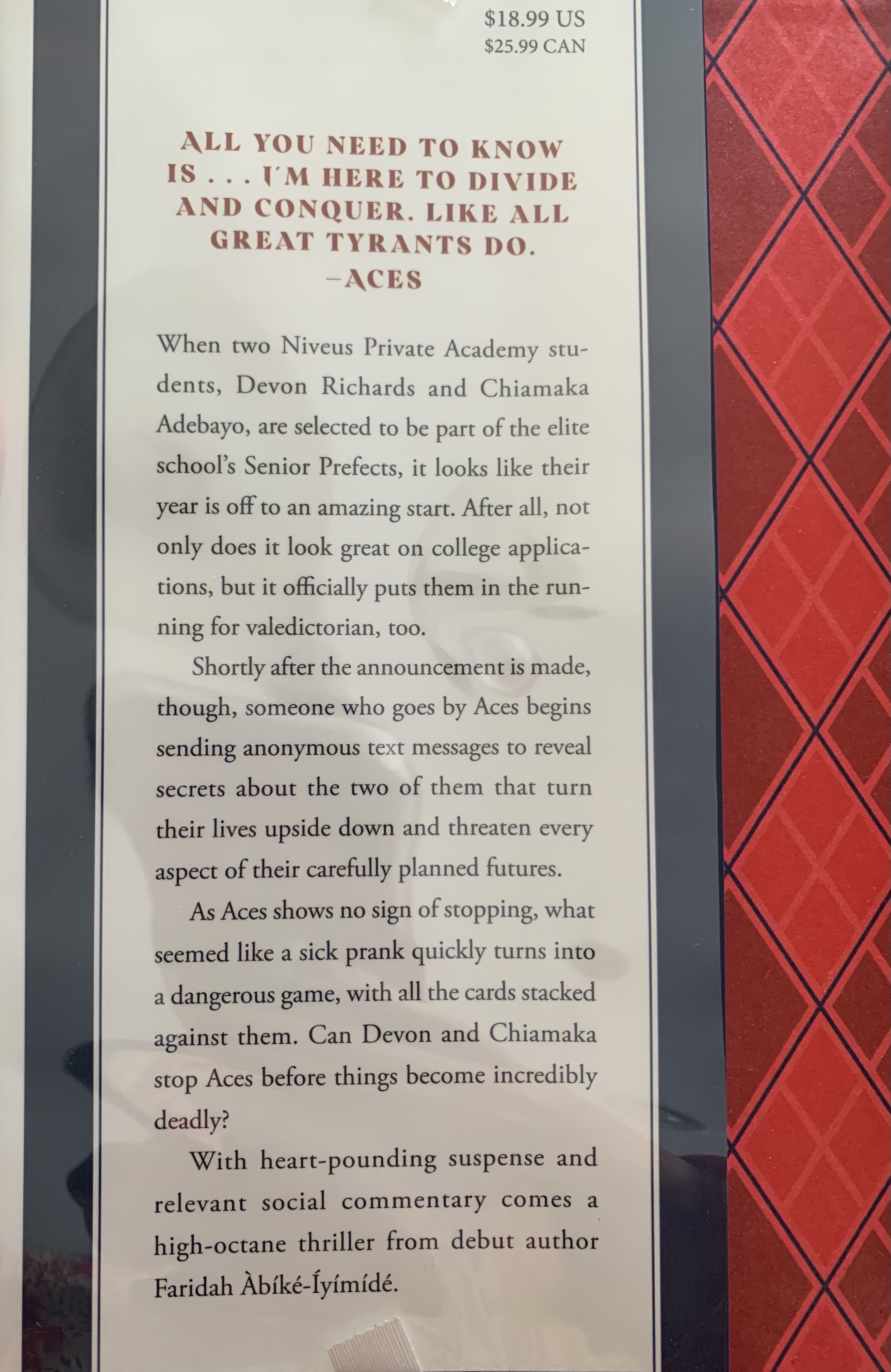
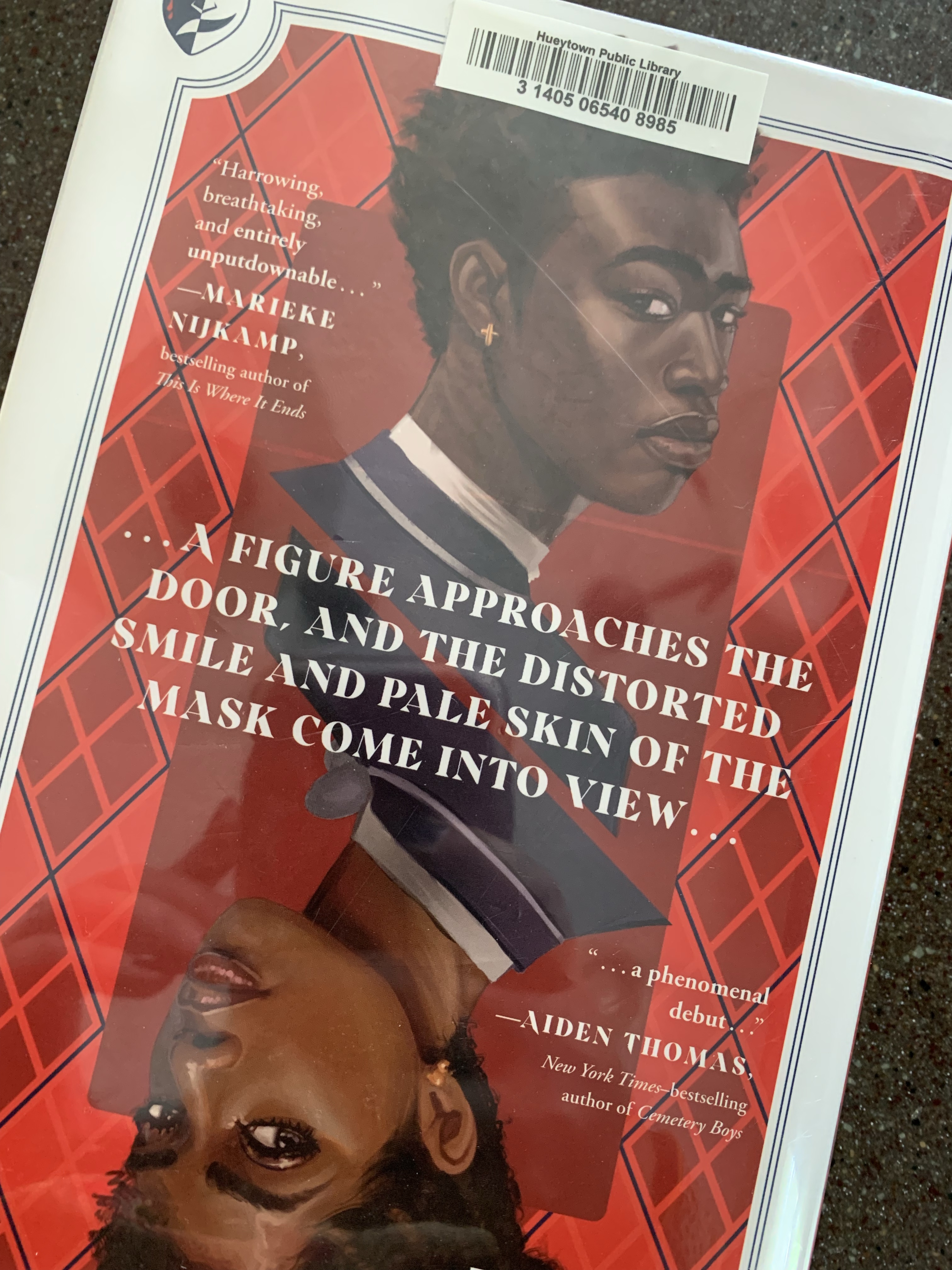
I had heard about this 420 page YA thriller and how it was written by a Muslim student at University and the seven figure book deal that she earned. It is constantly described as a combination of Gossip Girl and Get Out, having never seen either of those, I relied on the back of the book and the inside flap to see if it was something I would like to read and suggest my young teenage daughter, (and followers to read). Based on the suspense teasing and plot involving racism, I figured a contemporary YA book set in high school would have some relationship, sexuality, language and drugs, so at the last minute I decided to read it first. Alhumdulillah, I’m glad I did. The book has sex and relationships and sensual encounters between gay, queer, lesbian, bisexual, and heterosexual characters on EVERY SINGLE PAGE. I considered stopping, it was a over the top, forced, and honestly a little hard to read at times, but I continued because the commentary on racism and suspense storyline was well done that I was genuinely curious to see the climax and resolution. I write this review as a heads-up and to opine on the lack of mention of the amount of romance and sex in the book and in its blurbs. As a reader and someone who recommends books to people a lot, knowing what the majority of the book is about is helpful. To completely not mention something that is such a huge part of the book is frustrating, and so I’m writing this up more as an FYI, than a thorough and in-depth review. There are no Muslim characters, and the only mention of religion is a side character reading the Bible. Coming from an Islamic School Librarian standpoint, without exception this book would be considered inappropriate.

SYNOPSIS:

The book is told in two alternating personalities, Devon and Chiamaka. Two senior black students at a prestigious private high school. The only two black students. Chiamaka is the top of the school hierarchy, head prefect, planning on Yale for pre-med and the girl everyone wants to be. Devon is a scholarship student who plays music and dreams of Julliard. He flies under the radar and has one friend. When the book opens both are named Senior Prefects at the opening assembly of the school year, and no one is more surprised than Devon. The glory of such an honor is short lived however, as anonymous texts start popping up exposing secrets about the two. The two characters have skeletons they would rather not have exposed, and even though they barely know each other, they eventually resolve they must work together to figure out who is out to destroy them.

WHY I LIKE IT:

I like that the whodunit aspect really had me on my toes. I honestly, however, didn’t like either of the characters at all. The book has a lot going on, aside from the texts and secrets being exposed, that I wish would have gotten more page time. The two characters have very different, but very impactful home lives. Devon’s father is absent and it is learned he was executed on death row, his mom works three jobs, he has younger brothers and they struggle financial so that he has a chance at education. He lives in a tough neighborhood and runs drugs to help out with money. He hooks up with multiple guys in the book, and tries to keep it a secret so that he doesn’t get further harassed by the neighborhood guys, but it seems everyone knows he is gay even before the texts start coming. Chiamaka is Nigerian from her mom and Italian from her father. Her father’s family doesn’t accept her and her mom because of their skin color, so they no longer go to Italy to visit. Both parents are physicians and are never around. Chiamaka has no friends, picks boyfriends to further her power agenda, and spent her entire junior year having sex with her best friend, Jamie, with the hopes that he likes her too. She eventually realizes she likes a girl and hooks up with her. By-and-large for both main characters, only their sexual relationships are really explored, and most of them are brief. Thus it kind of limits the relatability to the characters in other facets of their lives. Not that people and characters have to be like-able, but they have a lot of layers, and it would have been nice to get to know them better as people, not just as shell minority representatives in a system built for them to fail.

Only a few side characters are developed, presumably just enough to make them suspect, but to drop information like one of them getting incarcerated and not explored, one diagnosed with diabetes and told without prompting and then dismissed, makes it feel like a lot is crammed in for no real purpose. As a debut novel by a young author, the writing is obviously amazing. I just didn’t connect to the characters, and the parts of the book I did like were overpowered by parts that I felt were overly forced. I will definitely read anything she writes in the future, although I will definitely research the books more thoroughly know what I’m getting in to.

FLAGS:

There is violence, sex (hetero, gay, and lesbian), cursing, drinking, drug use, drug selling, romance, kissing, hit-and-run, conspiracy, making out, drug dealing, physical beatings, passing out drunk, drunk driving, lying, cheating, racism, bigotry, hate speech, gaslighting, privilege, death, gun violence, destruction, murder, attempted murder, crude language, assault, blackmail, misogyny, homophobia, voyeurism, institutionalized racism, and probably more. Mature content.

TOOLS FOR LEADING THE DISCUSSION:

There is no way I would suggest, recommend, or encourage this book to Islamic School high schoolers.

Mabrook! A World of Muslim Weddings by Na’ima B. Robert illustrated by Shirin Adl

Standard
Mabrook! A World of Muslim Weddings by Na’ima B. Robert illustrated by Shirin Adl

mabrook1

This 32 page lyrical 9 x 11 hardback book with playful illustrations is a celebration on the similarities of all Muslim weddings and the cultural distinctions that make them unique.  Four countries are highlighted: Pakistan, Morocco, Somalia, and Great Britain, and I really wish there were more.  The book is written on an early elementary level, but would make a great wedding present, or even a text to be shared at interfaith gatherings that focus on traditions and women’s rights.  It is joyous and informative complete with a glossary and info blurb at the end.

img_3449

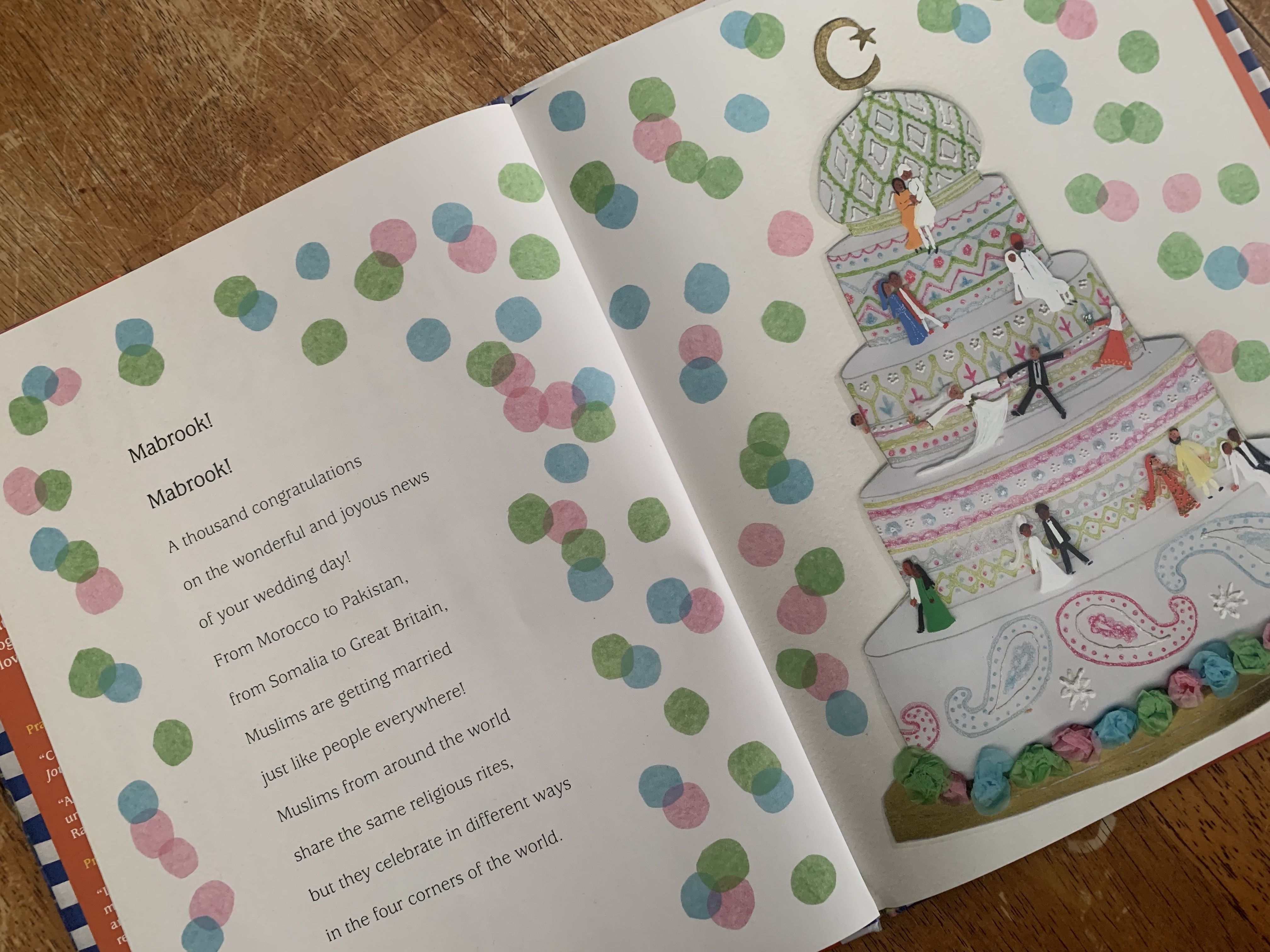
The book starts out with verse 30:21, Chapter ar-Rum in the Holy Qur’an and then jumps in to jubilations of mabrook, congratulations.  It establishes what countries will be explored and that Muslims get married sharing religious rites, but different celebrations.

img_3451

In Pakistan there’s a henna party and the groom rides in on a horse.  The brides are adorned with bangles of gold and guests enjoy biriyani and rasmalai.

img_3450

In Morocco the entire neighborhood helps prepare couscous and roasted lamb with olives and pickled lemons.  At the waleemah the bride is carried in on a chair, and changes outfits seven times.

img_3452

In Somalia, buraanbur is danced and blessings are sung to the mother of the bride.

img_3453

In England the ginger bearded imam marries the groom to his hijab wearing bride in white.  There are people of all faiths and backgrounds there to celebrate and wish them well.

img_3454

But before all of that, there are meetings with families, prayers, important conversations, agreement to the marriage contract, the woman is given a mahr and guidance is sought.

img_3455

The Muslims: Book 1: The Test by Ahmad Philips

Standard
The Muslims: Book 1: The Test by Ahmad Philips

the muslims

This is the first anime comic book in an eight book series aimed at early elementary readers.  Often books have lessons, this however, simply presents as an illustrated moral.  There is a situation that contains the lesson that one should always try their best for the sake of Allah swt and that is about it.  The knowledge isn’t tested a few additional times or in different situations, it is just 22 pages to illustrate the concept of doing things for the right reason, in this case studying after a failed test.  There isn’t anything wrong with the bright colorful book, the brother sister duo read authentic as they try and recall Islamic teachings, and get each other in trouble by accident, the diverse family is supportive and understanding, it just seems that it would apply to a specific lesson in a home or classroom and then sit on a shelf unasked for and not very memorable.

img_2858

The book starts with seven year old Hani trying his best on a multiple choice test that he didn’t study for.  He battles the personified Quiz Monster to no avail and on the way home from school confesses all to his little sister, Huda.  She reassures him that Allah swt doesn’t give us more than we can handle and agrees to not tell their parents.  Hani plans to tell them himself, inshaAllah.

img_2859

When they get home though, she slips, and spills the news to their mom.  Their dad comes home soon after and everyone knows.  The parents he imagines will turn into evil monsters themselves, but rather they laugh and remind him that he should have the intention of pleasing Allah swt in all things, so that he will assuredly never fail.  That if he makes that his goal, then he will inshaAllah find success.  Hani decides that he isn’t going to be careless in his studying and keeps focused.  He has a nightmare that he studies the wrong material, but alhumdulillah it is just a dream and he is ready, inshaAllah.

img_2860

The Islamic lesson and the situational allegory isn’t super clear, and I feel some discussion will need to take place to connect all the dots and convey the lesson in a way to be succinct and memorable.  Had he maybe made dua or intention before he studied, then the message would have been put in to practice, not just something the father talked to him about.  It is admirable that Hani was honest, that he didn’t try and hide is score, which I wish would have been praised.  Additionally, a little resolution between the siblings to show all was forgiven would have been nice.  The mom wears hijab even in the home, and there is a glossary at the end as well.

Salaam: Mindfulness for Muslims by Humera Malik illustrated by Najwa Awatiff

Standard
Salaam: Mindfulness for Muslims by Humera Malik illustrated by Najwa Awatiff

img_3300

I had planned to wait until the physical book comes out on the 15th to offer up my thoughts, but the Kindle version has released and I want to help put it on everyone’s radar.  My own kids went back to school today and emotions and feelings are all over the place: excitement, nerves, anxiety, worry.  Changes in general cause heightened feelings, throw in Covid cases on the rise, puberty, friends, more open discussions about mental health, etc., and kids need tools to be successful.  Alhumdulillah, the Qur’an and Sunnah offer guidance, reassurance, and direction, and this book helps organize and present coping tools for ages seven to adult.  Thirteen emotions over 85 pages follow a pattern of a title page, a “Remember” page with an ayat from the Qur’an (except in one case it is a hadith), then an affirmation to be said that is either a verse, a dua, or dhikr, followed by an adorably illustrated spread of simple activities to do and try in a checklist manner.  Not only will young Muslims find reassurance and direction in the text provided, but inshaAllah, they will also be comforted knowing that what they are experiencing is very human and that Allah swt and Prophet Muhammad saw have provided insight and acknowledgement of such emotions.

The 13 emotions highlighted are: afraid, angry, disappointed, grief, jealous, lonely, overwhelmed, sad, shy, sorry, upset worried, grateful.  There is an author note to parents at the beginning that mentions that the book is meant to be read “cover to cover in peaceful times and to be dipped into to find specific advice” when needed, and I couldn’t agree more.  There is also a note for the readers normalizing big emotions and reassuring them that Allah swt does not want them to despair.

The diverse character illustrations are absolutely heartwarming and I hope that they will be made in to pictures or charts to be purchased so they can be hung.  They are really well done, and the visual mapping will help kids retain and put the tips in to practice.  I’m not sure what the sizing will be in the physical paper back book, but I hope it is large enough for them to be properly enjoyed.


Zara Hossain is Here by Sabina Khan

Standard
Zara Hossain is Here by Sabina Khan

zara

After reading a few chapters of this book, I really had no intention of finishing it, knowing that my review highlighting the main character’s bisexual identity and romance would draw critiques from both people that don’t want to see Muslim character’s identifying as any of the LGBTQ+ labels and those angered by my mentioning of them as potential flags.  Alas, I did finish the book, and I am reviewing it because as a (former) Islamic School Librarian, I would want to know how much romance is in any book that I would shelve or recommend, and this book particularly gives no insight about any romance in the blurb on the inside flap.  The author’s first book was very clearly about being a queer Muslim, but this YA short 244 page book focuses a lot on Zara’s relationships, her parents support and acceptance of her being bisexual, and her new romance with a girl.  The book is not graphic or even overly steamy, but the blurb suggests the book is only about immigration, hate crimes, and bullying.   So, I write this review to give a heads up to parents, like me, that might see this book on the library shelf or if like the author’s first book, which was picked up by Scholastic, in a school book fair, and not realize that there is a fair amount of discussion about her sexuality and how it is perceived in the Pakistani and Islamic culture, as well as how she doesn’t see the need to fast in Ramadan or pray five times a day, but still identifies as Muslim.  All that aside, I also didn’t love how the book was written, it is a lot of telling and not showing, I feel like the mom is painfully underdeveloped and flat, and the story threads don’t weave together consistently;  it reads scattered.  The book is pretty short for YA and with so many heavy themes, it ultimately can’t spend much time exploring any of them particularly well, a shame since the author in real life seems to have endured much of what she writes for her characters in regards to immigration status and citizenship.

img_2132

SYNOPSIS:

Zara Hossain is a senior at a Private Catholic school, in Texas, she has friends that have over the years become family as the parents too regularly get together.  Zara came to American when she was three.  Her family left Pakistan for more educational opportunities and after her father’s pediatric residency, he stayed on with a work permit and green card waiting for citizenship.  The process continues to drag on, and it isn’t finalized.

A boy at school, Tyler, is harassing Zara for being Muslim, an immigrant, and brown.  Her father wants to discuss it with the principal, her best friend Nick wants to beat him up, and her mother just worries.  When finally a meeting with the principal is set, Tyler’s father doesn’t show, and things escalate.  Zara’s locker is defaced with profanity, Tyler is suspended, and the Hossain’s house is vandalized.  When Zara’s dad, Iqbal, goes to talk to Tyler’s father, he is shot, by Tyler’s dad.  He ends up in a coma in the hospital.  During all this Zara is crushing and pursuing a relationship with Chloe, who has just come out to her parents.  Zara’s family is very accepting of Zara being bisexual, and take Chloe in when she needs a break from her conservative Christian family.

Tyler’s dad is well connected in Corpus Christi, and while Iqbal recovers, he is faced with trespassing charges.  Although trespassing is a misdemeanor, by pleading guilty and paying a $200 fine, a criminal record will further complicate their citizenship status, and where they call home.

WHY I LIKE IT:

I like that it shows how messed up legal immigration often is. Dr. Hossain is the victim, he is shot,  he is a vibrant member of his community, but is being forced to leave and uproot his family.  The issue however about trespassing isn’t ever completely clear, the reader is never given a play-by-play account of what happened that night.  I wish we were.  It would be nice to not leave that area gray.  Also a lot of what lead up to Tyler causing Zara so much trouble is rather glossed over.  I wanted to hate him and be angry with him, and then be forced to examine how much was his doing and how much was his father’s, but I never really felt that emotion until the book told me to be mad.

I vaguely recall from the book that she is in a religious high school, the inside flap when I took the picture (see above) seems to stress it more than the story does.  She does mention that they couldn’t start a Pride Club, but I wish she would have talked a bit about being Muslim in a Catholic school, or better yet, shown the reader.  She doesn’t come right out and say that all Muslims are different and this is her.  I wish she would have, instead she talks a lot about being annoyed at having to explain why she doesn’t pray and fast.  Yet she never tells the readers why she doesn’t.  She goes to mosques to counter Islamophobic protests, and talks of going to Sunday school to learn Arabic as a child, but she is very clear that she was encouraged to question religion and God, but not what she found or why she still identifies as Muslim if she doesn’t believe it.  I was curious if she doesn’t believe it actually, why fast at all? If she is still questioning, why not say that.  I really felt that Islam and being Muslim was just a box to be checked to justify the hate crime, but really, she could have just focused on the culture.  There are Urdu phrases, and lots of foods mentioned, she clearly loves Pakistan and talks highly of it and often points out the good and bad in both Pakistan and America.  Food is in the book a lot, and not just Desi food, frozen yogurt is a crutch for the story, and it gets a bit annoying.  I wish there was as much character development as there was food detail and banter.

I liked that her parents defend and stick up for their daughter.  Whether you accept the lifestyle of Zara and her family or not, it is wonderful to see families stick together.  The nosey aunty got put in her place and if you have ever had to deal with the stereotypical aunties or the threat of what everyone will say, you had to cheer for Zara’s parents.  I don’t care what your thoughts are about LGBTQ+, that scene was awesome.  Great job Iqbal and Nilufer.  It was one time that Nilufer got to shine, I really don’t get why Zara’s mom is relegated to the cooking, feeding, worrying stereotype for much of the book.  I lost track of the number of times the book says, “no need to worry your mother,” or something to that effect.  The lady clearly is loving and strong, but doesn’t get developed, and it is frustrating.

The ending is a bit abrupt, yes time is ticking, and whether to move to Pakistan or stay and fight the system is definitely not an easy decision, but how is Canada suddenly the magical answer? I assume for most it is enough, and being the OWN voice tale seems to be very close to reality in this regard, I have no room to roll my eyes, but Canada has civil rights issues with Muslims too, and this 2021 published book kind of made it seem like it is just the perfect answer to all their problems.

FLAGS:

Violence, bullying, Islamophobia, profanity, vandalism, crime, shooting, stereotypes, hate, lying, straight and lesbian romance, crushes, kissing.

TOOLS FOR LEADING THE DISCUSSION:

This book would not work for an Islamic School middle school book club selection.

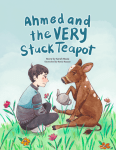
Ahmed and the Very Stuck Teapot by Sarah Musa illustrated by Rania Hassan

Standard
Ahmed and the Very Stuck Teapot by Sarah Musa illustrated by Rania Hassan

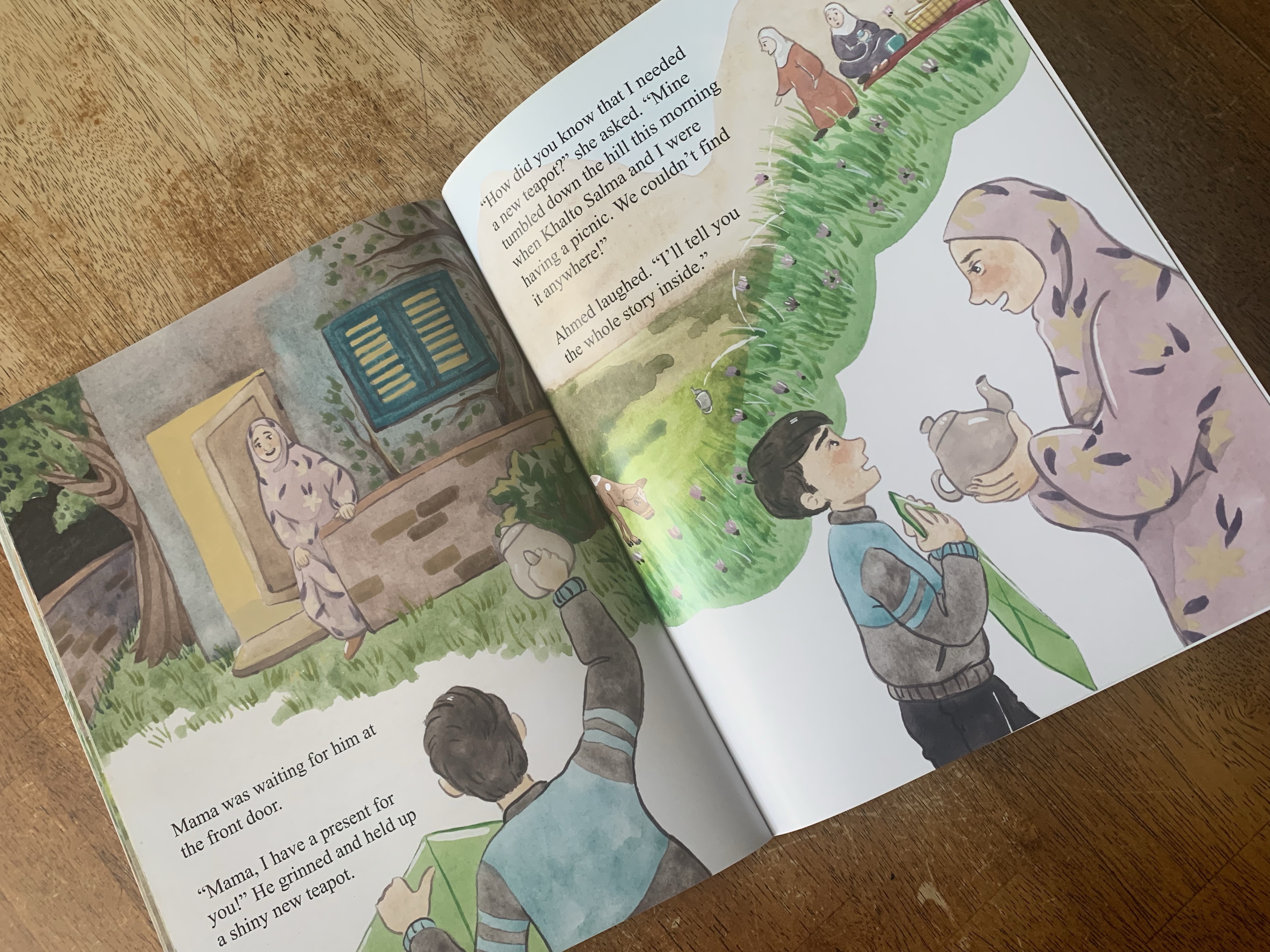
This 36 page early elementary book is packed full of choices and lessons packaged in a sweet story that kids and adults will enjoy reading and discussing over and over. My only real critique is the title. I’ve had this book sitting on my shelf for nearly a year thinking it was just a silly book about a calf with a teapot on her hoof that is stuck and would probably involve different people and methods and attempts to get it off. But the teapot is off by the tenth page, and the story is really just getting started. Like all Ruqaya’s Bookshelf picture books, the large thick shiny pages with a stiff soft cover binding make the story a great choice for storytime and bedtime alike. There are Islamic threads and references, but the story overall is universal.

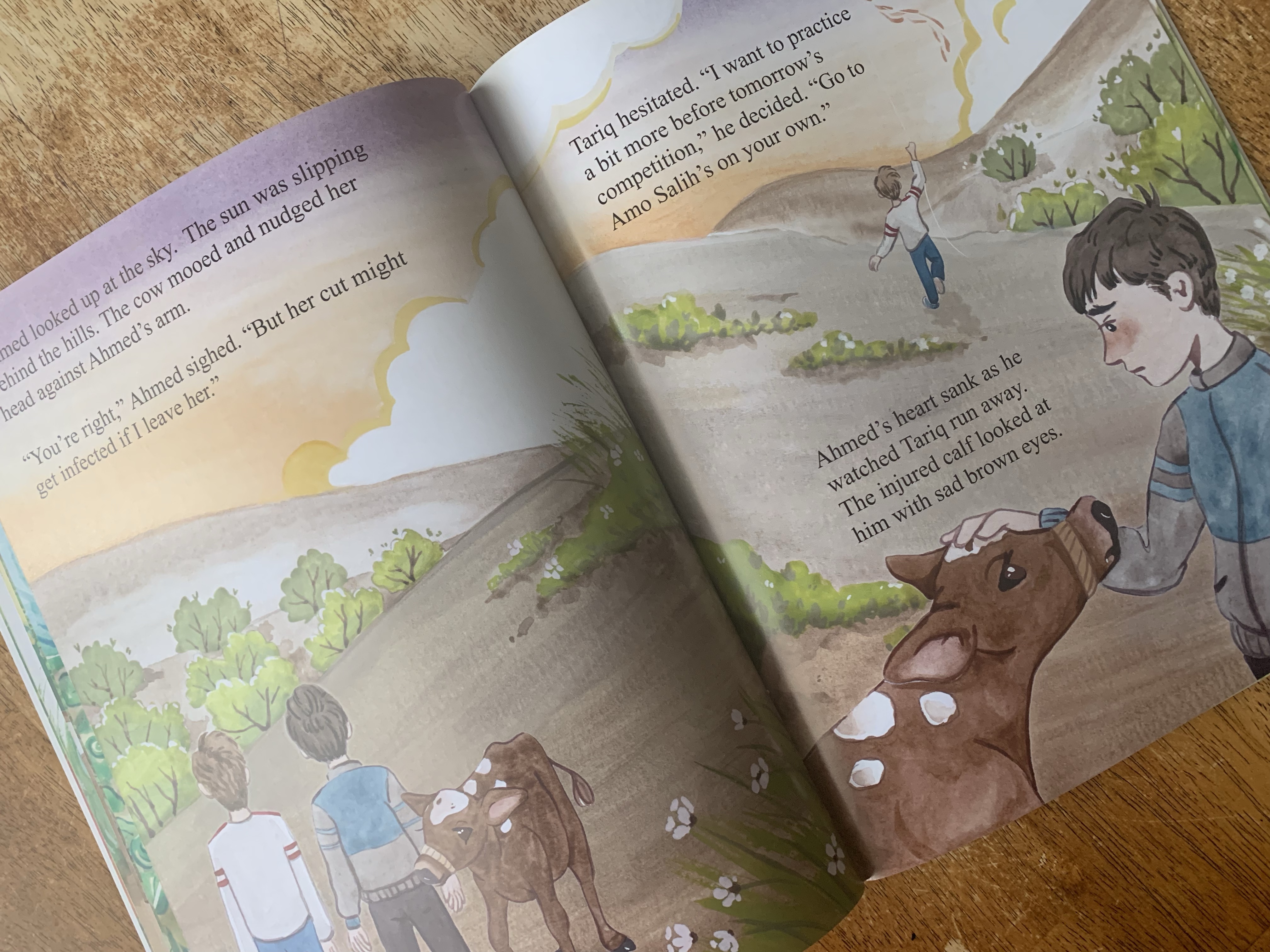
Ahmed and his friend Tariq are practicing their kite flying skills for tomorrow’s annual competition, when Ahmed’s kite gets destroyed in a tree. Heartbroken Tariq suggests he hurry to buy a new one before the store closes at Maghrib. As the boys rush off they come across a brown calf with a teapot on her hoof. Ahmad recognizes the teapot as his mother’s and feels like he should help the poor animal. Tariq keeps reminding him that the shop will close, but Ahmed decides to take the cow to Amo Waseem’s to get help.

Amo Waseem, is able to help the cow get free, but in the process, the cow get’s hurt. The cow needs help from a shepard, Amo Salih, but Amo Waseem can’t go, and Tariq wants to practice more. Ahmed knows the cow can’t be left untreated, and takes the little cow to get help. The cow then needs to get to his owner, and the story continues until the shop is closed, and Ahmed realizes he won’t have a kite for the competition. He goes to the mosque for salat and starts to feel better, he knows that he did the right thing, and inshaAllah Allah will reward him in some other way. His reward comes quickly, however, much to Ahmed’s surprise and in gratitude he also manages to find a way to help his mother.

I love the gentleness of the lessons of doing what needs to be done, even when you don’t really want to, and your friends are not supporting you. Ahmed had chances to walk away, but he didn’t and he was at peace with the outcome. His friend wasn’t mean or bad, he just made different choices. There are discussion questions at the end as well. I think this book would foster great conversation with even the littlest listeners, and I can’t wait to share it at our masjid’s storytime.

The Sky at Our Feet by Nadia Hashimi

Standard

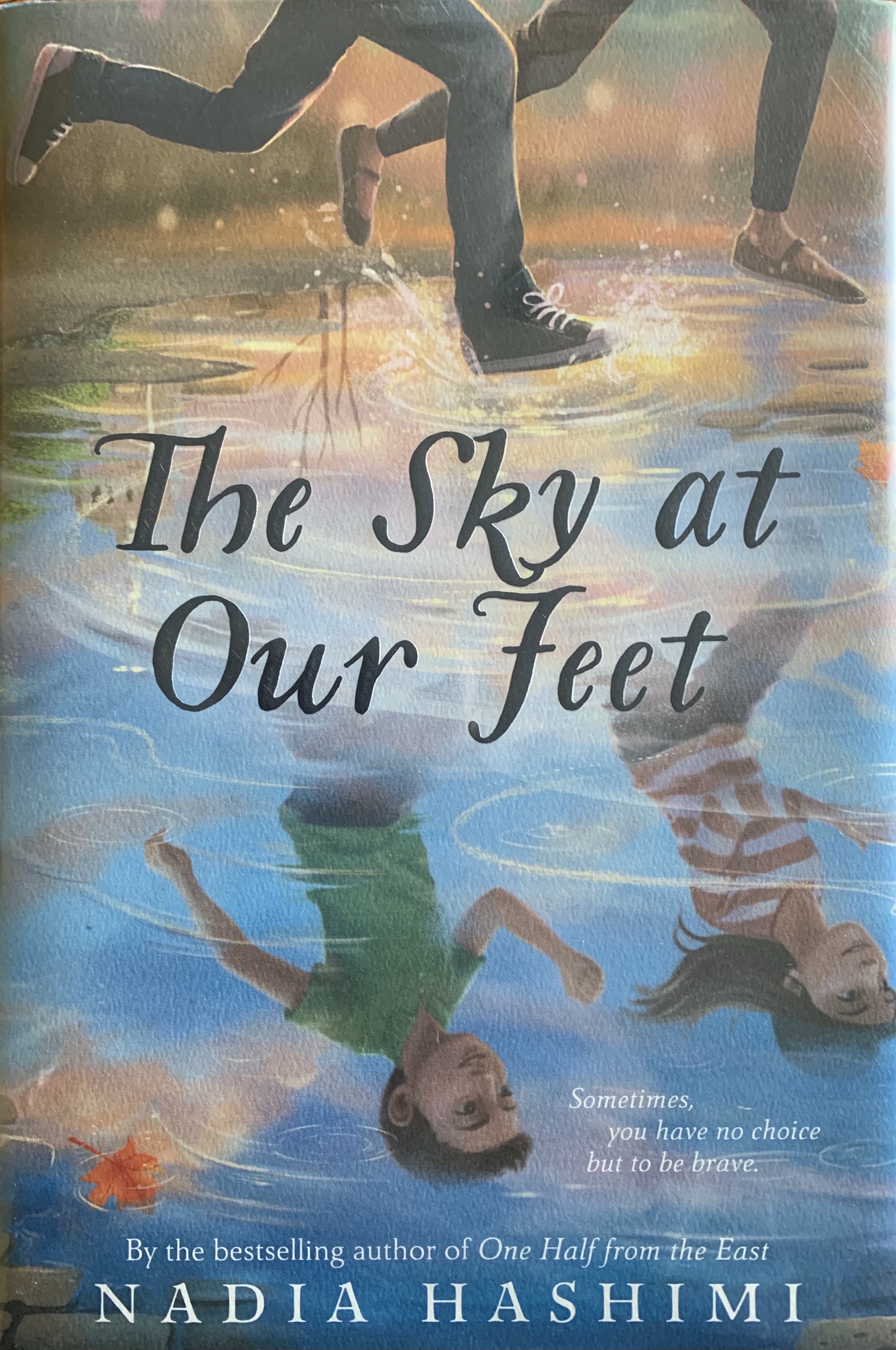
This 295 page middle grades AR 4.8 book is a fast passed romp through New York City as two 12-year-old kids explore freedom and fear in a new city while grappling with their own sense of identity and what it means.  The OWN Voice story features immigration, chronic disease, family, bravery, and friendship.  There is lying and avoiding police, sneaking and “borrowing” a horse, but it is all for a good cause, and third grade and up will enjoy this read.  There is very little religion in it, but the main character does say salam, notice the similarities between amen and ameen, and reference eid as his holiday. 
SYNOPSIS:

Jason D, known only to his mom and aunt as Shah, was named by a nurse when his mom wanted to make sure he had an American sounding name, and his middle initial D is for December, which comes from her staring at a calendar when asked if she wanted her son to have a middle name.  Life is fairly simple, he enjoys sneaking on to the roof of his apartment building to imagine training pigeons, his mom works at a dry cleaners, they walk where they need to go, money is tight, but they do ok, and his dad passed away before he was born.  His mom is from Afghanistan, but he doesn’t speak much Dari and his mom speaks English, but not confidently.  On her birthday as they are about to enjoy a cupcake he saved up for, the news in the background is covering protestors chanting for illegal immigrants to go home, and Jason’s mom starts to tell him about how she ended up overstaying her visa and  is living in the US illegally.  

Jason’s dad worked with the US military in Afghanistan and with his work came the promise of visas to America for him and for his wife to study.  Many of the locals though didn’t like that he was cooperating and vowed to take their revenge.  With the family in the US and Jason’s mom starting to study medicine, Jason’s dad had one more job in Afghanistan and sadly was killed by anti American Afghans.  Fearful to return, she chose to stay, but with a new baby, few resources, no family and friend support, eventually she was forced to drop out of school and remain undocumented knowing that to return would be at great peril to her and her son.  At some point she befriends an Indian lady, Seema and to Jason, she is Aunt Seema, the only family other than his mother that he knows.  

When a few weeks later Jason sees his mother being taken away by two officers, he knows that this is what she warned him about when she told him the truth about her legal standing.  Terrified and alone, Jason only knows that somehow he has to get to New York to Aunt Seema so that they can figure out how to save his mom.  He grabs a few pictures of his father, whatever money he can find a broken address and heads to the big apple from New Jersey.

Having never been to NYC or really out of his hometown, he loses his backpack to a dog, and struggles to figure out how to get a ticket to get in to the city.  When he arrives at Penn Station he is overwhelmed and exhausted and passes out, hitting his head, and landing himself in the hospital.  

When he awakens he is met by doctors making sure he is ok, and police trying to locate his parents, he opts to pretend he has amnesia and can’t remember anything.  This buys him time, and also acquaints him with Max, a girl with wires coming out of her head and who claims they are running tests on her to understand her level of genius.

The two hit it off and hitch a plan to escape the locked hospital floor, have a day of adventure in the city, and get Jason D to his aunts house.  Naturally this plan is going to have all sorts of obstacles, but thats the story and that is where the fun and discovery unfolds.

WHY I LIKE IT:

I was impressed at how emotionally cathartic the conclusion was.  I hadn’t realized how invested I had become in these two kids and their run through the city.  It was touching, and heartfelt, and a big sigh of relief when it all wrapped up.  I like that both kids are so very different, yet dealing with similar thematic issues from different perspectives.  Max is an epileptic and is kept on a short chain to ensure her safety. She is trying to find and define who she is outside of the medical diagnosis.  Jason is trying to understand if he can be American and Afghan and what that means about where he belongs, and where home is.  There is a lot that they ponder over as they run through central park and the zoo, duck into subways, and get all sorts of turned around on the streets.  Through it all though the kids show just how clever and smart they both are with the quick thinking, riddle solving abilities, and perpetual optimism.  It is at times far fetched, stealing a horse and bumping in to your doctor in the New York City Marathon, and at other times completely plausible, sneaking in to a zoo with a field trip group and ducking through turnstiles to get on the subway.

FLAGS:

Lying, stealing.

TOOLS FOR LEADING THE DISCUSSION:
This is a bit young for even early middle school readers, but would make a great addition to a summer reading list.  I think kids will marvel at the riddles and determination of the two protagonists and imagine a world where kids could maybe get away with such a bold adventure.

Yusuf Azeem is Not a Hero by Saadia Faruqi

Standard
Yusuf Azeem is Not a  Hero by Saadia Faruqi

yusufazeem

It is hard to believe that it has been 20 years since the tragedy of September 11, and this 368 page upper middle grades novel is very relatable to kids about to experience the anniversary and to us adults that were in high school/college when the event occurred. The book is very contemporary mentioning Covid-19 and grappling with the effects of the attacks, the war, the Patriot Act, and Islamophobia, both at the time of the terrorist attacks and now, 20 years later. The characters are unapologetically Muslim, and doctrine, practice, culture, and rebellion are all included in a book that takes a bit of time to get going, but then holds you close and makes the characters feel like old friends who sat around the table telling you their story. The middle school characters present in a lot of shades of gray as they learn about themselves, their place, and begin to understand those around them. There isn’t really a lot of resolution in the book, it is more a snap shot of life and the stresses that Muslim communities in the US feel and have felt for the last two decades. Possible concerns: a group of Muslim kids dress as Santa Clause as they sneak out to trick-or-treat, the kids discuss eating halal or not and just not telling their parents as well as discussing the requirements and purpose of hijab, an Uncle has a girlfriend and is off to meet her parents, and a Muslim boy wears an earring. All pretty tame, and really pretty judgement free, alhumdulillah.

SYNOPSIS:

Yusuf Azeem is excited to be starting middle school, but when he swings open his brand new locker and finds a note saying, “You suck,” he is rattled. Surely the note was not meant for him, he doesn’t have any enemies. He is the son of the beloved owner of the local dollar store in tiny Frey, Texas. He loves robotics and dreams of being on the middle school robotics team and winning the Texas Robotics Competition. But the next day there is a note again. Best friend Danial is convinced middle school is going to be awful, but ever optimistic Yusuf is not ready to concede, although he really doesn’t want to be a hero either. However, with the 20th anniversary of September 11th approaching, and the appearance of a group calling themselves The Patriot Sons, life is getting very tense for the Muslim families, and their friends, in this small Southern Town.

Yusuf and his friends gather at robotics club and at the Mosque the parents are building themselves. They sort through their differences, they work on their friendships and they start to find their own thoughts and opinions. Along the way Yusuf is given his uncle’s diary that was written during the 9/11 attacks and the first hand account allows Yusuf to broaden his view of this historical event, combined with him understanding his Sunday school lessons and seeing himself and others bullied, really forces Yusuf to decide who he wants to be, and if in fact he can avoid being a hero.

On the surface there is discussion of xenophobia, being a Muslim in America, and interfaith cooperation, but there is also some very frightening and real-life based inspiration of vandalism, and imprisonment of a child that play heavily on the storyline.

WHY I LIKE IT:

I love the relationship of Yusuf and his much younger sister. She is in awe of her big brother, and he is absolutely adorable with her, whether it is babysitting her dollies or programming her unicorn games, it is precious. I also love the diversity within the Muslim families in Frey. There are hijabis and non hijabis, halal only and eat outside meat folk, there are very chill and very nosey aunties, but they all stick together, there aren’t that many of them and I love it. Similarly, the non Muslim side characters also are not a monolith, they grow and change and have their own lines that need to be drawn within families. The town rallies and the robot thread is strong, but I didn’t feel like the book had a storyline and plot and resolution, it just kind of shows the characters, and gives a glimpse in to their lives, so I was left with a lot of questions: how was the little sister’s health, what happened to the Patriot Sons, did the mayor finally stand up to them, did the uncle get married, where was Cameron’s mom, did Jared’s mom stay home or did she just get a leave for Thanksgiving, did Jared’s grandma ever get involved?

The character I struggled the most with was the mom. She is an American born daughter of immigrants, she lived through the attacks in America, she is competent and articulate, but I feel like she doesn’t quite radiate the strength I wanted her to have. I wanted to love her, and I wanted to be inspired by her and her frustrations, but she seemed to just fade in most instances. The dad is a bit underdeveloped too, he has a shop, but few customers, I’m kind of worried about the financial security of the family, and then takes weird gifts to the neighboring church on Christmas Eve.

I didn’t understand why so many people didn’t want to talk about their 9/11 experience. I get that everyone deals and views things differently, but I have never really found people hesitant to talk about the attacks and the aftermath. I was at the University of Utah studying Mass Communication on that day, I’ve interviewed a lot of people over the years regarding what they experienced, and talked to my kids and had others talk to my kids, no one has ever once shown hesitancy, so I initially struggled with the premise that Yusuf didn’t know what he wasn’t supposed to forget and why his family kept trying to avoid talking about the changes of life before and life after.

The book does a good job of articulating how painful the loss of life was for all of humanity and showing that Muslims were both grieving the deaths and destruction, while also having to defend their separation from those that committed the atrocities.

I do love that Sunday school lessons, and elder advice, and khutbahs are a part of the tools given to Yusuf to sort through his world and decision making processes. I like that he pushes back and doesn’t just accept everything thrown at him. Even the nosey harsh aunties he finds connection with and tries to see their experiences, it really is impressive.

FLAGS:

It talks about the death tolls and the gut wrenching loss of life. There is also bullying, and false imprisonment, and a crime with a gun that is mentioned. There is a hijab pulled off, vandalism of a Muslim owned store, there are threats and pushing. Yusuf’s uncle is out of town and his mom and grandma are bickering that he is meeting his girlfriend’s parents, so it isn’t clear if it is all arranged, or everyone is on board or if it is something more or less than what it is. Cameron has an earring. Danial doesn’t eat outside meat, but really wants too. The kids don’t lie necessarily, but they sneak out in Santa Clause costumes to trick or treat on Halloween after commenting that they shouldn’t and don’t celebrate the holiday. Yusuf’s dad knows Christmas carols and discusses his favorites at interfaith exchanges, the highly religious, “Silent Night” is among them. A cat also goes missing, an incident from the diary, and then is placed on the doorstep dead.
TOOLS FOR LEADING THE DISCUSSION:

I think, like with other 9/11 books I’ve done as book club selections, just sharing my experience and asking any other teachers to chime in with theirs is enough to take fiction out from the pages and make it real for the kids. They then ask questions, connect it to the text and to their history lessons and the story resonates with the historical event. I think this book could work for a middle school book club and provide a lot, aside from the Islamophobia to discuss, I think it would in fact be a great book to start the school year off with to get to know the kids and how they view the world.

Talaal and the Whispering Worrier by Shereeza Boodhoo illustrated by Khalif Koleoso

Standard
Talaal and the Whispering Worrier by Shereeza Boodhoo illustrated by Khalif Koleoso

talaal

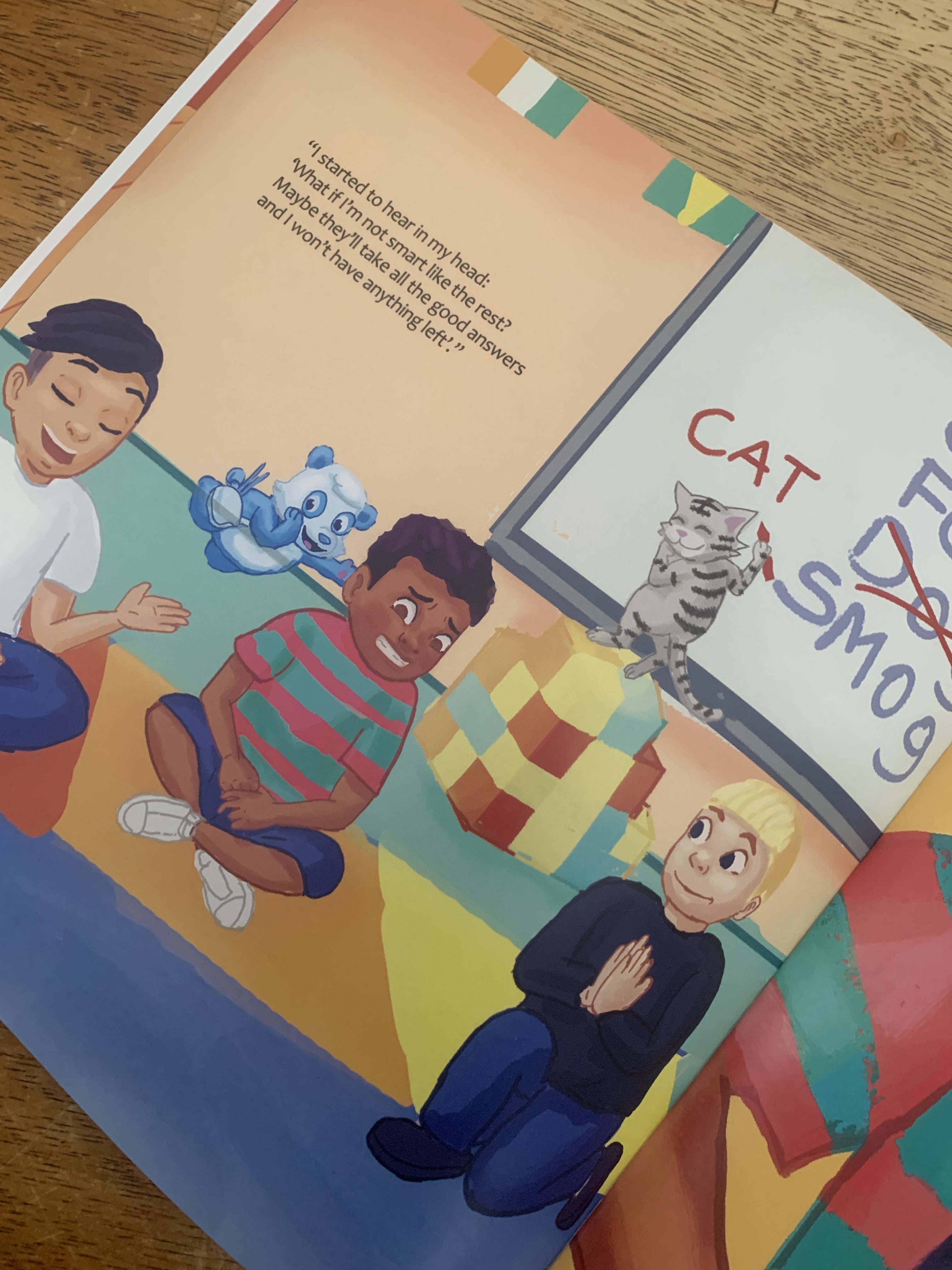
This 38 page book addresses anxiety and self confidence with Islamic tips and tools to help kids cope and feel less alone in their struggles.  The rhyming text on some pages is flawless, and elsewhere falters and distracts from the text.  Similarly, the panda that personifies the “Whispering Worrier” is at times a compliment to the story, and at other times seems to muddle the seriousness being discussed (I don’t understand the ever-present watering can).  The book is long and the text small, but overall the message is good and presentation sufficient.  Books like this by qualified professionals are incredibly valuable and important.  The use of Quran and trust in Allah swt to feel confident and at ease is something we need to share with our young ones early, often, and regularly. 

img_2530

Talaal comes home from school and declares that he feels sick and is not going back to school.  His parents can’t seem to find anything wrong and send him to go do his homework.  He passes his older sister who is praying and seems so relaxed, when she is done she comes and talks to him.  He explains how he felt when the teacher asked them to share and how the fear and nerves felt like his heart was being beat on.  She reassures him that she feels the same way at times and that a Whispering Worrier whispers unhelpful thoughts to tear us down.

img_2531

She suggests countering the negative thoughts with helpful positive ones.  She also suggests reciting Qur’an.  She then has him practice some ayats.  He recites the begining of Surah Ikhlas, and starts to feel better.  Talaal excitedly goes to tell his parents what is going on, and the suggestions his sister has given him for coping and overcoming his stresses.  They let him know that they too get nervous.  His mom, goes a bit off topic and explains various wonders that Allah swt has created and they reassure Talaal that he too is beautifully made.  Talaal starts practicing and finds over time, in different situations, he starts to calm his Whispering Worrier.

img_2533

I like that the advice is rooted in Islamic concepts and that his sister, not an adult, is who coaches him and guides him, making it seem normal and not a punishment.  I like that it isn’t an instant fix, but something to work out and be consistent with over time.  The end has a note to caregivers and some tips.  I think reading the book and having discussions is the first step and inshaAllah if your child or student is struggling that professional help will be sought, so that children don’t have to suffer needlessly.  

img_2534

I read this to a group of early elementary students to try and normalize the topic and encourage them to talk to a parent or teacher if they felt similar to Talaal.  Unfortunately, the book had a hard time keeping their attention and I think, in retrospect, it might be a better selection for smaller groups or one-on-one so that discussion and feedback can safely occur.

img_2539